
Introduction
Cardiac arrhythmias represent a major public health problem, with a significant impact on morbidity and mortality. Among them, atrial fibrillation (AF) is the most common sustained arrhythmia, and its prevalence is continuously increasing. The presence of AF is associated with an increased risk of stroke, heart failure, and premature mortality. Furthermore, repeated hospitalizations and chronic treatment of patients with AF have a major impact on healthcare costs [1].
A key factor in the pathogenesis of atrial arrhythmias, including AF, is atrial remodeling, which includes structural, electrical, and autonomic changes that promote arrhythmia persistence [2]. Atrial dilation and fibrosis are the main structural changes that create a proarrhythmogenic substrate, promoting the onset and perpetuation of AF, while inflammation and oxidative stress represent the main determinants of atrial dilation and fibrosis [3]. There is a vicious circle between AF and atrial electrical remodeling. The presence of AF is associated with atrial potential duration (APD) and atrial effective refractory period (AERP) shortening, which promotes reentry and prolongation of atrial arrhythmia episodes [2]. Previous studies have shown that both parasympathetic stimulation and sympathetic stimulation are proarrhythmic at the atrial level, playing a crucial role in the initiation of paroxysmal episodes of AF. Moreover, the sympathetic nervous system activation, unbalanced by the parasympathetic system, is characteristic of autonomic remodeling in long-term persistent AF [4].
At the molecular level, the occurrence and persistence of AF are based on intracellular signaling processes that regulate both the expression and functionality of cardiac proteins. Intracellular calcium homeostasis, inflammatory and oxidative stress pathways, and other intracellular signaling pathways are closely linked to changes in gene expression or phosphorylation of key proteins [5]. Disruption of the balance between these pathways can influence depolarization and repolarization of atrial myocytes and, thus, contribute to both the onset and perpetuation of AF [5]. As a result, the analysis of protein modifications is essential for understanding AF-associated intracellular signaling pathways. To this end, the Western blot technique represents a fundamental tool in the identification and quantification of these changes, allowing the specific detection of target proteins and providing an insight into the intracellular signaling pathways involved in AF pathogenesis [6].
This article aims to provide an overview of the intracellular signaling pathways involved in AF-associated atrial remodeling. Highlighting these molecular changes, discovered in particular by the Western blot technique, could contribute to a better understanding of the mechanisms involved in the onset and perpetuation of AF, opening new perspectives on molecular biomarkers for AF diagnosis and on more effective and safer therapies in the management of arrhythmias.
Western blot – a method for identifying the mechanisms involved in AF
As mentioned, atrial remodeling is a multifactorial process, influenced by electrical, structural, and autonomic changes, which contribute to the initiation and perpetuation of AF [2]. Identification of the factors involved in the occurrence of arrhythmias could contribute to the development of effective therapeutic strategies and the management of AF.
Western blot is a highly sensitive method used to identify specific proteins from a tissue sample or cell culture [6]. In this method, proteins are extracted from the sample and subsequently separated by electrophoresis. The blotting process ensures the transfer of proteins onto a nitrocellulose or PVDF membrane. Specific antibodies and chemiluminescent or colorimetric techniques are used to detect proteins of interest. Previous studies have shown that Western blot is a particularly useful technique in identifying proteins involved in atrial remodeling. This technique allows the detection of alterations in the expression of connexins (Cx40, Cx43), ion channels (Nav1.5, Cav1.2, Kv1.5), and proteins involved in atrial fibrosis, such as transforming growth factor beta (TGF-β), collagen I/III, and matrix metalloproteinase-9 (MMP-9), providing information on proteins involved in proarrhythmogenic atrial remodeling [7]. Furthermore, Western blot can be used to monitor changes in target proteins following the administration of antiarrhythmic drugs, helping to understand their mechanisms and efficacy [8].
By using antibodies specific to the proteins of interest, the Western blot technique has high specificity, allowing the detection of proteins that have undergone post-translational modifications. In addition, the method provides relevant information on relative variations between different experimental conditions. The comparison of a specific protein level between different experimental conditions depends on normalization to a reference protein, such as β-actin, glyceraldehyde 3-phosphate dehydrogenase (GAPDH), etc.
Using the Western blot technique, several clinical and experimental studies aimed to correlate alterations in the expression and phosphorylation of key proteins with the functional and structural atrial changes observed in AF. Molina et al. [9] performed a multiparametric assessment of atrial remodeling using this technique. Analyzing human atrial tissue from patients with heart failure with and without AF, the authors highlighted structural and Ca2+-handling remodeling associated with AF [9]. Decreased striated muscle-enriched protein kinase (SPEG) in atrial tissue of AF patients was also observed by Western blot analysis [10]. Identification of inflammation and fibrosis markers, as well as changes in RyR2 phosphorylation, have been detected by Western blot in various experimental rodent models of AF [11,12]. Also, experimental studies in porcine or rabbit models frequently use Western blot to quantify changes in expression associated with structural or electrical remodeling [13,14].
Subcellular compartmentalization of signaling pathways represents an additional level of complexity that must be considered when interpreting Western blot data in AF. Many intracellular signaling cascades implicated in AF, including Ca2+/calmodulin-dependent protein kinase II (CaMKII)-, MAPK-, and PI3K/AKT-dependent pathways, are organized within highly specialized microdomains such as dyadic junctions, caveolae, and nuclear compartments. For example, CaMKII localized at the sarcoplasmic reticulum–T-tubule interface preferentially regulates RyR2 phosphorylation and diastolic Ca2+ leak, whereas nuclear CaMKII isoforms influence transcriptional remodeling. Although Western blotting does not provide precise spatial information on protein localization within atrial tissue, the analysis of subcellular fractions (e.g., nuclear, cytoplasmic, mitochondrial, or membrane compartments) allows the investigation of protein redistribution and activation. This approach is particularly relevant in AF, where pathological remodeling involves altered signaling pathways, including the activation and nuclear translocation of transcription factors, kinase-driven signaling cascades, and stress-responsive pathways that contribute to electrical and structural remodeling. Consequently, Western blot findings should be interpreted as reflecting the overall activation state of a pathway, rather than localized signaling dynamics, and are best complemented by techniques that preserve spatial resolution, such as immunohistochemistry or subcellular fractionation.
Calcium/calmodulin-stimulated protein kinase II – the key to electrical remodeling in AF
Being encoded by the CAMK2A, CAMK2B, CAMK2G, and CAMK2D genes, CaMKII represents a family of serine/threonine (Ser/Thr) kinases [15]. There are four CaMKII isoforms expressed in almost every tissue. Among these, CaMKIIδ is the most abundant isoform in the heart [15]. During transient intracellular Ca2+ increases, Ca2+ activates CaMKII by binding to calmodulin. Autophosphorylation of Thr287 prevents reassociation of the catalytic and regulatory domains, resulting in persistent activation of the enzyme, even in the absence of Ca2+. Furthermore, in a Ca2+-independent manner, CaMKII can be activated by reactive oxygen species through the Met281/282 oxidation. CaMKII inactivation can be achieved by phosphorylation of Thr306/307 [16].
At the atrial level, CaMKII modulates multiple ion channels and Ca2+-handling proteins, thereby exerting a central influence on electrical remodeling in AF. Acute CaMKII-dependent phosphorylation enhances L-type Ca2+ channels activity (Figure 1); however, in chronic AF, ICa,L density is often reduced at the expression level despite sustained CaMKII activation, suggesting a dissociation between channel phosphorylation and long-term current availability. Likewise, CaMKII-dependent phosphorylation of different ion channels also leads to alterations in Ito activity and IK1 and INa inactivation kinetics (Figure 1) [16]. Equally important, CaMKII-dependent phosphorylation of phospholamban (PLB) and sarcolipin contributes to the disinhibition of SERCA2a and, consequently, to the increase of sarcoplasmic reticulum (SR) Ca2+-reuptake [16]. In contrast, CaMKII-mediated hyperphosphorylation of RyR2 at Ser2814 consistently increases SR Ca2+ leak, promoting delayed afterdepolarizations (DADs) via activation of the Na+/Ca2+ exchanger [16]. In parallel, CaMKII alters sodium channel inactivation kinetics and augments late sodium current, further destabilizing atrial electrophysiology. Together, these mechanisms favor triggered activity, shorten AERPs, and promote reentry, thereby linking Ca2+-handling dysfunction to both the initiation and maintenance of AF (Figure 1) [2]. Last but not least, some studies suggest that, in addition to electrical remodeling, CaMKII also mediates structural remodeling in AF [17].
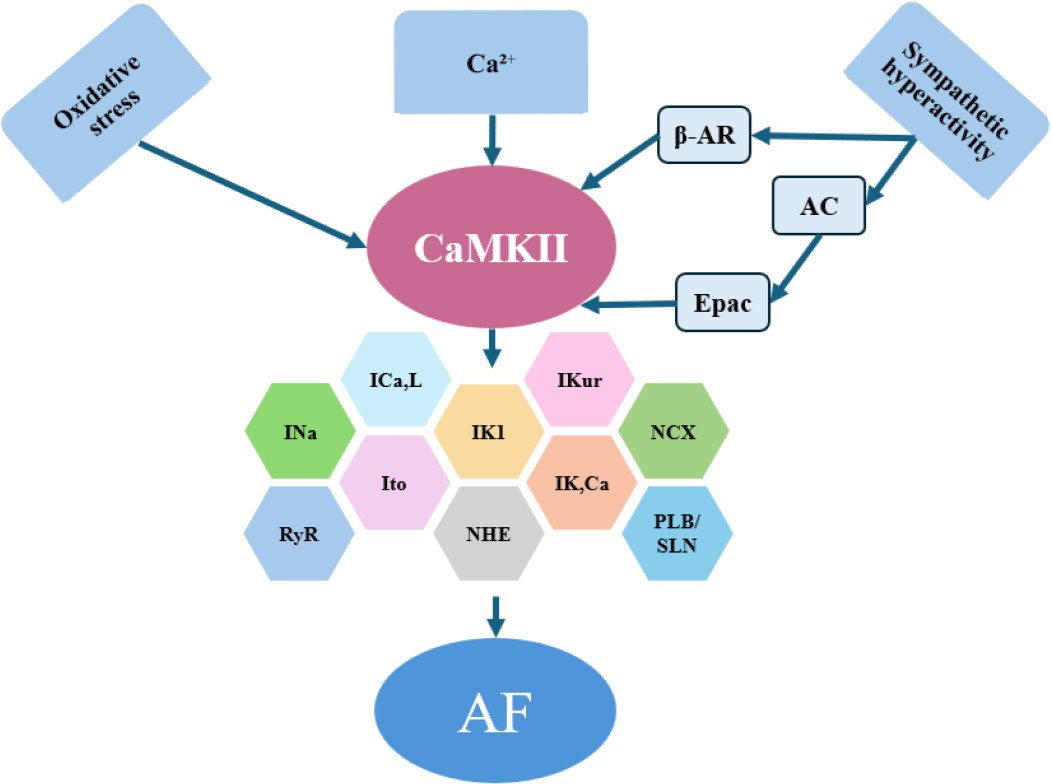
Figure 1
Schematic representation of Ca2+/calmodulin-dependent protein kinase II (CaMKII) pathway in atrial fibrillation (AF).
Schematic representation of CaMKII activation and its downstream effects on atrial electrical remodeling. Increased intracellular Ca2+, sympathetic stimulation, and oxidative stress promote CaMKII activation, leading to altered phosphorylation of ion channels and Ca2+-handling proteins, including RyR2 and phospholamban/sarcolipin. These changes favor sarcoplasmic reticulum Ca2+ leak, triggered activity, and shortening of atrial refractoriness, thereby contributing to the initiation and maintenance of AF.
AF – atrial fibrillation; ICa,L – L-type Ca2+ current; IK1 – inward rectifier K+ current; IK,Ca – Ca2+-activated K+ current; IKur – ultra-rapid delayed rectifier K+ current; INa – Na+ current; Ito – transient outward K+ current; NCX – Na+– Ca2+ exchanger; NHE – Na+-H+ exchanger; PLB/SLN – phospholamban/sarcolipin; RyR – ryanodine receptor
In previous studies, both phosphorylated and oxidized forms of CaMKII have been associated with AF, and Western blot analysis was used in the vast majority of studies to assess the active CaMKII forms in atrial tissue. In both experimental and clinical studies, high atrial-rates during AF or pacing-induced atrial tachycardia have led to changes in CaMKIIδ protein expression and activity, suggesting that CaMKII activation may be a secondary effect of AF [18,19]. This hypothesis is also supported by the finding that, in patients with chronic AF, phosphorylation of the inhibitory Thr306/307 site is decreased [20]. Several conditions implicated in the pathogenesis of AF contribute to CaMKII activation. Sympathetic hyperactivity can activate CaMKII via protein kinase A (PKA)-mediated augmentation of intracellular Ca2+ cycling, but also through PKA-independent pathways, mediated by cAMP (Epac), activated following β-adrenoceptor stimulation (Figure 1) [21,22]. Oxidative stress has been associated with AF in numerous studies, and in patients with AF, a significant increase in the oxidized form of CaMKII was observed compared with patients in sinus rhythm (Figure 1) [3,23].
Although several intracellular signaling mechanisms described in AF have also been identified in ventricular myocardium, important atrial-specific features modulate their functional consequences. Atrial cardiomyocytes exhibit higher basal CaMKII activity, distinct expression profiles of ion channels such as IKur and IK,ACh, and a different organization of Ca2+-handling microdomains compared with ventricular cells. In addition, atrial fibroblasts display heightened responsiveness to profibrotic stimuli, amplifying structural remodeling in response to inflammatory and neurohumoral activation. These atrial-specific characteristics contribute to the unique vulnerability of atrial tissue to sustained arrhythmogenesis and must be carefully considered when interpreting and extrapolating signaling data from ventricular models or mixed myocardial samples. Western blot analysis was essential for identifying CaMKII activation in AF. This technique quantified the total expression of CaMKII and its activated forms, including autophosphorylated and oxidized CaMKII [18–22]. Detection of increased phosphorylation of downstream targets, such as RyR2 and phospholamban, also provided molecular evidence linking CaMKII activation to calcium handling abnormalities in AF. These studies allowed for a direct comparison between sinus rhythm and AF tissue, as well as the evaluation of the effects of therapeutic strategies on CaMKII-dependent signaling.
Therapeutic strategies such as β-blockers exert their antiarrhythmic effects primarily by attenuating sympathetic activation, thereby reducing cAMP/PKA signaling [20–22]. As a consequence, CaMKII activation, intracellular Ca2+ overload, and triggered activity are indirectly limited. This mechanism is particularly relevant when sympathetic tone is increased and when CaMKII-induced RyR2 dysfunction and delayed afterdepolarizations contribute to AF initiation [2,20–22]. In contrast, non-dihydropyridine calcium channel blockers primarily reduce ICa,L, resulting in effective ventricular rate control, but with limited impact on upstream autonomic drivers of the atrial substrate [1,20]. Consistent with these mechanistic differences, both classes of drugs are effective in rate control, but neither substantially alters AF progression, particularly in persistent AF, where autonomic and structural remodeling is already established [20–22].
The mitogen-activated protein kinases pathway and structural remodeling
The mitogen-activated protein kinases (MAPK) pathway plays a central role in cellular differentiation, proliferation, and apoptosis [24]. This pathway is activated in response to stress stimuli (e.g.,. growth factors, cytokines, oxidative stress). Initially, MAPKKK activation occurs, which in turn activates MAPKK, and finally MAPK [24]. The role of activated MAPK is to phosphorylate various substrates in the cytosol and nucleus, modifying the activity of transcription factors and thus controlling essential cellular processes. At the cardiac level, the predominant members of the MAPK family are c-Jun N-terminal kinase (JNK), extracellular signal-regulated kinases (ERKs), and p38 MAPKs, each with specific roles [24,25]. While ERK favors cell growth and differentiation, JNK and p38 respond more to stress and inflammation and contribute to inflammation, apoptosis, and cell differentiation. By Western blot technique, previous studies performed on atrial myocytes have demonstrated the involvement of ERK, JNK, or p38 in molecular mechanisms of atrial remodeling or arrhythmogenicity [25].
In aged animals, JNK activation caused a decrease in gap junction channels with consequences on atrial conduction [26]. Moreover, the alteration of conduction velocity led to the formation of reentrant circuits in cultured atrial myocytes with JNK-induced gap junction remodeling [26]. Activation of JNK isoform 2 (JNK2) can phosphorylate and activate CaMKII, which leads to Ca2+ handling dysfunction and AF in both aged and binge alcohol-exposed hearts [27]. In addition to CaMKII, JNK interacts with other signaling pathways involved in atrial remodeling, such as TGF-β1/TRAF6, pathways that have also been associated with atrial fibrosis and AF [28]. Last but not least, JNK activation is closely correlated with structural changes associated with advanced age, which is an important risk factor in the occurrence of AF [27].
Like JNK, both ERK and p38 were also associated with AF. In patients with AF, activated Erk1/Erk2 levels were increased by more than 150% compared to patients in sinus rhythm [29]. Angiotensin-converting enzyme (ACE)-dependent activation of Erk1/Erk2 kinases appears to be involved in the structural remodeling processes associated with AF. Increased levels of phosphorylated Erk1/Erk2 stimulate fibroblast proliferation and collagen synthesis, thus contributing to atrial fibrosis and increased atrial arrhythmogenicity [29]. Activation of ERK also has effects on other signaling pathways. It can stimulate the NF-κB signaling pathway, leading to increased expression of intermediate conductance calcium-activated potassium channels (KCa3.1) and, consequently, to increased Ca2+ influx into atrial fibroblasts, stimulating their proliferation and extracellular matrix protein synthesis [30]. Like ERK, p38 appears to influence Ca2+ handling by directly regulating SERCA2 mRNA and protein expression with possible implications in atrial arrhythmogenesis [31]. In contrast, inhibition of the p38 pathway leads to improved SERCA2 function, and the negative effects of stress were reversed [31]. Regarding structural remodeling, cardiomyocyte apoptosis was promoted via the p38 MAPK signaling pathway in a model of hyperthyroidism-induced AF [32]. In AF associated with pressure overload, p38 promotes inflammatory responses that contribute to the onset and persistence of AF [33]. Moreover, MAPK pathway inhibition seems to have antiarrhythmic properties (Table 1). The use of eplerenone in a rabbit AF model resulted in a decrease in atrial arrhythmogenicity via ERK1/2 MAPK pathway modulation [34]. The antiarrhythmic effect of ACE inhibitors appears to be due, at least in part, to the attenuation of ERK-induced proarrhythmic remodeling as observed in a canine model of AF [35]. The involvement of MAPK signaling in atrial remodeling has been largely demonstrated using Western blot analysis to detect increased phosphorylation of ERK1/2, JNK, and p38 in atrial tissue. This approach has enabled the correlation of MAPK activation with markers of atrial fibrosis, inflammation, and stress responses in both experimental models and patients with AF [24,25,31–35].
Table 1
Therapeutic strategies targeting signaling pathways involved in atrial fibrillation.
| Signaling pathway | Drug class / examples | Main molecular effects | Effects on atrial remodeling | Clinical AF outcomes | References |
|---|---|---|---|---|---|
| Ca2+/CaMKII | β–blockers | ↓ sympathetic tone; indirect ↓ CaMKII activation | Improved Ca2+ handling; ↓ triggered activity | Reduced AF burden; limited efficacy in persistent AF | [36] |
| Ca2+ channel blockers | ↓ ICa,L; ↓ Ca2+ influx | Electrical stabilization; minimal structural effects | Rate control; no prevention of AF progression | [36] | |
| MAPK | ACE inhibitors / ARBs | ↓ ERK, p38 activation; ↓ Ang II signaling | ↓ atrial fibrosis; ↓ fibroblast activation | Reduced new–onset AF; modest effect in established AF | [35,1] |
| MAPK/TGF–β | Mineralocorticoid receptor antagonists (eplerenone) | ↓ ERK, ↓ TGF–β signaling | Reduced atrial fibrosis; improved conduction homogeneity | Reduced AF recurrence in selected populations | [34,37] |
| PI3K/AKT /mTOR | Statins | Anti-inflammatory; ↓ oxidative stress; indirect AKT modulation | Attenuation of structural remodeling | Inconsistent AF prevention; benefit mainly in postoperative AF | [38,39] |
| mTOR inhibitors (rapamycin) | ↓ mTORC1 activity; ↑ autophagy | Reduced atrial fibrosis (experimental) | No established clinical role | [40,41] | |
| NF–κB | Anti–inflammatory agents | ↓ NF–κB activation; ↓ cytokine expression | Reduced inflammatory atrial remodeling | No consistent benefit in AF prevention | [42,43] |
| TGF–β/Smad | ARBs, MRAs | ↓ Smad phosphorylation | ↓ profibrotic gene transcription | Reduced AF susceptibility; limited reversal of advanced fibrosis | [44,45] |
| Multiple | Statins, RAAS blockers | ↓ oxidative stress; ↓ inflammation | Substrate modification rather than rhythm control | Explains delayed and modest clinical effects | (39,44–46) |
1 AF – atrial fibrillation; AKT – protein kinase B; Ang II – Angiotensin II; ARBs – Angiotensin II receptor blockers; CaMKII – Calcium/Calmodulin– dependent protein kinase II; MAPK – mitogen–activated protein kinase; MRAs – Mineralocorticoid receptor antagonists; mTOR – mammalian target of rapamycin; NF-κB – nuclear factor kappa-light-chain-enhancer of activated B cells; p38 – p38 mitogen–activated protein kinase; PI3K – phosphatidylinositol 3-kinase; RAAS – Renin-angiotensin-aldosterone system; RyR2 – ryanodine receptor 2; TGF-β1 – transforming growth factor beta
The protein kinase B/mammalian target of rapamycin pathway and cell survival
The protein kinase B/mammalian target of rapamycin (AKT/mTOR) pathway is an intracellular signaling network that is involved in cell proliferation, survival, and metabolism [47]. The initiation of this pathway is mediated by integrins, B- and T-cell receptors, G-protein-coupled receptors, receptor tyrosine kinases, and cytokine receptors and includes key proteins such as phosphoinositide 3-kinase (PI3K), AKT, and mTOR, with the two functional complexes, mTORC1 and mTORC2 [47,48]. Once the signaling pathway is initiated, PI3K phosphorylates PIP2 into PIP3, which in turn recruits AKT to the cell membrane. Subsequently, AKT is activated by phosphorylation by a series of kinases such as PDK1 and mTOR. Once activated, AKT influences fundamental processes such as proliferation, metabolism, and cellular survival [47]. The functional status of the AKT/mTOR pathway in AF has been assessed in numerous studies by Western blot analysis [49,50]. This method has proven to be essential for assessing the expression and activation of proteins involved in the AKT/mTOR pathway in atrial tissue, by detecting phosphorylated forms of AKT, mTOR proteins, but also of their downstream targets, such as p70S6K or 4E-BP1.
Atrial fibrosis, a central key in AF-associated structural remodeling, appears to be influenced by the AKT/mTOR pathway [48,50]. Interleukins, NOD-like receptor pyrin domain containing 3 (NLRP3), and tumor necrosis factor-α (TNF-α) seem to be among the most important mediators of this pathway in proarrhythmic atrial remodeling process. Activation of the PI3K/AKT/FoxO3a signaling pathway by insulin-like growth factor 1 (IGF-1) promotes the development of cardiac fibrosis and the maintenance of AF [52]. In a study in mice, paeoniflorin reduced Angiotensin II-induced atrial fibrosis via the PI3K-AKT pathway and susceptibility to AF [50]. In rats, administration of rapamycin, an mTOR inhibitor, decreased the degree of atrial fibrosis associated with AF [52].
Accumulating evidence indicates that the PI3K/AKT/mTOR signaling pathway exerts context- and cell-specific effects in AF. In atrial cardiomyocytes, basal PI3K/AKT activity supports cell survival, metabolic homeostasis, and electrical stability, whereas excessive inhibition of this pathway has been associated with atrial degeneration, oxidative stress, and increased susceptibility to AF [53,54]. Furthermore, in atrial cardiomyocytes (HL-1 line) that were subjected to rapid pacing, reduction of PI3K/AKT signaling led to electrical remodeling characterized by an increase in the late sodium current (INa,late) [53]. Conversely, sustained activation of PI3K/AKT signaling in atrial fibroblasts promotes fibroblast proliferation, myofibroblast differentiation, and extracellular matrix deposition, thereby contributing to atrial fibrosis. These divergent effects likely explain the seemingly contradictory observations reported in experimental studies and highlight the importance of cellular compartmentalization when targeting the PI3K/AKT pathway for therapeutic purposes in AF. Collectively, these findings suggest that the PI3K/AKT signaling pathway plays a dual role in the pathophysiology of AF, its effects depending on the cellular context and the conditions under which the signaling pathway is activated [48,51,53]. Western blot has played a central role in characterizing the activation state of the PI3K/AKT/mTOR pathway AF by assessing phosphorylation of AKT, mTOR, and downstream targets such as p7OS6K and 4E-BP1 [48,51,53]. These analyses have revealed context-dependent activation patterns in cardiomyocytes and fibroblasts, linking this pathway to both cell survival and fibrotic remodeling.
Nuclear factor kappa B and transforming growth factor beta/Smad pathway – the link between inflammation and fibrosis
Nuclear factor kappa B (NF-κB) is a family of transcription factor protein complexes that mediate the immune response to injury and inflammation stress [54]. External or internal factors activate Toll-like receptors (TLRs), triggering a series of events that culminate with the activation of I κB kinase (IKK) complexes. These complexes phosphorylate cytoplasmic inhibitors (IκB), leading to their degradation and the release of NF-κB from the cytoplasm. Subsequently, nuclear translocation occurs, following which NF-κB binds to DNA and regulates the expression of target genes. There is also an alternative, non-canonical way of activating the NF-κB pathway by the TNF receptor superfamily, such as CD40, B-cell activating factor receptor (BAFF-R), and lymphotoxin-β receptor (LTβR) [54]. This pathway is based on the NF-κB-inducing kinase (NIK) and IKK α complex, and its activation is much slower but more sustained.
Once activated, NF-κB promotes the expression of pro-inflammatory cytokines (i.e., IL-6 and TNF-α) as suggested by Western blot studies [54,55]. In addition to cytokines, NF-κB also increases the expression of chemokines and adhesion molecules, a mechanism by which AF-associated atrial remodeling is promoted. The relationship between ROS and NF-κB is bidirectional and selfamplifying [56]. Oxidative stress can activate NF-κB, which in turn increases inflammation and ROS, thus promoting AF development. Regulation of the cardiac Na+ channel via NF-κB activation by angiotensin II suggests that the NF-κB pathway is also involved in electrical remodeling that may increase atrial arrhythmogenicity [57]. Chronic inflammation induced by increased NLRP3 and proIL-1 β/pro-IL-18 transcription via NF-κB is also important in the pathogenesis of AF [58].
The TGF-β/Smad pathway plays an equally important role in the relationship between inflammation and fibrosis. Like NF-κB, the TGF-β pathway is involved in numerous cellular processes, including cell growth, differentiation, and death. The activation of the pathway begins with the attachment of a TGF-β ligand to a type II receptor on the cell surface. The role of the TGF-β type II receptor is to catalyze the phosphorylation of the type I receptor, which further phosphorylates receptor-regulated Smad proteins (R-SMADs). The activated form of R-SMADs binds to a common Smad (coSMAD) and the process ends with its nuclear translocation. At the nuclear level, the Smad complex acts as a transcription factor, regulating the expression of certain target genes.
The TGF-β signaling pathway has been associated with AF in both experimental and clinical studies. In patients with AF, atrial fibrosis in response to TGF-β1 has a biphasic response, with an initial increase in the profibrotic response and loss of responsiveness in later phases [59]. Using Western blot analysis, the role of TGF-β1/Smad pathway in AF-associated atrial fibrosis was demonstrated in vivo in rabbits, but also in silico in rabbit cardiac fibroblasts [60]. Furthermore, in spontaneously hypertensive rats, low doses of spironolactone reducedTGF-β1 expression and atrial fibrosis (Table 1) [45]. As these rats frequently develop spontaneous episodes of AF dependendent on the TGF-β1 pathway, spironolactone can prevent the occurrence of AF [45,61]. Decreased AF susceptibility via regulation of the TGF-β1/Smad pathway was also observed with eplerenone administration in mice [62].
Activation of the NF-κB and TGF-β1/Smad pathways in AFn has been documented primarily through Western blot detection of IKK activation, IκB degradation, and phosphorylation of Smad2/3 proteins. This technique has provided molecular evidence connecting oxidative stress and inflammatory signaling to atrial structural remodeling.
Interaction between signalling pathways – integrated signaling in AF
The development and perpetuation of AF are based on proarrhythmogenic atrial remodeling resulting from the interaction of multiple signaling pathways. As described above, Ca2+/CaMKII activation influences calcium handling, promoting reentry through EADs/DADs, while NF-κB plays a central role in inflammation-associated fibrosis. In parallel, atrial fibrosis is also promoted by the TGF-β/Smad pathway. Cell survival and proliferation are regulated by PI3K/AKT/mTOR, while the MAPK pathway amplifies these phenomena in response to oxidative stress (Figure 2).
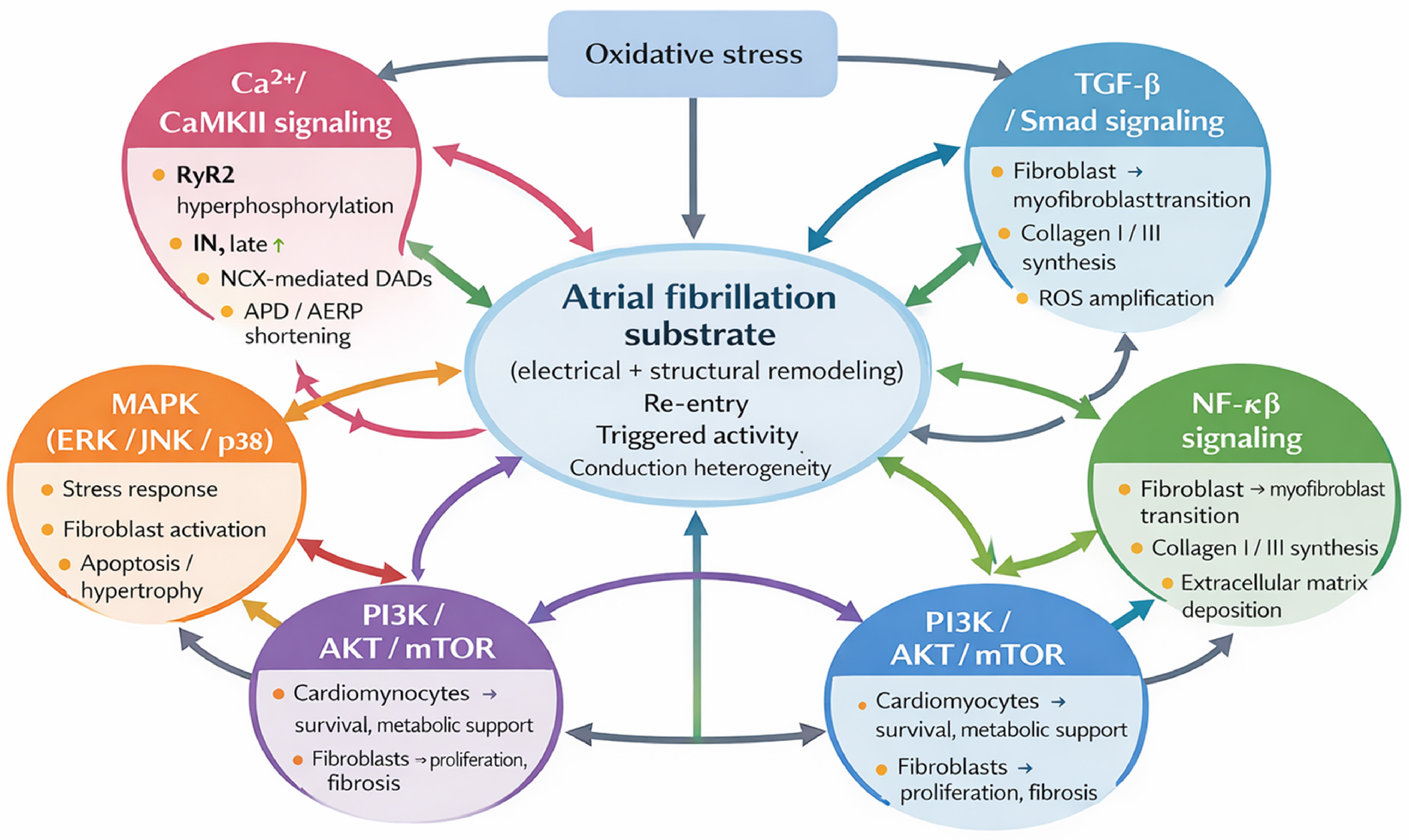
Figure 2
Integrated intracellular signaling network underlying atrial remodeling in atrial fibrillation.
Atrial fibrillation (AF) results from the convergence of multiple intracellular signaling pathways that collectively generate an arrhythmogenic electrical and structural substrate. Ca2+/calmodulin-dependent protein kinase II (CaMKII) plays a central role in electrical remodeling by promoting Ca2+-handling abnormalities and triggered activity. Structural remodeling is driven predominantly by profibrotic signaling through the TGF-β/Smad pathway, with amplification by mitogen-activated protein kinases (MAPK) and inflammatory NF-κB signaling. The PI3K/AKT/mTOR pathway exerts context-dependent effects, supporting cardiomyocyte survival while promoting fibroblast proliferation under pathological conditions. Oxidative stress and inflammatory mediators act as common upstream drivers and reinforce pathway crosstalk. The integrated activity of these signaling networks promotes atrial fibrosis, conduction heterogeneity, and sustained AF.
AKT – protein kinase B; CaMKII – calcium/calmodulin-dependent protein kinase II; ERK – extracellular signal-regulated kinase; IN, late – late sodium channel current; JNK – c-Jun N-terminal kinase; MAPK – mitogen-activated protein kinase; mTOR – mammalian target of rapamycin; NF-κB – nuclear factor kappa-light-chain-enhancer of activated B cells; PI3K – phosphatidylinositol 3-kinase; ROS – reactive oxygen species; RyR – ryanodine receptor; Smad – suppressor of mothers against decapentaplegic; TGF-β1 – transforming growth factor beta 1
The interaction between these pathways is complex and only partially understood. Both CaMKII and NF-κB are activated by oxidative stress, thus promoting electrical and structural atrial remodeling [16,54]. In mouse hearts with acute myocardial infarction, CaMKII contributes to the inflammatory response via NF-κB, while inhibition of CaMKII reduced this response [63]. As inflammation is a key player in the pathogenesis of AF and myocardial infarction is frequently associated with AF, it cannot be excluded that this interaction also plays a role in the development of AF associated with myocardial infarction [63,64]. Moreover, the close relationship between CaMKII and NF-κB has been demonstrated in other studies [65]. By interacting with different adaptors, TGF-β activates the MAPK pathway [66]. Independent of Smads, TGF-β influences fibroblast survival and increased protein synthesis by phosphorylating AKT via PI3K activation [67]. Last but not least, TGF-β can activate TAK1, which in turn activates NF-κB [59]. Therefore, by creating an electrical and structural substrate, the interdependence of these pathways contributes to AF occurrence and maintenance.
The interactions between these pathways are often not directly observed. However, they can be inferred using Western blot. The identification of phosphorylated proteins from different pathways in the same experimental model suggests interactions between different signaling pathways. Western blot can also identify different convergence points of the studied pathways or, through the use of pharmacological inhibitors, highlight the interdependence of the pathways.
In addition to classical kinase-driven signaling cascades, epigenetic and post-transcriptional mechanisms play an increasingly recognized role in atrial remodeling associated with AF. MicroRNAs, such as miR-21, miR-29, and miR-328, modulate key profibrotic and proarrhythmic pathways by regulating the expression of proteins involved in TGF-β/Smad, CaMKII, and ion channel signaling. Furthermore, chromatin remodeling and histone deacetylase activity influence gene transcription downstream of MAPK and NF-κB activation. Although Western blot does not directly assess the miRs’ regulation, it is crucial in detecting the global levels of histone modifications (e.g., acetylation, methylation, phosphorylation) or the expression of key chromatin-modifying enzymes (e.g., DNMTs, HDACs, EZH2), as well as for quantifying the downstream protein-level consequences of these regulatory layers, thereby linking transcriptional control to functional remodeling of atrial tissue.
Clinical perspective
Understanding the mechanisms underlying AF is essential for identifying vulnerabilities and for developing novel therapeutic targets in AF. Atrial electrical and structural remodeling is not the result of the activation of a single signaling pathway, but of the complex interaction between them.
From bench to bedside
From a clinical standpoint, intracellular signaling pathways involved in atrial remodeling represent both potential therapeutic targets and sources of candidate biomarkers. Western blot allows the identification and quantification of proteins involved in these signaling pathways in clinically relevant experimental models or in human atrial tissue. While tissue-based analyses have provided critical mechanistic insights, the translation of these findings into circulating biomarkers remains challenging. A major limitation is the myocardial specificity of many signaling proteins involved in AF, not being detectable in the circulation. This limits their direct use as circulating biomarkers. Furthermore, post-translational modifications such as phosphorylation or oxidation, central processes for pathway activation, are difficult to assess in peripheral blood and may not accurately reflect intracardiac signaling dynamics. Another important consideration is the source of experimental evidence. While animal models and cell cultures have been indispensable for characterizing signaling pathways, studies in human atrial tissue provide the most relevant clinical validation of these findings. Western blot analyses performed on atrial samples obtained during cardiac surgery or catheter ablation have confirmed activation of the CaMKII, MAPK, NF-κB, TGF-β/Smad, and PI3K/AKT/mTOR pathways in patients with AF, thus confirming the findings from experimental studies. However, human tissue studies are limited by sample availability, patient heterogeneity, and exposure to chronic pharmacological therapies.
From a clinical perspective, the results obtained so far using Western blot analysis justify the exploration of therapies that target signaling pathway modulation (Table 1). The role and limitations of Western blot analysis in interpreting AF-associated signaling alterations are illustrated in Figure 3. Adjusting the predominantly activated pathways could contribute to decrease in the number of AF episodes. Modulation of signaling pathways such as CaMKII, TGF-β/Smad, and NF-κB through existing pharmacological agents has demonstrated consistent antifibrotic and antiarrhythmic effects in preclinical models (Table 1) [45,50,55,62,64,68]. These observations support the concept that targeting upstream signaling networks, rather than individual ion channels, may offer a more effective strategy for modifying the atrial substrate and reducing AF burden.
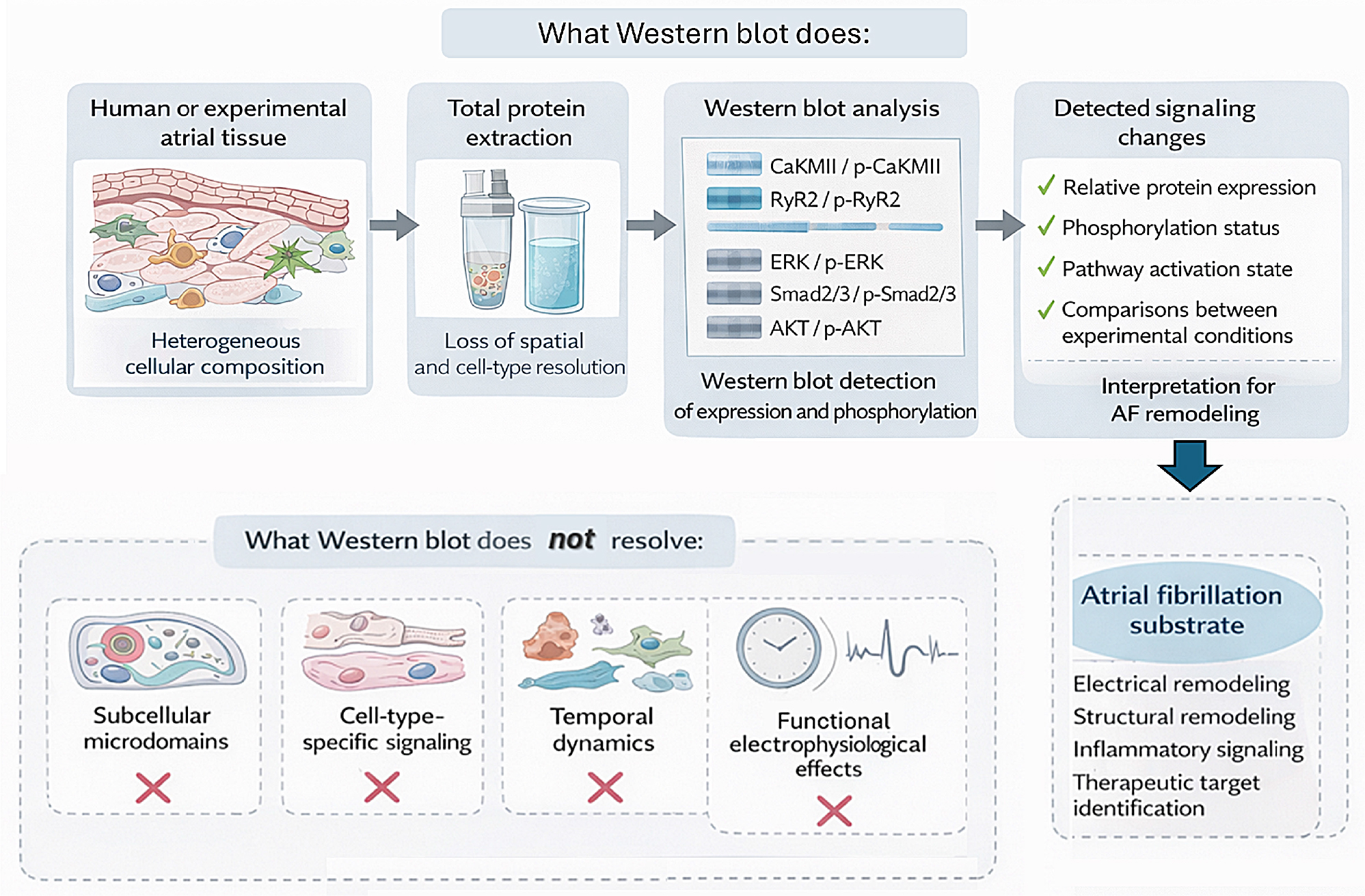
Figure 3
Western blot as a molecular window into atrial fibrillation signaling.
Western blot analysis enables the detection of protein expression and post-translational modifications in atrial tissue samples obtained from experimental models or patients with atrial fibrillation (AF). Following total protein extraction from heterogeneous atrial tissue, Western blot allows the relative quantification of signaling proteins and their phosphorylated forms, providing insights into the activation status of key intracellular pathways involved in electrical and structural remodeling. However, this technique does not preserve spatial resolution, cell-type specificity, or temporal dynamics of signaling events. Therefore, Western blot findings should be interpreted as reflecting global pathway activation and are best integrated with functional, imagingbased, and electrophysiological approaches to fully characterize the AF substrate.
AF – atrial fibrillation; AKT – protein kinase B; CaMKII – calcium/calmodulin-dependent protein kinase II; ERK – extracellular signal-regulated kinase; RyR2 – ryanodine receptor 2; Smad – suppressor of mothers against decapentaplegic
Atrial ablation represents a mechanistically distinct therapeutic strategy in AF, targeting the anatomical and functional consequences of atrial remodeling rather than directly modulating intracellular signaling pathways [69]. The poor efficacy of ablation in persistent and long-term AF supports these claims [69]. Beyond conventional pulmonary veinisolation, adjunctive strategies targeting the autonomic substrate, such as ganglionic plexus ablation or cardioneural ablation, have been proposed to attenuate autonomic remodeling that promotes CaMKII activation, calcium handling instability, and inflammatory signaling [70]. Although these approaches provide mechanistic insight into the role of the autonomic nervous system in AF, control of sinus rhythm is not consistently achieved in clinical trials [70].
Despite its central role in elucidating intracellular signaling in AF, Western blot analysis has inherent limitations that should be acknowledged. The technique is semi-quantitative, dependent on antibody specificity, and lacks cellular and spatial resolution in heterogeneous atrial tissue samples containing cardiomyocytes, fibroblasts, endothelial cells, and inflammatory cells. In addition, changes in phosphorylation status do not always translate directly into functional effects. Therefore, Western blot data should be interpreted in conjunction with complementary approaches, including electrophysiological recordings, imaging-based methods, and emerging proteomic techniques, to obtain a comprehensive understanding of atrial remodeling mechanisms.
Conclusions
Atrial remodeling underlies the onset and maintenance of AF episodes. The onset of atrial electrical and structural changes is the result of the coordinated activity of multiple intracellular signaling pathways. Among these, the CaMKII, MAPK, NF-κB, TGF-β/Smad, and PI3K/AKT/mTOR pathways act interdependently, promoting cell proliferation, fibrosis and apoptosis, but also calcium handling disorders and, consequently, the occurrence of AF. Western blot analysis remains an essential tool in elucidating the mechanisms of AF by identifying key points in these signaling pathways. Understanding these mechanisms may form the basis for personalized therapeutic strategies targeting the AF substrate.
Acknowledgements
This work was supported by a scholarship offered by the Romanian Society of Cardiology within the Experience Exchange Program
Abbreviations
The following abbreviations are used in this manuscript:
- ACE
angiotensin-converting enzyme
- AF
atrial fibrillation
- AERP
atrial effective refractory period
- AKT
protein kinase B
- αSMA
alpha-smooth muscle actin
- APD
action potential duration
- BAFF-R
B-cell activating factor receptor
- CaMKII
calcium/calmodulin-dependent protein kinase II
- CAMK2A/B/G/D
calcium/calmodulin-dependent protein kinase II genes A/B/G/D
- cAMP
cyclic adenosine monophosphate
- coSMAD
common SMAD
- Cx40
connexin 40
- Cx43
connexin 43
- DADs
delayed afterdepolarizations
- DNMTs
DNA methyltransferases
- EADs
early afterdepolarizations
- Epac
exchange protein directly activated by cAMP
- ERK
extracellular signal-regulated kinase
- ERK1/2
extracellular signal-regulated kinases 1 and 2
- FoxO3a
forkhead box O3a
- GAPDH
glyceraldehyde 3-phosphate dehydrogenase
- HDACs
histone deacetylases
- HIF-1 α
hypoxia-inducible factor 1 alpha
- HL-1
murine atrial cardiomyocyte cell line
- ICa,L
L-type calcium current
- IGF-1
insulin-like growth factor 1
- IGF-1R
insulin-like growth factor 1 receptor
- IK1
inward rectifier potassium current
- IK,ACh
acetylcholine-activated potassium current
- IK,Ca
calcium-activated potassium current
- IKK
IκB kinase
- IKKα
IκB kinase alpha
- IKKβ
IκB kinase beta
- IKur
ultra-rapid delayed rectifier potassium current
- II
interleukin
- INa
sodium current
- INa,late
late sodium current
- Ito
transient outward potassium current
- JNK
c-Jun N-terminal kinase
- JNK2
c-Jun N-terminal kinase isoform 2
- KCa3.1
intermediate-conductance calcium-activated potassium channel
- Kv1.5
voltage-gated potassium channel Kv1.5
- LTβR
lymphotoxin-β receptor
- MAPK
mitogen-activated protein kinase
- MAPKK
mitogen-activated protein kinase kinase
- MAPKKK
mitogen-activated protein kinase kinase kinase
- Met
methionine
- miR
microRNA
- MMP-9
matrix metalloproteinase-9
- mTOR
mammalian target of rapamycin
- mTORC1/2
mammalian target of rapamycin complexes 1 and 2
- NCX
sodium-calcium exchanger
- NF-κB
nuclear factor kappa-light-chain-enhancer of activated B cells
- NHE
sodium-hydrogen exchanger
- NIK
NF-κB-inducing kinase
- NLRP3
NOD-like receptor pyrin domain containing 3
- PDK1
phosphoinositide-dependent kinase-1
- PI3K
phosphatidylinositol 3-kinase
- PIP2
phosphatidylinositol-4,5-bisphosphate
- PIP3
phosphatidylinositol-3,4,5-trisphosphate
- PKA
protein kinase A
- PLB
phospholamban
- PVDF
polyvinylidene difluoride
- R-SMADs
receptor-regulated SMADs
- ROS
reactive oxygen species
- RyR / RyR2
ryanodine receptor / ryanodine receptor 2
- Ser
serine
- SERCA2 / SERCA2a
sarcoplasmic reticulum Ca2+-ATPase 2 / 2a
- SLN
sarcolipin
- Smad
suppressor of mothers against decapentaplegic
- SR
sarcoplasmic reticulum
- TAK1
TGF-β-activated kinase 1
- TGF-β / TGF-β1
transforming growth factor beta / beta 1
- Thr
threonine
- TLRs
Toll-like receptors
- TNF-α
tumor necrosis factor alpha
Notes
[2] Conflicts of Interest
The authors have each completed the International Committee of Medical Journal Editors Form for uniform Disclosure of Potential Conflicts of Interest. No authors have any potential conflict of interest to disclose.
[3] Author Contributions
All authors have read and agreed to the published version of the manuscript.