
Figure 1
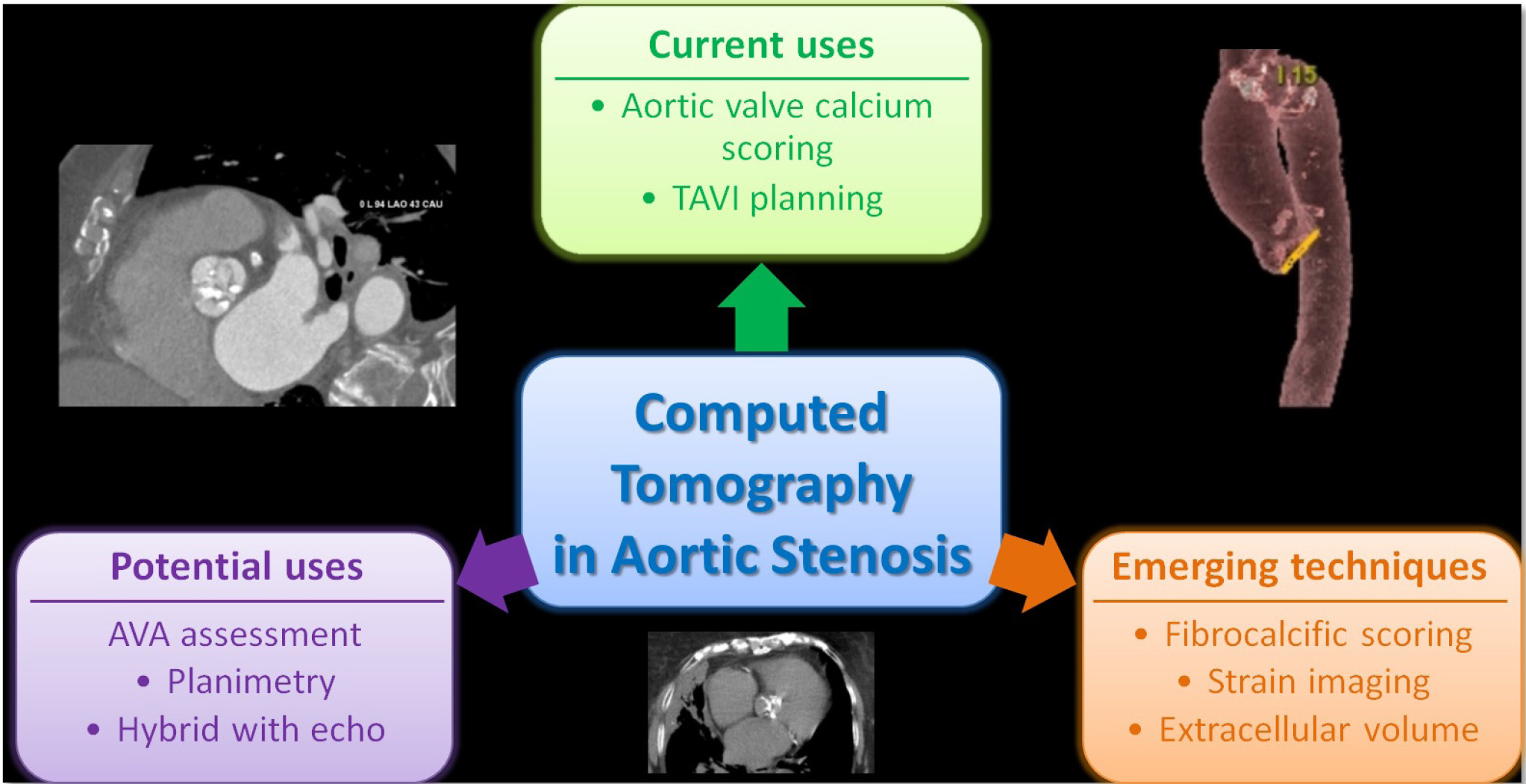
Role of computed tomography in aortic stenosis (AS) assessment. AVA, aortic valve area; TAVI, transcatheter aortic valve implantation.
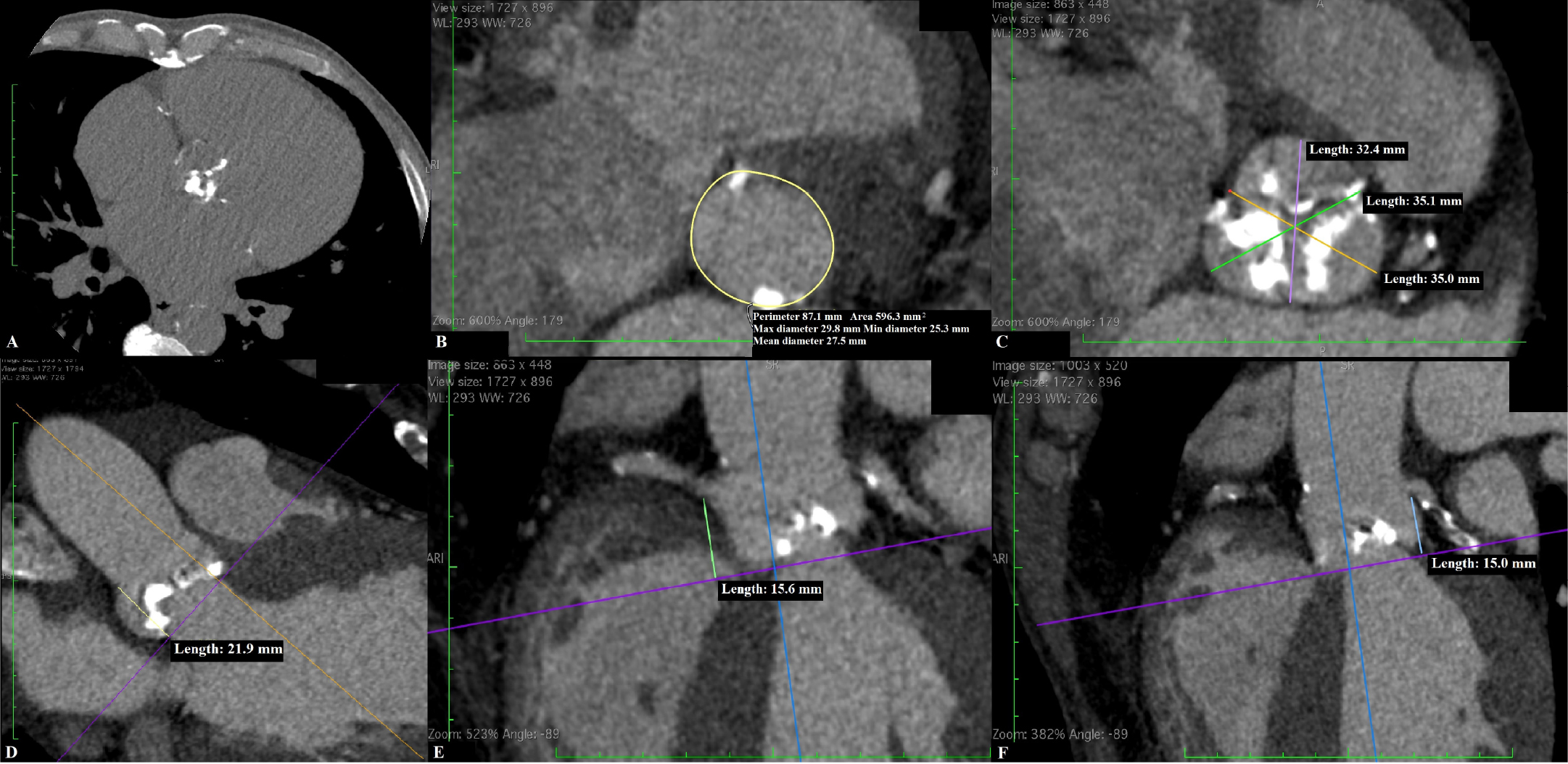
Figure 2
Computed tomography (CT) aortic root examination in a patient with aortic stenosis (AS) before transcatheter aortic valve implantation (TAVI). (A) Non-contrast CT showing intensely calcified aortic valve (calcium score 5888 AU); Contrast CT multiplanar reformatted images (during systolic phase 33 %) showing measurements of (B) the aortic annulus perimeter (87.1 mm) and diameters (maximum/minimum/mean 29.8/25.3/27.5 mm), (C) the sinuses of Valsalva diameters (32.4/35.1/35.0 mm), (D) the sinotubular junction height (21.9 mm), (E) the right coronary height (15.6 mm), and (F) the left coronary height (15.0 mm).
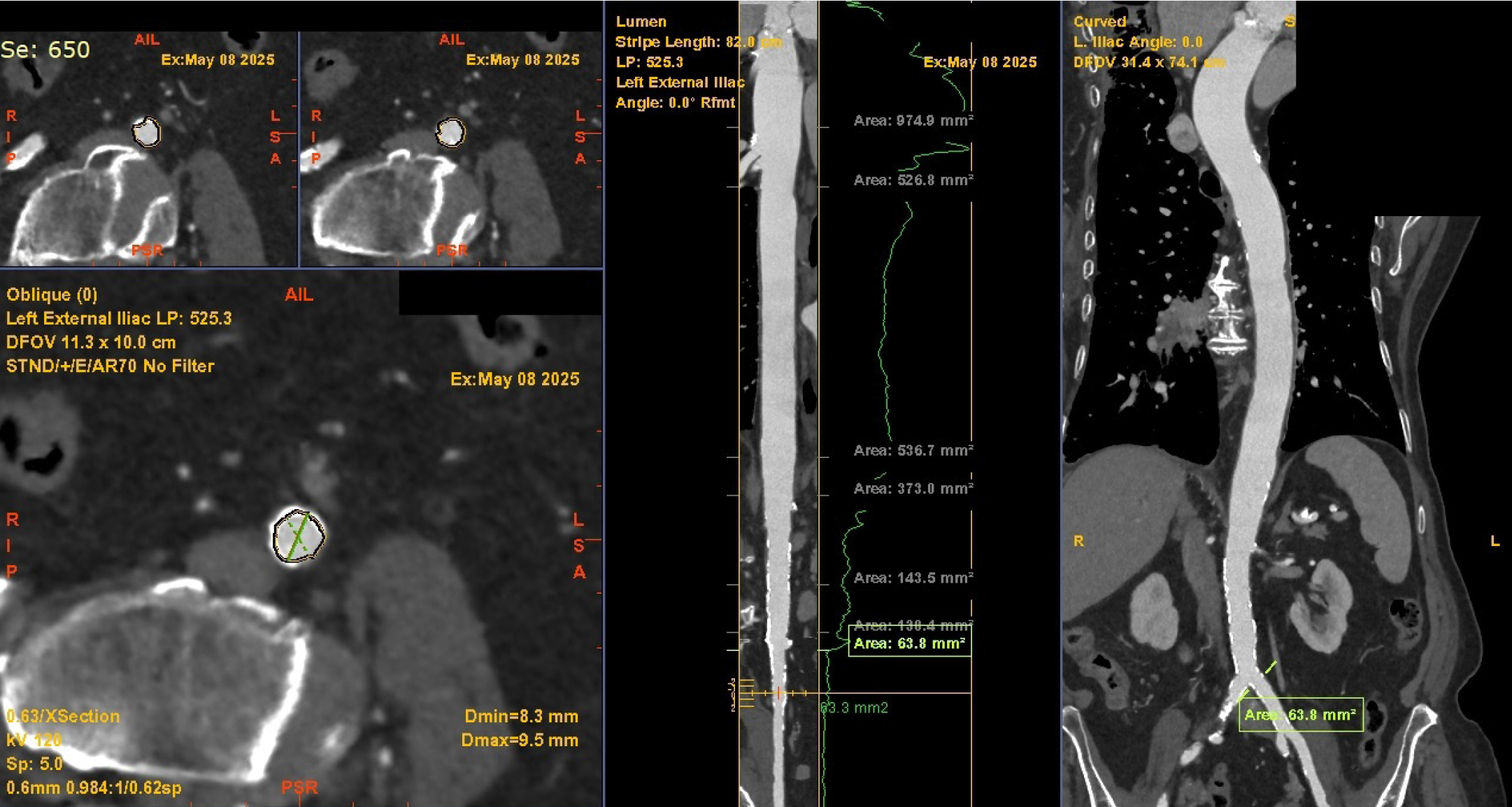
Figure 3
Vascular access assessment for transcatheter aortic valve implantation (TAVI) using computed tomography (CT) angiography. Multiplanar reformatted CT images demonstrating the assessment of iliofemoral access in a patient undergoing TAVI—axial and oblique views (left) and centerline image processing (middle and right) of the left external iliac artery allow assessment of dimensions, calcifications, and angulation critical for evaluating the feasibility and safety of transfemoral access.