
Figure 1
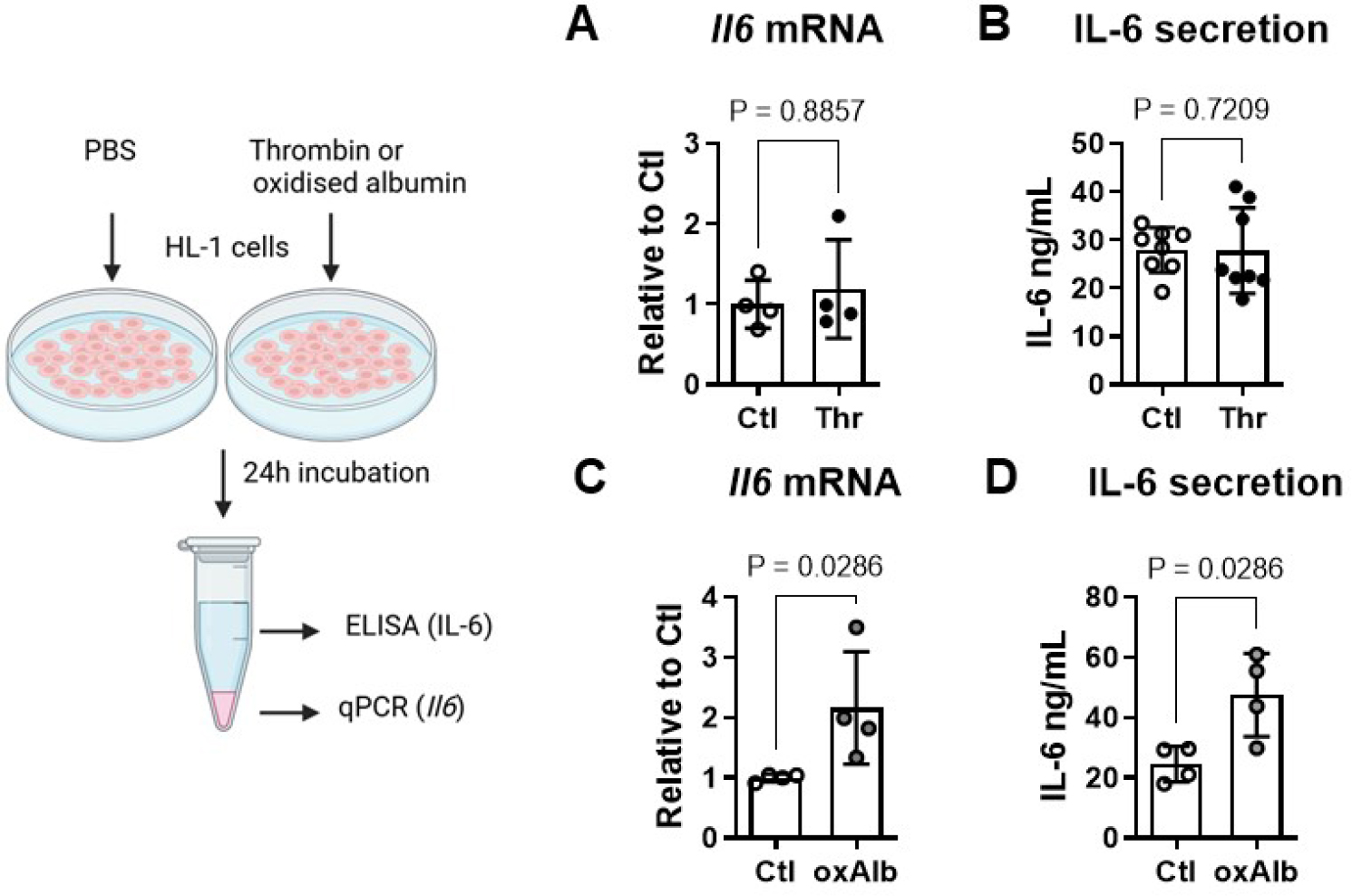
Thrombin does not directly regulate IL-6 in cardiomyocytes at physiological concentrations. (A) Exposure of HL-1 atrial cardiomyocytes to thrombin (Thr, 1 U/ml, 24 h) did not influence either Il6 mRNA expression or (B) IL-6 secretion, compared to control (Ctl, PBS vehicle). (C) Oxidized albumin (oxAlb, 20 ng/mL, 24 h) by contrast increased both Il6 mRNA and (D) secreted IL-6 compared to PBS control in HL-1 cardiomyocytes. Data show mean ± SD.
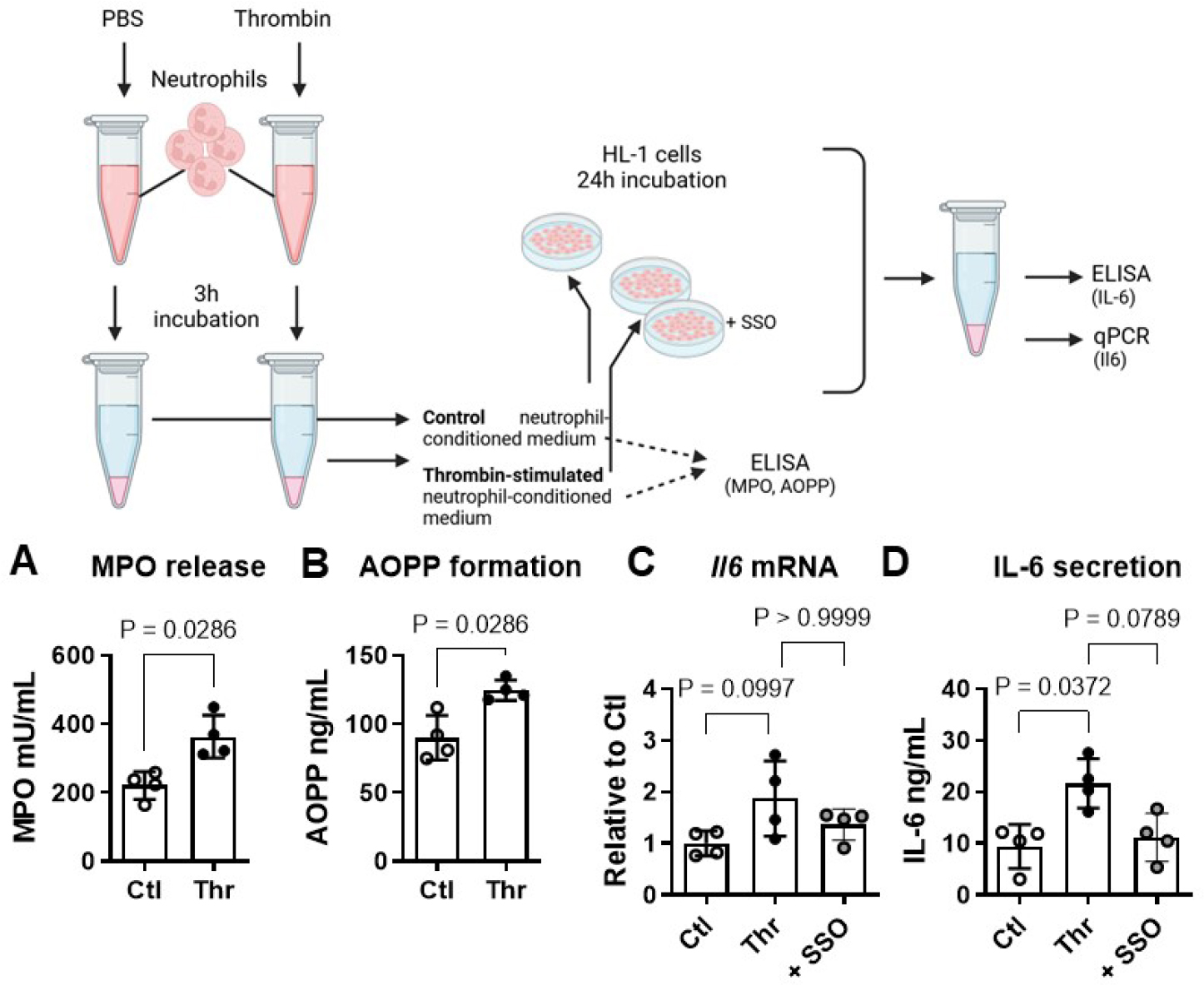
Figure 2
Thrombin indirectly regulates cardiomyocyte IL-6 via neutrophil-derived oxidation products. (A) In the presence of thrombin (Thr, 1 U/mL, 3h), human neutrophils in autologous platelet-rich plasma (PRP) produced more extracellular myeloperoxidase (MPO) activity and (B) Advanced Oxidation Protein Products (AOPP) compared to unstimulated control (Ctl) neutrophils. (C) Exposure of HL-1 atrial cardiomyocytes to PRP conditioned with thrombin-stimulated neutrophils increased Il6 transcript levels and (D) IL-6 secretion compared to PRP conditioned with control neutrophils. In the presence of the CD36 inhibitor SSO both effects were attenuated. Data show mean ± SD.
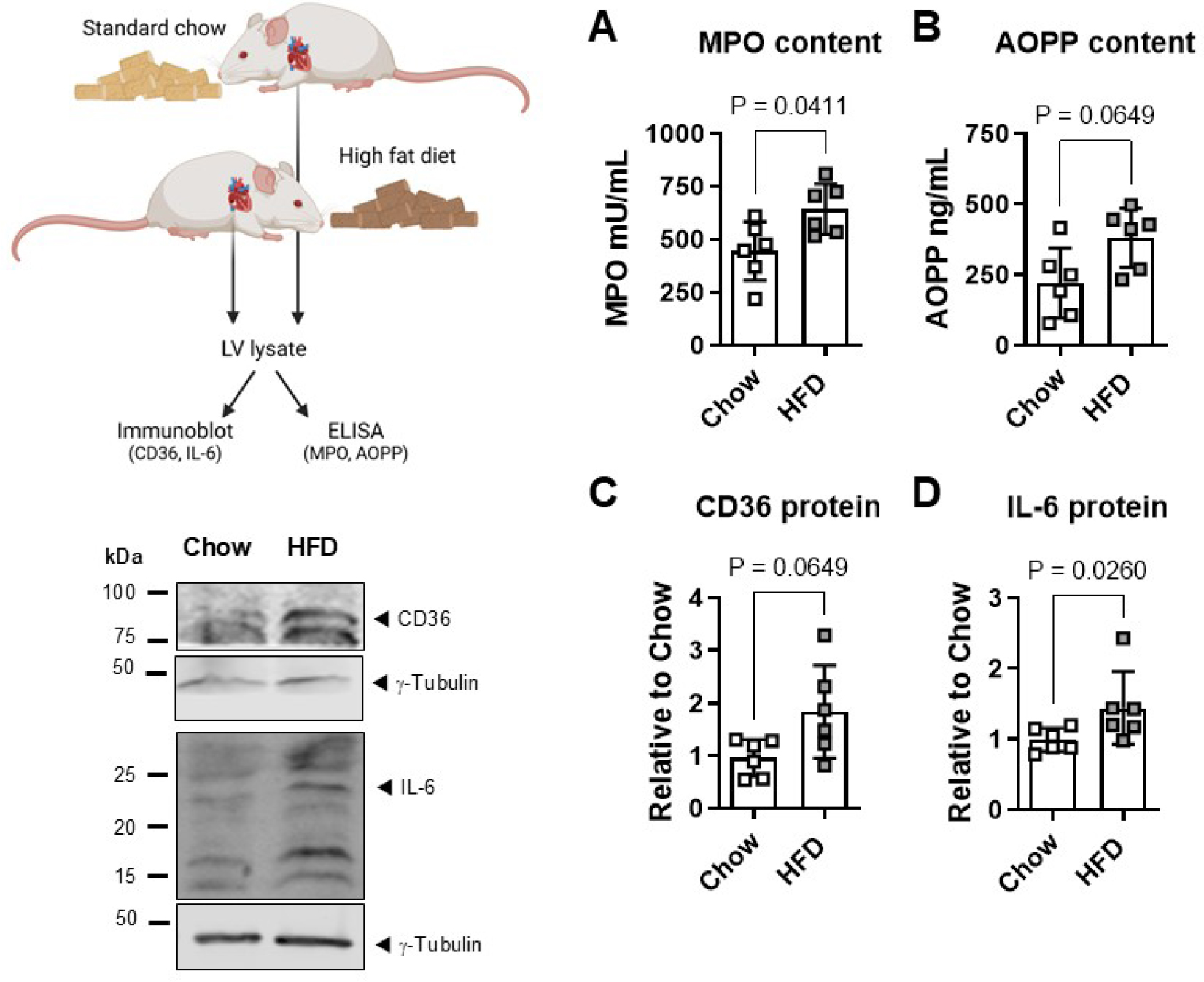
Figure 3
High fat diet increases myocardial IL-6. (A) Left ventricular (LV) lysates from mice fed a high fat diet (HFD) displayed higher myeloperoxidase (MPO) activity and (B) Advanced Oxidation Protein Products (AOPP) than LV from chow-fed controls. (C) Immunoblot also showed more abundant CD36 and (D) IL-6 total protein expression in LV myocardium of HFD-versus chow-fed mice. Immunoblots were normalized to γ-tubulin. Data show mean ± SD. This image was created with Biorender.com.
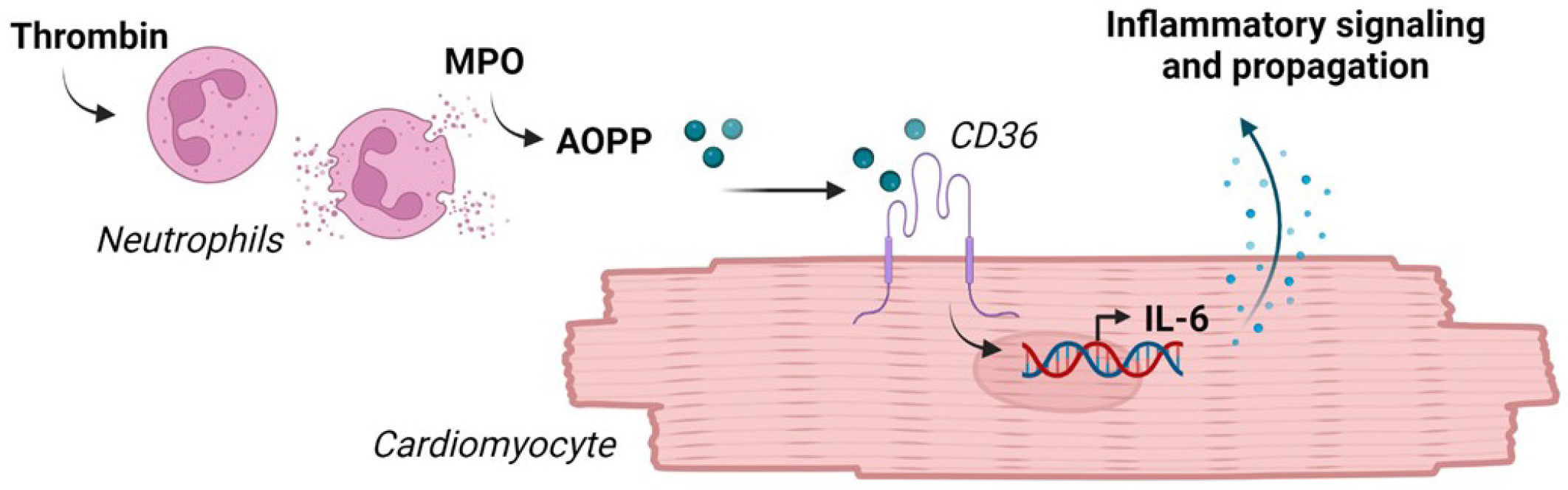
Figure 4
Schematic depiction of working hypothesis: Thrombin stimulates MPO release and AOPP formation by neutrophils. AOPP uptake via CD36 scavenger receptors provokes IL-6 transcription and secretion by cardiomyocytes, to modulate local inflammatory events.