Have a personal or library account? Click to login
The influence of chronic exposure to bisphenol A on cardiac function: a study of ECG parameters in adult female rats Cover

The influence of chronic exposure to bisphenol A on cardiac function: a study of ECG parameters in adult female rats

Open Access
|Sep 2025

Figures & Tables

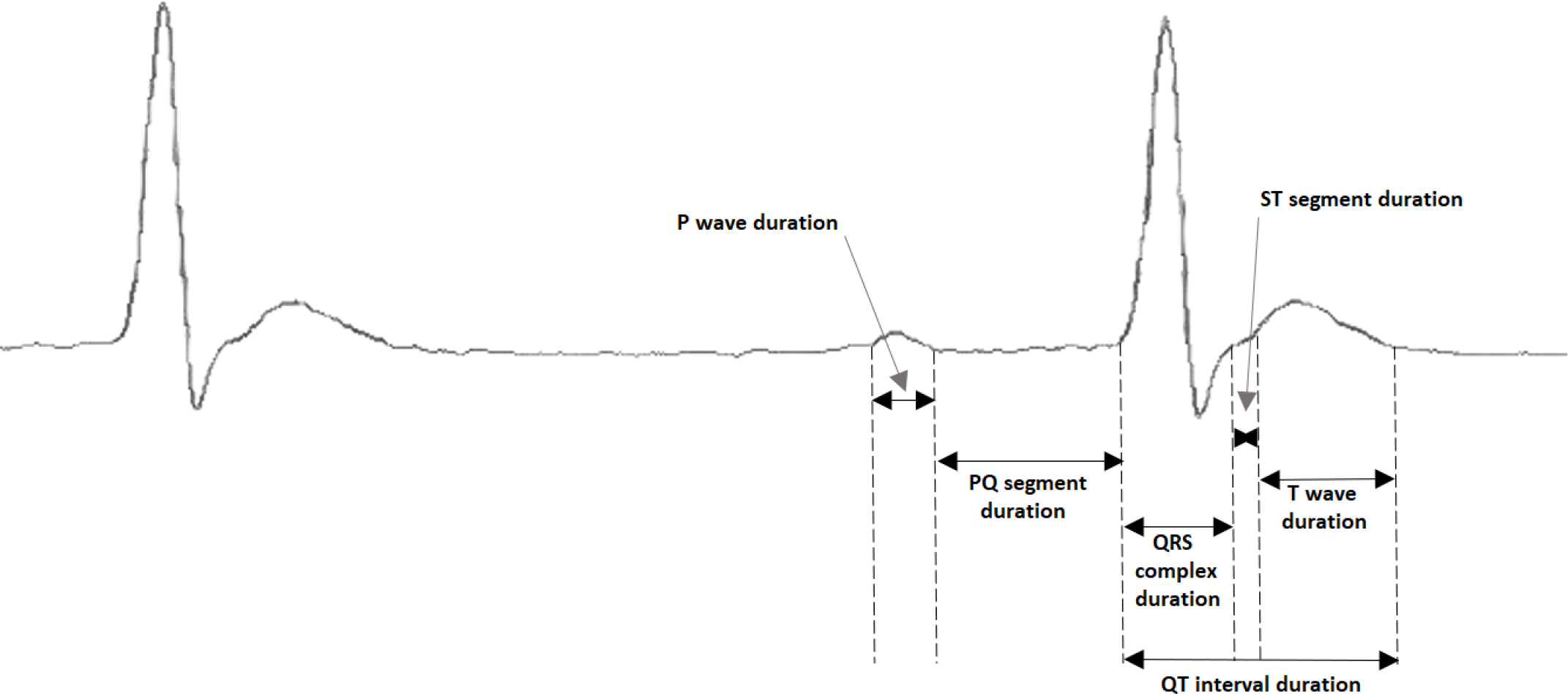
Figure 1

The ECG parameters measurement.
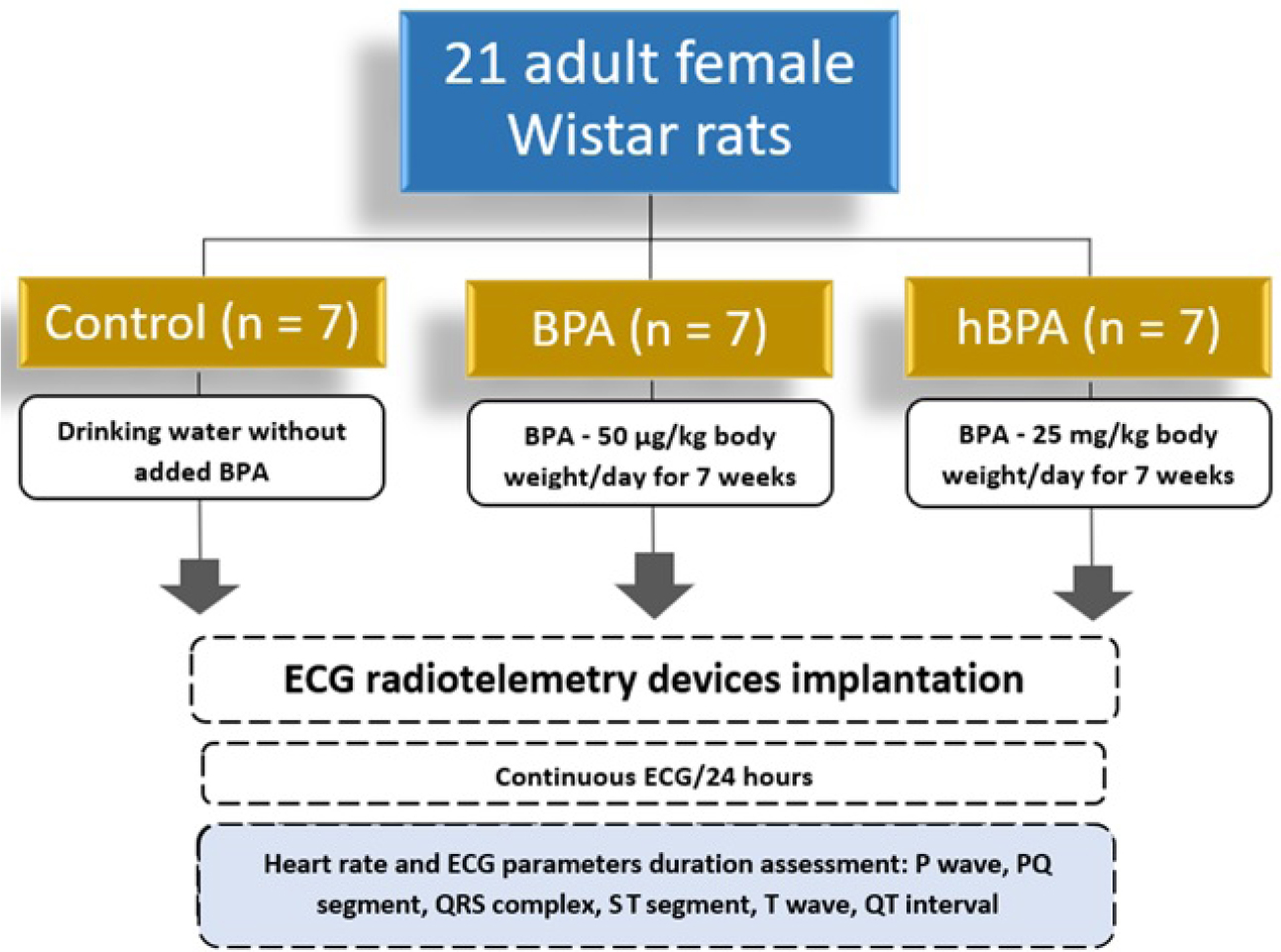

Figure 2

Schematic representation of the study protocol.
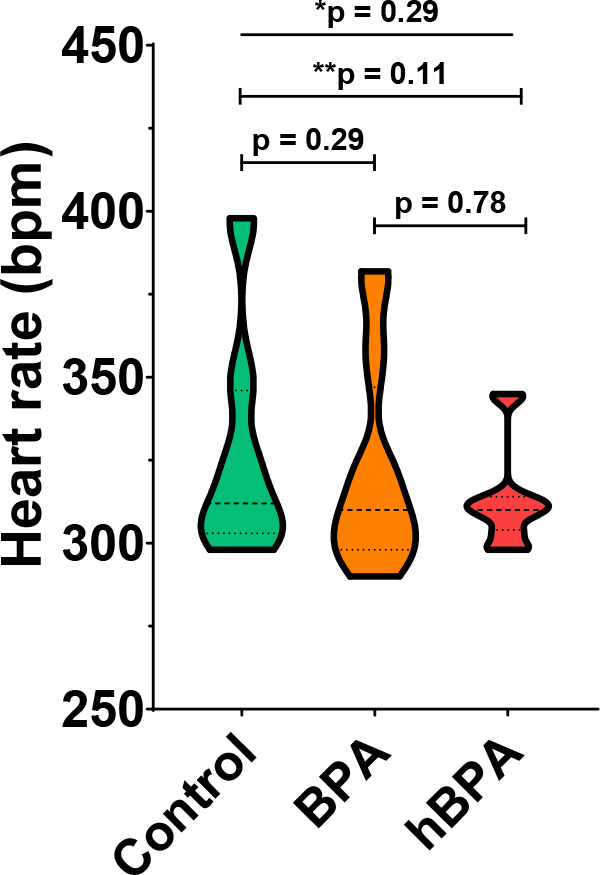

Figure 3

Heart rate in control rats and in rats exposed to human relevant (BPA) and supraphysiological (hBPA) bisphenol A doses for 7 consecutive weeks. Data are expressed as median and interquartile ranges; p-values were calculated using the Kruskal–Wallis and the Mann–Whitney U tests. * The p-value refers to the comparison between groups based on the Kruskal–Wallis test; ** the p-value refers to the comparison between the control and hBPA groups based on the Mann–Whitney test.
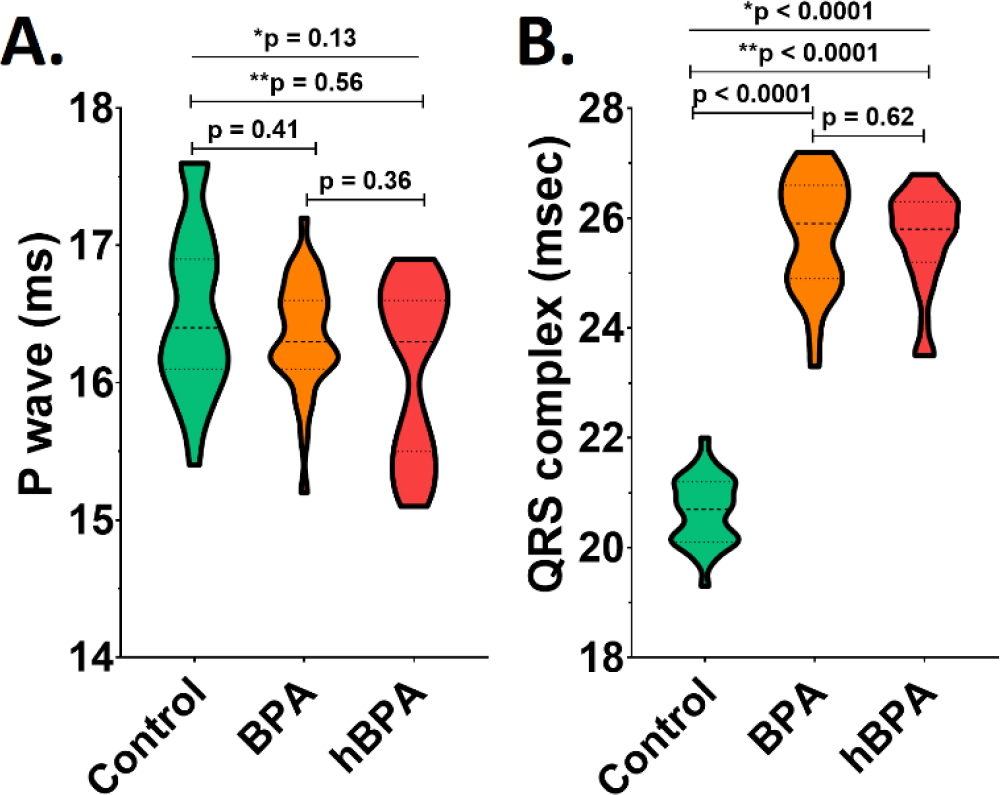

Figure 4

ECG parameters in control rats and in rats exposed to usual (BPA) and high (hBPA) bisphenol A doses for 7 weeks. The figure illustrates the duration of the P wave (A) and the QRS complex (B). Data are expressed as median and interquartile ranges; p-values were calculated using the Kruskal–Wallis and the Mann–Whitney U tests. * The p-value refers to the comparison between groups based on the Kruskal–Wallis test; ** the p-value refers to the comparison between the Control and hBPA groups based on the Mann–Whitney test.
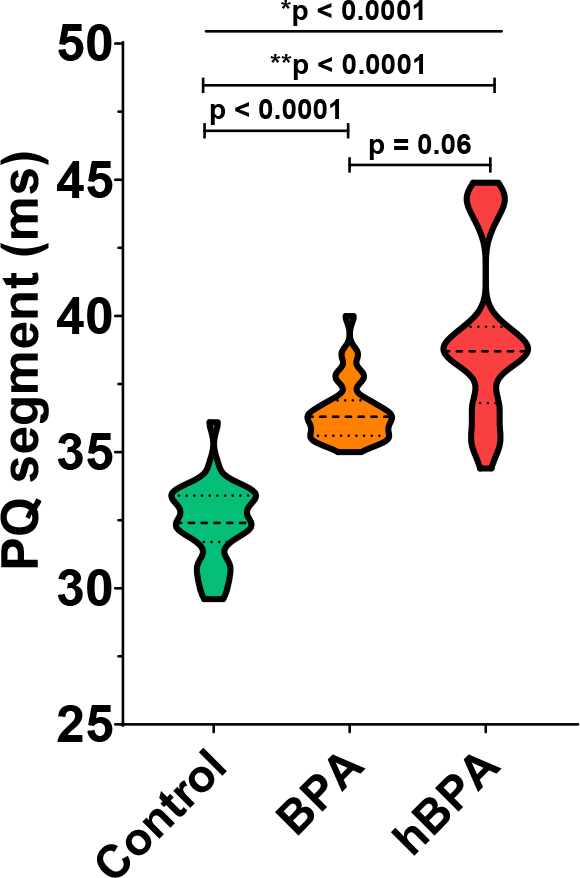
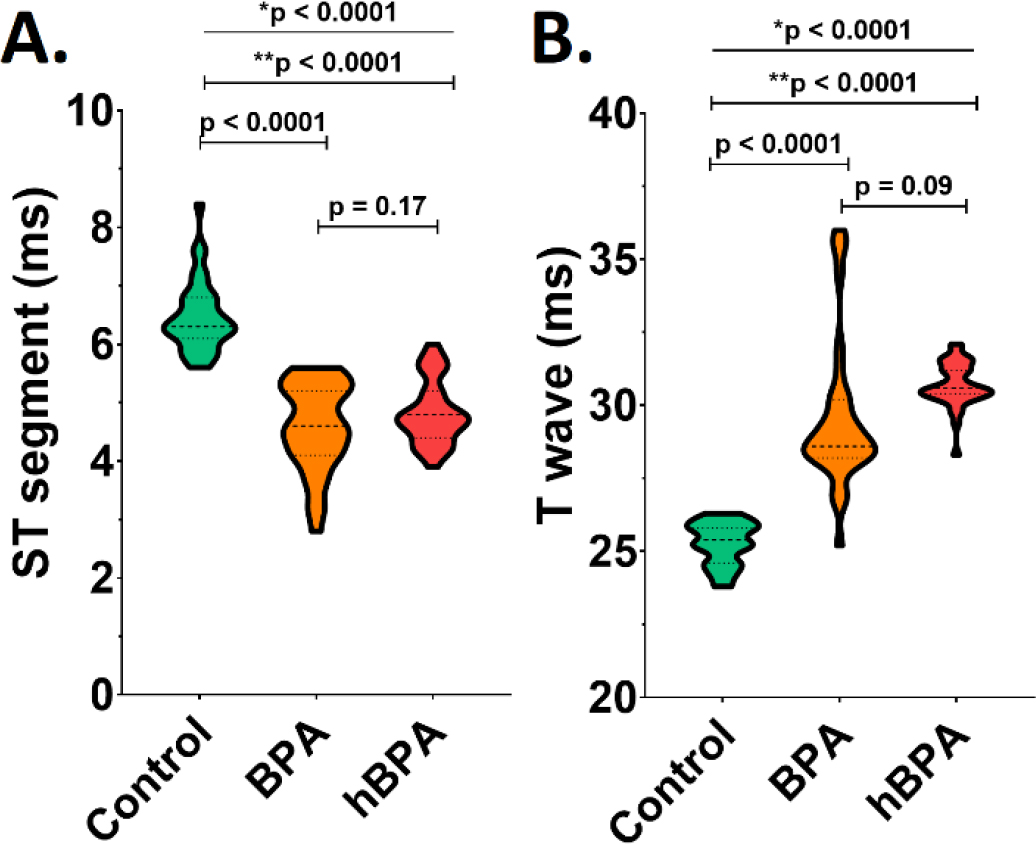
Figure 5

The duration of the PQ segment (ms). Data are expressed as median and interquartile ranges; p-values were calculated using the Kruskal–Wallis and the Mann–Whitney U tests. * The p-value refers to the comparison between groups based on the Kruskal–Wallis test; ** the p-value refers to the comparison between the Control and hBPA groups based on the Mann–Whitney test.
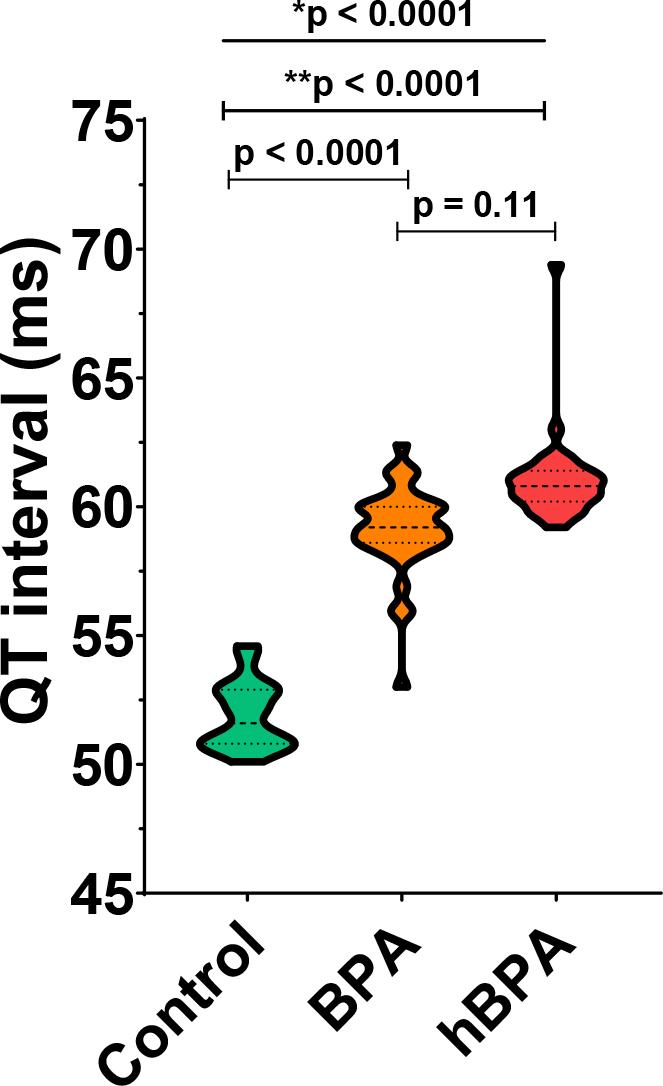

Figure 6

ECG parameters in control rats and in rats exposed to usual (BPA) and high (hBPA) bisphenol A doses for 7 weeks. The figure illustrates the duration of the ST segment (A) and the T wave (B). Data are expressed as median and interquartile ranges; p-values were calculated using the Kruskal–Wallis and the Mann–Whitney U tests. * The p-value refers to the comparison between groups based on the Kruskal–Wallis test; ** the p-value refers to the comparison between the Control and hBPA groups based on the Mann–Whitney test.

Figure 7

The duration of the QT interval (ms). Data are expressed as median and interquartile ranges; p-values were calculated using the Kruskal–Wallis and the Mann–Whitney U tests. * The p-value refers to the comparison between groups based on the Kruskal–Wallis test; ** the p-value refers to the comparison between the Control and hBPA groups based on the Mann–Whitney test.
DOI: https://doi.org/10.2478/rjc-2025-0012 | Journal eISSN: 2734-6382 | Journal ISSN: 1220-658X
Language: English
Page range: 205 - 212
Published on: Sep 30, 2025
Published by: Romanian Society of Cardiology
In partnership with: Paradigm Publishing Services
Publication frequency: 4 issues per year

© 2025 Vasile-Bogdan Halaţiu, Dan-Alexandru Cozac, Ioana Alkora Balan, Marcel Perian, Valeriu Revenco, Vitalie Moscalu, Alina Scridon, published by Romanian Society of Cardiology
This work is licensed under the Creative Commons Attribution-NonCommercial-NoDerivatives 4.0 License.