
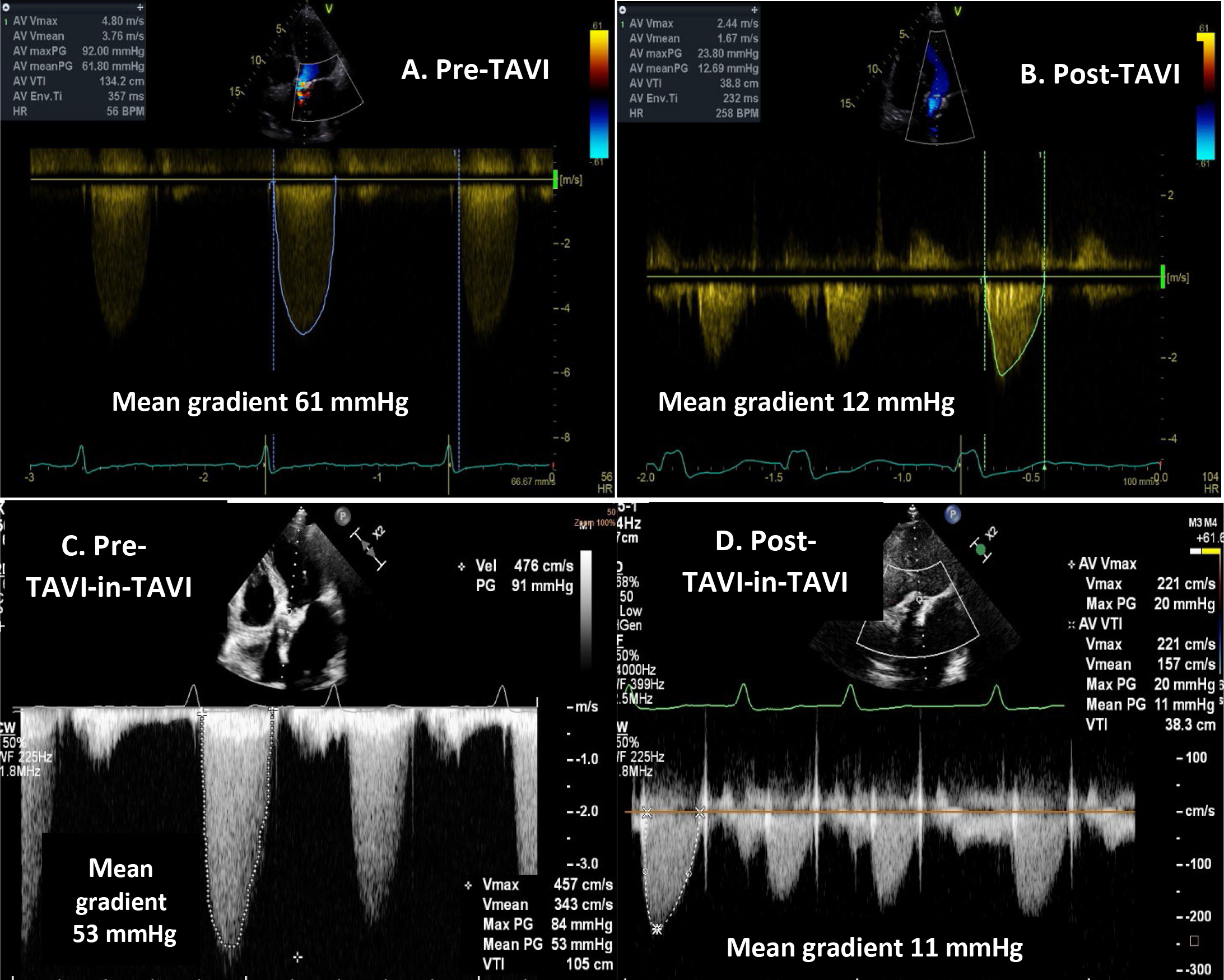
Figure 1
Evaluation of aortic valve function with continuous-wave Doppler echocardiography before transcatheter aortic valve implantation (A), after transcatheter aortic valve implantation (B), before TAVI-in-TAVI (C), and after TAVI-in-TAVI (D).
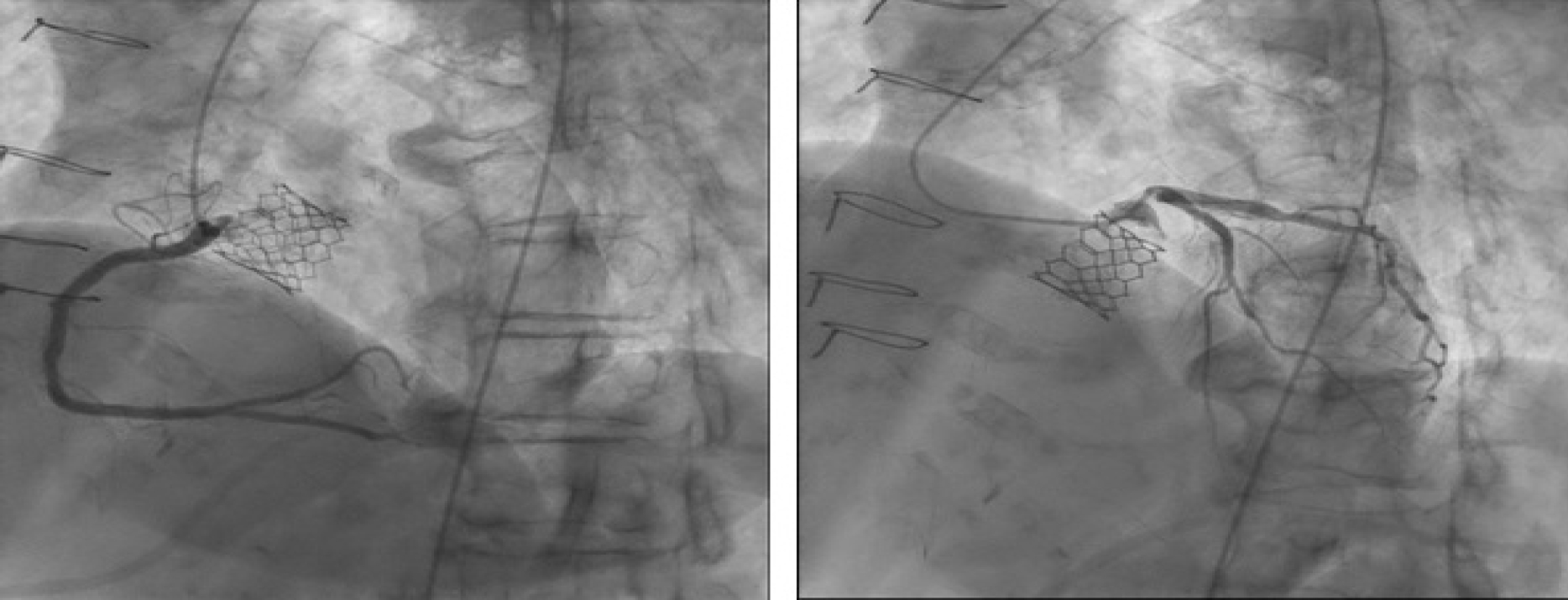
Figure 2
Coronary angiography performed in 2022 showed no coronary lesions. The stent of the first Edwards Sapien aortic valve implanted at TAVI can be seen.
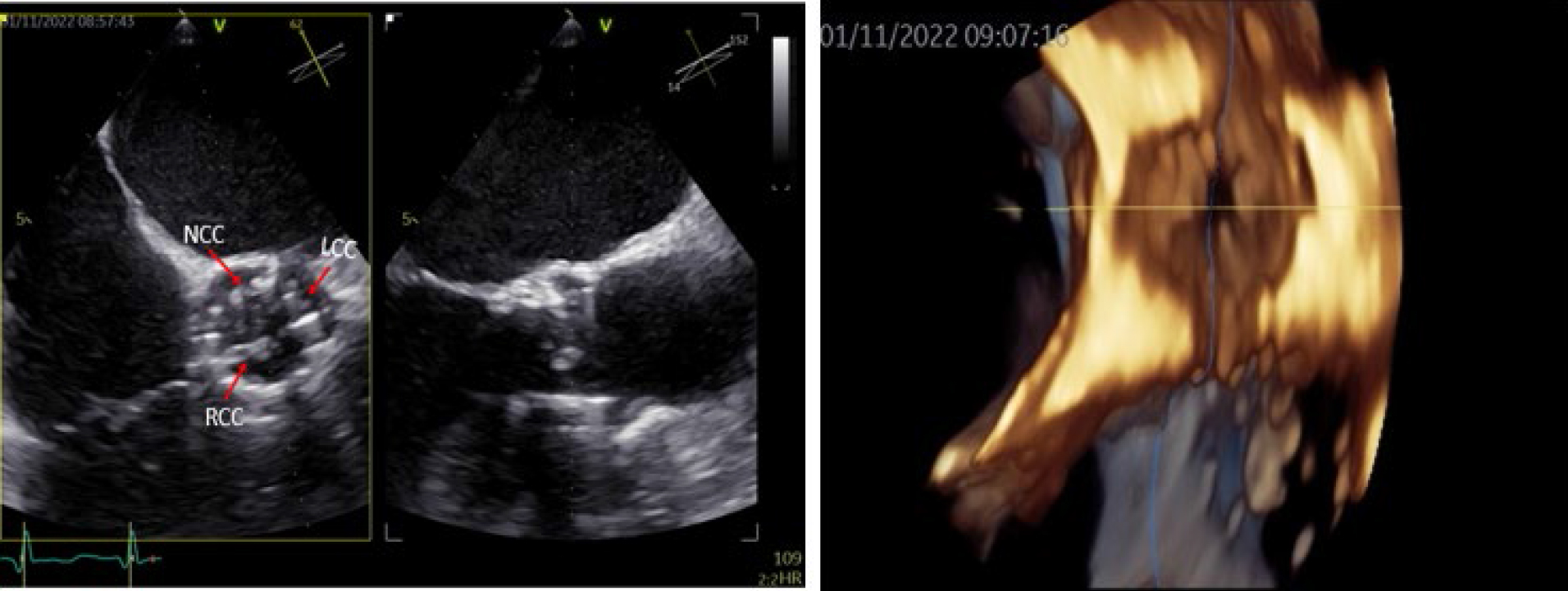
Figure 3
TEE showed structural valve degeneration with restricted motion of both the left and right coronary cusps (LCC and RCC respectively) and limited opening of the aortic valve, seen here in systolic frames of the 2D and 3D views of the aortic valved.
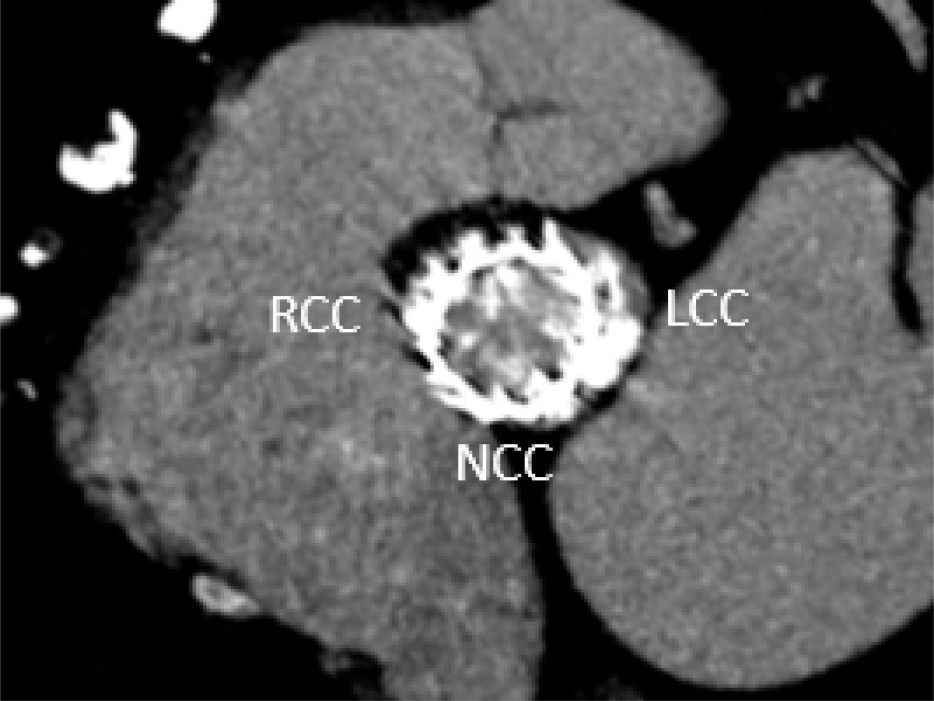
Figure 4
Pre-TAVI-in-TAVI Cardiac CT showed calcification of the three biologic prosthesis leaflets, with reduced mobility mainly of the right and left coronary cusps, with limited opening during ventricular systole (picture taken from systolic frame).
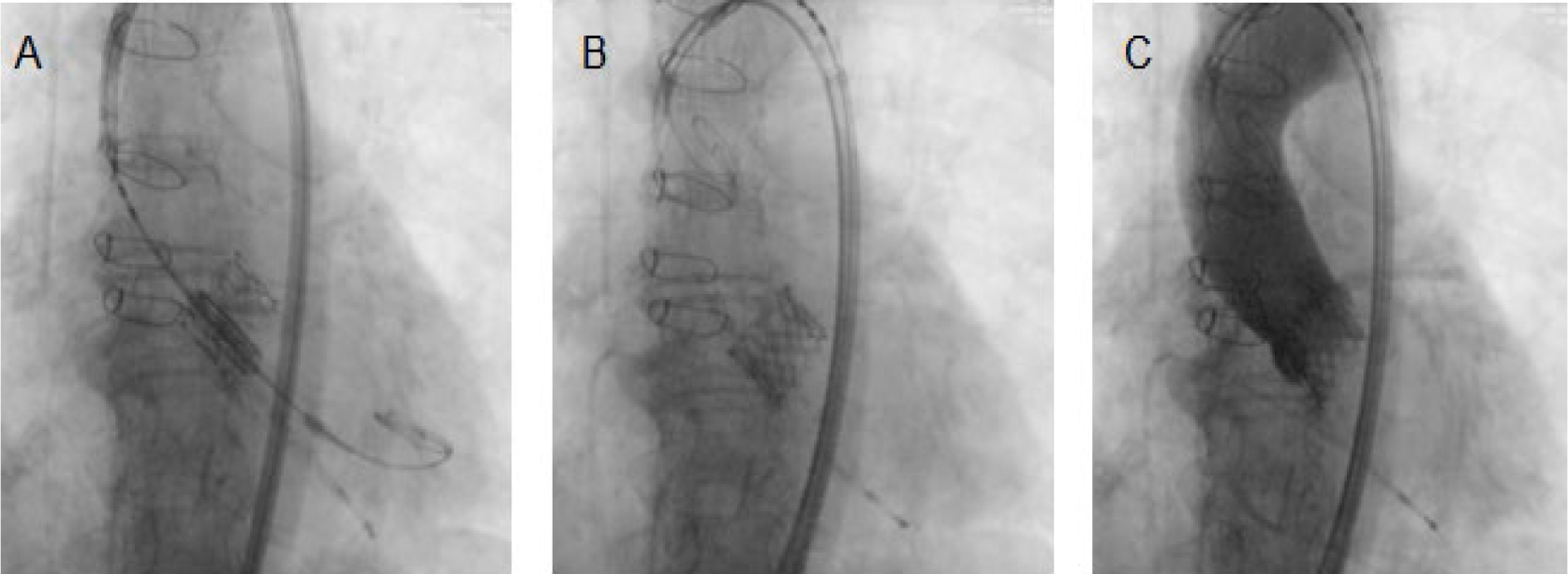
Figure 5
TAVI-in-TAVI with an Edwards Sapien 3 valve. (A) Using a balloon valvuloplasty, a 23 mm Edwards Sapien 3 valve was inserted into the degenerated 23 mm Edwards Sapien 3 bioprosthesis. (B) Expanded new Edwards Sapien 3 valve bioprosthesis. (C) X-ray fluoroscopy after transcatheter aortic valve deployment demonstrating a fully expanded, well-seated transcatheter prosthetic aortic valve.
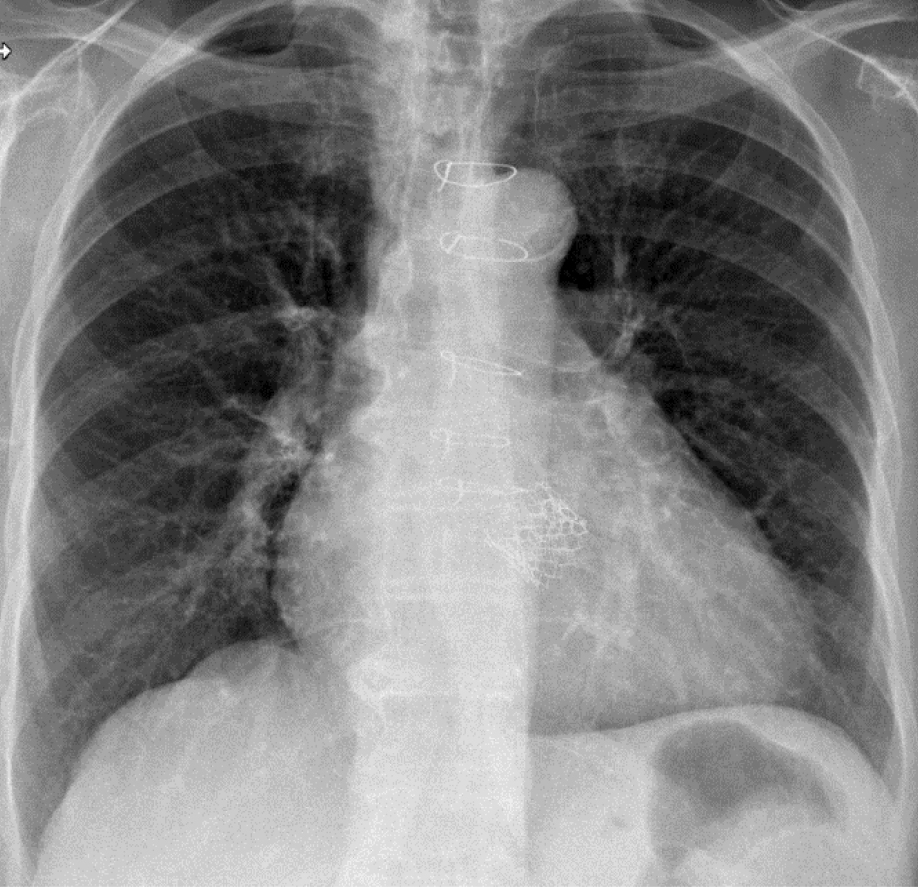
Figure 6
Chest X-ray after TAVI-in-TAVI reflecting the complex medical journey of the patient: sternum wires from the first CABG surgery and the two prosthetic stents from the first TAVI and the second TAVI-in-TAVI superposed in the center of the X-ray.