Have a personal or library account? Click to login
Isolated coronary artery ectasia presenting as inferior-posterior STEMI—a case-based state-of-the-art review of the current literature Cover

Isolated coronary artery ectasia presenting as inferior-posterior STEMI—a case-based state-of-the-art review of the current literature

Open Access
|Dec 2023

Figures & Tables

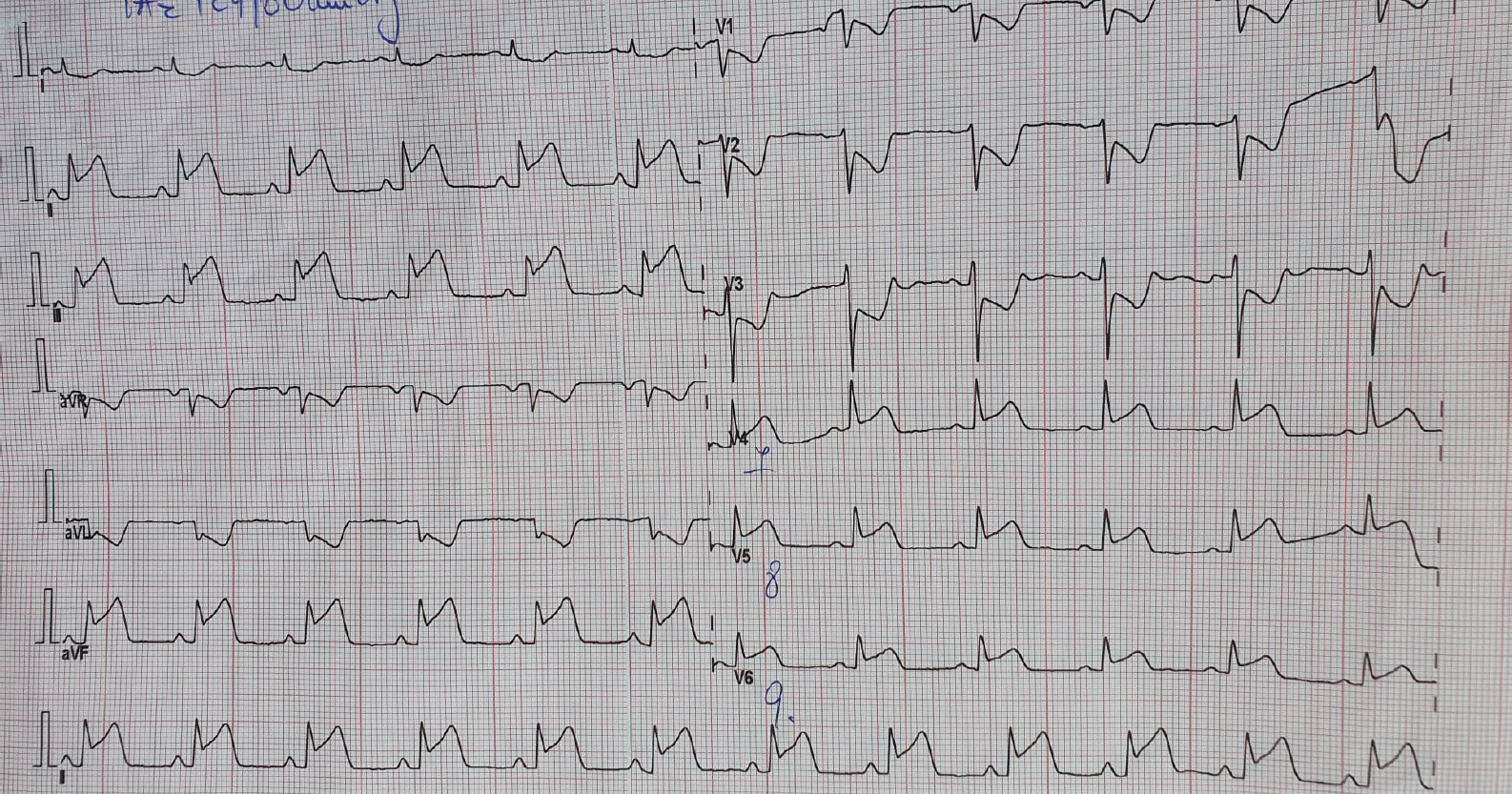
Figure 1.

Resting electrocardiogram at admission. Sinus rhythm, 70 bpm; QRS axis, +60°; ST segment elevation DII, DIII, aVF, V7–V9 with reciprocal ST segment depression in V1–V3, aVL.
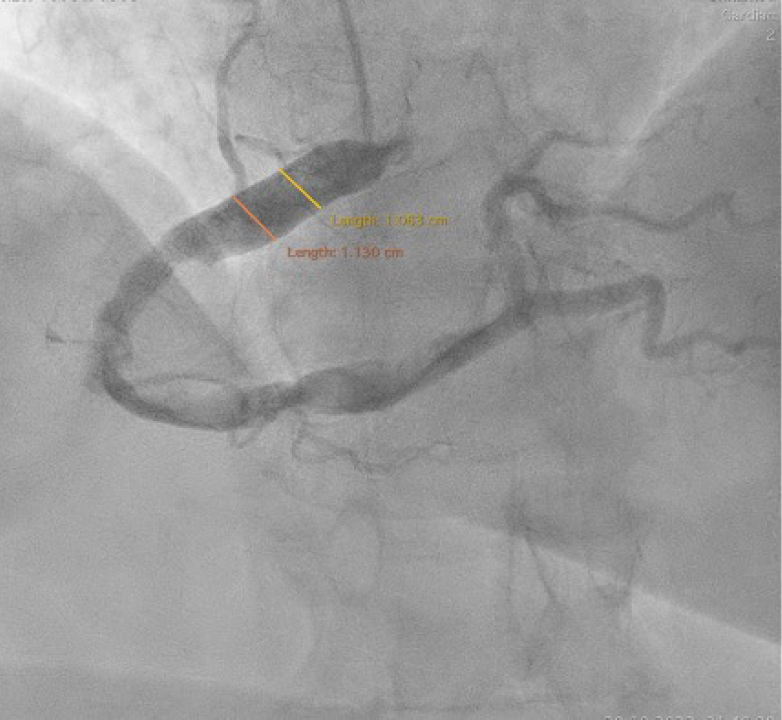

Figure 2.

Left anterior oblique projection of the right coronary artery. Significantly dilated right coronary artery (RCA) on its entire length, seen in left anterior oblique projection. Arrows indicate high quantity of thrombotic material in the mid-distal RCA.
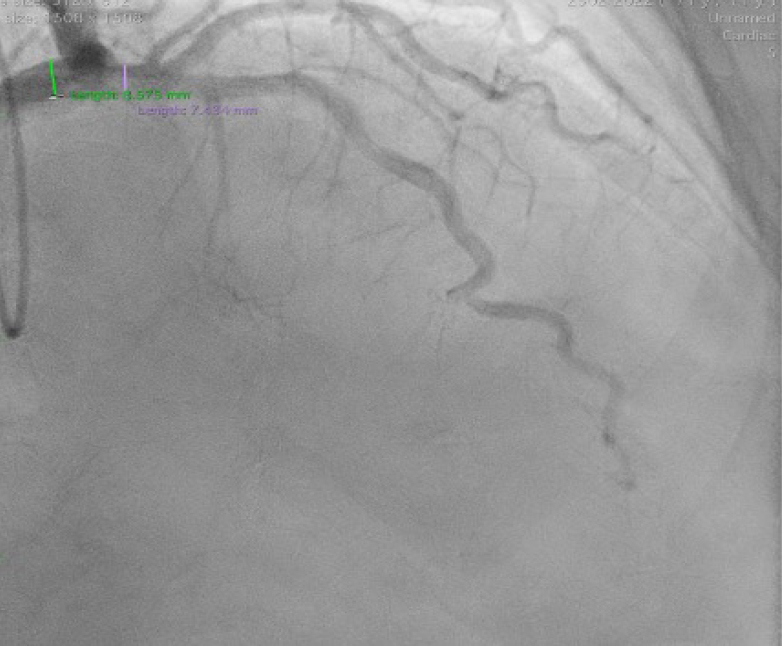

Figure 3.

Cranial right anterior oblique projection of the left coronary artery. Optimal projection of the left anterior descending artery (LAD) showing an ectatic vessel, with a maximum diameter of 7.4 mm in the proximal segment.
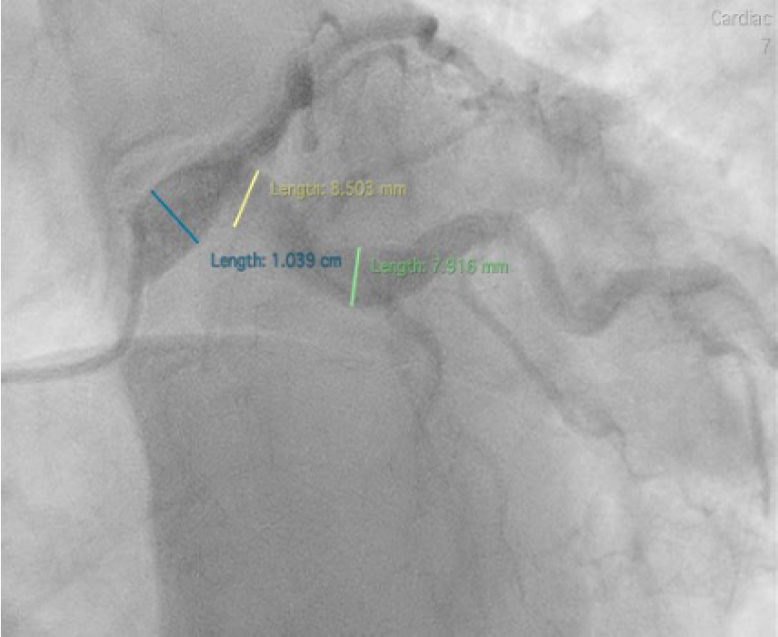

Figure 4.

Caudal left anterior oblique projection of the left coronary artery. “Spyder” projection shows ectasia of the left main coronary artery (maximum diameter of 10.3 mm in the mid-distal portion) and left circumflex (maximum diameter of 8.5 mm in the proximity of the ostium).
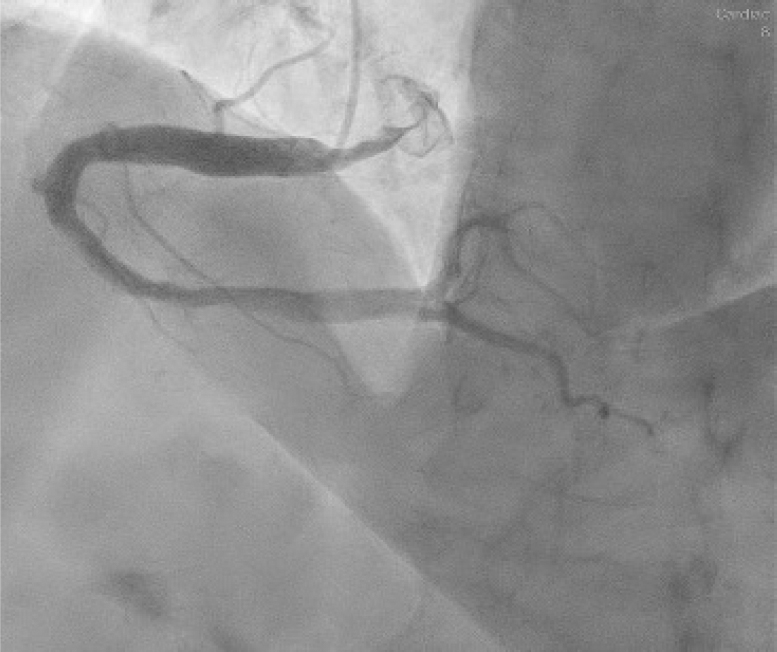

Figure 5.

Left anterior oblique projection of the right coronary artery—1 month later. One month later, there is no evidence of thrombus in the right coronary artery, and there is a moderate stenosis in the distal segment.
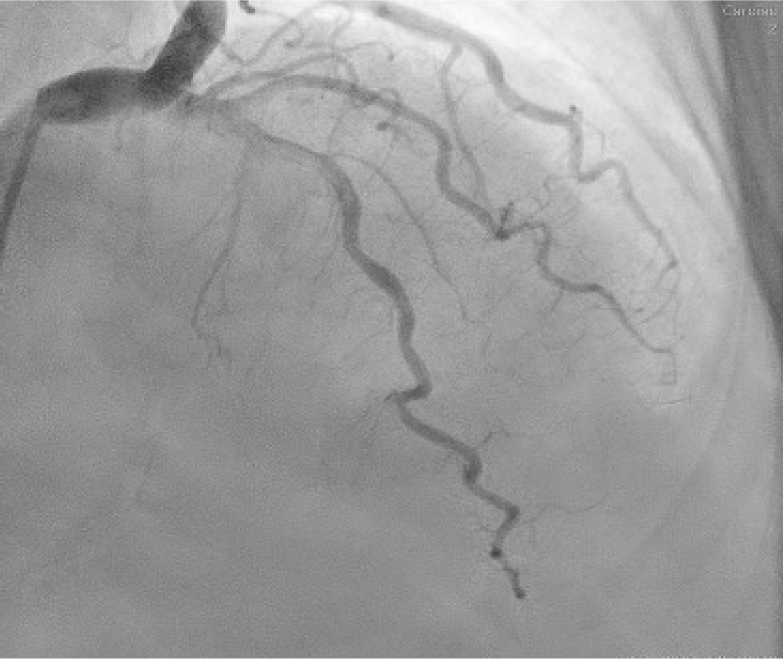

Figure 6.

Cranial right anterior oblique projection of the left anterior descending artery—1 month later. In this projection, the left anterior descending artery can be seen, with ectasia on the entire length and a lack of significant atherosclerosis.
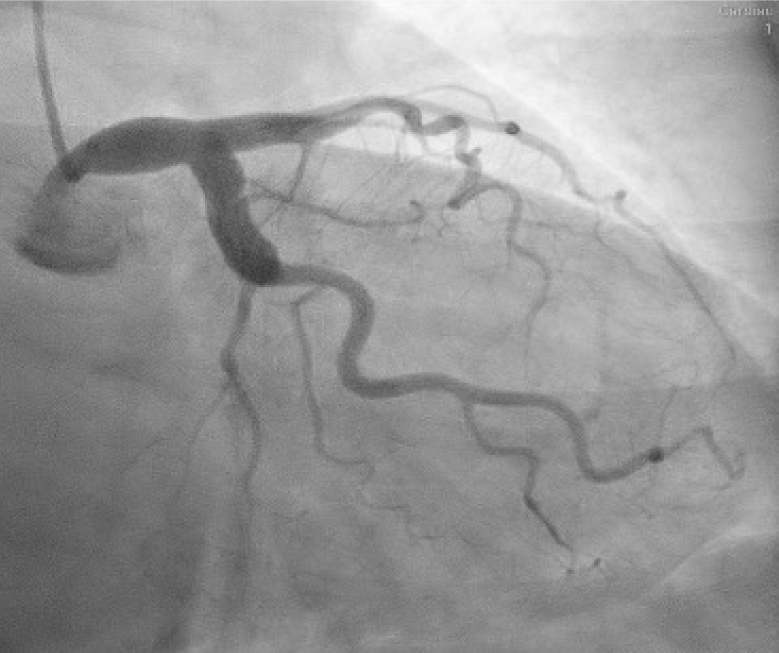

Figure 7.

Postero-anterior caudal projection of the left coronary artery—1 month later. This view optimally projects the left main coronary artery (mid-distal segment) and the left circumflex, in which no significant atherosclerotic lesions are seen. Note also the diffuse ectasia present in both arteries.

Coronary artery ectasia etiology_ ANCA, antineutrophilic cytoplasmic antibody; KCNH1, member 1 of H subfamily of voltagegated potassium channel; ATG16L1, autophagia related 16 like 1; PCI, percutaneous coronary intervention

EtiologyFrequency
Atherosclerosis50% (19)
Smoking(19)
Arterial hypertension(19)
Congenital:
  • bicuspid aortic valve

  • aortic root dilation

  • ventricular septal defect

  • pulmonary stenosis

20%-30%(6, 19, 70)
Inflammatory diseases:
  • Kawasaki disease

  • Antineutrophilic cytoplasmic antibody (ANCA) vasculitis

  • Syphilitic aortitis

  • Polyarteritis nodosa

  • Takayasu disease

  • Systemic lupus erythematosus

  • Rheumatoid arthritis

Connective tissue disorders:
  • Systemic sclerosis

  • Ehlers - Danlos

  • Marfan syndrome

10%-20% (10,19, 38, 67, 70, 71,136-140)
Cardiac lymphoma(141)
Infectious:
  • mycotic

  • Borreliosis

  • Chlamydia pneumoniae

(70, 142)
Hypertrophic cardiomyopathy(24)
Genetic factors:
  • genetic DD polymorphism of the angiotensin converting enzyme

  • abnormal lipoprotein metabolism associated with familiar hypercholesterolemia

  • member 1 of H subfamily of voltage-gated potassium channel (KCNH1)

  • mutation of autophagia related 16 like 1 (ATG16L1) gene

  • Matrix metalloproteinase allele 35A

(19, 30, 113, 143-145)
Cocaine usage(146)
Iatrogenic:
  • post-percutaneous coronary intervention (PCI)

  • coronary atherectomy

  • laser angioplasty

(25, 70)

Angiographic classification of coronary artery ectasia (modified after Markis JE, Cohn PF, Feen DJ et al_ [4])

TypeCharacteristics
IDiffuse ectasia of 2 or 3 vessels
IIDiffuse ectasia in 1 vessel and localized disease in another
IIIDiffuse ectasia of 1 vessel
IVLocalized ectasia in 1 vessel
DOI: https://doi.org/10.2478/rjc-2023-0025 | Journal eISSN: 2734-6382 | Journal ISSN: 1220-658X
Language: English
Page range: 147 - 160
Published on: Dec 26, 2023
Published by: Romanian Society of Cardiology
In partnership with: Paradigm Publishing Services
Publication frequency: 4 issues per year

© 2023 Adrian Giucă, Alexandru Rocsoreanu, Marilena Şerban, Monica Roşca, Maria Iancu, Andrei Carp, Dan Deleanu, Marin Postu, published by Romanian Society of Cardiology
This work is licensed under the Creative Commons Attribution 4.0 License.