
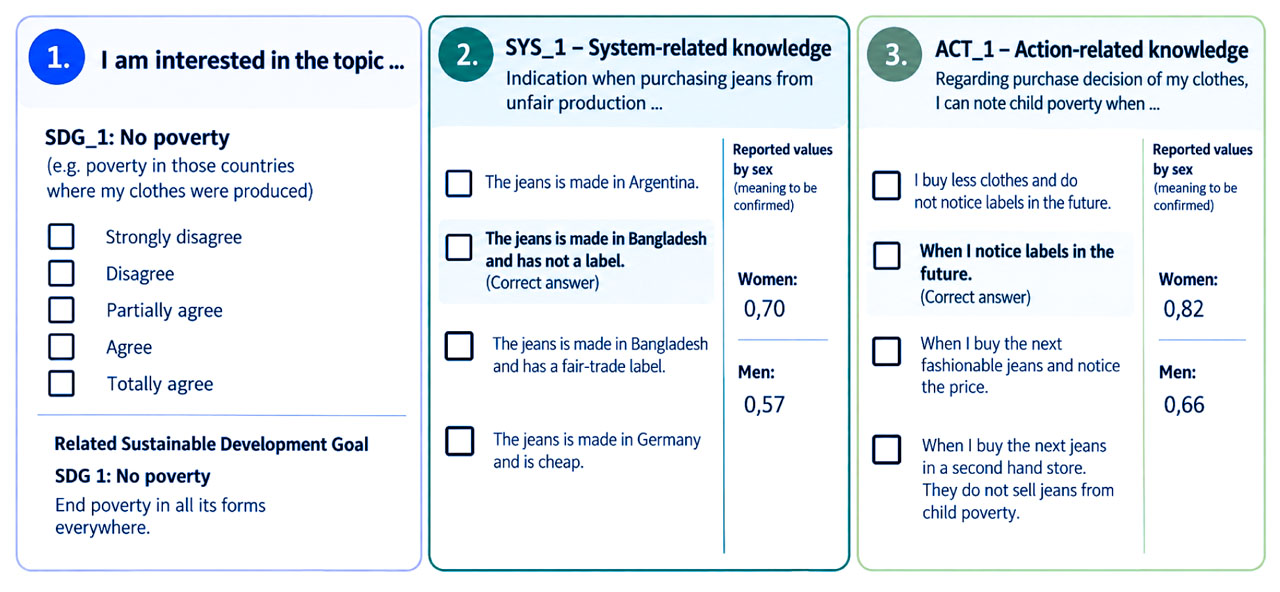
Figure 1:
Item examples of system- and action-related knowledge and interest.
Table 1:
Coding guidelines for the main connotation categories.
| Categories of connotations: content-related evaluative | Definition | Examples |
|---|---|---|
| Ecological associations (a) | All statements with reference to the environment, nature, or climate. | “Something that is good for nature” |
| Economic associations (b) | All statements with reference to the economy, business, or consumption. | “Cost reduction”, “supporting local businesses” |
| Social associations (c) | All statements related to the socio-cultural or emotional life of people (more abstract concepts like justice, equality, solidarity, etc.). | “Good quality of life” |
| Positive emotions (d) | All terms related to positive feelings. | “Peace”, “joy” |
| Negative emotions (e) | All terms related to negative feelings. | “Anxiety about the future” |
| Neutral emotions (f) | All terms related to neutral or ambivalent feelings. | “Responsibility” |
Table 2:
Examples of the categorization of adolescent students’ connotations of “sustainable”.
| ID / Statement | Category 1: Ecological | Category 2: Economic | Category 3: Social |
|---|---|---|---|
| ID_394: „Something that is harmful to the environment and is renewable or reusable“ | ✔ Yes | ✔ Yes | ✖ No |
| ID_404: „veganism“ | ✔ Yes | ✔ Yes | ✔ Yes |
| ID_453: „Consideration for our fellow human beings“ | ✖ No | ✖ No | ✔ Yes |
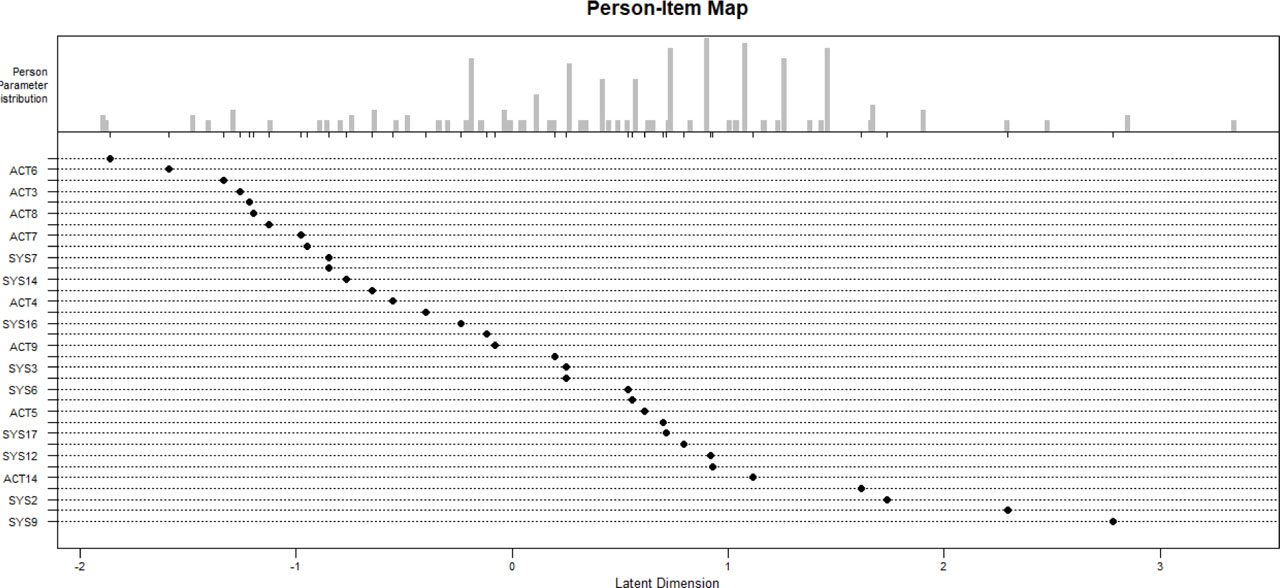
Figure 2:
Person-Item Map of system- (SYS) and action-related knowledge (ACT). Black dots represent the knowledge items. Grey bars represent the estimated person distribution.
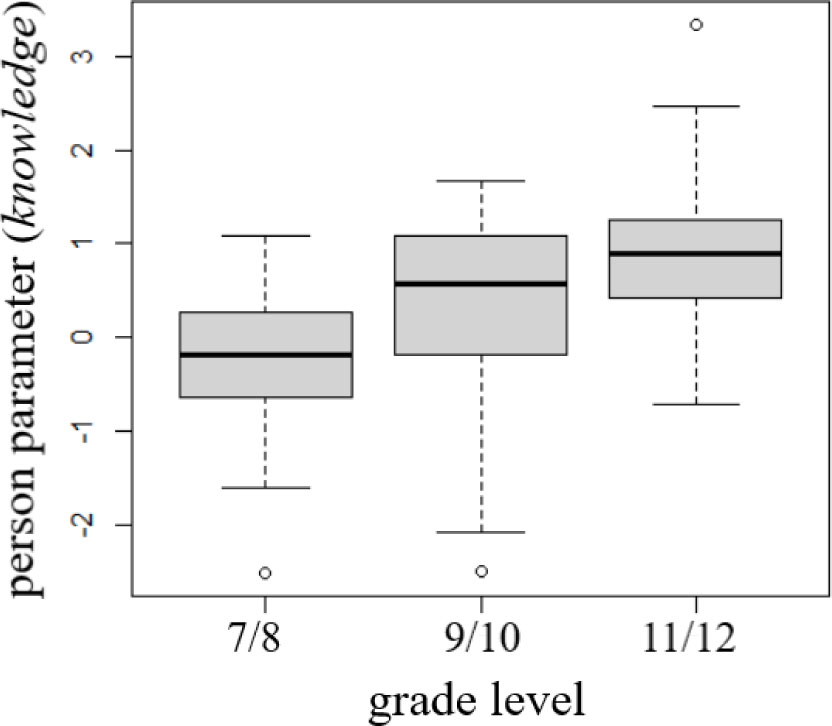
Figure 3:
Students’ person parameters by grade level
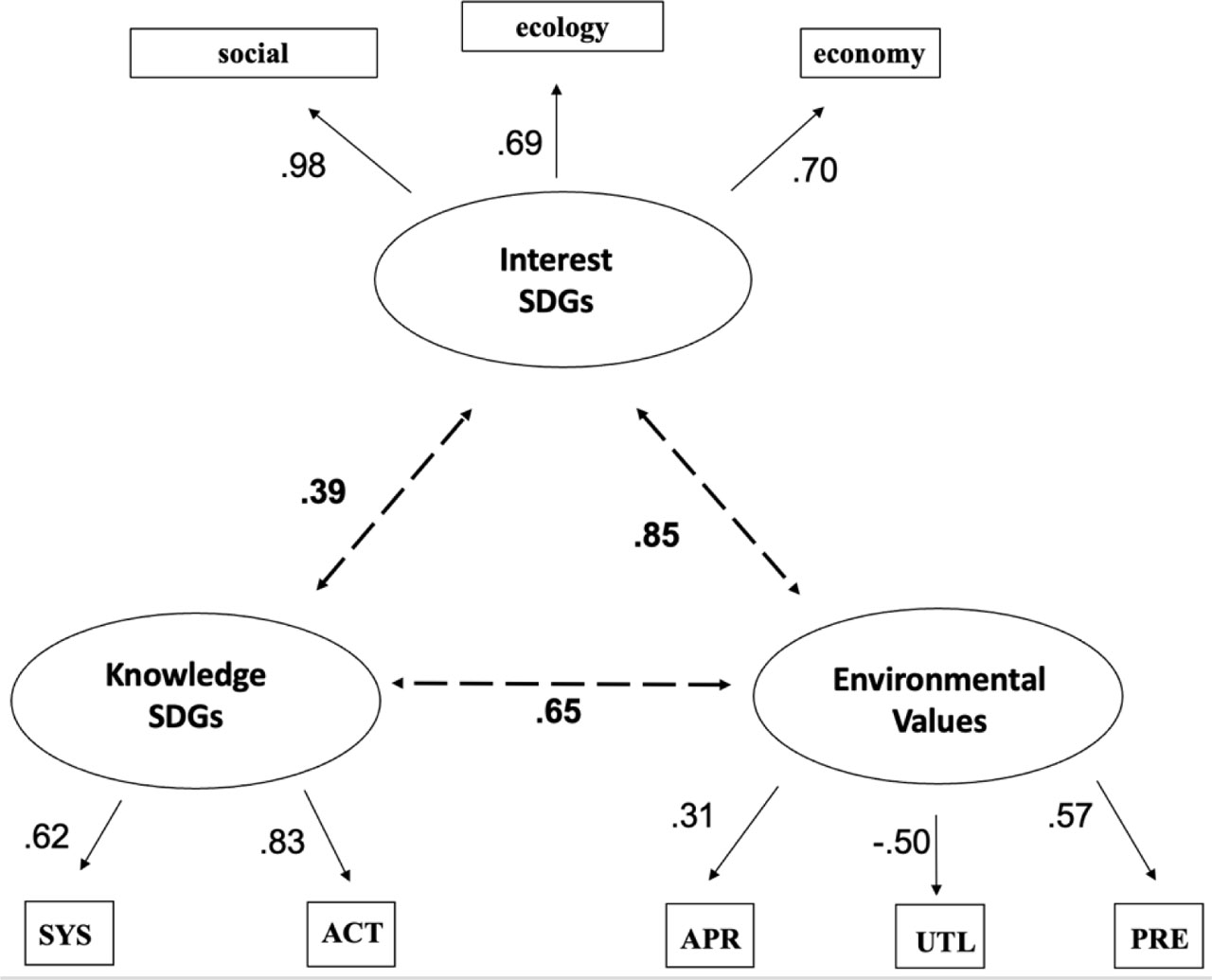
Figure 4:
Path analysis of knowledge, values and interest. Solid arrows represent standardized factor loadings; dashed double-headed arrows represent correlations between the latent variables.