
Introduction
Chronic obstructive pulmonary disease (COPD) remains a significant global health burden and ranks among the top three causes of death worldwide (1, 2). The disease imposes a considerable economic and social impact due to its progressive nature and debilitating symptoms. Characterised by progressive airflow limitation and systemic complications, COPD drastically reduces the quality of life and survival, particularly in advanced stages (3). Despite the advances in pharmacological and non-pharmacological interventions, many patients with advanced COPD require lung transplantation as a definitive treatment to improve survival and quality of life (1).
Each year, more than 1000 patients with COPD undergo lung transplantation, making it the leading indication for the procedure in adults (4). Based on the recommendations by the International Society for Heart and Lung Transplantation (ISHLT) consensus, COPD patients are indicated for lung transplantation if the BODE (body mass index [BMI], obstruction, dyspnoea and exercise capacity) score is 5 or higher, along with additional factors associated with increased mortality, such as frequent acute exacerbations, low forced expiratory volume in 1 s (<25%) and a high ratio of pulmonary artery-to-aorta diameter on Computed Tomography (CT) scan (>1) (5, 6). On the other hand, there are also contraindications to transplantation in COPD patients, such as severe uncontrolled medical conditions that may limit survival after transplantation, including malignancy, organ failure, septic shock, human immunodeficiency virus infection and poor post-transplantation rehabilitation potential (6, 7).
However, lung transplantation is associated with several challenges, including high rates of perioperative and long-term complications, such as graft rejection, bronchiolitis obliterans and opportunistic infections (8). Furthermore, due to the limited availability of donor organs, it is essential to implement rigorous selection criteria for lung transplantation candidates to maximise survival outcomes while minimising the risk of post-operative complications. This highlights the need to understand prognostic factors, survival outcomes, lung function recovery and complications in post-transplant COPD patients to optimise the management and success of lung transplantation.
This systematic review and meta-analysis aims to evaluate outcomes in COPD patients undergoing lung transplantation. More specifically, the purpose is to elaborate prognostic factors related to the mortality, as well as survival rates (SR), pulmonary functions and complications of lung transplantation in the patients comprehensively. By synthesising existing evidence, this study seeks to provide clinicians and researchers with insights to optimise patient selection, refine management strategies and improve long-term outcomes in this high-risk population.
Methods
Study design and eligibility criteria
We conducted this systematic review based on the Preferred Reporting Items for Systematic Reviews and Meta-Analyses (PRISMA) 2020 statement (9). Additionally, the protocol has been registered on PROSPERO (CRD42024617160). The eligibility criteria consisted of inclusion and exclusion criteria established to conduct the articles screening and selection on 31 August 2024. The inclusion criteria were as follows: (1) the study design of observational (cohort, case–control, cross-sectional) or interventional Randomized Controlled Trial (RCT) study; (2) participants were clinically diagnosed with COPD and underwent either single or double lung transplantation; (3) indicators assessed were factors that potentially increased the risk of mortality in the patient, including biological factors, behavioural factors, social factors and procedural factors; (4) primary outcomes were mortality among the patients with odds ratio or hazard ratio as the measure of effects; (5) additional outcomes assessed in the study including SR, lung functions and complications are also reviewed and (6) the studies were in the form of full-text that is accessible. On the other hand, the exclusion criteria were as follows: (1) inappropriate study design such as reviews, editorials, comments, case reports and case series. No language limitations were applied to this study selection.
Information sources, search strategy and study selection
The literature sources of this review were several international journal databases, including Medline, Scopus, ProQuest and Central. We also searched manually through Google Scholar to ensure a wider coverage of studies. Keywords used were generally synonym combinations of [(COPD) AND (lung transplantation)] AND [(prognostic factors) OR (mortality) OR (SR) OR (outcome)], with the detailed keywords listed on the supplementary materials. The literature search was conducted independently by two different reviewers (AFI and HLA), with the other reviewer (HKPF) solving the disagreement between them. All search results based on the keywords were input to the Rayyan Systematic Review software (Rayyan, Cambridge, United States) to process the removal of duplicates (10). Afterwards, AFI and HLA independently screened the title and abstract, which were processed for full-text retrieval. The full texts were then evaluated by AFI and HLA, resulting in the included articles that were eligible for this systematic review and meta-analysis.
Study quality assessment
Study quality assessments (risk of bias assessment) were conducted independently by AFI and HLA, with HKPF acting as a mediator of the discrepant cases. We use the Newcastle–Ottawa Scale (NOS) tool for cohort and case–control studies. A general cutoff was set for quality assessment, with seven or more showing high quality, five or six showing moderate quality and four or fewer showing low quality. Additionally, if there were cross-sectional and RCT studies, we would use modified NOS and Cochrane risk-of-bias tools for randomised trials (ROB 2), respectively.
Data extraction and statistical analysis
To start the review and analysis, we initially extracted the important data from each included study. The characteristics of each study were input into a table, which consisted of author, year, study design, patient enrollment period, final participant numbers, mean/median age, diagnosis of the patient, lung transplantation details and the assessed outcomes. Each outcome was then extracted in detail with the appropriate measure of effects in separated tables and further analysed comprehensively.
A meta-analysis of mortality-associated prognostic factors was conducted for factors assessed in more than one study and potentially significant. Several studies reported prognostic factors with varying results based on the duration of mortality analysis. For this meta-analysis, the longest mortality duration from each study was selected. This approach aims to identify prognostic factors for overall mortality. The hazard ratios and 95% confidence interval of the prognostic factors were input on R version 4.3.1 (Posit, Boston, Massachusetts, United States) and analysed with the package ‘Meta’, displaying forest plots of the pooled results and heterogeneity measurements (11).
Additionally, SR were analysed using Comprehensive Meta-Analysis 4.0 software (Biostat, Englewood, New Jersey, United States). This software generated forest plots illustrating overall SR, 95% confidence intervals (CI) and heterogeneity measurements.
Heterogeneity was assessed using the I2 statistic and Q test. An I2 value below 40% and a P-value >0.05 were considered homogeneous. Furthermore, I2 values of 30%–60% indicated moderate heterogeneity, 50%–90% substantial heterogeneity and 75%–100% considerable heterogeneity (12). Results showing heterogeneity were analysed using a random-effect model, and the heterogeneity sources were explored by performing a subgroup analysis. By contrast, we analysed the homogeneous results using a common/fixed-effect model.
Results
Search results and study selection
A summary of the study flow chart is displayed in Figure 1. From four international journal databases, we obtained a total of 2537 records. After removing the 450 duplicates, we screened the title and abstract of the remaining 2067 records, resulting in 54 reports that were sought for retrieval. Subsequently, we analysed the eligibility of the 48 full texts. Finally, with a combination of manual searching, we obtained a total of 23 reports that are included in this systematic review and Meta-Analysis. A study by Navarro et al. comprised two reports (2013 and 2015) (13, 14), and both were included in our review.
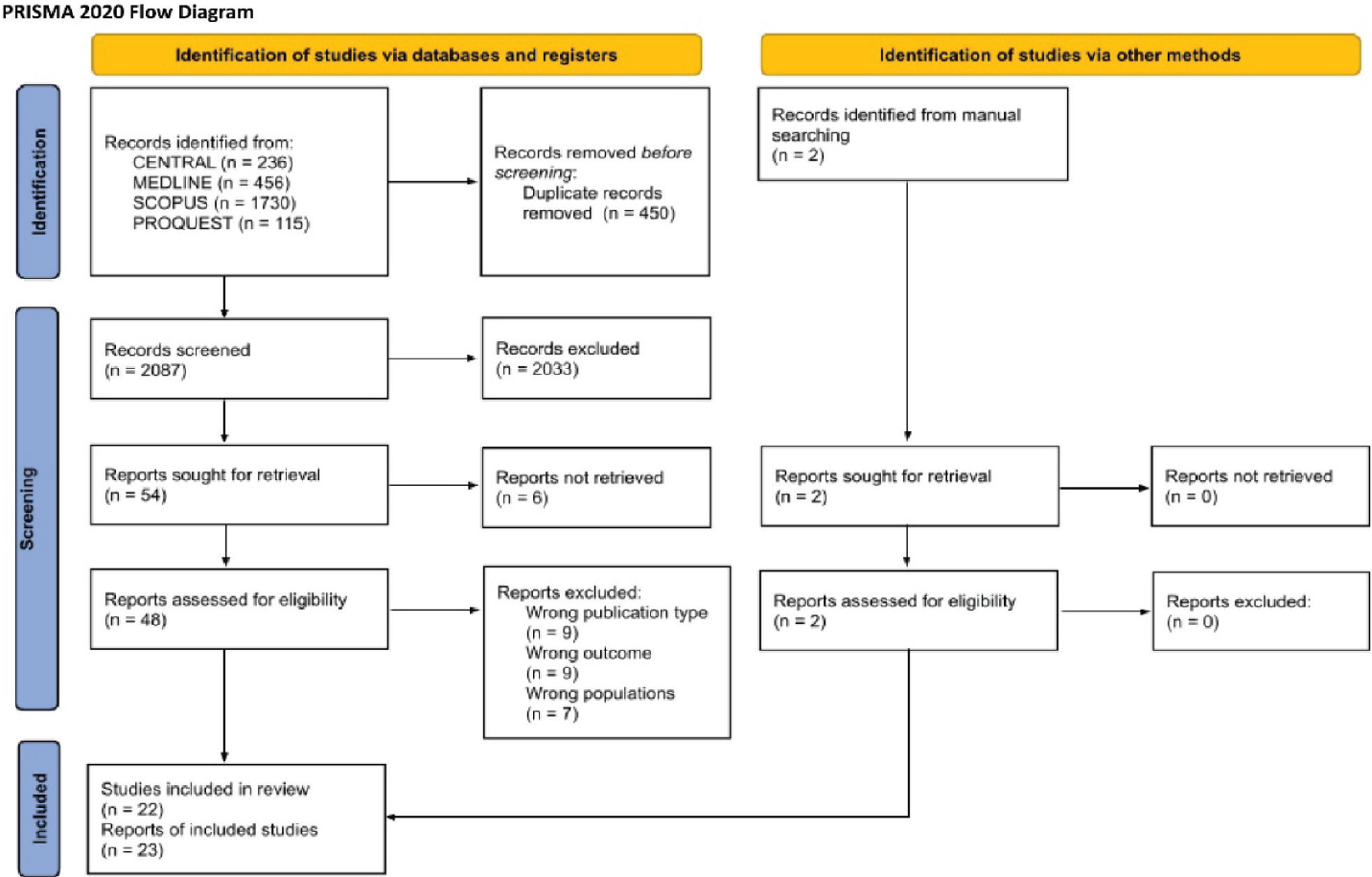
Figure 1.
Study flow chart. PRISMA, preferred reporting items for systematic reviews and meta-analyses.
Characteristic of included studies
We reviewed a total of 22 studies (23 reports) consisting of 26,328 participants enrolled during a wide range of periods, from 1987 to 2023 (Table 1). The ages of the participants also varied, but the mean or median was mostly around 50–60 years.
Table 1.
Characteristics of included studies
| No. | Author | Location | Study design | Enrollment period | Participants (n) | Age | Details on population | Details on transplantation | Details on outcome assessed |
|---|---|---|---|---|---|---|---|---|---|
| 1 | Bennett et al. (18). | United States | Retrospective cohort | January 1992–December 2012 | 3084 | Mean: 57.52 years (SD: 7.32) | COPD patients, excluding those with α-1 antitrypsin deficiency | SLT (n = 206 + 4408), BLT (n = 30 + 2848) | Post-transplant SR |
| 2 | Cano et al. (19). | Spain | Retrospective cohort | October 1993–November 2007 | 63 | Mean: 53 years (Range:25–65) | Severe COPD requiring transplantation | SLT (n = 28), BLT (n = 35) | Surgical and long-term complications; post-transplant survival rates |
| 3 | Crawford et al. (20). | United States | Retrospective cohort | May 2005–December 2014 | 3554 | Mean single transplant: 62 years (SD: 5) Mean double transplant: 60 years (SD: 6) | COPD | SLT (n = 1358), BLT (n = 2196) | Post-transplant SR and prognostic factors of mortality |
| 4 | De Miguel-Diez et al. (21). | Spain | Retrospective cohort | 2001–2015 | 2896 | Mean 55.41 years (SD: 8.6) | ICD9 codes for COPD; focus on advanced COPD | SLT (36.78%), BLT (61.47%), non-specified (1.75%) | Complications, in-hospital mortality risk factors |
| 5 | De Miguel-Diez et al. (22). | Spain | Retrospective cohort | January 2016–December 2020 | 704 | Mean 58.07 (SD: 7.73) | ICD-10 code for COPD | SLT (31.68%), BLT (68.32%) | Complications, lung transplant rejection, in-hospital mortality risk factors |
| 6 | De Pablo et al. (17). | Spain | Retrospective cohort | February 1993–November 1997 | 74 | Mean SLT: 48 (SD: 7) Mean BLT: 46 (SD: 7) | COPD: clinical-radiological diagnosis of emphysema (including due to alpha-1-antitrypsin) or chronic bronchitis | SLT (n = 30), BLT (n = 44) | Post-transplant SR, lung function |
| 7 | Duffy et al. (23). | United States | Retrospective cohort | May 2001–June 2014 | 3405 | Mean agent-induced group: 60.7 (SD: 6.3), Mean non-induced group: 60.4 (SD: 6.0) | COPD | Receiving induction (n = 1761), not receiving induction (n = 1146) | Prognostic factors of mortality |
| 8 | Gaissert et al. (24). | United States | Retrospective cohort | March 1989–April 1994 | 64 | Mean SLT: 55 Mean BLT: 49 | COPD patients, excluding those with α-1 antitrypsin deficiency | SLT (n = 39), BLT (0 = 25) | Post-transplant survival rate and lung function |
| 9 | Güneş et al. (25). | Australia | Retrospective cohort | 1989–2003 | 173 | Mean 50 (SD: 6) | Emphysema (n = 112) and AATD (n = 61) | SLT (n = 99), BLT (n = 66), HLT (n = 8) | Post-transplant SR, post-transplant SR |
| 10 | Hadjiliadis et al. (26). | United States and Canada | Retrospective cohort | January 1983–December 2000 | 221 | Mean SLT: 55.3 (SD: 8.0) Mean BLT: 53.0 (SD: 7.8) | COPD and AATD | SLT(n = 118), BLT(n = 103) | Post-transplant SR, freedom from BOS |
| 11 | Hayes et al. (27). | United States | Retrospective cohort | May 2005–September 2013 | 3105 | Mean 59.6 (SD: 6.2) | COPD with severe pulmonary hypertension | SLT (40%), BLT (60%) | Post-transplant survival and prognostic factors of mortality |
| 12 | Lahzami et al. (28). | Switzerland | Retrospective cohort | 1993–2007 | 54 | Mean 55 (SD: 6) | Non-AATD related COPD | SLT (35%), BLT (65%) | Post-transplant SR |
| 13 | Latos et al. (15). | Poland | Retrospective cohort | 2006–2018 | 40 | Not specified | End-stage COPD as per ISHLT guidelines | SLT (42.5%), BLT (57.5%) | Post-transplant SR, lung function improvement (FEV1 and FVC), 6MWT results |
| 14 | Mutyala et al. (29). | United States | Retrospective cohort | February 2012–March 2020 | 186 | Mean SLT: 65.3 (SD: 5.9) Mean BLT: 63.2 (SD: 7.1) | COPD | SLT (n = 115), BLT (n = 71) | Prognostic factors of mortality |
| 15 | Navarro et al. (13, 14). | Spain | Retrospective cohort | 1991–2008 | 107 | Mean: 52.58 (SD: 8.05) | COPD and AATD | SLT (n = 31), BLT (n = 76) | Post-transplant SR, surgical complications, BOS status, lung function test |
| 16 | Nunley et al. (30). | United States | Retrospective and prospective cohort | Not specified | 17 | Mean: 57 (SD: 6.11) | COPD (emphysema/chronic bronchitis) and AATD with history of smoking | All patients underwent SLT. | Post-transplant SR |
| 17 | Singh et al. (31). | United States | Retrospective cohort | May 2005–June 2010 | 2025 | Median 60 years (IQR 56-64) | COPD patients, excluding those with α-1 antitrypsin deficiency | SLT (44.4%), BLT (55.6%) | 1-year post-transplant mortality, prognostic factors of mortality |
| 18 | Stavern et al. (32). | Norway | Retrospective cohort | 1990–June 2003 | 219 | Mean 49 (SD: 10) | COPD/emphysema, including AATD | SLT (n = 70), and BLT (n = 56) | Prognostic factors of mortality ≤90 and >90 days after transplantation |
| 19 | Tanash et al. (33). | Sweden | Retrospective cohort | 1990–2012 | 342 | Median 55 (Range:32–70) | COPD, analysed AATD and non-AATD subgroups | SLT (71 %) | Prognostic factors of mortality, median survival |
| 20 | Thabut et al. (34). | United States | Retrospective cohort | 1987–2004 | 5873 | Mean: 56 (7.1) | COPD/emphysema (including AATD) | SLT (72.2%) | Prognostic factors of mortality, median survival |
| 21 | Türkkan et al. (16). | Turkey | Retrospective cohort | March 2013–January 2023 | 34 | Median 57 (Range:34–69) | COPD | SLT (n = 3), BLT (n = 30) | Post-transplant clinical results |
| 22 | Zeriouh et al. (35). | UK, Germany | Retrospective cohort | January 2007–November 2013 | 88 | Mean 54.3 (SD: 6.8) | COPD, emphysema, exclusion of alpha-1-antitrypsin | SLT (n = 12), BLT (n = 76) | Cumulative survival; freedom from BOS survival |
1 *AATD, alpha-1 antitrypsin deficiency; BOS, bronchiolitis obliterans syndrome; BLT, bilateral lung transplantation; COPD, chronic obstructive pulmonary disease; HLT, heart-lung transplantation; ISHLT, international society for heart and lung transplantation; SD, standard deviation; SLT, single lung transplantation; SR, survival rates.
All studies assessed COPD as the main diagnosis, and some studies included alpha-1-antitrypsin deficiency patients, while others excluded them. Almost all studies also conducted research on both single lung transplant (SLT) and bilateral lung transplant (BLT) other than the study of Nunley et al. (30), which only evaluated SLT. The outcome of each study was also extracted from the table and further analysed in the subsequent sections. Additionally, the result of risk of bias assessment is shown in the supplementary materials. There were 16 high-quality studies, 5 medium-quality studies and 1 low-quality study.
Study outcome
Prognostic factors
The comprehensive results included 234 lists of prognostic factors extracted and are displayed in the supplementary materials. Several prognostic factors were assessed in more than one study, with some exhibiting hazard ratios significantly associated with increased mortality among post-transplant patients. Therefore, we conducted a meta-analysis to quantitatively assess the data with 95% CI.
From the meta-analysis, recipient age (per 1-year increase), donor white race, diabetes mellitus and Extracorporeal Membrane Oxygenation (ECMO) support were found to be significantly associated with overall post-transplant mortality risk, with all factors showing homogeneous data distribution (Figure 2).
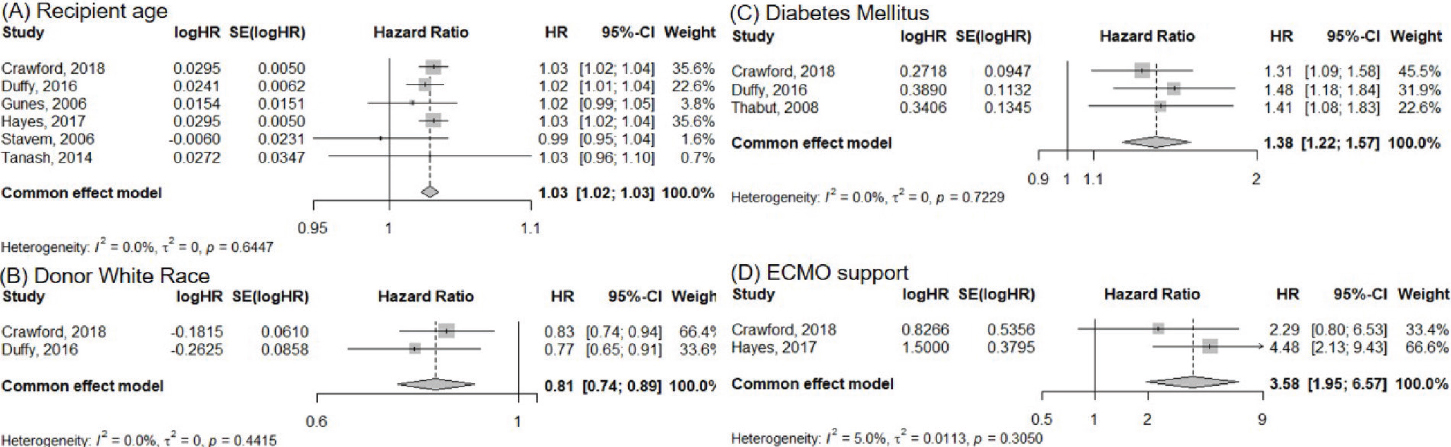
Figure 2.
Meta-analysis of mortality-associated prognostic factors: recipient age (increase of 1 year) (A), donor white race (B), diabetes mellitus (C), and ECMO support (D).
Additionally, other prognostic factors that were potentially significant and assessed by multiple studies were processed for meta-analysis, including donor age, BMI, gender, SLT type, FEV1, Forced Vital Capacity (FVC), mean arterial pressure, steroid use and oxygen requirement, but all of them resulted in insignificant hazard ratios towards the mortality (Figure 3). Most of them were also heterogeneous, which indicated that the characteristics of the studies varied. These were further investigated with subgroup analysis displayed in the supplementary materials.
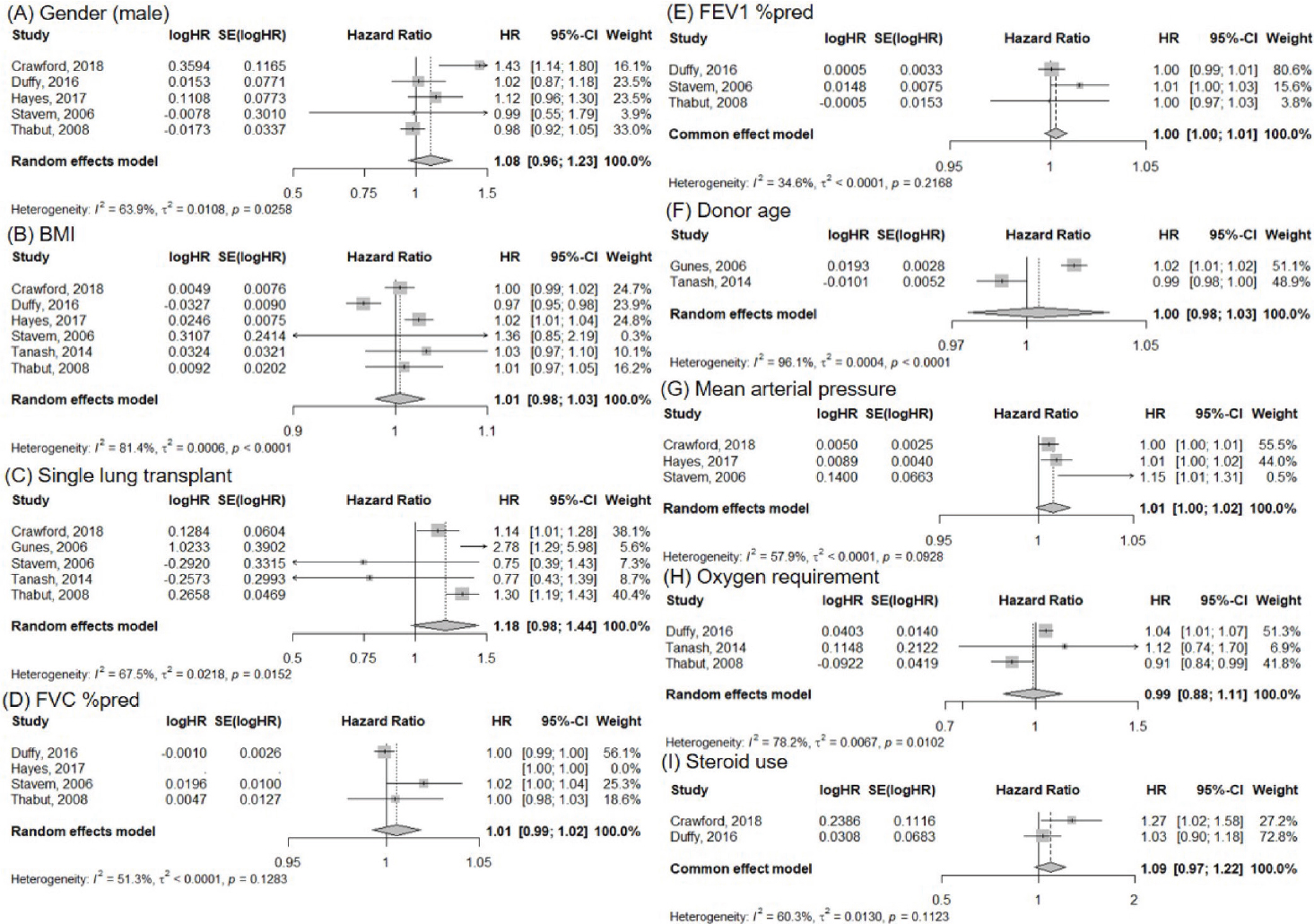
Figure 3.
Meta-analysis of mortality-associated prognostic factors: male gender (A), BMI (B), SLT type (C), FVC (D), FEV1 (E), donor age (F), mean arterial pressure (G), oxygen requirement (H) and steroid use (I). BMI, body mass index; SLT, single lung transplant.
SR
The pooled 1-year, 2-year, 3-year, 4-year, 5-year and 10-year SR in post-transplant COPD patients were 79.8% (95% CI: 9.2%–87.4%), 73.8% (95% CI: 63.2%–82.2%), 72.9% (95% CI: 69.4%–76.2%), 69.8% (95% CI: 61.7%–76.8%), 55.3% (95% CI: 47.3%–63.1%) and 34.4% (95% CI: 26.0%–43.9%), respectively (Figure 4). The pooled 1-year and 5-year SR in post-SLT COPD patients were 87.8% (95% CI: 86.2%–89.3%) and 46.9% (95% CI: 38.2%–55.8%), respectively, while in post-BLT COPD patients were 86.1% (95% CI: 79.8%–90.6%) and 59.0% (95% CI: 57.0%–61.0%), respectively (Figure 5).
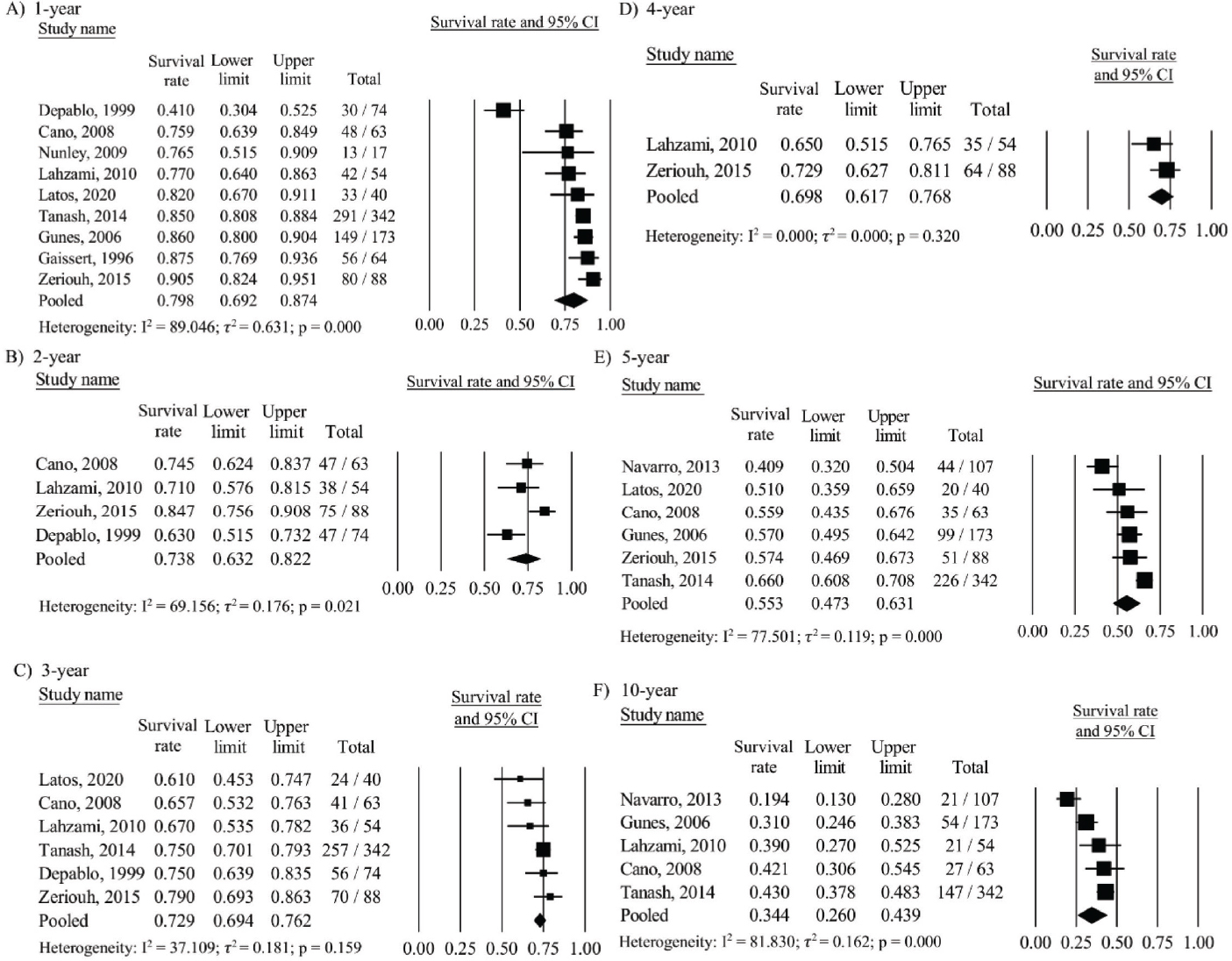
Figure 4.
Forest plot of 1-year (A), 2-year (B), 3-year (C), 4-year (D), 5-year (E), 10-year (F) SR in post lung transplantation COPD patients. COPD, chronic obstructive pulmonary disease; CI, confidence intervals; SR, survival rates.
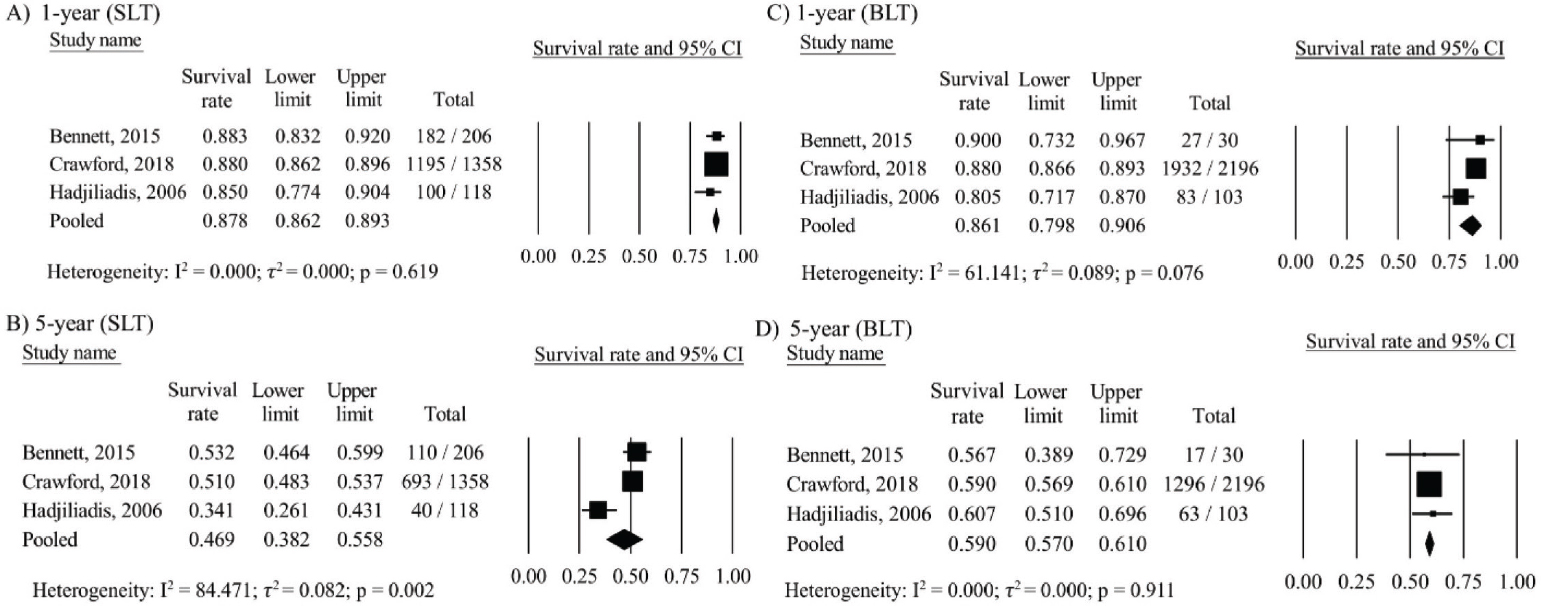
Figure 5.
Forest plot of 1-year (A), 5-year (B) SR in post-SLT and 1-year (C), 5-year (D) SR in post BLT COPD patients. BLT, bilateral lung transplant; SLT, single lung transplant; SR, survival rates.
FEV1 and FVC
Several studies showed significant improvements in FEV1 and FVC following lung transplantation, particularly within the first 12 months. Latos et al. (15) reported a rise in FEV1 from 23.69% pre-transplant to 72.68% and 72.67% at 3 and 6 months, respectively, stabilising around 68%–70% before declining to 60.67% at 24 months. Türkkan et al. (16) noted an increase in FEV1 from 20% pre-transplant to 82% at 12 months. de Pablo et al. (17) observed a rise in mean FEV1 (from 585 mL to 2171 mL) and FVC (from 1677 mL to 2854 mL) within 6 months, with stabilisation by 12 months.
6-min walking test
A study by Latos et al. (15) showed changes in 6MWT results between qualification and after lung transplantation. Before transplantation, the average 6MWT distance was 158.07 m, indicating significant physical limitations (Table 2).
Table 2.
6MWT evaluation after lung transplantation in COPD patients.
| Author, Year | 6MWT (m) | Evaluation time |
|---|---|---|
| Latos, 2020 | 158.07 | Pre-transplant |
| 377.61 | At 1 months | |
| 424.26 | At 3 months | |
| 457.25 | At 6 months | |
| 430.70 | At 12 months | |
| 501.54 | At 18 months | |
| 440.92 | At 24 months |
A marked improvement was observed within the first 6 months post lung transplantation, peaking at 457.25 m. By 24 months, a slight reduction to 440.93 m was noted, yet the overall improvement remained substantial compared with the pre-transplant baseline (Table 2). A significant difference was also found between SLT and BLT recipients in 24 months after procedure (P = 0.018), with a higher 6MWT results in BLT (15).
PaO2 and PaCO2
De pablo et al. (17) was the only study that evaluated blood gas analysis (PO2 and PCO2) periodically in post-transplant COPD patients. The result is shown in Table 3. The PaO2 was increased, and PaCO2 decreased significantly at 3, 6 and 12 months after transplantation compared with the result at the pre-transplant examination
Complications
Infections were among the most common complications following lung transplantation in COPD patients, with rates of 15.15% and 13.35% reported by De-Miguel et al. (21, 22) Bacterial infections were particularly frequent, with hospitalisation rates increasing over time, from 4.3% at 1 month to 29.3% at 2 years (13). Metabolic complications, including hypertension, diabetes mellitus, dyslipidemia and renal insufficiency, were also prominent. Cano et al. (19) reported hypertension in 39.7% and renal failure in 42.9% of patients, while Navarro et al. noted an increase in hypertension (36.7%), dyslipidemia (46.7%) and renal insufficiency (40%, including cases requiring dialysis) at 5 years post-transplant (13).
Rejection was another significant complication, affecting 24.15–37.5% (14, 22). Obliterative bronchiolitis and its clinical counterpart, Bronchiolitis Obliterans Syndrome (BOS), represent the most significant post-transplant complications, heavily contributing to long-term mortality in lung transplant recipients. Among post-SLT patients, the pooled BOS-free SR were 87.4% (95% CI: 73.1%–94.7%) at 1 year and 26.9% (95% CI: 12.3%–49.3%) at 5 years. For post-BLT patients, the pooled rates were 84.2% (95% CI: 82.2%–86.1%) at 1 year and 45.9% (95% CI: 43.2%–48.6%) at 5 years (Figure 6). Additionally, Zeriouh et al. (35) which included both SLT and DLT recipients, reported BOS-free SR of 94.3% at 1 year, declining to 53.0% at 5 years.
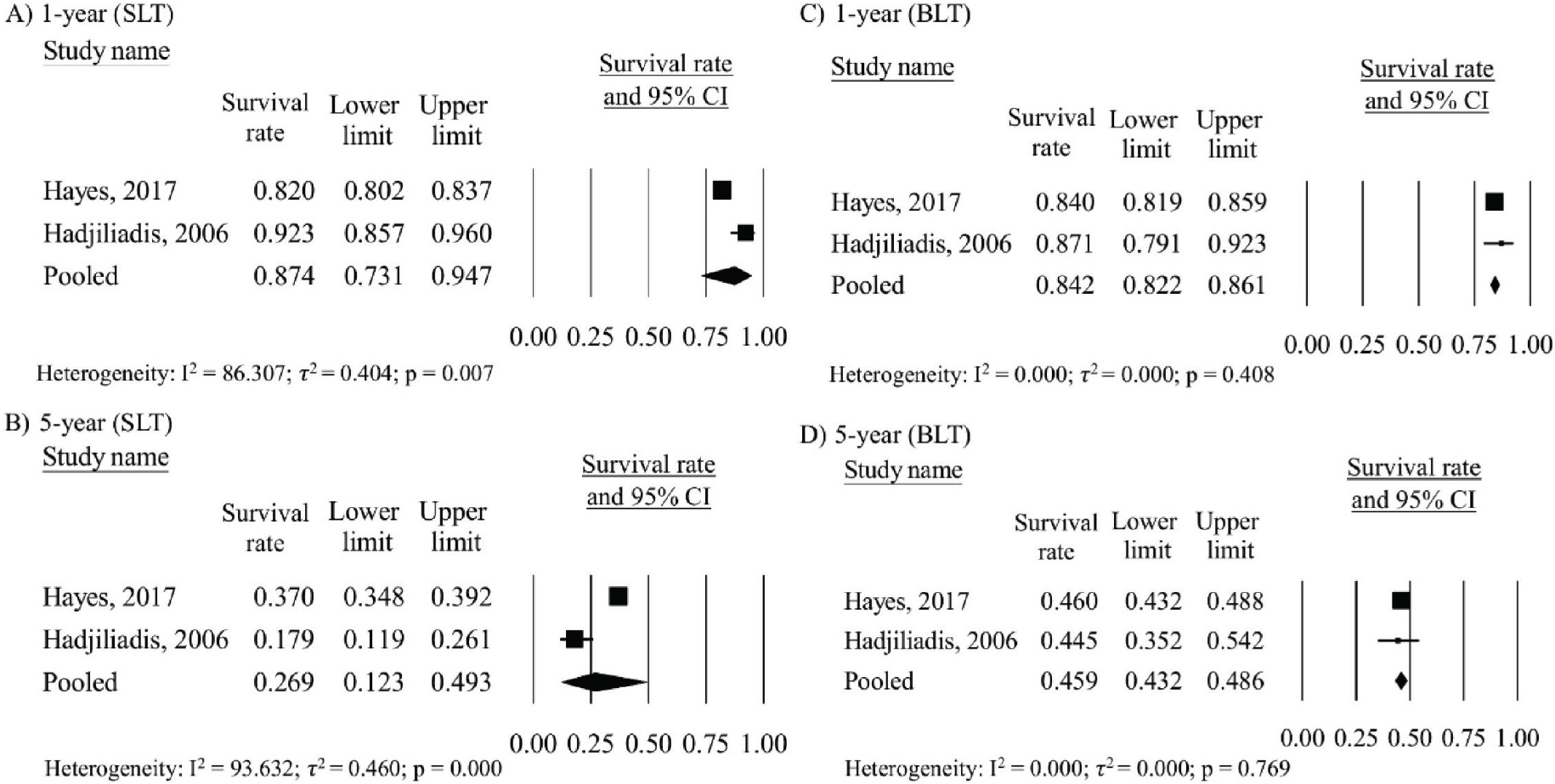
Figure 6.
Forest plot of 1-year (A), 5-year (B) BOS-free SR in post-SLT COPD and 1-year (C), 5-year (D) BOS-free SR in post-BLT COPD patients. BOS, bronchiolitis obliterans syndrome; BLT, bilateral lung transplant; COPD, chronic obstructive pulmonary disease; SLT, single lung transplant; SR, survival rates.
Discussion
COPD remains a major global health challenge and is one of the most common indications for lung transplantation worldwide (5, 36). While lung transplantation may improve the quality of life and survival of these patients, its availability remains limited due to donor organ shortages and limited access to the procedure in many countries (5, 37). Therefore, understanding the prognostic factors associated with post-transplant mortality, survival, lung function and complications is important to guide patient selection and clinical decision-making.
Based on our meta-analysis, increasing age is an important prognostic factor related to post-transplant mortality. Our meta-analysis of six studies showed a homogeneous result, with a hazard ratio of 1.03 (95% CI: 1.02–1.03; I2 = 0%) for every 1-year increase. This indicates that as age increases, the hazard ratio significantly rises. Similarly, a study by Thabut et al. (34) found that a 10-year increase in age is associated with a higher hazard ratio (HR: 1.15, 95% CI: 1.09–1.21; P < 0.05), reinforcing the role of age in mortality risk. This is likely due to the greater vulnerability of elderly individuals, who are more prone to comorbidities that increase mortality, such as metabolic disorders and cardiovascular diseases (38, 39).
Moreover, comorbidity-related increased mortality is also demonstrated in our meta-analysis result for diabetes mellitus and ECMO support. Three studies with homogeneous data distribution consistently showed that diabetes mellitus was associated with increased mortality, with an HR of 1.38 (95% CI: 1.22–1.57; I2 = 0%). A study by Thabut et al. (34) also reported that diabetes mellitus was associated with a higher risk of mortality (HR 1.41; 95% CI: 1.08–1.83; P = 0.02). Besides the possibility that diabetes may cause vascular complications leading to increased mortality, some studies also suggest that hyperglycaemia may directly affect the transplanted lung and impair its function, although the mechanism is not yet fully understood (40–42). In addition, patients requiring ECMO support also had an increased risk of mortality, with an HR of 3.58 (95% CI: 1.95–6.57; I2 = 5%). This finding is consistent with Russo et al. (43), who reported that ECMO dependence was the strongest predictor of poorer 1-year survival, with only 44% survival at 1 year, reflecting the presence of severe clinical instability and multiple organ dysfunction in these patients.
The races of donors were found to be associated with mortality, whereas the recipient’s race was not. Based on our Meta-Analysis, White donor race was associated with decreased mortality, with an HR of 0.81 (95% CI: 0.74–0.89; I2 = 0%). This suggests that the function of transplanted lungs from donor patients is essential to recipients’ well-being, as several studies have shown that the white race group has a higher lung capacity compared with other racial groups (44, 45).
Our systematic review comprehensively extracted prognostic factors for mortality, as shown in the supplementary materials. Not all factors were assessed by multiple studies and thus did not undergo meta-analysis. Among these factors, some notable significant results include previous lung surgery (HR: 1.46, 95% CI: 1.07–1.98; P = 0.02), non-alpha-1 antitrypsin deficiency (HR: 1.70, 95% CI: 1.02–2.82; P = 0.04), induction agent used (HR: 0.79, 95% CI: 0.69–0.9; P = 0.001), continuous mechanical ventilation (HR: 2.04, 95% CI: 1.44–2.89; P < 0.001), 6MWD (HR: 0.86, 95% CI: 0.81–0.91; P = 0.01) and pulmonary hypertension (HR: 1.88, 95% CI: 1.4–2.5; P < 0.01). On the other hand, many factors were not significantly related to mortality in our meta-analysis. These factors included male gender, BMI, SLT type, FVC, FEV1, donor age, mean arterial pressure, oxygen requirement and steroid use.
Lung transplantation markedly improves survival in COPD patients, offering a lifeline for those with end-stage disease. During the first year post-transplant, SR are similar between SLT and BLT. However, by the fifth year, BLT demonstrated higher SR (59.0%) compared with SLT (46.9%), suggesting a long-term survival advantage for bilateral procedures. Similar findings were reported by Thabut et al. (34), who observed a greater survival benefit with double lung transplantation compared with single lung transplantation, with a mean survival difference of 307 days (95% CI, 217–523). Furthermore, a meta-analysis by Fang et al. (46) reported that early survival outcomes were comparable between SLT and DLT, whereas DLT was associated with improved mid-term (3 years) and long-term (5 years) survival. BLT offers distinct advantages over single lung transplantation, including improved long-term survival, better postoperative lung function and reduced risk of BOS (47). By contrast, SLT is associated with complications such as native lung hyperinflation, pneumothorax and bronchogenic carcinoma, which can contribute to increased mortality (36, 48).
However, despite its favourable outcomes, BLT is often accompanied by higher waitlist mortality due to longer wait times and greater organ demand (5, 49). As a result, the decision between BLT and SLT must carefully consider organ availability and weigh the risks and benefits for each patient (36).
Our study showed that lung transplant profoundly restores pulmonary function, enabling patients to overcome the debilitating effects of advanced COPD, marked by improvements in FEV1, FVC and 6MWT results following lung transplantation. Similarly, the study by Navarro, et al. (14) reported significant improvements in spirometric parameters after lung transplantation, including increases in FVC (+1.22 L; +34.9%, P < 0.05) dan FEV1 (+1.66 L; +56.7%, P < 0.05), demonstrating enhancement in pulmonary function after the procedure. Lung transplantation led to improvements in gas exchange, respiratory capacity and exercise tolerance (48, 50). These functional gains enhance physical activity, reduce symptoms and improve the overall quality of life in COPD patients.
Blood gas analysis is another lung function parameter that can be evaluated in patients. In this meta-analysis, only the study by De Pablo et al. (17) evaluated blood gas parameters in post-transplant COPD patients and found that PaO2 significantly increased while PaCO2 decreased after transplantation. Patients with COPD, especially those with severe or end-stage disease, experience impaired lung function that can significantly alter O2 and CO2 levels in the body (51). Lung transplantation addresses the issue of abnormal PaO2 and PCO2 levels in patients (52, 53).
Despite the benefits, complications are common in lung transplantation recipients. BOS is a significant long-term complication that adversely affects graft function and survival. In this study, the 1-year BOS-free SR showed no significant difference between SLT and BLT. However, at 5 years, BLT recipients demonstrated higher BOS-free SR (45.9%) compared with SLT recipients (26.9%). These results align with the known advantages of BLT in providing superior graft function and offering greater protection against the progressive decline in lung function associated with BOS in COPD patients (48).
Our findings showed that infections also remain a leading complication, with bacterial infections being the most common. The risk of infections in COPD patients undergoing lung transplantation is increased due to worsening pulmonary defence mechanisms and immunosuppressant therapies (21). Prolonged use of immunosuppressant therapies also leads to disrupted metabolic regulation, increasing the risk of hypertension, dyslipidemia and diabetes. Additionally, chronic renal insufficiency is common among patients, with some eventually progressing to renal failure due to the toxic effects of calcineurin inhibitors.
This systematic review and meta-analysis has several strengths. We comprehensively analysed outcomes related to post-transplantation among COPD patients using robust methods based on the PRISMA statement. To the best of our knowledge, this is the first systematic review and meta-analysis evaluating mortality-associated prognostic factors, SR, lung function and complications in this population. Additionally, we conducted the review without language restrictions, enhancing the validity and generalisability of our findings.
Conclusion
This systematic review identifies key prognostic factors related to mortality among post-transplant COPD patients, including recipient age, donor white race, diabetes mellitus, ECMO support, previous lung surgery, non-alpha-1 antitrypsin deficiency, the type of induction agent used, continuous mechanical ventilation, 6-min walk distance and pulmonary hypertension. We also provided a comprehensive analysis of pooled post-transplant SR, lung function and complications. We hope this review serves as a valuable evidence base for future considerations and evaluations related to lung transplantation in COPD patients.
Notes
[4] Contributed by Authors’ contribution
Conceptualization: Hana Khairina Putri Faisal.
Data curation: Ahmad Fadhil Ilham and Hanna Lianti Afladhia.
Formal analysis: Ahmad Fadhil Ilham and Hanna Lianti Afladhia.
Methodology: Hana Khairina Putri Faisal, Ahmad Fadhil Ilham and Hanna Lianti Afladhia.
Project administration: Hana Khairina Putri Faisal.
Supervision: Hana Khairina Putri Faisal, Agus Dwi Susanto, Prasenohadi, Mia Elhidsi, Susan Hendriarini Mety and Faisal Yunus.
Software: Ahmad Fadhil Ilham and Hanna Lianti Afladhia.
Visualization: Ahmad Fadhil Ilham and Hanna Lianti Afladhia.
Writing – original draft: Ahmad Fadhil Ilham and Hanna Lianti Afladhia.
Writing – review & editing: Hana Khairina Putri Faisal, Ahmad Fadhil Ilham, Hanna Lianti Afladhia, Agus Dwi Susanto, Prasenohadi, Mia Elhidsi, Susan Hendriarini Mety and Faisal Yunus.
[5] Declaration of conflict of interest
There is no conflict of interest.
[6] Ethics approval
Ethics Committee approval was not required.
[7] Informed consent statement
No informed consent was necessary.