
1. Introduction
Producing sustainable and economically convenient nuclear power is of considerable importance in today’s energy landscape. Nuclear energy offers a unique combination of low-carbon emissions and a stable and reliable continuous energy supply, making it a crucial component in mitigating climate change and ensuring energy security (Apergis et al. 2010; Jin and Kim 2018). In light of this, governments and institutions around the world are increasingly focused on harnessing the potential of nuclear energy to address pressing energy and environmental challenges. While nuclear power plants (NPPs) offer a steady supply of low-carbon energy, many new nuclear construction projects encounter economic hurdles stemming from their high costs, protracted construction periods and considerable capital demands (Stewart and Shirvan 2022). In particular, cost overruns seem to be the main problem when it comes to new nuclear plant construction business case initiatives. The Massachusetts institute of technology (MIT) Future of Nuclear report states that ‘cost is the fundamental issue’ (Buongiorno et al. 2018). An analysis by the Nuclear Energy Agency (NEA) of First-Of-A-King (FOAK) nuclear plants launched in the past 15 years has revealed an average doubling in both cost escalation and construction delays compared with the initial estimates (Nuclear Energy Agency 2018).
Small modular reactors (SMRs) represent a promising solution to mitigate the persistent issue of cost overruns in power plant construction projects (Vujić et al. 2012; Mignacca and Locatelli 2020). According to the international atomic energy agency (IAEA) definition: ‘SMRs are newer generation reactors designed to generate electric power up to 300 MW, whose components and systems can be shop fabricated and then transported as modules to the sites for installation as demand arises’ (IAEA 2020). While investments in SMRs might seem less lucrative than larger reactors because of reduced economies of scale, they present multiple benefits related to management and financial adaptability. First, the smaller initial capital requirement is perceived by investors as less risky, which directly influences the risk premium rate applied to the debt. Second, the possibility to shift some assembly work to a factory setting allows SMR projects to benefit from reduced construction times and more predictable schedules. This ensures a reduced risk of cost overruns and lower long-term financing expenses. Finally, the modular nature of SMRs can also be advantageous from an investment perspective. This approach allows the cost to be distributed across multiple units constructed over time, positively influencing the average financial debt. Consequently, this financial structure can facilitate the funding of future units (Locatelli et al. 2014). While several studies have been published on SMR economics, their cost estimation remains a subject of uncertainty within the academia and the nuclear industry, primarily stemming from the diverse methodologies adopted to calculate these costs (Mignacca and Locatelli 2020). Typically, owing to the scarcity of detailed information about designs and projects, the top-down estimation approach is the most commonly used. However, a significant challenge in applying this method to SMR cost estimations is the difficulty in identifying a suitable reference large NPP. In fact, scaling cost estimates from large reactors (LRs) directly to SMRs significantly undervalues the potential of SMRs by assuming that these plants are entirely identical, with size being the sole differing factor (Locatelli et al. 2014; Boarin et al. 2021). This approach merely accounts for the loss of economies of scale, spreading the fixed construction costs over a reduced energy output, and thereby negatively impacting the economic assessment of energy production (Locatelli et al. 2014; Stewart and Shirvan 2022). One way in which to overcome this issue is by employing a bottom-up estimation approach to mitigate the issues associated with directly scaling costs from large NPPs. This method estimates the granular cost items of the construction and operational costs specific to SMRs, without presuming identical operational and construction paradigms as their larger counterparts. To the best of the authors’ knowledge, most of the extant bottom-up estimates are proprietary, and the scientific literature reports only few of them – for example (1) the capital cost estimation by Stewart and Shirvan (2022); (2) the GEN IV reactors estimation by Vegel and Quinn (2017) and the works by Ganda et al. (2018) and Ganda et al. (2019a) – which, however, rely mainly on secondary sources of information for estimating costs. Therefore, there is a need for a comprehensive, non-proprietary, bottom-up economic evaluation of advanced SMRs to pinpoint key cost drivers and to examine the economic impacts of simplification, modularisation and shorter construction timelines. Our goal is to offer such an estimation grounded in empirical data. In fact, this paper seeks to integrate a mixed estimation method into the cost analysis (Carelli et al. 2010; Locatelli et al. 2014; Boarin et al. 2021). It quantitatively captures these advantages, providing a better understanding of SMR economics that goes beyond simple comparisons with larger NPPs. Finally, this work aims to reassess the costs of SMRs by major international financial institutions (Federal Reserve). This reassessment is crucial as it updates the economic viability of SMRs with the most current economic data, ensuring that the cost estimates reflect today’s economic reality.
The paper is organised as follows: the first section provides an overview of the extant literature on SMR economics and estimations. The following section details the method employed for the mixed method estimation approach, including the description of the Pareto Analysis employed to identify the most relevant cost items and the critical ones, the selection of the interviewee and the method employed for performing the 18 interviews. After presenting the bottom-up estimation results, the study offers a benchmarking analysis against other cost estimations in the literature, positioning its findings within a broader context. In its conclusion the paper underscores the implications for both ongoing research and practical applications, emphasising its relevance to the development and implementation strategies for SMRs.
2. Background
2.1. SMR economics
To assess the attractiveness of investing in an NPP, one must consider the economic aspects of the investment. This includes financial performance metrics such as the net present value (NPV), the internal rate of return (IRR), the levelized unit electricity cost (LUEC) and the initial capital outlay (Vujić et al. 2012). Furthermore, it is crucial to take into account the secondary yet significant factors, such as project management-related risks and cash flow implications, capital expenses, and the risks associated with extended construction periods (Locatelli et al. 2014; Stewart and Shirvan 2022). It is widely recognised by the extant literature that the principle of economy of scale generally places SMRs at a disadvantage when compared with larger reactors (Kuznetsov 2008; Locatelli et al. 2014). Generally techno-economic assessments indicate that as the plant size increases, the average investment and operating costs per electricity unit tend to decrease. However, this outcome is not directly applicable when comparing the investment in SMRs to LRs, since it presupposes the condition ‘all else being equal’ (Kuznetsov 2008; Locatelli et al. 2014). This means it assumes SMRs and LRs are identical except for their size. Contrarily, SMRs offer distinct advantages specific to smaller, innovative reactors, which are only minimally replicable by LRs. Carelli et al. (2010) have classified these aspects as reported in Table 1.
Tab. 1:
Adapted from Carelli et al. (2010). SMR ad hoc and common factors influencing their economics.
| SMR ad hoc (specific) factors | Common factors |
|---|---|
| • Design-related characteristics | • Size |
| • Compactness | • Modularisation |
| • Cogeneration | • Factory fabrication |
| • Match of supply to demand | • Multiple units at a single site |
| • Reduction in planning margin | • Learning |
| • Grid stability | • Construction time |
| • Economy of replication | • Required front end investment |
| • Bulk ordering | • Progressive construction/operation of multiple modules |
| • Serial fabrication of components |
The ad hoc category specific to SMRs includes factors that are either unique to these reactors or greatly influenced by their distinctive design and operational features. For example, SMRs exhibit design-related characteristics such as compactness, which allows for versatile placement and reduces the footprint of nuclear facilities (Mignacca and Locatelli 2020). They also enable cogeneration, matching energy supply to fluctuating demand, decreasing the required planning margin, and contributing to grid stability due to their scalable and flexible operation (Boarin et al. 2021).
On the other hand, the second category encompasses factors that affect both SMRs and large-scale nuclear plants similarly. For instance, both types of reactors benefit from modularisation and factory fabrication, which facilitate the construction process and enhance quality control (Lloyd et al. 2021). They also share challenges and advantages related to constructing multiple units at a single site, which can facilitate learning, reduce construction time and necessitate substantial front-end investment.
Both classes of factors influence the baseline cost (the initial estimate of the total project cost, serving as a financial benchmark), future costs (anticipated changes in expenses due to factors like inflation or technological advancements), project duration (the estimated time from initiation to completion, with its length impacted by regulatory processes, construction complexities, etc.), and the time and budget overruns (exceeding originally planned duration and financial allocations) (Stewart and Shirvan 2022). Over the past decade, the scientific literature on SMR economics has primarily concentrated on estimating the cost-driving factors, defining the components used for these estimates, and evaluating how each factor influences cost or value. Table 2, adapted from Carelli et al. (2010), Vujić et al. (2012) and Stewart and Shirvan (2022), provides a concise summary of these key factors, components and impacts.
Tab. 2:
SMRs cost factors, components and value/impact identification.
| Factors | Components | Impact and value |
|---|---|---|
| Economy of scale (*) | Structures, components, labour | Baseline cost |
| Economy of replication; learning (*) | Site labour, site material, learning rates | Future cost |
| Modularisation (*) | Factory building cost, efficiency of work moved outside, efficiency in the serial fabrication of components. | Baseline cost, project duration |
| Plant design (*) | Plant simplification rate (progressive construction/operation of multiple modules); active and passive safety; multiple units at single site. | Baseline cost |
| Project management related risks | Overnight cost; construction methods; regulatory risks; labour hours; integration risks; offsite work. | Time and budget overrun |
The objective of this paper is to develop an up-to-date cost estimate for SMRs by quantitatively analysing selected factors (specifically, those indicated by an asterisk [*]) through a bottom-up approach. The subsequent section will critically assess existing cost estimates and explore the methodologies employed in deriving them.
2.2. SMR cost estimations
2.2.1. Top-down cost estimates
In their recent review of SMR economics, Mignacca and Locatelli (2020) highlighted the absence of a common method for assessing the economic performance and costs of SMRs. The majority of the design specific cost estimates utilise a top-down approach, yet their methodologies exhibit considerable variation (Boarin et al. 2021). For example, the report by the ETI – Energy Technologies Institute 2018; ETI – Energy Technologies Institute 2018) evaluates with a point estimate different cost factors and their impact through several interviews. Along the same line, Black & Veatch (2012) provided a ballpark figure for the AP1000, also focusing on a general estimate rather than a granular analysis of its various structures, systems and components. Research by Zhang et al. revealed that constructing two units of a high-temperature gas reactor SMR incurs a 5% increase in costs compared with a larger, singular unit, attributing the rise to the benefits of simplicity and the economies of scale associated with multiple units. Also, Lloyd et al. (2018) investigated SMR costs and found that a high degree of modularisation had the potential to reduce capital expenses for a 300 MWe SMR by 45%, thereby rendering it more cost-effective than a reference larger reactor.
Samalova et al. (2017) estimate the overnight capital cost (OCC) of the 291 MWe Integral Molten Salt Reactor plant at US$3,792/kW. Economic estimates derived from a top-down approach might inflate capital costs, influenced by budget exceedances in protracted LR construction endeavours, which introduce elevated initial cost inputs. Moreover, the accuracy of scaling components from larger to smaller systems could be questionable (Vegel and Quinn 2017). To mitigate this issue the literature suggests to employ bottom-up estimates.
2.2.2. Bottom-up cost estimates
Although it is recognised that bottom-up estimates can addresses the unique aspects and innovations of SMRs, ensuring that each element is appropriately evaluated, there is a scarcity of them in the extant literature (Shirvan 2022). Maronati et al. (2018) carried out a bottom-up cost estimation for an LR known as the integral inherently safe light water reactor (I2S-LWR), drawing upon cost data derived from a 1144 MWe pressurised water reactor documented in the economic energy database (EEDB). Their methodology included modifying costs from the EEDB to match those of the I2S-LWR, using data on commodity quantities and specific design features. Furthermore, they broadened the scope of the EEDB to include newer technologies such as micro-channel heat exchangers and seismic isolation systems. Ganda et al. (2018) conducted a cost estimation for the ABR1000 sodium-cooled reactor by adapting cost data from the EEDB, a reference nuclear plant database, and employing >30 design parameters. The parameters in question included variables like the dimensions and surface areas of structures, flow rates of primary pumps, the mass of pressure vessels, rates of waste generation and other relevant variables. In a subsequent work, Ganda et al. (2019b) incorporated considerations for uncertainties in labour and material costs, further refining their methodology in an updated version. Nonetheless, both of Ganda’s works did not account for factors like the economies of learning or the efficiencies gained through modular construction. Stewart and Shirvan (2022) calculated the cost for a multi-module LW-SMR plant at US$3,856/kW, while Vegel and Quinn (2017) estimate a foundational cost of US$4,978/kW for an LW-SMR plant consisting of four 225 MWe reactors. A significant portion of the bottom-up cost analysis for nuclear plants remains proprietary, limiting the ability to explore into the findings. The Energy Options Network (2017), drawing on confidential estimates from SMR developers, reported an average cost of US$3,782/kW for eight advanced reactor designs, including two that were priced below US$2,500/kW. Nonetheless, there is a distinct need for a comprehensive, open-source, bottom-up economic evaluation of advanced SMRs. To fill this gap, the present paper provides bottom-up estimates of key cost drivers and evaluates the economic effects of modularisation, labour and indirect expenses based on manufacturers’ judgement. This is expected to support the identification of R&D opportunities to facilitate sustainable introduction of SMRs.
3. Method
The present paper aims to estimate the cost of capital, as it is the primary factor influencing the levelized cost of electricity (LCOE) for NPPs. The first step of the research consisted in defining the cost structure of a generic NPP construction project, that is, identifying all the cost items that make up the cost of capital by selecting a standard Code of Account (COA) already available in the literature. Second, two Pareto analyses were performed. The first analysis aimed to evaluate which cost items had the greatest impact on the overall estimated cost, while the second aimed to identify the project performance-related cost factors that significantly influence the total expense. This approach was adopted to identify and accurately estimate the most significant cost items using primary data collected from manufacturers. The literature supports this method as an effective way for engineers to prioritise and allocate resources efficiently during the initial phases of reactor development, focusing on essential components that guide the design of a new reactor (Ganda et al. 2018, 2019a). The two Pareto analyses were combined, resulting in a 2 × 2 matrix showing on the x-axis the cost item variation weight over the total direct cost variation (Variable 1) and on the y-axis the single cost item cost over the total direct cost (Variable 2). Items showing high values for both variables (HH) or low Variable 1 and high Variable 2 (HL) were estimated using primary sources for all the items for which manufacturers had suitable information available. On the other hand, for LL and LH classes, secondary sources were employed. Considering HH and LH items, we accounted for savings between FOAK and Nth-Of-A-Kind (NOAK), while the paper does not account for them for LL and HL cost items. Subsequently, the bottom-up cost modelling approach we devised was applied to estimate the costs of IRIS and NuScale SMRs. Figure 1 illustrates the procedural steps.
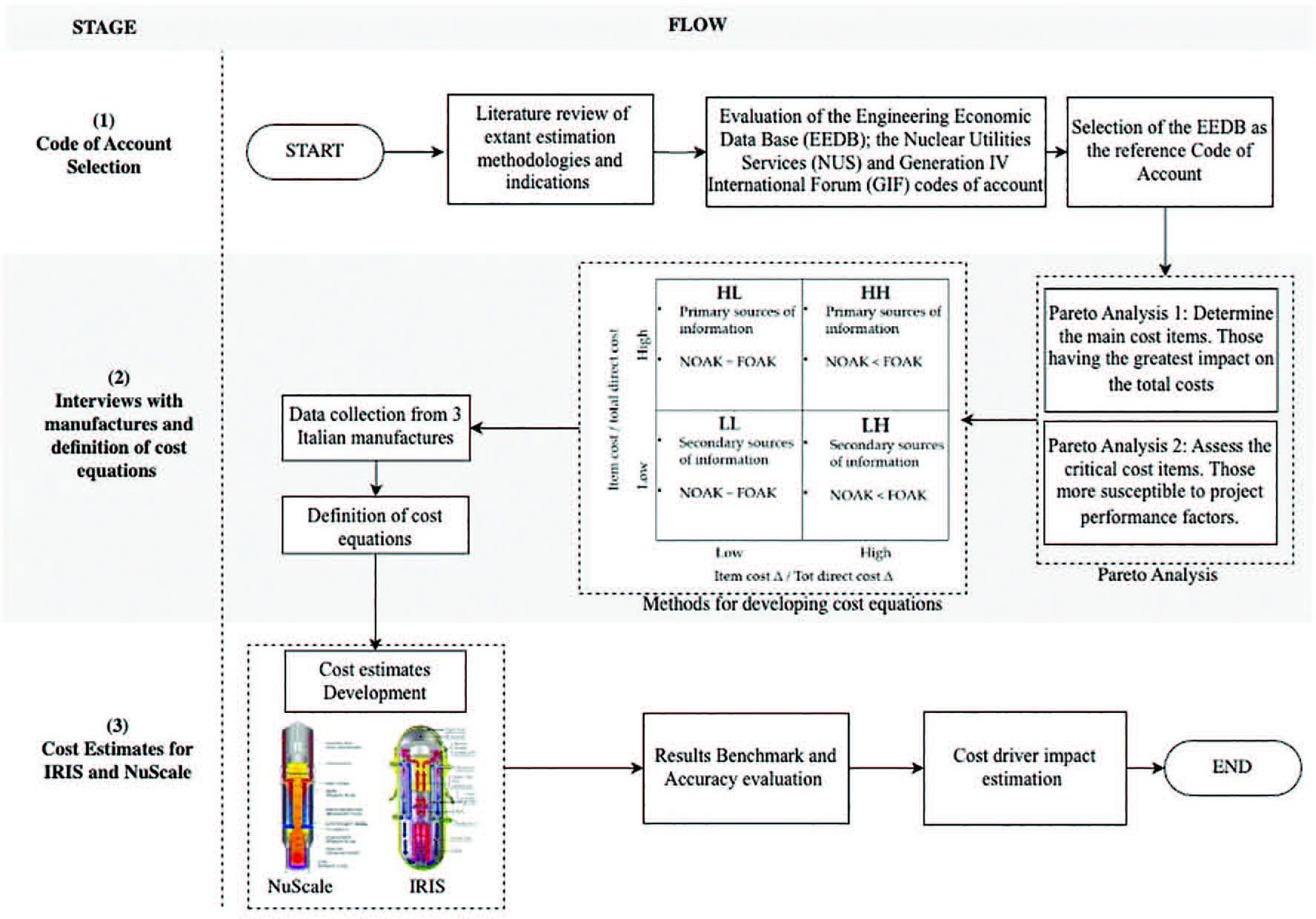
Fig. 1:
Research steps of the cost estimation model. NUS, nuclear utilities services.
3.1. Interviews with manufacturers
To collect primary data on the cost components, the authors conducted 18 semi-structured interviews with experts from three major Italian manufacturing firms involved in the design, fabrication and supply of equipment for nuclear and conventional power plants. Each interview lasted between 60 min and 90 min and was recorded, transcribed and thematically coded to ensure traceability and replicability. The selection of the three manufacturers was based on their: (i) technical expertise and production capacity in components relevant to SMR construction (e.g. reactor pressure vessels, turbine systems and balance-of-plant equipment); (ii) experience with modular construction and prefabrication processes for the energy sector and (iii) availability of senior technical staff directly involved in cost estimation, procurement or engineering design. Table 3 summarises the type of organisations and the roles of the interviewees.
Tab. 3:
Summary of the interviewed organisations, their main business areas and the professional roles of participants involved in the data collection phase.
| Type of organisation | Main business area | Interviewee roles | Number of participants |
|---|---|---|---|
| Large energy engineering firm | Design and manufacturing of turbines, heat exchangers and steam generators | Head of Cost Engineering; Senior Process Engineer; Procurement Specialist | 6 |
| Medium-sized mechanical manufacturer | Pressure vessels, reactor containment components, modular assembly | Technical Director; Manufacturing Supervisor; Quality Assurance Manager | 7 |
| Construction and civil infrastructure contractor | Nuclear civil works, modular foundations, site integration | Project Manager; Site Cost Controller; Construction Engineer | 5 |
The interviews followed a semi-structured guide organised into three sections: (i) Identification of key cost items for SMR construction, based on the EEDB Code of Accounts; (ii) Assessment of cost variability factors, including productivity, modularisation effects and learning curves and (iii) Quantification of cost adjustment parameters, such as FOAK-NOAK ratios, factory versus on-site labour distribution and indirect cost multipliers. Experts were asked to assign quantitative ranges or percentage adjustments to each relevant cost item based on their operational experience. Qualitative judgements were translated into numerical inputs through a structured coding scheme: Low impact → 1-5% variation; Medium impact → 6-15%; High impact → 16-30%; Very high impact → >30%. The aggregated and validated results from the interviews were used to refine the factorial and analytical cost equations for high-relevance cost categories (HH and HL). When multiple estimates were provided, median values were adopted to mitigate individual bias. This process strengthened the empirical foundation of the model and improved its overall accuracy.
3.2. Code of account selection
The first step in the bottom-up estimation process involved outlining the project’s cost breakdown structure, which entails itemising all the individual cost components that collectively form the capital cost. To this end, we evaluated the already established standard COAs documented in the open literature. For an extended period, the main standard for construction and design costs relied on the EEDB, a framework initially derived from the earlier nuclear utilities services (NUS) Codes of Account (USA DOE 1981). Subsequently, the IAEA devised its own comprehensive accounting system (IAEA 1999). This system amalgamates the EEDB for capital expenses and extends its scope to encompass additional codes for operation and maintenance, fuel cycle services and other facets of a reactor system’s entire lifecycle. Notably, the IAEA’s accounting framework was subsequently subject to slight adjustments to give rise to the generation IV international forum (GIF) Codes of Account in 2007 (NEA 2007). Since one COA succeeds the other, there are notable similarities among all of them; however, some accounting disparities persist. While the GIF COA shares a nearly identical ‘twodigit’ structure with the IAEA COA, the two systems differ in their underlying logic governing cost breakdown. The GIF and electric power research institute’s (EPRI) energy economic data base (EEDB) code of accounts (COAs) break down the costs on a system-specific basis, associating manufacturing, materials and installation/assembly labour costs with individual items. This method facilitates the categorisation of direct and indirect costs into distinct sections, placing a greater emphasis on identifying the cost associated with each system (e.g. Reactor Equipment accounting for 9% of the total investment cost). In contrast, the IAEA COA clearly distinguishes between the material/equipment costs and labour costs, enabling a comprehensive assessment of the impact of each cost category, rather than focusing solely on individual systems (e.g. Construction and Installation accounting for 30% of the total investment cost). The IAEA approach aligns more closely with practicality, expressing raw materials and labour hours as mass quantities. For this study, we utilised the EPRI’s EEDB COAs to facilitate comparisons with other research documented in the literature. A significant amount of data are available in this format, and their widespread use allows for the comparison of our cost estimations with other research. The Department of Energy’s 1981 report provides a detailed overview of the breakdown of total capital costs that we employed in this analysis.
3.3. Pareto analysis for determining main and critical direct cost items
As previously mentioned, the approach to cost estimation closely aligns with the methodology employed by Ganda et al. (2019a). To identify the ‘High-High’ cost items, namely the major cost items and the most critical cost items (for which the cost model was built using data retrieved from equipment manufacturers), two Pareto analyses were performed. The costs have been adjusted for inflation as of January 2011, in accordance with the data provided in Holcomb et al. (2011). The outcome of these analyses is graphically outlined in Figure 2.
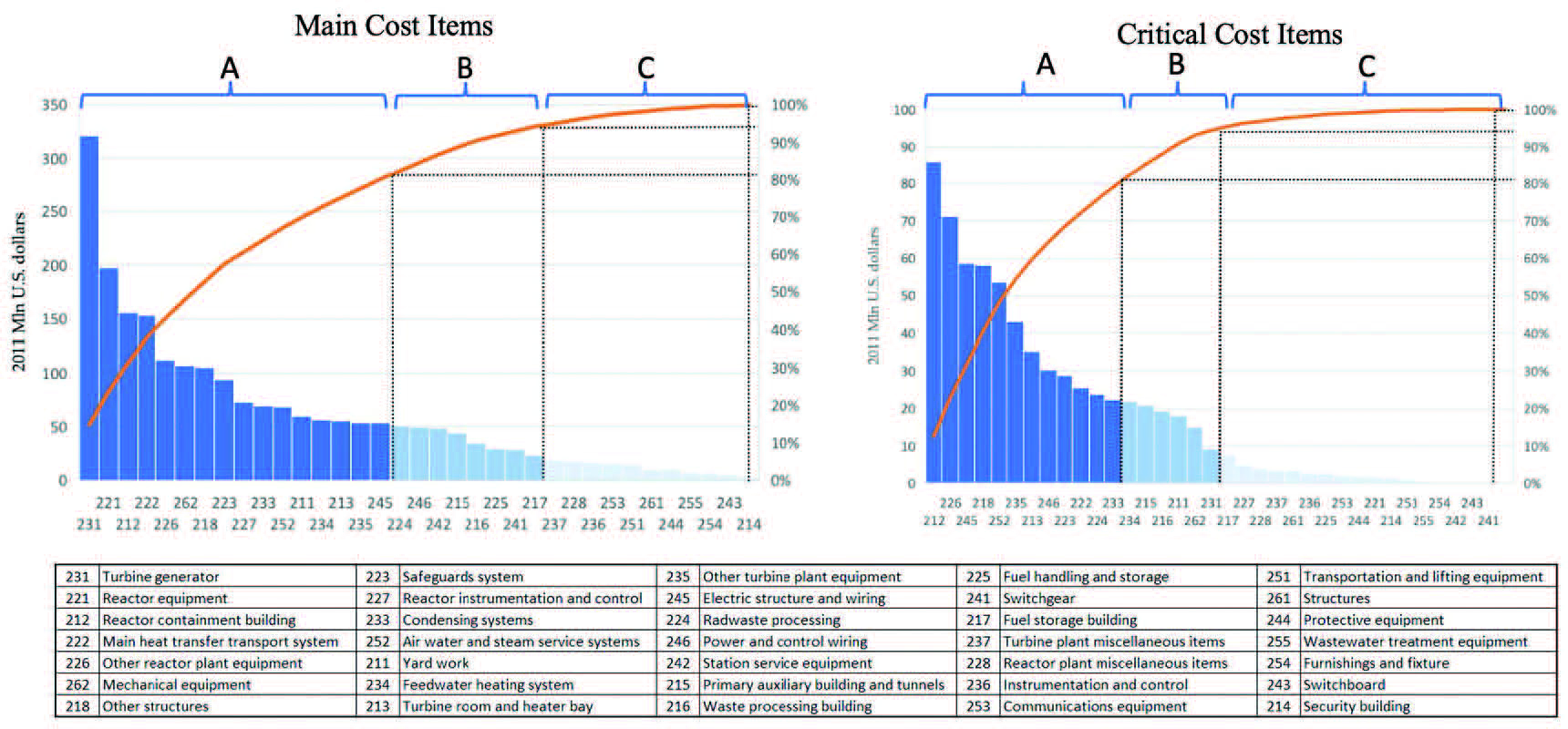
Fig. 2:
Pareto analysis chart – Main and critical cost items.
The first Pareto analysis was performed with the aim of determining the main cost items, that is, the cost items with the greatest impact on the total costs. The analysis considered the direct cost values, encompassing equipment and installation expenses, for the reference LR PWR12-BE (DOE 1987), adjusted to 2011 currency values as documented by Holcomb et al. (2011).
Subsequently, the weight of direct costs for the three-digit COA was calculated based on the total direct costs, and three distinct categories were established. The primary cost contributors accounting for 80% of the total cost are categorised as class A items, those contributing from 80% to 95% fell into class B and the remaining costs up to 100% are assigned as class C items. The analysis reveals that 46% of the cost items are categorised as class A and the top 4 of these items alone account for 38% of the total. Almost every two-digit COA category is represented by one or more class A items. The data indicate that the primary cost drivers are the reactor equipment (category 22) and turbine generator equipment (category 23). Items classified as class A within these categories account for a substantial 52% of the total direct costs. It is important to note that the reactor equipment category encompasses the nuclear steam supply system (NSSS), as detailed in the report (Holcomb et al. 2011). Following these two categories, the civil structure (category 21) constitutes 17% of the cost, while the electric structure and wiring (category 24), heat rejection mechanical system (category 26), and air water and steam service system (category 25) collectively make up the remaining 10%.
The second Pareto analysis was performed in order to assess the cost items more susceptible to project performance factors. In this case we based the analysis on the change in costs between 1987 PWR12-BE and PWR12-ME. It is essential to clarify that this analysis pertains to the variations in costs between the two plants within the same year, rather than constituting a study of the cost trends as in DOE (1987). The costs have been adjusted for inflation as of January 2011, in accordance with the data provided by Holcomb et al. (2011). The analysis shows that 34% of direct cost items account for 79% of the cost variance related to project performance. Acc. 21 ‘Structure and Improvements’, which accounts for 26% of the overall cost variance, is the most affected item among the critical ones (Class A). The item is followed by Acc. 22 Reactor equipment (22%), Acc. 24 Electrical Equipment (13%), Acc. 23 Turbine Generator Equipment (10%) and Acc. 25 Miscellaneous Equipment (8%).
A subsequent phase of the analysis involved examining which costs were subject to variation in order to identify the cost items affected by factors associated with differences in construction methodologies. An analysis of the cost variation components between PWR-BE and PWR-ME was conducted using data derived from the 1987 DOE report.
As illustrated in Figure 3, the majority of the cost variation can be attributed to site labour, which accounts for 81% of the total variation. This is followed by material costs at 15% and equipment costs at 5%. This comparison is between plants using identical technology and located at the same site, resulting in similar quantities and costs for equipment and materials. However, in the case of civil construction, material costs account for 24% of the cost variation. This variance is not due to site-specific characteristics, given the assumptions of the EEDB, but rather to design decisions and the efficiency of material management. Assuming a consistent unit labour cost between PWR12-ME and PWR12-BE, the variation in overall labour costs depends on the quantity of equipment and materials as well as workforce productivity. Thus, to understand the underlying reasons for cost increases, we separated the effects of these two factors by calculating the number of labour hours per dollar spent on equipment and materials for PWR12-BE (h/US$). Assuming the same value for PWR12-ME, we estimated the difference in on-site labour hours attributable to changes in the quantities of materials and equipment (by multiplying the productivity rate of PWR12-BE in H/US$ by the alteration in material and equipment costs between PWR12-ME and PWR12-BE). The outcome reveals that only 11% of the additional hours between PWR12-ME and PWR12-BE can be ascribed to changes in material quantities. Consequently, the remaining 89% is to be considered a consequence of a reduction in the productivity rate. The reasons for these declines in productivity is multifaceted. The DOE (1987) report states that: Craft labor productivity in nuclear power plants has two components. One is controlled by the workers and is related to their competence, thoroughness, organization, and incentive to do quality work. The second is outside their control and is related to rework and delays. It is the second component that appears to predominate in the causes for decreased productivity. The report outlines many other causes for productivity declines, including rework due to design changes and incomplete documentation, more stringent regulatory requirements, specialised safety training, unexpected delays, overtime scheduling and extended timelines caused by licencing or construction issues. Interestingly, the factors that influence site labour productivity ultimately relate to indirect labour performance.
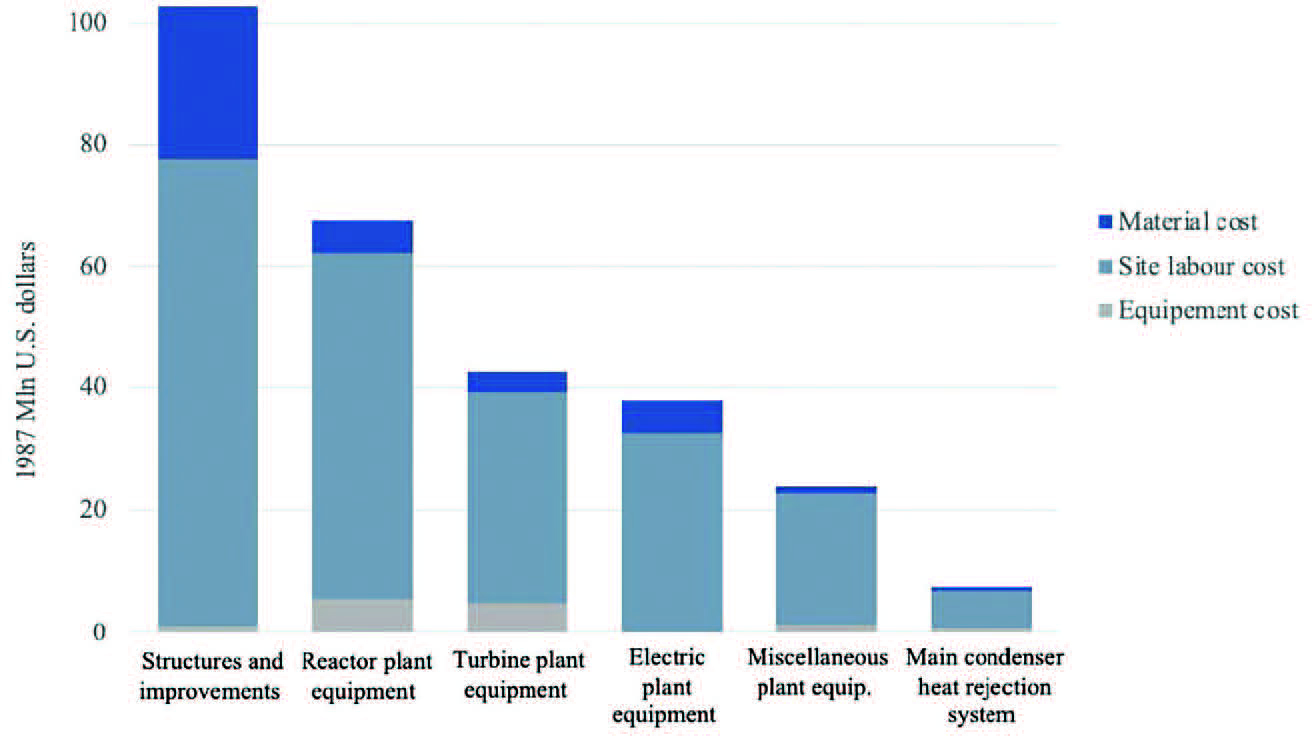
Fig. 3:
Components of cost variation (1987 Million U.S. dollars).
In the last step of the analysis, we investigated how SMR features mitigate the factors leading to productivity declines. As reported by the Energy Technologies Institute (ETI – Energy Technologies Institute 2018) SMR vendors pursue various strategies to trim construction costs. These encompass curtailing the construction scope, duration and on-site labour needs, by virtue of fewer structures and reduced safety system complexity facilitated by the adoption of passive safety systems, increasing reliance on factory production for crucial components, simplifying system designs to reduce the burden of rigorous verification and quality control, opting for highly standardised modular designs, emphasising project items reuse and constructability and implementing seismic isolation techniques to minimise site-specific design expenditures. By implementing a consistent learning process through the construction of multiple identical NPPs, project management performance progressively enhances, leading to a reduction in the cost increases like that observed between PWR12-ME and PWR12-BE. In the analysis, costs associated with PWR12-BE and PWR12-ME are denoted as the NOAK and FOAK NPP, respectively. In the model, PWR12-BE (NOAK) serves as the reference plant and to account for the learning process, while the cost related to the SMR FOAK is estimated by applying correction factors to site labour and equipment, as well as material costs. These correction factors are determined by comparing the respective costs of PWR12-BE and PWR12-ME. Table 4 outlines the adjusting factors employed in the cost analysis.
Tab. 4:
Adjusting factors employed in the cost analysis.
| EEDB Account No. | Account descriptions | Max cost adjusting factors | |
|---|---|---|---|
| Site labour | Equipment and site material | ||
| 21 | Structures and improvements subtotal | 1.68 | 1.30 |
| 22 | Reactor plant equipment | 2.16 | 1.04 |
| 23 | Turbine plant equipment | 1.82 | 1.05 |
| 24 | Electric plant equipment | 1.93 | 1.12 |
| 25 | Miscellaneous plant equipment | 1.94 | 1.11 |
| 26 | Main condenser heat rejection system | 1.41 | 1.04 |
In conclusion, the two Pareto analyses were integrated to formulate the cost estimation methodology for each cost category. These items were categorised into four distinct classes. A summary of the items included in each class is provided in Table 5. Each of the four classes was subsequently estimated in accordance with the established guidelines: (i) LL (Low Low) items were determined through scaling factor or data collection from other studies, without taking project performance factors into account; (ii) LH (Low-High) items were estimated using scaling factor or information from other studies while considering project performance factors; (iii) HL (High Low) items were estimated mainly by directly obtaining information from manufacturers without considering project performance and (iv) HH (High High) items were mainly estimated by directly gathering information from manufacturers, taking into account project performance factors.
Tab. 5:
Cost items included in each class.
| EEDB Account No. | Account descriptions | Class 1 – main cost items | Class 2 – critical cost items | Cost item category |
|---|---|---|---|---|
| 212 | Reactor containment building | A | A | HH |
| 226 | Other reactor plant equipment | A | A | HH |
| 245 | Electric structure and wiring | A | A | HH |
| 218 | Other structures | A | A | HH |
| 252 | Air water and steam service systems | A | A | HH |
| 235 | Other turbine plant equipment | A | A | HH |
| 213 | Turbine room and heater bay | A | A | HH |
| 223 | Safeguards system | A | A | HH |
| 222 | Main heat transfer transport system | A | A | HH |
| 233 | Condensing systems | A | A | HH |
| 234 | Feedwater heating system | A | B | HL |
| 211 | Yard work | A | B | HL |
| 262 | Mechanical equipment | A | B | HL |
| 231 | Turbine generator | A | B | HL |
| 227 | Reactor instrumentation and control | A | C | HL |
| 221 | Reactor equipment | A | C | HL |
| 246 | Power and control wiring | B | A | LH |
| 224 | Radwaste processing | B | A | LH |
| 215 | Primary auxiliary building and tunnels | B | B | LL |
| 216 | Waste processing building | B | B | LL |
| 217 | Fuel storage building | B | C | LL |
| 228 | Reactor plant miscellaneous items | C | C | LL |
| 237 | Turbine plant miscellaneous items | C | C | LL |
| 261 | Structures | C | C | LL |
| 236 | Instrumentation and control | C | C | LL |
| 225 | Fuel handling and storage | B | C | LL |
| 253 | Communications equipment | C | C | LL |
| 244 | Protective equipment | C | C | LL |
| 214 | Security building | C | C | LL |
| 251 | Transportation and lifting equipment | C | C | LL |
| 255 | Wastewater treatment equipment | C | C | LL |
| 254 | Furnishings and fixture | C | C | LL |
| 242 | Station service equipment | B | C | LL |
| 243 | Switchboard | C | C | LL |
| 241 | Switchgear | B | C | LL |
3.4. Indirect cost
Indirect costs were estimated using the methodology outlined by Stewart and Shirvan (2022). This approach involves deriving correlations between direct and indirect costs based on data from both PWR12-BE and PWR12-ME. Similar to the categorisation of direct costs, EEDB breaks down the indirect costs into four components: factory equipment cost, on-site labour hours, on-site labour cost and on-site material cost. For both PWR12-ME and PWR12-BE, it was observed that indirect site labour hours and site labour costs accounted for approximately 36% of the corresponding direct site labour hours and costs. As for indirect site materials costs, which primarily encompass tools and equipment, the ratio for PWR12-BE was 78.5% of the direct site materials costs, whereas for PWR12-ME, it was 95.1% due to having about 33% more workers on site. This increase in on-site labour justifies the adjustment in the indirect-to-direct site material cost ratio. Lastly, the indirect costs associated with factory equipment mainly encompasses supervision of field labour and home office services. These costs were modelled to align with the direct site labour costs and construction time. Specifically, the ratio of indirect factory equipment costs to direct site labour costs resulted to be 1.32 for PWR12-BE and 1.99 for PWR12-ME in the EEDB data. Considering that the construction time for PWR12-ME was 36% longer than that of PWR12-BE, adjusting the indirect factory equipment cost-to-direct site labour cost ratio by 36% effectively allows to account for the indirect factory equipment cost. Table 6 shows the indirect cost modelling assumptions and relations adopted in the analysis.
Tab. 6:
Indirect cost modelling assumptions.
| Base scaling relation | Base scaling value (%) | Escalation relation | |
|---|---|---|---|
| Site labour cost | PWR12 BE indirect site labor cost | 36 | |
| PWR12 BE direct site labor cost | |||
| Site material cost | PWR12 BE indirect site material cost | 79 | New plant average # workers |
| PWR12 BE direct site material cost | PWR12 BE average # workers | ||
| Factory equipment cost | PWR12 BE indirect factory cost | 132 | New plant construction time |
| PWR12 BE direct site labor cost | PWR12 BE construction time |
3.5. Cost equations and drivers
As previously noted, expert judgements were employed wherever feasible for the most relevant cost items within the HH and HL classes. For these two categories, we employed the primary data as input of the cost equations based on factorial estimation (i.e. we calculated the cost item based on factorial relations among cost components) and analytical estimation (i.e. we broke down single cost item into its constituent elements and estimated their costs individually, then summing them to calculate the item total cost). Appendix 1 contains detailed information about the specific cost drivers used in the cost equations for calculating the cost item estimates. On the other hand, the prevailing estimation method for cost items in the LH and LL classes relied on scaling factors. Thus, for cost items computed relying on this method, we employed a cost equation having the following general function:
where 1144 MWe is the nominal size of the reference reactor PWR12-BE.
3.6. Modularisation
Once we identified the direct costs, we assessed the impact of modularisation on the cost distribution between equipment and on-site labour costs, aligning with the assumption presented by Stewart and Shirvan (2022). For modularised cost items, we relocated 50% of labour costs to the factory, effectively doubling productivity. A shift to in-shop labour results in increased equipment costs for several reasons, such as upfront investment in facilities, tools and equipment or need for technology upgrades. Additionally, given that modularisation involves transporting larger components, we incorporated additional transportation costs into the equipment cost, which were calculated as a percentage of the component cost. Factory equipment cost, site labour cost and site material cost items were calculated by distributing the total cost for each item according to the composition of the PWR12-BE cost items from the EEDB estimate and insights provided by manufacturers. Furthermore, the cost escalation added to the NOAK cost to derive the FOAK cost was redistributed based on the impact of each cost component, estimated from both PWR12-BE and PWR12-ME. Based on expert judgement, we considered the following categories to be influenced by modularisation: 212 Reactor containment building; 213 Turbine room and heater bay; 214 Security building; 215 Primary auxiliary building and tunnels; 216 Waste processing building; 217 Fuel storage building; 218 Other structures; 221 Reactor equipment; 222 Main heat transfer transport system; 223 Safety system; 231 Turbine generator; 233 Condensing systems; 234 Feedwater heating system; 261 Structures; 262 Mechanical equipment.
4. Cost estimates for IRIS and NuScale
After having defined the cost equations, the next step involved estimating the costs of two SMRs, namely, IRIS and NuScale. This paragraph provides a brief description of the technical features of both reactors. Figure 4 provides a detailed outline of the technical features of the two SMRs.
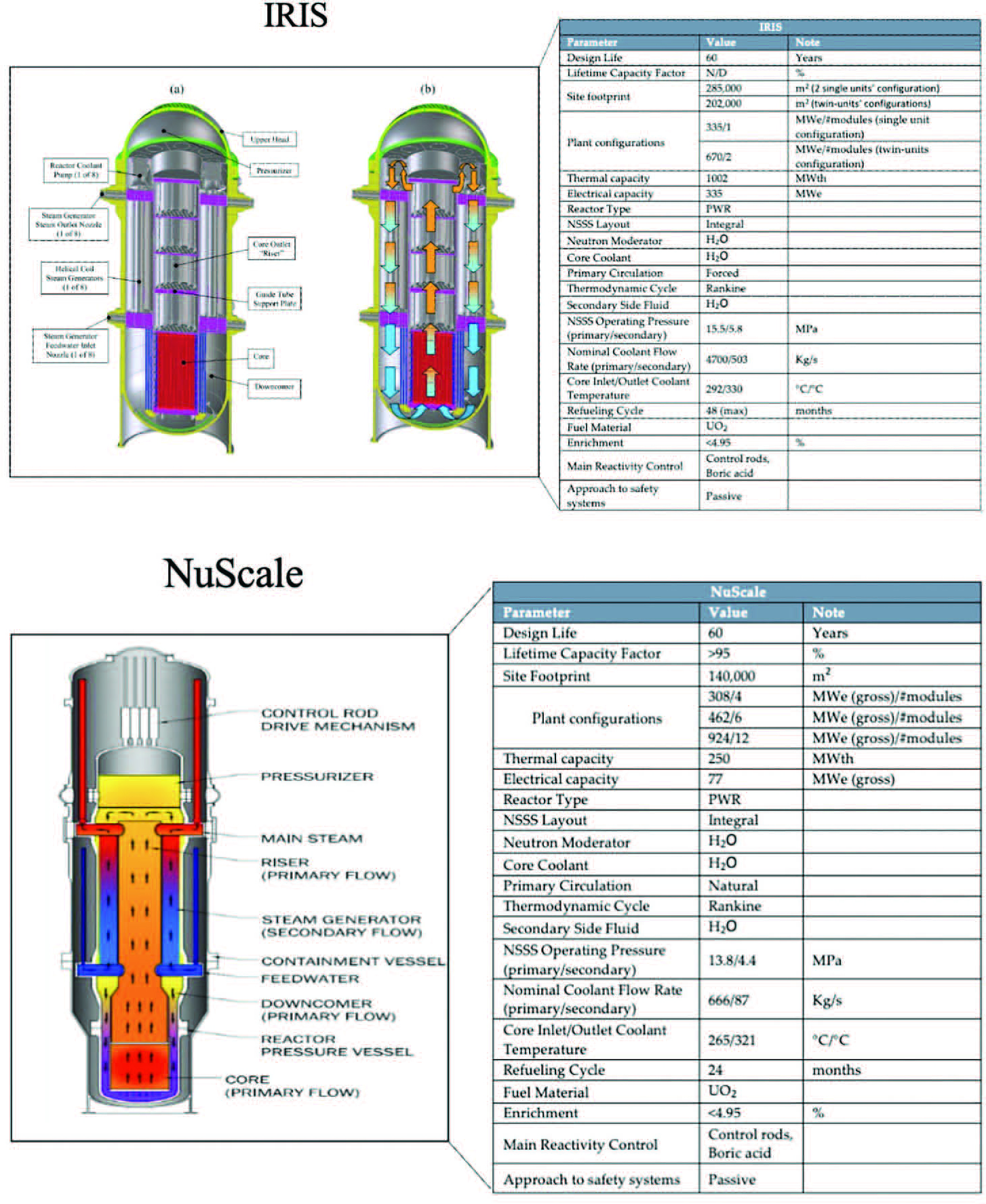
Fig. 4:
Outline of IRIS and NuScale technical features. NSSS, nuclear steam supply system.
For the purpose of this study, these two reactors were selected as reference cases because they represent two of the most mature and well-documented light water reactor (LWR)-based SMR concepts currently available. Nevertheless, the methodological framework is not limited to LWR technologies. The same modelling logic—based on the COA structure and factorial cost equations—can be extended to other SMR types, such as molten salt, sodium-cooled or high-temperature gas reactors. In these cases, the model would require the replacement of cost drivers and equipment-specific coefficients with parameters reflecting the technological characteristics of each reactor class. The following paragraphs provide a brief description of the technical features of IRIS and NuScale. Figure 4 provides a detailed outline of the technical features of the two SMRs.
4.1. International reactor innovative and secure (IRIS)
IRIS was a 335 MWe pressurised LWR with a modular, integrated and integral primary system configuration. It has been under development since 1999 by an international team led by Westinghouse that involved 20 organisations from 10 countries (Carelli et al. 2004). Conceptually, IRIS could be deployed in two distinct plant layouts. The first option involved a multiple-site layout with single units, enabling the deployment of 335 MWe increments. This configuration is well-suited for smaller markets. The second option entailed to deploy multiple twin units, each with a capacity of 670 MWe. Under a technical perspective, the IRIS reactor was housed inside a spherical steel containment with a diameter of 25 m and surrounded by a cylindrical concrete shield building. Each module is connected to the turbine lying in its own dedicated area, which also houses all the other items related to power plant steam and feed water systems and power generation equipment.
4.2. NuScale
NuScale current design is a 77 MWe integral PWR reactor developed by the start-up NuScale Power Inc. The precursor concept was developed in 2003 within the MultiApplication Small LWR— multi-application small light water reactor (MASLWR) Program. In 2020, NuScale was the first ever SMR to receive the USA Nuclear Regulatory Commission, NRC, design approval. The NRC completed the Phase 6 review, the last and final phase of NuScale’s Design Certification Application (DCA) with the issuance of the final safety evaluation report (FSER) (NCR, 2020). A significant milestone is set for 2027, when the first commercial plant is slated to commence operations. NuScale plant consists of 1-12 independent modules, so the maximum power plant output is up to 924 MWe. Each module includes an integral pressurised LWR operating under natural circulation primary flow conditions. Each reactor is housed within its own high-pressure containment vessel that is immersed underwater in a concrete pool lined with stainless steel (NuScale Power | Small Modular Reactor (SMR) Nuclear Technology, 2023).
4.3. Cost estimate results
This section is dedicated to the discussion of the paper’s findings, focusing on the cost estimate results.
Table 7 shows the values of OCCs and the total capital costs for the years 2019 and 2023, having the 2023 NOAK version of the reference LR PWR-12. The purpose of this dual analysis is to highlight the changes in costs that occurred due to inflation, particularly following both the surge in raw material costs observed after the coronavirus disease 2019 (COVID-19) pandemic and the geopolitical, international turmoil in the recent years. To evaluate the costs in 2023, adjustment factors were applied based on costs estimated for the year 2019, taking into account the inflation rates of site material costs (factor equal to 1.4×), factory costs (factor of 1.2×) and labour cost (1.2×). Specifically, reference was made to the price trends observed by the Economic Research Division of the Federal Reserve.
Tab. 7:
OCC and capital cost SMRs and PWR12 (2019 and 2023 EUR).
| OCC | Capital cost | |||||||
|---|---|---|---|---|---|---|---|---|
| IRIS single | IRIS twin | NuScale | PWR12 | IRIS single | IRIS twin | NuScale | ||
| 2019 | NOAK (%) | 87 | 75 | 85 | 81 | 114 | 101 | 116 |
| FOAK (%) | 132 | 112 | 136 | 140 | 228 | 199 | 247 | |
| 2023 | NOAK (%) | 108 | 94 | 105 | 100 | 142 | 126 | 144 |
| FOAK (%) | 163 | 138 | 167 | 174 | 281 | 245 | 304 | |
The analysis reveals that, in the extended duration, while the characteristics of SMRs mitigate the effects of diminishing economies of scale, this aspect continues to exert a decisive influence.
The analysis suggests that, while the characteristics of SMRs may mitigate the impact of the loss of economies of scale over the long term, this factor still holds considerable sway. However, there is an exception in the case of the IRIS twin-units configuration, where the adoption of a larger SMR (335 MWe), coupled with plant design optimisation, simplification and modularisation, appears to fully offset the loss of economies of scale. Shifting the focus to the FOAK, the costs reveal a rather distinct scenario. In particular, the cost associated with PWR12 appears considerably high. This underscores how the reduced complexity of SMR-based NPPs, which results in a more streamlined project execution, appears to mitigate the cost escalation associated with LRs.
Comparing the results across different SMRs, the loss of economies of scale between NuScale and IRIS is counterbalanced by a high degree of shared facilities and equipment. This is evident when comparing the cost of NuScale with the twin unit configuration of IRIS, where the latter is more cost-effective due to leveraging the same savings factor. However, this does not hold true for the single configuration. Furthermore, NuScale boasts advantages in its design features, such as a significantly reduced size of the reactor containment and the absence of reactor coolant pumps (RCPs) due to the reliance on natural principle-based primary coolant circulation. The optimal balance between reactor size and plant construction simplification must be carefully struck to achieve competitive electricity costs. Additionally, as the cost estimation illustrates, other sources of savings should be looked for when designing smaller reactors. This underscores the critical importance of estimating costs from the early stages of reactor development. The detailed cost analysis that follows in this section is entirely based on estimates as of 2023. Figure 5 outlines the analysis of the capital cost components for IRIS (single and twin units) and NuScale.
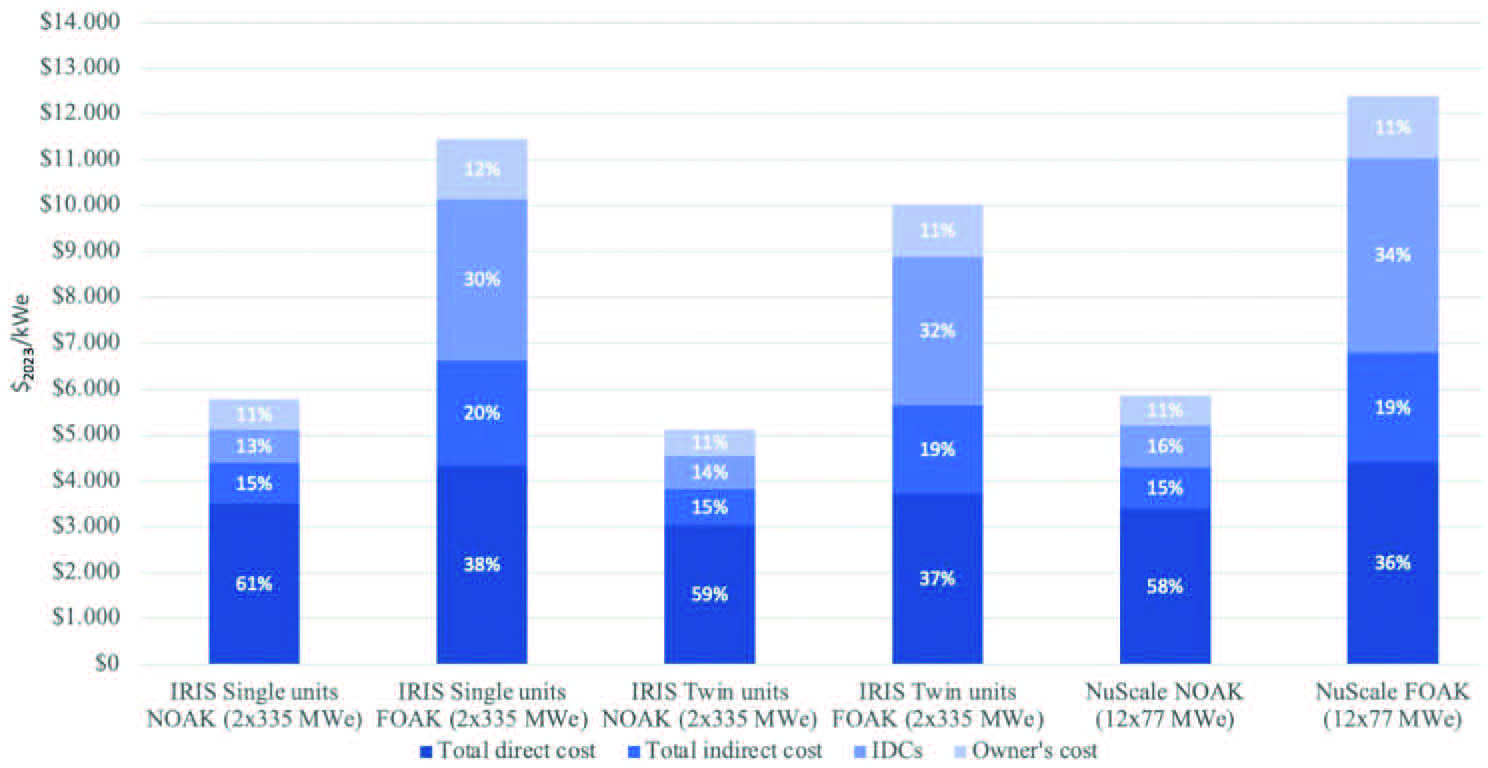
Fig. 5:
Analysis of the capital cost components for IRIS (single and twin units) and NuScale. FOAK, first-of-a-kind; NOAK, Nth-of-a-kind.
As far as IRIS is concerned, the primary element of capital cost, in both NOAK and FOAK scenarios, comprises direct costs. For NOAK IRIS configurations, labour, equipment and material expenses account for approximately 60% of the total cost. Conversely, when examining FOAK scenarios, the prominence of direct costs diminishes to around 40%, with a more pronounced influence of indirect costs and interest during construction (IDC), anticipated. This indicates that the extended construction duration and increased labour hours not only impact direct costs but significantly affect these other components. Specifically, the direct costs rise by a factor of 1.2, while the indirect costs surge by 2.5. These findings are consistent with the analysis presented in DOE (1987), which reports a multiplier of 1.3 for direct cost and 2.4 for indirect cost. IDC increased by 4.5, then the combined effect of IDC and indirect costs escalated from 28% to 50% of the capital cost. It is important to note that transitioning from FOAK to NOAK yields an estimated overall capital cost reduction of approximately 49%, a conclusion applicable to both configurations. While the increase in these components is not proportional, IDC, which represents the highest value, constitutes the primary contributor to the increase, accounting for approximately 49% of the total variation. In fact, it is hypothesised that through the construction of numerous plants that leverage modularity and a stable supply chain, manufacturers can achieve very tight commissioning times. In addition, the ability to add capacity to the plant gradually creates the opportunity to self-finance by reducing in interest rate. A detailed examination of direct costs composition, which is reported in Figure 6, reveals that the item most sensitive to variations between FOAK and NOAK is the cost of site work. Out of the €380 million variation associated with the single-unit configuration and €306 million for the twin-unit configuration, roughly 75% can be attributed to the escalation of working hours. The second significant contributor is the cost of equipment, comprising approximately 15%. This reflects design optimisations and the influence of knowledge gained from equipment manufacturers.
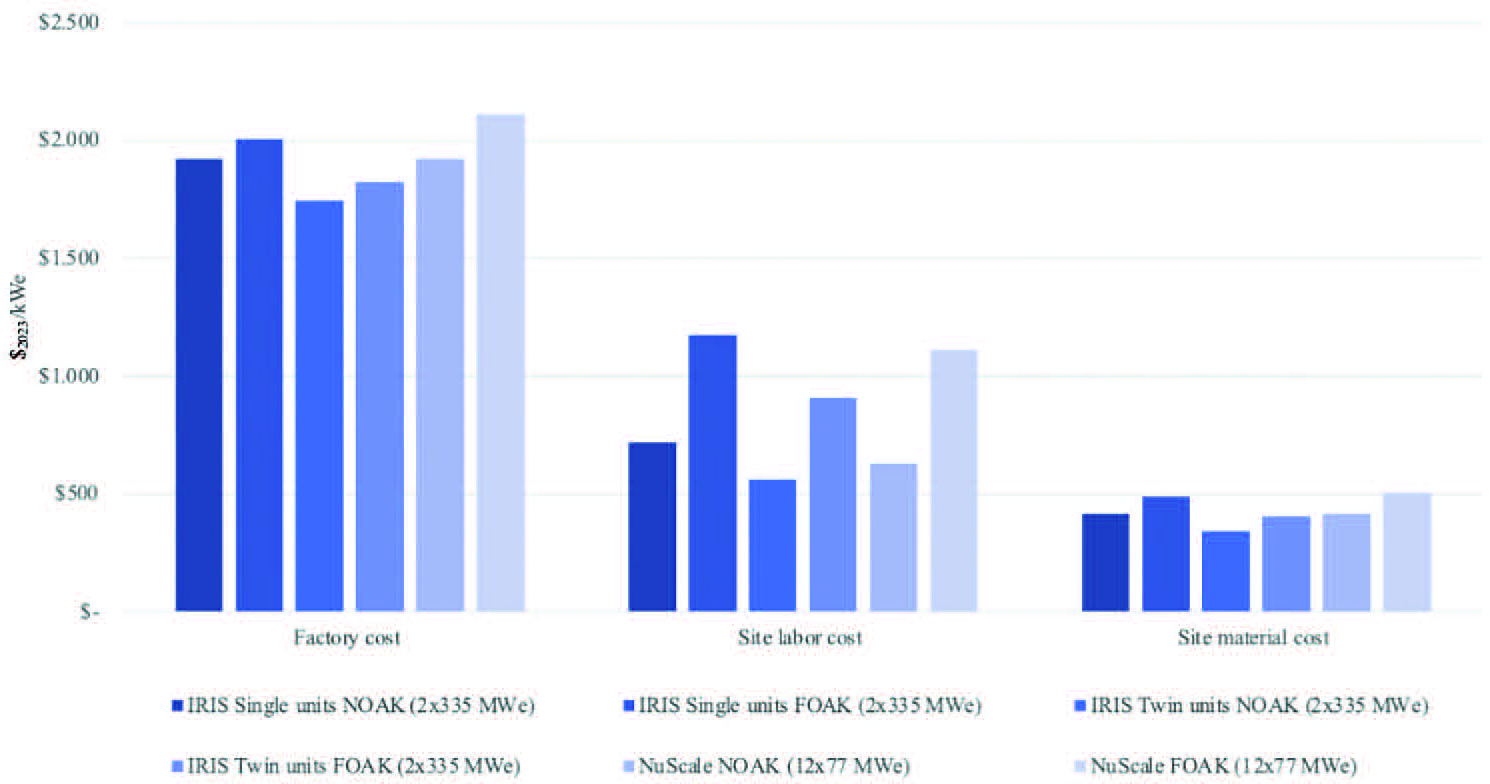
Fig. 6:
SMR direct costs distribution. FOAK, first-of-a-kind; NOAK, Nth-of-a-kind; SMRs, small modular reactors.
In the case of the single-unit IRIS plant configuration for NOAK, the breakdown of direct costs is as follows: factory cost accounts for 63%, on-site labour cost represents 24% and on-site material cost constitutes 14%. In the FOAK scenario, these values shift to 55%, 32% and 13%, respectively. For the NOAK IRIS twin-unit configuration under, the distribution of direct costs is as follows: factory cost makes up 66%, on-site labour cost is 21% and on-site material cost is 13%. In the FOAK scenario, these values change to 58%, 29% and 13%, respectively. As anticipated, in both cases, the twin-unit configuration experiences a lesser impact on site labour costs due to the shared working activities during construction.
When considering the influence of the different accounts on direct costs, as shown in Figure 7, Acc. 22 emerges as the dominant one, contributing to 35% of the direct costs associated with NOAK for the single-unit configuration and 37% for the twin-unit configuration. This observation aligns with the findings of the EIA (2020), despite an expected greater influence of Account 21. Across both configurations and differing construction processes, the civil construction cost displays a slight fluctuation, ranging from 17% to 18% for IRIS single unit and from 16% to 17% for the twin units. Notably, the reactor plant equipment, being the most substantial component, stands out as the primary driver of the variation between FOAK and NOAK. Acc. 22 represents 41% of the cost variation in the single-unit configuration and 44% in the twin-unit configuration. Conversely, the relatively lower impact of Account 21, accounting for approximately 21% in both configurations, deviates from other estimations and the reference PWR12. This discrepancy could be attributed to a lower estimated weight assigned to structures and construction cost components. Of particular interest is the cost variation linked to Account 24: even though its weight varies from 11%-15% considering both configurations and differing construction experiences, its impact on cost variation amounts to roughly 20% for single units and 16% for twin units.
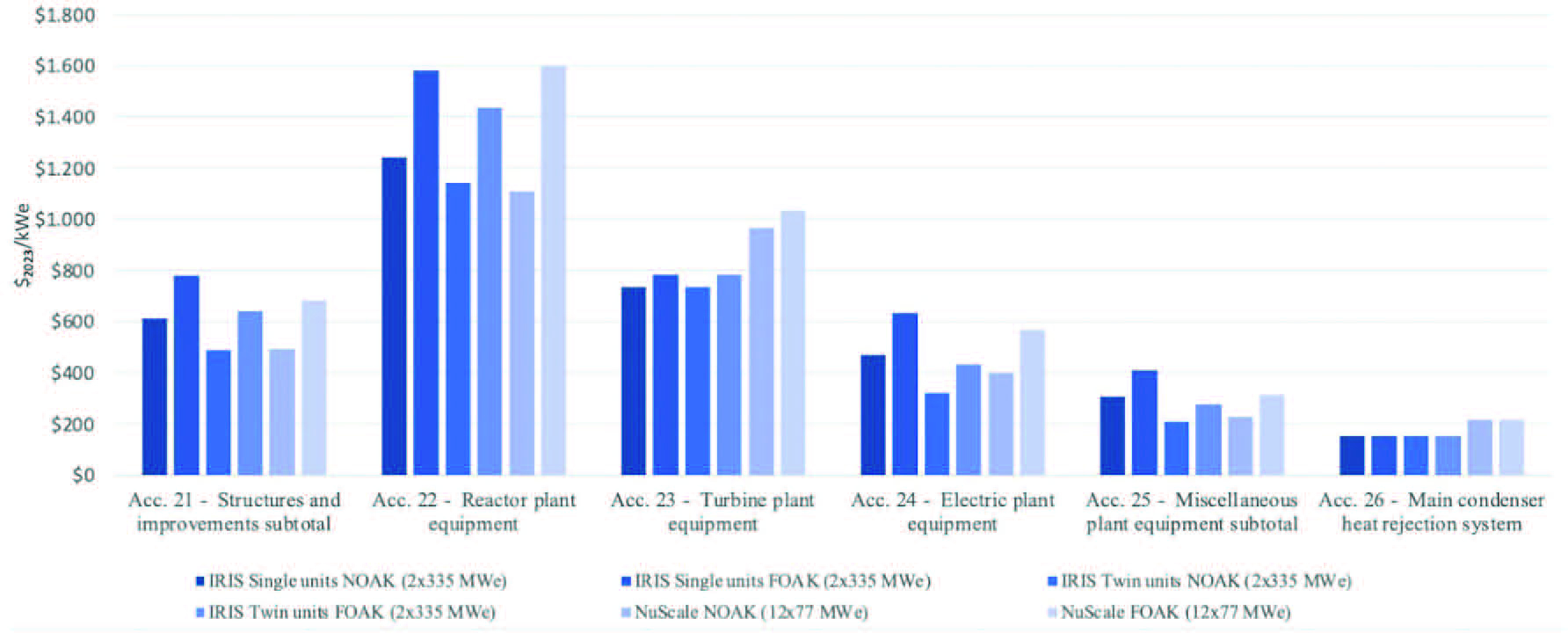
Fig. 7:
SMRs COA direct cost distribution. FOAK, first-of-a-kind; NOAK, Nth-of-a-kind; SMRs, small modular reactors.
NuScale’s cost estimation results closely mirror those obtained for the IRIS NPPs. In this analysis, direct costs account for 58% and 36% of the total Capital Cost for NOAK and FOAK, respectively. Meanwhile, the combination of IDC and indirect costs increases from 31% in the case of NOAK to approximately 53% for the construction of the first NPP. The direct cost experiences a 1.3-fold increase, the indirect cost 2.7 and the IDC surges by a factor of 4.6. The NOAK/FOAK ratio stands at approximately 47%, which closely aligns with the results obtained for the IRIS NPP.
Half of the cost variance is attributable to IDC, so the statements made for IRIS remain valid for NuScale as well. As expected, the second contributor consists in indirect cost (25%) followed by direct cost (15%). Regarding the latter, a breakdown is reported in Figure 6, where the primary factor contributing to the direct cost variation is the site labour cost, accounting for approximately 63% of the cost difference. The second most significant component is the factory cost, constituting about 25%. This percentage is higher than what is observed for IRIS, which can be rationalised by the more efficient utilisation of learning economies and modularisation through the repetitive procurement and installation of identical equipment at the same site that share the same workforce. Similar to the twin-unit configuration of IRIS, in the case of NOAK, the distribution of direct costs comprises the following: Factory cost at 65%, on-site labour cost at 21% and on-site material cost at 14%. In contrast, for FOAK, these values shift to 57%, 30% and 13%, respectively.
Regarding the COA direct cost distribution, which are reported in Figure 7, a cost structure similar to that of IRIS is observed in the case of NuScale NPP. Acc. 22 stands out as the predominant cost item, contributing to 33% for NOAK and 36% for FOAK of the total direct costs, and it plays a pivotal role in cost variation, accounting for about 49% of the difference. Acc. 21, with a weight of 14% for NOAK and 15% for FOAK, contributes 19% to the cost variation. In this instance, the reduced weight of Acc. 21 components can be attributed to the fact that the reactor containment structure, given its characteristics, is subsumed within the reactor equipment category. Additionally, all 12 modules of NuScale are housed within the same reactor building. However, as previously discussed, this only partially justifies the divergent cost impact. Another significant contributor to costs is Account 24, which, despite representing only 12% for NOAK and 13% for FOAK of direct costs, which results in a 17% variation in direct costs between the initial construction and the subsequent ones.
4.4. Results accuracy
As mentioned earlier, the main objective of the selected estimation method is to secure detailed estimates by gathering primary data directly from manufacturers for the most significant cost items. This strategy aims to ensure that the most relevant elements on the overall project cost are accurately and comprehensively assessed. For less critical costs, scaling is performed based on data from a 1,144 MWe PWR. In cases where it was not feasible to gather information directly from producers, a cost model was defined using secondary sources from the literature to estimate the relevant cost items. Considering the type of information and the chosen estimation method, we assigned varying levels of uncertainty to different cost items. In accordance with the criteria outlined in the model is the Association for the Advancement of Cost Engineering, AACE (2005); we categorised the costs associated with different items into estimation classes based on the degree of uncertainty in the estimates. Due to the substantial uncertainty inherent to the nuclear sector and the absence of design specifications, the widest range of uncertainty values for each class was considered. Specifically (i) cost items of lesser relevance within the LL and LH categories are estimated using secondary sources with minimal or no cost adjustments. According to the recommendation of AACE (2005), we considered these items to be included into class 5 estimation, with an expected accuracy range of -50% for the lower bound and +100% for the upper bound; (ii) the most critical cost items falling into the HL and HH classes, which were estimated through models based on secondary information, were included into class four estimation. The expected accuracy range is -30% for the lower end and +50% for the upper end; (iii) the highly significant cost items within the HL and HH categories, estimated using models constructed mainly from primary information, are categorised as class three estimates. Thus, the accuracy range for these classes is -20% for the lower end and +30% for the upper end. To evaluate the overall accuracy of the model, we calculated the weighted average of the uncertainty boundaries associated to the cost accounts. The findings reveal an overall accuracy associated with the model of -30% for the lower end and +50% for the upper end. A more comprehensive insight of the accuracy results obtained is presented in Table 8, showcasing the calculation of average accuracy for each category of estimated items. It is noticeable that the item classes HH and HL, where manufacturer evaluations were utilised for cost estimation, demonstrate considerably higher average accuracy in cost estimation compared with the other two classes. This underscores the paper’s contribution to SMR cost estimates, emphasising its provision of a bottom-up estimation approach where cost components with a significant impact on the overall cost exhibit higher accuracy, thanks to the expert judgements on cost estimations provided directly by manufacturers.
Tab. 8:
Average estimation accuracy value per category.
| Cost item cost over total direct cost | High | HL lower value −21% upper value +32% | HH Lower value −29% Upper value +50% |
| Low | LL Lower value −46% Upper value +91% | LH Lower value −50% Upper value +100%% | |
| Low | High | ||
| Cost item variation weight over total direct cost variation | |||
4.5. Results benchmarking
4.5.1. Detailed benchmarking of cost components with recent cost estimates
To conduct a thorough benchmarking analysis of the cost estimates provided in this study, the results were evaluated by contrasting them with other models or publicly accessible data related to nuclear cost estimation. We compared IRIS NOAK (2 × 335 MWe) with an upper-level cost structure related to the construction of 2 AP1000s (2 × 1078 MWe) released by the EIA (2020). Table 6 summarises the detailed comparison. The Civil/Structural/Architectural component comprises Account 21, Mechanical costs encompass the sum of Accounts 22, 23, 25 and 26, while Electrical expenses represent Account 24. The percentage values derived from the before mentioned cost breakdown closely resemble the results of our study, except for the Civil construction category, which exhibits higher costs for the AP1000 and PWR12-BE NPPs. This disparity can be attributed to the consistent reduction in the size of the reactor building resulting from the adoption of an integral reactor in the IRIS design concept. Consequently, this reduced emphasis on Civil costs places greater importance on Mechanical systems. When the costs reported by Stewart and Shirvan (2022) are adjusted for inflation, the OCC for the AP1000’s NOAK in 2023 is expected to be 87% of the reference case, excluding Owner’s costs (the same escalation factors previously mentioned were applied) (Shirvan 2022). When comparing this OCC value with that presented in Table 9, it is evident that the economy of scale continues to have a significant impact. However, this effect is partially mitigated by design simplifications, modularisation and other cost-saving measures incorporated into the IRIS design. Regarding the relationship between direct and indirect costs, both configurations align with the values reported in EIA (2020), accounting for 80% and 20% of the OCC, respectively. When considering the FOAK projects, the impact of indirect costs increases to 35%. This shift reflects optimisation achieved through design maturity, standardisation, licencing and regulatory approvals, and effective project management techniques.
Tab. 9:
Benchmarking comparison of IRIS NOAK (2 × 335 MWe) with the two AP1000s (2 × 1078 MWe).
| AP1000 (2 × 1078 MWe) | PWR12-BE (1144 MWe) | IRIS single conf. (2 × 335 MWe) | IRIS twin conf. (2 × 335 MWe) | |
|---|---|---|---|---|
| Civil/structural/architectural component (%) | 24 | 22 | 17 | 16 |
| Mechanical component (%) | 65 | 69 | 69 | 73 |
| Electrical component (%) | 11 | 9 | 13 | 11 |
| Direct cost (%) | 100 | 100 | 100 | 100 |
| OCC/kWe (US$-2023) | 3.600 | 4.084 (ref. case) | 4.391 | 3.824 |
NuScale NOAK (12 × 77 MWe) was compared with the cost structure of 12 units SMR-based NPP with a power of 50 MWe each (EIA 2020). Table 10 summarises the comparison outline. As for the IRIS case, the main difference among the references consists in Civil and Mechanical equipment cost categories. This might depend on differences in the plant’s configurations (e.g. the rector containment structure of NuScale is accounted under Acc. 221 instead of 212). Given that the same deviation occurs in both estimations, a revision of the Account 21 model is recommended. Regarding the relation among direct and indirect costs the model is in line with the values reported in EIA (2020), respectively, representing the 80% and 20% of OCCs. When considering the FOAK, the impact of indirect costs represents the 35% of the OCCs.
Tab. 10:
Benchmarking comparison of NuScale NOAK (12 × 77 MWe) with the 12-unit SMR-based NPP.
| Costs include contingency | SMR (12 × 50 MWe) | PWR12-BE (1,144 MWe) | NuScale (12 × 77 MWe) |
|---|---|---|---|
| Civil/structural/architectural subtotal (%) | 25 | 22 | 14 |
| Mechanical subtotal (%) | 64 | 69 | 74 |
| Electrical subtotal (%) | 11 | 9 | 12 |
| Direct costs (%) | 100 | 100 | 100 |
4.5.2. Benchmarking with other recent estimates
This section focuses on comparing the findings of our analysis, specifically the FOAK and NOAK estimates for the NuScale (12 × 77 MWe), with those from recent studies that have evaluated various SMR concepts. Table 11 presents a selection of recent works estimating multi-module reactors. The costs have been adjusted for inflation to 2023 values and normalised for a 924 MWe power capacity using a scaling factor of 0.6 to facilitate comparison.
Tab. 11:
Comparison between recent NuScale estimates and our results.
| Source | Specific Cost (US$/kWe) | Cost type | Units | NPP power (MWe) | Construction experience | Reactor | Year | Normalised cost (US$2023 – 924 MWe) |
|---|---|---|---|---|---|---|---|---|
| Stewart and Shirvan (2022) | 3,856 | OCC | 12 | 684 | 10th OAK | NuScale iPWR | 2018 | 4,239 |
| Stewart and Shirvan (2022) | 6,554 | OCC | 12 | 684 | FOAK | NuScale iPWR | 2018 | 7,206 |
| US Department of Energy (2018) | 8,936 | OCC | 6 | 480 | - | Generic | 2023 | 6,877 |
| NuScale and the Utah Associated Municipal Power Systems | 20,139 | Capital Cost | 6 | 462 | FOAK | NuScale iPWR | 2022 | 16,178 |
| This work | - | OCC | 12 | 924 | NOAK | NuScale | 2023 | 4,304 |
| This work | - | Capital Cost | 12 | 924 | NOAK | NuScale | 2023 | 5,872 |
| This work | - | OCC | 12 | 924 | FOAK | NuScale | 2023 | 6,81 |
| This work | - | Capital Cost | 12 | 924 | FOAK | NuScale | 2023 | 12,397 |
In the comparison with existing literature, our estimates reveal interesting results. For instance, when examining the OCC, our NOAK NPP estimation closely aligns with the findings of Stewart and Shirvan (2022). However, our results deviate slightly from the figure provided by the US Department of Energy (2018), which stands at US$6.877/kW. This discrepancy could be attributed to the latter study’s consideration of a generic SMR design, thereby overlooking specific cost-saving solutions implemented by NuScale, such as the compact containment vessel. On the other hand, our FOAK estimation appears to be lower by approximately US$400/kWe compared with the estimate by Stewart and Shirvan (2022). When comparing our estimations of the Capital Cost for the FOAK with the recent cost estimate announced by NuScale and the Utah Associated Municipal Power Systems, there is a significant disparity. Regarding this, it is important to note that our estimation model does not account for site-specific costs or delve into the details of project financing strategies. According to Utah associated municipal power systems (UAMPS), these factors, combined with increases in the producer price index, were the primary contributors to the project cost escalation. This outlines that our model serves as a foundational benchmark, and further refinement is necessary when specific projects are estimated.
5. Limitations and conclusions
The underlying goal of the cost estimation model proposed in this paper is to provide a method for estimating the costs of SMR-based NPPs. The proposed method (i) integrates expert judgement for evaluating the main and most critical cost items; (ii) provides estimates for both FOAK and NOAK for NuScale and IRIS single and twin units and (iii) includes a quantification of financing costs in the estimation.
After identifying the most relevant cost items, a tailored model was developed for each COA cost item. Table 12 presents a comprehensive summary of the COAs estimated using different methods. Specifically, 43 out of 166 cost items, representing 11 out of 35 items at the third level of COA detail and accounting for 55% of direct costs, were derived from data provided by industry experts and primary sources. In contrast, the estimation of the remaining Code Of Accounts, as previously emphasised, involved gathering data from secondary sources.
Tab. 12:
Overview of the number of cost items estimated for each accuracy class.
| Accuracy class | Direct cost IRIS NOAK(%) | Weight over total direct cost (%) | Number of 3rd level COA voices per category | Percentage of 3rd level COA voices per category (%) | Number of cost item estimated per category (# of computation) | Percentage of cost item estimated per category (%) |
|---|---|---|---|---|---|---|
| 3 (-20%; +30%) | 43.71 | 44 | 10 | 29 | 24 | 14.46 |
| 3/4 (-25%; +40%) | 10.90 | 11 | 1 | 3 | 19 | 11.45 |
| 4 (-30%; +50%) | 12.98 | 13 | 6 | 17 | 42 | 25.30 |
| 5 (-50%; +100%) | 32.41 | 32 | 18 | 51 | 81 | 48.80 |
| Total | 100.00 | 35 | 166 |
Through this systematic approach, we have been able to highlight several key factors that serve as potential counterbalances to compensate for the decrease in economies of scale. These include modularisation, incorporation of passive safety systems, reduced reactor size, leveraging sharing economies, and learning and construction project simplification. By examining the case of the IRIS twin unit NPP, where all these factors come into play, we were able to identify the impact of the savings factors. To do this, the OCC of the IRIS plant was calculated by scaling it with a factor of 0.6, using the cost of PWR12-BE as a reference. The result, reported in Figure 8, approximately US$6.675/kWe, represents the cost of the IRIS plant without applying any savings mechanisms. The model estimated an 8% cost reduction due to modularisation. By comparing the cost of PWR12-BE to that of AP1000 (NOAK) and removing the influence of modularisation, we were able to estimate the impact of implementing passive safety systems at 5% of the OCC. We calculated project simplification savings by assuming project duration and average workforce size identical to those of PWR12-BE, resulting in a 10% reduction in the OCC for IRIS. Comparing the two configurations of IRIS, the impact of sharing economies was estimated at 13%; this reflects the optimisation of the plant layout in the twin-unit configuration and the sharing of resources during construction. Furthermore, other cost savings attributed to the use of smaller equipment sizes and on-site learning were approximated at around 6% of the scaled OCC for IRIS.
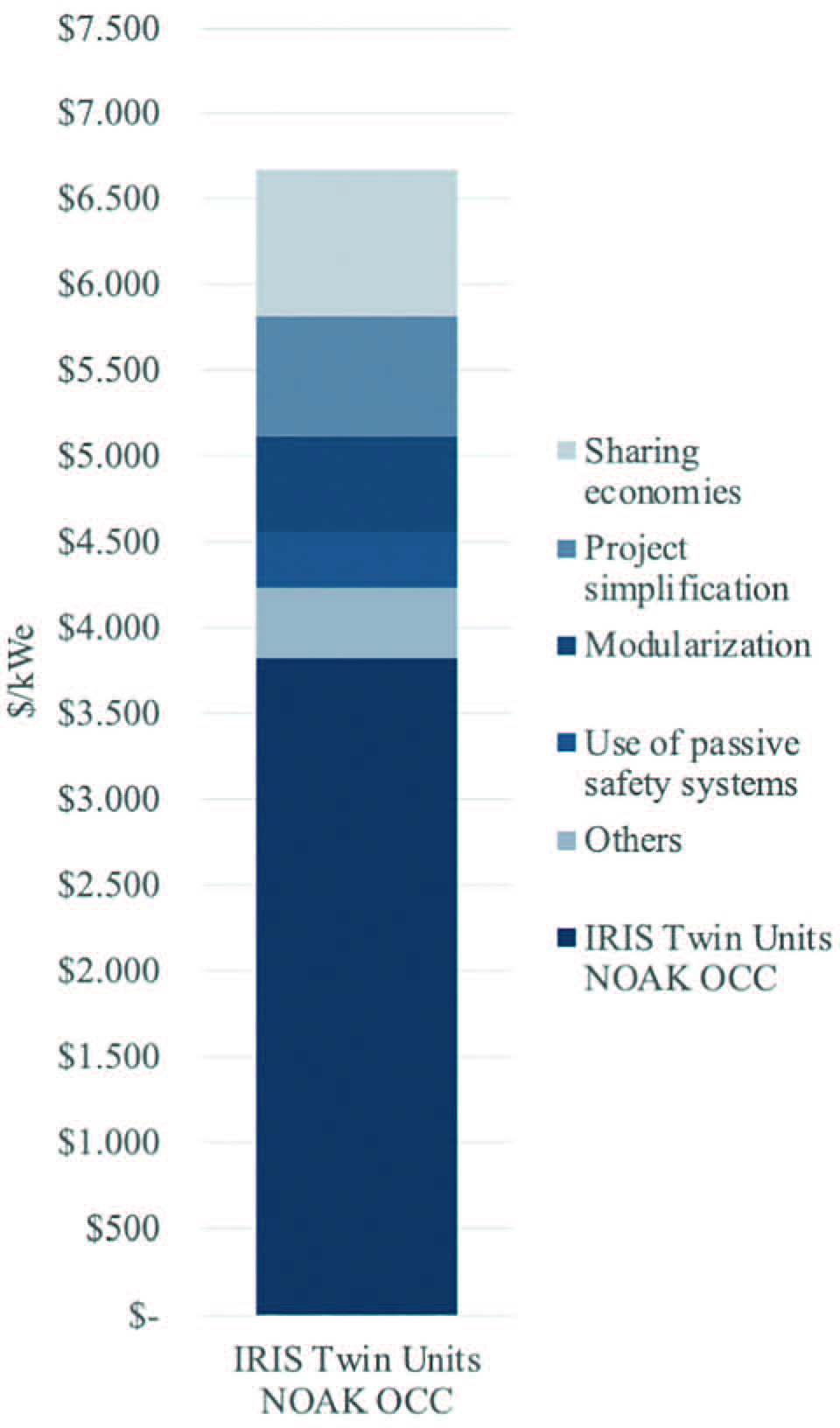
Fig. 8:
IRIS twin-unit configuration savings factors impact. NOAK, Nth-of-a-kind; OCC, overnight capital cost.
Our work, however, presents some limitations that could serve as avenues for future research. First, currently, we estimated 24 items from the COA using primary data. While this number is substantial compared with the most recent estimates, which are almost entirely based on historical data, we believe that future research could focus on estimating additional items, such as the 19 belonging to accuracy classes 3/4. Second, future work should aim to quantify the risks associated with megaprojects and the ‘unknown unknowns’ (Maronati and Petrovic 2019; Stewart and Shirvan 2022), specific to nuclear plant designs, so that the analyses conducted in this paper can be adjusted to accommodate these risks. Third, while this study provides an initial estimation of financing costs, more refined and sensitive analyses could be developed in the future to better account for this element. Fourth, our work provides a detailed estimate for capital costs which account for approximately 60% of the LCOE for NPP. For an accurate LCOE estimation, it is essential to incorporate detailed estimates of operating and maintenance (O&M) costs, fuel costs, insurance and liability costs, and the cost of capital, among others. These cost factors, which are not detailed in our analysis, could be further explored as potential avenues for future research. Lastly, although the proposed model provides a detailed bottom-up estimation of SMR capital costs, it primarily focuses on technical and engineering-related cost drivers. Several non-technical factors—such as project financing structure, regulatory approval timelines, supply chain localisation, and political or societal acceptance—may substantially influence the overall economics of SMR deployment (Kim et al. 2013). These elements were deliberately excluded from the quantitative model, as they depend strongly on national contexts and specific project arrangements. However, their potential impact is acknowledged as an important limitation of the present study. For example, regulatory delays and licencing uncertainties can significantly affect project schedules and cost escalation, while localisation strategies and financing mechanisms can alter capital structure and investment risk profiles (Wang et al. 2020). Future research will aim to integrate these aspects through probabilistic or scenario-based extensions of the model, allowing for a more comprehensive representation of the total cost of ownership and deployment risk for SMRs.
The model’s findings suggest that SMRs can effectively counteract the economy of scale disadvantage by capitalising on various savings factors. However, the smaller the SMR size, the higher the savings that must be achieved to compensate for the loss of economies of scale. In this context, NuScale’s reactor, when compared with IRIS, features several design simplifications, such as the reactor containment and the absence of RCPs.
In conclusion, we can state that estimating the costs of a nuclear reactor, particularly SMRs, requires an adequate level of project engineering development. As also observed in recent literature, Shirvan (2022) and Stewart and Shirvan (2022), a detailed, bottom-up approach is generally more robust than a top-down method. It enables a more accurate analysis by building the cost estimate from the specific components up to the whole system. Additionally, the method of identifying trends in the main cost drivers is beneficial for spotting macro-trends, such as economies of scale, which may apply even among SMRs of the same type, like iPWRs. However, it is important to note that the variability in specific outcomes can be significantly influenced by the unique characteristics of the technology being used. For instance, special cases like NuScale’s design, which incorporates unique components and systems, as well as specialised structures, demonstrate how specific technological features can dramatically affect cost estimations. This variability underscores the necessity of tailoring cost analysis to reflect the specificity of each SMR technology. Beyond providing a detailed cost breakdown, the proposed bottom-up model offers practical insights for policymakers, investors and utilities. This study identifies the main cost drivers and quantifies the effects of modularisation and design simplification; thus the model can support strategic decisions related to SMR deployment, such as investment prioritisation, supply chain planning and governmental evaluation of project feasibility. In this sense, the framework can serve as a decision-support tool for assessing the economic competitiveness of SMRs under different policy or market conditions. Furthermore, the study lays the foundation for future methodological developments. Upcoming research can focus on integrating probabilistic cost modelling to capture uncertainty and variability in project parameters, and on performing lifecycle cost assessments to evaluate the long-term economic sustainability of SMRs. These extensions would enhance the robustness and applicability of the model for comprehensive techno-economic evaluations and support evidence-based planning for future nuclear programmes.
Annexes
Annex 1:
Cost methodology and drivers employed in the cost equations for single cost items.
| EEDB Account No. | Account descriptions | Cost item category | Cost estimation methodology | Drivers |
|---|---|---|---|---|
| 212 | Reactor containment building | HH | − Scaling factor | − Concrete volume |
| − Analytic estimate | − Structural steel weight | |||
| − Factorial estimate | − Excavation volume | |||
| − NPP electrical output | ||||
| 213 | Turbine room and heater bay | HH | − Scaling factor | − Concrete volume |
| − Analytic estimate | − Structural steel weight | |||
| − Factorial estimate | − Excavation volume | |||
| − NPP electrical output | ||||
| 218 | Other structures | HH | − Scaling factor | − NPP electrical output |
| − Configuration of NPP buildings | ||||
| 222 | Main heat transfer transport system | HH | − Factorial estimate | − Tube and collectors weight |
| − Analytic estimate | − Pipe flow rate | |||
| − Steam generators shape | ||||
| − Circulation system of primary reactor coolant | ||||
| 223 | Safeguards system | HH | − Expert judgement | − Passive safety system configuration and components |
| − Factorial estimate | ||||
| 226 | Other reactor plant equipment | HH | − Scaling factor | − NPP electrical output |
| 233 | Condensing systems | HH | − Scaling factor | − Reactor thermal output |
| − Condensing system characteristics | ||||
| 235 | Other turbine plant equipment | HH | − Factorial estimate | − Turbine generator cost |
| 245 | Electric structure and wiring | HH | − Scaling factor | − NPP electrical output |
| − Safety system configuration | ||||
| 252 | Air water and steam service systems | HH | − Scaling factor | − NPP electrical output |
| − Configuration of NPP buildings | ||||
| 211 | Yard work | HL | − Analytic estimate | − NPP footprint |
| 221 | Reactor equipment | HL | − Factorial estimate | − Reactor weight |
| − Analytic estimate | − Reactor pressure vessel diameter size | |||
| − Integration of the nozzle in the forged part | ||||
| − Number of control rods | ||||
| 227 | Reactor instrumentation and control | HL | − Expert judgement | − Passive safety system configuration and components |
| − Factorial estimate | ||||
| 231 | Turbine generator | HL | − Scaling factor | − NPP electrical output |
| − Turbine equipment characteristics | ||||
| 234 | Feedwater heating system | HL | − Scaling factor | − Reactor thermal output |
| − Feedwater heating system characteristics | ||||
| 262 | Mechanical equipment | HL | − Scaling factor | − Reactor thermal output |
| − Condensing system characteristics | ||||
| 224 | Radwaste processing | LH | − Scaling factor | − NPP electrical output |
| 246 | Power and control wiring | LH | − Scaling factor | − NPP electrical output |
| 214 | Security building | LL | − Scaling factor | − NPP electrical output |
| 215 | Primary auxiliary building and tunnels | LL | − Scaling factor | − Concrete volume |
| − Analytic estimate | − Structural steel weight | |||
| − Factorial estimate | − Excavation volume | |||
| − NPP electrical output | ||||
| 216 | Waste processing building | LL | − Scaling factor | − Concrete volume |
| − Analytic estimate | − Structural steel weight | |||
| − Factorial estimate | − Excavation volume | |||
| − NPP electrical output | ||||
| 217 | Fuel storage building | LL | − Scaling factor | − Concrete volume |
| − Analytic estimate | − Structural steel weight | |||
| − Factorial estimate | − Excavation volume | |||
| − NPP electrical output | ||||
| 225 | Fuel handling and storage | LL | − Scaling factor | − NPP electrical output |
| 228 | Reactor plant miscellaneous items | LL | − Scaling factor | − NPP electrical output |
| 236 | Instrumentation and control | LL | − Scaling factor | − NPP electrical output |
| 237 | Turbine plant miscellaneous items | LL | − Scaling factor | − NPP electrical output |
| 241 | Switchgear | LL | − Scaling factor | − NPP electrical output |
| 242 | Station service equipment | LL | − Scaling factor | − Electrical system class |
| − NPP electrical output | ||||
| − Electrical system class | ||||
| − Safety system configuration | ||||
| 243 | Switchboard | LL | − Scaling factor | − NPP electrical output |
| − Electrical system class | ||||
| 244 | Protective equipment | LL | − Scaling factor | − NPP electrical output |
| 251 | Transportation and lifting equipment | LL | − Scaling factor | − NPP electrical output |
| 253 | Communications equipment | LL | − Scaling factor | − NPP electrical output |
| 254 | Furnishings and fixture | LL | − Scaling factor | − NPP electrical output |
| 255 | Wastewater treatment equipment | LL | − Scaling factor | − NPP electrical output |
| 261 | Structures | LL | − Scaling factor | − NPP electrical output |