
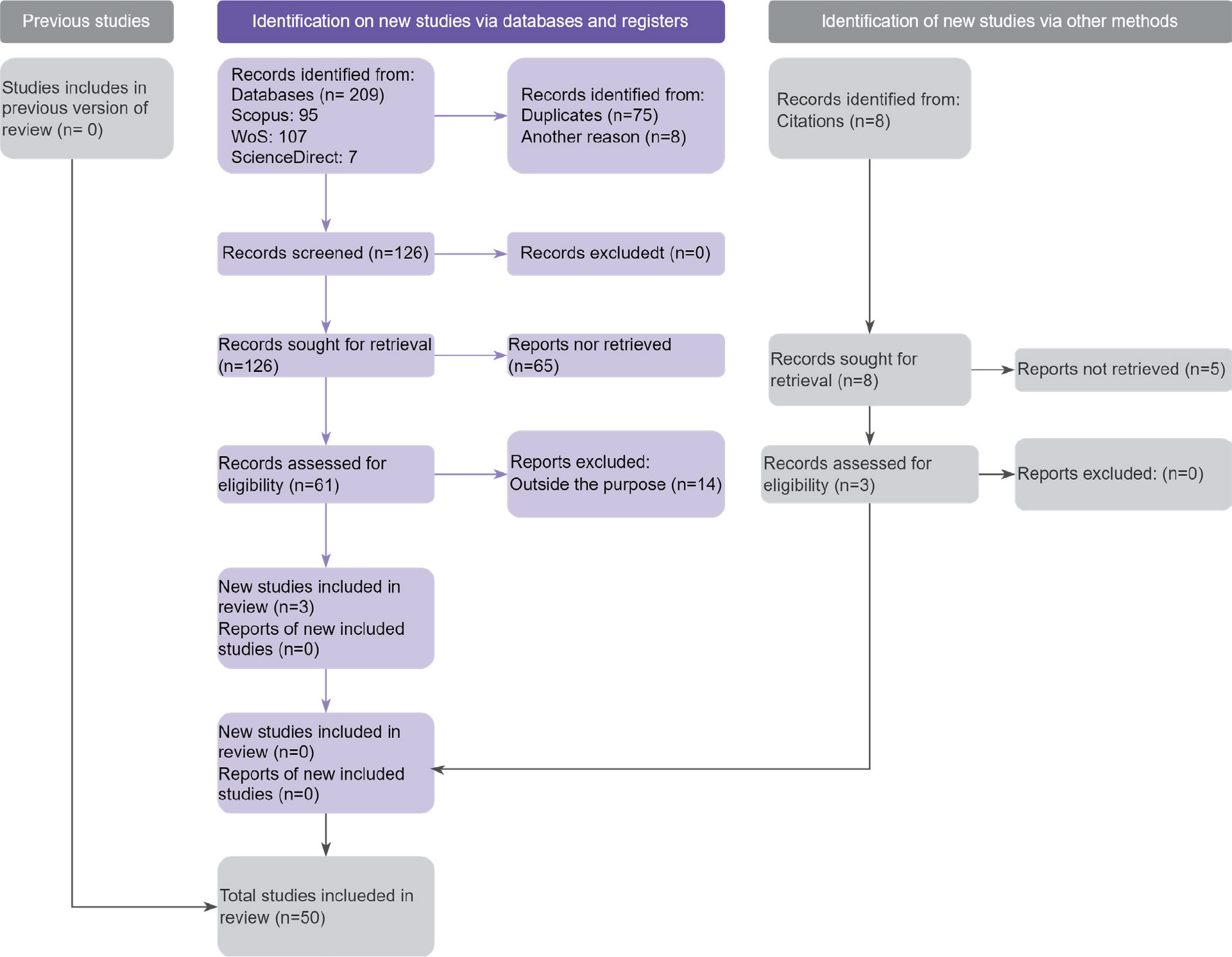
Fig. 1:
Graphical representation of the PRISMA method.
Source: Authors. PRISMA, Preferred Reporting Items for Systematic Reviews and Meta-Analyses; WoS, Web of Science.
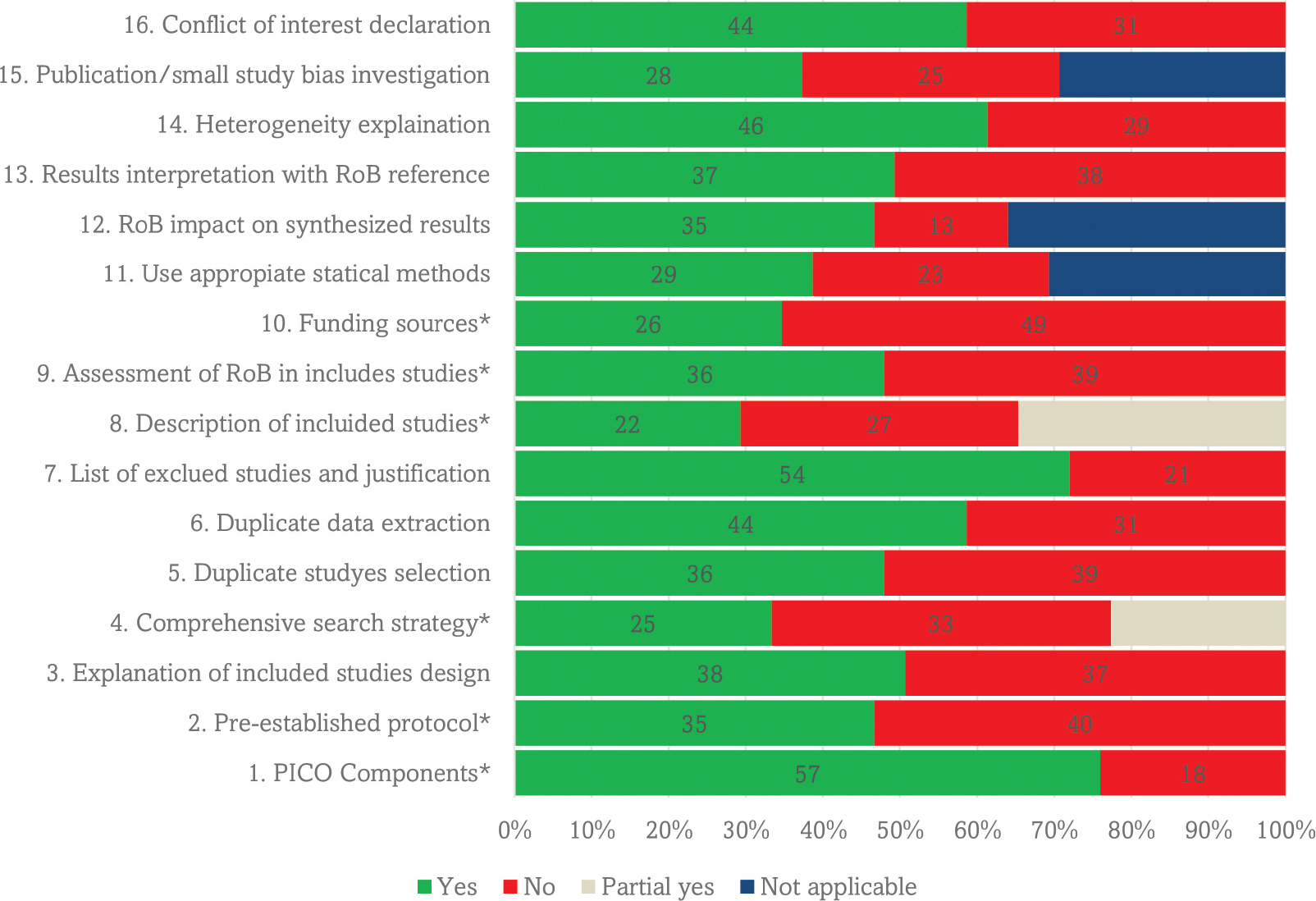
Fig. 2:
Appraisal of the AMSTAR 2 critical domains (N = 75).
Source: Authors.
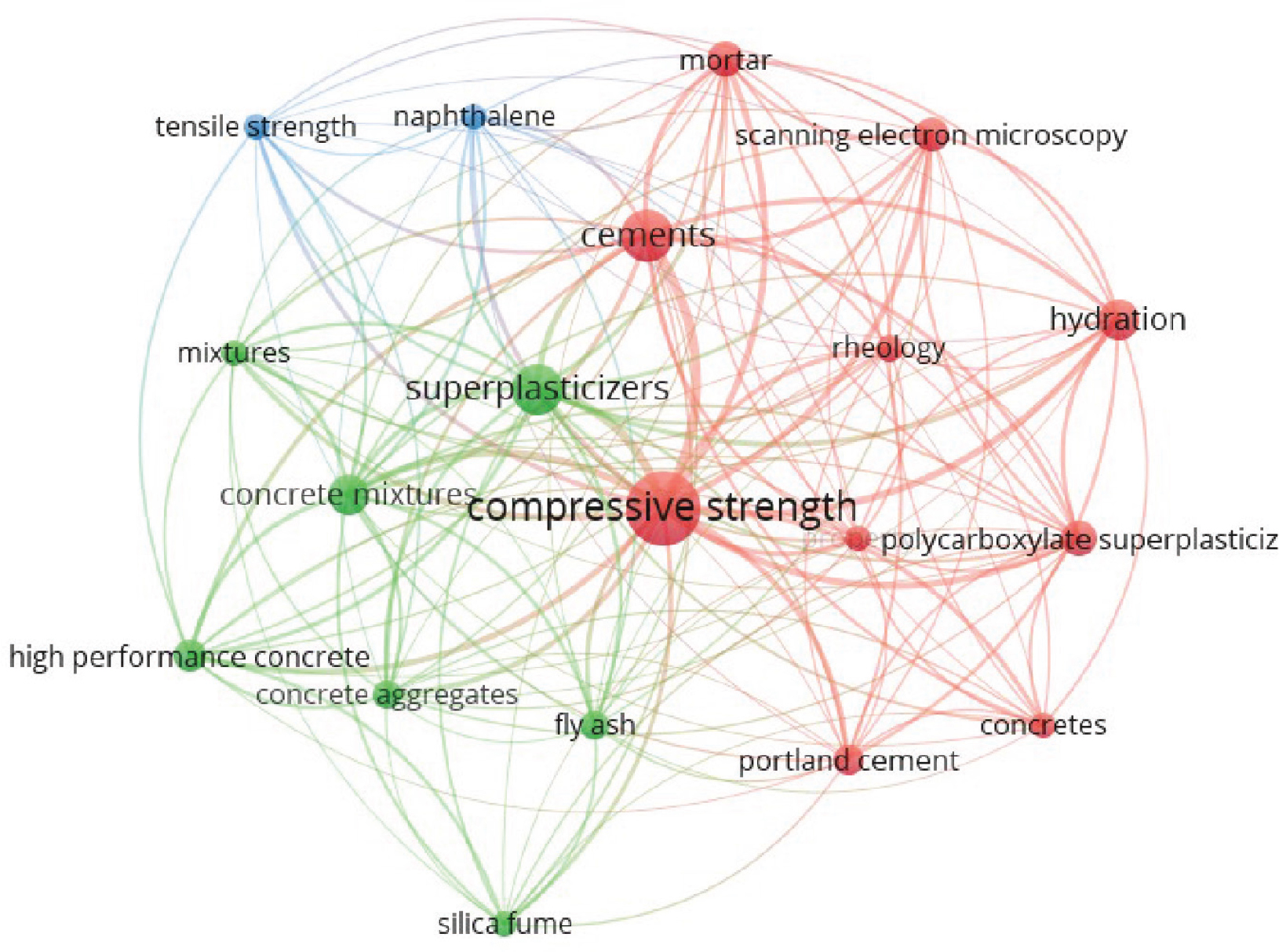
Fig. 3:
Network diagram of keyword co-occurrence analysis.
Source: Software VOSviever.
Tab. 1:
Excluded documents from the analysis.
| Title | Type of material | Use and type of admixtures/additions | Exclusion criteria |
|---|---|---|---|
| Multiscale X-ray tomography of cementitious materials: A review (Brisard et al. 2020) | Conventional concrete | Not applicable | Inclusion of elements not relevant to the research: focus on X-ray tomography techniques and applications. |
| Sustainable composite material based on surface-modified rape straw and environment-friendly adhesive (Dušek et al. 2021) | Construction material other than concrete | Use of sodium lignosulfonate-based adhesive as a binder | Inclusion of elements not relevant to the research: does not include concrete in its experimental design. |
| Evaluation of UV aging resistance of bitumen containing lignosulfonate grafted layered double hydroxides (He et al. 2023) | Pavement | Use of layered double hydroxides grafted with lignosulfonate (LS-g-LMB) | Inclusion of elements not relevant to the research: does not include concrete in its experimental design. |
| PaHs sorption to biochar colloids changes their mobility over time (Yang et al. 2021b) | Biochar | Naphthalene as a PAH | Inclusion of elements not relevant to the research: does not include concrete in its experimental design. |
| Sonocatalytic removal of naphthalene from an aqueous solution using ZnO nanoparticles (Suresh et al. 2022) | Naphthalene | Not applicable | Inclusion of elements not relevant to the research: does not include concrete in its experimental design. |
| Structural build-up and breakdown of alkali-activated slag pastes with different order of lignosulfonate and activator addition (Bílek et al. 2023) | Lignosulfonate | AAS pastes | Inclusion of elements not relevant to the research: does not include concrete in its experimental design. |
| Compressive behavior of large-size square PEN FRP-concrete-steel hybrid multi-tube concrete columns (Bai et al. 2021a) | Hybrid multi-tube concrete column (MTCC) | Not applicable | Inclusion of elements not relevant to the research: does not include concrete as the main subject of study, nor the use of superplasticizer admixtures. |
| PaHs (naphthalene) removal from stormwater runoff by organoclay amended pervious concrete (Shang and Sun 2019) | Permeable concrete (MGPC) | Not applicable | Inclusion of elements not relevant to the research: use of MGPC for substantial pollutant removal. |
| Evaluation of the impact of fiber reinforcement on the durability of lignosulfonate stabilized clayey sand under wet-dry condition (Roshan et al. 2020) | Lignosulfonate | Clayey sand | Inclusion of elements not relevant to the research: material type different from concrete and its derivatives. |
| Strength and post-freeze-thaw behavior of a marl soil modified by lignosulfonate and polypropylene fiber: An environmentally friendly approach (Vakili et al. 2022) | Lignosulfonate | Modified mango soil | Inclusion of elements not relevant to the research: material type different from concrete and its derivatives. |
| The effect of adding polypropylene fibers on the freeze-thaw cycle durability of lignosulfonate stabilised clayey sand (Roshan et al. 2022) | Lignosulfonate | Clayey sand | Inclusion of elements not relevant to the research: material type different from concrete and its derivatives. |
| Performance of calcium lignosulfonate as a stabiliser of highly expansive clay (Fernández et al. 2021) | Highly expansive clays | Lignosulfonate | Inclusion of elements not relevant to the research: material type different from concrete and its derivatives. |
| Behavioral evaluation on the engineering properties of lignin-stabilized loess: Reuse of renewable materials (Dong et al. 2023) | Not specified | Lignin | Inclusion of elements not relevant to the research: material type different from concrete and its derivatives. |
| High-performance naphthalene epoxy resins cured by catalyst for packaging materials (Liu et al. 2022) | Resins | Naphthalene | Inclusion of elements not relevant to the research: material type different from concrete and its derivatives. |
1 AAS, alkali-activated slag; FRP, fibre reinforced polymer; LS-g-LMB, lignosulfonate-grafted layered double hydroxides; MGPC, multi-functional green pervious concrete; MTCC, concrete-steel hybrid multi-tube concrete column; PAH, polycyclic aromatic hydrocarbon; PEN, polyethylene naphthalate; UV, Ultraviolet.
Tab. 2:
Summary of articles ranked by total citations.
| Reference | Year | Title | Citations |
|---|---|---|---|
| Arora et al. (2019) | 2019 | Fundamental insights into the compressive and flexural response of binder- and aggregate-optimized ultra-high-performance concrete (UHPC) | 89 |
| Mo et al. (2020) | 2020 | Hydration and mechanical properties of UHPC matrix containing limestone and different levels of metakaolin | 74 |
| Hendi et al. (2019) | 2019 | Mix design of the green self-consolidating concrete: Incorporating the waste glass powder | 60 |
| Pott et al. (2020) | 2020 | Investigation of the incompatibilities of cement and superplasticizers and their influence on the rheological behavior | 26 |
| Ke and Zhang (2020) | 2020 | Effects of retarding admixture, superplasticizer and supplementary cementitious material on the rheology and mechanical properties of high strength calcium sulfoaluminate | 21 |
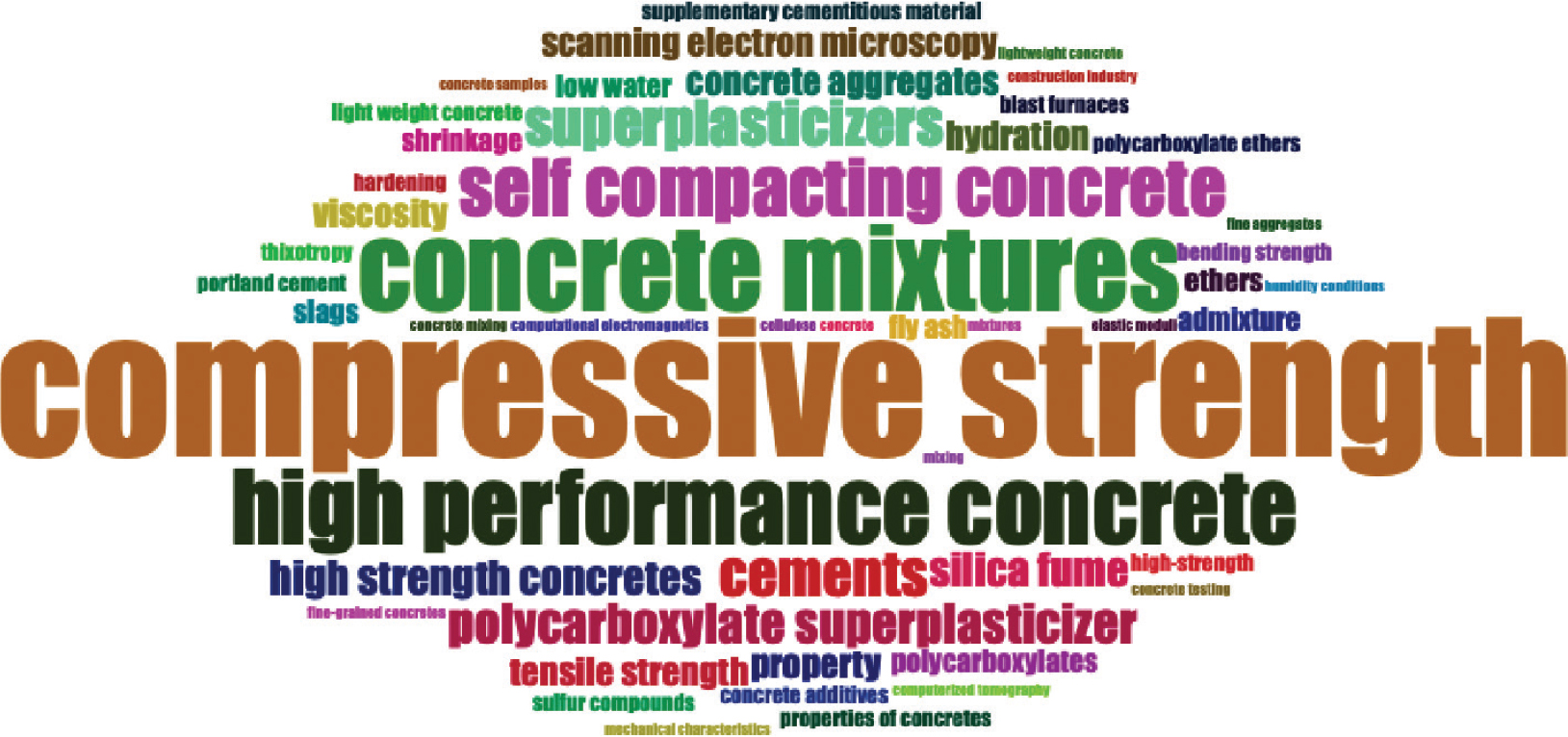
Fig. 4:
Nube de palabras clave.
Source: Bibliometrix.
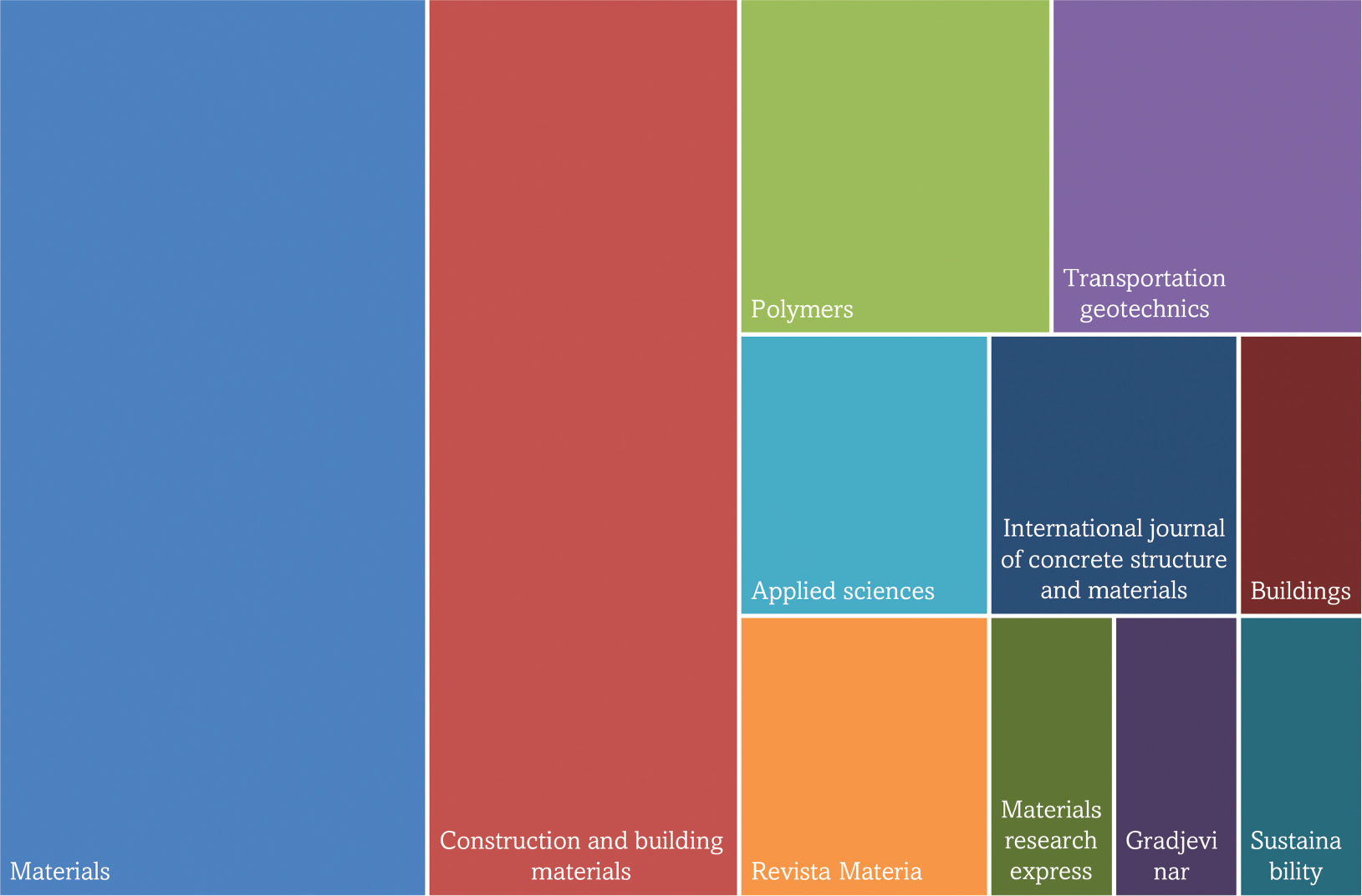
Fig. 5:
Journals with the highest impact.
Source: Bibliometrix.
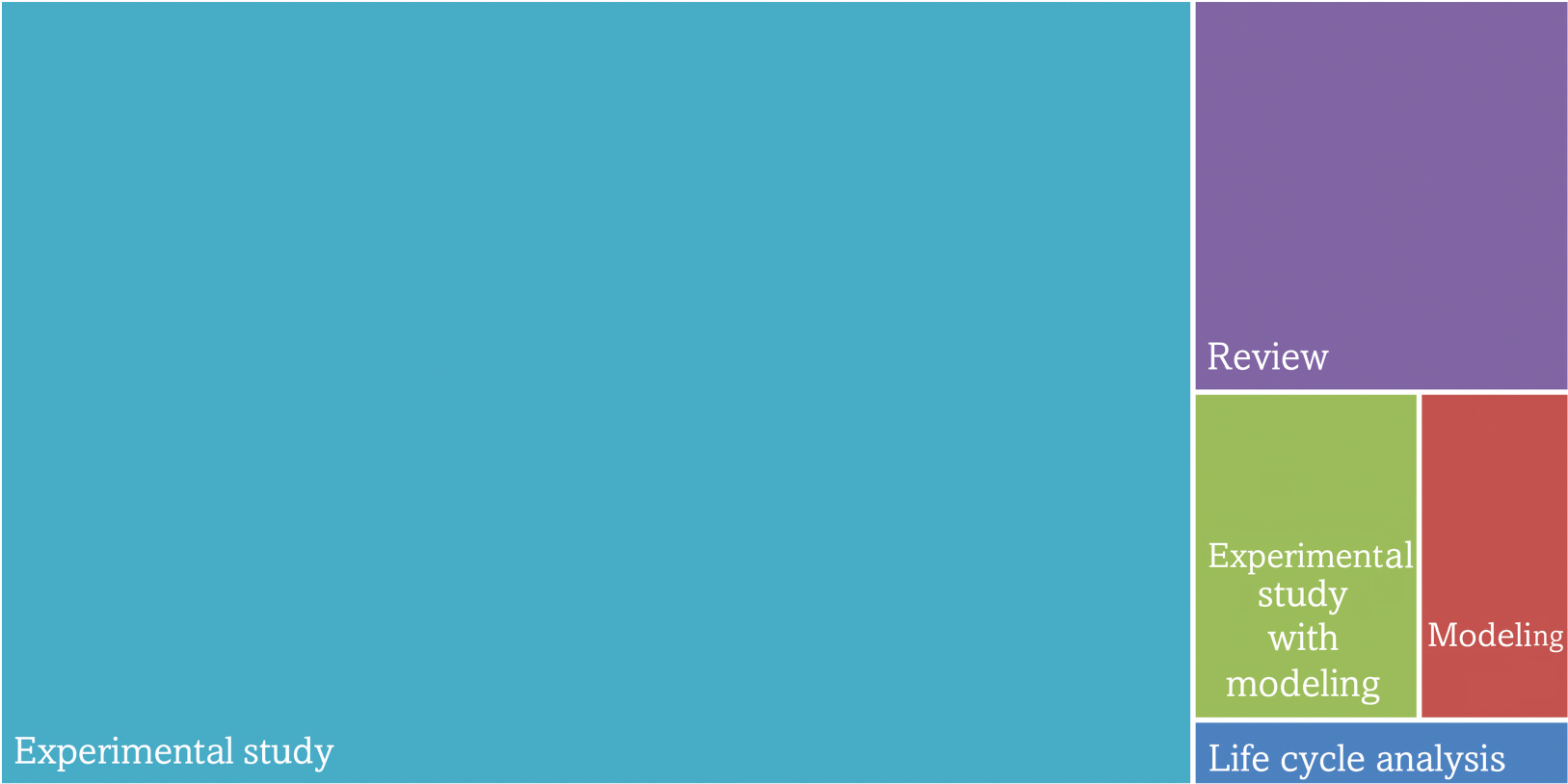
Fig. 6:
Type of research.
Source: Authors.
Tab. 3:
Summary of results according to the search strategy.
| Title | Year | Journal | Reference | Keywords |
|---|---|---|---|---|
| Recycling of steel fibres and spent equilibrium catalyst in ultra-high-performance concrete: Literature review, research gaps, and future development | 2021 | Construction and Building Materials | Abdolpour et al. (2021) | HPC, steel fiber, recycling, sustainable development. |
| Factors affecting the price of recycled concrete: A critical review | 2021 | Journal of Building Engineering | Ma et al. (2022) | Recycled concrete price, recycling, critical review. |
| Precast concrete sandwich panels (PCSP): An analytical review and evaluation of CO2 equivalent | 2022 | Construction and Building Materials | Faria Oliveira et al. (2022) | PCSP, thermal performance, mechanical performance. |
| The role of performance metrics in comparative LCA of concrete mixtures incorporating solid waste: A critical review and guideline proposal | 2022 | Waste Management | Hossein et al. (2022) | LCA, concrete, functional equivalence, uncertainty, solid waste management. |
| Adopting recycled aggregates as sustainable construction materials: A review of the scientific literature | 2019 | Construction and Building Materials | Chen et al. (2019) | Circular economy, recycled aggregate, construction waste, sustainable concrete, literature review. |
| Recycled fibers in reinforced concrete: A systematic literature review | 2019 | Journal of Cleaner Production | Merli et al. (2020) | Concrete, recycled fiber, fiber-reinforced concrete, sustainability, circular economy. |
| Investigation of the Cementing Efficiency of Fly Ash Activated by Microsilica in Low-Cement Concrete | 2023 | Materials | Dvorkin et al. (2023) | Additives, calculation, cementation efficiency, experimental-statistical models, low-cement concrete. |
| Multi-response optimization on hydrated calcium aluminate rich ternary binders using Taguchi design of experiments and principal component analysis | 2023 | Buildings | Myftarago et al. (2023) | Experimental design, hydration, Taguchi design, polycarboxylate superplasticizer. |
| The effects of silica fume and superplasticizer type on the properties and microstructure of reactive powder concrete | 2023 | Materials | Šoukal et al. (2023) | Reactive powder concrete, silica fume, superplasticizer, UHPC. |
| Mix proportion optimization and early strength development in modified foam concrete: an experimental study | 2023 | Materials Research Express. | Shi et al. (2023) | Compressive strength, matrix analysis, optimization combination, orthogonal experiment. |
| Calcined clays from Nigeria—Properties and performance of supplementary cementitious materials suitable for producing level 1 concrete | 2023 | Materials | Muhammad et al. (2023) | Hydration mechanism, workability, metakaolin, superplasticizer. |
| Investigation of the use of waste mineral additives in ultra-high-performance concrete | 2023 | Gradjevinar | Memiş and Ramroom (2023) | Compressive strength, polycarboxylate ether-based superplasticizer, steel fiber, UHPC. |
| Engineering properties of green and ecofriendly grouting materials with different sand filling ratios | 2023 | Materials | Juang and Kuo (2023) | Superplasticizers, workability, compressive strength, density, polycarboxylate. |
| Utilization of fly ash as a viscosity-modifying agent to produce cost-effective, self-compacting concrete: A sustainable solution | 2022 | Sustainability | Hameed et al. (2022) | Fly ash, SCC, viscosity-modifying admixture, waste management. |
| The mechanism of anticorrosion performance and mechanical property differences between seawater sea-sand and freshwater river-sand ultra-high-performance polymer cement mortar (UHPC) | 2022 | Polymers | Li et al. (2022) | Anticorrosion analysis, material characterization, UHPC, compressive strength, polycarboxylate. |
| Using experimental statistical models for predicting strength and deformability of self-compacting concrete with ground blast-furnace slag | 2022 | Materials | Zhitkovsky et al. (2022) | SCC, blast furnace slag, experimental-statistical model, modulus of elasticity, superplasticizer, polycarboxylate. |
| Sulphate corrosion mechanism of ultra-high-performance concrete (UHPC) prepared with seawater and sea sand | 2022 | Polymers | Sun et al. (2022) | UHPC, sulfate corrosion, corrosion analysis, polycarboxylate. |
| Workability and mechanical properties of superplasticized microfine cement grouts | 2022 | Materials | Sha et al. (2022) | Rheological behavior, superplasticizer, naphthalene, polycarboxylate. |
| Effect of the mix composition with superplasticizer admixture on mechanical properties of high–strength concrete based on reactive powders | 2022 | Archives of Civil Engineering | Siwiński et al. (2022) | Concrete design, high-strength concrete, reactive powder concrete, ductility, superplasticizer, polycarboxylate, modified polycarboxylate. |
| Statistical analysis on mechanical behavior of ternary blended high strength concrete | 2022 | Cement, Wapno | Robinson and Srisanthi (2022) | Fly ash, high-strength concrete, mini slump, silica fume, polycarboxylate. |
| Utilization of acacia modesta gum powder as viscosity-modifying agent in self-compacting paste systems | 2022 | Engineering Proceedings | Malik and Rizwan (2022) | Compressive strength, SCC paste, viscosity-modifying admixture. |
| Workability adjustment and sensitivity of different fine cement mixtures to polycarboxylate ether-based superplasticizer | 2022 | Journal of Applied Engineering Science | Hussein et al. (2022) | Compressive strength, polycarboxylate ether-based superplasticizer, silica fume, workability. |
| Evaluations of all-in-one, polycarboxylate-based superplasticizers with viscosity modifying agents for the application of normal-strength, high-fluidity concrete | 2021 | Applied Sciences | Kong et al. (2021) | High-flow concrete, polycarboxylate-based superplasticizer, rheology, viscosity, workability. |
| Particle size effect of oyster shell on mortar: Experimental investigation and modeling | 2021 | Materials | Liao et al. (2021) | Compressive strength, flexural strength, mortar, modulus of elasticity. |
| A comprehensive study on the hardening features and performance of self-compacting concrete with high-volume fly ash and slag | 2021 | Materials | Yang et al. (2021a) | Fly ash, chloride permeability, SCC, polycarboxylate, viscosity modifier. |
| Effect of ultrafine metakaolin on the properties of mortar and concrete | 2021 | Crystals | Zhang et al. (2021) | Durability, silica fume, ultrafine metakaolin, polycarboxylate, compressive and tensile strength. |
| Essential improvements in gypsum mortar characteristics | 2021 | International Journal of Engineering | Hashempour et al. (2021) | Cement, compressive strength, mortar, nano silica, polycarboxylate. |
| Experimental contribution to the study of the physic-mechanical behavior and durability of high-performance concretes based on ternary binder (cement, silica fume and granulated | 2021 | Frattur ed Integrita Strutturale | Rahim et al. (2021) | Durability, environment, GGBFS, HPC, silica fume, polycarboxylate. |
| Evaluation of the influence of the viscosity modifying admixture on the properties of self-compacting concrete | 2021 | Revista Materia | de Oliveira Evaristo et al. (2021) | SCC, superplasticizer, viscosity modifier. |
| An experimental assessment of the water permeability of concrete with a superplasticizer and admixtures | 2020 | Materials | Skutnik et al. (2020) | Admixtures, permeability coefficient, compressive strength, superplasticizer, polycarboxylate. |
| Effect of multicomponent modifier on the properties of cement pastes formulated from self-compacting concrete | 2020 | Magazine of Civil Engineering | Marshdi et al. (2020) | Cement paste, GGBFS, rheological properties, SCC, shrinkage-reducing admixture, superplasticizer. |
| Hydration and mechanical properties of UHPC matrix containing limestone and different levels of metakaolin | 2020 | Construction and Building Materials | Mo et al. (2020) | Hydration process, limestone filler, compressive strength, metakaolin, UHPC. |
| Reactive powder concrete containing basalt fibers: Strength, abrasion and porosity | 2020 | Materials | Grzeszczyk et al. (2020) | Basalt fibers, porosity, reactive powder concrete, compressive strength, polycarboxylate, flexural strength. |
| Combination of polymeric superplasticizers, water repellents and pozzolanic agents to improve air lime-based grouts for historic masonry repair | 2020 | Polymers | González-Sánchez et al. (2020) | Polymeric superplasticizers, compressive strength, fluidity, stability, durability, polycarboxylate, micro silica, metakaolin. |
| Evaluation of chloride resistance of early-strength concrete using blended binder and polycarboxylate-based chemical admixture | 2020 | Applied Sciences | Lee and Lee (2020) | Chloride resistance, durability, Portland cement, early strength, GGBFS. |
| Investigation of the incompatibilities of cement and superplasticizers and their influence on the rheological behavior | 2020 | Materials | Pott et al. (2020) | Hydration, superplasticizer incompatibility, penetration, rheology, flow test. |
| Effect of temperature on early-age properties of self-consolidating concrete equivalent mortar | 2020 | Rilem Technical Letters | Farzadnia et al. (2020) | Early-age properties, SCC, temperature, compressive strength, polycarboxylate. |
| Performance evaluation of commercial superplasticizing additives based on polycarboxylate on the mechanical and microstructural properties of Portland cement pastes | 2020 | Revista Materia | Ribero et al. (2020) | Polycarboxylate, Portland cement, superplasticizer, performance. |
| Effects of retarding admixture, superplasticizer and supplementary cementitious material on the rheology and mechanical properties of high strength calcium sulfoaluminate cement paste | 2020 | Journal of Advanced Concrete Technology | Ke and Zhang (2020) | Cements, elasticity, fly ash, silica fume, polycarboxylate, superplasticizer, water/cement ratio. |
| Introduction of calcium lignosulfonate to delay aging in bituminous mixtures | 2023 | Construction and Building Materials | Ziaee et al. (2023) | Calcium lignosulfonate, fracture, flexural test. |
| The pros and cons of using calcium lignosulfonate as a recycled anti-aging additive on engineering properties of bituminous mastics | 2021 | Case Studies in Construction Materials | Fatemi et al. (2021) | Calcium lignosulfonate, recycled anti-aging admixture, rheological behavior, fatigue failure. |
| Insights into the efficiency loss of naphthalene superplasticizer in alkali-activated slag pastes | 2023 | Journal of Building Engineering | Tian et al. (2023) | NS, alkali-activated slag, solubility, stability, diffusion. |
| Crushed rocks stabilized with organo-silane and lignosulfonate in pavement unbound layers: Repeated load triaxial tests | 2021 | Frontiers of Structural and Civil Engineering | Barbieri et al. (2021) | Lignosulfonate, crushed rocks, pavement layers, repeated load triaxial test, finite element analysis. |
| Organosilane and lignosulfonate as innovative stabilization techniques for crushed rocks used in road unbound layers | 2020 | Transportation Geotechnics | Barbieri et al. (2020) | Lignosulfonate, pavement, repeated load triaxial test, dynamic cone penetrometer. |
| Mix design of the green self-consolidating concrete: Incorporating the waste glass powder | 2019 | Construction and Building Materials | Hendi et al. (2019) | Sodium lignosulfonate plasticizer, green SCC, glass powder, mix design. |
| A novel low-density thermal insulation gypsum reinforced with superplasticizers | 2021 | Construction and Building Materials | Cao et al. (2021) | Thermal insulating gypsum, polycarboxylate superplasticizer, sulfonated naphthalene formaldehyde, superplasticizers, hydration, adsorption. |
| Mechanical behavior of large-rupture-strain (LRS) polyethylene naphthalene fiber bundles at different strain rates and temperatures | 2021 | Construction and Building Materials | Bai et al. 2021b) | Strain rate, temperature effect, polyethylene naphthalene fiber, tensile mechanical properties. |
| Research of nano-modified plain cement concrete mixtures and cement-based concrete | 2023 | Research of nano-modified plain cement concrete mixtures and cement-based concrete | Yang et al. (2023) | Concrete, cement, nano-modification, polymeric admixture, carbon nanotubes. |
| Structural behavior of ultra-high strength concrete columns reinforced with basalt bars under axial loading | 2023 | International Journal of Concrete Structures an Materials | El-Sayed et al. (2023) | UHPC, compressive strength. |
| Fundamental insights into the compressive and flexural response of binder- and aggregate-optimized ultra-high performance concrete (UHPC) | 2019 | Cement and Concrete Composites | Arora et al. (2019) | UHPC, compressive strength, flexural strength, critical stress states. |
1 GGBFS, ground granulated blast furnace slag; HPC, high-performance concrete; LCA, life cycle analysis; LRS, large-rupture-strain; NS, naphthalene-based superplasticizers; PCSP, precast concrete sandwich panels; SCC, self-compacting concrete; SCMs, supplementary cementitious materials; UHPC, ultra-high performance concrete; VMA, viscosity-modifying agent.
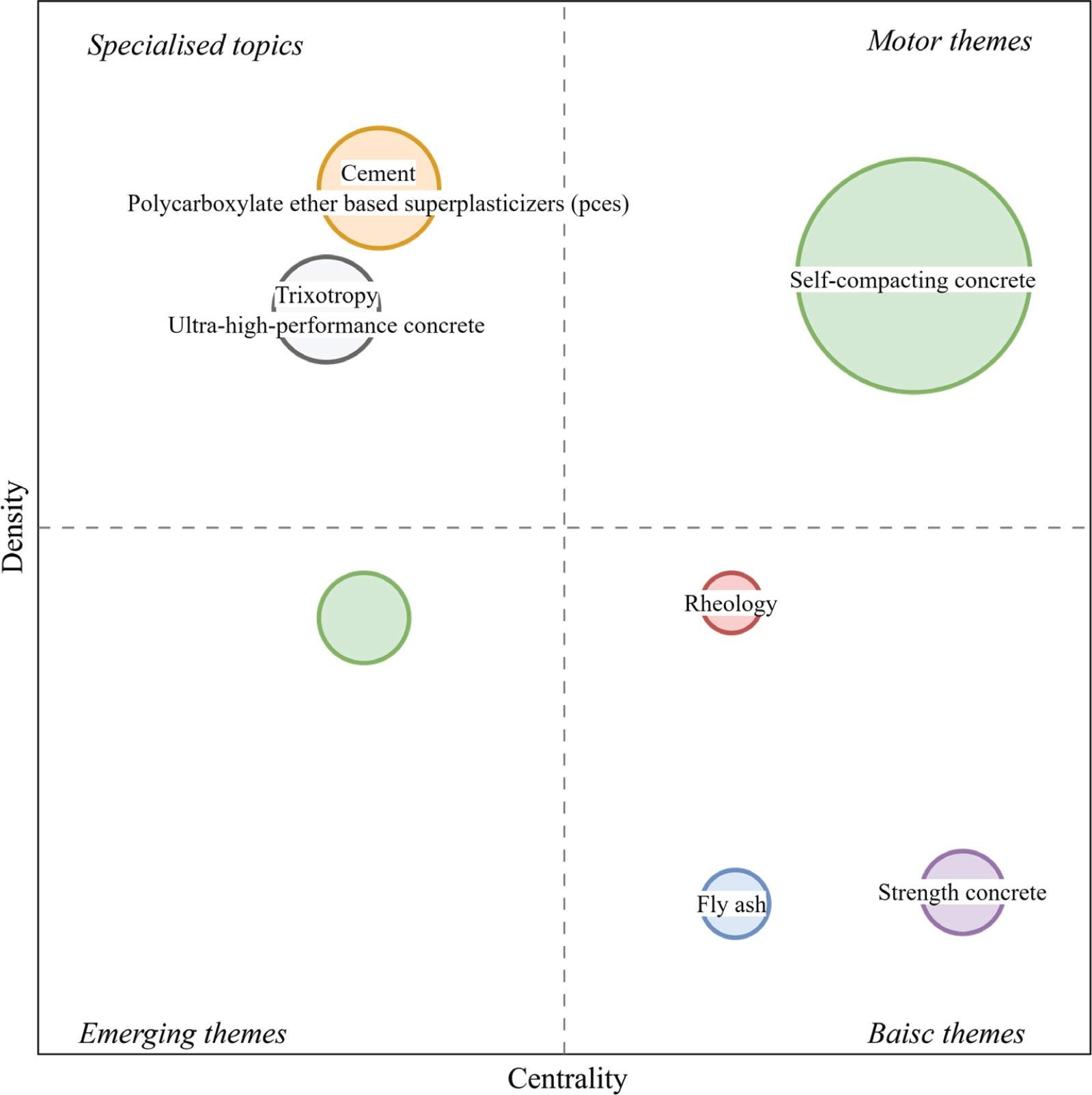
Fig. 7:
Thematic map.
Source: Bibliometrix.
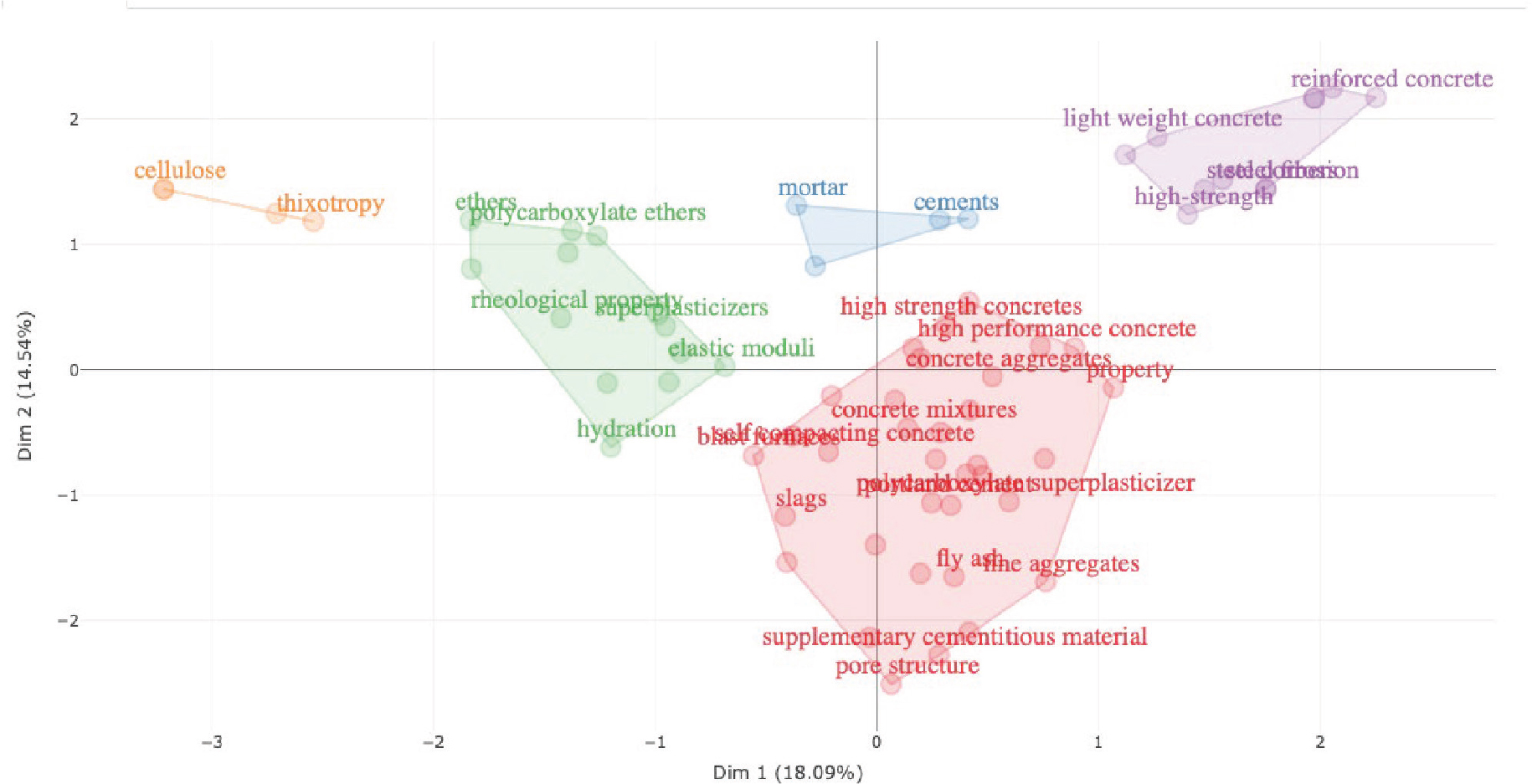
Fig. 8:
Analysis of correspondence.
Source: Bibliometrix.
Tab. 4:
Classification and comparative analysis of superplasticiser additives.
| Additive type | Chemical family | Dosage Range (by binder) | *Typical Price (US$/kg) | **Compressive strength gain (70) | ***Key features | Advantages | Disadvantages |
|---|---|---|---|---|---|---|---|
| Polycarboxylate ether | Polycarboxylate | 0.5%–1.5% | 2.0–4.0 | Upto+80% | Highest water reduction, rapid dispersion, most favoured for UHPC/SCC | Provides greater water reduction (upto 357%–487%), low slump loss, and greater rheological control. | High cost; can cause segregation if overdosed. |
| Naphthalene sulphonate | Naphthalene formaldehyde | 0.4%–1.2% | 1.5–2.2 | +30%–60% | High water reduction, rapid initial strength, moderate slump retention | Good cost/performance ratio, improved workability and mix compatibility. | Lower water reduction efficiency than PCE and greater tendency to slump loss in hot mixes. |
| Lignosulphonate | Lignin derivative | 0.2%–0.8% | 0.7–1.0 | +15%–30% | Limited strength gain, mostly for workability improvement | Opción económica para mejorar la trabajabilidad | Lower water reduction and low strength gain compared to PCE and SNF. |
1* Prices may vary depending on the region and supplier; the values presented correspond to ranges reported in recent materials articles and reviews.
1** Although comparisons are presented regarding compressive strength, it should be noted that the studies analysed respond to a specific context where this parameter is not always the primary objective. Additionally, strength depends not only on the admixture but on multiple factors, so these values should only be taken as indicative.