
1. Introduction
Concrete is a fundamental material in civil construction and materials engineering. Its significance has driven the search for innovations in its manufacturing and application within the industry (Yang et al. 2023), highlighting the need for a detailed analysis of its components and properties. In this context of increasing industrialisation, the incorporation of superplasticiser additives has become a milestone in construction, enhancing performance and expanding its applications. Previous research (Yang et al. 2021a) has demonstrated their influence on complex projects, emphasising their advantages and fields of application.
Given their impact on the industry, a systematic review is essential to collect and analyse available information, structuring key findings on the improvement of concrete performance. This study identifies trends, knowledge gaps and future research directions related to superplasticiser additives. Specifically, it examines whether high-performance concrete (HPC) can be achieved solely through the inclusion of these additives and/or mineral additions, or if modifications to the manufacturing process are required. Additionally, it evaluates the impact of incorporating supplementary elements on the feasibility of concrete in the construction industry.
Beyond mechanical improvements, the adoption of superplasticisers in concrete technology supports sustainability goals by reducing cement content and facilitating the incorporation of supplementary cementitious materials (SCMs), thus lowering CO2 emissions (Suresh et al. 2022). The industrial demand for eco-efficient concretes in infrastructure, precast elements and high-rise buildings underscores the need for reliable data on the performance of these admixtures.
2. Methodology
This research follows a bibliometric approach with a quantitative focus. First, it is based on a systematic documentary review, through which information from published studies was collected and analysed (Villasís-keever et al. 2020). Additionally, the quantitative component was addressed by analysing the behaviour of numerical variables. The combination of these approaches allowed for a better representation of the phenomena, trends and topics related to the influence of superplasticiser additives on HPC.
Regarding the methods, the Preferred Reporting Items for Systematic Reviews and Meta-Analyses (PRISMA) methodology was applied (Liberati et al. 2009), providing a structured framework for identifying, selecting, evaluating and synthesising studies based on the research objective or question (Page et al. 2021). The search equations were formulated using keywords and adapted through the combination of Boolean operators AND, OR and AND NOT (NOT) according to the established criteria and filters. The searches were conducted in the Scopus and Web of Science (WoS) databases. The search equations used are as follows:
TITLE-ABS-KEY (‘compressive strength’ AND ‘superplasticizer*’) AND (‘polycarboxylate’ OR ‘naphthalene’ OR ‘lignosulfonate’) AND (‘self compacting concrete’ OR ‘high performance concrete’) AND NOT (‘graphene’ OR ‘carbon nanotubes’ OR ‘geopolymer’)) AND PUBYEAR >2014.
Title (TI) = (Compressive strength AND superplasticizer AND high performance concrete) AND author keywords (AK) = polycarboxylate OR AK = naphthalene OR AK = lignosulfonate NOT AK = (graphene OR carbon nanotubes OR geopolymer OR fly ash OR silica fume).
The specific criteria were established for selecting the studies to be analysed. The inclusion criteria considered original articles or research studies published in Spanish, English and/or Portuguese. The selected time range was 2014 to 2025, although it is notable that the largest number of publications is concentrated in the past 5 years (2020–2025), which capture recent advances and were emphasised. Similarly, although other types of publications were included, open access publications were preferred to consider, in addition to replicability and transparency, greater access to information, although this may introduce some selection bias. Regarding the topic, studies were chosen based on the use of polycarboxylate-, naphthalene-and/or lignosulphonate-based additives, as well as research on the evaluation of mechanical properties in self-compacting or HPCs. After applying these criteria, a total of 75 articles were analysed. The graphical representation of the process is shown in Figure 1.
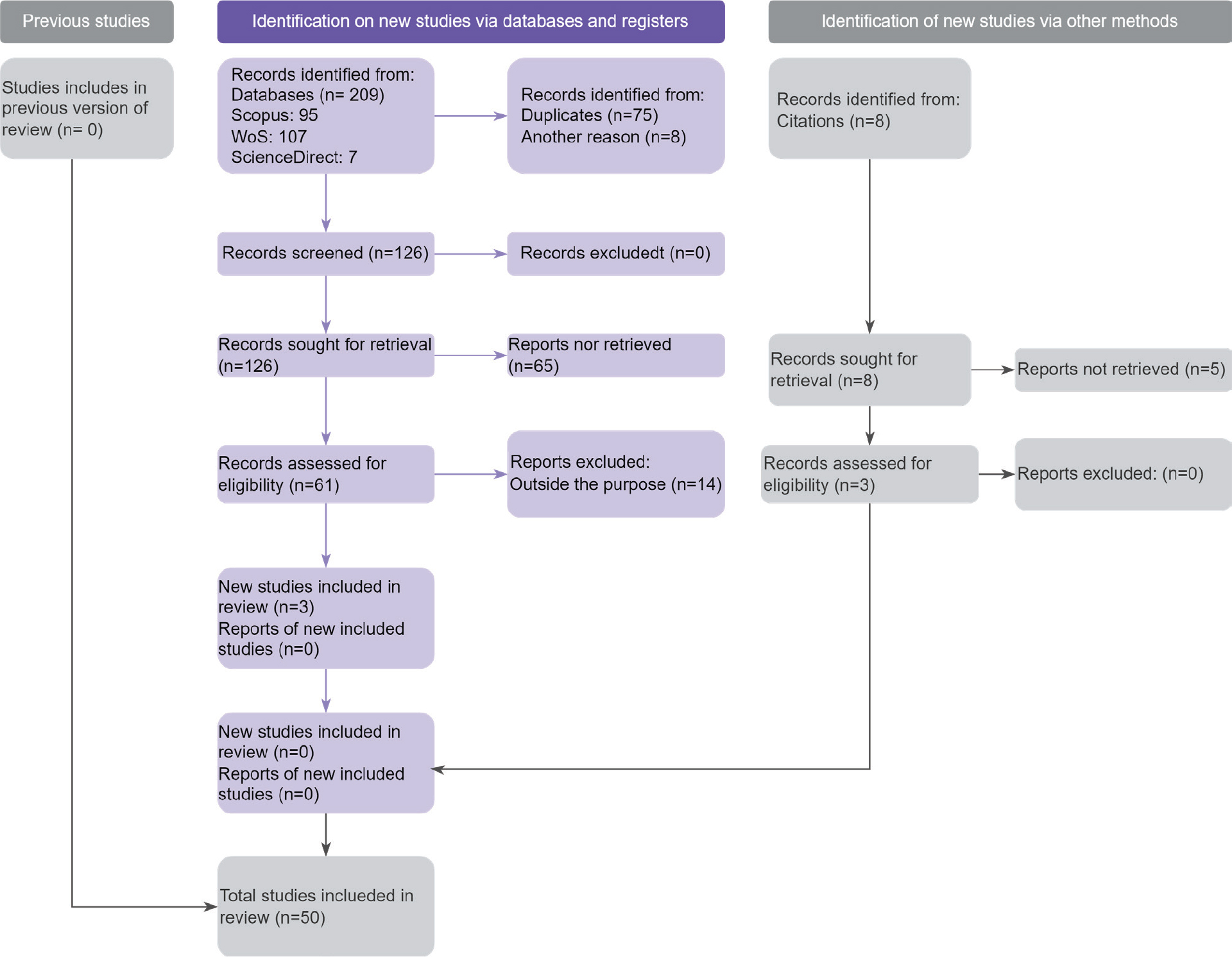
Fig. 1:
Graphical representation of the PRISMA method.
Source: Authors. PRISMA, Preferred Reporting Items for Systematic Reviews and Meta-Analyses; WoS, Web of Science.
3. Results
The development and optimisation of HPC have been the focus of various studies aimed at enhancing its mechanical properties, durability and workability. In this context, the impact of different additions and admixtures on compressive strength, as well as on the quality and performance of the material, has been analysed. Through the review of scientific articles, key thematic clusters were identified, including concrete as structural material, its mechanical properties, the use of superplasticiser admixtures and the incorporation of supplementary materials such as fly ash, silica fume and metakaolin. These factors have proven to be crucial in improving concrete, enabling significantly higher strengths and optimising its application in various civil engineering scenarios.
3.1. The methodological quality of meta-analyses
Figure 2 shows the results obtained after applying the evaluation method, which classified each item into four categories: ‘Yes’, ‘No’, ‘Partial Yes’ and ‘Not Applicable’. The data reveal an overall positive outcome, with a predominance of affirmative responses, particularly in indicators such as 1, 7 and 15, where values exceeded 50, reflecting a high level of compliance with the established criteria. Negative responses, while present, were concentrated in specific items such as 2, 4, 9 and 10, indicating targeted areas for improvement. The ‘Partial Yes’ and ‘Not Applicable’ categories were rare, appearing only in isolated cases. Overall, the application of the method not only provided a structured verification of the degree of compliance but also highlighted significant strengths in most of the evaluated criteria, establishing it as a valuable tool for guiding continuous improvement.
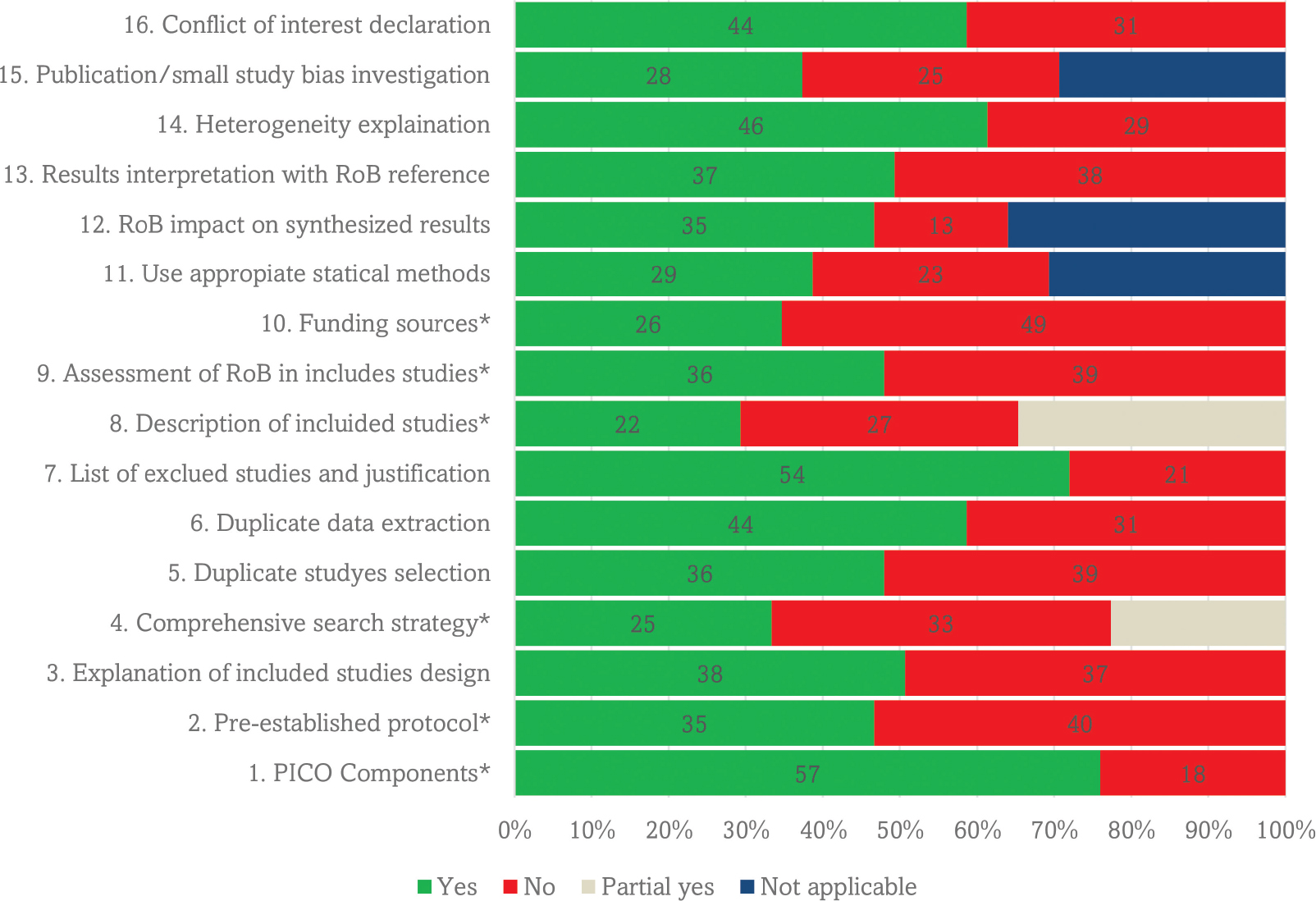
Fig. 2:
Appraisal of the AMSTAR 2 critical domains (N = 75).
Source: Authors.
3.2. Network analysis of keywords
A detailed co-occurrence analysis of keywords was conducted based on metadata from Scopus, as this database provides a broad and comprehensive source of information. Scopus was chosen as an effective alternative to WoS (Chadegani et al. 2013). A total of 95 articles were evaluated in this research and review process. The co-occurrence analysis was performed using VOSviewer, an open-source software that enables the exploration of patterns within large bibliometric datasets (Abdolpour et al. 2021) facilitating data visualisation and analysis. This analysis aimed to identify thematic relationships, interconnections and keyword frequency among the selected documents from Scopus. Additionally, it helped assess the influence of keywords related to HPC research.
To generate a representative network mapping, keywords had to appear at least 10 times in the extracted bibliometric data. This criterion resulted in 19 frequently occurring keywords, excluding the singular form of superplasticiser, as shown in Figure 3. The most frequent keywords were ‘compressive strength’ (78 occurrences) and ‘cements’ (38 occurrences). Other notable keywords represented in the diagram include ‘superplasticizers’ (36), ‘concrete mixtures’ (23), ‘hydration’ (23) and ‘mortar’ (18). Additional keywords with 10–20 occurrences include ‘polycarboxylate superplasticizer’ (18), ‘high-performance concrete’ (15), ‘scanning electron microscopy’ (16), ‘concrete aggregates’ (12), ‘Portland cement’ (14), ‘rheology’ (11) and ‘fly ash’ (12). Finally, keywords with at least 10 occurrences include ‘properties’, ‘mixtures’, ‘naphthalene’, ‘concretes’, ‘tensile strength’ and ‘silica fume’. Among the groups identified in the network analysis are ‘compressive strength’ and ‘cements’, ‘compressive strength’ and ‘superplasticizers’, and ‘compressive strength’ and ‘concrete mixtures’.
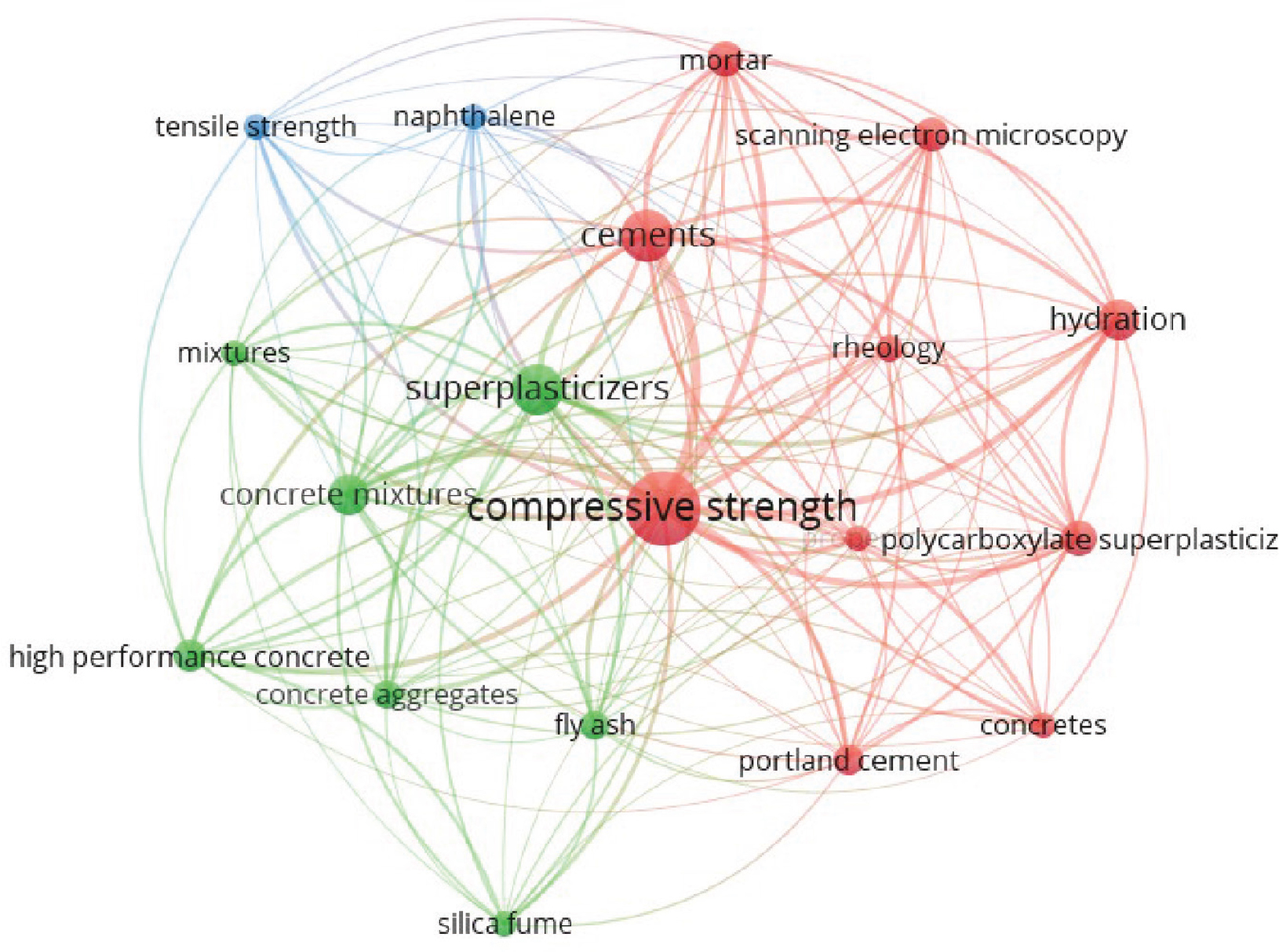
Fig. 3:
Network diagram of keyword co-occurrence analysis.
Source: Software VOSviever.
In addition, it is essential to identify which articles were excluded during the study selection process. Although they initially appeared to meet the inclusion criteria, they were discarded after application of the database search strategy, as shown in Table 1. After the screening process, a total of 56 articles were reviewed based on their number of citations. It should be noted that the search strategy restricted the results to studies published in the past 5 years.
Tab. 1:
Excluded documents from the analysis.
| Title | Type of material | Use and type of admixtures/additions | Exclusion criteria |
|---|---|---|---|
| Multiscale X-ray tomography of cementitious materials: A review (Brisard et al. 2020) | Conventional concrete | Not applicable | Inclusion of elements not relevant to the research: focus on X-ray tomography techniques and applications. |
| Sustainable composite material based on surface-modified rape straw and environment-friendly adhesive (Dušek et al. 2021) | Construction material other than concrete | Use of sodium lignosulfonate-based adhesive as a binder | Inclusion of elements not relevant to the research: does not include concrete in its experimental design. |
| Evaluation of UV aging resistance of bitumen containing lignosulfonate grafted layered double hydroxides (He et al. 2023) | Pavement | Use of layered double hydroxides grafted with lignosulfonate (LS-g-LMB) | Inclusion of elements not relevant to the research: does not include concrete in its experimental design. |
| PaHs sorption to biochar colloids changes their mobility over time (Yang et al. 2021b) | Biochar | Naphthalene as a PAH | Inclusion of elements not relevant to the research: does not include concrete in its experimental design. |
| Sonocatalytic removal of naphthalene from an aqueous solution using ZnO nanoparticles (Suresh et al. 2022) | Naphthalene | Not applicable | Inclusion of elements not relevant to the research: does not include concrete in its experimental design. |
| Structural build-up and breakdown of alkali-activated slag pastes with different order of lignosulfonate and activator addition (Bílek et al. 2023) | Lignosulfonate | AAS pastes | Inclusion of elements not relevant to the research: does not include concrete in its experimental design. |
| Compressive behavior of large-size square PEN FRP-concrete-steel hybrid multi-tube concrete columns (Bai et al. 2021a) | Hybrid multi-tube concrete column (MTCC) | Not applicable | Inclusion of elements not relevant to the research: does not include concrete as the main subject of study, nor the use of superplasticizer admixtures. |
| PaHs (naphthalene) removal from stormwater runoff by organoclay amended pervious concrete (Shang and Sun 2019) | Permeable concrete (MGPC) | Not applicable | Inclusion of elements not relevant to the research: use of MGPC for substantial pollutant removal. |
| Evaluation of the impact of fiber reinforcement on the durability of lignosulfonate stabilized clayey sand under wet-dry condition (Roshan et al. 2020) | Lignosulfonate | Clayey sand | Inclusion of elements not relevant to the research: material type different from concrete and its derivatives. |
| Strength and post-freeze-thaw behavior of a marl soil modified by lignosulfonate and polypropylene fiber: An environmentally friendly approach (Vakili et al. 2022) | Lignosulfonate | Modified mango soil | Inclusion of elements not relevant to the research: material type different from concrete and its derivatives. |
| The effect of adding polypropylene fibers on the freeze-thaw cycle durability of lignosulfonate stabilised clayey sand (Roshan et al. 2022) | Lignosulfonate | Clayey sand | Inclusion of elements not relevant to the research: material type different from concrete and its derivatives. |
| Performance of calcium lignosulfonate as a stabiliser of highly expansive clay (Fernández et al. 2021) | Highly expansive clays | Lignosulfonate | Inclusion of elements not relevant to the research: material type different from concrete and its derivatives. |
| Behavioral evaluation on the engineering properties of lignin-stabilized loess: Reuse of renewable materials (Dong et al. 2023) | Not specified | Lignin | Inclusion of elements not relevant to the research: material type different from concrete and its derivatives. |
| High-performance naphthalene epoxy resins cured by catalyst for packaging materials (Liu et al. 2022) | Resins | Naphthalene | Inclusion of elements not relevant to the research: material type different from concrete and its derivatives. |
1 AAS, alkali-activated slag; FRP, fibre reinforced polymer; LS-g-LMB, lignosulfonate-grafted layered double hydroxides; MGPC, multi-functional green pervious concrete; MTCC, concrete-steel hybrid multi-tube concrete column; PAH, polycyclic aromatic hydrocarbon; PEN, polyethylene naphthalate; UV, Ultraviolet.
Table 2 presents the five highest-ranked articles based on total citations within the databases. It is important to highlight that these articles focus on HPC, the use and application of superplasticiser admixtures, and the mechanical properties of concrete. Some of the studies analyse ultra-high-performance concrete (UHPC) (Arora et al. 2019) from different perspectives, recognising it as a material with high compressive, flexural and tensile strength (Mo et al. 2020), and its relationship with the use of superplasticiser admixtures.
Tab. 2:
Summary of articles ranked by total citations.
| Reference | Year | Title | Citations |
|---|---|---|---|
| Arora et al. (2019) | 2019 | Fundamental insights into the compressive and flexural response of binder- and aggregate-optimized ultra-high-performance concrete (UHPC) | 89 |
| Mo et al. (2020) | 2020 | Hydration and mechanical properties of UHPC matrix containing limestone and different levels of metakaolin | 74 |
| Hendi et al. (2019) | 2019 | Mix design of the green self-consolidating concrete: Incorporating the waste glass powder | 60 |
| Pott et al. (2020) | 2020 | Investigation of the incompatibilities of cement and superplasticizers and their influence on the rheological behavior | 26 |
| Ke and Zhang (2020) | 2020 | Effects of retarding admixture, superplasticizer and supplementary cementitious material on the rheology and mechanical properties of high strength calcium sulfoaluminate | 21 |
Finally, the representation of the frequency of key concepts is included in Figure 4. These are grouped around the theme of concrete and its properties, with an emphasis on concrete mixtures, their components and mechanical characteristics. The most frequent terms, such as ‘compressive strength’ (24) and ‘concrete mixtures’ (15), highlight the importance of evaluating concrete durability and performance in different applications. Additionally, specific types of concrete, such as ‘high-performance concrete’ (13) and ‘self-compacting concrete’ (10), stand out as relevant in the development of advanced materials that meet specific strength and workability requirements.
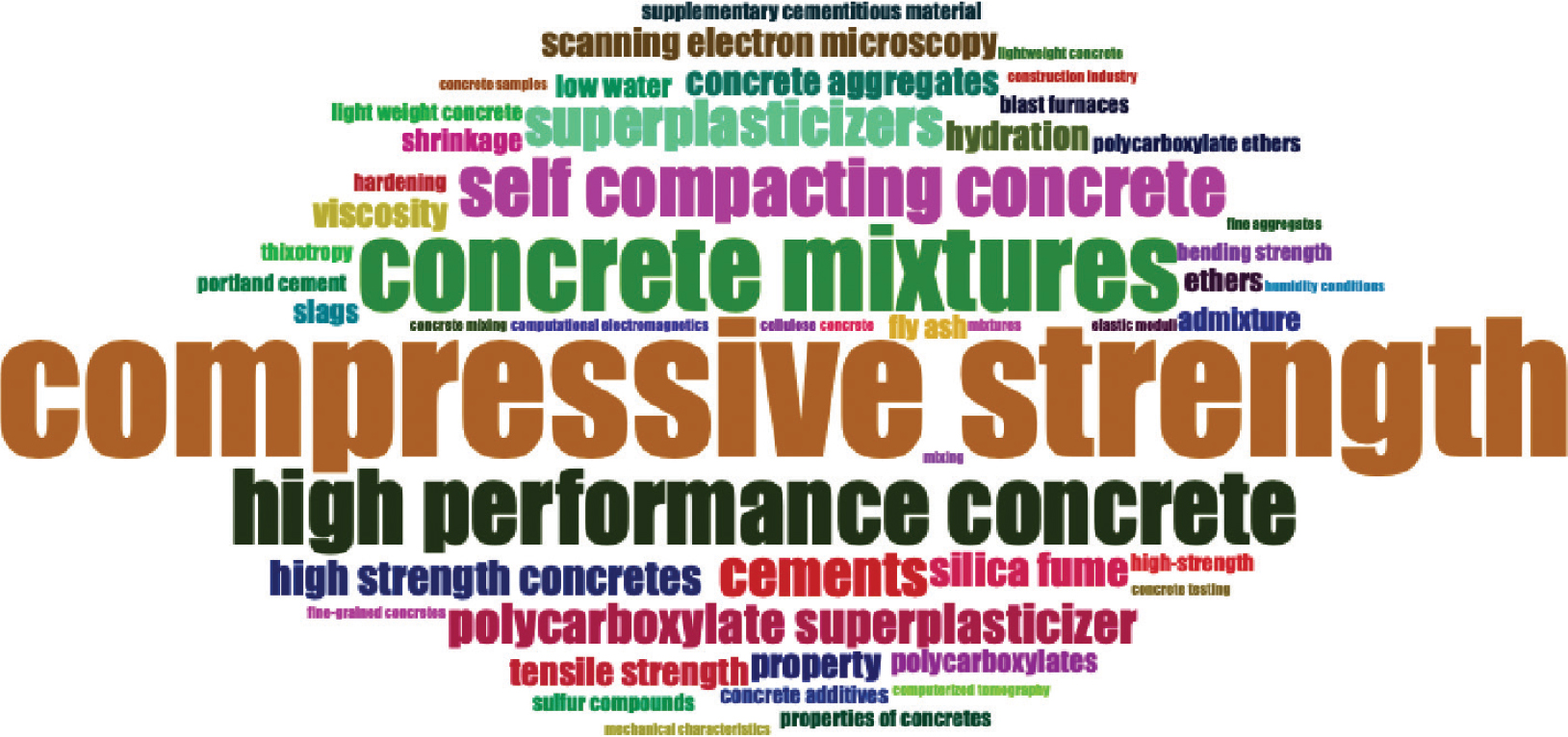
Fig. 4:
Nube de palabras clave.
Source: Bibliometrix.
The grouping also includes terms related to admixtures and components used in concrete mixtures, such as ‘superplasticizers’ (8), ‘silica fume’ (6) and ‘polycarboxylate’ (7), which are essential for modifying and improving concrete properties. Moreover, terms like ‘scanning electron microscopy’ (5) and ‘tensile strength’ (5) reflect the analytical techniques and specific properties of interest in concrete research and quality control. This classification integrates studies on fundamental concrete properties, composition and evaluation methods used to assess its behaviour.
3.3. Characteristics of articles
To determine the publication frequency, Figure 5 presents specialised journals in the field of study because of the search strategy. The journal Materials stands out with 11 published articles, which aligns with its primary focus on general materials science. Additionally, Construction and Building Materials follows with eight publications, continuing its role in disseminating research on construction materials and their application in the modern world (Merli et al. 2020).
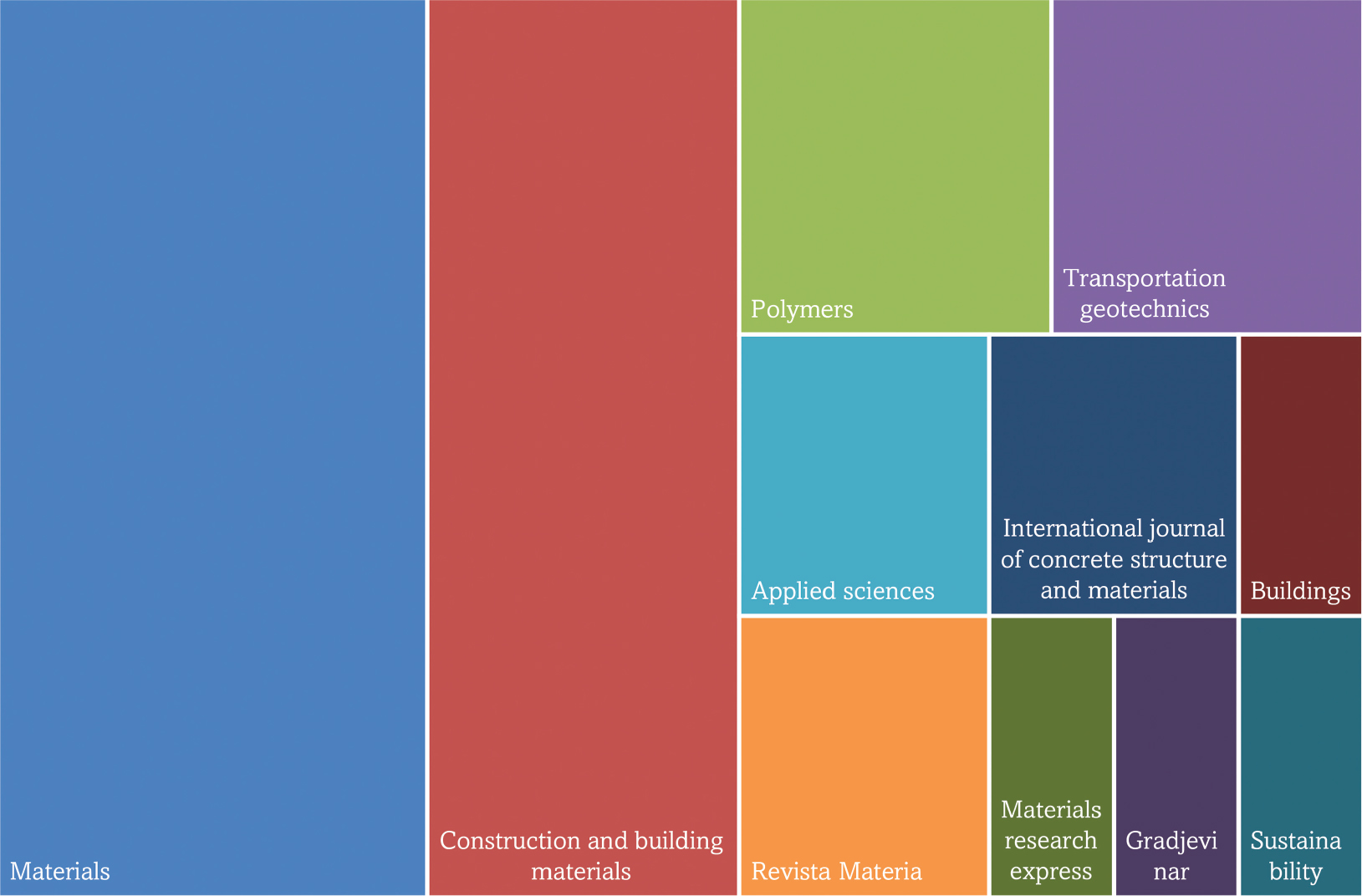
Fig. 5:
Journals with the highest impact.
Source: Bibliometrix.
3.4. Type of research
The studies were categorised into experimental studies, review articles, modelling and life cycle analysis (LCA), with an additional subcategory for studies combining experimentation and modelling. Experimental studies focus on causal relationships between variables and their effects (Zhao et al. 2023), while review articles analyse the relevant literature to identify patterns, knowledge gaps and trends (Chen et al. 2019). Modelling uses statistical tools to represent phenomena in the field of study (Dvorkin et al. 2023), and LCA assesses the environmental impact of products throughout their life cycle (Hossein et al. 2022; Juang and Kuo 2023). As shown in Figure 6, 76% of the analysed articles correspond to experimental studies with quantitative approaches, such as Workability adjustment and sensitivity of different fine cement mixtures to polycarboxylate ether-based superplasticizer (Hussein et al. 2022) and Evaluations of all-in-one, polycarboxylate-based superplasticizer with viscosity modifying agents for the application of normal-strength, high-fluidity concrete (Kong et al. 2021). These studies address concrete mix combinations, the use of superplasticiser additives and the mechanical properties of concrete.
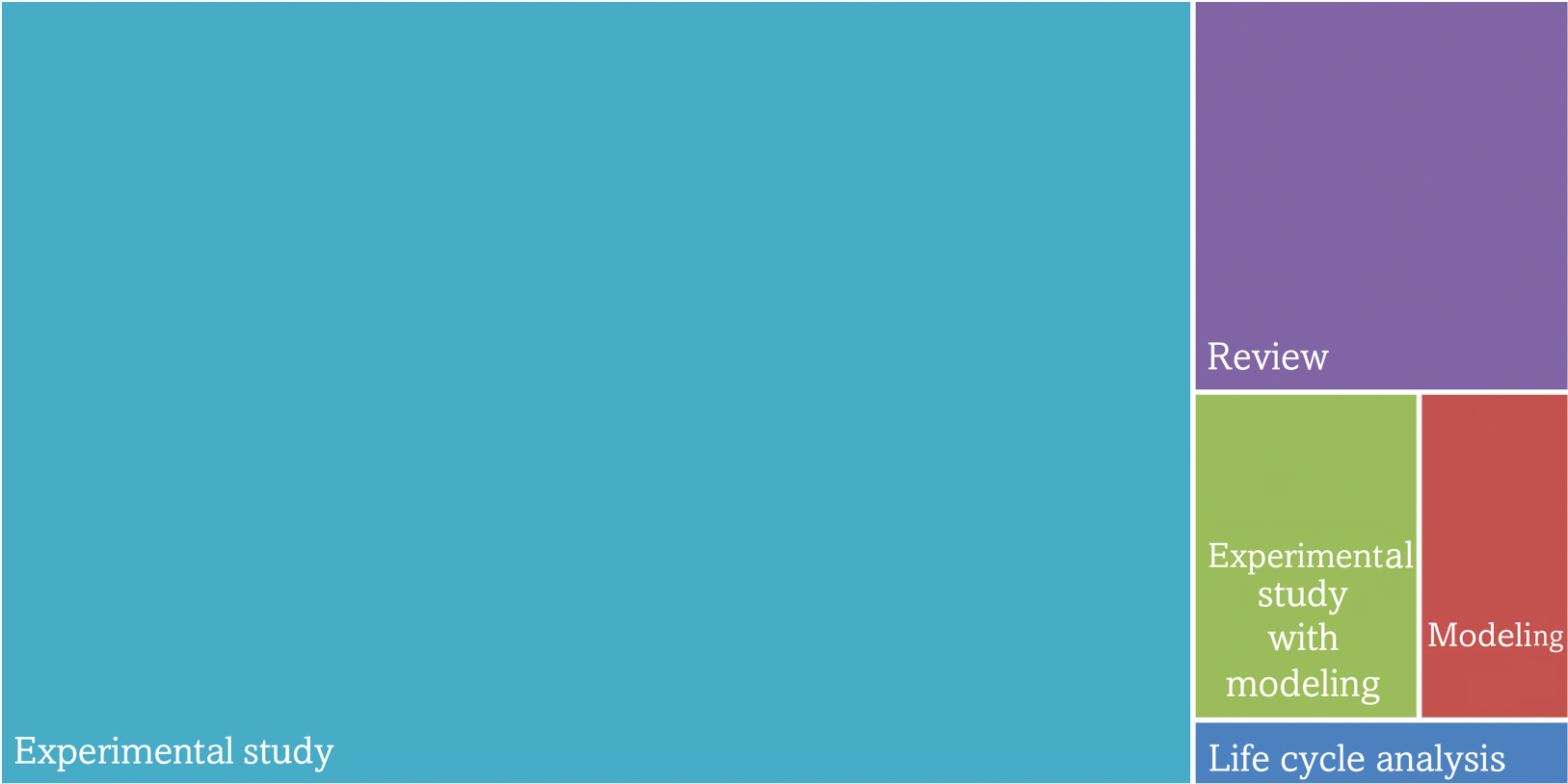
Fig. 6:
Type of research.
Source: Authors.
The remaining 24% is distributed among the other categories, highlighting that three studies combine experimentation and modelling: Multi-Response Optimization on Hydrated Calcium Aluminate Rich Ternary Binders Using Taguchi Design of Experiments and Principal Component Analysis (Myftarago et al. 2023), Sulphate Corrosion Mechanism of Ultra-High-Performance Concrete (UHPC) Prepared with Seawater and Sea Sand (Sun et al. 2022), and Particle size effect of oyster shell on mortar: Experimental investigation and modeling (Liao et al. 2021).
Once the corresponding analyses were conducted, a visual examination of the titles, keywords and abstracts of the finally selected articles was performed. This followed the screening process, which resulted in 50 articles published in various databases, including additional studies incorporated into the process. Table 3 presents the results of the search strategy for the finally selected articles after a complete review of each proposed study.
Tab. 3:
Summary of results according to the search strategy.
| Title | Year | Journal | Reference | Keywords |
|---|---|---|---|---|
| Recycling of steel fibres and spent equilibrium catalyst in ultra-high-performance concrete: Literature review, research gaps, and future development | 2021 | Construction and Building Materials | Abdolpour et al. (2021) | HPC, steel fiber, recycling, sustainable development. |
| Factors affecting the price of recycled concrete: A critical review | 2021 | Journal of Building Engineering | Ma et al. (2022) | Recycled concrete price, recycling, critical review. |
| Precast concrete sandwich panels (PCSP): An analytical review and evaluation of CO2 equivalent | 2022 | Construction and Building Materials | Faria Oliveira et al. (2022) | PCSP, thermal performance, mechanical performance. |
| The role of performance metrics in comparative LCA of concrete mixtures incorporating solid waste: A critical review and guideline proposal | 2022 | Waste Management | Hossein et al. (2022) | LCA, concrete, functional equivalence, uncertainty, solid waste management. |
| Adopting recycled aggregates as sustainable construction materials: A review of the scientific literature | 2019 | Construction and Building Materials | Chen et al. (2019) | Circular economy, recycled aggregate, construction waste, sustainable concrete, literature review. |
| Recycled fibers in reinforced concrete: A systematic literature review | 2019 | Journal of Cleaner Production | Merli et al. (2020) | Concrete, recycled fiber, fiber-reinforced concrete, sustainability, circular economy. |
| Investigation of the Cementing Efficiency of Fly Ash Activated by Microsilica in Low-Cement Concrete | 2023 | Materials | Dvorkin et al. (2023) | Additives, calculation, cementation efficiency, experimental-statistical models, low-cement concrete. |
| Multi-response optimization on hydrated calcium aluminate rich ternary binders using Taguchi design of experiments and principal component analysis | 2023 | Buildings | Myftarago et al. (2023) | Experimental design, hydration, Taguchi design, polycarboxylate superplasticizer. |
| The effects of silica fume and superplasticizer type on the properties and microstructure of reactive powder concrete | 2023 | Materials | Šoukal et al. (2023) | Reactive powder concrete, silica fume, superplasticizer, UHPC. |
| Mix proportion optimization and early strength development in modified foam concrete: an experimental study | 2023 | Materials Research Express. | Shi et al. (2023) | Compressive strength, matrix analysis, optimization combination, orthogonal experiment. |
| Calcined clays from Nigeria—Properties and performance of supplementary cementitious materials suitable for producing level 1 concrete | 2023 | Materials | Muhammad et al. (2023) | Hydration mechanism, workability, metakaolin, superplasticizer. |
| Investigation of the use of waste mineral additives in ultra-high-performance concrete | 2023 | Gradjevinar | Memiş and Ramroom (2023) | Compressive strength, polycarboxylate ether-based superplasticizer, steel fiber, UHPC. |
| Engineering properties of green and ecofriendly grouting materials with different sand filling ratios | 2023 | Materials | Juang and Kuo (2023) | Superplasticizers, workability, compressive strength, density, polycarboxylate. |
| Utilization of fly ash as a viscosity-modifying agent to produce cost-effective, self-compacting concrete: A sustainable solution | 2022 | Sustainability | Hameed et al. (2022) | Fly ash, SCC, viscosity-modifying admixture, waste management. |
| The mechanism of anticorrosion performance and mechanical property differences between seawater sea-sand and freshwater river-sand ultra-high-performance polymer cement mortar (UHPC) | 2022 | Polymers | Li et al. (2022) | Anticorrosion analysis, material characterization, UHPC, compressive strength, polycarboxylate. |
| Using experimental statistical models for predicting strength and deformability of self-compacting concrete with ground blast-furnace slag | 2022 | Materials | Zhitkovsky et al. (2022) | SCC, blast furnace slag, experimental-statistical model, modulus of elasticity, superplasticizer, polycarboxylate. |
| Sulphate corrosion mechanism of ultra-high-performance concrete (UHPC) prepared with seawater and sea sand | 2022 | Polymers | Sun et al. (2022) | UHPC, sulfate corrosion, corrosion analysis, polycarboxylate. |
| Workability and mechanical properties of superplasticized microfine cement grouts | 2022 | Materials | Sha et al. (2022) | Rheological behavior, superplasticizer, naphthalene, polycarboxylate. |
| Effect of the mix composition with superplasticizer admixture on mechanical properties of high–strength concrete based on reactive powders | 2022 | Archives of Civil Engineering | Siwiński et al. (2022) | Concrete design, high-strength concrete, reactive powder concrete, ductility, superplasticizer, polycarboxylate, modified polycarboxylate. |
| Statistical analysis on mechanical behavior of ternary blended high strength concrete | 2022 | Cement, Wapno | Robinson and Srisanthi (2022) | Fly ash, high-strength concrete, mini slump, silica fume, polycarboxylate. |
| Utilization of acacia modesta gum powder as viscosity-modifying agent in self-compacting paste systems | 2022 | Engineering Proceedings | Malik and Rizwan (2022) | Compressive strength, SCC paste, viscosity-modifying admixture. |
| Workability adjustment and sensitivity of different fine cement mixtures to polycarboxylate ether-based superplasticizer | 2022 | Journal of Applied Engineering Science | Hussein et al. (2022) | Compressive strength, polycarboxylate ether-based superplasticizer, silica fume, workability. |
| Evaluations of all-in-one, polycarboxylate-based superplasticizers with viscosity modifying agents for the application of normal-strength, high-fluidity concrete | 2021 | Applied Sciences | Kong et al. (2021) | High-flow concrete, polycarboxylate-based superplasticizer, rheology, viscosity, workability. |
| Particle size effect of oyster shell on mortar: Experimental investigation and modeling | 2021 | Materials | Liao et al. (2021) | Compressive strength, flexural strength, mortar, modulus of elasticity. |
| A comprehensive study on the hardening features and performance of self-compacting concrete with high-volume fly ash and slag | 2021 | Materials | Yang et al. (2021a) | Fly ash, chloride permeability, SCC, polycarboxylate, viscosity modifier. |
| Effect of ultrafine metakaolin on the properties of mortar and concrete | 2021 | Crystals | Zhang et al. (2021) | Durability, silica fume, ultrafine metakaolin, polycarboxylate, compressive and tensile strength. |
| Essential improvements in gypsum mortar characteristics | 2021 | International Journal of Engineering | Hashempour et al. (2021) | Cement, compressive strength, mortar, nano silica, polycarboxylate. |
| Experimental contribution to the study of the physic-mechanical behavior and durability of high-performance concretes based on ternary binder (cement, silica fume and granulated | 2021 | Frattur ed Integrita Strutturale | Rahim et al. (2021) | Durability, environment, GGBFS, HPC, silica fume, polycarboxylate. |
| Evaluation of the influence of the viscosity modifying admixture on the properties of self-compacting concrete | 2021 | Revista Materia | de Oliveira Evaristo et al. (2021) | SCC, superplasticizer, viscosity modifier. |
| An experimental assessment of the water permeability of concrete with a superplasticizer and admixtures | 2020 | Materials | Skutnik et al. (2020) | Admixtures, permeability coefficient, compressive strength, superplasticizer, polycarboxylate. |
| Effect of multicomponent modifier on the properties of cement pastes formulated from self-compacting concrete | 2020 | Magazine of Civil Engineering | Marshdi et al. (2020) | Cement paste, GGBFS, rheological properties, SCC, shrinkage-reducing admixture, superplasticizer. |
| Hydration and mechanical properties of UHPC matrix containing limestone and different levels of metakaolin | 2020 | Construction and Building Materials | Mo et al. (2020) | Hydration process, limestone filler, compressive strength, metakaolin, UHPC. |
| Reactive powder concrete containing basalt fibers: Strength, abrasion and porosity | 2020 | Materials | Grzeszczyk et al. (2020) | Basalt fibers, porosity, reactive powder concrete, compressive strength, polycarboxylate, flexural strength. |
| Combination of polymeric superplasticizers, water repellents and pozzolanic agents to improve air lime-based grouts for historic masonry repair | 2020 | Polymers | González-Sánchez et al. (2020) | Polymeric superplasticizers, compressive strength, fluidity, stability, durability, polycarboxylate, micro silica, metakaolin. |
| Evaluation of chloride resistance of early-strength concrete using blended binder and polycarboxylate-based chemical admixture | 2020 | Applied Sciences | Lee and Lee (2020) | Chloride resistance, durability, Portland cement, early strength, GGBFS. |
| Investigation of the incompatibilities of cement and superplasticizers and their influence on the rheological behavior | 2020 | Materials | Pott et al. (2020) | Hydration, superplasticizer incompatibility, penetration, rheology, flow test. |
| Effect of temperature on early-age properties of self-consolidating concrete equivalent mortar | 2020 | Rilem Technical Letters | Farzadnia et al. (2020) | Early-age properties, SCC, temperature, compressive strength, polycarboxylate. |
| Performance evaluation of commercial superplasticizing additives based on polycarboxylate on the mechanical and microstructural properties of Portland cement pastes | 2020 | Revista Materia | Ribero et al. (2020) | Polycarboxylate, Portland cement, superplasticizer, performance. |
| Effects of retarding admixture, superplasticizer and supplementary cementitious material on the rheology and mechanical properties of high strength calcium sulfoaluminate cement paste | 2020 | Journal of Advanced Concrete Technology | Ke and Zhang (2020) | Cements, elasticity, fly ash, silica fume, polycarboxylate, superplasticizer, water/cement ratio. |
| Introduction of calcium lignosulfonate to delay aging in bituminous mixtures | 2023 | Construction and Building Materials | Ziaee et al. (2023) | Calcium lignosulfonate, fracture, flexural test. |
| The pros and cons of using calcium lignosulfonate as a recycled anti-aging additive on engineering properties of bituminous mastics | 2021 | Case Studies in Construction Materials | Fatemi et al. (2021) | Calcium lignosulfonate, recycled anti-aging admixture, rheological behavior, fatigue failure. |
| Insights into the efficiency loss of naphthalene superplasticizer in alkali-activated slag pastes | 2023 | Journal of Building Engineering | Tian et al. (2023) | NS, alkali-activated slag, solubility, stability, diffusion. |
| Crushed rocks stabilized with organo-silane and lignosulfonate in pavement unbound layers: Repeated load triaxial tests | 2021 | Frontiers of Structural and Civil Engineering | Barbieri et al. (2021) | Lignosulfonate, crushed rocks, pavement layers, repeated load triaxial test, finite element analysis. |
| Organosilane and lignosulfonate as innovative stabilization techniques for crushed rocks used in road unbound layers | 2020 | Transportation Geotechnics | Barbieri et al. (2020) | Lignosulfonate, pavement, repeated load triaxial test, dynamic cone penetrometer. |
| Mix design of the green self-consolidating concrete: Incorporating the waste glass powder | 2019 | Construction and Building Materials | Hendi et al. (2019) | Sodium lignosulfonate plasticizer, green SCC, glass powder, mix design. |
| A novel low-density thermal insulation gypsum reinforced with superplasticizers | 2021 | Construction and Building Materials | Cao et al. (2021) | Thermal insulating gypsum, polycarboxylate superplasticizer, sulfonated naphthalene formaldehyde, superplasticizers, hydration, adsorption. |
| Mechanical behavior of large-rupture-strain (LRS) polyethylene naphthalene fiber bundles at different strain rates and temperatures | 2021 | Construction and Building Materials | Bai et al. 2021b) | Strain rate, temperature effect, polyethylene naphthalene fiber, tensile mechanical properties. |
| Research of nano-modified plain cement concrete mixtures and cement-based concrete | 2023 | Research of nano-modified plain cement concrete mixtures and cement-based concrete | Yang et al. (2023) | Concrete, cement, nano-modification, polymeric admixture, carbon nanotubes. |
| Structural behavior of ultra-high strength concrete columns reinforced with basalt bars under axial loading | 2023 | International Journal of Concrete Structures an Materials | El-Sayed et al. (2023) | UHPC, compressive strength. |
| Fundamental insights into the compressive and flexural response of binder- and aggregate-optimized ultra-high performance concrete (UHPC) | 2019 | Cement and Concrete Composites | Arora et al. (2019) | UHPC, compressive strength, flexural strength, critical stress states. |
1 GGBFS, ground granulated blast furnace slag; HPC, high-performance concrete; LCA, life cycle analysis; LRS, large-rupture-strain; NS, naphthalene-based superplasticizers; PCSP, precast concrete sandwich panels; SCC, self-compacting concrete; SCMs, supplementary cementitious materials; UHPC, ultra-high performance concrete; VMA, viscosity-modifying agent.
3.5. Thematic map and factor analysis
Analysis of the thematic map on concrete highlights the centrality of various terms in specific groups, as shown in Figure 7. Cluster 3, focused on self-compacting concrete (SCC), is particularly relevant, with terms such as ‘compressive strength’ and ‘silica fume’ showing high centrality, indicating their importance in research and application. Other notable clusters include Cluster 9 on fly ash and Cluster 4 on high-strength concrete, though with lower centrality. On the contrary, terms like ‘UHPC’ and ‘rheology’ appear in smaller clusters with lower centrality, suggesting that while they are important topics, their impact is more limited or specialised. Overall, centrality varies significantly among terms, reflecting their relevance in different areas of concrete studies.
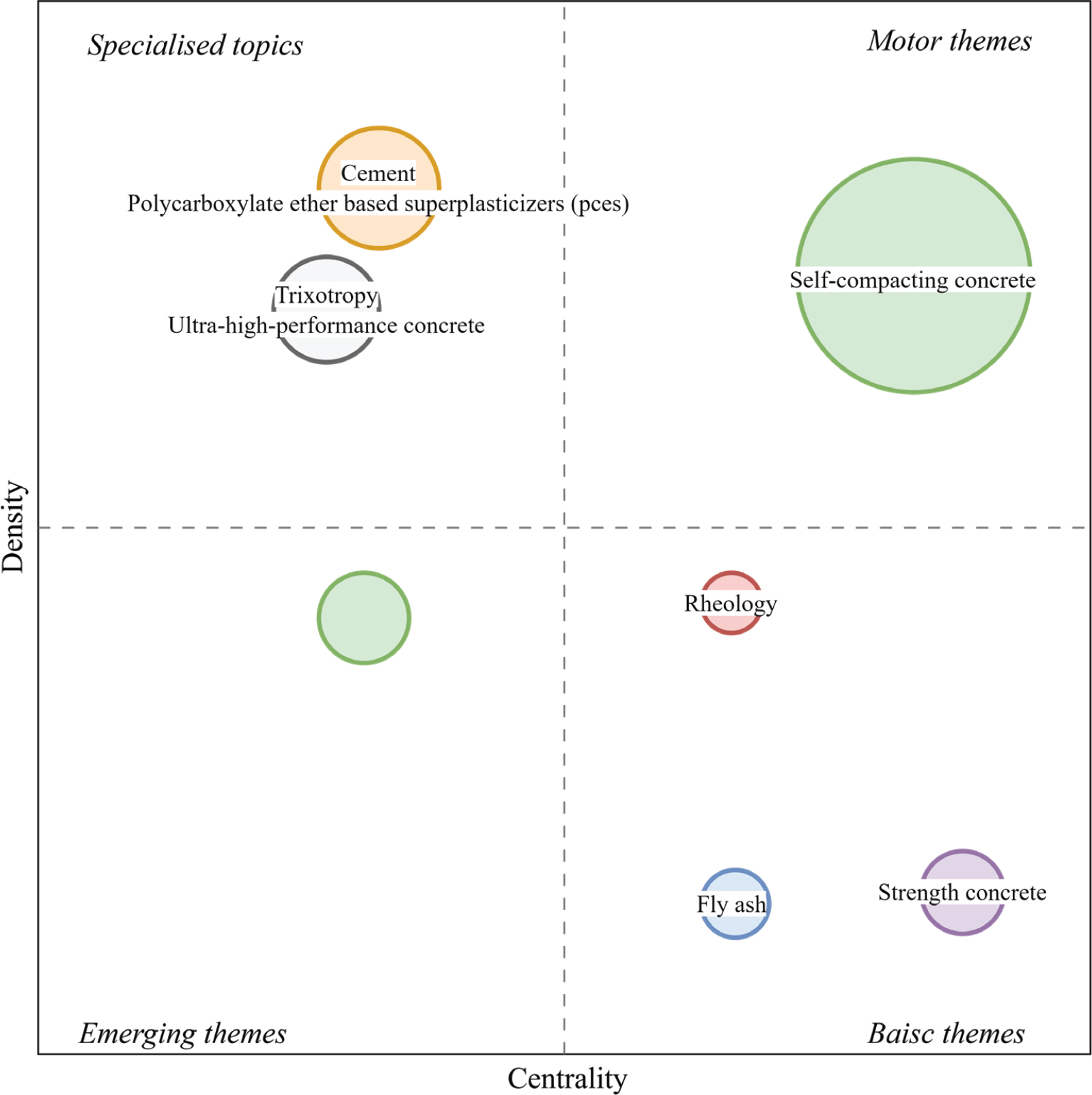
Fig. 7:
Thematic map.
Source: Bibliometrix.
The factorial analysis classifies documents in a multidimensional space, allowing the identification of patterns and groupings based on the underlying characteristics in their content. The dimensions represent key factors that differentiate the documents. Values farther from the origin in these dimensions indicate documents that stand out due to their unique or influential characteristics in those factors. For example, Teng et al. (2024) have a negative value in Dimension 1 and a positive value in Dimension 2, indicating that it contributes to defining these dimensions.
The clusters assigned to each document reflect groups with thematic or methodological similarities. Documents in Cluster 4, such as Babaahmadi et al. (2022) and Chu et al. (2022), are grouped due to common characteristics, possibly related to specific topics in materials science. On the other hand, Cluster 1, which includes studies such as Navabi et al. (2021) and Luo and Zhi (2023)), may represent research with more traditional approaches or shared methodologies. Regarding contributions to the dataset, the studies developed by Kohandelnia et al. (2023) show significant influence on the overall grouping. This analysis provides a detailed view of how research is structured within a field, enabling the identification of key works and emerging trends. The representation of these clusters is shown in Figure 8.
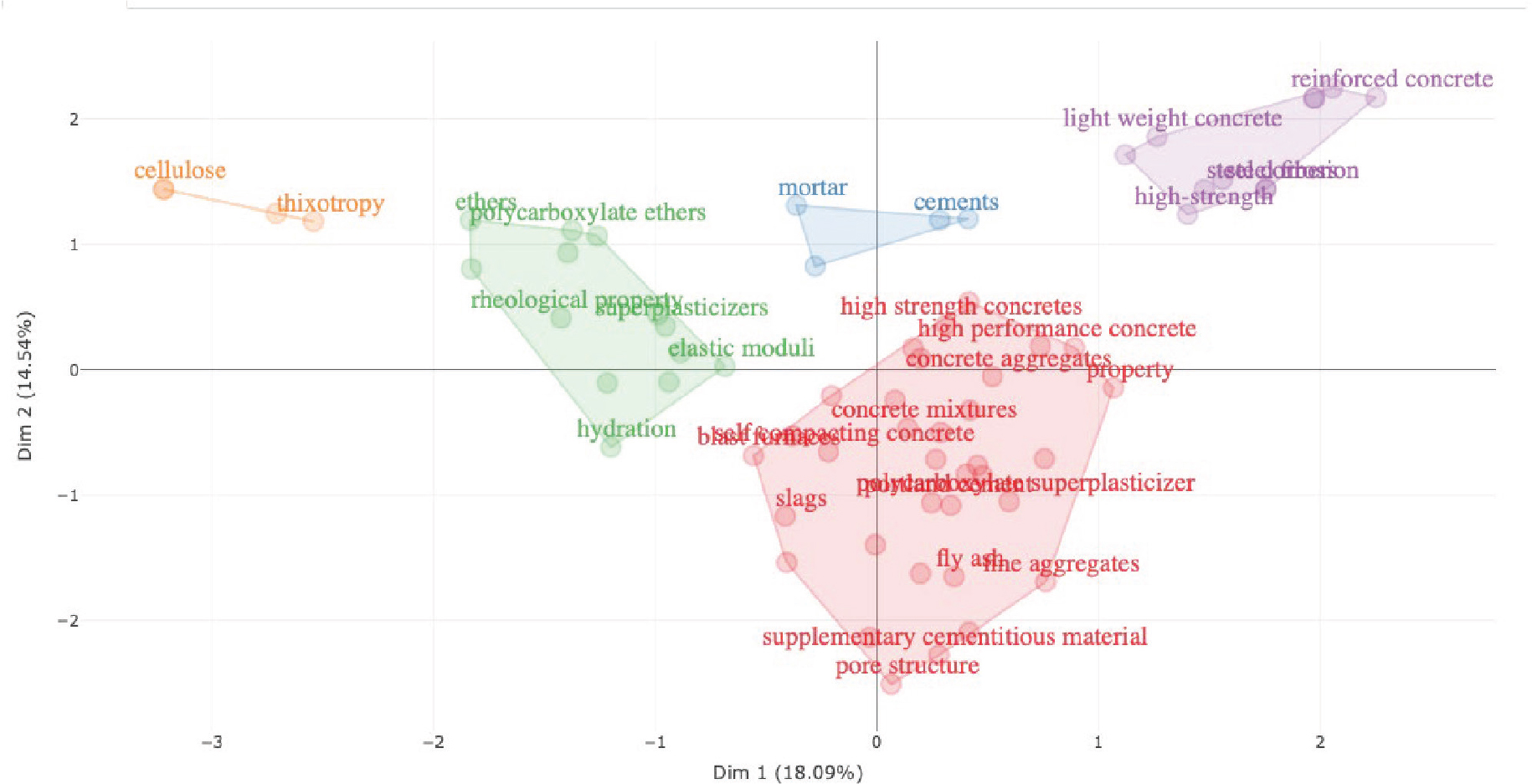
Fig. 8:
Analysis of correspondence.
Source: Bibliometrix.
The analysis of documents grouped by clusters reveals different research focuses on concrete and its applications. Cluster 1 centres on the mechanical behaviour of concrete and construction materials, encompassing studies on strength, durability and microstructure. These investigations explore how environmental conditions and material composition influence structural performance. In contrast, Cluster 2 groups research on concrete production processes and technologies, emphasising innovations in manufacturing and mix optimisation. These studies highlight quality and efficiency improvements achieved through refining production methods. This cluster is particularly relevant for practical applications in the construction industry, offering new methodologies and technologies that enhance building materials.
Similarly, Clusters 3 and 4 focus on research into new materials, additives and innovations in concrete technology. These groups include studies on the development of advanced materials and the modification of concrete properties through innovative additives. They also emphasise experimental research on the microstructure, chemical and physical properties of concrete, advancing scientific knowledge in the field. Finally, Cluster 5 includes specific case studies and in-depth analyses that provide unique perspectives and significantly contribute to the overall understanding of concrete research.
4. Discussion
The 207 research articles underwent an iterative review process to facilitate analysis and interpretation using tools that enable clear and objective information identification. After the preliminary review, a total of 50 articles from recognised databases were selected, meeting the proposed criteria for further detailed analysis. As a conceptual outcome, the following thematic groupings were identified: (a) concrete as a structural material in construction (Yang et al. 2023), (b) mechanical properties, (c) HPCs (El-Sayed et al. 2023) and (d) superplasticiser additives and chemical aspects of mix design.
Compressive strength is a key property for evaluating the effectiveness of HPC and UHPC (Abdolpour et al. 2021). These materials have gained recognition in the construction industry due to their ability to withstand high loads, making them an efficient alternative to traditional concrete. This is particularly relevant for projects requiring high strength as well as adequate workability (Šoukal et al. 2023). Additionally, HPC and UHPC contribute to environmental sustainability by incorporating recycled or secondary-use materials (Chen et al. 2019).
UHPC has seen widespread adoption in infrastructure such as long-span bridges, precast tunnel segments and architectural facades due to its outstanding mechanical properties and durability (Arora et al. 2019; Liu et al. 2022). Notable examples include the Mars Hill Bridge (USA) and the HiPer Fiber facade panels used in Germany. Key standards for its use and application include ACI 239 ‘Ultra-High-Performance Concrete’, FIB Model Code 2010 and EN 206, which guide its adoption and specification.
An important factor influencing the compressive strength of HPCs is the water-to-binder ratio. Carefully reducing this ratio using additives and supplementary materials not only enhances strength but also optimises durability and workability (Farzadnia et al. 2020). These properties are further improved by minimising the amount of entrapped air in the mixture (Ribero et al. 2020).
To achieve significant compressive strength values, it is essential to incorporate additional elements into concrete mixtures. For instance, the combination of slag and fly ash creates a synergistic effect that enhances early-age compressive strength (Yang et al. 2021a). Moreover, maintaining low water-to-binder ratios, utilising superplasticisers and partially replacing cement with fly ash also contribute to improving compressive strength performance (Juang and Kuo 2023).
Table 4 presents a summary of the comparative analysis of superplasticising admixtures, considering their families, functions, cost and the compressive strength improvements reported in the review studies. In the case of PCE admixtures, studies indicate that, with a higher dosage (up to 1.2%), compressive strength in HPC can improve by up to 30%–40% due to a lower water–cement ratio, while excessive use can cause segregation or delayed setting, and they show lower chloride permeability below 1,000°C in rapid chloride penetration test (RCPT). Naphthalene and lignosulphonates, on the contrary, improve workability but show limited additional strength benefits beyond optimised ranges, and the studies do not focus on reporting durability indicator measurements.
Tab. 4:
Classification and comparative analysis of superplasticiser additives.
| Additive type | Chemical family | Dosage Range (by binder) | *Typical Price (US$/kg) | **Compressive strength gain (70) | ***Key features | Advantages | Disadvantages |
|---|---|---|---|---|---|---|---|
| Polycarboxylate ether | Polycarboxylate | 0.5%–1.5% | 2.0–4.0 | Upto+80% | Highest water reduction, rapid dispersion, most favoured for UHPC/SCC | Provides greater water reduction (upto 357%–487%), low slump loss, and greater rheological control. | High cost; can cause segregation if overdosed. |
| Naphthalene sulphonate | Naphthalene formaldehyde | 0.4%–1.2% | 1.5–2.2 | +30%–60% | High water reduction, rapid initial strength, moderate slump retention | Good cost/performance ratio, improved workability and mix compatibility. | Lower water reduction efficiency than PCE and greater tendency to slump loss in hot mixes. |
| Lignosulphonate | Lignin derivative | 0.2%–0.8% | 0.7–1.0 | +15%–30% | Limited strength gain, mostly for workability improvement | Opción económica para mejorar la trabajabilidad | Lower water reduction and low strength gain compared to PCE and SNF. |
1* Prices may vary depending on the region and supplier; the values presented correspond to ranges reported in recent materials articles and reviews.
1** Although comparisons are presented regarding compressive strength, it should be noted that the studies analysed respond to a specific context where this parameter is not always the primary objective. Additionally, strength depends not only on the admixture but on multiple factors, so these values should only be taken as indicative.
Self-compacting concrete exhibited favourable performance with naphthalene-based superplasticisers (NS) (Cao et al. 2021), compared with mixtures using polycar-boxylate-based superplasticisers (PCE) modified with viscosity-modifying agents (VMAs) (Yang et al. 2021a), without significantly altering compressive strength (de Oliveira Evaristo et al. 2021; Siwiński et al. 2022). Optimal behaviour was observed with water-to-binder ratios of approximately 0.33–0.34 when combined with sodium lignosulphonate-based superplasticisers (Hendi et al. 2019; Bai et al. 2021b). Studies on the combined use of different VMAs indicate that compressive strength is negatively affected compared with mixtures using only a single type of VMA (Kong et al. 2021).
Comparing SCC mixtures with VMA and those incorporating fly ash, studies have shown that fly ash can serve as an alternative to VMAs. It maintains compressive strength results while offering economic feasibility, particularly for precast concrete applications (Faria Oliveira et al. 2022; Hameed et al. 2022). In HPC, the partial replacement of cement with fly ash and silica fume enhances compressive strength, especially when combined with PCE (Robinson and Srisanthi 2022). However, in the absence of PCE-type superplasticisers, the cement paste exhibits exceptionally high viscosity (Shi et al. 2023). For UHPC, the partial replacement of cement with fly ash, combined with limestone powder and micro silica, achieves compressive strengths of approximately 150 MPa at 90 days (Arora et al. 2019). These findings suggest that the combination of superplasticisers and fly ash significantly enhances mix designs, optimising compressive strength performance in HPCs.
In addition to fly ash and micro silica, metakaolin significantly enhances compressive strength and durability, working synergistically with PCE (González-Sánchez et al. 2020; Mo et al. 2020). It also reduces the risk of segregation or bleeding during testing, resulting in greater compatibility between metakaolin and superplasticisers in concrete mixtures (Zhang et al. 2021).
The incorporation of ground granulated blast furnace slag (GGBFS) as a partial cement replacement improves the mechanical properties of HPC, particularly when combined with silica fume as a binder (Rahim et al. 2021). Additionally, it reduces apparent viscosity when used in conjunction with PCE superplasticisers (Marshdi et al. 2020; Malik and Rizwan 2022) leading to increased compressive strength at both early and later ages. This effect is further enhanced when combined with superplasticisers and specialised cement, such as high early-strength Portland cement (Lee and Lee 2020). Furthermore, the interaction between GGBFS and PCE superplasticisers results in an increase in the elastic modules of SCC, reaching up to 1.5–1.7 times its original value (Zhitkovsky et al. 2022). Notably, the use of PCE alone extends the setting time without requiring additional water, which can significantly influence compressive strength and water absorption properties without altering the water-to-binder ratio (Hashempour et al. 2021; Ma et al. 2022).
Another crucial property in this field of study is workability, which is of general interest as it determines the ease with which concrete can be handled throughout the manufacturing and placement process. In the case of HPCs and ultra-UHPC, where high strength and the use of additives and/or supplementary materials are involved, workability must be carefully measured and adjusted according to the specific requirements of each mix. For instance, when silica fume is used as a partial cement replacement in combination with PCE, the adaptation process to the water-to-cement ratio becomes critical. If this ratio is too high, the increased water content can reach a threshold where the effectiveness of PCE is compromised, negatively impacting workability and inducing significant changes in the mixture (González-Sánchez et al. 2020; Hussein et al. 2022; Sha et al. 2022). Consequently, some researchers consider that the incorporation of silica fume in UHPC is highly complex, but its performance can be optimised by correcting pore structure distribution (Hussein et al. 2022; Li et al. 2022; Memiş and Ramroom 2023) Additionally, the influence of calcined clays on concrete workability requires the application of superplasticisers alongside conventional Portland cement (Muhammad et al. 2023).
Furthermore, proper curing and setting processes are essential for the development of compressive strength in HPCs (Grzeszczyk et al. 2020). An adequate curing process ensures the complete formation of chemical bonds and the consolidation of the concrete matrix, maximising its ability to withstand compressive forces. Lastly, properties such as resilience modulus and resistance to permanent deformation have been analysed in pavement samples (Barbieri et al. 2020, 2021), along with penetration, ductility and rolling resistance tests (Fatemi et al. 2021) conducted with lignosulphonate-based additives (Tian et al. 2023). These studies were selected due to their common focus on lignosulphonate additives applied in pavement engineering.
Thematic gaps were identified in the areas of long-term durability under aggressive environments, compatibility of superplasticisers with recycled aggregates, and the environmental life-cycle impact of HPC. Few studies attempted meta-analytical comparisons, despite shared outcomes like compressive strength. This restricts the statistical robustness of generalisations. Furthermore, keyword co-occurrence analysis, while helpful in mapping topics, may bias results towards frequently used but not necessarily impactful terms. Thus, combining this with citation network analysis could reveal underexplored yet promising research fronts.
Based on the findings in the selected field of research, there are areas worth exploring in further future studies: consideration of the performance of concrete in different corrosive environments by chloride attack and carbonation, interaction between concrete components, determination of the effect of commercial plasticising additives in a wide range of types of concrete with multi-component cementitious agents, toxicity, environmental effect and linking the products developed to the circular economy of construction.
Concrete is a heterogeneous material and depends on different factors such as materials, mixing, transportation, placement, curing, maintenance, among others. This makes their properties highly variable and makes studies difficult to standardise and compare under generalising curves.
Based on the findings in the selected research field, there are areas worthy of further study in future studies: consideration of concrete performance in different corrosive environments due to chloride attack and carbonation, interaction between concrete components, determination of the effect of commercial plasticising admixtures on a wide range of concrete types with multicomponent cementitious agents, toxicity, environmental impact and the linkage of products developed to the circular economy in construction.
5. Conclusions
HPCs require rigorous material selection, proportion optimisation and precise mixing control. The incorporation of superplasticisers and supplementary materials is essential for designing highly efficient mixtures, achieving high levels of strength and durability, superior to those of conventional concrete, without the need to significantly modify traditional manufacturing processes. This positions them as a reliable alternative with technical and economic viability for industrial implementation for structures requiring superior performance.
The literature review highlights a preference for PCE admixtures, as their use is recommended in most of the mixtures studied. Their application, in combination with mineral additions such as silica fume and metakaolin, has significantly improved the mechanical properties of concrete. However, it was observed that these admixtures can sometimes limit workability, suggesting the need for complementary strategies to mitigate this effect without compromising the final material properties.
According to the reviewed studies, PCE-based additives outperform naphthalene and lignosulphonate additives by enabling low water-to-binder ratios, high fluidity, and greater strength and durability, especially in HPC and SCC applications. However, it should be noted that the predominance of PCE use in these studies reflects technological advancements and the preference for ultra- and high-performance technologies, which is why they may have an advantage in the number of publications compared with other superplasticiser families.
There is a clear and quantifiable dose–response effect in the use of superplasticisers, whose measurements have focused primarily on compressive strength, and some studies predict positive effects on durability considering phenomena such as chloride permeability. However, studies indicate that excessive dosage (above the recommended dosage) can be counterproductive by inducing segregation or delayed setting, and even loss of strength over time. The effects of these dosages on long-term durability are still considered unclear and insufficiently explained.
UHPC and SCC technology, thanks to advanced superplasticisers, is penetrating critical infrastructure markets worldwide and is increasingly being specified in codes. Therefore, similar progress is needed in research to enable their safe and efficient use. Considering that most studies focus on short-term performance in the laboratory, more research is needed on field performance, especially with regard to long-term durability.
It is advisable to promote standardisation of reporting in future studies, prioritising direct comparisons with statistical rigour, including the creation of regulatory protocols and incorporating them into international codes, and addressing the sustainability implications of additive production and use.
Acknowledgments
The authors express their gratitude to the Civil and Environmental Engineering Research Group ‘GICA: Grupo de Investigación en Ingeniería Civil y Ambiental’ of the Universidad Pedagógica y Tecnológica de Colombia (UPTC).
Notes
[10] Financing
The execution of this research is related to the research project ‘Design, Manufacturing, and Implementation of Urban Furniture with Cultural Identity Using High-Performance Concrete Mixtures’, financed by Universidad Pedagógica y Tecnológica de Colombia through internal call 14 to 2023.