
BOX 1
China’s livestreaming ecosystem: Setting a global example
China has revolutionized online shopping through livestream commerce, transforming it into an engaging and interactive experience. A typical livestream setup includes a live broadcast room, where the influencer prepares essential elements like video equipment, a backdrop and product displays. The influencer coordinates with brands to decide whether the livestream will focus on a single brand or feature multiple brands, each option involving different costs.
During the livestream, influencers actively engage with their audiences, providing entertainment such as singing, dancing and talk shows. Phrases like “Like+Favorite” (in Chinese characters in Figure 1) encourage viewers to follow and interact. For product promotions, phrases like “3, 2, 1, link on!” create urgency, spurring impulse purchases. Viewers can hit the like button (thumbs-up), send virtual gifts to the influencer and make purchases through the shopping cart while the livestream is active. Livestream sessions typically run for several hours and have an average duration of 5.4 hours in our observations.
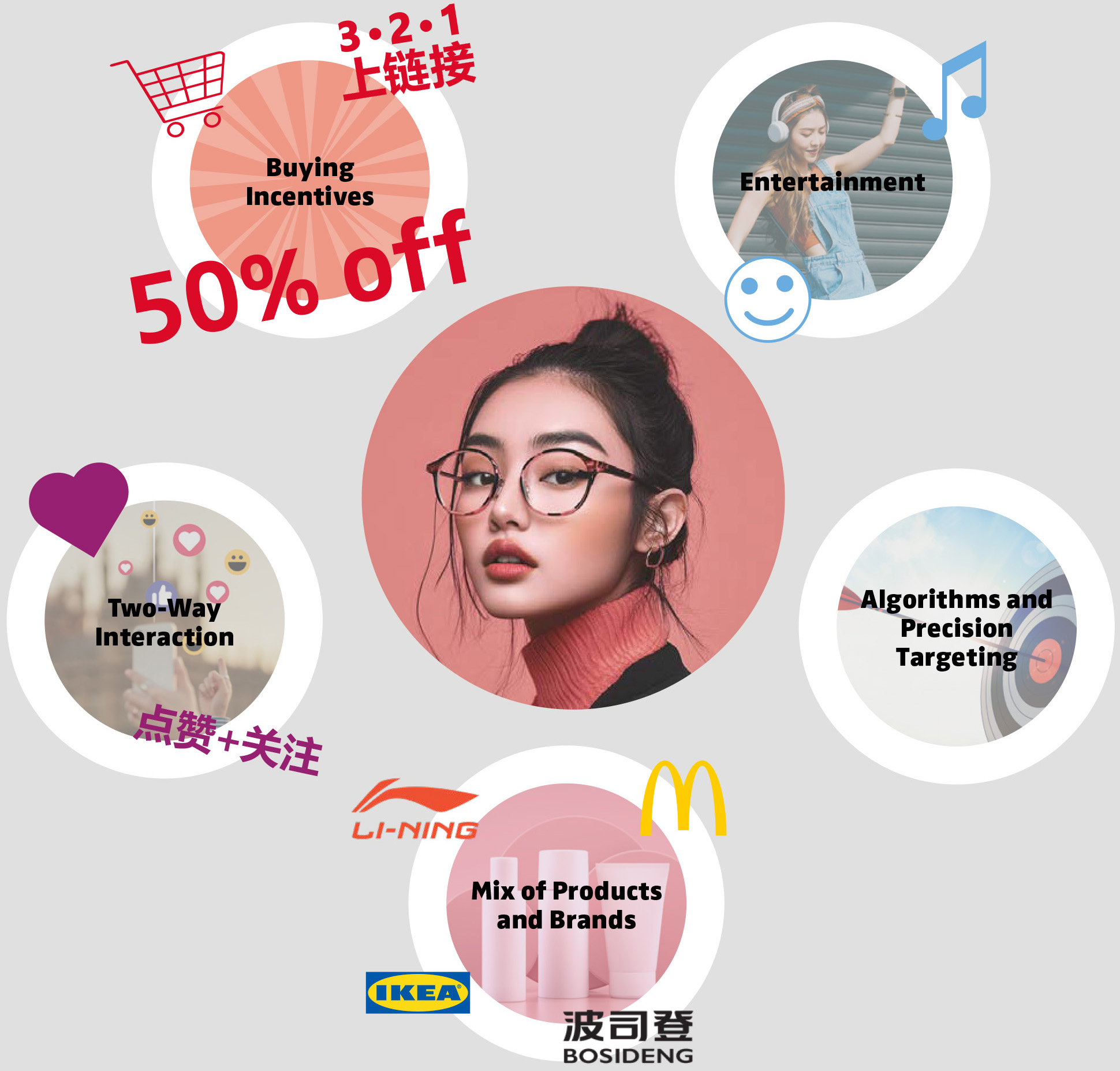
FIGURE 1
Success factors in an influencer’s commercial livestream experience
AsiaVision, Mihail Minea / 500px, akinbostanci, Oscar Wong, get tyimages; Midjourney AI, prompt GCO
Specifically, platforms like Douyin (TikTok in China) and Taobao have set a new standard, blending entertainment and real-time interaction with e-commerce. International managers can learn valuable lessons from this model and adapt similar strategies in their own markets. Major success factors are entertainment, interaction and the right targeting.
Livestreams in China are more than just sales events
They are a fusion of commerce and entertainment. Influencers do not only promote products; they engage viewers through chat, music, talent shows, etc. This fusion of entertainment and shopping has proven highly effective in driving impulse purchases. Managers can capitalize on this trend by collaborating with influencers who can combine product promotion with engaging content, attracting more traffic and enhancing viewer engagement.
Real-time two-way interaction is key
Viewers can interact with the influencer and other viewers in a livestream by asking questions, sharing comments and receiving immediate responses from influencers. This creates a direct line of communication that encourages quick purchasing decisions. Managers can replicate this by offering time-sensitive deals during livestreams and fostering active viewer participation to increase sales.
Advanced targeting algorithms reach the right customers
Social network platforms like Douyin use advanced algorithms to precisely target audiences, while their seamless integration with e-commerce functionalities allows viewers to purchase products instantly. This frictionless shopping experience is a key driver of success. Companies looking to thrive in livestream commerce should leverage similar targeting algorithms to reach the right customers and create a smooth, intuitive shopping process.
One key challenge companies face in influencer marketing is deciding how to best allocate their budget: Should they collaborate with a mega influencer who has more than one million followers for broad reach or work with several smaller influencers to drive more targeted conversions? This decision becomes even more complex when companies choose to collaborate with a mix of mega and smaller influencers, lever- aging the strengths of each to maximize impact. In our research, we focused on livestream commerce on TikTok, which goes under the name of Douyin in China, to study the effects of different influencer campaigns. In today’s fast-paced world of online shopping, livestream commerce has emerged as a powerful tool for companies. Box 1 and Figure 1 describe key elements of and insights from livestream commerce. We took a deep dive into the sales effectiveness of different influencer mix strategies in this environment, providing key insights to help businesses optimize their influencer mix strategy, tailor campaigns to fit their product offerings and learn from China’s livestream ecosystem.
“Platforms like Douyin and Taobao have set a new standard, blending entertainment and real-time interaction with e-commerce.”
Mega or smaller influencers? Combinations do not always work well
Many marketers assume that more influencers lead to better results. Mega influencers, with their vast followings, are ideal for building brand awareness, while smaller influencers, with their close relationships with their loyal audiences, excel at driving engagement. However, combining mega and smaller influencers does not always lead to better results. Surprisingly, we found a negative interaction effect when both mega and smaller influencers (with fewer than one million followers) promote the same product. Consumers may become skeptical when they see a mix of influencers endorsing the same product. This can erode trust, particularly in mega influencers. Furthermore, livestream sales driven by mega influencers can take a significant hit if a smaller influencer has previously promoted the same product. Interestingly, the reverse is not true—when smaller influencers endorsed the same product after it had been promoted by mega influencers, no adverse effect was apparent (see Figure 2).
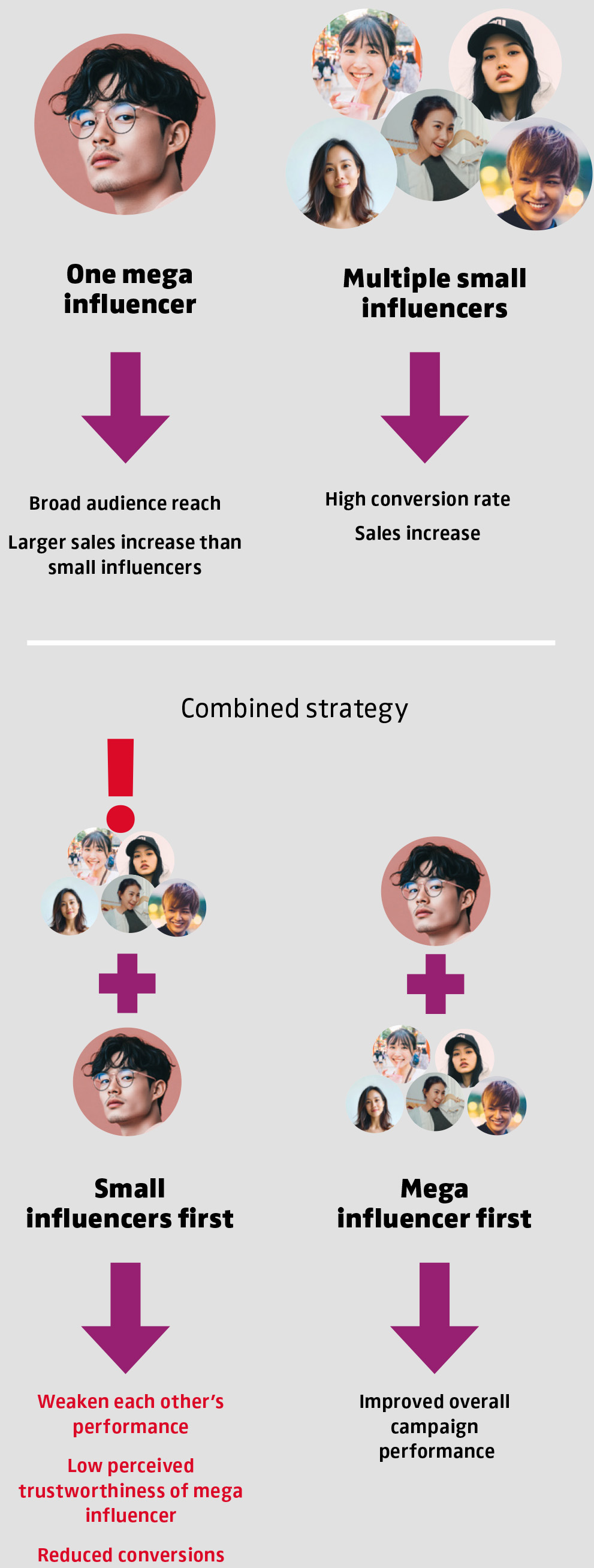
FIGURE 2
Effects of different influencer strategies in livestream commerce
visualspace, MTStock Studio, mar tin-dm, get tyimages; Midjourney AI, prompt GCO
It is crucial for managers to plan the influencer mix strategy carefully. For example, mega influencers can be utilized to create initial awareness and seeding, while smaller influencers can follow up with more personal reviews and detailed experiences to persuade conversions. This is supported by our research findings: Starting with a mega influencer and then introducing smaller influencers can mitigate the negative interaction effect and improve overall campaign performance.
Tailoring livestream campaigns: Match influencers to products
The effectiveness of influencers is not one-size-fits-all. Several key factors, such as price discounts, product categories and the number of products promoted in a single livestream, influence how well an influencer can drive sales. Understanding these dynamics is crucial. Here are some insights brand managers can use to optimize their livestream strategies.
“Combining mega and smaller influencers does not always lead to better results.”
Offer deep price discounts when you collaborate with mega influencers
Price plays a big role in grabbing attention, but the impact varies depending on the influencer’s size. Mega influencers, with their broader reach, see greater success when promoting products with deep discounts. Their audience is drawn to exclusive, great deals. On the other hand, smaller influencers rely more on personal trust and connection. Their followers are less swayed by deep discounts and more influenced by authentic product recommendations. So, if the goal is to boost sales, using mega influencers alongside competitive discounts is a smart move.
Focus on one product category when you collaborate with mega influencers
When it comes to product categories, mega influencers perform best when they specialize. Focusing on one or a few related categories allows them to establish credibility and expertise, which resonates with their audience. Promoting too many diverse products in one livestream can weaken their influence and reduce trust. However, smaller influencers can handle a wider variety without losing effectiveness, as their audience is more forgiving and loyal. For brands, aligning with a mega influencer means aiming for category-specific livestreams to maximize results.
Midjourney AI, prompt GCO
Limit the number of products promoted by mega influencers in a livestream session
Promoting more products in a livestream may seem like a way to attract a broader audience, but it can backfire if it undermines trust in the influencer’s recommendations. Mega influencers, in particular, are expected to curate carefully and offer expertise. Too many promotions can dilute their impact. Smaller influencers, with their closer audience relationships, tend to have more flexibility in this area. Managers should carefully consider how many products to include in a single stream, balancing the desire for visibility with the need to maintain trust and credibility.
In short, tailoring livestream campaigns to the type of influencer and product strategy is essential. Mega influencers thrive on specialization and discounts, while smaller influencers’ advantages are trust and connection. By aligning campaign tactics with these insights, managers can better drive both brand awareness and sales performance.
Key insights for adapting global livestream strategies
For managers looking to replicate the success of livestream commerce in their own markets, here are several key insights:
More is not always better with influencers
Avoid assuming that more influencers will automatically yield better results. Carefully evaluate whether combining mega and smaller influencers fits your product and audience, as it can backfire if consumers question the authenticity of the endorsements. If you do adopt a mix strategy, the order of influencers matters—start with mega influencers to build awareness, then follow up with small influencers for deeper engagement.
Align influencers with your product and livestream design
The effectiveness of influencers varies significantly across price discount levels, product categories and number of products in a livestream. Once you have selected the right influencers, ensure the livestream is designed to maximize their impact. A well-executed livestream tailored to both the influencer and product can significantly boost results.
Simplify the shopping experience
Engage viewers first with entertainment and interactive features, and then make purchasing as seamless as possible. By integrating e-commerce directly into your platform, you can turn high viewer engagement into immediate sales during the livestream.
Optimizing influencer mix strategies for livestream commerce requires a nuanced understanding of the dynamics between mega and smaller influencers. By carefully selecting your influencer strategy, designing tailored campaigns and drawing insights from China’s leading livestream ecosystem, managers can create more effective marketing strategies. Embrace these insights to navigate the complex landscape of influencer marketing and drive success in the digital age.