Have a personal or library account? Click to login
Enhancing the Performance of Pulse Position Coded Excitation for Photoacoustic Imaging by Denoising Autoencoder Cover

Enhancing the Performance of Pulse Position Coded Excitation for Photoacoustic Imaging by Denoising Autoencoder

Open Access
|Jan 2026

Figures & Tables

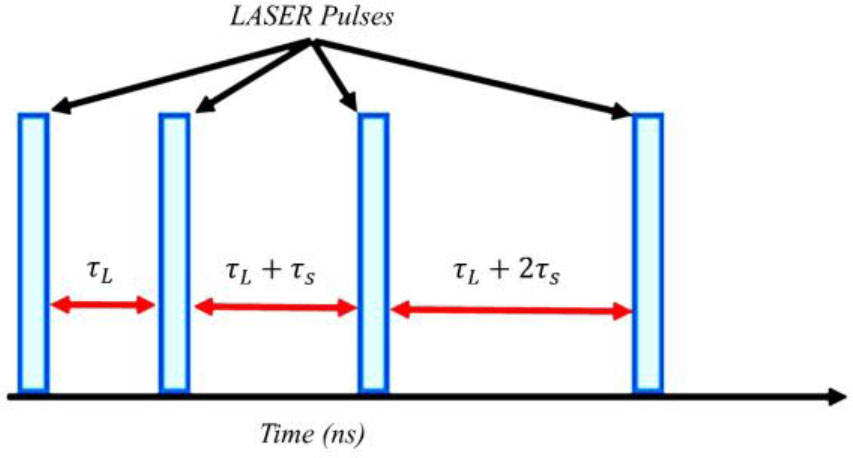
Fig. 1.

Schematic of the transmitted laser pulse sequence for PPM.
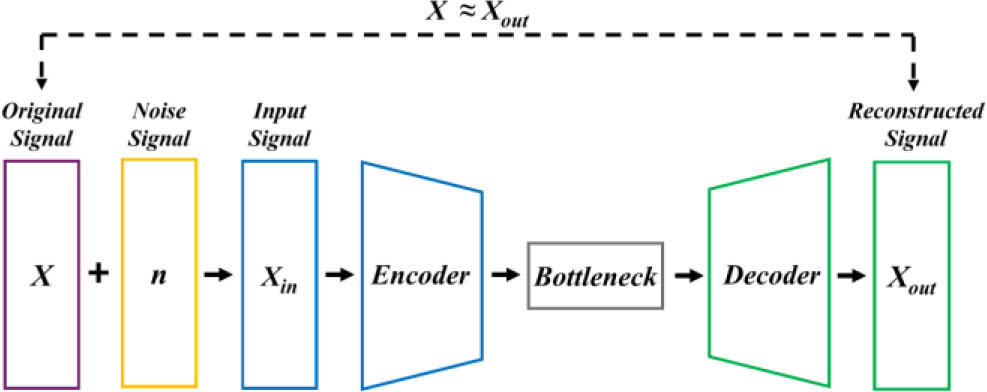

Fig. 2.

The diagram shows the process of the denoising autoencoder.
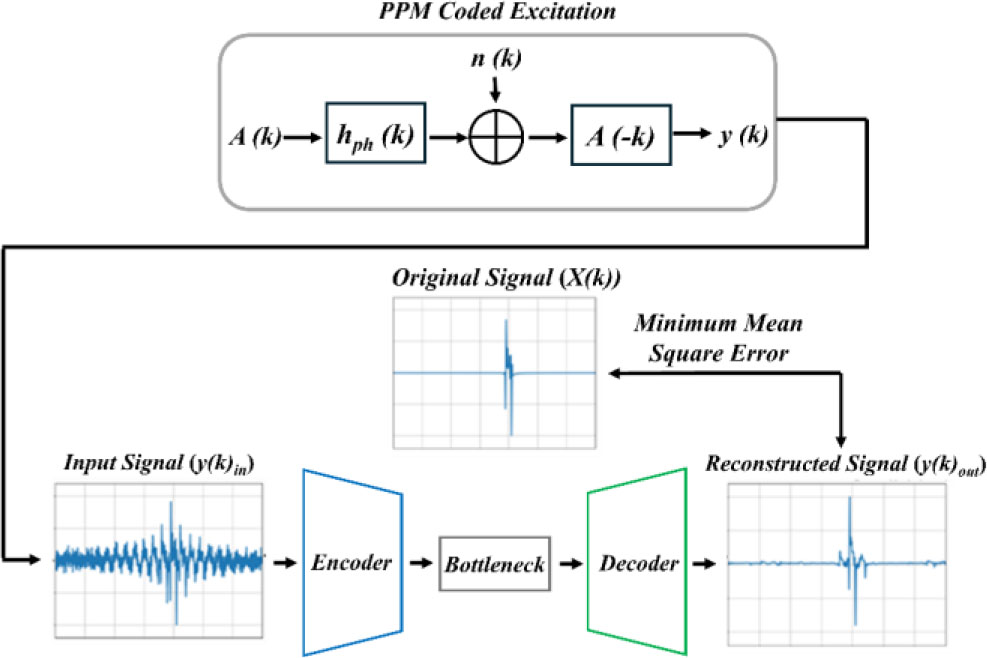

Fig. 3.

The combination of the coded excitation technique and the denoising autoencoder neural network.
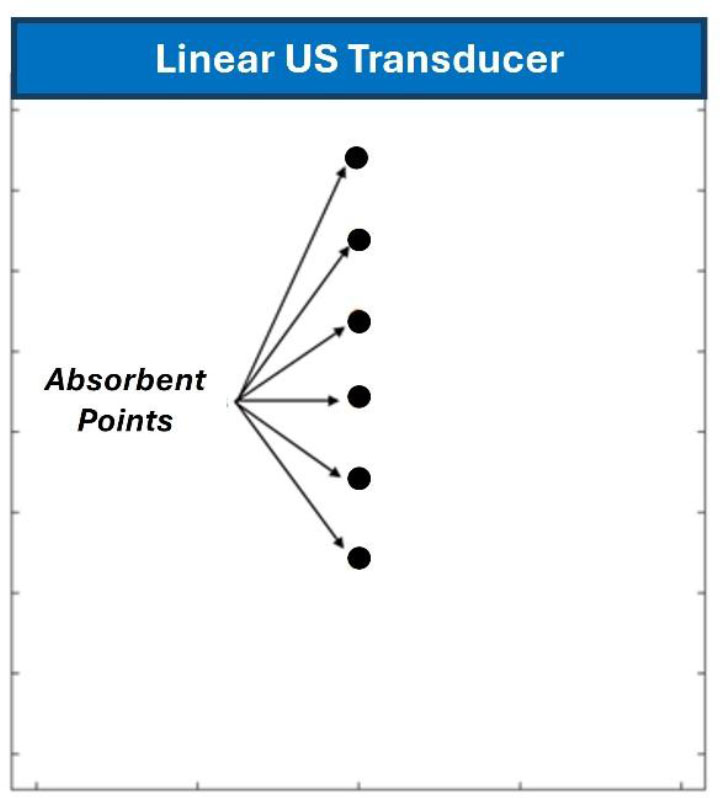

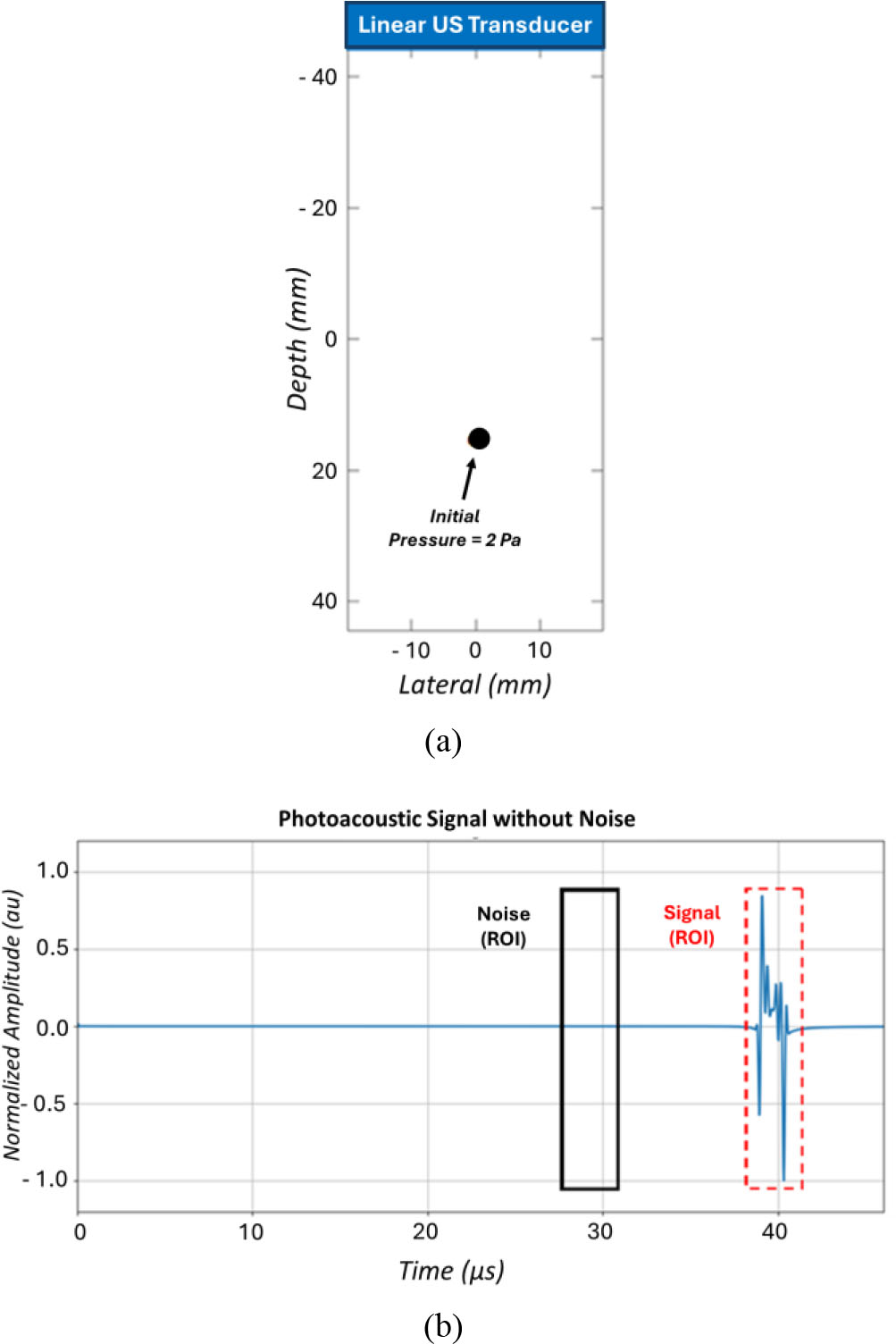
Fig. 4.

The graph shows a sample of the simulation setup.
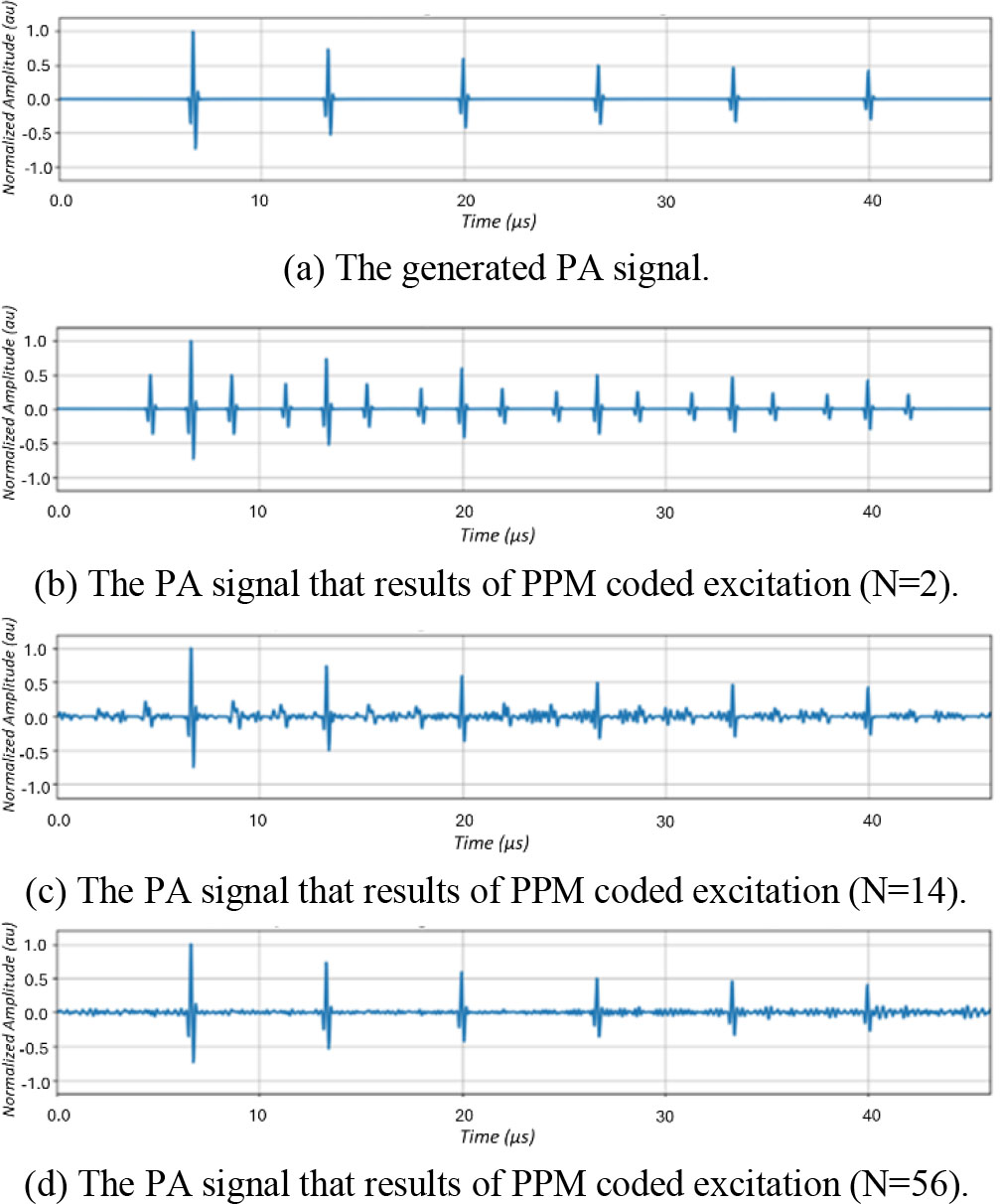

Fig. 5.

(a) The original PA signal, (b) The coded PA signal from PPM with a code length of 2, (c) 14, and (d) 56.
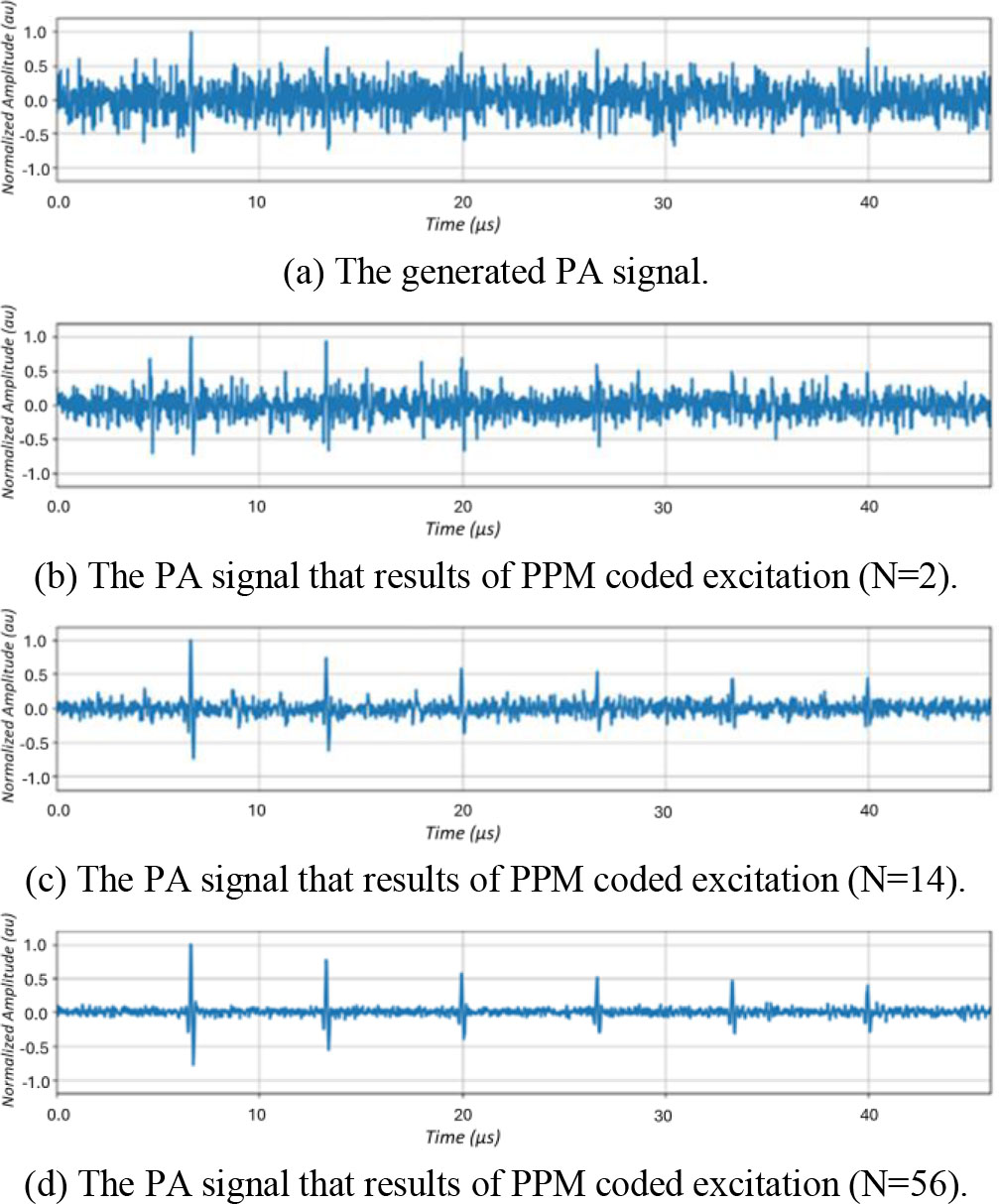

Fig. 6.

(a) Original PA signal with a −10 dB (rms) SNR, (b) Decoded PA signal from PPM-coded signals with code lengths of 2, (c) 14, and (d) 56, after introducing noise to the generated PA sequence (−10 dB SNR (rms)).
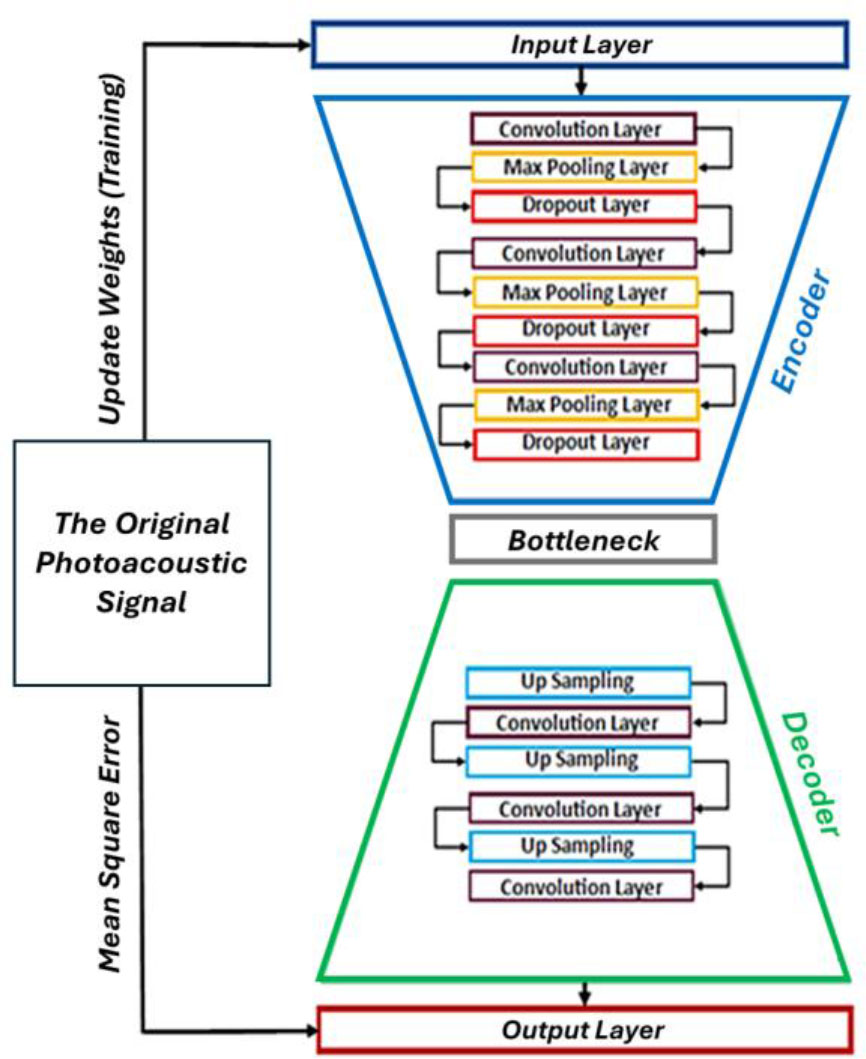

Fig. 7.

The graph illustrates the structure of the denoising autoencoder training process.

Fig. 8.

(a) The first simulation setup for testing PPM with denoising autoencoder models; (b) the ROI of the PA signal used to calculate SNR.
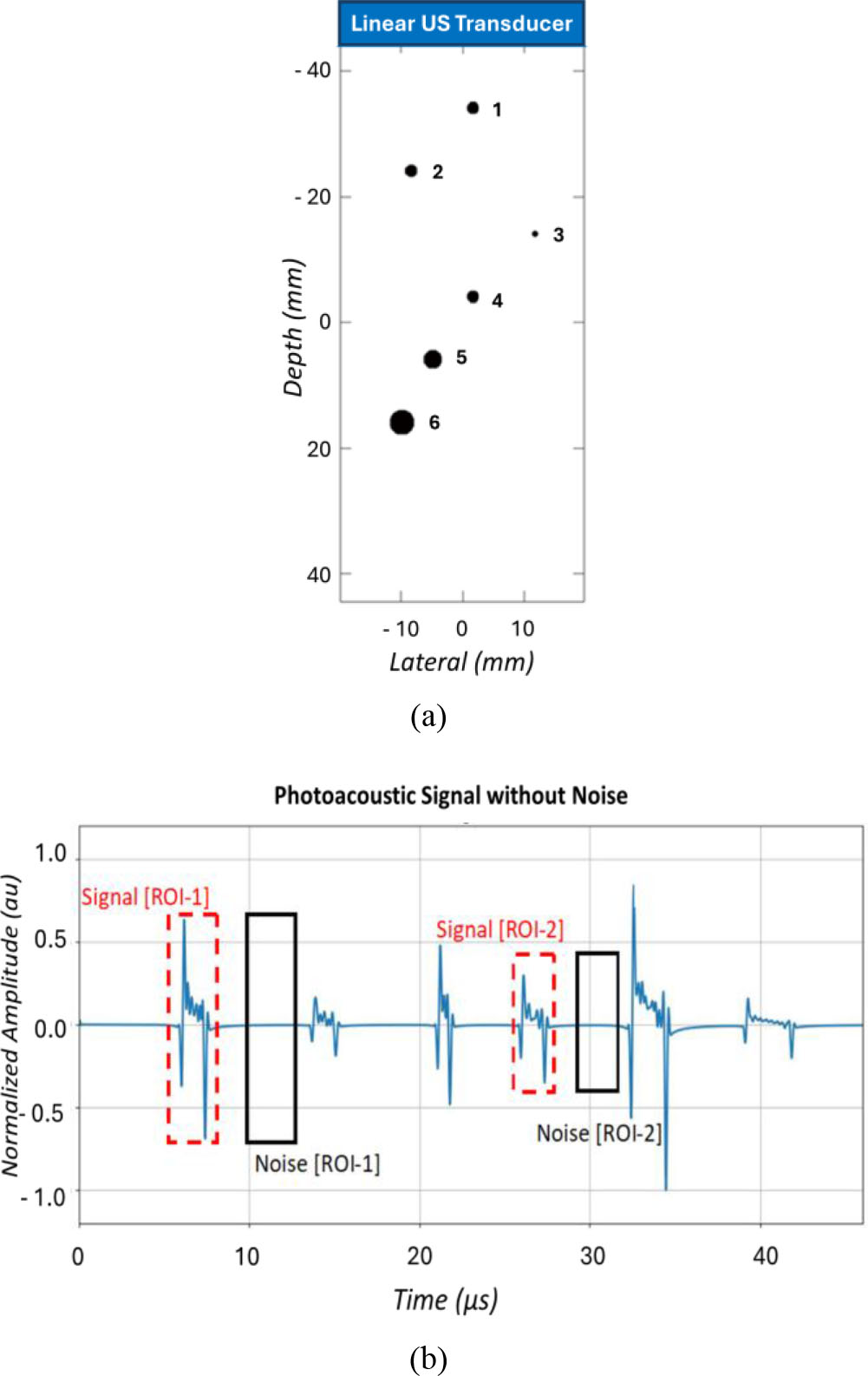

Fig. 9.

(a) The second simulation setup for testing PPM with denoising autoencoder models. (b) The ROIs of the PA signal are used to calculate SNR. The red dashed boxes and black boxes in this figure indicate the signal and noise regions, respectively.

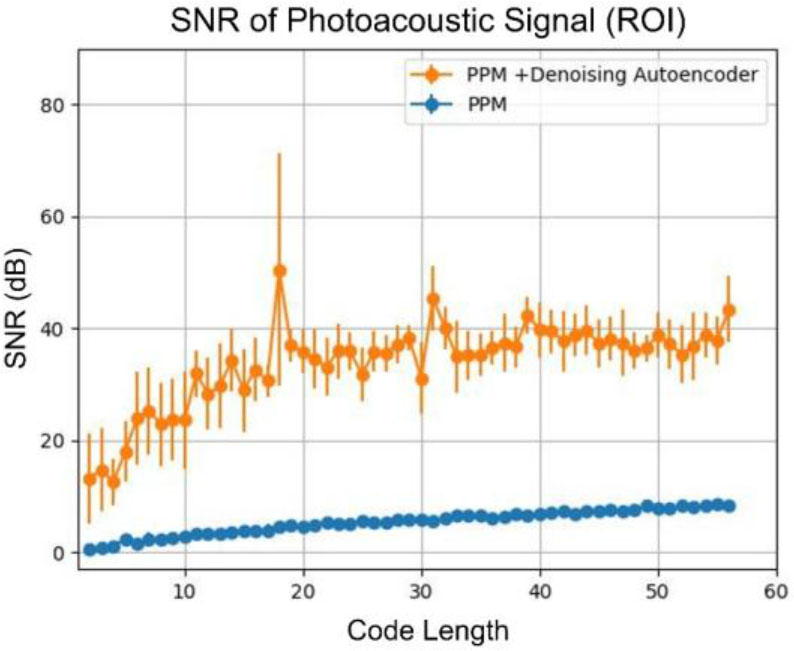
Fig. 10.

The relationship between code length and SNR of PPM and PPM with denoising autoencoder for the signal absorber.
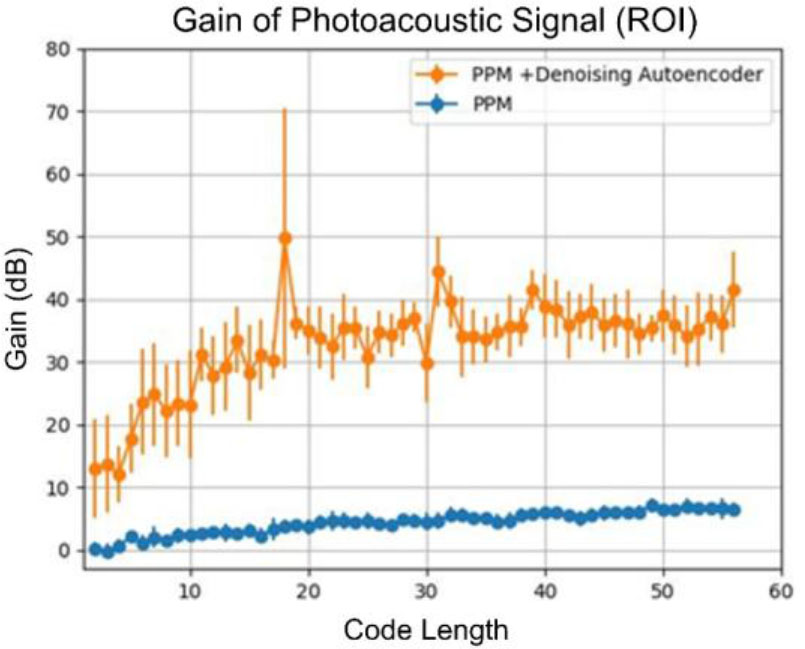

Fig. 11.

The relationship between code length code gain for PPM-coded excitation and PPM-coded excitation with denoising auto-encoder for the signal absorber.
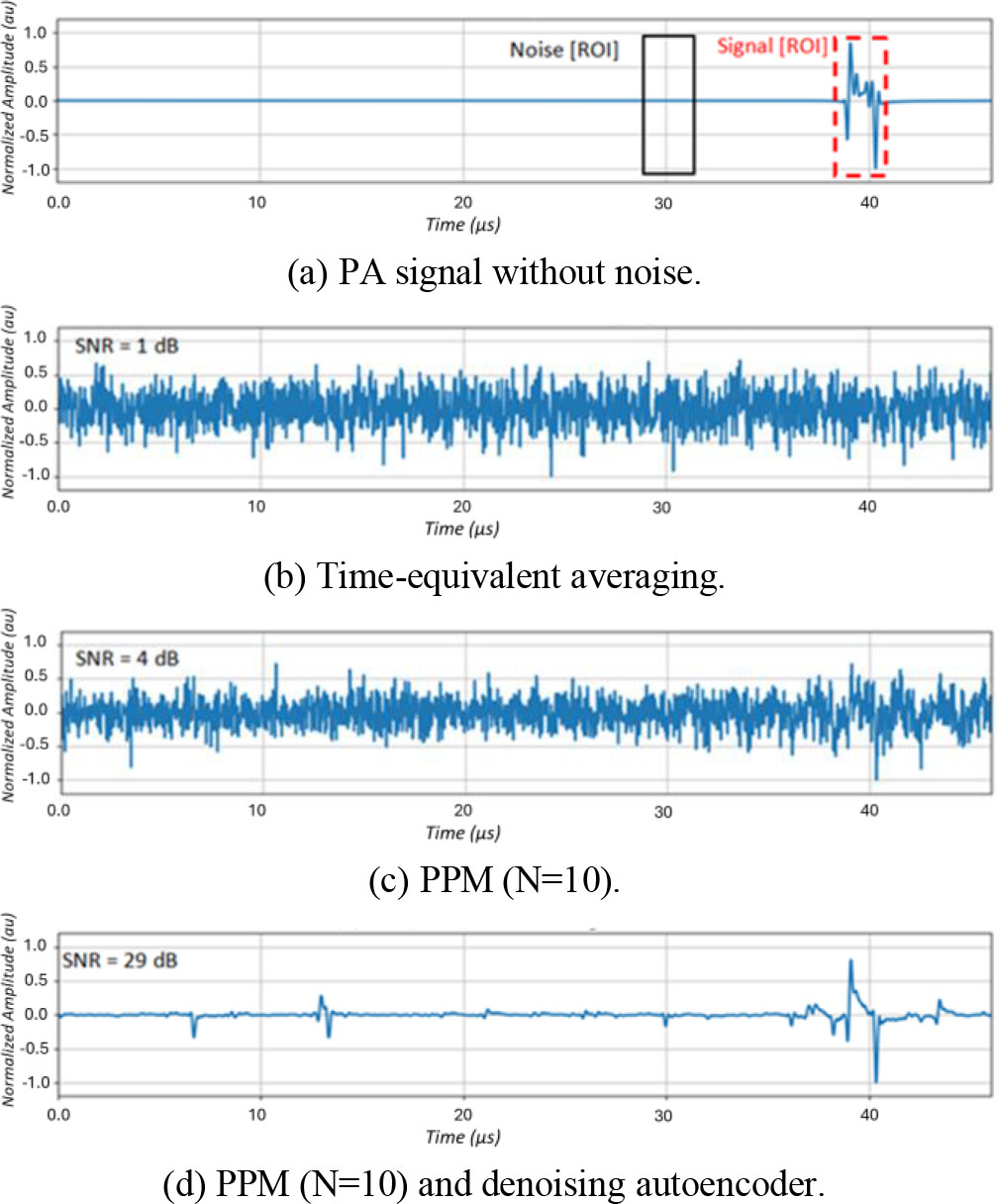

Fig. 12.

(a) The original PA signals, a PA signal resulting from (b) Time-equivalent averaging, (c) PPM (N = 10) coded excitation, and (d) PPM (N = 10) coded excitation with denoising autoencoder.
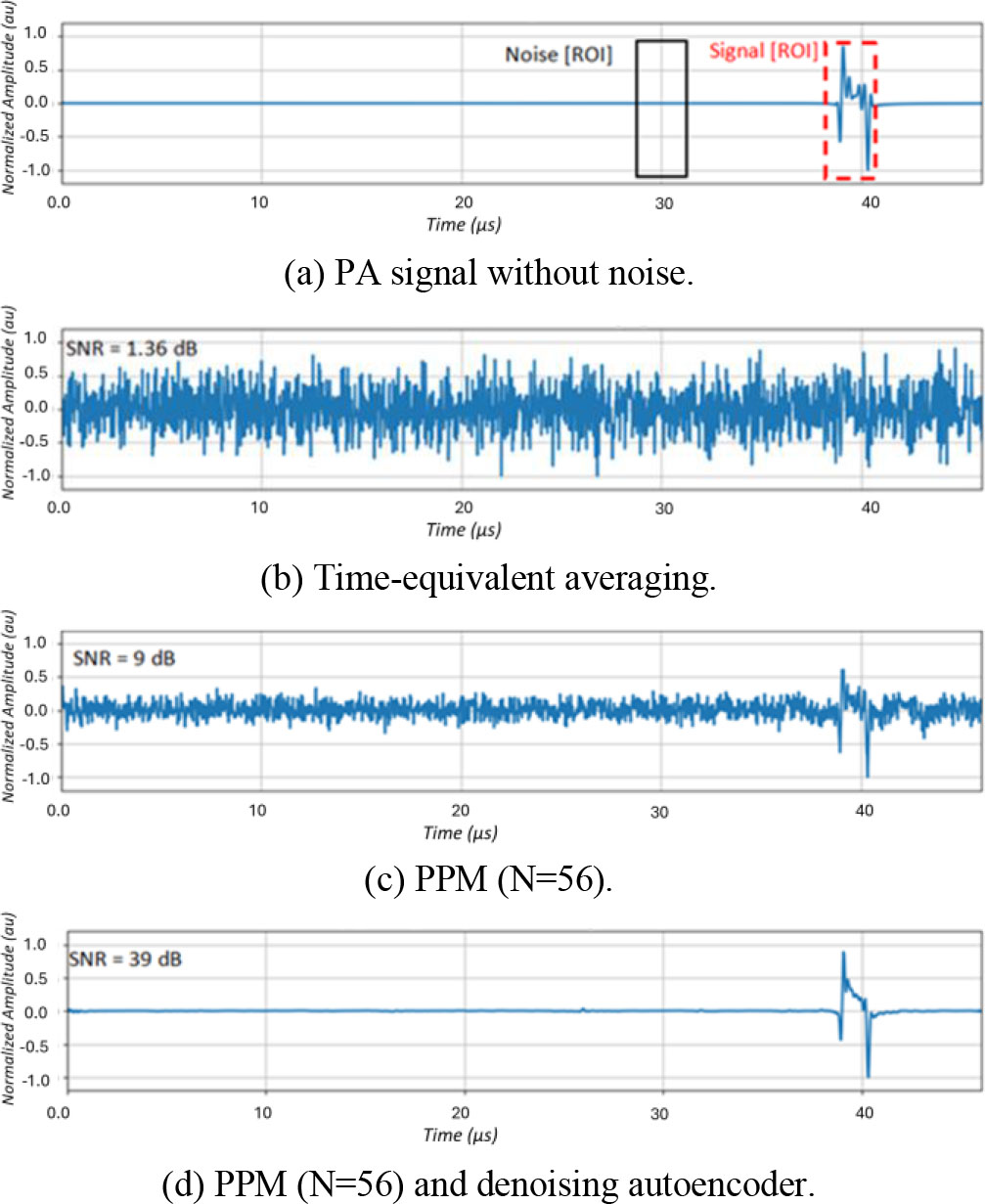

Fig. 13.

(a) The original PA signals, a PA signal resulting from (b) Time-equivalent averaging, (c) PPM (N = 56) coded excitation, and (d) PPM (N = 56) coded excitation with denoising autoencoder.
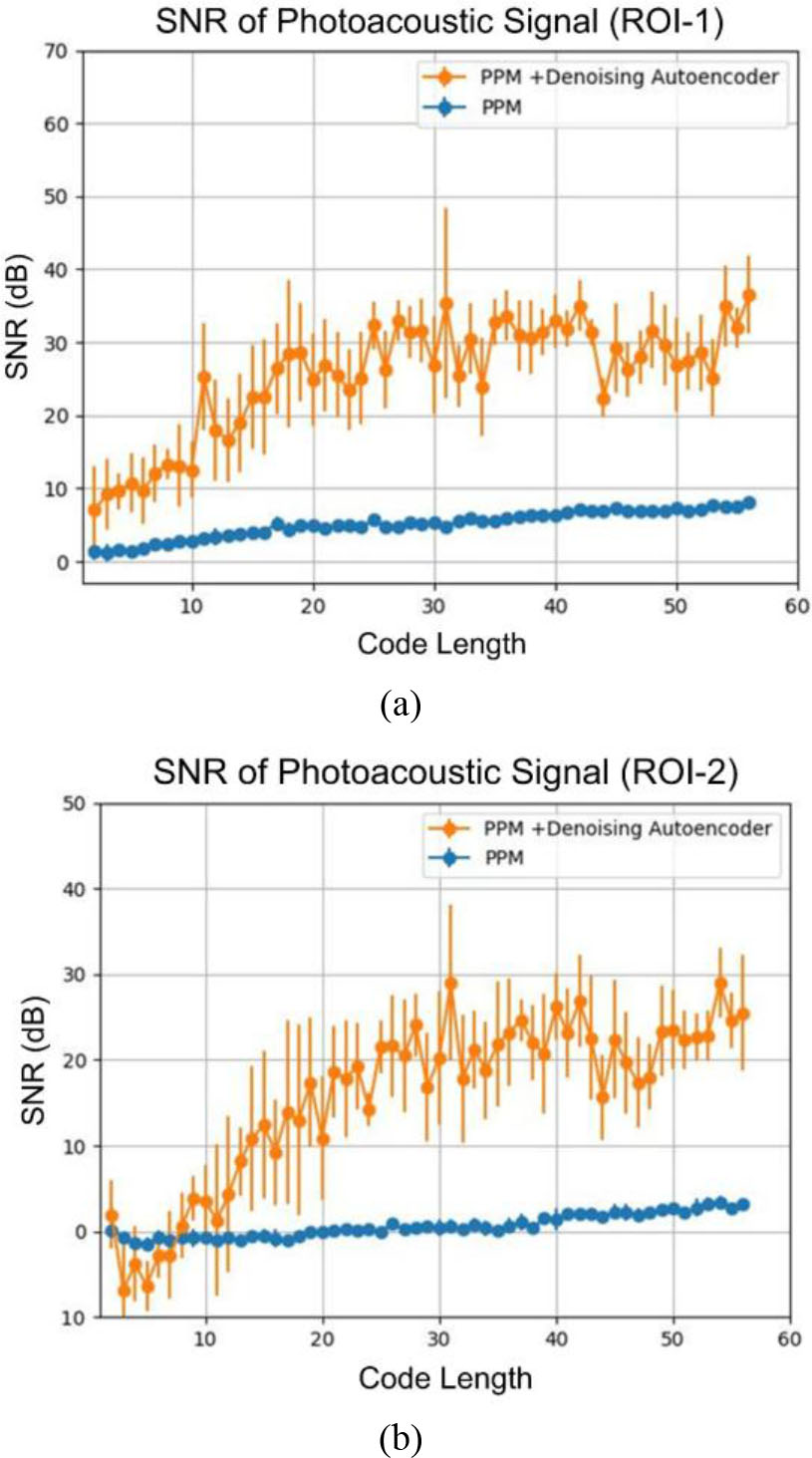

Fig. 14.

The relationship between code length and SNR of PPM and PPM with a denoising autoencoder for (a) ROI-1 and (b) ROI-2.
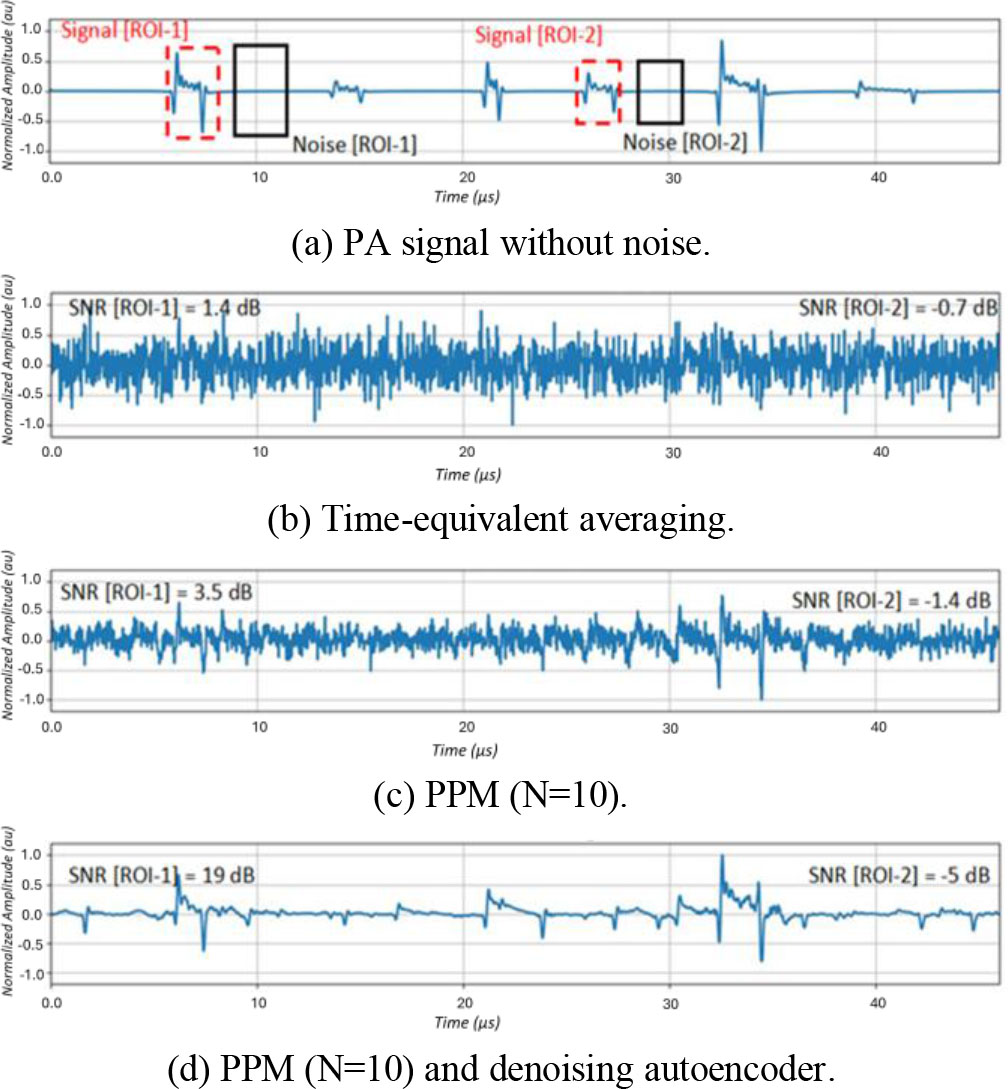

Fig. 15.

(a) Original PA signals; (b) PA signals from time equivalent averaging; (c) PA signals from PPM (N = 10) coded excitation; (d) PA signals from PPM (N = 10) coded excitation with denoising autoencoder.
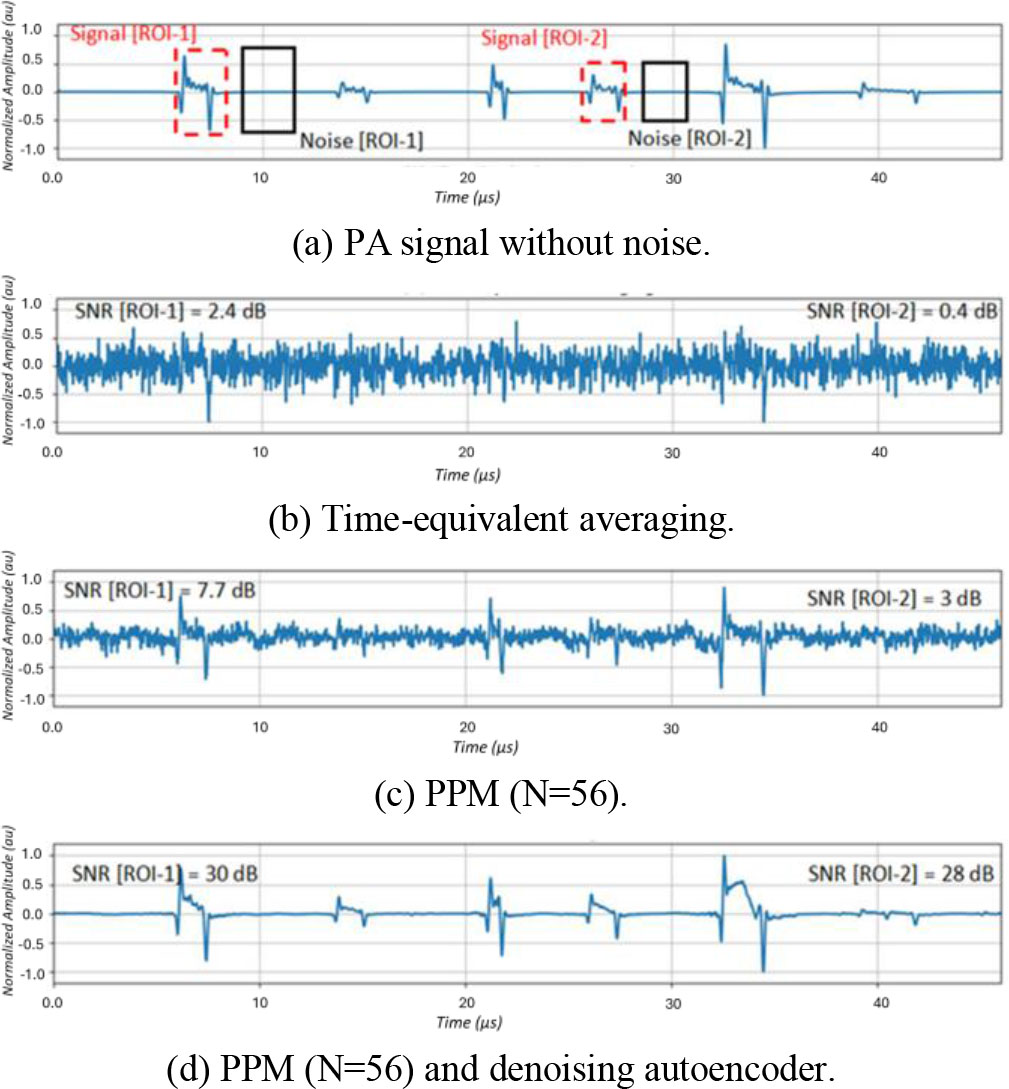

Fig. 16.

(a) Original PA signals; (b) PA signals from time-equivalent averaging; (c) PA signals from PPM (N = 56) coded excitation; (d) PA signals from PPM (N = 56) coded excitation with denoising autoencoder.
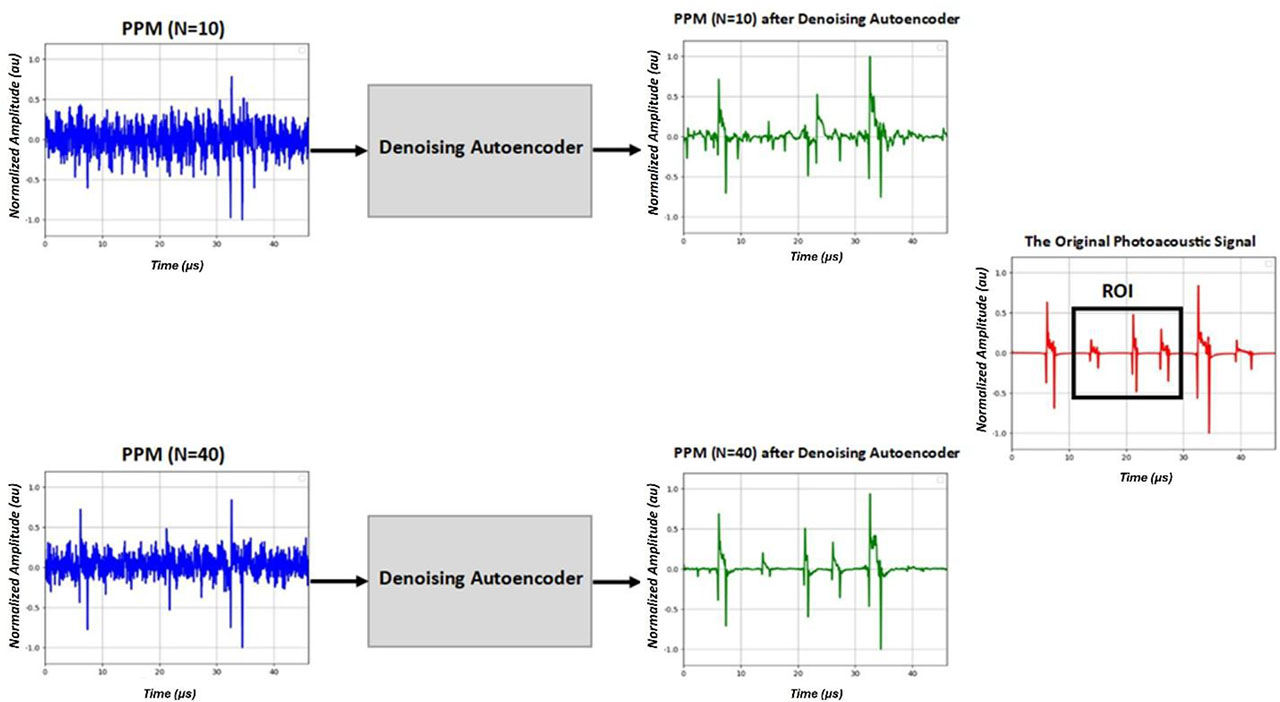

Fig. 17.

Effect of code length on the performance of the denoising autoencoder.

Denoising autoencoder model summary_

Layer (type)Output shapeParam #1
Encoder (sequential)(None, 1, 233, 8)6456
Decoder (sequential)(None, 1, 1864, 1)12209

The specifications for absorbent points_

Absorbent pointRadius [mm]Initial pressure [Pa]
112
211
30.54
412
51.55
621
Language: English
Page range: 1 - 9
Submitted on: Mar 7, 2025
|
Accepted on: Oct 20, 2025
|
Published on: Jan 5, 2026
In partnership with: Paradigm Publishing Services
Publication frequency: Volume open

© 2026 Abdulrhman Alshaya, Suhail Alshahrani, published by Slovak Academy of Sciences, Institute of Measurement Science
This work is licensed under the Creative Commons Attribution-NonCommercial-NoDerivatives 4.0 License.