
1. Introduction
Digestion is the process by which the body breaks down complex food particles into simpler substances, which facilitates the absorption of nutrients in the human body [1]. Changes in digestive activity can lead to digestive disorders such as dyspepsia, acid reflux, nausea, and diarrhea in humans [2]. Abnormalities of gastric arrhythmias can be broadly classified as bradygastria and tachygastria. Various techniques are used to diagnose digestive disorders, such as electrogastrography (EGG), colonoscopy, endoscopic retrograde cholangio pancreatography (ERCP), etc. [3]. However, most of these techniques are invasive or semi-invasive and may cause discomfort in subjects undergoing these procedures.
Non-invasive surface electrogastrography measures the electrical impulses generated by the muscles associated with the stomach due to the physiological activity of digestion [4], [5]. Electrogastrograms are obtained by attaching cutaneous electrodes to specific areas of the abdomen to record the electrical impulses of the human abdominal muscles. Gopu et al. (2010) [2] used surface or cutaneous electrodes to record EGGs in normal subjects and patients with digestive system issues such as vomiting, dyspepsia, nausea, etc. The recorded EGG signals were pre-processed to remove noise from the signal. The authors analyzed the variation of frequencies in preprandial and postprandial EGG in patients with ulcers and dyspepsia. Electrogastrography can be used to diagnose various digestive problems such as functional dyspepsia, stomach ulcers and gastroesophageal reflux diseases [6]. Electrogastrograms can be analyzed with their peak frequency, which is used to diagnose digestive disorders. This is in the range of 0.033–0.066 Hz for normal subjects, 0.0166–0.033 Hz for bradygastria cases and 0.066–0.166 Hz for tachygastria cases [7].
Alagumariappan et al. (2020) [8] have demonstrated the utility of extracting and selecting informational features of EGG signals for the diagnosis of diabetes. The authors have demonstrated that Hausdorff’s box-counting and Maragos’ fractal dimension have a strong relationship with the mobility of both normal and diabetic electrogastrograms. Raihan et al. (2020) [9] used k-nearest neighbor, support vector machines and logistic regression techniques to classify the normogastric, bradygastric, and tachygastric EGG signals based on their dominant frequency. Amri et al. (2021) [10] demonstrated the diagnostic ability of electrogastrograms for digestive abnormalities. The authors have used feature extraction and machine learning algorithms to classify electrogastrograms in fasting and postprandial states. The authors have demonstrated that the SVM classifier has higher accuracy compared to the ANN classifier. Although, being a non-invasive method, electrogastrography requires the acquisition of EGG signals over a significant period of ten minutes to capture digestive activity. In addition, the subject must remain still during the entire EGG recording and must not move, as this can lead to movement artifacts [7]. The procedure also requires technical skills in electrode placement, as the electrodes must be positioned according to standard electrode placement procedures [8]. Therefore, obtaining EGG signals from children and geriatric patients is a challenging task.
Infrared thermal (IRT) camera is a non-contact and noninvasive imaging technique for measuring the temperature profile of a structure under investigation, using the infrared region of the electromagnetic spectrum [11]. In the field of medical diagnostics, various ailments, such as vascular disorders, dry eye syndrome, rheumatoid arthritis, breast cancer, etc. can be diagnosed with the help of thermographic images [12]–[13].
Etehadtavakol and Emami (2017) [11] have discussed the evaluation of digestive disorders using infrared imaging. In addition, the authors outlined the potential of using infrared imaging to evaluate digestive diseases such as Crohn’s disease, diverticulitis, and irritable bowel syndrome. In addition, the authors suggest that infrared imaging techniques can be used to identify areas in body tissue where there is abnormal chemical and blood vessel activity. Ramirez-GarciaLuna et al. (2020) [14] worked on diagnosing acute appendicitis in adults using infrared thermal imaging. The authors compared the skin temperatures of the right and left lower abdominal quadrants of healthy subjects and patients with appendicitis and concluded that the IRT technique has a sensitivity of 91 % and a specificity of 56 % and can be used for the diagnosis of appendicitis with an improvement in specificity. Ozdil et al. (2024) [15] analyzed infrared thermal images for the classification of non-fatty liver and fatty liver thermal images using convolutional neural network (CNN) architectures, and texture analysis methods were used in feature extraction from thermal images. Barson et al. (2020) [16] discussed the detection of inflammatory intra-abdominal pathology in infants using IRT. Abdominal pathologies were analyzed by selecting the surgical region of interest (ROI) for abdominal inflammation. The authors determined and compared the difference in temperature distribution of inflammatory regions to the surrounding skin.
Aydemir et al. (2021) [17] discussed the diagnosis of acute appendicitis using infrared thermal imaging by analyzing the temperature differences in the images of both lower quadrants of the abdomen and sternum of healthy and sick volunteers. Kumar et al. (2011) [18] discussed three different image processing methods for the detection of abnormal diseases in foot thermal images. The authors concluded that the histogram equalization method performs well on thermal images compared to other conventional methods.
Biomedical signals and images are highly complex and have a high information content that is well correlated with the structure and functions of physiological processes. The quantification of information in bio signals and images helps to analyze normal and abnormal conditions [19]. Entropy is a measure to quantify the uncertainty, disorder and information content of signals [20]. Various entropy methods such as Tsallis entropy, Rényi entropy, Shannon entropy and Kapur’s entropy have been used to analyze the properties of bio signals and images. Bromiley et al. (2004) [21] have discussed the utility of entropy measures and derived a correlation between the Rényi entropy and information content. These measures of complexity can be widely used in biomedical applications such as pathology detection and decision support systems for signals and images [22]–[23].
The purpose of this study is to determine the correlation between the information content of electrogastrograms and abdominal IRT images of normal and bradygastric subjects, to support the hypothesis that abdominal IRT images contain diagnostic information for the assessment of digestive pathologies.
2. Methodology
The study was conducted on the MIT Campus and at Gleneagles Health City, Chennai. Ethical clearance was obtained from the Institutional Ethics Committee (IEC) of Gleneagles Health City, Chennai. On site, the study procedure was explained to each participant and informed consent was obtained from each individual before the procedures were performed. The study participants included both female and male participants in the age group of twenty to fifty years. In total, the study procedures were performed on 60 participants (30 bradygastric and 30 normal individuals). EGG signals were recorded using a noninvasive three-electrode EGG measurement system developed with the Instrumentation Amplifier (AD624), and Infrared Thermographic images of the abdomen of each participant were captured using an IR camera (Model: Fluke TiX580).
A. Recording and preprocessing of electrogastrograms
Three conductive solid gel Ag/AgCl surface electrodes with a 19 mm diameter were used to record the EGG signals. The signals were recorded with the participants in the supine position without any movement, as shown in Fig. 1. Two of the three electrodes were placed 5 cm apart on the inner side (mid corpus) and the outer surface (fundus) of the stomach, respectively. The reference electrode is positioned away from the stomach area for isolation [8]. In addition, the IC AD624 instrumentation amplifier was used to amplify the recorded EGG signals. These amplified EGG signals were recorded on a PC installed with LABVIEW (V14.0.1) and an NI USB-6009 data acquisition card was used. The three-electrode system was used to record the electrogastrograms of sixty participants for a minimum of 10 minutes.
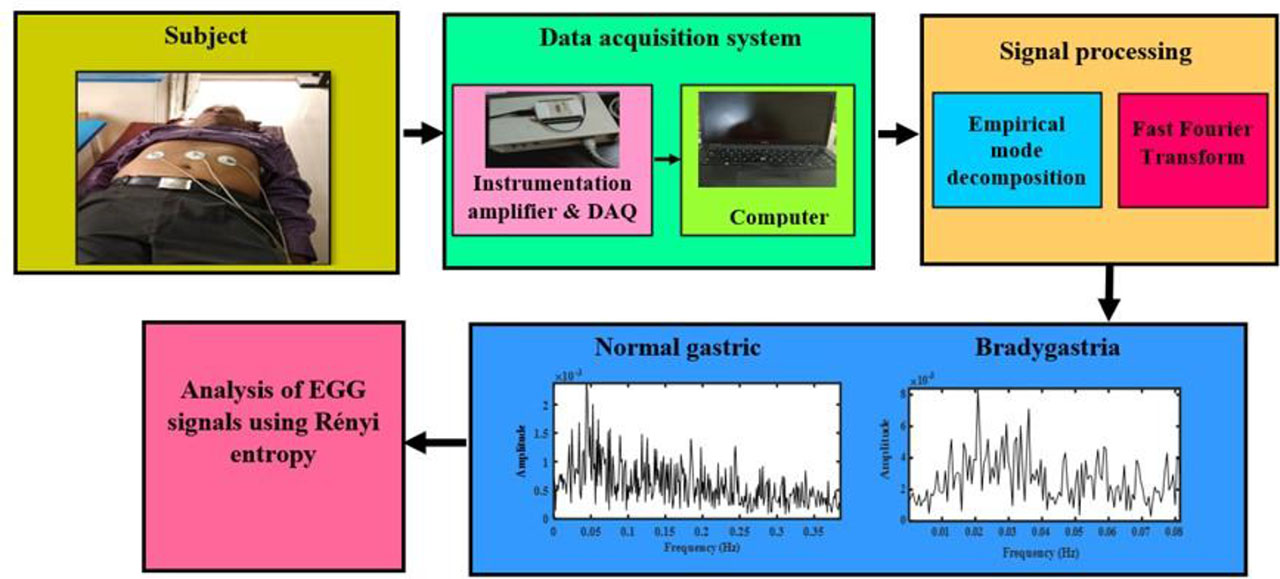
Fig. 1.
The process of recording the EGG signals from normal and bradygastric participants.
The EGG signals were recorded with a sample time of 0.1 seconds, and the collected signals were processed using preprocessing techniques such as detrending and normalization of the EGG signals. In addition, empirical mode decomposition (EMD) was performed on the detrended signals to obtain the intrinsic mode functions (IMF), to remove noise frequencies from the recorded EGG signals [24]. In this work, filtered EGG signals are obtained by eliminating the IMFs containing ultralow frequency components of less than 1 cpm and using the remaining IMFs. In addition, the peak frequencies of the normal and bradygastric electrogastrograms were analyzed using Fast Fourier Transform (FFT) [25].
B. Recording and preprocessing of IRT images of the abdomen
In this study, the Fluke Tix580 thermal camera was used to record the abdominal infrared thermal image of the subjects. The IR camera used provides 4x pixel data with on-camera Super Resolution to create images with a resolution of 1280×960. The emissivity value of the thermal images was set to 0.98 and the images were captured taking into account room temperature and humidity. The parameters of the IR camera were set prior to image acquisition to compensate for external or environmental factors [26]. The TiX580 has a thermal sensitivity of ≤0.05° C at 30° C (50 mK) and a temperature measurement range of −20° C to +800° C.
For each individual, the thermal image and the electrogastrograms were recorded simultaneously in the supine position, two hours after breakfast. The images were recorded after micturition. In addition, the camera was positioned approximately 0.5 meters away from the subjects to capture the entire abdominal region. Fig. 2 shows the block diagram of the image acquisition with the IR thermography camera. In the captured images, the ROI around the abdominal region was manually selected based on the guidelines of clinical experts. The filtering process is avoided in the selected region, as this could lead to a loss of the diagnostic information in the thermal images. The abdominal region was selected as the ROI. In addition, the images were resized to 512×512 for further analysis.
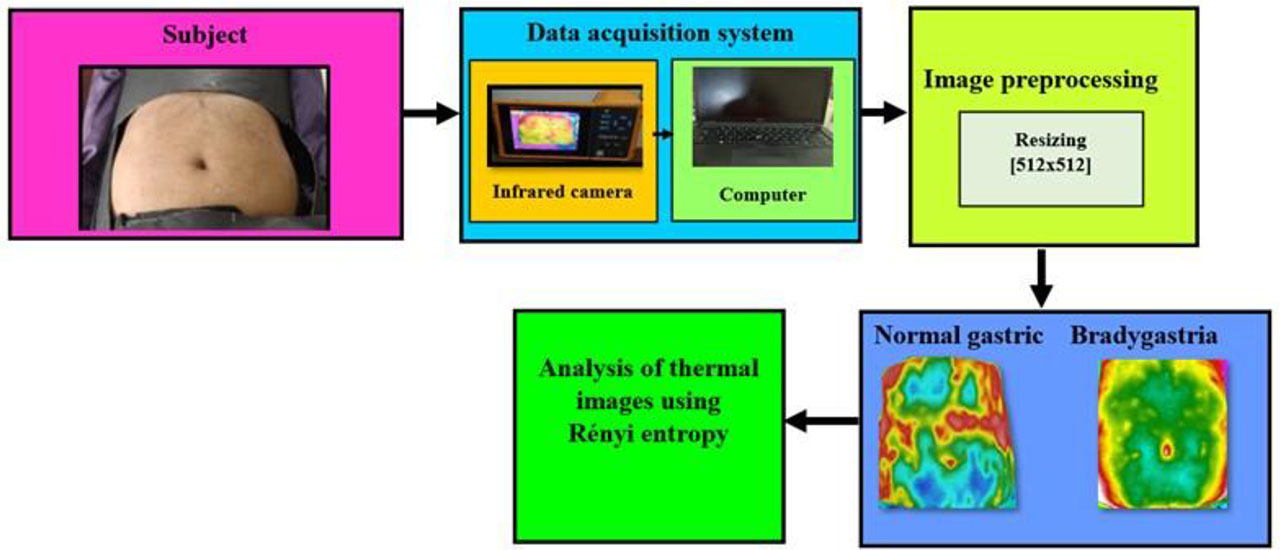
Fig. 2.
The process of IRT image acquisition.
C. Quantification of information in EGG signals and IRT images using Rényi entropy
Since entropy is a measure of the disorder associated with a system, it can be used to quantify the information content (IC) of a system [27]–[28]. Information theory, statistical mechanics, biological signal processing, mathematical linguistics and other scientific and technical fields use entropy as a tool to analyze disorder, complexity, and information [20]. In accordance with probability standards, Alfred Rényi proposed the definition of an information measure which conserves additivity for independent occurrences. For a given sample probability pj, the Rényi entropy H(α) is given by [29]:
where α is the order of the entropy measure. In this work, the Rényi entropy is used to analyze the IC of the thermography images and electrogastrograms collected from each participant. The Rényi entropy is calculated from the preprocessed images and electrogastrograms for different values of α ranging from 0.2 to 0.7. The variations of Rényi entropy of the IRT images and electrogastrograms were further analyzed. Finally, the correlation between the Rényi entropy of the electrogastrograms and the IRT images was determined using the Pearson correlation coefficient.3. Results and discussion
Fig. 3(a) and Fig. 3(b) shows a typical normalized electrogastrogram recorded with the three-electrode system over a period of 10 minutes and its FFT plot, respectively. It can be seen that the peak frequency of this signal is 0.05 Hz and the peak frequency of a normal EGG signal is in the range of 0.033–0.066 Hz. Similarly, Fig. 4(a) and Fig. 4(b) shows a typical normalized electrogastrogram whose peak frequency is 0.02 Hz and thus the participant is bradygastric as the peak frequency of the bradygastric signal is between 0.0166–0.033 Hz.
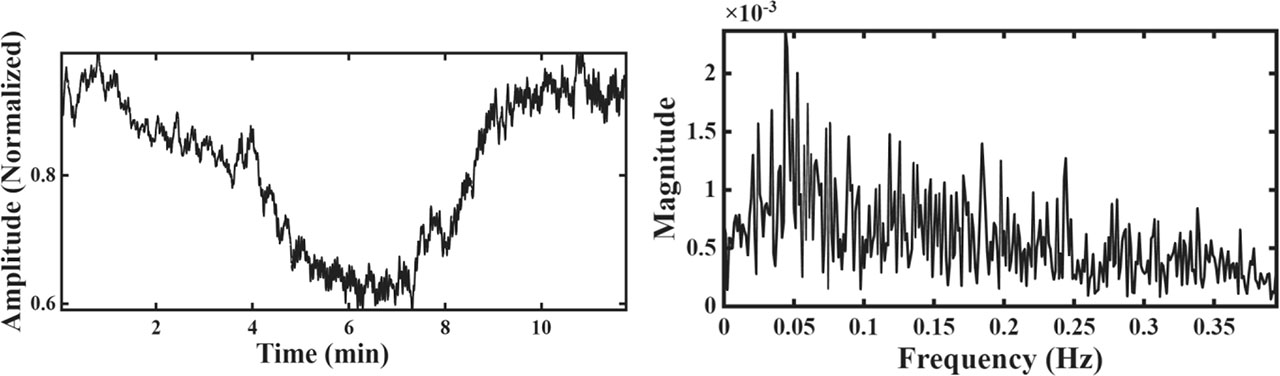
Fig. 3.
(a) Typical normalized electrogastrogram of a normal participant and (b) its FFT.
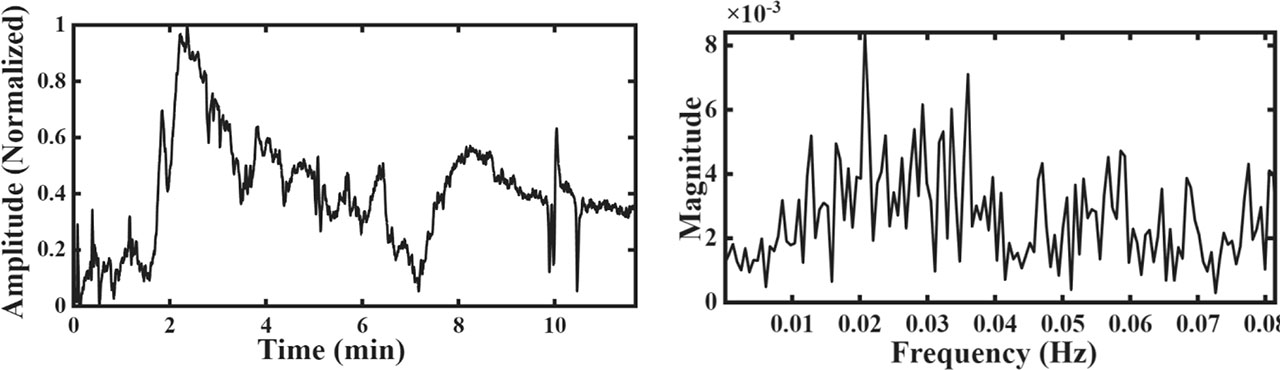
Fig. 4.
(a) Typical normalized electrogastrogram of a bradygastric participant and (b) its FFT.
Fig. 5 and Fig. 6 show typical infrared thermal images recorded from the abdomen of normal and bradygastric subjects, respectively. In the recorded IRT images, an average temperature range of 96.8.2 ± 2° F and 93.2 ± 2° F, is observed in normal and bradygastric subjects, respectively.
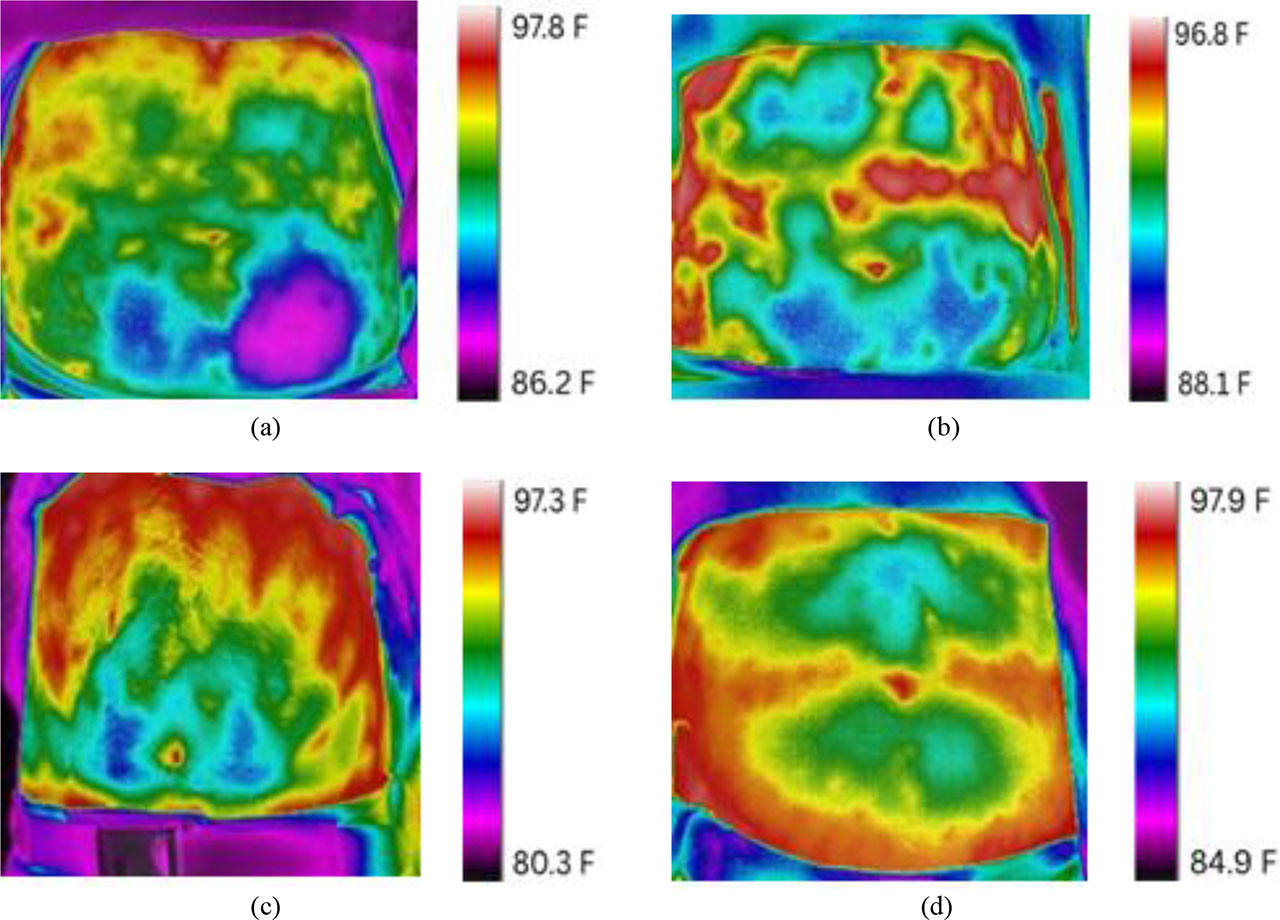
Fig. 5.
Typical abdominal thermal images of normal participants.
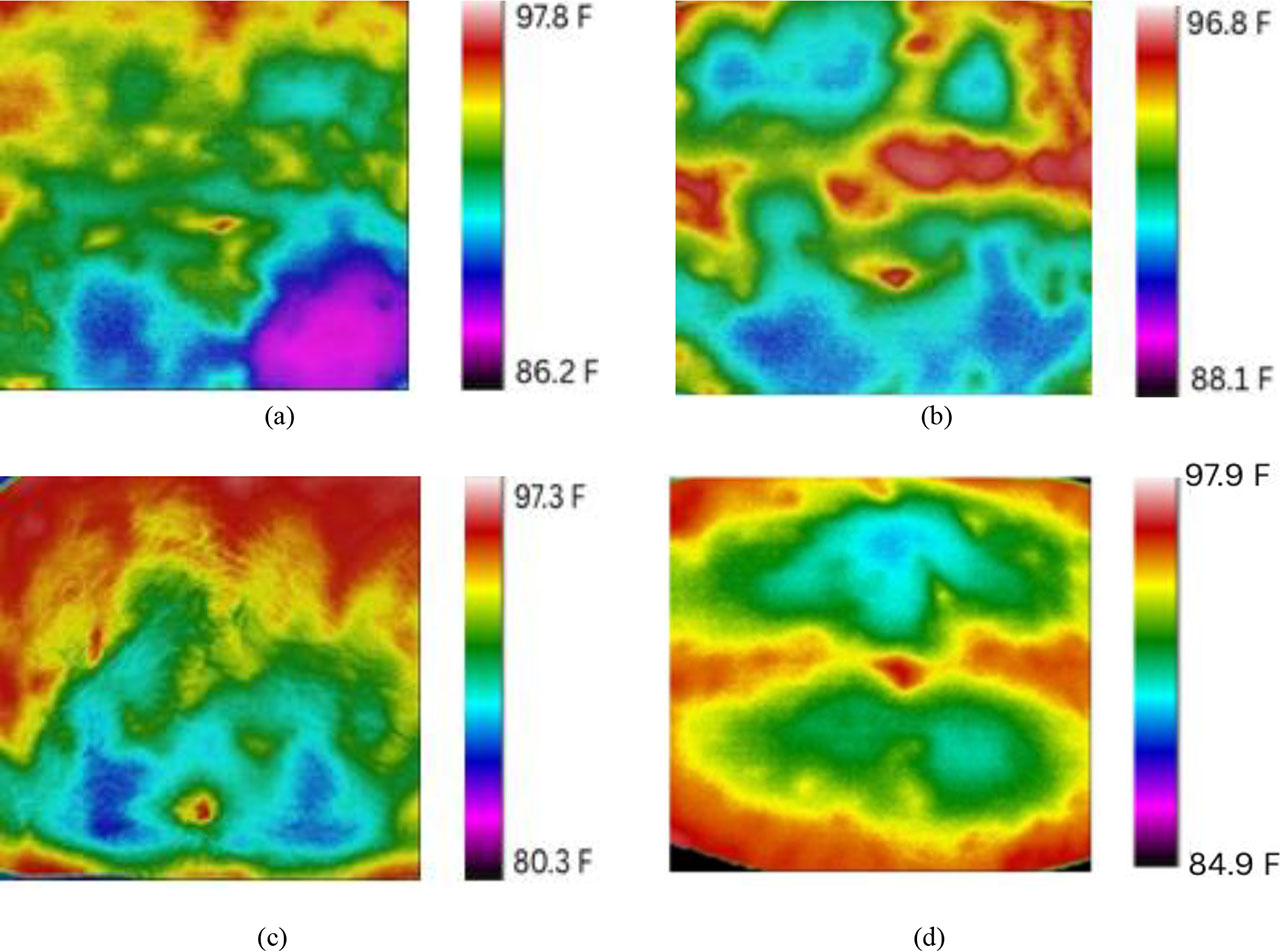
Fig. 6.
Pre-processed thermal images of normal participants.
Fig. 7 and Fig. 8 show the typical pre-processed IRT images of normal and bradygastric subjects, respectively, subjected to background subtraction and resizing.
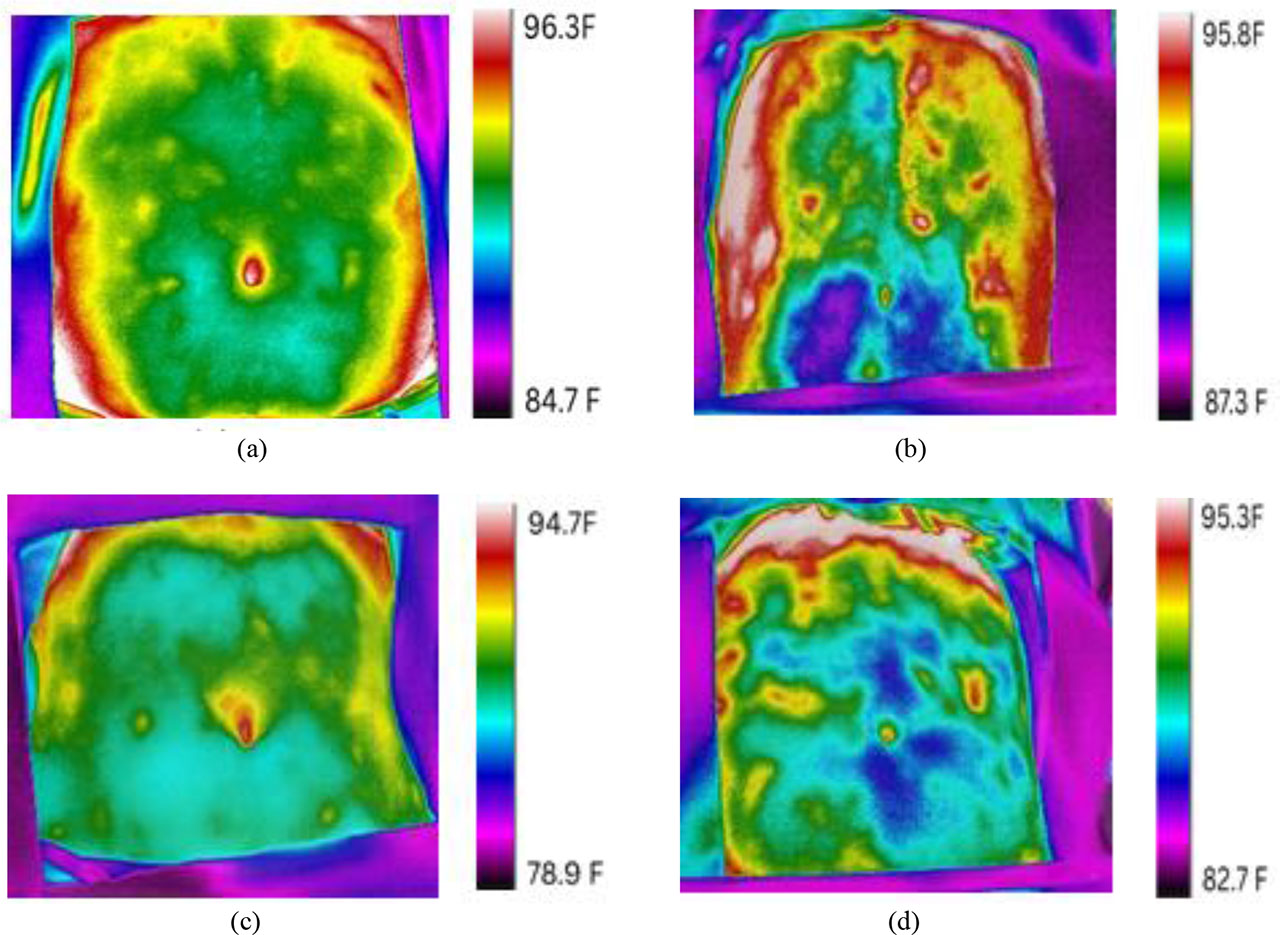
Fig. 7.
Typical abdominal thermal images of bradygastric participants.
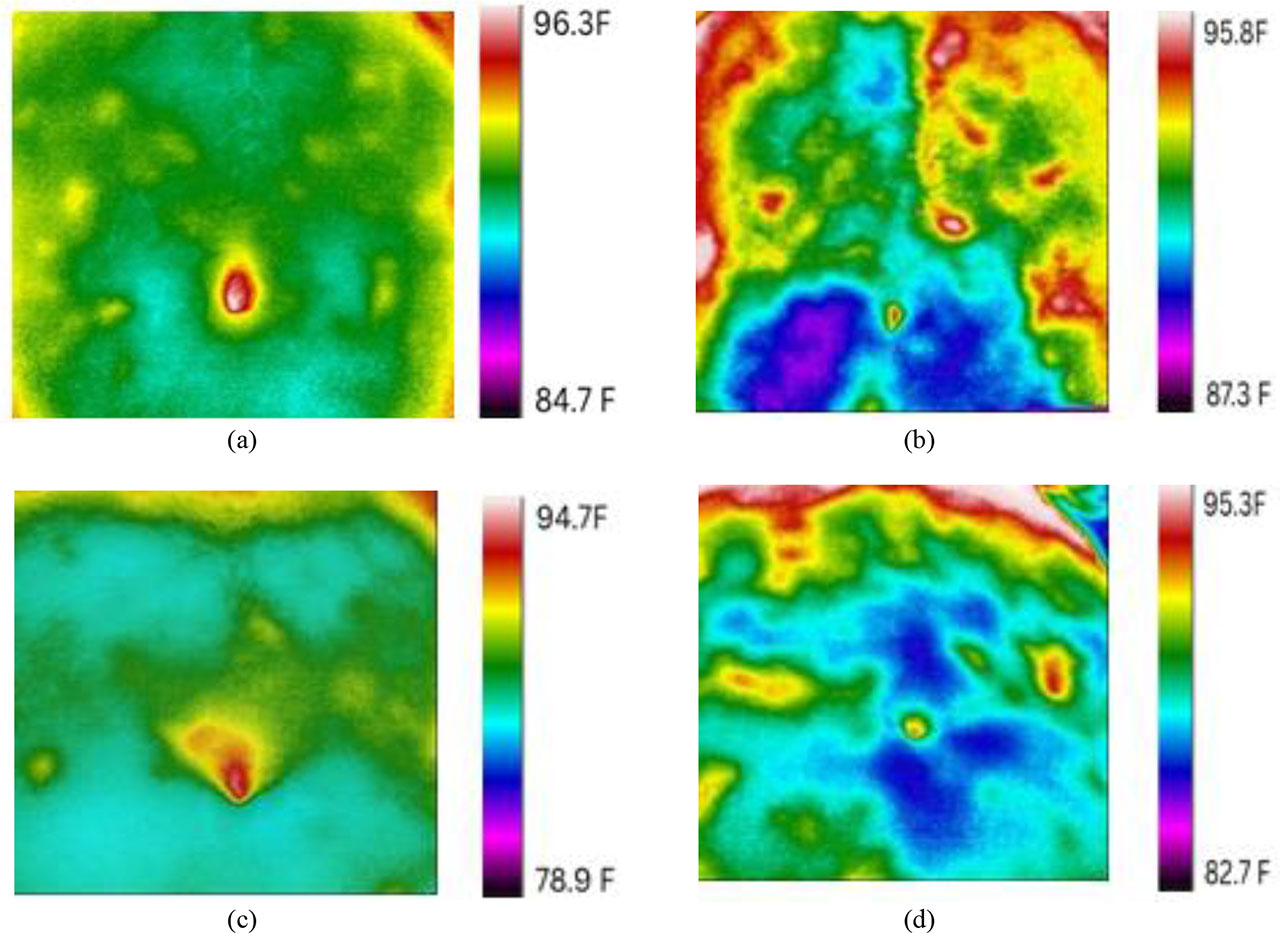
Fig. 8.
Pre-processed thermal images of bradygastric participants.
The Rényi entropy of electrogastrograms and IRT images is calculated to quantify the information. Fig. 9(a) shows the variation of the average Rényi entropy of IRT images and electrogastrograms for normal subjects, as a function of the order of entropy ‘α’, ranging from 0.2 to 0.7. For normal subjects, it can be observed that when α = 0.2, an average entropy value of 4.16 and 7.78 is obtained for electrogastrograms and IRT images, respectively. However, when α increases from 0.2 to 0.7, the entropy of both signals and images decreases nonlinearly. Fig. 9(b) shows the variation of the average Rényi entropy of IRT images and electrogastrograms recorded from bradygastric subjects, as a function of α in the range of 0.2 to 0.7. For bradygastric electrogastrograms, an average entropy value of 3.96 is observed when α = 0.2. For IRT images of bradygastric subjects, an average entropy value of 7.7211 is obtained when α = 0.2. When α increases from 0.2 to 0.7, it is observed that the entropy of both electrogastrograms and IRT images of bradygastric subjects decreases in a similar trend as that of normal subjects. The variation in entropy values, which represents the information content of electrogastrograms and IRT images of normal and bradygastric subjects, also follows the same trend and shows a high correlation.
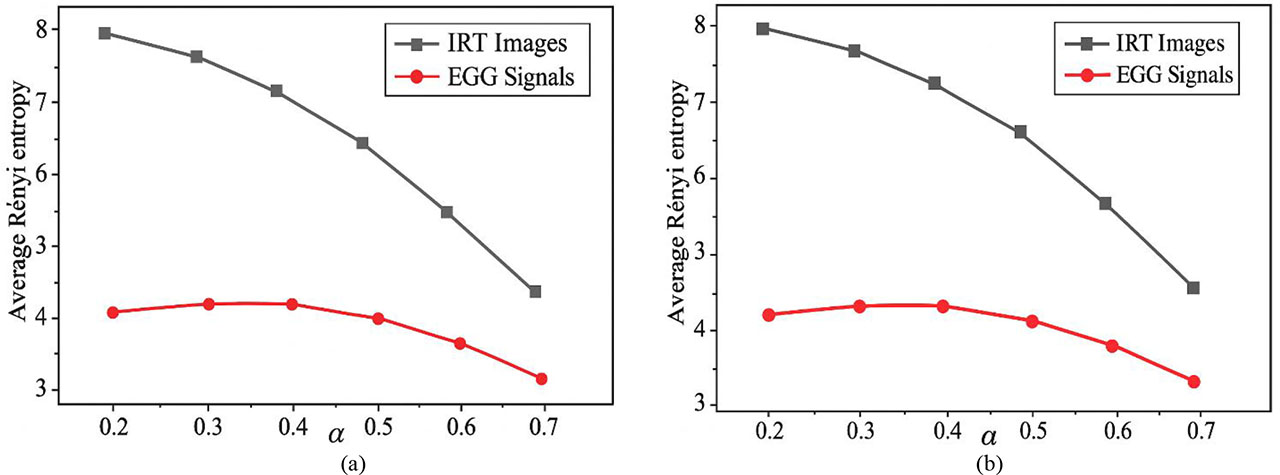
Fig. 9.
Variation of an average Rényi entropy of IRT images and an average Rényi entropy of electrogastrograms shown as a function of α for (a) normal and (b) bradygastric participants.
Fig. 10(a) and (b) shows the variation of the entropy of the electrogastrograms, as a function of the entropy of the IRT image of a typical normal and bradygastric participant, respectively. It can be seen that the Rényi entropy of both the electrogastrograms and the abdominal IRT image of normal subjects are well correlated with each other with a correlation coefficient of 0.94. Similarly, a high correlation of 0.90 is observed between the EGG signal and the IRT image of a bradygastric subject.
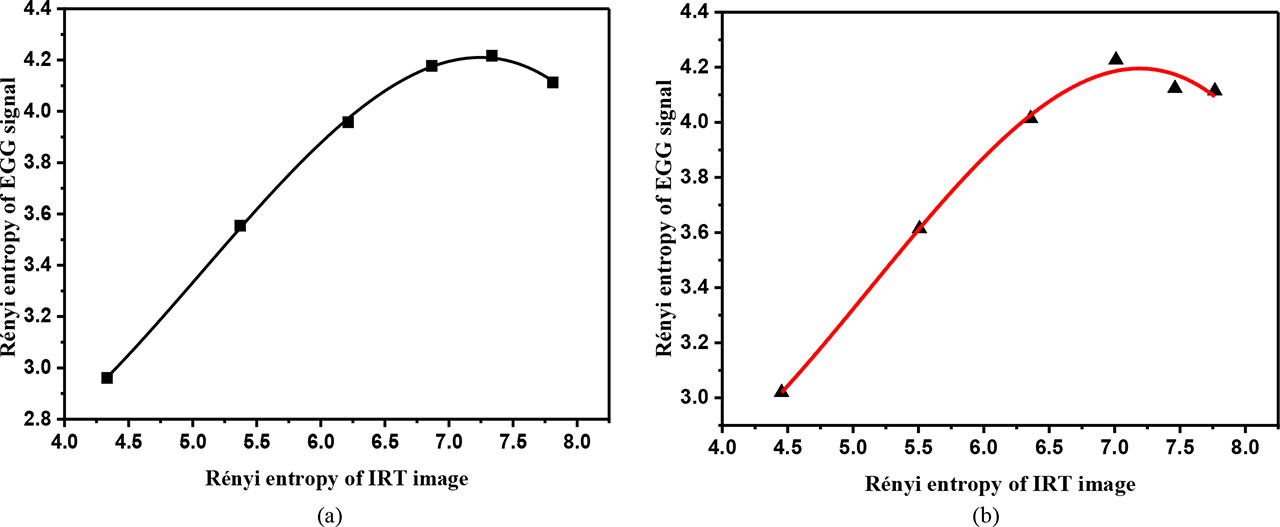
Fig. 10.
Variation of the Rényi entropy of IRT images as a function of the Rényi entropy of electrogastrograms for typical (a) normal participants and (b) bradygastric participants.
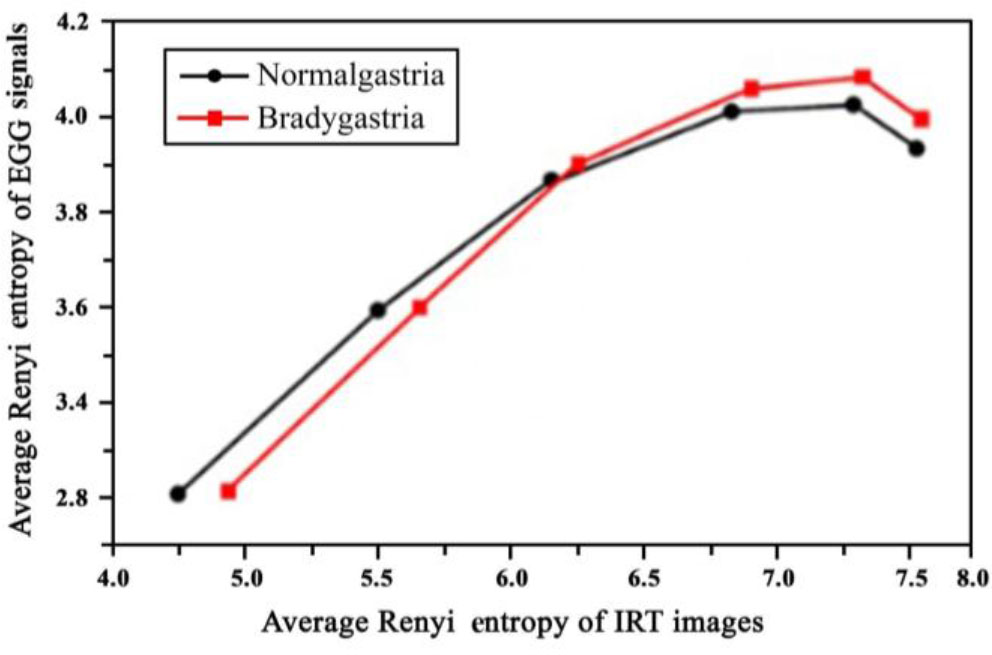
Fig. 11.
Average variation of the Rényi entropy of IRT images as a function of the average Rényi entropy of electrogastrograms for normal subjects and bradygastric subjects.
Finally, the variation of the average Rényi entropy of the electrogastrograms and the IRT images of both normal and bradygastric participants is presented as a function of the average Rényi entropy of the IRT images. It is found that the average Rényi entropy of the electrogastrograms and abdominal IRT images of both normal and bradygastric subjects are well correlated with a correlation coefficient of 0.95 and 0.92, respectively. It can be observed that there is a slightly higher degree of correlation in normal subjects than in bradygastric subjects.
Although electrogastrography is a non-invasive technique for the diagnosis of digestive disorders, these signals can be distorted by movement artifacts and external environmental noise, which can lead to abnormal frequency spectra with more power in the low and high frequency ranges [24]. Furthermore, the recording of EGG signals is a complex task. However, compared to EGG, the acquisition of IRT images is a simple task because it is a non-contact and non-invasive technique. The results show that the Rényi entropy of EGGs and abdominal IRT images have a high degree of correlation in both normal and bradygastric subjects with correlation coefficients of 0.95 and 0.92, respectively. These results clearly indicate that the IRT images correlate well with the EGG signals.
4. Conclusion
The myoelectric signals are generated by the stomach muscles, and can be used to detect various digestive disorders. These signals can be recorded using a non–invasive technique called electrogastrography. These signals are measured with surface electrodes placed on the abdominal skin above the stomach. The main disadvantage of electrogastrograms is that they require precise measurement and are a time-consuming procedure that requires technical skills and is also uncomfortable for the patients. In addition, artifacts such as movements of the limbs and body should be avoided for proper acquisition of signals. Acquiring EGG from children and geriatric patients is a challenging task.
In this work, electrogastrograms and IRT images were recorded simultaneously from normal and bradygastric subjects, using standard procedures. Rényi entropy was used to analyze the information content of the measured EGG signals and IRT images. In addition, the correlation between the Rényi entropy of the EGG signals and the Rényi entropy of the IRT images was assessed in both normal and bradygastric cases. The results show that there is a high correlation between the entropy of the IRT images and the EGG signals in both normal and bradygastric subjects with an average correlation value of 0.95 and 0.92, respectively. Moreover, similar variations in the Rényi entropy of IRT images and electrogastrograms are observed with respect to the order of entropy. Therefore, we hypothesize that the IRT imaging technique can be considered as a non-contact, cost-effective and convenient tool for the detection of gastrointestinal diseases.
Acknowledgement
The authors would like to thank UGC-SAP-DRS-I for providing equipment to carry out this research.