
1. Introduction
Elevator vibration has become an increasingly common and frequent problem with the rise of high-rise buildings around the world. Abnormal elevator vibrations can lead to elevator car riding discomfort. In a serious situation, they can cause high levels of dynamic stress in the elevator structure, damaging the elevator system or even risking serious safety accidents. Underlying sources of elevator vibration include misaligned guide rail joints, rope sheaves, eccentric pulleys, systematic resonances in the electronic control system, vibrations generated by gears and motors, etc. [1]–[3]. The vibration can originate from the elevator rope, for example, which can resonate with the natural frequency of the building. To avoid resonance, a vibration suppressor can be a solution to change the natural frequency of an elevator rope [4]–[5]. For this reason, some studies have particularly focused on the vibration characteristics of wire-ropes [6]–[9]. However, there is still a lack of effective and simple evaluation methods to reveal the relationship between the vibrations and elevator performance [10]. Therefore, the development of preventive measures related to elevator vibrations is an indispensable task in the industry [11].
Based on the one-dimensional characteristics of the vibration signal, an elevator operation fault monitoring method using a one-dimensional convolutional neural network was proposed [12]. The elevator vibration signals were preprocessed by value decomposition (SVD) and wavelet transform. The wavelet transform was then used to extract wavelet energy features from the original vibration signals. Although the processing required less complex feature extraction processes, it was still not comprehensive enough to achieve the expected goal. Also, the selection of different layer parameters during the network process required several attempts to achieve better performance results. Alternatively, based on a case of elevator vibration, abnormal vibration of the elevator was found through on-site investigation, instrument test, and vibration mechanism analysis [13]. It was found that elevator vibration is determined by the characteristics, mechanism of vibration and on-site situation. It proposed a series of methods that can be used to improve the comfort of the elevator. To detect abnormal states of elevators, an anomaly detection model was developed using vibration analysis of horizontal vibration signals and the Isolation Forest algorithm [14]. In this study, the Weiszfeld algorithm was used to estimate gravity acceleration from the decomposed acceleration signal of elevators. In addition, Kalman filtering was introduced to reduce error accumulation. However, the fault detection of elevator door systems was not sufficiently considered, relying only on an unsupervised learning process. Therefore, it was difficult to fully explore the deep data information.
In order to obtain reliable and sufficient data for training the fault diagnosis model, a numerical model of the vertical elevator vibration with three degrees of freedom was created [15]. The obtained equations of motion were used as constraints to obtain simulated vibration data by a physics-informed neural network. Then, the Enhanced Relational Graph Convolution Network was used for elevator fault diagnosis. Experimental validation showed that the accuracy of the proposed model reached 96.61 %. However, it may not be applicable in a real environment due to the highly complex processes involved. Alternatively, a hybrid method combining the Weight-Minkowski method and the Distance-Improved GRA evaluation method was developed for the condition evaluation of the elevator operation [16]. First, the relationship between the vibrations and the performance was analyzed. Based on the characteristics of the vibration data, the sensitive ones were selected as evaluation indexes to determine the actual health status of the elevators. The disadvantage is that the results of the performance analysis are highly dependent on the selected data. Accordingly, it may be difficult to transfer them to industrial applications. Furthermore, a denoising method based on a deep residual UNet was introduced to mitigate the noise in the vertical vibration signals of elevator cars [17]. The proposed convolutional neural network was successfully constructed with skip connections and a multi-scale convolutional structure. Although it has high potential for practical applications, it was only suitable for the case where significant noise occurs due to the elevator car vibrations.
2. Description of the system structure
The proposed system structure is shown in Fig. 1, and the system hardware installed in the elevator car is shown in Fig. 2. The system is implemented based on three performance sides, i.e. data acquisition, data processing, and personnel operation. First, in data acquisition, a 3D accelerometer (LSM6DSR) is used to detect the elevator car vibrations, i.e. acceleration, during elevator operation. Secondly, the acquired vibration data is sent to the data acquisition microprocessor (dsPIC33CK64MP506) via I2C. On the data processing side, the collected data is transmitted to the data processing microprocessor (dsPIC33CK64MP506) via RS485 to process the elevator diagnostic model. The processed data is then saved to a USB flash drive via the file management chip (CH376). SRAM is used to temporarily store the acquired data before sending it to a USB flash drive, using SPI as the communication protocol between the microprocessor and SRAM. On the other hand, system critical data is stored in EEPROM and I2C protocol is used for communication between EEPROM and microprocessor. A real-time clock is used to record the system working date and time. On the personnel operation side, the personal computer (PC) can receive the USB data and then run the proposed diagnostic model. The results obtained from the model implementation are then sent to the Microsoft SQL server via the router using TCP/IP.
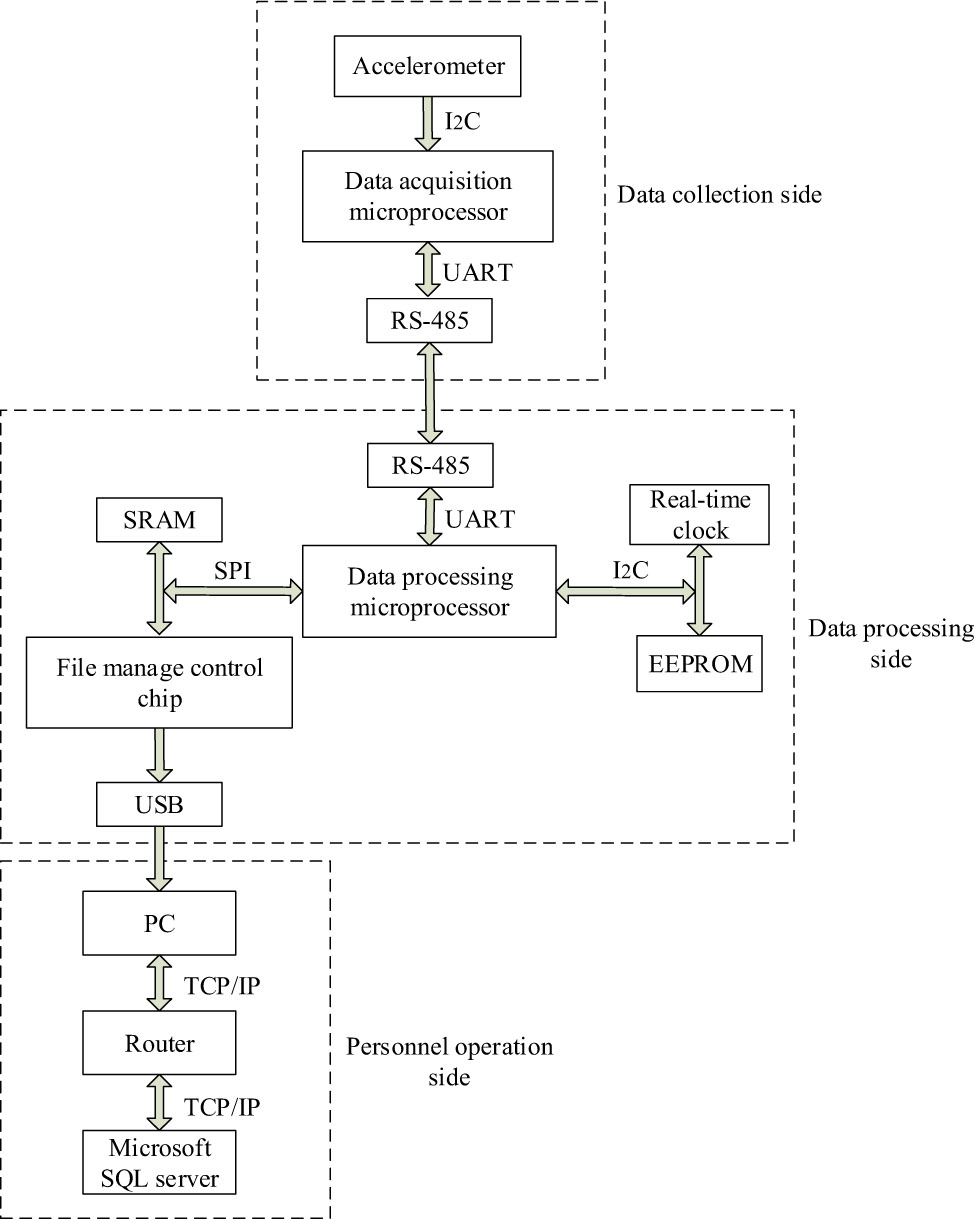
Fig. 1.
System structure.
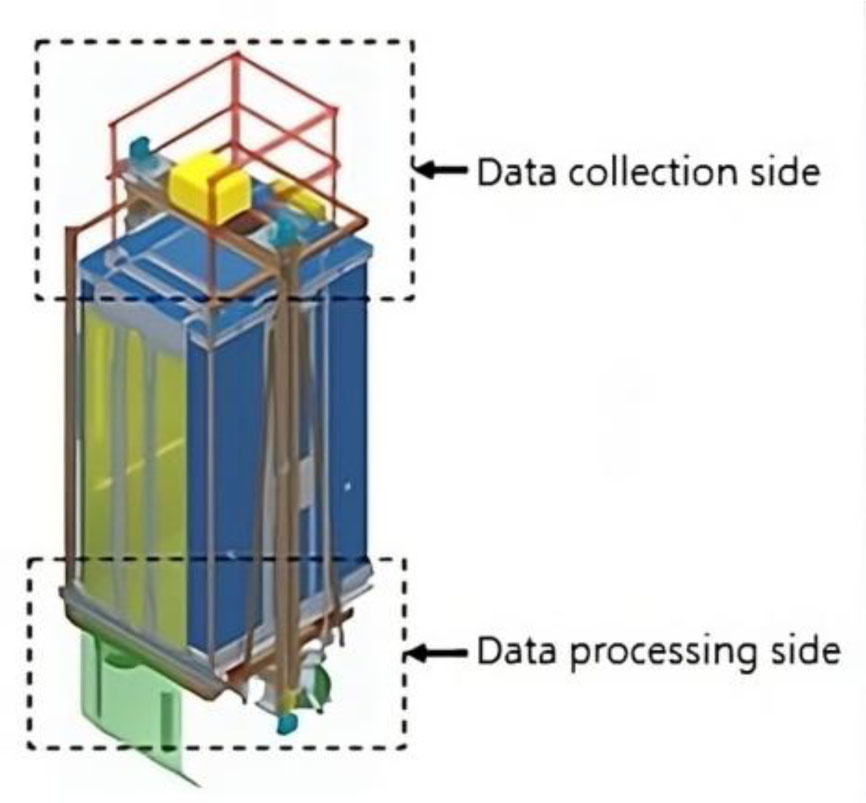
Fig. 2.
System hardware installation.
3. The proposed model
A. The system processing flowchart
The system processing flowchart is shown in Fig. 3. It is divided into two tasks: (1) The acquired data stored on the USB flash drive is transferred to the cloud database. (2) The acquired data is read from the database for model performance.

Fig. 3.
Model processing.
Fig. 3(a) shows the vibration data transferred to the database as follows:
Start the connection with the database.
Read USB data.
Transfer the data to the database. Assume the data file path is 2022/03/25 with the file name: 14-28-06, so the classified file is named T220325142806. In other words, T220325142806 stands for year: 2022, month: 03, date: 25, hour: 14, min.: 28, sec.: 06.
Fig. 3(b) shows the vibration data received from the database as follows:
Connect the database.
Read the database.
Select the designed data file.
Read the designed data file.
Display a graph and determine the health status.
B. The principle of vibration region segmentation algorithm
In reality, the elevator acceleration value can change abruptly from one status to another, including four situations such as zero to negative, negative to zero, zero to positive, or positive to zero. Based on these phenomena, the cut-off point, which is considered as the turning point, is determined by the abrupt acceleration variation jerk j(t), which is used to segment the acceleration region.
The jerk j(t) is expressed as
where a(t) is the elevator acceleration value at time t, i.e. in the time domain. a(t2) and a(t1) are the elevator acceleration values at time t2 and t1, respectively, and t2 > t1.With the binarization process using n sampled points, j(t) can be converted into a discrete form j(n). The segmentation value DJi using the cut-off point of the acceleration region is defined as
where 1 ≤ i ≤ n, and i, n ∈ positive integerBased on the array structure, the digital array DJ[n] is defined using the data set of DJi, expressed as
To evaluate the elevator operation status, TQ is defined as the total amount of DJi contained in DJ[n], expressed as
where i, n ∈ positive integer.4. Results
A. Data transmission and reception
(a). Data transmission processing
The data transmission processing procedures based on Fig. 3(a) are described as follows:
Enter the operation main panel, as shown in Fig. 4.
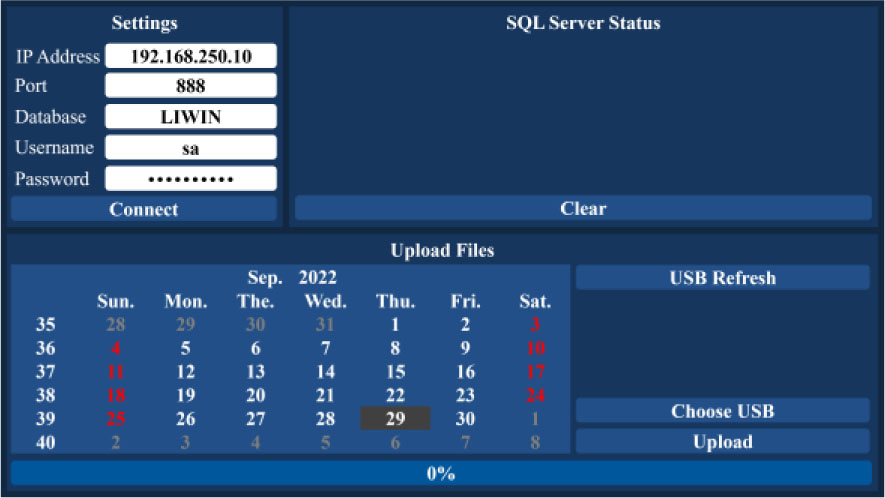
Fig. 4.
Main front panel of data transmission.
Click “Connect” to connect the database, as shown in Fig. 5.
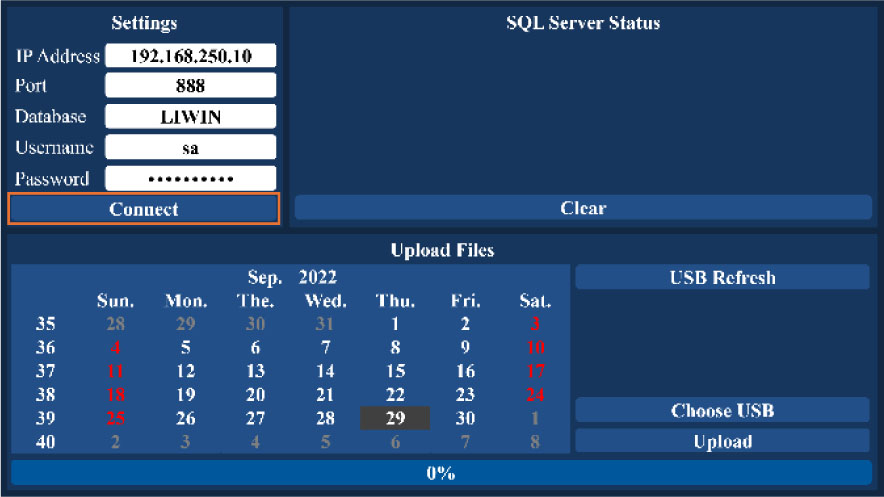
Fig. 5.
Connection with server.
Click “Choose USB” to read the acquired data, as shown in Fig. 6.
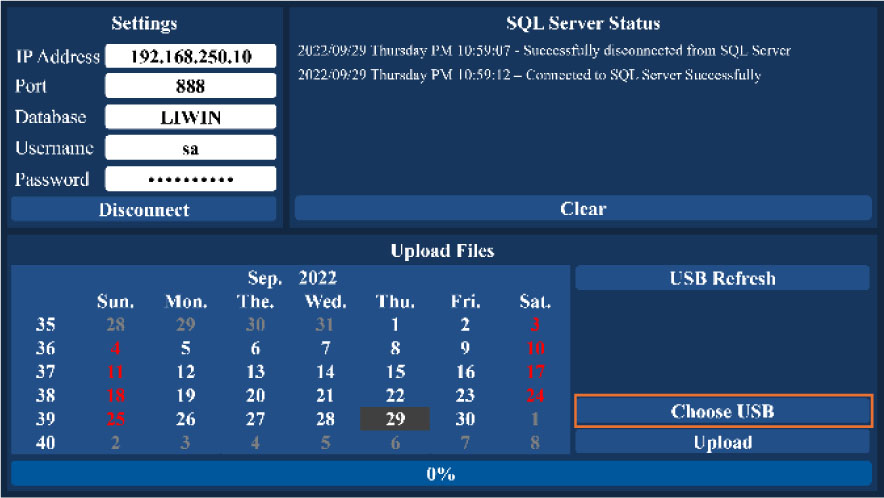
Fig. 6.
Selection of USB.
Click “Upload” to upload the data file, as shown in Fig. 7.
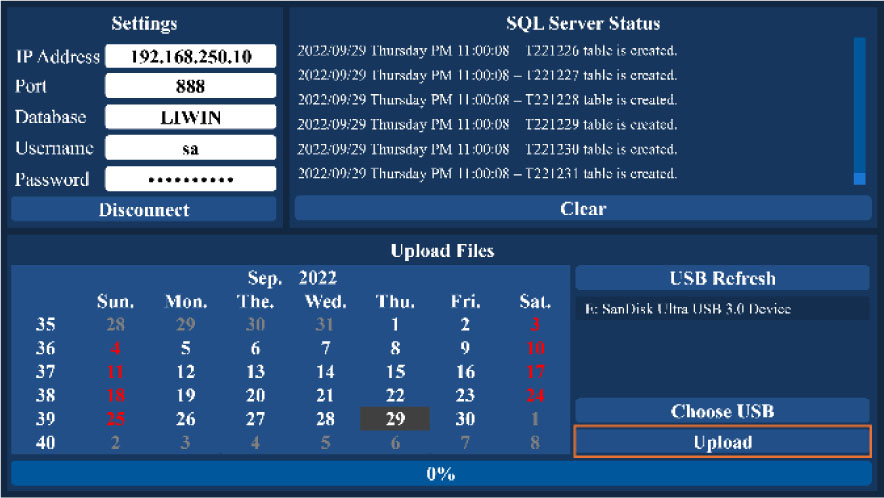
Fig. 7.
File upload.
The upload process is completed (100 %), as shown in Fig. 8.
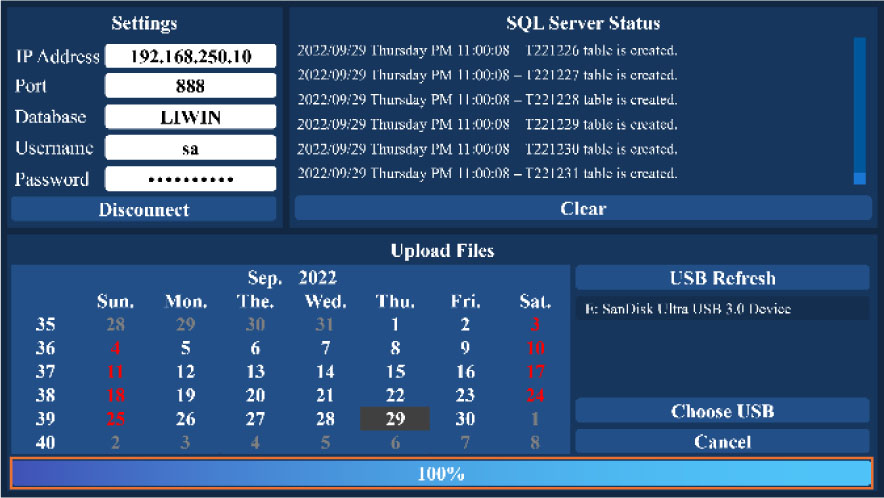
Fig. 8.
File uploading progress.
(b). Data processing
On the server side, the data processing procedures based on Fig. 3(b) for are demonstrated as follows:
Enter the server main panel, shown in Fig. 9.

Fig. 9.
Server front panel.
Select the desired date, as shown in Fig. 10.
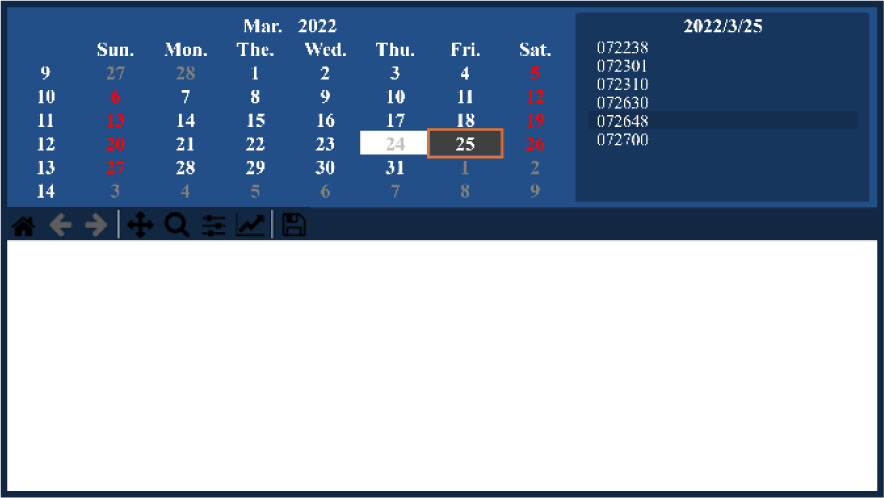
Fig. 10.
Selection of desired date.
Select the desired file, as shown in Fig. 11.
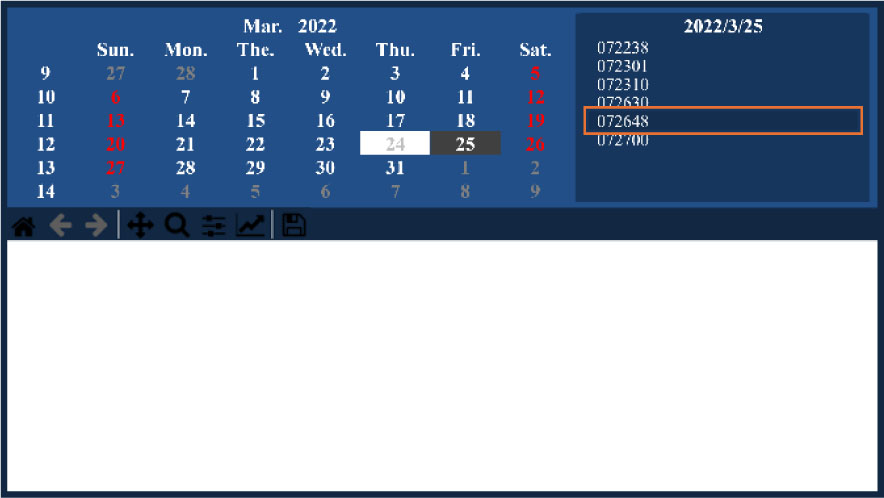
Fig. 11.
Selection of desired file.
Display the vibration data and calculate the moving distance, speed and jerk of the elevator car, as shown in Fig. 12.
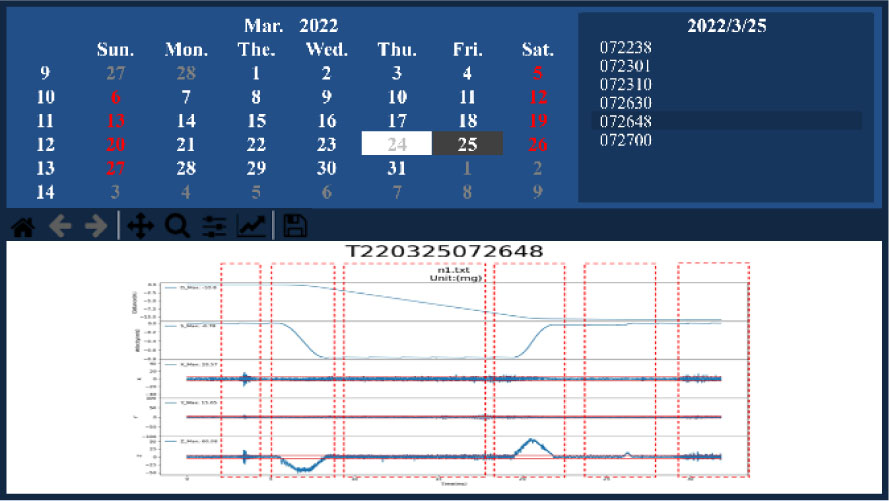
Fig. 12.
Display of vibration data.
B. Experimental results
In this study, both normal and abnormal cases were recorded and analyzed during the elevator ride, as shown in Fig. 13 - Fig. 18. Each figure shows the crucial elevator operation curves in terms of Acceleration X (mg), Acceleration Y (mg), Acceleration Z (mg), Distance (m), Velocity (m/min.) and Jerk (m/s3), respectively, from top to bottom. Note that 1 g = 9.8 m/s2 = 1000 mg. In reality, the elevator moves mainly in the vertical direction, so only the Z acceleration is used for the analysis of the proposed model. In Fig. 13 and Fig. 14, the elevator was moving up to different floors in a normal situation, i.e. three and four floors in total. It can be seen that the elevator travel time in Fig. 14 is relatively longer than in Fig. 13, i.e. 20 sec. compared to 14 sec., as a higher floor is reached. Nevertheless, both cases have the same acceleration and deceleration intervals, i.e. 4 sec. and 3.5 sec., respectively.
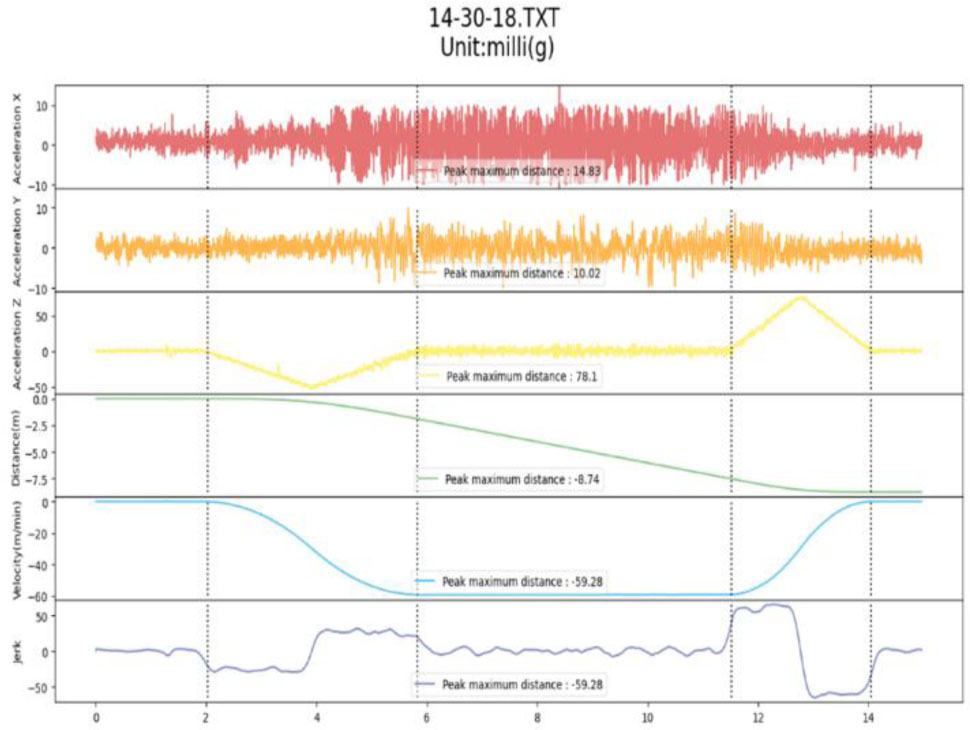
Fig. 13.
Normal elevator operation within three floors.
In the abnormal cases, Fig. 15 - Fig. 18, there are more than five segments to be identified than in the normal case. In Fig. 15 and Fig. 17 the elevator is going down and it is going up in Fig. 16 and Fig. 18. It can be seen that Fig. 15 and Fig. 16 have excessive vibration segments, i.e. six and nine, respectively. Fig. 17 and Fig. 18, on the other hand, have more segments, eleven and twenty-one, respectively. Obviously, in all cases, an unexpected vibrations occur more frequently than usual during elevator operation.
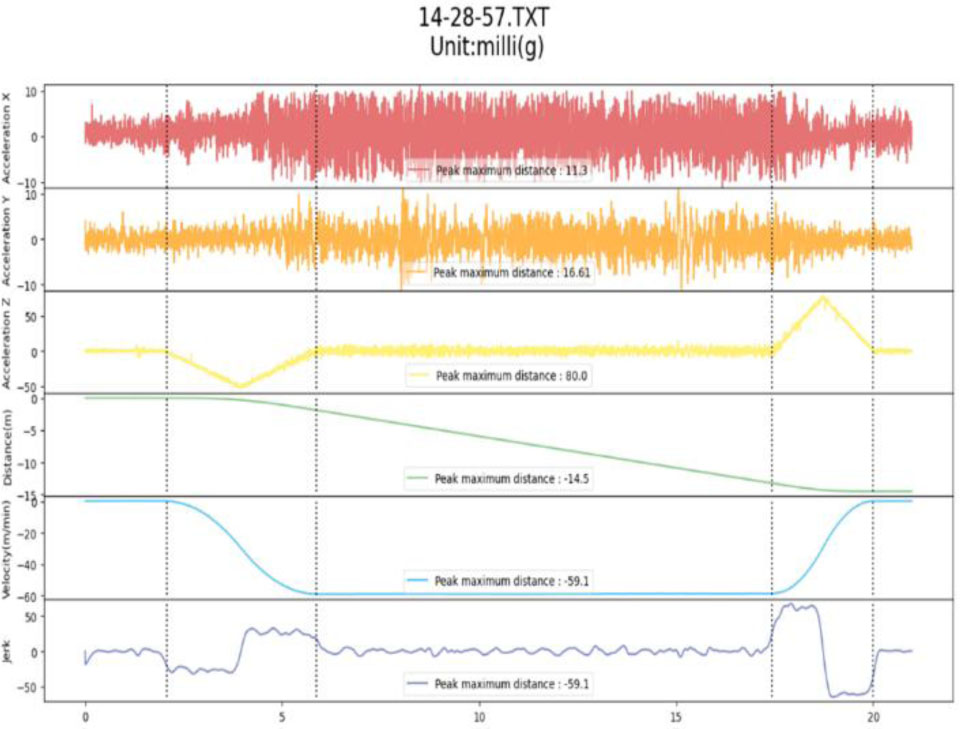
Fig. 14.
Normal elevator operation within four floors.
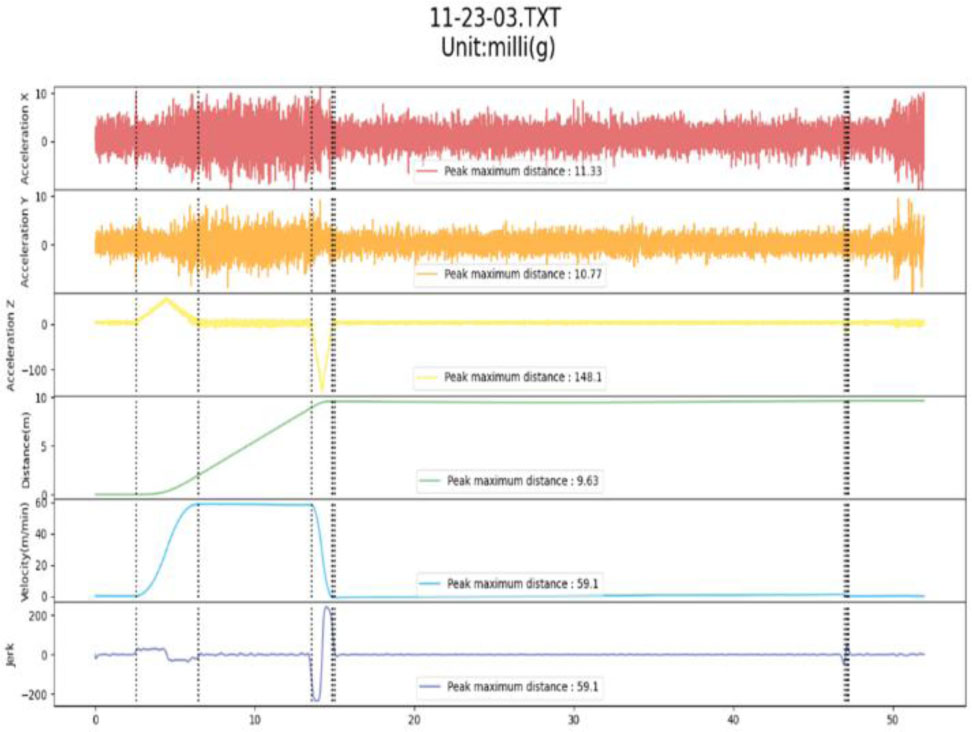
Fig. 15.
Abnormal elevator operation with six segments.
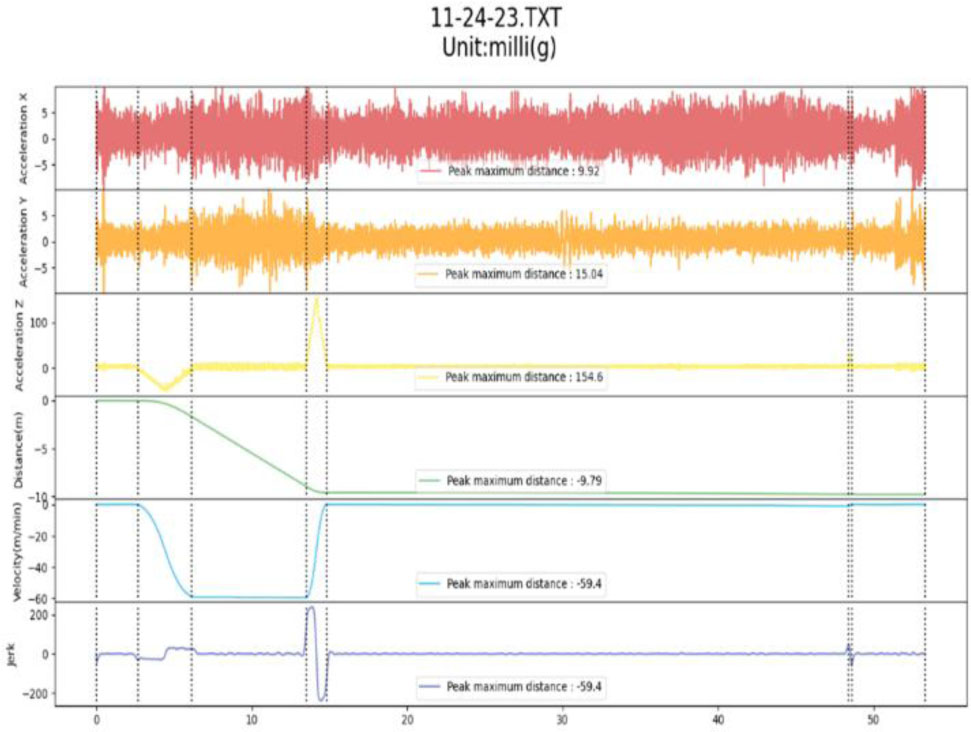
Fig. 16.
Abnormal elevator operation with nine segments.
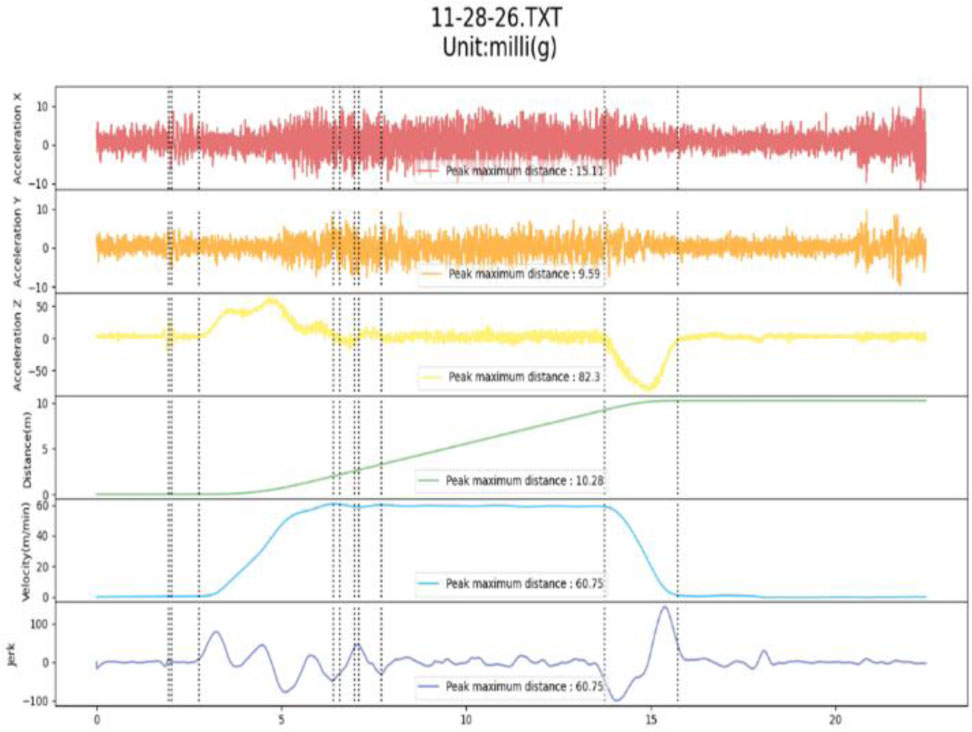
Fig. 17.
Abnormal elevator operation with eleven segments.
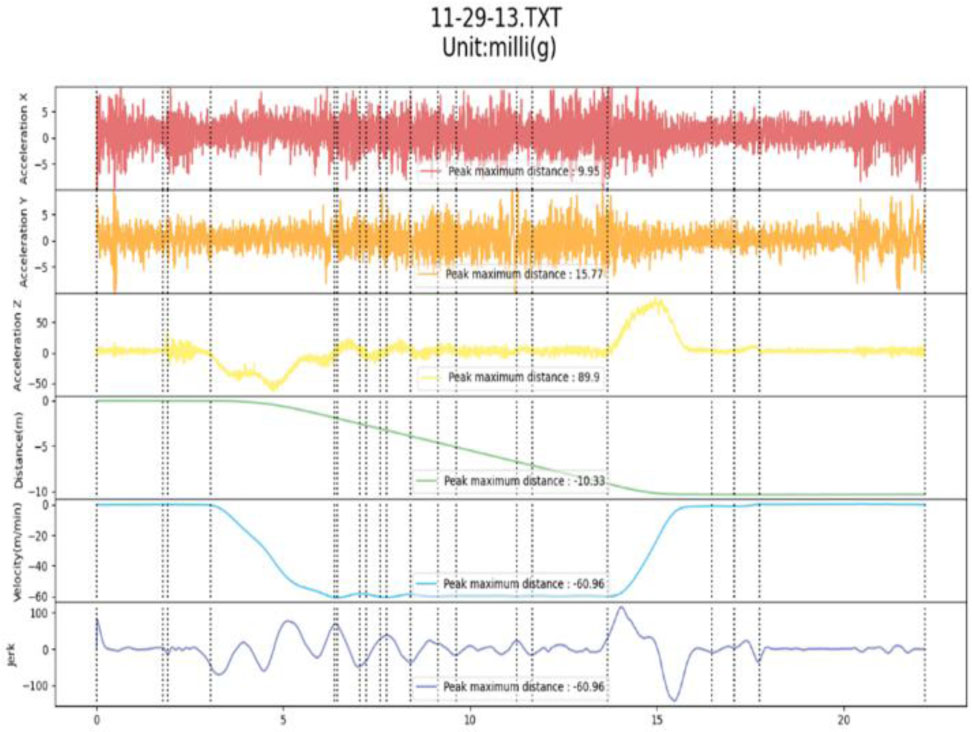
Fig. 18.
Abnormal elevator operation with twenty-one segments.
The above experimental results from Fig. 13 - Fig. 18 are summarized in Table 1. It can be seen that TQ = 4 occurs in the first two cases (Fig. 13 and Fig. 14), which means that the elevator is in a normal situation. In contrast, the TQ exceeds 4 in the other four tests, e.g. 5, 8, 6 and 20 in Fig. 15 - Fig. 18, which puts the elevator in an abnormal operating condition. In Fig. 18, the situation is worst due to the highest TQ (= 20). Clearly, it shows that the more risks to the elevator, the more segments are identified.
Table 1.
TQ in experiments.
| Figure | TQ | Segmented region num. | Elevator health status |
|---|---|---|---|
| Fig. 13 | 4 | 5 | Normal |
| Fig. 14 | 4 | 5 | Normal |
| Fig. 15 | 5 | 6 | Abnormal |
| Fig. 16 | 8 | 9 | Abnormal |
| Fig. 17 | 10 | 11 | Abnormal |
| Fig. 18 | 20 | 21 | Abnormal |
The comparison between the EVA625 Elevator Vibration Analysis System (Physical Measurement Technologies, Inc., USA) and the proposed system is shown in Table 2. It shows that the proposed system is generally superior to the EVA625.
Table 2.
Comparison between EVA625 and the proposed system.
| Item | EVA-625 | The proposed system |
|---|---|---|
| Samples per second (sps) | 256 | 1000 |
| Resolution | 0.6 mg | 0.061 mg |
| Storage speed | Slow (15 s) | Fast (10 s) |
| Operation mode | Manual | Automatic |
| Long term record | No | Available |
| Analysis software | Available | Available |
| Installation method | Standalone | Complex |
5. Conclusions
Although commercial elevator vibration analysis instruments such as the EVA625 are now widely used in the industry, determining the health of the elevator still depends on the experience of the personnel. In order to accurately recognize the elevator health status, the proposed vibration region segmentation diagnostic model has been developed and successfully implemented. In this model, the jerk is considered as a key factor to determine the elevator health status. Based on the definition of the jerk, the critical vibration segment points can be easily found. During the binarization process, the number of vibration segments, i.e. TQ, can be directly calculated and used to diagnose the elevator operating condition. Since only a simple arithmetic operation is required in the TQ calculation, the model performance becomes simpler and more effective. In addition, important data such as acceleration in the X, Y and Z-axes, moving distance, velocity and jerk can be monitored online via the Internet. The acquired vibration data can also be transmitted to the server for real-time tracking and analysis. For further research in the future, it is suggested that AI algorithms can be used to analyze and find the relationship between elevator faults and vibration sources.