
Table 1
Chemical composition measured by EDS of the 6156 aluminum alloy sheet [23].
| Chemical element | Si | Fe | Cu | Mn | Mg | Cr | Zn | Al |
|---|---|---|---|---|---|---|---|---|
| wt [%] | 0.7 | 0.084 | 1.04 | 0.43 | 0.82 | <0.05 | 0.15 | Bal |
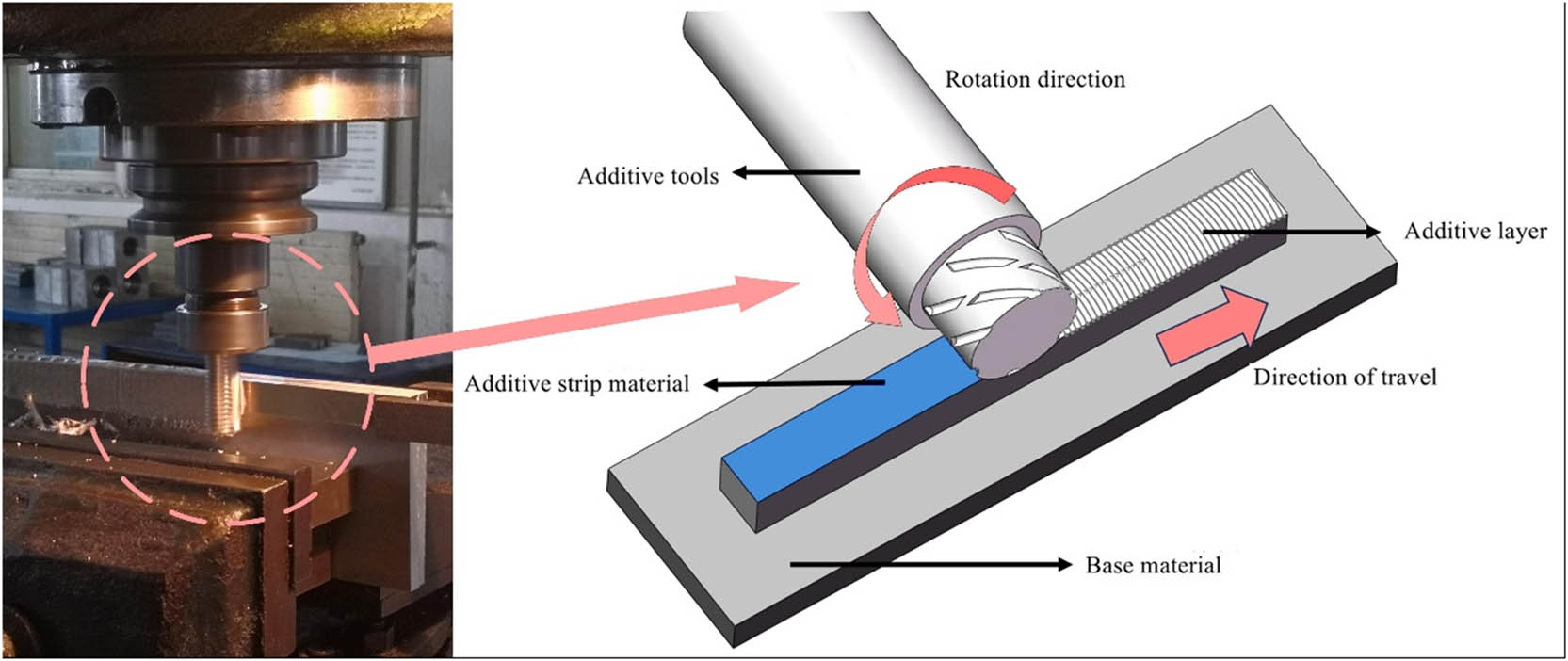
Figure 1
Schematic diagram of FSSAM process.
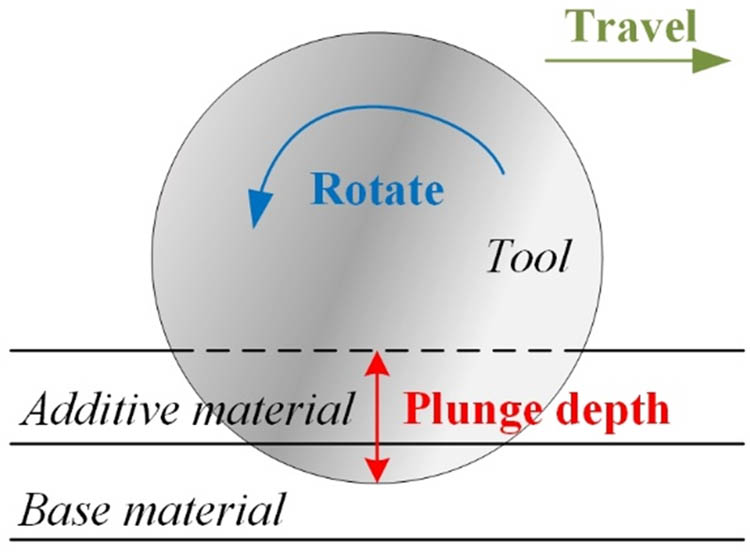
Figure 2
Process parameters for FSSAM additive tools.
Table 3
Process parameters of FSSAM.
| No. | Traverse speed (mm/min) | Rotational speed (rpm) |
|---|---|---|
| 1 | 23.5 | 750 |
| 2 | 37.5 | 750 |
| 3 | 47.5 | 750 |
| 4 | 37.5 | 600 |
| 5 | 37.5 | 750 |
| 6 | 37.5 | 950 |
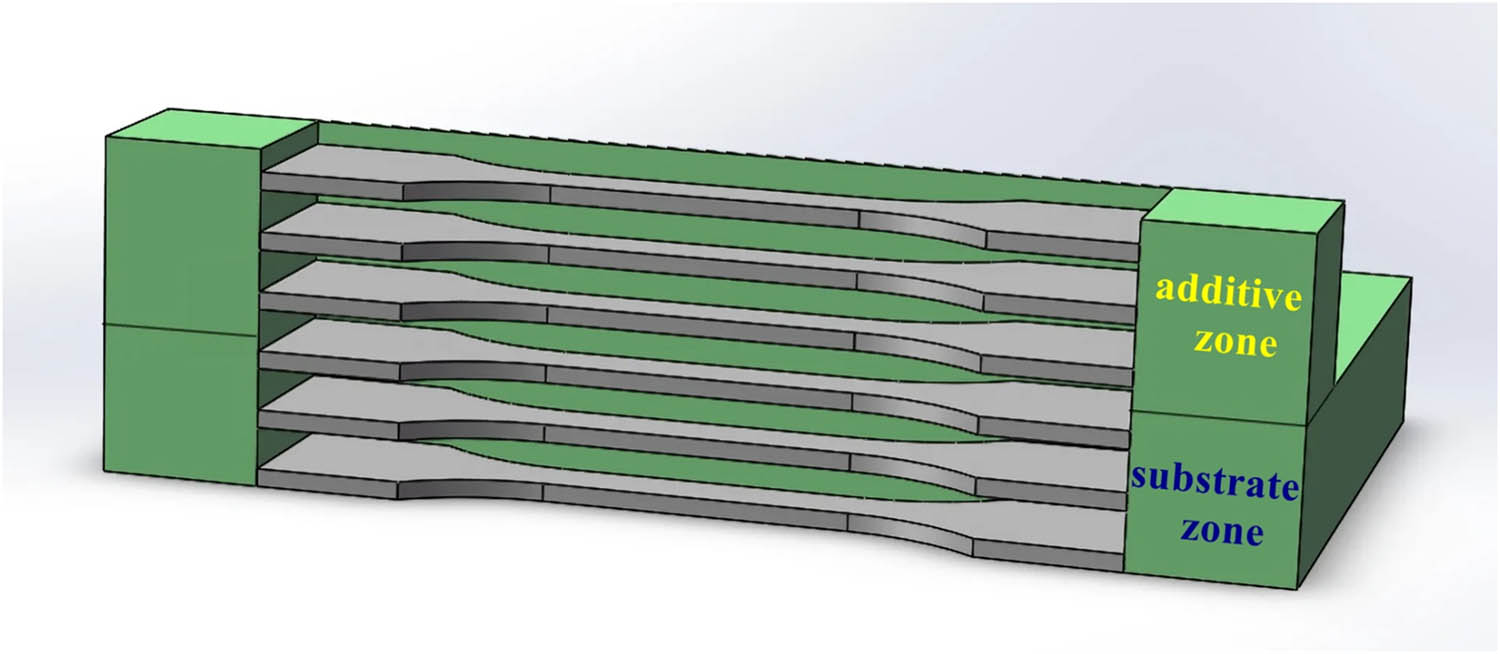
Figure 3
Extraction location for tensile testing specimens.
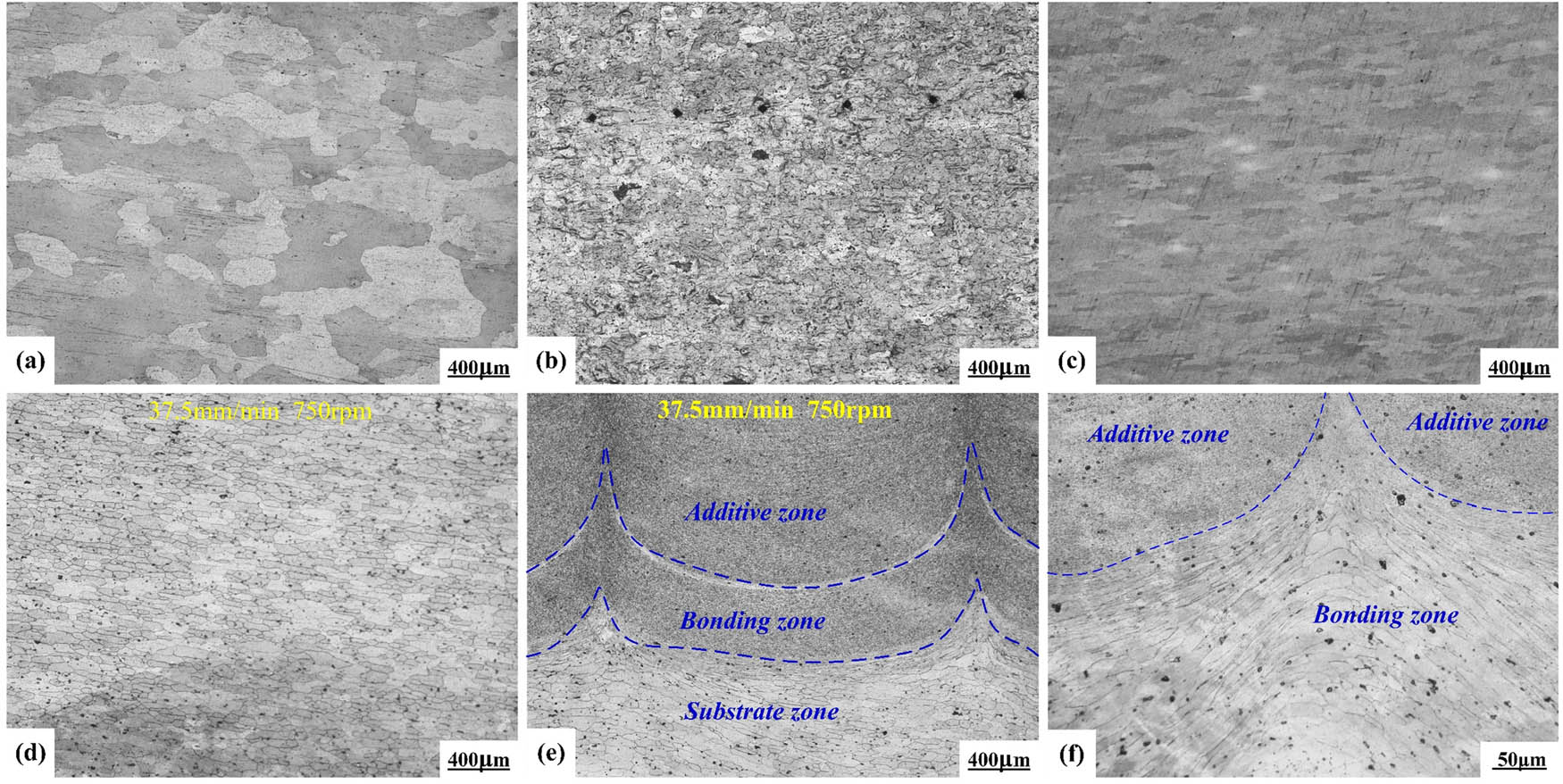
Figure 4
Photomicrographs of FSSAM samples before and after additive manufacturing. (a) Original substrate plate, (b) substrate zone, (c) original additive material sheet, (d) additive zone at 37.5 mm/min and 750 rpm, (e) bonding zone at 37.5 mm/min and 750 rpm, and (f) differences in grain size across different zones.
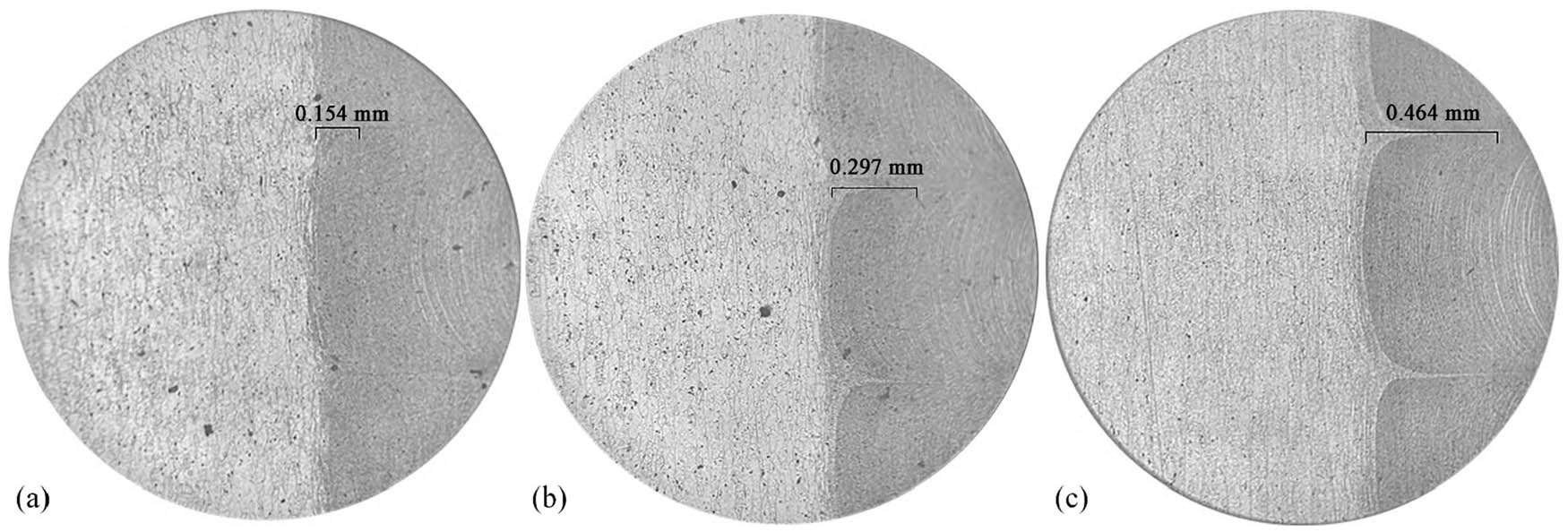
Figure 5
Microstructure of the cross section of the additive zone under different tool plunge depths: (a) 2.40 mm, (b) 2.60 mm, and (c) 2.80 mm.
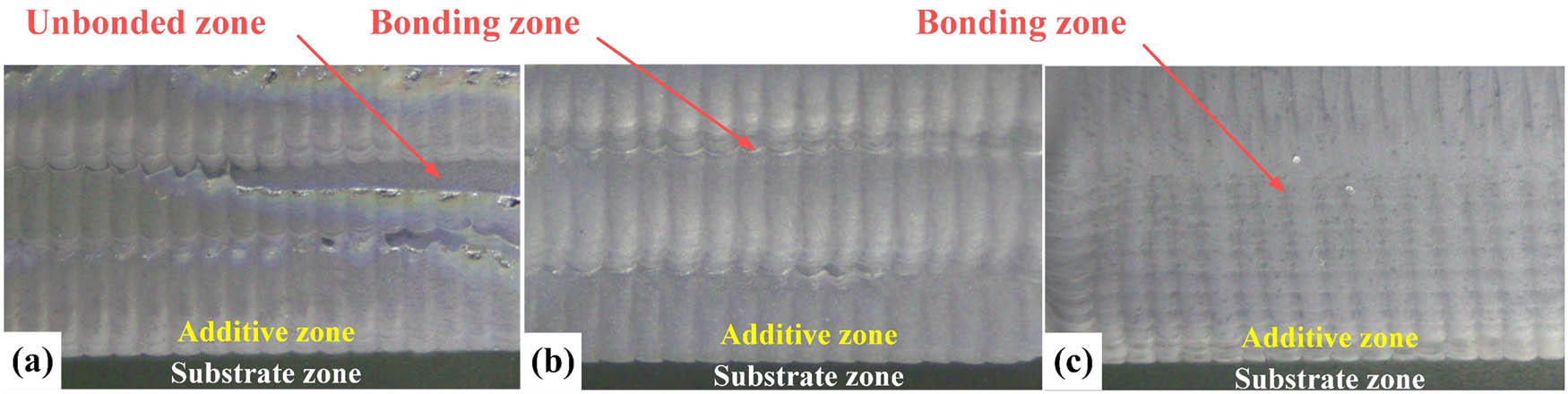
Figure 6
Interface morphology of the additive zone with different tool plunge depths: (a) 2.40 mm, (b) 2.60 mm, and (c) 2.80 mm.
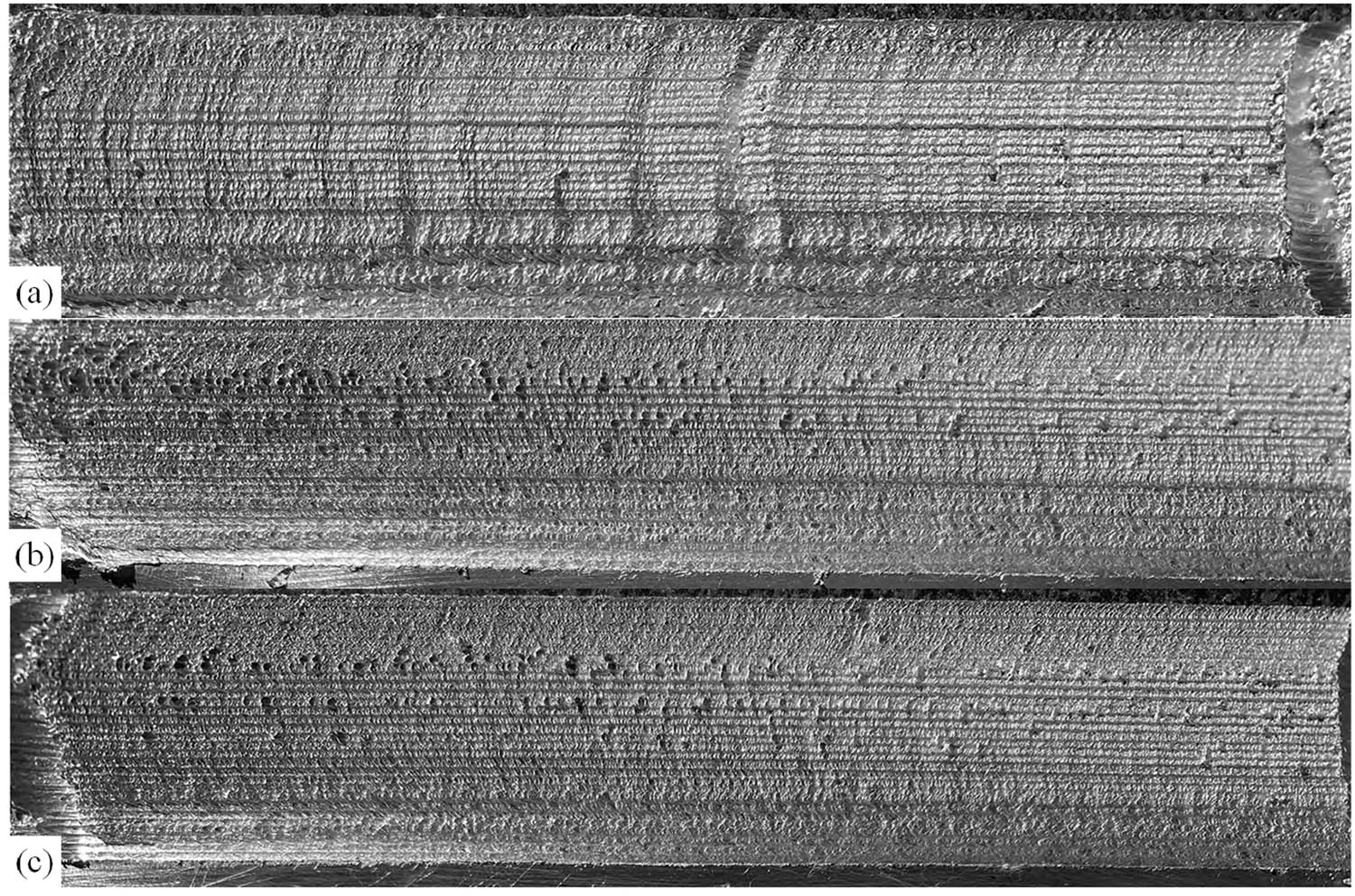
Figure 7
Surface morphology of the additive zone with different traverse speeds: (a) 23.5 mm/min, (b) 37.5 mm/min, and (c) 47.5 mm/min.
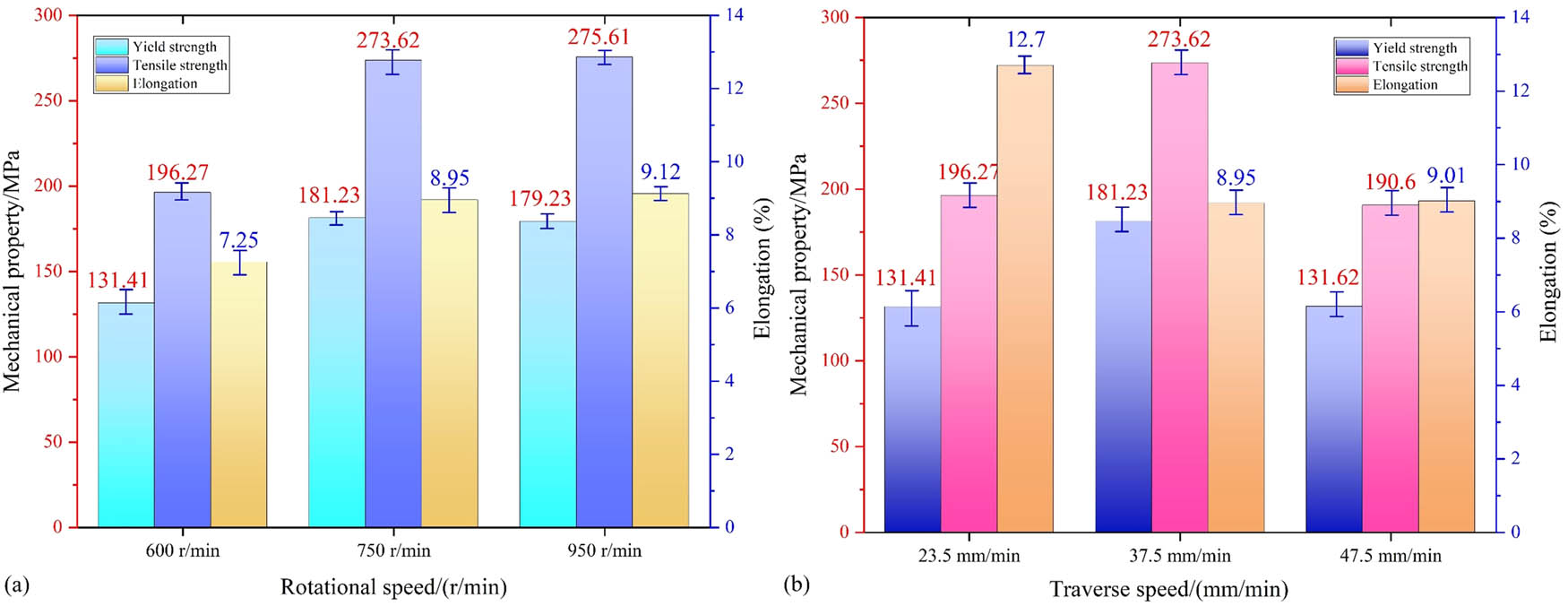
Figure 8
Tensile properties of FSSAM at different rotational speeds. (a) Rotational speeds and (b) traverse speeds.
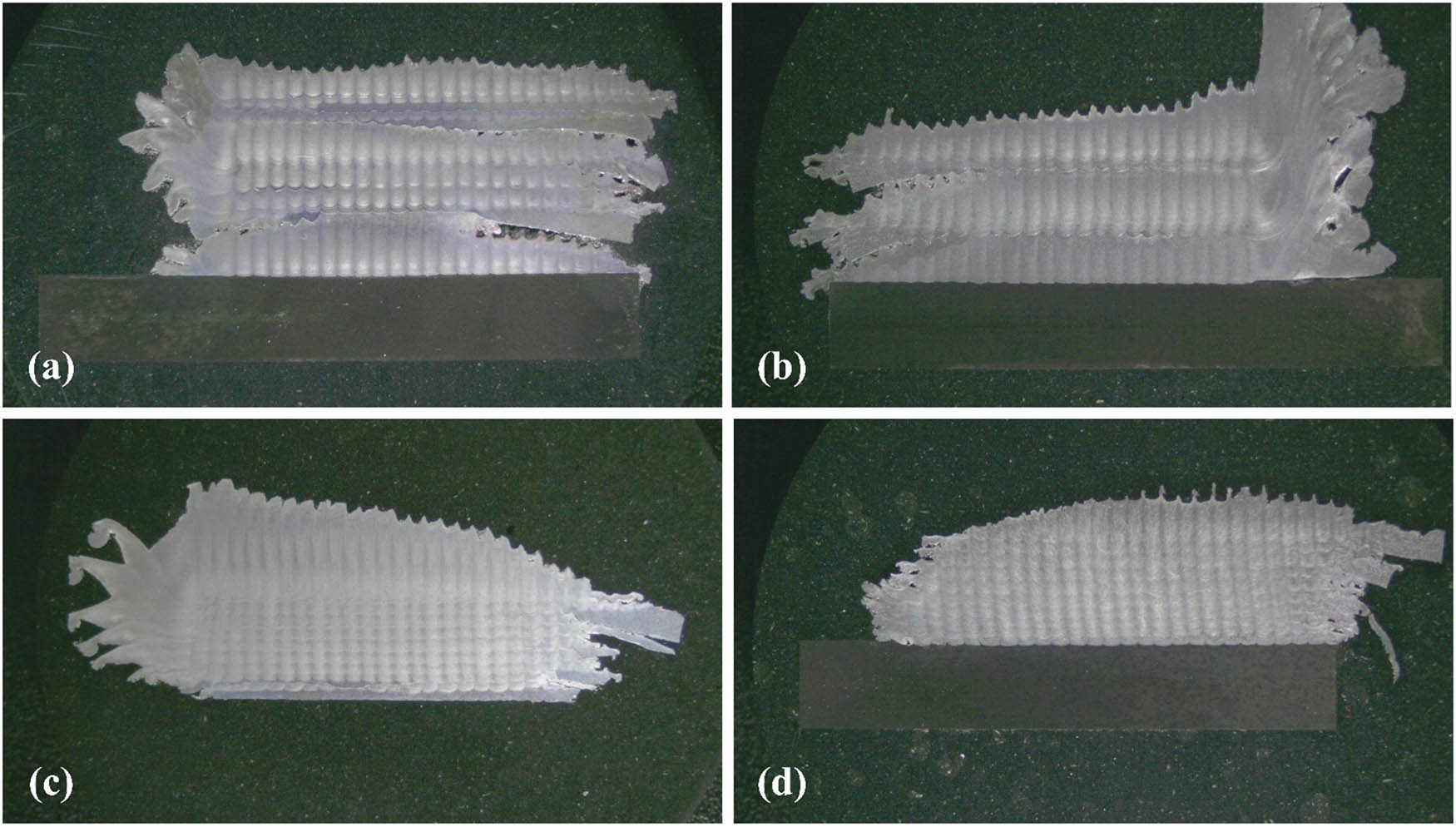
Figure 9
Surface morphology of the additive zone with different traverse speeds. (a) 47.5 mm/min, (b) 23.5 mm/min and rotational speeds, (c) 600 rpm, and (d) 1,000 rpm.
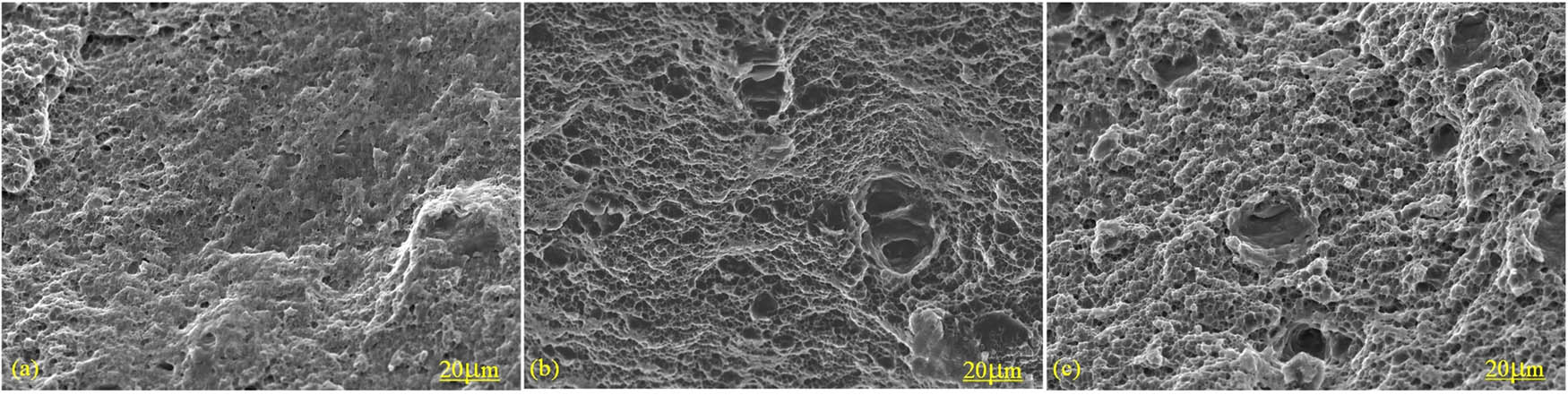
Figure 10
Microstructure of the additive zone with different traverse speeds. (a) 47.5 mm/min, (b) 37.5 mm/min, and (c) 23.5 mm/min.
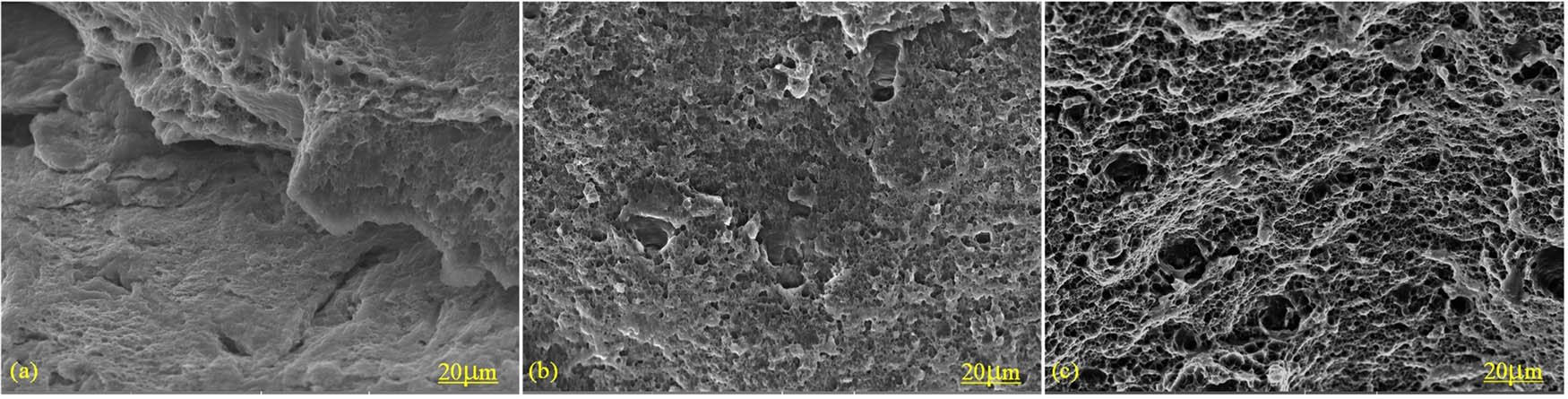
Figure 11
Microstructure of the additive zone with different rotational speeds: (a) 600 rpm, (b) 750 rpm, and (c) 950 rpm.
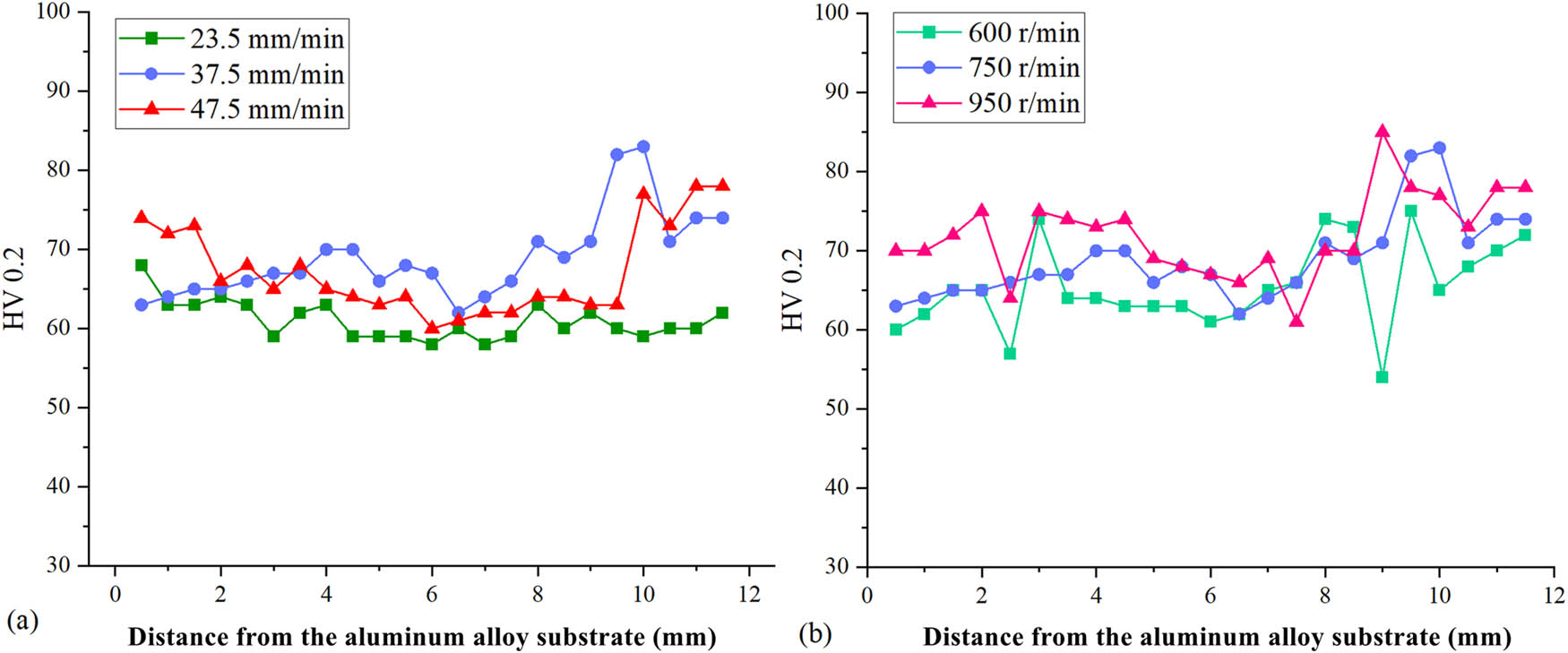
Figure 12
Hardness (HV 0.2) of FSSAM at different rotational and traverse speeds. (a) Different tool’s traverse speed and (b) different tool’s rotational speed.
Table 4
Standard deviation and average value of hardness at different rotational and traverse speeds.
| Traverse speed (mm/min) | Average value | Standard deviation | Rotational speed (rpm) | Average value | Standard deviation |
|---|---|---|---|---|---|
| 23.5 | 61.00 | 2.35 | 600 | 65.43 | 5.37 |
| 37.5 | 68.91 | 5.26 | 750 | 68.91 | 5.26 |
| 47.5 | 67.26 | 5.58 | 950 | 72.00 | 5.22 |
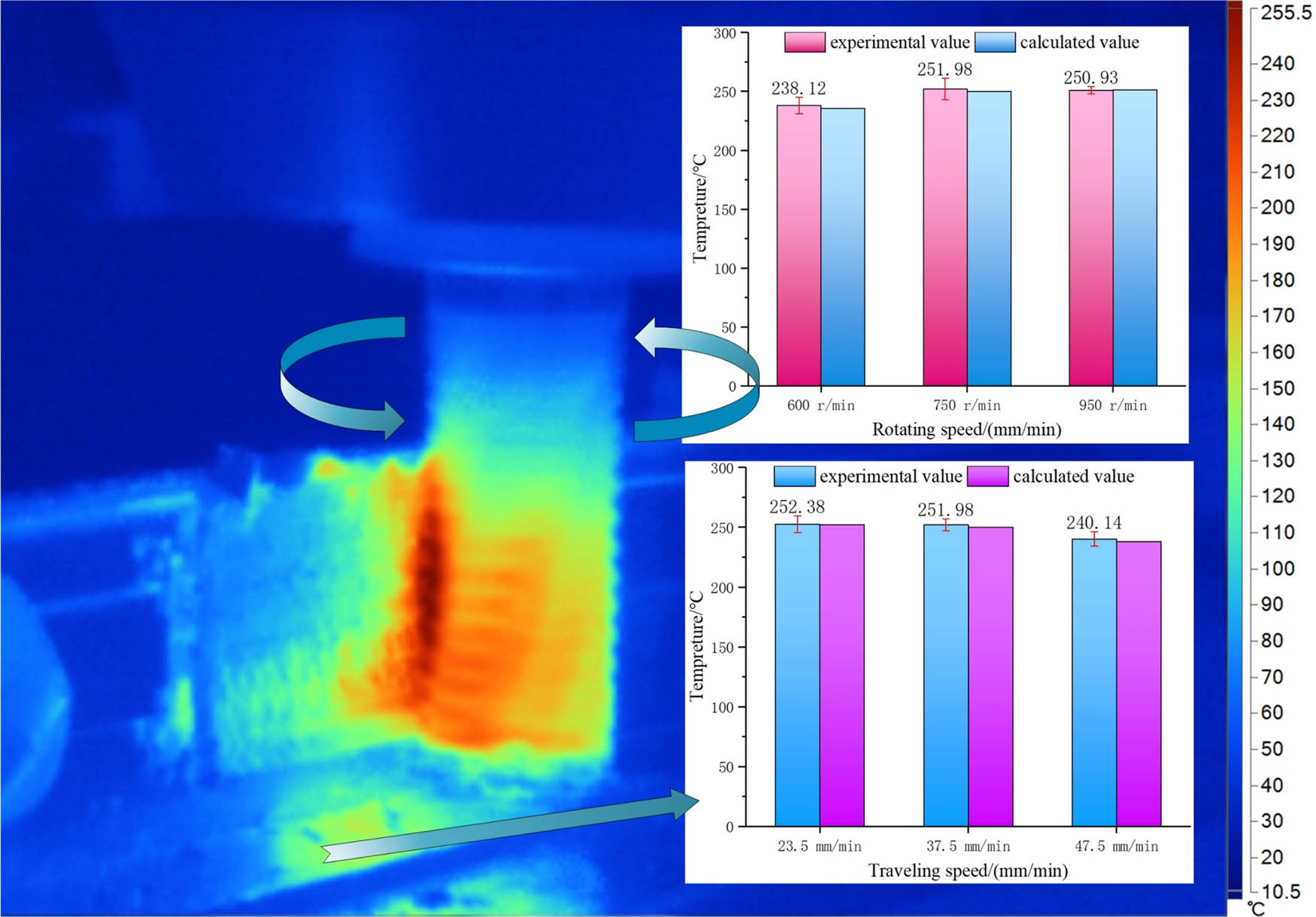
Figure 13
Schematic temperature diagram of the FSSAM additive manufacturing zone at different additive manufacturing stages.
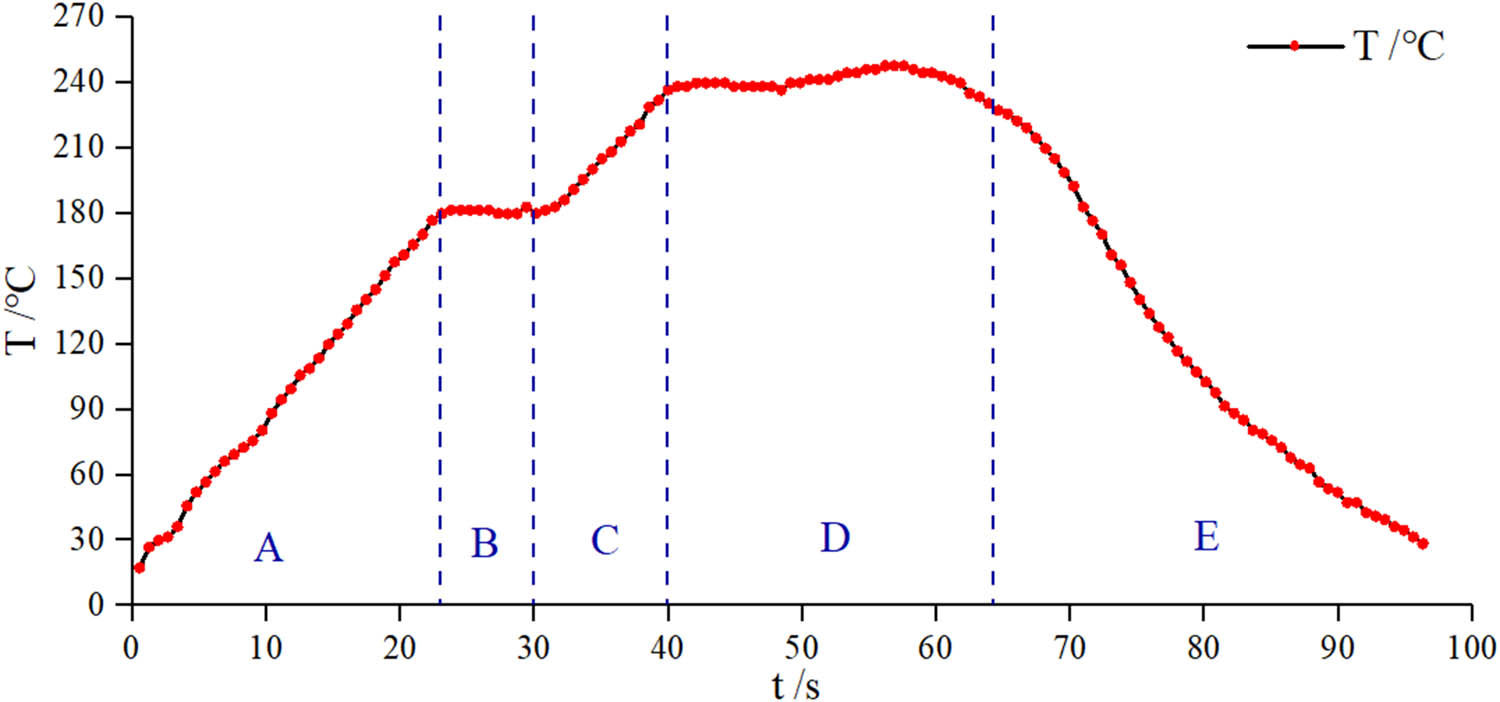
Figure 14
Schematic temperature diagram for each stage of FSSAM. (A) Physical friction phase of the downward pressure of the additive manufacturing tool. (B) Temperature accumulation and retention phase. (C) Plastic flow phase at the beginning of the additive plastic molding. (D) Stabilization of the molding phase of the additive materials. (E) Exit phase of the additive manufacturing tool.