
1. Introduction
Hydromagnesite Mg5(CO3)4(OH)2∙4H2O is the naturally occurring mineral belonging to the group of hydrated Mg-carbonates of the MgO–CO2–H2O system. In natural settings, hydromagnesite may form in evaporites depending on the availability of the Mg2+ ions in solution in relation to the availability of other cations such as Ca2+. Experimental and theoretical studies highlight the importance of the Mg2+/Ca2+ molar ratio as a key factor controlling carbonate mineral formation in natural environments (Aufort & Demichelis, 2020; Choi et al., 2023; Hopkinson et al., 2008; Loste et al., 2003; Möller & Kubanek, 1976; Rodriguez-Blanco et al., 2014). At low Mg2+/Ca2+ molar ratios (generally <2), calcite is the dominant phase, often incorporating magnesium to form Mg-calcite (Aufort & Demichelis, 2020; Choi et al., 2023; Loste et al., 2003; Möller & Kubanek, 1976). The presence of Mg2+ strongly influences the nucleation and growth of CaCO3, while lattice strain due to the incorporation of magnesium ions increases the solubility of calcite (differences in hydration and ionic radius between Ca2+ and Mg2+) (e.g., Chen et al., 2006; Hopkinson et al., 2008; Lippmann, 1973). The Mg2+ ion is more strongly hydrated than Ca2+ (the solvation free energy, per water molecule, for Mg2+ ions is as much as 60% higher than that of Ca2+) and is strongly adsorbed on the surface of growing calcite crystals (Xu et al., 2013). The dehydration of Mg2+ ions before incorporation into the calcite lattice acts as a barrier to calcite nucleation (Loste et al., 2003), favoring the formation of less stable phases such as aragonite and monohydrocalcite CaCO3∙H2O (Aufort & Demichelis, 2020). Anhydrous polymorphs like calcite and aragonite are often result from a sequence of structural reorganization and dehydration processes that involve amorphous calcium carbonate particles and hydrated calcium carbonate intermediates. It is believed that in Mg2+-rich solutions, Mg-bearing amorphous calcium carbonate initially forms, then crystallizes to Mg-bearing monohydrocalcite, and only in the last stage releases magnesium to produce minor hydromagnesite (Rodriguez-Blanco et al., 2014). At Earth surface temperatures and pressures, monohydrocalcite is thermodynamically unstable relative to anhydrous calcite and aragonite and slowly transforms into these phases, depending on the presence of Mg2+ in aqueous fluid (Mg inhibits calcite crystallization and can stabilize aragonite) (Rodriguez-Blanco et al., 2014). When the Mg2+/Ca2+ molar ratio is >4, the primary aragonite nucleation becomes energetically favored. Dolomite may form as a secondary product from the magnesium calcite phase when the Mg2+/Ca2+ molar ratio surpasses seven (Chen et al., 2024; Möller & Kubanek, 1976). The difficulty in precipitating dolomite from ambient aqueous solutions is commonly attributed to the strong hydration of Mg2+ ions in solution, a conclusion supported by numerous circumstantial evidence (Hänchen et al., 2008; Xu et al., 2013). Increasing the Mg2+/Ca2+ molar ratio in solution promotes hydromagnesite precipitation (Möller & Kubanek, 1976). Aqueous-phase reactions between Mg2+ cations and CO32− anions at ambient Earth temperature and pressure conditions yield exclusively hydrated phases (Xu et al., 2013).
Hydrated magnesium carbonates are relatively common in natural environments, and their widespread occurrence is explained by the high hydration energy of the Mg2+ ion, which inhibits the formation of anhydrous MgCO3 phases (Frost, 2011; Gautier et al., 2014; Hopkinson et al., 2012). At temperatures below 60–80°C, magnesium carbonates tend to precipitate as various hydrated compounds, depending on the composition of the solution and the temperature (Hopkinson et al., 2012). At temperatures above 15°C, hydromagnesite is the second most stable magnesium carbonate mineral, followed by nesquehonite Mg(OH)(HCO3)∙2H2O (or MgCO3∙3H2O). These two minerals can form at atmospheric CO2 pressure within the temperature interval typical of most surface environments (Hopkinson et al., 2012). Nesquehonite is generally thought to form more readily at around 25°C, especially under relatively high CO2 pressures, whereas hydromagnesite tends to form at somewhat higher temperatures. At temperatures <15°C and under low CO2 partial pressure artinite Mg2(CO3)(OH)2∙3H2O may become more stable than hydromagnesite. In contrast, at temperatures below about 10°C, lansfordite MgCO3∙5H2O may form at the expense of nesquehonite (Gautier et al., 2014 and references therein). Mineralogical transitions commonly occur among the various Mg-carbonate phases. For instance, nesquehonite has been observed to convert into hydromagnesite, typically through the intermediate formation of dypingite Mg5(CO3)4(OH)2∙5H2O. Additionally, a transition from hydromagnesite to magnesite has been reported at temperatures exceeding 100°C (Hänchen et al., 2008). Moreover, the formation of magnesite at temperatures as low as 35°C appears to be aided by the transformation of an initially precipitated nesquehonite phase (Felmy et al., 2012).
Hydromagnesite crystallizes in the monoclinic space group P21/c. The crystal structure of hydromagnesite is built upon a three-dimensional framework composed of MgO6 octahedra, where each magnesium atom is coordinated by six oxygen atoms. The octahedra consist of two distinct structures. The first type features a magnesium atom surrounded by four oxygen atoms from carbonate ions, one oxygen from a hydroxyl ion, and one from a water molecule. The second type comprises a magnesium atom bonded to four carbonate oxygen atoms and two hydroxyl ions (Akao et al., 1974; Hollingbery & Hull, 2010; Wang et al., 2020; Yamamoto et al., 2021).
The presence of hydrated magnesium carbonates on Earth is fairly widespread. Overall, environments where hydromagnesite forms are characterized by high pH and high Mg/Ca ratios. Hydromagnesite has been observed both as a weathering product of mafic or ultramafic rocks (serpentinite or basalt) (Andrews et al., 2018; Deelman, 2011; Oskierski et al., 2021; Zedef et al., 2000) and as a precipitate in evaporative environments (Goto et al., 2003; Lin et al., 2023; Power et al., 2009, 2019). Occurrences of hydromagnesite have been reported, among others, from intensely altered and serpentinized ophiolitic rocks in Attica, mainland Greece, where it appears predominantly as veinlets and nodules within a completely weathered former serpentinite groundmass (Andrews et al., 2018); from the ultramafic terranes of southwestern Turkey (Zedef et al., 2000); from Castle Point, Hoboken, Hudson County, New Jersey, USA (Deelman, 2011); and from the Woodsreef Asbestos Mine, New South Wales, Australia (Oskierski et al., 2021). The mineral has also been documented in sediments from Lake Siling, central Tibet (Goto et al., 2003), and from playas near Atlin, British Columbia, Canada (Power et al., 2009, 2019). Hydromagnesite is also frequently found in karstic cave systems (both calcareous and dolomitic), within speleothems or as a component of moonmilk (Barton & Northup, 2007; Cañaveras et al., 1999; Martín-Pérez et al., 2015; Northup & Lavoie, 2001). In such settings, it probably originates from magnesium-rich waters seeping through sedimentary rocks. Crystals of this mineral are a characteristic component of moonmilk deposits in several well-studied caves, including Altamira Cave near Santillana del Mar, northern Spain (Canaveras et al., 1999; Northup & Lavoie, 2001); Snežna Jama in the Kamnik–Savinja Alps, northern Slovenia (Martín-Pérez et al., 2015); and skarn-hosted caves developed within Upper Cretaceous skarns at Băiţa, Bihor County, Romania (Onac, 2002). It has also been observed to precipitate within microbial mats or stromatolites in a number of alkaline lakes, such as Altamira (Northern Spain), British Columbia lakes, or Alchichica Lake in Mexico (Cañaveras et al., 1999; Kaźmierczak et al., 2011; Power et al., 2009; Zeyen et al., 2015). In addition, hydromagnesite has been reported as a component of man-made materials such as bricks, mortars, and ancient binding agents (Bartz et al., 2017; Bruni et al., 1998; Dheilly et al., 1999), and even in meteorites (Marvin & Motylewski, 1980). For example, it has been detected in ancient mortar samples from the Church of S. Maria Incoronata in Lodi and the Church of S. Maria presso S. Satiro in Milan, Italy (Bruni et al., 1998), as well as in stucco samples from the 17th-century Addolorata Chapel in the Church of San Pantalon, Venice (Falchi et al., 2013).
To the author’s knowledge, hydromagnesite has been documented in Poland in only a few studies. It has been found in the Zn–Pb smelting slags from the Katowice—Piekary Śląskie area in Upper Silesia (Warchulski et al., 2014) as well as in underground galleries of the Rudna IX copper mine, located in the Fore-Sudetic Monocline (Kruszewski et al., 2020). In addition, hydromagnesite has been identified as one of the components of the binder in Baroque mortars from the post-Cistercian abbey in Kamieniec Ząbkowicki (Bartz et al., 2017). Hydromagnesite, as a product of rock weathering, has only been documented as a component of efflorescences on the sandstone tors in the Stone Town Nature Reserve (STNR) in Ciężkowice (Marszałek et al., 2020).
Hydromagnesite-rich efflorescences are sometimes accompanied by magnesium sulfate minerals with varying degrees of hydration (e.g., pentahydrite MgSO4⋅5H2O, hexahydrite MgSO4⋅6H2O, epsomite MgSO4⋅7H2O; Cañaveras et al., 1999; Marszałek et al., 2020). However, hydromagnesite generally does not occur in efflorescences that are rich in, or contain, hydrated magnesium sulfates. Both types of minerals form on magnesium-rich rocks such as dolomites, magnesium-bearing limestones, serpentinites, shales and sandstones (e.g., Alexandrowicz & Marszałek, 2019; Bónová et al., 2012; Ettenborough & Szynkiewicz, 2025; Foster & Hoover, 1963; Navarro et al., 2021; Szynkiewicz et al., 2014), as well as on slag dumps, mine tailings, and within secondary ore deposits (e.g., Lottermoser, 2005; Mees et al., 2013). Their presence has also been documented in studies of deterioration processes affecting natural and artificial building materials in historic monuments (e.g., Erić et al., 2015; Marszałek et al., 2024). Recent studies investigating the origin and environmental conditions controlling the deposition of Mg–Ca–Na sulfate salts—such as starkeyite (MgSO4⋅4H2O), hexahydrite (MgSO4⋅6H2O), bloedite (Na2Mg(SO4)2⋅4H2O), konyaite (Na2Mg(SO4)2⋅5H2O), gypsum (CaSO4⋅2H2O) and thenardite (Na2SO4), in the Rio Puerco River Basin, New Mexico, USA (a region analogous to other semi-arid areas of the southwestern United States) (Ettenborough & Szynkiewicz, 2025; Szynkiewicz et al., 2014), have yielded the following conclusions. Long-term observations distinguished two main stages of chemical weathering in the formation of sulfate-rich deposits: (1) the initial oxidation of sulfides present in bedrock to sulfates during wet periods in the presence of meteoric fluids, and (2) subsequent re-dissolution and re-precipitation of previously formed secondary sulfate minerals during later dry–wet cycles. These re-dissolution and re-precipitation processes, driven by episodic meteoric water flow, appear to be the dominant mechanisms controlling the accumulation of sulfate deposits. The progressive evolution of water chemistry with increasing groundwater flow distance may further influence the mineralogy of secondary sulfates. The poor preservation of Mg-rich salt efflorescences in surface deposits is likely due to ion exchange along groundwater flow paths as water chemistry evolves and/or to Mg loss through the formation of Al–Mg phyllosilicate minerals (e.g., kaolinite and illite) (Ettenborough & Szynkiewicz, 2025). Furthermore, the composition of the bedrock (sandstones, shales, mudstones, coals, and carbonate rocks) may inhibit an increase in the Mg/Ca ionic ratio, thereby preventing hydromagnesite crystallization.
Hydromagnesite is a naturally occurring, magnesium-rich carbonate mineral with a global distribution, and major deposits found in Canada, Turkey, Greece, the USA, the UK, Spain, and China (Zhao et al., 2024 and references therein). First identified in 1915 in Atlin, British Columbia, significant occurrences have since been found in salt lakes and arid regions such as Meadow Lake, Burdur and Tuz Gölü in Turkey, and Kozani in Greece. Additional deposits have been reported in Austria, Iran, the USA, and the UK. In China, large surface-exposed reserves are concentrated on the Qinghai-Tibet Plateau, particularly in the Bange Lake and Jiezechaka Salt Lake areas.
Mineral carbonation is an important carbon capture and storage (CCS) process, as it permanently removes carbon dioxide (CO2) by transforming it into stable carbonate minerals, thereby mitigating the greenhouse effect and slowing climate change. In recent decades, substantial progress has been made in developing CCS techniques that utilize rocks and minerals. One promising approach is single-stage mineral carbonation, conducted in reactors under high-pressure (up to 180 bar) and high-temperature (up to 185°C) conditions (Cieślik et al., 2025, and references therein). Recent results indicate that partially serpentinized peridotites are particularly effective, with experiments under these conditions showing forsterite dissolution and magnesite precipitation. Although Ni release from these rocks (Ni2+ typically substituting for Mg2+ in the forsterite lattice) may pose environmental risks, the process also promotes the formation of Ni-rich phyllosilicates alongside CO2 storage (Cieślik et al., 2025).
Hydromagnesite and nesquehonite have recently attracted considerable interest for their potential to store carbon dioxide in mineral form, particularly at low temperatures where magnesite (MgCO3) does not readily form (Frost, 2011; Gautier et al., 2014; Hollingbery & Hull, 2010; Oskierski et al., 2021). Field studies have demonstrated the passive sequestration of atmospheric CO2 in ultramafic mine tailings through the weathering of Mg-silicates and the subsequent precipitation of hydrated magnesium carbonates, including hydromagnesite (Wilson et al., 2009). This makes hydromagnesite an important material for CO2 storage and underlines its role in addressing climate change. A detailed understanding of how hydromagnesite forms is essential to fully realize its potential. In addition to its environmental applications, hydromagnesite possesses favorable properties such as high magnesium content, abundant natural reserves, low impurity levels, and ease of purification (Atay & Çirak, 2019), which make it a valuable raw material. It is used in the production of flame retardants, magnesium oxides, basic magnesium carbonates (light and heavy), and magnesium hydroxides (Hollingbery & Hull, 2010), with applications spanning the chemical, pharmaceutical, construction, and electronics industries.
Hydromagnesite efflorescences on the sandstone tor in the STNR in Ciężkowice (Polish Outer Carpathians) occur alongside other salt minerals, such as gypsum and hexahydrite (Marszałek et al., 2020). These minerals were observed in early spring (April) in the same location where efflorescences rich in pickeringite and alunogen appear during the summer months (Alexandrowicz & Marszałek, 2019; Marszałek et al., 2020). Pickeringite (calculated formula: Mg0.75Mn0.21Zn0.02Cu0.01Al2.02(SO4)4⋅22H2O) and alunogen (calculated formula: (Al1.96Fe3+0.01)Σ1.97(SO4)3⋅17H2O) from this site have been previously characterized by Marszałek et al. (2020) and Marszałek and Gaweł (2023), who also discussed their genesis. This paper presents the first detailed characterization of hydromagnesite, a salt mineral that, to the authors’ knowledge, has not previously been widely described in natural sandstone outcrops or any other rocks in Poland. The occurrence of these minerals, which crystallize under markedly different pH conditions, pickeringite and alunogen in acidic environments, and hydromagnesite in alkaline environments, indicates considerable seasonal variability in the environmental conditions at their site of formation. This is a notable example of how environmental conditions and various interactions, such as those between percolating water and rock, can influence mineral formation at the Earth’s surface.
2. Geological Setting
The STNR, located in the village of Ciężkowice (49°46′36″ N, 20°57′50″ E), within the Ciężkowice Foothills of the Outer Flysch Carpathians, is renowned for its characteristic landforms, particularly numerous freestanding sandstone tors partially concealed by pine forest (Fig. 1). The rocks in the area correspond to the Upper Paleocene–Lower Eocene Ciężkowice Sandstone Formation within the Silesian Nappe. This area has been extensively studied by Alexandrowicz (1970, 1987, 2008); Alexandrowicz et al. (2014) and Alexandrowicz and Marszałek (2019).
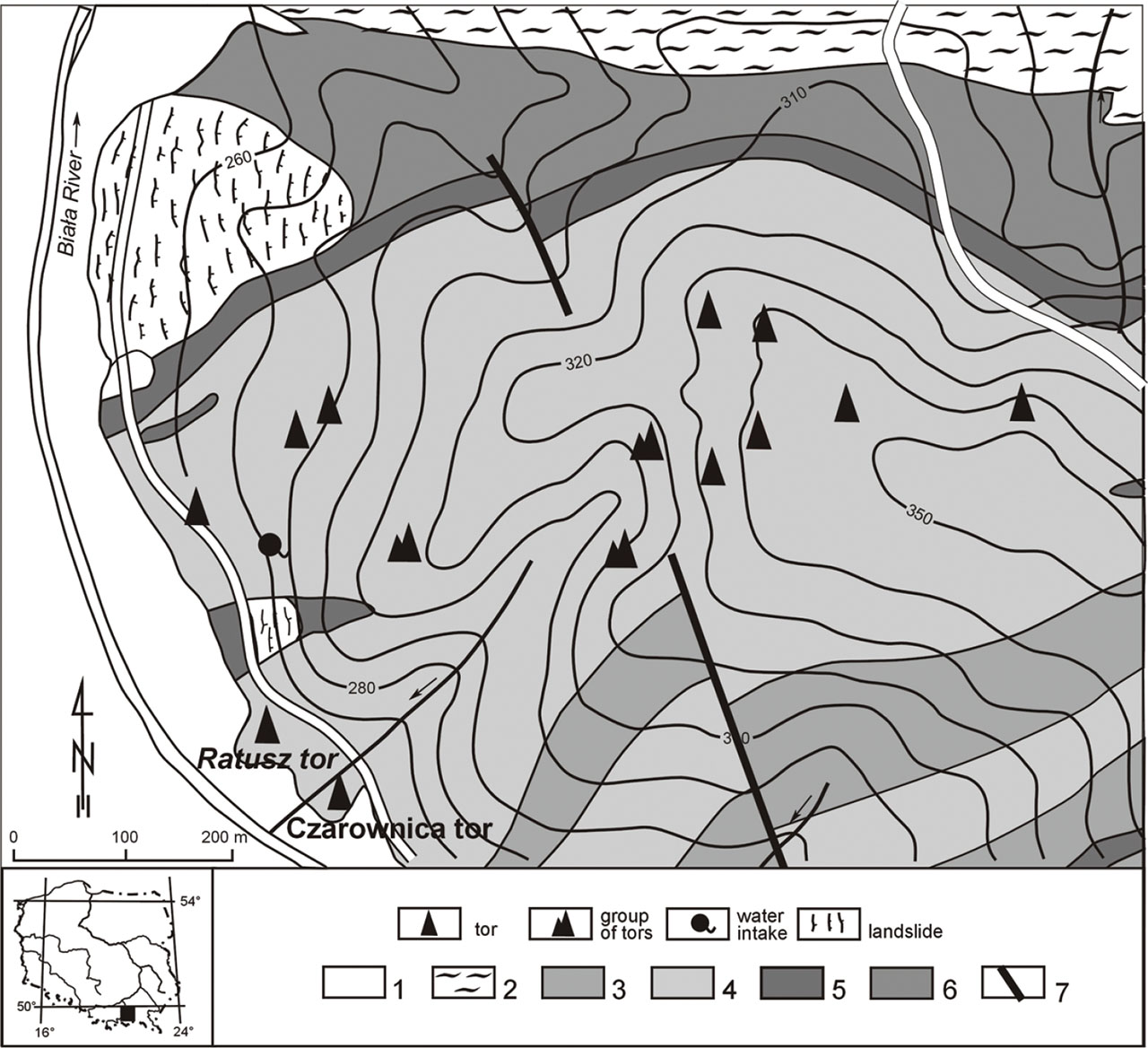
Figure 1.
Geological map and distribution of the sandstone tors of the STNR, Ciężkowice area (after Alexandrowicz, 1970; Cieszkowski et al., 1991; Leszczyński, 1981, modified). Quaternary deposits: 1, alluvial clays; 2, alluvial and diluvial loams. Paleogene flysch sequences: 3, Hieroglyphic Beds (green shales and sandstones); 4, Ciężkowice Sandstones (conglomeratic sandstones, conglomerates); 5, Variegated and Red Shales (shales), 6, Upper Istebna Shales (shales); 7, fault.
The Ciężkowice sandstones are primarily quartz arenites and wackes, occasionally grading into subarkosic or feldspathic wackes (Leszczyński, 1981; Leszczyński et al., 2015), with cement exhibiting a mixed porous-contact nature. The wacke matrix consists mainly of kaolinite and illite, with an admixture of interstratified illite-smectite minerals. Cement phases are carbonates, while dark patches are pigmented by iron (oxyhydr)oxides. Pyrite, often altered to goethite, is a common accessory mineral (Alexandrowicz & Marszałek, 2019). In some areas, the surfaces of the sandstone tors are coated with crusts rich in iron minerals such as hematite and goethite (Alexandrowicz et al., 2014). Efflorescent salts, comprising sulfates of calcium, magnesium, potassium, and aluminum, are present on many tors. These include minerals such as gypsum, syngenite, hexahydrite, pentahydrite, potassium alum, humberstonite, alunogen, and pickeringite (Alexandrowicz & Marszałek, 2019). The specific mineral composition of these efflorescences varies depending on the location of the tor. Most sandstone tors are situated on hillslopes, rising up to 100 m above the surrounding stream valleys. However, isolated tors are also found at the valley bottom of the Biała River, just above its floodplain terrace (Fig. 1) (Alexandrowicz & Marszałek, 2019; Marszałek et al., 2020). At this site, two tors, the Ratusz (Town Hall) tor and the Czarownica (Witch) tor, are located in close proximity (Figs. 1 and 2). Among all the tors studied in the STNR, Ratusz tor was distinguished in previous research by the unique mineral composition of its summer efflorescences (Alexandrowicz & Marszałek, 2019). A vertical succession of different mineral assemblages is clearly visible in the efflorescences formed on tors arranged in a staircase-like manner, from the valley bottom through the slopes up to the hilltops, a pattern characteristic of the STNR. Here, local environmental conditions vary primarily due to the area’s morphology and the degree of rainwater retention. The lowest-positioned tors, located on the valley bottom just above the floodplain or lower terrace, are characterized by permanently damp lower zones. Ratusz tor, situated on the lowest elevation and surrounded by dense vegetation growing on acidic soils, also exhibits consistently moist lower sections. In some areas, during the summer, the rock surfaces are covered with accumulations of highly hydrated salt minerals, such as pickeringite and alunogen.
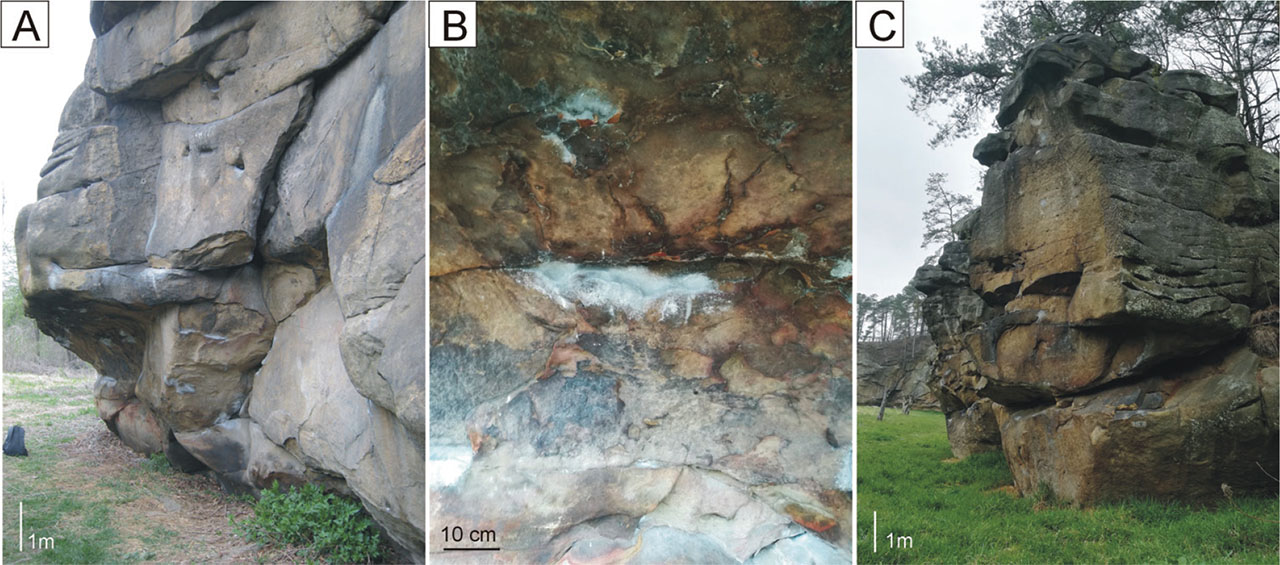
Figure 2.
The Ratusz tor (Town Hall tor) in the STNR showcasing the niche with white hydromagnesite efflorescence (A, B), and Czarownica tor (Witch tor) (C). (For location details, see Figure 1).
3. Materials and Methods
Hydromagnesite-rich efflorescence was found in a niche sheltered from rain on the Ratusz tor (Figs. 1 and 2) in early spring (April). These spring efflorescences appear in the same location as the pickeringite- and alunogen-rich accumulations observed in summer, and occur along and near fractures, suggesting that migrating water solutions within the rock mass play a significant role in their formation (Alexandrowicz & Marszałek, 2019; Marszałek & Gaweł, 2023; Marszałek et al., 2020). Hydromagnesite was identified during research focused on analyzing the phase composition of potential efflorescences, considering seasonal variations in prevailing weather conditions. The efflorescences appeared as white, very fine-grained, powdery accumulations.
Laboratory investigations focused on the analyses of whole samples of the efflorescences or on the hydromagnesite crystals only, depending on the methods used. Although pure hydromagnesite could not be mechanically separated from other microscopic crystals within the multiphase assemblage, individual crystals were identified by electron microscopy.
The X-ray diffractometry (XRPD) studies for powdered samples of the efflorescence were performed using a Rigaku SmartLab 9 kW diffractometer (RIGAKU, Corporation, Tokyo, Japan), fitted with a reflective graphite monochromator. Cu-Kα radiation was used. The diffraction data were collected within the angular range of 3–72° 2θ with a step of 0.02°, and a counting time of 2 s per step at a voltage of 45 kV, and a current of 200 mA. Quartz from Jegłowa, Poland, was used as an internal standard. The XRPD patterns were evaluated by an XRAYAN software (KOMA, H. Marciniak, Warszawa, Poland, 2006) using a diffraction pattern database of the International Centre for Diffraction Data (ICDD) (The Powder Diffraction File PDF-4+ 2016). Diffraction peak positions were determined automatically using the derivatives method as a procedure of XRAYAN software. The hydromagnesite unit-cell parameters were refined for the monoclinic space group P21/c in accordance with the data of the ICDD database (entry no. 25-513). The least-squares method and the DHN-PDS (DHN-Powder Diffraction System version 2.3, 1994) program were applied. The calculation was based on 20 reflections of hydromagnesite that did not coincide with reflections of other components of the efflorescence.
Simultaneous thermal analyses (STA, including differential thermal analysis, thermogravimetry, differential thermogravimetry—DTA, TG, DTG) of the efflorescence were conducted in a STA 449 F3 Jupiter Netzsch instrument (Netzsch-Gerätebau GmbH, Selb, Germany) coupled to a QMS 403 C Aëolos quadrupole mass spectrometer allowing the determination of gaseous decomposition products. A powdered sample of the efflorescence with a weight of about 6 mg was heated in synthetic air (flow was set to 40 cm3/min) from room temperature to 1000°C at a constant heating rate of 10°C/min. Al2O3 powder was used as the thermally inert substance.
Hydromagnesite from the efflorescence was analyzed using a FEI 200 Quanta FEG scanning electron microscope equipped with an energy dispersive spectrometer EDS/EDAX (FEI Company, Fremont, CA, USA). Observations were carried out in the low vacuum mode (pressure of 60 Pa, the samples were not coated) at an excitation voltage of 20 kV.
Quantitative chemical analyses (electron probe micro-analysis; EPMA) were performed using a JEOL Super Probe JXA-8230 (Jeol, Tokyo, Japan) operating in the wavelength dispersion (WDXS) mode. The operating conditions were: an accelerating voltage of 15 kV, a beam current of 10 nA, a beam size of 7–10 μm, a peak count time of 20 s, and a background time of 10 s. Standards, analytical lines, diffracting crystals, and mean detection limits (in wt%) were as follows: fluorapatite (PKα, PET, 0.06), diopside (CaKα, PET, 0.02), albite (NaKα, TAP, 0.03), (SiKα, TAP, 0.02) and (AlKα, TAP, 0.04), diopside (MgKα, TAP, 0.02), sanidine (KKα, PET, 0.03), anhydrite (SKα, PET, 0.02), rhodonite (MnKα, LIF, 0.03), hematite (FeKα, LIF, 0.03), barite (BaLα, PET, 0.06), celestine (SrLα, PET, 0.03), crocoite (PbMα, PET, 0.06), and willemite (ZnKα, LIF, 0.05). The raw data were corrected using the ZAF procedure. The analyses were conducted on carbon-coated fragments of the efflorescence embedded in 1-inch resin discs and polished using oil. Atomic and molar contents of the formulae of hydromagnesite were calculated on the basis of five cations per formula unit (apfu or mpfu). Concentration of CO2 (wt%) has been calculated by stoichiometry of hydromagnesite, with the amount of CO32− assumed as ideal content. The percentage of H2O was determined based on the difference 100−(wt.% MgO)−(wt.% CO2), OH− occupancy was normalized to ideal amounts, and H2O was calculated taking into account that 2 OH− produces 1 H2O molecule.
Raman spectra of hydromagnesite were acquired using a Thermo Scientific DXR Raman microscope (Thermo Scientific, Walthman, MA, USA) equipped with a 900 grooves/mm grating and a CCD detector. A 532 nm laser provided excitation at a maximum power of 10 mW. To ensure high-quality spectra, 10–100 scans were recorded with an exposure time of 3 s per scan. Laser power was adjusted between 3 mW and 10 mW depending on signal strength. Olympus 10× (NA 0.25) and 50× (NA 0.50) objectives were used (theoretical spot sizes of 2.1 μm and 1.1 μm, respectively). The spectra were analyzed based on the RRUFF Raman Minerals spectral libraries and selected literature sources (Frost, 2011; Kuenzel et al., 2018; Wang et al., 2006; Winnefeld et al., 2019). The band component identification was performed using the Omnic software package (Omnic 9, 1992–2012, Thermo Fisher Scientific Inc.; Thermo Scientific, Walthman, MA, USA). Band fitting was carried out using a Gauss-Lorentz cross product function with the minimum number of component bands necessary to obtain an optimal fit.
4. Results and Discussion
4.1. Efflorescence from the Ratusz tor
4.1.1. XRPD
The powder X-ray diffraction patterns of the efflorescence sample revealed the presence of hydromagnesite with an admixture of gypsum and hexahydrite (Fig. 3A). Additionally, traces of quartz, which comes from a parent rock, were also found in the sample. The phases were identified based on the following data: hydromagnesite, ICDD entry no. 25-513, hexahydrite, ICDD entry no. 24-719, gypsum, ICDD entry no. 33-311 and quartz, ICDD entry no. 33-1161.
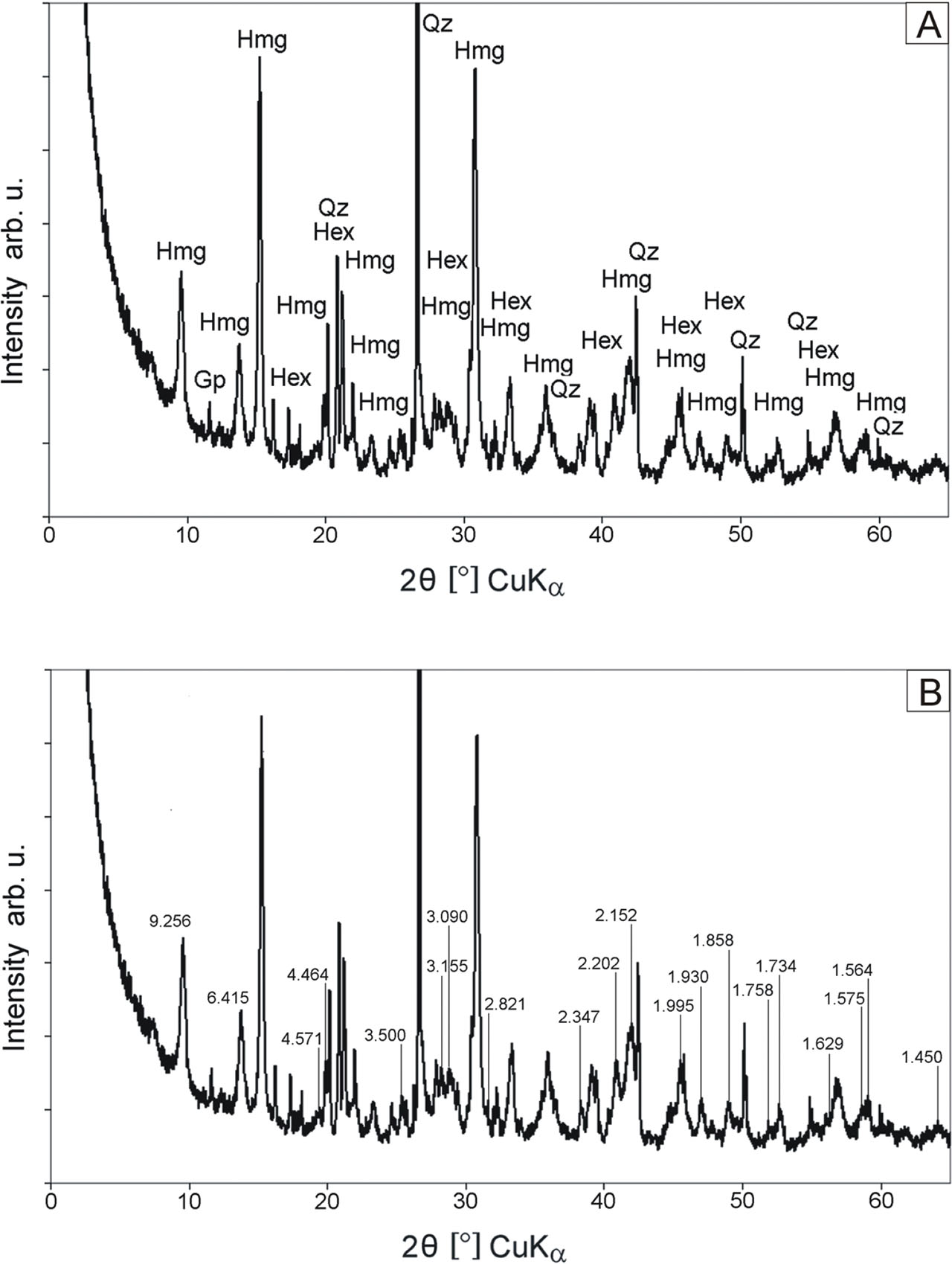
Figure 3.
Characteristic X-ray patterns of the spring-formed hydromagnesite-rich efflorescence from the Ratusz tor (A) and the hydromagnesite reflections used for the refining unit-cell parameters (B). Gp, gypsum; Hex, hexahydrite; Hmg, hydromagnesite; Qz, quartz.
4.1.2. STA, mass spectrometry QMS
The STA (DTA, TG, and DTG) curves of the efflorescence are shown in Figure 4. Ion current (IC) curves for m/z = 18 (H2O), m/z = 44 (CO2), and m/z = 64 (SO2), corresponding to the evolved gaseous decomposition products, are displayed in Figure 5.
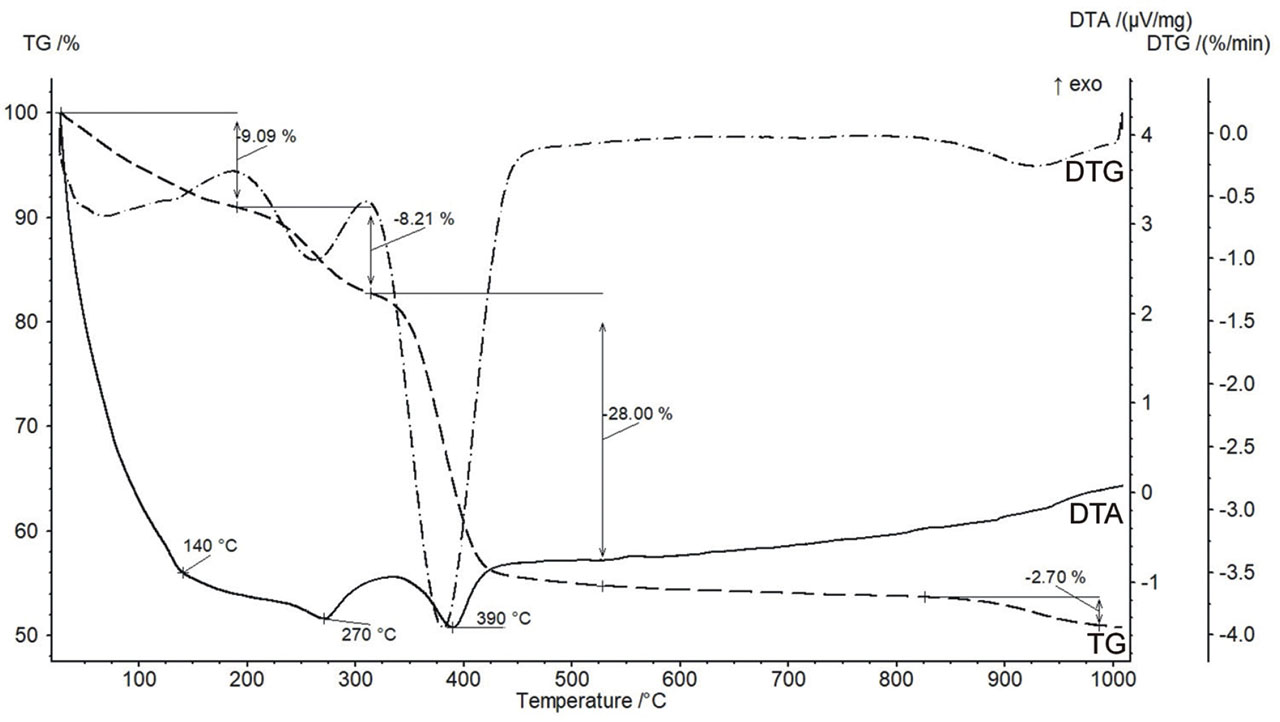
Figure 4.
STA (DTA, TG and DTG) patterns for the spring efflorescence samples from the Ratusz tor (STNR).
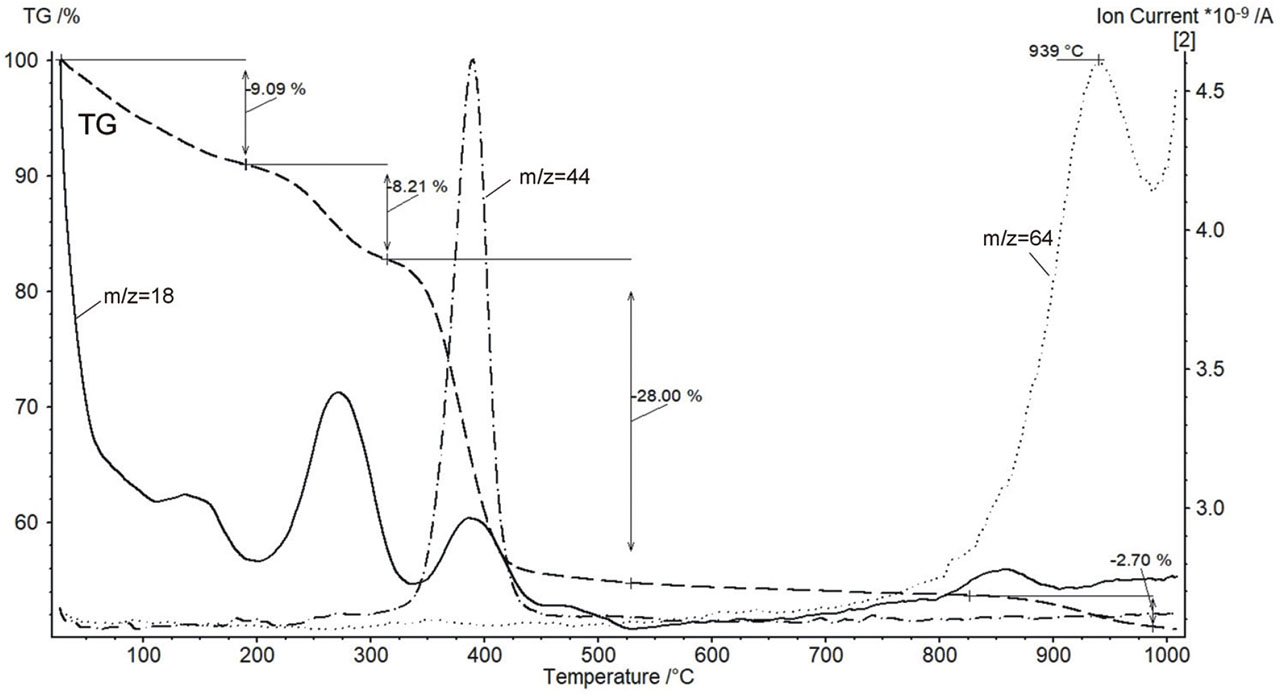
Figure 5.
Temperature-dependent IC curves of the volatile decomposition products formed under heating of the spring efflorescence samples from the Ratusz tor (STNR) in air. IC curves for m/z = 18 (H2O), m/z = 44 (CO2) and m/z = 64 (SO2) are presented in relation to the TG curve.
The thermogravimetric (TG) and differential thermogravimetric (DTG) analyses reveal three prominent mass loss steps. These steps are observed in the temperature range of 30–200°C (Step 1), 200–325°C (Step 2) and 325–525°C (Step 3). The corresponding mass losses are approximately 9.09%, 8.21% and 28.00% respectively. Further, but not very significant, mass loss was recorded in the range of 800–1000°C, and is 2.70% (Step 4) (Fig. 4). The DTA curve shows a broad endothermic effect starting at approximately 30°C, which transitions directly into a prominent effect with a maximum at 270°C. This effect is preceded by a weak inflection point around 140°C. These two effects correspond to the first and second decomposition steps, respectively. A second distinct endothermic effect is observed at 390°C, representing the third decomposition step of the sample. Step 4, identified from the DTG and TG curves, is not accompanied by a corresponding peak on the DTA curve, suggesting that this step may involve only minor thermal effects or processes below the detection sensitivity of DTA.
The first three thermal effects correspond to distinct stages of mass loss, attributed to the gradual release of water from hydrated minerals, as confirmed by the quadrupole mass spectrometry (QMS) data (Fig. 5). The IC curve for m/z = 18, corresponding to H2O, shows maxima at around 140°C, 270°C, and 390°C. These decomposition steps are related to dehydration and dehydroxylation of the sample components. The weak bulge in the IC curve for m/z = 18 between 450°C and 525°C is a continuation of the effect from the maximum at 390°C and probably reflects the further loss of residual water. The thermal decomposition observed at 390°C (Step 3) is also associated with CO2 release, as evidenced by the IC curve for m/z = 44 (CO2), which overlaps with the H2O signal (m/z = 18). This indicates that the Step 3 also involves decarbonation of the dehydrated mineral phases. A weaker effect is observed between 800°C and 1000°C on the IC curve for m/z = 18 (H2O), which overlaps with a signal for m/z = 64, indicating the presence of SO2. The corresponding peak for SO2 has a maximum at 939°C (Fig. 5). The weak H2O signal in this range is probably related to atmospheric H2O (gas atmosphere inside the furnace; Chukanov & Chervonnyi, 2016). The mass loss observed in this temperature range on the TG and DTG curves (Step 4) is associated with SO2 release from the sample. The observed decomposition relates to the sulfate phases formed after earlier dehydroxylation processes and involves the formation of metal oxides and the release of SO3, followed by the decomposition of SO3 into SO2 and O2.
The final thermal decomposition product of the efflorescence sample, based on XRPD analysis conducted after the thermal measurement, contains periclase (MgO, ICDD entry no. 45-0946), anhydrite (CaSO4, ICDD entry no. 37-1496), and quartz (ICDD entry no. 33-1161). This confirms that the analyzed samples originally contained hydromagnesite and hexahydrite, which decompose to periclase, and gypsum, which decomposes to anhydrite.
For Steps 1–4, the following reactions are proposed:
Step 1
Step 2
Step 3
Step 4
Numerous studies in the literature address the thermal decomposition of hydromagnesite. Most of these focus on synthetically produced material (e.g., Bhattacharjya et al., 2012; Hollingbery & Hull, 2010; Ren et al., 2014; Vágvölgyi et al., 2008), while a smaller number examine the natural mineral, often containing an admixture of huntite (e.g., Hollingbery & Hull, 2010, 2012). These studies differ significantly in their STA measurement conditions, including heating rates, gas atmospheres, and other experimental parameters. In comparing the results of TG analysis of hydromagnesite available in the literature, Hollingbery and Hull (2010) emphasize that there is no single, universal decomposition mechanism for hydromagnesite. The decomposition pathway is influenced by a number of factors, such as the heating rate and the composition of the atmosphere inside the furnace. These conditions can determine, for example, whether the decomposition involves exothermic crystallization of magnesium carbonate after the loss of water from the hydromagnesite structure. It is also clear that parameters such as the amount of material, morphology and size of the crystals, and the degree of crystallinity of the sample are important (Bhattacharjya et al., 2012; Bruni et al., 1998). Sample purity is also a crucial issue, as natural efflorescence samples are typically mixtures of salt minerals, leading to overlapping and complex thermal effects. The temperature ranges reported for the thermal decomposition reactions of hydromagnesite, namely dehydration, dehydroxylation, and decarbonation, vary slightly across different studies (Bhattacharjya et al., 2012; Paama et al., 1998; Vágvölgyi et al., 2008), which can complicate direct comparisons. However, regardless of the above-mentioned factors, these three reactions remain characteristic of the thermal decomposition of hydromagnesite.
Hydromagnesite from the STNR decomposes in two distinct temperature regions: dehydration takes place in the temperature range of 200–325°C, while dehydroxylation and decarbonation occur between 325°C and 525°C. The main thermal effect of hydromagnesite, decarbonation, is found to overlap with the dehydroxylation step. A similar phenomenon was reported by Bhattacharjya et al. (2012), who observed a strong dependence of the activation energy for the decarbonation step of synthesized hydromagnesite on crystal morphology. In particular, higher activation energies were associated with more densely packed morphologies, likely due to hindered thermal transport within the core. The authors also concluded that the dehydroxylation step overlaps with both the dehydration and decarbonation processes. The relatively lower temperature of the decarbonation effect in the case of hydromagnesite from STNR, leading to this overlap, can be attributed to the morphology and grain size of the mineral. Scanning electron microscopy (SEM) analysis of the efflorescence revealed the presence of very fine, acicular and flocculent hydromagnesite crystals, which likely facilitate faster heat transfer and earlier onset of decomposition. Hollingbery and Hull (2012) also observed that natural hydromagnesite endothermically decomposes in two steps, releasing a mixture of water and carbon dioxide. The first step, occurring below 350°C, corresponds to the loss of the four molecules of crystallization water. The second step, between about 350°C and 700°C, involves the decomposition of the hydroxide and carbonate ions. Fourier Transform Infrared Spectroscopy (FTIR) analysis of the evolved gases supports these proposed decomposition mechanisms. The separation of dehydroxylation and decarbonation effects, and the correspondingly higher decomposition temperatures of the carbonate ions, are explained by their dependence on the heating rate. Higher heating rates cause an increase in the local partial pressure of carbon dioxide, which in turn promotes the recrystallization of partially decomposed hydromagnesite. This results in a modified structure that decomposes at a higher temperature.
The presence of hexahydrite further confirms the release of SO2 during the final, fourth stage of thermal decomposition of the efflorescence sample, as evidenced by corresponding ionic current peaks with a maxima at 939°C (m/z = 64, SO2). This indicates that, under the applied measurement parameter settings, anhydrous magnesium sulfate (MgSO4) decomposed with the release of SO3, followed by the decomposition of SO3 into SO2 and O2. This is consistent with the known decomposition temperature of MgSO4, which occurs at approximately 1000°C. The earlier stages of hexahydrite thermal decomposition involve the following endothermic reactions: the loss of five water molecules, often occurring in several steps, between 100°C and 250°C, followed by the release of the sixth water molecule around 300°C (van Essen et al., 2009; Zhong et al., 2025). For hexahydrite from STNR, these effects correspond to the first and second steps of the efflorescence’s thermal decomposition, with maxima at approximately 140°C and 270°C, respectively.
Thermal decomposition of CaSO4 occurs at a higher temperature (∼1200°C; Földváry, 2011), and was therefore not recorded under the applied measurement conditions. The endothermic reaction of gypsum dehydration occurs during the first step of efflorescence decomposition, overlapping with the dehydration of hexahydrite. The presence of anhydrite as one of the final thermal decomposition products confirms that the release of SO2 is associated with the decomposition of MgSO4 following the dehydration of hexahydrite. The expected endothermic effect of MgSO4 decomposition at about 1000°C (Földváry, 2011) was not observed on the DTA curve, likely due to the low content of this phase in the sample. Similarly, the lack of an endothermic effect (DTA curve) at 573°C, characteristic of a structural transformation of low-temperature quartz into high-temperature quartz, indicates that this phase was present only in minor amounts. Overall, analysis of the recorded thermal effects generally agrees with published data regarding the hydromagnesite and sulfate minerals present in the sample.
The theoretical mass loss of hydromagnesite, based on the chemical formula Mg5(CO3)4(OH)2∙4H2O, is 56.7%, comprising 37.8% from decarbonation, 15.5% from water loss, and 3.7% from dehydroxylation. The recorded thermal effects associated with hydromagnesite are those at 260°C (dehydration) and 390°C (dehydroxylation and decarbonation), with corresponding mass losses of 8.21% and 28.00%, respectively. The thermal effect at 260°C also includes the final stage of hexahydrite dehydration. Consequently, to estimate the hydromagnesite content in the sample, the mass loss associated with the thermal effect peaking at 390°C was used. Assuming a theoretical mass loss of 41.5% for dehydroxylation and decarbonation processes, and a measured value of 28.00% for the STNR sample, the hydromagnesite content is estimated to be approximately 67.5%. Since the dehydration temperatures of the sulfate minerals (i.e., gypsum and loss of the five water molecules of hexahydrite) fall within a similar range, these effects cannot be distinctly assigned to individual phases. In contrast, the release of SO2 can be attributed unambiguously to a hexahydrite (through the decomposition of MgSO4). Based on the associated mass loss of 2.7%, the hexahydrite content in the sample is estimated at approximately 10%.
4.2. Hydromagnesite from the Ratusz tor
4.2.1. SEM-EDS analysis
Hydromagnesite crystals were identified as the major component of the white salt efflorescence aggregates. In SEM micrographs, they appear as very thin crystals exhibiting an acicular to flame-bladed habit (Figs. 6A, B). Individual crystals can reach lengths of several tens of micrometres. Their surfaces are irregular and covered with flaky and flocculent grains (Fig. 6C). The acicular and flocculent grains also form clusters with irregular outlines.
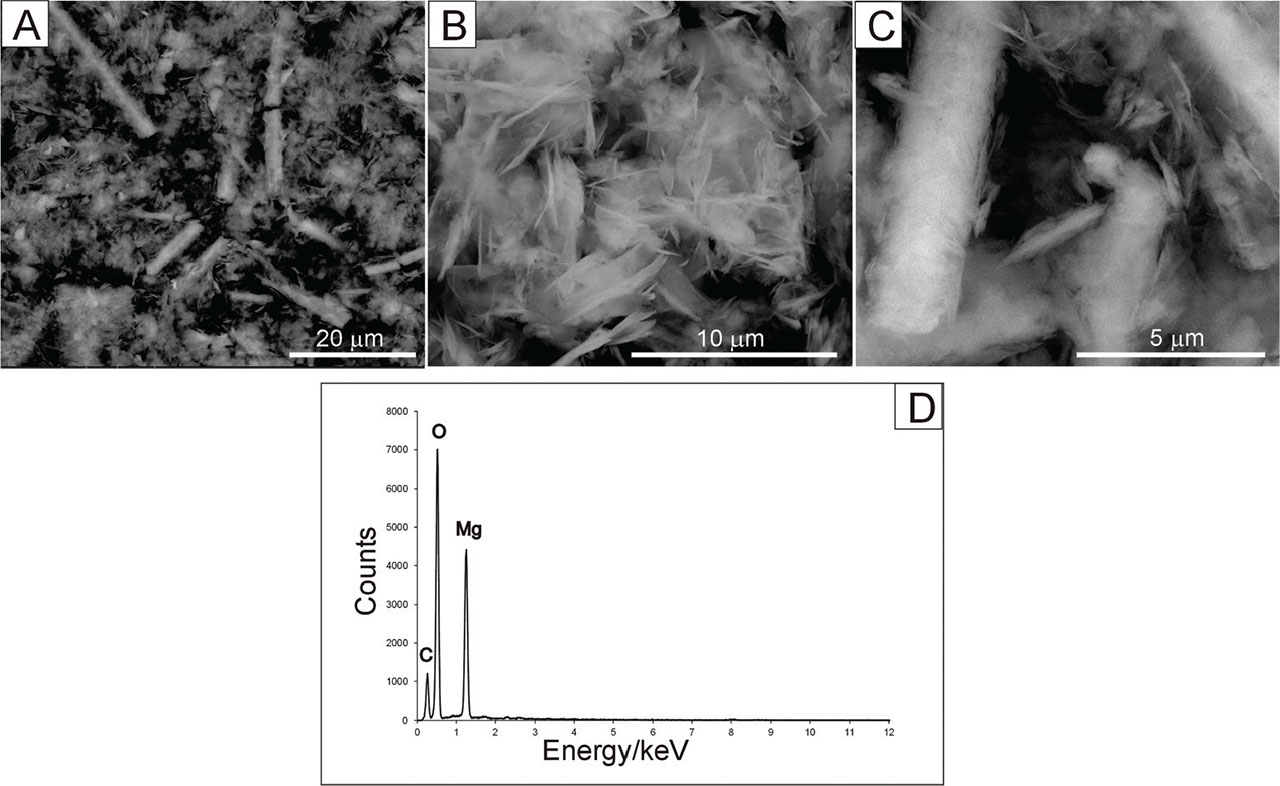
Figure 6.
Backscattered electron (BSE) images of hydromagnesite from the Ratusz tor (STNR) efflorescence: general view showing thin, acicular crystals with lengths of several tens of micrometres and clusters of flocculent aggregates (A); Clusters of flocculent and flame-bladed crystals (B); Acicular crystals with irregular surfaces coated by flaky grains and loose flocculent aggregates (C). Representative EDS elemental composition of hydromagnesite crystals showing the presence of magnesium (Mg), carbon (C), and oxygen (O) (D).
Based on EDS analysis, the chemical composition of these crystals consists exclusively of magnesium (Mg), carbon (C), and oxygen (O), which is consistent with the presence of hydromagnesite (Fig. 6D). In addition to hydromagnesite, gypsum was identified as a minor component of the efflorescence. It occurs in tabular or columnar crystals, and its EDS spectrum indicates a composition comprising calcium (Ca), sulfur (S), and oxygen (O).
4.2.2. Chemical analysis (EPMA)
The results of the microprobe analyses are presented in Table 1. Hydromagnesite from STNR contains 38.80‒43.65 wt% (41.28 wt% on average) of MgO, the main component of this mineral. Elements such as Pb, Zn, Sr, Mn, Fe, Ba, Na, K, and P occur only in trace amounts, not exceeding 0.01‒0.04 wt% on average. Other elements analyzed, including calcium (CaO 0.07–0.13 wt%; 0.09 wt% on average), sulfur (SO3 1.14–4.98 wt%; 1.92 wt% on average), silicon (SiO2 0.14–0.24 wt%; 0.21 wt% on average), and aluminum (Al2O3 0.00–0.13 wt%; 0.05 wt% on average), show slightly higher concentrations.
Table 1.
Representative chemical compositions of the STNR hydromagnesite
| Analysis number | 2 | 18 | 24 | 26 | 30 | 31 | 32 | 35 | 39 | 34 | Average n = 10 | SD |
|---|---|---|---|---|---|---|---|---|---|---|---|---|
| wt% | ||||||||||||
| SO3 | 1.31 | 1.80 | 1.38 | 4.98 | 2.57 | 1.59 | 1.52 | 1.56 | 1.14 | 1.34 | 1.92 | 1.14 |
| P2O5 | 0.00 | 0.00 | 0.00 | 0.00 | 0.04 | 0.00 | 0.01 | 0.01 | 0.02 | 0.00 | 0.01 | 0.01 |
| SiO2 | 0.22 | 0.29 | 0.22 | 0.24 | 0.16 | 0.14 | 0.18 | 0.16 | 0.25 | 0.25 | 0.21 | 0.05 |
| Al2O3 | 0.13 | 0.07 | 0.00 | 0.02 | 0.00 | 0.00 | 0.00 | 0.09 | 0.08 | 0.06 | 0.05 | 0.05 |
| PbO | 0.01 | 0.00 | 0.00 | 0.03 | 0.00 | 0.00 | 0.02 | 0.04 | 0.05 | 0.00 | 0.01 | 0.02 |
| ZnO | 0.02 | 0.00 | 0.00 | 0.02 | 0.00 | 0.01 | 0.00 | 0.02 | 0.03 | 0.00 | 0.01 | 0.01 |
| SrO | 0.01 | 0.03 | 0.07 | 0.05 | 0.08 | 0.02 | 0.02 | 0.00 | 0.02 | 0.03 | 0.03 | 0.03 |
| MnO | 0.01 | 0.00 | 0.02 | 0.00 | 0.02 | 0.00 | 0.01 | 0.00 | 0.00 | 0.01 | 0.01 | 0.01 |
| FeO | 0.04 | 0.00 | 0.00 | 0.01 | 0.00 | 0.03 | 0.00 | 0.03 | 0.00 | 0.00 | 0.01 | 0.01 |
| CaO | 0.11 | 0.08 | 0.08 | 0.13 | 0.06 | 0.07 | 0.07 | 0.13 | 0.11 | 0.08 | 0.09 | 0.03 |
| BaO | 0.00 | 0.00 | 0.00 | 0.02 | 0.00 | 0.02 | 0.01 | 0.00 | 0.02 | 0.02 | 0.01 | 0.01 |
| MgO | 41.77 | 43.29 | 40.65 | 39.74 | 41.09 | 41.38 | 43.65 | 40.15 | 42.33 | 38.80 | 41.28 | 1.53 |
| Na2O | 0.00 | 0.00 | 0.05 | 0.03 | 0.05 | 0.06 | 0.07 | 0.03 | 0.01 | 0.03 | 0.03 | 0.02 |
| K2O | 0.04 | 0.06 | 0.07 | 0.07 | 0.05 | 0.04 | 0.07 | 0.01 | 0.00 | 0.01 | 0.04 | 0.03 |
| Total-1 | 43.66 | 45.61 | 42.54 | 45.33 | 44.11 | 43.36 | 45.62 | 42.25 | 44.06 | 40.62 | 43.72 | 1.61 |
| MgO | 41.77 | 43.29 | 40.65 | 39.74 | 41.09 | 41.38 | 43.65 | 40.15 | 42.33 | 38.80 | 41.28 | 1.53 |
| CO2* | 36.48 | 37.81 | 35.50 | 34.71 | 35.89 | 36.15 | 38.12 | 35.08 | 36.97 | 33.89 | 36.06 | 1.34 |
| H2O** | 21.76 | 18.90 | 23.85 | 25.55 | 23.02 | 22.47 | 18.23 | 24.77 | 20.70 | 27.31 | 22.66 | 2.86 |
| Total-2 | 100.00 | 100.00 | 100.00 | 100.00 | 100.00 | 100.00 | 100.00 | 100.00 | 100.00 | 100.00 | 100.00 | |
| Apfu or mpfu [five cations basis] | ||||||||||||
| Mg2+ | 5.00 | 5.00 | 5.00 | 5.00 | 5.00 | 5.00 | 5.00 | 5.00 | 5.00 | 5.00 | 5.00 | |
| (CO3)2−*** | 4.00 | 4.00 | 4.00 | 4.00 | 4.00 | 4.00 | 4.00 | 4.00 | 4.00 | 4.00 | 4.00 | |
| OH−*** | 2.00 | 2.00 | 2.00 | 2.00 | 2.00 | 2.00 | 2.00 | 2.00 | 2.00 | 2.00 | 2.00 | |
| H2O**** | 4.83 | 3.89 | 5.57 | 6.20 | 5.27 | 5.08 | 3.68 | 5.91 | 4.47 | 6.88 | 5.14 | 1.01 |
| Unit-cell parameters | ||||||||||||
| a[Å] | b[Å] | c[Å] | β[°] | V[Å3] | ||||||||
| 10.050(8) | 8.921 (7) | 8.384 (6) | 114.291 (25) | 685.06 | ||||||||
Ca and S probably come from neighboring minerals, such as gypsum and hexahydrite, which are components of efflorescence. Silica and alumina present in the studied sample could be considered to originate from finely dispersed quartz and/or thin clay material also present in efflorescence. The presence of gypsum, hexahydrite, and quartz was confirmed by XRPD analyses. As impurities, they were not included in the calculations of the chemical formula of hydromagnesite. This approach is also supported by the lack of direct evidence in the literature for the substitution of Mg (or other hydromagnesite components) by these elements in the hydromagnesite structure. However, it is stated that hydromagnesite usually contains some impurities, mainly related to the geological environment where it forms. Common impurities found in hydromagnesite include: calcium (CaO), silica (SiO2), iron (Fe2O3) and aluminum (Al2O3) (Guermech et al., 2022; Zhao et al., 2024). These impurities arise from the mineral’s formation environment, commonly ultramafic rocks, serpentinites, hydrothermally altered dolomites, and marbles. Hydromagnesite often occurs together with minerals such as huntite (Mg3Ca(CO3)4), brucite, and magnesite (Atay & Çirak, 2019; Hollingbery & Hull, 2012). Impurities in hydromagnesite are mainly located as separate mineral phases (e.g., huntite for calcium) or as amorphous or fine-grained coatings and inclusions (e.g., silica, clays, iron oxides). These phases form distinct crystals or intergrowths, rather than a solid solution within hydromagnesite.
Concentration of CO2 (wt%) has been calculated by stoichiometry of hydromagnesite, with the amount of CO32− assumed as ideal content. The percentage of H2O was determined based on the difference: 100−(wt.% MgO)−(wt.% CO2). Based on the results obtained (Table 1; n = 10), the chemical formula of hydromagnesite from STNR may be expressed as Mg5(CO3)4(OH)2∙5.14∙H2O. The observed deviation from the ideal hydromagnesite formula, i.e. the higher number of water molecules per formula unit (calculated on the basis of CO2 backward calculation from amount of CO32− set as ideal one), is likely to be caused by an admixture of hydromagnesite with other minerals in the analyzed volume, and possibly also by the instability of hydrous minerals under an electron beam, and the porous nature of the sample.
4.2.3. Unit-cell parameters
The unit-cell parameters of hydromagnesite from Ratusz tor were determined using 20 reflections of hydromagnesite that do not overlap with reflections from other components of the efflorescence (Fig. 3B). The refined parameters for the monoclinic space group P21/c are as follows: a = 10.050 (8) Å, b = 8.921 (7) Å, c = 8.384 (6) Å, β = 114.291 (25)°, V = 685.06 Å3. The resulting ratio a:b:c is 1.127:1:0.940.
The unit-cell parameters obtained for hydromagnesite are similar to those reported in the literature (Fig. 7). The differences between the sample and literature data are very small to small, with a maximum difference of 0.3% for the β angle and 0.6% for the a parameter.
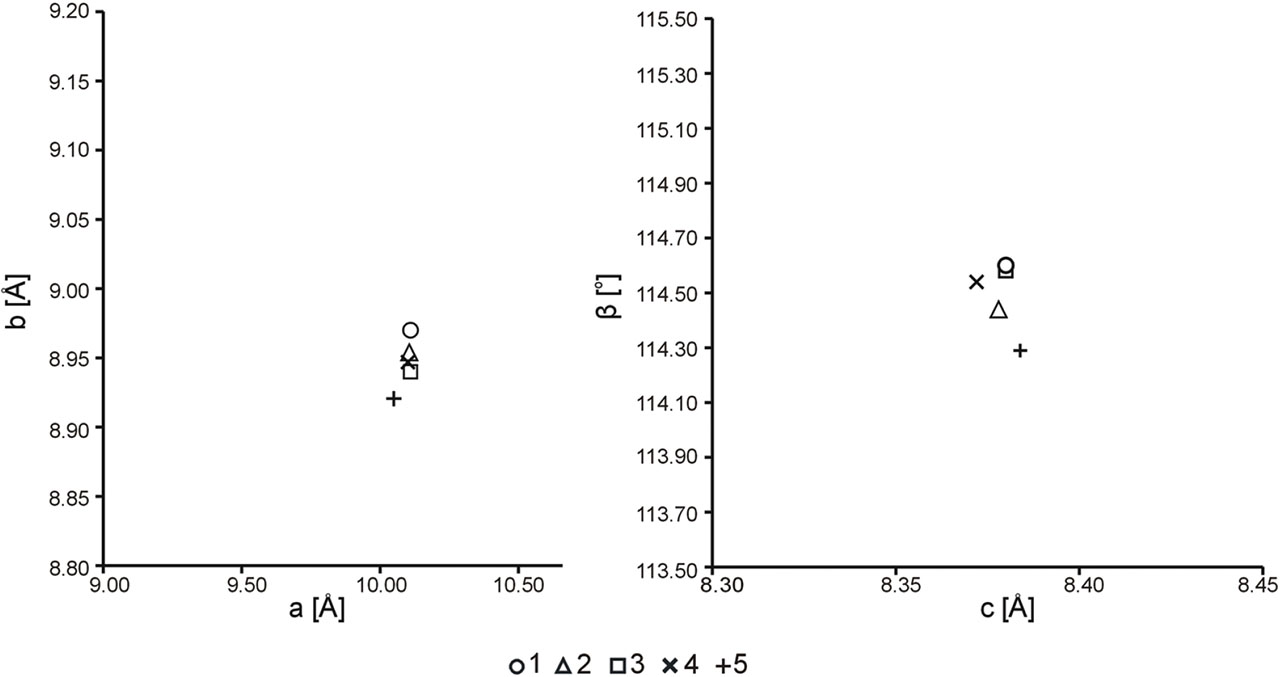
Figure 7.
Unit-cell parameters of the STNR hydromagnesite compared to data in the literature: 1—Akao et al. (1974); 2—Akao and Iwai (1977); 3—https://webmineral.com/data/Hydromagnesite.shtml; 4—Kruszewski et al. (2020); 5—this paper.
4.2.4. Raman microspectroscopy
Figure 8 shows typical Raman spectra of hydromagnesite from the Ratusz tor in STNR. Figure 9 presents a spectrum of hydromagnesite in the 500–1800 cm−1 spectral region. The very strong band at 1119 cm−1 is assigned to the ν1 CO32− symmetric stretching mode in hydromagnesite. The bands in the 800–500 cm−1 spectral region are noisy and of low intensities; nevertheless, complex Raman bands at 558, 646, 710, 732 and 762 cm−1 have been distinguished. The bands at 710, 732 and 762 cm−1 have been assigned to the ν4 CO32− bending modes, while those centered at 646 cm−1 can be related to ν4 HCO3− bending modes (Frost, 2011). The band centered at ca 558 cm−1 may be attributed to Mg–O–H lattice vibrations, specifically bending or translation modes of hydroxyl groups coordinated to magnesium ions within the crystal structure (Kloprogge et al., 2004).
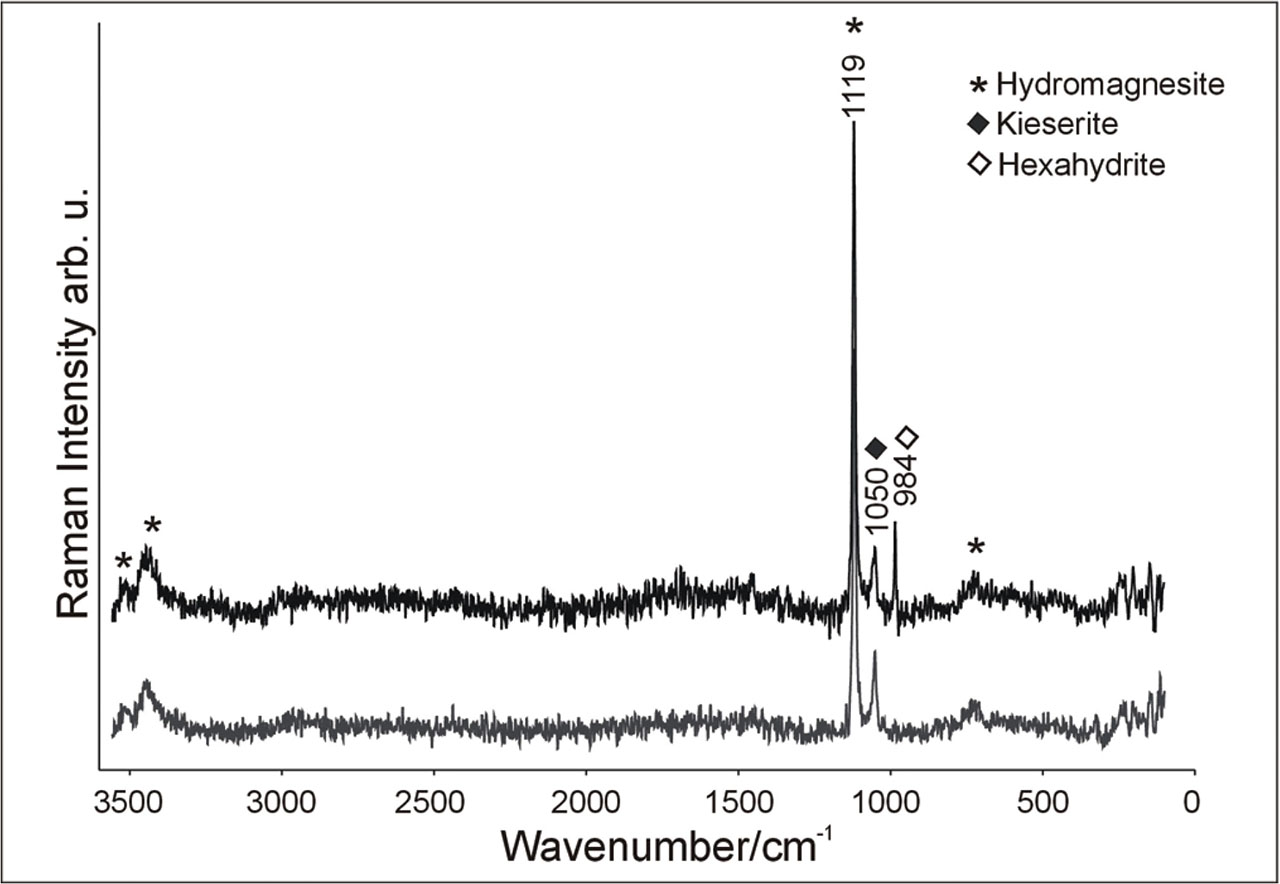
Figure 8.
Typical Raman spectra of hydromagnesite from the Ratusz tor in STNR.
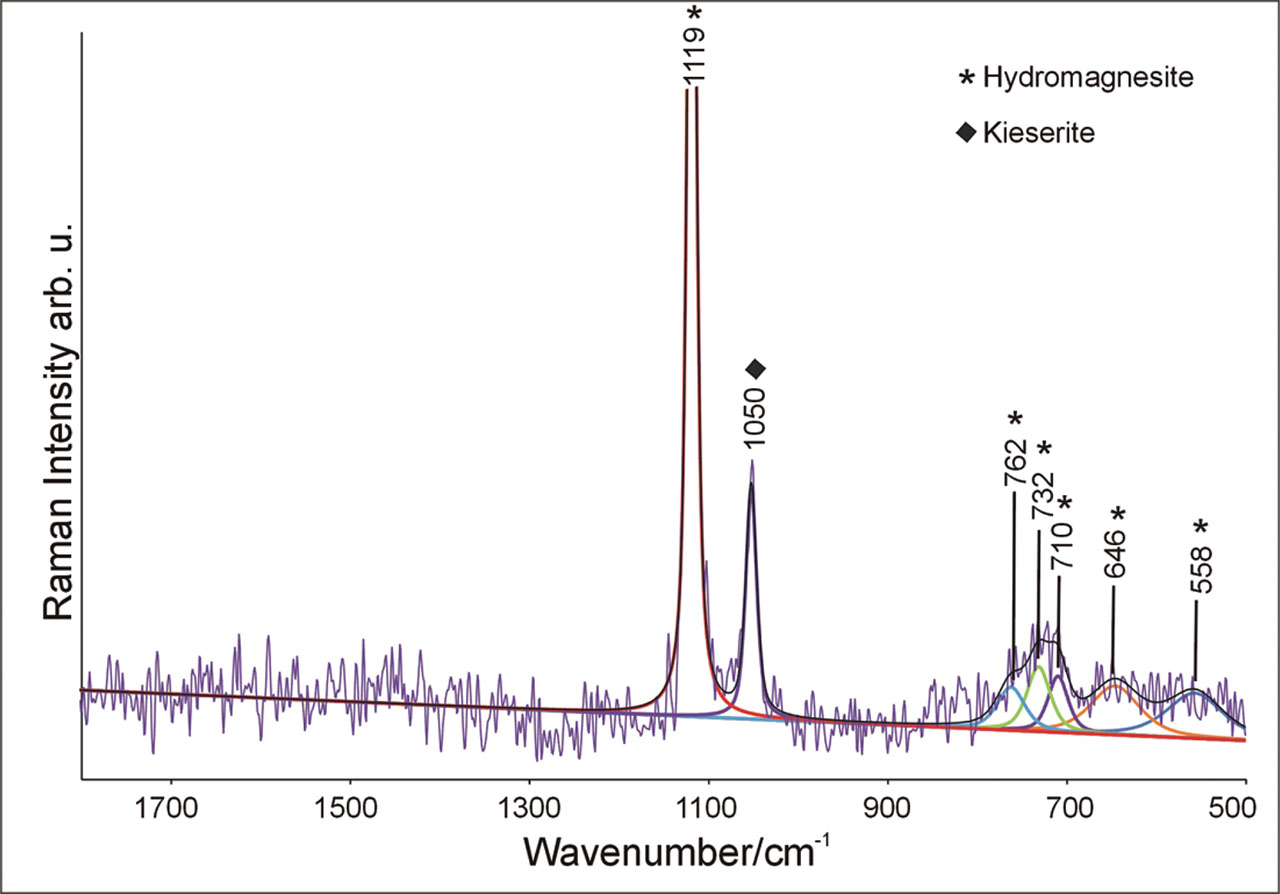
Figure 9.
Raman spectra of the STNR hydromagnesite in the 500–1800 cm−1 region.
The Raman spectrum of the OH stretching region is depicted in Figure 10. An intense band observed at 3515 cm−1 with a second band at 3445 cm−1 are assigned to the OH stretching vibration of the OH units in the hydromagnesite structure. The clear asymmetry of the band on the low wavenumber side allows for the distinction of an additional band at 3373 cm−1. The bands in the 1200–2000 cm−1 spectral region, which are typically assigned to ν3 CO32− antisymmetric stretching modes and the bending vibration of hydrogen-bonded water molecules, have not been observed.
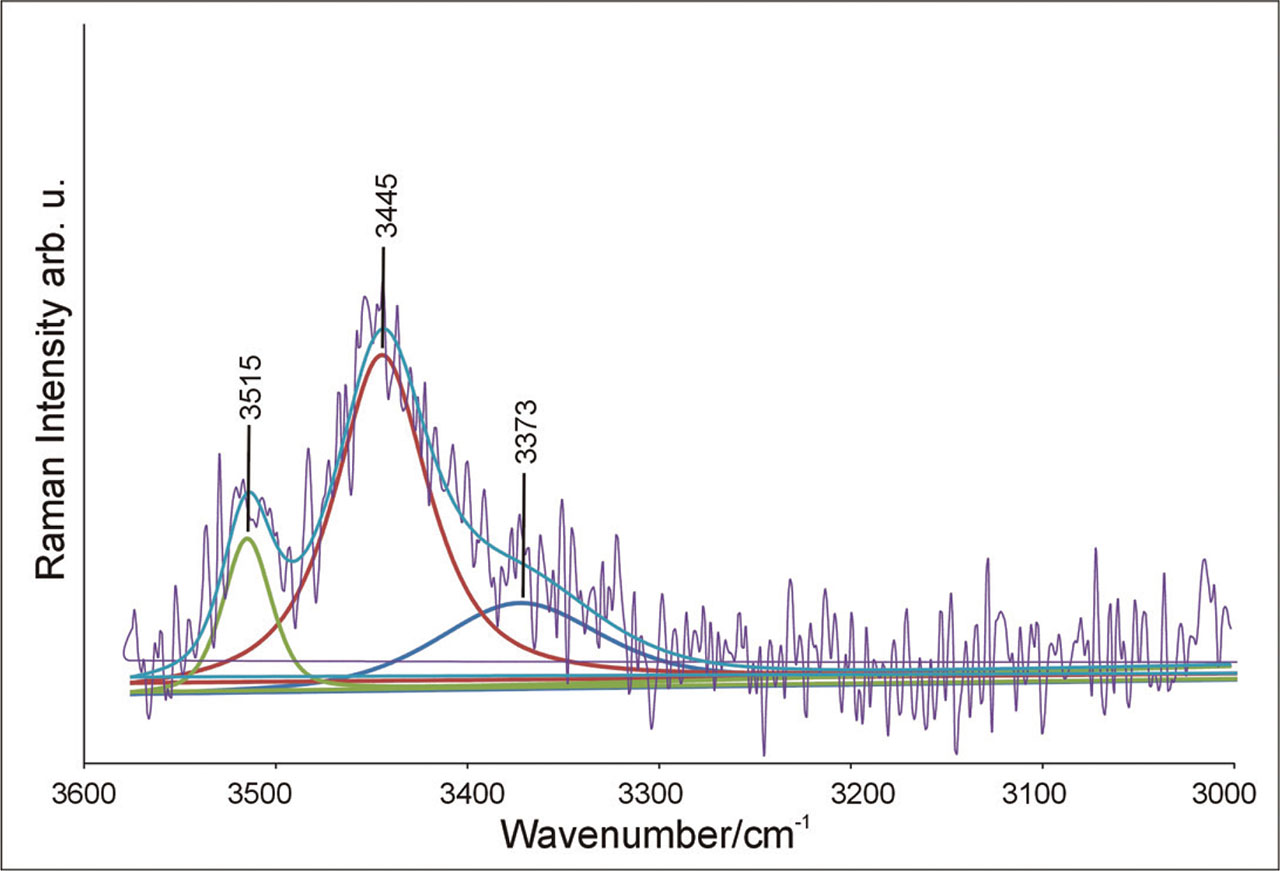
Figure 10.
Raman spectra of the STNR hydromagnesite in the 3000–3600 cm−1 region.
An observed peak at 1050 cm−1 does not correspond to hydromagnesite or any other known magnesium carbonate phase, whether hydrated or non-hydrated (e.g., artinite, dypingite, huntite, magnesite, nesquehonite, etc.). A similar band was reported in the Raman spectra of MgO–hydromagnesite mixtures by other authors (Winnefeld et al., 2019), who, however, did not identify or assign it, also due to the aforementioned reasons. Kuenzel et al. (2018) also described a broad, weak peak, or a series of small peaks, between 1050 cm−1 and 1120 cm−1 in the Raman spectra of MgO–hydromagnesite mixtures and suggested attributing them to the symmetric stretching mode of CO32− in other magnesium carbonate phases, which may be poorly crystalline.
In the case of efflorescence samples from STNR, which, in addition to hydromagnesite, also contain other hydrated minerals such as magnesium sulfate (hexahydrite) and calcium sulfate (gypsum) (see, e.g., XRPD and STA analyses), it appears that this band may be associated with the ν1 SO42− vibration mode of MgSO4∙nH2O (specifically, kieserite). Moreover, in numerous Raman spectra, peaks corresponding to hexahydrite (notably the band at 984 cm−1; ν1 SO42−) are consistently observed alongside hydromagnesite, often accompanied by a minor amount of kieserite (the band at 1050 cm−1). In the SO42− fundamental vibration region (950–1150 cm−1), the strongest Raman peak, corresponding to the symmetric stretching (ν1) mode of SO4 tetrahedra, shifts upward from 982.1 to 1052.7 cm−1 as the degree of hydration in MgSO4⋅nH2O decreases (Wang et al., 2006). The Raman ν1 peaks of SO4 tetrahedra are particularly useful for identifying different hydrated Mg-sulfates in mixtures, due to their narrow bandwidths (which allow visual resolution of individual peaks) and the systematic peak position shift, which directly reflect the degree of hydration.
This interpretation is consistent with previous findings from studies on the composition of efflorescences using XRPD and STA methods. It also supports the validity of the proposed interpretation of the EPMA results. The spectra attributed to hydromagnesite align with those reported by Frost (2011), with the exception of the 1200–2000 cm−1 spectral region, where no bands were observed in the present measurements.
4.3. Seasonal mineral formation on sandstone from STNR—Case of the Ratusz tor
As previously noted, a hydromagnesite-rich efflorescence was found in early spring (April) within a niche sheltered from rain on the Ratusz tor (Figs. 1 and 2). Notably, this location corresponds to the site where pickeringite- and alunogen-rich accumulations were observed during the summer months. These efflorescences occur along and near fractures, suggesting that migrating water solutions within the rock mass play a significant role in their formation (Alexandrowicz & Marszałek, 2019; Marszałek et al., 2020).
The sources of ions essential for the formation of secondary minerals in the efflorescences observed in STNR have been extensively discussed by Alexandrowicz and Marszałek (2019) and Marszałek et al. (2020). These studies indicate that the elements composing these secondary salts are primarily derived from the weathering of rock-forming minerals, with a possible additional contribution from local mineral spring waters.
Metals such as Mg, Fe, and Al can be released from sandstone-forming minerals, which vary in their susceptibility to weathering, including micas (biotite, which is more prone to weathering, as well as muscovite) and from clay minerals, such as illite, glauconite, chlorite and kaolinite (Hradil & Hostomský, 1999; Jambor et al., 2000; Navrátil et al., 2013). The dissolution of aluminosilicates typically proceeds slowly, accelerating only under low pH conditions. Evidence of such acidic conditions in the Ciężkowice sandstones includes the presence of jarosite (Alexandrowicz & Marszałek, 2019), which forms in low-pH environments (pH 1.5–3.0), high-sulfate environments, and gradually transforms into goethite as the pH increases above 3. A range of aluminosilicate minerals decomposes under low pH conditions, serving as a source of aluminium for the Al-rich efflorescence minerals such as pickeringite and alunogen (Blowes et al., 2003; Farkas et al., 2009; Jambor et al., 2000; Navrátil et al., 2013). The precipitation of these Al-bearing sulfates occurs from solutions rich in the sulfate anions, which originate from the oxidation of sulfides under acidic conditions. In the Ciężkowice sandstones, this sulfide is pyrite (FeS2) (Alexandrowicz et al., 2014). The oxidation of pyrite contributes both to the generation of sulfate ions and to a decrease in pH. These low pH conditions promote the decomposition of aluminosilicates, also leading to the release of Mg, which is a component of both pickeringite and hydromagnesite.
Mineral spring waters present in the area, migrating through a network of rock fractures and pore systems, may represent an additional source of ions. The geological structure of the Ciężkowice Foothills is dominated by highly permeable sandstone complexes, which form conduits allowing waters of various origins and from different circulation horizons to mix. Among them are springs classified as bicarbonate-calcium (HCO3−–Ca) with a neutral pH (∼7), in which hydrogen sulfide (H2S) also occurs as a specific component. Another example is the spring in the Stone Town Reserve, classified as bicarbonate–sulfate–sodium–calcium (HCO3−–SO42−–Na–Ca). While it has a similar pH and sulfate content, it exhibits lower mineralization (Rajchel, 2000; Rajchel et al., 2000, 2005). Based on the composition of these waters, it seems that they could be an additional source of some ions, mainly HCO3−, SO42−, Ca2+ and Mg2+, determined in the salts precipitated. However, they do not supply the Al3+ cations necessary for the formation of Al-bearing sulfates. In the authors’ opinion, the sulfur present in the efflorescences may originate either from the direct transformation of pyrite into secondary minerals or from waters enriched in hydrogen sulfide. Regardless of the sulfur release mechanism, pyrite within the Ciężkowice sandstones constitutes the primary source of this element in both cases. To accurately determine the sulfur sources contributing to sulfate efflorescence formation in the STNR, future research should include isotopic analyses, which could provide deeper insights into this issue.
Regarding air pollution, although environmental reports for the vicinity of the study area have not identified any sulfur-related hazards, the potential contribution of air pollution, particularly its long-term impact, cannot be excluded (Alexandrowicz & Marszałek, 2019). However, atmospheric CO2 may serve as a supplementary source of carbonate ions, potentially contributing to hydromagnesite formation.
The presence of hydromagnesite, which crystallizes under clearly alkaline pH conditions, while pickeringite and alunogen precipitate in acid environments, indicates a strong variability in environmental parameters depending on the seasonal weather conditions.
Pickeringite and alunogen typically precipitate under dry air conditions characterized by low pH (2‒4.5) and a high saturation of parent solutions (Alpers et al., 1994; Parnell, 1983). During a dry season, the pH values of migrating pore water can reach these conditions in certain locations due to the absence of carbonates. The Ciężkowice sandstones are either carbonate-free or very low in carbonates, which otherwise would neutralize the environment. This promotes oxidation and dissolution reactions of sulfides, resulting in higher saturation of the pore waters and ultimately in the precipitation of these sulfates. Furthermore, evaporation concentrates acidic sulfate-rich solutions on the surface of the sandstone.
Hydromagnesite (Mg5(CO3)4(OH)2⋅4H2O) is a carbonate mineral that forms in alkaline (high pH) environments where magnesium and carbonate ions are readily available. Spring typically brings increased rainfall and snowmelt, enhancing water flow through the sandstone. As acidic, sulfate-bearing solutions become diluted, sulfate phases destabilize and dissolve, while rising pH values favor the stabilization of other mineral phases. Under these increasingly alkaline conditions, and in the presence of elevated magnesium concentrations, carbonate ions, originating from mineral spring waters, migrating through a network of rock fractures and pore systems and/or from dissolved atmospheric CO2, can combine with Mg2+ to precipitate hydromagnesite, a mineral known for its capacity to sequester CO2.
Sandstones are considered favorable for geological CO2 sequestration due to their high porosity and permeability, which facilitate CO2 injection and migration, as well as their abundance of minerals that supply cations for carbonate precipitation. Field studies have demonstrated the passive sequestration of atmospheric CO2 (Wilson et al., 2009) through the weathering of Mg-silicates and the subsequent precipitation of hydrated magnesium carbonates, including hydromagnesite. Xu et al. (2005) investigated CO2 mineral sequestration in a sandstone-shale system, where CO2 was initially injected, and identified dawsonite (NaAlCO3(OH)2) and ankerite (Ca(Fe, Mg) (CO3)2) as dominant CO2-trapping minerals. The authors emphasised that the efficiency of CO2 immobilization in the studied sandstones depends on their primary mineral composition, especially the presence of chlorite (as a source of Mg and Fe) and oligoclase (as a Na source). Where magnesium is abundant, hydromagnesite may also precipitate as a secondary carbonate mineral, thereby immobilizing some of the CO2 in solid form.
The magnesium source for both pickeringite, alunogen, and hydromagnesite, the efflorescence minerals in the STNR, is the same and includes Mg-rich minerals present in the sandstone. The carbon source, however, should be clarified in subsequent studies involving isotopic analyses.
5. Summary and Conclusions
This paper presents the mineralogical and geochemical characteristics of natural hydromagnesite, a component of spring efflorescence observed on a sandstone tor in the STNR in Ciężkowice, Poland. Hydromagnesite efflorescences appear in the same location as the pickeringite- and alunogen-rich accumulations observed during the summer. The occurrence of these minerals, which crystallize under markedly different pH conditions (pickeringite and alunogen in acidic environments, and hydromagnesite in alkaline conditions), indicates significant seasonal variability in the environmental parameters at the site of crystallization.
Phase analysis (XRPD) of the efflorescence revealed that hydromagnesite is the dominant phase, accompanied by minor amounts of other sulfate salts—gypsum and hexahydrite. Thermal analysis coupled with evolved gas mass spectrometry (QMS), showed that the efflorescence samples undergo thermal decomposition steps at 140°C, 270°C, and 390°C, primarily due to the gradual loss of water from the hydrated minerals. Thermal effects associated with hydromagnesite are observed at 270°C and 390°C, corresponding to dehydration, and overlapping dehydroxylation and decarbonation processes, respectively. The relatively low temperature of the decarbonation step is likely due to the fine, acicular, and flocculent morphology of the crystals, which enhances heat transfer and promotes earlier CO2 release. The thermal effect at 270°C also includes the final stage of hexahydrite dehydration. Additionally, a high-temperature decomposition step occurs at 989°C, corresponding to the decomposition of magnesium sulfate (from hexahydrite). This process is accompanied by the release of SO3, which subsequently decomposes into SO2 and O2. The thermal effect at 140°C is attributed to both the dehydration of gypsum and the initial dehydration of hexahydrite. Although the sample is a mixture of minerals, the analysis of the recorded thermal effects is generally consistent with previously published data on the individual minerals present in the sample, including hydromagnesite. The total measured mass loss attributed to hydromagnesite is lower than its theoretical mass loss. This discrepancy may be explained by several factors: the sample contains admixtures of other minerals, and the mass loss of adsorbed water is not taken into account in the total measured mass loss (i.e., the total measured mass loss also includes the loss of adsorbed water). Based on the mass loss associated with dehydroxylation and decarbonation steps, the hydromagnesite content in the sample is estimated to be approximately 67.5%.
Hydromagnesite crystals in the sample appear chemically pure, and their calculated empirical formula is Mg5(CO3)4(OH)2∙5.14H2O. The deviation from the ideal stoichiometry is likely due to minor admixture with other minerals (minor components of the efflorescence) within the analyzed volume, and possibly to the instability of hydrous minerals under an electron beam. The refined unit-cell parameters of the investigated hydromagnesite specimens are consistent with the values reported in the literature and are as follows: a = 10.0496(8) Å, b = 8.9206(7) Å, c = 8.3839(6) Å, β = 114.291(25)°, giving a ratio of a:b:c = 1.127:1:0.940. The Raman spectra of hydromagnesite from the Ratusz tor are in close agreement with previously published data. The characteristic bands were detected at 1119 cm−1 (ν1 CO32−); 710, 732, and 762 cm−1 (ν4 CO32−); and 646 cm−1 (ν4 HCO3−). Bands attributed to the OH-stretching vibration of the OH units were recorded at 3515, 3445, and 3373 cm−1. However, bands typically assigned to the ν3 CO32− antisymmetric stretching modes and the bending vibrations of hydrogen-bonded water molecules, normally found in the 1200–2000 cm−1 spectral region, were not observed.
Due to the potential role of hydrated Mg-carbonates in CO2 sequestration, there is a considerable interest in better understanding the formation of these minerals. The characterization of hydromagnesite-containing efflorescence using X-ray powder diffraction (XRPD) combined with simultaneous thermal analysis (STA) and quadrupole mass spectrometry (QMS) represents one of the first studies of its kind. Given the scarcity of such comprehensive investigations of natural hydromagnesite in the existing literature, the results presented here may serve as valuable reference data for the identification and characterization of this mineral in other geological materials. Isotopic analyses should be incorporated into future research to accurately identify the carbon source involved in the formation of hydromagnesite efflorescences, offering deeper insights into the geochemical processes at play.
Acknowledgments
The studies were supported by the AGH University of Krakow, grant number 16.16.140.315.
The author gratefully acknowledges Adam Gaweł for assistance with XRPD, STA, and QMS analyses, and Adam Włodek for conducting the EPMA measurements. Thanks are also extended to the anonymous reviewers for their constructive comments, which improved the manuscript.