
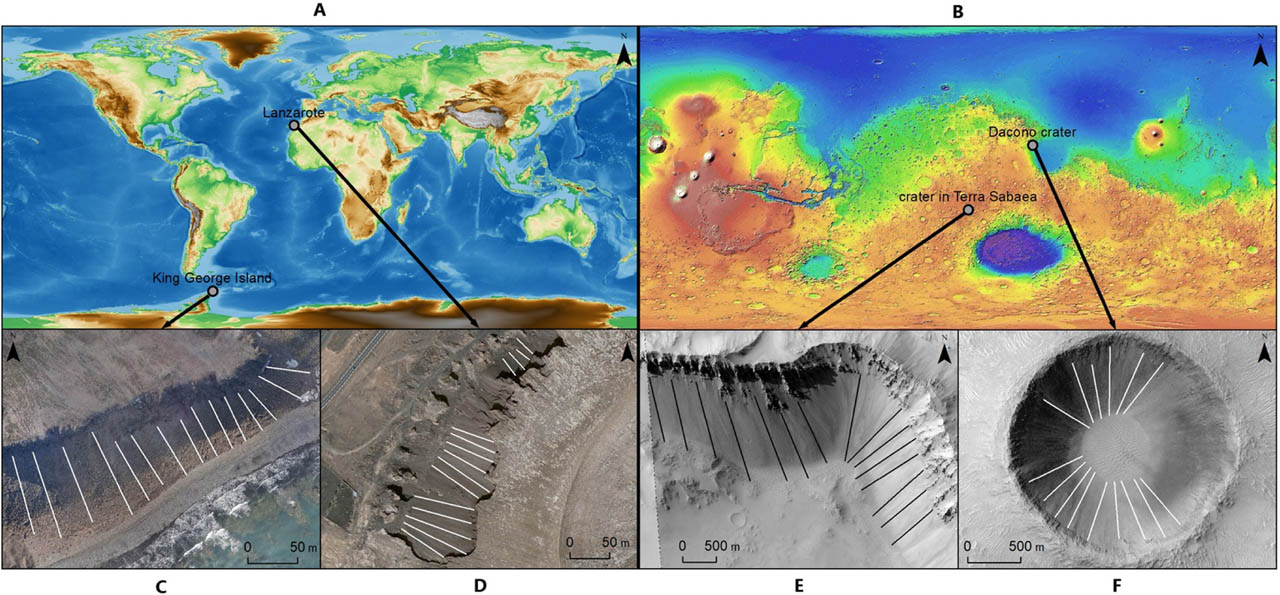
Figure 1.
Location of selected talus slopes on Earth (A) and Mars (B), with marked transects (white and black lines on lower insets) on King George Island (C), Lanzarote (D), Terra Sabaea crater (E) and Dacono crater (F)
Sources: World Relief Map (A); Mars HRSC-MOLA Colorized Shaded Relief (B); orthophoto, courtesy of Zmarz A. (C); Infraestructura de Datos Especiales (D); NASA/JPL/University of Arizona (E, F); edited in ArcMap 10.7.1
Table 1.
Source of remote sensing images used in this work
| Image signature | Date image was taken | Resolution [m] | Study area |
|---|---|---|---|
| PSP_007966_1615_RED | 08.04.2008 | 0.50 | Terra Sabaea |
| ESP_024198_1615_RED | 25.09.2011 | 0.25 | Terra Sabaea |
| ESP_025055_1615_RED | 30.11.2011 | 0.50 | Terra Sabaea |
| ESP_025754_1615_RED | 24.01.2012 | 0.25 | Terra Sabaea |
| ESP_031200_1615_RED | 23.03.2013 | 0.25 | Terra Sabaea |
| ESP_031767_1615_RED | 06.05.2013 | 0.25 | Terra Sabaea |
| ESP_032334_1615_RED | 19.06.2013 | 0.50 | Terra Sabaea |
| ESP_032835_1615_RED | 29.07.2013 | 0.50 | Terra Sabaea |
| ESP_059248_1615_RED | 18.03.2019 | 0.25 | Terra Sabaea |
| ESP_026425_1500_RED | 16.03.2012 | 0.50 | Dacono crater |
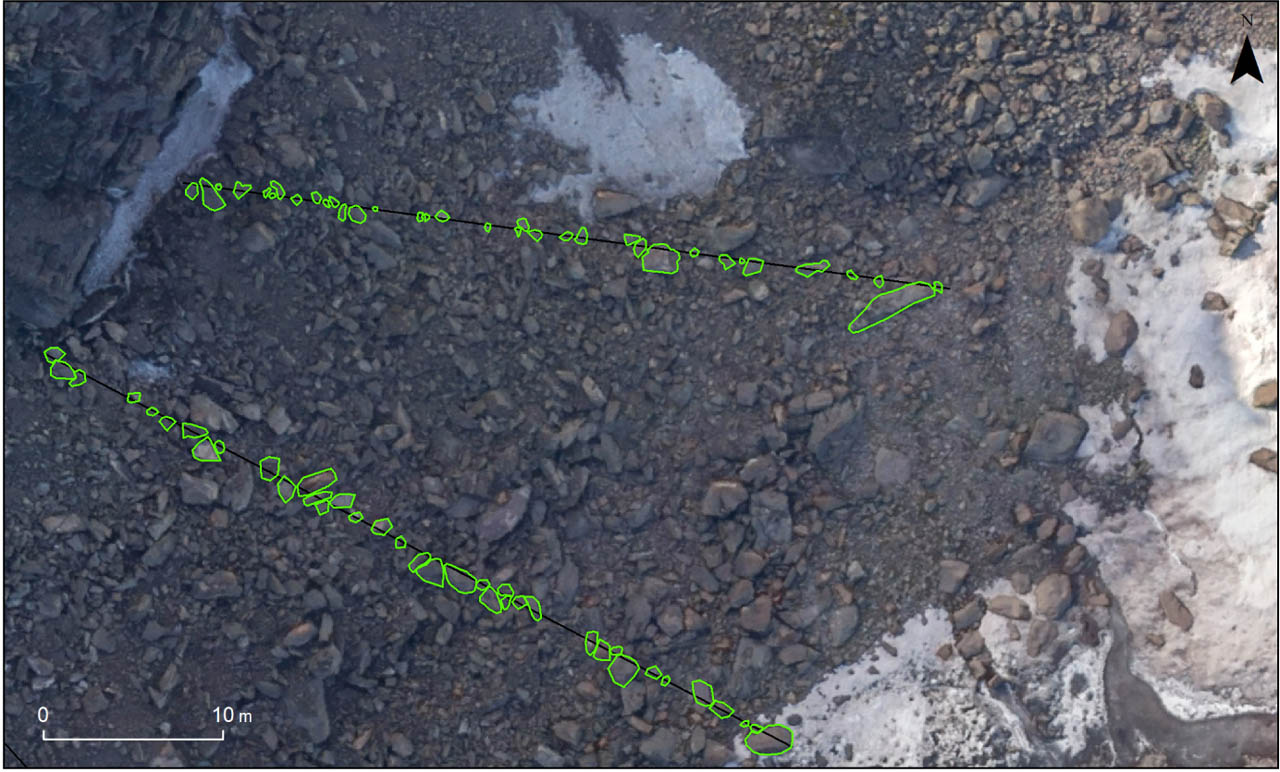
Figure 2.
Example transects on King George Island with marked boulders
Source: orthophoto, courtesy of Zmarz A.; edited in ArcMap 10.7.1
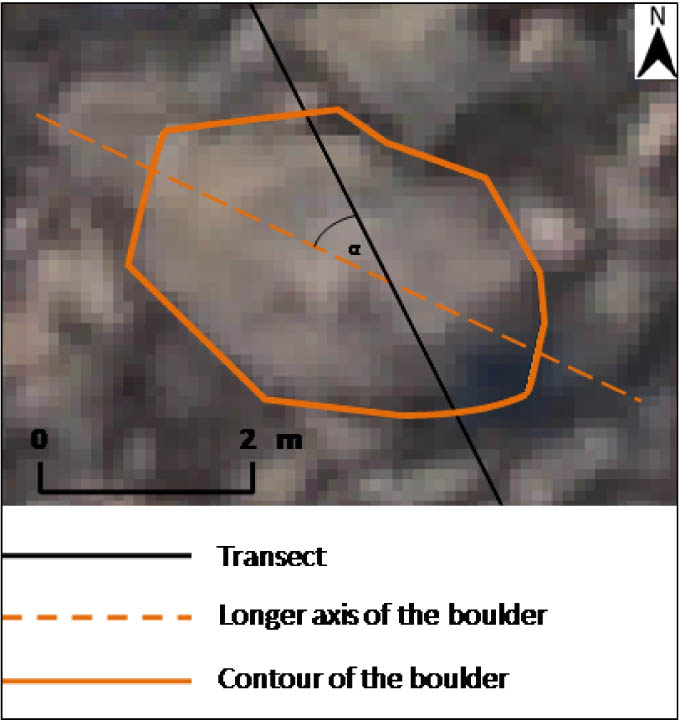
Figure 3.
An example of the difference (angle α) between the orientation of a given transect and the longer axis of boulders along this transect
Source: orthophoto, courtesy of Zmarz A.; edited in ArcMap 10.7.1
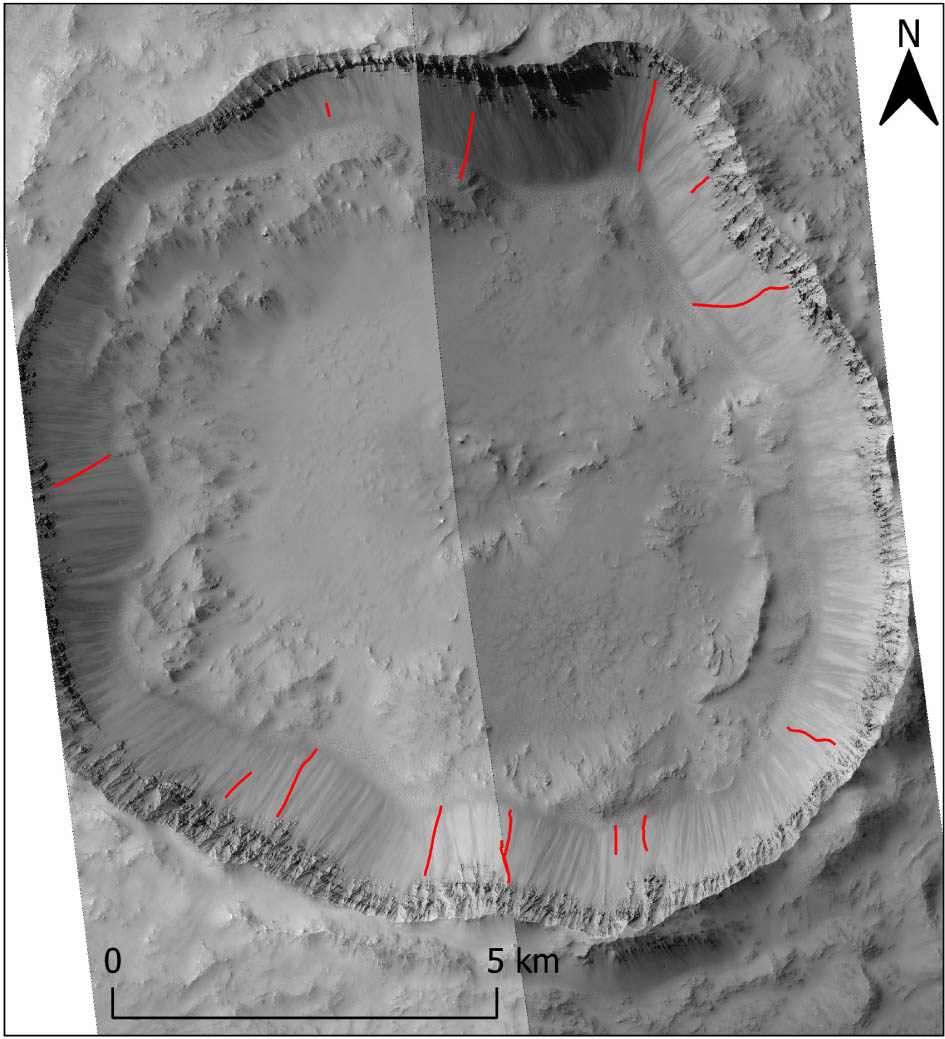
Figure 4.
An example of the reconstructed boulder's migration trajectories in the Terra Sabaea crater
Source: own study based on NASA/JPL/University of Arizona; HiRISE images: ESP_025055_1615_RED, ESP_032835_1615_RED
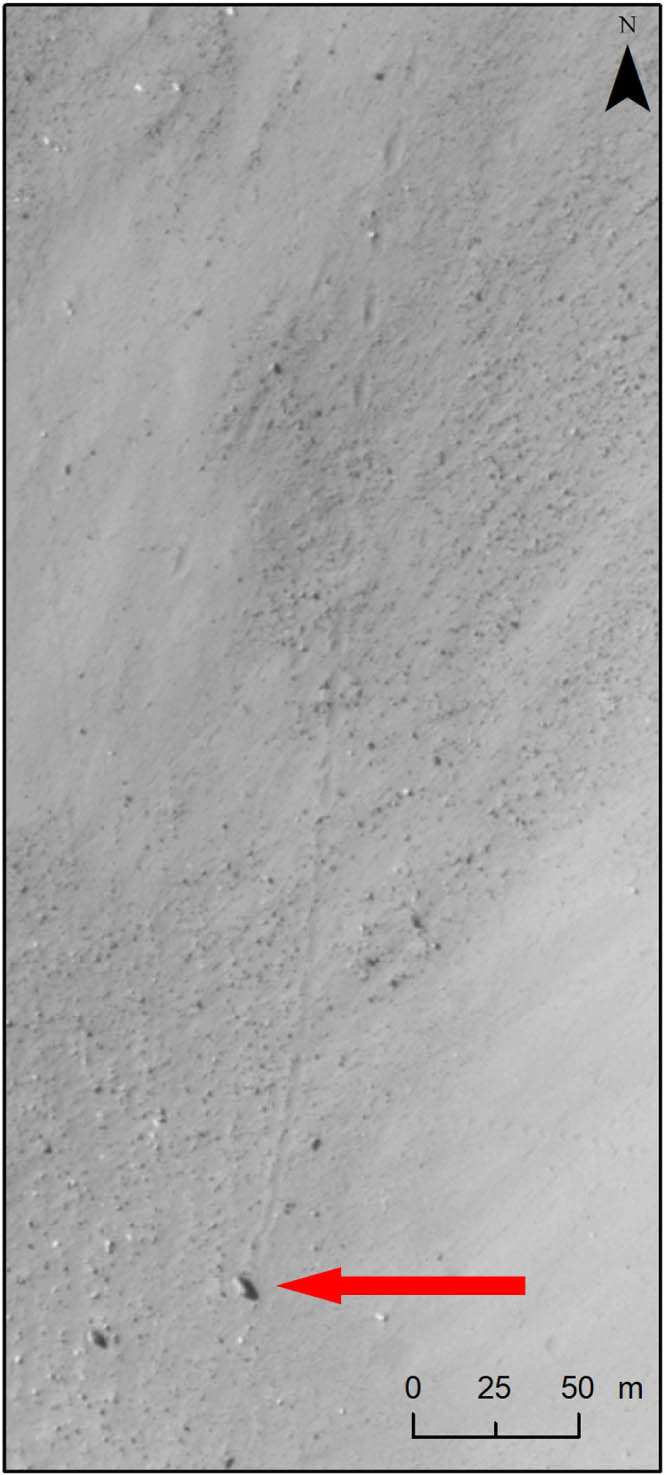
Figure 5.
The marked boulder with the trace it left during transport – example from the Terra Sabaea crater
Source: own study based on NASA/JPL/University of Arizona; HiRISE image ESP_025055_1615_RED
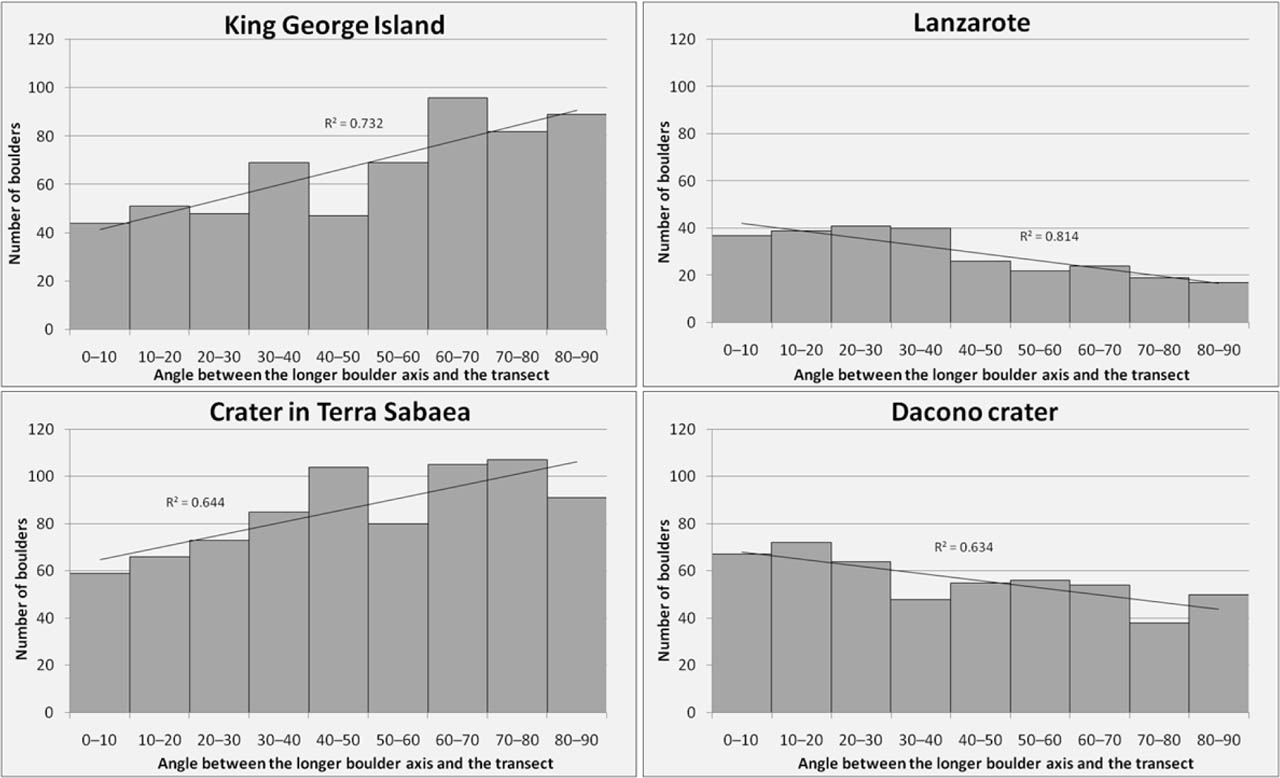
Figure 6.
Position of the longest axes (acute angles) of studied boulders versus directions of the transects on Earth and Mars
Source: own study
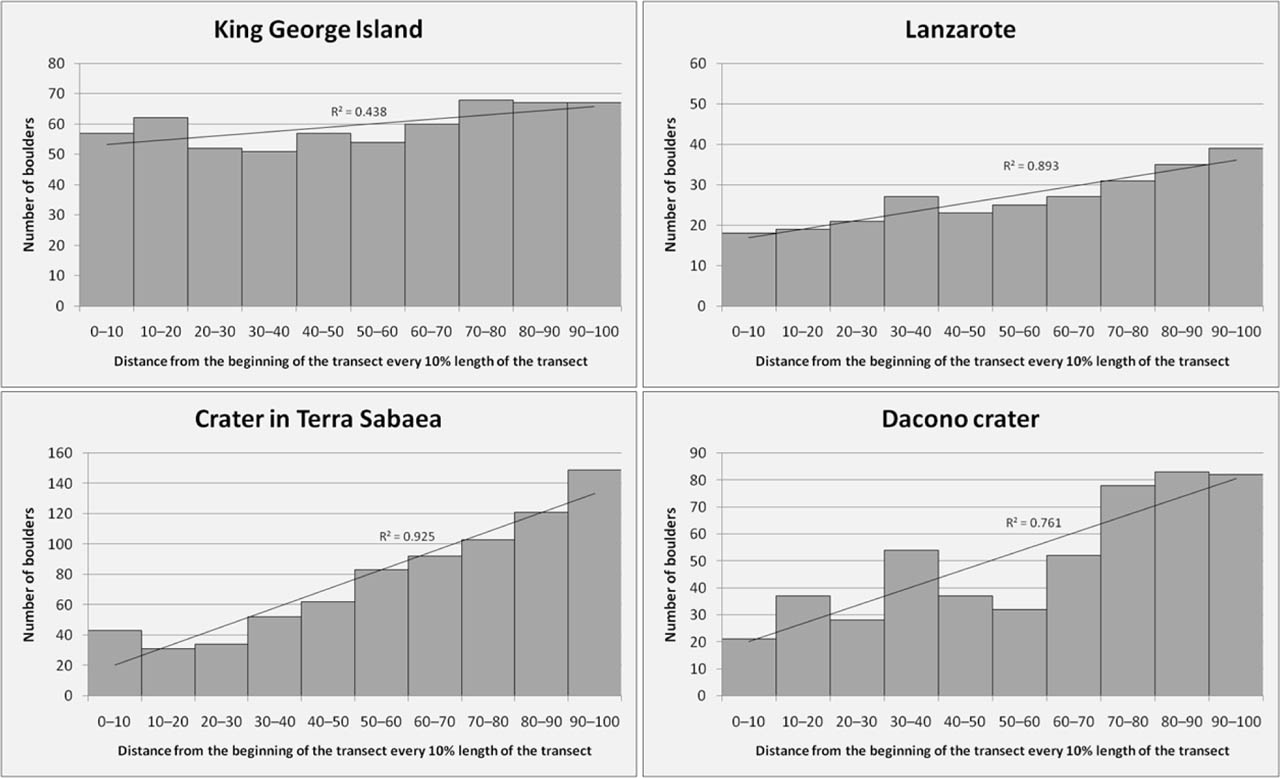
Figure 7.
The number of marked boulders along the transects in intervals of 10% of the transect length on the analysed talus slopes
Source: own study
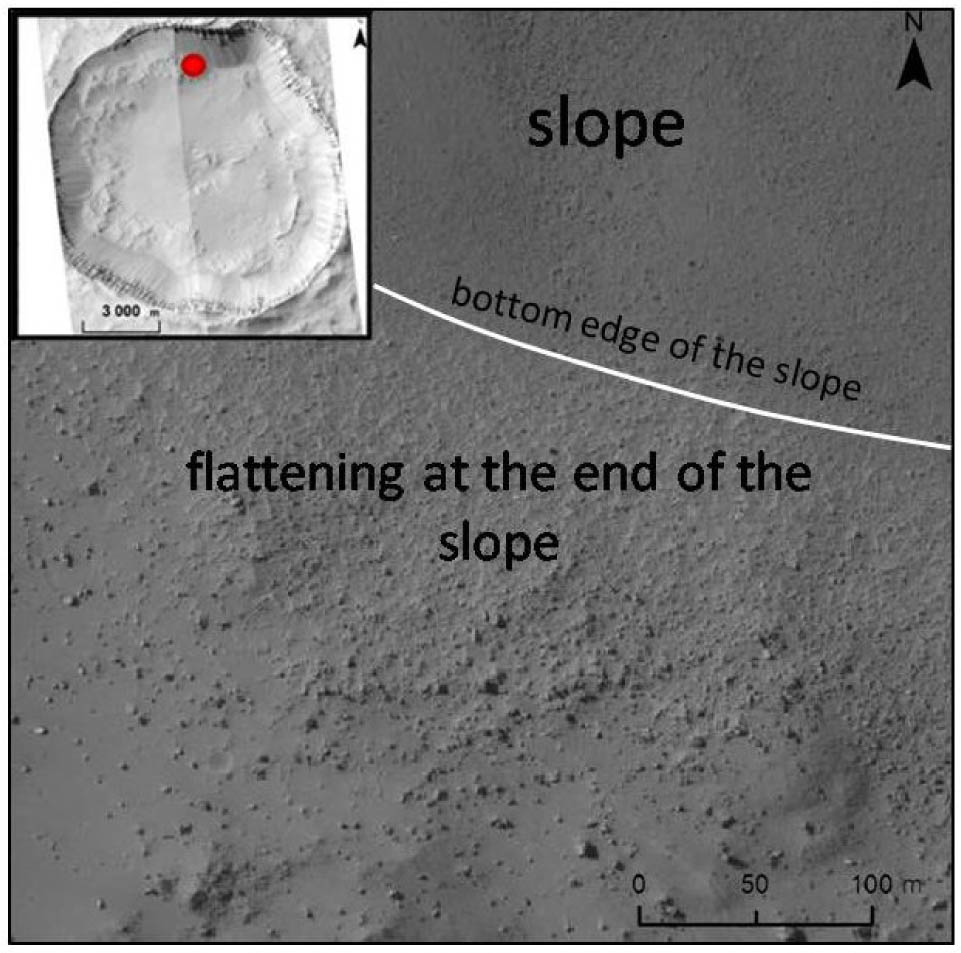
Figure 8.
The bottom edge of the slope and visible boulders at the flattening at the end of the slope in the Terra Sabaea crater
Source: own study based on NASA/JPL/University of Arizona; HiRISE image ESP_025055_1615_RED
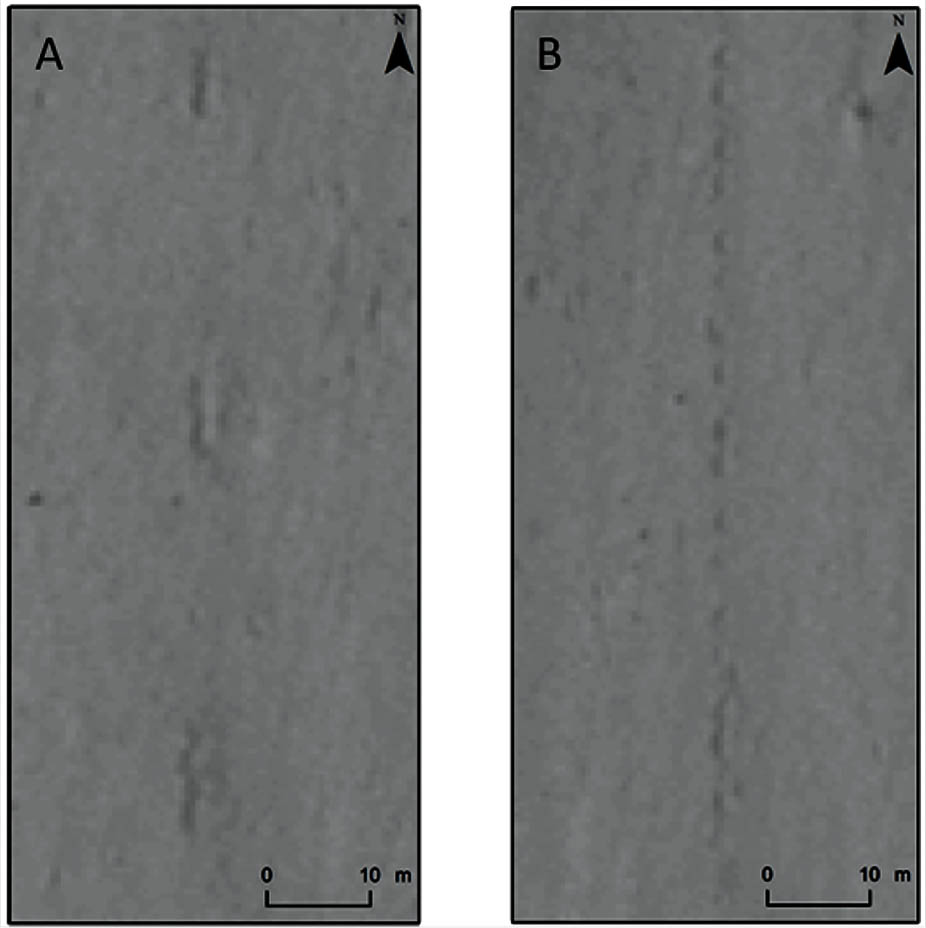
Figure 9.
Talus slope in the Terra Sabaea crater: A – trace of a boulder in the upper part of the slope; B – trace of the same boulder in the lower part of the slope
Source: own study based on NASA/JPL/University of Arizona; HiRISE image ESP_025055_1615_RED
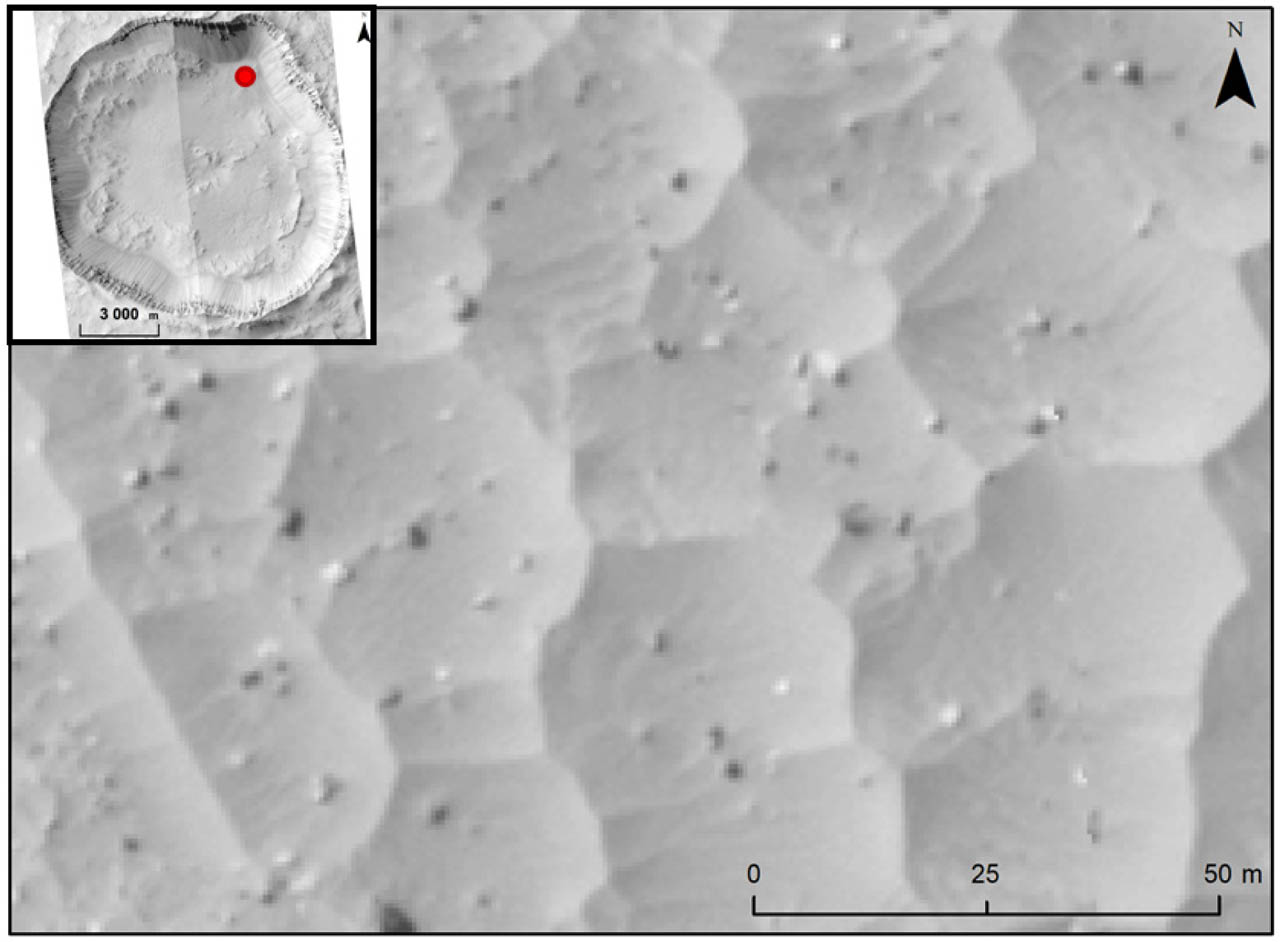
Figure 10.
Dunes with visible boulders at the foot of the slope in the Terra Sabaea crater
Source: own study based on NASA/JPL/University of Arizona; HiRISE image ESP_025055_1615_RED