
Introduction
The increasing dominance of visual media has transformed political discourse into a space where symbols, emotions, and visual narratives often carry more persuasive force than verbal argumentation alone. Scholars across semiotics, visual rhetoric, and political communication have demonstrated that images are active agents in shaping ideology, memory, and affect.1 In times of crisis and war, this visual dimension intensifies, as political leaders rely on imagery to convey legitimacy, resilience, and moral authority under conditions of uncertainty and fear.
This article examines political imagery and symbolism through a visual-semiotic framework, focusing on the wartime communication of the Ukrainian President Volodymyr Zelenskyy. Drawing on classic and contemporary theories of signs, visual rhetoric, emotional politics, and digital leadership, the study situates Zelenskyy’s visual strategy within broader transformations of political communication in the digital age. Methodologically, the article combines qualitative visual analysis with a structured categorization of images shared on Zelenskyy’s official Telegram channel during the early stages of the Russian invasion of Ukraine. By analysing recurring visual patterns and symbolic elements, the article seeks to understand how visual political discourse operates as a tool of meaning-making, mass mobilisation, and leadership performance in contemporary conflict.
I. Political Imagery and Symbolism
Political imagery is central to how power is communicated, understood, and legitimized. In contemporary media-saturated societies, images can shape political meaning, often more effectively than words. Consequently, politics is largely experienced as a set of images circulating through media rather than through direct participation.2 Also, visual symbols condense complex ideas into emotionally charged forms, making them particularly influential in shaping public perception, collective memory, and political identity.
Semiotic theory provides the framework for understanding how political images operate. Peirce’s distinction between icons, indexes, and symbols explains how photographs, traces of events, and national emblems produce meaning in different ways.3 Saussure’s concept of the sign further emphasizes that meaning emerges from socially constructed relationships between signifiers and signifieds.4 Furthermore, Barthes demonstrated that images function simultaneously at the level of denotation and connotation, allowing political visuals to communicate ideological messages while appearing natural or self-evident.5 A leader’s image, for instance, may depict a person while connoting authority, stability, or resistance.
Later scholarship has stated that visual meaning cannot be separated from power relations and cultural context. Aiello argues that repeated visual representations normalize specific ideologies, making them appear universal.6 Similarly, Edelman highlights how political symbols such as flags and monuments foster emotional attachment and national belonging, often simplifying political realities,7 while Anderson’s concept of “imagined communities” explains how shared symbols enable individuals to experience collective identity across distance and difference.8 Visual symbolism also plays a crucial role beyond institutional politics. Protest movements, activism, and political resistance frequently rely on powerful images to mobilize publics and circulate moral claims globally.9 From civil rights photography to contemporary climate and anti-authoritarian protests, visual symbols serve as tools of visibility and legitimacy.10 As Longoni notes, photography can function as minimal proof of existence in moments of political uncertainty,11 while images of suffering, as Sontag famously argued, raise ethical tensions between witnessing and voyeurism.12 This way, emotion became central to the political power of images. Research in political psychology shows that emotions such as fear, hope, and empathy strongly influence political judgment and decision-making.13 Visuals are especially effective in this regard because they are processed quickly and remembered more easily than text.14 Sontag further cautioned, however, that repeated exposure to images of violence can dull moral response, even as such images retain their capacity to provoke empathy and action.15 Analytical frameworks such as Foss’s theory of visual rhetoric and Rodríguez and Dimitrova’s model of visual framing help explain how images persuade and structure meaning at denotative, connotative, and ideological levels.16 The increasing power of visual media in politics is closely linked to technological change. The expansion of television first, and later the internet and social media, has intensified the symbolic dimension of political leadership.17 Schill emphasizes that political images perform multiple functions simultaneously: they dramatize policy, set agendas, build identification, and evoke emotional attachment.18 Thus, the emotional force of political imagery must be understood as both powerful and ethically complex. Visuals of suffering, resistance, and solidarity can foster empathy and collective engagement, yet they also risk desensitization or instrumentalization.19 Emotions, as Lebow argues, are not opposed to rational political judgment, but deeply embedded within it, shaping how information is interpreted and remembered. Finally, in this sense, visual political communication operates at the intersection of emotion, ideology, and power.20
II. Visual Political Discourse. Case Study: Volodymyr Zelenskyy’s Wartime Communication
In contexts of crisis and war, visual communication becomes strategically significant, as images become central to how events and collective meaning are constructed and perceived. Studies of wartime leadership show that political figures often adapt their visual self-presentation to align with public expectations and emotional needs of the audiences.21 The case of Volodymyr Zelenskyy during the Russian invasion of Ukraine illustrates how visual imagery, national symbols, and informal visual styles were deliberately mobilized to project resilience, solidarity, and authority in a conflict setting.22 In an era where digital platforms enable instantaneous, global dissemination of visual content, the strategic use of images and video became as important to Zelenskyy’s leadership as traditional diplomatic and military efforts.
From the outset of the full-scale invasion on 24 February 2022, Zelenskyy’s visual communication strategy was shaped by the affordances of social media platforms such as Telegram, Instagram, Twitter/X, and YouTube. These platforms allowed him to bypass traditional media gatekeepers and speak directly to both domestic and international audiences with immediacy and personal presence.23 Research into Zelenskyy’s use of Instagram identifies a deliberate process of “spectacularization,” in which informal visual cues and carefully staged images were combined to construct a compelling public persona that combined elements of entertainment, authenticity, and political leadership.24 Similarly, López-Rabadán’s analysis of Zelenskyy’s Instagram videos during the early months of the conflict highlights how the president exploited visual staging and amateur production values to create a narrative that was both relatable and authoritative.25 These studies underscore how visual personalization, through casual clothing, direct camera address, and informal settings, served as communicative devices enhancing perceived authenticity and emotional proximity.26 Telegram, in particular, was an important platform in Zelenskyy’s wartime visual discourse. Its native support for multimedia content enabled the president to disseminate photographs and videos rapidly and without editorial mediation. Domínguez-García, Pérez-Curiel, and Casero-Ripollés found that Zelenskyy’s Telegram leadership posts played a significant role in citizen mobilisation and emotional engagement, reinforcing national identity while positioning Ukraine’s struggle within a broader global frame. In this context, visual posts were not neutral illustrations but active constituents of political messaging that shaped perceptions of agency and legitimacy.27
Research further shows that Zelenskyy’s visual communication played a dual role: it documented the realities of war and simultaneously constructed interpretive frames that encouraged specific emotional and political responses. For example, early visual posts emphasized unity, defiance, and shared sacrifice, while later imagery shown diplomatic engagement and signs of resilience amid destruction, suggesting that images operate at multiple levels, from literal depiction to ideological representation, shaping how audiences interpret political events. At the same time, Zelenskyy’s visual communication was shaped by the global information environment, including countering disinformation and forging international solidarity. Research on visual narratives in Twitter memetic warfare during the conflict shows that official Ukrainian accounts, alongside Zelenskyy’s own imagery, played a key role in influencing international discourse and mobilising support.28 This contested visual landscape underscores how political imagery becomes a site of struggle not only for domestic audiences, but also for global interpretive dominance.
Thus, Zelenskyy’s wartime visual political discourse has structured meaning, built affective attunement, and contributed to the construction of national identity and international solidarity, building an interplay between visuality and political power of contemporary leadership in a media-saturated world.
III. Research Design
This study focuses on how visual symbolism was employed as a strategic tool of political communication in a period marked by existential threat, intense international attention, and heightened demands for domestic moral cohesion. By analysing the visual content, the study foregrounds imagery as a key medium through which political meaning, national identity, and an overall global message were constructed and communicated.
The analysis spans from 24 February 2022 to 24 February 2023, a critical phase in which Zelenskyy’s public image evolved from that of an elected president to a wartime leader and international symbol of resistance. This timeframe allows for the examination of both continuity and change in visual messaging as the conflict unfolded and developed. The sample was drawn directly from Zelenskyy’s official Telegram channel, which served as one of his primary communication platforms throughout the war. All visual content published during the defined period was retrieved using Telegram’s native export functionality, ensuring a complete and unaltered dataset. The export gave a total of 618 videos and 2,921 photographs. While the archive contained both static and moving images, the study concentrates exclusively on photographic material, as still images offer greater analytical consistency for examining composition, symbolism, and iconographic elements across time. All photographs reproduced in this article were published on Volodymyr Zelenskyy’s official Telegram channel between 24 February 2022 and 24 February 2023.
III. 1. Methods
To address the study’s objectives, a mixed-methods analytical framework was employed, combining qualitative and quantitative approaches through manual, automated, and semi-automated techniques. The analysis proceeded in two interrelated phases:
III. 1.a. Manual Qualitative Analysis
The first phase consisted of a qualitative examination of the entire photographic corpus. This manual analysis focused on identifying both explicit and implicit symbolic elements, including national emblems, military and institutional insignia, cultural references, public figures, and spatial settings. This stage was essential for capturing context-dependent and culturally embedded meanings that may not be readily detectable through automated tools. By reading images and situating them within the evolving wartime context, the qualitative analysis illuminated how visual choices conveyed resilience, authority, and legitimacy.
III. 1.b. Automated Content Analysis
To complement the qualitative insights, an automated content analysis was conducted using the Gemini 2.5 Flash model accessed via the Gemini API and using a Python code. The model was employed to detect and quantify symbolic elements across the photographic dataset, enabling a large-scale assessment of visual patterns and their distribution over time. Symbols were defined to include the most shown national and cultural emblems (such as the Ukrainian flag and the Ukrainian coat of arms – Tryzub, the European Flag, a cross for religious imagery, or the dove symbolizing peace). In the final stage, findings from the qualitative and automated analyses were systematically integrated and, using Canva, were created graphics for a better visualization of the results. This synthesis enabled a complex interpretation of how symbolic imagery functioned simultaneously as a stable communicative framework and an adaptive political strategy, demonstrating how evolving visual symbols served specific communicative and political purposes in Zelenskyy’s wartime leadership.
III. 2. Research Questions
RQ.1. Which symbols and visual cues are present in Volodymyr Zelenskyy’s visual communication during the first year of the war?
RQ.2. How do these visual symbols evolve throughout the war’s first year in response to changes in the military and political situation?
IV. Findings
IV. 1. Distribution of the Visual Content on Volodymyr Zelenskyy’s Telegram Channel
Following the analysis of the 2,921 photographs extracted from Volodymyr Zelenskyy’s official Telegram channel, we synthesized the content into three categories that show the dominant visual logics of Zelenskyy’s wartime communication, as we can see in Figure 1.
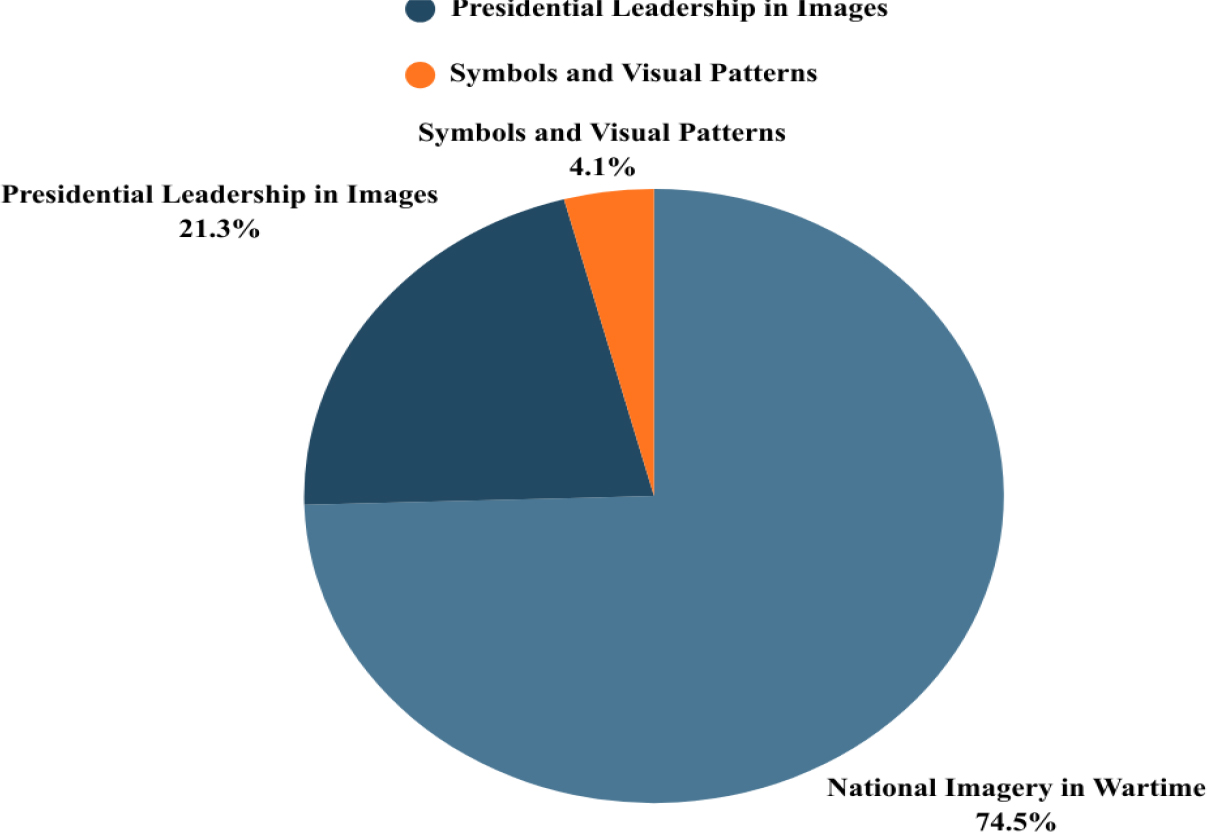
Figure 1.
Distribution of Visual Content Categories on Volodymyr Zelenskyy’s Telegram Channel between 24 February 2022–24 February 2023.
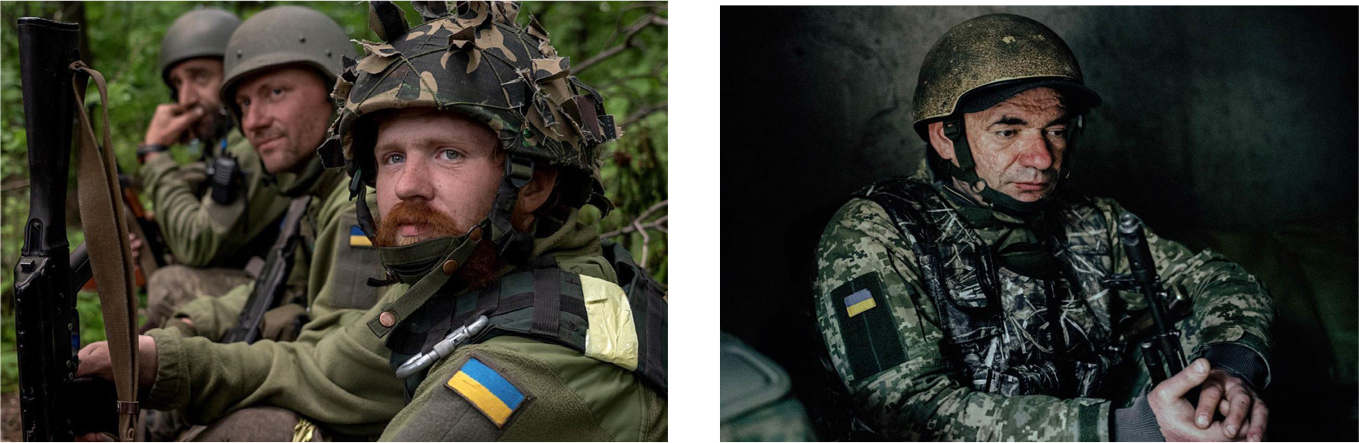
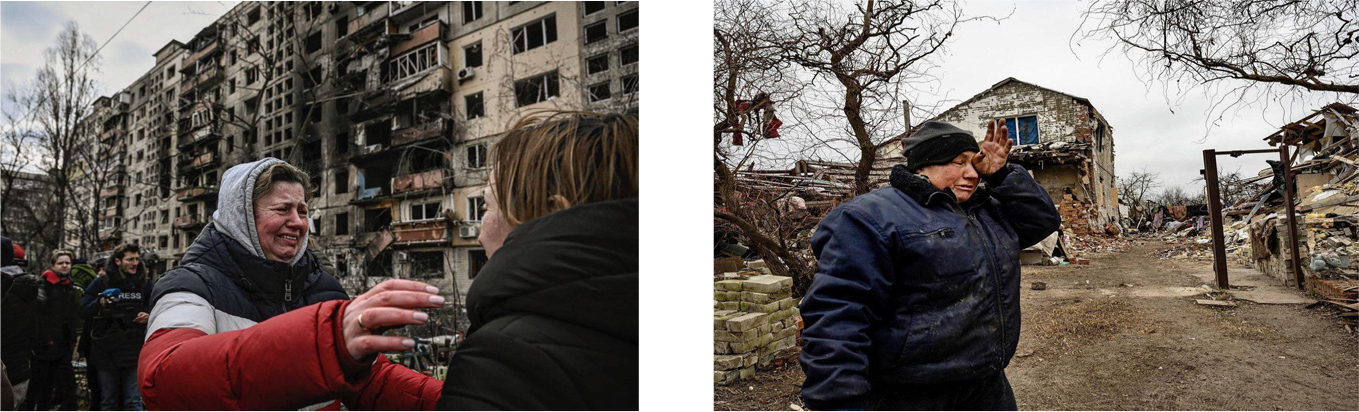
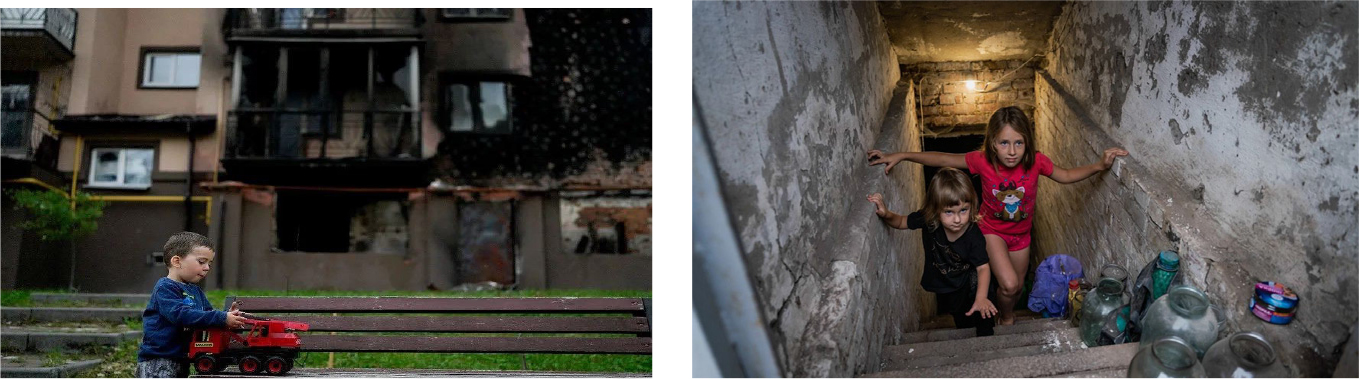
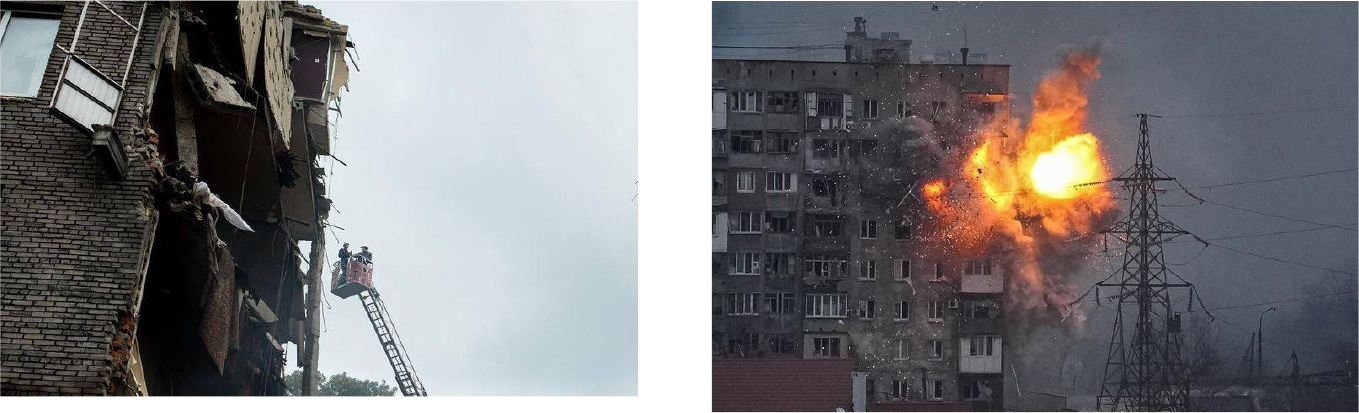
The first category, National Imagery in Wartime, representing 74.5% of all posts and including a total of 2.178 images, contains photographs foregrounding collective identity and statehood, including images of military settings, damaged urban landscapes, and scenes depicting soldiers and civilians as embodiments of shared struggle. The constant use of specific visual scenes, such as ruined infrastructure, damaged public spaces, and human figures, produces a recognizable visual grammar of war. Through repetition, individual images move beyond documenting isolated events, but instead, they contribute to a cumulative symbolic logic in which destruction signifies collective endurance. As audiences encounter these visual patterns over time, they are learning to read devastation also as evidence of resistance and national fight. Another defining feature of Zelenskyy’s wartime imagery is its rearticulation of suffering. Within the category National Imagery in Wartime, the photographic material was grouped into the following five thematic subcategories, based on the most visual cues shown on Volodymyr Zelenskyy’s Telegram Channel between 24 February 2022–24 February 2023:
Soldiers (images depicting fallen or wounded soldiers, emphasizing sacrifice and the human cost of defence)
Civilians (photographs of injured or displaced civilians)
Children (visuals showing children affected by war, highlighting the longterm social and moral consequences of the conflict)
Animals (images of pets, mainly cats and dogs, harmed or displaced by the conflict)
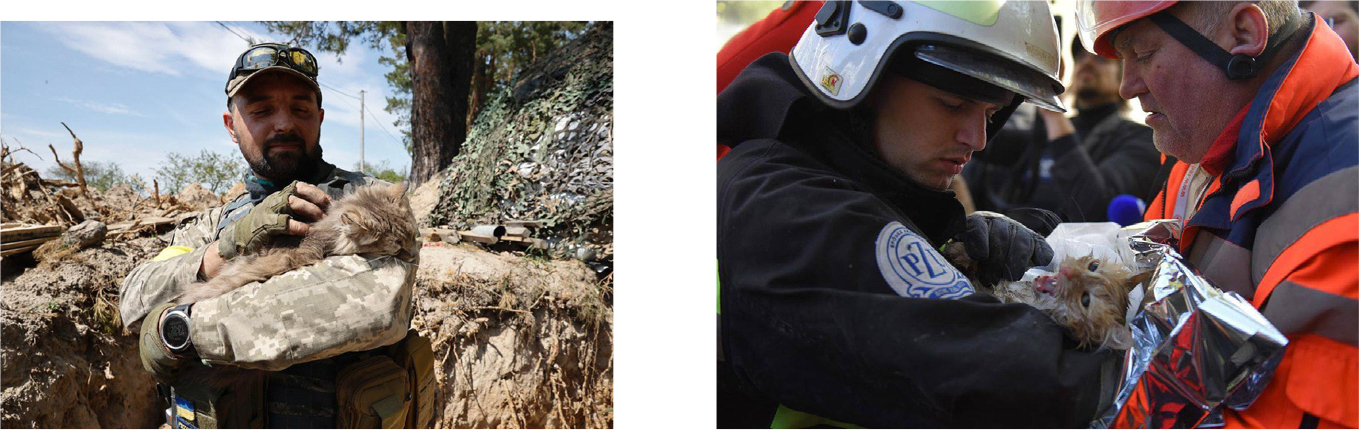
Infrastructure and destructions (photographs documenting damaged cities and everyday spaces, serving as visual evidence of war’s impact)
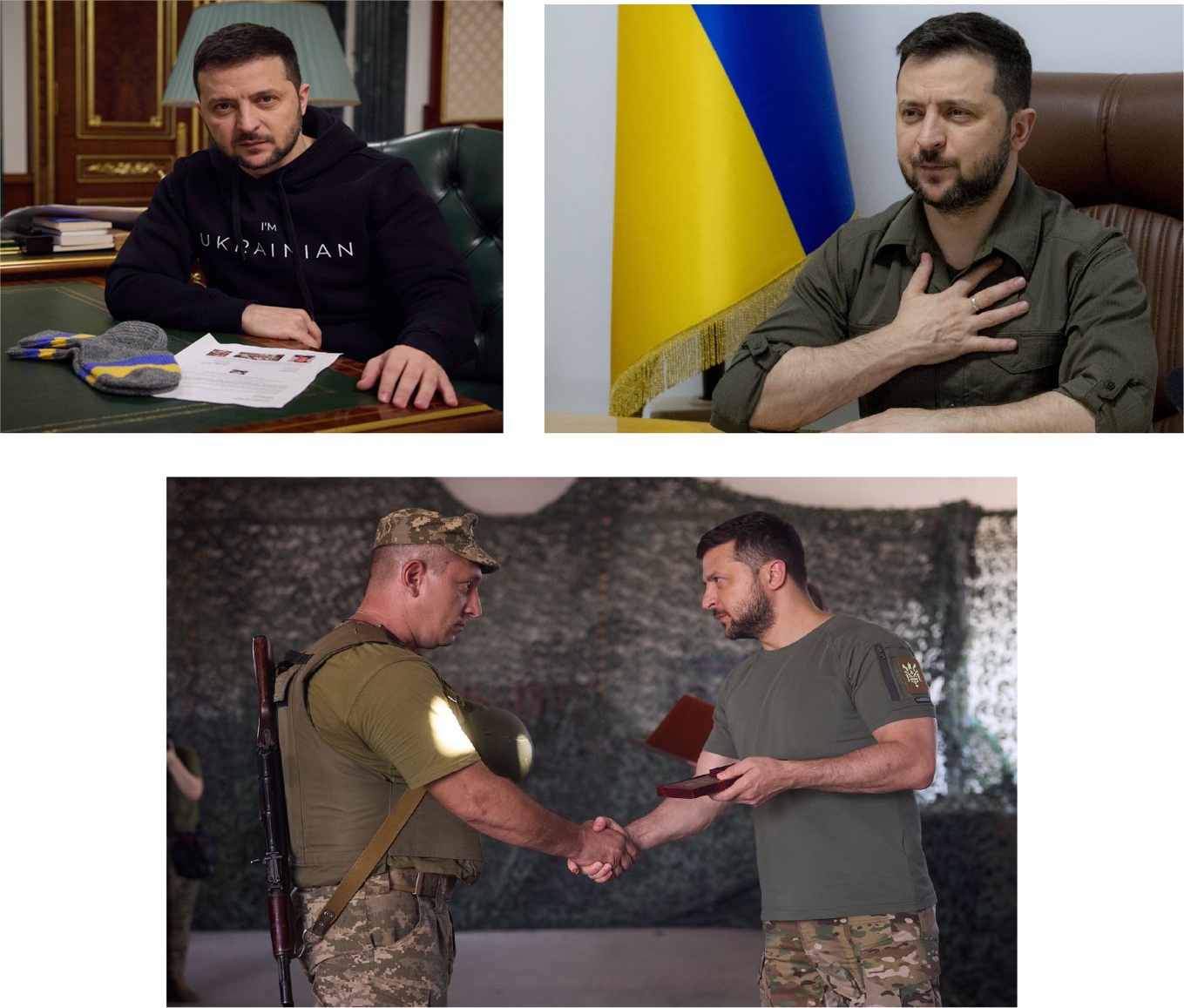
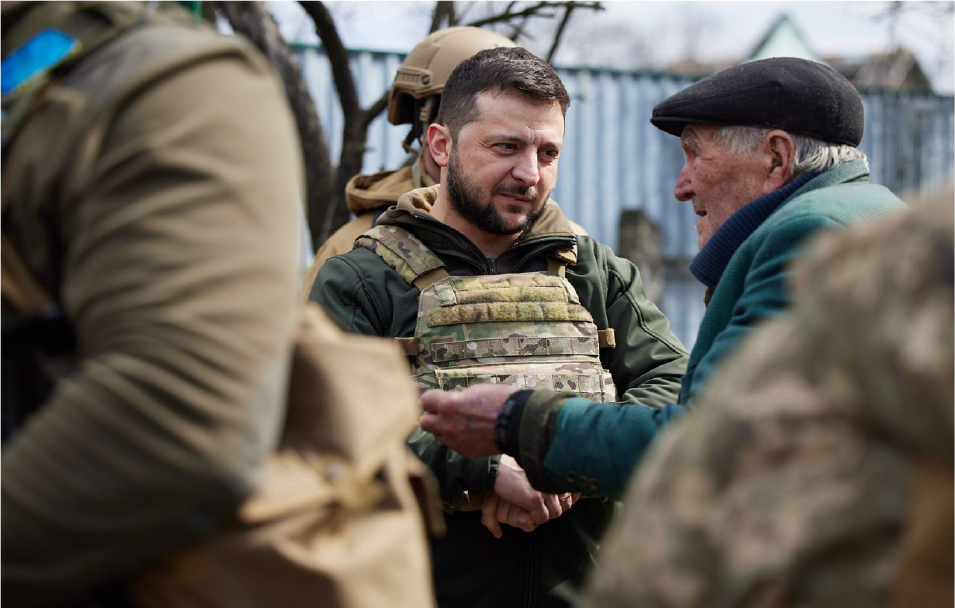
The second dominant category is Presidential Leadership in Images, that h 623 photographs (21,3% of total visual content). This section includes visual representations of Zelenskyy himself, focusing on his appearance, posture, and spatial positioning in both formal and informal contexts. His frequent appearance photographs serves a clear political purpose, projecting presence and reliability. Zelenskyy is consistently shown in military-style or everyday clothing, visually aligning himself with soldiers and civilians rather than with political elites. His facial expressions are controlled and direct, and his gestures, such as raising a hand or placing it on his chest, are meaningful, communicating commitment and accountability, enhancing emotional resonance among both domestic and international audiences.29
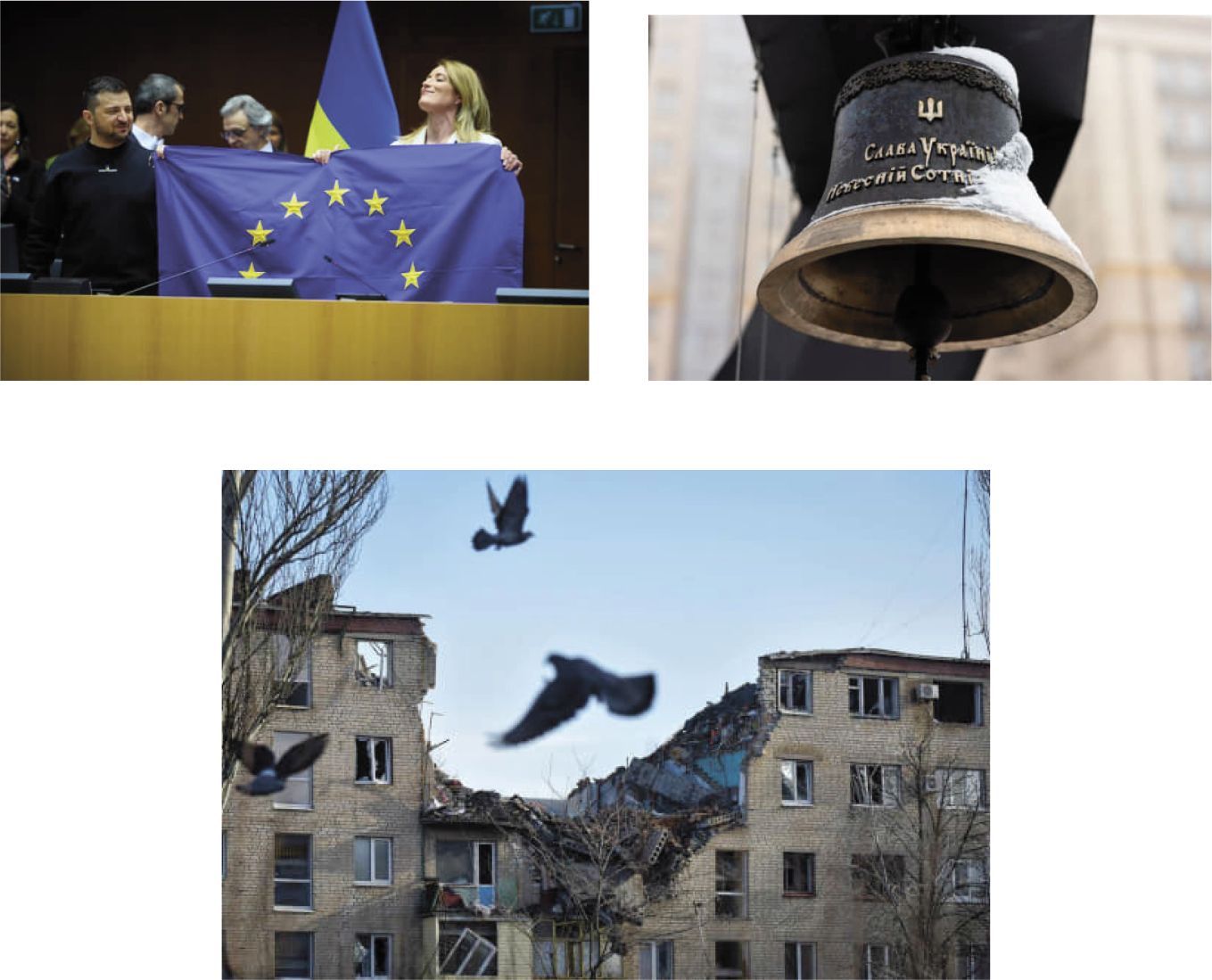
Finally, the last category – Symbols and Visual Patterns, having only 121 photos and representing 4,1% of all posts, consists of recurring visual elements and motifs, that function as symbolic anchors across the photographic corpus, and contribute to the coherence of the broader narrative. Within this category, the most frequently cultural and national symbols identified through automated analysis were:
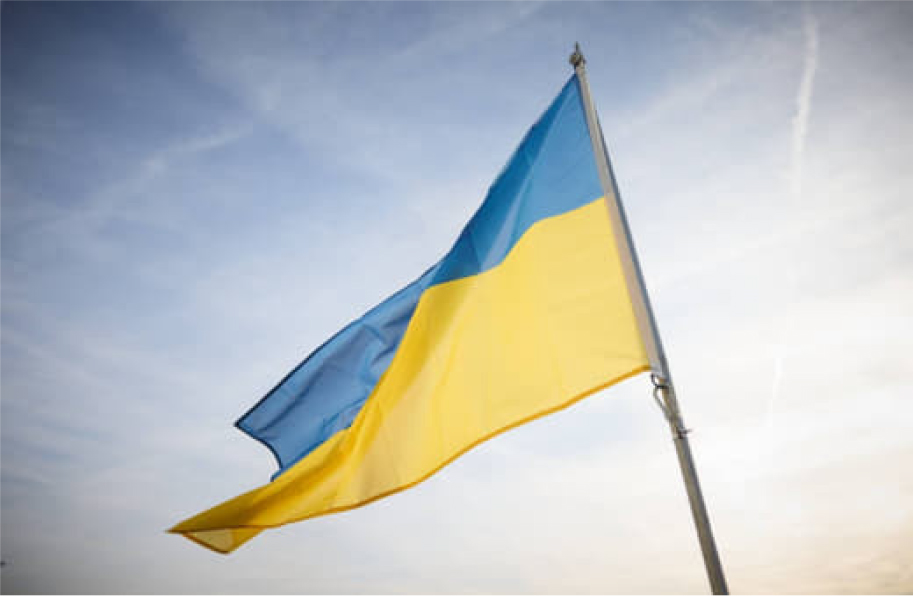
the Ukrainian flag, a visual sovereignty item, transforming everyday settings, such as offices, streets, or frontline locations into symbolic spaces of national resistance.
the Ukrainian coat of arms – Tryzub, a historical and cultural emblem, connecting wartime leadership to the narratives of Ukrainian identity.
the European Union flag, often displayed alongside the national Ukrainian flag, visually embedded Ukraine’s struggle within a wider European framework.
the cross functions as a symbol of Christianity, evoking faith and spiritual endurance.
the dove/pigeon symbolizes peace, hope, and the aspiration for reconciliation.
IV.2. Evolution of the Wartime Visual Communication
The three categories mentioned above were examined across three distinct phases of the war, each marked by shifts in visual communication, as we can see in Figure 2 below. Dividing the first year of war into three phases makes visible an increase in photographic output and also a strategic rebalancing of visual categories, reflecting shifting communicative priorities as the war on the field progressed.
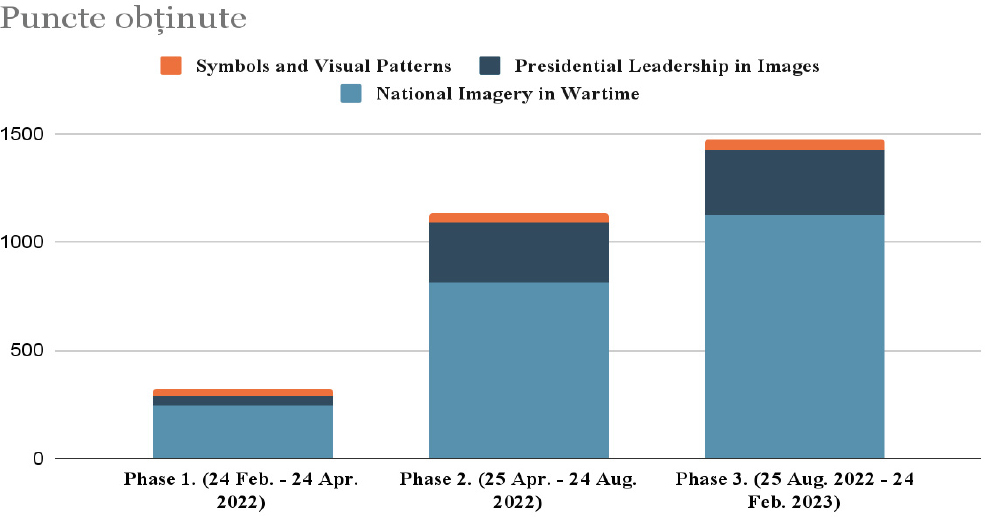
Figure 2:
Evolution of Visual Content on Volodymyr Zelenskyy’s Telegram Channel between 24 February 2022–24 February 2023, divided into Categories of Photos and Phases of War.
During the first phase (24 February–24 April 2022), the number of photographs remains comparatively limited: National Imagery in Wartime – 243 photos, Presidential Leadership in Images – 42 photos, Symbols and Visual Patterns – 35 photos. This early period corresponds to a moment of uncertainty, when the primary communicative approach was to affirm state survival and construct the narratives of resilience. Images emphasizing destruction, victims, and the collective state of invasion functioned as visual proof that Ukraine was under attack, but still standing. The second phase (25 April–24 August 2022) marks an expansion in visual content across all categories, showing a transition from emergency communication to a more solid strategy. While National Imagery in Wartime continues to be the largest portion of content (813 photos), the noticeable rise in Presidential Leadership in Images (279 photos) reflects Zelenskyy’s growing role as both a domestic stabilizing figure, and an international representative. Photographs from this period increasingly show Zelenskyy in meetings, video-discourses, and symbolic state settings, visually affirming continuity and legitimacy of the Ukrainian state. In the third phase (25 August 2022–24 February 2023) the total number of images reaches its highest level, with National Imagery in Wartime remaining dominant (1122 photos), but now complemented by a sustained presence of leadership-focused imagery (with 302 images illustrating Volodymyr Zelenskyy). This visual communicative strategy reflects that Zelenskyy’s personal image becomes integrated into the national narrative, and the continued growth of symbols (48 images) contributes to the consolidation of collective memory and shared frameworks. By the end of the first year, Zelenskyy’s Telegram feed functions as a visual archive that narrates Ukraine’s battle for freedom and national identity within a global struggle for democratic values.
Following, Figure 3 reveals how the balance between photographs and videos on Volodymyr Zelenskyy’s Telegram channel shifted in response to the changing conditions of the war.
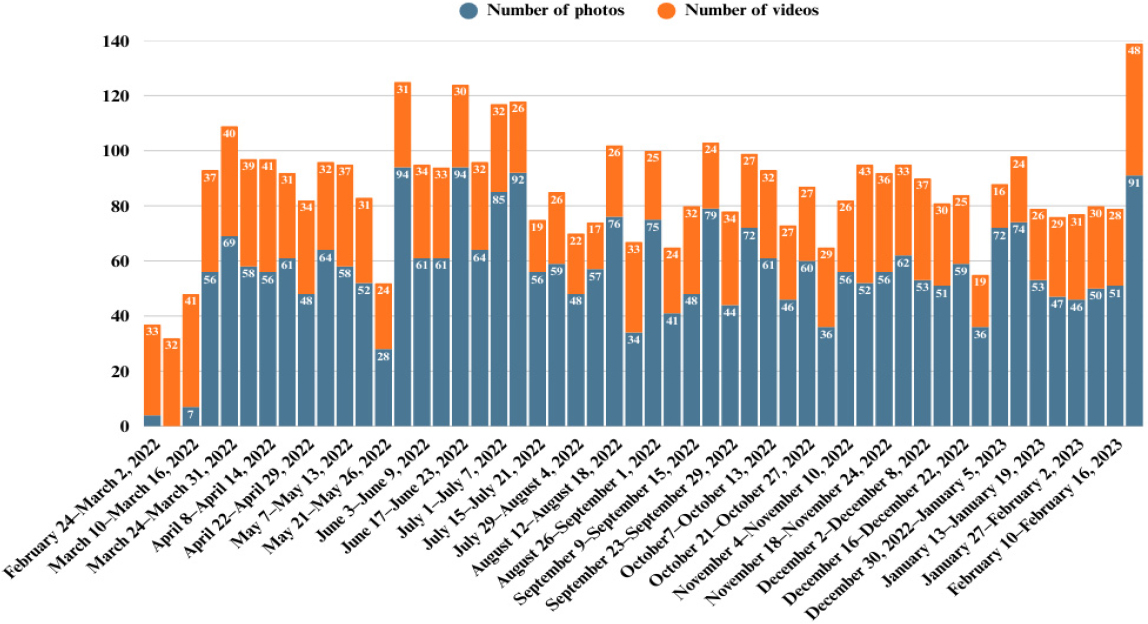
Figure 3:
Weekly Distribution of Photos and Videos on Volodymyr Zelenskyy’s Telegram Channel between 24 February 2022–24 February 2023. Source: The Author
In the initial weeks after the invasion, video content clearly dominated the communication. This early emphasis on short, informal video addresses reflects the urgent communicative need to establish the presidential presence, counter disinformation, and reassure both domestic and international audiences of governmental efforts. The unpolished, selfie-style recordings conveyed authenticity, positioning Zelenskyy’s face and voice as the primary symbol of national resistance in a moment of extreme uncertainty. As the conflict moved beyond its initial shock phase, the communicative strategy changed. From late spring and throughout the summer of 2022, the volume of photographic content increased gradually, approaching and, at times, surpassing video content. By late 2022 and early 2023, videos ensured Zelenskyy’s continued visibility and rhetorical authority, while photographs dominated in number and thematic range, capturing both suffering and resilience during the conflict. This hybrid strategy transformed Zelenskyy’s official Telegram into a space of political performance and visual witnessing. The evolving distribution of photos and videos demonstrates that Zelenskyy’s digital communication was strategically adaptive, responding to military developments and political needs.
Conclusions
The analysis of Volodymyr Zelenskyy’s wartime imagery reveals how visual strategies rooted in symbolism, emotional resonance, and personalization contribute to shaping public perception under conflict. The findings show that visual imagery functions as a form of political action rather than mere representation. Zelenskyy’s use of images during the first year of the war actively constructed narratives of resistance and national survival. Also, the study reveals a clear temporal evolution in visual strategy. The transition from urgent and defiant imagery to more institutional, symbolic, and stabilized visual patterns reflects shifting communicative needs, political leaders adapting visual discourse over time to maintain emotional engagement. Moreover, national and cultural symbols played a crucial role in condensing complex political meanings into immediately recognizable signs. Their repeated and prominent use reinforced national identity, international values, and moral strength.
Critically, the study confirms the increasing importance of visual personalization and emotional proximity in contemporary digital leadership. Zelenskyy’s reliance on informal imagery, self-recorded videos, and an unfiltered aesthetic allowed him to project authenticity and solidarity, effectively reducing the perceived distance between leader and citizen. This strategy fostered strong emotional identification and trust, illustrating how modern political leadership is increasingly performed through intimacy, visibility, and affective connection within digital spaces. The consistent use of direct, platform-native visuals, particularly on Telegram, highlights the growing significance of social media as a dynamic political battleground where authenticity, emotional immediacy, and visual impact are paramount in shaping leadership perception and audience response.
Thus, we propose that Zelenskyy’s communication strategy offers a model for digital wartime leadership, characterized by three interconnected pillars:
Symbolic Communication: This involves the evolving use of national and cultural symbols to build collective identity and communicate complex political messages in an emotionally resonant manner, fostering a sense of unity and shared purpose.
Adaptive Personalization: This pillar encompasses the strategic use of informal, authentic visual self-presentation that reduces hierarchical distance, builds emotional proximity with citizens, and projects a relatable yet authoritative wartime persona.
Platform-Native Strategic Dissemination: This refers to the power of social media channels, such as Telegram’s multimedia support, to bypass traditional gatekeepers, ensure immediate dissemination, and enable a direct, unmediated connection with global and local audiences.
In terms of methodology, the Gemini 2.5 Flash model, accessed via the Gemini API and integrated through a Python script, played a precise role in the research process. It was instrumental in enabling the detection and quantification of symbolic elements, such as the Ukrainian flag, Tryzub, European Flag, cross, and dove, across the vast photographic dataset. This AI model’s capacity for symbolic recognition was crucial for identifying recurring motifs that underpin the broader narrative coherence of Zelenskyy’s communication. Furthermore, throughout the research and writing process, AI tools were utilized for spell-checking and grammar refinement, ensuring the linguistic clarity and academic rigor of the article.
Ultimately, as conflicts increasingly unfold across digital environments, this study demonstrates that images became decisive sites where politics is communicated, performed, felt, and contested, profoundly shaping national and international responses to crisis.
Limitation of the Study and Future Research Directions
While this study provides a systematic and multi-method analysis of Volodymyr Zelenskyy’s visual communication during the first year of Russia’s fullscale invasion of Ukraine, several limitations should be acknowledged. First, the study is limited by its exclusive focus on photographic content published on a single communication platform. The future studies could adopt a comparative, cross-platform design to examine how symbolic imagery is adapted or recalibrated across different digital environments and audiences. Further, longitudinal research extending beyond the first year could provide valuable insights into the durability or transformation of wartime visual narratives over time. Moreover, as meaning-making is relational, future research could target audience studies or social media engagement metrics, to examine how Zelenskyy’s visual symbolism resonated with different publics.
Endnotes
[1] Barthes, 1977; Edelman, 1988; Sontag, 2003.
[2] Kryvenko, 2021, 112.
[3] Peirce, 2010.
[4] Saussure, 1959.
[5] Barthes, 1972; 1981.
[6] Aiello, 2020.
[7] Edelman, 1988.
[8] Anderson, 2006.
[9] Chouliaraki, 2013.
[10] O’Neill & Smith, 2014; Treré, 2018.
[11] Longoni, 2010.
[12] Sontag, 2003.
[15] Sontag, 2005.
[16] Foss, 2004; Rodríguez & Dimitrova, 2011.
[17] Chadwick, 2017.
[18] Schill, 2012, 122.
[21] Barber, 1992; Burns, 2003; Goethals, 2005.
[23] Enli, 2017; Krämer, 2018.
[25] López-Rabadán, 2023.
[26] Farkas, 2023.
[28] Mejova et al., 2023.
[29] Wang & Wang, 2024.