
Introduction
In the current global context, the digital transformation era is fundamental to changing the way organizations operate and execute business strategies. This transformation is not simply about adopting new technologies, but it also requires firms to redefine their value orientation, redesign service processes, and prioritize customer-centricity. Today, customers are no longer viewed simply as end-users of products and services but as the central reference point for organizational decision-making. Putting customers’ needs and experiences first, often referred to as customer obsession, is considered an important principle guiding business strategies, from product development and marketing to management and service delivery.
Recent global studies indicate a significant increase in customer expectations and demand for service quality and personalized experiences. According to the report Qualtrics, based on nearly 24,000 consumers across 20 industries, it was found that while overall customer satisfaction remained stable, loyalty metrics such as trust, advocacy, and repurchase intent declined slightly globally (Scutt & Quaadgras, 2024). Many developed countries recorded increases in customer satisfaction scores, such as Singapore (+5.1 percentage points) and South Korea (+1.9 percentage points), reflecting a marked shift in service quality standards and expectations of modern consumers (Scutt & Quaadgras, 2024). These trends suggest that businesses are under increasing pressure to improve and innovate to keep pace with customers continually. Additionally, studies have shown that customers are increasingly willing to pay more for a better service experience. According to a survey, Invesp up to 61% of consumers are willing to pay at least 5% more for the service experience (Saleh, 2025). This is not only a clear indication of the importance of continuous service improvement but also points to a strong connection between customer satisfaction and business performance. A positive customer experience also strongly impacts loyalty, reducing customer churn and increasing long-term business profits.
Improving service quality has become an indispensable element in the value chain for creating competitive advantage. Another study focused on the telecommunications industry, which is considered to have a low level of customer satisfaction, found that only 35% of customers were satisfied with customer service, the lowest figure among the surveyed industries. Meanwhile, 70% of consumers prioritize service stability and reliability over connection speed. At the same time, businesses applying a customer-centric model can increase revenue by up to 8%, reduce service costs by 10 to 15%, and increase customer satisfaction scores by 20 to 40 points (Plivo, 2025). These findings/figures suggest that service quality is not only a determinant of customer retention but also an effective tool for improving strategic capabilities.
On the other hand, innovation is also considered an important driving force for businesses to adapt and develop in rapidly changing business and technology environments. The year 2025 is expected to see the rapid growth of artificial intelligence (AI) technologies in customer-facing functions, with 80% of organizations applying AI solutions to improve customer support efficiency and increase personalization in interactions (Saleh, 2025). The application of technological innovations not only raises labour productivity but also enhances customer experience by solving problems quickly and accurately.
In recent years, international studies have helped clarify the role of customer obsession in improving customer experience, promoting innovation, and enhancing business performance. Prior studies indicate that organizations adopting strong customer-centric approaches tend to achieve higher customer satisfaction, foster innovation, and enhance long-term competitive advantages (Keiningham et al., 2023; Morgan et al., 2009; Weinstein, 2023). However, most of these studies were conducted in a Western context and primarily viewed Customer Obsession as a marketing philosophy rather than as a strategic capability. In addition, few studies have simultaneously examined the chain relationship between customer obsession, innovation, and service quality. Therefore, there is still a significant gap in quantifying, verifying, and situating this concept within a strategic theoretical framework in Asian markets, such as Taiwan.
Several important research gaps remain in the existing literature on customer obsession. First, empirical evidence on customer obsession remains heavily concentrated in Western contexts, while studies in Asian markets, particularly Taiwan, remain limited (Lowenstein, 2015; Morgan et al., 2009; Weinstein, 2023). This is notable given that East Asian cultural and institutional characteristics may significantly influence how firms understand customers, pursue innovation, and deliver services. Second, there is a lack of integrated analytical models that explain the interactive mechanisms among customer obsession, innovation, and service quality. Existing studies typically examine customer orientation or customer obsession, innovation, and service outcomes in isolation, providing limited quantitative evidence on their sequential effects (Islam & Zhe, 2022; Morgan et al., 2009; Thoumrungroje & Racela, 2022; Zhan et al., 2021). Third, customer obsession has largely been treated as a marketing philosophy rather than conceptualized as a strategic capability (Kohli & Jaworski, 1990; Lowenstein, 2015; Morgan et al., 2009; Narver & Slater, 1990).
Addressing these gaps, this study examines the impact of customer obsession, innovation, and service quality on the performance of Taiwanese firms. It develops an integrated model that conceptualizes customer obsession as a strategic resource and dynamic capability. By situating customer obsession within a strategic management framework and providing firm-level empirical evidence from Taiwan, the study contributes to a better understanding of how customer-oriented strategies, innovation investment, and service quality jointly shape firm performance amid digital transformation.
In general, customer obsession, innovation, and service quality are three inseparable core elements that drive strategic decision-making and improve corporate performance. This study will focus on analysing the relationship among these elements in Taiwanese organizations, contributing to management theory and providing practical management implications to guide sustainable development in the digital age.
Theoretical background and hypothesis development
Theoretical foundations
Resource-Based View (RBV). The RBV is considered an important theoretical foundation for explaining why and how businesses achieve sustainable competitive advantage. From a resource-based perspective, customer obsession may be conceptualized as an intangible resource exhibiting value, rarity, inimitability, and non-substitutability characteristics (Barney, 1991; Wernerfelt, 1984). Research by Chea (2025) and Gaza and Qutieshat (2025) emphasizes that customer insight becomes an advantage only when a business can integrate and translate it into strategic actions, in the spirit of RBV. Innovation and service quality are also considered outcomes of the utilization of endogenous resources. Lin and Chen (2025) demonstrate that firms with high levels of customer obsession tend to invest heavily in technological innovation and service process improvement, thereby improving long-term performance.
Dynamic Capabilities Theory. Teece et al. (1997) proposes three core dynamic capabilities: sensing, seizing, and transforming. Customer obsession can be conceptualized as a “meta-capability” that simultaneously activates complementary capabilities, including product innovation, service upgrading, and data-driven decision making, thereby enabling firms to respond more rapidly, innovate more effectively, and adapt better to market fluctuations (Daymond et al., 2024; Hwang & Chen, 2024). This is especially important in the Taiwanese context, where the pace of innovation and technological competition is very high.
Service-Dominant Logic (SDL). Complementing the two theoretical frameworks above, Vargo et al. (2008) provides a new SDL perspective on how value is co-created between firms and customers. SDL argues that value is not only “exchanged” (value-in-exchange) but is primarily “experienced” and “co-created” (value-in-use) through continuous interactions between parties in the service ecosystem. SDL emphasizes that value is co-created by the firm and the customer, not created unilaterally. In the SDL lens, customer obsession plays a fundamental role by facilitating customer participation in service design, co-creation, and experience innovation. Chea (2025) shows that service quality depends on continuous interaction between customers and employees.
Core concepts and hypotheses
Strategic decision-making. Strategic decision-making (SDM) is the process by which a business selects the optimal course of action to achieve its long-term goals in a changing competitive environment. According to Ramasami & Ahmed Al-Malami (2025), SDM includes environmental analysis, resource assessment, strategic goal setting, and decision-making that balances risks and opportunities to maintain a sustainable competitive advantage. An effective strategic decision is commonly evaluated based on its alignment with firm resources, strategic flexibility, financial performance implications, and its contribution to long-term competitiveness (Barney, 1991; Morgan et al., 2009; Teece et al., 1997). Recent literature emphasizes that SDM is no longer just a static analysis process, but a decision-making system based on data, technology, and cross-functional connectivity (Gaza & Qutieshat, 2025).
Customer obsession. The concept of market orientation is considered the foundation of modern marketing, expressed through three core components: customer orientation, competitor orientation, and cross-functional coordination (Kohli & Jaworski, 1990; Narver & Slater, 1990). In which customer orientation is understood as the organization’s ability to understand customers' needs, expectations, and values, thereby designing appropriate strategies and value-creation processes.
Over time, this concept has been expanded to a high level – “Customer Obsession” – demonstrating the organization-wide commitment to prioritizing customer needs over all internal interests (Lowenstein, 2015; Weinstein, 2023). The distinction lies in the level of initiative, the speed of response, and the comprehensive connection between departments within the business. At the same time, customer orientation focuses on “understanding and responding”, customer obsession emphasizes “anticipating and leading” customer needs through a data ecosystem, innovation, and a culture of continuous learning.
Customer obsession (CO) is considered the highest level of customer-oriented thinking. Unlike customer orientation, CO emphasizes the ability to “anticipate and lead customer needs” rather than just react to them (Weinstein, 2023). Recent studies measure CO through: (1) the level of proactive listening to the Voice of Customer, (2) the application of data and real-time customer behaviour analysis, (3) cross-departmental integration in experience design, and (4) the speed of response and innovation based on insights (Lin & Chen, 2025). Mechanisms affecting ROA/ROE. CO affects financial performance through three mechanisms: (1) Increasing the ability to forecast demand, thereby optimizing production and marketing decisions (Andreassen, 2024), (2) Increase loyalty, leading to stable revenue and reduced customer service costs (Keiningham et al., 2023), (3) Promote product and service innovation, thereby improving profit margins in the long term (Chung & Tan, 2022; Li et al., 2025).
H1: Customer Obsession has a positive impact on ROA and ROE.
Innovation. Innovation is measured through: (1) RSD expenditure, (2) innovation intensity (R&D/Revenue), (3) innovation awards or new product announcements, and (4) process or service innovation index (Rossi et al., 2023). Mechanism of impact on ROA/ROE. Prior empirical studies indicate that innovation exerts a long-term influence on firm financial performance through value creation and capability development (Kafouros et al., 2024; Kruglov, 2024; Rossi et al., 2023). The study shows that innovation has a strong positive impact on Tobin’s Q. However, its impact on ROA/ROE is more pronounced in the medium-to long-term, indicating that financial performance often lags behind market value.
H2: Innovation has a positive long-term impact on ROA and ROE.
Service quality. Service quality is assessed using the SERVQUAL model, industry awards, customer satisfaction, and service experience quality (Chea, 2025). Mechanism of impact on ROA/ROE. Service quality enhances perceived customer value, increases the likelihood of acquisition, and supports market expansion by improving customer experience and relational outcomes (Chung & Tan, 2022; Vargo et al., 2008; Zhan et al., 2021). Increased customer loyalty reduces maintenance costs and creates stable profits. High service quality promotes operational efficiency through standardized, transparent service processes.
H3: Service quality has a positive impact on ROA and ROE.
Empirical insights
The recent empirical studies provide evidence supporting the roles of customer obsession, innovation, and service quality in shaping firm performance and strategic outcomes (Islam & Zhe, 2022; Thoumrungroje & Racela, 2022). In emerging markets, competitive pressures and environmental volatility force firms to enhance their strategic innovation capabilities (Filani et al., 2022; Onwuzulike et al., 2024). In Taiwan, studies emphasize the role of IT-enabled innovation and R&D intensity in improving competitiveness and innovation productivity (Dong et al., 2020; Hsu et al., 2024). At the same time, service quality, co-creation mechanisms, and service innovation significantly impact customer behaviour, repurchase intention, and positive word of mouth (Chang & Lee, 2020; Chung & Tan, 2022; Wang & Chen, 2022). In addition, in the context of mobile services, improving service quality using the Kano–TRIZ model is recognized as a strategic factor for enhancing customer satisfaction (Chen et al., 2020).
Additionally, recent studies indicate that customer obsession results from a convergence of organizational culture, technology, and strategic thinking (Daymond et al., 2024; Lin & Chen, 2025; Oprea & Bâra, 2025). Organizational culture shapes employees’ customer-oriented beliefs and behaviours; technology, especially Artificial Intelligence (AI), CRM (Customer Relationship Management), and big data analytics, helps businesses transform data into insights; and strategic thinking enables these insights to be integrated into decision-making at the highest level. Thus, customer obsession is not just a marketing orientation, but a systemic organizational capability.
Recent quantitative studies such as those by Keiningham et al. (2023) and Andreassen (2024) using data from a variety of service industries (retail, telecommunications, finance) show that a strong customer orientation helps firms achieve superior performance through continuous innovation in products and services. In particular, companies with regular customer experience measurement systems such as Net Promoter Score or Customer Experience Index have significantly higher rates of service innovation and customer loyalty than other groups (Weinstein, 2024). This suggests that Customer Obsession is not just an attitude, but an organizational learning mechanism that is continuously maintained through customer feedback.
Recent research highlights the role of customer obsession in driving innovation and improving service efficiency, showing that firms engaging in continuous, two-way interactions with customers through digital platforms achieve more agile innovation and stronger long-term performance (Chung & Tan, 2022; Li et al., 2025). Similarly, Andreassen (2024) it has been Keiningham et al. (2023) demonstrated that enhanced customer analytics capabilities help firms increase loyalty and profitability. Lin and Chen (2025) also confirmed that CRM and customer data play an important intermediary role in driving product, process, and marketing innovation.
In addition, empirical evidence in Asia continues to support the relationship between innovation, service quality, and financial performance (Chea, 2025; Kafouros et al., 2024; Rossi et al., 2023). Rossi et al. (2023) argues that innovation increases firm value and improves ROA/ROE through operational efficiency. Chea (2025) emphasizes that service quality determines satisfaction and sustainable profitability. At the same time, Kafouros et al. (2024) point out that the level of industry dynamism and institutional quality can moderate the impact of innovation on financial performance, which is particularly relevant to study in the Taiwanese context.
Methodology
Research sample and data collection
The study uses a panel dataset of 50 Taiwanese listed companies for the period 2020-2025, comprising 300 firm-year observations. Three factors explain the selection of 50 companies. First, that is the representativeness of research samples. The selected companies are all large-scale enterprises listed on the Taiwan Stock Exchange (TWSE or TPEX) and provide full annual financial data disclosure. This ensures information transparency and high comparability and is suitable for a quantitative method based on a panel data regression model. Second, ensuring the variability of key variables is also a key reason. The companies in the sample exhibit clear variability in R&D expenses, Customer NPS, and Service Quality Awards, which are important variables in the research model. In addition, this selection limits the set of variables that are stationary over many years, thereby supporting the validity of Fixed Effects regression. Third, the last factor is satisfying the sample size requirements of panel research (Table 1).
Table 1.
Group sample
| Group | Sample |
|---|---|
| Semiconductors | 13 listed companies x 6 years = 78 observations |
| Telecommunications | 10 listed companies x 6 years = 60 observations |
| Aviation | 5 listed companies x 6 years = 30 observations |
| Food | 10 listed companies x 6 years = 60 observations |
| Pharmaceutical | 12 listed companies x 6 years = 72 observations |
The five industry groups were selected based on three academic and practical bases. First, the five selected industries are part of Taiwan’s key economic sectors, such as semiconductors, telecommunications, food, aviation, and pharmaceuticals. These sectors are highly represented in the Taiwanese equity market, as the largest 50 listed companies are concentrated in these industries, which account for more than 70% of the total market capitalization of Taiwan’s stock market (Chang, 2025). Second, the five selected industries have clear data on R&D, Innovation, and Customer Experience. In detail, the semiconductor and pharmaceutical industries have high R&D intensity, which is suitable for measuring the innovation variable. Telecommunications, airlines, and food industries have higher public NPS and frequently participate in Service Quality awards, leading to increased variability in the Service variable. Third, those industries exhibit high comparability and similarity in their competitive structures. These are industries with high levels of competition, customers are sensitive to service quality, and they are suitable for testing the relationship between Customer Obsession, Innovation, Service Quality, and Firm Performance.
The use of secondary data is appropriate for this study, as firm-level financial and non-financial indicators are systematically reported over time by publicly listed companies, ensuring consistency and comparability across firms and years. As noted, Wooldridge (2010) publicly available panel data facilitate control for unobserved heterogeneity and improve the reliability of longitudinal empirical estimates. Accordingly, data validity is supported by standardized reporting practices, public disclosure requirements, and the extensive use of such data in empirical research (Morgan et al., 2009; Wooldridge, 2010).
The data used in this study are compiled from two main sources: financial and non-financial. Financial variables such as return on assets, return on equity, total revenue, and research and development expenditures are obtained from companies’ published financial statements and StockAnalysis. This financial data aggregation platform compiles standardized information from publicly available financial reports of listed companies in Taiwan.
The non-financial data consists of two main components. The first component is Customer Obsession, measured using the Net Promoter Score (NPS). NPS figures are collected from companies’ official websites and publicly available annual reports. When firm-level NPS data are not fully disclosed, industry-average NPS benchmarks are triangulated using publicly available benchmark reports from established customer experience research providers. The second component is Service Quality, which is operationalized using service quality awards and coded as a binary variable equal to one if a firm receives at least one recognized award in a given year. These awards include the Taiwan Service Quality Award, the Commonwealth Magazine Service Excellence Award, the Brand Asia Award, and awards related to innovation or product quality. Information on service quality awards is compiled from firms’ official disclosures and cross-checked against publicly accessible Taiwanese news coverage.
As suggested by Tabachnick and Fidell (2007), an approximate rule for determining a sample size for regression is N >= 8m + 50, where N denotes the total sample size, and m denotes the number of predictors in the model. Given that the current analysis includes three independent variables, the minimum required sample size is 8x3 + 50 = 74. Accordingly, data were collected from 50 companies over six years, resulting in a total of 300 observations for the empirical analysis.
Descriptive variables
Following previous studies that used Return on Assets (ROA) as an objective financial indicator of firm performance, and Yip and Pang (2023) who used both ROA and Return on Equity (ROE) to evaluate the financial performance of listed companies, this study uses ROA and ROE as the main variables to represent firm performance. In their study, Morgan et al. (2009) collected ROA from secondary financial data to capture the firm’s underlying profitability and to minimize short-term fluctuations. ROA reflects how efficiently a firm uses its asset base to generate earnings and is a widely used accounting-based measure. Complementing ROA, ROE measures the return on equity, indicating how effectively a company converts investors' capital into profits. Together, ROA and ROE provide a comprehensive and reliable view of a company's performance in marketing research, strategic management, and corporate governance.
Based on prior research that used the Net Promoter Score (NPS) as the primary metric for assessing customer centricity and customer loyalty (Baquero, 2022; Weinstein, 2024), this study operationalized the Customer Obsession Index using the standard NPS formula. The NPS index measures the willingness of customers to recommend a company/product/service to friends or colleagues through a simple question: “On a scale of 0-10, how likely are you to recommend…?” Customers are divided into three groups: Promoters (9-10), Passives (7-8), and Detractors (0-6). Specifically, it is calculated as the percentage of Advocates minus the percentage of Detractors, resulting in a value ranging from -100 to +100. This index represents the extent to which customers actively advocate for a company, thereby reflecting the level of obsession the company has with its customers.
According to previous studies, Innovation Intensity is operationalized as the ratio of R&D expenditure to total revenue. This approach is widely applied in innovation and firm performance research. For example, Teng and Yi (2017) measures R&D intensity as R&D expenditure divided by total sales, while Kruglov (2024) similarly defines innovation input as R&D expenditure compared to total revenue. Following these studies, this research measures Innovation Intensity as R&D expenditure divided by total revenue (please see Figure 1 and Table 2).
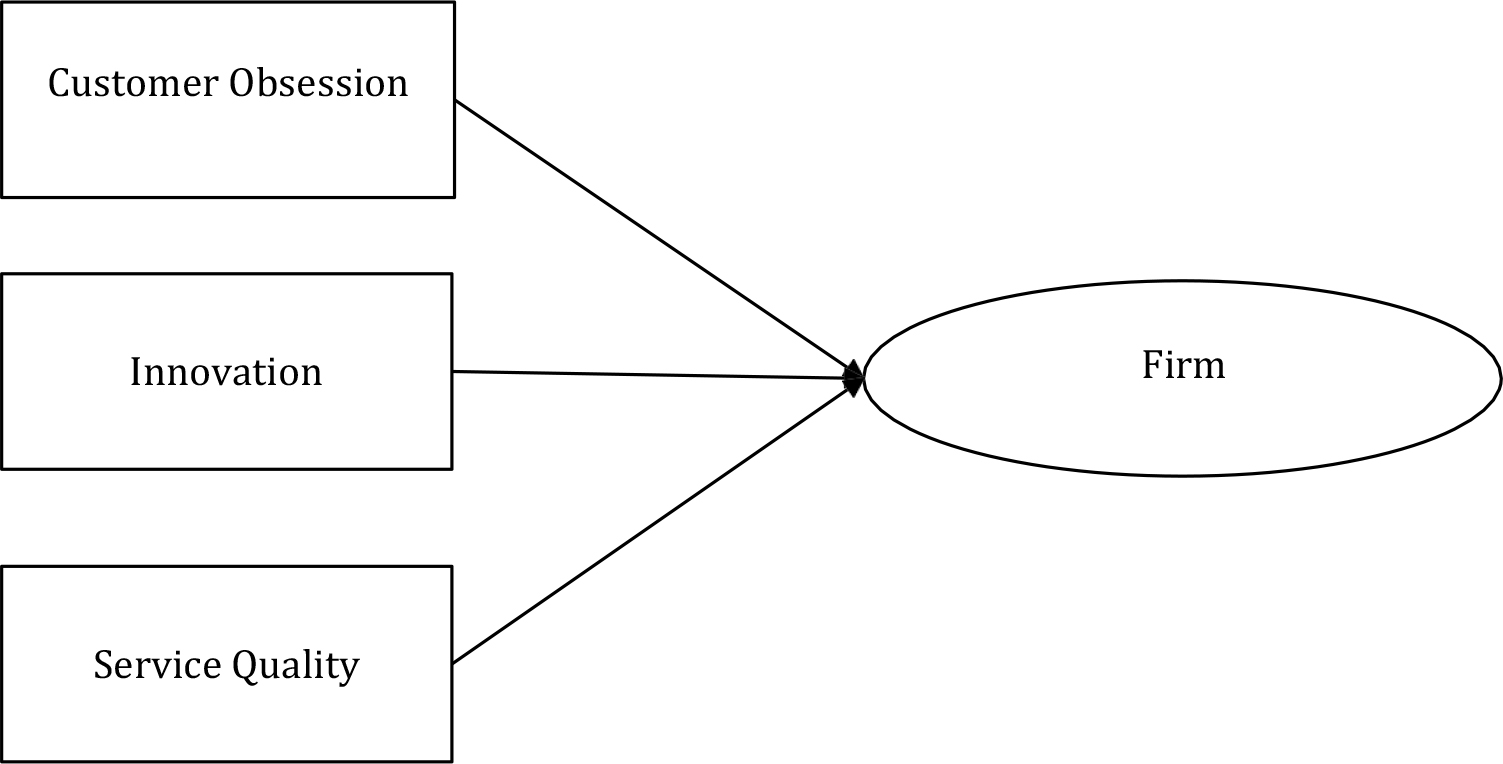
Figure 1.
The methodology framework
Source: own processing
Table 2.
Descriptive variables
| Abbreviation | Variable | Measure | Source |
|---|---|---|---|
| Dependent variables | |||
| ROA | Return on Assets | Net Profit Total Assets | Company Financial Statements, StockAnalysis |
| ROE | Return on Equity | Net Profit Equity | Company Financial Statements, StockAnalysis |
| Independent variables | |||
| NPS | Customer Obsession Index | NPS value is calculated as: % Promoters -% Detractors, ranging from -100 to + 100. | Company official website, Company annual reports, Industry Reports (Customer Gauge NPS Benchmarks; Qualtrics Institute) |
| INNO | Innovation Intensity | R&D expense Total Revenue | Company Financial Statements, StockAnalysis |
| SQ | Service Quality | Binary variable, taking the value of 1 if the company has won at least one award related to service, product quality, or innovation in year t, and taking 0 if it has not won any awards. | Company official website, Company presses release, The Taipei Times |
In line with previous research that used award recognition as an indicator of service or product excellence, this study measures service quality with a binary proxy variable. Azadegan and Pai (2008) show that performance and product awards from industry organizations, or customers, can serve as meaningful signals of firm-level performance and innovation. Similarly, Zhan et al. (2021) use winning service awards as a proxy for service excellence, demonstrating that winning firms experience positive market reactions and subsequent performance improvements. Consistent with these studies, this study operationalizes service quality as a binary variable that takes the value of 1 if the firm has won at least one award related to service, product quality, or innovation in year t, and 0 otherwise.
Consistent with the existing literature, prior empirical evidence suggests that innovation and customer-centricity capabilities have a positive and significant impact on firm performance. Keiningham et al. (2023) demonstrate that perceptions of innovativeness and customer satisfaction have a significant impact on financial market performance, while Chea (2025) finding that service quality and innovation significantly enhance customer satisfaction – an essential driver of organizational success.
Data analysis
Descriptive statistics
First, the study conducted descriptive statistics to summarize the general characteristics of the data set, including the mean, standard deviation, minimum and maximum values of the variables ROA, ROE, COI (NPS), Innovation and Service Quality. The purpose of this step is to help identify trends in data distribution, the level of variation between enterprises over years, and check for the presence of unusual values (outliers) before performing regression analysis.
Correlation analysis
Correlation is a measure of the relationship between two variables. Here, the author is interested in two aspects of the results: the statistical significance level (Sig.) and the Pearson correlation coefficient. According to Field (2010), the Pearson correlation coefficient only tells us the degree of linearity between two variables, but to determine whether the relationship is statistically significant, a hypothesis test is needed. The test result will be based on the sig value: if sig is less than 0.05, we conclude that the two variables are linearly correlated; conversely, if sig is greater than 0.05, the linear relationship is not confirmed (at the 0.05 significance level). After determining that the correlation is significant (sig < 0.05), the next step is to assess the strength or weakness of the relationship through the absolute value of the coefficient r. Field (2010) suggests the following reference thresholds:
These classification levels help researchers better understand the strength of the association between variables, whether or not it is statistically significant.
Panel data regression
Based on a panel dataset of 50 companies over 2020-2025, the study applies a panel regression model with firm and year fixed effects (firm fixed effects and year fixed effects). This modelling approach is particularly appropriate for the current study, as the research examines firm-level relationships over time and seeks to identify the effects of customer obsession, innovation, and service quality on firm performance while controlling for unobserved, time-invariant firm-specific characteristics. A fixed-effects specification allows the analysis to isolate within-firm variations over time, thereby reducing potential bias arising from omitted variables that are constant within firms but differ across firms. In addition, the inclusion of year fixed effects accounts for common macroeconomic shocks and industry-wide trends affecting all firms during the study period. The research model is built as follows:
In which:
According to the study by Gujarati & Porter (2010), in the process of handling panel data, researchers commonly apply three main estimation models for regression equations: Pooled Ordinary Least Squares (Pooled OLS), Random Effects Model (REM), and Fixed Effects Model (FEM). Each of these models has its own advantages and applications, and choosing the appropriate model for the dataset is an important step to ensure accurate estimates.
To determine which model is most suitable for the research dataset, researchers typically use a series of tests. Specifically, the F-test is applied to distinguish between the FEM and the Pooled OLS model. This test evaluates whether there are significant differences between the estimated coefficients from FEM and Pooled OLS. Meanwhile, the Breusch-Pagan Lagrange test is used to choose between the REM and the Pooled OLS model, to determine whether the dispersion of errors affects the estimation. For the choice between FEM and REM, the Hausman test is the main tool, helping determine which model yields more accurate estimates under assumptions about error heterogeneity.
After identifying the appropriate model, additional tests are needed to ensure the stability and reliability. These include the multicollinearity test (Variance Inflation Factor - VIF), used to detect multicollinearity, which can weaken model estimates. The heteroskedasticity test (Modified Wald test) is used to determine whether the variance of the errors changes. In addition, the residual correlation test (Wooldridge test) is also an essential part, aimed at checking for autocorrelation in the model residuals. This issue can affect the accuracy of the estimates.
In cases where the model detects heteroskedasticity, residual autocorrelation, or both, the FGLS estimation method will be applied as an alternative. Wooldridge (2010) recommends that, when panel data exhibit heteroskedasticity or autocorrelation in residuals, the use of FGLS is necessary to ensure the efficiency and reliability of the estimates, thereby providing a solid foundation for research decisions and policy analysis. All statistical analyses were conducted using Stata version 17.
Results
Descriptive statistics
The panel dataset comprises 50 listed companies in Taiwan for the period 2020–2025, with a total of 300 observations, of which only 264 are relevant for the financial variables ROA, ROE, and LnRD. Descriptive statistics show that (i) the average ROA is 7.792% with a standard deviation of 2.962, indicating relatively stable profitability among companies; (ii) the average ROE is 18.515%, higher than ROA, reflecting the level of financial leverage in the industry. The NPS index – representing Customer Obsession – has an average of 46.838 points, indicating that customer satisfaction is generally quite positive. The Innovation (INNO) variable, measured by the ratio of R&D expenditure to sales, has a mean of 0.072 and a large standard deviation (std = 0.162), indicating significant variation in the level of innovation investment across enterprises, especially between the technology - semiconductor group and the food - aviation group. The Service Quality (SQ) variable is a binary indicator, with an average of 0.446, indicating that about 44.6% of enterprises received at least one award or recognition for service quality during the research period. Finally, the size and investment variables, such as LnRD and LnTR, exhibit substantial variation across enterprises. Specifically, LnRD ranges from 1.403 to 12.383, with a mean of 6.439 and a standard deviation of 2.430, indicating substantial variation in R&D intensity across firms. Similarly, LnTR ranges from 5.498 to 15.820, with a mean of 9.945 and a standard deviation of 2.149, reflecting significant heterogeneity in firm size and revenue capacity between industries (Table 3).
Correlation analysis
The Pearson correlation matrix shows several notable relationships between the study variables. Specifically, ROA is strongly positively correlated with LnRD (r = 0.690) and LnTR (r = 0.752), reflecting that larger firms with higher R&D investment tend to have better financial performance. The NPS variable is also positively correlated with ROA (r = 0.505), consistent with the literature argument that customer satisfaction is a driver of performance. In contrast, Innovation (INNO) is negatively correlated with ROA and ROE (–0.322 and –0.240, respectively), suggesting a possible time lag in the innovation effect: R&D investment in the current year may increase costs, but financial benefits will be realized only in subsequent years. SQ is positively correlated with most key variables, especially ROA (0.315), indicating that enterprises recognized for service quality tend to have better financial performance. Overall, the correlation shows no unusual fluctuations, providing an initial basis for regression analysis (Table 4).
Multicollinearity
The VIF results show that the average VIF is 2.56, and all variables have VIFs < 5, with the highest at LnRD (4.63). This confirms that the model has no serious multicollinearity and is fully suitable for regression analysis (Table 5).
Regression analysis
To select the appropriate model, the following tests were conducted (see Table 6):
F-test (OLS vs FEM). For ROA, the F-test comparing OLS and FEM resulted in F(44, 214) = 16.39 with a p-value of 0.000, indicating that the FEM model is more suitable than Pooled OLS. Similarly, for ROE, the test yielded F(44, 214) = 11.40, with a p-value of 0.000, confirming that FEM is preferred over OLS.
LM-test (OLS vs REM). For ROA, the LM-test comparing OLS and REM reported chibar2 = 310.45 with p-value = 0.000, implying rejection of the null hypothesis of no random effects; therefore, the REM model is more appropriate than OLS. For ROE, the LM-test yielded chibar2 = 241.91 with a p-value = 0.000, also supporting the REM specification over OLS.
Hausman test (FEM vs REM). The Hausman test for the ROA model yielded a p-value of 0.000, leading to rejection of the null hypothesis and indicating that FEM is more appropriate than REM. In contrast, for ROE, the Hausman test yielded a p-value of 0.320, indicating that the null hypothesis cannot be rejected; thus, the REM model is more suitable for the ROE regression.
Modified Wald test for heteroskedasticity. The Modified Wald test for groupwise heteroskedasticity showed p-value = 0.000 for both ROA and ROE, indicating strong evidence of heteroskedasticity in the panel data.
Wooldridge test for autocorrelation. The Wooldridge test for first-order autocorrelation yielded a p-value of 0.000 for both ROA and ROE, confirming the presence of serial correlation over time.
Conclusion. Given the joint appearance of heteroskedasticity and autocorrelation, the standard FEM/REM estimators are no longer efficient. Therefore, the study employs Feasible Generalized Least Squares (FGLS) to obtain consistent and efficient estimates under the short-T, large-N panel structure.
Table 6.
Summary of tests
| Tests | ROA | ROE |
|---|---|---|
| F-test: OLS vs FEM | F (44,214) = 16.39, Prob = 0.000 | F (44,214) = 11.40, Prob = 0.000 |
| LM-test: OLS vs REM | chibar2 = 310.45, Prob = 0.000 | chibar2 = 241.91, Prob = 0.000 |
| Hausman test: FEM vs REM | Chi2(5) = 41.55, Prob = 0.000 → FEM | Chi2(5) = 5.86, Prob = 0.320 → REM |
| Heteroskedasticity test | Prob = 0.000 | Prob = 0.000 |
| Autocorrelation test | F (1,44) = 52.480, Prob = 0.000 | F (1,44) = 25.797, Prob = 0.000 |
Regression results
Table 7 shows that the significance levels of the estimated coefficients differ across variables, reflecting varying impacts on firm performance. In the ROA model, four variables are statistically significant. Specifically, LnRD (β = 0.595, p < 0.01) and LnTR (β = 0.456, p < 0.01) have strong, positive effects on ROA, indicating that firms with greater R&D investment and higher total revenue tend to achieve higher profitability. The Innovation (INNO) variable shows a negative, highly significant coefficient (β = –5.880, p < 0.01), suggesting that higher innovation intensity in the current year reduces short-term profitability due to rising R&D-related costs. The Service Quality (SQ) variable also has a negative and statistically significant coefficient (β = –0.136, p < 0.05), implying that receiving service-related awards does not immediately translate into financial gains.
Table 7.
FGLS model results
| Variable | ROA | ROE |
|---|---|---|
| NPS | 0.010* [1.65] | -0.0005 [-0.04] |
| LnRD | 0.595*** [12.07] | 1.629*** [16.34] |
| LnTR | 0.456*** [8.04] | 1.279*** [13.24] |
| INNO | -5.880*** [-8.67] | -11.73*** [-7.53] |
| SQ | -0.136** [-2.56] | -0.527*** [-4.32] |
| _cons | -0.811 [-1.53] | -3.310*** [-4.71] |
In contrast, NPS has a positive but only marginally significant effect at the 10% level (β = 0.010, p < 0.1). This indicates that customer satisfaction has a weaker-than-expected impact on ROA in the short term. The constant term is statistically insignificant, showing that the baseline profitability without explanatory factors is not meaningfully different from zero.
For the ROE model, the results show a similar pattern but with even stronger magnitudes. Both LnRD (β = 1.629, p < 0.01) and LnTR (β = 1.279, p < 0.01) exhibit large, highly significant positive effects, confirming that firms with larger resource bases and stronger market presence achieve higher returns on equity. Meanwhile, INNO (β = –11.73, p < 0.01) remains the largest negative driver of ROE, reinforcing the argument that innovation imposes substantial short-term financial burdens. SQ also shows a negative and significant effect (β = –0.527, p < 0.01). NPS, however, does not have a statistically significant impact on ROE (β = –0.0005, p = 0.970). The constant term is negative and statistically significant. Based on the estimated coefficients in Table 7, the regression equation of each dependent variable follows these two equations:
Based on the absolute z-statistics and standardized coefficients from FGLS, the impact of the variables on ROA and ROE is shown in the following table. This shows that the Innovation variable has the largest negative impact; the variables related to resource capacity (LnRD, LnTR) are the main drivers with positive impacts, while NPS has a weaker impact than expected (Table 8).
Discussion
This section explicitly contrasts the proposed hypotheses with the empirical results. While the theoretical framework predicts positive effects of Customer Obsession, Innovation, and Service Quality on firm performance, the findings indicate heterogeneous and partly asymmetric effects across variables and performance measures. Specifically, Customer Obsession shows a weak positive association with ROA but no significant effect on ROE, providing partial support for Hypothesis 1 and suggesting that customer-centric strategies generate financial returns gradually rather than immediately. In contrast, Innovation and Service Quality exhibit significant negative short-term effects on both ROA and ROE, which runs counter to Hypotheses 2 and 3. These deviations can be explained by cost-intensive investment mechanisms and temporal lag effects, whereby R&D expenditure and service quality enhancement initially increase operating costs before translating into long-term value creation. Overall, the results do not contradict the underlying theoretical arguments but rather highlight the importance of time horizons and accounting-based performance measures when evaluating the financial outcomes of strategic capabilities.
Table 9 systematically contrasts the proposed hypotheses with empirical findings and assesses the level of support for them. While the theoretical framework predicts uniformly positive effects, the results reveal asymmetric and time-dependent patterns that reflect the complex dynamics of strategic capability development.
Table 9.
Comparison between hypotheses and empirical findings
| Hypothesis | Empirical findings | Level of support |
|---|---|---|
| H1. Customer Obsession has a positive impact on ROA and ROE. | Weak positive effect on ROA; insignificant effect on ROE | Partially supported |
| H2. Innovation has a positive impact on ROA and ROE in the long-term. | Significant negative short-term effect on both ROA and ROE | Not supported (short-term) |
| H3. Service Quality has a positive impact on ROA and ROE. | Significant negative short-term effect on both ROA and ROE | Not supported (short-term) |
The regression results have important implications for how Customer Obsession, resource capacity, innovation intensity, and service quality affect the performance of listed companies in Taiwan. This section analyses each variable separately, assesses the impact on ROA and ROE, explains the mechanism, compares it with theoretical expectations, and contrasts it with previous studies.
First, the variable NPS, a proxy for the level of Customer Obsession, has a positive coefficient on ROA (β = 0.010, p < 0.1) but is statistically insignificant on ROE. Although the positive sign is consistent with expectations, the statistical significance is quite weak, and the impact on ROE is almost zero. This suggests that improvements in customer satisfaction contribute very little to short-term profitability. This may be because Customer Obsession often brings long-term benefits, such as customer retention, increased repurchases, or brand enhancement, rather than immediate improvements in revenue in the period. This result is consistent with Keiningham et al. (2023) who emphasize that the financial impact of customer-centric strategies often lags. In the Taiwanese context, businesses may not have fully translated Customer Obsession into measurable financial benefits.
Second, the two variables representing resource capabilities, LnRD and LnTR, both exhibit strong, highly statistically significant positive effects on ROA and ROE. LnRD has coefficients of 0.595 (ROA) and 1.629 (ROE), while LnTR has coefficients of 0.456 (ROA) and 1.279 (ROE). This confirms that larger-sized enterprises with stronger R&D investment levels tend to have better financial performance. The signs of the coefficients are consistent with theoretical expectations. According to the Resource-Based View (Barney, 1991; Wernerfelt, 1984), valuable and difficult-to-copy resources help increase competitive advantage and operational efficiency.
Third, the INNO has the strongest negative impact among all variables, with coefficients of -5.880 for ROA and -11.73 for ROE, both highly statistically significant. Although the negative sign seems contrary to initial expectations, it is consistent with the “cost effect of innovation” mechanism commonly encountered in practice. High innovation intensity is accompanied by high testing and product development costs and commercialization risks, which significantly reduce short-term profits. This is a common phenomenon in the technology industries with long R&D cycles. Therefore, the negative coefficient of INNO is completely reasonable in the current context.
Fourth, the Service Quality (SQ) variable has negative, statistically significant coefficients on both ROA (–0.136) and ROE (–0.527). This runs counter to the expectation that high service quality will improve financial performance. This may be because achieving service quality awards requires large investments in employee training, process improvement, quality control systems, and certification activities. These costs increase operating costs in the short run and do not result in corresponding revenue growth. This is not new: Morgan et al. (2009) also found that service differentiation requires significant costs, which may reduce short-term financial performance, especially in highly competitive industries such as semiconductors or airlines in Taiwan.
Finally, the constant coefficients are all statistically insignificant or negative, indicating that, in the absence of explanatory variables in the model, the enterprise's default financial performance is not significantly different from the average or may even be below average. This emphasizes the important role of customer strategy, enterprise resources, innovation, and service quality on financial performance.
Overall, the research results partly support the theoretical predictions. The resource variables reflect the expectations of RBV and dynamic capabilities. In contrast, innovation and service quality have a negative short-term impact due to high costs, consistent with previous studies. Customer Obsession does not show a strong immediate impact, suggesting that Taiwanese enterprises are still translating customer-centric strategies into specific financial results.
Conclusions
This study examined the impact of Customer Obsession, Innovation, and Service Quality on the performance of 50 listed companies in Taiwan from 2020–2025. The results showed that the influence of each factor is different. Customer Obsession has only a slight positive impact on Return on Assets and is statistically insignificant for Return on Equity, reflecting the long-term, cumulative nature of customer-centric strategies. In contrast, variables reflecting the firm's resource capabilities, including LnRD and LnTR, have a positive, strong, and stable impact on both dependent variables, reinforcing the argument of the Resource-Based View theory that valuable and difficult-to-copy resources play a critical role in creating advantages and financial performance. Innovation exhibits a significant negative short-term impact, suggesting that Research and Development expenditures and commercialization processes cause current profits to decline. Service quality also has a negative short-term impact, as businesses must invest heavily in human resources, processes, and assessment systems to earn service awards.
Importantly, the conclusions of this study are grounded in the empirical strength and direction of the estimated effects. The findings indicate that Customer Obsession exerts only a weak positive influence on Return on Assets and no statistically significant effect on Return on Equity, underscoring the gradual and cumulative nature of customer-centric strategies rather than immediate financial gains. In contrast, firm resource variables, particularly Research and Development scale and revenue size, exhibit strong, stable positive effects on both performance measures, confirming their central role in value creation. At the same time, Innovation and Service Quality exhibit statistically significant negative short-term impacts, reflecting cost-intensive investment dynamics and time-lagged returns. These asymmetric effects highlight that strategic capabilities do not translate uniformly into accounting-based performance outcomes and must be evaluated with careful attention to both magnitude and temporal horizon.
From an academic perspective, this study contributes to the empirical evidence in Taiwan, where Customer Obsession remains a new and under-examined concept. It also develops an integrated model that views Customer Obsession as a strategic capability that links innovation and service quality, overcoming the limitations of previous studies that primarily examined each relationship in isolation. By placing Customer Obsession within the Resource-Based View and Dynamic Capabilities theoretical framework, the study contributes a new approach to explaining the mechanism of value creation through customer data, innovation, and service improvement.
In practical terms, the findings suggest that businesses need to approach Customer Obsession as a long-term strategy that requires continuous investment in data systems, Customer Relationship Management technology, and customer behaviour analytics to translate satisfaction into financial performance. Research and Development capabilities and business scale remain important foundations for increasing operational performance. At the same time, the negative impact of Innovation and Service Quality suggests that businesses need to manage innovation costs and balance investment in service quality to avoid short-term profitability impacts.
From a managerial perspective, the findings provide several implications for key stakeholder groups within organizations, especially top management, who are heads of strategy, marketing, customer service, and innovation. First, the results emphasize that Customer Obsession should be implemented as a long-term strategy, suitable for strategic planning leaders and customer experience departments. Because of its cumulative nature over time, businesses need to make sustainable investments in data systems, Customer Relationship Management technology, and customer behaviour analysis tools to convert satisfaction levels into future financial returns. This approach helps businesses solve the long-term problem of maintaining loyalty, reducing churn, and creating customer value over the life cycle.
Second, the results show that Research and Development capabilities and business scale remain important foundations for increasing operational efficiency. This suggests that Research and Development departments, product development departments, and finance departments need to prioritize strategic investments in the medium term, strengthen core competitiveness, and support businesses in maintaining growth momentum amid increasingly fierce technological competition.
Third, the negative short-term impact of Innovation and Service Quality underscores the need to manage innovation costs and invest in service quality. This has important implications for boards of directors, finance departments, and customer service management teams in balancing innovation goals – improving experience with short-term profit goals. Applied in the short and medium term, businesses can set up a roadmap for innovation in stages to avoid cost pressures at one point, allocate service resources according to priority, and measure innovation effectiveness not only by financial indicators but also by the level of improvement in customer experience.
In the long term, this approach helps businesses solve an important strategic problem: how to innovate continuously without sacrificing short-term profits, while maintaining service quality at a high enough level to create differentiation and enhance sustainable competitive advantage.
The study has several limitations, including its reliance on publicly available data on Net Promoter Score and service awards, its innovation measure based primarily on Research and Development expenditures, and its failure to capture non-financial forms of innovation. Furthermore, the model fails to control the impact of macroeconomic factors. Given these limitations, future research could consider extending the Customer Obsession measure to include metrics such as Customer Lifetime Value or Customer Effort Score, adding data on innovation by patent or new product, conducting industry-specific analyses to assess differences in impact mechanisms, and applying dynamic models to examine better the lagged impact of Innovation and Customer Obsession on financial performance.