
Introduction
Sustainability has become a central focus for organizations globally, particularly in high-impact industries such as civil aviation, which faces increasing scrutiny over its environmental, social, and economic performance (Ryley et al., 2020; Kumar & Dulloo, 2024). The aviation sector contributes significantly to global greenhouse gas emissions, impacts communities through noise and land use, and plays a critical role in economic development through connectivity and trade facilitation (Champeecharoensuk et al., 2024). In Africa, the civil aviation industry is uniquely positioned to drive regional integration, economic growth, and access to global markets (Samunderu, 2024a). However, the aviation sector also faces persistent sustainability challenges, including high carbon emissions, limited adoption of green technologies, inadequate social inclusivity, and financial instability (Amankwah-Amoah, 2020). Many African civil aviation authorities struggle to balance these competing priorities, often operating within rigid, bureaucratic cultures that limit innovation, responsiveness, and stakeholder engagement (Samunderu, 2024b). As global awareness of environmental and social governance rises, the imperative for African aviation authorities to embed sustainability within their operational and strategic frameworks becomes increasingly critical (Zik-Rullahi & Jide, 2023). This study is conducted to contribute to literature on the mediating role of corporate governance on the relationship between adhocracy culture and Triple Bottom Line Sustainability in African Civil Aviation Authorities (ACAAs).
Organizational culture plays a decisive role in shaping how sustainability objectives are pursued (Jaganjac et al., 2024). The adhocracy culture, as conceptualized by Cameron and Quinn (2011), is characterized by innovation, flexibility, creativity, and risk-taking. According to Kimathi et al. (2024) adhocracy culture fosters an environment where experimentation is encouraged, allowing organizations to respond dynamically to sustainability challenges by piloting green technologies, eco-friendly operations, and socially inclusive practices. Within the African civil aviation context, adhocracy culture can enable authorities to break free from rigid bureaucratic structures (Nkabinde, 2024), thereby promoting agility and adaptability needed to align with Triple Bottom Line (TBL) principles such as economic, social and environmental sustainability. This cultural orientation supports the adoption of initiatives that prioritize environmental stewardship, societal welfare, and economic resilience simultaneously (Ferede et al., 2024). However, organizational culture alone may not guarantee sustainable outcomes unless supported by robust corporate governance mechanisms (Salvioni et al., 2018). Corporate governance, defined as the system of rules, practices, and processes by which organizations are directed and controlled (Hossain et al., 2018; Katharaj et al., 2025; Mähönen, 2020; Tricker, 2022), ensures accountability, transparency, and alignment with stakeholder expectations. Good corporate governance practices are relevant for understanding the relationships between organizational culture and sustainability by providing oversight, clarifying roles and responsibilities, and institutionalizing ethical behavior (Purwanti, 2020). This is because, in an adhocracy culture, where risk-taking and experimentation are prevalent, corporate governance can provide the necessary checks and balances to ensure that innovation remains aligned with sustainability objectives and regulatory requirements (Serfontein & Govender, 2020).
Despite the links between adhocracy culture, corporate governance, and sustainability performance outcomes (Aprilianty & Waskito, 2023; Deirmentzoglou et al., 2020; Hafeez et al., 2024; Jajja et al., 2019; Obinna, 2023; Ogundipe, 2025; Misigo et al., 2019; Moghaddam, 2019), empirical research exploring these dynamics in the African civil aviation sector remains scarce. While the importance of organizational culture in driving sustainability has been acknowledged (Gautam & Gautam, 2023; Thendu, 2023), and the role of corporate governance in enhancing accountability and ethical conduct has been documented (Badri & Badri, 2023; Suifan, 2021), little attention has been paid with regards to the mediating role of corporate governance on the relationship between adhocracy culture and sustainability performance outcomes using the TBL framework, within African aviation authorities, thereby creating a knowledge gap. This knowledge gap in the literature is significant given the unique operational challenges and socio-economic contexts faced by these civil aviation authorities, such as resource constraints, regulatory weaknesses, and stakeholder pressures (Opiyo, 2023).
Moreover, the aviation sector’s high exposure to environmental concerns and its reliance on public trust and legitimacy further underscore the need to gain insights on the mediating effect of corporate governance on the relationships between adhocracy culture and sustainability performance based on the TBL framework. Studies indicate that, although adhocracy culture may drive innovative sustainability initiatives, weak governance could lead to misaligned strategies, regulatory non-compliance, or stakeholder dissatisfaction (Raimi, 2020; Watiri, 2022). Conversely, strong governance structures without a supportive culture could result in compliance-oriented but uninspired sustainability practices that fail to leverage innovation and creativity (Gautam & Gautam, 2023). Understanding this interplay is therefore essential to inform organizational reforms and policy interventions aimed at advancing sustainability in the African civil aviation context. This study finds it imperative to investigate the effect of adhocracy culture on TBL sustainability framework, namely economic, social and environmental sustainability performance. The study further seeks to examine the mediating role of corporate governance on the relationship between adhocracy culture and TBL sustainability performance in African Civil Aviation Authorities (ACAAs).
The structure of this paper is as follows: after the introductory section, the second part reviews existing literature, focusing on theoretical and empirical studies that bridge the gap between theory and practice. The third part presents the research context and outlines the methodology used in this study. Following that, the fourth part delves into the analysis and findings. The discussion and implications are explored in the fifth section. Finally, the conclusion highlights key insights, recommendations, future research directions, and the limitations of the study.
Literature review
The underlying theory: Competing Values Framework (CVF)
The Competing Values Framework (CVF) is a robust tool for analyzing organizational culture, consisting of four quadrants: clan, adhocracy, market, and hierarchy. Each quadrant represents distinct cultural dynamics that can significantly impact organizational performance. Adhocracy culture, characterized by flexibility, innovation, and a proactive approach, is essential for organizations seeking to adapt to the rapidly evolving challenges of the aviation industry, particularly about sustainability (Coelho et al., 2022). Research suggests that organizations embracing such a culture often experience heightened creativity and experimentation, which are critical components for sustainability initiatives (Mibey, 2018).
Furthermore, the commitment to innovation within an adhocracy-oriented organization aligns with principles espoused in ISO 14001 standards. Nokaneng (2022) emphasizes the connection between organizational culture, particularly adhocracy, and enhanced environmental performance in South African companies. This link signifies that a proactive cultural stance allows the ACAA to not only comply with established regulations but also to spearhead initiatives that exceed them, ultimately enhancing the authority’s sustainability profile. The interplay between organizational culture and sustainability performance is further illuminated by Thendu (2023), who posits that safety management systems within the aviation sector are more effective when supported by a culture of innovation. Nkabinde (2024) discusses the strategy implementation challenges faced by air navigation service providers in South Africa, highlighting how bureaucratic structures can stifle innovation. The significance of an adhocracy culture is also affirmed by Raimi (2020), who investigates the correlation between such cultures and sustainability performance in various institutions. This notion can extend into the civil aviation domain where groups that maintain a flexible and innovative ethos are better positioned to tackle environmental challenges, thus resulting in improved sustainability metrics.
The Competing Values Framework (CVF) justifies this study by positioning adhocracy culture, marked by flexibility, innovation, and adaptability, as a catalyst for Triple Bottom Line (TBL) sustainability in African Civil Aviation Authorities. Aligned with the study objectives, CVF explains how such a culture drives environmental, social, and economic performance through creative problem solving and proactive change. Its focus on innovation complements corporate governance’s mediating role, ensuring sustainable practices are both visionary and accountable, thereby enhancing overall organizational agility and sustainability outcomes in the aviation sector.
Adhocracy culture
Adhocracy culture is a type of organizational culture characterized by flexibility, creativity, innovation, and a willingness to take risks (Chege et al., 2022). Cameron and Quinn (2011), in their competing values framework, define adhocracy as a dynamic and entrepreneurial culture where leaders are visionaries and innovators, and the organization values experimentation and adaptability. This culture encourages employees to generate novel ideas, embrace change, and respond quickly to external opportunities and threats (Karneli, 2023). An adhocracy culture emphasizes the ability to innovate and solve complex problems in uncertain environments, making it suitable for industries that face rapid technological changes and competitive pressures (Goncalves et al., 2020; Kuhn & Bhatiasevi, 2024; Moganane, 2024; Purnawan, 2025). In the aviation industry, adhocracy culture is particularly relevant because the sector operates in a highly dynamic and competitive environment, shaped by constant technological advancements, evolving customer expectations, regulatory changes, and growing sustainability demands (Citaristi, 2022). Civil aviation authorities and airlines that foster an adhocracy culture can develop and implement innovative solutions such as adopting green technologies, enhancing passenger experience, or redesigning operational processes to reduce emissions (Ferede et al., 2024).
Triple Bottom Line sustainability framework
The Triple Bottom Line (TBL), coined by Elkington (2008), redefines organizational success beyond mere financial profitability to include environmental and social responsibilities. TBL is a holistic framework that urges businesses and institutions to measure their performance across three interconnected dimensions: economic, environmental, and social sustainability (Elkington & Rowlands, 1999). These three dimensions served as the dependent variables of our study and are discussed as follows: economic sustainability performance, environmental sustainability performance, and social sustainability performance.
Economic sustainability performance refers to an organization’s capacity to create and sustain economic value over the long term while operating ethically and responsibly within its broader social and environmental context (Gupta et al., 2020). As a cornerstone of the Triple Bottom Line (TBL] framework, which integrates economic, social, and environmental objectives, it emphasizes the need to balance profitability with stewardship and equity (Gupta et al., 2020). This perspective acknowledges that financial goals are deeply interconnected with environmental and social outcomes, requiring businesses to pursue holistic strategies that promote resilience, efficiency, and innovation (Hourneaux et al., 2018). In the aviation industry, economic sustainability performance has become particularly significant as the sector navigates the dual challenges of growth and environmental responsibility (Hourneaux et al., 2018). The COVID-19 pandemic further underscored the importance of resilience, driving firms to leverage information technology to enhance operational efficiency and adapt to new ethical imperatives (Trivedi et al., 2024).
At the same time, the adoption of carbon emission reduction strategies, as advocated by Guan et al. (2022), has become essential for aligning economic objectives with environmental commitments, reflecting a shared value approach to sustainable operations (Guan et al., 2022). The growing prominence of sustainability reporting in the aviation sector enables stakeholders to assess companies’ adherence to TBL principles, promoting transparency and accountability (Karaman et al., 2018). Studies of sustainability indicators across industries further reveal the interconnectedness of economic development and sustainability, highlighting how aviation’s future growth must align with broader sustainable development goals (Ahmad et al., 2019). This interconnectedness is further emphasized in research showing the need for industry wide strategies to embed sustainability in economic planning (Nogueira et al., 2023). Looking ahead, data driven approaches are expected to play a key role in achieving TBL objectives, fostering industry wide innovation and advancing sustainable economic performance (Tseng et al., 2020).
Environmental sustainability performance refers to an organization’s ability to minimize its ecological footprint by managing resources responsibly, reducing emissions, and adopting practices that protect the environment while supporting long-term viability (Gupta et al., 2020). Within the Triple Bottom Line (TBL) framework, it represents the environmental dimension, which complements social and economic objectives to promote holistic sustainable development (Karaman et al., 2018). This perspective underscores the importance of integrating ecological considerations into business strategies to achieve balance among competing priorities (Hourneaux et al., 2018). In the aviation industry, environmental sustainability has become critical as the sector addresses its significant environmental challenges alongside its economic contributions (Guan et al., 2022). The industry’s initiatives to reduce carbon emissions reflect an alignment with TBL principles and a commitment to creating shared value for both the economy and the environment (Guan et al., 2022). The post-COVID 19 context has further accelerated the need to reassess sustainability strategies, where information technology now plays a pivotal role in incorporating TBL perspectives into operations (Trivedi et al., 2024). Performance metrics in aviation increasingly focus on sustainability indicators such as carbon intensity, fuel efficiency, and waste management to evaluate and improve environmental outcomes (Ahmad et al., 2019). Aligning performance measurement with the TBL framework enables aviation companies to make informed, strategic decisions that balance environmental, social, and economic goals (Tseng et al., 2020). Case studies within the industry further illustrate how comprehensive strategic analysis grounded in TBL principles enhances sustainability outcomes and strengthens organizational resilience (Heyes et al., 2023). Ultimately, achieving environmental sustainability in aviation demands continuous adaptation and refinement of performance metrics, demonstrating the TBL framework’s effectiveness in addressing the sector’s environmental impact (Gupta et al., 2020; Hourneaux et al., 2018; Karaman et al., 2018).
Social sustainability performance refers to an organization’s efforts to foster social equity, strengthen community relations, and enhance stakeholder engagement while ensuring that its operations contribute positively to society (Gupta et al., 2020). As a key dimension of the Triple Bottom Line (TBL) framework, it complements economic and environmental objectives by emphasizing inclusivity, fairness, and transparency (Karaman et al., 2018). This holistic approach ensures that business success does not come at the expense of societal well-being, but rather promotes shared prosperity (Hourneaux et al., 2018). In the aviation industry, social sustainability plays a crucial role by fostering strong relationships with communities and stakeholders, which enhances overall sustainability performance (Heyes et al., 2023). Strategic analysis in the sector demonstrates how incorporating social considerations leads to more comprehensive and effective sustainability outcomes (Heyes et al., 2023).
Effective stakeholder engagement has also been identified as vital for reducing carbon emissions while promoting shared value across regional and international operations (Guan et al., 2022). The industry also faces the challenge of assessing and reporting its social performance through corporate social responsibility (CSR) initiatives (Stevenson & Marintseva, 2019). Transparent CSR reporting enhances community trust and fosters deeper stakeholder engagement, which is essential for social sustainability (Stevenson & Marintseva, 2019). Practices that strengthen social dimensions of sustainability within aviation further reinforce the TBL framework and its objectives (Gupta et al., 2020). In the post-COVID 19 context, information technology has become instrumental in advancing business sustainability by enabling innovative forms of digital stakeholder engagement (Trivedi et al., 2024). Globally, sustainability reporting practices in aviation underscore the sector’s ongoing commitment to social accountability and transparency (Karaman et al., 2018). Finally, CSR performance evaluations illustrate the aviation industry’s reliance on social sustainability as a fundamental pillar of TBL, strengthening community and stakeholder relations (Dimitriou, 2020).
Empirical review and hypotheses development
Effect of adhocracy culture on economic sustainability performance
Ogundipe (2025) established that organizations with a robust adhocratic environment are more adept at responding to logistical challenges, resulting in higher efficiency and costeffectiveness that underpin economic sustainability performance. In a study on the interplay between ethical leadership, adhocratic culture, and innovative work behavior as drivers of company performance. Aprilianty and Waskito (2023) conclude that companies embracing adhocratic practices promote innovation, which in turn leads to improved economic outcomes and sustainability. Furthermore, adhocracy culture impacts green innovation and organizational performance. Thus, firms exhibiting an adhocratic culture place strong emphasis on sustainability and innovation, thereby achieving economic advantages through attracting environmentally conscious consumers and minimizing operational costs (Globocnik et al., 2020; Liao, 2018; Shuliang et al., 2024). Medina-Álvarez and Sánchez-Medina (2023) address the relationship between organizational culture types and sustainability in ecotourism businesses in southern Mexico. The study found that an adhocratic culture enhances adaptability to environmental changes, ultimately supporting economic sustainability through diversified tourism offerings. Deirmentzoglou et al. (2020) provide evidence from Greece on the link between organizational culture and corporate sustainable development. The study found that firms with an adhocratic culture achieve higher sustainability performance, driven by innovative practices that optimize resource utilization and minimize waste. Based on studies conducted by Aprilianty and Waskito (2023), Globocnik et al. (2020), Liao (2018), Medina-Álvarez and Sánchez-Medina (2023), Ogundipe (2025), Shuliang et al. (2024), and Deirmentzoglou et al. (2020), the study hypothesizes that:
H1: A significant positive relationship exists between adhocracy culture and economic sustainability performance.
Effect of adhocracy culture on environmental sustainability performance
Obinna (2023) explores the relationship between adhocracy culture and corporate performance within hotels in Rivers State, Nigeria. The findings suggest a positive correlation: hotels with a stronger adhocracy culture exhibit better environmental performance. Similarly, Medina-Álvarez and Sánchez-Medina (2023) investigate the role of organizational culture types in sustainability among ecotourism businesses in southern Mexico. Their analysis demonstrates that an adhocracy culture significantly contributes to sustainable practices, enabling firms to adapt swiftly to environmental challenges. Hafeez et al. (2024) add to this discourse by examining how organizational ambidexterity, combined with green culture, propels corporate sustainability. Their results indicate that firms embracing an adhocracy culture are more adept at fostering green innovations, thus enhancing their environmental performance.
Gazi et al. (2024) emphasize the importance of green human resource management (H RM) in promoting organizational agility and a green culture. The study shows that companies with an adhocracy orientation can leverage these practices to improve both social and environmental sustainability outcomes. Studies by Liao (2018), and Shuliang et al, (2024) illustrates how adhocracy culture impacts companies’ green innovation and performance, revealing through qualitative analysis that environments fostering such cultures encourage creative problem-solving related to sustainability. Finally, Talaja and Vuković (2024) investigate whether adhocracy mediates the relationship between environmental dynamism and innovativeness. Their findings reveal that organizations characterized by adhocracy are better positioned to respond to environmental changes and explore innovative solutions. Dwelling on studies conducted by Gazi et al. (2024), Hafeez et al. (2024), Liao (2018), Medina-Álvarez and Sánchez-Medina (2023), Obinna (2023), Shuliang et al. (2024), and Talaja and Vuković (2024), the study hypothesizes that:
H2: There is a significant positive relationship between adhocracy culture and environmental sustainability performance.
Effect of adhocracy culture on social sustainability performance
Misigo et al. (2019) investigated the impact of adhocracy culture on the performance of public water companies in Kenya. Their findings revealed a strong positive correlation between adhocracy culture and enhanced operational efficiency, which suggests that innovative environments foster improved service delivery, contributing to social sustainability. Moghaddam (2019) explored the antecedent effects of transformational leadership and organizational culture on corporate social responsibility (CSR) and firm performance. The results indicated that an adhocracy culture positively influenced CSR initiatives, thereby enhancing organizational performance and social sustainability outcomes. Similarly, Jajja et al. (2019) examined the interplay between institutional pressures, organizational culture, and supplier social compliance in the context of logistics management. The study found that organizations with a strong adhocracy culture were more responsive to institutional demands regarding social compliance, fostering a culture of responsibility that aligns with sustainability goals. In Greece, Deirmentzoglou et al. (2020) assessed the role of organizational culture in corporate sustainable development. The study’s finding highlighted that firms with an adhocracy culture were more likely to engage in sustainable practices, emphasizing the culture’s role in promoting long-term sustainability objectives. Finally, Dyck et al. (2019) focused on sustainable organizing through the lens of organizational culture. Their examination revealed that organizations with an adhocracy culture were better positioned to achieve sustainability, as they prioritized adaptability and innovation, which are critical for addressing social challenges. Based on studies conducted by Deirmentzoglou et al. (2020), Dyck et al. (2019), Jajja et al. (2019), Misigo et al. (2019) and Moghaddam (2019). The study hypothesizes that:
H3: A significant positive relationship exists between adhocracy culture and social sustainability performance.
Mediating role of corporate governance
Nawaz Khan et al. (2019) illustrate that in contexts such as Pakistan’s textile sector, corporate governance frameworks can significantly enhance organizational performance through the promotion of an innovative culture. This finding suggests that the presence of robust governance can activate the potential of adhocracy culture to drive sustainability performance. Similarly, Abdelwahed and Soomro (2024) emphasize the crucial role of organizational culture when navigating sustainability challenges, asserting that effective corporate governance mechanisms bolster the organizational behavior essential for enduring sustainability efforts.
Furthermore, Amaral da Luz and Musial (2023) underline that while adhocracy culture may initially foster corporate social responsibility (CSR), the influence of corporate governance structures is pivotal in ensuring that these efforts translate into measurable environmental performance. This aligns with the assertion by Obinna (2023) that corporate performance is closely linked to adhocracy culture, exemplifying its potential positive impact when facilitated by effective governance. The mediating role of corporate governance is further corroborated by Shwairef et al. (2021), who provide evidence from Southeast Asia indicating that governance structures significantly enhance sustainability disclosure quality. This underscores the notion that without the proper governance framework, the benefits of adhocracy culture may not fully materialize, calling attention to the economic dimensions of sustainability performance.
Ali et al. (2023) affirm that the mediation effect of corporate governance enhances not only firm reputation but also fosters organizational citizenship behavior, intrinsically linked to broader social sustainability objectives. Similarly, Iqbal and Parray (2025) highlight the importance of corporate social responsibility as a bridge that connects organizational culture with citizenship behavior, emphasizing governance as a vital component that influences this dynamic.
Lastly, Huynh (2020) emphasizes the necessity of human resource management within the governance frameworks, mediating the relationship between performance and organizational culture, which further accentuates the interconnectedness of these constructs. Collectively, these studies affirm that corporate governance plays a crucial mediating role between adhocracy culture and sustainability performance across economic, environmental, and social dimensions, fostering a comprehensive approach to organizational success. Based on the studies conducted by Abdelwahed and Soomro (2024), Ali et al. (2023), Amaral da Luz and Musial (2023), Huynh (2020), Iqbal and Parray (2025), Nawaz Khan et al. (2019) and Shwairef et al. (2021) and the study hypothesize that:
H4: Corporate governance mediates the relationship between adhocracy culture and economic sustainability performance.
H5: Corporate governance mediates the relationship between adhocracy culture and environmental sustainability performance.
H6: Corporate governance mediates the relationship between adhocracy culture and social sustainability performance.
Conceptual framework
Dwelling on the Competing Values framework and relevant empirical literature, the study hypothesizes that significant positive relationships will exist between adhocracy and the three dimensions of the TBL framework namely economic sustainability performance, environmental sustainability performance and social sustainability performance. Based on the conceptual framework, the study proposes that corporate governance will mediate the relationship between adhocracy culture and the dimensions of the TBL framework (economic, environmental and social sustainability performance).
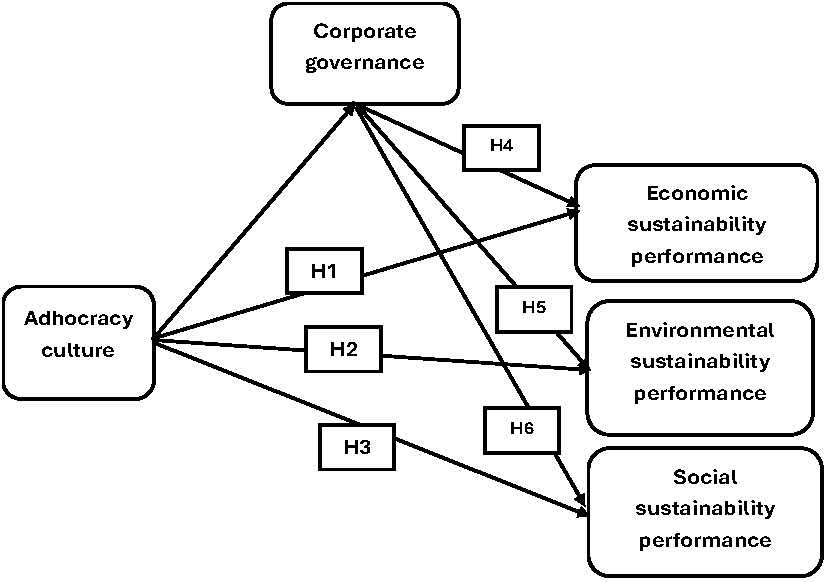
Figure 1.
Conceptual framework of the study
Source: own processing
Methodology
This study adopted a quantitative approach, consistent with its aim of explaining the predictive relationship between adhocracy culture and TBL sustainability performance framework (economic, environmental and social sustainability performance) of African Civil Aviation Authorities (ACAA). The adoption of the quantitative research approach enabled the researchers to gather numerical data and apply statistical techniques to test hypotheses for both direct and mediating relationships among the variables (Saunders et al., 2019).
The study adopted a cross-sectional design, since data was collected within a specific timeframe among ACAAs. The target population consisted of 2,061 senior and junior managers from 54 civil aviation regulatory authorities across Africa, each with at least two years of experience. These managers were distributed across three regions: Western and Central Africa (WACAF) with 1,031 managers, Eastern and Southern Africa (ESAF) with 824 managers, and North Africa (NA) with 176 managers (AFCAC, 2019). Lower-level employees were excluded from the study because they were assumed to lack adequate knowledge of organizational culture and sustainability issues. The sampling frame comprised Contracting States to the Convention on International Civil Aviation (International Civil Aviation Organization, 2023) within these regions.
A multistage sampling design was used, combining probability and non-probability techniques to ensure a representative and informative sample. In the first stage, stratified random sampling was applied to divide the population into three strata based on the regional groupings of civil aviation institutions, ensuring that each stratum was proportionally represented. In the second stage, purposive sampling was used to target top, middle, and operational managers directly responsible for sustainability initiatives, capitalizing on their knowledge and experience. This approach allowed the study to benefit from the strengths of both probability sampling, ensuring statistical representativeness and purposive sampling, which focused on gathering insights from key decision-makers.
Using formula with a 95% confidence level and 3% margin of error (Yamane, 1967, as cited in Akosua et al., 2021; Watiri, 2022), the study determined a final sample size of 371 managers. Table 1 provides a description of the demographic characteristics of the sample size in terms of gender, age, position and tenure.
Table 1.
Demographic characteristics of respondents
| Variable | Category | Frequency | Percentage |
|---|---|---|---|
| Gender | Male | 267 | 72.0% |
| Female | 104 | 28.0% | |
| Total | 371 | 100% | |
| Age | Less than 35 years | 50 | 13.5% |
| 36-40 years | 115 | 31.0% | |
| 41-45 years | 120 | 32.3% | |
| 46-50 years | 51 | 13.7% | |
| More than 50 years | 35 | 9.5% | |
| Total | 371 | 100% | |
| Position | Safety Regulation Officers | 35 | 9.4% |
| Aviation Safety Inspectors | 80 | 21.6% | |
| Personnel License Officers | 25 | 6.7% | |
| Aerodrome & Ground Aid Managers | 40 | 10.8% | |
| Air Navigation Services Managers | 90 | 24.3% | |
| Flight Operations Managers | 71 | 19.1% | |
| Airworthiness Inspectors | 30 | 8.1% | |
| Total | 371 | 100% | |
| Tenure | 1-3 years | 60 | 16.2% |
| 4-6 years | 130 | 35.0% | |
| 7-10 years | 120 | 32.4% | |
| More than 10 years | 61 | 16.4% | |
| Total | 371 | 100% |
The demographic profile of the 371 respondents shows that males (72%) outnumber females (28%). The age distribution indicates that the majority are in their mid-career stages, with 36-40 years (31%) and 41-45 years (32.3%) dominating, reflecting a relatively experienced workforce. In terms of positions, Air Navigation Services Managers (24.3%), Aviation Safety Inspectors (21.6%), and Flight Operations Managers (19.1%) make up the majority, suggesting representation from key operational and safety functions. Tenure analysis shows most respondents have worked between 4-6 years (35%) and 7-10 years (32.4%), highlighting stability and significant professional experience within the aviation regulatory and operational environment.
Data was collected using a structured questionnaire based on the Organisational Culture Assessment Instrument (OCAI) by Cameron and Quinn (2006), which was used for questionnaire items on adhocracy culture. Questionnaire items for measuring sustainability performance indicators of economic, environmental and social performance were adopted from Gupta et al. (2020), while items for measuring corporate governance were adopted from Karaman et al. (2018). The questionnaire was reviewed by human resource practitioners and industry experts in ACAAs to ensure content validity, clarity, and alignment with industry standards. A pilot test was conducted with 75 postgraduate students of Human Resource Management at the University of Ghana to assess reliability. Using Cronbach’s alpha, the internal consistency of the measurement items was evaluated, and adjustments were made to improve clarity and remove ambiguities.
Ethical clearance was obtained from the heads of the participating organizations to ensure compliance with ethical standards and to safeguard participant privacy. Consent was sought from participants, and email and phone contacts were collected to facilitate questionnaire distribution and follow-up. Questionnaires were distributed electronically, and reminder calls helped improve response rates and adherence to deadlines. Data collection process was done within two (2) months. Data was entered, cleaned, and processed using SPSS and Microsoft Excel for descriptive statistical analysis, summarizing data through frequencies and percentages. Inferential analysis was conducted using Partial Least Squares Structural Equation Modelling (PLS-SEM) with SmartPLS version 4. PLS-SEM was selected for its ability to handle complex models with both formative and reflective constructs. This approach allowed the researcher to model and test the direct and mediating relationships among a adhocracy culture, corporate governance, and sustainability performance among ACAAs.
Empirical results
We used the Statistical Package for Social Sciences (SPSS) version 26 and Smart PLS 4 for data analysis. The SPSS software was used to enter data gathered from questionnaires. Descriptive statistics were conducted to check for any missing values in the dataset before we proceeded with any other analysis. With the absence of any missing values, we proceeded to transform items into composite variables using SPSS. Next, we checked for normality of all the variables to ensure that there were no extreme values or outliers that could affect the structural equation model. The SPSS data was then imported to Smart PLS 4 for structural equation modelling analysis. The results from the structural equation modelling are presented.
Construct validity
Construct validity refers to the extent to which a set of measurement items accurately represents and measures the theoretical concept (or construct) it is intended to measure. High construct validity means the indicators truly reflect their latent variable and are distinct from unrelated constructs. In Table 2, construct validity was achieved since factor loadings for each of the items used for measuring the constructs was greater than 0.7.
Table 2.
Construct validity
| Construct | Adhocracy culture | Corporate governance | EcSP | EnSP | SoSP |
|---|---|---|---|---|---|
| AC1 | 0.895 | ||||
| AC2 | 0.857 | ||||
| AC3 | 0.852 | ||||
| CG1 | 0.865 | ||||
| CG2 | 0.851 | ||||
| CG3 | 0.805 | ||||
| CG4 | 0.839 | ||||
| CG5 | 0.888 | ||||
| CG6 | 0.882 | ||||
| CG7 | 0.888 | ||||
| CG8 | 0.885 | ||||
| EcSP1 | 0.780 | ||||
| EcSP2 | 0.914 | ||||
| EcSP3 | 0.892 | ||||
| EcSP4 | 0.814 | ||||
| EcSP5 | 0.910 | ||||
| EnSPl | 0.873 | ||||
| EnSP2 | 0.862 | ||||
| SoSPl | 0.726 | ||||
| SoSP2 | 0.872 | ||||
| SoSP3 | 0.850 | ||||
| SoSP4 | 0.901 | ||||
| SoSP5 | 0.791 | ||||
| SoSP6 | 0.875 | ||||
| SoSP7 | 0.863 |
R-square
The R-square values indicate how much variance in each dependent variable is explained by the independent variable, adhocracy culture. Corporate Governance has an R2 of 0.496, meaning 49.6% of its variance is explained by Adhocracy Culture. Economic Sustainability Performance (EcSP) shows a stronger relationship, with 65.4% of variance explained. Environmental (EnSP) and Social Sustainability Performance (SoSP) have very high R2 values of 82.1% and 81.8%, respectively, suggesting that Adhocracy Culture strongly predicts these outcomes (Table 3).
Table 3.
R-Square
| Variable | R-square | R-square adjusted |
|---|---|---|
| Corporate governance | 0.496 | 0.494 |
| EcSP | 0.654 | 0.652 |
| EnSP | 0.821 | 0.820 |
| SoSP | 0.818 | 0.817 |
Table 4 reports convergent validity and reliability for all constructs. Cronbach’s alpha values (>0.771) indicate good internal consistency. Composite reliability (both rhoa and rho_c) for all constructs exceeds 0.85, confirming high construct reliability. Average Variance Extracted (AVE) for all constructs is above 0.70, indicating strong convergent validity, as over 70% of variance in items is explained by their latent construct. Specifically, Adhocracy Culture (AVE=0.754) and Corporate Governance (AVE=0.746) show excellent reliability and validity.
Table 4.
Convergent and reliability statistics
| Variable | Cronbach’s alpha | Composite reliability (rho_a) | Composite reliability (rho_c) | Average variance extracted (AVE) |
|---|---|---|---|---|
| Adhocracy culture | 0.836 | 0.836 | 0.902 | 0.754 |
| Corporate governance | 0.951 | 0.955 | 0.959 | 0.746 |
| EcSP | 0.915 | 0.926 | 0.936 | 0.746 |
| EnSP | 0.771 | 0.772 | 0.859 | 0.752 |
| SoSP | 0.930 | 0.933 | 0.944 | 0.708 |
As shown in the table above, EcSP, EnSP, and SoSP also demonstrate robust measurement properties, with AVE values between 0.708 and 0.752. Overall, the constructs are measured reliably and validly, supporting the adequacy of the instrument.
Discriminant validity
Discriminant validity assesses whether a construct is truly distinct from other constructs in a model, that is, whether it measures what it intends to measure and not something else. According to the Fornell-Larcker criterion, the square root of each construct’s AVE (on the diagonal) should be greater than its correlations with other constructs (off-diagonal values) in the same row/column. This indicates that a construct shares more variance with its own items than with others. In the table, the diagonal values (e.g., Adhocracy = 0.868) are all higher than their respective correlations with other constructs (e.g., 0.704 with Corporate Governance, 0.809 with EcSP, etc.). Therefore, discriminant validity is established, confirming that each construct is distinct from the others.
Collinearity Statistics
Variance Inflation Factor (VIF) assesses multicollinearity among indicators, where values above 10 typically indicate problematic collinearity (Table 6).
Table 5.
Discriminant validity
| Variable | Adhocracy culture | Corporate governance | EcSP | EnSP | SoSP |
|---|---|---|---|---|---|
| Adhocracy culture | 0.868 | ||||
| Corporate governance | 0.704 | 0.864 | |||
| EcSP | 0.809 | 0.556 | 0.864 | ||
| EnSP | 0.904 | 0.677 | 0.732 | 0.867 | |
| SoSP | 0.899 | 0.702 | 0.897 | 0.830 | 0.842 |
Table 6.
Multicollinearity statistics
| Variable | VIF |
|---|---|
| AC1 | 2.323 |
| AC2 | 1.917 |
| AC3 | 1.838 |
| CG1 | 3.630 |
| CG2 | 6.354 |
| CG3 | 4.993 |
| CG4 | 2.926 |
| CG5 | 8.107 |
| CG6 | 6.488 |
| CG7 | 9.059 |
| CG8 | 8.597 |
| EcSP1 | 1.760 |
| EcSP2 | 4.093 |
| EcSP3 | 4.208 |
| EcSP4 | 2.966 |
| EcSP5 | 4.142 |
| EnSP1 | 1.342 |
| EnSP2 | 1.342 |
| SoSP1 | 2.134 |
| SoSP2 | 3.558 |
| SoSP3 | 2.991 |
| SoSP4 | 6.349 |
| SoSP5 | 3.822 |
| SoSP6 | 5.628 |
| SoSP7 | 3.035 |
According to results from Table 6, there were no incidences of multicollinearity since VIF values for each of the items were less than 10.
Hypotheses testing
According to results in Table 7, it was found that a significant positive relationship exists between adhocracy culture and economic sustainability performance among ACAAS (B = 0.827, p < .05). Hypothesis 1 was therefore supported. The result also indicated that a significant positive relationship exists between adhocracy culture and environmental sustainability performance among ACAAs (B = 0.847, p < .05). Hypothesis 2 was therefore supported.
Table 7.
Hypotheses testing
| Hypothesis | B-value | t-statistics | P— values | Decision |
|---|---|---|---|---|
| H1: Adhocracy culture -> EcSP | 0.827 | 20.321 | 0.000 | Supported |
| H2: Adhocracy culture -> EnSP | 0.847 | 25.789 | 0.000 | Supported |
| H3: Adhocracy culture -> SoSP | 0.804 | 22.377 | 0.000 | Supported |
| H4: Adhocracy culture -> Corporate governance -> EcSP | -0.019 | 0.492 | 0.622 | Not supported |
| H5: Adhocracy culture -> Corporate governance -> EnSP | 0.057 | 2.086 | 0.037 | Supported |
| H6: Adhocracy culture -> Corporate governance -> SoSP | 0.095 | 3.217 | 0.001 | Supported |
The results also showed that a significant positive relationship exists between adhocracy culture and social sustainability performance (B = 0.804, p <. 05), hence hypothesis 3 was supported. Corporate governance did not mediate the relationship between adhocracy culture and economic sustainability performance (B = -0.019, p > .05), therefore hypothesis 4 was not supported. Hypothesis 5 was however supported as corporate governance mediated the relationship between adhocracy culture and environmental sustainability performance among ACAAs (B = 0.057, p < .05). Finally, corporate governance mediated the relationship between adhocracy culture and social sustainability performance among ACAAs (B = 0.095, p < .05). Hypothesis 6 was therefore supported.
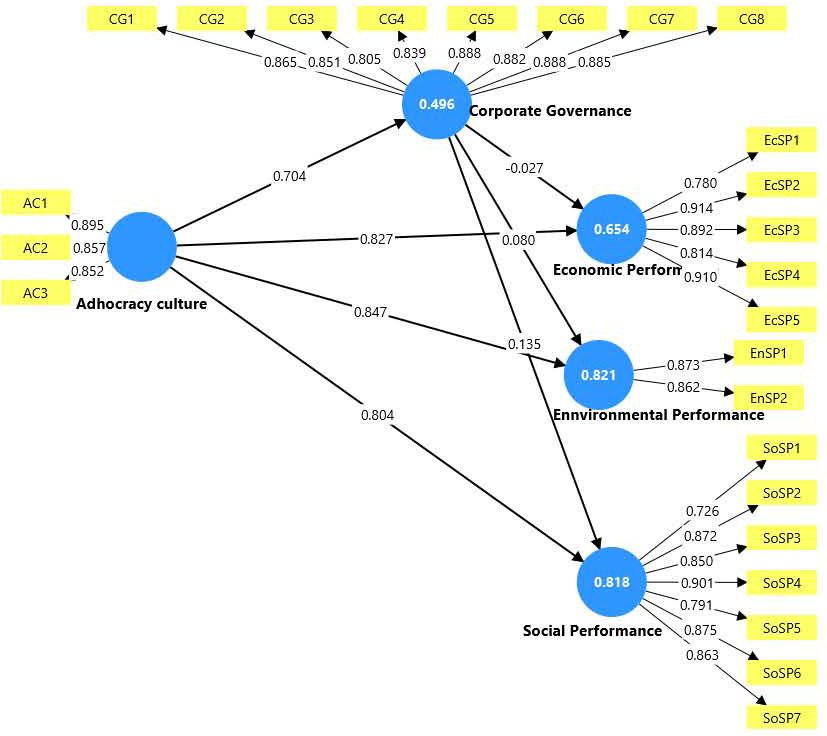
Figure 2.
PLS-SEM of Culture, Governance and Sustainability outcomes
Source: own processing
Discussion of findings
The results indicate a significant positive relationship between adhocracy culture and economic sustainability performance among ACAAs, supporting Hypothesis 1. This finding suggests that organizations fostering flexibility, innovation, and adaptability, hallmarks of an adhocracy culture, tend to achieve stronger economic sustainability outcomes. This aligns with Ogundipe (2025), who demonstrates that firms with a robust adhocratic environment respond more effectively to logistical challenges, enhancing efficiency and cost-effectiveness, which strengthen economic sustainability. Similarly, Aprilianty and Waskito (2023) show that adhocracy promotes innovative behaviors, translating into better economic performance and sustainability. Studies by Liao (2018) and Shuliang et al. (2024) also finds that adhocracy drives green innovation, attracting eco-conscious consumers while lowering costs, both economically advantageous. Medina-Álvarez and Sánchez-Medina (2023) confirm that adhocracy enables firms to adapt to environmental changes and diversify their offerings, boosting sustainability.
The results showed that there was a significant positive relationship between adhocracy culture and environmental sustainability performance among ACAAs, confirming Hypothesis 2. This suggests that organizations with an adhocracy culture, valuing flexibility, creativity, and proactive adaptation, perform better environmentally by fostering sustainable practices and innovations. This is consistent with Obinna (2023), who found that hotels in Nigeria with stronger adhocracy cultures implemented superior environmental practices. Similarly, Medina-Álvarez and Sánchez-Medina (2023) observed that ecotourism businesses with an adhocracy culture adapted effectively to environmental challenges, enhancing sustainability. Hafeez et al. (2024) showed that adhocracy, coupled with green culture, promotes green innovations. Gazi et al. (2024) linked adhocracy to agility and improved environmental outcomes via green HRM.
The results reveal a significant positive relationship between adhocracy culture and social sustainability performance, supporting Hypothesis 3. This finding underscores the role of adhocracy culture, characterized by innovation, adaptability, and openness in enhancing organizations’ contributions to social well-being and sustainability. Misigo et al. (2019) found a similar link in Kenyan public water companies, showing that innovative and flexible cultures improved operational efficiency and service delivery, thus supporting social sustainability. Moghaddam (2019) demonstrated that adhocracy fosters CSR initiatives, advancing social outcomes and organizational performance. Likewise, Jajja et al. (2019) highlighted that adhocracy improves responsiveness to institutional pressures for social compliance, embedding responsibility into organizational practices.
The findings reveal that corporate governance does not mediate the relationship between adhocracy culture and economic sustainability performance (B = -0.019, p > .05), which did not support hypothesis 4. This suggests that the influence of adhocracy culture on economic outcomes among ACAAs is direct and strong enough that governance mechanisms do not significantly enhance or hinder it, a result that aligns with Obinna’s observation that adhocracy can independently drive corporate performance. However, the literature (e.g., Nawaz Khan et al., 2019; Abdelwahed & Soomro, 2024) suggests that governance may still complement this relationship in contexts where economic sustainability depends on more regulated or formalized processes.
On the other hand, corporate governance was found to mediate the relationship between adhocracy culture and environmental sustainability performance (B = 0.057, p < .05), supporting Hypothesis 5. This is consistent with Amaral da Luz and Musial (2023), who argue that while adhocracy fosters CSR and environmental initiatives, governance ensures these translate into measurable and accountable outcomes. Similarly, Shwairef et al. (2021) emphasize that governance structures improve sustainability disclosures and performance, reinforcing the importance of governance in translating cultural dynamism into formal environmental achievements.
Corporate governance mediated the relationship between adhocracy culture and social sustainability performance (B = 0.095, p < .05), supporting Hypothesis 6. This resonates with Ali et al. (2023) and Iqbal and Parray (2025), who assert that governance fosters organizational citizenship behaviors and social sustainability by providing frameworks that channel adhocracy’s innovative energy toward socially responsible practices. Huynh (2020) further highlights that governance through HRM mechanisms supports cultural adaptability, enabling organizations to achieve social objectives effectively.
In line with the Competing Values Framework, the study’s findings show that an adhocracy culture, marked by flexibility, innovation, and adaptability, strongly supports economic, environmental, and social sustainability among ACAAs. Economic sustainability improves through efficiency gains and innovative resource optimization. Environmental performance benefits from green innovations and the ability to respond quickly to changing conditions. Social sustainability is strengthened through corporate social responsibility, responsiveness to community needs, and active societal engagement.
Conclusions
This study examined the influence of adhocracy culture on the economic, environmental, and social sustainability performance of African Civil Aviation Authorities (ACAAs), while also exploring the mediating role of corporate governance within the Triple Bottom Line (TBL) Sustainability framework. The findings revealed that adhocracy culture positively and significantly impacts all three dimensions of sustainability, underscoring the value of innovation, flexibility, and adaptability in fostering long-term organizational success. Notably, while corporate governance did not mediate the relationship between adhocracy culture and economic sustainability, it significantly mediated the relationships with environmental and social sustainability.
These findings contribute meaningfully to the literature by advancing the understanding of how internal organizational factors interact to drive sustainability outcomes. Specifically, this study enriches TBL theory by demonstrating that different sustainability dimensions may rely on distinct organizational mechanisms: adhocracy culture alone appears sufficient to promote economic sustainability, whereas the environmental and social dimensions benefit from the added formalization and accountability provided by governance structures.
Moreover, by providing empirical evidence from the African civil aviation context, a setting underrepresented in existing research, the study broadens the geographical and sectoral scope of sustainability and organizational culture literature. It highlights the importance of aligning cultural values and governance mechanisms to achieve a balanced and robust approach to sustainability, offering insights that are relevant not only to aviation but also to other industries pursuing sustainable development. To enhance sustainability performance, civil aviation organizations such as ACAAs should deliberately cultivate an adhocracy culture by creating an environment that encourages innovation, flexibility, and risk-taking. This can be achieved by establishing formal mechanisms such as innovation hubs, suggestion platforms, and pilot programs where employees are empowered to experiment with creative solutions. Recognizing and rewarding innovative contributions will further embed this culture throughout the aviation sector.
Civil aviation organizations should also strengthen corporate governance mechanisms to complement their cultural initiatives, particularly for environmental and social sustainability outcomes. This involves instituting clear sustainability policies, accountability structures, and dedicated governance bodies or officers tasked with monitoring, reporting, and ensuring compliance with sustainability standards. Transparent reporting of sustainability performance to stakeholders can reinforce legitimacy and trust in the aviation industry.
Integrating sustainability goals directly into strategic and operational plans is critical for aviation organizations. This requires aligning organizational strategies with measurable targets across economic, environmental, and social dimensions, informed by international benchmarks such as the UN Sustainable Development Goals or ICAO environmental objectives. Operationalizing these goals through investments in eco-friendly technologies, efficient airport operations, and inclusive community engagement ensures tangible outcomes.
Theoretical implications
The theoretical implications of the study can be outlined as follows: Firstly, the findings reinforce the theoretical position that adhocracy culture, characterized by flexibility, innovation, and adaptability, is a significant driver of organizational sustainability. It shows that such a culture not only supports short-term competitiveness but also promotes long-term economic, environmental, and social performance. Secondly, the study extends sustainability literature by demonstrating that the positive effects of adhocracy culture span all three sustainability dimensions within ACAAs. This suggests that its benefits are not limited to operational agility but also include resource optimization, green innovation, and active societal contribution. Finally, the results highlight a nuanced role for corporate governance. While governance does not enhance the economic benefits of adhocracy, it plays a critical role in converting environmental and social innovations into measurable, accountable, and lasting outcomes.
Practical implications
The study offers several practical implications for African Civil Aviation Authorities (ACAAs) and similar organizations striving to enhance sustainability through organizational culture and governance. First, the finding that adhocracy culture positively influences economic sustainability performance suggests that managers should actively foster innovation, flexibility, and risk-taking within their organizations. ACAAs can strengthen economic outcomes by creating an environment where employees are empowered to experiment, adapt, and optimize processes, leading to higher efficiency and cost-effectiveness. Investments in training, idea-generation platforms, and agile decision-making mechanisms can help embed this culture. Second, the positive link between adhocracy culture and environmental sustainability performance indicates that an innovative and proactive organizational climate encourages environmentally responsible practices. ACAAs can leverage this by promoting creativity in addressing environmental challenges, supporting green technologies, and setting ambitious sustainability targets that employees feel empowered to pursue. Policies that reward eco-innovations and cross-functional collaboration on environmental initiatives can further enhance these outcomes. Third, the association between adhocracy culture and social sustainability performance underscores the role of adaptability and innovation in improving stakeholder relationships and community engagement. Managers of ACAAs should build inclusive and responsive organizational practices, prioritize employee well-being, and design services that address societal needs. Regarding governance, the study revealed that corporate governance mediated the relationship between adhocracy culture and environmental and social sustainability performance, but not economic sustainability. This suggests that while economic gains may directly result from adhocracy, achieving meaningful environmental and social outcomes requires robust governance structures.
Limitations and future research directions
Despite its valuable contributions, this study has several limitations that should be acknowledged. First, the research focused exclusively on African Civil Aviation Authorities (ACAAs), which may limit the generalizability of the findings to other sectors or geographic regions. Cultural, institutional, and regulatory differences in other contexts could influence the relationship between adhocracy culture, governance, and sustainability performance.
Second, the study employed a cross-sectional design, capturing data at a single point in time, which constrains the ability to draw conclusions about causal relationships or changes over time. Longitudinal studies could provide deeper insights into how these dynamics evolve. The study concentrated primarily on the mediating role of corporate governance, without exploring potential moderating factors such as organizational size, national policy frameworks, or market competition, which might also influence the observed relationships.
Future research could address these limitations by examining similar relationships in other industries, regions, or organizational contexts to test the generalizability of the findings. Longitudinal study designs could uncover causal pathways and the sustainability of observed effects over time. Researchers might also explore additional variables, such as digital transformation, stakeholder engagement, or regulatory pressures, that could interact with culture and governance to influence sustainability outcomes. Finally, qualitative studies could complement quantitative findings.