
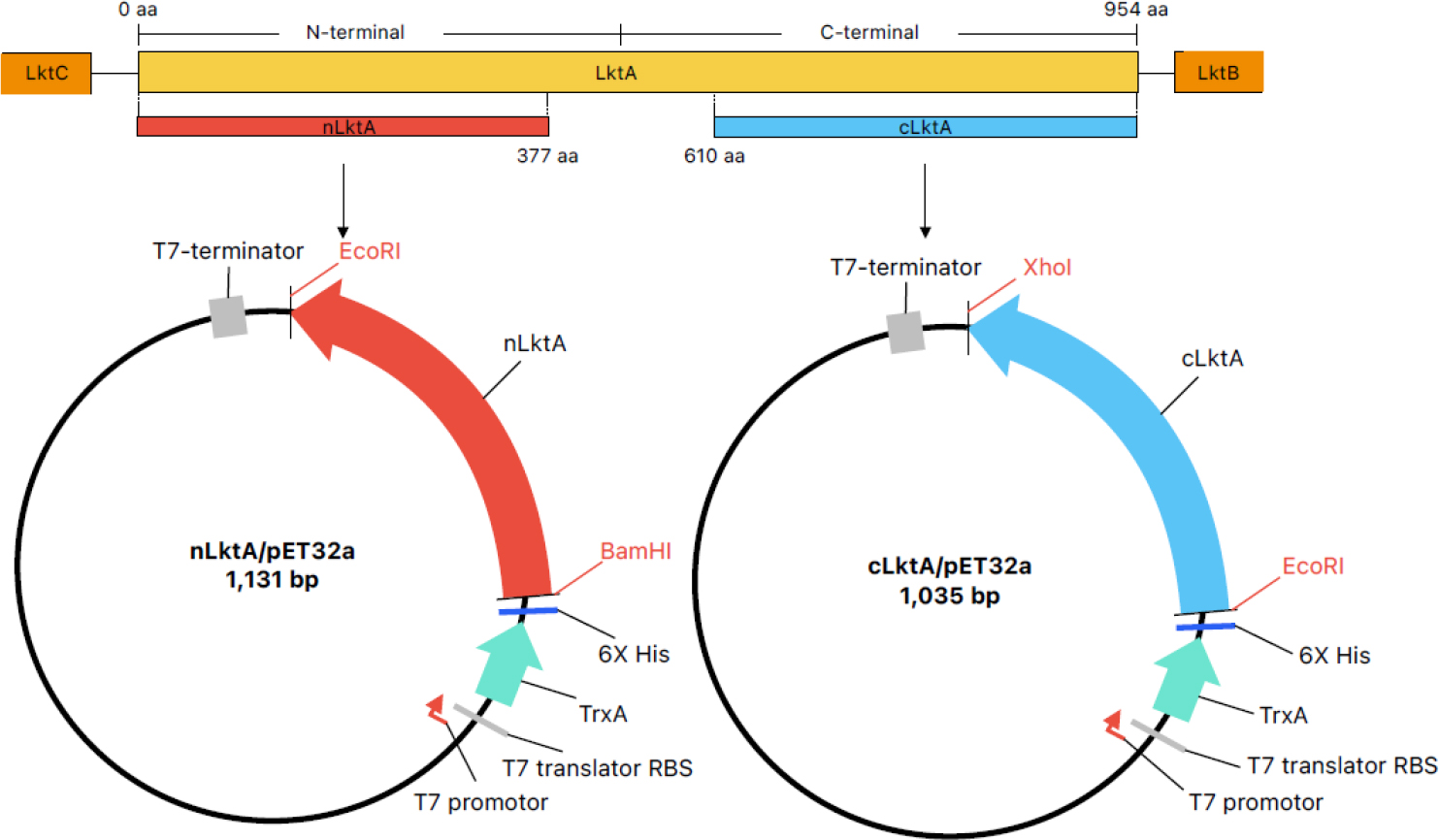
Fig. 1.
Constructions of pET32a/N- and C-terminal Mannheimia haemolytica leukotoxin A (nLktA and cLktA) plasmids. (A) Truncation of LktA. (B) Locations of the BamHI and EcoRI restriction sites for the N-terminal region of leukotoxin A (LktA) and of EcoRI and XhoI for the C-terminal region. LktB – leukotoxin B; LktC – leukotoxin C; aa – amino acids; bp – base pairs
Table 1.
Primers for cloning nLktA and cLktA
| Target gene | Sense | Sequence (5ʹ–3ʹ) | Restriction enzyme site | Length (base pairs) |
|---|---|---|---|---|
| nLktA | Forward | CGgaattcTCCCTTATGGGAACTAGACTT | BamHI | 1,131 |
| Reverse | GCCctcgagTTATGCAGCAGCAGACACACC | EcoRI | ||
| cLktA | Forward | AAAggatccAAACTTGGTGAAGGTGAT | EcoRI | 1,035 |
| Reverse | AAActcgagTTAAGCTGCTCTAGCAAA | XhoI |
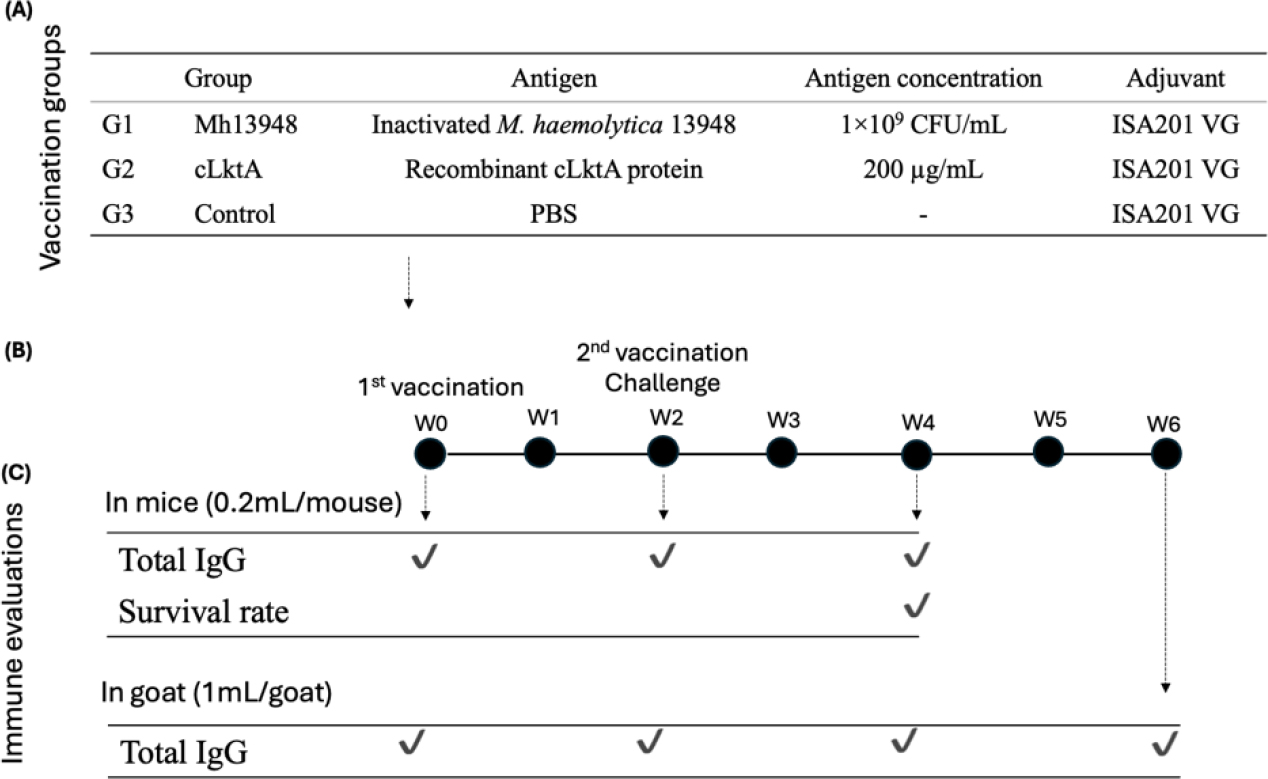
Fig. 2.
Antigens, immunisation schedule and immune evaluation of a truncated C-terminal leukotoxin A (cLktA) of Mannheimia haemolytica in mice and goat models. (A) Vaccination groups. (B) Immunisation schedule: primary vaccination administered in week (W) 0 and followed by a booster dose in W2. (C) Immune response evaluation through ELISA assay and challenge test. Mh 13948 – Mannheimia haemolytica strain 13948; CFU – colony-forming units; ISA201 VG – Seppic water-in-oil-in-water adjuvant 201; PBS – phosphate-buffered saline; IgG – immunoglobulin G
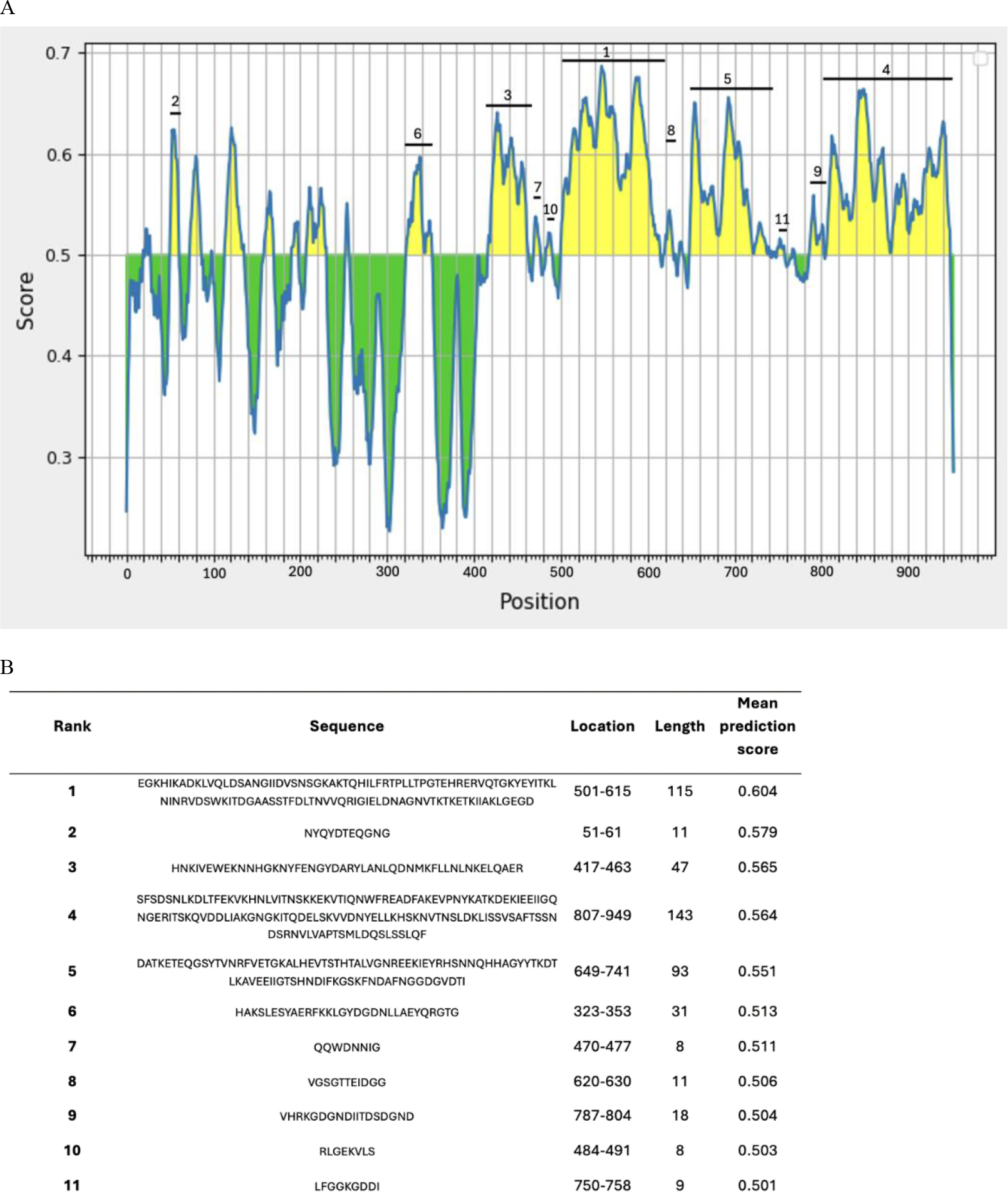
Fig. 3.
(A) Epitope prediction for the full-length LktA leukotoxin A protein of Mannheimia haemolytica with a threshold value of 0.5. Positive peaks above the threshold line indicate amino acids likely to be part of an epitope. (B) Eleven potential epitopes ranked based on their mean prediction scores, listed from highest to lowest (1–11)
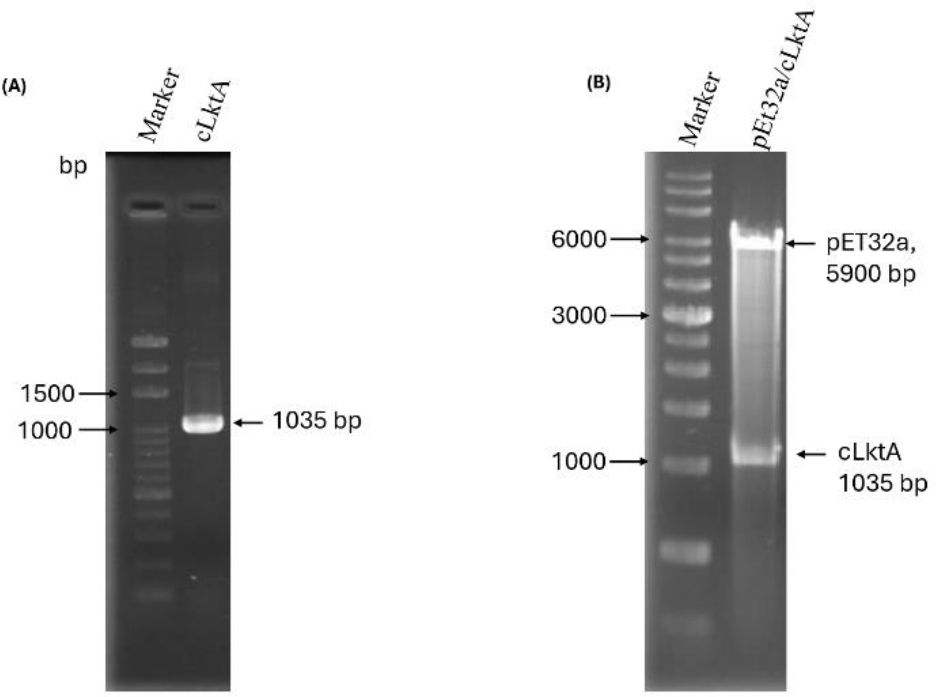
Fig. 4.
PCR amplification of C-terminal Mannheimia haemolytica leukotoxin A (cLktA) and confirmation of cloning cLktA into pET32a. (A) Product of 1,035 bp after amplification, indicating cLktA. (B) Restriction enzyme digestion with EcoRI and XhoI confirming the pET32a/cLktA construct
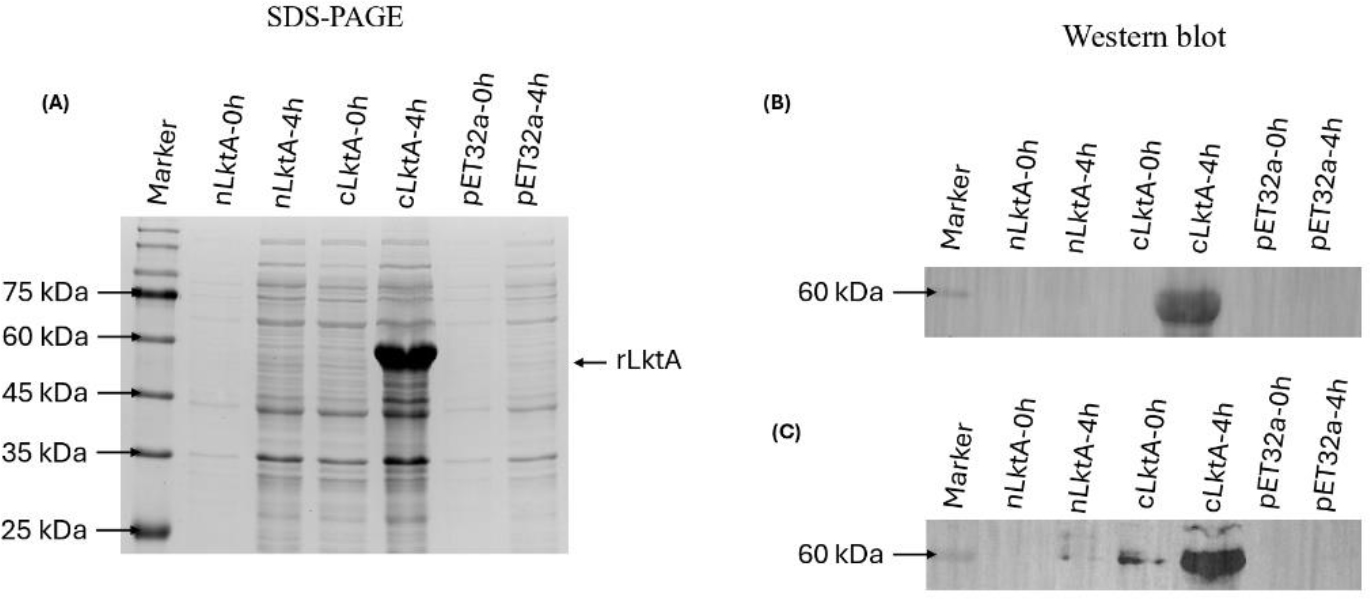
Fig. 5.
Expression of N- and C-terminal Mannheimia haemolytica leukotoxin A (nLktA and cLktA) in E. coli. (A) Isopropyl ß-D-1-thiogalactopyranoside-induced expression of nLktA, cLktA and control pET32a at 0 h and 4 h. (B) Western blot confirmation of recombinant cLktA protein using anti-M. haemolytica B2 strain antibody. (C) Further Western blot confirmation using anti–secreted leukotoxin (sLkt) serum
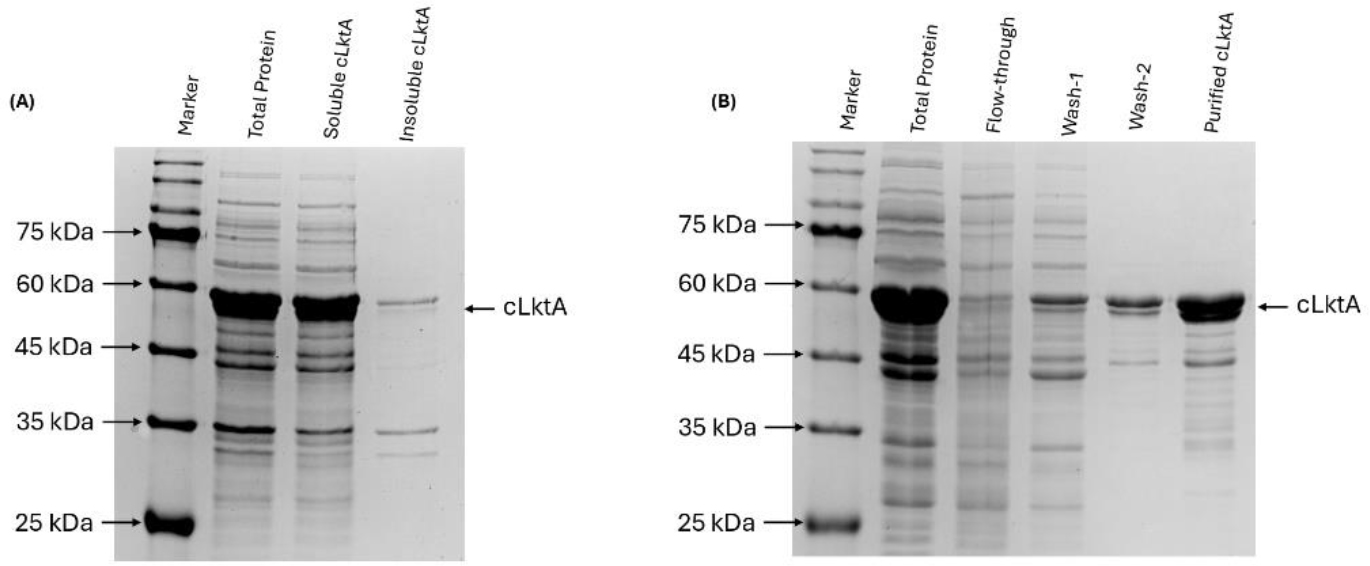
Fig. 6.
Purification of recombinant cLktA protein. (A) Solubility screening of cLktA demonstrating that it was a soluble protein. (B) Purification of cLktA using affinity chromatography
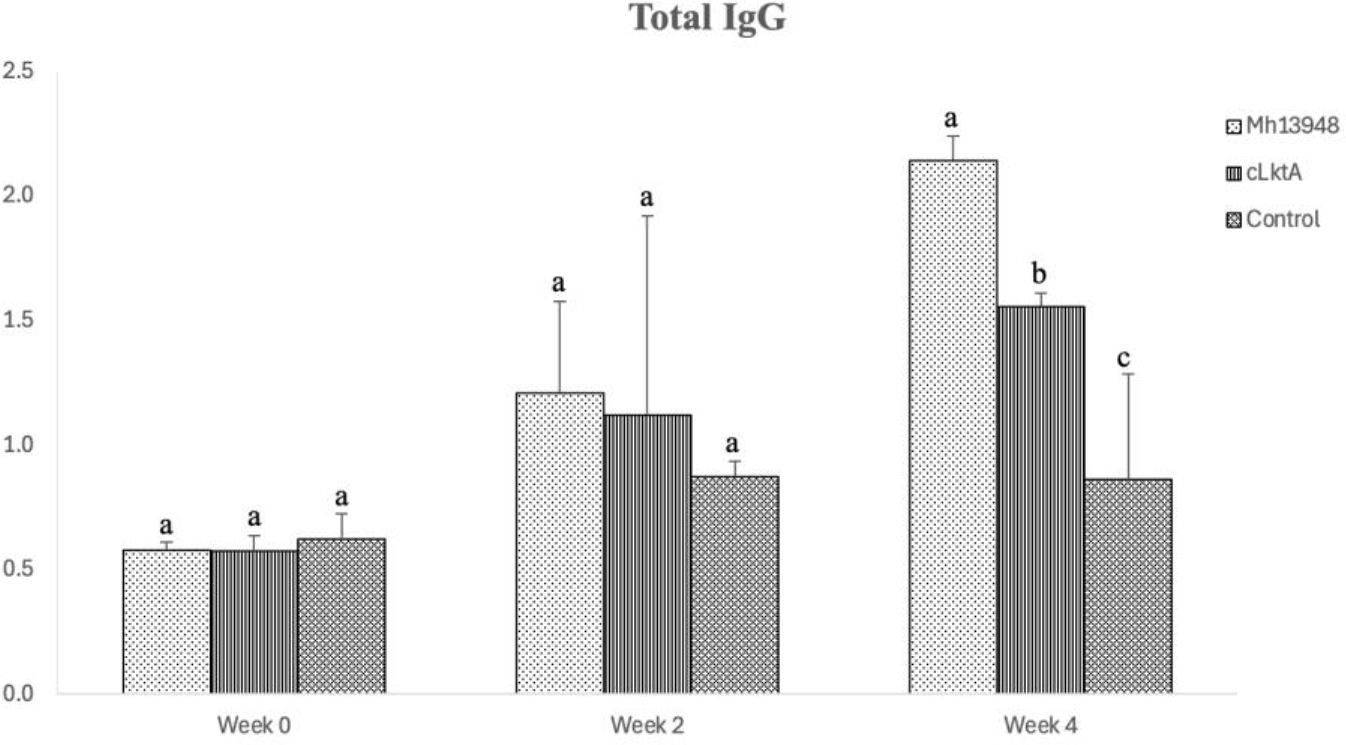
Fig. 7.
Results of indirect ELISA to determine the levels of antigen-specific total immunoglobulin G (IgG) in the sera of mice immunised with inactivated Mannheimia haemolytica 13948 (Mh 13948) or recombinant C-terminal protein of M. haemolytica leukotoxin A (cLktA) or injected with phosphate-buffered saline (control). Different superscript letters present statistically significant differences (P-value < 0.05)
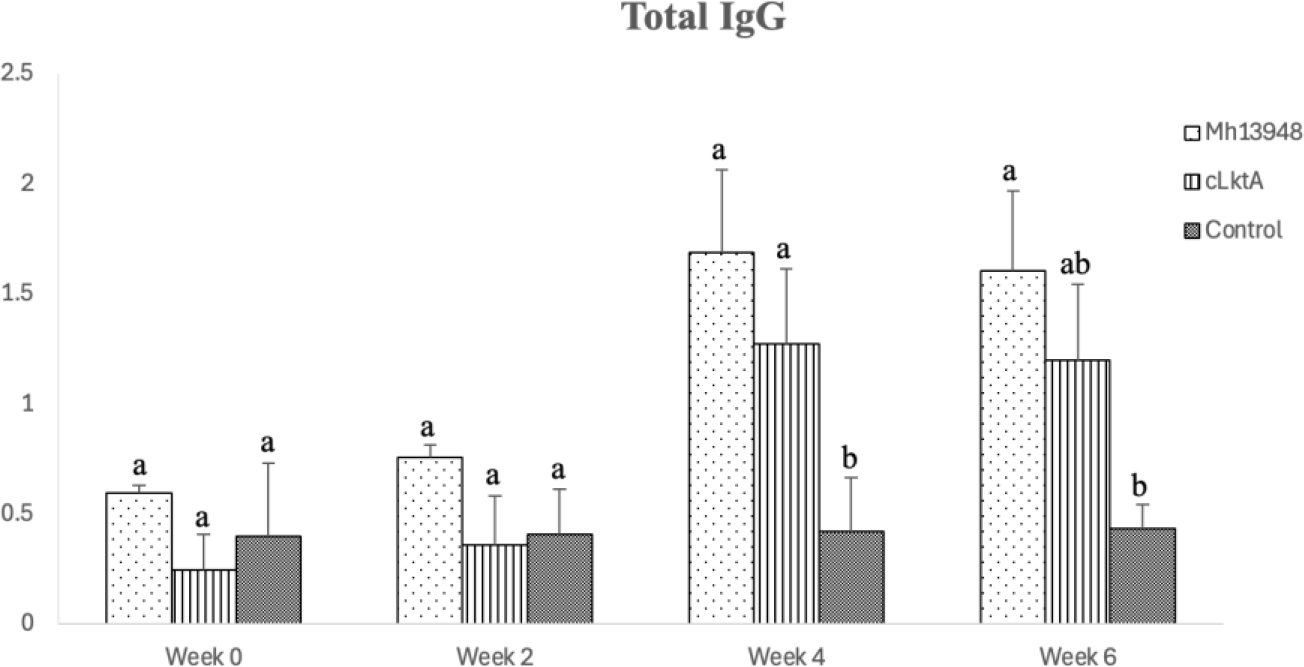
Fig. 8.
Results of indirect ELISA to determine the levels of antigen-specific total immunoglobulin G in the sera of goats immunised with inactivated Mannheimia haemolytica 13948 (Mh 13948) or recombinant C-terminal protein of M. haemolytica leukotoxin A (cLktA) or injected with phosphate-buffered saline (control). Different superscript letters present statistically significant differences (P-value < 0.05)
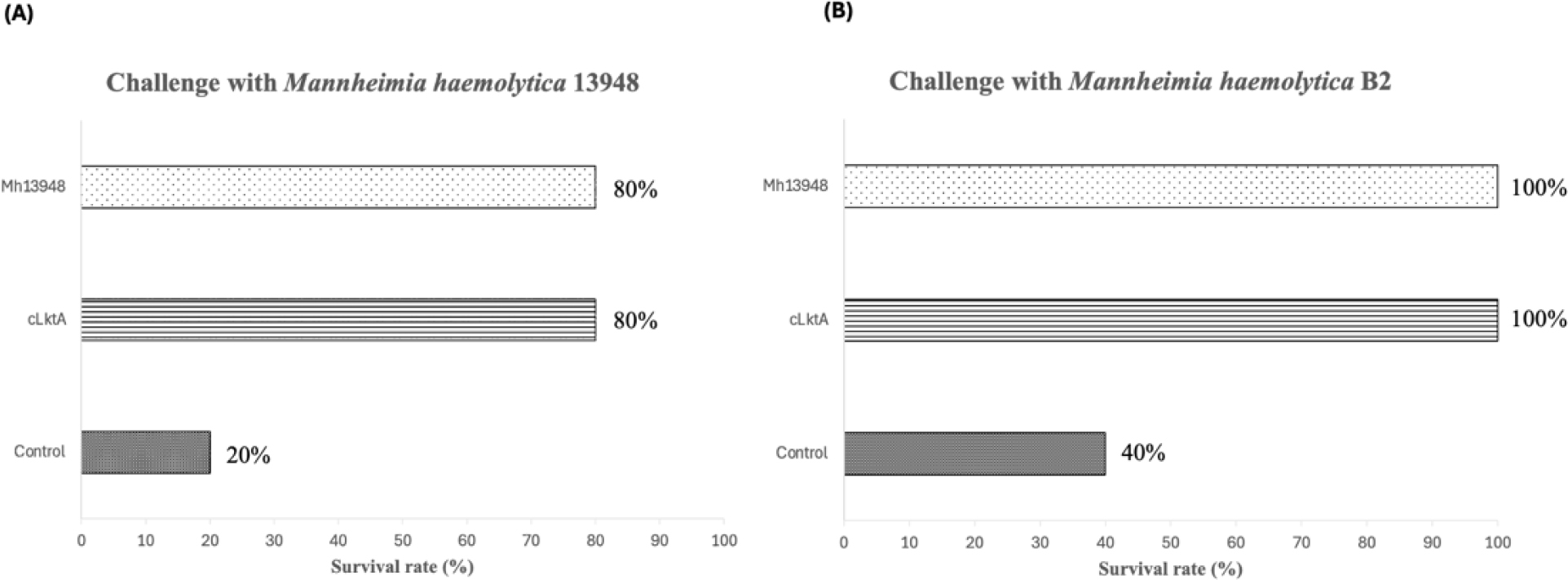
Fig. 9.
Survival rates of mice immunised with inactivated Mannheimia haemolytica 13948 (Mh 13948) or recombinant C-terminal protein of M. haemolytica leukotoxin A (cLktA) or injected with phosphate-buffered saline (control) when challenged with (A) Mannheimia haemolytica 13948 strain or (B) M. haemolytica B2 field isolate strain