
The genus Helicotylenchus Steiner 1945 is a well-known genus and the largest genus in the family Hoplolaimidae and the infraorder Tylenchomorpha (De Ley and Blaxter, 2004; Decraemer and Geraert, 2013). It comprises more than 200 nominal species, with H. dihystera (Cobb, 1893) Sher, 1966 being the type species (Marais, 2001; Subbotin et al., 2011; Uzma et al., 2015). The species are mostly polyphagous plant ectoparasites and are cosmopolitan in nature, proliferating in rhizospheric soils of various plant species, including crops of agricultural importance (Subbotin et al., 2011). Several species are known to be of economic importance on various agricultural crops. For instance, H. multicinctus (Cobb, 1893) Golden 1956 and H. variocaudatus Yuen 1964 are serious parasites on banana worldwide (Vovlas et al., 1995; De Waele and Elsen, 2007; Marais, 2001; Van den Berg et al., 2003).
Taxonomically, species delimitation within the genus is complicated by enormous intraspecific morphological variation and overlapping diagnostic characters between species. This is even exacerbated by the existence of cryptic species complexes within the genus, normally exhibiting similar morphological features but remarkably differing in their DNA barcodes as revealed by molecular study comparisons (Subbotin et al., 2011, 2015; Mwamula et al., 2024). Therefore, correct identification of Helicotylenchus populations involves integration of different methods, including morphological, morphometrical, molecular, and phylogenetic diagnostics. Despite these pitfalls, several populations displaying distinctive morphological characters continue to be recovered worldwide, warranting the description of new species within this already speciose genus. For instance, more than ten new species have been described in the past decade. These include H. siddiqii Begum & Akhter, 2016, H. castanus Chau & Anh, 2019, H. madhucus Chau & Anh, 2019, H. digitus Chau & Anh, 2019, H. asiaticus Mwamula, Na, Kim, Kim, Han & Lee, 2020; H. ciceri Zameleh, Karegar, Ghaderi & Hesar, 2020, H. fotedariensis Handoo, Kantor & Khan, 2020, H. harwaniensis Handoo, Kantor & Khan, 2020, H. mushtaqi Handoo, Kantor & Khan, 2020, H. zengchengensis Chen, Lu, Xie & Xu, 2024, H. vignae Yang, Zou, Wang, Zhao, Wang & Xu, 2025, and H. fortuneri Mokhtari, Bazeghi, Ruiz-Cuenca, Palomares-Rius, Eskandari & Pedram, 2025, among others.
In a nematological survey conducted in 2025 in the higher mountains of South Korea, populations of a morphologically distinctive Helicotylenchus sp. were found associated with dead Abies koreana Wils., commonly known as the Korean fir. The identical populations presented several distinctive differences from the known species of the genus. Therefore, this study aimed to describe this morphologically distinct new species using morphological characters and molecular phylogenetic analyses.
1. Materials and methods
1.1. Nematode population and extraction
The two populations of Helicotylenchus coreanus n. sp. were extracted from the rhizospheric soil samples of dead Abies koreana from Hallasan mountain in Jeju Islands, Republic of Korea. The state of the host plant (Abies koreana) at the type locality is shown in Fig. 1. Nematodes were extracted from the soils using the Baermann funnel method (Baermann, 1917). Specimens of Helicotylenchus coreanus n. sp. were individually handpicked under a Nikon SMZ 1000 stereomicroscope (Nikon) and characterized based on morphological and morphometric data, as well as molecular data.
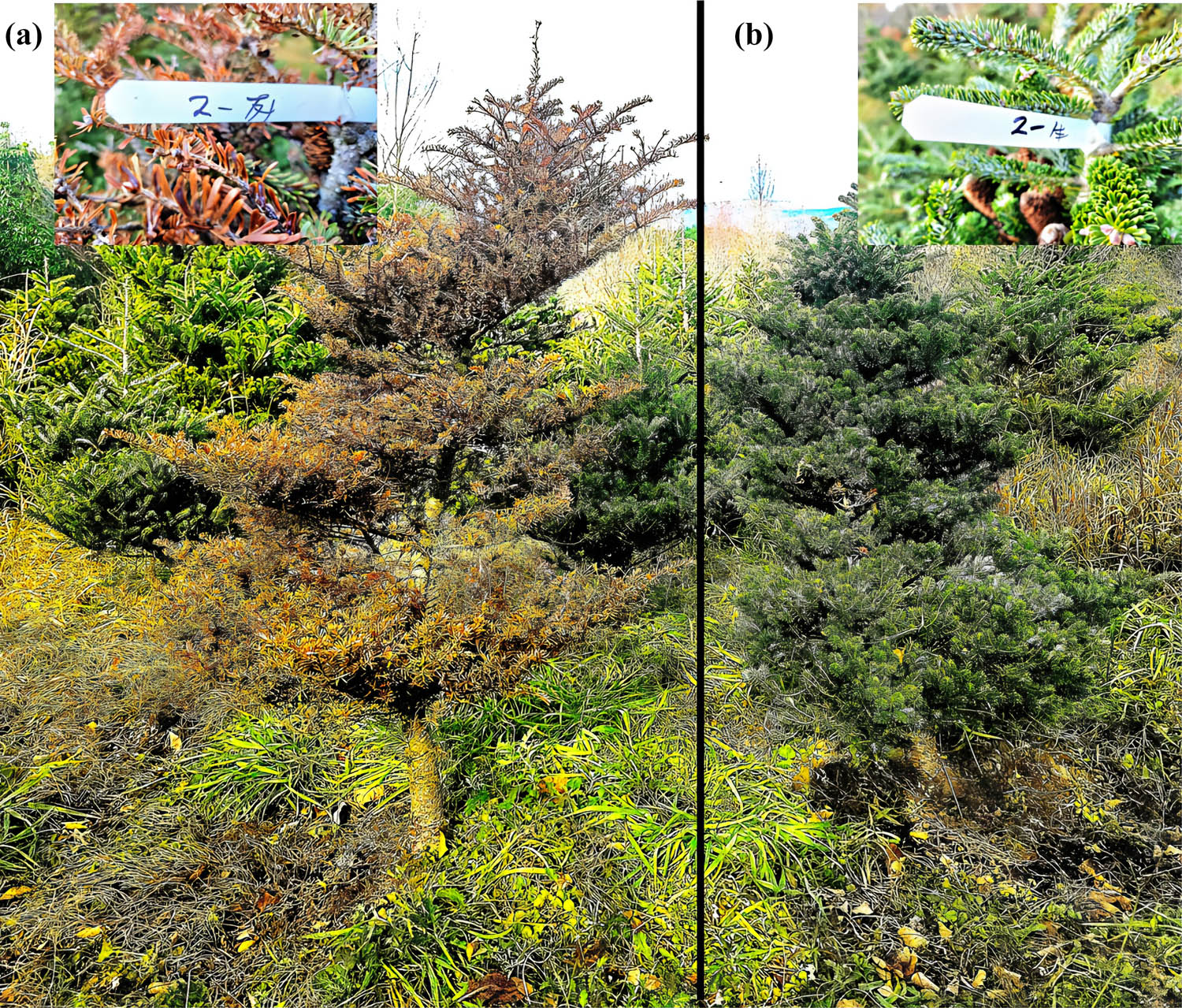
Figure 1
The state of the host plant (Abies koreana Wils.) at the type locality (a, b). (a) Dead Korean fir plant (inset: Dead, brown twigs/shoot); (b) Healthy Korean fir plant (inset: Healthy twigs/shoot).
1.2. Morphological characterization
The specimens were heat-killed and fixed with formalin-glycerin and subsequently processed to pure glycerin according to Seinhorst (1959) and De Grisse (1969). Light micrographs and morphometric data were taken using a Zeiss Imager Z2 microscope (Carl Zeiss) fitted with Axio-vision, a material science software for research and engineering (Carl Zeiss). Line drawings were initially drawn using a drawing tube attached to a BX51 DIC Microscope (Olympus Optical, Tokyo, Japan) before being digitally redrawn using CorelDRAW® software version 24. Delineation of species was done based on the detailed keys and descriptions of Sher (1966), Fortuner (1984), Boag and Jairajpuri (1985), Marais (2001), and Uzma et al. (2015).
1.3. Molecular characterization
Prior to DNA extraction, specimens were heat-relaxed on temporary slides and morphometrically confirmed. Genomic DNA was extracted from single female specimens according to Iwahori et al. (2000), with modifications as detailed by Mwamula et al. (2025). Polymerase chain reaction (PCR) was performed using WizPure™ Taq DNA Polymerase kit in accordance with the manufacturer’s instructions. Three genes (the partial 18S-rRNA gene, the D2–D3 expansion segment of the 28S-rRNA gene, and the partial cytochrome c oxidase subunit 1 (COI) gene of mitochondrial DNA) were amplified and successfully sequenced. The 18S-rRNA gene was amplified as two partially overlapping segments using two sets of primers: 988F (5′-CTCAAAGATTAAGCCATGC-3′) and 1912R (5′-TTTACGGTCAGAACTAGGG-3′), 1813F (5′-CTGCGTGAGAGGTGAAAT-3′) and 2646R (5′-GCTACCTTGTTACGACTTTT-3′) (Holterman et al., 2006); the primer set D2Ab (5′-ACAAGTACCGTGAGGGAAAGTTG-3′) and D3B (5′-TCGGAAGGAACCAGCTACTA-3′) (De Ley et al., 1999) was used to amplify the D2–D3 expansion segment, and the forward primer JB3 (5′-TTTTTTGGGCATCCTGAGGTTTAT-3′) and reverse primer JB5 (5′-AGCACCTAAACTTAAAACATAATGAAAATG-3′) were used to amplify the partial COI gene (Derycke et al., 2005). Polymerase chain reaction (PCR) was performed with a thermal cycler model T100™, Bio-Rad. The thermal cycling program using the primer sets 988F/1912R, 1813F/2646R and D2Ab/D3B was as described by Mwamula et al. (2023), and the cycling profile for JB3/JB5 was as described by Mwamula et al. (2024). The QIAquick PCR Purification Kit (Qiagen) was used in the purification process of the amplified PCR products. The products were quantified using a QuickDrop spectrophotometer (Molecular Devices) and subsequently used for direct sequencing in both directions using the same primers as specified above. DNA sequencing was performed at Macrogen Inc., Daejeon, Korea. The newly obtained sequences were edited and subsequently submitted to the NCBI GenBank database under the accession numbers: PX694638-PX694641 (for 18S-rRNA); PX694642-PX694644 (28S-rRNA); and PX694668, PX694669 (for COI gene).
1.4. Phylogenetic analysis
Using the BLAST homology search tool, the newly obtained sequences of the three genes were compared with those of Helicotylenchus species published in GenBank (Subbotin et al., 2011, 2015; Palomares-Rius et al., 2018; Shokoohi et al., 2018, 2021; Rybarczyk-Mydłowska et al., 2019; Divsalar et al., 2020; Mohammadi Zameleh et al., 2020; Riascos-Ortiz et al., 2020; Mwamula et al., 2020, 2024; Yang et al., 2025). For reconstruction of the phylogenies, the new sequences, along with the GenBank-retrieved comparable sequence dataset, were aligned using ClustalX (Thompson et al., 1997). Outgroup taxa for the three datasets were selected according to the results of the previously published data on Helicotylenchus spp. (Mwamula et al., 2024). The sequence datasets were analyzed with Bayesian inference (BI) using MrBayes 3.2.7 (Ronquist et al., 2012), with the GTR + I + G model selected for all datasets. Bayesian inference analysis was run with four chains for 1 × 10⁶ generations, and Markov chains were sampled at intervals of 100 generations. After discarding burn-in samples, consensus trees were generated with the 50% majority rule, and the significant branch supports were denoted by posterior probabilities. The generated trees were visualized using FigTree v1.4.4 software. Interspecific and intraspecific sequence distances were determined using PAUP* v4.0a169 (Swofford, 2003).
2. Results
2.1. Systematics
Helicotylenchus coreanus n. sp. (Figs 2 and 3)
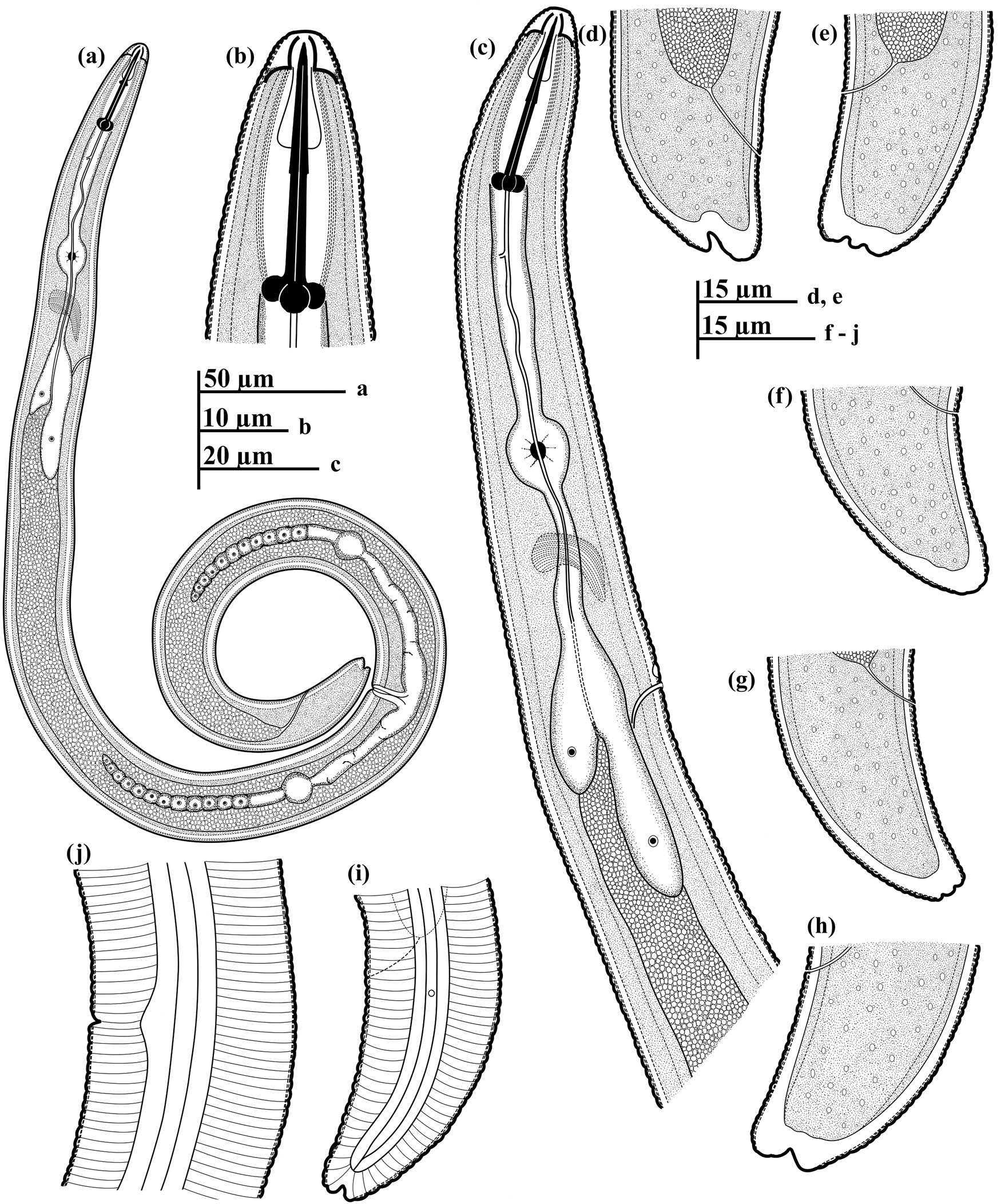
Figure 2
Line drawings of Helicotylenchus coreanus n. sp. (a–j). (a) Female entire body; (b) head region; (c) pharyngeal region; (d–h) variation in female tail; (i) lateral field in tail region; and (j) lateral field at level of vulva.
Measurements:
Measurements are presented in Table 1.
Table 1
Morphometrics of Helicotylenchus coreanus n. sp. from Korea
| Type population (H03) | Population two (H04) | ||
|---|---|---|---|
| Character | Holotype ♀ | ♀♀ | ♀♀ |
| n | — | 17 | 12 |
| L | 684 | 649.5 ± 41.7 (576–716) | 719.6 ± 44.9 (643–774) |
| a | 25.5 | 23.7 ± 1.5 (20.9–26.4) | 24.1 ± 1.7 (21.1–26.8) |
| b | 5.8 | 5.3 ± 0.5 (4.6–6.0) | 5.8 ± 0.5 (4.9–6.7) |
| b′ | 4.6 | 4.5 ± 0.3 (4.0–4.9) | 4.8 ± 0.3 (4.3–5.2) |
| c | 24.7 | 25.1 ± 3.8 (19.6–31.4) | 28.5 ± 6.7 (22.0–45.7) |
| c' | 1.6 | 1.5 ± 0.3 (1.0–1.9) | 1.4 ± 0.3 (0.9–1.9) |
| V | 59.9 | 61.2 ± 1.4 (59.1–63.8) | 61.3 ± 2.0 (58.4–64.1) |
| G 1 | 16.1 | 17.6 ± 1.4 (15.7–20.5) | 17.0 ± 1.4 (14.7–19.4) |
| G 2 | 15.8 | 17.1 ± 1.4 (15.2–19.5) | 16.7 ± 1.2 (14.6–18.1) |
| MB | 49.3 | 51.6 ± 3.6 (43.9–58.3) | 48.1 ± 4.2 (40.1–53.5) |
| M | 48.1 | 47.3 ± 1.8 (44.0–49.5) | 47.4 ± 1.0 (45.2–48.8) |
| O | 32.5 | 32.8 ± 3.4 (26.1–37.5) | 34.0 ± 3.7 (28.6–41.8) |
| Lip height | 5.0 | 5.4 ± 0.5 (4.5–6.5) | 5.3 ± 0.6 (4.5–6.0) |
| Lip diam. | 8.0 | 8.2 ± 0.3 (7.5–9.0) | 8.4 ± 0.5 (7.5–9.5) |
| Anterior to the median bulb valve | 73.0 | 75.0 ± 5.7 (63.5–83.5) | 72.4 ± 6.6 (61.0–81.5) |
| Stylet length | 29.5 | 30.1 ± 1.1 (28.0–32.0) | 29.6 ± 1.6 (28.0–32.0) |
| Conus length | 14.5 | 14.2 ± 0.9 (12.5–15.5) | 14.0 ± 0.8 (13.0–15.5) |
| DGO | 9.5 | 9.9 ± 0.9 (8.0–11.0) | 10.1 ± 1.0 (8.0–12.0) |
| Anterior to nerve ring | 82.0 | 89.7 ± 7.5 (80.0–104.5) | 89.5 ± 7.6 (78.0–104.0) |
| Secretory-Excretory pore | 109.0 | 112.7 ± 6.7 (96.0–123.5) | 116.0 ± 5.7 (104.0–123.0) |
| Esophageal–intestinal junction | 119.0 | 124.0 ± 7.7 (110.5–144.0) | 125.5 ± 11.1 (105.0–138.0) |
| Anterior to end of glandular overlap | 148.0 | 145.5 ± 7.1 (131.5–157.5) | 150.5 ± 3.0 (145.0–155.5) |
| Maximum body diam. | 27.0 | 27.5 ± 1.9 (24.0–31.5) | 29.9 ± 2.2 (26.0–33.5) |
| Lateral fields at mid-body | 7.0 | 6.7 ± 0.5 (6.0–7.5) | 7.4 ± 0.5 (7.0–8.5) |
| Lateral fields at vulva | 9.0 | 8.6 ± 0.7 (7.5–10.0) | 9.3 ± 0.4 (9.0–10.0) |
| Rectum length | 10.5 | 11.4 ± 2.0 (9.0–15.0) | 12.4 ± 1.8 (10.0–16.0) |
| Anal body diam. | 17.5 | 18.0 ± 1.6 (14.0–21.0) | 18.8 ± 1.4 (17.0–21.0) |
| Tail length | 28.0 | 26.4 ± 3.9 (19.5–31.5) | 26.4 ± 5.8 (15.5–34.5) |
| Tail annuli | 19.0 | 20.6 ± 3.7 (16.0–31.0) | 19.5 ± 3.9 (13.0–24.0) |
| Annuli to phasmids | 5.0 | 2.3 ± 2.7 *3/ (0.0–7.0) | 1.2 ± 2.2 (0.0–6.0) |
| Hyaline length | 4.5 | 4.2 ± 0.6 (3.0–5.0) | 4.3 ± 0.7 (3.0–5.5) |
*Unusual position of phasmids in one specimen (3 annuli anterior to anal opening).
All measurements are in μm and in the form: average ± SD (range).
2.2. Description
Female: Body medium-sized and robust, generally spiral (68%) to C-shape (32%) when heat-killed, cylindrical, tapering towards both extremities. Body annuli 1.0–2.0 μm wide at mid body. Lateral fields starting with two to three slightly crenate incisures with one to two non-areolated bands in anterior body region making four incisures ca 30–40 μm from anterior end, continuing as four equidistant non-crenate incisures forming three non-areolated bands, consistently modified at vulval region by widening on vulval side, forming an obtuse scalene shape (observed in all specimens; Figs 2j, 3k and 3l). Junction of inner lateral field incisures on the tail end fused distally into a Y-shaped (78%) or U-shaped (22%) configuration. Phasmids are consistently situated in the inner ventral band, generally adanal or postanal (located 0–7 annuli posterior to anal opening), rarely anterior to anal opening (3 annuli anterior to anal opening), the latter observed in one specimen. Lateral field bands are not areolated in the phasmid region. Lip region hemispherical, with a slightly truncated end in some specimens, continuous with body contour, marked by six or seven distinct annuli, 7.5–9.0 μm wide at base and 4.5–6.5 μm high. Cephalic framework strongly sclerotized. Stylet is robust, 3.4–4.0 times as long as lip region diameter, conus forming 44–50% stylet total length, stylet knobs massive, rounded to flattened 2.0–3.0 μm high and 5.0–7.0 μm across. Median bulb oval to round shaped, 11.0–14.0 μm long and 8.0–11.5 μm wide, with distinct valve, 2.5–3.0 μm long and 1.5–2.0 μm wide. Nerve ring anterior to the secretory-excretory (SE) pore. Hemizonid distinct, located 1–3 annuli anterior to SE pore. The secretory-excretory pore is generally anterior to the pharyngo-intestinal junction, rarely at the same level. Pharyngeal glands overlap the intestine ventrally or ventrolaterally, the pharyngeal lobe is 11.0–30.0 μm long from the pharyngo-intestinal junction. The reproductive system has two genital branches, both functional, well-developed, and outstretched, both ending almost at equal length from the vulva, and oocytes arranged in a single row. Spermatheca is rounded, empty, and in line with the gonoduct. Vagina with thin wall, 12.0–15.5 μm long, occupies ca 48–64% vulval body diameter. Tail is mostly longer than anal body diamater, broad, slightly dorsally convex-conoid, with generally 16–31 annuli; and rarely less than 15 annuli on ventral contour (13–15 annuli observed in only two specimens), tail terminal region notched, sometimes with two small notches; in the more conoid individuals, terminus is truncate or rounded. The tail terminal part often bears annuli wider than other tail annuli. A well-demarcated hyaline portion, 3.0–5.0 μm long, is present.
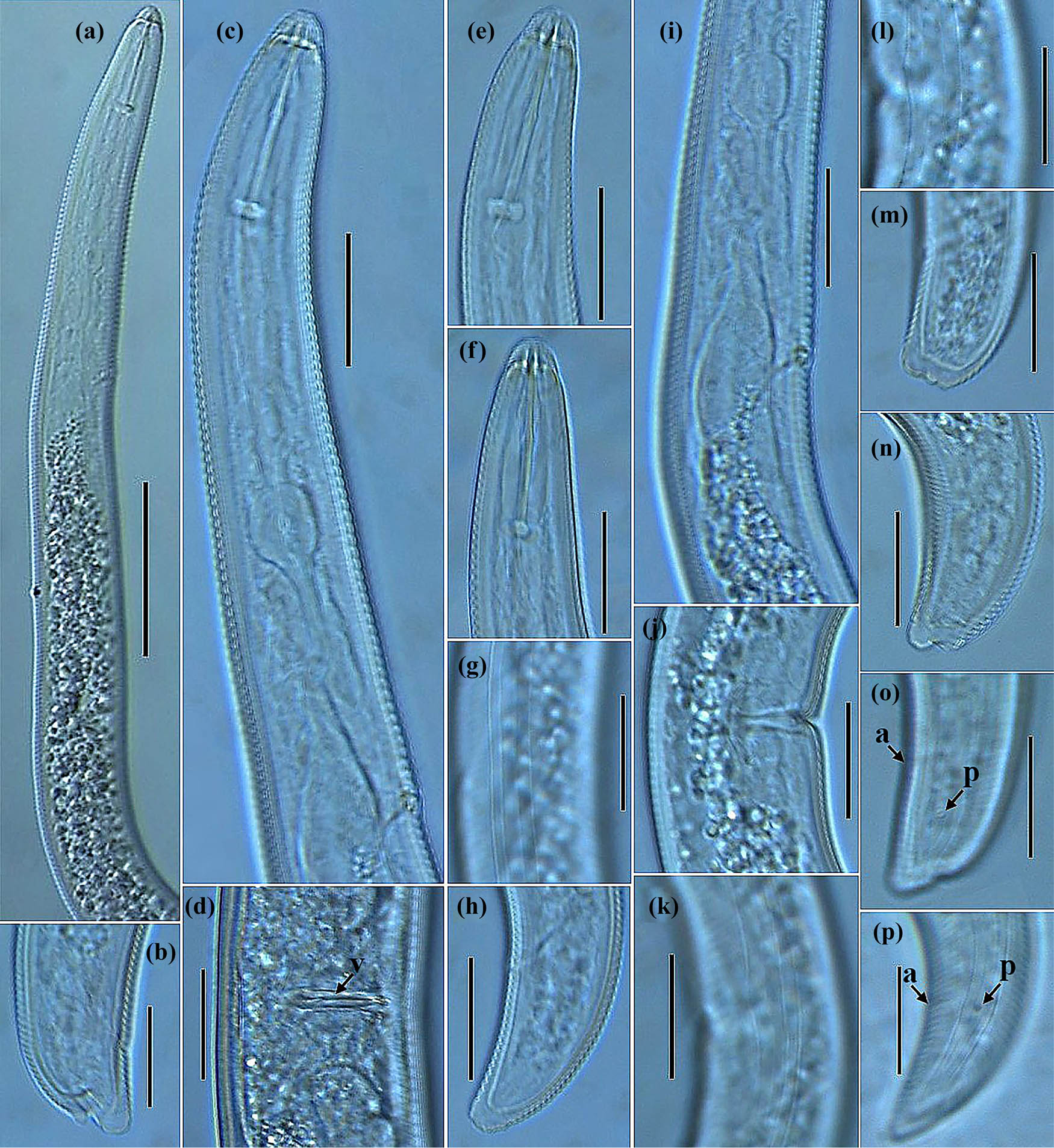
Figure 3
Light micrographs of Helicotylenchus coreanus n. sp. (a–p). (a) Female anterior region (b, h, m, n) variation in female tail; (c) pharyngeal region; (d) vulval region (ventral view); (e, f) head region; (g) lateral field at mid-body; (i) posterior pharyngeal region; J: vulval region (lateral view); (k, l) lateral field at level of vulva; (o, p) variation in position of phasmids. The arrows labeled v, a, and p indicate the position of vulva, anus, and phasmids, respectively (scale bars: a = 50 μm and b–p = 20 μm).
Male: Not found.
2.3. Remarks on the second population (H04)
The morphology and morphometrics of the second population agree well with those of the type population except in the relatively longer body length (643.0–774.0 vs 576.0–716.0 μm). The molecular DNA barcodes are also identical to those of the type population (H03).
2.4. Diagnosis and relationships
Helicotylenchus coreanus n. sp. is characterized by the medium sized body, lateral fields with non-areolated bands, modified at vulval region by widening on vulval side, inner lateral field incisures on tail end fused distally into a Y- or U-shape, phasmids located 0–7 annuli posterior to anal opening, rarely three annuli anterior to anal opening, lip region hemispherical, continuous with body contour, marked by six or seven distinct annuli, stylet 3.4–4.0 times as long as lip region diameter, stylet knobs rounded to flattened, nerve ring anterior to SE pore, the latter generally anterior to pharyngo-intestinal junction, rarely at the same level, reproductive system with two functional genital branches, outstretched, spermatheca rounded, empty, tail mostly longer than anal body diameter, with generally 16–31 annuli; and rarely less than 15 annuli on ventral contour, tail terminal region with well-demarcated hyaline portion, terminus notched, sometimes with two small notches; in the more conoid individuals, terminus is truncate or rounded.
By having a notched tail terminus, Helicotylenchus coreanus n. sp. is morphologically similar to H. indenticaudatus Mulk & Jarajpuri, 1974, H. holguinensis Sagitov, Sampedro, Santos & Paneke, 1978, and H. parapteracercus Sultan, 1981. The new species differs from H. indenticaudatus by the longer stylet length (28.0–32.0 vs 22.0–24.0 μm), with rounded to flattened stylet knobs vs anteriorly indented, lateral field not areolated vs areolated near mid body as well as at extremities, inner lateral field incisures on tail end fused distally into a Y- or U-shape vs extend up to the terminal notch of the tail, and tail terminal region notched, terminus truncate or rounded, with a well-demarcated hyaline vs with a conspicuous notch and a prominent ventral projection, and with no demarcated hyaline; from H. holguinensis by the longer stylet length (28.0–32.0 vs 26.0–27.5 μm), c ratio (19.6–45.7 vs 48.0–51.5), anterior vulval position (V = 58.4–64.1 vs 65.0–67.8), lip region marked by six or seven annuli vs four or five, phasmids located 0–7 annuli posterior to anal opening, rarely three annuli anterior to anal opening vs 6–7 annuli anterior to anal opening, tail terminus with a well-demarcated hyaline vs with no demarcated hyaline and males absent vs present; and from H. parapteracercus by the relatively longer stylet length (28.0–32.0 vs 27.0–28.0 μm), with rounded to flattened stylet knobs vs anteriorly indented, tail with 16–31 annuli (rarely 13–15) vs 8–13, phasmids located 0–7 annuli posterior to anal opening, rarely 3 annuli anterior to anal opening vs 5–10 annuli anterior to anal opening, tail terminus truncate or round, with no ventral projection vs with a ventral projection and with a cuticular fold.
Based on the position of phasmids (located three annuli anterior to seven annuli posterior to anal opening), the new species is morphologically close to H. ussuriensis Eroshenko, 1981, and H. belli Sher, 1996. However, Helicotylenchus coreanus n. sp. differs from H. ussuriensis by the relatively shorter body length (576–774 vs 750–890 μm), the notched tail terminus vs conical, lateral field expanded at vulval region vs not, inner lateral field incisures on tail end fused distally into a Y- or U-shape vs extend up to the terminal end; and from H. belli by lip region marked by six or seven annuli vs smooth, lateral field expanded at vulval region vs not, and the notched tail terminus vs hemispherical. Lastly, based on a higher number of lip annuli (6–8), Helicotylenchus coreanus n. sp. is also comparable to H. oscephalus Anderson, 1979, differing from it by the relatively shorter body length (576–774 vs 780–920 μm), relatively longer stylet length (28.0–32.0 vs 25.0–28.0 μm), with rounded to flattened stylet knobs vs anteriorly indented, the notched tail terminus vs broadly rounded, and phasmids located 0–7 annuli posterior to anal opening, rarely 3 annuli anterior to anal opening vs 3–14 annuli anterior to anal opening.
2.5. Type habitat and locality
Rhizospheric soil samples of dead Abies koreana collected from Hallasan mountain in Jeju Islands, Republic of Korea (GPS coordinates: 33°21′33˝N, 126°30′30˝E).
2.6. Type material
Holotype female and six female paratypes were deposited in the National Institute of Biological Resources of Korea (slide number: NM436); six female paratypes were deposited in the Canadian National Collection of Insects, Arachnids, and Nematodes, Ottawa, Canada; and five female paratypes were deposited in the Nematode Collection of Kyungpook National University (KNU), Republic of Korea.
2.7. Etymology
The species epithet coreanus is derived from the country of its first description (Republic of Korea).
2.8. Molecular characterization and phylogenetic relationships
The montaged partially overlapping fragments of the 18S-rRNA gene sequences of the new species yielded four sequences of approximately 1700 bp long. The newly obtained sequences (PX694638-PX694641) differed in 1 bp. In the 18S-rRNA gene phylogeny, sequences of Helicotylenchus coreanus n. sp. were grouped in a separate moderately-supported clade with sequences of H. oscephalus (OR957391), H. vignae (PQ736884, PQ736885), and H. asiaticus (OR844015-OR844017) differing by 4 bp (0.5%), 39–41 bp (2.6–2.7%) and 68–69 bp (4.1–4.2%), respectively. Sixty-nine 18S-rRNA gene sequences from member species of Helicotylenchus, including the newly obtained sequences and outgroup taxa, constituted the sequence dataset for phylogenetic analysis. Phylogenetic relationships, as inferred from Bayesian analysis of the dataset with GTR + I + G substitution model, are shown in Fig. 4.
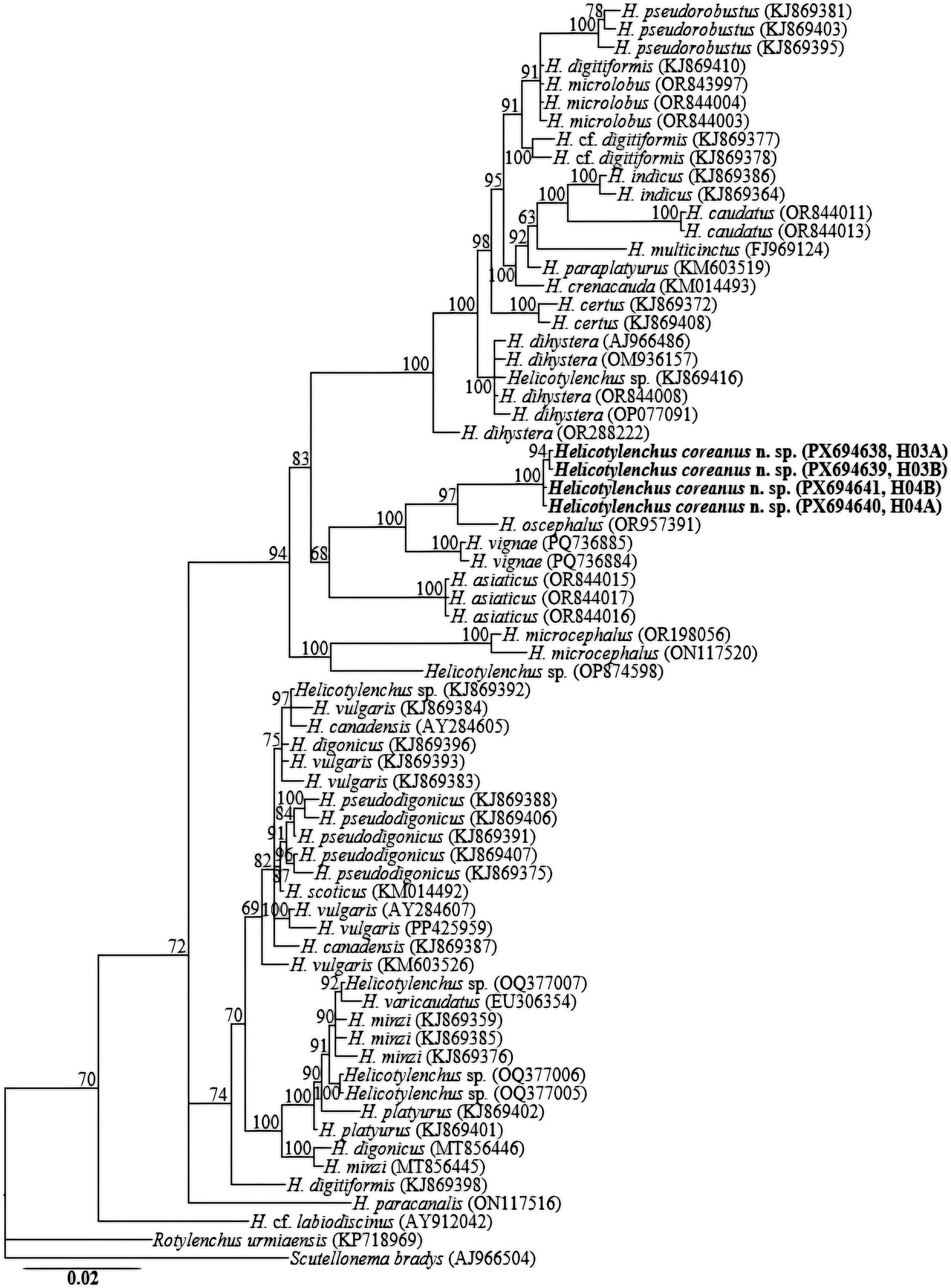
Figure 4
Bayesian tree inferred under the GTR + I + G model from 18S-rRNA gene sequences of Helicotylenchus spp. Posterior probability values exceeding 50% are given on appropriate clades. The studied populations are indicated in bold text.
The amplification of the D2–D3 expansion segment of the 28S-rRNA gene yielded three fragments of approximately 700 bp. The newly obtained sequences of Helicotylenchus coreanus n. sp. (PX694642-PX694644) were identical, with no intraspecific sequence variation. In the phylogenetic reconstruction, sequences of Helicotylenchus coreanus n. sp. were grouped in a separate well-supported subclade (PP = 100) with sequences of H. oscephalus (OR957403, OR957404) and H. vignae (PQ737549) differing by 24–27 bp (4.0–4.5%) and 38–41 bp (7.4–7.7%), respectively. Sequences of Helicotylenchus coreanus n. sp. also showed a close relationship with sequences of unidentified Helicotylenchus spp., including Helicotylenchus spp. accessioned ON117611, ON117612, OP828614, OQ911481, and OQ912904, differing from all by 50–53 bp (7.4–9.0%). The Bayesian analysis of the partial D2–D3 expansion segment of 28S-rRNA gene included 71 sequences from member species of Helicotylenchus, including the newly obtained sequences and outgroup taxa (Fig. 5).
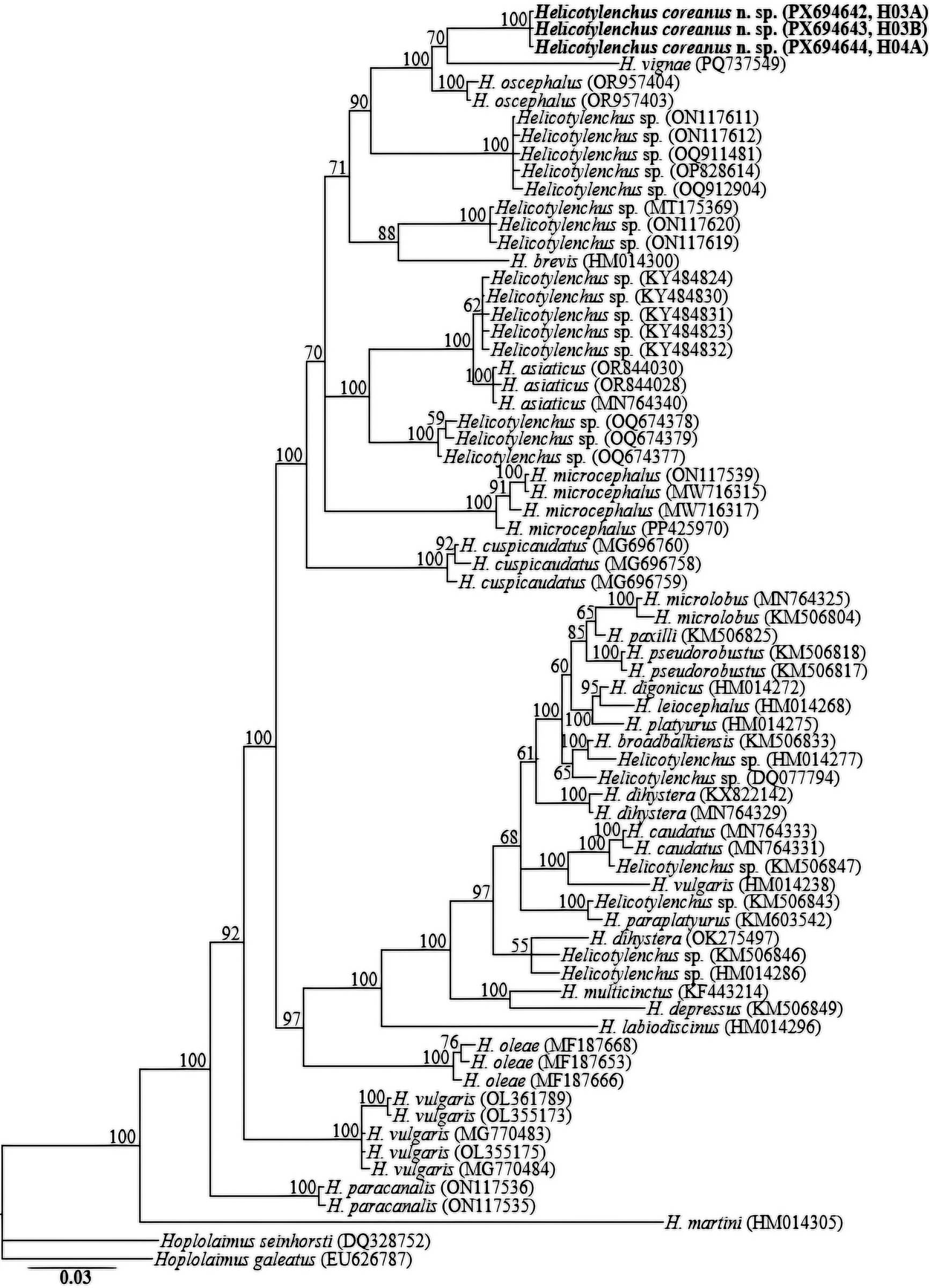
Figure 5
Bayesian tree inferred under the GTR + I + G model from LSU D2–D3 partial sequences of Helicotylenchus spp. Posterior probability values exceeding 50% are given on appropriate clades. The studied populations are indicated in bold text.
The amplified partial COI gene yielded two single amplicons of ca 370 bp. The two newly obtained sequences (PX694668 and PX694669) were also identical with no intraspecific variation and were grouped in a moderately supported subclade with sequence data of H. oleae (MF187678 and MF187679), H. oscephalus (OR988043 and OR988044), and H. asiaticus (OR855927–OR855934) differing by 18–21 bp (9.5–10.3%), 42 bp (11.4%), and 38–62 bp (15.6–17.8%), respectively. The partial COI gene sequence dataset for phylogenetic analysis comprised 69 sequences of Helicotylenchus spp., including the newly obtained sequences and outgroup taxa. Bayesian inference of the dataset with the GTR + I + G substitution model is shown in Fig. 6.
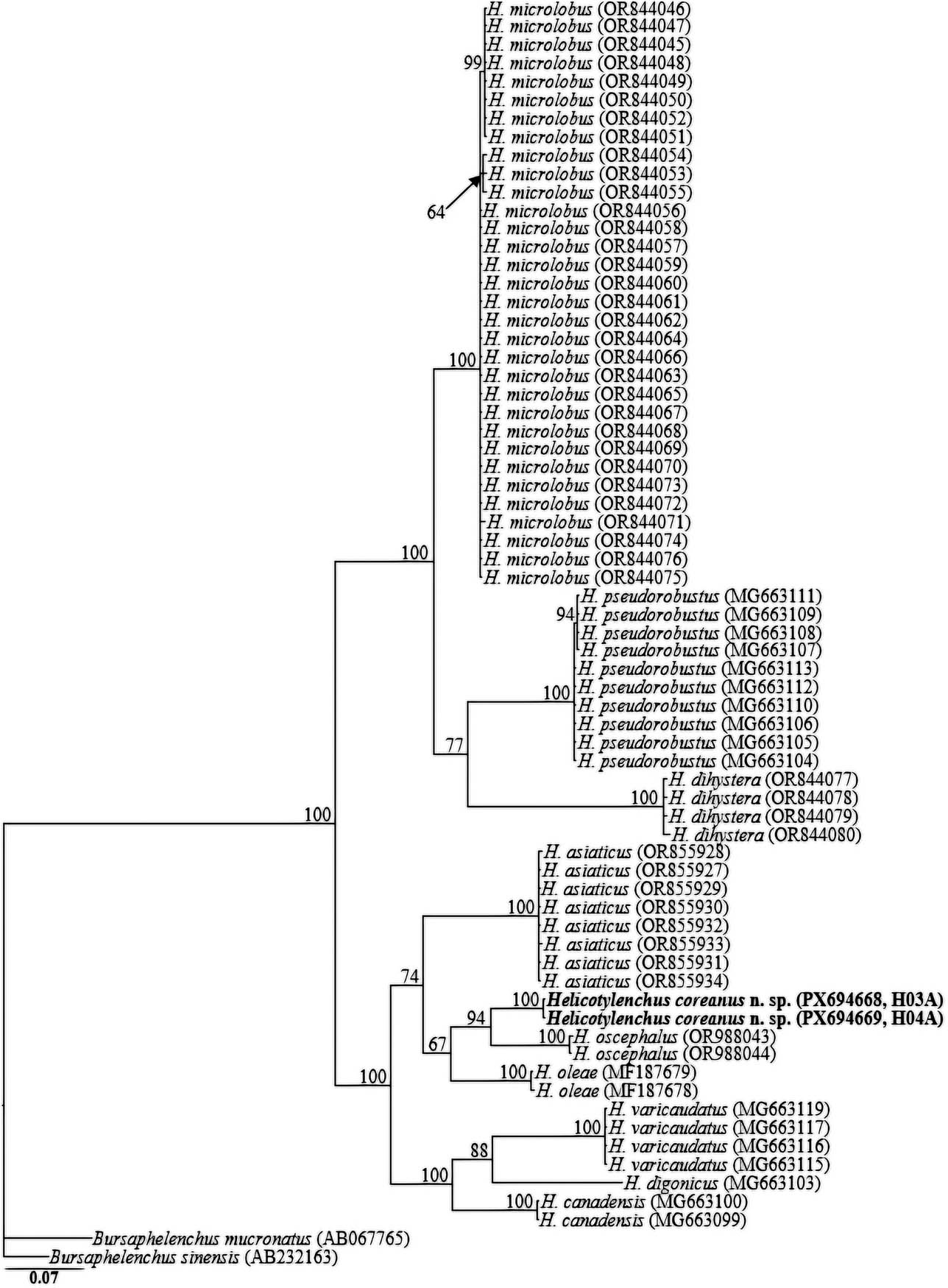
Figure 6
Bayesian tree inferred under the GTR + I + G model from COI gene sequences of Helicotylenchus spp. Posterior probability values exceeding 50% are given on appropriate clades. The studied populations are indicated in bold text.
3. Discussion
The genus comprises a taxonomically confounding group of species. Apart from species that display unique and obvious morphological characters, such as H. multicinctus, the identification of other species is very challenging (Subbotin et al., 2011, 2015). Many species display similar morphological characters; consequently, the taxonomic position of closely related species, such as H. microlobus in relation to the widely known H. pseudorobustus, has been debated for years (Fortuner et al., 1981, 2018; Fortuner, 1984; Subbotin et al., 2011, 2015; Divsalar et al., 2020; Mwamula et al., 2020). Even among commonly characterized and/or reported species, such as H. dihystera, H. pseudorobustus, H. digonicus, and H. vulgaris, misidentifications are evident in published literature, mostly due to under- or overestimation of intra- and interspecific phenotypic variability within the key diagnostic characters during diagnosis (Subbotin et al., 2011, 201; Mwamula et al., 2024). Helicotylenchus coreanus n. sp. belongs to a small group of species within the genus characterized by a notched tail terminus, from which it can be distinguished using various other morphological characters, as discussed above. However, morphological identification of these nematodes often remains inconclusive due to the limitations of this method.
DNA barcoding is a powerful tool for nematode identification when integrated with morphological delineation. For instance, Bayesian tree analyses based on the three reconstructed phylogenies (18S-rRNA, D2–D3 expansion of 28S-rRNA, and COI gene) indicate that Helicotylenchus coreanus n. sp. is genetically distinct from all available Helicotylenchus sequences, including the morphologically close H. oscephalus. Thus, the use of ribosomal DNA in the identification of Helicotylenchus is not only a reliable and quick diagnostic tool but is a crucial tool for discriminating morphologically related species within this speciose genus.
The 28S-rRNA and ITS-rRNA genes are excellent markers for diagnosis with concordant phylogenetic patterns and sufficient interspecific distances among species (Subbotin et al., 2011, 2015; Rybarczyk-Mydłowska et al., 2019; Mwamula et al., 2020, 2024). The recent integration of mitochondrial DNA (COI gene) in the diagnosis of the genus, as demonstrated by other studies (Rybarczyk-Mydłowska et al., 2019; Mwamula et al., 2024), is equally a promising tool, especially in discriminating between cryptic species despite the recorded evidence for heteroplasmy, introgression, and recombination events in some nematode groups (Subbotin et al., 2020). As already stated earlier, Helicotylenchus coreanus n. sp. belongs to the small group of species within the genus that possess a notched tail terminus. However, DNA sequence data for these morphologically comparable species, as well as the majority of species within the genus, are still unavailable. Currently, the actual number of valid species within the genus is debatable. Molecular characterization of such species and linking molecular DNA barcodes to morphological data is necessary to accurately resolve the taxonomic status of several species of this speciose genus.
The Korean fir is a cold relict plant native to the Korean Peninsula. It is mainly distributed in a few alpine and subalpine zones in Korea at altitudes of between 1000 and 1950 m above sea level (Kim and Jeon, 2021). Regional decline of the plant has been on the increase since the 1980s due to atrophy and diebacks, and it has been assessed as endangered by the International Union of Conservation of Nature (IUCN) (Woo, 2009; Kim et al., 2011; Koo et al., 2017; Lee et al., 2023). Helicotylenchus coreanus n. sp. was recovered from the rhizosphere of these dead Korean fir plants. Its association with dead Korean fir plants does not necessarily demonstrate a host-parasite relationship. However, the studied populations co-existed as mixed populations with several dagger nematode species (Xiphinema spp.), including X. hunaniense, X. insigne, X. diffusum, and other unidentified Xiphinema populations of the americanum group. The effect and significance of these nematode populations on the Korean fir plants is unclear. However, several species of Xiphinema have been implicated as virus vectors in various agriculturally important crops (Lamberti and Roca, 1987). Therefore, the existence of these mixed populations perhaps warrants further studies with controlled sampling and analysis.
Acknowledgements
This study was conducted as part of the World Heritage Office, Jeju Special Self-Governing Province’s ‘Survey and Analysis of Soil Nematodes in Korean Fir Trees on Mt. Halla’ project and the National Institute of Biological Resources (NIBR), funded by the Ministry of Environment (MOE) of the Republic of Korea (NIBR202602106).
Author contributions
D. W. Lee, S. H. Ko, S. H. Lee and Y. D. Lee conceived the study; All authors carried out field sampling; A. O. Mwamula analyzed the data; A. O. Mwamula and D. W. Lee wrote the first draft, which all other authors revised.
Conflict of interest statement
The authors state no conflicts of interest.
Data availability statement
All necessary data links have been included in the article as GenBank accession numbers.