
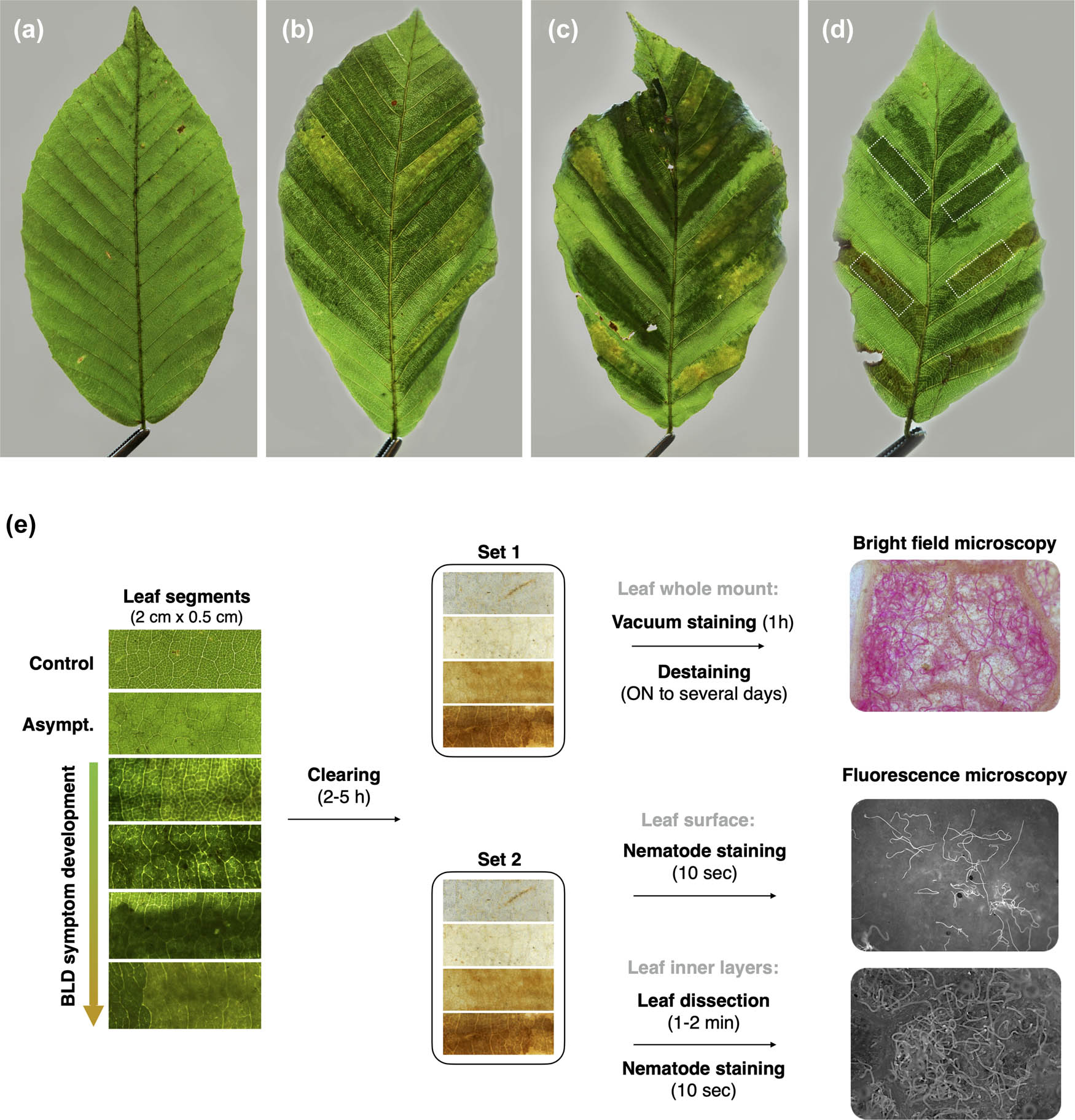
Figure 1
Comparative validation of two acid fuchsin-based protocols for the detection of nematodes in beech leaf tissues. (a–d) Representative images of Fagus grandifolia leaves used in this study, including asymptomatic control leaves (a) and symptomatic leaves displaying characteristic signs of beech leaf disease (b–d). (e) Diagrammatic overview of the key procedural steps in acid fuchsin staining protocols, designed to facilitate nematode visualization. The top panel (set 1) illustrates detection via brightfield microscopy, while the bottom panel (set 2) shows visualization using fluorescence microscopy, highlighting both common and distinct steps in leaf sample preparation.
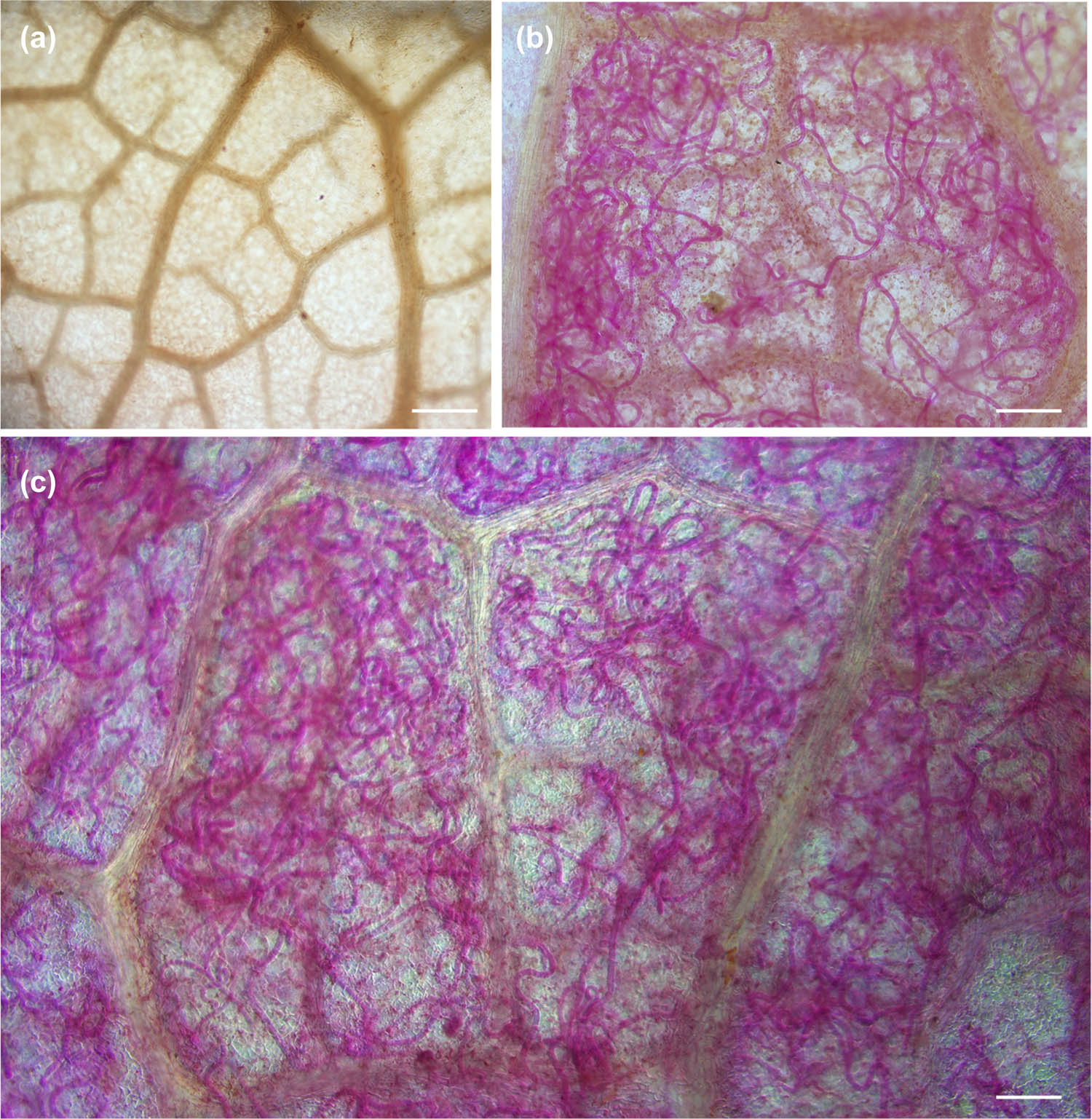
Figure 2
Whole-mount preparations of American beech (Fagus grandifolia) leaves stained with acid fuchsin and examined under bright-field microscopy. (a) Leaf sample of asymptomatic interveinal band, with no visible signs of nematode presence. (b and c) Diseased interveinal regions of the leaf, with clearly visible, pink-stained nematodes, indicating successful uptake of acid fuchsin. Clusters and large amounts of nematodes are localized within the affected leaf tissues. Scale bars: 500 µm.
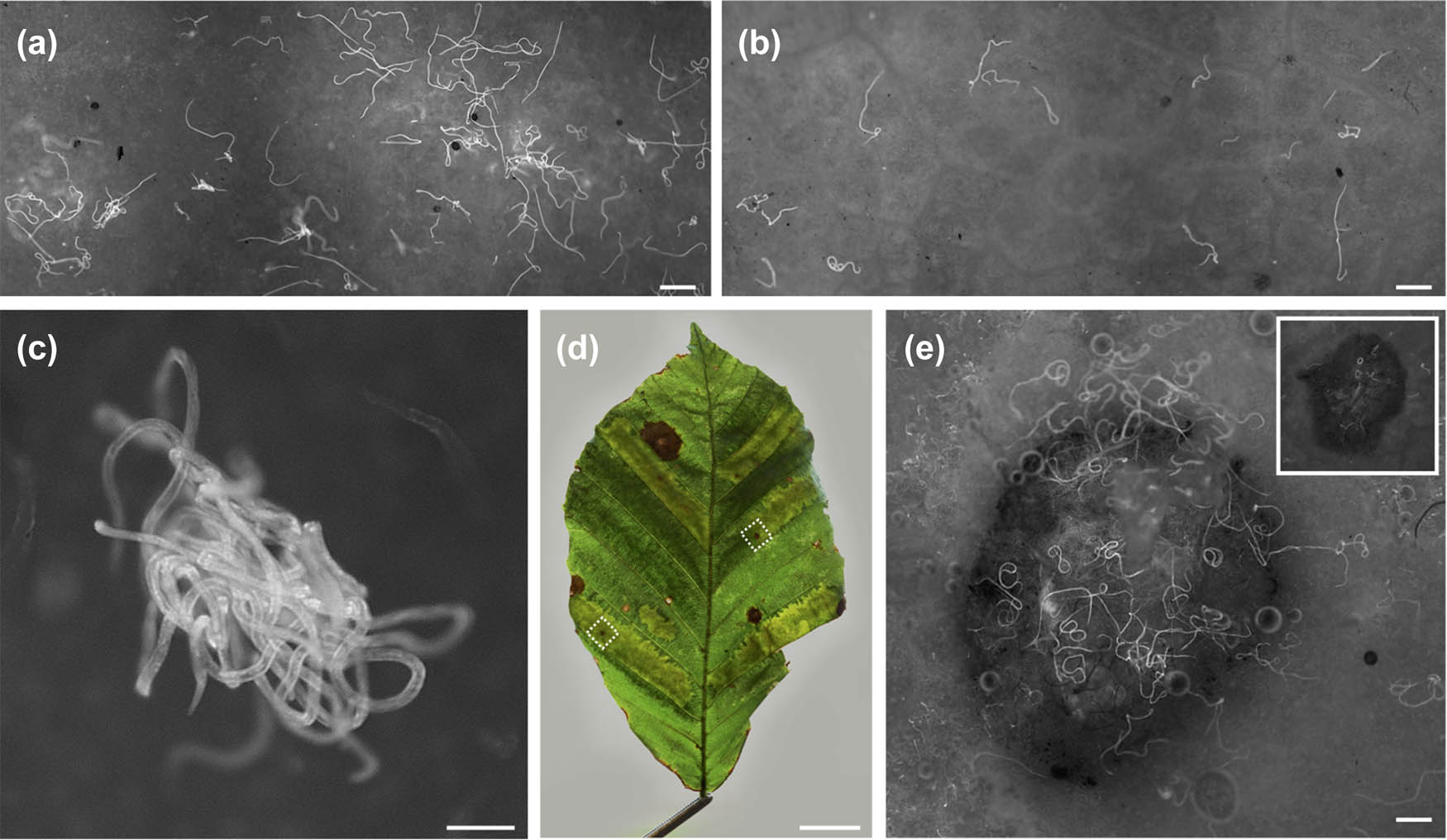
Figure 3
Visualization of nematodes on beech leaf surfaces using acid fuchsin staining and fluorescence microscopy. (a and b) Fluorescence micrographs illustrating the presence of Litylenchus crenatae on both the abaxial (lower) and adaxial (upper) surfaces of symptomatic beech leaves. Stained nematodes appear as white bright, well-defined structures against leaf tissue. (c) Characteristic clusters of accumulated nematodes, commonly referred to as “nematode wool,” often observed on the abaxial surface of infected beech leaves. (d) Representative example of a diseased beech leaf exhibiting discrete necrotic lesions in the interveinal banding areas, indicated by white dashed outlines. (e) Distribution of L. crenatae within necrotic zones associated with prior insect feeding activity, showing localized aggregation of nematodes in these compromised leaf regions. Scale bars: a–c and e: 200 µm; d: 1 cm.
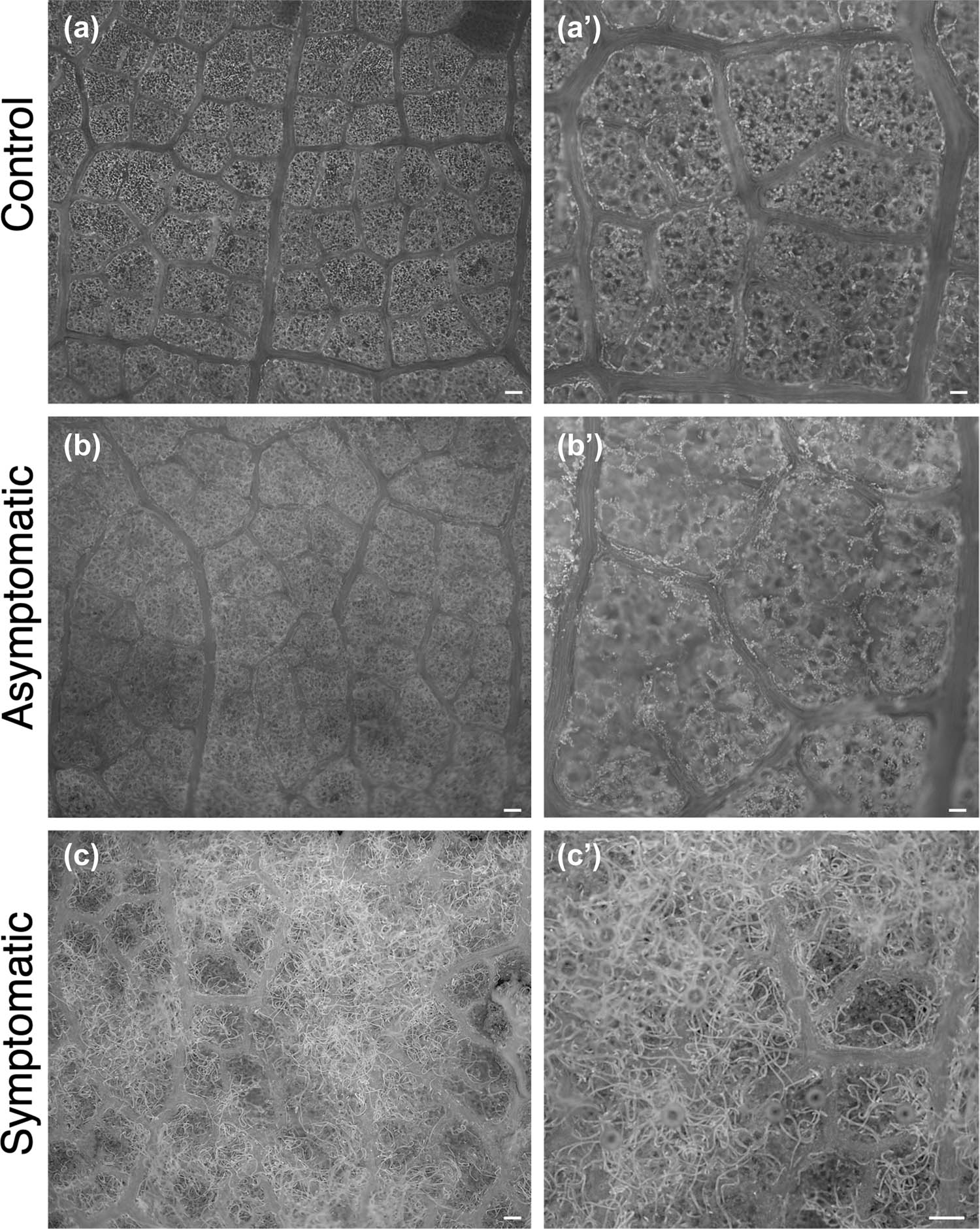
Figure 4
Dissected leaf preparations of American beech (Fagus grandifolia) stained with acid fuchsin and analyzed using fluorescence microscopy. (a) Control leaf sample showing no evidence of nematode presence under fluorescence imaging. (b) Asymptomatic region of a leaf affected by BLD, lacking detectable nematodes. (c) Leaf sample of symptomatic BLD-affected interveinal area exhibit a high density of nematodes, often forming distinct clusters, indicating a strong association with symptomatic tissue. (a′–c′) Magnification images from a–c, respectively. Scale bars: 200 µm.
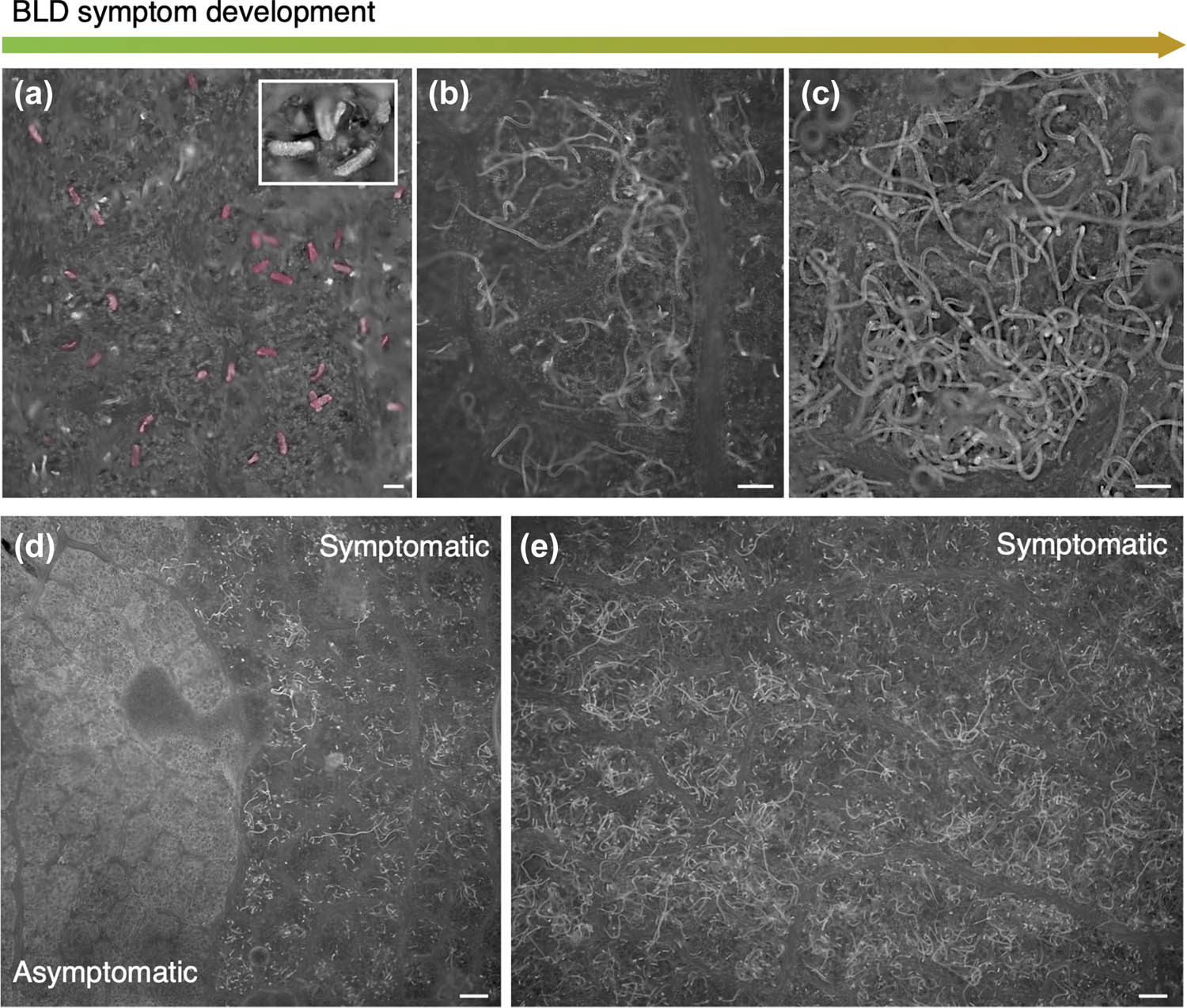
Figure 5
Distinct interveinal symptoms of beech leaf disease in Fagus grandifolia leaves, stained with acid fuchsin and examined under fluorescence microscopy. (a–c) Leaves exhibiting dark green to yellow or brown interveinal banding revealed varying densities of nematodes. In some instances, nematode eggs (colored in red) at different nematode developmental stages (onset image) were detected within the dark green interveinal regions. (d–e) Representative images comparing asymptomatic and symptomatic leaf areas, illustrating the distribution patterns and varying levels of nematode infestation. Scale bars: a: 50 µm; b–e: 200 µm.