
1. Introduction
Foliar nematodes (sensu lato) are recognized as significant plant pathogens capable of causing substantial economic losses and yield reductions in a wide array of host plants. These include not only major food crops but also ornamental species and forest trees, highlighting their wide-ranging impact on both agriculture and natural ecosystems (Sánchez-Monge et al. 2015; Handoo et al. 2020). Among the most notable foliar nematodes are several species within the genus Aphelenchoides (clade 10, family Aphelenchoididae), which have been documented in association with over 1,100 plant species spanning 126 different botanical families (Sánchez-Monge et al. 2015). This broad host range underscores the ecological versatility and pathogenic potential of this group. In contrast, foliar nematodes in the family Anguinidae (clade 12) tend to exhibit a more limited host range but are nonetheless of considerable economic concern. Notable examples include species that affect foliage, stems, inflorescences, flowers, seeds, and bulbs of different crops (Subbotin and Riley, 2012) and, more recently, forest ecosystems, such as those implicated in the development of beech leaf disease (BLD) (Kanzaki et al. 2019; Carta et al. 2020; Vieira et al. 2023). BLD has recently emerged as a significant foliar nematode disease affecting beech trees across the northeastern region of North America (Ewing et al. 2019). This disease is caused by Litylenchus crenatae (family Anguinidae), a species originally described from Japan (Kanzaki et al. 2019). One of the hallmarks of BLD is the presence of conspicuous, dark green interveinal banding on the foliage (Ewing et al. 2019), which results from abnormal hyperplasia and hypertrophy of the leaf cell layers due to L. crenatae parasitism strategy (Vieira et al. 2023).
Staining of nematodes within plant tissues is a standard procedure for the study of plant-parasitic nematodes. This process allows the visualization of nematodes, facilitating both research and nematode screening efforts. Among the most widely used methods is the acid fuchsin staining protocol modified by Byrd et al. (1983), which can effectively highlight both sedentary (Vieira et al. 2013) and migratory (Vieira et al. 2017) nematodes embedded in roots. This method is particularly effective in enhancing the visibility of nematodes in roots by selectively coloring the nematode bodies and egg masses, thereby facilitating their identification under light microscopy. In addition, several alternative methodologies have been explored for nematode staining in plant tissues. For instance, phloxine B was employed for nematode staining in the early work of Fenner (1962) and later by Holbrook et al. (1983). While more recently, dyes such as erioglaucine (Atamian et al. 2012), or the use of food coloring dyes have emerged as a non-toxic, safer alternative (Thies et al. 2002; Rocha et al. 2005; Damasceno et al. 2016).
Although many of these staining protocols have primarily been used to study plant-parasitic nematodes residing in roots, the traditional acid fuchsin staining has also been used to investigate foliar nematodes (Calandrelli et al. 2023; Favoreto et al. 2021; Favoreto et al. 2024; Carta et al. 2020; Elhamouly et al. 2025). However, the imaging quality and consistency of the stained nematodes observed within the foliage are frequently lower when compared to those within the roots. This discrepancy is likely attributed to differences in tissue composition, nematode distribution, and the permeability of the stain and destaining process to clear the leaf tissues.
Given the substantial impact of L. crenatae on multiple beech species, including both American (Fagus grandifolia) and European (F. sylvatica) beeches (Vieira et al. 2023; Colbert-Pitts et al. 2025), this nematode–host interaction presents a valuable model for advancing and optimizing staining, as well as visualization techniques of foliar nematodes within leaf tissues. Additionally, enhanced staining practices could improve diagnostic accuracy and enhance our understanding of nematode biology and disease dynamics. Hereby, we assessed acid fuchsin-based methodologies for brightfield and fluorescence microscopy by focusing on the interaction between L. crenatae and beech leaf tissues. We illustrate how these simple approaches can be adapted to image foliar nematodes with high resolution across distinct leaf symptoms. In doing so, we not only enhance the visual characterization of nematode distribution but also uncover novel and biologically significant aspects of their life cycle and interaction with host tissues.
2. Materials and methods
2.1. Plant material
Leaf samples were collected from asymptomatic and BLD symptomatic F. grandifolia trees from late August to late September in Cabin John Regional Park (Maryland), when L. crenatae densities within the leaves increase (Reed et al. 2020; Vieira et al. 2023). Samples were collected bi-weekly over 2 months, with each collection involving several dozen leaves randomly selected from at least 10 trees. Leaves with representative stages of BLD symptoms (i.e., different dark green to yellow discoloration) were collected from symptomatic trees. In contrast, leaves of comparable sizes collected from 10 asymptomatic trees were used as controls. Each set of leaves was placed in plastic bags and processed on the same day of collection or stored at 4°C until used.
2.2. Leaf clearing
Leaf segments measuring approximately 2 cm × 0.5 cm were carefully excised from leaves representing distinct stages of BLD symptom development. Asymptomatic interveinal areas of BLD-affected leaves, as well as leaves collected from asymptomatic trees, were used as controls. To prepare the leaf for staining, chlorophyll was removed by incubating the leaf segments in 100% ethanol in a 50 mL plastic tube. The leaf clearing process was carried out by incubating the samples at 80°C in a UVP hybridization oven (Analytik Jena, Upland, CA, USA) for a duration of 2–5 h, or until fully cleared. Afterwards, the leaves were briefly rinsed with distilled water and prepared for the different staining procedures.
2.3. Acid fuchsin staining of whole-mount leaf segments for brightfield microscopy
Whole-mount cleared leaf segments (n = 50) were stained by using a previously described acid fuchsin staining method with some modifications (Byrd et al. 1983). Each set of leaf fragments was placed in 20 mL of acid fuchsin solution (19 mL of distilled water, 500 µL of acid fuchsin [0.15 g/10 mL of water], and 500 µL of glacial acetic acid) and briefly warmed for 30 s in a standard microwave in a 50 mL glass bottle, followed by 1 h incubation at room temperature. Subsequently, the leaf segments were transferred to 20 mL of acid fuchsin solution in a 50 mL plastic tube and placed under a CentriVap Cold Trap vacuum (Labconco, Kansas City, MO, USA) at 4°C for 1 h to enhance stain penetration. Leaf fragments were then rinsed three times with distilled water, then incubated overnight at room temperature in a clearing solution of 20 mL composed of equal parts lactic acid, glycerol, and distilled water with rotation. The leaves were then transferred to 50% aqueous glycerol until the tissues were sufficiently cleared to allow nematode visualization. Afterwards, the leaf segments were mounted in a slide for imaging in a 25% aqueous glycerol solution. Similar preparations were performed for control leaves. All images were taken using a BX53 Olympus microscope with an Olympus DP75 camera (Evident Scientific, Waltham, MA, USA).
2.4. Acid fuchsin staining of dissected leaf segments for fluorescence microscopy
For fluorescence microscopy, the cleared leaf segments were processed using two different approaches. For one approach, a total of 20 whole leaf segments were placed onto a microscope slide and stained with briefly warmed acid fuchsin solution (i.e., 30 s in a microwave) for 10 s for the visualization of nematodes on the leaf adaxial and abaxial surfaces. Following staining, each leaf segment was gently rinsed with tap water and mounted in water under a coverslip. The same staining and mounting procedure were also applied to cover 20 randomly selected small necrotic-like lesions caused by insect feeding within the interveinal areas of the leaf to visualize nematodes associated with these areas.
For the second approach, a minimum of 30 leaf segments were transferred to a 6 cm diameter Petri dish containing distilled water. Using a scalpel, the cell layers of the abaxial side of the leaf were carefully excised along the entire length of each segment to expose the internal structures. Individual dissected leaf segments were then placed onto a microscope slide and stained with pre-warmed acid fuchsin solution for 10 s. The leaf segments were then mounted in water under a coverslip. Whole-mount and dissected leaf segments were examined using a BX53 Olympus microscope equipped with a fluorescence X-Cite Xylis II broad-spectrum LED illumination module (Excelitas Technologies, Pittsburgh, PA, USA). All images were taken using the mCherry filter set to visualize the stained nematodes with an Olympus DP75 camera. To visually improve image contrast, the red fluorescence signal of acid fuchsin staining was converted to a standard grayscale image.
3. Results
Control (Fig. 1a) and symptomatic BLD leaves representing the spectrum of interveinal banding typically observed for American beech in late summer were sampled as illustrated in Fig. 1b–d. Subsequently, two acid fuchsin-based staining protocols were applied to visualize nematodes using brightfield or fluorescence microscopy, as shown in Fig. 1e.
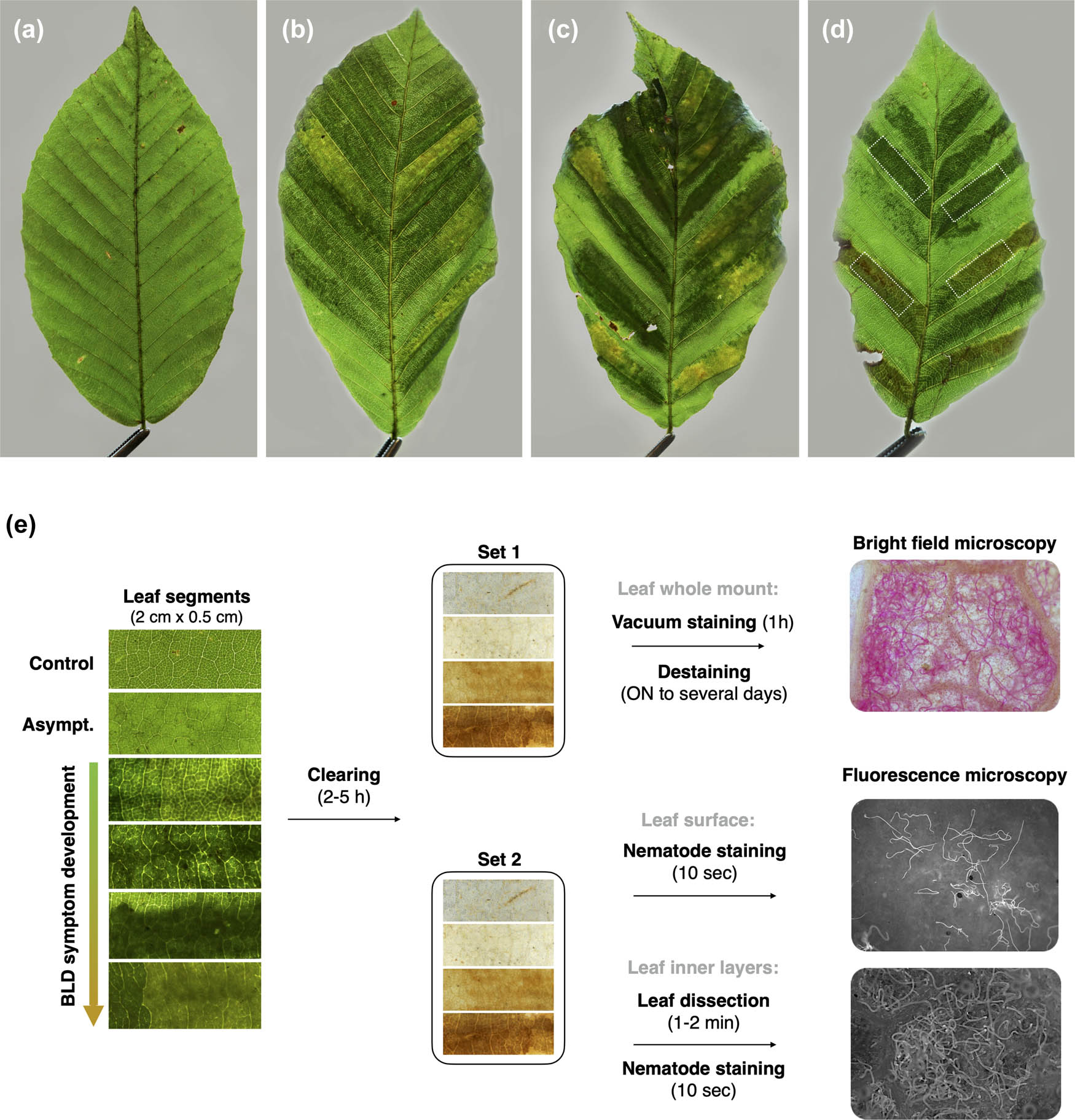
Figure 1
Comparative validation of two acid fuchsin-based protocols for the detection of nematodes in beech leaf tissues. (a–d) Representative images of Fagus grandifolia leaves used in this study, including asymptomatic control leaves (a) and symptomatic leaves displaying characteristic signs of beech leaf disease (b–d). (e) Diagrammatic overview of the key procedural steps in acid fuchsin staining protocols, designed to facilitate nematode visualization. The top panel (set 1) illustrates detection via brightfield microscopy, while the bottom panel (set 2) shows visualization using fluorescence microscopy, highlighting both common and distinct steps in leaf sample preparation.
3.1. Whole-mount leaf segment staining for brightfield microscopy
To enhance nematode staining, several modifications were made to the protocol by Byrd et al. (1983). One critical improvement was the incorporation of a vacuum infiltration step lasting at least 1 h. This adjustment significantly improved the penetration of the staining solution, resulting in more uniform and intense staining of both the internal leaf and the embedded nematodes.
The efficiency of the destaining step varied across interveinal leaf bands, largely due to differences in tissue thickness, i.e., L. crenate can induce a variable number of additional cell layers of the leaf (Vieira et al. 2023). In thinner leaf samples, destaining could be achieved overnight. However, leaves with greater thickness require prolonged exposure to the destaining solution (up to several days) to reach a comparable level of tissue translucency. Nevertheless, extending the duration of the destaining process compensated for this variability, allowing clear visualization of nematodes within the leaf tissues (Fig. 2b and c). Leaf segments collected from control and asymptomatic regions of BLD-affected leaves exhibited a translucent appearance in their morphology, as illustrated in Fig. 2a.
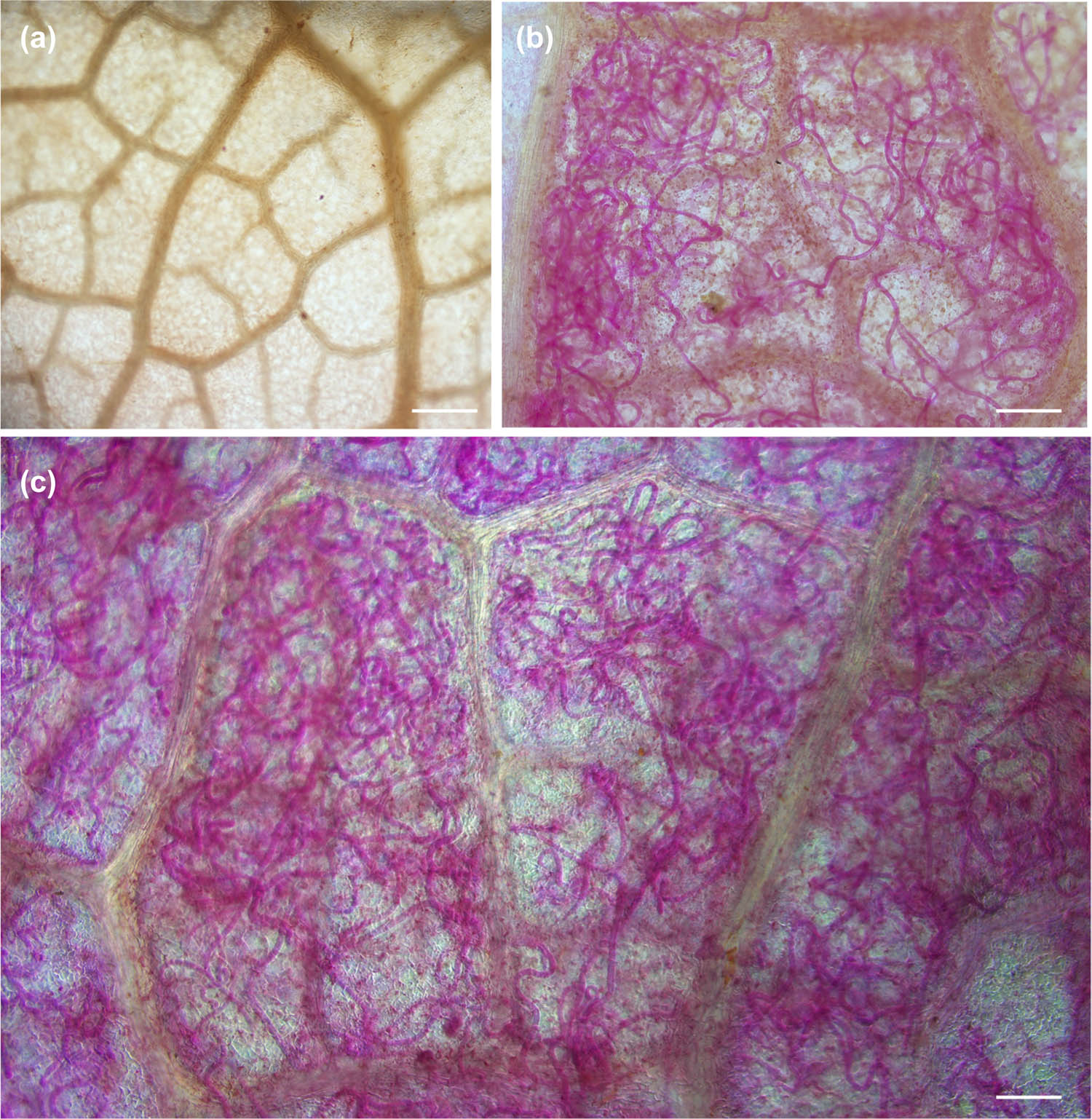
Figure 2
Whole-mount preparations of American beech (Fagus grandifolia) leaves stained with acid fuchsin and examined under bright-field microscopy. (a) Leaf sample of asymptomatic interveinal band, with no visible signs of nematode presence. (b and c) Diseased interveinal regions of the leaf, with clearly visible, pink-stained nematodes, indicating successful uptake of acid fuchsin. Clusters and large amounts of nematodes are localized within the affected leaf tissues. Scale bars: 500 µm.
3.2. Whole-mount leaf segment staining for fluorescence microscopy
Building on the optimized brightfield results, we explored the possibility of accelerating nematode visualization by employing fluorescence microscopy. Although the chlorophyll destaining step remained consistent with the previous methodology, it was possible to significantly reduce the time required for nematode staining and slide preparation. This approach enabled nematode visualization within 5–10 min.
In the first approach, we used whole-mount preparations of BLD-affected interveinal leaf regions, for examination of both the adaxial and abaxial surfaces of the leaf. A total of 20 interveinal banding leaf segments, each from a different leaf, were analyzed to ensure sufficient representation in our observations (Fig. 3a and b). Although this analysis did not allow access to the internal tissues of the leaf, we consistently detected a variable number of nematodes localized predominantly on the abaxial surface of all interveinal leaf areas (Fig. 3a). The density of nematodes observed varied considerably, ranging from only a few individuals to several dozen per sample. This variation was closely correlated with the severity of interveinal banding symptoms associated with BLD. Specifically, leaf areas exhibiting yellow interveinal banding consistently displayed significantly higher densities of nematodes, showing a strong association between symptom intensity and nematode abundance (Fig. S1). Nematodes were also observed on the adaxial surface, but at relatively lower densities (Fig. 3b). Besides the random distribution of individual nematodes along the leaf surfaces, in several instances, we observed small clusters of nematodes forming aggregations that resembled the characteristic “nematode wool” structures typically associated with members of the Anguinidae family (Fig. 3c).
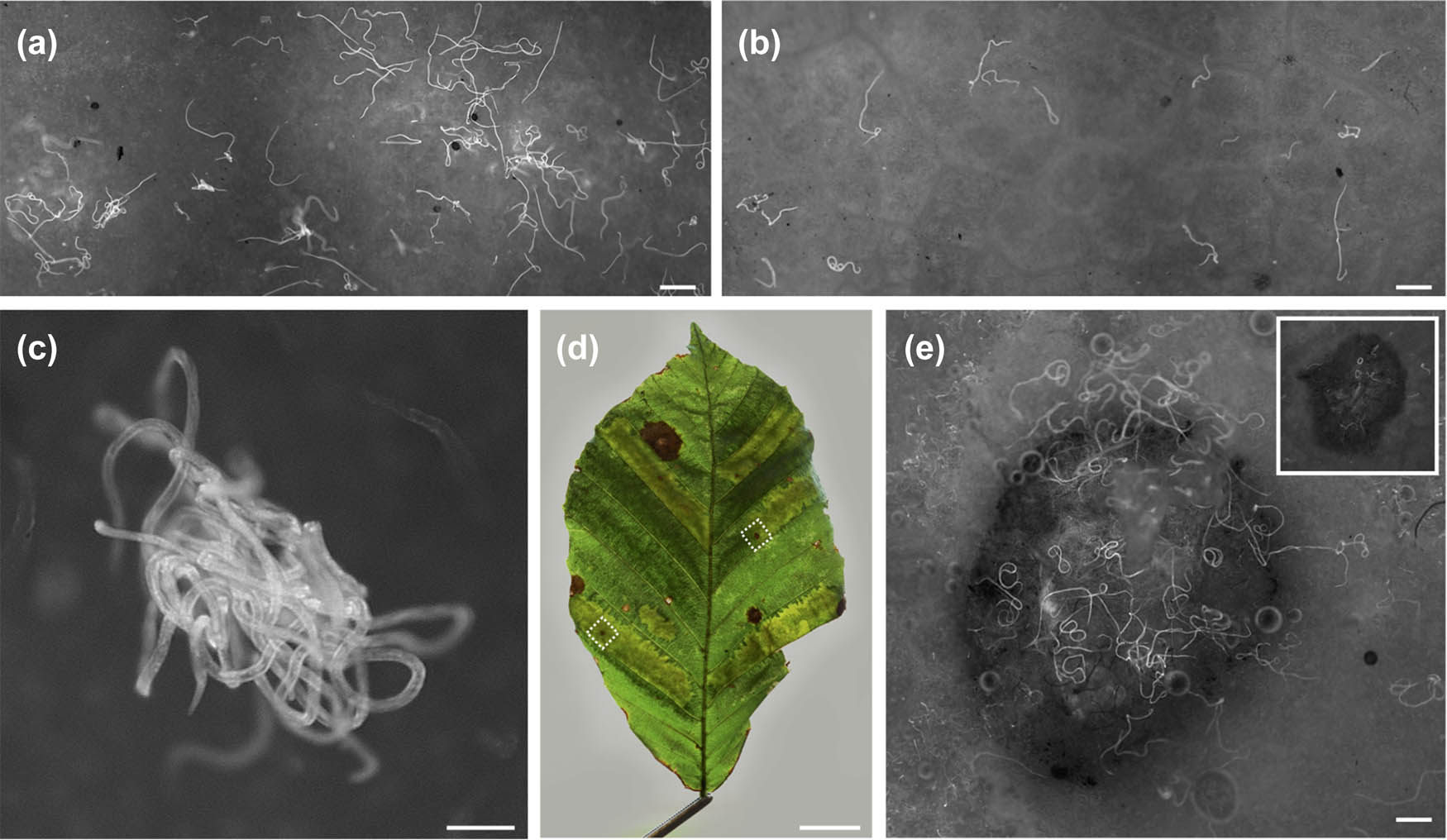
Figure 3
Visualization of nematodes on beech leaf surfaces using acid fuchsin staining and fluorescence microscopy. (a and b) Fluorescence micrographs illustrating the presence of Litylenchus crenatae on both the abaxial (lower) and adaxial (upper) surfaces of symptomatic beech leaves. Stained nematodes appear as white bright, well-defined structures against leaf tissue. (c) Characteristic clusters of accumulated nematodes, commonly referred to as “nematode wool,” often observed on the abaxial surface of infected beech leaves. (d) Representative example of a diseased beech leaf exhibiting discrete necrotic lesions in the interveinal banding areas, indicated by white dashed outlines. (e) Distribution of L. crenatae within necrotic zones associated with prior insect feeding activity, showing localized aggregation of nematodes in these compromised leaf regions. Scale bars: a–c and e: 200 µm; d: 1 cm.
In addition, since BLD-symptomatic leaf areas often exhibited small necrotic-like lesions (Fig. 3d), likely caused by insect feeding, we evaluated whether these wounded areas may function as potential exit points and aggregation sites for L. crenatae. Nematodes were found in 15 of 20 (75%) randomly selected wounded sites, with their densities varying among these wounded areas, as shown in Fig. 3e.
3.3. Dissected leaf segment staining for fluorescence microscopy
Given the established localization of nematodes within leaf tissues (as shown in Fig. 2), our second approach involved carefully dissecting the top cell layers of the abaxial side of the leaf with a scalpel, followed by a rapid acid fuchsin staining (10 s), and immediate mounting for fluorescence microscopy (Fig. 1e). Such an approach significantly accelerated the staining process, reducing the time required from several hours to just a few minutes, yielding clear and reliable visualization of the nematodes within the leaf tissues (Fig. 4).
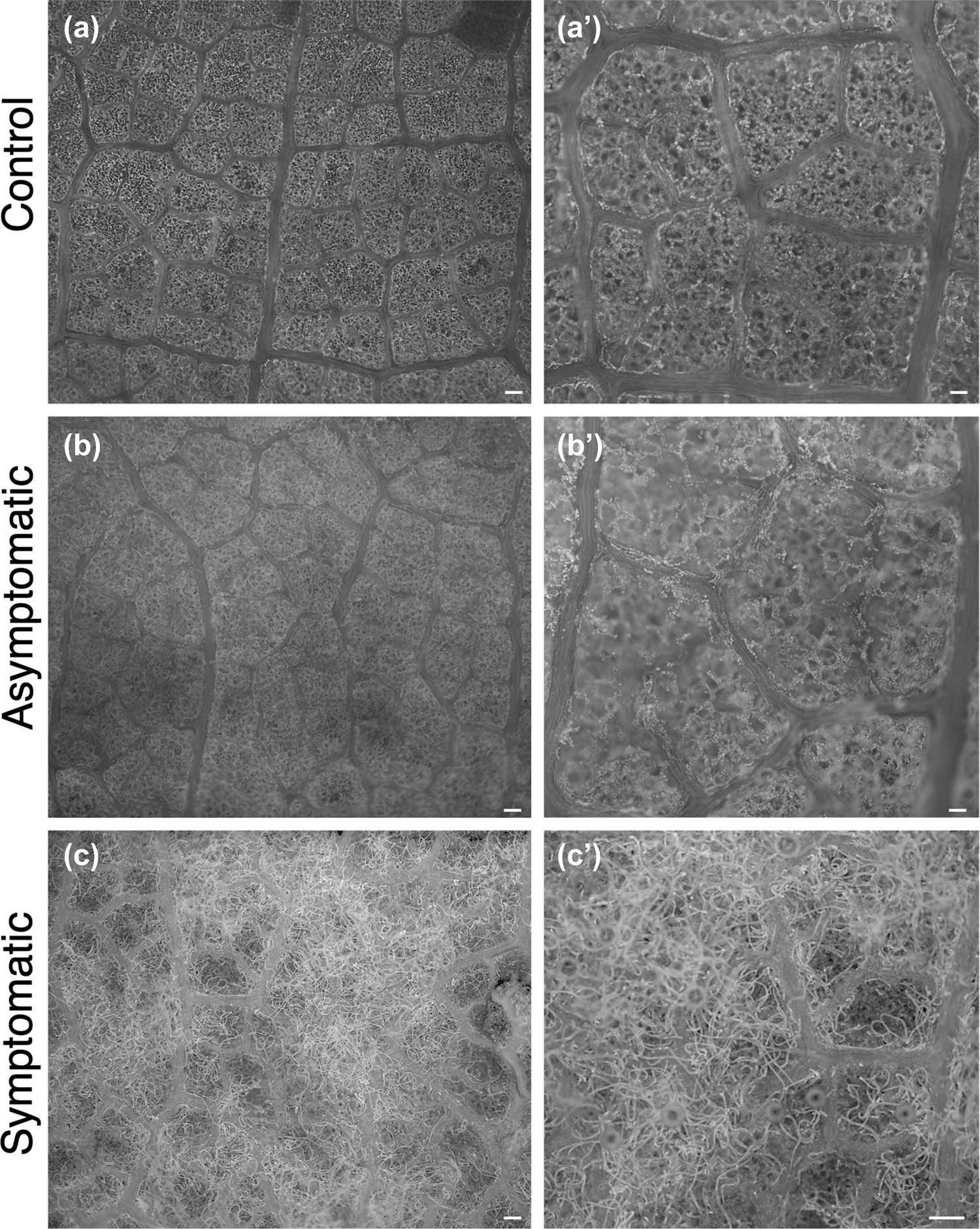
Figure 4
Dissected leaf preparations of American beech (Fagus grandifolia) stained with acid fuchsin and analyzed using fluorescence microscopy. (a) Control leaf sample showing no evidence of nematode presence under fluorescence imaging. (b) Asymptomatic region of a leaf affected by BLD, lacking detectable nematodes. (c) Leaf sample of symptomatic BLD-affected interveinal area exhibit a high density of nematodes, often forming distinct clusters, indicating a strong association with symptomatic tissue. (a′–c′) Magnification images from a–c, respectively. Scale bars: 200 µm.
When comparing control (Fig. 4a) and asymptomatic (Fig. 4b) regions of affected BLD leaves, a consistent pattern emerged in terms of internal leaf structure and vein complexity. These structural characteristics were observable across samples, reinforcing the uniformity of the underlying tissue organization. In contrast, in affected BLD areas, a variable number of nematodes were found across different areas of the leaf, with yellow interveinal areas having higher densities of nematodes, providing high-resolution images of nematodes within the spongy mesophyll (Fig. 4c).
We then explored whether this method could be applied to assess the nematode development across interveinal bands with varying levels of symptom severity, i.e., from dark green banding, which reflects mild to moderate BLD symptoms, to yellow discoloration, indicative of more severe, acute BLD symptoms. Within the different range of green interveinal bands of the leaves, a variable and lower density of nematodes were observed within the leaf tissues (Fig. 5b). In certain cases, localized dispersion of nematode eggs, in different developmental stages, were also detectable during late August, suggesting ongoing and recent reproductive activity of L. crenatae (Fig. 5a). In contrast, interveinal regions displaying pronounced yellow discoloration consistently displayed higher densities of nematodes (Fig. 5c). The relatively large size of the leaf segments also enabled a direct comparison between asymptomatic and symptomatic regions within the same interveinal leaf band (Fig. 5d). This approach provided an improved understanding of the spatial distribution of nematodes across these areas, highlighting their overall presence and localization patterns within the leaf tissues (Fig. 5d and e).
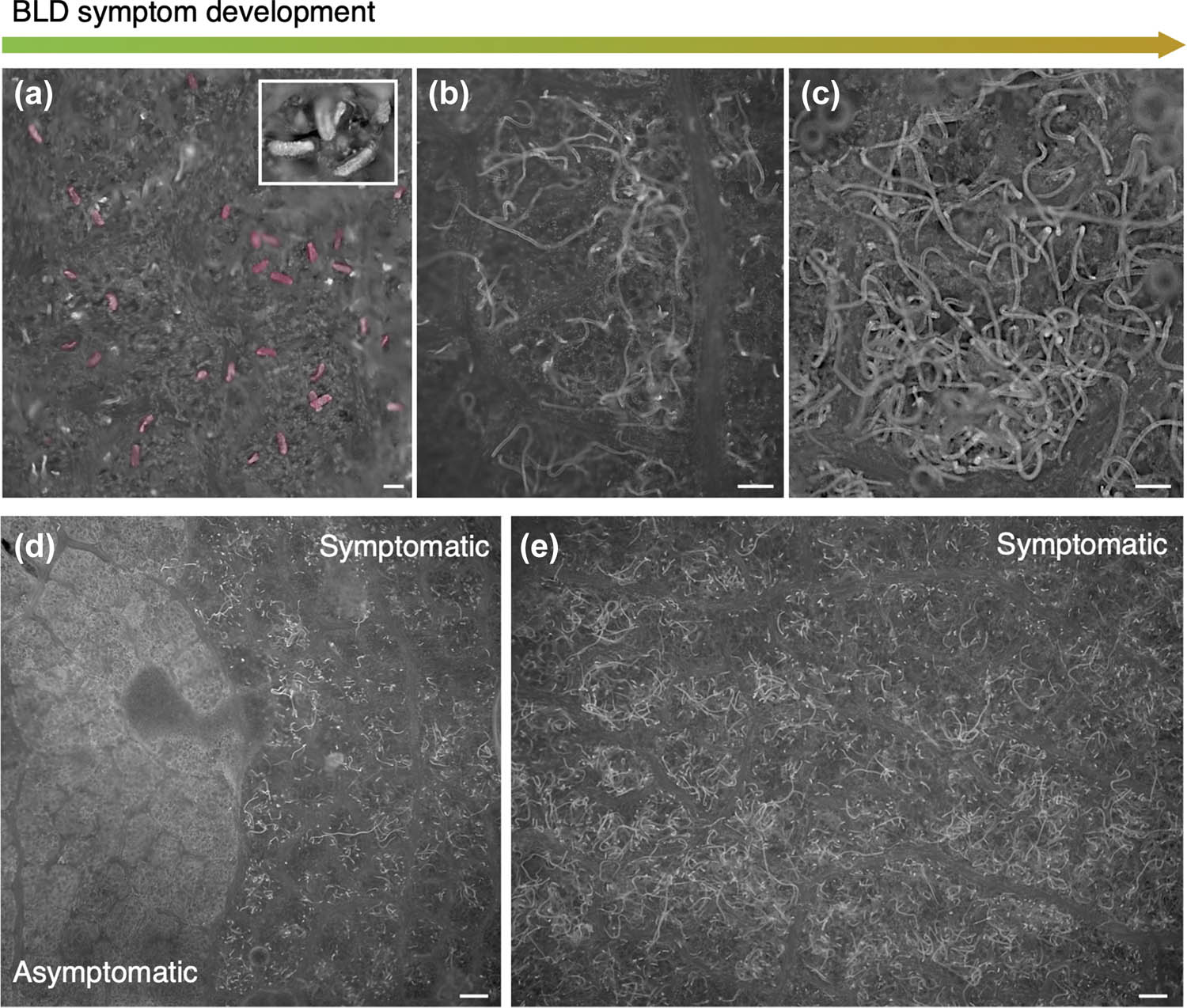
Figure 5
Distinct interveinal symptoms of beech leaf disease in Fagus grandifolia leaves, stained with acid fuchsin and examined under fluorescence microscopy. (a–c) Leaves exhibiting dark green to yellow or brown interveinal banding revealed varying densities of nematodes. In some instances, nematode eggs (colored in red) at different nematode developmental stages (onset image) were detected within the dark green interveinal regions. (d–e) Representative images comparing asymptomatic and symptomatic leaf areas, illustrating the distribution patterns and varying levels of nematode infestation. Scale bars: a: 50 µm; b–e: 200 µm.
4. Discussion
One of the limitations in achieving high-resolution visualization of nematodes within plant tissues lies in the inherent thickness and opacity of the plant material. These physical plant properties can hinder effective stain absorption and light penetration, often resulting in suboptimal imaging and inconsistent staining quality. In this study, we compared two acid fuchsin-based staining methods for foliar nematodes, with the goal of producing high-resolution images that effectively illustrate the interaction between these nematodes and leaf tissues. The current methods maintained the general structural integrity of the nematodes, while the clearing leaf process enabled a suitable visualization and distinction of the nematodes within the leaf tissues.
BLD is marked by distinctive dark green interveinal banding of the leaf, a result of localized increases in cell layer number, chloroplast density, and overall leaf thickness (Vieira et al. 2023). By targeting symptomatic interveinal leaf regions, direct visualization of nematodes enabled a more detailed spatial distribution of the nematodes and their respective population dynamics within the leaf. This information can be particularly relevant for nematode diagnosis using symptomatic BLD leaf areas. For example, molecular methods used to detect nematodes directly from diseased dark green leaf interveinal bands occasionally produce negative results, likely because nematodes are present in low abundance or unevenly distributed within those specific symptomatic leaf regions (Vieira et al. personal communication).
Beyond diagnostic value, these observations also offer important biological insights into the interaction between nematodes and diseased leaf areas. While the cellular framework of this disease is starting to be unveiled (Vieira et al. 2023; Colbert-Pitts et al. 2025), there remains a significant gap in our knowledge regarding the biology of L. crenatae. For example, the number of generations this species completes from its initial invasion of the buds (late summer) and maturing leaf (spring) to its leaf emergence in late summer and early autumn of the following year is still unknown. The observation of eggs during our study (late August), combined with the presence of high densities of motile nematode stages within the symptomatic BLD areas, strongly suggests that this species can complete multiple generations within a season, similar to the pattern observed for some species within the Anguinidae (Subbotin and Riley, 2012). Our findings also support a strong correlation between the yellow interveinal leaf discoloration and high nematode density, indicating that such types of symptom severity correlate with the extent of nematode infestation, most likely resulting from the nematode feeding activity (Vieira et al. 2023).
Evidence at the local scale has shown that environmental factors such as rainfall, wind, and humidity play a pivotal role in facilitating L. crenatae dissemination (Goraya et al. 2024). The spatial distribution of nematodes observed on leaf surfaces provides valuable insights into how these climatic conditions may influence the spread of this nematode. Given the high density of nematodes within the leaf tissues, it is plausible to infer a continuous nematode migration process from the internal mesophyll layers toward the leaf surface. Consequently, as rainfall events take place, these surface-exposed nematodes could be dislodged and washed away, contributing to their dispersal and potentially influencing local population dynamics. This process not only contributes to the redistribution of nematodes within distinct parts of the tree canopy but also facilitates their spread into the surrounding environment, supporting the consistent collection of L. crenatae via stemflow methods (Gordon et al. 2025) or funnels placed near symptomatic BLD trees (Goraya et al. 2024).
The presence of L. crenatae associated with wounded areas on the leaf, potentially caused by insect activity, suggests that these wounds may also serve as exit routes, allowing nematodes to migrate from the internal areas to the leaf surface. These observations also indicate that these nematodes might be inadvertently transported by non-specific insect vectors during their feeding activities, as they interact with highly infested nematode leaf tissues. Moreover, once on the leaf surface, nematodes become more susceptible to passive dispersal mechanisms, increasing the likelihood of their spread by other organisms, including insects, birds, or even larger mammals that come into contact with the infested foliage. For instance, L. crenatae individuals have been associated with mites (Carta et al. 2023) and recovered from the frass of caterpillars and spider webs (Goraya et al. 2024). Moreover, molecular analyses have confirmed the presence of L. crenatae DNA on multiple bird species captured in natural beech forests in North America (Parkinson et al. 2025). These findings strongly suggest that L. crenatae may exploit a wide range of non-specific transport pathways, including both invertebrate and vertebrate carriers, which could significantly enhance its potential for dispersal and facilitate its rapid and widespread distribution across natural environments.
The mechanisms driving long-distance dispersal of L. crenatae in natural environments remain largely unclear, posing a major gap in our ecological understanding of this disease. The observed aggregation of nematodes on leaf surfaces may represent an adaptive behavior that enhances both survival and potential dispersal. Similar aggregation behavior has been reported in other members of this family, which cluster into dense protective formations (often referred to as “nematode wool” or “eelworm”), to tolerate water loss (i.e., anhydrobiosis) and protect the individuals situated in the center of the mass, allowing these nematodes to withstand extreme environmental conditions (Perry and Moens, 2011; Eisenback et al. 2013). The remarkable ability of certain nematode species (e.g., Anguina tritici and Ditylenchus dipsaci) to endure prolonged periods of desiccation has been widely associated with their capacity for effective dispersal (Perry and Moens, 2011). For instance, A. tritici can survive several decades in seeds (Subbotin and Riley, 2012), while D. dipsaci was revived after 23 years from dried teasel heads (Fielding, 1951).
In the case of L. crenatae, the ability to enter a long-term resistant anhydrobiotic state is still unknown. However, the presence of a large number of nematodes on the leaf surface indicates possible exposure to intermittent periods of desiccation. Given the known resilience of other members of the Anguinidae family to desiccation, it is plausible that L. crenatae may also possess the ability to endure dry conditions. Supporting this hypothesis is the repeated observation of L. crenatae forming dense wool-like aggregations during extraction from infected leaves. These characteristic structures, which often contain large numbers of nematodes, appear to be a consistent behavioral pattern. More significantly, the deliberate formation of such nematode clusters is likely to serve multiple ecological functions. Beyond providing a protective microenvironment that could enhance individual and collective survival during unfavorable conditions, these aggregations may also facilitate efficient nematode mass dispersal. Such behavior could increase the species’ potential for both short-range and long-distance spread, whether via abiotic or biotic vectors, thereby contributing to the nematode’s persistence and colonization of new forest areas.
In summary, the staining techniques described in this study demonstrate the potential to yield valuable biological insights into foliar nematode biology. These methodologies offer a simple and practical alternative for the visualization of foliar nematodes and their distribution within plant tissues across agricultural and forest systems. These protocols not only improve diagnostic accuracy but also facilitate investigations into nematode development, spatial distribution, and dispersal mechanisms. They can serve as a complementary tool alongside conventional histological sectioning methods (Vieira et al. 2023; Colbert-Pitts et al. 2025), enhancing the overall understanding of the disease dynamics within such plant-nematode pathosystems.
Acknowledgments
The authors report no acknowledgments.
Funding information
This work was supported by the International Programs of the U.S. Forest Service, Department of Agriculture, under the 23-IA-11132762-169 (PV), the National Plant Disease Recovery System (PV), and the United States Department of Agriculture Agricultural Research Service CRIS project number 8042-22000-322-000D (BW, EW, PV). EW was supported in part by an appointment to the Agricultural Research Service (ARS) Research Participation Program administered by the Oak Ridge Institute for Science and Education (ORISE) through an interagency agreement between the U.S. Department of Energy (DOE) and the U.S. Department of Agriculture (USDA).
Author contributions
Conception and design: PV. Data collection: PV, BDW, EW. Analysis and interpretation: PV. Manuscript writing: PV. Manuscript review and editing: PV, BDW, EW.
Conflict of interest statement
Authors state no conflict of interest.