
The genus Deladenus was established by Thorne (1941), with D. durus (Cobb, 1922) Thorne, 1941 as its type species. According to Siddiqi (2000), Deladenus belongs to the family Neotylenchidae, and its members are characterized by a slender body, pharyngo-intestinal junction at or immediately behind the nerve ring (except in a few species such as Deladenus brevis Heydari, Abolafia and Pedram, 2020 and Deladenus taedae Yu, Gu and Ye, 2023 with pharyngo-intestinal junction anterior to nerve ring), pharyngeal chamber present or absent, dorsal pharyngeal gland enlarged, sub-ventral glands reduced, position of vulva significantly posterior, with a V ratio of generally greater than 90%, and absence of a post-uterine sac. In a broader concept (Chitambar, 1991; Aliramaji et al., 2024), the genus includes species with a post-uterine sac and more anteriorly positioned vulva. For instance, post-uterine sac is present in D. saccatus Andrássy, 1954, D. ipini Massey, 1974, D. ulani Sultanalieva, 1983, and D. hebetocaudatus Rezaei, Pourjam, Atighi, Kanzaki, Giblin-Davis & Pedram, 2025; and D. megacondylus (Mulvey, 1969) Sumenkova, 1975 is characterized by a more anteriorly positioned vulva (V < 80%).
The currently available published descriptions of the species under the genus are categorized in two groups: one group comprises species with only known mycetophagous forms (no records of entomoparasitic forms), and another group with a two-phased life cycle (mycetophagous phase and the infective/insect-parasitic phase) (Bedding, 1968, 1974; Chitambar, 1991; Chizhov and Sturhan, 1998; Siddiqi, 2000). The parasitic/infective forms are known for at least 14 nominal species (Yu et al., 2023). In recent years, the genus has attracted the interest of many taxonomists, and the use of integrated taxonomy that combines both classic and molecular data has proved to be useful for accurate species identification and delineation within the group. As a result, 18 species were described in the past decade alone, with D. ramianensis Ajoudani, Pourjam, Afshar, Atighi & Pedram, 2025 being one of the most recently described species. The genus has not been widely studied in Korea. With the exception of D. valveus Yu, Popovic & Gu, 2014 that was isolated from packaging wood intercepted in China but originating from Korea, and the recently recorded and described D. uljinensis Mwamula, Bae, Kim & Lee, 2025 and D. posteroporus (Yu, Gu, Ye, Li & He, 2017), there are no other records of the genus in Korea.
Both D. uljinensis and D. posteroporus were isolated from the wood of dead red pines from the Geumgang pine tree forest in Uljin in 2024 (Mwamula et al., 2025a). Similarly, in a continued nematological survey conducted in 2025 in natural pine forest ecosystems in Korea, an undescribed population of Deladenus was recovered from the outer wood and bark layers of a dead red pine (Pinus densiflora f. erecta) tree sampled from the same geographical location (Geumgang pine tree forest in Uljin, Gyeongsangbuk-do Province, Republic of Korea). The new species is herein designated as Deladenus coreanus n. sp., and described using both morphological and molecular phylogenetic criteria.
1. Materials and methods
1.1. Nematode population and extraction
The population of Deladenus coreanus n. sp. was extracted from the outer wood and bark layers of a dead red pine, Pinus densiflora sampled from the Geumgang pine tree forest in Uljin, Republic of Korea. Nematodes were extracted from the wood chips using the Baermann funnel method (Baermann, 1917). The nematodes were collected and examined under a Nikon SMZ 1000 stereomicroscope (Nikon). Female and male specimens of D. coreanus n. sp. were individually handpicked.
1.2. Morphological characterization
Female and male individuals were heat-killed and fixed with formalin-glycerin and subsequently processed to pure glycerin according to Seinhorst (1959) as modified by De Grisse (1969). Light micrographs and morphometric data were taken using a Zeiss Imager Z2 microscope (Carl Zeiss) fitted with Axio-vision, a material science software for research and engineering (Carl Zeiss). Line drawings were initially made using a drawing tube attached to a BX51 DIC Microscope (Olympus Optical, Tokyo, Japan) before being digitally drawn using CorelDRAW® software version 24. Species delineation was done following the diagnostic species compendia presented by Bedding (1974), Chitambar (1991), and Aliramaji et al. (2024). The species described after 2024 were also included in morphological comparisons.
1.3. Molecular characterization
Female and male specimens were heat-relaxed on temporally slides and morphometrically confirmed. Genomic DNA was extracted from single female and male specimens according to Iwahori et al. (2000), with modifications as detailed by Mwamula et al. (2025b). Polymerase chain reaction (PCR) was performed using WizPure™ Taq DNA Polymerase kit in accordance with the manufacturer’s instructions. Three gene fragments (18S rRNA gene, the D2–D3 expansion segment of 28S rRNA gene, and the partial COI gene) were successfully amplified and sequenced. The nearly full-length 18S rRNA gene was amplified as two partially overlapping fragments using two sets of primers: 988 F (5′-CTCAAAGATTAAGCCATGC-3′) and 1912R (5′-TTTACGGTCAGAACTAGGG-3′), 1813F (5′-CTGCGTGAGAGGTGAAAT-3′), and 2646 R (5′-GCTACCTTGTTACGACTTTT-3′) (Holterman et al., 2006). The primer set D2Ab (5′-ACAAGTACCGTGAGGGAAAGTTG-3′) and D3B (5′-TCGGAAGGAACCAGCTACTA-3′) (De Ley et al., 1999) was used to amplify the D2–D3 expansion segment of 28S rRNA gene; and COIF1 (5’-CCTACTATGATTGGTGGTTTTGGTAATTG-3’) and COIR2 (5’-GTAGCAGCAGTAAAATAAGCACG-3’) (Kanzaki and Futai, 2002) were used to amplify the partial COI gene. The PCR was executed with a thermal cycler model T100™, Bio-Rad. The thermal cycling program using the primer sets 988 F/1912R, 1813F/2646 R, D2Ab/D3B, and COIF1/COIR2 was as described by Mwamula et al. (2023). Purification of the PCR products was done using QIAquick PCR Purification Kit (Qiagen). The products were quantified using a Quickdrop spectrophotometer (Molecular Devices) and subsequently used for direct sequencing in both directions using the same primers as specified earlier. DNA sequencing was performed at Macrogen Inc., Korea. The newly obtained sequences were edited and submitted to the NCBI GenBank database under the accession numbers: PX462046, PX462047 (for 18S rRNA); PX578402, PX578403 (for 28S rRNA) and PX462048, PX462049 (for COI gene).
1.4. Phylogenetic analysis
By using the BLAST homology search tool, the newly obtained sequences of the three genes were compared with those of related Deladenus species, including sequences of species from other related genera published in GenBank (Yu et al., 2017; Heydari et al., 2020; Jalalinasab et al., 2020; Amiri Bonab et al., 2023; Kanzaki et al., 2023; Yu et al., 2023; Aliramaji et al., 2024; Mwamula et al., 2025a; Saberi et al., 2025). For reconstruction of the respective phylogenies, the sequence datasets of the three genes were aligned using ClustalX (Thompson et al., 1997). The sequences of Cephalobus cubaensis Steiner, 1935 (AF202161) and Acrobeloides varius Kim, Kim & Park, 2017 (MK636580) were used as the outgroup sequences for the 18S rRNA gene; the sequences of Poikilolaimus oxycercus de Man, 1895 (DQ059059) and Oscheius myriophilus (Poinar, 1986) Sudhaus, 2011 (AY602176) were used as the outgroup sequences for 28S rRNA gene; and the sequences of Devibursaphelenchus eproctatus Sriwati, Kanzaki, Phan & Futai, 2008 (JN122013) and Ektaphelenchus joyceae Kaisa, Harman & Harman, 1995 (MT712703) were selected as the outgroups for the COI gene. Bayesian inference (BI) of the three datasets was executed using MrBayes 3.2.7 (Ronquist et al., 2012), with the GTR + I + G model. The BI of each gene was initiated with a random starting tree and was run with four chains for 1 × 10⁶ generations. Consensus trees were generated with the 50% majority rule after discarding burn-in samples. The generated trees were visualized using FigTree v1.4.4 software. The posterior probabilities (PP) exceeding 50% are given on appropriate clades. Interspecific and intraspecific sequence distances were determined using PAUP* v4.0a169 (Swofford, 2003).
2. Results
2.1. Deladenus coreanus n. sp. (Figs 1–3)
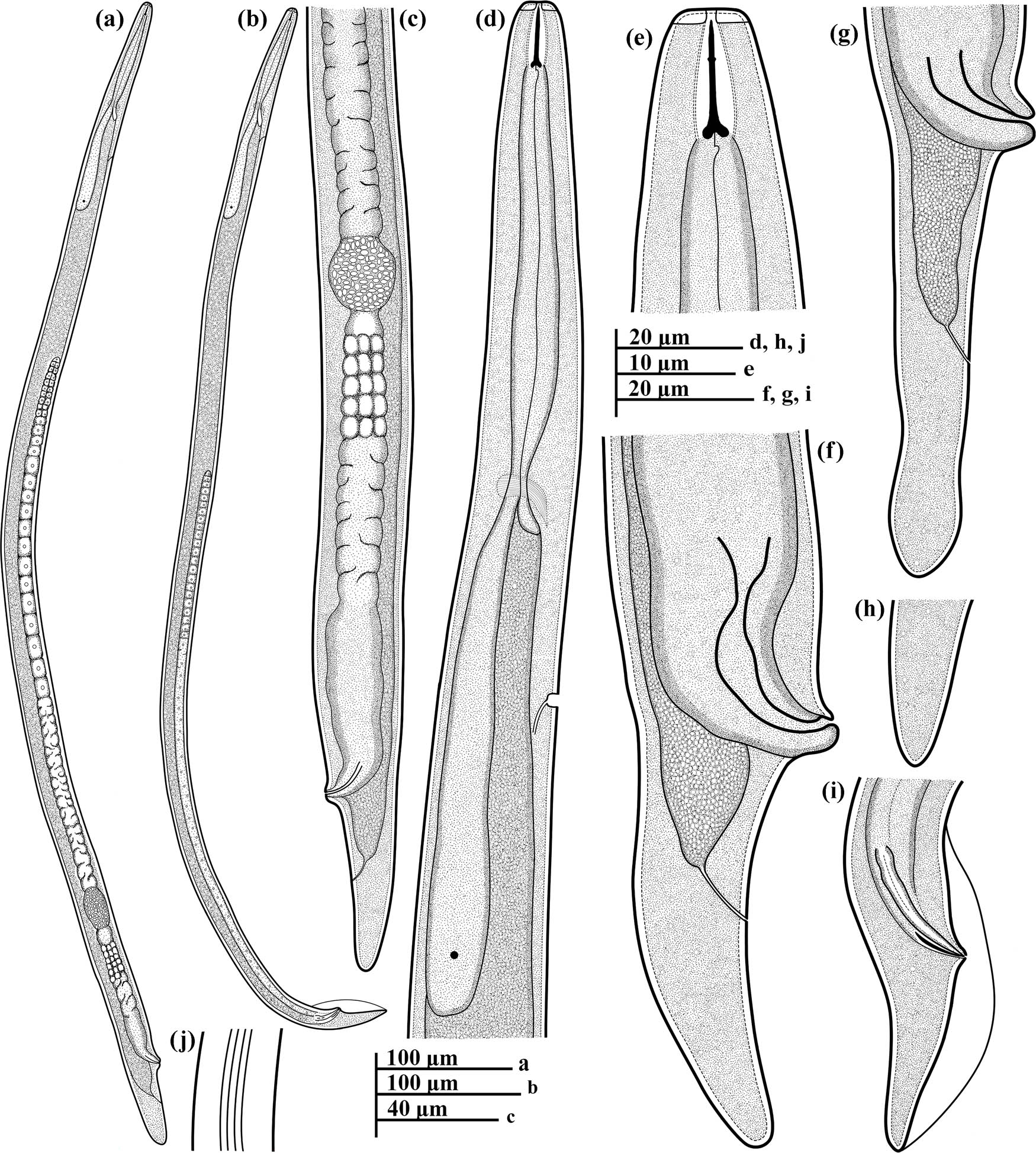
Figure 1
Line drawings of Deladenus coreanus n. sp. (a–j): (a) female entire body; (b) male entire body; (c) part of female genital branch; (d) female pharyngeal region; (e) anterior body region; (f and g) variation in female tail and vulvar region; (h) tail end; (i) male tail; and (j) lateral field.
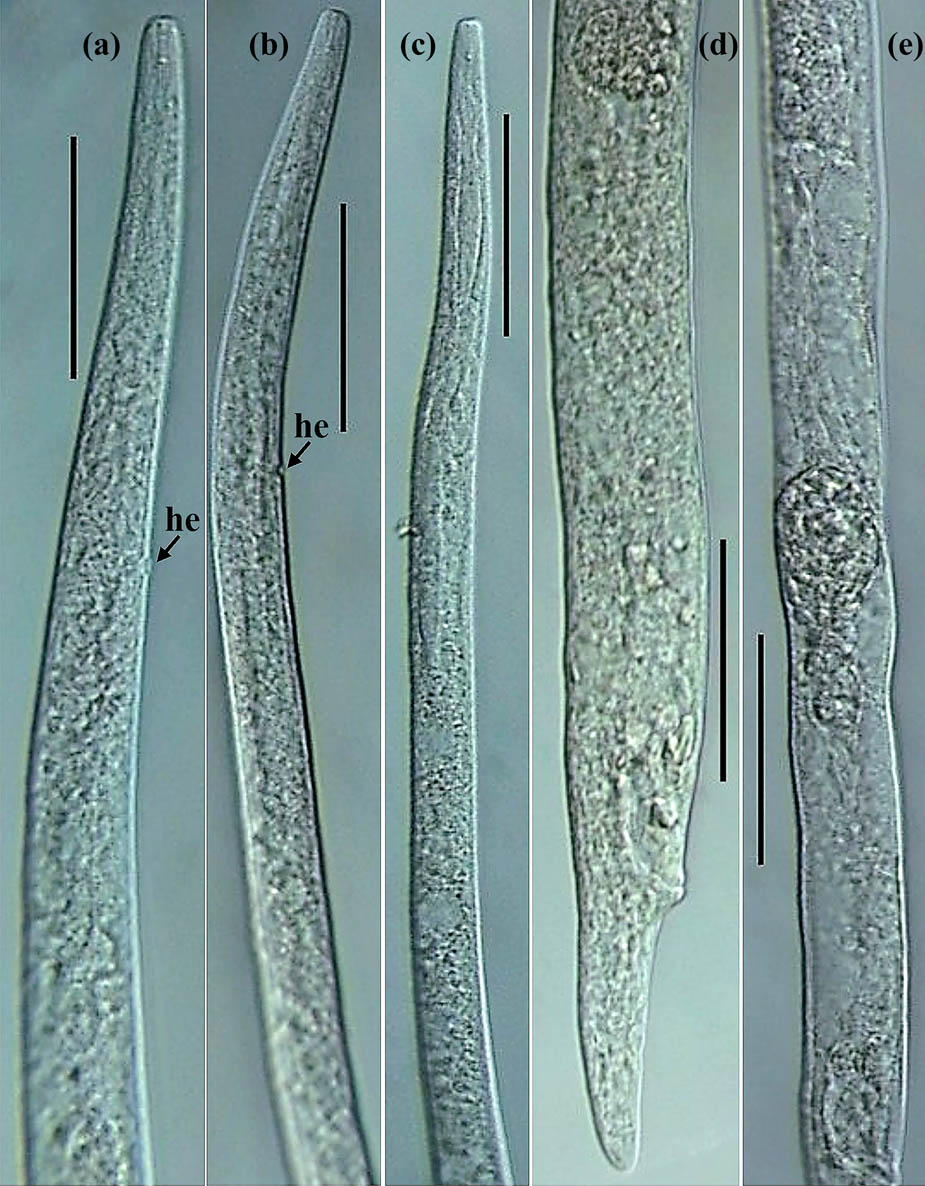
Figure 2
Light micrographs of Deladenus coreanus n. sp. (a–e). (a and b) female pharyngeal region (arrowheads showing hemizonid, he); (c) male pharyngeal region; (d) female posterior region; (e) female genital branch (scale bars: a–e = 50 μm).
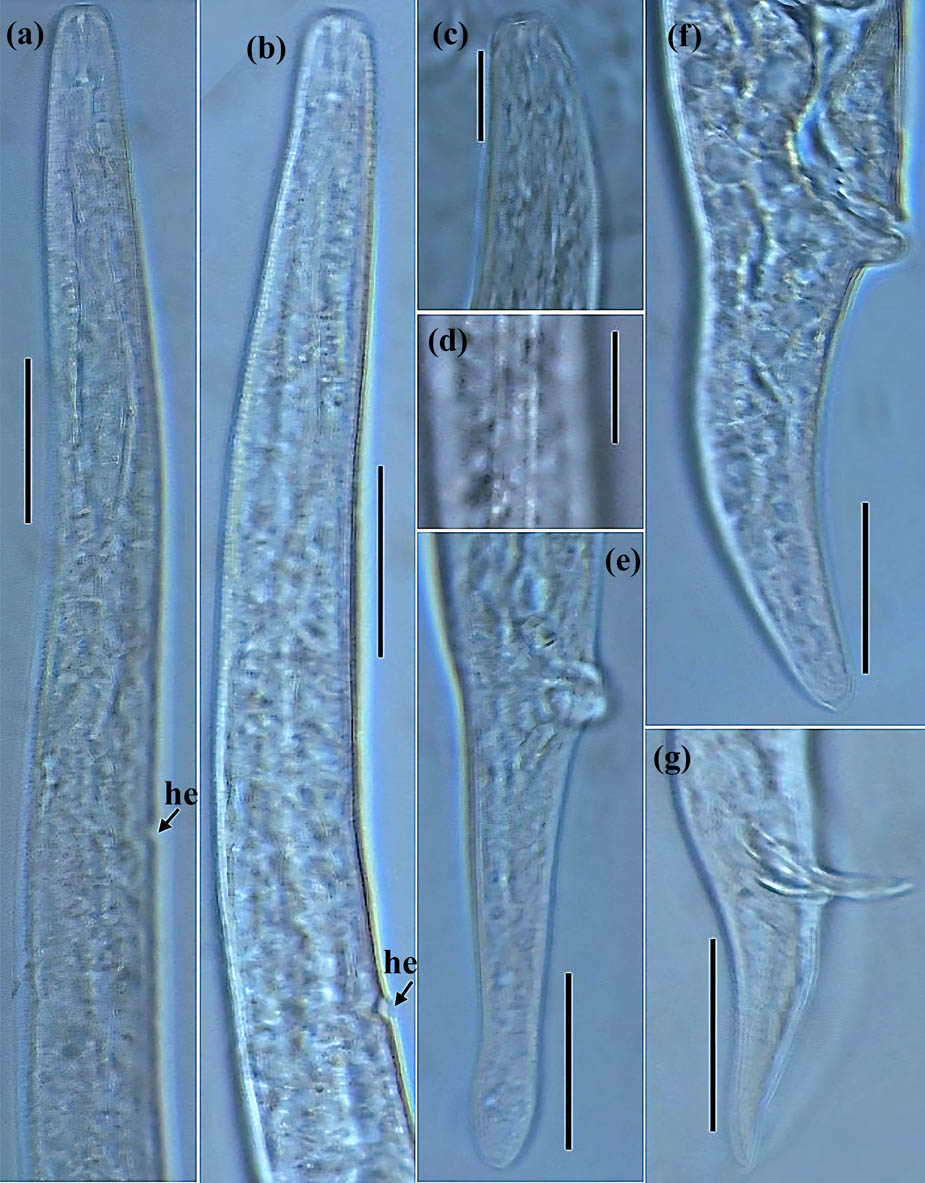
Figure 3
Light micrographs of Deladenus coreanus n. sp. (a–g). (a) male pharyngeal region (arrowheads showing hemizonid, he); (b) female pharyngeal region (arrowheads showing hemizonid, he); (c) lip region; (d) lateral field; (e and f) variation in female tail; (g) male tail (scale bars: a and b, e–g = 20 μm; c and d = 10 μm).
Measurements:
Morphometrics of the mycetophagous population of Deladenus coreanus n. sp. from Korea are shown in Table 1.
Table 1
Morphometrics of the mycetophagous population of Deladenus coreanus n. sp. from Korea
| Character | Holotype ♀ | ♀♀ | ♂♂ |
|---|---|---|---|
| n | — | 14 | 5 |
| L | 1,002 | 968 ± 106.3 (852–1,225) | 808 ± 63.2 (758–885) |
| a | 40.4 | 39.7 ± 4.8 (30.6–48.2) | 40.6 ± 5.6 (36.4–48.3) |
| b | 12.8 | 12.2 ± 1.2 (10.7–14.2) | 11.2 ± 0.5 (10.5–11.8) |
| b′ | 6.0 | 6.0 ± 0.6 (5.1–7.2) | 5.4 ± 0.8 (4.6–6.3) |
| c | 33.2 | 32.7 ± 2.8 (28.8–39.7) | 27.5 ± 2.5 (25.0–31.1) |
| c′ | 2.5 | 2.6 ± 0.4 (1.8–3.5) | 2.6 ± 0.3 (2.2–3.1) |
| V | 93.7 | 93.8 ± 0.5 (93.0–94.9) | — |
| G 1 or T | 53.7 | 62.0 ± 6.6 (52.0–75.8) | 53.9 ± 7.1 (41.9–60.5) |
| Lip diam. | 6.0 | 6.0 ± 0.5 (5.0–7.0) | 5.6 ± 0.1 (5.5–6.0) |
| Stylet length | 9.5 | 9.2 ± 0.5 (8.0–10.0) | 8.7 ± 0.4 (8.5–9.5) |
| Anterior to nerve ring | 72 | 73.1 ± 2.4 (71–79) | 66.2 ± 3.2 (63–71) |
| Pharyngo-intestinal junction | 78 | 79.1 ± 2.9 (75–87) | 72.4 ± 3.1 (69–76) |
| Anterior to Hemizonid | 108 | 101.4 ± 8.5 (86–116) | 90.1 ± 1.7 (87–91) |
| Glandular overlap | 89 | 82.0 ± 7.5 (64–89) | 78.5 ± 12.1 (65–92) |
| Anterior end to end of glandular overlap | 167 | 161.1 ± 7.6 (143–172) | 150.9 ± 9.9 (140–164) |
| Maximum body diam. | 25.0 | 24.9 ± 4.9 (18.0–35.0) | 20.0 ± 1.2 (18.0–21.0) |
| Vulval body diam. | 20.5 | 19.0 ± 3.1 (14.0–25.0) | — |
| Vulva-to-anus distance (VA) | 31.0 | 28.5 ± 3.1 (22.5–34.0) | — |
| Anal or cloacal body diam. | 12.0 | 11.7 ± 2.3 (8.0–17.0) | 11.3 ± 0.9 (10.0–12.5) |
| Tail length | 30.0 | 29.7 ± 3.3 (23.5–34.0) | 29.4 ± 1.5 (28.0–31.0) |
| Ratio of VA to tail length | 1.0 | 1.0 ± 0.1 (0.8–1.1) | — |
| Spicules | — | — | 20.1 ± 0.9 (19.0–21.0) |
| Gubernaculum | — | — | 6.7 ± 0.2 (6.5–7.0) |
All measurements are in μm and in the form: average ± SD (range).
Description:
Mycetophagous female:
Body is medium-sized, 0.85–1.23 mm long, robust, cylindrical, more swollen in adult females, tapering towards both extremities, more abruptly behind the protruding vulval region towards the tail terminus. The general habitus is almost straight when heat-killed and fixed; cuticle with fine transverse striae, annulations less than 1 μm thick at mid-body; and lateral field with four incisures at mid-body, more visible in young females. The lip region is low, 1.0–2.5 μm high, continuous with the body contour, and anteriorly flattened to slightly rounded. Stylet is small, with small, rounded to posteriorly directed knobs. The dorsal gland orifice is located just posterior to the stylet knobs. The pharyngeal corpus is fusiform, does not have a distinct median bulb and lacks a chamber, and the pharyngo-intestinal junction is immediately behind the nerve ring. The latter encircles the corpus at 43–50% of the total pharynx length (including glandular overlap) from the anterior end. Hemizonid is 2.5–4.0 μm long, 13.0–37.0 μm posterior to the nerve ring. Excretory pore opening is at the same level as the hemizonid. Pharyngeal glands overlap the anterior end of the intestine, subventral glands are less developed, and dorsal glands are elongated, 64–89 μm long. The digestive system is simple, and the rectum and anus are functional. Reproductive system is monodelphic-prodelphic, comprised of anteriorly outstretched ovary, with maturing oocytes in one to two rows, tubular oviduct, axial large oblong-shaped to rounded spermatheca with distinct spheroid sperm, crustaformeria with more than four cells in each of the rows, uterus and vagina with moderately sclerotized wall, vulva a wide transverse slit, vulval lips prominently protuberant, posterior vulval lip thicker, vulva with no lateral vulval flaps. Post-uterine sac is absent. Vulva–anus distance is approximately equal to the tail length. Tail variable in shape, conoid, gradually tapering from both sides to a broadly or narrowly rounded terminus, or subcylindrical and clubbed, with a rounded terminus.
Mycetophagous male:
The general morphology of male similar to that of female except for sexual characteristics and a more conical tail. Generally, male are less abundant but functional, as evidenced by sperm-filled spermatheca in females. The body is almost straight when heat-killed and fixed, thinner and shorter than that of females. The lateral field is narrower but similar to that in females. The lip region is low, 1–2 μm high, continuous with body contour, anteriorly flattened to slightly rounded. Hemizonid is prominent, 16.5–28.5 μm posterior to nerve ring. Excretory pore is at the level of the hemizonid. Testis is outstretched, occupying 42–61% of the total body length. Spicules are slender and tylenchoid, and gubernaculum thin and short. Bursa is well developed, peloderan. Tail is 2.2–3.1 times longer than cloacal body diameter, conical, narrowing to a rounded terminus.
Infective female
Infective female was not found.
2.2. Diagnosis and relationships
Deladenus coreanus n. sp. is mainly delimited by four incisures in the lateral field and remarkable variation in the tail shape of mycetophagous females. It is further characterized by its medium-sized body, pharyngeal corpus without a distinct median bulb and lacking a chamber, pharyngo-intestinal junction located immediately behind the nerve ring, hemizonid prominent, 13.0–37.0 μm posterior to nerve ring, excretory pore at the level with hemizonid, spermatheca large, oblong-shaped to rounded with distinct spheroid sperm, vulva with prominently protuberant lips, with no lateral vulval flaps, post-uterine sac absent, vulva–anus distance approximately equal to tail length, tail conoid, gradually tapering to a broadly or narrowly rounded terminus, or subcylindrical and clubbed, spicules slender and tylenchoid, 19.0–21.0 μm long, gubernaculum thin and short, 6.5–7.0 μm long.
By having an excretory pore opening at the same level as the hemizonid, Deladenus coreanus n. sp. looks close to the recently described D. uljinensis. However, it differs from D. uljinensis by its relatively longer body (852–1,225 vs 504–736 μm), lateral field with four incisures vs six, a ratio (30.6–48.2 vs 21.1–28.3), b ratio (10.7–14.2 vs 7.7–11.0), c ratio (28.8–39.7 vs 17.5–24.3), more posterior position of vulva (V = 93.0–94.9 vs 88.6–91.7) with prominently protuberant lips vs not, and tail conoid with a broadly or narrowly rounded terminus, or subcylindrical and clubbed vs gradually tapering to a broadly rounded terminus.
With the lateral field having four incisures, Deladenus coreanus n. sp. is also comparable to D. zyzyphus Bajaj, 2015 but significantly differs from it by short tail (23.5–34.0 vs 69–90 μm), conoid with a rounded terminus or subcylindrical and clubbed vs with a pointed terminus, c ratio (28.8–39.7 vs 10.7–12.1), c′ ratio (1.8–3.5 vs 6.1–7.0), excretory pore at level with hemizonid vs posterior to hemizonid, more posterior position of vulva (V = 93.0–94.9 vs 85.1–86.3), prominently protuberant vulval lips vs not, vulva–anus distance approximately equal to tail length vs less than the tail length, and longer spicules (19.0–21.0 vs 14–15 μm). Additionally, by having its body abruptly narrowing behind vulva, Deladenus coreanus n. sp. is comparable to D. pakistanensis Shahina & Maqbool, 1992, but differs from it by its longer body (852–1,225 vs 636–761 μm), lateral fields with four vs ten to twelve incisures, excretory pore at level with hemizonid vs posterior to hemizonid, vulva lips with no lateral vulval flaps vs with lateral vulval flaps, and conoid tail with a rounded terminus or subcylindrical and clubbed vs narrow conical with finely rounded terminus.
By having a tail with a rounded terminus and pharyngo-intestinal junction immediately behind the nerve ring, the new species is also comparable to four other species of the genus, namely D. obesus Thorne, 1941, D. norimbergensis Rühm, 1956, D. posteroporus and D. uteropinusus Bajaj, 2015. It differs from D. obesus by lateral fields with four vs two faintly visible incisures or marked by eight or ten excessively minute striae, excretory pore at level with hemizonid vs anterior to hemizonid, subventral glands less developed and much reduced, less obese body (a ratio of 30.6–48.2 vs 10–26), shorter vulva-to-anus distance (22.5–34.0 vs 50.0 μm), prominently protuberant vulval lips vs moderately protuberant, and relatively shorter tail (23.5–34.0 vs 30–47 μm) conoid with a rounded terminus, or subcylindrical and clubbed vs conical with narrowly rounded terminus; from D. norimbergensis by the shorter body (852–1,225 vs 1,364–1,628 μm and 758–885 vs 1,254–1,364 μm in females and males, respectively), lateral fields with four vs eleven narrow incisures, prominently protuberant vulval lips vs not or slightly protuberant, shorter vulva-to-anus distance (22.5–34.0 vs 42.0–50.0 μm), c ratio (28.8–39.7 vs 47–50), and tail conoid with a rounded terminus, or subcylindrical and clubbed vs conical with narrowly rounded terminus; from D. posteroporus by lateral fields with four vs eleven to twelve incisures, excretory pore at level with hemizonid vs posterior to hemizonid, prominently protuberant vulval lips vs not, and tail conoid with a broadly or narrowly rounded terminus, or subcylindrical and clubbed vs gradually tapered, with broadly rounded end; and from D. uteropinusus by its relatively longer body (852–1,225 vs 760–820 μm), c ratio (28.8–39.7 vs 23.1–23.4), more posterior position of vulva (V = 93.0–94.9 vs 87.2–89.1), lateral fields with four incisures vs indistinct, excretory pore at level with hemizonid vs anterior to hemizonid, pharyngeal corpus without a distinct median bulb and lacking a chamber vs slightly swollen with median chamber, prominently protuberant vulval lips vs not, vulva–anus distance approximately equal to tail length vs 1.4–1.7 times the tail length, and tail conoid with a broadly or narrowly rounded terminus, or subcylindrical and clubbed vs cylindrical, with an inverted ‘U’-shaped hyaline region.
2.3. Type habitat and locality
Outer wood and bark layers of a dead red pine (Pinus densiflora f. erecta) from the Geumgang pine forest in Uljin, Gyeongsangbuk-do Province. (GPS coordinates: 37°05′43˝N,129°15′47˝E).
2.4. Type material
Holotype female and nine female and three male paratypes were deposited in the National Institute of Biological Resources of Korea (slide numbers: NM426–NM429), and five female and two male paratypes were deposited in the Nematode Collection of Kyungpook National University (KNU), Republic of Korea.
2.5. Etymology
The species epithet coreanus is derived from the country of its first description (the Republic of Korea). LSID code publication urn:lsid:zoobank.org:pub:F4CC410B-E936-47B8-BE7D-154DB438E165.
2.6. Molecular characterization and phylogenetic relationships
The montaged two partially overlapping fragments of the nearly full-length 18S rRNA gene sequences of the new species yielded two approximately 1,700-bp-long sequences (PX462046, PX462047). No variation was observed between them while aligning. A number of 69 sequences (including ingroup and outgroups) were used in the 18S rRNA gene phylogeny (Fig. 4). In this tree, several sequences of Deladenus spp. occupied different placements. Sequences of Deladenus coreanus n. sp. appeared as an independent lineage in maximally supported relation to the upper major clade that includes several sequences of Deladenus spp. and relevant species/genera. When compared with the morphologically related D. posteroporus (PQ814252, KY098774) and D. uljinensis (PQ814254, PQ814256), differences of 35–36 bp (2.2%) and 38–39 bp (2.4%), respectively, were recorded.
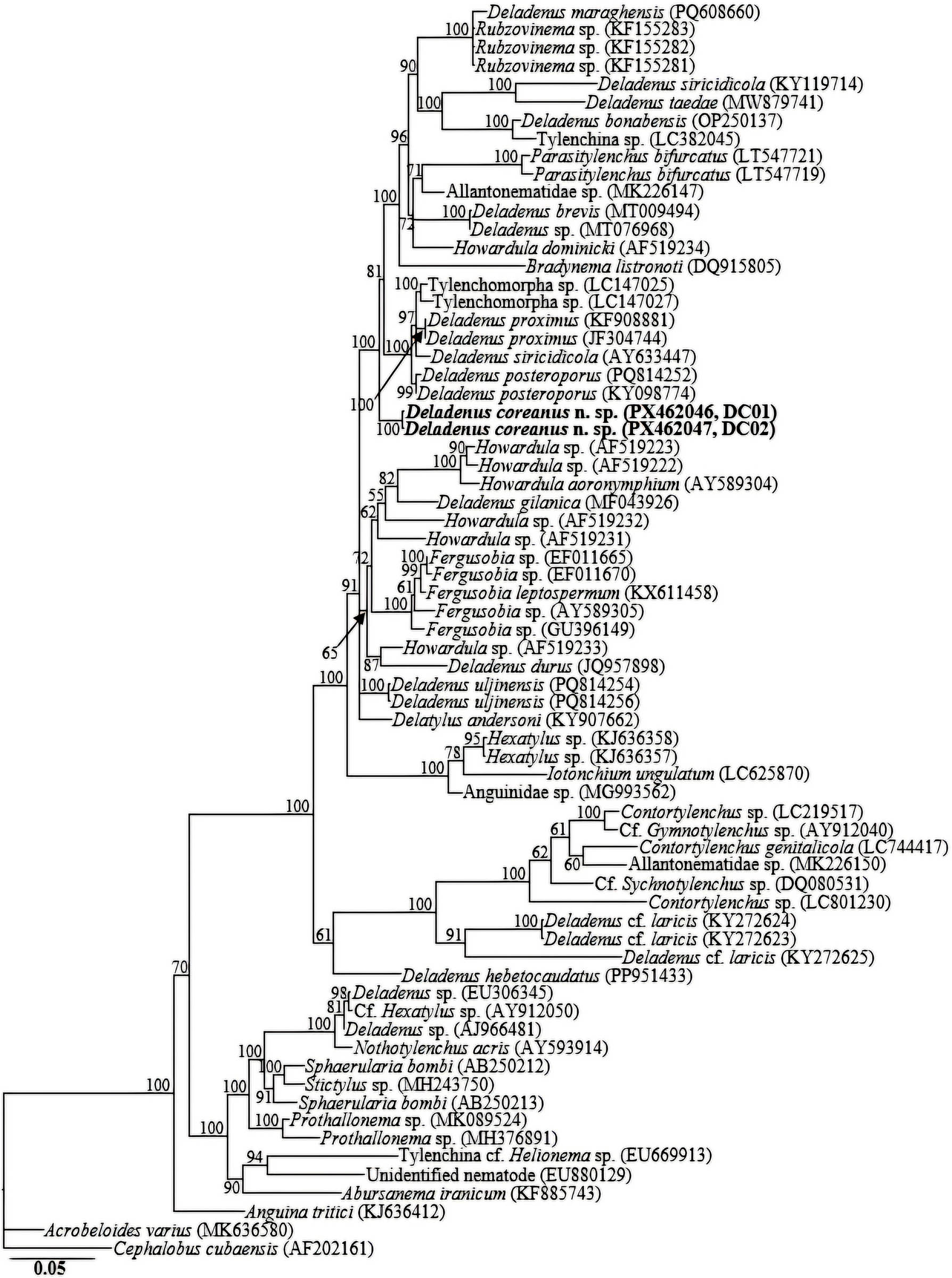
Figure 4
Bayesian tree inferred using 18S rRNA gene sequences of Deladenus spp. and other related species from various genera under the GTR + I + G model. Posterior probability values exceeding 50% are given on appropriate clades. The studied population is indicated in bold text.
The amplification of the partial D2–D3 expansion segment of the 28S rRNA gene yielded two fragments of approximately 700 bp (PX578402, PX578403). No variation was observed between them while aligning. Based on the BLAST homology search program, sequences of Deladenus coreanus n. sp. were relatively homologous to sequences of D. siricidicola (MW481657), Deladenus sp. (MG871254), and Deladenus sp. (LC801234), differing by 103 bp (15.3%), 103 bp (15.3%), and 104 bp (15.4%), respectively. Number of 67 sequences (including ingroup and outgroups) were used in the 28S rRNA gene phylogeny (Fig. 5). In this tree, several sequences of Deladenus spp. occupied different placements. Sequences of Deladenus coreanus n. sp. appeared as an independent lineage in maximally supported relation to the upper major clade that includes several sequences of Deladenus spp. and relevant species/genera.
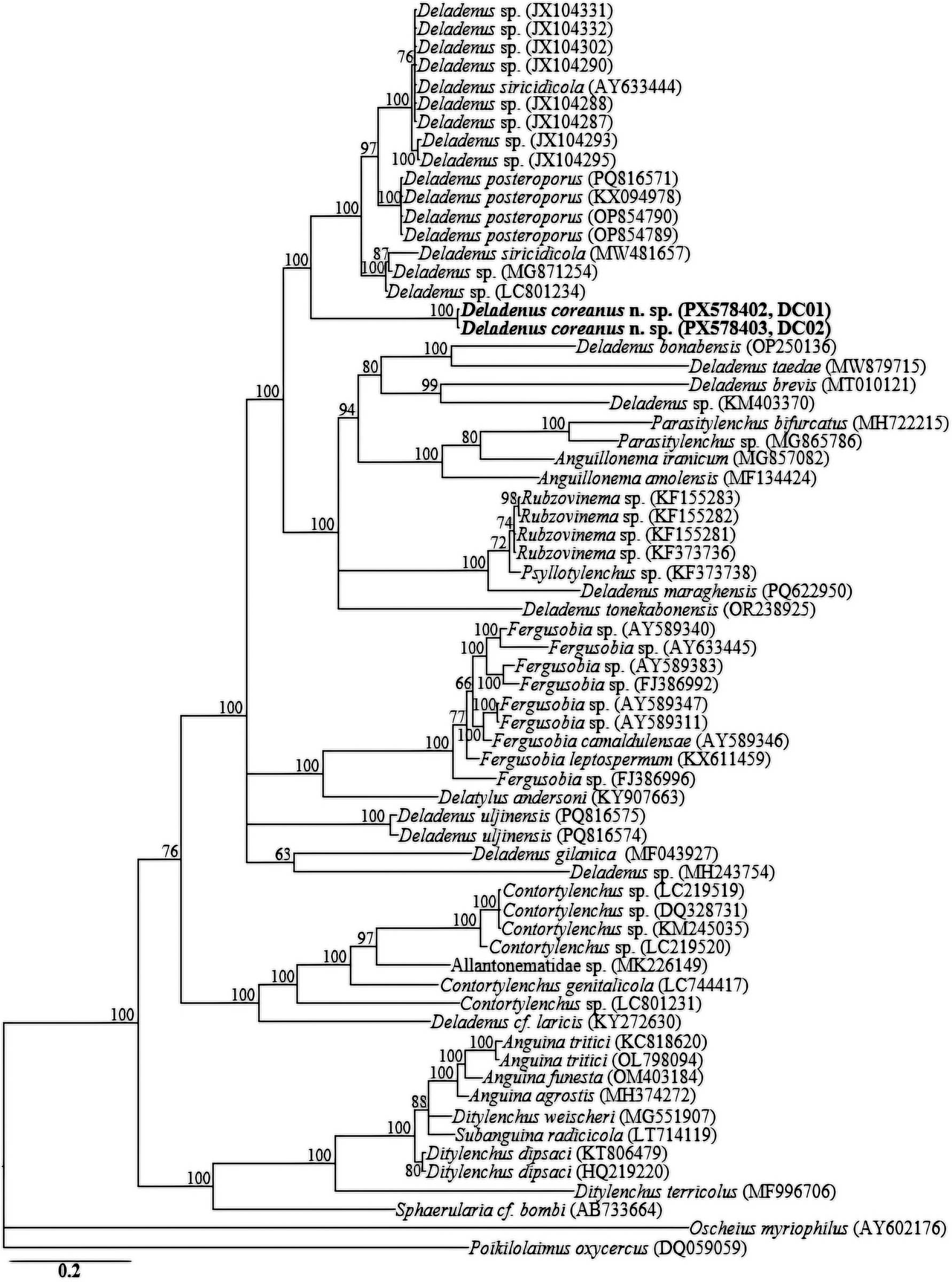
Figure 5
Bayesian tree inferred using LSU D2-D3 partial gene sequences of Deladenus spp. and other related species from various genera under the GTR + I + G model. Posterior probability values exceeding 50% are given on appropriate clades. The studied population is indicated in bold text.
The amplified partial COI gene yielded two single amplicons of ca 650 bp (PX462048-PX462049). The two newly obtained sequences differed in 1 bp while aligning. Number of 49 sequences (including ingroup and outgroups) were used in the COI gene phylogeny (Fig. 6). In this tree, several sequences of Deladenus spp. occupied different placements. Sequences of Deladenus coreanus n. sp. formed a clade with the corresponding gene sequence of Deladenus brevis (MT026002) with moderate (87) Bayesian posterior probability. The new sequences differed from D. brevis (MT026002) by 80 bp (16.4%). Sequences of Deladenus coreanus n. sp. also differed from the morphologically related D. posteroporus (PQ814257, PQ814258) by 95–96 bp (15.4%).
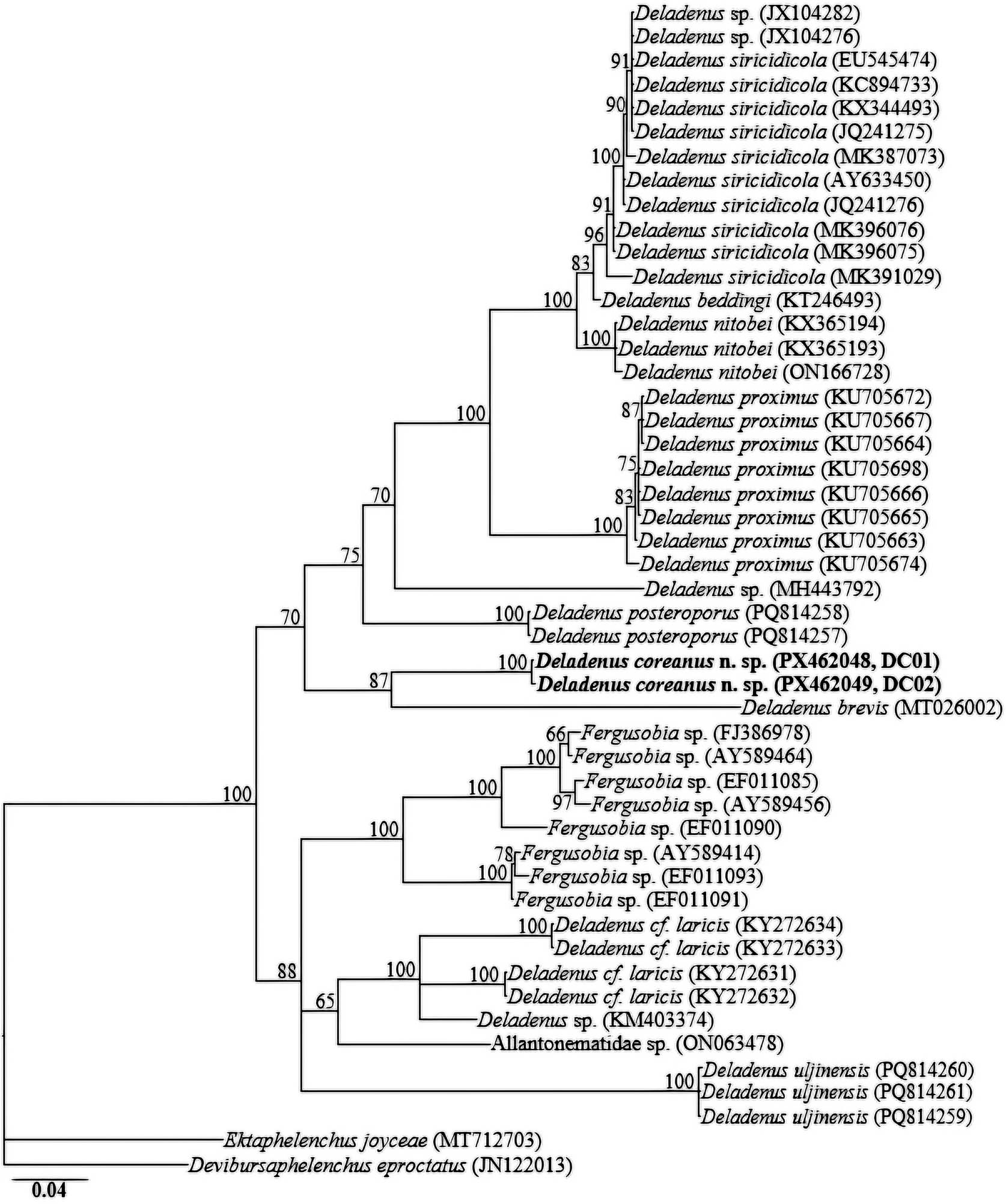
Figure 6
Bayesian tree inferred using COI gene sequences of Deladenus spp. and other related species from various genera under the GTR + I + G model. Posterior probability values exceeding 50% are given on appropriate clades. The studied population is indicated in bold text.
3. Discussion
Within the genus, Deladenus coreanus n. sp. belongs to the small group of species with four lateral incisures. The number of lateral incisures within the genus is variable, ranging from 4 to 15 incisures (Chitambar, 1991; Andrássy, 2007). However, among all the known species of the genus, four lateral incisures had only been described in four species (D. zyzyphus, D. aridus, D. saccatus, and D. parvus) (Andrássy, 1954, 1957; Zell, 1985; Bajaj, 2015). Unlike Deladenus coreanus n. sp., all these four species possess an acute or pointed tail terminus. As already detailed earlier, Deladenus coreanus n. sp. is characterized by a variable tail shape. However, variation in the tail terminus has already been recorded in some species of the genus. For instance, terminus shape varies considerably in D. durus, varying from pointed, broadly or narrowly rounded, with cleft, to mucronate or with two or more sharp processes, and from narrowly rounded to mucronate in D. apopkaetus (Chitambar, 1991).
Based on the three herein reconstructed phylogenies (18S rRNA, D2–D3 expansion of 28S rRNA, and COI gene), Deladenus coreanus n. sp. is genetically distinct from the available Deladenus gene sequences, including its morphologically closest relatives, D. posteroporus and D. uljinensis, as shown in the Bayesian trees. Based on the partial COI phylogeny, Deladenus coreanus n. sp. was clustered within the same subclade as D. brevis, although this relationship received only moderate support. All three phylogenies also show that Deladenus is a polyphyletic taxon. These findings agree with previous studies (Heydari et al., 2020; Amiri Bonab et al., 2023; Mwamula et al., 2025a; Saberi et al., 2025). The modern species-identification approach of integrated taxonomy using both morphometric data and DNA sequences has proved to be useful for accurate species identification and delineation within the group. Unfortunately, only a limited number of sequences for the genus are available in the NCBI GenBank and thus, thorough species comparison is still challenging. Therefore, accurate resolution of the taxonomic positions of the various species of the genus requires further molecular characterization of the species of the genus and other related groups of the family Neotylenchidae. This will supplement and resolve the current generic compendia within this taxonomically confounded group of nematodes.
Acknowledgements
This work was supported by a grant from the National Institute of Biological Resources (NIBR), funded by the Ministry of Environment (MOE) of the Republic of Korea (NIBR202502106).
Author contributions
A. O. Mwamula and D. W. Lee conceived the study; All authors carried out field sampling; A. O. Mwamula analyzed the data; A. O. Mwamula and D. W. Lee wrote the first draft, which all other authors revised.
Conflict of interest statement
The authors state no conflicts of interest.
Data availability statement
All necessary data links have been included in the article in the form of GenBank accession numbers.