
Anthuriums are a popular cut flower known for their heart-shape, vibrant color, and long vase life. This tropical flower is one of the signature agricultural exports of Hawai’i and is prized by the wedding and tourism sectors, with year-round production and an established reputation for high-quality. It ranks among the top floriculture crops and contributes significantly to the sustainability of small farms and the local economy of Hawai’i. Most production occurs on the windward side of Hawai’i Island, an area of high rainfall with abundant volcanic cinder as growing media. However, the anthurium industry in Hawai’i is facing challenges of increasing pest and disease pressure, with burrowing nematode, Radopholus similis (Cobb) Thorne, being the utmost concern and causing rising production costs.
Radopholus similis is an economically important plant-parasitic nematode in warmer regions that causes severe root destruction and yield loss on important food crops such as banana and citrus as well as ornamental crops like anthurium (Duncan and Moens, 2006). It is also a major quarantine pest (Class A in California, A2 in Europe) with restrictions on its import in certain states and countries. Burrowing nematode is a migratory endoparasitic nematode that feeds on the cortical tissue of plant roots causing extensive necrosis, diminishing root biomass, and impairing root function (Duncan and Moens, 2006). On anthurium, burrowing nematodes decline plant growth over time (Aragaki et al., 1984), causing up to 50% yield loss as the flowers become smaller or fewer flower stems are produced (Sipes and Lichty, 2002). Historically, periodic post-plant applications of fenamiphos were used to suppress nematode populations and increase anthurium vigor (Aragaki et al., 1984), but this chemical has been removed from the market. Although fluopyram has shown to increase flower yield by 53% and improve plant growth and flower size (Myers et al., 2020), the adoption of this nematicide has been constrained by high application costs.
Biofumigation is a term regarding the use of plant-derived volatiles mostly referred to as isothiocyanates hydrolyzed from glucosinolates produced by Brassicaceae plants for pest and disease management (Kirkegaard et al., 1993). Since there are other plants that can produce allelopathic volatiles, the term is now a collective term used for all plant-derived volatiles utilized in pest and disease management (Waisen and Wang, 2022). Glucosinolates are a group of allelochemicals found primarily in plants of the Capparales order. Papaya (Carica papaya) also belongs to this plant order. Nagesh et al., (2002) found that papaya seeds contain a large amount of glucosinolates that can be hydrolyzed into benzyl isothiocyanate (BITC) (Han et al., 2018), which is also lethal to various nematodes, including Caenorhabditis elegans, Globodera rostochiensis, Meloidogyne javanica, and Tylenchulus semipenetrans (Buskov et al., 2002; Kermanshai et al., 2001; Zasada and Ferris, 2003), and exhibits biocidal activity against a range of microorganisms (Feltes et al., 2024). In order for papaya seeds to release BITC, the seeds need to be ground. Papaya ground seed (PGS) biofumigation has been demonstrated to suppress gall formation and egg production of two root-knot nematode species (Meloidogyne incognita and M. javanica) through in vitro studies (Coutinho et al., 2009; Gomes et al., 2020; Neves et al., 2008, 2011). However, no studies have demonstrated the effects of BITC or PGS against R. similis.
Other rationales to explore the use of papaya seed extracts for burrowing nematode suppression in Hawai’i include (1) papaya is a widely cultivated crop in Hawai’i mostly for fresh consumption and (2) 30–50% of papaya fruit is culled or wasted and of this waste, papaya seeds make up about 14–30% of the total fruit biomass (Heller et al., 2015).
Specific objectives of this study were to determine the (1) efficacy of different rates of PGS crude extracts (CEs) as drenching solution on potted anthurium plants in a shade house compared to commercial neem oil-based nematicides; (2) effects of PGS CE drenching on non-target bacterial feeding nematodes, and (3) relationships between anthurium growth parameters and other parameters affected by PGS application. It was hypothesized that PGS CE at 0.5 or 1.0% rates (1) would not have phytotoxicity on anthurium, (2) have no adverse effects on bacterial feeding nematodes, and (3) would suppress R. similis infection on anthurium and lead to better flower production.
1. Materials and methods
1.1. Nematode culturing and extraction
Radopholus similis culture was maintained on sterile carrot discs in 6-cm Petri plates and stored in darkness in a 25℃ incubator as described by De Waele and Elsen (2002). Approximately 2 months after culturing on carrot discs, R. similis was collected for inoculum by rinsing infected carrot discs with sterile water.
1.2. PGS extract
Papaya seeds collected from ripe, culled fruits were stored in a −18°C freezer for at least 24 h prior to use so as to facilitate cell disruption through ice crystal formation. This process would rupture cell membranes and compromise plant cell integrity, facilitating the easy crude extraction of contents (Li et al., 2018). Frozen seeds were thawed, placed in a food processor (Cuisinart #FP-12DCN, Conair LLC, Stamford, Connecticut, USA) with a dough blade, and submerged in water; the mixture was blended for 30–60 s to remove the fruit pulp surrounding the seeds. The fruit pulp was decanted multiple times, and the seeds that settled to the bottom of a large bucket were collected as cleaned seeds. Cleaned papaya seeds were dried at 50°C for 48 h and stored at room temperature until use. Dried papaya seeds were ground into a fine powder using a tabletop burr mill (Cuisinart #DBM-8P1, Conair LLC, Stamford, Connecticut, USA) within 24 h prior to preparation of the CE. Due to the large molecular size and hydrophobic properties of BITC, PGS CE was prepared with a detergent (0.1% Tween20) and heated at 60°C for 30 min at 5% (w/w), i.e., 1 g PGS in 20 mL of water to maximize solubilization of BITC, which will ease its movement through the soil profile (McBain and Gupta, 1953). The PGS CE was then cooled to room temperature (23°C) before drenching or stored at 4°C for up to 24 h prior to use. The PGS debris was then filtered through a 500 µm sieve, and the resulting PGS CE was diluted to the desired concentration prior to application.
1.3. Anthurium shade house pot trials
Two greenhouse pot trials were conducted using artificial inoculation of Radopholus similis on anthurium at the USDA-ARS Daniel K. Inouye U.S. Pacific Basin Agricultural Research Center in Hilo, Hawai’i. “Leilani” anthurium plants (4–5 leaves/plant) were transplanted into clean cinder media in 10 × 10 cm2-perimeter square pots. A total of 16 pots were inoculated with 500 vermiform stages of R. similis per pot, whereas 4 pots were uninoculated. Five treatments tested were pots drenched with (1) 1.0% PGS CE, (2) 0.5% PGS CE, (3) commercial neem oil, 0.2% AzaGuard® (a.i. 3% azadirachtin, BioSafe Systems, East Hartford, Connecticut), (4) untreated, inoculated control with water only (IC), and (5) untreated and uninoculated control with water only (UI). The experiment was arranged in randomized complete block design with four replications. Each pot was drenched with 71 mL of the designated solution (0.5% or 1% PGS CE, 0.2% AzaGuard®, or water only), and the drenching was repeated once per month for up to 1 month prior to termination of the experiment. The experiment was repeated once with the exact same experimental design.
At termination of the experiment, 6 months after R. similis inoculation, the number of flowers and leaves produced, plant height, and root and shoot biomass were recorded for every pot. Overall root lesion rating was recorded based on a 0–10 scale, with 0 equal to no root lesions present (0%) and 10 equating to brown, necrotic lesions present on all roots (100%). To determine treatment effects on R. similis, nematodes were extracted from a 25 g subsample of root and basal stem tissues of anthurium, and 85 g of potting media per pot over 72 h using the Baermann funnel method (Walker and Wilson, 1960). Nematodes (R. similis and bacterivorous nematodes naturally found in the cinder media) were then counted under a Leica DM1L inverted microscope.
1.4. Statistical analysis
Data from both trials were first subjected to PROC UNIVARIATE in SAS 9.4. check for normality (SAS Institute Inc., Cary, North Carolina, USA). All nematode abundance data required log(x + 1) transformation to normalize the data prior to analysis of variance (ANOVA). All data from both trials were then subjected to a homogeneity-of-variance test. Once determined that a parameter was homogeneous in variance across trials, data from both trials were combined; otherwise, data were subjected to ANOVA by trial using SAS version 9.4. Wherever appropriate, means were separated using a Waller–Duncan k-ratio (k = 100) t-test. Linear regression was conducted to determine the relationship between key variables. Analysis of lack of fit and normality was conducted using the latest package (Hothorn et al., 2022) in RStudio v1.4.555 with R v4.4.0 (R Core Team, Vienna, Austria) to determine the fitness of the regression lines.
2. Results
2.1. Effects of PGS CE on anthurium plant growth
Six months after initiation of the pot experiment, 0.5% PGS CE increased the number of flowers produced (P = 0.3348) and plant height (P = 0.1060) numerically compared to IC (Fig. 1a and b), whereas both 0.5 and 1.0% PGS CE increased (P = 0.0210) number of leaves per pot compared to the IC (Fig. 1c). Shoot and root biomass in 1.0% PGS CE-treated pots were lower than that in the 0.5% PGS CE treatment, and numerically lower than IC (Fig. 2). While shoot biomass in all treatments was marginally different from the UI (P = 0.0553), IC, 0.5%, and 1.0% PGS CE resulted in lower root biomass than UI (P = 0.0041, Fig. 2). While no significant difference in shoot and root biomass was observed between neem and IC, neem treatment maintained a similar level of shoot and root biomass as well as number of flowers, leaves, and plant height as the UI (Figs. 1 and 2).
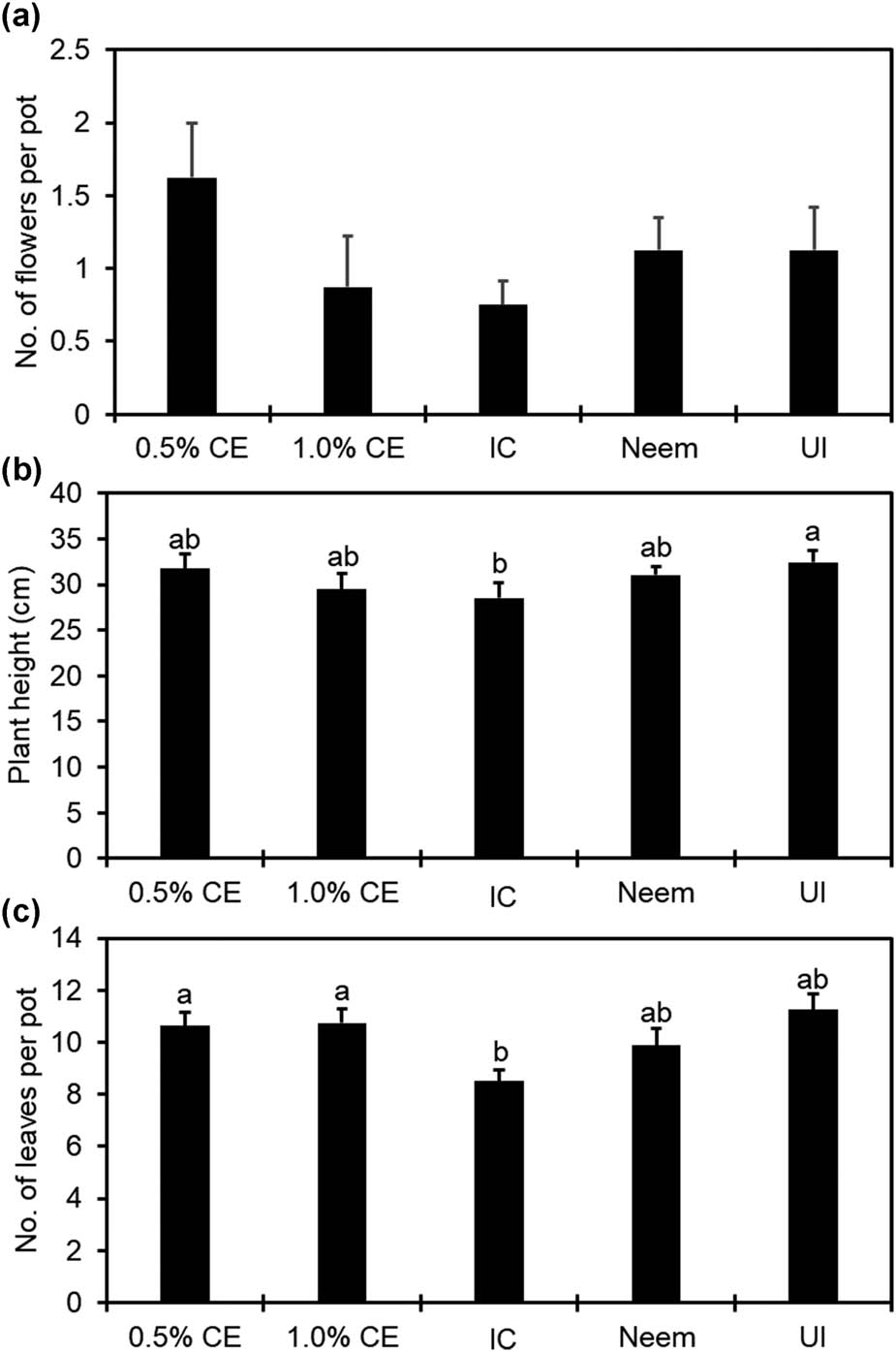
Figure 1
Effect of papaya seed CE at 0.5% and 1.0%, IC, neem, and UI on “Leilani” anthurium plant vigor, measured by (a) number of flowers, (b) plant height, and (c) number of leaves. Mean values (n = 8) followed by the same letter(s) are not different according to Waller–Duncan k-ratio (k = 100) t-test. (IC=inoculated control; UI = un-inoculated)
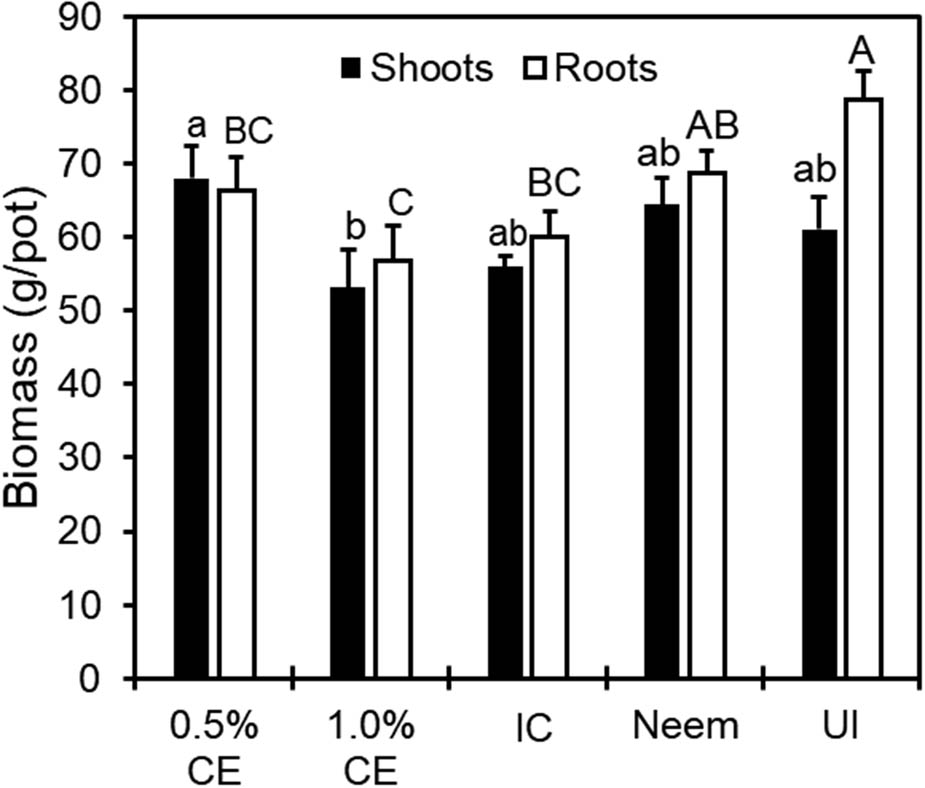
Figure 2
Effect of 0.5% and 1.0% papaya seed C'E, IC, neem, and UI on root and shoot biomass of “Leilani” anthurium. Mean values (n = 8) followed by the same letter(s) are not different according to Waller–Duncan k-ratio (k = 100) t-test. (IC=inoculated control; UI = un-inoculated)
2.2. Effects of PGS CE biofumigation on root lesion caused by R. similis
Based on a rating scale of 1–10, root lesions caused by R. similis were observed up to 8 (Fig. 3a). Since significant interaction between trial and treatment effects occurred, data for this parameter were presented by trial. In both trials, 0.5% PGS CE reduced root lesion damage compared to IC (no application) consistently, whereas performance of 1.0% PGS CE on root lesion was inconsistent, where it had significantly less root lesion damage than IC in Trial 1 but not in Trial 2 (Fig. 3). Inversely, neem-treated roots had root lesion damage comparable to IC in Trial 1, but significantly less root damage than IC in Trial 2 (Fig. 3).
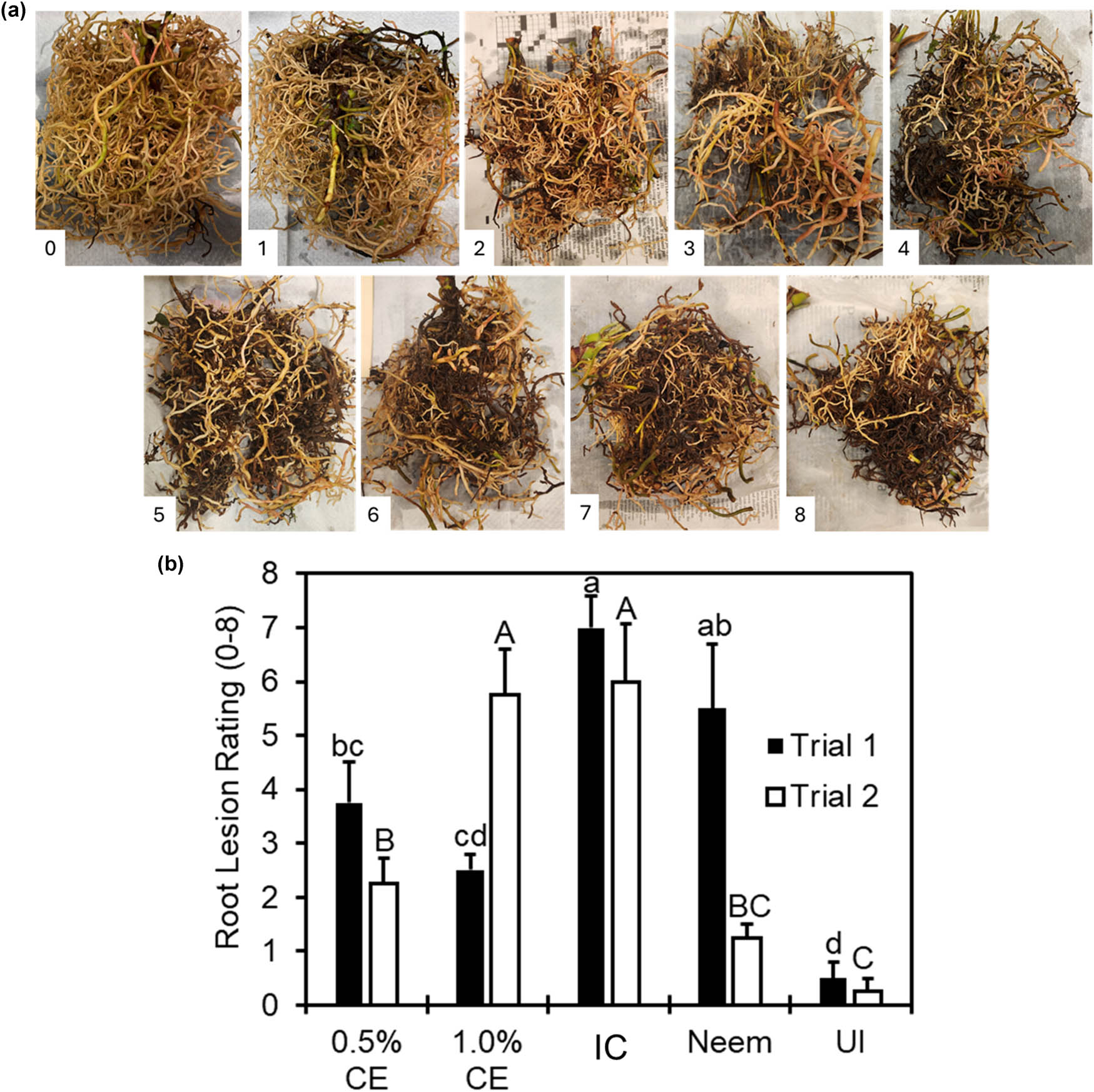
Figure 3
(a) Root lesion rating scale from 0 to 8 where 0 signifies no lesions, and 8 has majority of the root system turning brown with minimal functioning roots, and (b) the effect of 0.5% and 1.0% papaya seed CE, IC, neem, and UI on root lesion caused by Radopholus similis. Mean values (n = 4) followed by the same letter(s) are not different according to Waller–Duncan k-ratio (k = 100) t-test.
2.3. Effects of PGS CE biofumigation on R. similis population densities
Since significant interaction between trial and treatment occurred, data were presented by trial for this parameter. Both 0.5 and 1.0% PGS CE significantly reduced the number of R. similis from anthurium roots and basal stem tissues (Fig. 4a) and potting media (Fig. 4b) compared to IC consistently in both trials. In contrast, neem failed to suppress R. similis in plants and soil in both trials, with significantly more nematodes present in both the plant tissue and soil than IC in Trial 1 (Fig. 4).
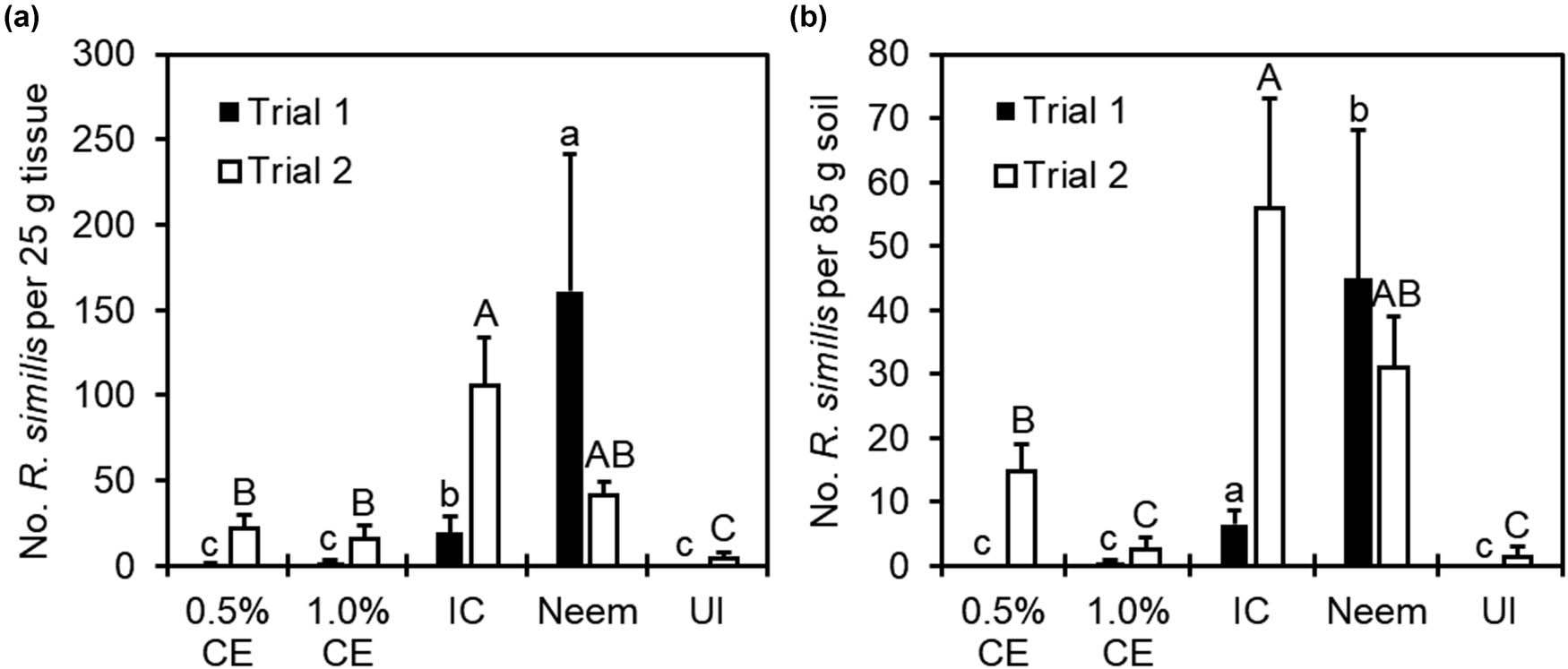
Figure 4
Population of Radopholus similis recovered from “Leilani” anthurium across treatments: 0.5% CE, 1.0% CE, inoculated control, neem, and UI in (a) root and basal shoot tissue and (b) cinder. Mean values (n = 4) followed by the same letter(s) are not different according to Waller–Duncan k-ratio (k = 100) t-test.
2.4. Effects of PGS CE biofumigation on non-target bacterivorous nematodes
PGS CE maintained comparable number of free-living bacterivorous nematodes to the UI in root and basal stem tissues, whereas neem-treated and IC revealed a significant increase in bacterivores compared to the UI (Fig. 5a). In terms of the number of free-living bacterivorous nematodes recovered from cinder soil media, though they were not significantly different from the UI, both PGS CE and IC had more bacterivorous nematodes compared to UI (Fig. 5b).
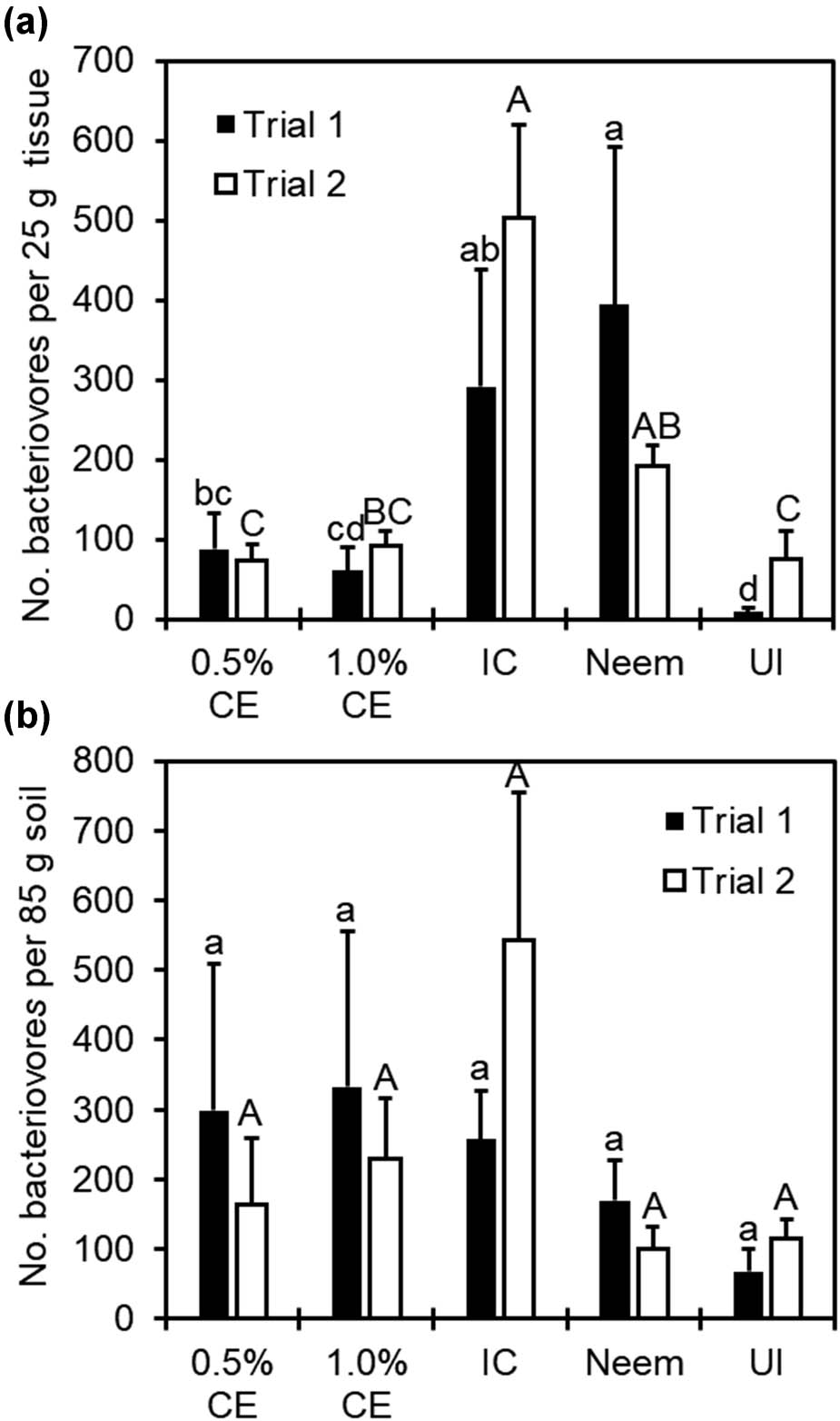
Figure 5
Abundance of bacterial-feeding nematodes recovered from “Leilani” anthurium across treatments: 0.5% CE, 1.0% CE, IC, neem, and UI in (a) root and basal shoot tissue and (b) cinder. Mean values (n = 4) followed by the same letter(s) are not different according to Waller–Duncan k-ratio (k = 100) t-test.
2.5. Relationships between anthurium growth parameters with other parameters affected by PGS application
Linear regression analysis on key parameters measured in the anthurium pot experiment reveals that the number of R. similis in anthurium root and basal shoot tissues were positively related to number of R. similis in cinder soil (R 2 = 0.81, P = 0.0004, Fig. 6a), and the number of bacterivorous nematodes recovered from the root and basal shoot tissues (R 2 = 0.72, P = 0.002, Fig. 6b). Whereas anthurium shoot biomass was positively related to the number of flowers (R 2 = 0.66, P = 0.0042, Fig. 6c), the number of leaves per pot was negatively related to number of bacterivorous nematodes (R 2 = 0.86, P = 0.0001, Fig. 6d) and that of R. similis in the plant tissue (R 2 = 0.55, P = 0.0145, Fig. 6e). Root lesion rating was negatively related to the number of leaves (R 2 = 0.69, P = 0.003, Fig. 6f) and root biomass (R 2 = 0.45, P = 0.0331, Fig. 6h), but positively related to the number of bacterivorous nematodes (R 2 = 0.46, P = 0.0313, Fig. 6g). Contrary to the hypothesis, higher populations of bacterial-feeding nematodes in cinder soil media was negatively related to root biomass (R 2 = 0.41, P = 0.0455, Fig. 6i).
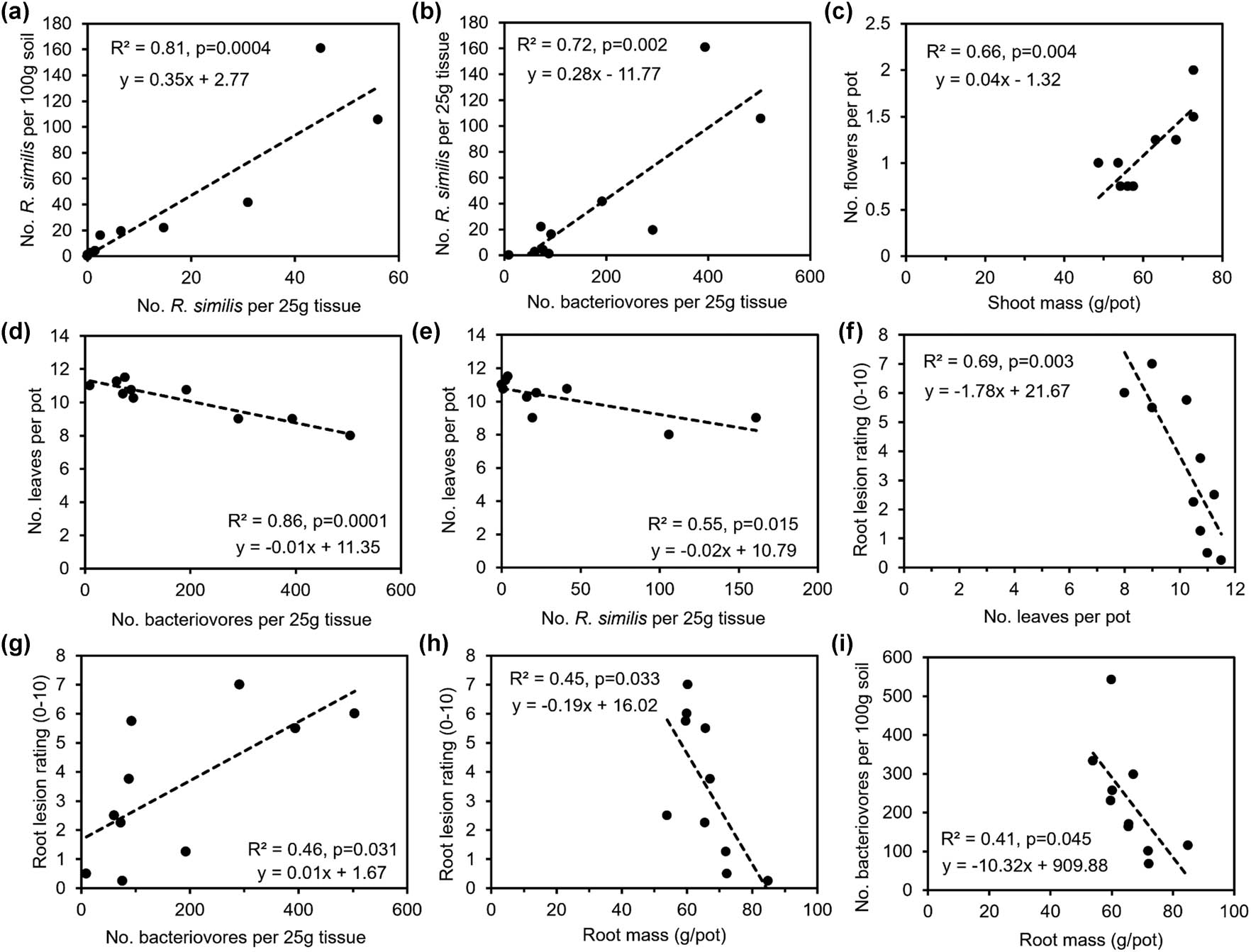
Figure 6
Linear regression analysis of key parameters affecting anthurium growth and yield.
3. Discussion
This study provides the first evidence that PGS CE at relatively low concentrations (0.5–1.0%) can suppress R. similis populations in anthurium. The number of burrowing nematodes in cinder media and crown/root tissue were significantly reduced by PGS CE drenching. The results showed greater leaf production and reduced root lesions with PGS applications, without negative impact on the free-living bacterivorous nematode populations. Treating anthurium plants with 0.5% PGS CE also showed potential for improving plant growth and increasing flower production. However, application with the 1.0% PGS CE slightly reduced, though not significant, plant height and biomass suggesting possible phytotoxicity at this concentration. Similar results were observed in other studies where the release of excessive isothiocyanates impaired plant germination and growth (Li et al., 2023). Optimization of the PGS concentration is critical for balancing nematode suppression with crop health. Potentially a PGS CE concentration of 0.75% may show high levels of toxicity to R. similis without compromising plant growth or flower production.
The 3% azadirachtin treatments were unable to suppress R. similis in greenhouse. These results contrast with previous studies that showed applications of 6% azadirachtin significantly reduced M. incognita populations in tomato roots (Myers, personal communication). However, another commercial neem product with 3% azadirachtin (Molt-X, Bioworks, Victor, NY) suppressed reniform nematodes (Rotylenchulus reniformis) effectively but not Meloidogyne spp. (Waisen et al., 2021). This suggests that the formulation and percentage of active ingredients play a critical role in the effectiveness of azadirachtin products to manage plant-parasitic nematodes. Inconsistent performance of neem on root lesion rating between trials in the pot experiment here also suggested unreliable performance of neem.
The use of PGS extract offers multiple advantages for the agricultural industry in Hawai’i. Papaya is also widely cultivated in anthurium production areas, and a significant amount of culls are discarded resulting in an ample supply of papaya seed. This by-product provides a locally grown, low-cost, and sustainable approach to plant-parasitic nematode management. A lower cost alternative to chemical nematicides, PGS is less toxic to humans and the environment. While the original attempt to count bacterivorous nematodes in the pot trials was to evaluate the non-target biofumigation effects of PGS CE, the results of lower abundance of bacterivorous nematodes in the anthurium tissues but numerically higher in the cinder soil media following monthly PGS CE drenching made the test of this hypothesis inconclusive. The positive regression analysis between the number of bacterivorous nematodes in anthurium tissues with root lesions (R 2 = 0.46, P = 0.0313) and even stronger with number of R. similis in anthurium tissues (R 2 = 0.72, P = 0.002) suggested that the bacterivorous nematodes here were mostly associated with opportunistic bacterial decomposition of decaying roots with lesions. Since there was no reduction in free-living bacterivore populations from PGS applications in the soil, this suggests that PGS is not disruptive to bacterivorous nematodes. Future studies should examine the effects of PGS CE drenching on the abundance of other free-living soil nematodes to confirm no negative effects of PGS on non-target beneficial free-living nematodes.
Although ANOVA did not show significant increase in anthurium flower production by PGS CE, the regression analysis provides relatively strong evidence that lesion damage imposed by R. similis reduced anthurium root biomass in 6 months (R 2 = 0.45, P = 0.0331). Longer observation periods might allow clearer results of PGS CE treatments on anthurium yield. We originally suspected that drenching of PGS CE might also add nitrogen into the soil that can increase plant growth since PGS contains approximately 4.14% N (unpublished, Lauren Braley, personnel observation). However, various regression analysis on abundance of bacterivorous nematodes (which normally indicate more nutrient enrichment in the soil) conducted for the pot experiment here did not support this hypothesis.
More research is necessary to fully utilize PGS as a biofumigant against R. similis. Field studies are needed to confirm the efficacy of PGS in commercial anthurium cut flower production systems, which are on raised cinder beds in the field. Optimization of application rates is required to maximize nematode suppression without negatively affecting crop health. Combining PGS treatments with other cultural or biological control strategies could enhance effectiveness and durability of an integrated pest management program for plant-parasitic nematode control. Populations of R. similis were substantially reduced by continuous drenching of hot water at 50℃ with little to no phytotoxicity in most anthurium cultivars (Tsang et al., 2004). Applying a solution of PGS CE as a hot water treatment could enhance the efficacy over both control methods alone.
In summary, PGS offers a novel, sustainable, and locally sourced biofumigant created from existing agricultural waste. By effectively reducing R. similis populations in anthurium, this product could improve economic viability of both papaya growers and the floriculture industry in Hawai’i.
Acknowledgements
The authors acknowledge financial support from WSARE Grants SW20-911 and GW22-233, and CTAHR Hatch project HAW 9048-H. Authors would also like to thank Green Point Nurseries for donating plants and Cathy Mello and Patricia Dombrowski for technical assistance.
Funding Information
Authors state no funding involved.
Author contributions
Braley and Paudel shared the contribution of data collection and statistical analysis, Myers contributed to research space allocation, nematode inoculum, securing anthurium potted plants and manuscript editing; Su is a bioengineer contributed to develop PGS CE with high BITC content, Braley and Wang contributed to manuscript preparation and logistic of the experiment.
Conflict of interest statement
Authors state no conflict of interest.