
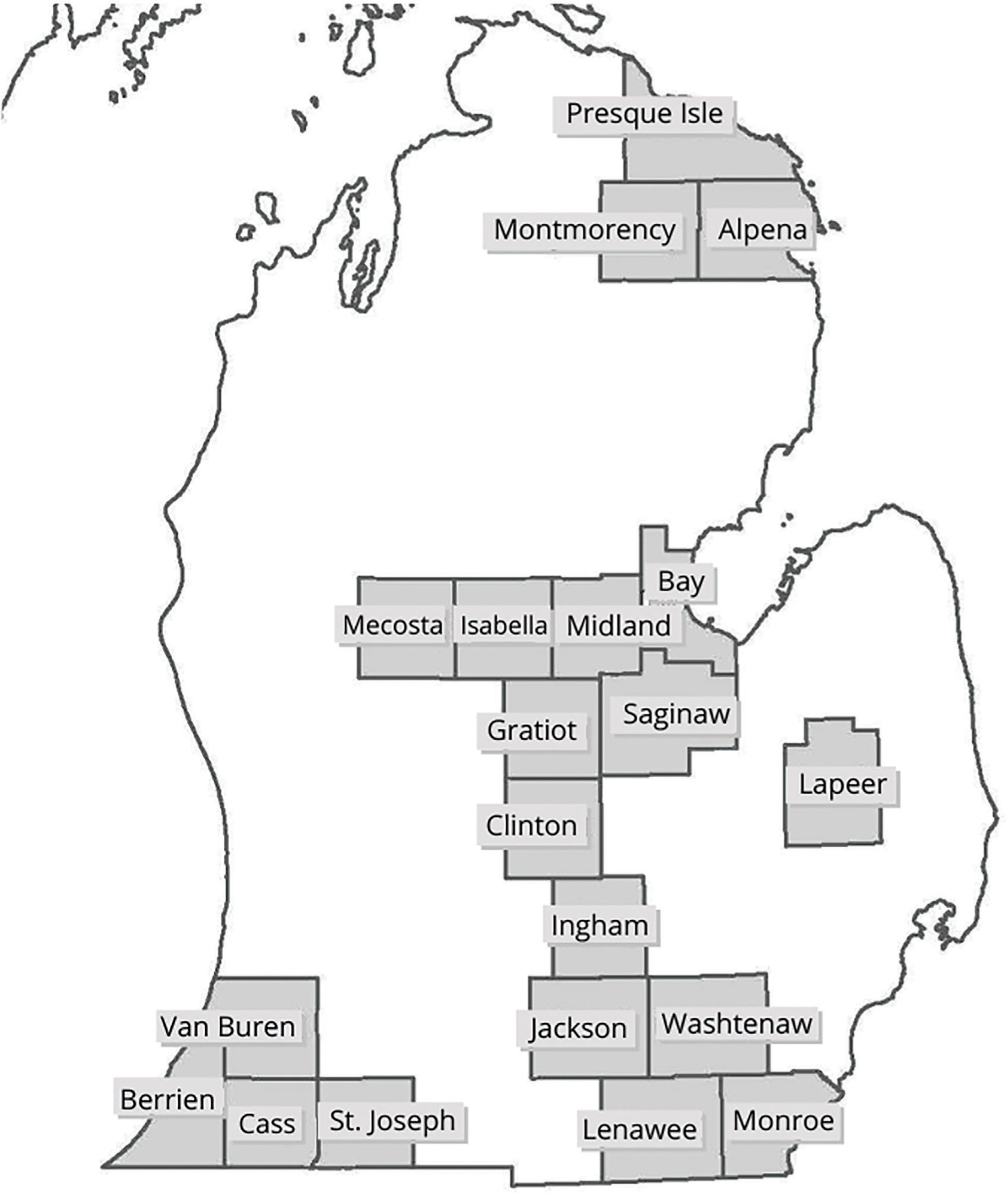
Figure 1:
Michigan state map showing 20 counties from which soil samples were taken for 2018 study of corn nematodes.
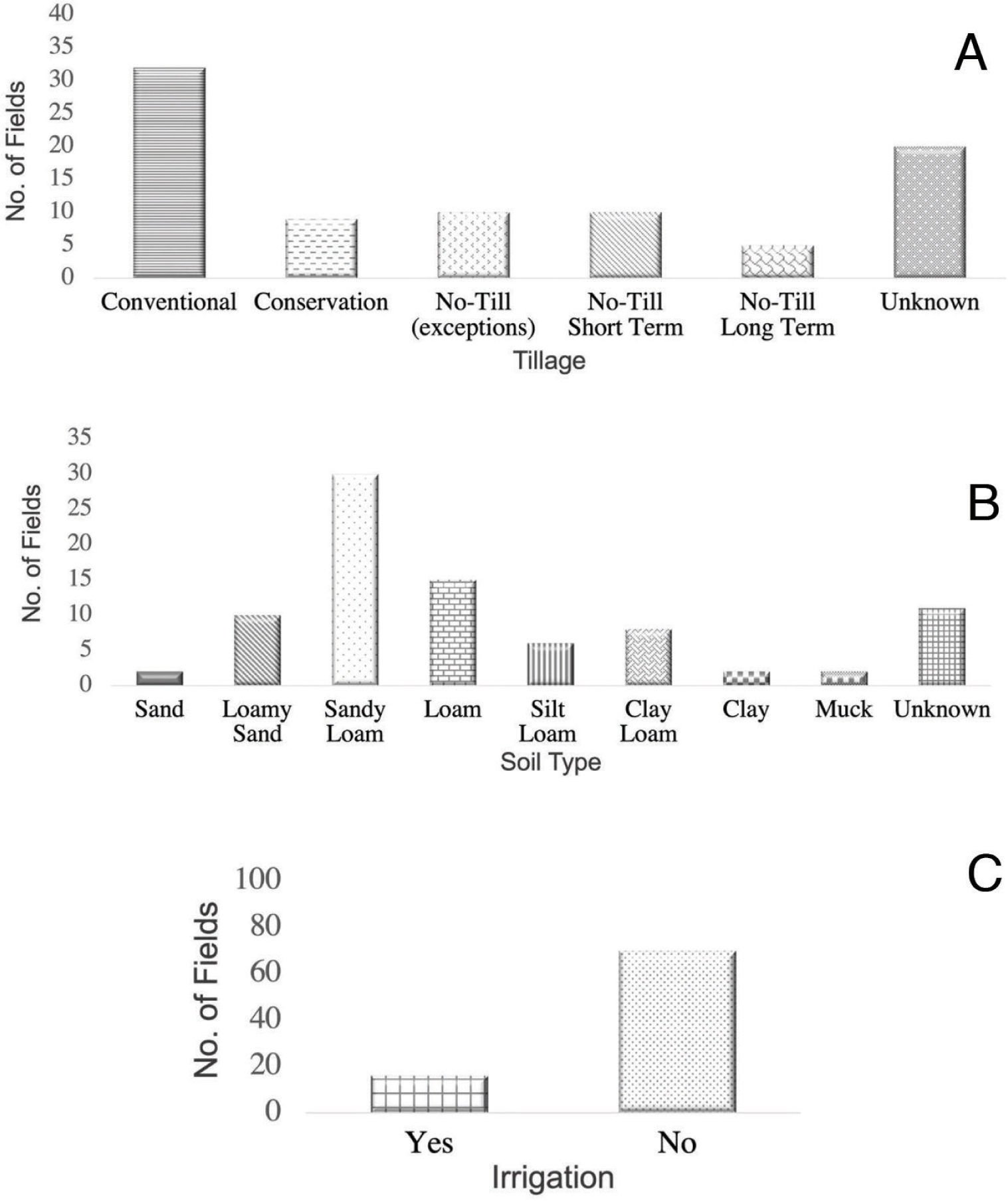
Figure 2:
Total number of corn fields surveyed within each main category: Tillage (A), Soil type (B), and Irrigation (C).
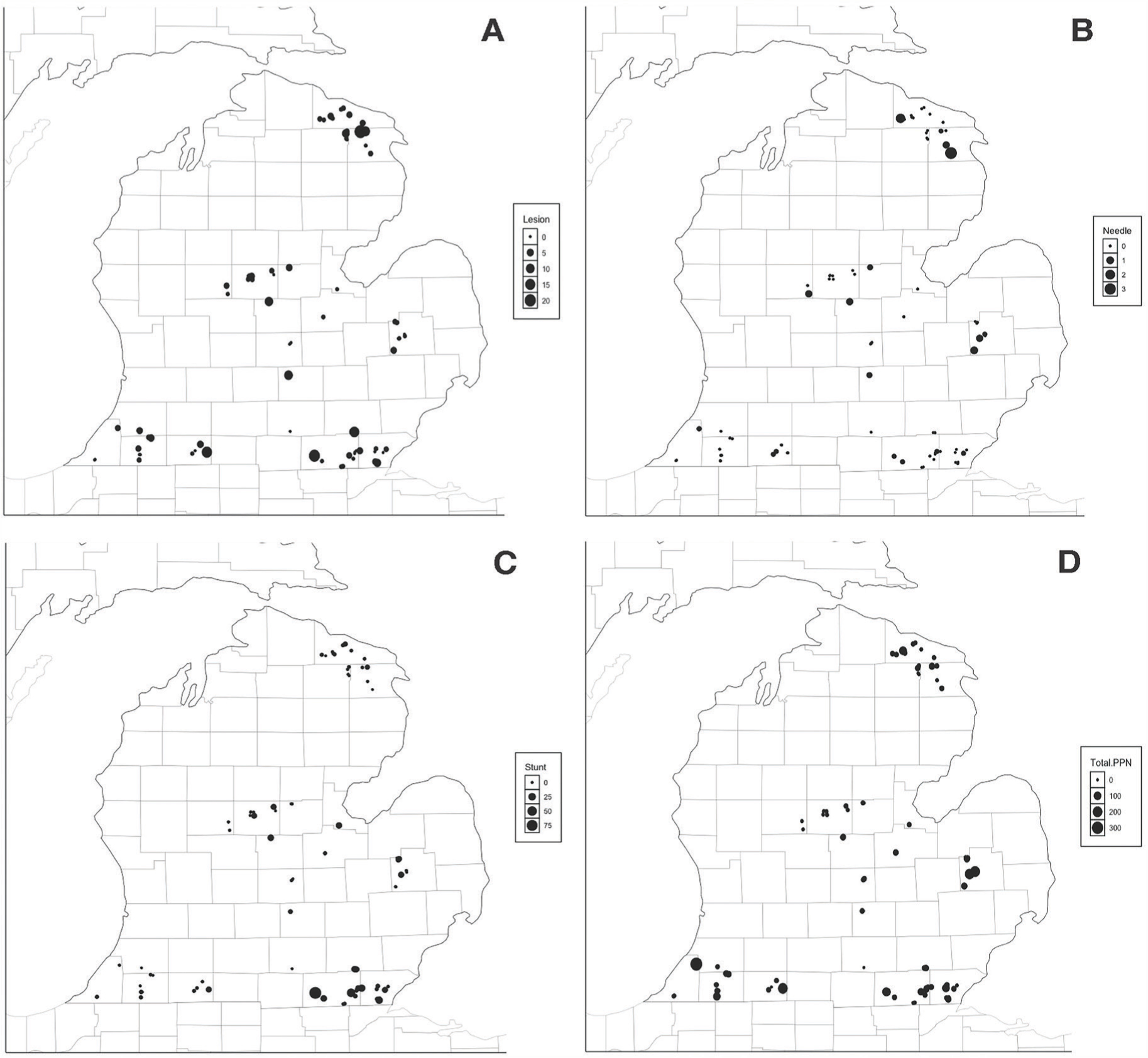
Figure 3:
Michigan maps showing county distribution of lesion nematode (A), needle nematode (B), stunt nematode (C), and total plant parasitic nematodes (D) in corn fields in 2018. The size of the dots correlates with the number of nematodes.
Table 1.
Plant-parasitic nematode genus prevalence during initial sampling collected May-June 2018 in Michigan. Percentage of infested fields for each genus indicates the number of fields that contained at least one individual per 100 cm3 soil sample.
| Genus (Common Name) | Average ± STD | Percent of Fields Infested (N=86) |
|---|---|---|
| Helicotylenchus (Spiral) | 12.21 ± 31.40 | 86.05% |
| Heterodera (Cyst) | 2.14 ± 5.60 | 79.07% |
| Pratylenchus (Lesion) | 2.57 ± 6.53 | 76.74% |
| Tylenchorhynchus or Merlinius (Stunt) | 5.12 ± 15.79 | 67.44% |
| Longidorus (Needle) | 0.16 ± 0.65 | 26.74% |
| Meloidogyne (Root Knot) | 0.26 ± 1.63 | 20.93% |
| Hoplolaimus (Lance) | 0.07 ± 0.54 | 13.95% |
| Criconemella (Ring) | 0.09 ± 0.71 | 10.47% |
| Xiphinema (Dagger) | 0.04 ± 0.45 | 9.30% |
| Paratylenchus (Pin) | 0.06 ± 0.59 | 8.13% |
Table 2.
Plant-parasitic nematode genus prevalence during corn harvest sampling collected between September-October 2018 in Michigan. Percentage of infested fields for each genus indicates the number of fields that contained at least one individual per 100 cm3 soil sample.
| Genus (Common Name) | Average ± STD | Percent of Fields Infested (N=86) |
|---|---|---|
| Helicotylenchus (Spiral) | 56.07 ± 161.50 | 91.01% |
| Pratylenchus (Lesion) | 3.80 ± 6.08 | 80.90% |
| Tylenchorhynchus or Merlinius (Stunt) | 11.00 ± 28.52 | 78.65% |
| Heterodera (Cyst) | 10.08 ± 161.50 | 57.30% |
| Paratylenchus (Pin) | 0.19 ± 1.65 | 21.35% |
| Longidorus (Needle) | 0.13 ± 0.64 | 15.73% |
| Meloidogyne (Root Knot) | 0.06 ± 0.19 | 14.60% |
| Hoplolaimus (Lance) | 0.27 ± 1.90 | 10.11% |
| Criconemella (Ring) | 0.12 ± 0.74 | 8.99% |
| Xiphinema (Dagger) | 0.02 ± 0.16 | 3.37% |
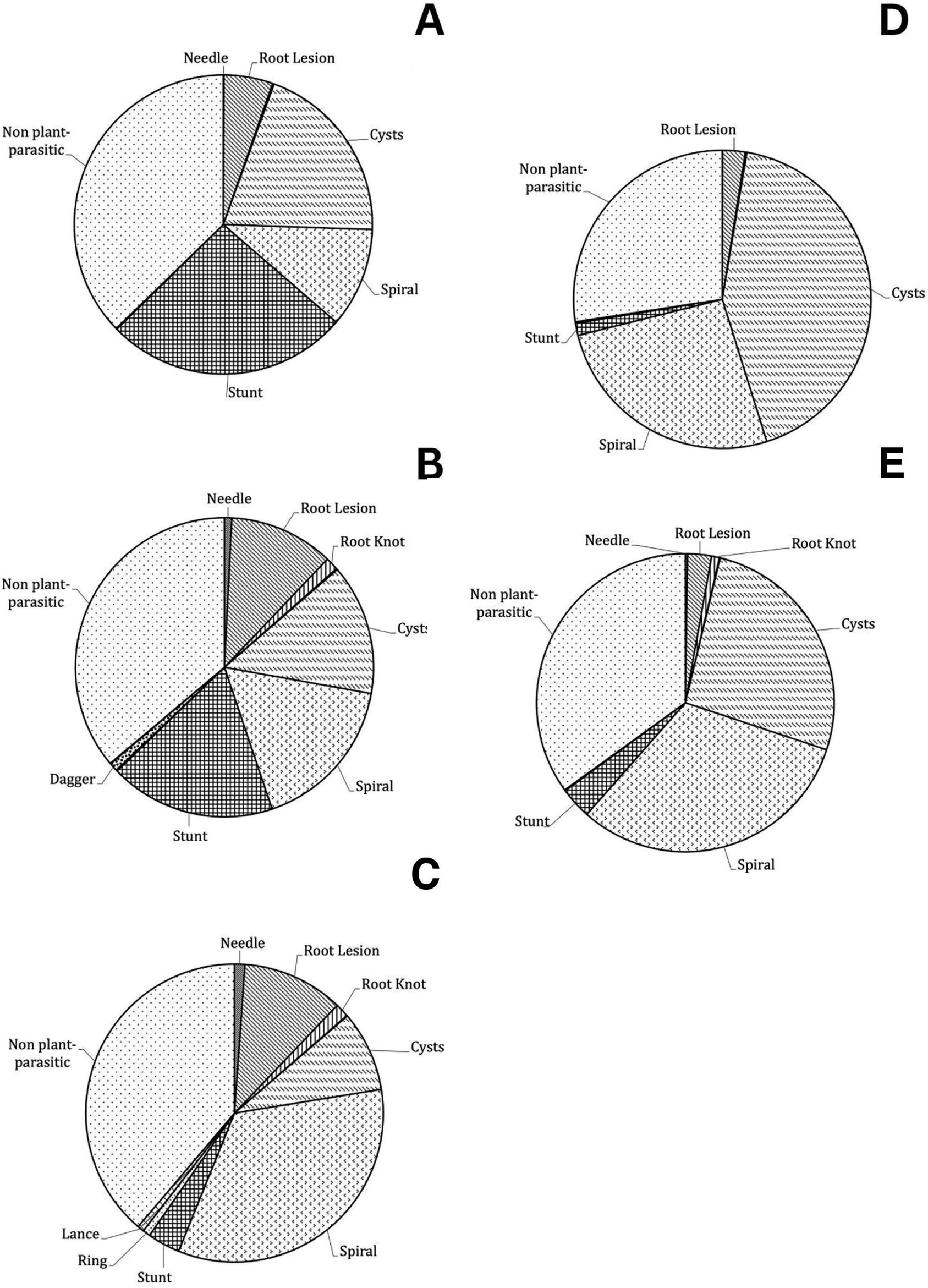
Figure 4:
Michigan divided into five different regions for corn nematode sampling. Pie-charts show regional nematode distribution during corn harvest time in 2018. Regions: Southeast (A), Northwest (B), North (C), Southwest (D), East/Central (E).
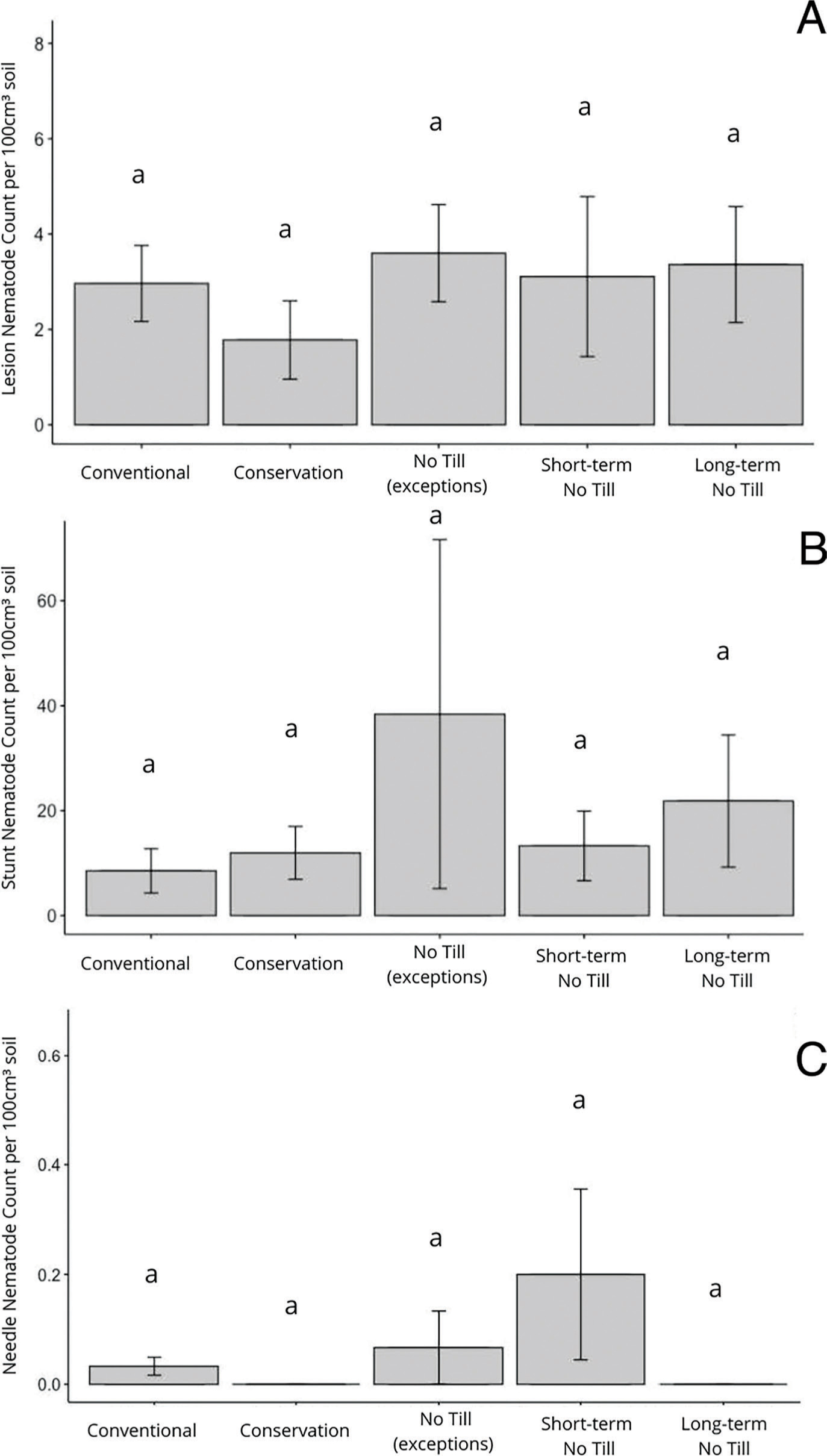
Figure 5:
Mean population density (nematodes per 100 cm3 of soil) of lesion nematode (A), stunt nematode (B), and needle nematode (C) in different tillage practices in Michigan corn end-of-season samples in 2018. No significant differences were observed between nematode population densities and different tillage practices (Tukey HSD, α = 0.05).
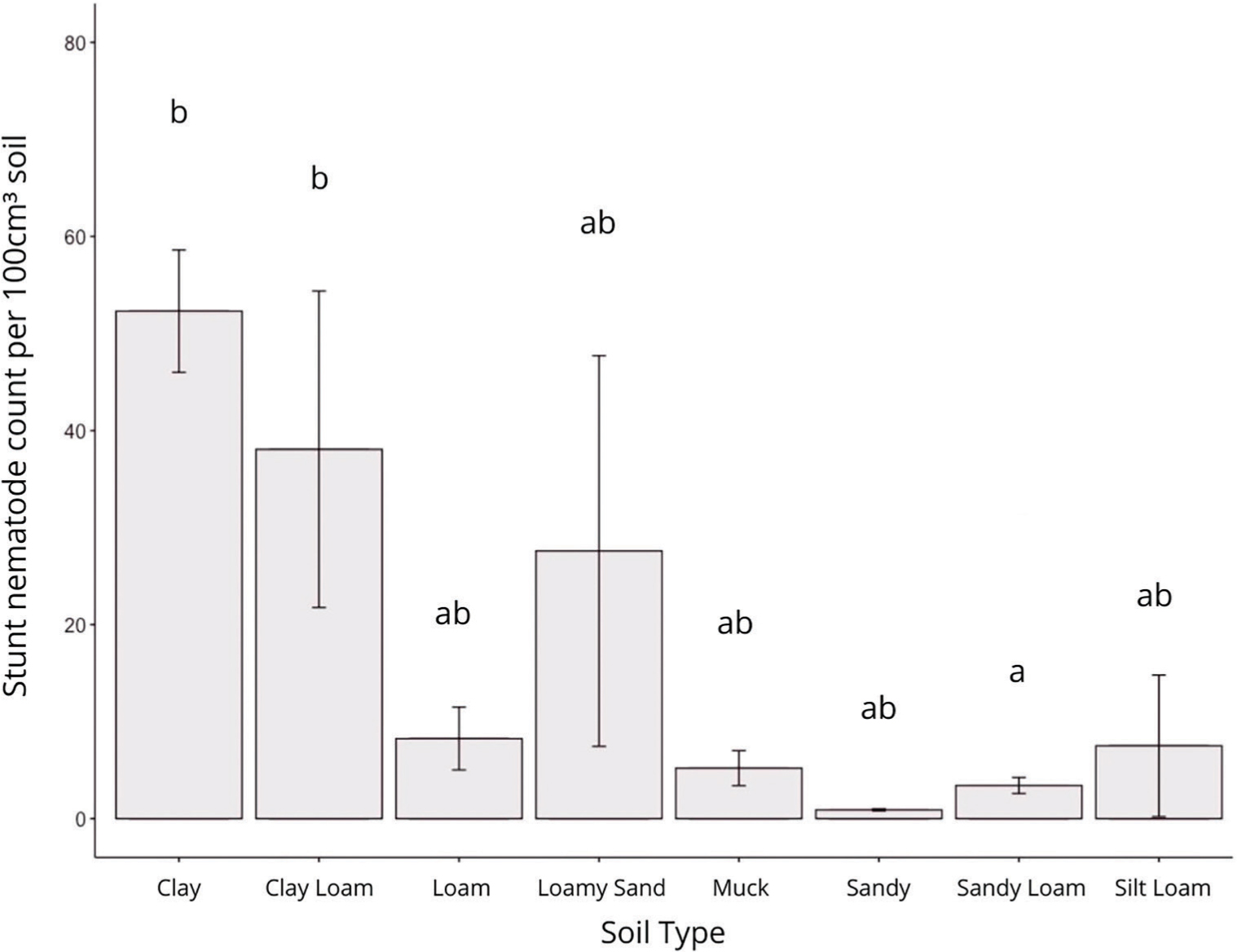
Figure 6:
Mean population density of stunt nematodes per 100 cm3 of soil in different types of soil in Michigan corn grown in 2018. Letters on the top of each bar represent significant differences among the soil types (Tukey HSD, α = 0.05).
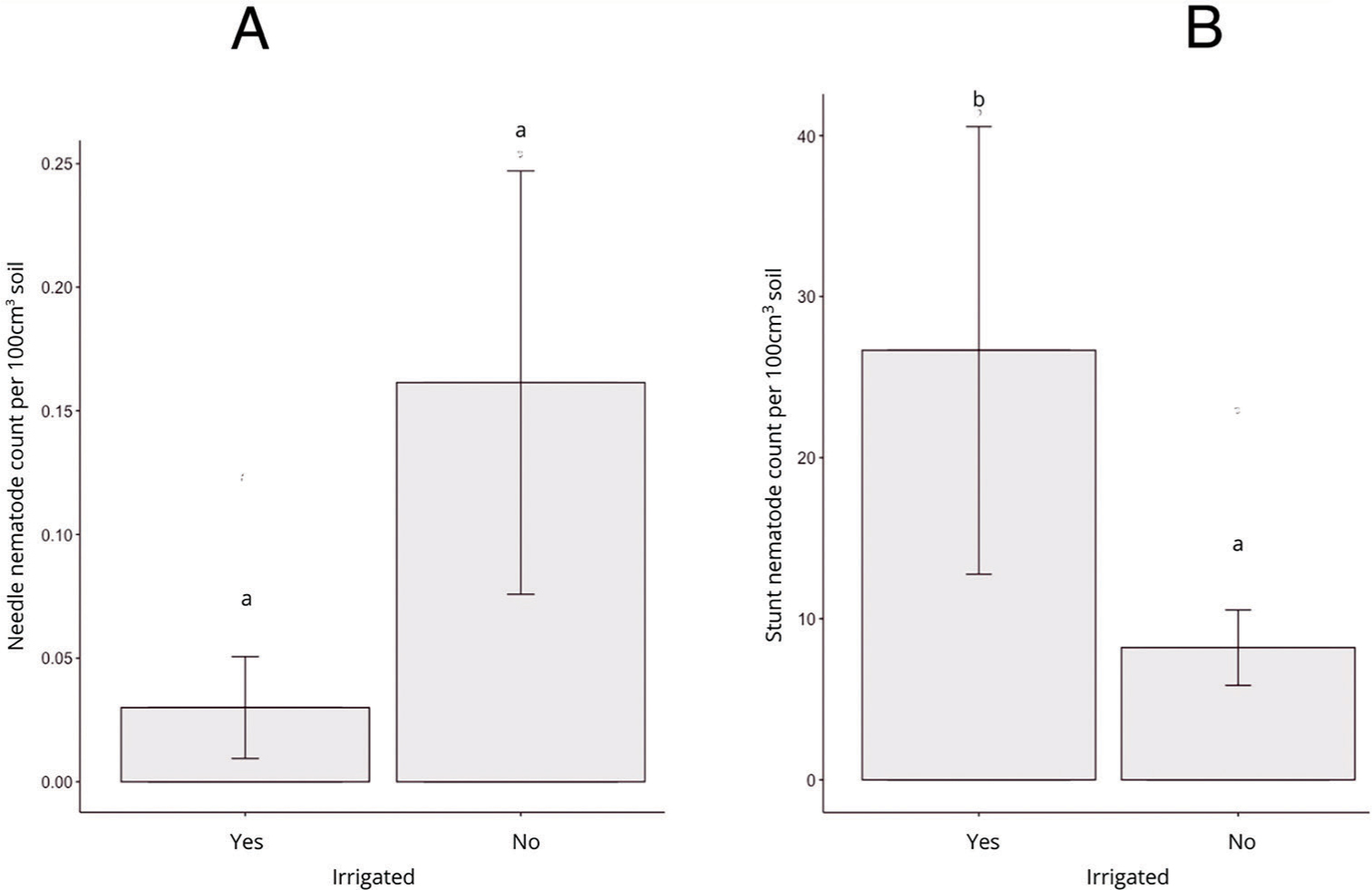
Figure 7:
Mean population density (nematodes per 100 cm3 of soil) of needle nematode (A) and stunt nematode (B) in irrigated and non-irrigated soils in Michigan corn grown in 2018. Letters on the top of each bar represent significant differences among the soil types (Tukey HSD, α = 0.05).