
Table 1
Comparison of the genome assembly statistic of Heterodera species.
| Assembly statistic | H. glycines (PRJNA381081)a | H. schachtii (PRJNA722882)a | H. carotae (PRJNA774818)a |
|---|---|---|---|
| Size (bp) | 157,978,452 | 179,246,932 | 95,118,078 |
| Number of scaffolds | 9 | 395 | 17,839 |
| Largest scaffold (bp) | 23,985,585 | 6,046,013 | 113,425 |
| GC content (%) | 36.66 | 33.23 | 39.39 |
| N50 value (bp) | 17,907,690 | 1,273,070 | 13,935 |
| No. contigs >5,000 bp | 9 | 395 | 5,030 |
| No. contigs >10,000 bp | 9 | 359 | 2,755 |
| No. contigs >25,000 bp | 9 | 309 | 699 |
| No. contigs >50,000 bp | 9 | 269 | 103 |
| Complete BUSCOs (%) | 1,400 (44.7) | 1,422 (45.4) | 1,259 (40.2) |
| Complete and single-copy BUSCOs (%) | 1,291 (41.2) | 1,372 (43.8) | 1,238 (39.5) |
| Complete and duplicated BUSCOs (%) | 109 (3.5) | 50 (1.6) | 21 (0.7) |
| Fragmented BUSCOs (%) | 109 (3.5) | 120 (3.8) | 143 (4.6) |
| Missing BUSCOs (%) | 1,622 (51.8) | 1,589 (50.8) | 1,729 (55.2) |
| Predicted protein coding genes | 29,679 | 26,768 | 17,212 |
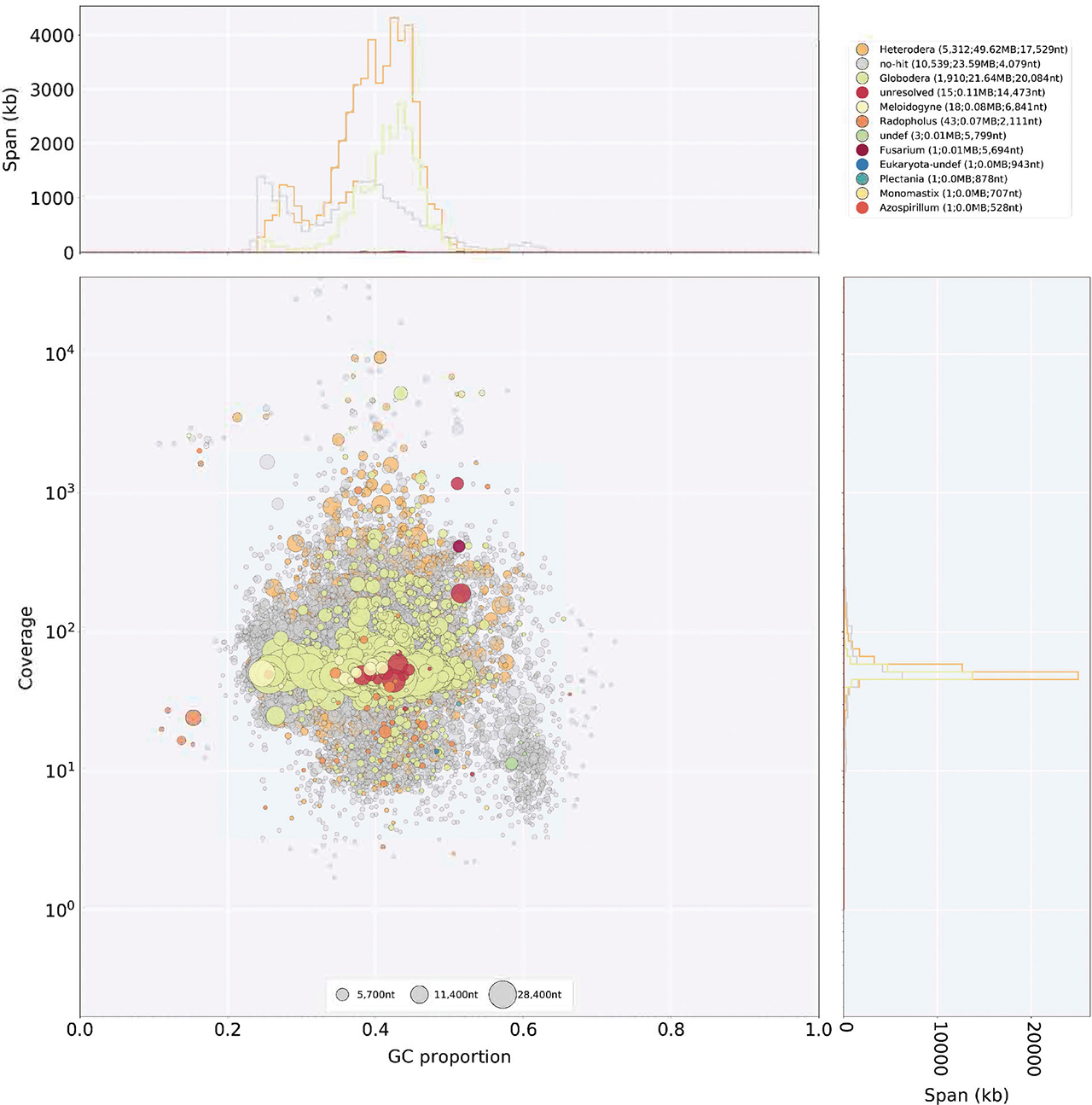
Figure S1
Visualization of the final Heterodera carotae genome assembly. Genome contigs were assembled from raw Illumina HiSeq3000 reads generated from H. carotae egg DNA using the assembler SPAdes. In this blobplot, assembled contigs are represented as circles with placement of circles on the x-axis reflecting that contig's proportion of GC bases and the position on the y-axis reflecting the coverage of the contig with the raw data. Contig circles are also colored based on their taxonomic identity indicated by the legend in the upper right-hand corner.
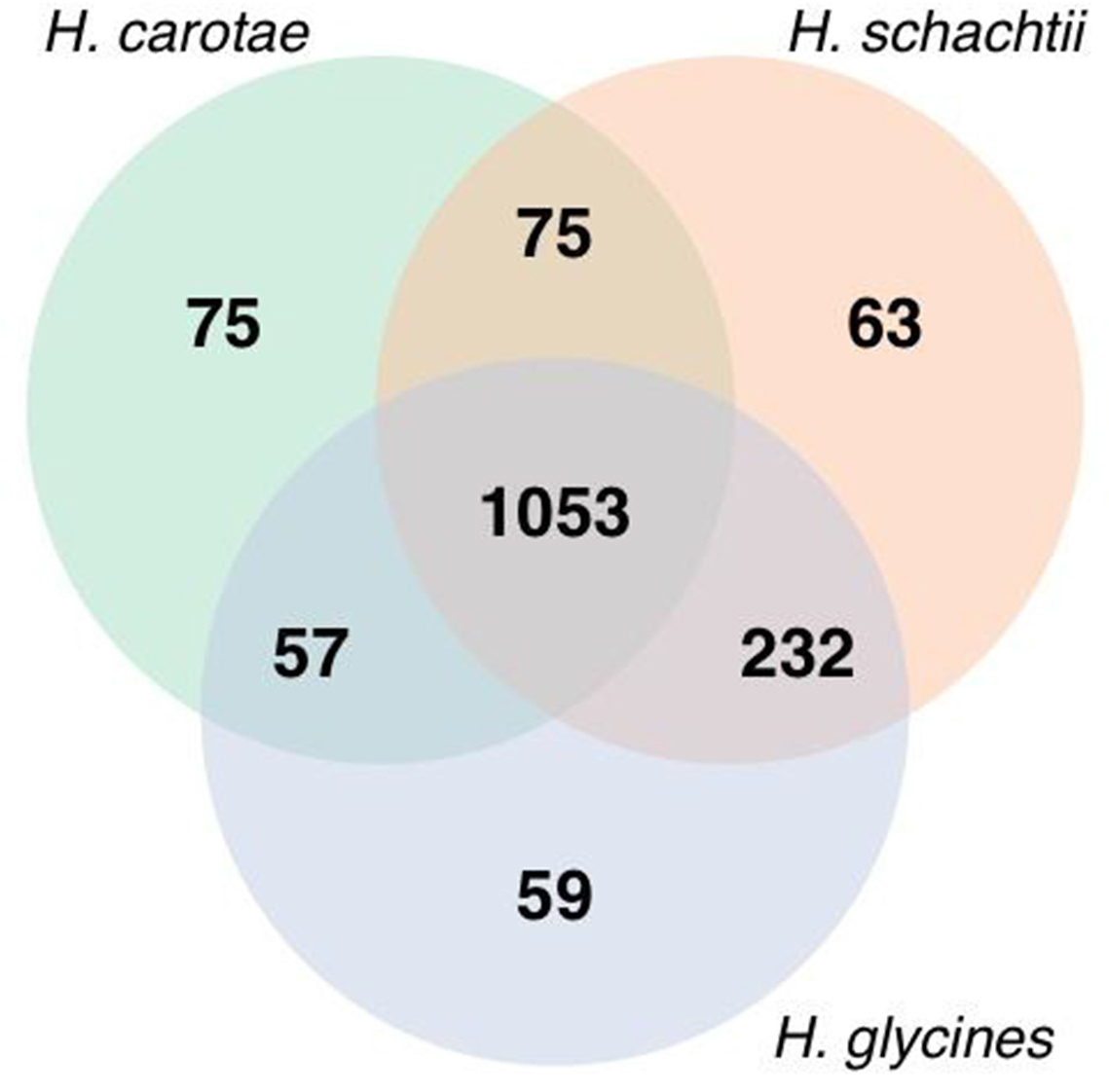
Figure S2
Venn diagram of complete BUSCO genes across Heterodera glycines, H. carotae, and H. schachtii. A BUSCO gene was counted as complete if denoted in the BUSCO analysis results as either complete or duplicated.
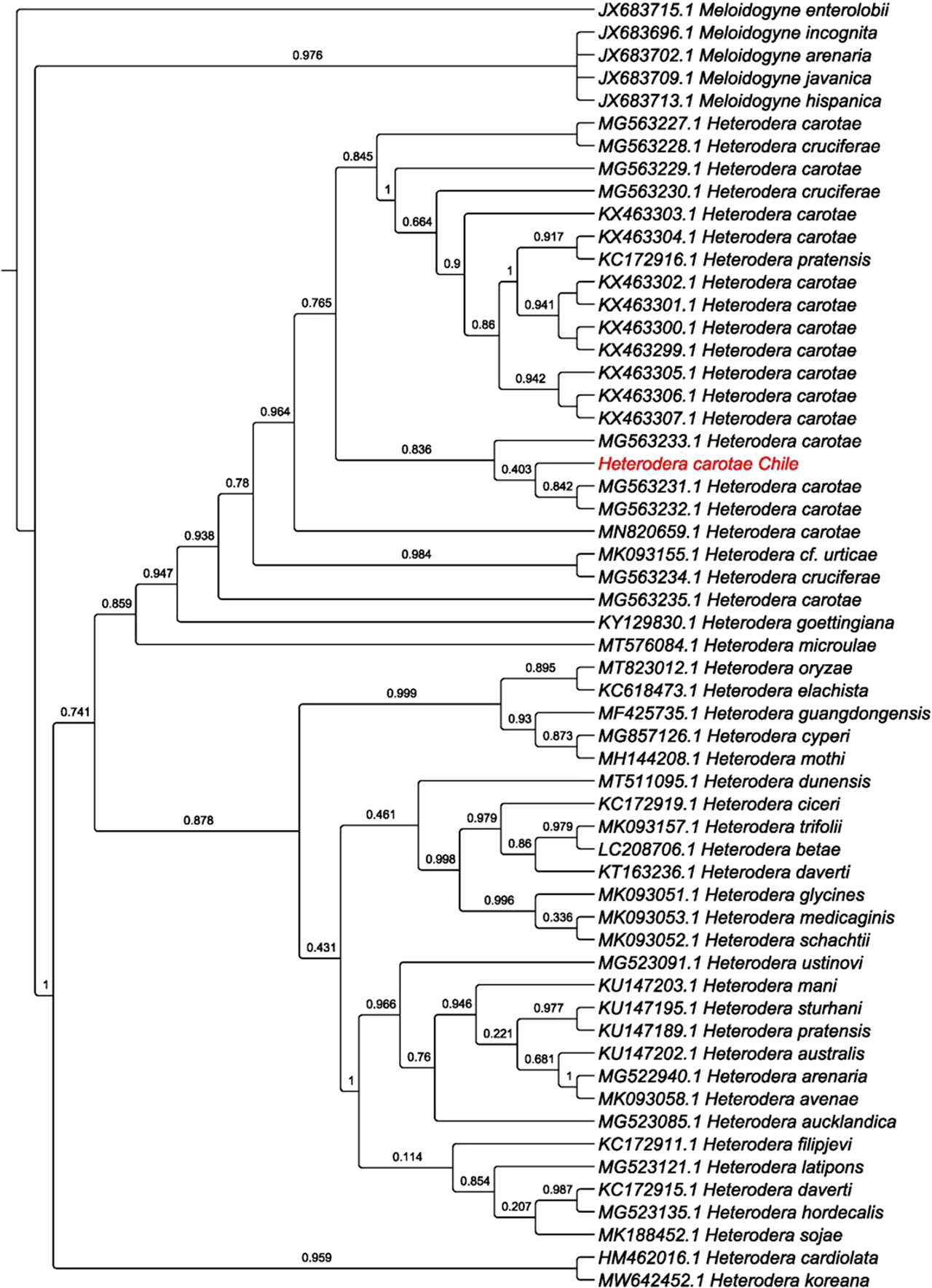
Figure S3
Phylogenetic tree of Chilean Heterodera carotae Cyclooxygenase 1 (coxI) gene in relation to other Heterodera species. The Chilean H. carotae coxI gene was extracted from the final assembly and aligned with all available coxI sequences on NCBI for H. carotae and H. cruciferae, a random selection of coxI accessions from thirty-one other Heterodera species, and five accessions of coxI from Meloidogyne species as an outgroup. A Newick phylogenetic tree was generated from the alignment. Bootstrap values are indicated on branch points in this tree and the placement within the tree of H. carotae coxI from this study highlighted in red. NCBI accessions for the sequence used are listed next to each species in the tree.
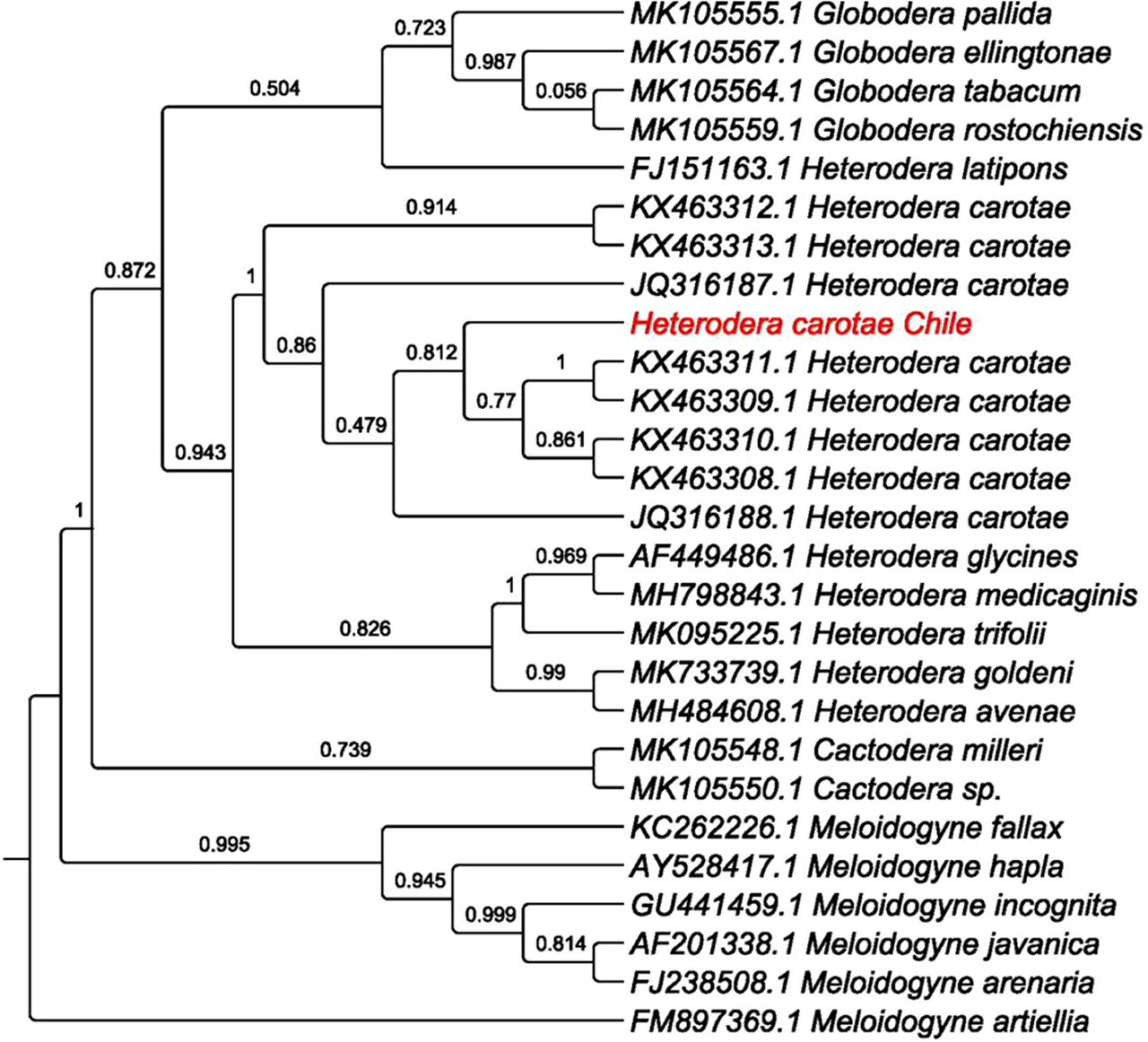
Figure S4
Phylogenetic tree of Chilean Heterodera carotae heat shock protein 90 (hsp90) gene in relation to other Heterodera species. The Chilean H. carotae hsp90 gene was extracted from the final assembly and aligned with hsp90 sequences from NCBI of four Globodera species, six Heterodera species, all available H. carotae accessions, two Cactodera species, and six Meloidogyne species as an outgroup. A Newick phylogenetic tree was generated from the alignment. Bootstrap values are indicated on branch points in this tree and the placement within the tree of H. carotae hsp90 from this study is highlighted in red. NCBI accessions for the sequence used are listed next to each species in the tree.