
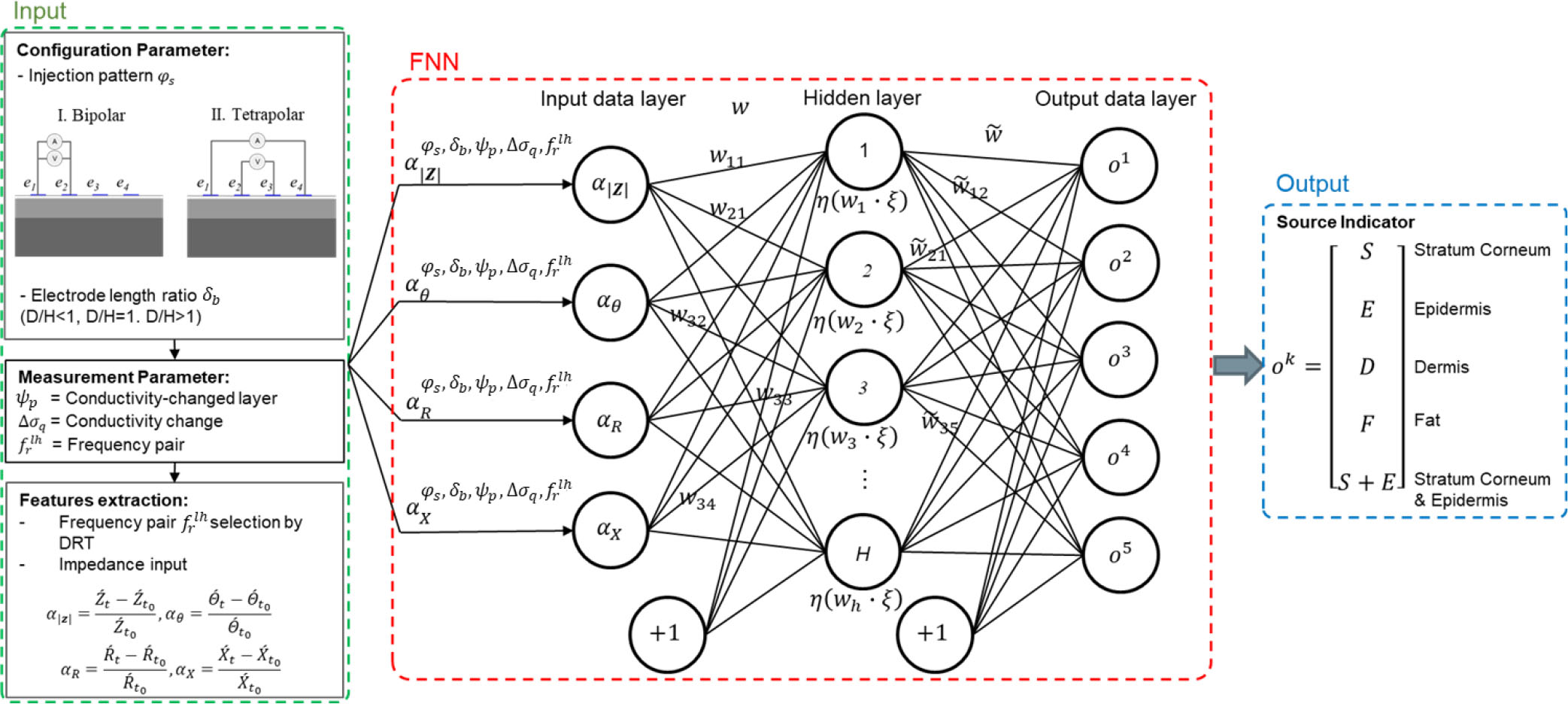
Fig. 1:
Schematic flow of skin layer classification of conductivity change
Table 1:
Parameters for training data set
1
Δσ9 = 0 [%] is considered as standard.
For each conductivity-changed layer, the other layer(s) are fixed with standard conductivity change value.
Case number follow this rule:
(for example: I_D/H < 1_S_-20_2&10 which refers to injection pattern: φI = Bipolar_δ1 = D/H < 1, ψ1 = S, Δσ1 = −20, and )
Total case:
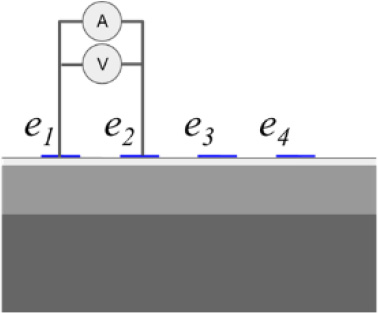
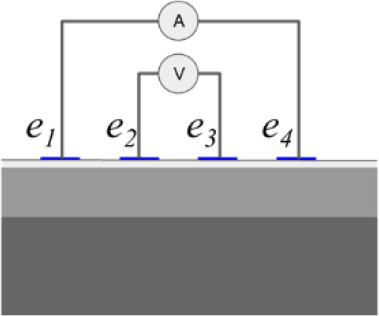
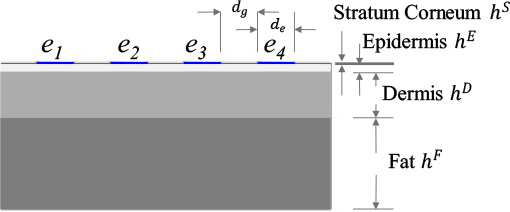
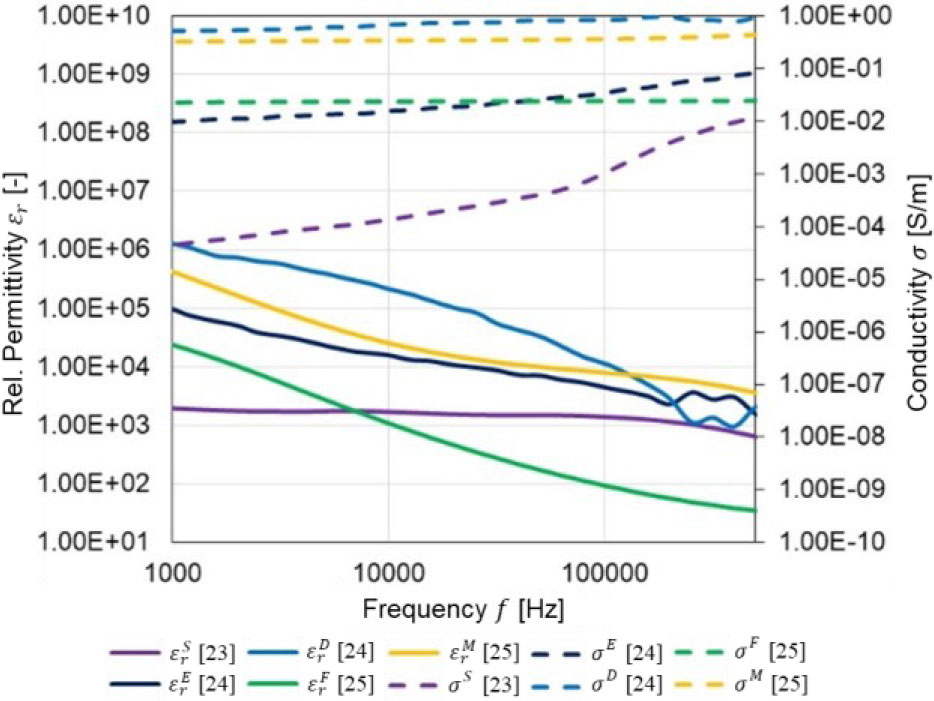
Fig. 2:
Electrical properties of skin, fat, and muscle.
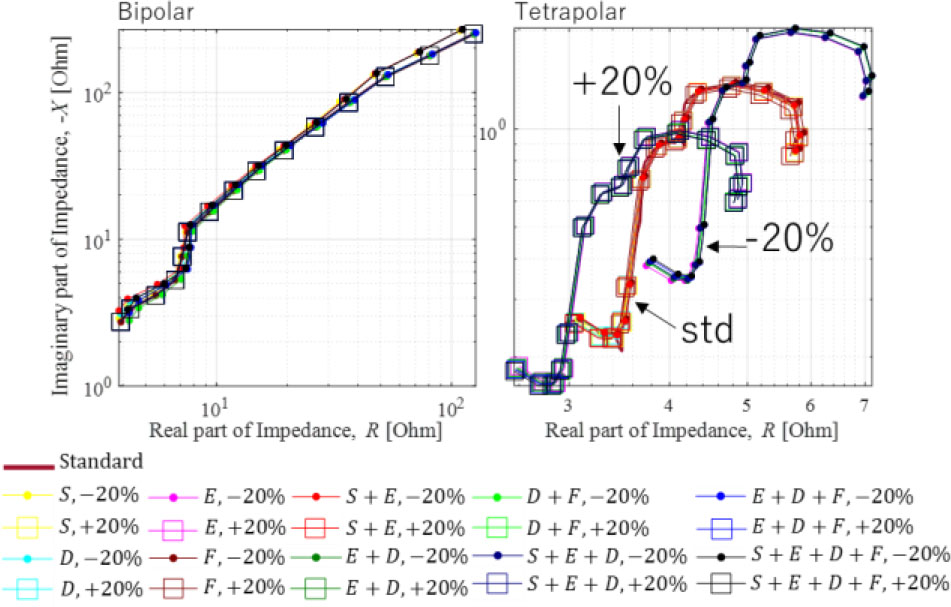
Fig. 3:
Nyquist plot based on numerical simulation of φs in the Δσ and D/H < 1 in all frequency range.
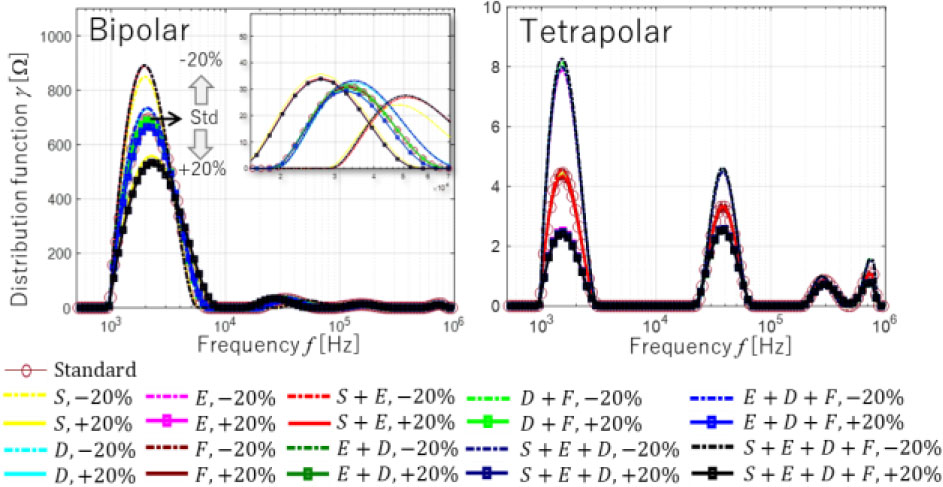
Fig. 4:
DRT results based on simulation of φs in the case of D/H < 1 in all frequency range.
Table 2:
Matrix profile of αξ
| Matrix Profile | Number of input features αξ | Details |
|---|---|---|
| One matrix | 4 | |
| Two matrices | 6 | |
| Three matrices | 3 | |
| Four matrices | 1 |
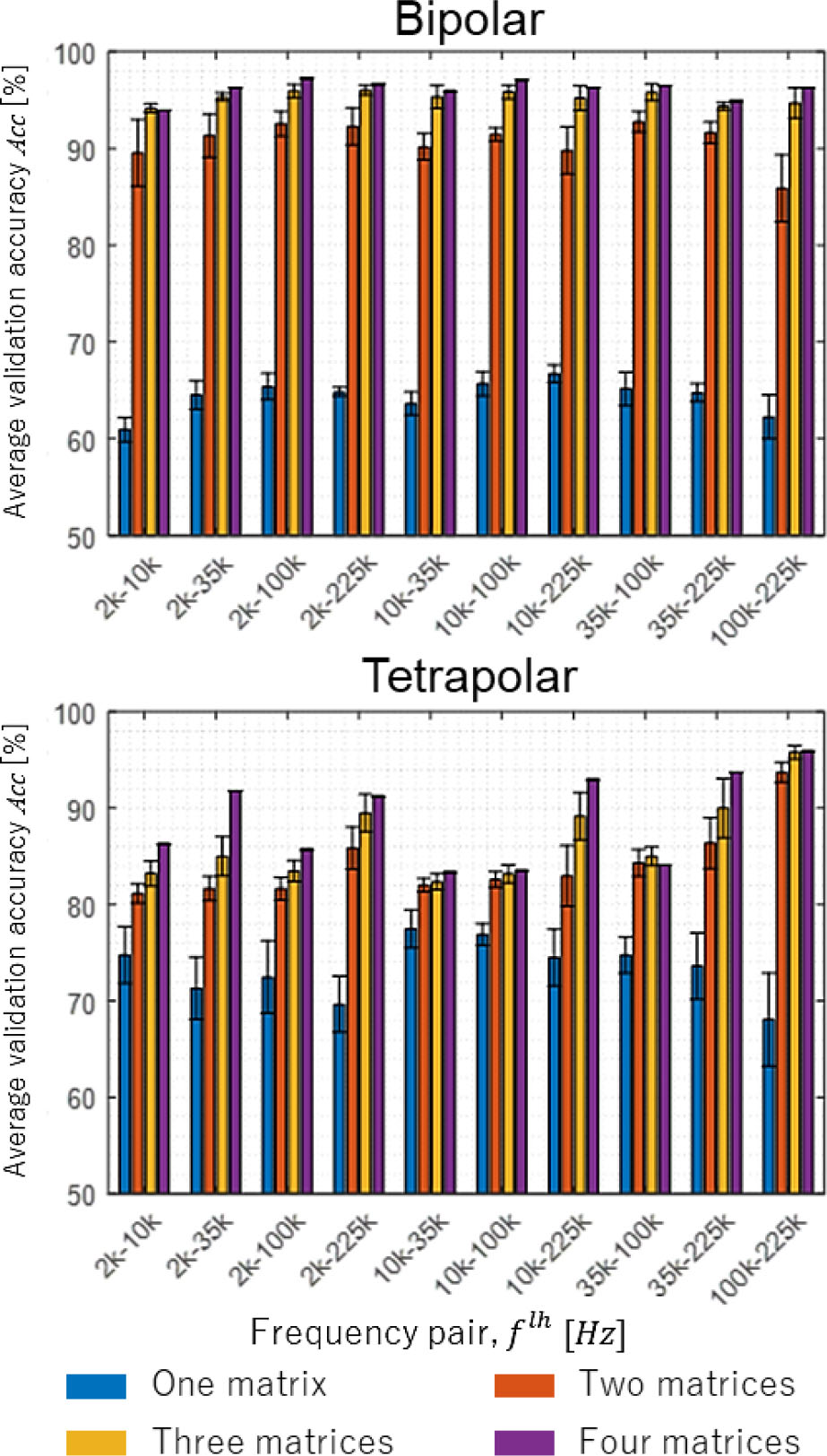
Fig. 5:
The comparison of FNN results related to feature extraction of αξ effect on bipolar and tetrapolar.
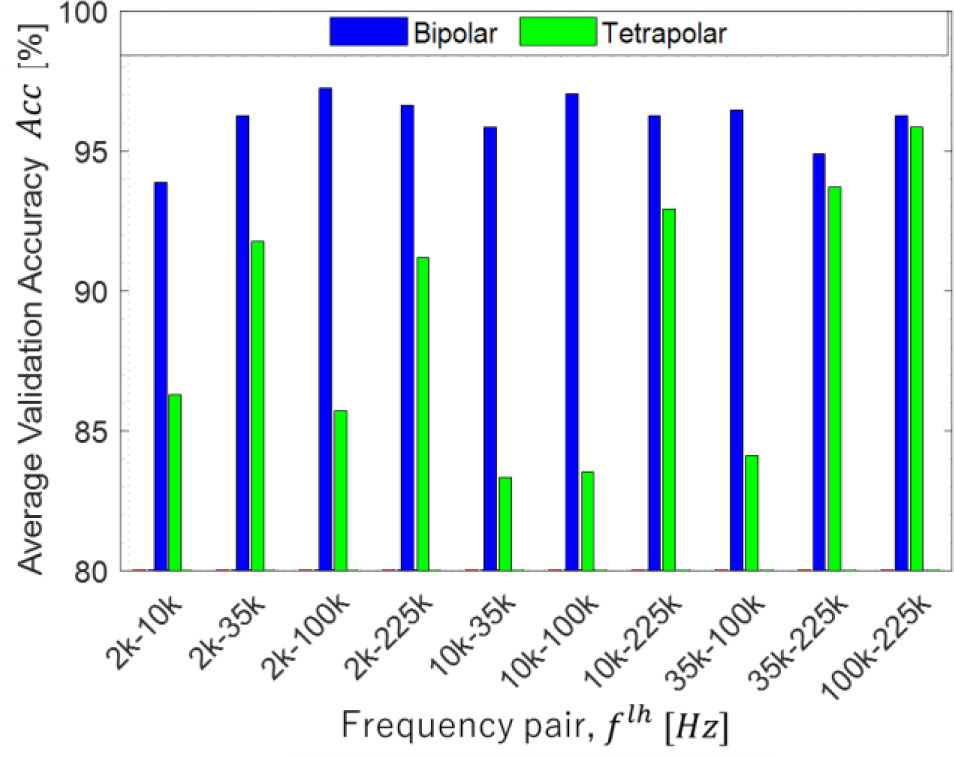
Fig. 6:
The comparison of FNN results related to feature extraction of αξ effect on bipolar and tetrapolar using four matrices profile.
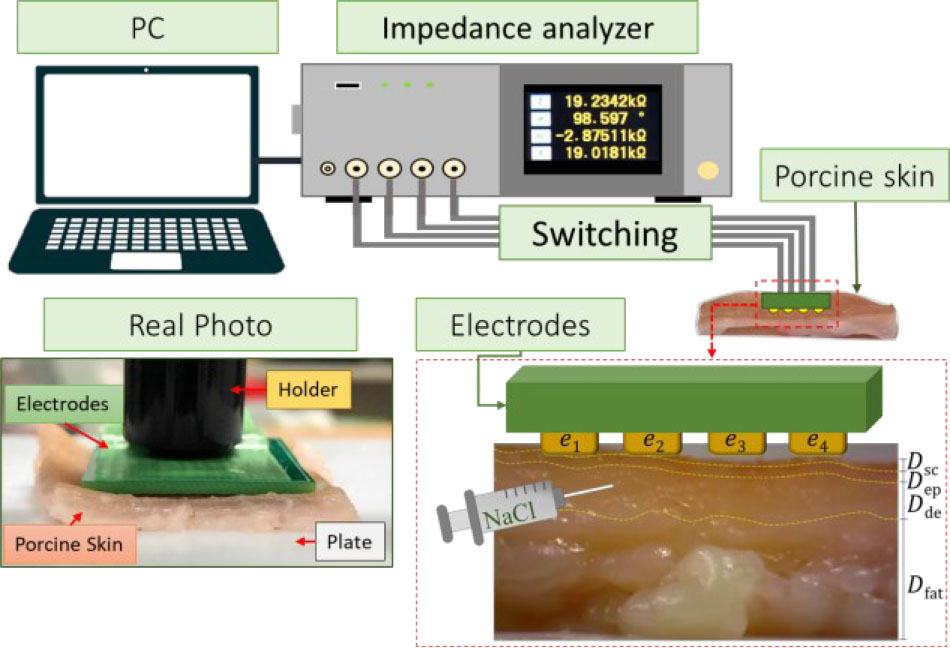
Fig. 7:
Experimental setup conditions with porcine skin.
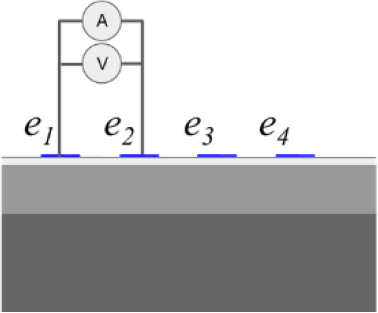
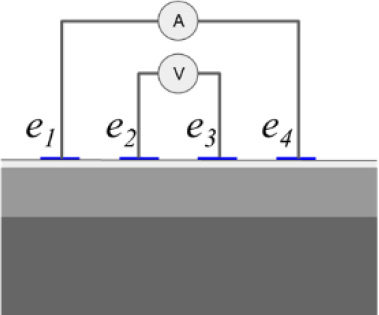
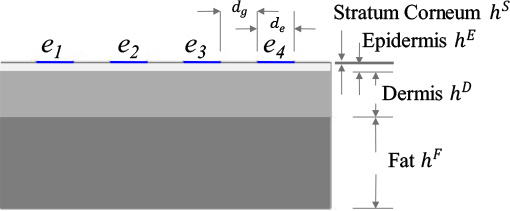
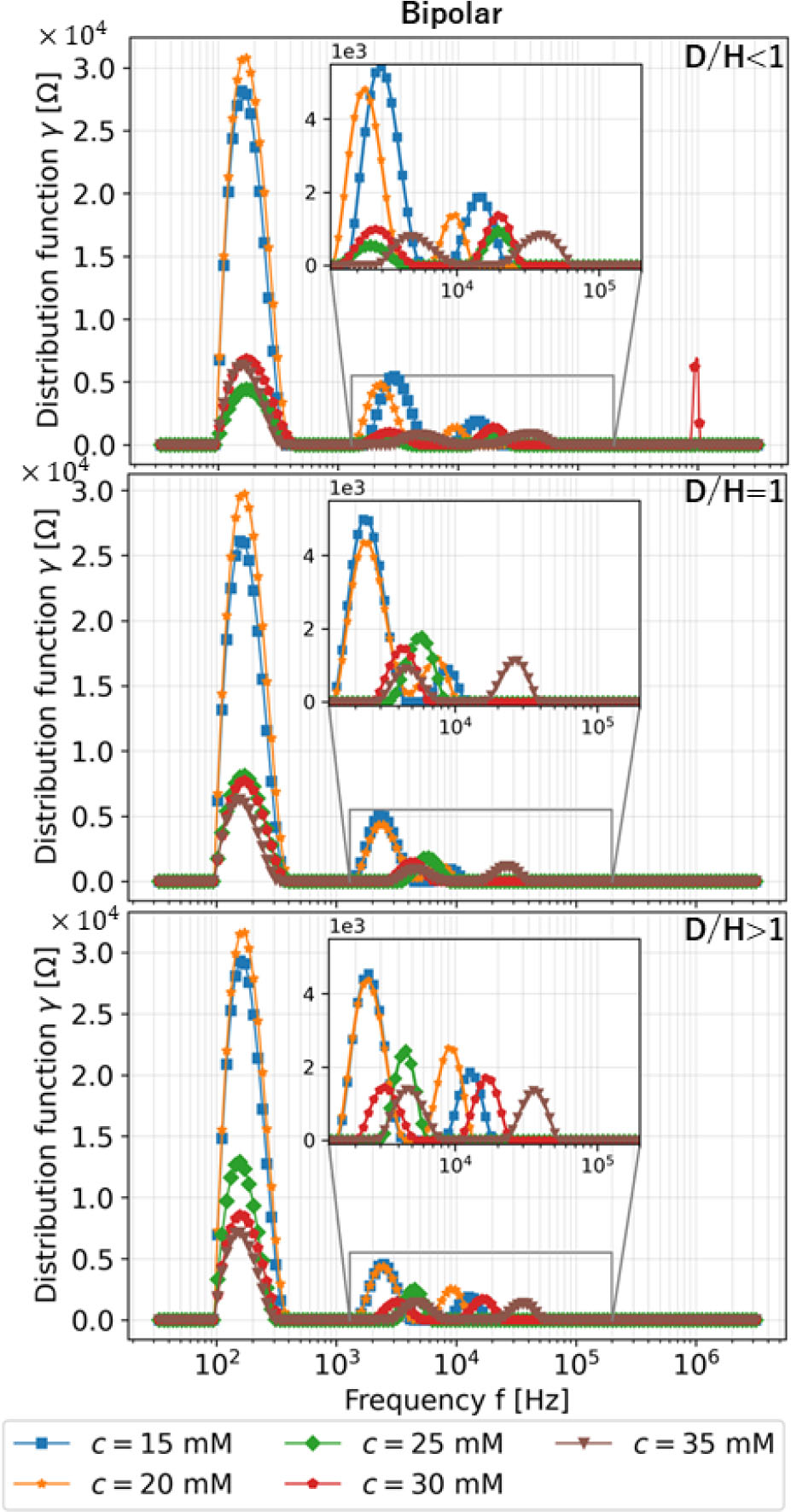
Fig. 8:
DRT results based on experiment with φs = Bipolar in all frequencies.
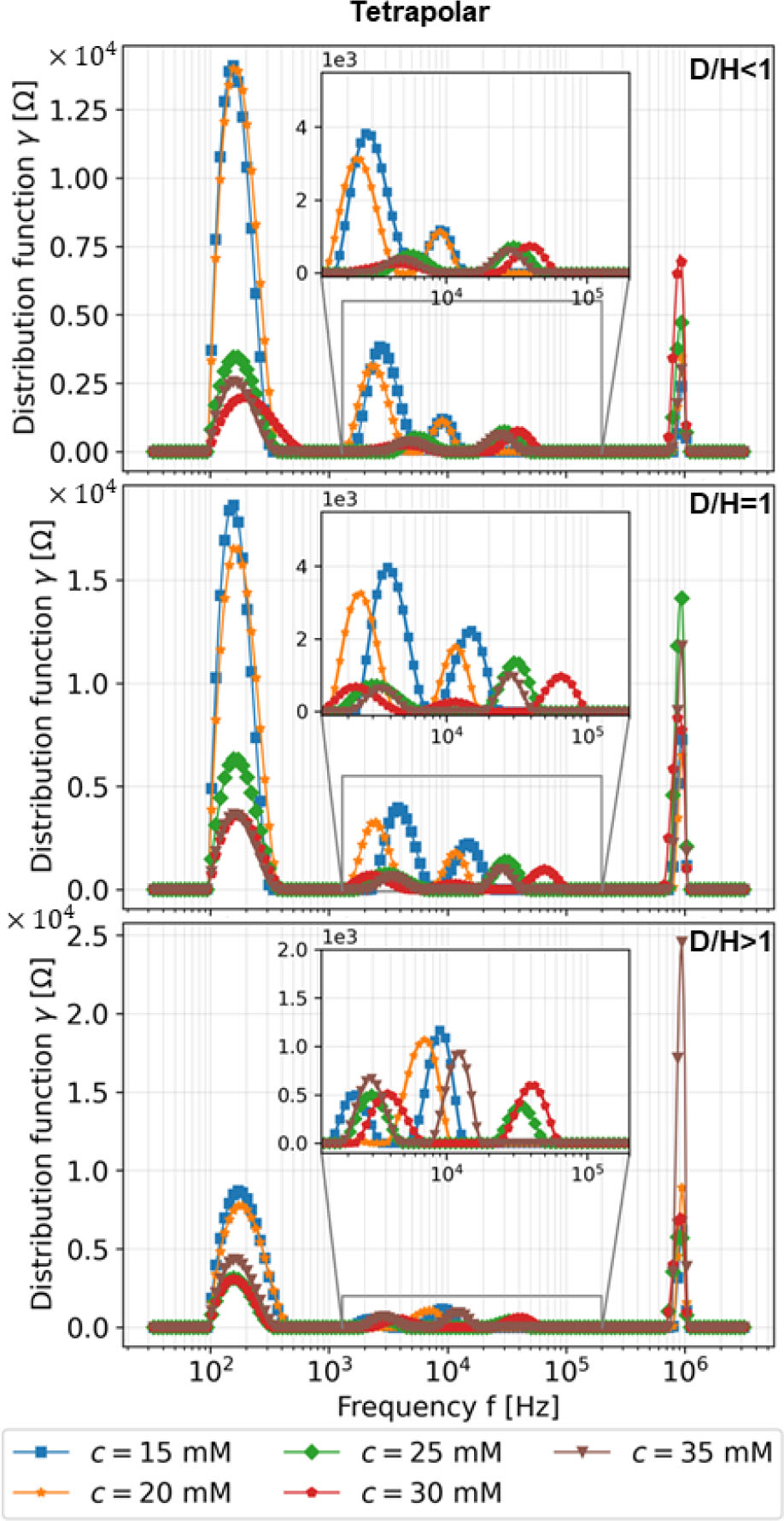
Fig. 9:
DRT results based on experiment with φs = Tetrapolar in all frequencies.
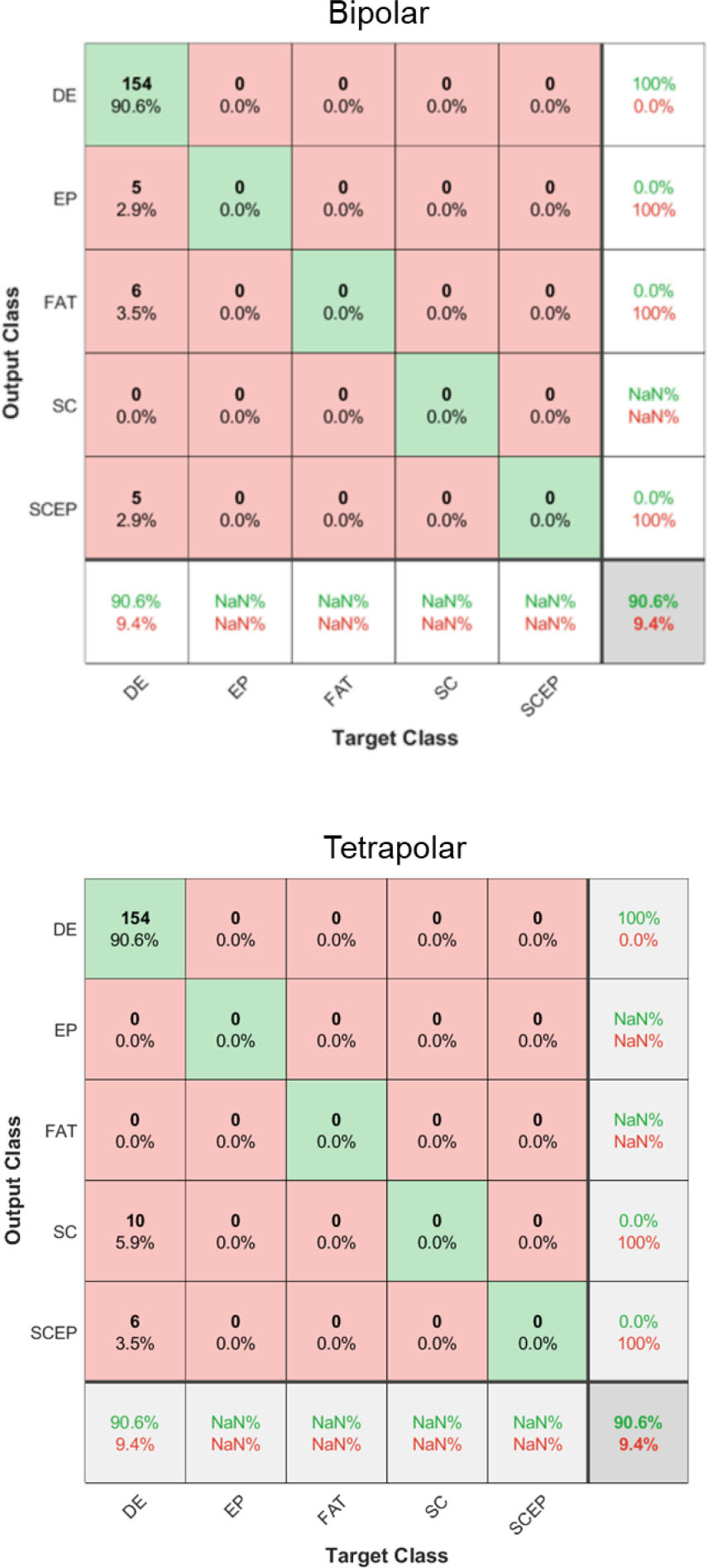
Fig. 10:
The confusion matrix shows the highest validation accuracy of experiments of porcine skin with FNN and four impedance inputs αξ.
Table 4:
Comparison of FNN accuracy Acc in terms of variation of frequency pair selection from experiment results.
| Frequency pair [kHz] | Bipolar Acc [%] | Tetrapolar Acc [%] |
|---|---|---|
| 44.1 | 1.2 | |
| 80.6 | 17.6 | |
| 56.5 | 16.5 | |
| 40.6 | 10.0 | |
| 88.8 | 90.0 | |
| 90.6 | 84.1 | |
| 61.2 | 32.4 | |
| 60.6 | 90.6 | |
| 55.3 | 25.3 | |
| 68.2 | 23.5 |
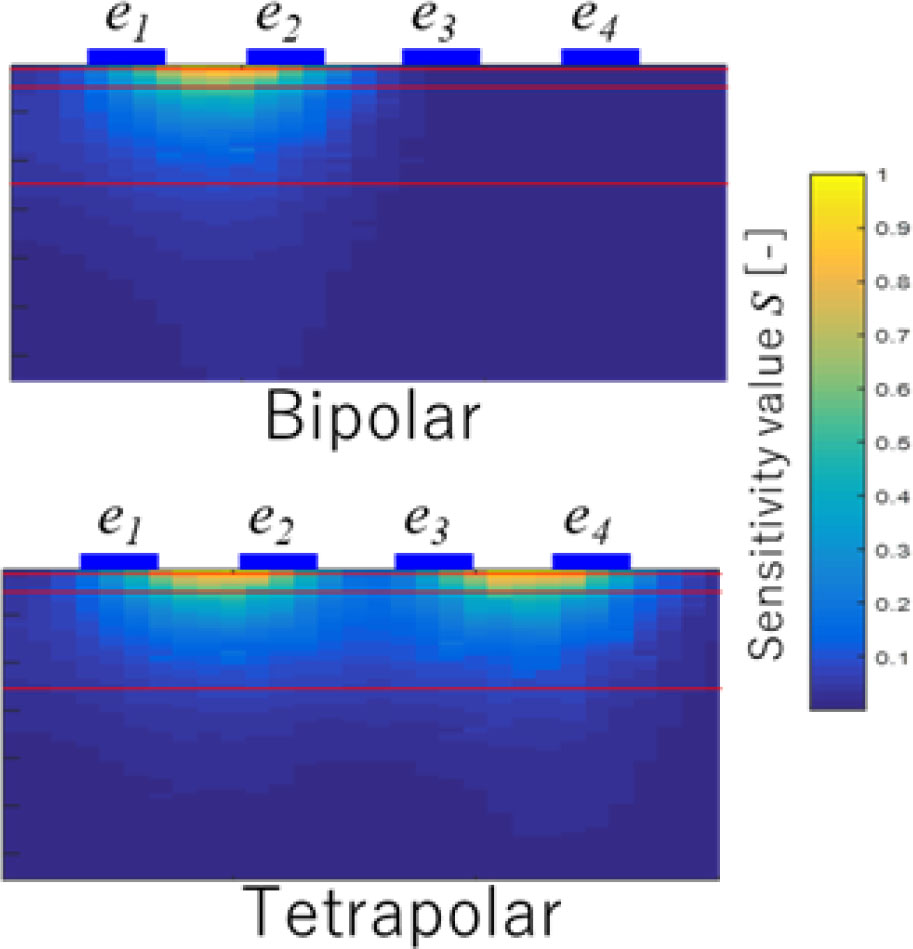
Fig. 11:
Comparison of sensitivity map distribution: bipolar and tetrapolar.
Table 5:
Comparison studies of skin condition detection using only BIS or combined with machine learning algorithm.
| No | Author | Skin Condition | Machine Learning Algorithm & Data Features | Frequency Pair Selection & Reason | Injection Patterns |
|---|---|---|---|---|---|
| 1 | Stig Ollmar [18] | Oral mucosa | NA & Ź, , Ŕ, and | 20 [kHz] & 50 [kHz]: NA | Bipolar |
| 2 | Nicander et al. [7] | Irritant dermatitis | NA & Ź | 20 [kHz] & 1 [MHz]: NA | Bipolar |
| 3 | Ramos & Bertemes-Filho [36] | Skin cancer | NA & Electrical equivalent circuit | 100 [Hz] – 1 [MHz]: To analyze the tetrapolar probe’s sensitivities’ frequency response. It was discovered that frequency has little effect on sensitivity. | Tetrapolar |
| 4 | Ferreira et al. [37] | Skin irritation | NA & Resistance ratio from two depth locations | 20 [kHz] & 50 [kHz]: The ratio of total skin impedance obtained at low (20 [kHz]) and high frequencies (500 [kHz]) is the basis of the irritation indices. | Bipolar |
| 5 | Gessert et al. [12] | Skin melanoma | CNN and SVM & Ź and Images | 1 [kHz] − 2.5 [MHz]: Following the device’s frequency range. | Bipolar |
| 6 | Luo et al. [38] | Skin cancer | NA & Transversal and longitudinal of relative permittivity and conductivity | 8 – 256 [kHz]: For measurements of lesional and normal skin, intraclass correlation coefficient (ICC) conductivity values were low at 8 and 16 [kHz]. In contrast, relative permittivity ICC results displayed excellent repeatability at 16 [kHz]. | Tetrapolar |
| 7 | Sarac et al. [39] | Skin cancer | NA & EIS Score | 1 [kHz] – 2.5 [MHz]: The extracellular environment affects resistance to low frequencies, whereas both the intracellular and extracellular environments influence readings at higher frequencies. | Bipolar |
| 8 | This study | Skin layer classification | FNN & α|Z|, αθ, αR, and αX | are selected based on DRT results. | Bipolar, Tetrapolar |