Have a personal or library account? Click to login
Balancing commercial space services and military sovereignty: Benefits, risks and dependencies Cover

Balancing commercial space services and military sovereignty: Benefits, risks and dependencies

Open Access
|Oct 2026
Read online

Figures & Tables

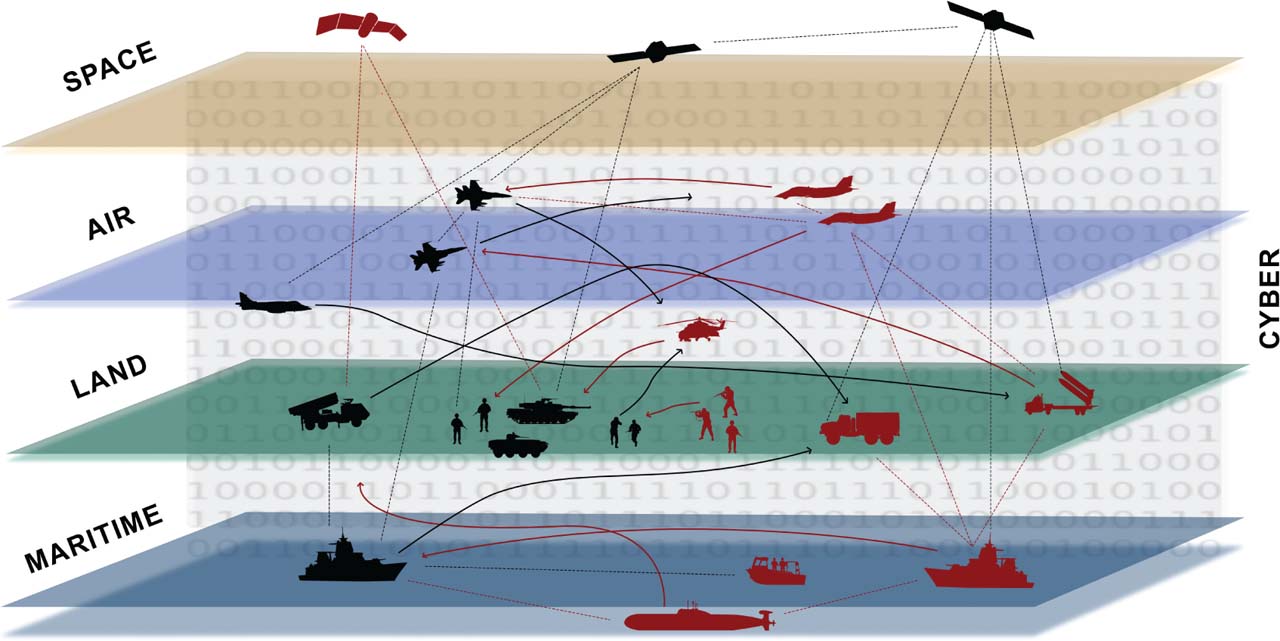
Fig. 1:

Actions are all coordinated between all military domains to achieve the desired effects.
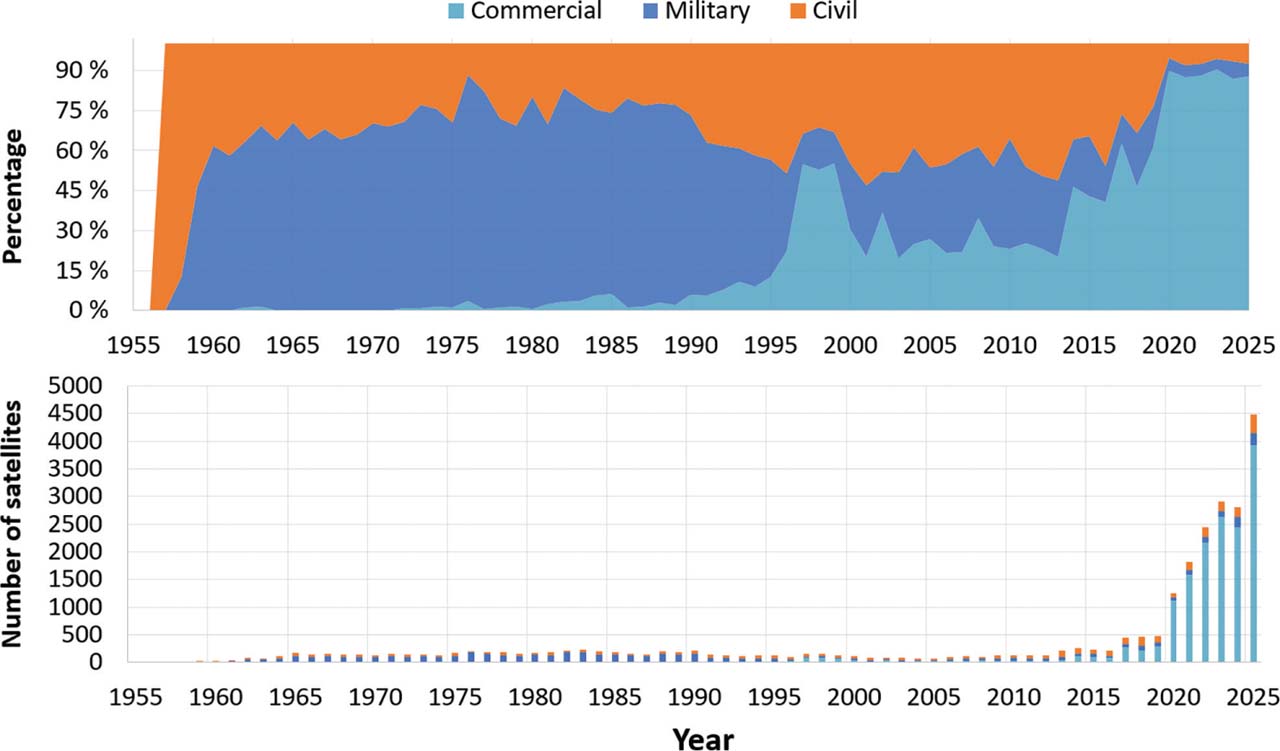
Fig. 2:

Yearly satellite launches categorised by owners/operators. Graphs are based on data from Jonathan McDowell’s General Catalog of Artificial Space Objects (McDowell 2026).

Tab. 1:

Composition of the interview sample by sector.

SectorRespondents
Private space and defence industry6
Public administration and intergovernmental organisations4
Defence administration and armed forces3
Academia2
Total15
Tab. 2:

Benefits and drawbacks of commercial space services relative to sovereign systems.

BenefitsDrawbacks
Availability
  • Many functions can be purchased off the market without launching procurement programmes

  • Access to a range of services impractical to develop in-house

  • What is built follows commercial demand; functions without a commercial market remain unavailable

  • Provider insolvency, mergers, or strategy shifts may interrupt services

  • Export controls, sanctions and political directives may override contracts

Scalability
  • Capacity can be scaled in crises without permanent peacetime capacity

  • Surge capacity requires advance reservation; unreserved capacity disappears when demand peaks

  • Armed forces are one customer among many; providers may favour larger clients in a crisis

Innovation
  • Capabilities are refreshed faster than sovereign programmes can match, funded by private R&D

  • Development priorities are often set by the provider and the wider market, not by military requirements

Costs
  • Avoids high upfront investment

  • Costs shared across a broad commercial customer base

  • Pay-as-needed access

  • Life-cycle costs may be redistributed rather than reduced

  • Spot pricing rises with demand in crises

  • Integration costs are rarely included in pricing

Resilience, Redundancy
  • Proliferated constellations are harder to disrupt than a small number of sovereign satellites

  • Adds redundancy to sovereign systems, reducing single points of failure

  • Commercial systems are less hardened

  • Dual-use systems may become lawful military targets

Interoperability
  • Commercial data is more easily shared with allies than classified sovereign data

–
Competence
  • Access to specialist expertise the armed forces cannot recruit or train themselves

  • Sustained reliance erodes in-house competence and weakens the armed forces’ position as a purchaser

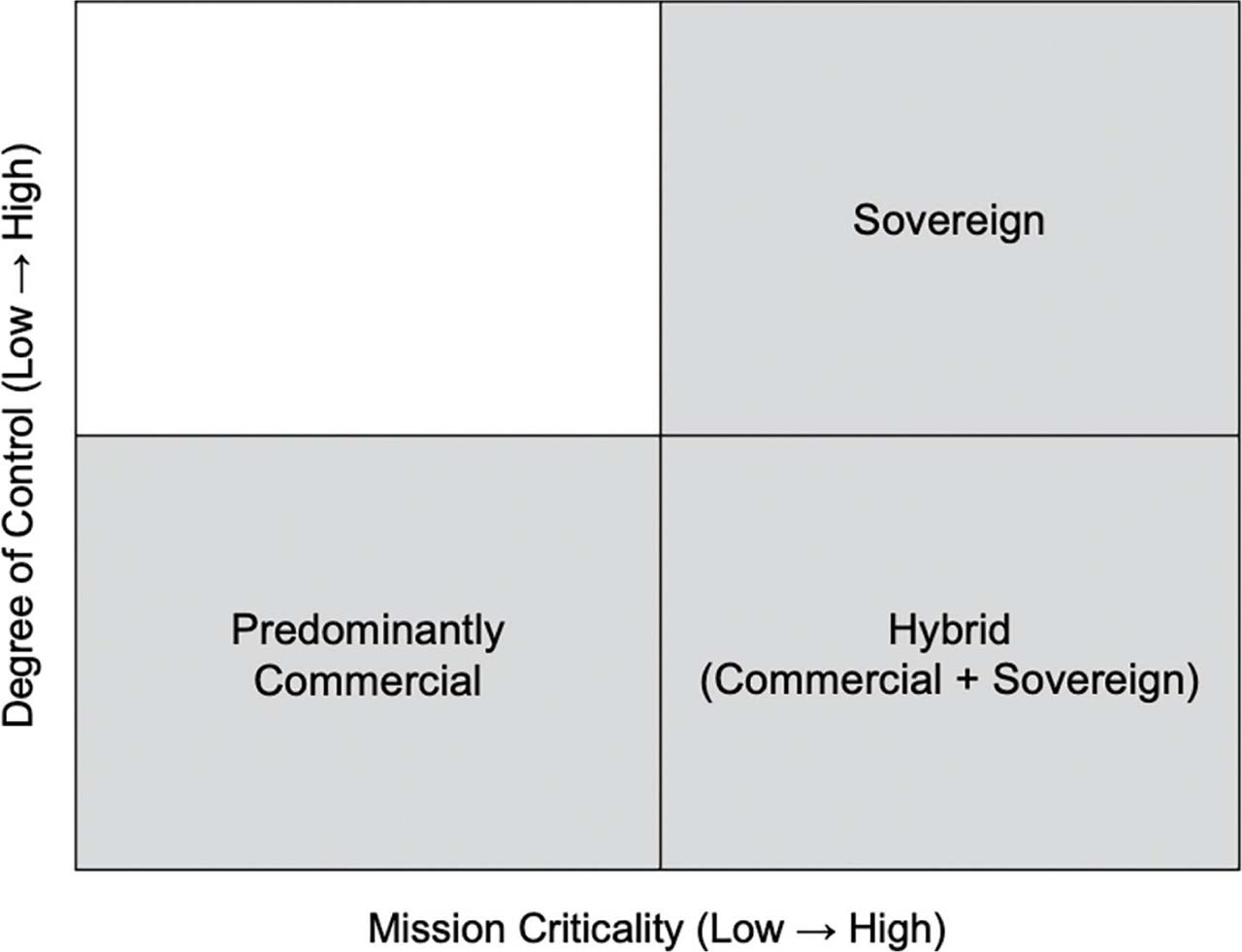
Fig. 3:

The framework for balancing commercial space services and military-owned space systems.

DOI: https://doi.org/10.2478/jms-2026-0002 | Journal eISSN: 1799-3350 | Journal ISSN: 2242-3524
Language: English
Submitted on: Jan 14, 2026
Accepted on: Aug 19, 2026
Published on: Oct 27, 2026
Published by: National Defense University
In partnership with: Paradigm Publishing Services
Publication frequency: 1 issue per year

© 2026 Juuso Liekkilä, Marko Höyhtyä, published by National Defense University
This work is licensed under the Creative Commons Attribution-NonCommercial-NoDerivatives 4.0 License.