
1. Introduction
Military operations today depend on coordinated activity across all domains, and satellites underpin many of their essential functions. They provide intelligence and reconnaissance, enable resilient command-and-control, and support navigation and precision targeting (Figure 1). Without space capabilities, modern armed forces would face severe operational constraints. What distinguishes the present era from earlier phases of space activity is that many of these services are no longer exclusively owned by states. The war in Ukraine demonstrated this vividly. Commercial communications and imagery enabled Ukrainian resilience against a stronger adversary (Connell 2023), while also revealing vulnerabilities in relying on private actors. Services were disrupted by cyberattacks (Gurantz 2024), constrained by contractual and political disputes (Erwin 2025), and shaped by corporate decisions (Abels 2024) that carried strategic consequences on the battlefield. The research problem guiding this article is therefore: How should armed forces decide when commercial space services can be used to replace or augment sovereign systems and when they cannot?
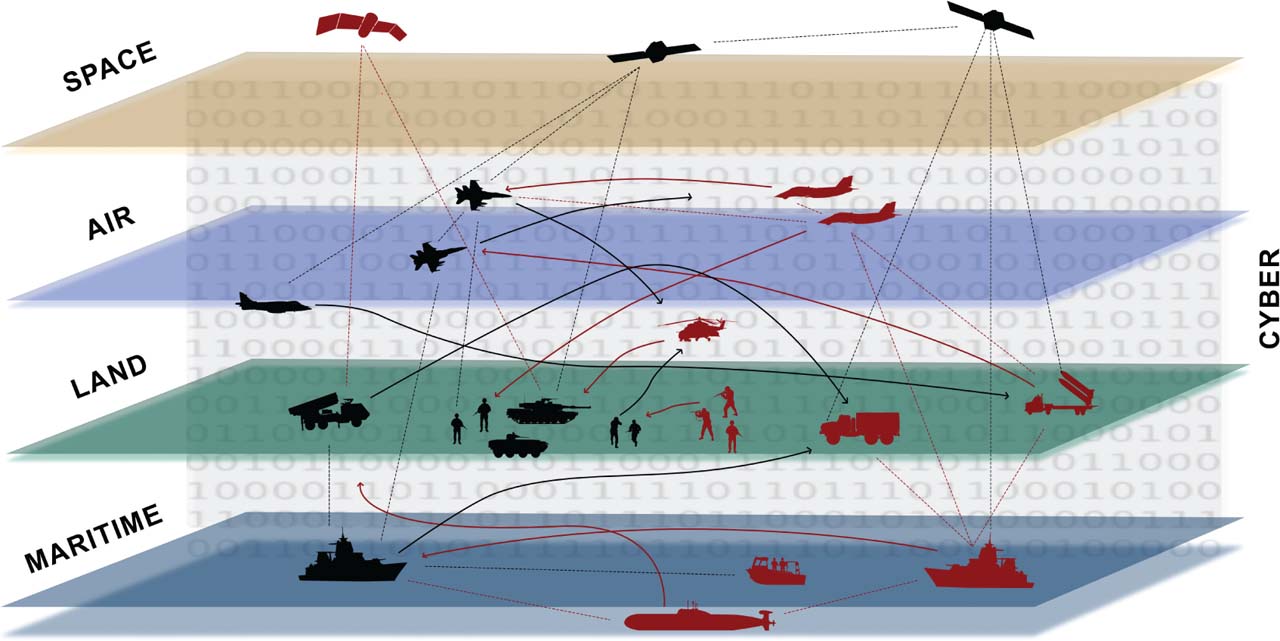
Fig. 1:
Actions are all coordinated between all military domains to achieve the desired effects.
We approach the question through the lens of military outsourcing. Outsourcing here refers to the transfer to an external provider of a function that the armed forces perform, or could perform, themselves. The article pursues three objectives. First, it situates commercial space services within the broader field of military outsourcing and the commercialisation of security. Second, it examines the benefits, risks and dependencies associated with outsourcing space services through an analysis of the existing literature and semi-structured expert interviews. Third, it develops an analytical framework that categorises alternative arrangements into three configurations, based on mission criticality and the degree of control retained by the armed forces, and identifies the conditions under which each is appropriate.
The existing literature approaches the question from two directions. The Commercial Space Integration Strategy of the U.S. Department of Defense differentiates government-primary, hybrid and commercial-primary mission areas, but as a strategy document it prescribes arrangements without articulating why the differentiation is necessary. Policy analyses, in turn, reason case-by-case. Cunniffe et al. (2023) assess commercial suitability mission area by mission area and present their decision criteria, within an argument for expanding commercial use; Kim et al. (2025) and Yonekura et al. (2022) describe mission areas in depth. The reasoning is applied rather than articulated: none abstracts it into a general structure that would explain why the differentiation is necessary. This article proposes neither a rival taxonomy nor a further checklist. It identifies the two dimensions along which such considerations resolve, mission criticality and the degree of control, and so supplies the rationale that existing categorisations presuppose. It also connects two literatures that have developed largely in isolation: military outsourcing and space security.
The article focuses on the consequences of relying on commercial space services once such services exist, comparing sovereign and commercial arrangements through their benefits and drawbacks. Market conditions, service availability and multinational arrangements enter the analysis as factors shaping those consequences, but they are not objects of study in their own right: the article does not examine the structural conditions under which commercial markets emerge, determine which services exist or may become obtainable in each mission area, or assess the benefits and drawbacks of multinational capability development. Each would require a distinct analytical approach and is addressed in separate work.
The article proceeds as follows. This first section has introduced the research problem, the scope of the study and its central research question. Section 2 presents the theoretical background, reviewing the history and theory of outsourcing in military operations, as well as the development of space activities, from Cold War monopolies to today’s commercialised environment. Section 3 sets out the research design and methodology. Section 4 reports the results as an integrated analysis of commercial space services in military use, drawing on both literature and expert interviews, and develops the analytical framework. Section 5 synthesises these findings in a discussion, and Section 6 concludes with the key contributions and implications.
2. Theoretical background
Military outsourcing has a long history. Previous research has identified functional, political and ideological drivers of outsourcing, as well as recurring benefits and risks (Kinsey 2006; Avant 2008; Singer 2008; Bures and Carrapico 2018; Bruneau 2022; Cusumano 2022). The outsourcing of space services follows the same general logic, though its setting differs in several respects. For example, satellite communications and imagery are global enablers, not regional support functions. Their dual-use nature also complicates distinctions between civilian and military infrastructure: a single satellite may provide civilian services while also supporting military operations (Langeland et al. 2026). Private companies operate global constellations that deliver communications, imagery and tracking data to both civilian and military customers. Although commercial satellite services were used as early as the Vietnam War (Spires et al. 1998) and during Operation Desert Storm (United States Space Command 1992), they were very limited in Vietnam and remained relatively limited during Operation Desert Storm. The scale of commercial space operations currently underway in the Russia–Ukraine War is orders of magnitude larger. This raises fundamental questions for security studies. During the Cold War, space assets were strategic monopolies, tightly guarded by national governments. Today, commercial providers supply services that can decisively affect the outcome of conflicts.
2.1. Outsourcing in military operations
Outsourcing in military operations refers to the transfer of tasks or functions traditionally carried out by the state’s armed forces to private actors (Avant 2008). Although it is often portrayed as a phenomenon of the late-20th century, its historical roots are much older. In antiquity and the Middle Ages, mercenary companies were a common supplement to rulers’ limited forces, and in the early modern period, corporations such as the British East India Company maintained private armies with quasi-sovereign authority (Thomson 1994). The rise of national armies reduced the visibility of such arrangements, yet outsourcing never disappeared. Even during the Cold War, while mass conscription armies dominated, states relied on contractors for niche technical functions and logistics support (Cusumano 2022). The end of the Cold War created ground for a renewed wave of outsourcing. Several trends converged. Western militaries downsized significantly as the perceived need for mass armies diminished with the collapse of the Soviet Union (Singer 2008). Many states abolished conscription, shifting to professional but smaller forces. At the same time, neoliberal economic reforms encouraged governments to privatise services previously considered core state responsibilities, including parts of defence (Krahmann 2010). This development coincided with an increase in crisis management operations, which demanded operational presence abroad despite reduced force structures. Outsourcing became the mechanism that reconciled shrinking militaries with growing missions (Cusumano 2022).
The literature identifies several motivations for outsourcing. Functional considerations are prominent. Militaries often lack the in-house expertise required for rapidly evolving technologies, and contractors can supply skills and capacity that cannot be generated internally (Singer 2008). The political dimension is also essential, as outsourcing reduces the domestic visibility of military operations and lowers the risk of politically costly casualties (Cusumano 2022). Ideological factors also matter: The ascendancy of market-based governance in the 1980s and 1990s legitimised privatisation in the security sector (Krahmann 2010). To these must be added the broader shift in the security environment after 1991. With no peer adversary on the horizon, governments assumed they could take greater risks in reducing their force structures, while still meeting diverse operational commitments through external support.
The benefits of outsourcing are frequently emphasised in both scholarship and practice. Outsourcing is said to deliver cost efficiency by allowing militaries to pay only for the services they need, while companies distribute development and operational expenses across a broader client base. It promises flexibility, enabling armed forces to adjust their capacity rapidly to meet surging operational demands without committing to permanent increases in workforce or infrastructure (Cusumano 2022). Companies may possess forms of expertise and professional competence that are absent within the armed forces’ own personnel (Häyhtiö and Mattila 2022). Another benefit lies in innovation: The private sector often develops new technologies more quickly and outsourcing allows militaries to tap into these innovations (Singer 2008).
However, the drawbacks are equally important. Loss of control is frequently cited: Militaries that rely on private firms cannot fully dictate how or when services are provided (Singer 2008; Cusumano 2022). Underlying these risks is a structural divergence between the logics of the public and private sectors: while public authorities are mandated to ensure states’ safety and security, private companies fundamentally prioritise profit-making. Profit-maximisation may lead companies to withdraw from providing unprofitable services, even when they are vital for the states, underscoring the need for parallel public provision (Gurtuna 2013). Although Corporate Social Responsibility (CSR) frameworks, such as stakeholder theory and Carroll’s CSR pyramid, suggest that firms may act ethically and take societal impacts into account, responsible conduct is not systematically rewarded by the market (Crane et al. 2008). Competition therefore offers no assurance that providers will prioritise societal or security interests over commercial ones. The possibility of contract termination or reduced service availability represents risks when essential capabilities rely on commercial providers. Outsourcing adds further risks by complicating command relationships and creating uncertainties in the conduct of warfare (Cusumano 2022). At a more normative level, outsourcing blurs the distinction between civilian and military roles (Singer 2008). More fundamentally, privatisation does not simply reduce state control over the use of force but redistributes it among state and non-state actors, and sustained reliance on external providers may gradually erode the state’s own capabilities (Avant 2008).
Together, these dynamics have shaped what scholars now describe as commercial military service providers, a global sector spanning logistics providers, information technology companies, intelligence firms, private security companies and increasingly high-technology enterprises (Singer 2008). What distinguishes the current phase from earlier eras is the expansion of outsourcing into domains once considered inherently sovereign. Intelligence, cyber defence and space-based services are now widely available on commercial markets and integrated into military operations. This shift underscores a broader transformation in the relationship between states and markets: Some armed forces are no longer self-sufficient organisations but depend in critical ways on private companies whose interests, capacities and vulnerabilities may shape the course of conflict as much as states’ actions (Cusumano 2022).
2.2. The evolution of space activities
From the very beginning, space has been both a technological frontier and a military domain (Bowen 2022). The launch of Sputnik in 1957 was not only a scientific breakthrough but also a strategic signal from the Soviet Union. This initiated an era in which space became both a symbol of prestige and an arena for great-power competition. The United States and the Soviet Union incorporated satellites into their nuclear arsenals, using them for reconnaissance, early warning, navigation and secure communications (Sheehan 2007). By the late 1960s, satellites had become indispensable for strategic stability. Reconnaissance systems enabled verification of arms control agreements, early warning satellites provided detection of missile launches, while military satellite communications allowed global command-and-control, making space a key element of nuclear deterrence (McDougall 1997). Space also gradually started to shape conventional operations during the 1991 Gulf War, when Coalition forces relied heavily on satellite-based navigation, communications and imagery to conduct precision strikes and rapid manoeuvre (United States Space Command 1992). Space was no longer confined to the strategic background but had become an operational enabler of battlefield dominance.
The end of the Cold War transformed the development of space activities. With the collapse of the Soviet Union, defence budgets contracted and the urgency of maintaining prominent state-owned constellations diminished. At the same time, technological advances in microelectronics, satellite miniaturisation and launch services lowered barriers to entry for private actors (Bousedra 2023). Commercial ventures began to offer services in telecommunications, broadcasting and Earth observation. Companies are shifting from roles as contractors for state programmes to independent service providers offering capabilities to both governments and civilian customers (Bousedra 2023).
During the 2000s, the rise of so-called New Space accelerated commercialisation. Venture capital, ambitious entrepreneurs and new business models challenged traditional state dominance (Denis et al. 2020). Companies developed reusable rockets, pioneered constellations of small satellites, and developed business models built around mass production and rapid deployment (Bousedra 2023). Costs fell dramatically, enabling rapid scaling and more frequent launches (Peperkamp and Bolder 2024). Civil space programmes moved in the same direction. NASA relies on SpaceX to carry astronauts and supplies to the International Space Station (Langeland et al. 2026). An agency that had designed, owned and operated its own systems became a customer buying a service. The military transition examined in this article follows the same logic in a domain where the consequences of losing control are more severe. Militaries benefited from this wave of innovation, gaining access to high-resolution imagery, global broadband communications and advanced analytics without funding large-scale sovereign programmes. Militaries increasingly turned to these offerings to fill gaps in their own capabilities, particularly in areas where national resources were limited or outdated. For smaller states, purchasing services from commercial providers was often the only feasible way to access advanced space functions (Peperkamp and Bolder 2024).
A central characteristic of modern space activity is its dual-use nature. Most satellites today serve customers across different sectors simultaneously. A single satellite constellation may deliver broadband internet to households, support humanitarian organisations in disaster zones, and facilitate secure command-and-control for armed forces in active conflict (Moltz 2024). The dual-use nature offers advantages such as economies of scale and widespread availability. However, it also introduces risks. The blurred boundary between civilian and military use complicates the legal status of satellites. If commercial satellites directly support combat operations, they may be considered lawful military objectives, even if their disruption may affect a large number of civilian users worldwide (Beard et al. 2024). The prevailing view among experts is that commercial satellites supporting military operations constitute lawful military objectives under international law; however, there remains considerable uncertainty regarding which forms of attack would meet the requirements of military necessity and proportionality (Kim et al. 2025). Satellites are exposed to cyber intrusions, jamming, spoofing and potentially kinetic attacks (Weeden and Samson 2024). The war in Ukraine illustrated these risks and possibilities. Commercial communication services enabled Ukrainian resilience, while commercial imagery made Russian troop movements visible to a global audience (Gurantz 2024). At the same time, cyber operations targeted commercial constellations, and disputes over service provision highlighted the influence of corporate decisions on military outcomes (Abels 2024).
Overall, the trajectory of space activities reflects a shift from Cold War-era state monopolies to a 21st-century environment where commercial actors play a dominant role (Figure 2). Armed forces are now only one customer group within a global market for space services, competing with other users. Space capabilities are no longer scarce sovereign resources but widely available commodities, though access can still be contested. The dual-use nature of satellites blurs the line between civilian and military uses, creating risks of escalation and legal ambiguity. Reliance on commercial services integrates companies into the fabric of national security, making them active participants in international conflicts.
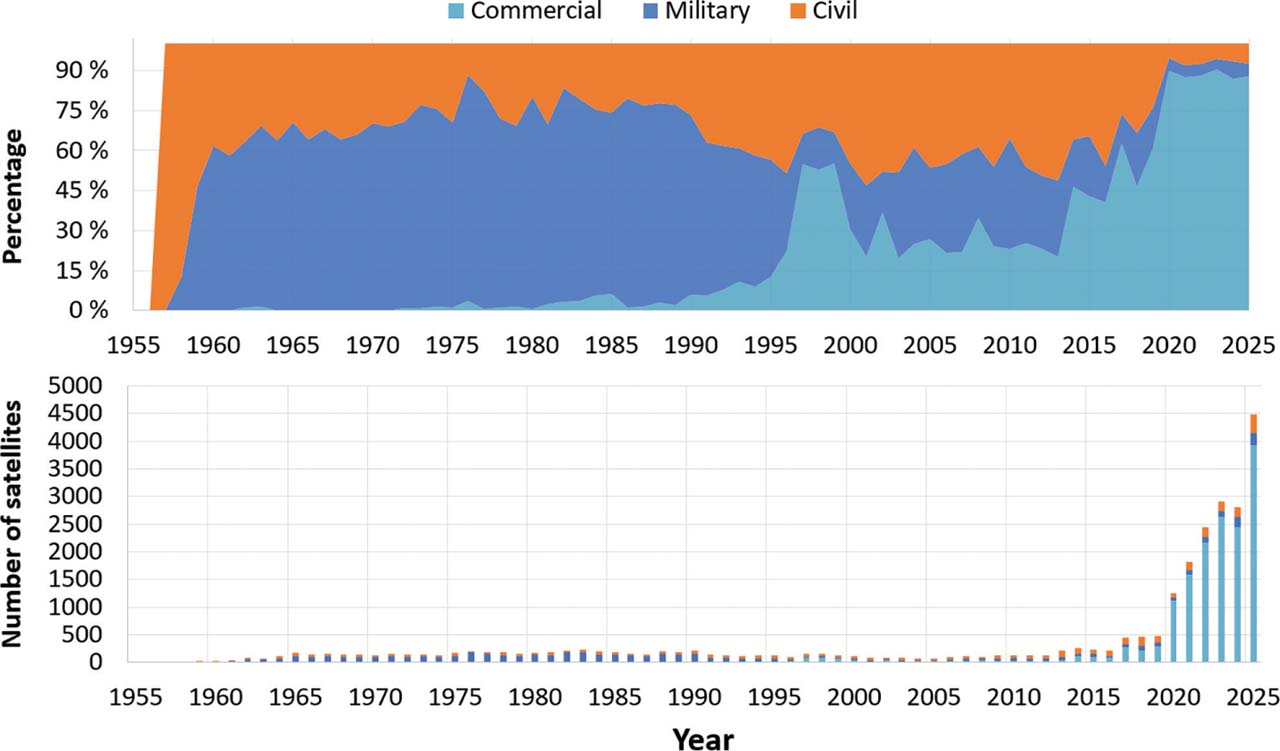
Fig. 2:
Yearly satellite launches categorised by owners/operators. Graphs are based on data from Jonathan McDowell’s General Catalog of Artificial Space Objects (McDowell 2026).
3. Research design and methodology
In this study, we employ a qualitative research design that combines an integrative literature review with semi-structured expert interviews. The objective was to analyse the outsourcing of military space services by situating the phenomenon within the established outsourcing theory and by exploring its practical implications through expert perspectives. We adopt a critical realist position. Material and technical characteristics of space capabilities constrain what armed forces can do, but their operational significance is interpreted through political interests, institutional cultures and perceptions of risk. Consequently, expert interviews are treated as informed, position-dependent interpretations rather than objective accounts of reality. This perspective also underpins the triangulation of literature and interviews, where disagreement is interpreted as evidence of competing interpretations rather than measurement error.
An integrative literature review was chosen as the primary means of synthesising prior knowledge. This approach enables the combination of academic studies, policy documents, think tank reports and industry publications, all of which are necessary in a field where peer-reviewed research is limited and much of the relevant material appears as grey literature. The review focused on sources on military outsourcing in general, as well as on commercial space services, dual-use technologies and the role of private actors in defence. The literature review served as the foundation for constructing the theoretical framework and for deriving hypotheses on the benefits and drawbacks of commercial space services for military use.
To complement the literature, we conducted 15 semi-structured interviews with experts from industry, public administration, the armed forces and academia. Purposive sampling was used to ensure a diversity of perspectives. Table 1 summarises the composition of the sample. All interviews were conducted under conditions of confidentiality. Interviewees were encouraged to speak as individual subject-matter experts rather than as official representatives of their organisations, to promote candid reflection on sensitive issues. The semi-structured interview format allowed respondents to elaborate on their areas of expertise, thereby enabling the capture of knowledge and emergent perspectives not readily available in written sources. The data collection took place in early 2025 either face-to-face or via online meetings and typically lasted between 45 and 90 minutes. A set of guiding questions was prepared and used to ensure comparability across interviews.
Tab. 1:
Composition of the interview sample by sector.
| Sector | Respondents |
|---|---|
| Private space and defence industry | 6 |
| Public administration and intergovernmental organisations | 4 |
| Defence administration and armed forces | 3 |
| Academia | 2 |
| Total | 15 |
The interview material was analysed as a collective body of knowledge rather than as individual accounts. Accordingly, the analysis focuses on synthesising recurring themes across the interviews instead of attributing specific statements to individual respondents. The primary purpose of the interviews was to corroborate, refine or challenge the theory derived from the literature. Analysis followed the principles of qualitative content analysis. Interviews were documented through detailed notes and analysed in Finnish, the language in which they were conducted. The notes were subsequently reviewed by the interviewees, who confirmed that the key points had been recorded accurately. Coding was carried out manually by the first author. In the first stage, an inductive process assigned open codes to recurring statements concerning benefits, risks, dependencies, contractual arrangements and political constraints, and these codes were then clustered into higher-order thematic categories. In the second stage, the categories were mapped deductively onto the outsourcing literature, particularly the functional, political and ideological drivers, and the risks of dependency, accountability and legitimacy. Triangulation between the literature and the interviews was used to strengthen the validity of findings, with particular attention to areas of convergence and divergence.
The study is not without limitations. The relatively small number of interviews constrains the generalisability of the results, although the aim was depth rather than breadth. All the interviewees were Finnish, which may bias the perspectives towards Western approaches. Furthermore, the study relies exclusively on publicly available material, excluding classified data that could alter the picture of military–commercial interaction in the space domain. Finally, some commercial sensitivities may have influenced how openly respondents discussed vulnerabilities. Despite these limitations, the combination of an integrative review and interviews provided a robust foundation for analysis. By bringing together theoretical and empirical material, it was possible to assess outsourcing in both conceptual and practical terms and to contribute to ongoing debates on the commercialisation of warfare and the future of space security.
4. Results
Both theoretical and empirical findings confirm that commercial space services offer significant benefits in agility, scalability, cost efficiency and innovation. Still, they also introduce vulnerabilities related to control, politics and technology. Over the past decade, the availability and performance of commercial satellites and space-based services have grown substantially. Commercial systems now match or exceed many military space capabilities. Satellites are inherently dual use. This creates multiple dilemmas, such as prioritisation and targeting, that are far more acute than in sectors where civilian and military roles are easier to separate. In addition, commercial providers operate within regulatory regimes shaped by export controls, sanctions and the foreign policies of their home states. These factors may make the outsourcing of space capabilities particularly fragile in times of crisis. Altogether, these characteristics highlight that commercial space services represent one of the most technologically advanced and strategically sensitive sectors in the broader commercial military service industry rather than an isolated phenomenon. Armed forces thus confront a strategic dilemma: They cannot forgo the advantages of commercial space services, yet they must manage the risks of dependence on actors whose priorities and vulnerabilities are not entirely under state control.
4.1. Benefits and drawbacks of outsourcing
Building on the drivers and risks of military outsourcing set out in Section 2—the functional, political and ideological motives, and the risks of dependency, control and legitimacy—the following sections examine how these dynamics manifest specifically in the space domain. Availability of commercial services varies across functions, but many services are widely available. For example, high-resolution imagery and synthetic aperture radar data can now be purchased from the market, providing tactical insight in near real-time (Cunniffe et al. 2023). Commercial communications constellations offer broadband services that are often more extensive than national systems (Wong et al. 2023). For armed forces, this access to advanced capabilities translates into improved situational awareness and operational flexibility. Commercial capabilities can be accessed more quickly through service provision than through the procurement processes associated with the armed forces’ own systems (Cunniffe et al. 2023). The use of commercial space services also enhances resilience by making it more challenging to disrupt space-based capabilities (Wong et al. 2023). Commercial systems also provide redundancy for the armed forces’ own systems, reducing their dependence on any single system (Cunniffe et al. 2023). On the other hand, there are no commercial missile warning services available (Cunniffe et al. 2023), while commercial positioning, navigation and timing services remain minimal (Wong et al. 2023).
Driven by market pressures and unencumbered by slow procurement procedures, companies often provide capabilities that are technologically 5–10 years ahead of military systems, as traditional military procurement programmes may take a decade from design to deployment (Cunniffe et al. 2023). This agility allows them to adapt rapidly to technological advances and customer needs. Interviewees noted that commercial companies can innovate and deploy new technologies more quickly than state-led programmes. A considerable amount of capital flows through companies and is directed towards research and development. Some capabilities emerge unexpectedly, without specific demand from the armed forces. The emergence of large constellations of small satellites, capable, for example, of providing near-continuous imagery of any location on Earth, was cited as evidence of the private sector’s dynamism. Respondents attributed a part of this to how capital is raised: private ventures can fund development incrementally and absorb the risk of failure, whereas a sovereign programme must commit a large appropriation in advance.
Scalability is another advantage identified in both the literature and the interviews. Rather than maintaining permanent excess capacity, armed forces can purchase additional imagery or communications capacity to meet temporary surges in demand (Cunniffe et al. 2023), an application of the general principle that contractors allow states to expand capacity in wartime without sustaining large standing forces in peacetime (Singer 2008). Interviewees noted that this flexibility is difficult to achieve with sovereign constellations but qualified it in an important way. Surge capacity, they argued, is not a property of the market but a product of contractual preparation: unreserved capacity disappears as demand rises, whereas capacity secured in advance remains available. Where capacity cannot serve every customer, a small state’s forces may simply be outbid. This sharpens the literature’s caution that profit-oriented providers cannot be expected to hold surplus capacity (Astorino-Courtois et al. 2018). It also reflects a more general feature of purchased security: influence follows purchasing power (Avant 2008).
Cost featured prominently in both sources, though with different emphases. By procuring services rather than building sovereign constellations, militaries share costs with other users (Wong et al. 2023), and interviewees stressed that this reduces the burden of high investment while still giving access to high-quality data. Interviewees also mentioned that developing large sovereign constellations would be prohibitively expensive for most states. Commercial systems do not always match the performance of purpose-built military ones, but often meet requirements adequately at lower cost (Cunniffe et al. 2023). However, cost advantages cannot be regarded as an unequivocal benefit, as costs can vary across situations and functions (Yonekura et al. 2022). Some interviewees pointed out that life-cycle costs are not necessarily lower but redistributed differently compared with sovereign systems. In this context, concerns were also raised about potential hidden expenses in service pricing. Integration into military systems is not often included in prices. Moreover, some services are purchased at so-called spot prices, meaning that costs fluctuate with demand. If the armed forces have not secured fixed-price agreements or reserved specific capacity in advance, the price of services may rise sharply under exceptional circumstances. Detailed information on price volatility and capacity allocation is rarely publicly available, as such data are commercially sensitive; literature and interviews, nevertheless, suggest that variation can be significant. Altogether, the economics of shared infrastructure still make space outsourcing an attractive option even for larger militaries that possess sovereign capabilities.
Interoperability and data sharing were raised from different angles in the literature and the interviews. Because no single state owns commercial services, they can provide a neutral platform for multinational operations. Images purchased from commercial providers, for example, can be shared more easily among allies than those from a sovereign system subject to national security restrictions (Gurantz 2024). In addition, commercial data can more readily be used within the armed forces themselves, for instance, in exercises or training, because it is not subject to the same security classification constraints (Cunniffe et al. 2023). Interviewees approached the question through standards: because commercial providers build to established commercial standards, their services are more likely to be compatible with those of allies. Standardisation also has a second consequence that the literature does not emphasise, since services built to common standards are more readily substituted for one another, leaving the buyer less tightly bound to any single provider.
At the same time, reliance on commercial providers carries serious risks. The most fundamental concern is loss of control. The first layer of fragility concerns market dynamics. The sustainability of commercial availability depends not only on technological maturity and demand but also on the long-term viability of providers. High-profile bankruptcies and consolidations, such as OneWeb’s restructuring, the collapse of several launch start-ups, and the volatility in the smallsat and Earth-observation markets, demonstrate that commercial availability may be fragile, particularly in sectors with high upfront capital expenditure and uncertain revenue models (Yonekura et al. 2022). This is not limited to bankruptcies but also includes changes in service availability and service types. Both public-sector and industry representatives emphasised that the interests of armed forces and companies differ, which can create disadvantages or risks for the military. Although this divergence also carries risks for providers, including reputational exposure, political entanglement and restrictive security requirements, the present analysis focuses on the implications for the armed forces. Interviewees argued that businesses are inherently opportunistic and will allocate scarce resources where profits are most significant, leaving the military as merely one customer among many. This concern reflects a recurrent theme in the literature on corporate responsibility, where profit-driven motives may diverge from governmental necessities in general (Carroll 1991) and, more specifically, in the space sector (Gurtuna 2013). However, the interviewees saw capacity constraints more critically than the literature did. In crises, commercial providers may face capacity constraints and competing demand, leading them to prioritise larger or strategically more significant customers, leaving smaller armed forces exposed despite existing contracts, a dynamic that interviewees explicitly compared with the reallocation of critical supplies and services observed during the COVID-19 pandemic. The exposure persists despite contractual commitments because contracts are structurally limited. No agreement can anticipate every contingency, and where a contract is silent, discretion falls to whoever holds residual rights of control over the asset (Hart and Moore 1990). Nor does a binding contract preclude breach: a party will not perform where the gain from non-performance exceeds the damages payable (Posner 1986). While monetary damages may restore losses in ordinary commercial relationships, they cannot compensate for the loss of a military operation or strategic opportunity.
Another layer of fragility is political. Contracts cannot be separated from the regulatory environments in which companies operate. Export controls, sanctions or government orders may override agreements, restricting service delivery even when technical capacity exists (Wong et al. 2023). Respondents considered foreign providers vulnerable to the foreign policy constraints of their governments. Even robust contracts could be overridden by political directives. This is not a matter of states disregarding legal obligations: export controls, sanctions and national security exemptions are themselves instruments of law, and it is through them that contractual commitments are lawfully set aside. This observation complements the argument in the literature that outsourcing introduces dependencies not only on firms but also on the states in which they are incorporated. The geopolitical alignment of a provider’s home country can therefore directly affect whether services are available in wartime. A recurrent theme among the interviewees was favouring domestic providers to mitigate risks of service loss. Domestic firms are less likely to be affected by foreign political decisions, and under national space law, they may even be obliged to supply data to authorities during emergencies. Interviewees also described the instruments through which states can shape provider behaviour, and the limits of each. Regulation constrains what firms may do, but it reaches only providers within the state’s jurisdiction, which is much of what makes domestic provision attractive; pressed too far, however, it may drive a firm to relocate, in which case the state surrenders the very control it sought to exercise. Interviewees also cautioned that nationality is a legal category rather than a description of where a provider’s capital, ownership or data routing actually reside.
Technical vulnerabilities are also pronounced. A recent study demonstrates that GEO-satellite links may carry sensitive military data unencrypted, because organisations face certain disincentives to encryption, like capacity and cost penalties (Zhang et al. 2025). Also, more broadly, commercial satellites may not be hardened to the same extent as military systems (Wong et al. 2023). They are susceptible to jamming, spoofing and cyber intrusions, and in the future, they may also face kinetic threats. The war in Ukraine has already demonstrated how adversaries target commercial communication systems (Connell 2023). Interviewees added two observations. Commercial systems are often not explicitly designed for security-critical use, and attempting to harden dual-use technology for military purposes was described as the least satisfactory solution, yielding compromises that serve neither purpose well. At the same time, respondents pointed to the Ukraine War as evidence that commercial providers can adapt their systems rapidly once operational demands become clear.
Legal and normative ambiguities compound these risks. The vast number of dual-use satellites makes targeting dilemmas far more acute than in areas where civilian and military roles are easier to distinguish (Steer and Stephens 2021). Dual-use satellites can be interpreted as military targets in many cases, and such an interpretation not only endangers the satellites themselves but also the companies and personnel operating them. Interviewees extended this concern from systems to people. Employees of firms supporting an armed conflict may face online harassment and intimidation, and respondents considered the risk of becoming a target of cyber and information operations to rise markedly in a crisis.
The interviews did more than corroborate the literature. While they confirmed the broad pattern of benefits and risks identified in existing research, they also introduced considerations the literature addresses only obliquely. One concerns the breadth rather than the depth of capability. Respondents emphasised that outsourcing gives armed forces access to a range of different services that would be impractical to develop in-house for financial or personnel reasons, particularly for a smaller state. This capability of diversification is distinct from the redundancy and resilience the literature emphasises, which concern having several sources for the same capability. Redundancy protects against the failure of a given service; diversification extends the range of services available to all. Two further considerations concern drawbacks. The first is the erosion of expertise. That sustained outsourcing can degrade a state’s own in-house expertise is anticipated in the outsourcing literature (Avant 2008); what the interviews specified was the form this takes. Respondents warned that reliance on commercial services gradually depletes competence in space operations, procurement and system integration, and weakens the armed forces’ position as a purchaser: without internal expertise, a military cannot specify what it needs or recognise when a provider is steering it towards services that suit the provider’s business model. Dependence thus erodes the competence required to manage dependence. The second is capacity: providers may prioritise larger clients or lack the operational scale to meet demand in a crisis. That providers respond more readily to larger consumers is recognised in the literature (Avant 2008); the interviews located this in crisis conditions specifically, where capacity cannot serve every customer and allocation becomes openly competitive.
The benefits and drawbacks of commercial space services are summarised in Table 2.
Tab. 2:
Benefits and drawbacks of commercial space services relative to sovereign systems.
| Benefits | Drawbacks | |
|---|---|---|
| Availability |
|
|
| Scalability |
|
|
| Innovation |
|
|
| Costs |
|
|
| Resilience, Redundancy |
|
|
| Interoperability |
| – |
| Competence |
|
|
4.2. The framework for balancing commercial and sovereign systems
Based on the findings of this study, the choice between commercial space services and military-owned space systems should not be treated as a binary decision but as a balancing of operational advantages against risks. What distinguishes this balancing from conventional commercial risk management is that the risks are neither priceable nor independent: they concentrate at the moment of crisis, when political directives and export controls can override contractual guarantees, and their materialisation is measured in operational failure rather than in financial loss. This balance can be structured around two factors: mission criticality and the degree of control.
Mission criticality is treated here as a decision criterion applied where commercial provision already exists. It refers to the extent to which a function is indispensable to military operations, forming a continuum defined by the severity and immediacy of the consequences if a capability were degraded, denied or lost. Some functions are existential, meaning that their loss would prevent mission accomplishment, while others primarily enhance efficiency, situational awareness or operational flexibility. As mission criticality increases, tolerance for uncertainty regarding access, service continuity and service prioritisation decreases accordingly. It sets the acceptable level of risk, as higher criticality amplifies the consequences of contractual, political and technical vulnerabilities, strengthening the case for sovereign control or robust mitigation measures.
The degree of control captures the cumulative vulnerabilities created by reliance on commercial providers. It is not limited to contractual arrangements but spans political, technical and normative dimensions. Contractual guarantees may be overridden by political decisions in the provider’s home state; technically, commercial systems may be more exposed to interference; and normatively, the dual-use nature of commercial satellites introduces legal ambiguity. The degree of control also encompasses the armed forces’ ability to influence service prioritisation during crises, shape system development in line with military requirements, and ensure reliable integration into command-and-control systems. While carefully structured contracts and partnerships can mitigate some of these limitations, they cannot fully replicate the level of control in sovereign systems. Significantly, control is also shaped by institutional competence: even formally available services may become inaccessible under competitive pressure, and low-level in-house expertise further constrains the armed forces’ ability to influence prioritisation, integration and long-term system development. Control is therefore a function of institutional capability as much as of contractual guarantees, which is why formally equivalent contracts can yield very different degrees of actual control.
The framework does not determine whether commercial services should or should not be used in specific missions. Instead, it shifts the focus from the mere availability of commercial space services to their operational usability under varying strategic and operational conditions. The framework is non-prescriptive: it serves as an analytical tool that categorises alternative arrangements based on mission criticality and control, supporting military planning by structuring trade-offs, clarifying the implications of different choices and enabling informed strategic judgement.
Figure 3 presents this framework. The horizontal axis represents mission criticality, while the vertical axis represents the degree of control. The framework provides a tool for evaluating how to balance commercial and sovereign solutions where availability exists. The commercial space services do not constitute a uniform category; their substitutability, criticality and acceptable risk levels vary across mission areas and may change between peacetime and wartime. Interviewees also emphasised that the importance of commercial services varies depending on circumstances and a state’s sovereign capabilities. For many smaller states, sovereign or even hybrid solutions may be structurally constrained, leaving commercial services as the only feasible option despite the dependencies they entail.
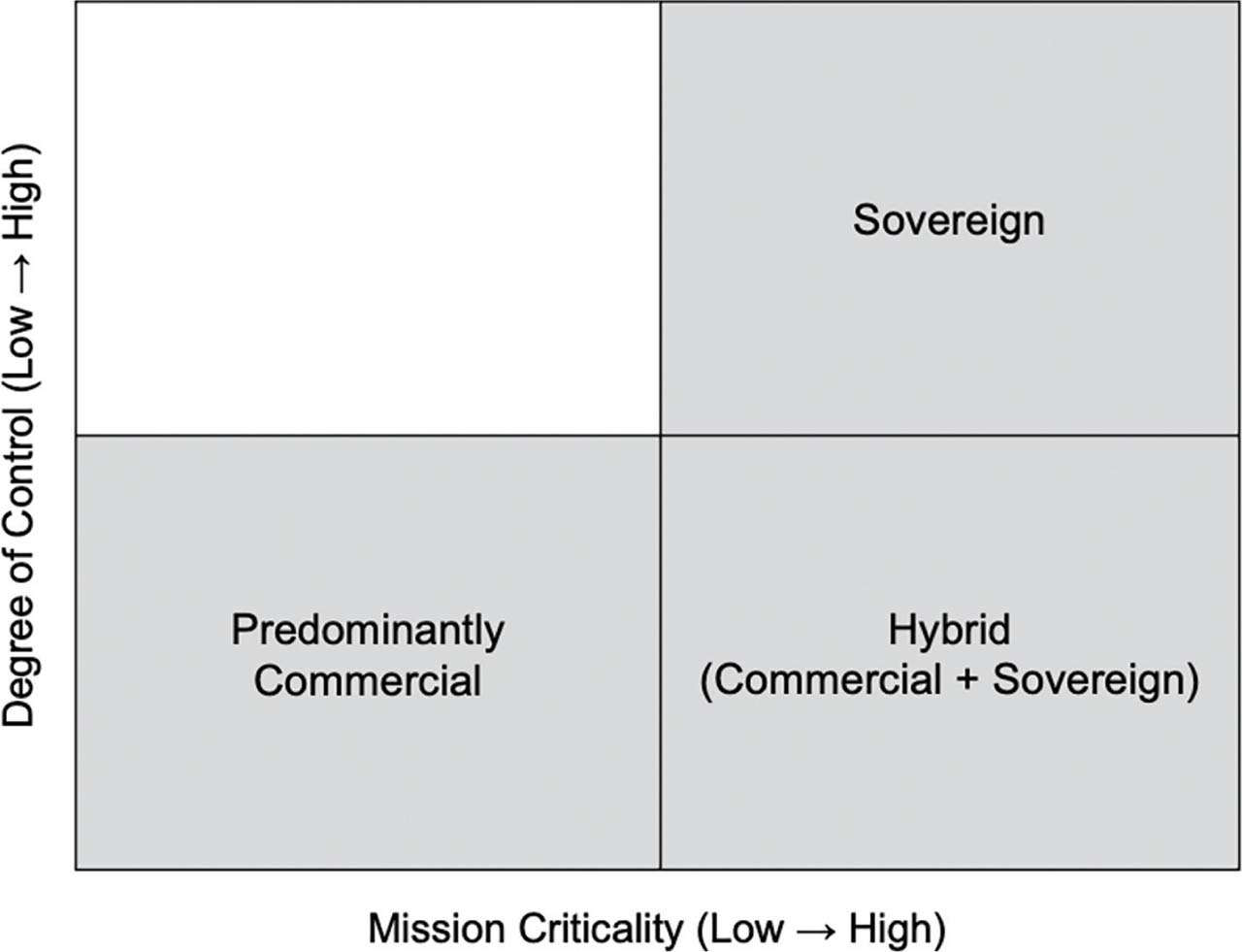
Fig. 3:
The framework for balancing commercial space services and military-owned space systems.
By assessing mission criticality and the degree of control, the framework produces three configurations:
Predominantly commercial configurations emerge when mission criticality is low, and dependencies are manageable. The loss or disruption of a capability would not decisively affect mission outcomes, and risks can be addressed mainly through market mechanisms such as competition, provider diversification and standard contractual arrangements. Residual risks remain operationally tolerable.
Hybrid configurations arise when mission criticality is higher, or dependencies are more pronounced, but not to the extent that complete sovereign control is required. Here, commercial services complement a retained sovereign capability, allowing armed forces to benefit from market advantages while simultaneously preserving required autonomy.
Sovereign configurations are warranted when mission criticality is high and overlapping dependencies significantly constrain military control. In such cases, consequences of disruption, denial, loss of operational security or prioritisation are unacceptable, and commercial arrangements cannot provide sufficient assurance, even with extensive mitigation measures.
Resource constraints determine which configurations are attainable, not which are acceptable. The choice between commercial and hybrid arrangements does not turn on the advantages of commercial provision, since a hybrid retains them, but on whether a sovereign component justifies its cost in funding, personnel and institutional attention. Where criticality is low it does not, and a predominantly commercial arrangement is proportionate rather than merely affordable.
It is important to note that ‘sovereign capability’ should not always be equated with national ownership. Many states rely on foreign systems—such as global navigation satellite systems (GNSS)—for mission-critical functions. What matters in this context is not who operates the system, but who can guarantee integrity, continuity and prioritisation under crisis conditions. For smaller states in particular, sovereign capability may therefore consist of assured access through multinational frameworks that provide a level of control functionally comparable to national ownership. Reliance on multinational arrangements should not be interpreted as a diminished preference for sovereignty. Rather, it reflects structural constraints that make fully national space capabilities unattainable in practice, even when strategic autonomy remains a core objective.
As noted in the ‘Introduction’, the framework supplies the rationale that the DoD strategy (U.S. Department of Defense 2024) presupposes by providing a conceptual foundation for the balance the strategy seeks across mission areas. While the DoD framework categorises space missions into similar categories (government primary, hybrid and commercial primary), the mission criticality and degree of control dimensions provide an explanatory rationale for why such differentiation is necessary. In particular, the framework clarifies how varying levels of mission importance and retained control shape acceptable degrees of commercial integration. The interviews supported the framework and, in several respects, sharpened it: they specified the conditions under which commercial provision holds, and identified considerations the literature addresses only obliquely.
5. Discussion
As the analysis above has shown, armed forces may become dependent on service agreements that do not hold under pressure, politically exposed to the policies of provider states, technically vulnerable to disruption and attack and normatively constrained by the legal ambiguities of dual-use systems. These vulnerabilities are conditional rather than inevitable: commercial services have also delivered capability at a speed and scale that sovereign systems could not match. The point is not that commercial provision fails, but that its reliability cannot be assumed under the conditions where it matters most.
Several considerations shape how armed forces rely on commercial space services, including economic constraints, service availability, mission criticality and the degree of control retained by the state. Economic considerations influence the feasibility of maintaining sovereign space capabilities over time. In principle, if resources were unconstrained, states could pursue large-scale sovereign constellations to avoid many of the risks associated with commercial dependence. In practice, however, financial limits make such solutions unattainable for most states, rendering commercial services an integral part of military space architectures. Nor is cost the only consideration: commercial provision also offers faster capability refresh, scalable capacity and access to expertise the armed forces cannot readily recruit. Similarly, the extent to which military requirements align with mainstream commercial demand affects the degree to which armed forces can rely on market mechanisms, influence service prioritisation and benefit from economies of scale. When such alignment exists, commercial services can often be integrated with relatively limited loss of control. Ultimately, however, economic and market considerations do not determine acceptable levels of dependence on their own. Where the operational consequences of disruption are severe and effective control over prioritisation, resilience and integration cannot be assured, mission criticality and the degree of control become decisive, and economic efficiency or market alignment cannot compensate for the resulting vulnerabilities.
Hybrid configurations are often presented as a balanced response to the trade-offs between efficiency and sovereignty, and frequently they are. But they are not universally optimal. Where criticality is limited and dependencies can be mitigated through diversification and competition, a predominantly commercial arrangement may be the proportionate choice; where functions are existential, no degree of mitigation substitutes for sovereign control. The appropriate balance between commercial, hybrid and sovereign solutions is therefore inherently contingent and likely to vary across states, mission areas and phases of conflict.
One implication deserves emphasis. The framework locates a capability at a point on two axes, but neither position is fixed. Contractual preparation raises the degree of control that can be retained, whereas sustained reliance lowers it, since the expertise required to specify requirements and evaluate offers erodes with disuse. A configuration that is acceptable when it is adopted may therefore cease to be so without any decision having been taken. Assessment is not a single judgement made at the point of procurement, but a recurring one.
6. Conclusions
The findings of this study demonstrate that outsourcing has expanded into domains once considered inherently sovereign. The outsourcing of military space activities is not a series of isolated decisions, but part of a broader structural evolution. Armed forces increasingly rely on commercial providers because they deliver technologically advanced, flexible and rapidly evolving solutions. The private sector’s investment capacity and responsiveness surpass traditional military procurement cycles, making in-house development harder to justify. This challenges the conventional assumption in outsourcing theory that core functions remain within the state while only peripheral ones are contracted out. Outsourcing military space functions reflects this broader shift in which states increasingly move from producers of capabilities to buyers and coordinators of them.
Militaries are not only reliant on the performance of contracts but also on the politics of providers’ home states, the technical resilience of satellites vulnerable to interference and attack, and the uncertain legal status of dual-use systems. The Ukraine War illustrated the convergence of these dimensions in practice: disputes over payments, restrictions shaped by political sensitivities, cyberattacks on commercial infrastructure and debates about whether commercial assets had become lawful military targets. This study provides a framework for structured analysis. By linking mission criticality and degree of control, it enables armed forces to assess when commercial space services can substitute for sovereign systems, when they should merely complement them, and when sovereign control remains indispensable.
For policy and practice, the findings imply that the importance of commercial space services varies with circumstances and with the sovereign and industrial capabilities of individual states; no single model works for all. States must carefully draft their own strategies regarding their specific situations. Nevertheless, a sovereign minimum core of space capabilities is essential to guarantee access and continuity. Its value is not only operational: interviewees argued that a limited national capability, even one of modest operational significance, sustains the expertise required to evaluate offers and remain an informed purchaser of commercial services. Commercial services provide scale, innovation and flexibility that states cannot easily replicate. Effective management of this balance requires contracts that are resilient under crisis conditions, diversification across multiple providers and legal frameworks that clarify the rights and obligations of commercial actors in armed conflict, and periodic review of arrangements whose acceptability may change over time. Equally important is civil–military dialogue, ensuring that companies understand defence requirements while militaries appreciate corporate constraints and incentives.
A broader implication follows. The mechanisms identified here are not peculiar to space: the redistribution of control between public and private actors, the dependence of influence on purchasing power, the substitutability of providers and the erosion of the purchaser’s own competence are all documented in the literature on commercial military services. Commercial space provision is not a separate phenomenon, but an instance of that broader field, distinguished by its setting rather than by its logic. Commercial space services deliver capabilities at speed and scale, but they also expose militaries to vulnerabilities that cannot be fully controlled. The challenge for states is not whether to use commercial space, but how to manage their reliance on it. Balancing efficiency with resilience and sovereignty will be a defining task for defence policy and international security in the future.