
Tab. 1:
Questions administered to astronauts
| Astronaut sample | |
|---|---|
| Question 1# | What personal items have you chosen to bring on your space missions and why? Are there any items you would have wanted to bring but were unable to? |
| Question 2# | Throughout the missions you participated in, what Zero-G indicators (plush stuffed toys/toys) were chosen (who chose them, why, what was their significance)? |
| Question 3# | What foods have you chosen to bring with you? Have these helped you feel closer to your loved ones and to your homeland? |
| Question 4# | Have you or your loved ones noticed any significant changes in your relationship with food and objects upon returning to Earth? |
Tab. 2:
Questions administered to military personnel
| Military sample | |
|---|---|
| Question 1# | What professional title do you hold? |
| Question 2# | What kind of mission were you deployed on? |
| Question 3# | Which personal items did you bring with you on the missions you were assigned and why? Are there any items you would have wanted to bring but were unable to? |
| Question 4# | Which foods did you choose, or would have chosen to bring with you if you had the chance to? Do you think that these have/would have helped you feel closer to your loved ones and your homeland? |
| Question 5# | Have you noticed any significant changes in your relationship with food and objects upon returning home? |
| Question 6# | Have you noticed any significant differences in personal growth and/or personal change upon returning from deployment? If yes, what were they? |
| Question 7# | Has any friend or relative referred to noticing significant changes in you and/or increased personal growth upon returning from deployment? If so, what were they? |
Tab. 3:
Coding scheme.
| Theme | Subtheme | Codes | Data Excerpt Matching the Highlighted Code |
|---|---|---|---|
| Emotionally significant foods | Comfort and nostalgic foods | Regional dishes; sweets; bonus foods; vegetarian diet; [feeling comfort while eating]; Interesting food combination; Individualised menu | First, I would like to say that food is VERY important in a space mission, especially on longer missions. It is one of the pleasures I was looking forward to. |
| Functionality and nutrition | [Working while eating]; disliking the food provided; seeing the food as fuel | For almost the entire duration of the mission, I was so busy that I just ate while I was working. I lost quite a bit of weight in orbit. |
Tab. 4:
Final themes
| Final themes | |
|---|---|
| Name | Description |
| Theme 1# Evocative and functional properties of objects | The relationship with personal objects during missions and their possible emotional/psychosocial significance |
| Theme 2# Evocative and functional properties of Food | The relationship with food during missions and its possible emotional/psychosocial significance |
| Theme 3# Post-mission changes in food and objects attachment | The possibility of change in the relationship with food and daily/personal objects correlated to missions’ dynamics, or the lack thereof |
| Theme 4# Psychosocial growth | The possibility of psychosocial growth or psychological changes post-mission and the eventual correlation to the relationship with food and objects |
| Theme 5# Perception of change from others | The eventual changes in thought, behaviour and relationships post-mission noticed by the subjects’ loved ones |
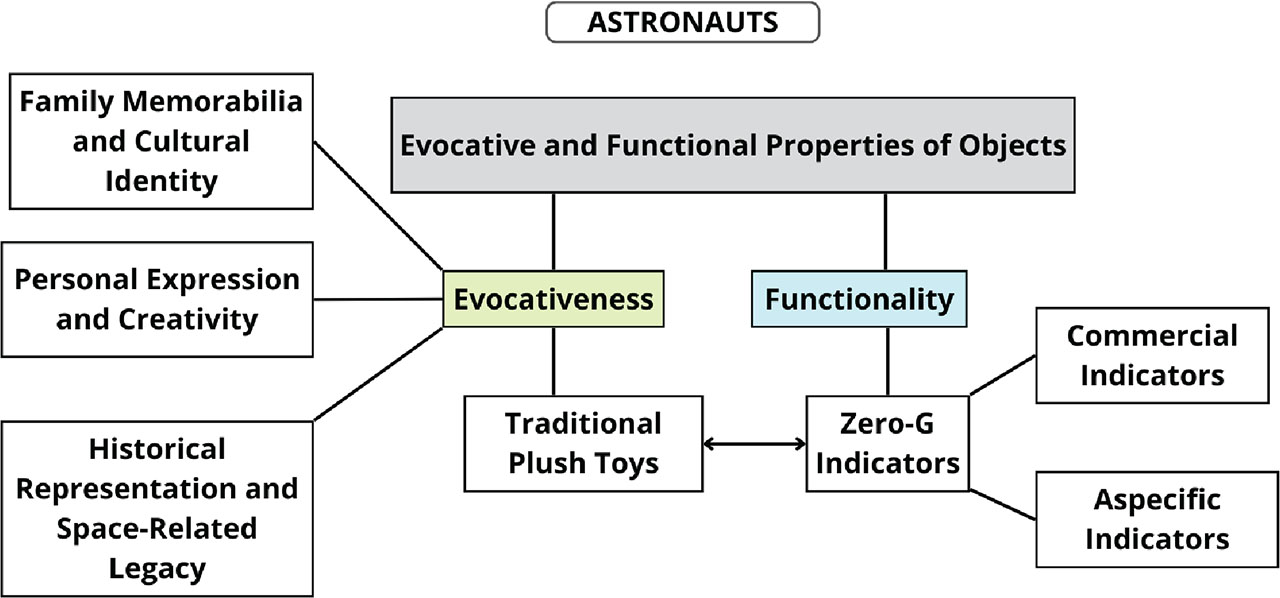
Fig. 1:
Theme 1 and related subthemes in the astronaut sample.
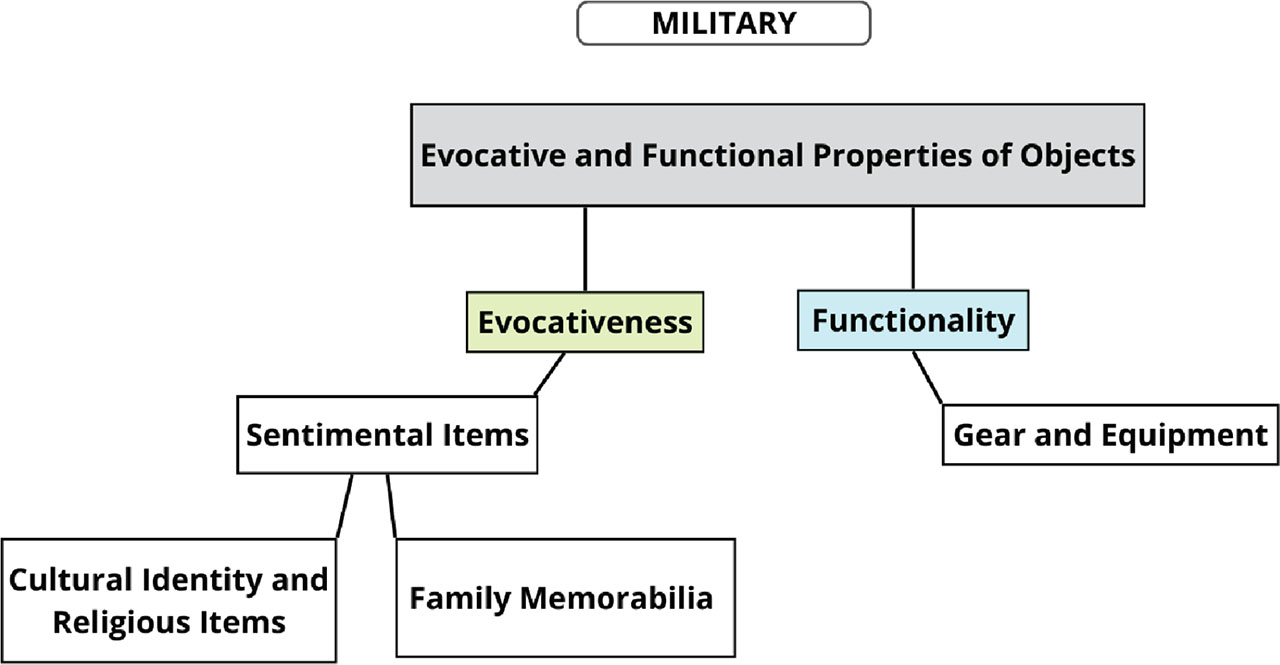
Fig. 2:
Theme 1 and related subthemes in the military sample.
Tab. 5:
Contingency table for Theme 1
| Sample | (A) Brought/wished to bring evocative objects | (B) Brought non-emotionally significant objects | (C) Did not bring and did not wish to bring evocative objects | Total |
|---|---|---|---|---|
| Astronauts | 28 | 2 (subjects overlapping with A) | 0 | 28 |
| Military P. | 18 | 5 | 2 | 25 |
| Total | 46 | 7 | 2 | 53 |
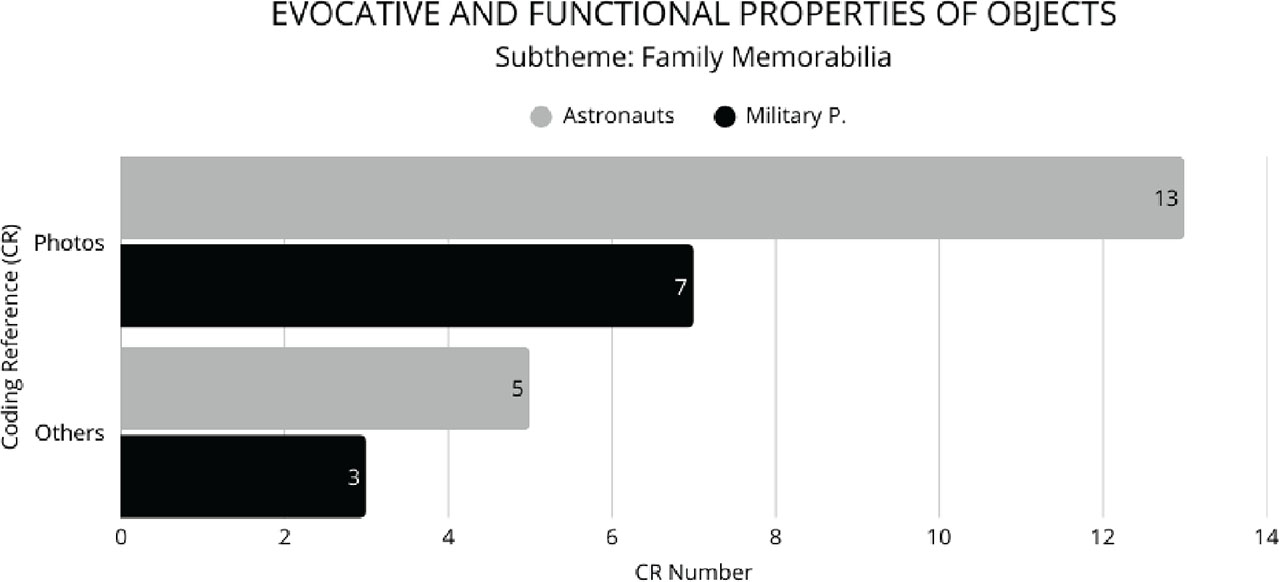
Fig. 3:
Comparison of CR per subtheme for both samples. Theme 1; Subtheme (Family Memorabilia). CR, coding references.
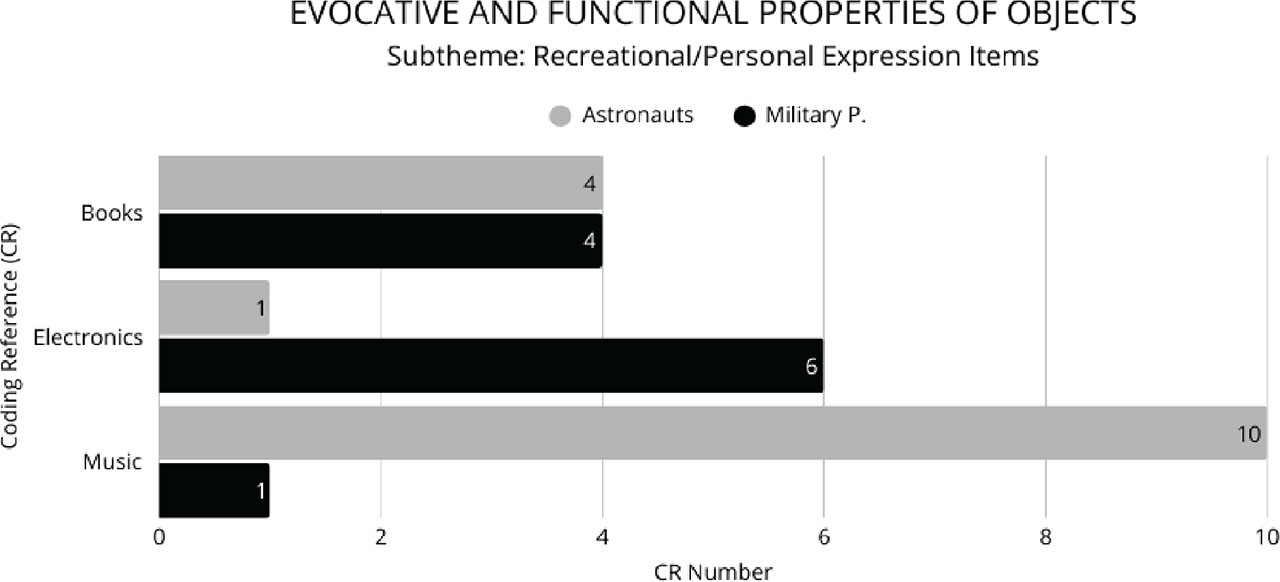
Fig. 4:
Comparison of CR per subtheme for both samples. Theme 1; Subtheme (Recreational/Personal Expression Items). CR, coding references.
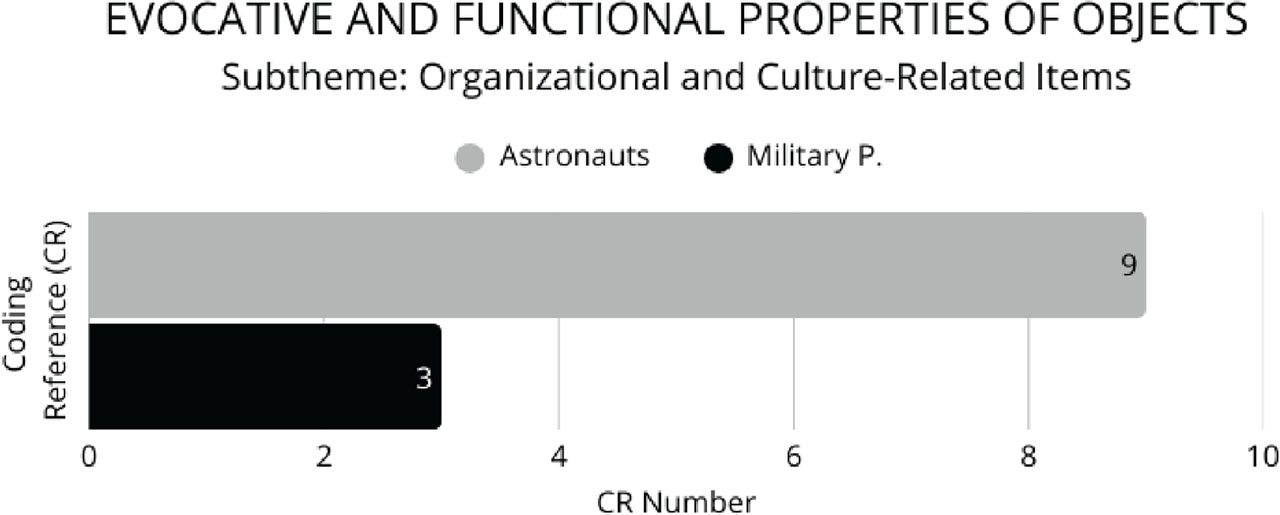
Fig. 5:
Comparison of CR per subtheme for both samples. Theme 1; Subtheme (Organisational and Culture-Related Items). CR, coding references.
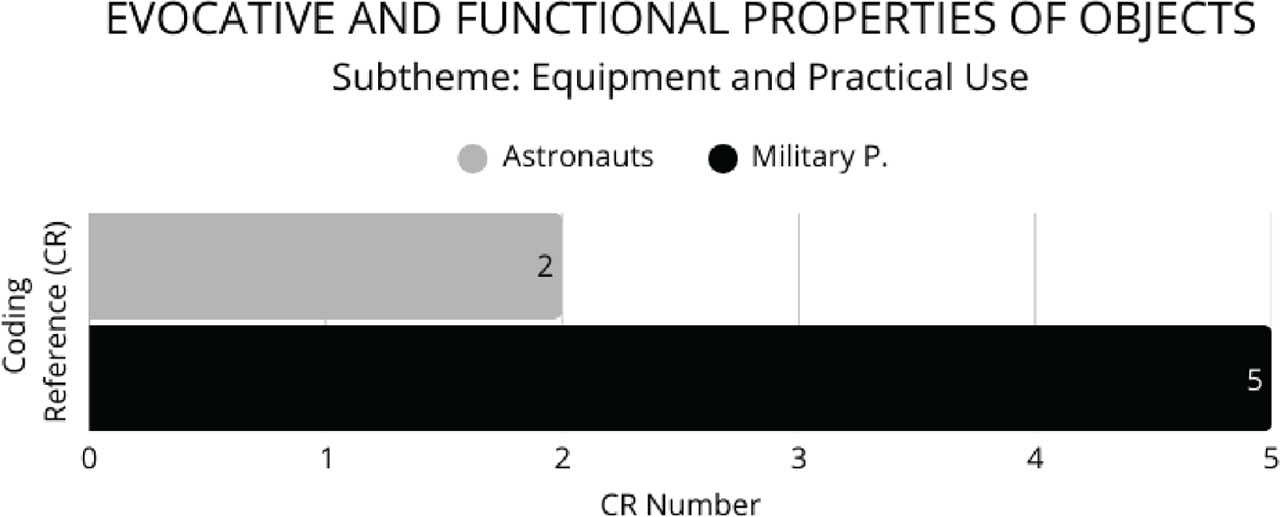
Fig. 6:
Comparison of CR per subtheme for both samples. Theme 1; Subtheme (Equipment and Practical Use). CR, coding references.
Tab. 6:
Description of sample-specific subthemes for Theme 1
| Population | Sample-specific subthemes | |
|---|---|---|
| Astronauts | Zero-G indicators | Historical representation/space-related legacy |
| Military personnel | N/A | N/A |
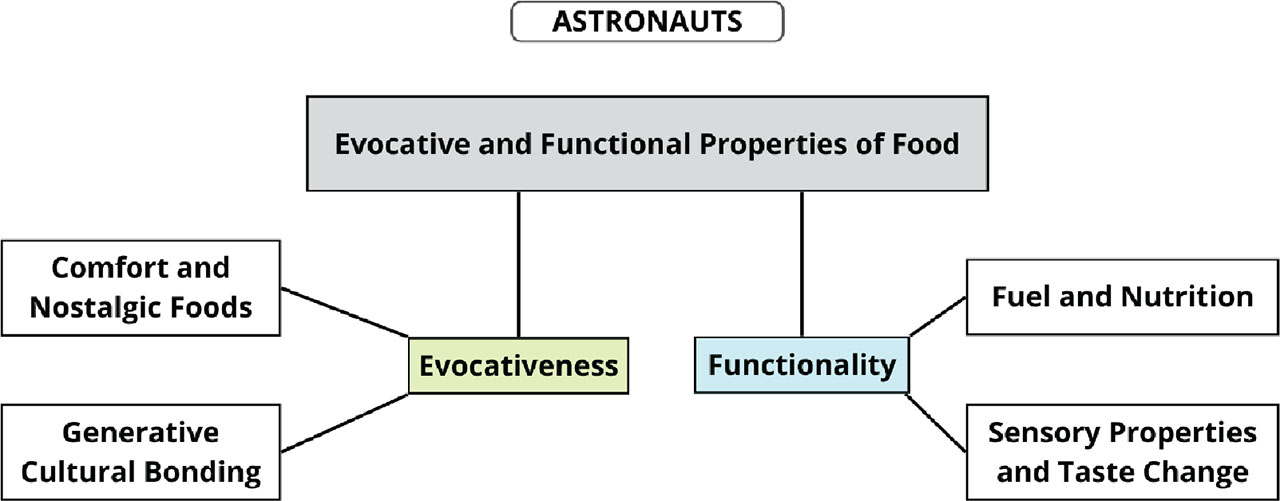
Fig. 7:
Theme 2 and related subthemes in the astronaut sample.
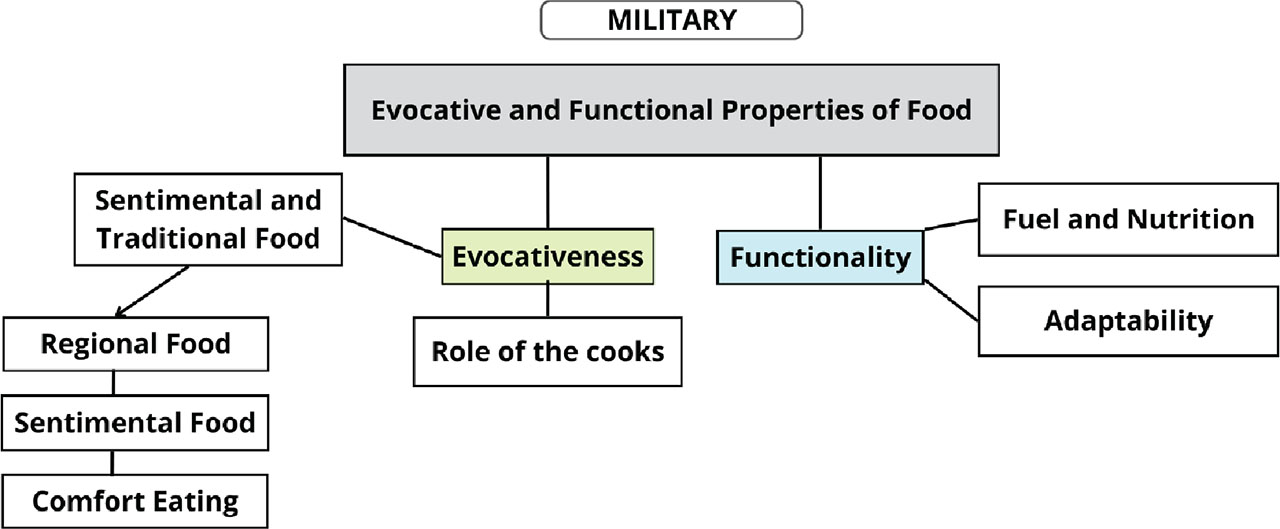
Fig. 8:
Theme 2 and related subthemes in the military sample.
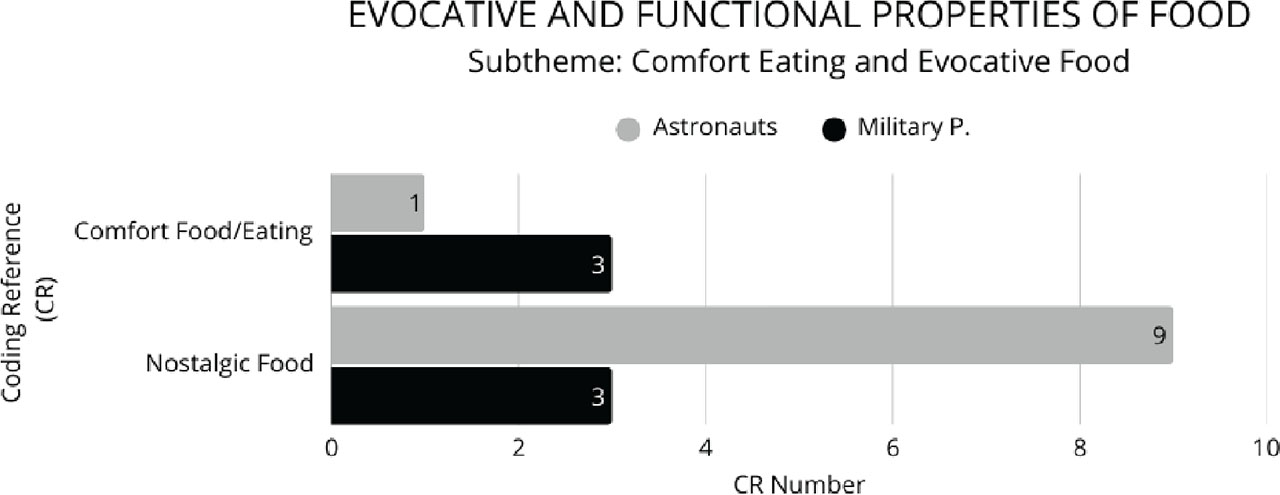
Fig. 9:
Comparison of CR per subtheme for both samples. Theme 2; Subtheme (Comfort Eating and Evocative Food). CR, coding references.
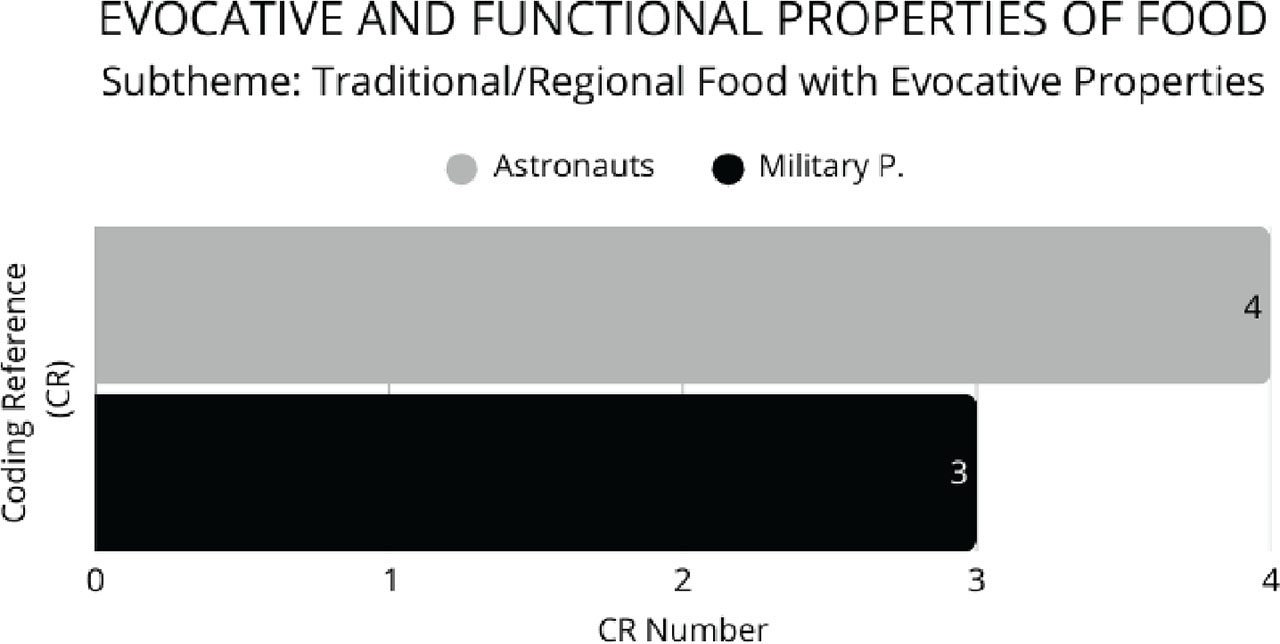
Fig. 10:
Comparison of CR per subtheme for both samples. Theme 2; Subtheme (Traditional/Regional Food with Evocative Properties). CR, coding references.
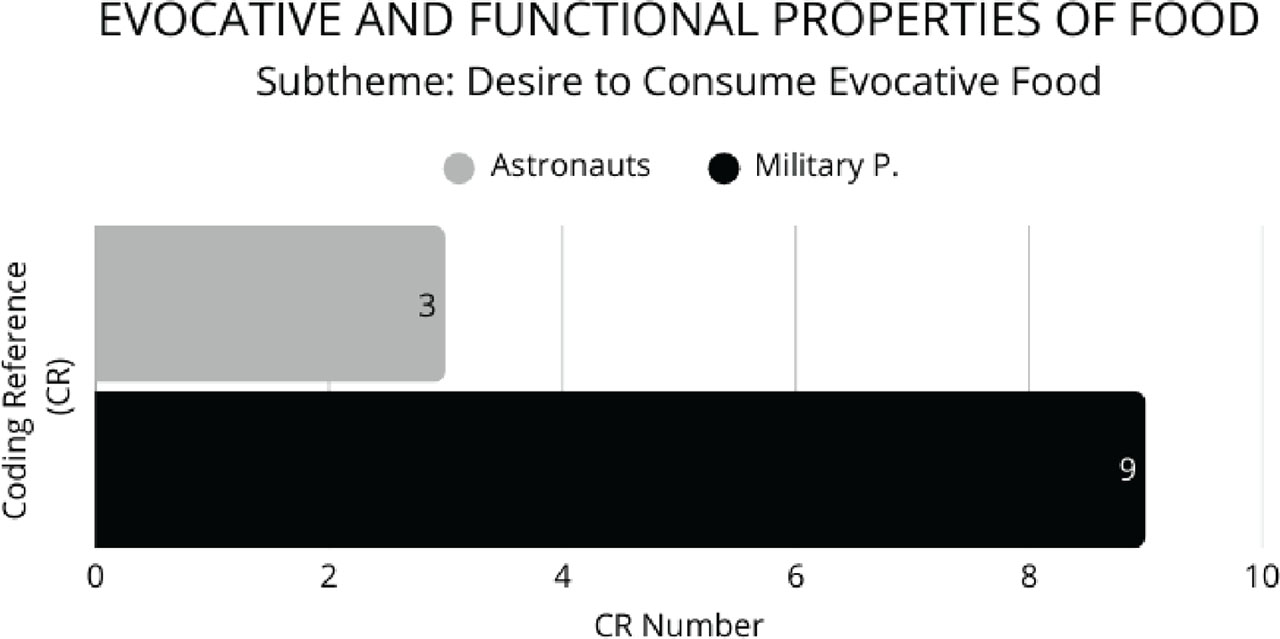
Fig. 11:
Comparison of CR per subtheme for both samples. Theme 2; Subtheme (Desire to Consume Evocative Food). CR, coding references.
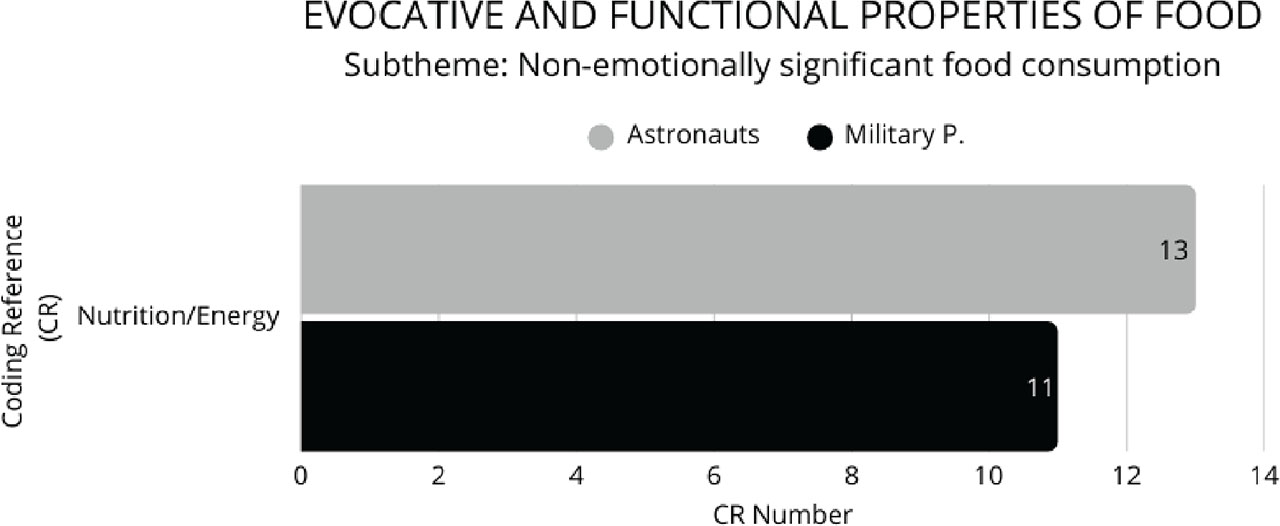
Fig. 12:
Comparison of CR per subtheme for both samples. Theme 2; Subtheme (Non-emotionally significant food consumption). CR, coding references.
Tab. 7:
Contingency table for Theme 2
| Sample | Consumed/wished to consume food with evocative indicators | Denied any emotional attachment to food/no pertinent response | Total |
|---|---|---|---|
| Astronauts | 15 | 13 | 28 |
| Military P. | 14 | 11 | 25 |
| Total | 29 | 24 | 53 |
Tab. 8:
Description of sample-specific subthemes for Theme 2
| Population | Sample-specific subthemes |
|---|---|
| Astronauts | Sensory properties and taste change |
| Military personnel | Role of the cooks |
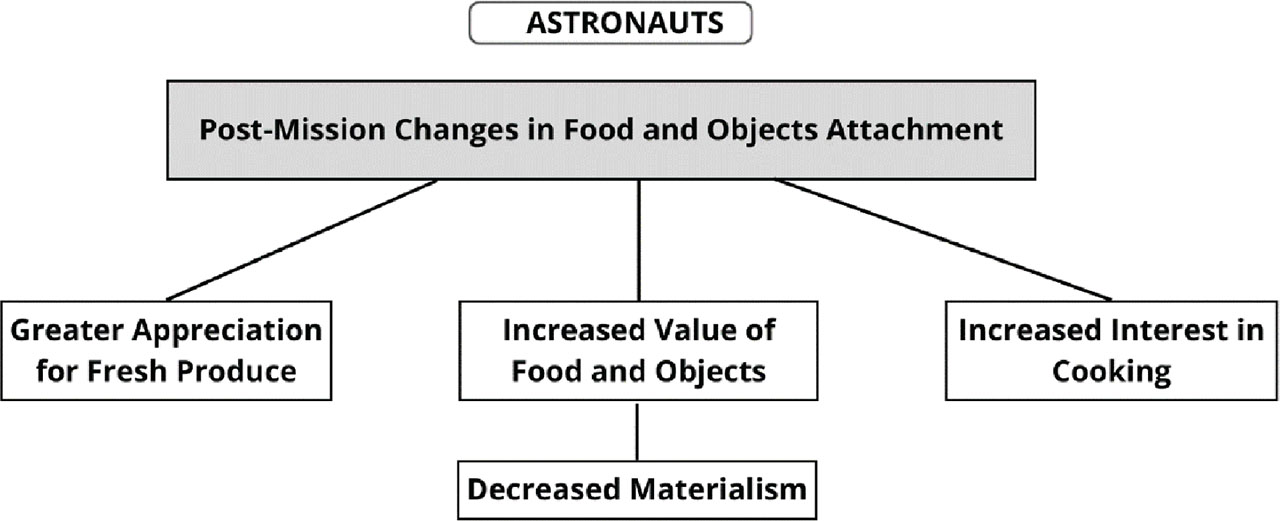
Fig. 13:
Theme 3 and related subthemes in the astronaut sample.
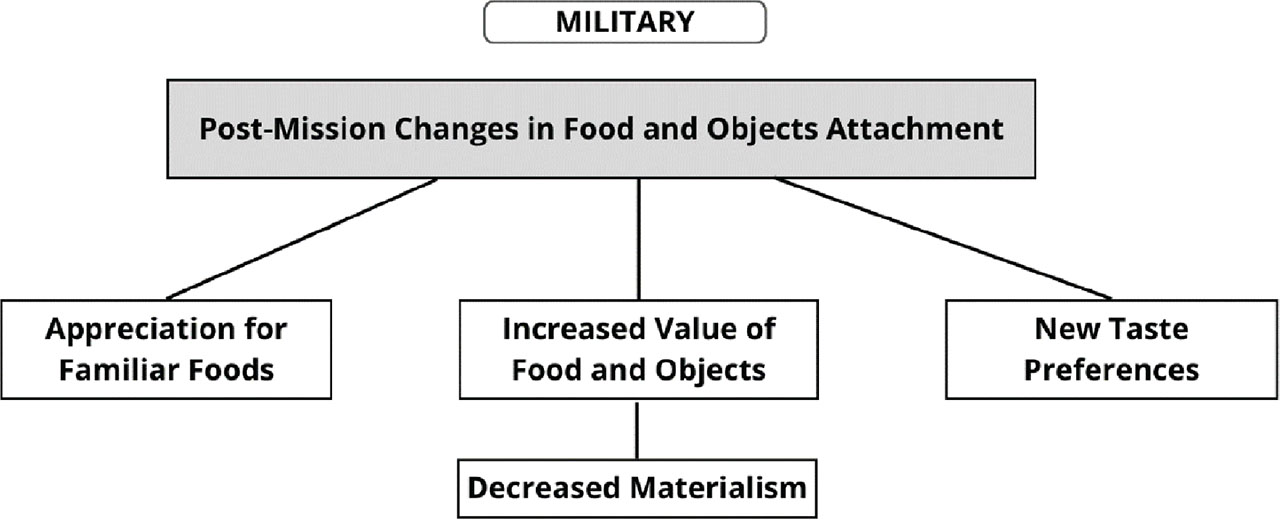
Fig. 14:
Theme 3 and related subthemes in the military sample.
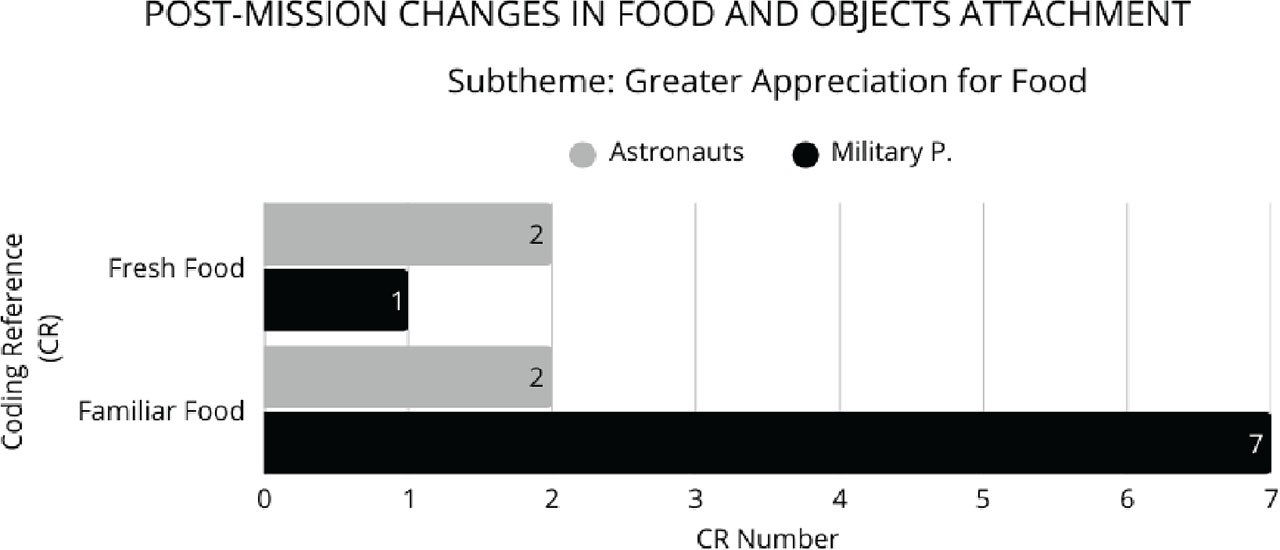
Fig. 15:
Comparison of CR per subtheme for both samples. Theme 3; Subtheme (Greater Appreciation for Food). CR, coding references.
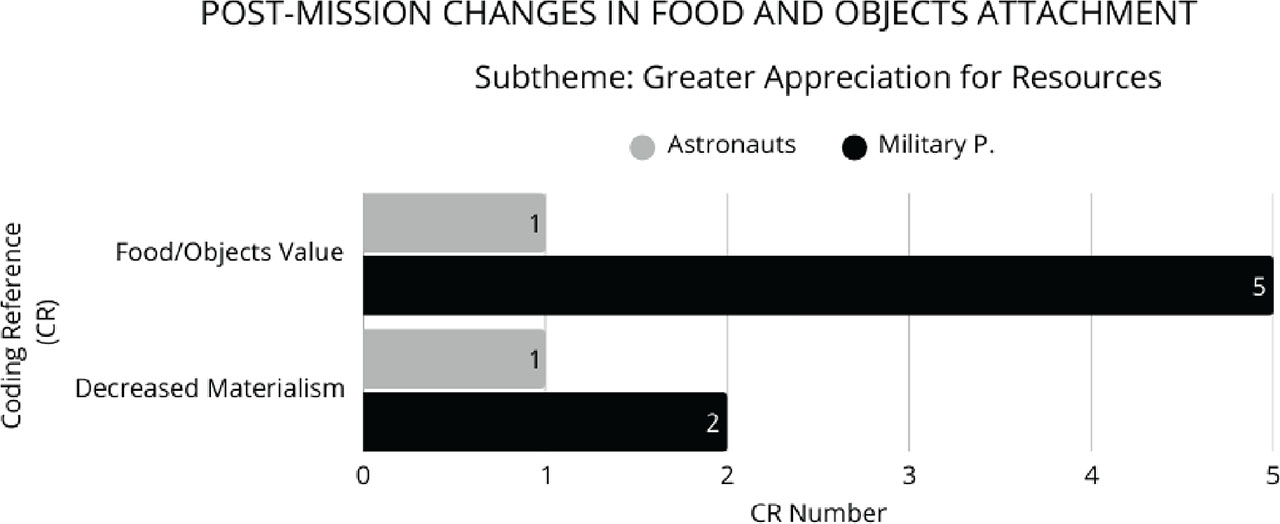
Fig. 16:
Comparison of CR per subtheme for both samples. Theme 3; Subtheme (Greater Appreciation for Resources). CR, coding references.
Tab. 9:
Contingency table for Theme 3
| Sample | Changes in attachment to food and objects | No changes/short-term changes in attachment to food and objects | Total |
|---|---|---|---|
| Astronauts | 7 | 21 | 28 |
| Military P. | 12 | 13 | 25 |
| Total | 19 | 34 | 53 |
Tab. 10:
Description of sample-specific subthemes for Theme 3
| Population | Sample-specific subthemes |
|---|---|
| Astronauts | Increased interest in cooking |
| Military personnel | New taste preferences |
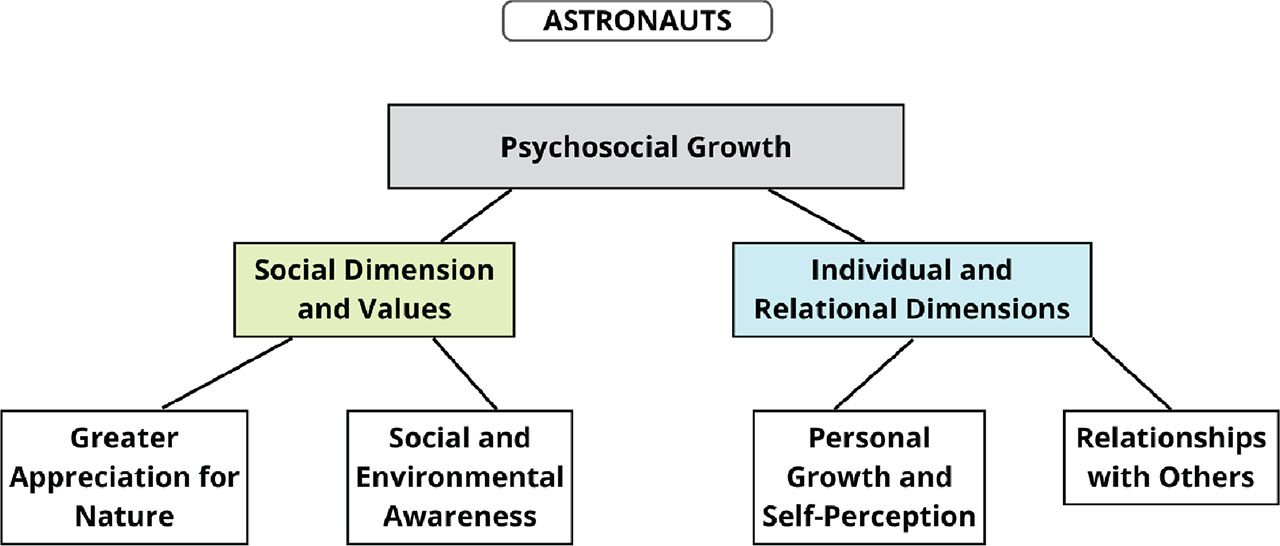
Fig. 17:
Theme 4 and related subthemes in the astronaut sample.
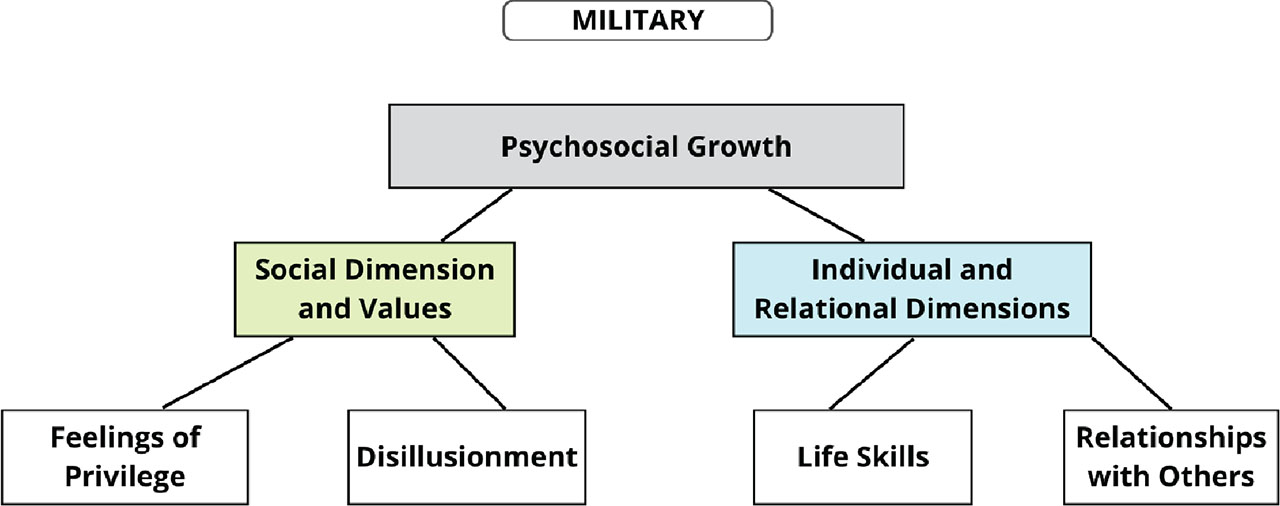
Fig. 18:
Theme 4 and related subthemes in the military sample.
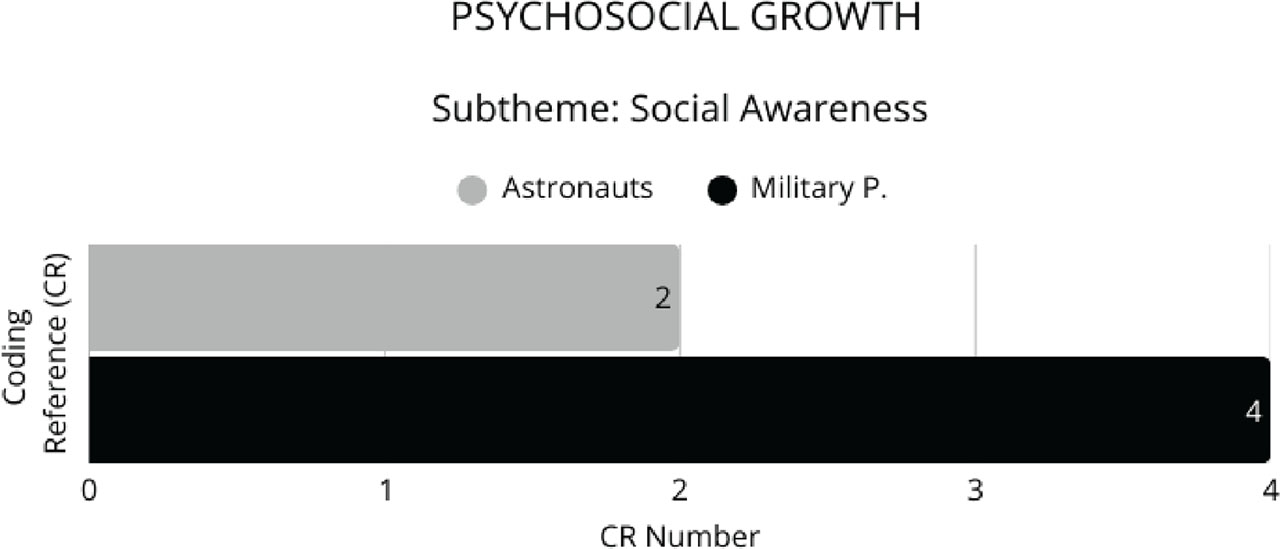
Fig. 19:
Comparison of CR per subtheme for both samples. Theme 4; Subtheme (Social Awareness). CR, coding references.
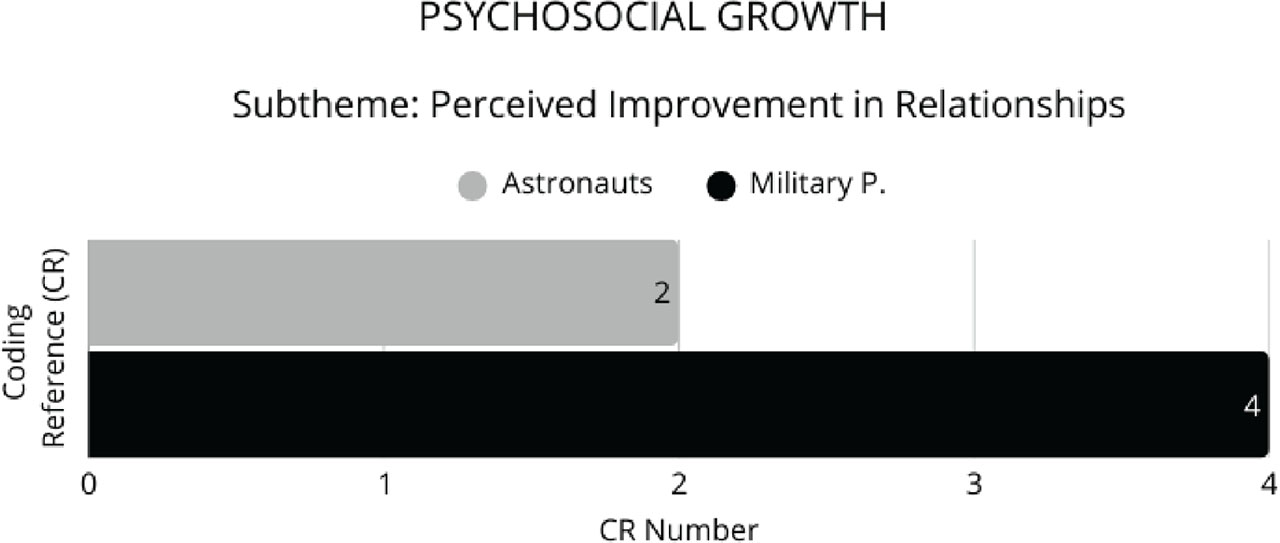
Fig. 20:
Comparison of CR per subtheme for both samples. Theme 4; Subtheme (Perceived Improvement in Relationships). CR, coding references.
Tab. 11:
Contingency table for Theme 4
| Sample | Perceived psychosocial growth/changes | No changes perceived/no response | Total |
|---|---|---|---|
| Astronauts | 5 | 23 | 28 |
| Military P. | 21 | 4 | 25 |
| Total | 26 | 27 | 53 |
Tab. 12:
Description of sample-specific subthemes for Theme 4
| Population | Sample-specific subthemes | |
|---|---|---|
| Astronauts | Greater appreciation for nature | Personal growth and self-perception |
| Military personnel | Disillusionment/feelings of privilege | Life skills |
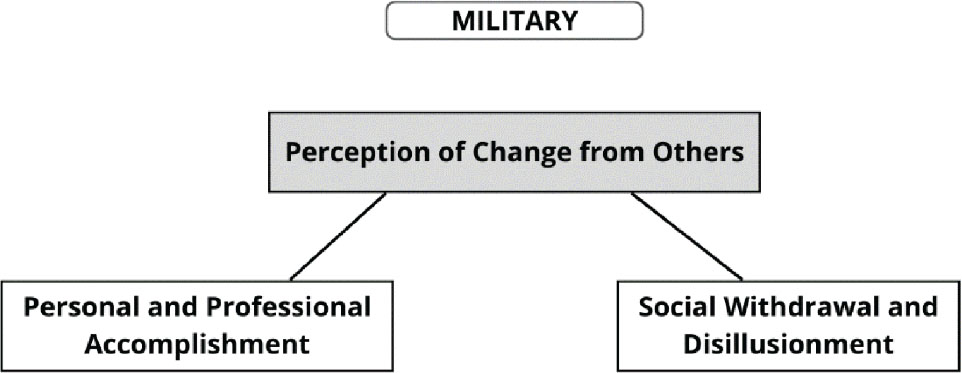
Fig. 21:
Theme 5 and related subthemes in the military sample.