
I. Introduction
Climate change has intensified environmental variability worldwide, leading to increasingly unpredictable fluctuations in temperature, humidity, and precipitation. These instabilities negatively affect crop productivity and quality, raising concerns about long-term global food security (Rayhana et al., 2020). Such variability also increases operational costs and financial risks for farmers and poses a threat to the resilience of agricultural supply chains (Collado et al., 2021). In response, many countries, including Thailand, have adopted modern agricultural technologies to enhance sustainability, stabilize yields, and mitigate climate-related risks.
Thailand’s agricultural sector relies heavily on natural seasonal conditions, making it particularly vulnerable to climate variation. Greenhouse cultivation has therefore emerged as an effective solution for stabilizing production through controlled environmental management. Modern greenhouse systems integrate internet of things (IoT)-based sensing and automation technologies to enhance resource efficiency, reduce crop losses, and ensure stable yields (Song et al., 2024). Accurate monitoring and control of temperature, humidity, soil moisture, and light intensity are essential for effective greenhouse management, as these parameters directly influence plant growth, nutrient uptake, and crop uniformity (Chaikhamwang et al., 2023; Thomopoulos, 2024). In this study, the smart greenhouse prototype was implemented for cucumber (Cucumis sativus) cultivation. Cucumber production is highly sensitive to fluctuations in temperature, humidity, soil moisture, and light intensity; therefore, maintaining a stable microclimate is essential to ensure consistent growth and reduce yield variability. However, measurement stability in greenhouse environments is often affected by sensor drift, electrical interference, and manufacturing tolerances, underscoring the importance of periodic calibration and statistical accuracy verification before system integration.
Recent advancements in IoT technologies have enabled real-time environmental monitoring and automated control of irrigation, ventilation, and microclimate regulation (Adesh et al., 2024; Bersani et al., 2020; Farooq et al., 2022; Abulude et al., 2023; Ratsame et al., 2021), while integration with edge computing and artificial intelligence (AI)-driven analytics has further improved responsiveness and operational efficiency (Karanisa et al., 2022; Qazi et al., 2022; Maraveas et al., 2021; Kayadibi, 2025; Lu, 2025). Despite these technological advancements, most greenhouse automation systems still rely on commercial-grade sensors and multi-board hardware architectures, resulting in costs of several $100 that remain prohibitive for smallholder farmers. Although low-cost sensors priced between US$5 and 15 are widely available, they are seldom validated for accuracy or long-term reliability, raising concerns regarding their suitability for practical deployment. Recent efforts to develop more affordable automation systems have demonstrated partial progress but continue to exhibit critical limitations. For instance, Tasayco et al. (2025) introduced a Bluetooth-based mechatronic irrigation system and Correa-Quiroz et al. (2025) proposed an Espressif Systems Platform (ESP)32-based drip irrigation and climate monitoring platform; however, both lacked statistical accuracy validation of their sensing components, and field results revealed measurement fluctuations likely caused by sensor drift or electromagnetic interference. Collectively, these studies indicate that current IoT-based greenhouse prototypes still suffer from unvalidated low-cost sensors, susceptibility to drift, and reliance on hardware configurations that remain financially or technically restrictive for widespread adoption.
Beyond these recent works, earlier studies exhibit similar shortcomings. Some employed high-cost commercial sensors (Wang and Wang, 2020), whereas others implemented environmental regulation without validating sensor performance against reference devices (Mohamed et al., 2022). Although low-cost sensors have been increasingly adopted, many studies did not evaluate their accuracy before deployment (Simo et al., 2022; Sumalan et al., 2020; Nath et al., 2021), while others focused primarily on monitoring rather than assessing control performance or economic feasibility (Podder et al., 2021; Ting et al., 2015). Additionally, none of these studies addressed the need for systematic recalibration or statistical evaluation of measurement stability, despite its importance for long-term greenhouse management. As a result, the existing literature still lacks a comprehensive assessment of sensor accuracy, drift behavior, calibration requirements, and cost-efficiency factors that are essential for real-world greenhouse operations.
Overall, existing IoT-based greenhouse research can be categorized into three major groups: (1) systems that rely on high-cost commercial sensors and multi-board architectures, which provide reliable measurements but remain inaccessible to smallholder farmers; (2) low-cost sensing platforms that reduce hardware expense but rarely include statistical validation or drift assessment, resulting in uncertain measurement reliability; and (3) prototypes that focus primarily on environmental monitoring rather than closed-loop control performance or economic feasibility. Although each category has contributed valuable technical insights, none simultaneously addresses accuracy verification, long-term measurement stability, cost efficiency, and real-time control reliability. This gap in the existing state of the art highlights the need for an integrated, statistically validated, and economically accessible sensing-and-control framework particularly for resource-constrained greenhouse environments.
In Thailand, most agricultural producers are smallholder farmers operating with limited financial resources and technical skills. Many rely on manual greenhouse management due to the high cost of commercial sensors and the complexity of existing smart-farming platforms. As a result, irrigation and ventilation decisions are often based on subjective observations rather than data-driven control, leading to inconsistent water usage, inefficient resource allocation, and unstable growing conditions. This challenge is particularly critical in Thailand, where small-scale farmers urgently require affordable, accurate, and easy-to-deploy sensing solutions to fully benefit from precision agriculture technologies.
Although numerous IoT-based greenhouse systems have been proposed, no previous work has statistically validated low-cost sensor accuracy using standardized analytical methods such as analysis of variance (ANOVA) before integrating them into automated greenhouse control systems. Statistical validation is essential for ensuring that low-cost sensors typically affected by manufacturing tolerance, non-linear response, and electromagnetic interference provide measurement accuracy comparable to reference devices. Existing solutions either depend on expensive hardware, deploy low-cost sensors without evaluating their measurement accuracy, or focus solely on environmental monitoring rather than comprehensive control performance and economic feasibility. These limitations restrict the scalability and real-world applicability of smart greenhouse technologies, especially for resource-constrained agricultural communities.
The need to address this problem is particularly urgent in regions where smallholder farmers rely heavily on low-cost sensing devices whose measurement reliability is rarely verified. Inaccurate environmental measurements can lead to unstable greenhouse control, reduced crop productivity, and inefficient use of water and energy resources. Commercial-grade sensors remain financially inaccessible to many growers, creating a technological divide that prevents the adoption of automation technologies in resource-constrained settings. Therefore, establishing a statistically validated, low-cost sensing and control framework is essential to ensure that greenhouse automation becomes both reliable and economically feasible for small-scale agricultural communities.
The novelty of this study lies in three methodological advances over previous IoT- and fuzzy-based greenhouse systems. First, all low-cost sensors were statistically validated using one-way ANOVA with >500 observations per sensor, ensuring accuracy equivalence with reference instruments before integration into the control system, an aspect not addressed in earlier studies. Second, the fuzzy membership functions and control rules were developed using agronomic thresholds specific to cucumber cultivation and refined through expert consultation, resulting in a crop-informed and interpretable control structure rather than a generic heuristic design. Third, the system was evaluated comprehensively in terms of actuator response time, data latency, stabilization behavior, and energy consumption, providing a complete performance assessment within a low-cost hardware platform. These contributions establish a more reliable and economically feasible smart-greenhouse solution than existing approaches.
This study addresses these limitations through three primary contributions:
Statistical validation of low-cost sensors commonly available in Thailand using one-way ANOVA against certified reference devices to ensure accurate and reliable environmental measurement.
Design and implementation of an IoT-based greenhouse automation system that integrates validated sensors for real-time monitoring and automated environmental control.
Demonstration of economic feasibility, showing that statistically validated low-cost sensors can serve as practical alternatives to commercial-grade systems, thereby improving accessibility and supporting the adoption of precision agriculture among smallholder farmers.
II. Materials and methods
This study employs an applied research methodology to investigate the application of inexpensive sensors to monitor the environmental parameters within greenhouses used for crop cultivation. To begin, an evaluation of affordable and commercially available sensors is carried out, assessing their performance relative to standard measurement equipment. Upon meeting specified criteria, the selected sensors are incorporated into a system designed to monitor and control greenhouse environments, allowing for an assessment of the system’s overall efficiency. The following subsections detail the research process.
a. Study site
This study was conducted in an experimental greenhouse located at Songkhla Rajabhat University, Songkhla Province, Southern Thailand. The greenhouse has a total floor area of 18 m2 (3 m × 6 m) and is enclosed with polyethylene film. It was designed specifically for small-scale crop production under controlled conditions. The structure is approximately 2.5 m in height, providing adequate ventilation and natural light penetration. At this stage, the experiment focused solely on testing the performance of the IoT-based sensing and control system. Figure 1 illustrates the area and the greenhouse used as the study site.
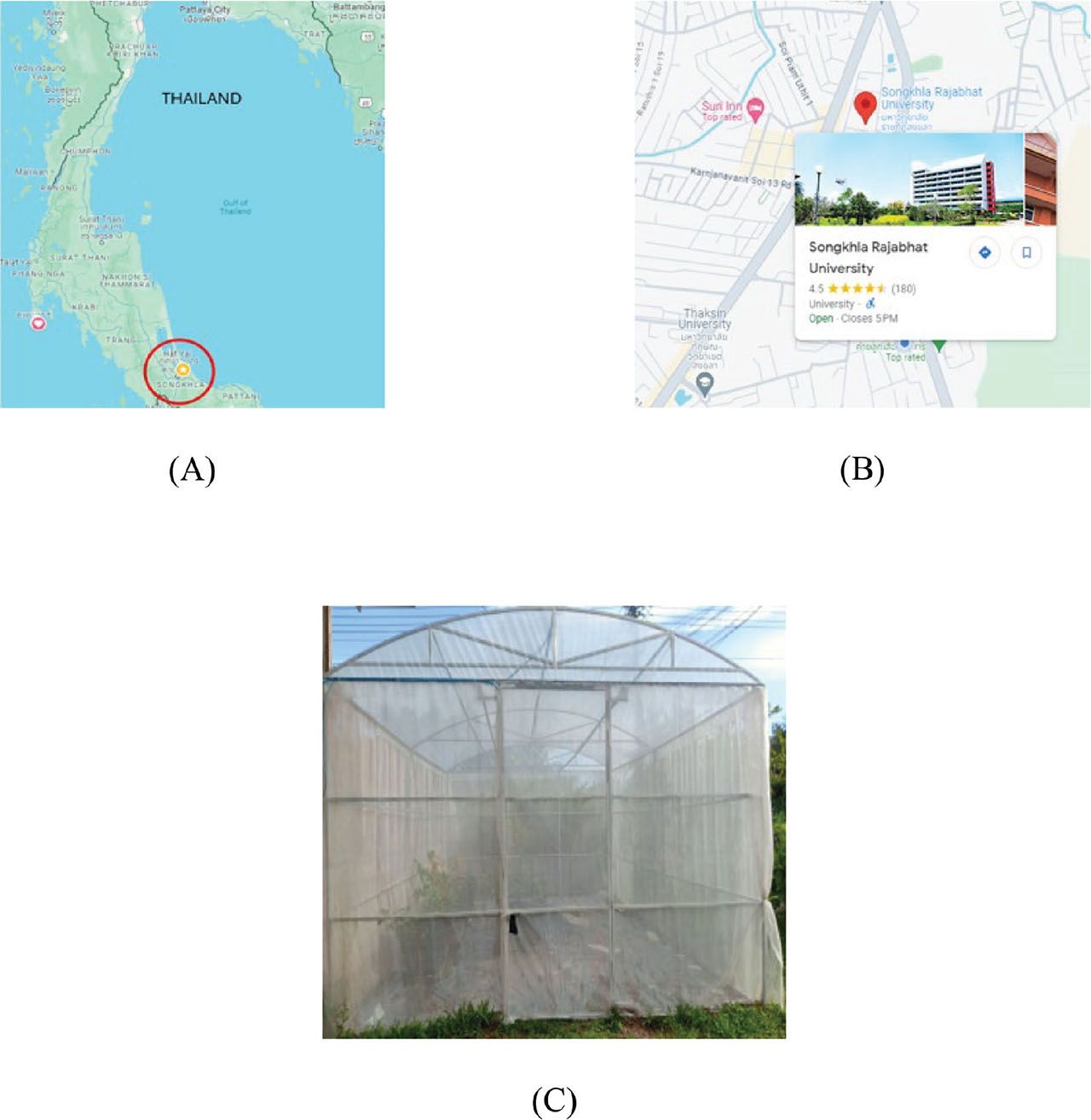
Figure 1:
Research locations: (A) the red circle on the map of Thailand indicates Songkhla Province, (B) the red pin on the map shows Songkhla Rajabhat University, and (C) experimental greenhouse.
b. Sensor validation
The selection of low-cost sensors for greenhouse environmental monitoring was based on three criteria: (1) affordability, (2) operational simplicity, and (3) suitability for real-time automation. The sensors evaluated in this study were grouped according to function as follows:
Temperature and relative humidity sensors: DHT21, DHT22, and SHT30
Soil moisture sensors: Soil Moisture Detection, Soil Moisture Sensor Module v2, and Moisture & pH
Soil pH sensors: Nitrogen, Phosphorus, and Potassium (NPK) & pH, and Moisture & pH
Light intensity sensors: BH1750FVI Ambient Light Sensor, and TSL2561 Luminosity Sensor
Each low-cost sensor was interfaced with an ESP32 microcontroller for data acquisition and was calibrated against brand-new, factory-calibrated reference instruments to eliminate initial bias and ensure consistent baseline readings. These reference devices had not been previously deployed in field conditions and were verified before the experiment to confirm their accuracy. Sensor validation was conducted inside the greenhouse, exposing all sensors to natural fluctuations in temperature, humidity, soil moisture, and light intensity. During data collection, low-cost sensors and reference devices were positioned at the same location and recorded measurements simultaneously to avoid positional bias and reduce the influence of environmental interference. Figure 2 presents the sensor system architecture.
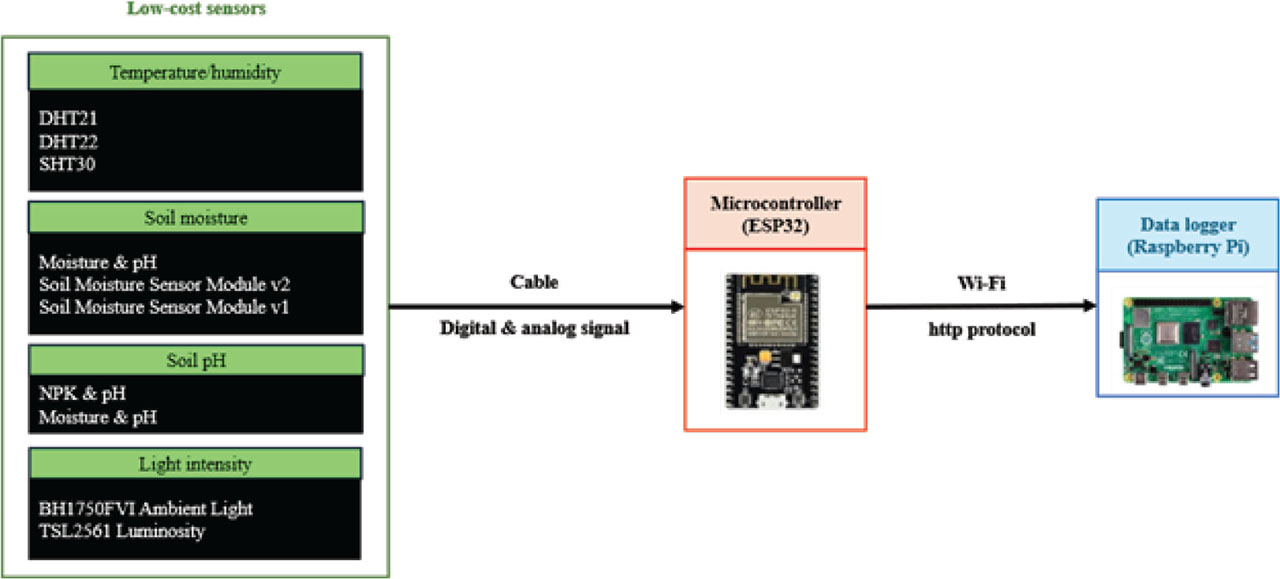
Figure 2:
Low-cost sensor connection architecture for environmental measurement.
Environmental data were collected hourly between March and May 2024 using a Raspberry Pi–based data logging server. Each sensor was evaluated using 504–672 observations obtained under varying microclimatic conditions. This sample size aligns with widely accepted practices in sensor-calibration research. Vogel et al. (2025), for example, validated a soil-pH sensor using 612 paired observations, while Tipayarom and Varigool (2016) demonstrated that approximately 60 paired measurements were sufficient to establish agreement between low-cost and reference instruments. Accordingly, the sample sizes used in this study fall within or exceed ranges commonly reported in the literature and are appropriate for ANOVA-based accuracy evaluation.
The validation process focused on short-term accuracy; therefore, long-term drift analysis and periodic recalibration intervals were outside the scope of this study. However, to ensure short-term stability, the reference instruments were rechecked at the beginning of each weekly data-collection cycle to confirm that no baseline drift had occurred. Additional consistency checks at fixed intervals revealed no observable deviation. Potential environmental interference such as humidity condensation on sensor surfaces, variability in soil electrical conductivity, or rapid radiative changes was mitigated by ensuring synchronized measurement timing and identical spatial placement of all devices. These procedures ensured that any discrepancies in readings reflected inherent sensor characteristics rather than environmental or methodological bias.
One-way ANOVA was used to assess agreement between each low-cost sensor and its corresponding reference device because low-cost sensors often exhibit variability caused by manufacturing tolerances or environmental noise. ANOVA is effective for determining whether mean measurements differ significantly under identical environmental conditions. Because each analysis included multiple sensor types together with the reference device, one-way ANOVA was followed by multiple-comparison post hoc least significant difference (LSD) tests to evaluate pairwise differences. The results of the ANOVA tests are summarized in Tables 1–5.
Table 1:
Comparison of average temperature between the standard device and the sensors
| Sensors/device | N | x̅ | SD | Multiple comparisons Sig. | F | ANOVA Sig. |
|---|---|---|---|---|---|---|
| DHT21 | 672 | 28.16 | 0.996 | 0.083 | 1.197 | 0.315 |
| DHT22 | 672 | 28.05 | 1.013 | 0.173 | ||
| SHT30 | 672 | 27.85 | 1.013 | 0.494 | ||
| Standard device | 672 | 27.65 | 1.013 |
The temperature readings from the sensors did not significantly differ from those of the standard device at a significance level of 0.05 (Sig. = 0.315). Among the sensors tested, the SHT30 sensor was selected for temperature measurement due to its highest accuracy, as indicated by the comparison with the standard device (Sig. = 0.494).
The collected relative humidity data were analyzed to compare differences. The analysis revealed that the relative humidity measured by the sensors did not significantly differ from that measured by the standard device at a significance level of 0.05 (Sig. = 0.977), which can be observed in Table 2.
Table 2:
Average relative humidity comparison between the standard device and the sensors
| Sensors/device | N | x̅ | SD | Multiple comparisons Sig. | F | ANOVA Sig. |
|---|---|---|---|---|---|---|
| DHT21 | 672 | 84.75 | 4.42 | 0.683 | 0.067 | 0.977 |
| DHT22 | 672 | 84.62 | 4.57 | 0.748 | ||
| SHT30 | 672 | 84.37 | 5.35 | 0.884 | ||
| Standard device | 672 | 84.16 | 5.27 |
When comparing soil moisture readings, it was found that there was no significant difference between the measurements from the sensors and those from the standard device at a significance level of 0.05 (Sig. = 0.944), as shown in Table 3.
Table 3:
Average soil moisture comparison between sensors and standard measuring devices
| Sensors/device | N | x̅ | SD | Multiple comparisons Sig. | F | ANOVA Sig. |
|---|---|---|---|---|---|---|
| Soil moisture detection | 672 | 84.58 | 4.53 | 0.579 | 0.126 | 0.944 |
| Soil moisture sensor Module v2 | 672 | 84.66 | 4.45 | 0.620 | ||
| Moisture & pH | 672 | 84.29 | 5.33 | 0.770 | ||
| Standard device | 672 | 83.87 | 5.30 |
Consequently, the Moisture & pH sensor was selected for measuring soil moisture due to its higher accuracy (Sig. = 0.770).
The comparison of soil pH measurements indicated that the differences between the sensors and the standard device were not statistically significant using the significance level of 0.05 (Sig. = 0.168), as can be seen in Table 4.
Table 4:
Average soil pH comparison between sensors and standard measuring devices
| Sensors/device | N | x̅ | SD | Multiple comparisons Sig. | F | ANOVA Sig. |
|---|---|---|---|---|---|---|
| NPK & pH | 504 | 6.13 | 0.047 | 0.072 | 1.830 | 0.168 |
| Moisture & pH | 504 | 6.14 | 0.056 | 0.164 | ||
| Standard device | 504 | 6.16 | 0.049 |
The Moisture & pH sensor was selected for soil pH measurement due to its higher accuracy relative to the standard device (Sig. = 0.164) (Table 4).
The comparison of light intensity measurements revealed that there was no significant difference between the sensor readings and those from the standard device at a significance level of 0.05 (Sig. = 0.747). The BH1750FVI Ambient Light sensor was selected for light intensity measurement due to its close alignment with the standard device (Sig. = 0.597), as Table 5 shows.
Table 5:
Average light intensity comparison between sensors and standard measuring devices
| Sensors/device | N | x̅ | SD | Multiple comparisons Sig. | F | ANOVA Sig. |
|---|---|---|---|---|---|---|
| BH1750FVI ambient light | 504 | 1,448.08 | 1,797.70 | 0.597 | 0.294 | 0.747 |
| TSL2561 luminosity | 504 | 1,556.42 | 1,875.93 | 0.460 | ||
| Standard device | 504 | 1,177.25 | 1,613.67 |
Sensors demonstrating the highest accuracy or producing values closest to those of the reference instruments were selected for inclusion in the system designed to govern the environmental conditions within the greenhouse. System performance was then subsequently evaluated by calculating the percentage error, as presented in Eq. (1):
Where Measured Value refers to the values reported by the sensors, and Standard Value indicates the values reported using standard equipment.Among the tested devices, three low-cost sensors were selected based on statistical validation against standard reference instruments: (1) the SHT30 in the case of temperature and humidity, (2) the Moisture & pH sensor for soil parameters, and (3) the BH1750FVI ambient light module. As summarized in Table 6, one-way ANOVA confirmed that these sensors achieved with no statistically significant differences compared with reference devices (p > 0.05). These results validate the suitability of the selected sensors for reliable greenhouse environmental monitoring.
Table 6:
Selected low-cost sensors and validation results compared with standard devices
| Parameter | Selected sensor | Reference device | ANOVA p-value | Validation result |
|---|---|---|---|---|
| Temperature (°C) | SHT30 | Digital thermometer (Ref) | 0.49 > 0.05 | Validated |
| Humidity (%) | SHT30 | Hygrometer (Ref) | 0.88 > 0.05 | Validated |
| Soil moisture (%) | Moisture & pH sensor | Standard soil moisture meter | 0.77 > 0.05 | Validated |
| Soil pH | Moisture & pH sensor | Laboratory pH meter | 0.16 > 0.05 | Validated |
| Light intensity (lx) | BH1750FVI | Lux meter | 0.59 > 0.05 | Validated |
As presented in Table 6, the SHT30, Moisture & pH sensor, and BH1750FVI were statistically validated as reliable low-cost alternatives for environmental monitoring. Building on these results, the selected sensors will be employed in the subsequent phase of the current research in order to create and deploy an intelligent control system to manage the greenhouse environment.
c. Developing a smart greenhouse environmental control system
Figure 3 shows the prototype system to monitor and control the environmental conditions within the greenhouse, which comprises several essential components. These include a 3 × 6-m experimental greenhouse equipped with high-efficiency, inexpensive sensors capable of taking measurements for temperature, relative humidity, soil moisture, pH levels, and light intensity. This system is operated through the use of an ESP32 microcontroller, which governs all operational functions. A fog pump, connected to misting devices, is used to regulate humidity and temperature, while irrigation is controlled by a water pump connected to sprinklers. An IoT server records and displays environmental data, which can be observed at any time through a web application accessible via mobile devices, thus enabling both monitoring and control functionality.
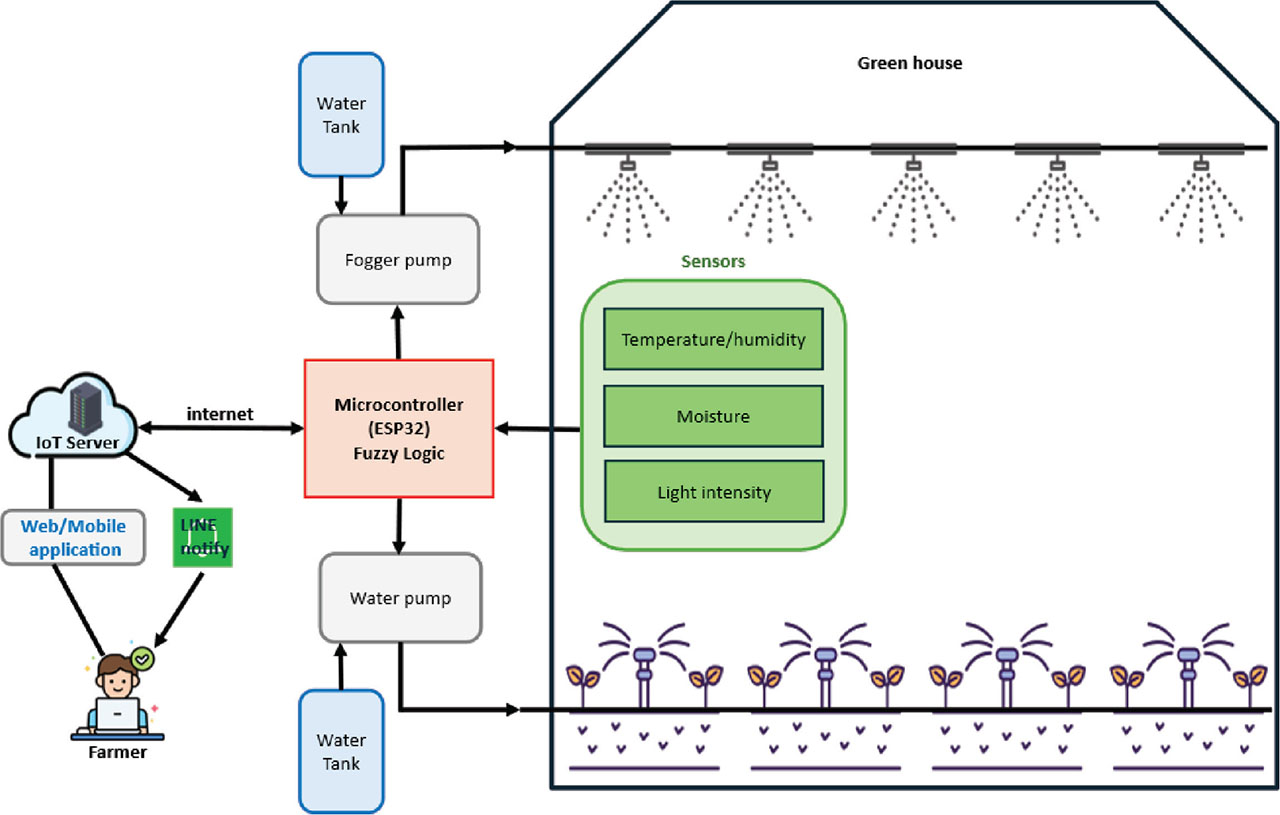
Figure 3:
Schematic diagram revealing the monitoring and control system for the greenhouse.
Figure 4 presents the control system design which required an electronic circuit integrating the sensors, the ESP32 microcontroller, and a power source.
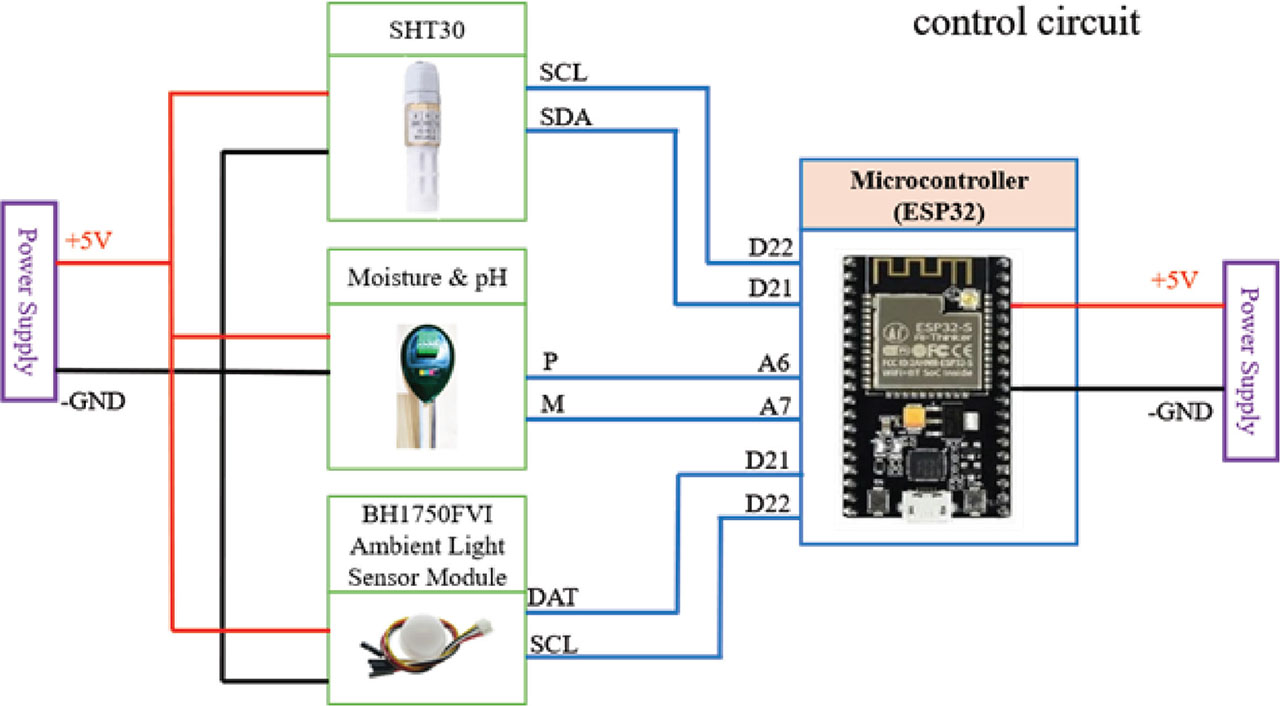
Figure 4:
The electronic circuit presents the integration of the sensor with the ESP32 microcontroller. Here DAT = Data Line, GND = Ground, SCL = Serial Clock Line, and SDA = Serial Data Line.
Figure 4 illustrates the control circuit based on the ESP32 microcontroller, which connects three types of low-cost sensors: (1) the SHT30 for temperature and relative humidity, (2) the Moisture & pH sensor for soil moisture and pH, and (3) the BH1750FVI Ambient Light Module for light intensity. All components are powered by a 5-volt DC supply and assembled into a compact control box. These sensors are installed within the greenhouse to continuously monitor environmental conditions.
The selected sensor components and equipment for this study include the SHT30 sensor, which operates with a supply voltage of 2.4–5.5 V while taking precise temperature and humidity measurements accurate to ±0.3°C spanning −40°C to +90°C for temperature and ±2% relative humidity (RH) across 0%–100% RH for humidity. The Moisture & pH Sensor operates with a power supply of 3.3–5 V, offering a moisture accuracy of ±3% within the 0%–100% RH range and a pH accuracy of ±0.2 pH. The BH1750FVI Ambient Light Module operates at 2.4–3.6 V (normally 3.3 V) and measures illuminance from 1 lx to 65,535 lx, with an accuracy of ±10%.
The ESP32 microcontroller, a key component in the system, operates at 3.3 V and features integrated Wi-Fi and Bluetooth, enabling wireless connectivity. A 5 V supply is required for the liquid crystal display (LCD) module, which provides a 20-character by 4-line display with an adjustable backlight. Additionally, the power breaker, designed for electrical safety, operates at 220 V with a current rating of 10 A.
The relay module features two channels and functions with a voltage at the common collector (VCC) of 5 V, consuming approximately 70–90 mA per relay coil. Logic voltage of 3.3–5 V is supported, and a low-level trigger mechanism is used, where 0 V activates the relay (ON) and 5 V deactivates it (OFF). Collectively, these components form the foundation of the sensor-based environmental control system developed in this study.
The developed prototype consists of a control unit and multiple environmental sensors. The detailed cost breakdown is presented in Table 7.
Table 7:
The costs required to develop the prototype
| No. | Sensors/device | Price/unit (US$) |
|---|---|---|
| 1 | SHT30 sensor | 8.67 |
| 2 | Moisture & pH sensor | 11.96 |
| 3 | BH1750FVI ambient light module sensor | 4.49 |
| 4 | ESP32 board | 5.38 |
| 5 | LCD | 3.29 |
| 6 | Power breaker | 1.50 |
| 7 | Relay 2 channel | 1.20 |
| 8 | Terminal wires | 1.35 |
| 9 | Power adapter | 1.79 |
| 10 | Plastic box | 7.47 |
| Total price | 47.10 |
All components were selected based on affordability, local availability in the Thai market, and suitability for continuous greenhouse deployment. This ensures that the system can be reproduced and maintained easily by small-scale farmers without requiring specialized or imported hardware.
Based on the production costs of the developed prototype (Table 7), the prices of sensors and associated materials available in Thailand were found to be relatively low. The total cost of approximately US$47.10 demonstrates that the system is economically feasible while still maintaining reliable performance due to the statistically validated low-cost sensors used in this study.
To contextualize the economic advantages of the proposed system, Table 8 presents a comparative analysis of hardware cost levels reported in previous greenhouse automation studies. These systems span high, medium, and low cost ranges, enabling a clear assessment of how the present design compares with existing solutions.
Table 8:
Cost-level comparison between previous studies and the proposed system
| Study | Hardware architecture | Sensor type | System complexity | Approx. cost/evidence | Cost level |
|---|---|---|---|---|---|
| Ting et al. (2015) | Industrial ZigBee (JN5139), WSN nodes, GPRS server | Industrial sensors (0–5 V, 4–20 mA), LI-6400XT CO2 analyzer | Multi-node industrial WSN + cloud | Lab-grade instruments (CO2 analyzer alone > US$10,000) | High |
| Wang & Wang (2020) | CC2530 ZigBee network, GPRS module, host PC | DS18B20, DHT11, BH1750 | Multi-node WSN + fuzzy-PID + PC platform | Multiple ZigBee nodes + base station (higher than low-cost MCUs) | High–medium |
| Simo et al. (2022) | ATmega328P + ESP8266 + multi-sensor platform | SHT31, BH1750, CCS811, pH sensor | Environmental + electrical monitoring | 178 € + 147 € ≈ US$340 | Medium |
| Kayadibi (2025) | ESP32 + multi-sensors | AHT10, CJMCU-811, MQ135, capacitive soil sensor | IoT monitoring + basic actuator control | Estimated US$60–90 | Medium |
| Naeem & Aly (2024) | Raspberry Pi 3 + Arduino + camera | DHT11, soil moisture, pH, CO2 | Multi-sensor monitoring | ~70–80US$ | Medium–low |
| This study (2025) | ESP32 microcontroller | Validated low-cost sensors (SHT30, soil moisture, BH1750) | IoT monitoring + fuzzy automation | US$47.10 (actual prototype cost) | Low |
The cost comparison in Table 8 shows that previous IoT-based greenhouse systems vary widely in hardware expenses, from industrial and research-grade designs to multi-sensor academic prototypes. High-cost systems, such as Ting et al. (2015) and Wang and Wang (2020), rely on industrial ZigBee networks, laboratory-grade CO2 analyzers, and complex communication modules. Medium-cost systems, including Simo et al. (2022) and Kayadibi (2025), use multi-sensor ESP/ATmega platforms requiring higher component investments, while Naeem and Aly (2024) fall into the medium–low range due to the combined Raspberry Pi and Arduino architecture. In contrast, the proposed system achieves full IoT monitoring, ANOVA-validated sensing, and fuzzy-logic environmental control at only US$47.10, the lowest among all reviewed studies. This demonstrates that the proposed design delivers reliable automation at a substantially reduced cost, making it more accessible for smallholder farmers and resource-constrained greenhouse operations.
The comparison clearly indicates that the proposed system achieves the lowest implementation cost while still providing validated sensing capability and automated control, unlike other systems that either rely on high-cost equipment or lack accuracy validation.
Greenhouse operations can be governed through the use of a fuzzy inference system (FIS) using fuzzy logic (FL) to generate optimal control responses based on specific environmental input conditions, as illustrated in Figure 5.
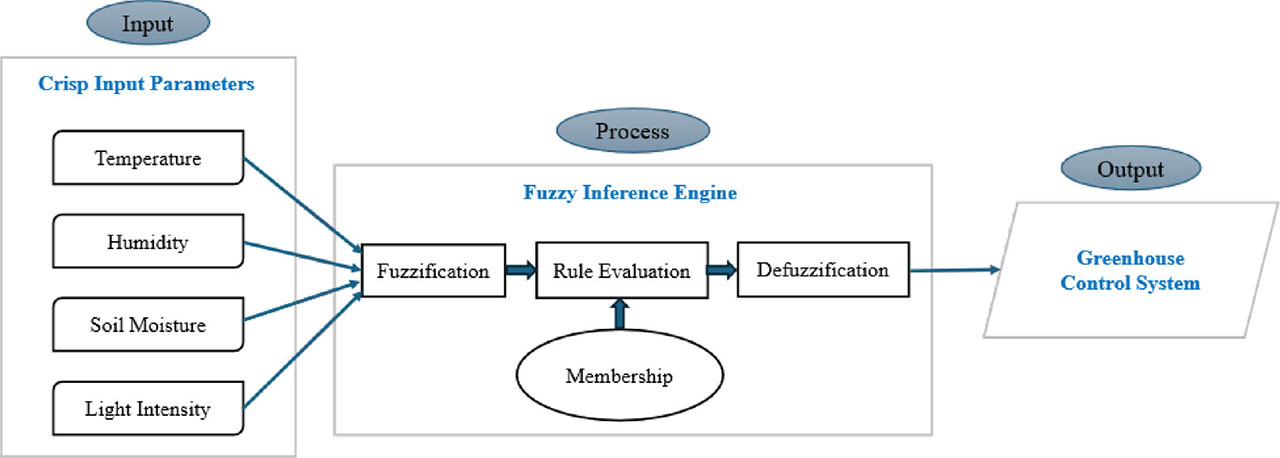
Figure 5:
FL flow diagram for greenhouse environmental control. FL, fuzzy logic.
Figure 5 presents the design of the FL flow, with an emphasis on optimization. In the proposed model, fuzzy parameter optimization is carried out through a systematic process, designed to respond precisely to the various environmental factors involved. To do this, parameters such as soil moisture, humidity, air temperature, and light intensity can initially be classified into appropriate membership functions and allocated to certain ranges in line with a variety of plant growth stages.
Four principal parameters are used as system inputs, namely soil moisture, light intensity, temperature, and humidity, designated, respectively, as Moist, Light, Temp, and Hum. These parameters possess sets of membership functions specifically tailored to match their attributes. The FIS comprises these four parameters along with one control output, as shown in Table 9. Three levels of membership are used to classify the categories of soil moisture, air temperature, and humidity: low, medium, and high. In order to offset the fact that these parameters vary continuously, triangular membership functions are applied. In the case of light intensity, four levels are used, namely very low, low, medium, and high. A trapezoidal membership function is now required, which permits finer granularity in assessing illumination, which is essential in the greenhouse context.
Table 9:
Fuzzy input variables and their membership function characteristics
| Variables | Range | Membership functions | Shape |
|---|---|---|---|
| Soil moisture (%) | 0–100 | Low, medium, high | Triangular |
| Temperature (°C) | 15–45 | Low, medium, high | Triangular |
| Humidity (% RH) | 30–100 | Low, medium, high | Triangular |
| Light intensity (lx) | 0–5000 | Very low, low, medium, high | Trapezoidal |
These membership functions were designed with the complexity of environmental parameters in mind and subsequently optimized to manage the natural fluctuations of those parameters. FIS can then accurately model conditions found in the real world, thus enabling it to function effectively in the context of precision agriculture and smart greenhouse operations.
By implementing triangular and trapezoidal membership functions, monitoring accuracy in the smart greenhouses can be optimized. For soil moisture, humidity, and air temperature, triangular functions allow smooth transitions between levels, effectively recording continuous variations. Meanwhile, the flexibility afforded by trapezoidal functions allows the effective classification of light intensity, which is crucial for the various phases of crop growth. Since these membership functions offer both precision and adaptability, they are the ideal choice to model dynamic environmental conditions, as Figure 6 shows.
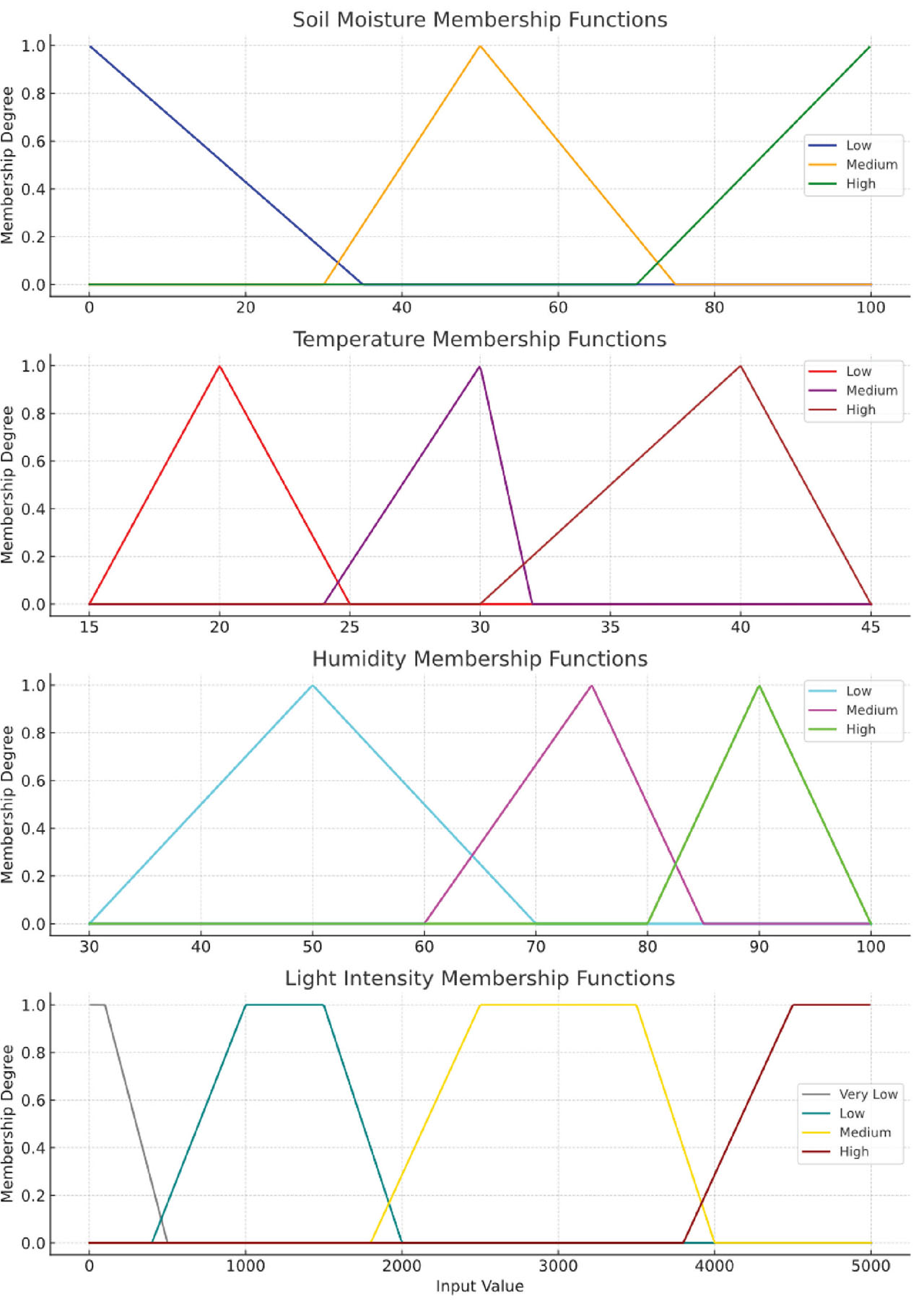
Figure 6:
Fuzzy input variable membership functions.
The fuzzy membership functions for temperature, humidity, and soil moisture were defined based on agronomic guidelines for cucumber (C. sativus) cultivation and refined through consultation with greenhouse experts. These numeric boundaries form the foundation of the fuzzification process, enabling each environmental variable to be mapped into the linguistic sets low, medium, and high. The overlapping ranges also support smooth transitions between fuzzy states, which is essential when dealing with gradual variations in greenhouse microclimate conditions. The adopted membership thresholds are presented in Table 10.
Table 10:
Input membership function thresholds
| Parameter | Low | Medium | High |
|---|---|---|---|
| Soil moisture (%) | 0–35 | 30–75 | 70–100 |
| Temperature (°C) | 20–25 | 24–32 | 30–40 |
| Humidity (%) | 50–70 | 60–85 | 80–100 |
The thresholds in Table 10 allow real-time sensor readings to be accurately classified into the appropriate fuzzy linguistic terms. Once the input variables are fuzzified, the fuzzy inference engine interprets these linguistic values according to the predefined rule base. This ensures that uncertain or gradually changing environmental conditions are appropriately represented before control decisions are generated. To ensure practical applicability, these thresholds were preliminarily verified against environmental data collected from the cucumber greenhouse during the initial observation stage.
Following fuzzification, the Mamdani-type fuzzy inference mechanism converts linguistic inputs into actionable outputs through a structured set of if–then rules. This inference structure is widely used in environmental control applications due to its transparency and interpretability. The resulting fuzzy outputs correspond to commands for the system’s two primary actuators, Spray Mist and Watering.
Before defining the rule base, the general actions required for typical greenhouse environmental conditions were summarized. These recommended management actions are presented in Table 11.
Table 11:
Proposed action for greenhouse environmental management
| Soil moisture (%) | Temperature (°C) | Humidity (%) | Action |
|---|---|---|---|
| Low (0–35) | Low (20–25) | Low (50–70) | Increase watering, increase temperature, increase humidity |
| Medium (30–75) | Medium (24–32) | Medium (60–85) | Maintain watering, maintain temperature, maintain humidity |
| High (70–100) | High (30–40) | High (80–100) | Decrease watering, decrease temperature, decrease humidity |
For actuator control, triangular membership functions were defined within a normalized [0–1] domain to represent the OFF/medium/high levels for irrigation and the low/medium/high levels for fogging. Triangular functions were selected because they simplify real-time computation on the ESP32 while preserving adequate resolution for smooth actuator response. The numerical boundaries and parameters for each output membership set are summarized in Table 12, which specifies the design values used during defuzzification and ensures consistent integration with the nine-rule reduced rule base.
Table 12:
Output membership function parameters (normalized 0–1)
| Output variable | Membership level | Range | Parameters (a, b, c) |
|---|---|---|---|
| Pump (fogger) | Low | 0.0–0.3 | (0.0, 0.0, 0.3) |
| Medium | 0.2–0.7 | (0.2, 0.5, 0.7) | |
| High | 0.6–1.0 | (0.6, 1.0, 1.0) | |
| Pump (watering) | Low | 0.0–0.4 | (0.0, 0.0, 0.4) |
| Medium | 0.3–0.7 | (0.3, 0.5, 0.7) | |
| High | 0.6–1.0 | (0.6, 1.0, 1.0) |
Using the agronomic thresholds in Table 10 and the action logic in Table 11, a set of nine fuzzy rules (R1–R9) was constructed to govern temperature–humidity regulation and irrigation control. These rules were developed based on cucumber cultivation guidelines and expert knowledge from greenhouse specialists at Songkhla Rajabhat University. A reduced nine-rule structure was adopted instead of a full 27-rule grid because each actuator is primarily governed by a dominant environmental variable. Irrigation control depends almost entirely on soil-moisture status, allowing temperature and humidity to be treated as don’t-care conditions in irrigation-related rules. Likewise, fogger activation is driven mainly by humidity and moderated by temperature, enabling rule minimization without reducing control precision. This reduced-rule approach aligns with practical decision-making used by growers and improves computational efficiency for deployment on an ESP32 microcontroller. The complete fuzzy rule base is shown in Table 13.
Table 13:
Proposed FL rules for greenhouse environmental management
| Rule No. | Temperature | Humidity | Soil moisture | Watering | Spray mist |
|---|---|---|---|---|---|
| R1 | High | Low | Medium | OFF | ON |
| R2 | High | High | Medium | OFF | OFF |
| R3 | Medium | Low | Medium | OFF | ON |
| R4 | Medium | High | Medium | OFF | OFF |
| R5 | Low | Low | Medium | OFF | ON |
| R6 | Low | High | Medium | OFF | OFF |
| R7 | - | - | Low | ON | OFF |
| R8 | - | - | Medium | OFF | OFF |
| R9 | - | - | High | OFF | OFF |
The fuzzy control system employs two primary actuators: Spray Mist, which regulates temperature and humidity, and Watering, which controls soil moisture levels. Rules R1–R6 correspond to climate regulation using the Spray Mist actuator, whereas rules R7–R9 govern irrigation management through the Watering actuator. The “–” symbol denotes a don’t-care condition, indicating that temperature and humidity inputs are not considered in irrigation-specific decisions.
As shown in Table 13, the fuzzy controller consistently executed the prescribed automated actions in response to corresponding environmental triggers, achieving 100% accuracy during system evaluation. This demonstrates that the proposed FL controller provides reliable real-time adaptability with minimal computational overhead, making it well-suited for deployment in low-cost smart greenhouse applications.
The control box integrates all sensing units and electronic circuits used for monitoring greenhouse conditions and transmitting measurements to the central IoT server. A web-based application was developed to visualize these environmental parameters, using Bootstrap for the user interface and Hypertext Preprocessor (PHP)–MySQL for backend processing. The overall architecture of the web application is illustrated in Figure 7.
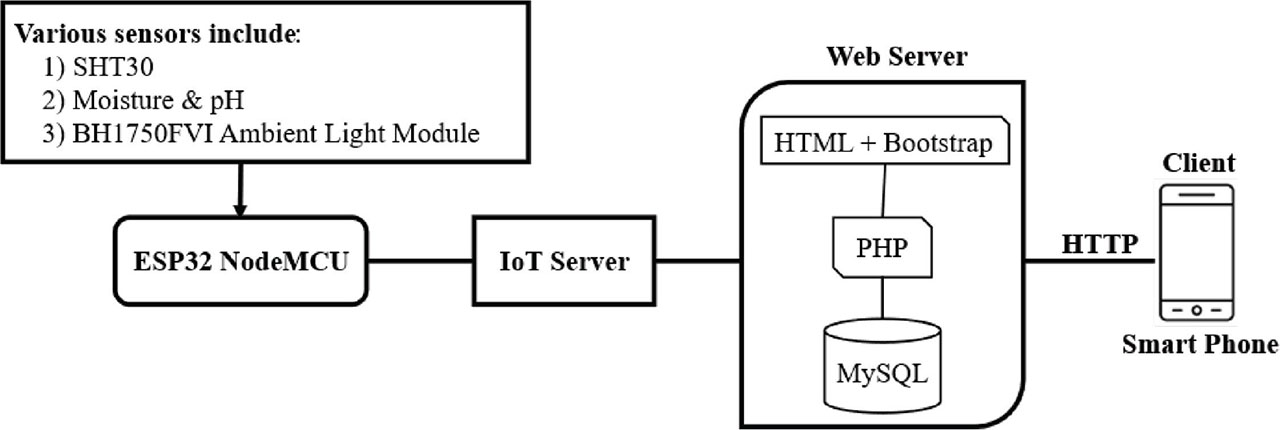
Figure 7:
Web application system architecture that allows monitoring in real time.
Based on this architecture, the data acquisition process operates as follows: the sensors continuously collect environmental parameters and transmit them to the ESP32 microcontroller, which processes and forwards the data to the server database. Users can then monitor real-time measurements through the web application via smartphone or computer. The complete web application is shown in Figure 8.
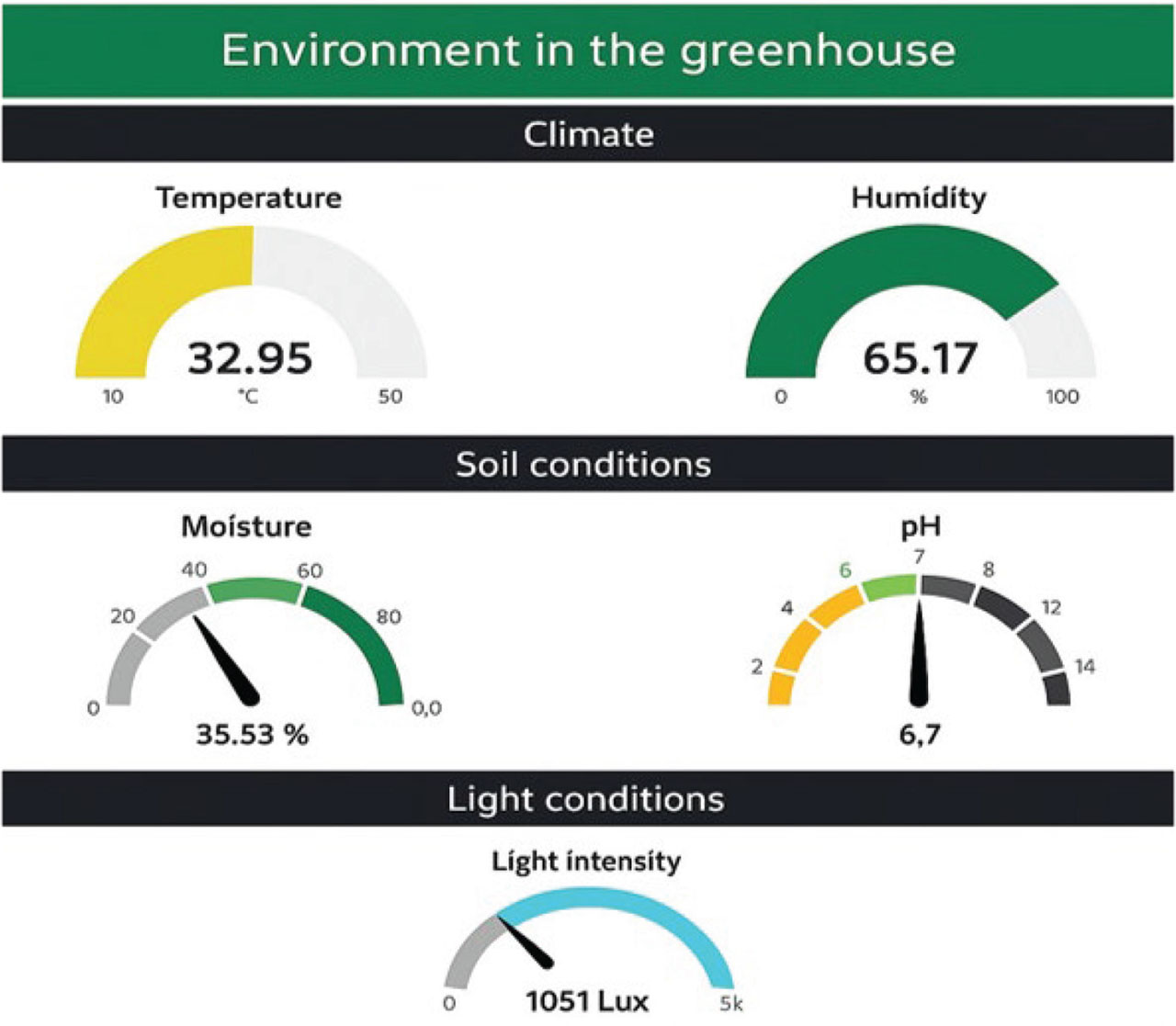
Figure 8:
Web application interface displaying greenhouse environmental data.
The web interface presents temperature, humidity, soil moisture, pH, and light-intensity data in a clear and structured layout, ensuring intuitive interpretation without requiring technical expertise. This design improves the practicality of the system for smallholder farmers and general users.
In addition to data visualization, the application supports both automatic and manual control modes, as shown in Figure 9. In automatic mode, the system executes control actions based on predefined fuzzy rules that can be customized by the user. In manual mode, users can directly activate or deactivate the irrigation and misting pumps. The interface also displays actuator status in real time, enabling users to monitor and control greenhouse devices efficiently.

Figure 9:
Control system interface of the web application for manual and automatic operations.
d. Experimental Setup
The experimental setup was implemented in the greenhouse described in Section a. Three validated low-cost sensors were deployed: the SHT30 for air temperature and relative humidity, the Moisture & pH sensor for soil monitoring, and the BH1750FVI for light intensity. The SHT30 was installed centrally inside the greenhouse at canopy height to record a representative sample of the microclimate parameters. The Moisture & pH sensor was embedded in soil pots to simulate root-zone monitoring, while the BH1750FVI was positioned above canopy level to ensure accurate light detection. These placements were chosen to reflect practical sensor deployment in greenhouse crop production.
All sensors were connected to an ESP32 microcontroller, enabling the local processing of data, which could then be transmitted directly using Wi-Fi to a web-based dashboard. Actuators, including a fogger pump to regulate humidity and temperature, along with an irrigation pump to control soil moisture, were connected through relay modules. The fuzzy rule–based control system was implemented to automatically adjust environmental conditions according to the defined membership functions and rules.
Environmental data were collected at 60-s intervals over a test period of 30 days, resulting in approximately 40,000 data records. The experiment was conducted solely for system validation. System performance was evaluated in terms of sensor accuracy (validated against standard devices using one-way ANOVA), control accuracy, system response time, latency, and daily energy consumption. Figure 10 illustrates the experimental setup, encompassing sensor and actuator locations and the positioning within the greenhouse of the control unit.
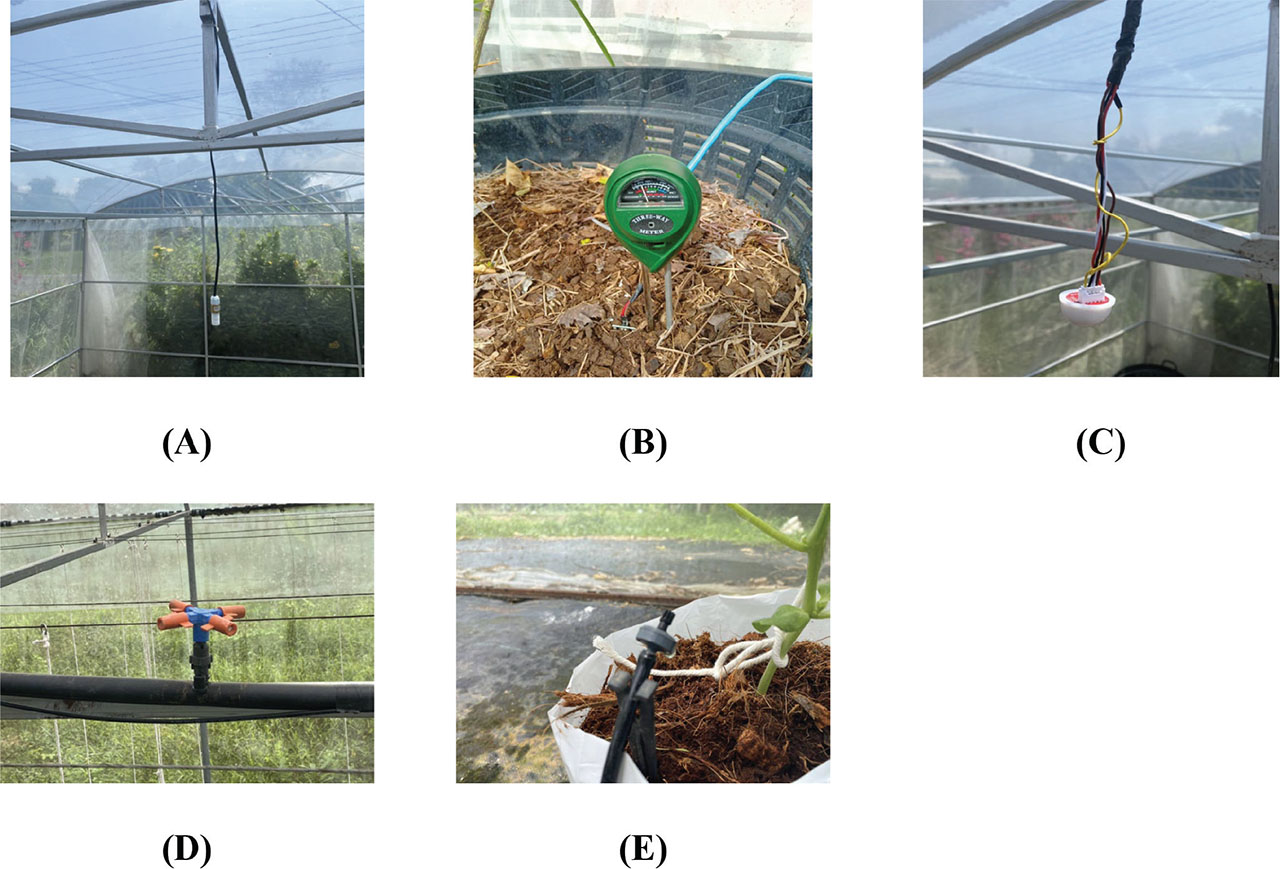
Figure 10:
Sensor installation inside the greenhouse: (A) SHT30 Sensor to measure temperature and humidity, (B) Moisture & pH Sensor, (C) BH1750FVI Ambient Light Sensor, (D) misting device for temperature and humidity control, and (E) watering system for soil moisture regulation.
III. Results
a. System performance
The performance of the low-cost sensors was evaluated by comparing their measurements with certified reference devices over a full 24-hr cycle. Figure 11 illustrates the hourly error distribution for temperature, humidity, soil moisture, pH, and light intensity. The majority of sensors demonstrated stable and consistent performance throughout the observation period, with errors generally remaining below 2%. Soil moisture and pH sensors showed slightly higher variability during nighttime hours, which is typical for resistive-type probes subject to electrical noise and varying soil conductivity. The light-intensity sensor exhibited larger fluctuations during sunrise and sunset due to rapid changes in incident radiation, a well-known limitation of low-cost photometric sensors.
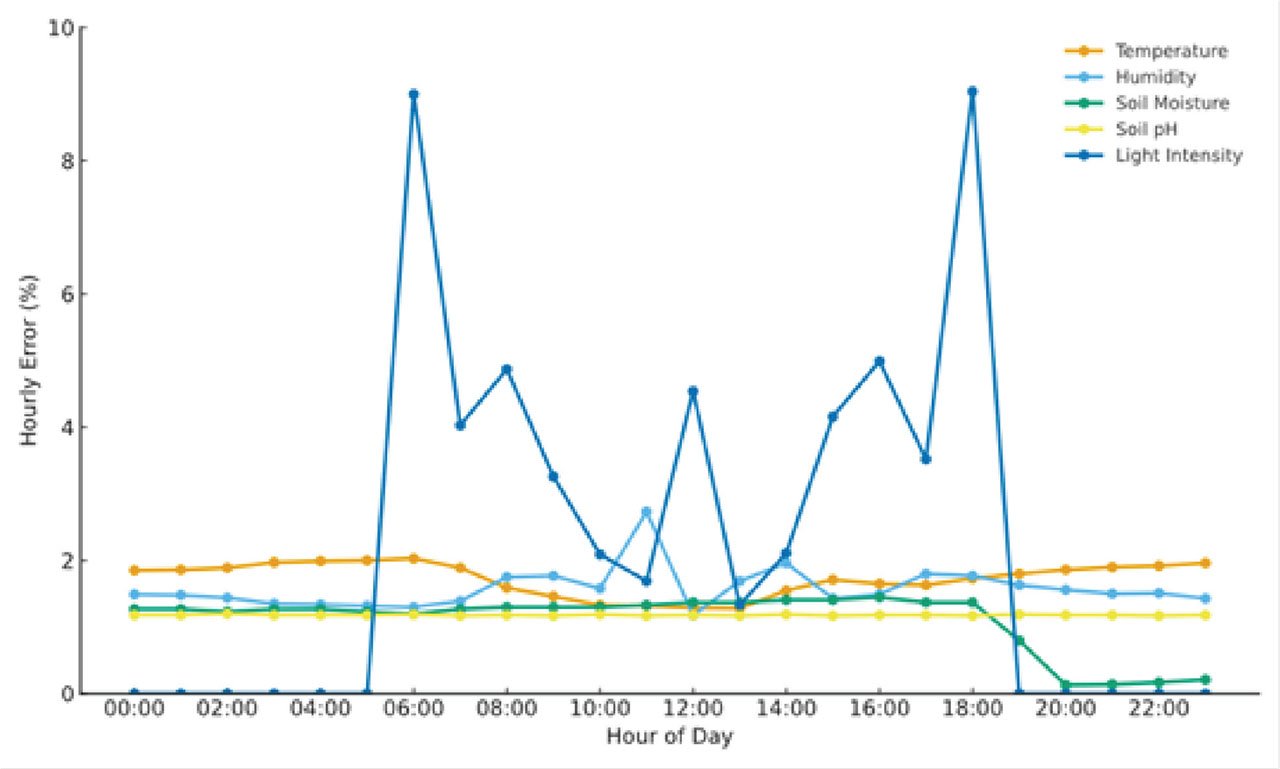
Figure 11:
Hourly error distribution.
Figure 12 summarizes the average percentage error for each sensor across the entire dataset. The SHT30 temperature and humidity readings showed low mean errors of 1.73% and 1.58%, respectively, indicating strong agreement with the reference instrument. Soil-moisture measurements produced an average error of 1.10%, which is acceptable for irrigation scheduling applications. Soil pH measurements averaged 1.18% error, reflecting stable performance despite known susceptibility to electrical noise. The light-intensity sensor yielded the highest average error at 2.28%, although this remains within tolerances typically reported for low-cost photometric modules.
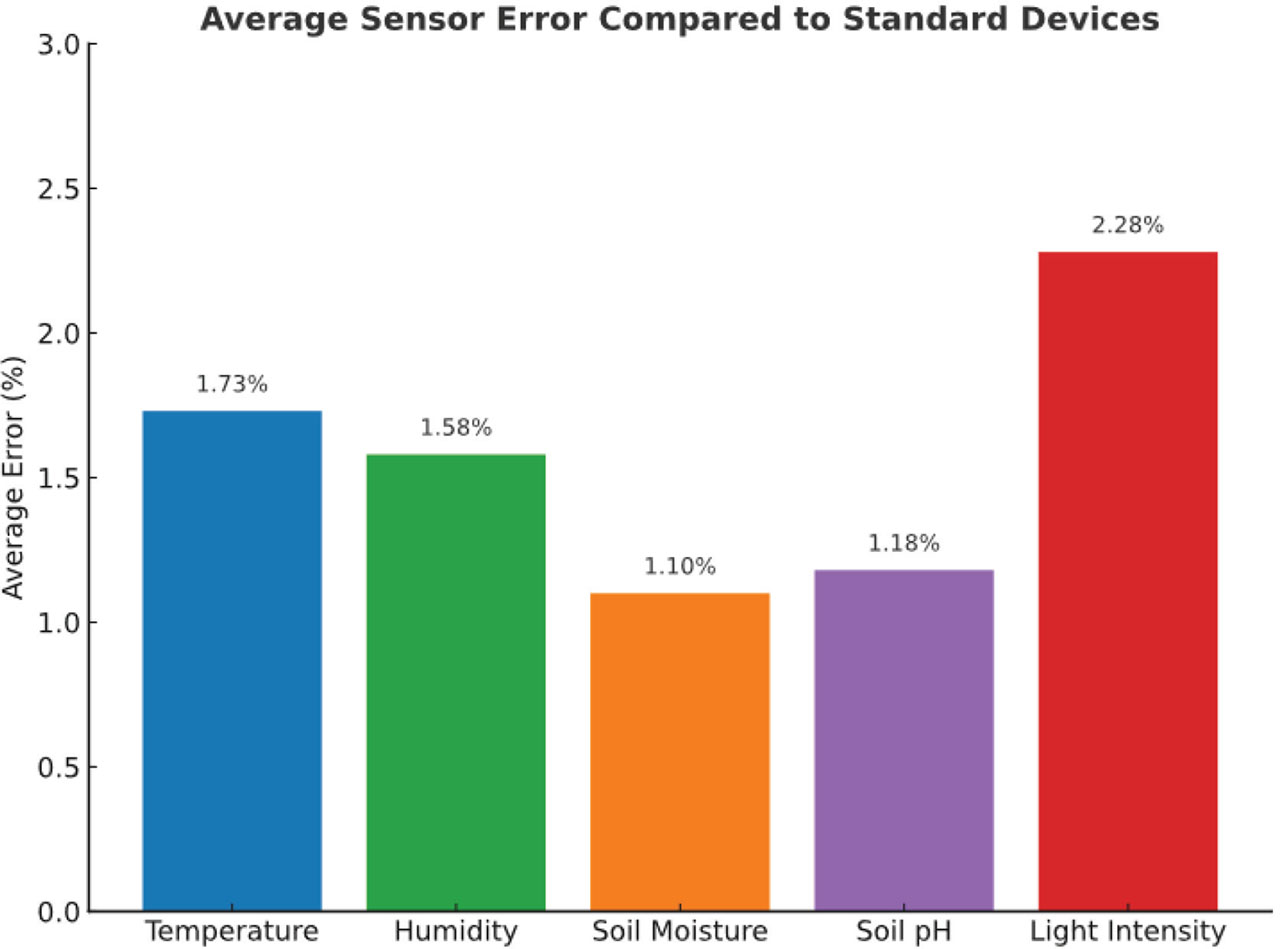
Figure 12:
Average% error of each sensor compared to standard equipment.
A minimum of 500 observations was collected for each sensor type, providing sufficient statistical power for determining accuracy at the 95% confidence level. One-way ANOVA was performed to compare each low-cost sensor with its corresponding reference device. All tests produced p-values >0.05, indicating no statistically significant difference between the sensor measurements and the reference data. Homogeneity of variances was confirmed using Levene’s test (p > 0.05) before ANOVA, and multiple-comparison post hoc LSD test results showed no significant differences among the sensors and the reference device. These results confirm that the low-cost sensors provide statistically comparable performance to standard instruments for short-term environmental monitoring.
Overall, the validated sensors demonstrated high stability and reliable measurement accuracy. Their performance characteristics are sufficient for supporting real-time greenhouse automation, particularly when combined with calibration and statistical verification procedures conducted in this study.
b. Accuracy of command and control
After the environmental monitoring and control system was installed in the greenhouse, its performance accuracy was evaluated through the web application over a 3-days period, with 30 tests conducted each day. Table 14 evaluates the performance of the control subsystem in both manual and automatic operating modes. In manual mode, the irrigation and misting pumps were toggled 360 times in total—90 ON and 90 OFF actions for each actuator (water pump and fogger pump). Every manual switching event was executed correctly, resulting in 100% accuracy. This confirms the reliability of the ESP32–relay integration and demonstrates that no misfires, delays, or unintended activations occurred during direct user control.
Table 14:
Results of testing the operation of the control system
| Working style | Number of tests (times) | Accuracy of work orders and controls (times) | Accuracy (%) |
|---|---|---|---|
| 1. Manual operation mode | |||
| 1.1 Turn on the water pump with the push button | 90 | 90 | 100 |
| 1.2 Turn off the water pump with the push button | 90 | 90 | 100 |
| 1.3 Turn on the fogger pump with the push button | 90 | 90 | 100 |
| 1.4 Turn off the fogger pump with the push button | 90 | 90 | 100 |
| 2. Automatic operating mode | |||
| 2.1 If the moisture is higher than specified: Turn off the watering pump | 90 | 90 | 100 |
| 2.2 If the moisture is lower than specified: Turn on the watering pump | 90 | 90 | 100 |
| 2.3 If the temperature is higher than specified: Turn on the fogger pump | 90 | 90 | 100 |
| 2.4 If the temperature is lower than specified: Turn off the fogger pump | 90 | 90 | 100 |
In automatic mode, 360 rule-triggered control events were generated based on predefined moisture and temperature thresholds. These included pump activations and deactivations governed by fuzzy rules R1–R9. The irrigation pump consistently responded to soil-moisture conditions (R7–R9), and the fogger pump responded accurately to temperature–humidity combinations (R1–R6). All automatic events were correctly executed, also yielding 100% accuracy. No contradictory commands, missed activations, or false triggers were observed.
These results demonstrate that the command and control subsystem operated with complete determinism and stability across both manual and automated conditions. The perfect execution rate validates the robustness of the fuzzy-rule framework and the suitability of the low-cost hardware platform for real-time greenhouse automation. This high level of reliability indicates that the system is fully capable of supporting practical environmental control in small-scale greenhouse applications.
c. System response and latency
The system’s responsiveness was evaluated by measuring the time elapsed between the detection of an environmental threshold and the corresponding actuator activation. This latency includes (i) sensor sampling time, (ii) data transmission to the ESP32 controller, (iii) fuzzy inference processing, and (iv) relay switching.
Across all test scenarios, the average actuator response time was approximately 2.3 s, measured from the moment a parameter exceeded the fuzzy rule–defined threshold (e.g., low soil moisture or high temperature) to the activation of the irrigation or fogger pump. This response speed is adequate for greenhouse environmental regulation, where changes in temperature, humidity, and soil moisture typically evolve over minutes rather than milliseconds. The consistent response behavior indicates that the FL engine and ESP32 platform operate reliably under real greenhouse conditions.
In addition to actuator response time, data latency—defined as the delay from sensor measurement to visualization on the web dashboard—was also recorded. The system achieved an average data latency of 350 ms, allowing near real-time monitoring for users accessing the dashboard via smartphone or computer. Throughout the observation period, no packet loss or communication interruptions were detected.
These findings confirm that the proposed IoT architecture supports responsive and stable operation. The combination of a 2.3-s actuation response and sub-second data latency ensures that the system can maintain optimal microclimate conditions under dynamic environmental fluctuations, satisfying the operational requirements of automated greenhouse management.
d. Cost analysis
The energy consumption of the developed smart greenhouse system was monitored during operation to assess its suitability for continuous use. Measurements showed that the total daily electricity usage, including the ESP32 microcontroller, sensors, and relay-activated pumps, remained below 1 kWh/day, indicating that the system operates with low power requirements and can be deployed without significantly increasing the energy cost of greenhouse operations.
Table 7 summarizes the total hardware cost of the prototype. All components were sourced from local markets in Thailand. The complete system, including the ESP32 controller, low-cost sensors (SHT30, soil-moisture sensor, BH1750), communication modules, and control hardware, amounted to US$47.10. This represents the total expenditure required to build a fully functional IoT-based monitoring and automatic control system.
Furthermore, Table 8 presents a classification of cost levels reported in earlier greenhouse automation studies. This table provides contextual information on the hardware architectures, sensor types, and approximate cost categories of prior work, helping to position the prototype within the broader landscape of IoT-based greenhouse systems.
e. Environmental response
The environmental response of the greenhouse was evaluated to verify whether the fuzzy-controlled system could effectively regulate microclimatic parameters in real time. Figure 13 illustrates the temperature behavior during a representative control event. When the measured temperature entered the High fuzzy region (30–40°C), the fogger pump was automatically activated according to the defined fuzzy rule base. At the activation point (t ≈ 14:10), temperature peaked at approximately 33–34°C. Following fogger activation, temperature decreased rapidly and returned to the optimal range (≈29–30°C) within 5–7 min, after which it stabilized in the medium fuzzy region (24–32°C). This response demonstrates the system’s capability to correct high-temperature conditions promptly and maintain microclimate stability.
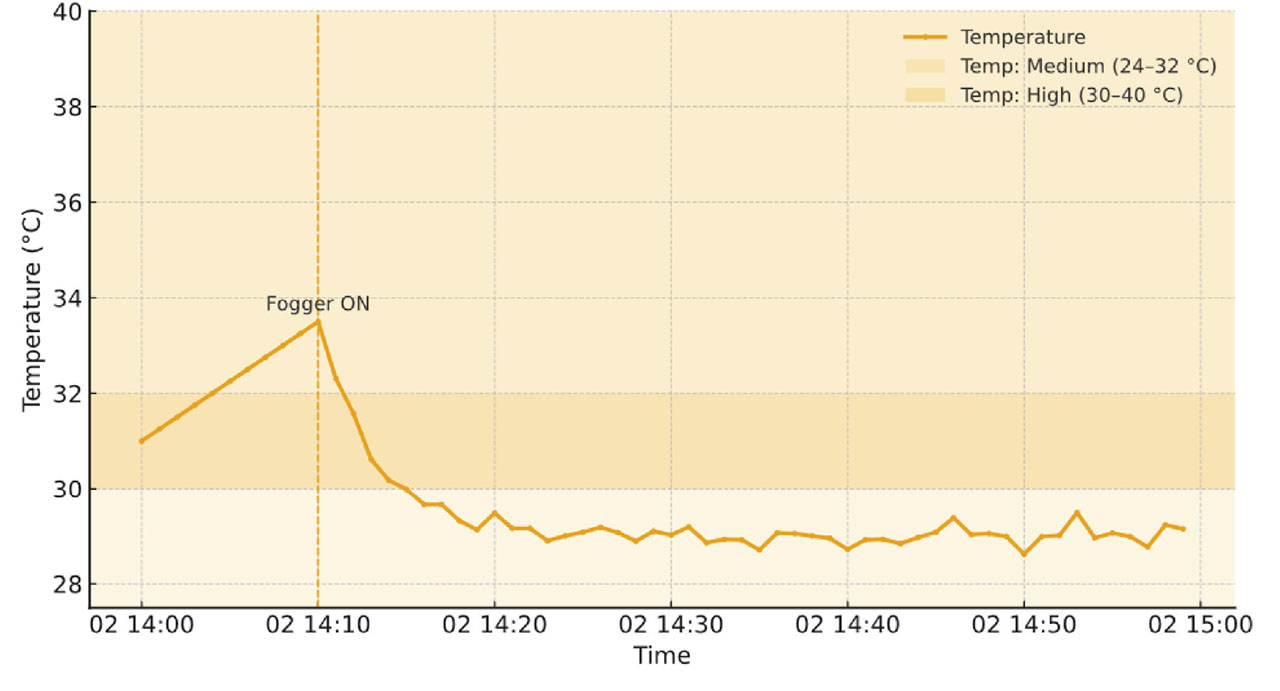
Figure 13:
Temperature response and fuzzy membership regions.
Similarly, Figure 14 presents the soil moisture response during irrigation control. When soil moisture dropped below the Low fuzzy threshold (0%–35%), the system automatically triggered the irrigation pump (t ≈ 14:12). Moisture values, which had decreased to approximately 38%–40%, rose to 55%–60% within 10–12 min, stabilizing in the Medium fuzzy region (30%–75%). The smooth rise and subsequent stabilization indicate that the fuzzy irrigation mechanism delivered an appropriate amount of water without overshooting the desired moisture range.
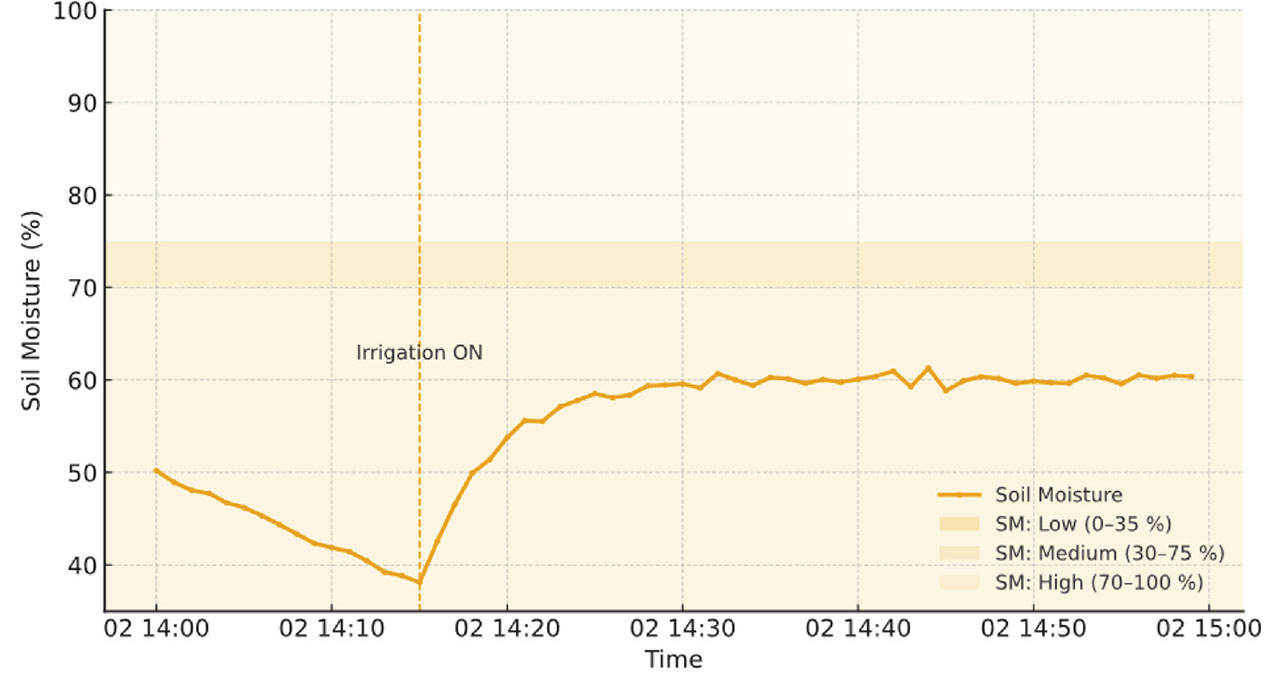
Figure 14:
Soil moisture response and fuzzy membership regions.
Together, these responses confirm that the system reliably executed control actions when environmental conditions crossed predefined fuzzy boundaries. Both controlled variables, namely temperature and soil moisture, returned to their respective optimal regions within short response intervals. This demonstrates the system’s real-time corrective capability. Such rapid stabilization is essential for supporting cucumber (C. sativus) cultivation because prolonged exposure to heat or moisture stress can negatively affect plant growth and fruit quality.
The consistent alignment of system reactions with fuzzy membership thresholds also validates the effectiveness of the rule base and the suitability of the selected membership ranges. These observed environmental responses reinforce the potential of the proposed system to support practical deployment in greenhouse environments under tropical conditions.
IV. Discussion
The experimental results demonstrate that the low-cost sensors evaluated in this study provided measurement accuracy comparable to that of certified reference instruments, as indicated by one-way ANOVA tests showing no statistically significant differences in mean readings at the 95% confidence level. This finding highlights the suitability of these inexpensive sensors for practical deployment in greenhouse environments, especially when contrasted with earlier studies that employed low-cost sensors without rigorous validation, such as those of Simo et al. (2022), Sumalan et al. (2020), and Nath et al. (2021). Unlike these prior works, which did not assess statistical equivalence before field deployment, the present study conducted systematic short-term calibration to ensure measurement consistency and reduce initial bias. Although long-term stability and drift were not examined, the validated short-term accuracy establishes a reliable foundation for integrating these sensors into automated control systems. This enhances confidence in their use for real-time environmental regulation within small-scale greenhouses.
Compared with previous IoT and fuzzy-based greenhouse systems, the proposed work demonstrates several methodological and performance advancements. Earlier studies, such as Ting et al. (2015), Bharathi et al. (2024), and Naeem and Aly (2024) implemented FL or rule-based automation but relied on higher-cost sensor modules or did not quantitatively verify measurement accuracy. More recent systems have continued to face similar limitations. For example, Tasayco et al. (2025) developed a Bluetooth-based mechatronic irrigation platform but did not include statistical sensor validation, leaving uncertainty regarding measurement reliability. Likewise, Correa-Quiroz et al. (2025) proposed an ESP32-based monitoring and irrigation system, yet their results exhibited fluctuations likely caused by electromagnetic interference, and no calibration or accuracy testing was conducted before field deployment. In contrast, the validated sensors used in the present study achieved mean deviations of only 1.52%–2.28% relative to certified reference instruments, while earlier low-cost greenhouse studies did not report any quantitative deviation metrics or statistical accuracy assessments. The availability of validated sensing accuracy contributes directly to more stable fuzzy inference outputs, reducing incorrect actuator activations and improving climate regulation reliability. Furthermore, the use of crop-informed membership thresholds aligns the control boundaries with cucumber physiological requirements, enabling more precise environmental adjustments than the generic fuzzy sets commonly used in earlier prototypes. The combination of ANOVA-validated sensing, agronomically informed fuzzy sets, and an optimized nine-rule control base, therefore, represents a meaningful step forward relative to earlier IoT greenhouse frameworks.
The environmental response results further demonstrate the effectiveness of the FL controller in maintaining stable microclimatic conditions inside the greenhouse. When the temperature exceeded the upper fuzzy boundary, the spray mist actuator was triggered and successfully reduced the temperature from approximately 33°C to about 29°C within 5–7 min. A similar stabilizing effect was observed in soil-moisture regulation, where moisture values increased from the low fuzzy region to the optimal range within 10–12 min following irrigation activation. These stabilization times are shorter than those implied in earlier IoT greenhouse studies, such as Ting et al. (2015) and Mohamed et al. (2022), which demonstrated automated climate responses but did not report quantitative recovery times or link the control behavior to crop-specific fuzzy thresholds. The faster response observed in the present system can be attributed to the use of ANOVA-validated sensors, which minimize measurement noise and enable more accurate rule activation, as well as the use of cucumber-informed membership boundaries that allow the controller to respond more precisely to deviations from optimal conditions. Podder et al. (2021) also implemented automated responses, yet the absence of validated sensor accuracy and agronomic calibration in their fuzzy sets likely contributed to reduced precision under fluctuating environmental conditions. By integrating validated sensing with crop-informed fuzzy membership functions, the proposed system achieves smooth corrective actions without overshoot or oscillation and demonstrates its capability to restore environmental parameters to optimal levels in real time.
The system’s responsiveness further demonstrates its suitability for real-time greenhouse management. The average actuator activation time of approximately 2.3 s and a data latency of around 350 ms indicate that the ESP32 microcontroller is capable of acquiring sensor measurements, performing fuzzy inference, and issuing control commands with minimal delay. These response times are noticeably faster than those reported in earlier IoT-based greenhouse platforms, many of which exhibited multi-second delays due to heavier rule bases, unvalidated sensing inputs, or reliance on cloud-assisted computation. The improved responsiveness in the present system can be attributed to the use of ANOVA-validated sensors, which reduce noise-induced jitter in control activation, and a simplified nine-rule fuzzy structure that minimizes computational overhead. This observation aligns with the recommendations of Xiao and Dong (2025), who emphasized that intelligent IoT systems require lightweight, energy-efficient inference mechanisms to operate reliably on constrained hardware. By maintaining fully local inference without external computation, the proposed controller preserves rapid decision-making capabilities while avoiding network-induced latency. As a result, the system provides an efficient solution capable of sustaining continuous, real-time regulation of temperature, humidity, and soil moisture an essential requirement for preventing microclimatic fluctuations that negatively impact cucumber cultivation.
The cost and energy evaluation highlight a significant practical advantage of the proposed system. With a total hardware cost of only US$47.10, the system operates at a substantially lower expense than previously reported IoT-based greenhouse platforms. High and medium-cost systems, such as those presented by Ting et al. (2015), Wang and Wang (2020), and Simo et al. (2022), required industrial-grade sensors, multi-board processing architectures, or complex communication modules, all of which contribute to markedly higher material and operational costs. In contrast, the present design achieves low cost without compromising performance by integrating statistically validated low-cost sensors and executing all inference locally on a single ESP32 board, thereby eliminating the need for external controllers or cloud-based computation. This combination of minimal hardware requirements and verified sensing accuracy explains why the proposed system achieves a more favorable cost–performance ratio than earlier prototypes. The results also align with recent studies on agricultural eco-efficiency, such as Min (2025), which emphasize the importance of reducing input costs and energy consumption to enhance sustainability. By providing reliable environmental control at a fraction of the cost of existing systems, the developed platform offers a highly accessible solution for smallholder farmers and resource-constrained greenhouse operations, supporting broader adoption of smart agriculture technologies.
Despite the promising results, several limitations should be acknowledged. The validation and control experiments were conducted without active crop cultivation, meaning that important biological factors such as canopy development, plant transpiration, and soil–plant interactions were not fully represented. In real greenhouse operation, transpiration increases relative humidity, canopy shading changes thermal profiles, and root water uptake produces more irregular soil-moisture depletion patterns, all of which can influence the frequency and intensity of control actions. Although these factors were absent, the fuzzy thresholds and control rules used in this study remain transferable because they were derived from crop-specific agronomic requirements rather than from the short-term validation dataset. Additionally, the study focused on short-term accuracy, and long-term sensor drift and recalibration intervals were not evaluated; these aspects are essential for ensuring sustained measurement stability during extended deployment. The experiments were also limited to a single greenhouse unit, and multi-site replication would further strengthen the generalizability of the system under different microclimatic conditions. Future work will include full-season cucumber cultivation, long-term drift assessment, multi-site trials, and expansion of the fuzzy rule base and sensing modalities to enhance system robustness and adaptability.
V. Conclusion
In this research, an affordable IoT-based greenhouse control system was developed using integrated low-cost sensors (SHT30, soil moisture, pH, and BH1750FVI) connected to an ESP32 microcontroller to enable fuzzy rule-based automation. The validated sensors achieved an error rate of <3% compared with certified reference instruments, and the control framework demonstrated 100% operational accuracy in both manual and automatic modes. Another important advantage of the proposed system is its affordability, with total energy consumption remaining below 1 kWh/day, making it highly suitable for small-scale greenhouse operations.
The findings of this study highlight three main contributions. First, the low-cost sensors were statistically validated through one-way ANOVA, confirming their suitability for environmental monitoring at a significantly reduced hardware cost of only US$47.10. This level of validation is not commonly addressed in previous IoT-based greenhouse systems, many of which used either higher-cost industrial sensors or unvalidated low-cost alternatives. Second, the FL controller, designed based on agronomic thresholds for cucumber cultivation, was able to stabilize temperature and soil moisture within optimal ranges within minutes, demonstrating effective real-time environmental regulation. Finally, the integration of validated sensing with a crop-informed FIS results in a practical control solution that outperforms previous designs in terms of cost, accessibility, and reliability.
The practical significance of the system lies in its potential to support farmers operating under financial constraints, where commercial smart-farming technologies remain inaccessible due to high installation and maintenance costs. By combining accurate low-cost sensing with efficient real-time control, the system provides a viable pathway for improving crop management and reducing labor dependency in smallholder greenhouses. The demonstrated cost-effectiveness and low energy footprint further reinforce its suitability for long-term agricultural deployment.
Despite these promising outcomes, certain limitations remain. The system was validated without a full crop cycle, and therefore, biological factors such as canopy development, transpiration variability, and soil–plant interactions were not fully captured. Long-term sensor drift and recalibration intervals were also not examined, although they play an important role in sustained accuracy. In addition, the experiments were performed within a single greenhouse, and broader testing across multiple locations would help confirm generalizability under varying environmental conditions.
Future work will include multi-season deployment under active cucumber production, long-term drift evaluation, and multi-site replication to strengthen external validity. Expanding the fuzzy rule base, integrating predictive or machine-learning-enhanced control models, and incorporating additional sensing modalities such as CO2 and nutrient monitoring may further improve the robustness, precision, and scalability of the system. Addressing these directions will contribute to the development of a more comprehensive and sustainable smart greenhouse platform suitable for wider agricultural adoption.
Acknowledgments
This work was supported by creative innovation in science and technology, Faculty of Science and Technology, Nakhon Si Thammarat Rajabhat University. Gratitude is also expressed to the editor of this paper and the numerous reviewers whose observations and guidance have proved highly valuable in shaping the form of the final manuscript and ensuring its overall quality.