
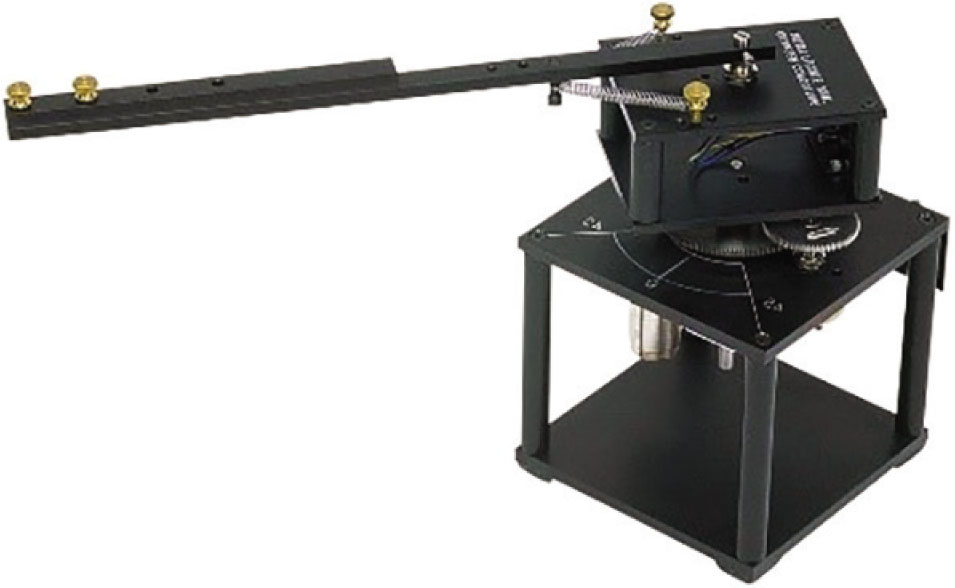
Figure 1:
Rotary flexible joint platform.
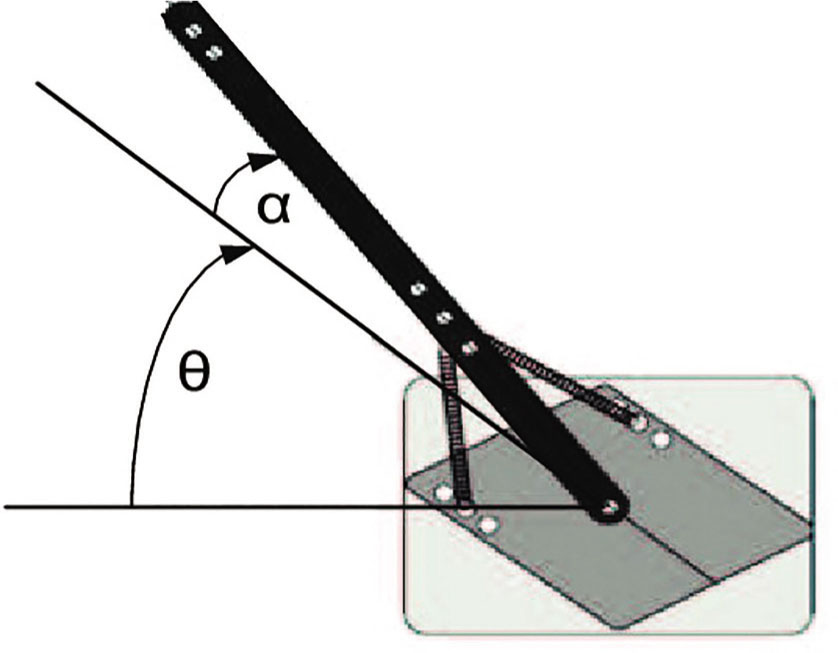
Figure 2:
Schematic diagram of the FJR system.
Table 1:
Nominal parameters of the FJR manipulator
| Symbol | Description | Value |
|---|---|---|
| Jeq | Equivalent moment of inertia of servo motor (kg ∙ m2) | 0.0018 |
| Jarm | Moment of inertia of the link (kg ∙ m2) | 0.0033 |
| Beq | The viscous friction coefficient of the manipulator (N ∙ m ∙ s /rad) | 0.015 |
| Ks | Joint stiffness (N/m) | 1.3 |
| Km | Motor back-EMF constant N/(rad/s) | 0.0077 |
| Kg | High gear ratio | 70 |
| Kt | Motor torque constant (N ∙ M/A) | 0.00767 |
| Rm | Motor torque constant (Ω) | 2.6 |
| ηm | Motor efficiency | 0.69 |
| ηg | Gearbox efficiency | 0.90 |
[i] EMF, Electromotive Force
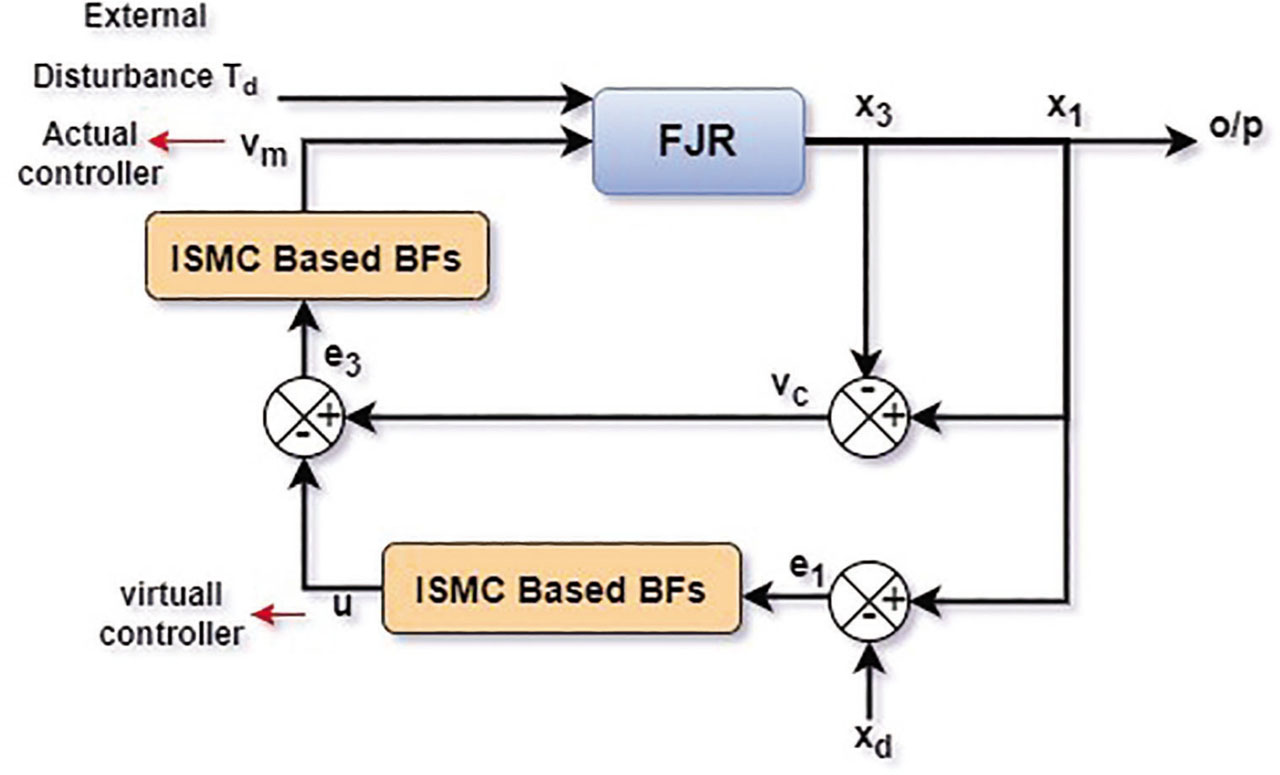
Figure 3:
Overall block diagram of the proposed control system.
Table 2:
Controllers and observer parameters
| Controllers | Design parameters |
|---|---|
| Unactuated controller (virtual controller) | ε1 = 0.01, λ1 = 1, c1 = 16, c2 = 8 |
| Actuated controller | ε2 = 0.01, λ2 = 0.01, c3 = 12, c4 = 7 |
| Observer | Ko = 1000, γo = 100, τo = 0.0001 |
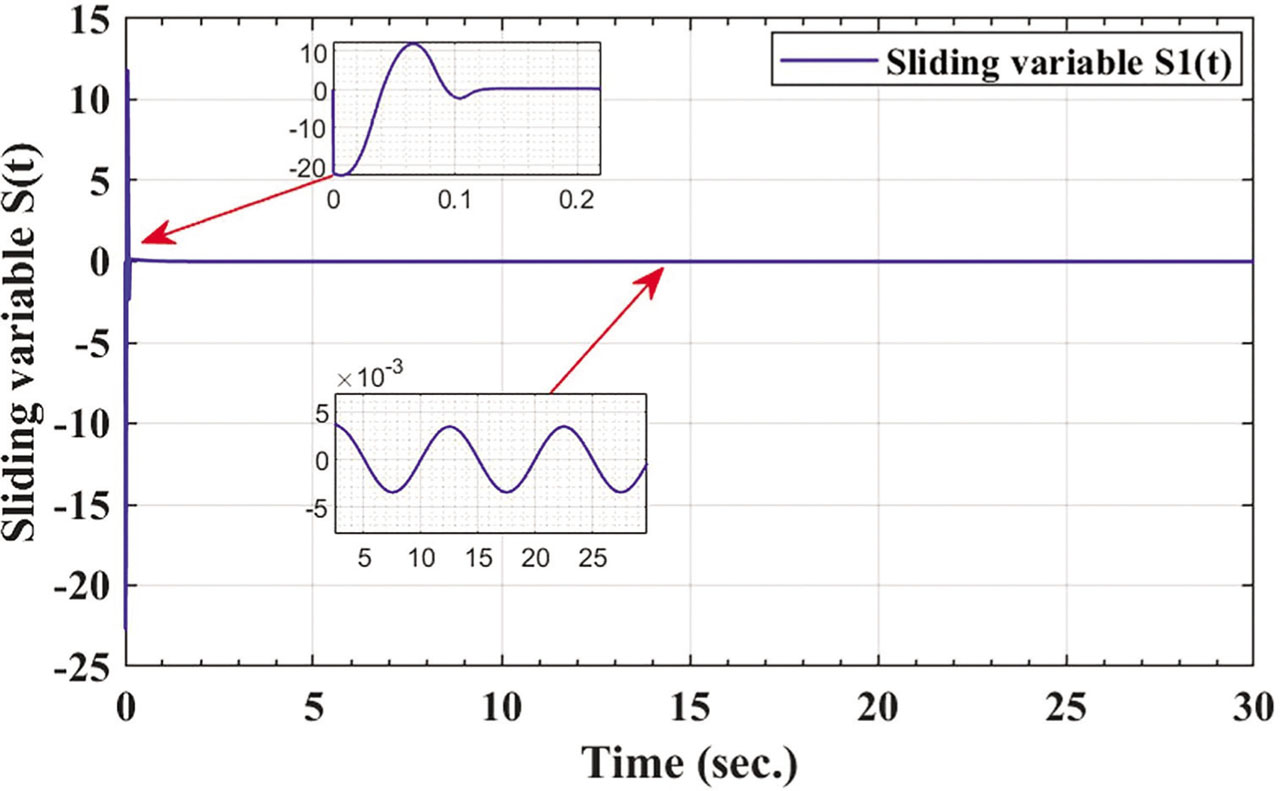
Figure 3:
The sliding variable of unactuated controller vs. time.
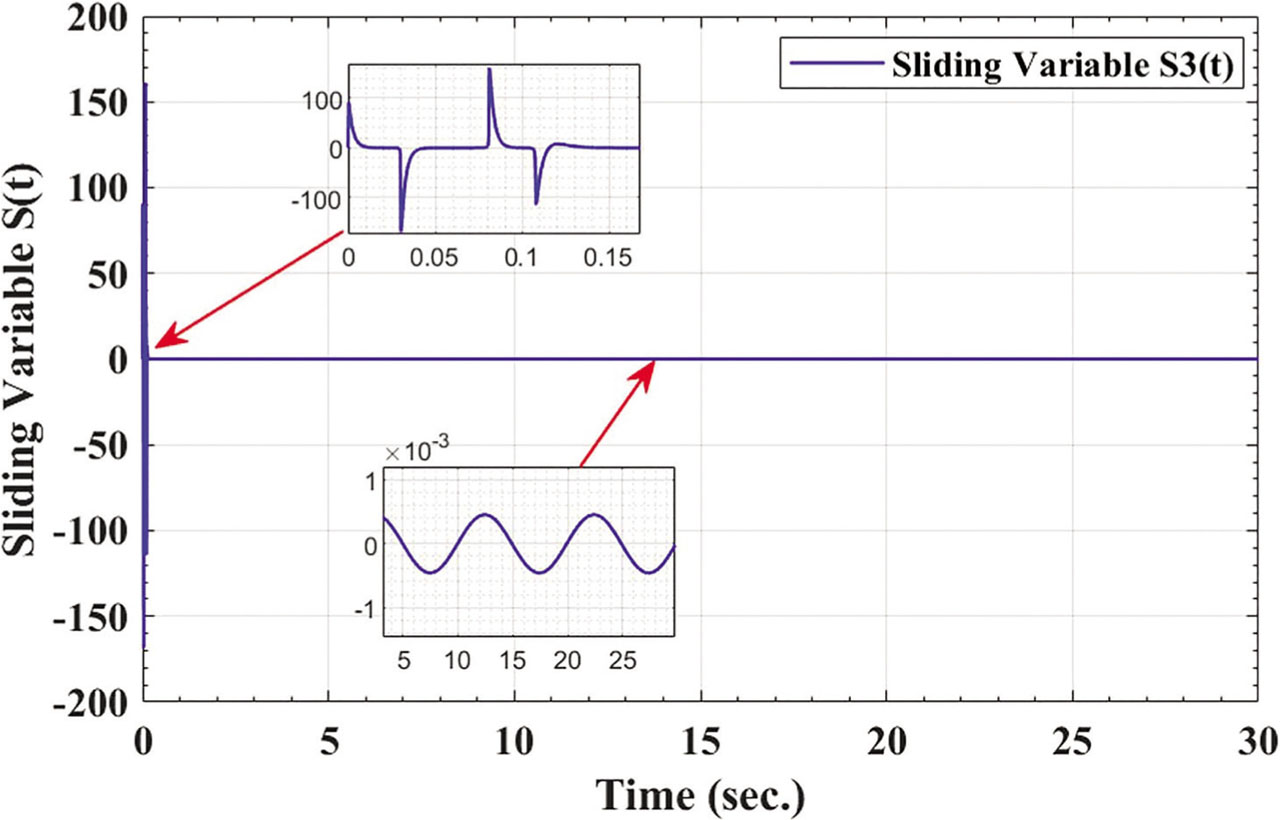
Figure 4:
The sliding variable of actuated controller vs. time.
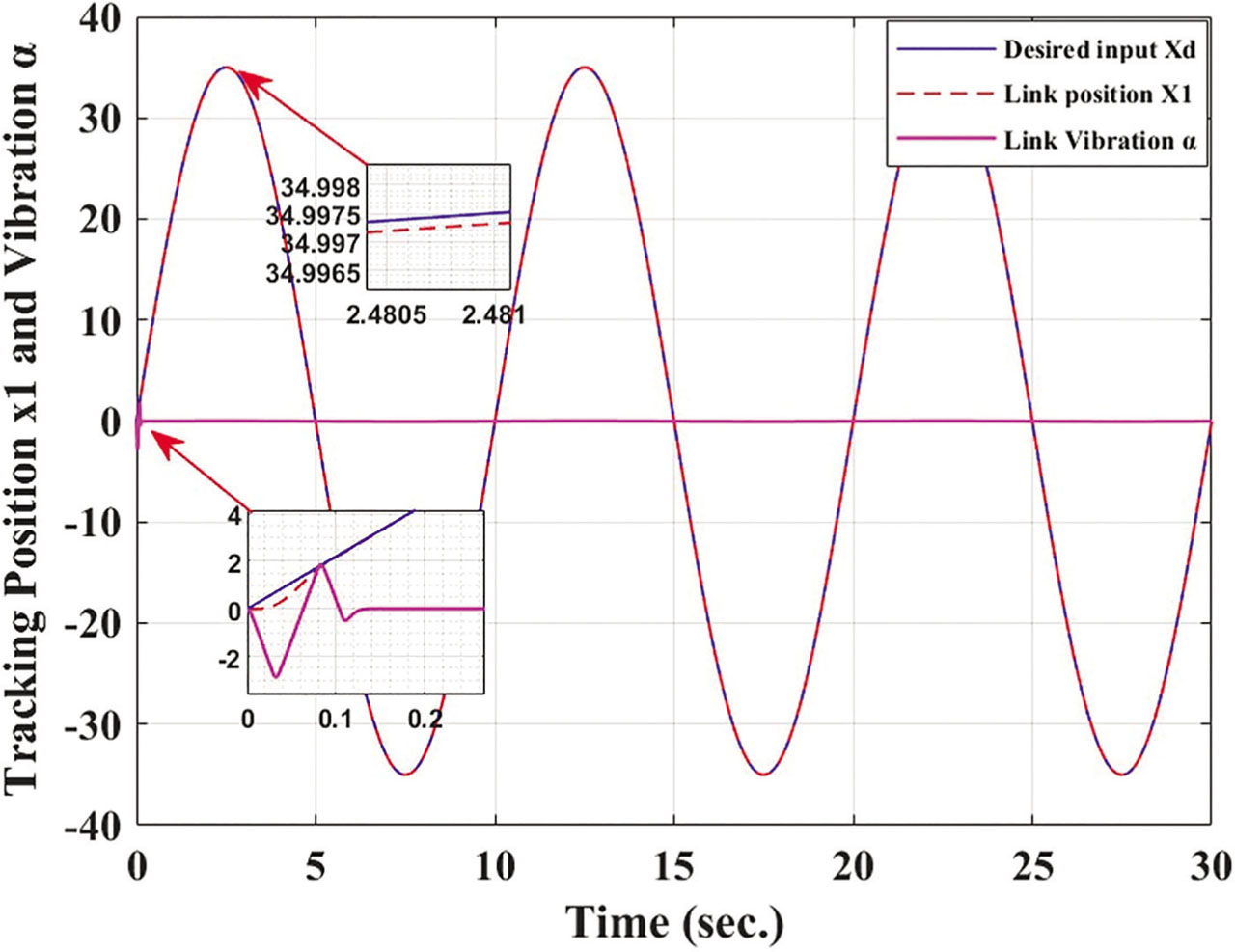
Figure 5:
Tracking response (x1) of the FJR and vibration angle (α) vs. time. FJR, flexible joint robot.
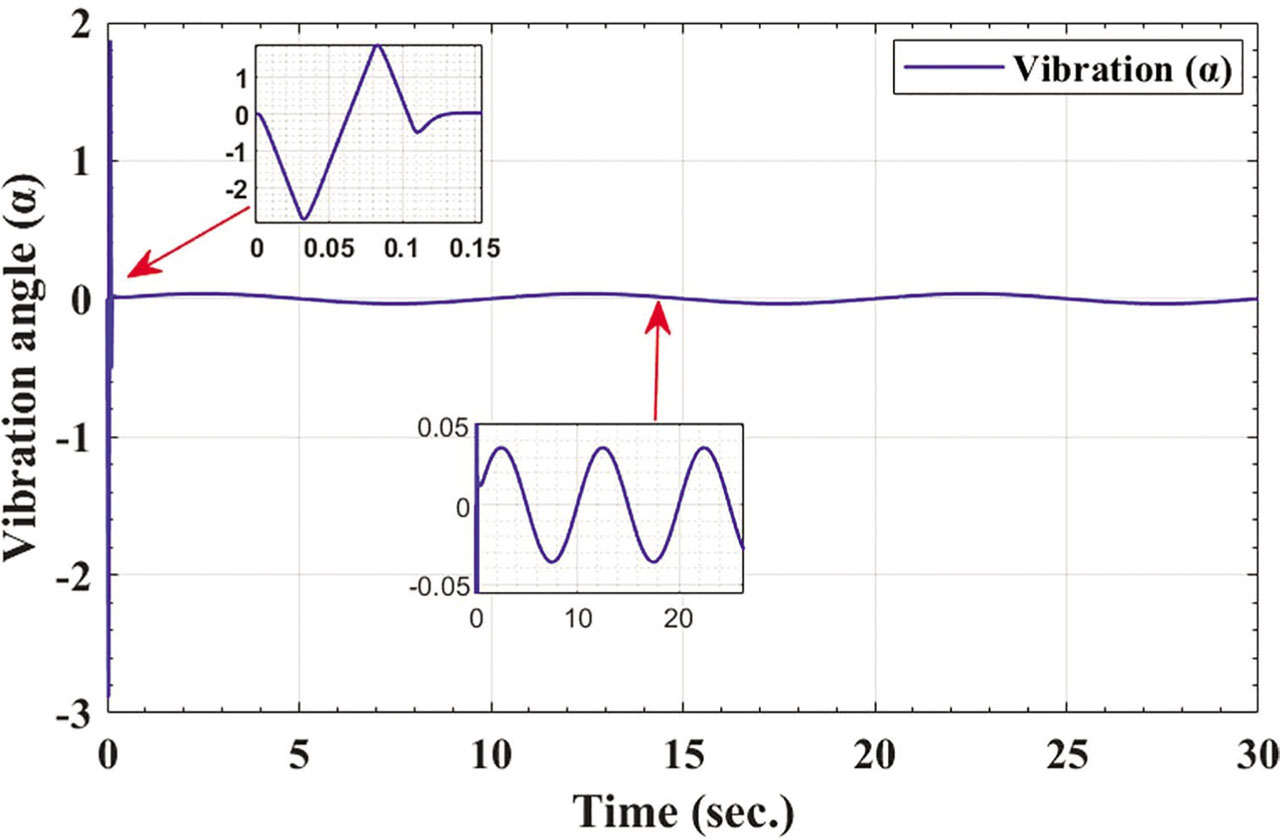
Figure 6:
Vibration angle of the FJR vs. time. FJR, flexible joint robot.
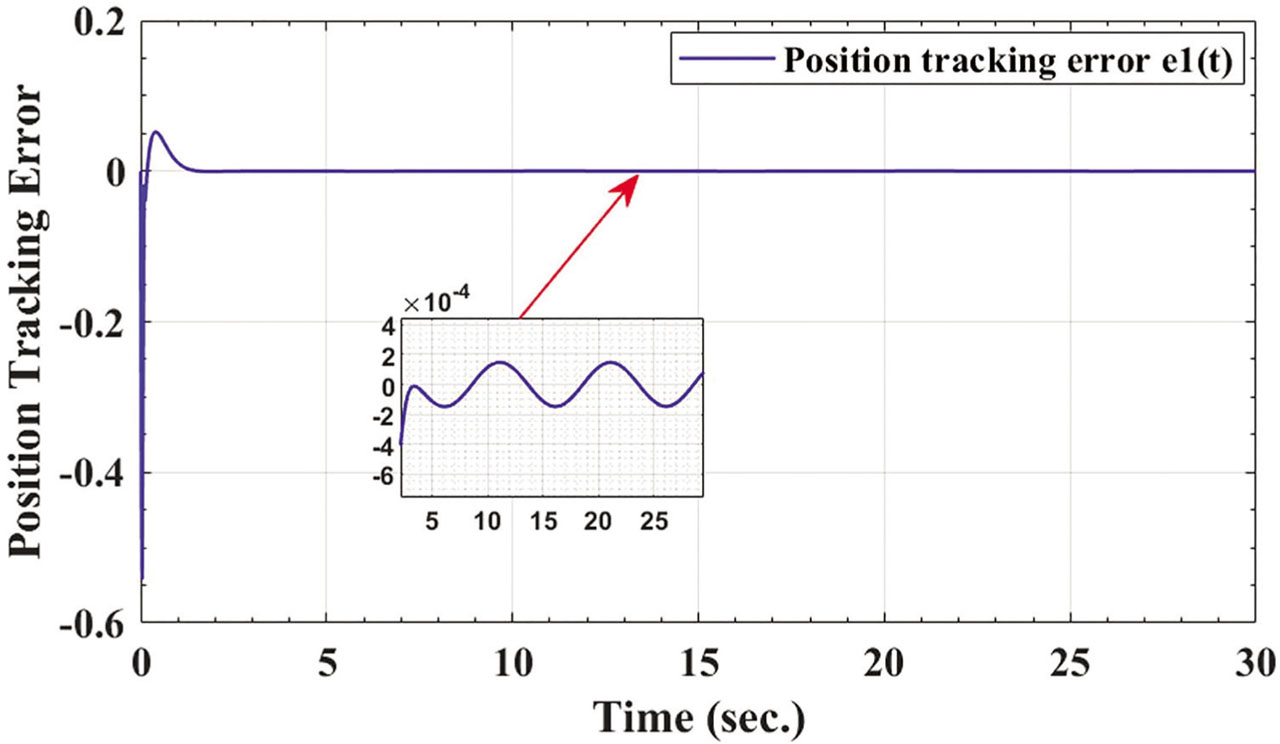
Figure 7:
Position tracking error e1 vs. time.
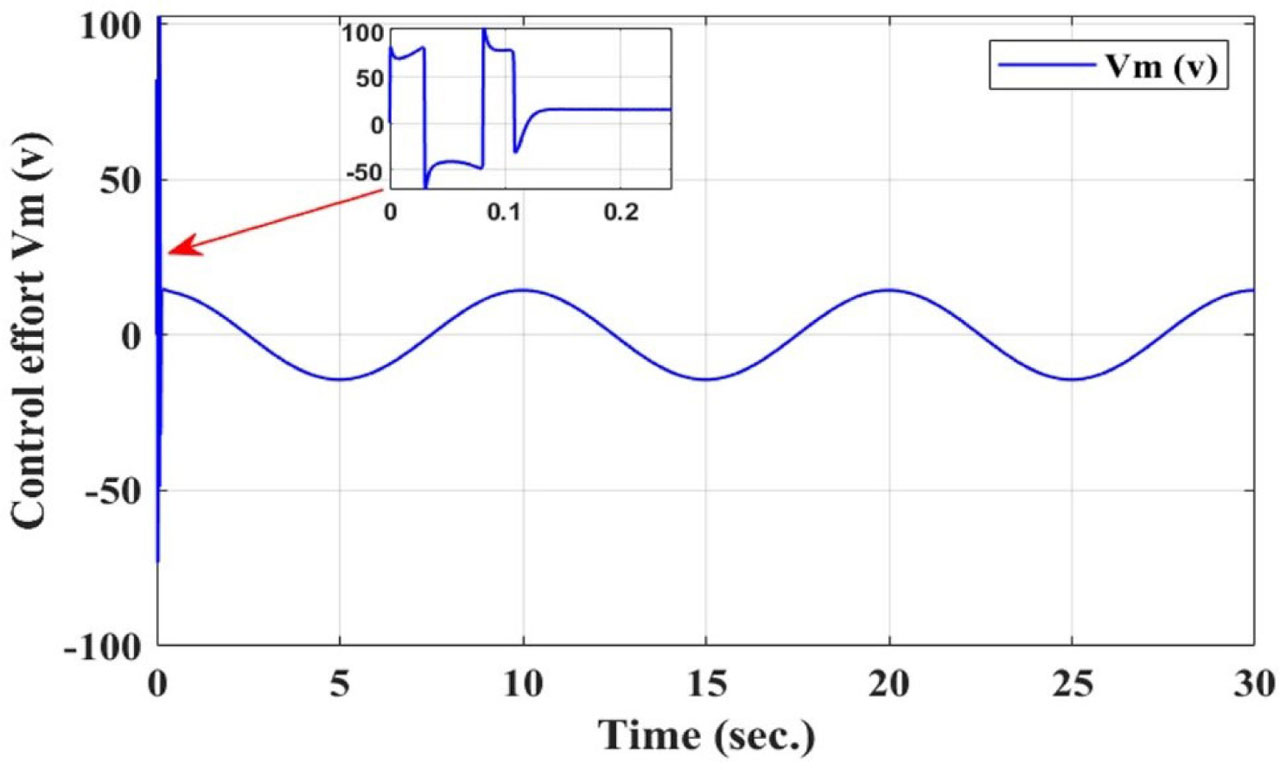
Figure 8:
Controlled voltage (Vm) vs. time.
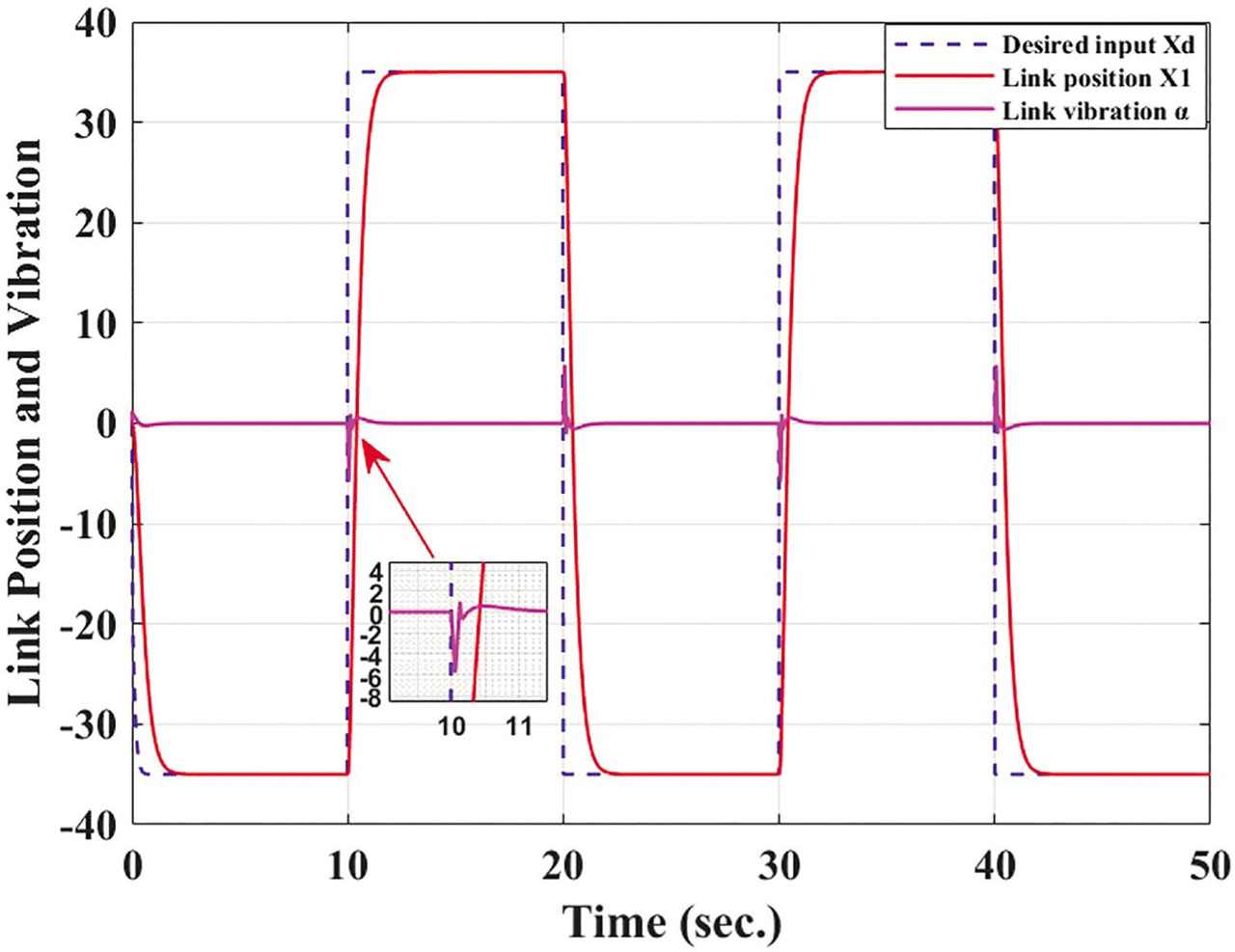
Figure 9:
Tracking response (x1) of the FJR and vibration angle (α) vs. time. FJR, flexible joint robot.
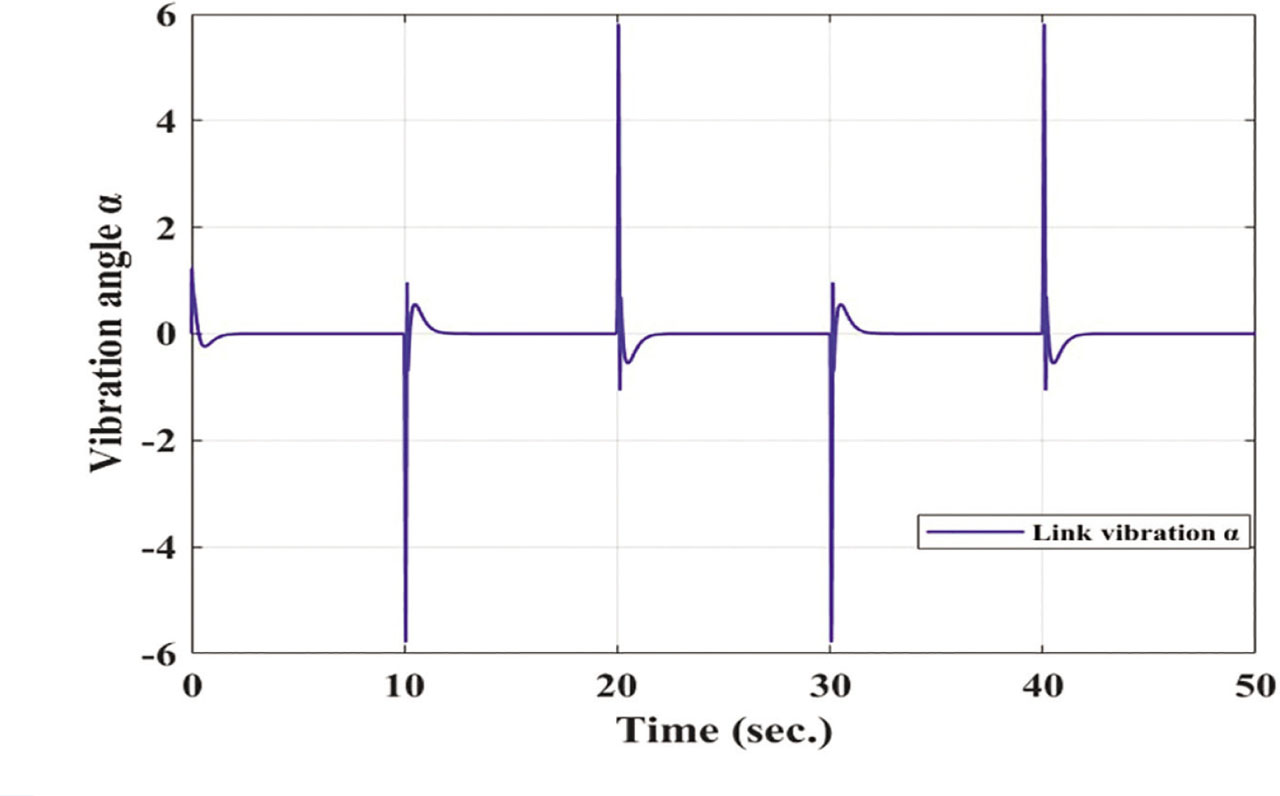
Figure 10:
Vibration angle of the FJR vs. time. FJR, flexible joint robot.