
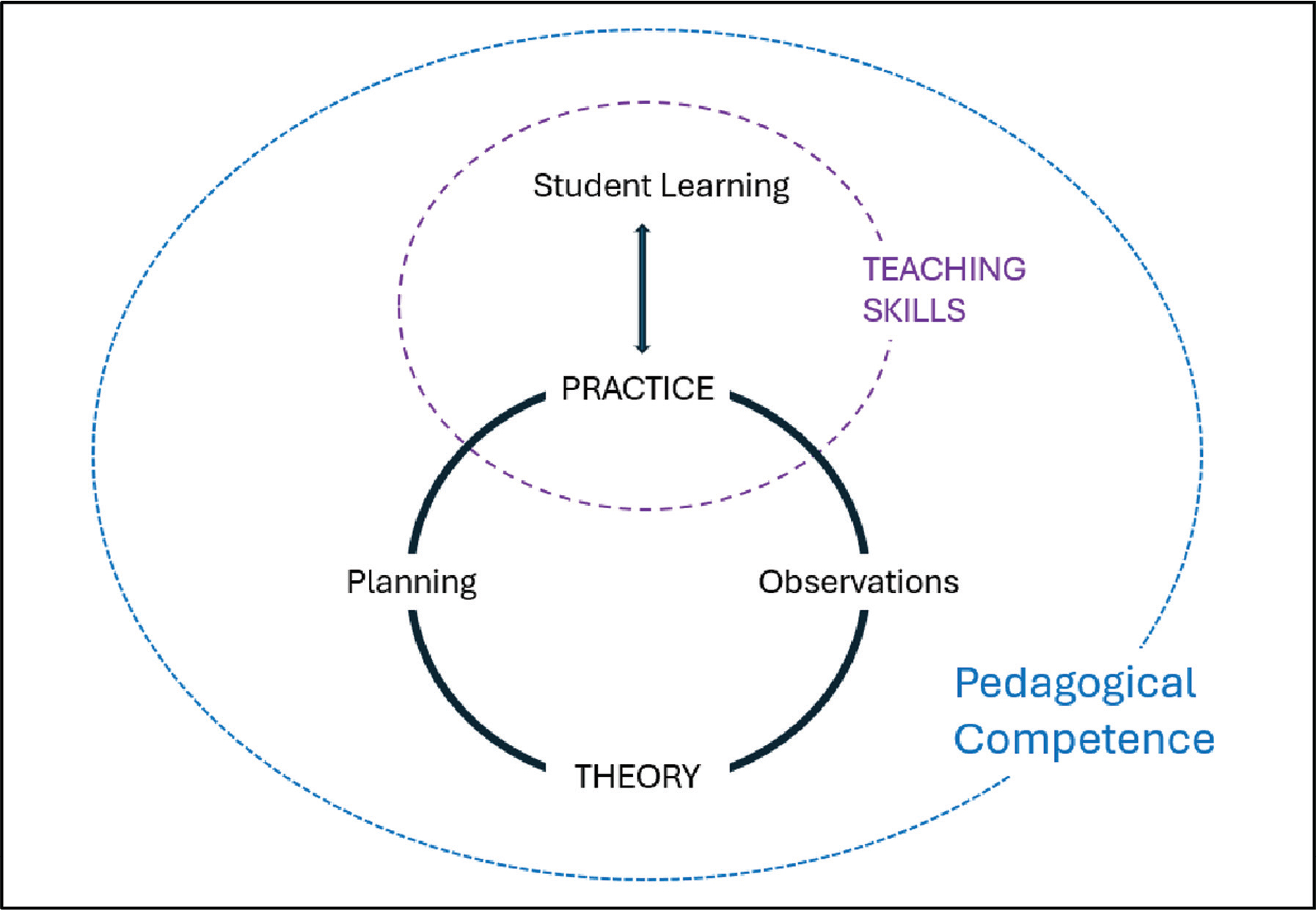
Figure 1:
Pedagogical Competence Framework.
Source: Authors’ own, adapted from Olsson et al. (2010).
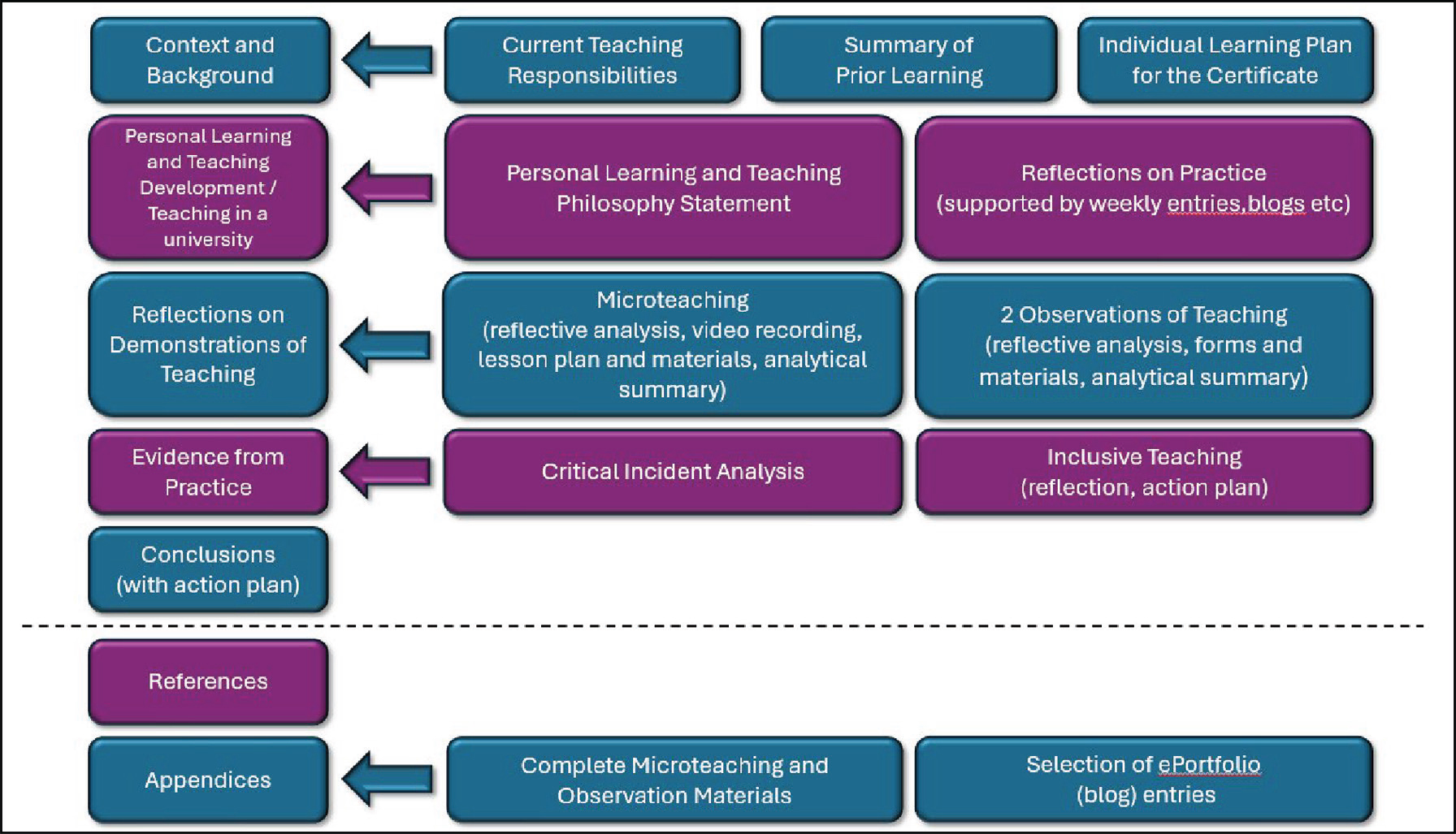
Figure 2:
Teaching Portfolio Contents.
Source: Authors’ own.
Table 1:
Key Findings
| Theme | Findings | Representative Portfolio Extracts |
|---|---|---|
| Practice Reflections on teaching skills and pedagogical practice. |
| This semester, I also realised that on several occasions minority students were not included in self-selecting groups for group work. Many of my modules involve an element of group work as an active learning activity. Perhaps, this suggests that the relationship and engagement that students have with each other in the classroom reflects wider structural contexts, power and privilege and I am beginning to understand that I can build upon my “sphere of influence” (Tatum, 2021) as a lecturer to promote more inclusive practise in group work. |
| Observation Critical reflection on observation of teaching. |
| The observation feedback has demonstrated to me that I don’t need to have all the answers (Sage on the Stage) and that I don’t need to fill all the space with my voice. Some “white space” can allow students to digest more effectively what is being said. As I prepare for Semester 2 and future academic year, there has been much to learn from this. |
| Theory Knowledge about teaching and student learning |
| As the module progresses, I introduce various elements of entrepreneurial theory and principles through the lens of the Business Model Canvas (Osterwalder and Pigneur, 2010) and Lean start up thinking (Ries, 2011). Through active and experiential learning (Jones and Iredale, 2014) students utilise SimVenture Validate to guide them through ideation, prototyping and portfolio development. |
| Planning Considerations of lesson plans, inclusion, peer observations and action. |
| My longer-term goal is to continue to develop as an educator through deepening my understanding of SoTL with the ultimate goal of enhancing student learning and engagement. I will continue on my life-long and life-wide learning journey and participate in CPD activities in this regard. Moreover, I am hopeful that the supportive environment fostered during the PG cert and collegiality of peers and the relationships built will sustain and further enhance my SoTL (Donnelly, 2007; Shortland, 2004). |