

Table 1:
Inclusion and exclusion criteria of research participants (source: author’s own)
| Inclusion criteria | Exclusion criteria |
|---|---|
| at least undergraduate degree in Speech and Language Therapy (B.Sc.) | students, any type of health care support staff (pay band 3 and 4 *), AHP of other professions |
| at least 5 years of professional experience as a qualified speech and language therapist (pay band 6 and over *) | less than 5 years of professional experience as a qualified speech and language therapist (pay band 5 *) |
| at least 3 years of professional experience as a qualified speech and language therapist working in Community Stroke Rehabilitation | less than 3 years of professional experience as a qualified speech and language therapist working in Community Stroke Rehabilitation |
| currently working in Community Stroke Rehabilitation | currently not working in Community Stroke Rehabilitation |
| currently working with the support of one or more rehabilitation assistants | currently working without the support of rehabilitation assistants |
| legal adult | Minor/not legal adult |
| English is native or primarily used language | not fluent in the English language |
* The majority of HSC posts are banded (“Agenda of Change”), depending on the tasks required and level of responsibility (HSC Jobs: Pay Bands in Health and Social Care, 2024). Support worker roles are typically Band 3 or 4 positions. Qualified SLTs start their career at Band 5 level and progress with experience.
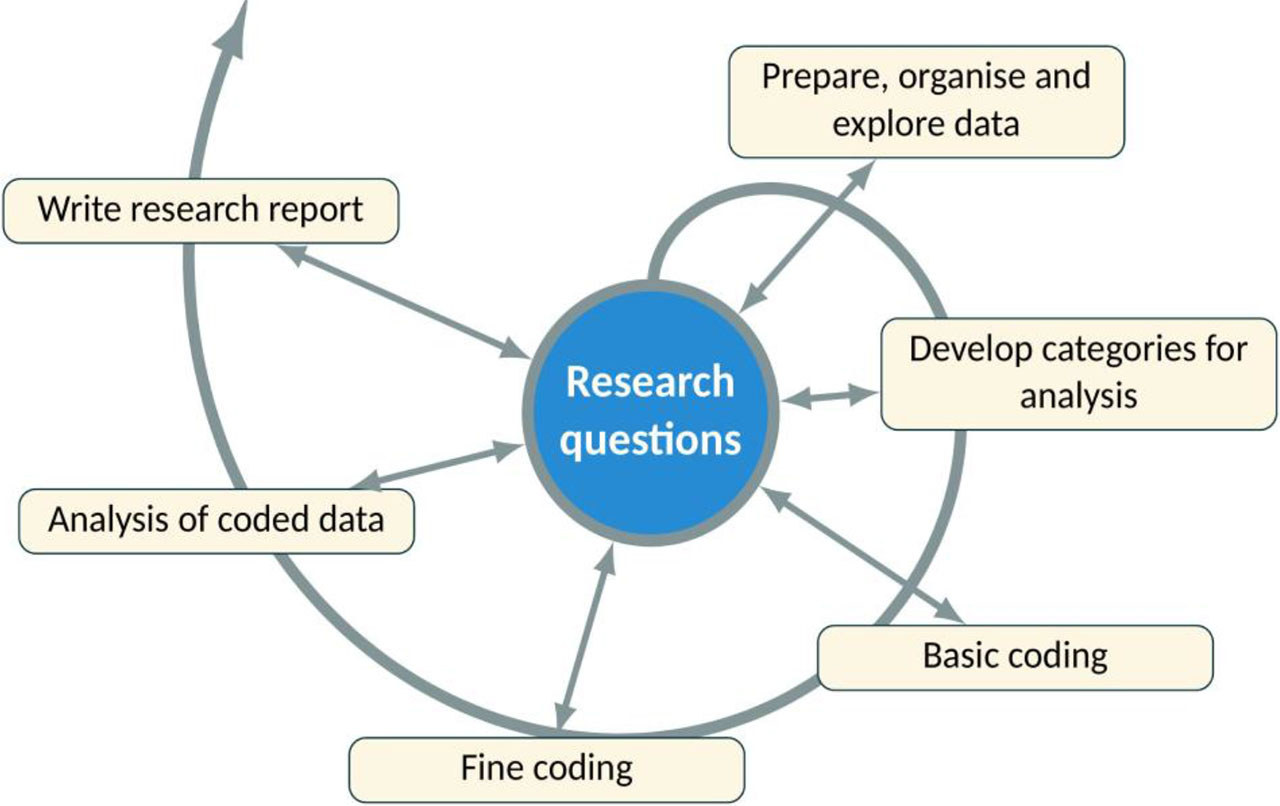
Figure 1:
Focused analysis of interviews in six steps (source: author’s own based on Rädiker & Kuckartz, 2020, p.17)
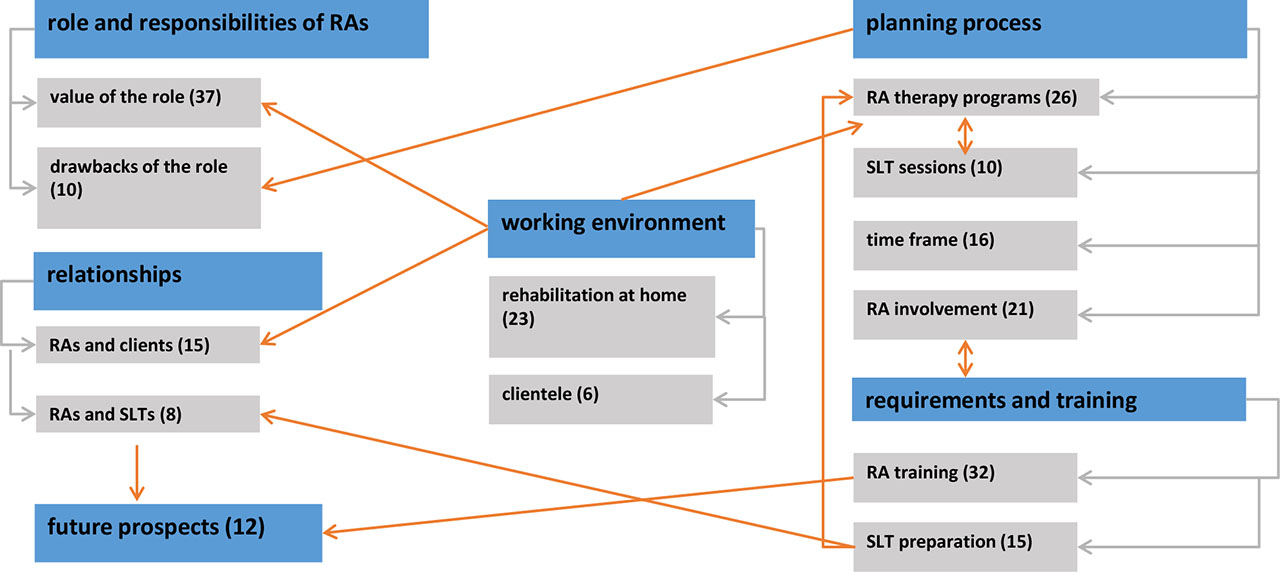
Figure 2:
Concept Map of main and subcategories (source: author’s own)