
INTRODUCTION
Online shopping has become a transformative force in the modern retail landscape, fundamentally reshaping how consumers access goods and services. Its impact transcends convenience, touching many facets of contemporary life (Barta, Gurrea, & Flavián, 2023). The revolution brought about by online shopping in the retail industry is characterized by unparalleled convenience. Online shopping eliminates the need for customers to physically visit brick-and-mortar establishments by enabling them to explore and buy things from the comfort of their homes (Sánchez-Pérez, Illescas-Manzano, & Martínez-Puertas, 2019; Yang, Li, Kim, & Kim, 2015). This convenience is especially valuable for consumers who live in rural places, have busy lifestyles, or have mobility challenges.
Moreover, online shopping offers a broader array of choices. A Pew Research Center study revealed that 64% of Americans perceive greater variety online than in physical stores. Online marketplaces amalgamate global products, offering consumers access to diverse items, including niche and specialty products unavailable locally (Gallin & Portes, 2024).
Another pivotal aspect is the catalytic role of online shopping in fostering price transparency and competitive pricing. Websites and tools for price comparison empower consumers to seek the best deals, prompting businesses to offer competitive prices to stay relevant in the digital marketplace (Akram, Junaid, Zafar, Li, & Fan, 2021; See-To & Ho, 2014). The U.S. Census Bureau reported a 44% year-over-year growth in U.S. sales through the internet in the second quarter of 2020, coinciding with the peak of the COVID-19 pandemic. Social distancing and safety concerns have led many consumers to embrace online shopping for everyday needs, reducing the risk associated with in-person shopping (Lim, Ahmed, & Ali, 2022).
Additionally, e-commerce is crucial to the growth of the economy. It enables small businesses and artisans to expand their reach globally, surpassing local boundaries. According to Sohaib and Han (2023), small businesses engaging in online sales experience substantially higher revenue growth than their offline counterparts. The evolving nature of electronic word of mouth (eWOM) and the continuous enhancement of website quality have become fundamental in shaping consumer perspectives on purchasing things online (Upadhyay & Tripathi, 2023). The internet’s obliteration of geographical boundaries has created a ubiquitous marketplace. There remains a significant gap, however, in understanding how these digital factors universally impact consumer behavior, particularly considering trust as a mediating variable (Chen, Teng, Yu, & Yu, 2016; Gvili & Levy, 2023; Xu, 2014).
The universal nature of internet usage has led to a significant shift in traditional consumer shopping preferences, accelerated by the widespread adoption of smartphones and enhanced internet connectivity (Ladhari & Michaud, 2015). As a result, eWOM, including online reviews, social media commentary, and influencer endorsements, has become a key determinant in shaping consumer perceptions and decisions. However, existing literature often provides only fragmented insights into eWOM’s direct influence on consumer attitudes, mainly when mediated by trust (Sharma, Jain, & Behl, 2020). Website quality, encompassing usability, design, information availability, and security, are all paramount in determining consumer trust and willingness to engage in online transactions (Pyle, Smith, & Chevtchouk, 2021). While previous research acknowledges the importance of website quality, a holistic understanding of its interaction with eWOM and trust remains elusive in global e-commerce.
The purpose of the present study is to bridge these gaps by exploring the influence of eWOM and website quality on customer attitudes about online shopping globally, focusing on trust’s mediating role (Ali, Ali, Gao, Terrah, & Turktarhan, 2022; Alzaidi & Agag, 2022). It investigates how eWOM and perceived online shopping platform quality affect consumer trust by influencing attitudes and behaviors. While mobile shopping applications have gained significant popularity in recent years, due to their ease of use and accessibility, websites remain a crucial platform for e-commerce, especially for certain user segments (Chakraborty et al., 2024). This study focuses on website e-commerce, as it continues to be an important channel for consumers in various markets, including Pakistan, where the study was conducted. Further, this study focuses on website e-commerce, which remains a vital platform for consumers, particularly for more complex transactions that may require detailed product comparisons, extensive information, and a broader range of services. While mobile applications offer convenience, websites provide different functionalities that are still valued by many consumers, especially in markets where desktop usage and web-based browsing are prevalent.
This research promises several contributions to the global e-commerce and behavior of consumer literature. It aims to offer a more integrated perspective on the interplay between eWOM, website quality, and consumer attitudes, an area that has lacked comprehensive exploration (Belver-Delgado, San-Martín, & Hernández-Maestro, 2021). The study provides deeper insights into how digital interactions translate into consumer perceptions and decision-making processes by examining trust’s mediating role. This empirical exploration is set to offer a nuanced global perspective on the dynamics of eWOM (Daowd et al., 2021), website quality (Jeon & Jeong, 2017), and consumer behavior in e-commerce (Daowd et al., 2021).
Further, this study presents a novel integration of these elements, with a unique focus on the mediating role of trust in shaping consumer attitudes toward online shopping. The existing literature, often regional in focus, fails to capture the diversity of global consumer behaviors. This research addresses this limitation by incorporating many global perspectives, contributing to universally applicable theories and models for e-commerce businesses. This research expands upon existing frameworks by employing a global perspective, offering insights into how these factors interact across diverse cultural contexts.
The study’s significance lies in its comprehensive analysis of these relationships through a structural equation modeling (SEM) approach, addressing a critical gap in the literature concerning the global applicability of eWOM and website quality in influencing trust and consumer behavior. As a result, its findings will have significant applications for internet marketers and retailers globally. These insights enable businesses to improve website design, manage online reviews effectively, and cultivate customer trust, thereby successfully navigating the dynamic digital marketplace. This research is of paramount importance as it lays the groundwork for developing strategies to foster consumer engagement and trust in the ever-evolving realm of e-commerce.
LITERATURE REVIEW
A literature review is divided into the following subject areas: Attitude toward Online Shopping, Electronic Word of Mouth, Perceived Website Quality, and Trust as a Mediator.
Attitude toward online shopping
The evolution of consumers’ attitudes towards shopping online is a multifaceted phenomenon shaped by various factors and influenced by significant events like the COVID-19 pandemic. The Theory of Planned Behavior (Ajzen, 1991) established a foundational link between attitudes and behaviors, underpinning the importance of understanding consumer attitudes due to their direct impact on purchasing behavior. This is especially crucial for e-commerce platforms that rely heavily on consumer trust and satisfaction. Baek, Lee, and Choo (2020) highlighted that positive attitudes toward online shopping are critical for fostering consumer adoption and loyalty, while negative perceptions can lead to reluctance or refusal to engage in online transactions.
Several factors influence consumers’ attitudes concerning online shopping (Titiloye et al., 2024). The observed convenience and ease of use, as detailed in the Technology Acceptance Model, are primary considerations. Barta et al. (2023) emphasized the importance of ease of navigation and transaction in determining consumers’ propensity for shopping online. Trust in online vendors, as studied by Alimamy and Gnoth (2022), plays a significant role in consumers’ willingness to engage in online transactions. As pointed out by Brand, Schwanen, and Anable (2020), security concerns significantly impact consumer attitudes. The overall quality of online platforms is another crucial factor influencing consumer perceptions. The COVID-19 epidemic has dramatically altered the landscape of online purchasing. Colaço and de Abreu e Silva (2022) observed a surge in online shopping due to pandemic-induced constraints, suggesting a potential long-term shift in consumer behavior and attitudes.
Further, platform differences between mobile shopping applications and websites can influence consumer attitudes, trust, and perceived quality. Mobile applications often provide a more streamlined, personalized shopping experience, while websites may offer more detailed product information and robust navigation features (El-Manstrly et al., 2024; Li et al., 2024; Singh et al., 2024). These shifts indicate a new era in consumer engagement with e-commerce, necessitating a deeper understanding of evolving consumer attitudes in order to navigate the changing market dynamics effectively.
Electronic Word of Mouth
eWOM is a powerful modern communication phenomenon in which consumers share their thoughts about goods or services through digital channels (Gannon, Taheri, Disegna, & Prayag, 2023; Gruen, Osmonbekov, & Czaplewski, 2006). This concept extends from traditional WOM as it harnesses the power of the internet to amplify messages. The significance of eWOM lies in its reach, credibility, and impact on consumer behavior and business performance. Due to its extensive influence, eWOM has become crucial in the digital age. Ladhari and Michaud (2015) defined eWOM as “any positive or negative statement made by potential, actual, or former customers about a product or company, which is made available to a multitude of people and institutions via the Internet”. This definition underscores the broad scope and potential impact of eWOM on consumer perceptions and decisions.
The importance of eWOM is particularly evident in its ability to shape consumer attitudes and behaviors. In line with Daowd et al. (2021), eWOM significantly influences purchasing decisions, as consumers often rely on online reviews and discussions to form opinions about products and services. This influence is further amplified by the social nature of online platforms, where users actively engage with and rely upon the attitudes of their peers. Moreover, eWOM can substantially impact a company’s reputation and sales. A study by Filieri, Galati, and Raguseo (2021) illustrated that positive eWOM can enhance brand image and increase customer loyalty, while negative eWOM can lead to a loss of trust and a decline in sales.
Liu, Jayawardhena, Osburg, Yoganathan, and Cartwright (2021) demonstrate that positive reviews and ratings on online platforms enhance consumer perceptions of reliability and quality, thereby fostering trust. Additionally, a study by Matute, Polo-Redondo, and Utrillas (2016) indicates that the interactive nature of eWOM, such as user comments and discussions, contributes to a sense of community and trust among users. The effect of e-WOM on online shopping platforms is significant. A study by Pourjahanshahi, Mollahosseini, and Dehyadegari (2023) found that eWOM on social media platforms directly influences consumer trust in online retailers, leading to higher purchase intentions. Moreover, the research by Pangarkar, Patel, and Kumar (2023) highlights how eWOM, particularly on social networking sites, can significantly affect the sales performance of online products. Thus, we formed our first hypothesis:
H1: eWOM positively influences consumers’ trust in online shopping platforms.
The credibility and authenticity of eWOM content, coupled with its broad reach and accessibility, make it a powerful influencer of consumer attitudes in the digital marketplace. As online shopping continues to evolve, understanding the dynamics of eWOM will be crucial for business enterprises to engage with and influence their target audiences effectively. The influence of eWOM is particularly salient. Sánchez-Pérez et al. (2019) illustrate that online reviews and ratings can directly impact consumers’ attitudes towards specific products, influencing their shopping decisions. The effectiveness of eWOM in the online shopping context is further enhanced by the vast reach and accessibility of digital platforms (S. Kim, Park, & Kader, 2023; F. Wang, Du, & Wang, 2023). The research by Matute et al. (2016) suggests that elements such as consumer involvement and product type can moderate the impact of eWOM on consumer attitudes. High-involvement products, for instance, may see a more pronounced effect of eWOM on consumer attitudes. Thus, we hypothesized:
H2: eWOM has a positive direct effect on consumers’ attitudes toward online shopping.
Perceived Website Quality
The concept of perceived website quality encompasses various elements, such as website design, ease of use, functionality, and the quality of the content provided. These aspects collectively shape consumers’ perceptions and, consequently, their confidence in an online shopping platform. According to a study by Patel et al. (2023), a website’s visual appeal and ease of navigation significantly contribute to its perceived quality, enhancing consumer trust. The effect of perceived website features on trust is particularly evident in online retail (Upadhyay & Tripathi, 2023; Urbonavicius, 2023). For instance, Amazon’s user-friendly interface and efficient search functions contribute to a high perception of quality, fostering trust among its users. The clear product descriptions, customer reviews, and seamless checkout process further enhance this trust, leading to higher consumer loyalty and repeat purchases.
The security features of a website are also a critical component of its perceived quality (Tong, Chen, Zhou, & Yang, 2022; Truong & Truong, 2022; Tsai & Tang, 2023; Tsao, Hsieh, & Lin, 2016). Studies have shown that websites that display security certifications and ensure secure payment gateways tend to win greater trust from consumers (F. Wang et al., 2023). For example, eBay’s incorporation of secure payment methods and buyer protection policies has been instrumental in building consumer trust.
The impact of website quality on trust also extends to lesser-known online retailers. Ali (2016) found that for smaller e-commerce sites, high-quality website design and clear, accurate information are essential for building initial trust. This is particularly important for new entrants into the e-commerce space, where establishing trust is paramount to attracting and retaining customers (Belver-Delgado et al., 2021). Furthermore, integrating customer service features on a website also plays a significant role in perceived quality. Websites that offer prompt and helpful customer service, such as live chat support, tend to be perceived as more reliable and trustworthy (Zare Ebrahimabad et al., 2024). This is supported by the findings of Tunca and Anselmsson (2019), who noted that customer service quality is a significant predictor of trust in online shopping platforms. Thus, we hypothesized:
H3: Perceived website quality significantly affects consumers’ trust in online shopping platforms.
Perceived website quality shapes consumers’ attitudes toward online shopping (Baier & Rese, 2020; Camilleri, 2022; Chattaraman, Kwon, Gilbert, & Ross, 2019). This quality perception directly affects how consumers view and interact with online shopping platforms, influencing their shopping decisions and overall satisfaction. Central to this perception are website design, usability, information content, and security (Herrada-Lores, Iniesta-Bonillo, & Estrella-Ramón, 2022).
For instance, consider the success of Amazon. The platform’s intuitive design, comprehensive product information, and reliable customer reviews significantly contribute to its perceived quality. This, in turn, positively affects consumer attitudes, making Amazon a go-to choice for online shoppers (S. Kim et al., 2023). The ease with which users can navigate, find products, and check out, combined with the assurance of transaction security, fosters a positive attitude toward shopping on the site. Similarly, Apple’s online store exemplifies how aesthetic design and streamlined functionality can enhance perceived quality (Lu, Guo, Lu, & Gupta, 2018). The sleek interface, clear, concise product descriptions, and straightforward purchasing process reflect Apple’s brand ethos and positively influence consumers’ attitudes toward purchasing its products online.
On the contrary, websites that suffer from poor design, confusing navigation, inadequate product information, or questionable security can quickly deter consumers (F. Liu, Xiao, Lim, & Tan, 2017; Llach, Vila-Brunet, & Manresa, 2023; Mukherjee & Nath, 2007). Such negative perceptions can lead to a general reluctance to engage in online shopping, demonstrating the strong influence of perceived website quality on consumer attitudes. Thus, we hypothesized:
H4: Perceived website quality has a positive direct effect on consumers’ attitudes toward online shopping.
Trust as a Mediator
Trust is often described as a person’s willingness to depend on someone else – based on the expectation that they will act in a certain beneficial manner, which is essential for the person placing the trust. This idea extends to the business world, where customer trust in a company is vital to its success (Pyle et al., 2021; Quinton & Harridge-March, 2008). This trust is based on the belief that the company will act in the customer’s best interest and not cause harm. Trust plays a fundamental role in shaping consumers’ attitudes towards online shopping, acting as a cornerstone of the digital shopping experience (Tseng & Lee, 2016). In an environment where physical interaction with products is absent, trust bridges the gap, giving consumers the confidence to make purchases online. This trust is cultivated through various factors, including the credibility of the online retailer, secure payment methods, clear return policies, and genuine customer reviews (Quinton & Harridge-March, 2008).
The assurance of secure transactions and responsive customer service further bolsters this trust. Conversely, a lack of trust due to concerns over privacy, data security, or dubious product quality can lead to skepticism and a negative attitude toward online shopping. Thus, we hypothesized:
H5: Trust positively affects consumers’ attitude toward online shopping.
The impact of eWOM on shaping consumer attitudes is largely contingent on the level of trust these digital endorsements can instill. Positive eWOM from reliable sources enhances trust in an online platform, positively influencing consumer attitudes and willingness to engage in online shopping (Tseng & Lee, 2016; Urbonavicius, 2023). Conversely, negative or dubious eWOM can erode trust, leading to a more cautious or negative consumer attitude.
Trust also mediates the association between perceived website quality and consumer attitudes toward online shopping (Quinton & Harridge-March, 2008). A well-designed, user-friendly website that ensures data security and transparent transactions is more likely to engender user trust (See-To & Ho, 2014). This trust, in turn, positively influences consumer attitudes, making consumers more inclined to shop on a given platform (Gallin & Portes, 2024). On the other hand, a poorly designed website with questionable security measures undermines trust, negatively impacting consumer attitudes. Thus, we hypothesized:
H6: Trust mediates the relationship between eWOM and consumers’ attitudes toward online shopping.
H7: Trust mediates the relationship between perceived website quality and consumers’ online shopping attitudes.
Figure 1 illustrates our framework, where trust mediates the impact of eWOM and perceived website quality on consumers’ attitudes toward online shopping.
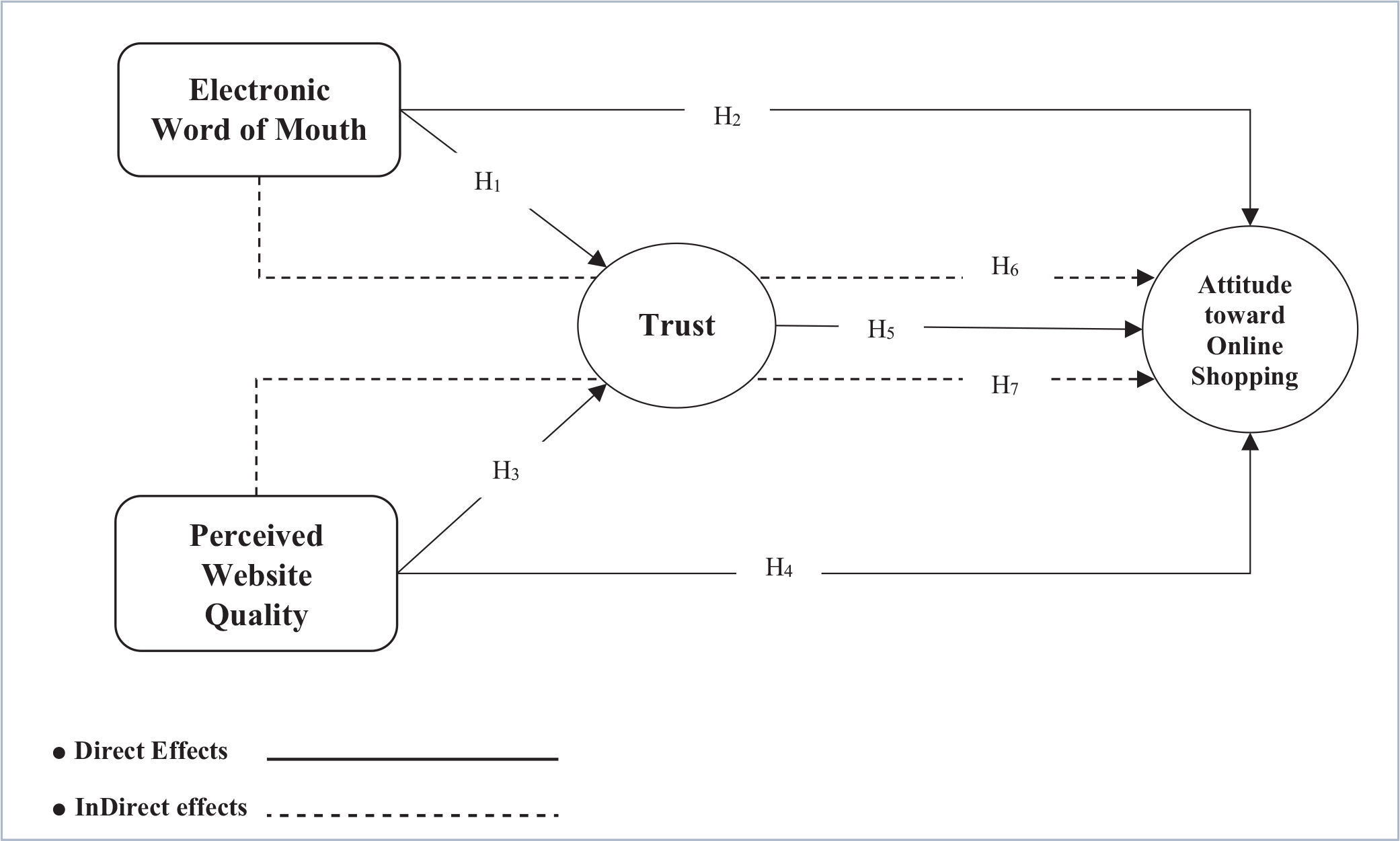
Figure 1.
Conceptual model
Source: Own elaboration.
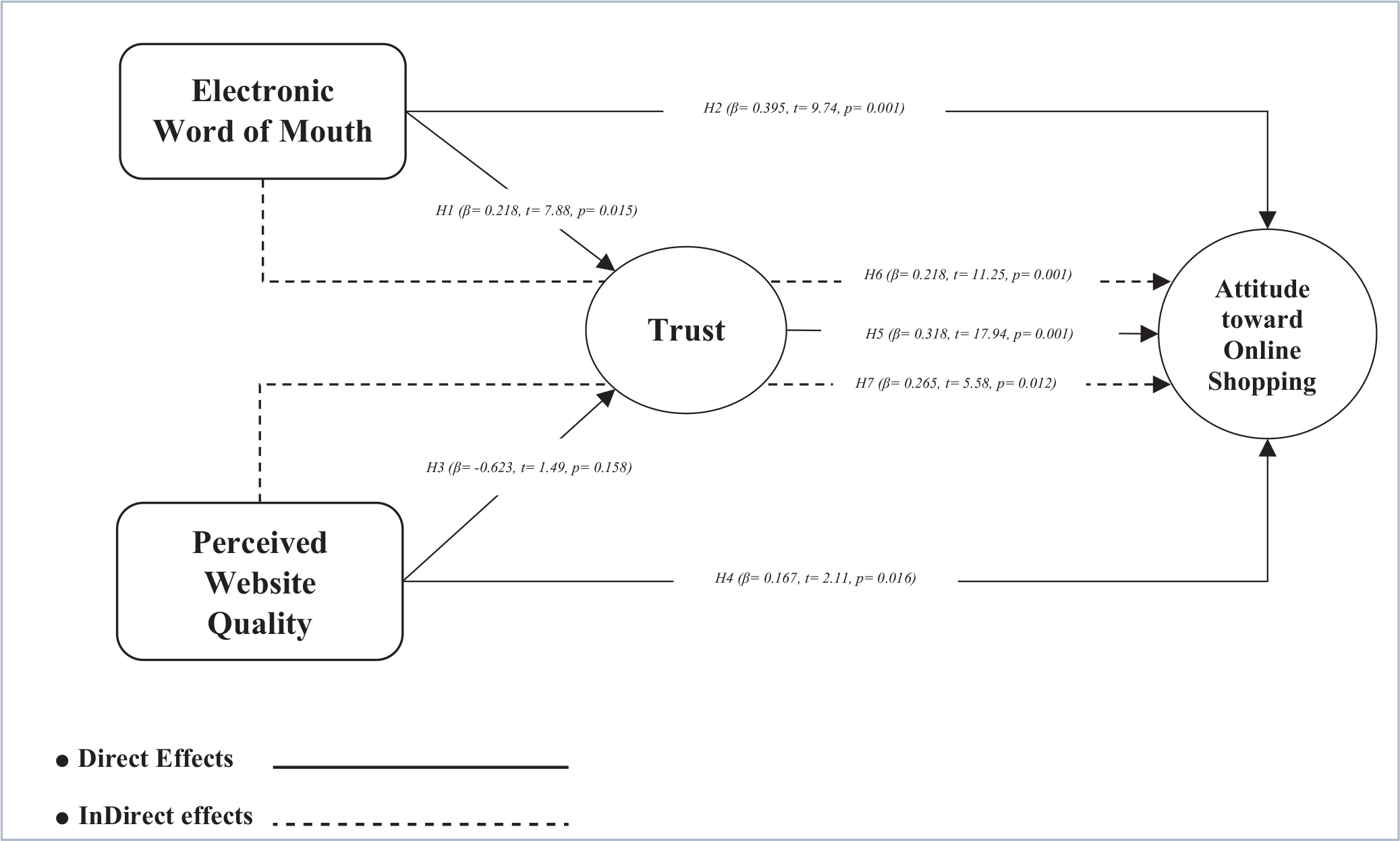
Figure 2.
Conceptual model and tests of hypotheses
Source: Own elaboration.
METHOD
The study employs a purposive sampling method to collect data in Pakistan. The primary data collection tool is a self-administered questionnaire chosen for its numerous benefits. These include the ability to ask complex questions, the opportunity for respondents to seek clarifications, and the promotion of speedy and motivated responses. Moreover, this approach ensures anonymity and better sample control, which are both crucial for maintaining the quality and reliability of the data.
Additionally, this research adopts a quantitative approach involving statistical tools to evaluate study results, apt for examining consumer attitudes toward online shopping. This dual approach caters to different respondent preferences and ensures data reliability, facilitating a rapid collection process.
Variables are measured on a 5-point Likert scale derived from previous research to ensure validity. The questionnaire is meticulously designed to encompass a range of areas, including demographic variables and study-specific variables like attitudes toward online shopping, trust, eWOM, and website quality. The variable electronic word of mouth (eWOM) was operationalized based on consumer engagement with online reviews, ratings, and recommendations on various platforms, measured using a 5-point Likert scale ranging from “strongly disagree” to “strongly agree”. Items included statements such as, “I frequently consult online reviews before making a purchase”. Perceived website quality was measured by assessing website design, usability, security, and content relevance. Respondents were asked to rate their experience with e-commerce websites on elements such as “ease of navigation” and “perceived security of transactions”. These constructs were drawn from validated scales used in previous studies, ensuring reliability and comparability.
A sample size of 308 participants was determined using a power analysis to ensure sufficient statistical power for SEM analysis. The sample was drawn from a purposive selection of online shoppers in Pakistan who were chosen for their engagement with e-commerce platforms. The selection criteria included respondents who had made at least one online purchase in the past three months. This timeframe was chosen to ensure that respondents had recent and relevant online shopping experiences, which would enhance the reliability of their responses.
The purposive sampling method, combined with a diverse range of online shopping platforms, allowed for generalizability within the context of Pakistan’s growing e-commerce market. Data were collected between January and March 2024 through two online platforms (Google Docs and SurveyMonkey) and hard-copy questionnaires. This three-month period allowed us to capture responses during a key phase of increased online shopping activity following the holiday season, ensuring that consumer attitudes and behaviors were current and reflective of contemporary e-commerce trends. Partial Least Squares (PLS) test were used for the measurement and structural model. Lastly, the study adheres to the highest research ethics standards, assuring quality and integrity. Respondents were informed about the consent process, and their confidentiality and anonymity were rigorously protected.
RESULTS
Table 1 presents a comprehensive overview of the demographic profiles of the survey participants, totaling n = 308. Among the participants, 63.64% were male, while 36.36% were female. Notably, nearly half of the respondents (49.68%) fell within the 18-to-25-years age group, highlighting the prevalence of younger individuals in this study. This demographic segment is particularly intriguing, as it aligns with the age group most likely to engage with eWOM (electronic word-of-mouth) and online shopping. Additionally, the age groups of 26 to 35 years (39.94%) and 36 to 45 years (10.39%) contribute to a broader perspective, allowing for the exploration of how trust mediation evolves across various age segments. A significant portion of respondents (52.92%) are engaged in private jobs, while 35.06% reported unemployment. The table also highlights a predominance of higher education, with 48.70% being university graduates and 43.83% holding master’s degrees or higher. The frequency of online shopping behaviors within the sample varies significantly. The table reveals a broad spectrum, ranging from rare online shoppers (10.06%) to those who frequently shop (3.90%). This diversity in shopping habits among the respondents is noteworthy.
Table 1.
Respondents’ Demographics
| Respondent Profile | Frequency | Percent |
|---|---|---|
| Gender | ||
| Male | 196 | 63.64% |
| Female | 112 | 36.36% |
| Total | 308 | 100.00% |
| Age | ||
| 18 to 25 | 153 | 49.68% |
| 26 to 35 | 123 | 39.94% |
| 36 to 45 | 32 | 10.39% |
| Total | 308 | 100.00% |
| Profession | ||
| Businessperson | 5 | 1.62% |
| Government job | 11 | 3.57% |
| Private Job | 163 | 52.92% |
| Freelancing | 21 | 6.82% |
| Unemployed | 108 | 35.06% |
| Total | 308 | 100.00% |
| Education | ||
| No University Degree | 49 | 15.91% |
| Graduation | 150 | 48.70% |
| Masters | 135 | 43.83% |
| M. Phil / M.S. / Ph.D. | 23 | 7.47% |
| Total | 308 | 100.00% |
| Frequency of Online Shopping | ||
| Rarely (once every few months) | 31 | 10.06% |
| Occasionally (once a month) | 128 | 41.56% |
| Regularly (2-3 times a month) | 103 | 33.44% |
| Frequently (once a week) | 34 | 11.04% |
| Very frequently (2-3 times a week) | 12 | 3.90% |
| Total | 308 | 100.00% |
Measurement model
Table 2 presents the values for Cronbach’s alpha, with squared loadings as reliability indicators and composite reliability (C.R.), illustrating that the measurement model achieves suitable internal consistency. The C.R. values for each construct fall within the acceptable range of 0.70 to 0.95, as suggested by Hair, Hult, Ringle, Sarstedt, and Thiele (2017). Following the guidelines by Bryman and Cramer (2012), Cronbach’s alpha for each variable should surpass 0.70 to be considered reliable, a criterion met by the constructs in question. Similarly, the composite reliability coefficients exceed the 0.70 benchmark, indicating reliability at an acceptable level. According to Fornell and Larcker (1981), the loadings for reflective constructs should be above 0.70, a condition that was satisfied, as shown in Table 3. They also recommend that the average variance extracted (AVE) for a sound reflective measurement model should be no less than 0.50, which is a standard all variables in the table meet. The outer loadings of the reflective constructs were evaluated to assess the correlation between items.
Table 2.
Respondents’ Demographics
| Variable | Items | Loading | Cronbach | CR | AVE |
|---|---|---|---|---|---|
| eWOM | EWOM-1 | 0.826 | |||
| EWOM-2 | 0.865 | ||||
| EWOM-3 | 0.849 | 0.85648 | 0.90698 | 0.69387 | |
| EWOM-4 | 0.810 | ||||
| EWOM-5 | 0.820 | ||||
| Perceived Web Quality | PWQ-1 | 0.861 | |||
| PWQ-2 | 0.748 | ||||
| PWQ-3 | 0.787 | 0.79487 | 0.87163 | 0.61913 | |
| PWQ-4 | 0.846 | ||||
| Trust | TRU-1 | 0.718 | |||
| TRU-2 | 0.825 | ||||
| TRU-3 | 0.598 | 0.7474 | 0.91304 | 0.76558 | |
| TRU-4 | 0.899 | ||||
| Attitude Toward Online Shopping | ATT-1 | 0.844 | |||
| ATT-2 | 0.830 | 0.87062 | 0.91506 | 0.71407 | |
| ATT-3 | 0.827 |
Table 3 reveals the HTMT values, an essential benchmark for assessing discriminant validity. Following established standards, these values meet the crucial threshold of 0.85, as identified by Henseler, Ringle, and Sarstedt (2015). Table 3 shows all HTMT values as being below 0.8, indicating that the discriminant validity is within acceptable limits.
Hypothesis Testing
The R-squared values obtained for Trust and Attitude toward Online Shopping constructs are 0.49 and 0.43, respectively. The adjusted values of R-squared are slightly lower at 0.47 for “trust” and 0.41 for “attitude toward online shopping”. These values indicate that approximately 49% of the variance in trust and 43% of the variance in attitude toward online shopping could be elucidated by the independent variables (IVs) in the model, which in this case are eWOM and Perceived Website Quality. Similarly, the R-squared value for attitude toward online shopping suggests that many consumers’ attitudes towards online shopping can be attributed to their levels of trust, as well as the quality of information and user interfaces they encounter online. This is consistent with the work of Pavlou and Fygenson (2006), who confirmed that trust significantly influences online shopping attitudes and intentions. The role of Trust as a moderator implies that it influences the strength and direction of the association between eWOM, perceived website quality, and consumers’ attitudes toward online shopping.
The outcomes of the structural model are presented in Table 05. Hypothesis H1 posited that eWOM positively influences consumers’ trust in online shopping platforms. The path coefficient (β = 0.218), t-value (t = 7.88, > 1.96), and p-value (p = 0.015, which is less than the conventional significance level of 0.05) suggest a significant positive relationship. Therefore, the data supports H1.
Table 5.
Testing of Direct Paths in Hypotheses
| Hy | Path | Path Coefficients | T-value | P Values | Status |
|---|---|---|---|---|---|
| H1 | EWOM → TRU | 0.218 | 7.88 | 0.015 | Supported |
| H2 | EWOM → ATT | 0.395 | 9.74 | 0.001 | Supported |
| H3 | PWQ → TRU | -0.623 | 1.49 | 0.158 | Not Supported |
| H4 | PWQ → ATT | 0.167 | 2.11 | 0.016 | Supported |
| H5 | TRU → ATT | 0.318 | 17.94 | 0.001 | Supported |
| H6 | EWOM → TRU → ATT | 0.218 | 11.25 | 0.001 | Supported |
| H7 | PWQ → TRU → ATT | 0.265 | 5.58 | 0.012 | Supported |
Hypothesis H2 suggested that eWOM positively affects consumers’ attitudes toward online shopping. The results, with a path coefficient (β=0.395), a t-value (t=9.74, exceeding 1.96), and a p-value (p=0.001, well below 0.05), reveal a strong positive influence. Thus, H2 is supported.
Hypothesis H3 proposed that perceived website quality positively influences consumers’ trust in online shopping platforms. However, the negative path coefficient (β = -0.623), a t-value (t = 1.49) below the required 1.96, and a p-value (p = 0.158, above 0.05) indicate a non-significant relationship, contrary to what was expected. Consequently, the results do not support H3, suggesting that perceived website quality, as measured, does not enhance trust in online shopping platforms within this study. Hypothesis H4 states that perceived website quality positively affects consumers’ attitudes toward online shopping. The path coefficient (β = 0.167), t-value (t = 2.11, > 1.96), and p-value (p = 0.016, < 0.05) indicate a positive and significant effect. Therefore, H4 is supported. In addition, Hypothesis H5 contended that trust positively affects consumers’ attitudes toward online shopping. With a path coefficient (β=0.318), t-value (t = 17.94, > 1.96), and p-value (p = 0.001, < 0.05), the hypothesis is strongly supported, indicating that trust indeed positively affects consumers’ attitudes towards online shopping.
Lastly, Hypothesis H6 and H7 both concern the mediating role of trust. H6 indicated that trust mediates the relationship between eWOM and consumers’ attitudes toward online shopping. The path coefficient (β = 0.218), t-value (t =11.25), and p-value (p = 0.001) collectively support this mediating effect. Similarly, H7, which postulated that trust mediates the relationship between perceived website quality and consumers’ attitude toward online shopping, is supported by the path coefficient (β = 0.265), t-value (t = 5.58), and p-value (p = 0.012). Both hypotheses are supported, affirming the mediating role of trust in these relationships.
DISCUSSION
The results from the present study contribute valuable insights into the intricate dynamics of consumer attitudes in online shopping. They highlight the critical influence of eWOM and website quality on developing trust and positive consumer attitudes, offering significant implications for practitioners in e-commerce. By understanding these relationships, online retailers can tailor their strategies to enhance trust through credible eWOM and high-quality website experiences, fostering more favorable consumer attitudes and potentially increasing online purchasing.
The positive influence of eWOM on trust (H1) and attitudes toward online shopping (H2) reflect the profound impact of social influence in the online environment. These results align with the assertions made by Augusto and Torres (2018), who noted the significant role of eWOM in e-commerce due to its ability to sway perceptions and purchasing decisions. The path coefficients indicate that not only does eWOM foster trust, it also directly enhances consumer attitudes toward online shopping platforms. This suggests that consumers value the opinions and experiences shared by their peers, which is consistent with the findings by Gerrath, Mafael, Ulqinaku, and Biraglia (2023) that online customer reviews are often perceived as trustworthy and influential. Interestingly, the negative relationship between perceived website quality and trust (H3) contradicts typical expectations and existing literature, which usually posits a positive relationship (Rahman et al., 2023). One possible explanation is that while consumers may perceive certain websites as technically superior, complex navigation or overemphasis on design could generate feelings of distrust. For example, overly sophisticated websites might appear less authentic or reliable to users, particularly in emerging markets like Pakistan, where consumers might favor simpler, more straightforward platforms. This finding suggests a need for further investigation into how website design elements impact trust in different cultural and economic contexts, particularly among consumers unfamiliar with advanced e-commerce interfaces.This anomaly could suggest a more complex relationship in the study’s specific context, or potential issues with how the sample population operationalized or perceived website quality.
However, the positive direct effect of perceived website quality on attitudes toward online shopping (H4) is supported, aligning with prior research indicating that website aesthetics and functionality can significantly influence consumer attitudes (A. J. Kim & Johnson, 2016). The hypothesis testing confirms the crucial role of trust in affecting consumer attitudes towards online shopping (H5). This is consistent with the trust-based model proposed by Li and Wang (2013), emphasizing that trust is a key mediator in the online purchasing process. Trust directly enhances attitudes and serves as a mediator between eWOM, perceived website quality, and consumer attitudes (H6 and H7). This mediation underscores trust’s role as a filter through which consumers assess both the informational content they encounter online (eWOM) and the functional aspects of online shopping platforms (website quality).
The mediation analysis for eWOM (H6) and perceived website quality (H7) further cement trust as a pivotal factor in e-commerce. When consumers perceive high levels of trust in an online shopping platform, the positive effects of eWOM and website quality on their shopping attitudes are enhanced (Xu, 2014). This finding resonates with the work of Q. Wang, Zhang, Li, Mai, and Ma (2022), which suggests that trust plays a central role in how consumers integrate various information cues and, consequently, how these cues influence their attitudes and behaviors.
CONCLUSION: IMPLICATIONS, LIMITATIONS AND FUTURE DIRECTIONS
The study’s findings offer substantial theoretical implications for understanding consumer behavior in online shopping. The significant role of eWOM in building trust and shaping attitudes highlights the need for an expanded theoretical framework that integrates social influence factors in e-commerce contexts. This aligns with the Social Influence Theory, which posits that the opinions of others influence individuals’ behaviors and attitudes. The confirmation of eWOM’s impact on trust and attitudes underscores the theory’s relevance in digital consumer behavior studies (Perea y Monsuwé, Dellaert, & de Ruyter, 2004; Punyatoya, 2019; Pyle et al., 2021).
Moreover, the unexpected negative relationship between perceived website quality and trust challenges existing theories that assume a uniformly positive correlation. This finding invites a re-examination of the Technology Acceptance Model (TAM), which highlights perceived utility and simplicity of usage (inherent in website quality) as precursors to technological acceptance. It suggests that factors contributing to perceived website quality might be more nuanced and context-dependent, warranting further theoretical exploration.
The role of trust as a mediator in the relationship between eWOM, perceived website quality, and consumer attitudes aligns with and extends the Theory of Reasoned Action (TRA) (Tseng & Lee, 2016). TRA suggests that behavioral intentions are driven by attitudes, which are influenced by subjective norms and beliefs. Trust’s mediating role indicates that it is a critical belief factor that modulates the effect of personal norms (eWOM) and perceived behavioral control (website quality) on attitudes toward online shopping. Furthermore, the study enriches understanding of the Elaboration Likelihood Model (ELM) in online contexts. The significant impact of eWOM (central route) and website quality (peripheral route) on consumer attitudes demonstrates the model’s applicability in e-commerce, emphasizing the importance of both content and presentation in shaping consumer attitudes.
The research provides internet sellers and marketers with valuable knowledge regarding practical relevance. The noteworthy influence of eWOM on customer trust and attitudes highlights the importance of managing online analyses and social media presence. Businesses should encourage satisfied customers to share their positive experiences and actively engage in reputation management to address and rectify negative reviews. This can enhance trust and positively influence consumer attitudes toward the brand. The unexpected negative relationship between perceived website quality and trust suggests that online retailers should reevaluate their website design strategies. While aesthetics and functionality are essential, they should not overshadow aspects like transparency, security, and customer service, which might more significantly influence trust. The mediating role of consumer trust reinforces the need for online retailers to prioritize building and maintaining it. This can be achieved through transparent communication, robust privacy policies, secure transaction processes, and reliable customer service. Building trust can amplify the positive effects of eWOM and high-quality website experiences on consumer attitudes. Moreover, the findings suggest that online marketing strategies should balance their focus between content (eWOM) and presentation (website quality). While fostering positive eWOM is crucial, it should be complemented with a user-friendly, secure, and aesthetically pleasing website.
While insightful, the study on the impact of eWOM and perceived website quality on consumer trust and attitudes toward online shopping has certain limitations that open avenues for future research. Its reliance on purposive sampling within Pakistan limits the generalizability of the findings, as cultural and social dynamics may vary across regions. The study’s cross-sectional nature also restricts its ability to capture evolving consumer behaviors over time. Additionally, focusing on specific variables like eWOM, perceived website quality, and trust, while excluding others (for example, privacy concerns and technological readiness), may not fully capture the complexity of online consumer behavior.
The unexpected negative relationship between perceived website quality and trust suggests potential construct measurement and definition issues. Future research should aim for a more diverse, possibly cross-cultural, sampling to enhance generalizability. Incorporating longitudinal designs would provide insights into changing consumer behaviors. Expanding the range of variables to include factors like privacy concerns and different e-commerce models could offer a more comprehensive understanding. Qualitative methods and advanced statistical techniques could further deepen the insights into the dynamics of online shopping behavior.
Additionally, exploring newer forms of eWOM in the evolving landscape of social media could provide pivotal insights for online retailers and marketers. Future research could explore the role of mobile shopping applications in shaping consumer trust and attitudes toward online shopping. Investigating platform differences could provide a more comprehensive understanding of how e-commerce channels influence consumer behavior. Beyond eWOM and perceived website quality, future research should consider other critical factors impacting trust and online shopping attitudes. For example, in Pakistan, the widespread use of cash-on-delivery as a payment method may influence trust in online transactions, as consumers are more likely to trust retailers that can make a payment upon delivery. Similarly, logistical challenges, such as delivery delays and product quality inconsistencies, may also shape consumers’ attitudes. Exploring these variables would provide a more nuanced understanding of the trust-building process in e-commerce across different markets.