
1. Introduction
Smart technologies have significantly changed the manufacturing scene in the Industry 4.0 era by enhancing machine automation, data interchange, and overall efficiency. The integration of digital technologies, such as cyber-physical systems, artificial intelligence (AI), and the Internet of Things (IoTs), has signaled the start of a new manufacturing paradigm. IoT technology can provide real-time data for analysis by monitoring the machine's activities, surroundings, and condition [1]. So, machine failures and potential issues can be predicted by examining the data logged in these device sensors. As a result, in order to save money and prevent downtime in production operations scheduled maintenance can be performed before problems become apparent [2]. The IoTs can provide automated processes in industry to function more smoothly and to transmit information and instructions to other system components. Through autonomous decision-making, automated processes reduce working costs and raise productivity [3]. The manufacturing of parts depends on machine tool operations, and their transparency is crucial for performance optimization, enhanced traceability, and standard industry compliance [4]. Smart machine tools are key element and essential component in integration of part production process within industry 4.0 by providing real-time automation, monitoring, and optimization of production processes [5,6]. Industry 4.0's smart machine tools are sophisticated apparatuses with the ability to make decisions on their own and communicate with other machines. Smart CNC machine tools are equipped with sensors, real-time data analytics, and IoT devices in order to work with high levels of accuracy and safety. [7]. As a result, due to implementation of technologies, predictive maintenance, process optimization, and improved monitoring can be applied to the process of part production. However, secure and efficient exchange of data across the entire manufacturing ecosystem should be provided in order to achieve the benefits of smart machine tools [8]. Moreover, maintaining the security, integrity and openness of information interchange amongst machine tools becomes a crucial concern as these systems grow more networked and data-driven [9,10]. The capacity to evaluate data from intelligent CNC machines facilitates the reduction of material waste, increase in precision, and optimization of machining procedures [11]. As a result, the supply chain generates more consistently high-quality products and makes more efficient use of its resources. Improved scheduling, less downtime, and more efficient use of resources are made possible by this data. The risk of data breaches and manipulation increases as sophisticated CNC machine tool systems manage enormous volumes of private operating data, such as Machine Learning (ML) models, maintenance logs, and production KPIs. Blockchain technology could potentially be helpful in this situation [12].
Large volumes of data generated by IoT devices during smart machining operations must be securely transmitted across industrial networks. Originally developed for cryptocurrency applications, blockchain technology has evolved into a versatile platform for ensuring data security, integrity, and traceability in manufacturing environments. As a result, blockchain provides security, transparency, and reliability for that data transfer processes. [13,14]. Blockchain technology is a viable alternative for augmenting data security in smart manufacturing environments since it provides decentralized, secure, and unchangeable data storage [15,16]. In order to guarantee data security and integrity, it offers a decentralized ledger that tracks transactions via a network of computers. Each block in a blockchain consists of transaction data, a timestamp, and a cryptographic hash of the previous block. Due to this structure, hostile actors face extreme challenge in making any change in the information without detection. The blockchain guarantees security, tamper resistance, and auditability for Industry 4.0 data being exchanged among smart machine tools through its decentralized, immutable ledger [17]. This is particularly important in a setting where machine tools are constantly in need of sharing sensitive information for the effective running of the process, like production information, maintenance, and quality issues [18]. There are a number of benefits available to smart machine tools by considering the use of blockchain and its features such as the necessary guarantees for information integrity, secure and transparent transaction opportunities, and the ability for decentralized decision-making to occur [19]. By combining the advantages of use with smart machine tools and the use of blockchain technology, industries can effectively address issues like security, trust, and interoperability, all of which are necessary for the effective running of a smart machine environment. This technology can assist with the development of a more trustworthy smart production system, where the handling and communication of real-time information are advantaged in a secure manner between machine tools [20]. So, the integration of machine tools can provide performance enhancement within Industry 4.0.
Challenges to integrate blockchain technology and IoTs to implement intelligent machine tools to boost should be considered in terms of implementation of Industry 4.0. Several factors have to be kept in mind before implementing blockchain technology in the manufacturing industry. For example, the scalability of blockchain networks, the energy consumed by blockchain-based activities, and the need to implement standardization are considered. Moreover, it also becomes challenging to implement blockchain technology along with existing systems [21]. Therefore, in order to properly utilize the potential of blockchain technology in improving smart machine tool capabilities in terms of efficiency and productivity within Industry 4.0, challenges need to be addressed.
The integration of IoT and blockchain into smart machine tools in Industry 4.0 will help to address some major challenges such as data integrity, traceability, and orchestration of decentralized manufacturing networks [22]. For instance, machine-tool activity logged on a blockchain creates an immutable audit trail, which increases transparency and accountability along the value chain [23]. Smart contracts can be integrated with IoT to boost the security of information storage and transmission by defending it from possible manipulations and unauthorized access [24]. Real-time analysis and monitoring can be provided using IoT devices in terms of ensuring the reliability of analysis by blockchain applications [25]. When IoT and blockchain are combined, they provide more effective operations and better-informed decision-making. By offering an auditable record of machine performance and maintenance, blockchain's public ledger promotes confidence among stakeholders.
Several reviews examine blockchain and IoT in Industry 4.0 which usually focused on broad topics like supply chains, smart factories, and overall designs. However, the review's noteworthy contribution is its in-depth analysis of smart machine tools, particularly CNC machining in relation to quality control, smart contract automation, predictive maintenance, and direct IoT-blockchain connection. As a result, novel review paper in analysis of blockchain and IoTs for smart machine tools in Industry 4.0 is presented in the study in order to increase the capabilities of smart CNC machines tools in advanced manufacturing engineering. The comparison and research gap between the presented study and published papers in the area of IoT and blockchain applications in part manufacturing procedures is presented in Table 1.
Table 1.
The comparison and research gap between the presented study and published papers in the area of IoT and blockchain applications in part manufacturing procedures.
| Aspect | The presented research work | Existing Reviews (Summary) | Research Gap |
|---|---|---|---|
| Scope Focus | IoT and blockchain integration specifically for smart machine tools in Industry 4.0. | Broad Industry 4.0 & blockchain and IoT—general smart factories, supply chains, security and trust mechanisms. e.g., smart manufacturing frameworks, smart contract automation, AI-blockchain synergy [20]. | There is limited literature focusing narrowly on smart machine tools; most address broad manufacturing or SCM. |
| Application Examples / Use Cases | Emphasis on concrete use cases: smart contracts for maintenance, traceability in CNC, IoT-enabled predictive maintenance. | Mostly conceptual or generic applications (smart factories, supply chains, digital twins) [21] | A gap exists in case-specific analyses focused on machine tools rather than entire factories or supply chains. |
| proposed frameworks of study | Offers conceptual descriptions of blockchain and IoT for CNC workflows | Provides a bi-dimensional framework mapping blockchain roles to manufacturing systems and PLM, plus discussion of business/organizational barriers and policy/regulatory challenges [26]. | The research gap is focusing on the smart CNC machine tools within the industry 4.0 |
| Blockchain applications in Industry 4.0 | blockchain + IoT for CNC workflows during Industry 4.0 applications | Applications of cyber-physical systems and Blockchains in Industry 4.0 is studied [27]. | The research gap is focusing on the key roles of smart CNC machines tools within Industry 4.0 era. |
| Methodology / literature coverage | Focused on smart CNC machine tools in Industry-4.0 settings: data security, predictive maintenance, quality control, supply-chain traceability, smart contracts for machine-to-machine workflows. | Broad, cross-domain survey of blockchain + IoT taxonomy of architectures, consensus, applications (energy, healthcare, smart cities, IIoT), security/privacy, scalability and open challenges [28] | smart CNC machine tools specifically within the industry 4.0. |
This study is novel since it provides a systematic and comprehensive survey of the application of blockchain and IoT technologies on the smart CNC machine tools in the industry 4.0 paradigm. While previous review papers mostly pay attention to the smart manufacturing system or supply chain systems, this work adds a machine tool-oriented view by integrating data security, predictive maintenance, quality control, smart contracts and supply chain management into an architecture. In addition, different blockchain platforms such as Ethereum, Hyperledger Fabric and IOTA, the edge-fog-cloud architectures, and AI-based predictive maintenance are compared in this review. The presented conceptive frameworks and taxonomies make the relationships between blockchain protocols, IoT architecture and manufacturing applications clear. Overall, this review contributes to research through revealing research gaps and providing directions for future research to ensure the secure, intelligent and scalability smart manufacturing system.
To ensure that only authorized devices carry out operations based on assigned privileges, access control within networking systems using Blockchain is studied [29]. To increase security of big data analytics within data networking, applications of blockchain and AI are studied [30]. To increase productivity within the industry 4.0, application of blockchain is reviewed [31]. Blockchain-Powered security framework for unmanned aircraft in B5G/6G services is studied in order to provide security and protect UAS-based systems [32]. Combining Blockchain, AI, and Edge computing in the maritime sector and industry 4.0 is studied in order to analyze and enhance performances of data network [33]. To increase capabilities of virtual representation within Industry 5.0, applications of digital twins of cyber physical systems with metaverse are studied [34].
In order to examine how blockchain technology and Internet of Things (IoT) can be integrated into the fabric of smart machine tools in the context of Industry 4.0, the current research has utilized the method of a systematic review of case studies and existing literature. Essentially, the work revolves around the theme of data security, traceability, predictive maintenance, smart contracts, supply chain management, and quality control. Through the analysis of the prior work done in the field, the current piece aims to lead the reader through the theoretical aspects of the concepts, the underlying technologies that power these concepts, and their use cases.
This research is innovative study due to analysis of three distinct blockchain protocols (Ethereum, Hyperledger Fabric, and IOTA) in conjunction with edge-fog-cloud computing platforms that are appropriate for smart machining systems. The choice of Ethereum comes from its flexibility when deploying smart contracts in decentralized manufacturing processes, Hyperledger Fabric is chosen as a result of its ability to support highly secure transactions within permissioned industrial environments, whereas IOTA is selected based on its capacity to deliver high-speed transaction processing in IoT-enabled CNC machining networks.
Unlike previous reviews that focused exclusively on the integration of IoT technologies with blockchain networks, this study offers a more comprehensive analysis encompassing additional enabling technologies, architectures, and industrial applications. Specifically, AI-based frameworks for predictive maintenance have been considered and implemented into the proposed architecture. Additionally, applications of blockchain-IoT system in industrial settings and part production are analyzed and discussed in the study in order to provide advanced model of blockchain applications in smart manufacturing procedures.
This review is intended to examine the potential for smart machine tools anticipated under Industry 4.0 and their relationship to developing technology in the atmosphere of blockchain technology and the IoTs. This review also aims to provide a rough summary of how these technologies can potentially increase security through data, increase the ability for traceability, and increase the level of trust between consumers and the different groups involved in the manufacturing industry. This review also aims to provide a broad overview of the anticipated uses for blockchain technology in industry and the difficulties associated with implementation. In this, the authors contribute to the overall environment and aspects of the conversation surrounding the IoTs and its sister aspect, blockchain technology, in the industry 4.0 atmosphere. The study aims to shed light on the current state of research and future directions for using blockchain and IoT in smart manufacturing. As a result, details of motivation, study background, key contributions and overall article organization can be presented as:
Motivation: The surge in transforming to Industry 4.0 has increased the need for safe, open, and efficient production systems. Technologies, such as IoT-based smart machine tools, can deliver automation, predictive maintenance, and monitoring. However, there is a rising interest in using blockchain as a further innovation to ensure a safe data exchange along with machine and production integrity.
Study Background: IoT-based smart machine tools in Industry 4.0 collect huge amounts of data pertaining to their operations. In traditional central computer systems, there is a high probability of hacking and interference. There is the concept called blockchain, which is a central component of digital currency in order to provide safety of the data passing during data analysis and modification. The integration of all these concepts has opened doors to data integrity, traceability, and compatibility in Industry 4.0.
Key Contributions: This review study the application of blockchain and IoT technologies in smart machine tool operations. The study investigates the process performances such as quality assurance, automated smart contracts, and predictive maintenance and identifies an area of deficiency in current research with ideas for future work that aim for scalable, secure, and interoperable solutions.
Overall Article Organization: The first section provides a brief introduction to the basics of blockchain and IoT technology as applied to smart manufacturing. From there, the article goes on to examine the interaction of these technologies applied to supply chain management, optimization, and security. The article concludes with a brief summary of previous research, common challenges facing its implementation, and potential avenues of further research.
Moreover, methodology, applications, advantages and challenges of blockchain and IoT applications in smart CNC machine tools can be summarized as Table 2.
Table 2.
applications, advantages and challenges of blockchain and IoT applications in smart CNC machine tools.
| Focus Area | Theoretical Concepts | Technological Implementations | Real-world Applications | Benefits | Challenges |
|---|---|---|---|---|---|
| Data Security | Decentralized ledger for secure data exchange; cryptographic hashing; immutability. | Blockchain protocols (Hyperledger, Ethereum, IOTA), encryption, access control via smart contracts. | Secure CNC operational data logging; prevention of cyber threats; trusted data exchange. | Protection from tampering, unauthorized access; enhanced trust and operational integrity. | Scalability; blockchain vulnerabilities; interoperability with legacy systems. |
| Traceability | Immutable and transparent transaction records. | Blockchain audit trails; RFID and IoT sensor integration. | Tracking CNC tool lifecycle; tracing product parts across supply chains. | Improved accountability, compliance, and customer assurance. | Standardization; integration complexity across multiple stakeholders. |
| Predictive Maintenance | Data-driven failure prediction; ML models for anomaly detection. | IoT sensor networks; blockchain-backed maintenance logs; edge–fog–cloud architectures. | Aerospace and automotive CNC PdM systems; vibration and temperature monitoring. | Reduced downtime; extended tool life; cost savings. | Data processing latency; integration complexity; blockchain scalability for continuous data logging. |
| Smart Contracts & Automation | Self-executing agreements encoded on blockchain. | Ethereum/Hyperledger smart contracts; API and microservices integration. | Automated service agreements; M2M process triggers; decentralized supply chain transactions. | faster execution; improved coordination. | Legal enforceability; interoperability; coding errors in contracts. |
| Supply Chain Management | Distributed, transparent, and immutable supply chain records. | Blockchain + IoT-enabled part tracking; automated SCM via smart contracts. | Multi-site CNC production coordination; supplier compliance verification. | Improved transparency; fraud reduction; better collaboration. | Scalability; high integration cost; energy consumption in blockchain operations. |
| Quality Control | Immutable quality records; real-time monitoring; automated QA rules. | IoT-enabled QC sensors; blockchain for data storage; digital twins. | Aerospace and automotive machining QA; automated defect detection and traceability. | Enhanced product reliability; regulatory compliance; waste reduction. | Scalability; blockchain integration with existing QA systems; protocol standardization. |
2. Methodology of the Review Study
The aim of this review study is to investigate the influence of Blockchain and IoT technology integration into smart machines in the framework of Industry 4.0. The evidence-based methodology was employed during this research to give a systematic overview of contemporary scientific studies on the topic. Particular attention was given to data security, traceability, predictive maintenance, smart contracts, quality control, and supply chain management. In other words, the review will attempt to analyze current technological solutions, problems with their implementation, and further prospects for investigation. Database-specific search strings were generated, employing combinations of keywords and Boolean logic that varied by database. However, the pre-determined inclusion and exclusion criteria were applied across the different searches when evaluating titles, abstracts and full texts. A scoring method was devised to assess the methodological quality of the selected studies in terms of objectives, rigor, industrial applicability, report clarity, and limitations. Overall, the entire study selection process, including identification, screening, eligibility assessment, and final inclusion, was independently documented in order to minimize selection bias and enhance the reliability of the review findings.
Literature Search Strategy: An extensive literature review was done using prominent scientific databases like Scopus, Web of Science, IEEE Xplore, ScienceDirect, and Google Scholar. Papers from 2018 to 2025 have been considered as this time frame marks the era of development of Industry 4.0 technology. Different combinations of keywords including “Blockchain and Smart Manufacturing,” “Blockchain and CNC Machine Tools,” “Industrial Internet of Things and Blockchain,” and “Blockchain and Predictive Maintenance” have been used for finding the relevant literature. Boolean operators and filtering methods specific to the databases have also been used for enhancing the search process.
Study Selection and Screening Process: The selected references were then filtered according to the inclusion and exclusion criteria set out beforehand. References that met the selection criteria comprised peer-reviewed journal articles, conferences papers, industrial cases, conceptual frameworks, and review papers on topics of blockchain technology, IoTs, Industry 4.0, smart manufacturing, and smart machine tools. References that had no relevance to the manufacturing sector, duplicates, non-English references, editorial papers, and references without adequate technical content were omitted from the review. Initially, 620 papers were identified, out of which only 170 were finally selected for the review.
Data Extraction and Classification: In the process, relevant data were selectively abstracted from each chosen article so that they could be analyzed for similarities and differences as well as synthesized based on the identified themes. The abstracted data comprised publication date, research objective, blockchain systems, IoT technologies, application areas in the manufacturing domain, key results, benefits, and challenges associated with implementation. Afterward, the chosen articles were categorized according to different research themes such as data security, transparency, traceability and supply chain management, predictive maintenance, smart contracts, quality control, and future research topics.
Qualitative Analysis and Synthesis: The qualitative method of reviewing the gathered studies was employed to establish the latest trends, technologies used, industry applications, and possible obstacles faced during the process of implementation. Specifically, blockchain technology’s application for ensuring security of manufacturing-related data, improving traceability, automation using smart contracts, and predictive maintenance was carefully examined. In addition, the use of IoT sensor systems alongside blockchain infrastructure to facilitate real-time monitoring was reviewed and analyzed in the context of smart machine tools.
Quality Assessment and Limitations: The reliability and scientific value of the discussed articles have been assessed based on several key factors, such as the relation to the subject matter of this paper, namely blockchain technology implementation and its use in IoT for Industry 4.0 applications, quality of methodology used, industrial viability, citation impact, and contributions to the development of Industry 4.0 innovations. The papers fulfilling most of the mentioned requirements have been considered for the review. However, while considerable efforts have been made to provide thorough coverage, it should be noted that the review covers only works published in English language.
These numbers are consistent with a final dataset of 170 reviewed references. The PRISMA flow diagram of the study selection process is presented in the Table 3.
Table 3.
PRISMA flow diagram of the study selection process.
| PRISMA Stage | Number |
|---|---|
| Records identified through database searching | 620 |
| Duplicates removed | 202 |
| Records screened | 418 |
| Records excluded after title/abstract screening | 177 |
| Full-text articles assessed | 241 |
| Full-text articles excluded | 71 |
| Studies included in review | 170 |
The procedure of data extraction and assessment during review process can be presented as:
Data Extraction Procedure: A common form was created for data extraction in order to reduce potential reviewer bias and improve consistency in the review process. The information recorded for each study chosen included publication, type of study, blockchain platform, type of IoT technologies used, area of manufacturing applied, type of machine tool used, main results obtained, stated benefits, difficulties encountered in the implementation, future research. The extracted information was confirmed by re-reading and classified in 6 themes of research: data security, traceability, predictive maintenance, smart contracts, supply chain management and quality control. Data extraction items used in the review is presented in Table 4.
Quality Assessment and Risk-of-Bias Analysis: The quality of the included studies was assessed using five criteria: clarity of research objectives, adequacy of methodology, industrial relevance, completeness of reported results, and discussion of limitations and future directions. Each criterion was scored on a scale of 0–2, resulting in a maximum quality score of 10 for each study. Based on the total score, studies were categorized as high quality (8–10), moderate quality (5–7), or low quality (0–4). The risk of bias was evaluated by considering selection bias, reporting bias, publication bias, and methodological bias. Studies with higher risks of bias were included only when they provided unique technological contributions or addressed emerging blockchain–IoT applications.
PRISMA-Based Review Process: The review methodology followed the PRISMA 2020 guidelines to ensure transparency and reproducibility in the literature selection process. The review consisted of four stages: identification, screening, eligibility assessment, and final inclusion. A total of 620 records were initially identified from major scientific databases. After removing 202 duplicate records, 418 studies were screened based on titles and abstracts, resulting in the exclusion of 177 studies. Subsequently, 241 full-text articles were assessed for eligibility, of which 82 were excluded, leading to a final dataset of 170 studies included in the systematic review.
Table 4.
Data extraction items used in the review.
| Category | Extracted Data |
|---|---|
| Publication information | Authors, year, source |
| Study characteristics | Experimental, case study, review, framework |
| Blockchain technology | Ethereum, Hyperledger, IOTA, etc. |
| IoT technology | Sensors, MQTT, CoAP and OPC-UA |
| Manufacturing application | PdM, SCM, QC and traceability |
| Key outcomes | Benefits and performance improvements |
| Challenges | Scalability, interoperability and energy usage |
The following conceptual framework unifying the roles played by IoT, blockchain, and smart contracts for smart CNC machines is proposed. IoT devices continuously collect real-time machining data, machine health indicators, environmental conditions, and operational parameters, enabling accurate monitoring, predictive maintenance, and process optimization in manufacturing systems. An edge-fog-cloud paradigm is used to process data and establish communication. Blockchain is employed as an immutable trust layer to ensure the authenticity and reliability of the transmitted data. Smart contracts can schedule maintenance, quality control, and supply chain transactions depending on certain pre-set conditions. Consequently, the proposed framework provides a comprehensive solution for real-time predictive maintenance, quality control, process transparency, and product traceability. As a result, the systems can support the development of intelligent, secure, and data-driven manufacturing systems by unifying the key enabling technologies within a single architecture.
The employed methodology of reviewing offers a well-defined and organized basis for the examination of blockchain and IoT technology implementation in smart machine tools. Based on comprehensive searches, strict inclusion/exclusion criteria, thorough data extraction, synthesis, and quality assessment, the review creates a robust ground for the analysis of the state-of-the-art and further perspectives in the application of blockchain technology in Industry 4.0 manufacturing facilities. The employed approach guarantees that the results obtained in the following sections are based on sound scientific literature.
3. Data Security in Smart CNC Machining Operations
The blockchain technology offers a strong foundation for protecting data transfers from IoTs devices in order to prevent illegal access and guarantee traceability and transparency in the production process. [35]. Blockchain technology enables smart machine tools to operate within a secure, efficient, and trustworthy manufacturing ecosystem [36]. This would minimize threats associated with cyber-attacks, data intercepts, and industrial espionage activities. In addition, it safeguards against tampering and illegal use, ensuring safe data connection for intelligent machining processes [37]. The primary advantage of blockchain technology is its decentralized nature, immutability, and use of cryptography, which provide sufficient security for information exchanged among machine tools [38]. In this case, the use of a decentralized ledger ensures that the operations of the machines, their maintenance records, and their production information are transparent and cannot be tampered with, hence providing sufficient security against data manipulation and unauthorized access. Furthermore, Smart contracts are self-executing contracts wherein the conditions and terms of a contract are directly written into code. This allows for real-time and trustless transactions among different stakeholders and machines [39]. They minimize any chance of hostile actors interfering or making mistakes due to their ability to automatically execute rules and invoke actions based on set programs [40]. Although, blockchain technology offers remarkable benefits for data security; there are challenges in system implementations such as large volumes of data and threat of vulnerabilities occurring internally in the blockchain network [37]. To fully realize blockchain's promise for safeguarding Industry 4.0 settings, these issues must be resolved. In the context of smart machine tools, blockchain can be implemented to enhance data security in several ways:
Decentralized Data Integrity: Blockchain technology distributes data in a decentralized network through multiple nodes, thereby enhancing data integrity. In blockchain technology, data alteration is made impossible through cryptographic mechanisms [41].
Immutability: Once a transaction is recorded on the blockchain, it is fixed-therein unalterable and permanent. This immutable nature ensures that data linked with smart machine tools will endure, and remain uncorrupted, for always, maintaining the most accurate historical record and truest audit possible [42].
Encryption: Advanced encryption is one of the critical ways through which blockchain secures data while it is on the go and at rest. It also deploys public and private keys to ensure that only authorized people have access or can even modify the information [43].
Access Control: The blockchain-based integration allows for complex access control. In this regard, smart contracts can help in identifying data access criteria, hence allowing authorized individuals to access the system and specific information [44].
Audit Trails: The audit trails in blockchains are built through timestamped transactions, and this ensures that all actions are recorded [45]. This helps to create transparency and efficiency in activity tracking, accountability, tracing of data modifications, and verification of information integrity [46].
Smart Contract Security: Smart contracts form the backbone, providing the enforcement of business rules and ensuring that they are followed. Their security and correctness are highly critical in terms of providing a single bug as well as vulnerability due to data leakage [47].
Resilience to Attacks: Blockchain technology is immune to conventional hacks like distributed denial of service attacks because of its decentralized architecture. Even if certain nodes are compromised, the distributed node network ensures that the integrity of the blockchain is maintained [48].
Compliance and Privacy: Blockchain technology can also help fulfill data protection regulations by incorporating elements of data privacy [49]. These features include mechanisms such as encryption and zero-knowledge proofs [50].
Interoperability: The smooth integration of smart machine tools depends on ensuring safe data flow across various blockchain networks and traditional systems [27]. So, To connect the platform in a secure manner, it is imperative to address the possible security concerns in relation to interoperability solutions being adopted [51].
Cryptographic Security: Blockchain protects data gathered from IoT devices using advanced cryptographic techniques. Cryptographic keys provide secure access and authentication, while the hash function of each block ensures data integrity. This strengthens the protection of private information from tampering and unauthorized access [52].
Blockchain protocols and IoT architectures play complementary but different roles in integration of smart machine tools within Industry 4.0. As a result, protocol-specific blockchain traits (consensus, data structures, security) and IoT architectural layers (edge-fog-cloud, CPS, service-oriented) mapped to practical use cases in smart CNC machine integration are presented in Table 5.
Table 5.
protocol-specific blockchain traits (consensus, data structures, security) and IoT architectural layers (edge-fog-cloud, CPS, service-oriented) mapped to practical use cases in smart CNC machine integration.
| Aspect | Blockchain Protocols | IoT Architectures | Application in Smart Machine Tool Integration |
|---|---|---|---|
| Consensus Mechanism | Ethereum (PoS) – lower energy than PoW, supports complex smart contracts; Hyperledger Fabric – permissioned, modular consensus; IOTA Tangle – DAG-based, feeless for high sensor data throughput [53]. | Edge–Fog–Cloud layered model – edge devices for sensing, fog for preprocessing, cloud for analytics & storage [54]. | Enables low-latency, secure validation of CNC machine sensor data; fog nodes can run lightweight blockchain clients for local verification. |
| Ledger Type | Permissioned (Hyperledger, Quorum) – controlled access, higher throughput; Permissionless (Ethereum, IOTA) – open participation [55]. | Three-tier IIoT architectures – device layer, network layer, application layer. | Protects operational parameters (spindle speed, vibration, temperature) from tampering; enforces access control via smart contracts. |
| Data Structure | Blockchain chain structure (Ethereum, Hyperledger); Directed Acyclic Graph (IOTA, Nano) for scalability in high-frequency IoT data. | Cyber-Physical Systems (CPS) with integrated IoT gateways. | Immutable storage of quality control logs; DAG supports high-frequency telemetry without blockchain congestion. |
| Smart Contract Support | Ethereum – Turing-complete smart contracts; Hyperledger Fabric – chaincode with fine-grained permissions; Quorum – enterprise-grade private smart contracts. | Service-Oriented IoT architecture – API gateways and microservices for machine data services [56]. | Automates predictive maintenance triggers and quality assurance steps directly from sensor readings. |
| Scalability Solutions | Ethereum Layer-2 (Polygon, Optimism); Hyperledger channels; IOTA partitioned Tangle [57]. | Edge analytics to reduce cloud load, fog orchestration for preprocessing. | Supports high data throughput from multi-axis CNCs without blockchain bottlenecks. |
| Security Features | Hyperledger Fabric – MSP for identity management; Ethereum – cryptographic wallets; IOTA – quantum-resistant signatures. | MQTT/CoAP lightweight protocols for constrained devices, secured with TLS/DTLS [58]. | Protects data in transit from edge sensors, ensures end-to-end authenticity from spindle sensor to blockchain ledger. |
| Traceability & Audit | Hyperledger – immutable private channels; Ethereum – public verifiability; IOTA – tamper-proof logs for supply chain. | Interoperable IoT gateways supporting OPC-UA and industrial protocols. | Tracks lifecycle of tooling parts and production parameters for compliance and customer assurance. |
Since distributed nodes increase the attack surface in decentralized manufacturing systems, there is a greater probability of data interception, modification, and illegal access in the absence of strong cryptographic protections [59]. So, consensus mechanisms and validation processes are vital in creating trust and ensuring data immutability, though in practice. But, the process might hinder system speed, and there is a need to balance between achieving high speed and ensuring adequate security [60]. As a result, there are a number of key issues to be addressed to control the huge amount of data generated by IoT systems, such as ensuring adequate storage space to ensure smooth operation, facilitating efficient interoperability between platforms, and ensuring efficient use of congestion management technologies like edge computing. Application of IoTs and blockchain integration of data by advanced encryption during data sharing of part manufacturing is presented in Figure 1. The developed framework in the figure points out an approach integrating encryption, smart contracts, and distributed validation to achieve high-frequency, traceable and low-latency communication in a manufacturing data stream. So, it solves technical issues regarding data integrity and cyber-security in smart machine tool operations.
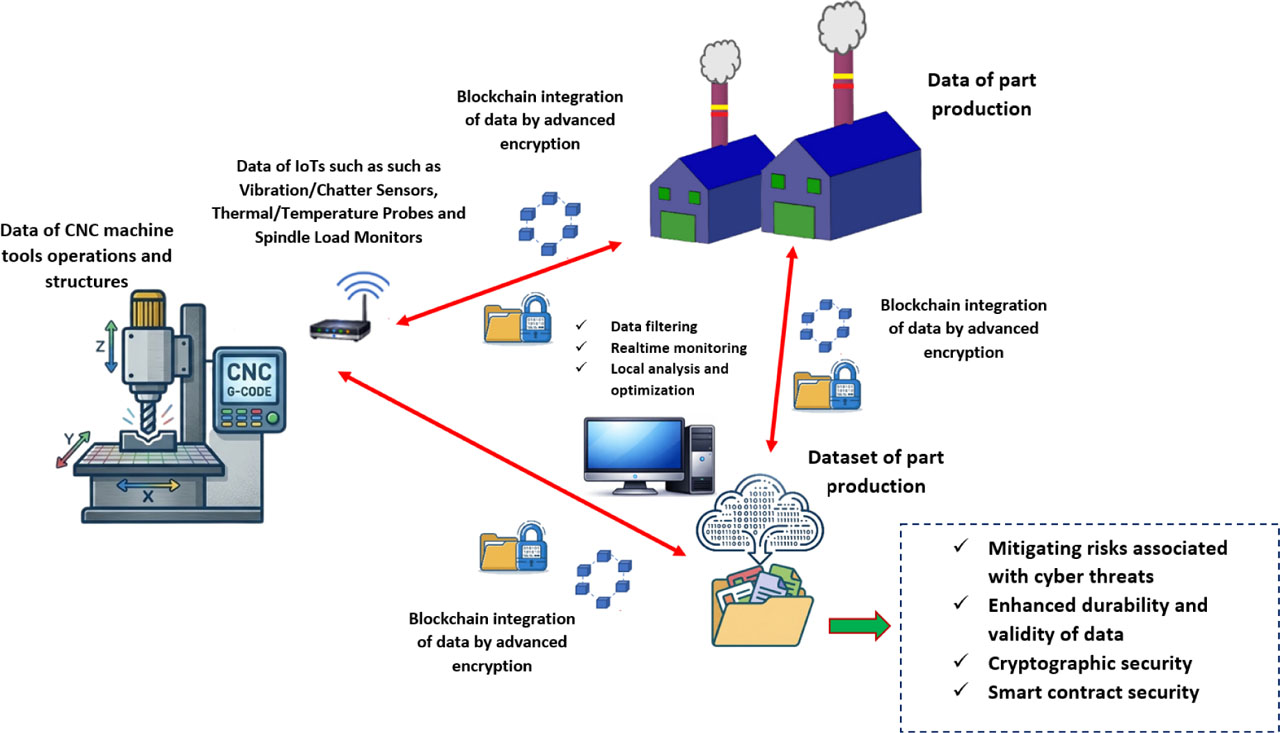
Figure 1.
Application of IoTs and blockchain integration of data by advanced encryption during data sharing of part manufacturing.
There are several challenges and technical difficulties in implementation of system during part production process which can be presented as:
blockchain scalability for high-frequency IoT data.
Handling old manufacturing system interoperability.
protecting smart contracts from errors and weaknesses.
Reliable and trustworthy infrastructure for smart CNC machine tool operations within Industry 4.0 can be achieved by providing immutability through smart contracts and cryptography [61]. As a result, reliability and transparency of smart contracts can increase performances of machine tool maintenance procedures in order to increase productivity of part production using smart CNC machine tools [62].
4. Traceability for Products throughout the Supply Chain
The employment of blockchain technology and IoT in smart machine tools is seen as a significant chance to better supply chain traceability [63]. This is because blockchain technology is seen to offer a transparent, precise, as well as immutable transactional record. Therefore, each transaction referring to any transportation of components is traceable in smart manufacturing supply chains in an immediate manner. Thus, supply chain management is improved due to application of IoTs and blockchain technologies in order to provide advanced part production within Industry 4.0 era [64]. A number of industries have already started investigating blockchain and IoT for supply chain traceability process. An example is the employment of blockchain technology in the automotive sector, notably for traceability as well as the satisfaction of security regulations. IoT technology is used as well in the pharmaceutical sector for traceability of drugs. Benefits of Blockchain-Based Traceability for products throughout the supply chain can be presented as:
Enhanced Transparency: Due to blockchain's immutable ledger and the IoT technology, all supply chain participants can access to the same data. Transparency lowers the possibility of fraud while ensuring consistent and trustworthy information regarding the origin, quality, and management of parts and commodities. [65].
Improved Accuracy and Integrity: Traditional methods of traceability are with errors and inaccuracy during the traceability for products throughout the supply chain procedures. Decentralized and encrypted properties make records of higher quality and integrity in blockchain technology, while the obstacles to unauthorized data change are stronger [66].
Real-Time Tracking: Real-time ledger updating processes enable quick product and part tracking with blockchain technology and IoT application. When there are several companies involved in the supply chain and situations like recalls arise, the feature is crucial [67].
Streamlined audits and compliance: Blockchain technology and IoT systems have the potential to provide a traceable and transparent record of transactions in order to increase speed of the audit process. As a result, when auditors have a comprehensive and accurate history of each component or product, it becomes easier to maintain compliance with the law and industry standards [68].
Applications of IoTs and blockchain in traceability for products throughout the supply chain is presented in Figure 2. This figure demonstrates a framework for a blockchain-IoT enabled traceability that applies to smart machine-tool based manufacturing supply chains. So, in order to provide an integrated view of regulatory compliance and product traceability across the supply chain, the Figure 2 illustrates how decentralized traceability may be used at every level of CNC-based production.
However, during implementation of system in part production, technological challenges can be presented as:
Establishing data format standards to enable multi-party traceability.
Updating the blockchain in tandem with current IoT activities.
Keeping security and quality in data checking processes [69].
Blockchain-IoT integration enables end-to-end traceability by providing secure and immutable records for component tracking and regulatory compliance [70]. Real-time asset tracking helps businesses like the pharmaceutical and automotive industries prevent fraud and expedite recalls.
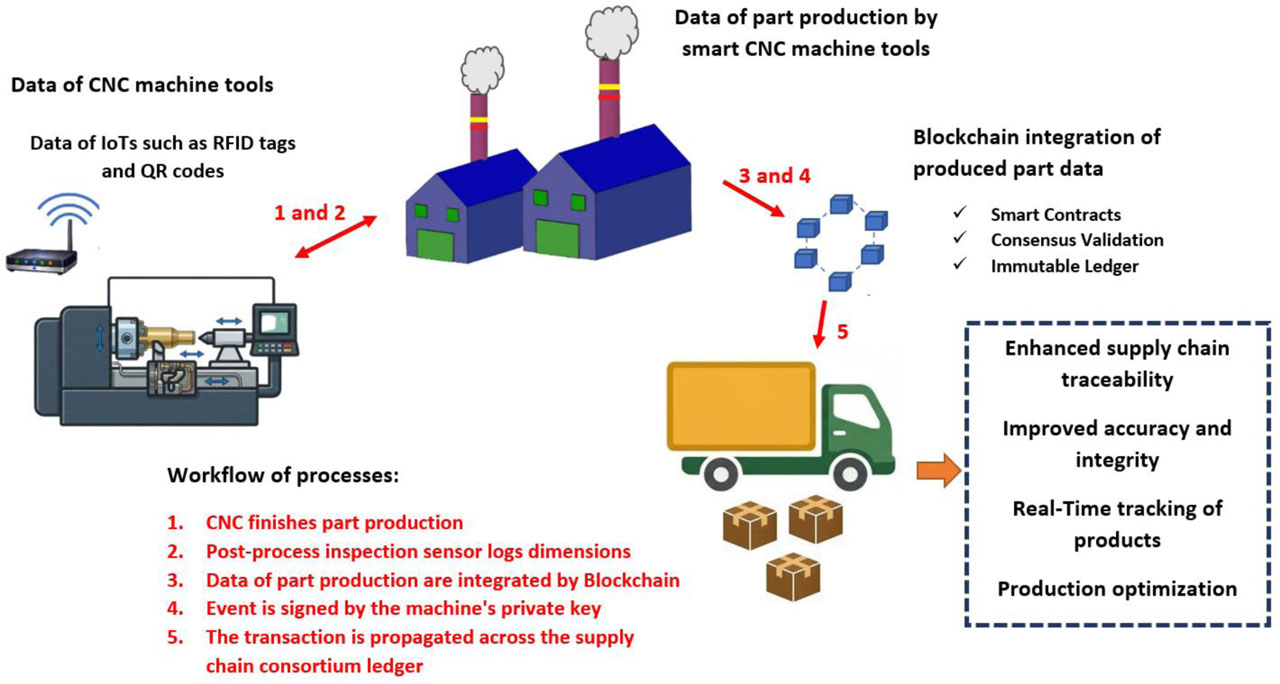
Figure 2.
Applications of IoTs and blockchain in traceability for products throughout the supply chain.
5. Transparency of Machine Tool Operation Data in Part Production and Manufacturing Process
Poor data management, limited real-time monitoring, and inadequate traceability are major challenges in traditional manufacturing environments [71]. During part production process using machine tools, a tremendous amount of data is related to the operation of the machine tools, including production data, maintenance data, and operation data. Analysis and modification of transparent and accurate data during process of part production are considered as key tool in process of manufacturing integration. Transparency is one of the fundamental requirements of modern-day manufacturing processes in terms of productivity enhancement of part production. Industry 4.0 concepts. As a result, operational excellence, quality, and supply chain integrity can be achieved due to the transparency of machine tool operation data in part production and manufacturing process [72]. Machine tool operations play a critical role in part manufacturing, and transparency is essential for achieving high performance, traceability, and regulatory compliance [73]. However, it is difficult and challenging to present an integrated and transparent data of machine tool operations in part production since this information is typically distributed across several systems. To improve the transparency of machine tools, blockchain-IoT can act as a new paradigm based on its inherent properties. Blockchain technology, which allows for the monitoring of machine tools, can solve these issues [74]. Key benefits of blockchain integration include:
Immutable Data Records: Blockchain provides immutable records, decentralized data access, and traceability, while smart contracts automate manufacturing operations and maintenance workflows. This is an extremely important feature that any industry would need to ensure to maintain the reliability of the information collected in the production processes and to meet the regulatory requirements [75].
Decentralized Data Management: Blockchain breaks down data silos in terms of easy access to thorough, up-to-date information by spreading data storage over a network of nodes. It thereby makes the performance, operating status, and production KPIs of machine tools more visible [76].
Enhanced Traceability: Due to generation of blockchain technology in open and transparent ledger of transactions, the components could be traced throughout the manufacturing process. The technology traces all actions and activities throughout the manufacturing process, hence allowing tracing [77].
Smart Contracts: smart contracts are digital contracts that can be encoded with certain rules established in advance through the use of blockchain technology in order to increase productivity within the manufacturing process [78]. For instance, machines can be automatically sent for maintenance after certain statistics have been attained or certain rules are applied, such as those aimed at preventing downtimes of machines used in machining [19].
Several industries have begun exploring blockchain integration for enhancing transparency in machine tool operations:
Automotive Industry: Blockchain technology has already been employed by automobile manufacturers to track the origin of goods and ensure quality control throughout the manufacturing process. The authenticity and conformity of parts with strict industry requirements can be confirmed by using IoT and blockchain to capture machine tool operations data.
Aerospace Sector: IoT and blockchain technology are used in the aerospace industry to create detailed records of how well the machines tools perform and the maintenance processes carried out on the tools. This will, in turn, allow better scheduling of the machines tools and better adherence to safety standards [79].
Electronics Manufacturing: In the electronic manufacturing industry, IoT technologies, as well as blockchain, play a role in machine tool process monitoring, which gives real-time information about machine tool processes and production of parts [80].
The integration of blockchain technology into the machine tools process holds great promises for enhancing the transparency of the whole process. This is achieved through the tackling of challenges such as fragmented data management, real-time monitoring, and traceability of information [81]. Application of blockchain technology in transparency of machine tool operation data within part production and manufacturing process is presented in Figure 3. This figure presents a novel framework for operational transparency in smart machining systems by integrating blockchain with machine operational data, maintenance information, and production planning. Therefore, the figure provides a specialized representation of transparent manufacturing systems that supports auditability, secure information sharing, and decentralized monitoring in Industry 4.0.
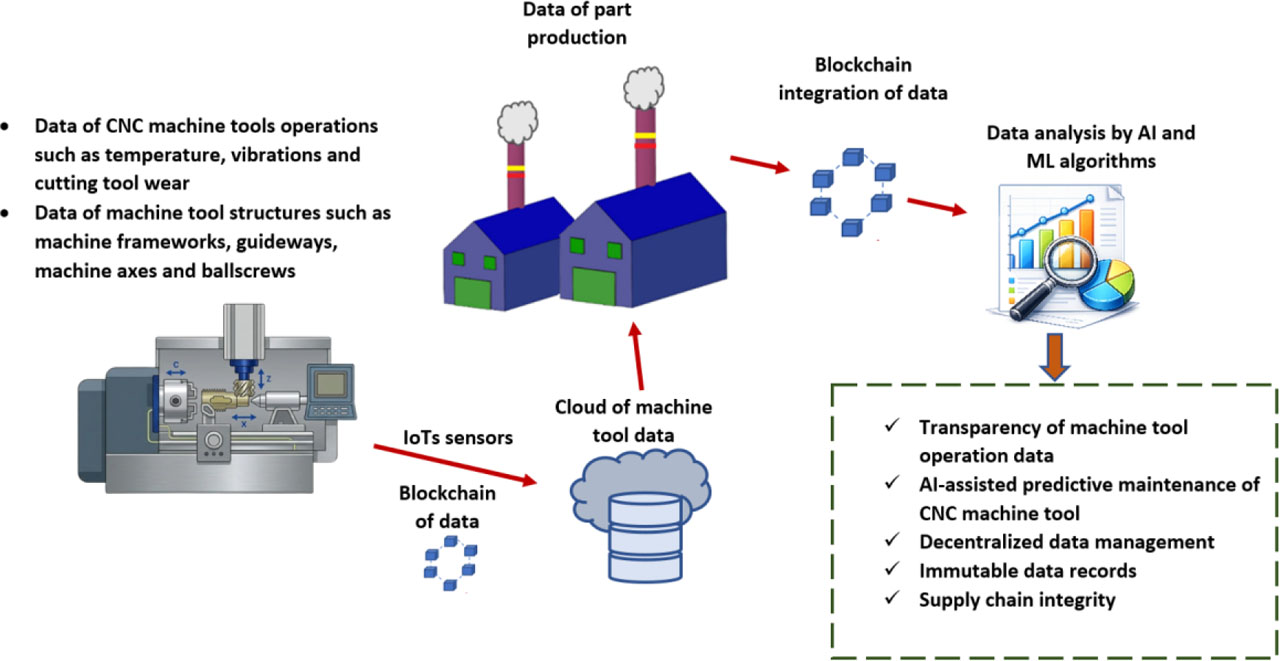
Figure 3.
Application of blockchain technology in transparency of machine tool operation data within part production and manufacturing process.
There are several challenges and the technical difficulties during implementation of system which can be presented as:
Incorporating many sources of machine data into blockchain.
Preserving low-latency updates for monitoring in real time.
Ensuring decentralized data nodes are secure.
Blockchain technology provides a secure, decentralized, and immutable ledger for recording machine-tool operations, process parameters, and maintenance activities, thereby ensuring data integrity, transparency, traceability, and consistency throughout the manufacturing lifecycle. For example, recording characteristics such as material usage or spindle speeds enables stakeholders in the manufacturing process to trust the results obtained [82]. As a result, smart contracts can impose quality gates or automate maintenance triggers based on real-time operational parameters.
6. Smart Contracts for Automation of Agreements and Processes
Smart contracts are self-executing agreements whose terms are directly encoded into blockchain-based software that automatically perform actions in accordance with pre-programmed contract clauses and ensure safe execution of manufacturing, logistics, and service operations [83,84]. Smart contracts have emerged as a key technology in Industry 4.0 for automating agreements and procedures in manufacturing systems and smart machine tools. Smart contracts use blockchain technology to enable automatic agreement execution [85]. A decentralized ledger is employed that makes the execution of the terms of the contract automatic without requiring any intermediaries whenever criteria are met [86]. In the context of smart machine tools, smart contracts can manage service agreements and schedules for maintenance in order to minimize downtime during manufacturing process. A smart contract can automatically schedule routine maintenance based on machine usage statistics and guarantee prompt, sufficient remuneration for the service providers. Also, smart contracts can facilitate communication between suppliers, customers, and manufacturers in a decentralized manufacturing environment [19,87]. Moreover, the smart contracts can guarantee product quality and data authenticity in supply networks that need extremely precise and genuine data during supply chain management procedures [88]. Also, the inventory levels would also be updated in real-time by the smart contract, and the ordering would commence if the stock went below a certain mark [89].
Execution and Enforcement: Smart contracts are brought into effect by certain conditions. For instance, if a machine tool completes a manufacturing task, the smart contract can automatically release money. This ensures that the agreement is strictly adhered to as the funds are released immediately [90].
Transparency and Security: All the participants are able to access the same information because the smart contracts will be stored through the use of a blockchain for purposes of avoiding disputes and cultivating trust levels. The use of cryptographic technologies ensures there will be no incidences of fraud [91].
Immutability: Once a smart contract is launched, its code cannot be altered. Due to the contract's immutability, its terms will always be enforceable and valid [92].
The incorporation of smart contracts into Industry 4.0 poses numerous challenges as:
Complexity of Implementation: Smart contract creation and implementation require technical knowledge of blockchain technology and programming abilities. It is crucial to ensure that contracts are free of mistakes and flaws [93].
Interoperability: Interoperability problems could arise from disparate blockchain platforms and smart contract standards. For integration to be smooth, compatibility between different systems must be guaranteed [94].
Legal and Regulatory Framework: Differences in national regulations and legal enforceability may create challenges for the widespread adoption of smart contracts [95].
Scalability: blockchain networks could face scalability issues as the volume of transactions and contracts increases. To overcome these issues, solutions like blockchain optimizations and layer 2 protocols are being investigated. An innovative technology for Industry 4.0's automation of agreements and procedures is smart contracts. Efficiency and reliability associated with IoT and blockchain are significantly enhanced by exploiting the transparent, secure, and automated features [96]. However, exploring the full potential associated with the implementation of smart machine tools and systems can be achieved by surmounting implementation challenges, or interoperability challenges, or scalability challenges [97].
However, technical challenges during implementation process of system can be presented as:
Avoiding coding mistakes that cause contracts to lock or misfire.
Achieving blockchain platform interoperability.
Navigating different jurisdictions' ambiguous legal enforceability.
Manufacturing processes are automated by smart contracts. Smart contracts perform predetermined rules upon a predetermined criterion being met. Industry 4.0 systems can independently manage inventory replenishment, supplier coordination, and equipment maintenance in order to enhance automation during manufacturing procedures. Besides increasing efficiency and ensuring compliance to agreements without intermediaries, costs of part production can be decreased [98].
7. Predictive Maintenance of Smart CNC Machine Tools
Predictive maintenance (PdM) provides for proactive approaches to maintaining machine tools, such as CNC machines with the capability of predicting the problems before they actually occur [99]. The functionality and reliability of intelligent CNC machine tools can be significantly enhanced through the integration of machine learning algorithms, IoT sensors, and real-time data analytics within Industry 4.0 era [100,101]. Other benefits of improving machine tools through technologies that incorporate a blockchain include integrity, transparency, and security [102]. IoT sensors are essential components for monitoring machine tools in predictive maintenance systems. They can gather information pertaining to various factors, such as running cycles, temperature, vibration, and sound emissions. Smart CNC machine tools have these sensors so they can gather data in real time, process it, and predict any issues [103]. After the data is collected, it is analyzed using ML algorithms and advanced analytics. ML techniques also examine both historical and prevailing data in order to spot trends as well as anomalies that could possibly be indicative of wear and tear, as well as impending failures. Utilizing the data examined, predictive models have developed predictions regarding the process plans of machine tools during part production. [104]. To produce useful insights and practical procedures, these models consider variables including machine usage, ambient circumstances, and past failure data. Drawing data to inform scheduled activities reduces system downtime, thereby allowing organizations to save on system operating expenses [105].
A decentralized ledger system behind data integrity and confidentiality are provided by applying Blockchain technology during PdM process. Also, the integration of Blockchain with PdM systems allows tamper-proof recording of sensor data, maintenance logs, and predictive analysis results [106]. By preventing manipulation and unwanted access, this integration preserves the integrity of the data utilized for predictive maintenance. Furthermore, the traceability of maintenance operations and data provenance is made easier by Blockchain's transparency capabilities. [107]. As a result, Every transaction and maintenance event is documented on a blockchain so that stakeholders can confirm the accuracy and correctness of the data. [108]. This level of transparency supports compliance with industry regulations and standards, enhancing overall accountability in maintenance practices. Therefore, Blockchain can securely log data from machine sensors via IoT devices, allowing for accurate predictive maintenance without the risk of data tampering. However, there are obstacles to integrating IoT and blockchain with predictive maintenance systems, including the requirement for defined protocols, scalability concerns, and the complexity of blockchain technology [109]. Future studies should concentrate on creating blockchain and IoT solutions that are scalable, as well as investigating the possibilities of fusing blockchain with other cutting-edge technologies like edge computing and AI algothim [110]. So, the use of blockchain technology in conjunction with predictive maintenance has greatly improved the management of smart CNC machine tools. [111]. By improving data integrity, security, and transparency, blockchain facilitates more efficient and dependable predictive maintenance procedures. [112]. The confluence of these technologies will be crucial for maintaining operational excellence and enhancing machine tool performance as Industry 4.0 develops. However, technical challenges can be presented as:
Managing vast amounts of sensor data while staying within blockchain constraints.
PdM data sharing protocols should be standardized.
Integrating blockchain and edge analytics without incurring latency costs.
Applications of IoTs and Blockchain in smart predictive maintenance of CNC machine tools is shown in the Figure 4. A validated architecture for predictive maintenance that combines IoT sensors, machine-learning algorithms, edge computing, and blockchain technology is presented in the figure. So, the applications of predictive analytics and decentralized data security in smart CNC machine tools in order to improve maintenance scheduling, fault prediction, and reliability of smart CNC machine tools are presented.
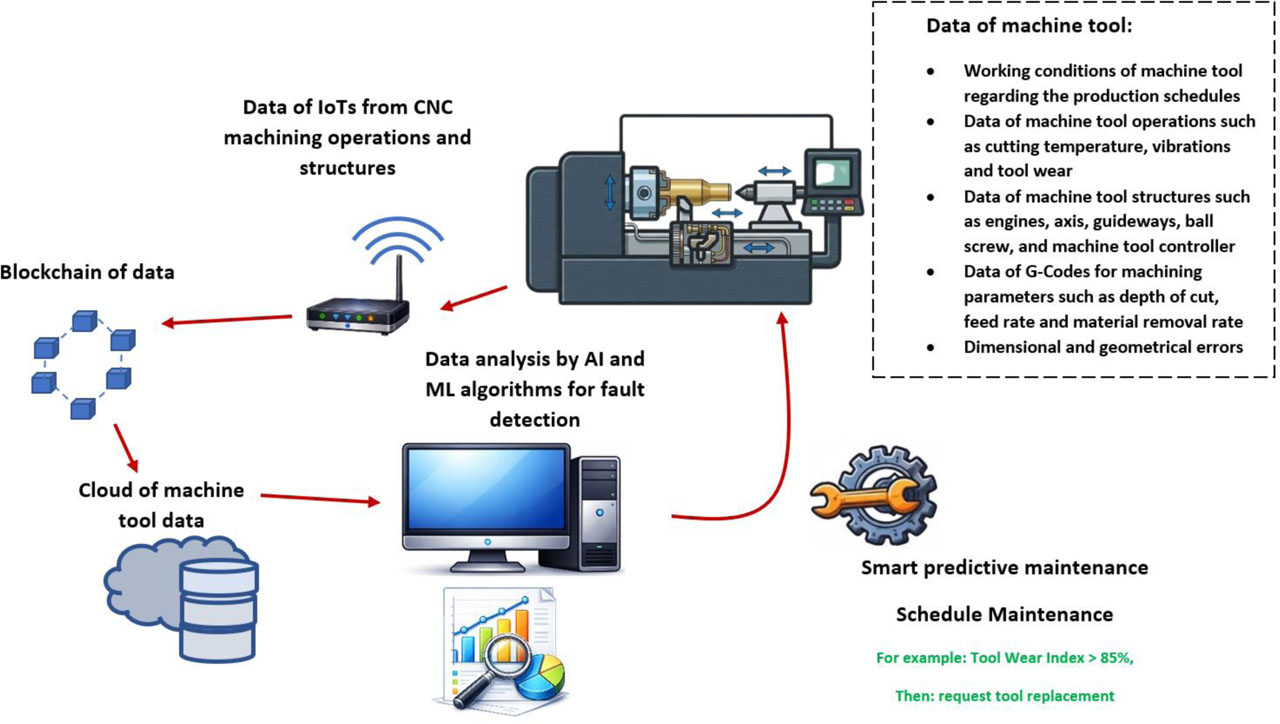
Figure 4.
Applications of IoTs and Blockchain in smart predictive maintenance of CNC machine tools.
While ML identifies irregularities and anticipates failures before they happen, IoT sensors continuously check the health of machines. Blockchain ensures reliable, unchangeable historical data by securing and timestamping maintenance logs [113]. This connection increases asset longevity, optimizes servicing schedules, and decreases downtime.
8. Supply Chain Management
To increase the flexibility, transparency, and efficiency of manufacturing and distribution activities in the context of Industry 4.0, Supply chain management (SCM) are applied [114]. Integrated supply chain management approaches are essential for the effective deployment of smart machine tools within the Industry 4.0 framework. Blockchain technology has significant potential to enhance supply chain management by addressing existing challenges and enabling new optimization opportunities. The root causes of these properties are the decentralization, immutability, and transparency of blockchain technology [115,116]. The manufacturing processes have become more efficient and transparent due to improvements in the application of advanced levels of connectivity, data analysis, and automation ushered in through the application of blockchain technology in smart CNC tools. Likewise, through the application of blockchain technology coupled with smart CNC tools, a more efficient supply chain management is achieved [117]. To enhance collaboration and minimize delays in the sharing of data, real-time data sharing and contract execution with the use of IoT sensors and blockchain security levels can be utilized [118]. The use of blockchain has the potential to allow the tracing of the origin of parts and supplies to promote trust and transparency in the chain [119]. Blockchain has the promise of providing a solid basis through which the advantages of intelligent CNC machine tools can be maximized [120]. Many supply chain problems can be solved by the decentralized and immutable properties of blockchain technology as:
Data Integrity and Transparency: Blockchain enhances supply-chain coordination by providing secure and verifiable manufacturing records across stakeholders. This transparency helps in identifying the source of components, authenticating their authenticity, and ensuring compliance with regulations and guidelines [121].
Improved Traceability: by recording each transaction and each stage of the process on a blockchain, it is possible to trace from raw materials to finished product where each unit originated. This is critical for quality issues [122].
Enhanced Security: Blockchain offers an encrypted environment for different supply chain participants to share data. This reduces the possibility of sensitive data breaches and illegal access in terms of data sharing process [123].
Smart Contracts: due to blockchain technology capabilities, Smart contracts which are self-executing agreements with precisely defined terms expressed in code can be created. So, smart contracts have the potential to reduce the need for middlemen by enforcing and organizing agreements between many parties, including manufacturers, distributors and suppliers [124,125].
Efficient Supply Chain Coordination: The integration of smart CNC machines and blockchain technology makes it easier to collaborate in the supply chain. There is also the ability to share data in real-time and execute contracts automatically. This can improve collaboration and eliminate delays.
Despite the promising benefits, the integration of blockchain with smart CNC machine tools presents several challenges:
Scalability: Since smart machines produce a lot of data, scalability problems could happen when combining blockchain with smart manufacturing systems. Large amounts of data can be produced on a regular basis by intelligent machine tools [126]. Ensuring the scalability of blockchain systems gets more challenging as the volume of data and transactions increases. As a result, it is an ongoing effort to ensure blockchain systems can manage massive data quantities without compromising transaction speed as well as performance [127].
Integration Complexity: It takes a lot of work and budget to integrate blockchain with current supply chain systems and guarantee compatibility with intelligent CNC equipment. [128].
Regulatory and Standardization Issues: Widespread adoption can be hampered by the absence of established frameworks and regulatory norms for blockchain in manufacturing [109].
Energy Consumption: Blockchain activities can demand a lot of processing power, particularly in proof-of-work systems, which could be problematic for industry that uses less energy. [129].
Interoperability: Successful integration depends on ensuring that various smart devices and blockchain systems can cooperate without any issues [130].
Cutting-edge CNC machine tools combined with blockchain and IoT technology can impact on supply chain management in Industry 4.0 [131]. Predictive analytics, safe data interchange, and real-time data could help manufacturers become more transparent, dependable, and efficient. More research and development are expected to be implemented in order to fully utilize these technologies and overcome current challenges in terms of productivity enhancement of part manufacturing. However, technical challenges during implementation of system can be presented as:
Blockchain scaling for multi-tiered, international supply chains.
Incorporating blockchain technology into current SCM/ERP systems.
Addressing issues with cost and energy usage [132].
Application of IoTs and Blockchain during supply chain management of advanced part production by using smart CNC machine tools within industry 4.0 era is shown in the Figure 5. An integrated architecture that links blockchain-enabled supply chain management within smart CNC machining operations and IoT-based monitoring systems is shown in the figure. As a result, application of manufacturing operations, suppliers, logistics, and customers in order to collaborate through a safe and transparent blockchain-IoT ecosystem designed for Industry 4.0 era is presented in the figure.
By facilitating safe, transparent data flows and automated agreements, blockchain technology in conjunction with intelligent CNC tools improves supply chain management. Distributors, manufacturers, and suppliers all use the same reliable dataset thanks to real-time changes [133]. While smart contracts simplify logistics and procurement, traceability enhances responsibility.
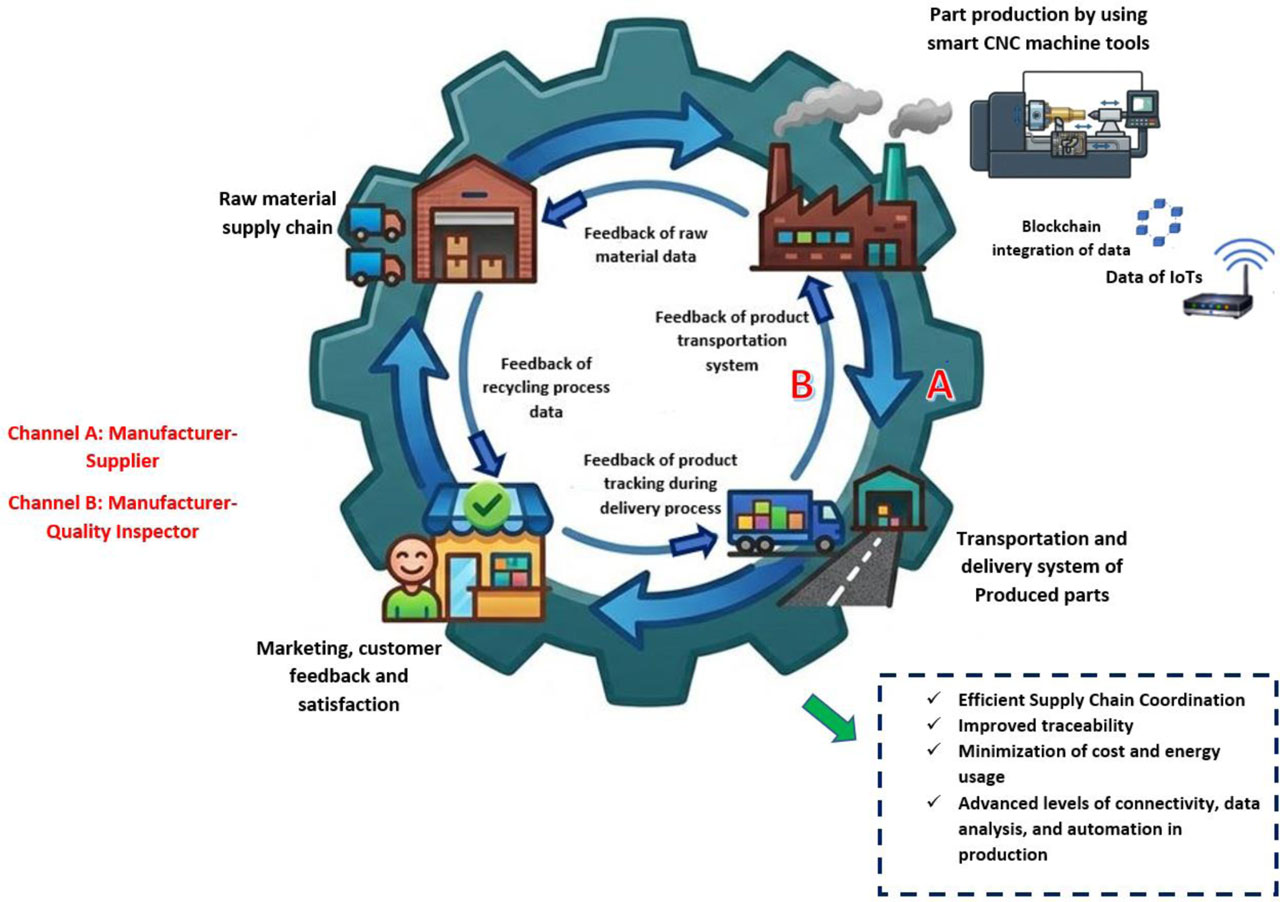
Figure 5.
Application of IoTs and Blockchain during supply chain management of advanced part production by using smart CNC machine tools within industry 4.0 era.
9. Smart and Online Quality Control of Machining Operations within Industry 4.0
Dimensional accuracy was traditionally confirmed through manual inspection and metrology off-line. Though effective in ensuring quality standards, such methods were associated with inspection bottlenecks, high labor costs, inefficient production processes, and limited ability to respond to deviations from production parameters. Real-time monitoring and feedback systems are now an essential part of quality control due to the development of smart machining [134]. Currently, sensors and IoT technology are continuously generating information regarding machine performance, process, and product information, making it easier to detect and correct inconsistencies [18,135]. Smart machining processes offer a major improvement over the conventional production model in the context of Industry 4.0. To achieve the highest level of production quality and efficiency, smart machining processes leverage the latest technological advancements, including blockchain, IoT, and AI. Quality management is an important aspect of smart machining processes because it ensures that the end products conform to high standards and specifications [136]. Blockchain technology can significantly improve quality control procedures in smart machining environments [19]. Producers can guarantee constant quality and identify the origin of any flaws by documenting every stage of the production process on a blockchain [126]. Blockchain technology introduces several advantages to the quality control processes in smart machining:
Immutable Data Recording: Blockchain supports quality assurance by maintaining verifiable records of machining parameters, inspections, and quality-control activities [137]. The process protects quality-related data from fraud and tampering by guaranteeing its integrity and traceability. [138].
Enhanced Traceability: Each step of the machining process, from the procurement of raw materials to the finished product inspection, can be traced and verified through the use of blockchain technology [19,139]. This is necessary for tracing and correcting quality issues that may arise at any point in the supply chain. When issues arise, blockchain technology helps to track their origin so that corrective measures can be taken. [63].
Real-time Monitoring and Feedback: integration of blockchain technology with IoT devices provide real-time sharing and monitoring of data are made possible through the machining operations [140]. The factors that define quality control can be altered in real-time through the use of blockchain security and IoT data acquisition, allowing for real-time feedback and changes [141]. This proactive measure ensures that machining operations are of quality and that the possibility of defects is remote [108].
Automated Quality Assurance: The ability to automate quality control is one of the functionalities of blockchain technology, known as smart contracts [142]. Based on set parameters, these self-executing contracts can perform specific actions, such as halting production when a quality parameter is reached or alerting the maintenance department of equipment malfunctions [143].
Data Security and Privacy: The cryptography methods employed in the blockchain network ensure the privacy and security of quality control data collected by the IoT sensors. This is necessary for the protection of sensitive product information and unique machining processes [28].
The effectiveness of blockchain and IoT in enhancing quality control during smart machining processes has been demonstrated in various industrial applications [144]. To monitor and verify the quality of critical components, for instance, a leading aircraft manufacturer integrated blockchain technology with its smart machining systems [145] The use of blockchain technology ensured accurate documentation of machining parameters and traceability, resulting in improved product reliability and conformity to industry standards. Another example is a manufacturer of high-precision auto parts that applied blockchain-based quality control to track and confirm the functioning of their CNC machines [146].
Although there are various advantages associated with the application of blockchain and IoT technology in smart machining quality control, some challenges have been identified. These include scalability issues associated with blockchain networks, standardization of blockchain protocol technology for industrial purposes, and integration of blockchain technology with manufacturing processes [147]. For future researchers and developers, it is advisable that they be focused on tackling these challenges and assessing the effects of integrating blockchain technology on quality [111,146].
In summary, the potential of blockchain technology in providing revolutionary opportunities for quality control in smart machining processes [148]. By enhancing data integrity, traceability, and real-time monitoring, blockchain technology improves the efficiency of quality control in Industry 4.0. Even more improvements in manufacturing quality and excellence can be realized through further innovations in blockchain technology, IoT, and smart machining technology [149]. However, technical challenges can be presented as:
Ensuring that the frequency of inspections and blockchain throughput are equal.
Establishing interoperability standards for QC data formats.
Reducing the expense of storing high-resolution inspection data.
Application of IoTs and blockchain in Smart and online quality control of machining operations is presented in Figure 6. The figure contributes a specialized framework for Industry 4.0 machining environments by integrating online inspection, traceable quality records, and decentralized validation into a unified system.
Application of IoTs and blockchain in accuracy enhancement of smart CNC machining operations is presented in Figure 7. An advanced architecture for machining-accuracy enhancement by integrating IoT-based sensing, blockchain-secured data management, and real-time process optimization is presented in the figure. So, a new perspective on how decentralized and trustworthy data infrastructures can support precision enhancement, process reliability, and intelligent decision-making in smart CNC machining systems is proposed in the figure.
In real-time data analysis, quality information is attainable through IoT-based smart machining and can be kept tamper-proof through blockchain for future audit and verification purposes. The process can track defects during manufacturing process by using real-time data in order to increase accuracy and reliability of part production procedures [140].
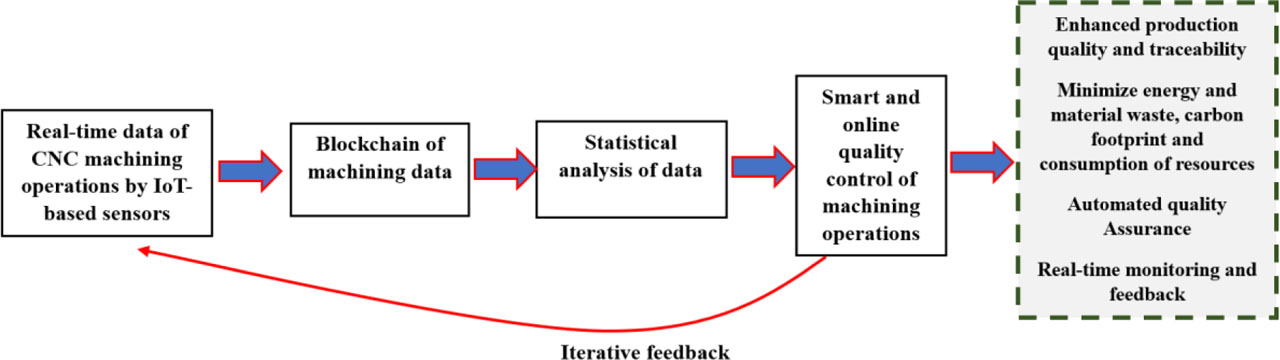
Figure 6.
Application of IoTs and blockchain in Smart and online quality control of machining operations.
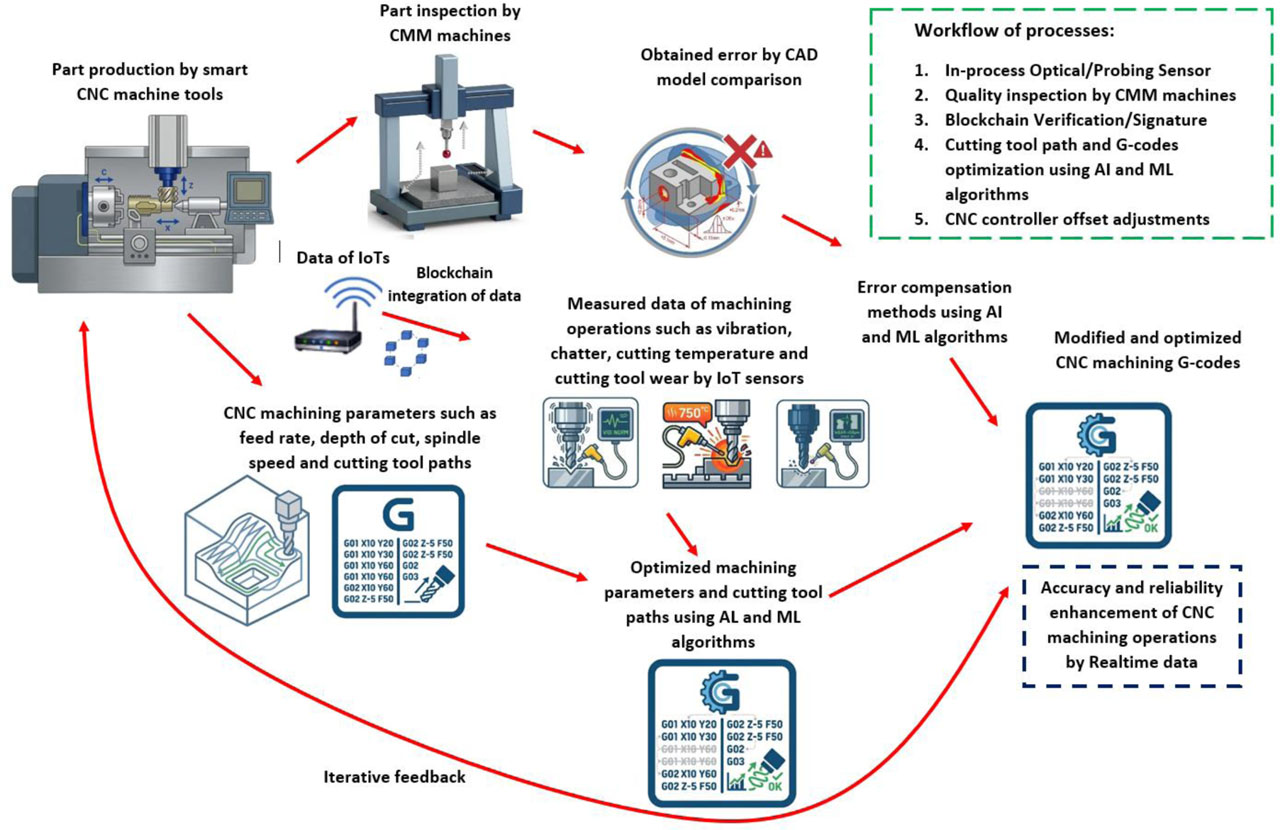
Figure 7.
Application of IoTs and blockchain in accuracy enhancement of smart CNC machining operations.
10. Data Security in Smart CNC Machining Operations
Blockchain and IoT devices offer many advantages, such as integrity of data, transparency and decentralized security. However, their utilization in smart manufacturing systems brings along many security and privacy related concerns [150]. A large number of interconnected devices, distributed ledger and smart contract increase the attack surfaces of industrial networks and render them susceptible to various attacks over industrial network environments. Also, sensitive manufacturing data might be exposed to several threats due to storing and sharing them over decentralized storage devices [151,152]. Hence it is significant to investigate vulnerabilities of blockchain technology and threats related to cyber security, together with security mechanisms for blockchain-IoT deployment in smart CNC machine tools and industry 4.0.
Blockchain Vulnerabilities: Although public blockchain has benefits like decentralized environment, it is susceptible to the scalability and attack surface limitations [153]. Moreover, bugs and programming errors in smart contracts can lead to financial losses, security breaches, and malfunctions in the system [154]. Hence, security in programming practice, use of formal verification, and development of an advanced consensus mechanism play an important role in strengthening the reliability of blockchains in Industry 4.0.
Cyberattacks and Privacy Issues: The integration of blockchain with IoT devices in smart manufacturing environments introduces additional cybersecurity and privacy challenges [150,155]. IoT sensors may be exposed to distributed denial-of-service (DDoS) attacks, malware infections, spoofing attacks, and unauthorized access to sensitive production data [152]. In addition, transparency provided by blockchain technology can lead to concern about the privacy and confidentiality of transactions that will be stored immutably [156]. Therefore privacy-enhancing technologies such as encryption, anonymization and zero-knowledge proofs must be used in order to protect confidential information.
Security Countermeasures: Different security measures are available and can be implemented to further secure blockchain-IoT manufacturing systems [157]. Security mechanisms such as AI-based intrusion detection systems enable real-time detection of suspicious activities and cyberattacks, while multi-factor authentication and role-based access control help prevent unauthorized access to industrial networks [158,159]. In addition, lightweight cryptographic algorithms, smart contract auditing, and edge-assisted blockchain architectures enhance system security, data integrity, and computational efficiency while reducing processing overhead [160]. As a result, by applying these security measures, blockchain-IoT-based systems can provide a secure, reliable, and scalable foundation for smart manufacturing, enabling efficient and resilient Industry 4.0 operations.
In summary, although both blockchain and IoT technologies create good security infrastructure in smart manufacturing systems, the security threats and privacy concerns cannot be ignored. Security vulnerabilities in blockchain, cyberattacks targeting IoT systems, and data privacy concerns must be effectively addressed to ensure the development of trustworthy industrial systems [155,161]. The usage of advanced security measures including AI-enabled threat detection, privacy-preserving cryptography techniques, secure smart contracts and edge-supported architectures have great contributions in making systems resistant to threats. As a result, the research should continue towards building adaptive, scalable and energy efficient security systems for the future smart manufacturing and Industry 4.0 environments.
11. Comparative Analysis and Critical Discussion
It is obvious that there are some differences between systems in terms of architecture design, implementation procedures, scalability concerns, and industrial applications, even though numerous studies have emphasized the advantages of utilizing blockchain technology and the IoTs in smart machine tools. It is thus essential to critically evaluate the relevant literature to find out its strengths and weaknesses.
Comparison of Blockchain Platforms: Different blockchain platforms have been utilized by the discussed papers for providing the necessary levels of data security, traceability, and decentralization communications in manufacturing [162]. These include Ethereum, Hyperledger Fabric, and IOTA. Ethereum allows the deployment of smart contracts as well as offers a highly decentralized platform, but transaction fees and issues with scalability may affect the operation of Ethereum public networks, although Layer-2 approaches have greatly contributed to solving this problem. Hyperledger Fabric offers a permissioned blockchain technology that is characterized by low latency, access restriction, and high levels of privacy, and therefore, it is ideal for application in industrial cases [163]. The interest in the IOTA technology has been driven by its lightweight design that uses the Tangle distributed ledger technology designed to facilitate high transaction speeds and low transaction fees for the Internet of Things environment.
Comparison of System Architectures: The following three architectures have been identified in the literature for such systems: cloud computing based architecture, edge-fog-cloud computing architecture, and cyber-physical manufacturing architecture [164]. While cloud computing provides substantial computational resources and scalability, it may introduce communication latency and network dependency issues for time-sensitive industrial applications. Edge-fog-cloud architectures mitigate these limitations by processing critical data closer to machine tools while leveraging fog and cloud resources for intermediate and large-scale analytics. Cyber-physical systems further enhance the integration of physical assets with digital services, enabling real-time monitoring and control [165]. Based on the reviewed studies, edge-based and hybrid edge-fog-cloud architectures are among the most promising solutions for smart manufacturing environments due to their ability to balance low latency, computational efficiency, and scalability.
Limitations of Existing Studies: some limitations can be observed in past studies. For example, past researches have been carried out either through simulation studies or conceptual models and experimental setups rather than full-scale implementation in industries. Scalability problems in handling huge data from sensors, interoperability problems among blockchain platforms, IoTs, enterprise systems, and even legacy manufacturing machines are some more limitations that need attention [157]. Moreover, energy consumption, costs of implementation, and lack of standardization of processes in an industrial environment have been observed as major limitations.
Synthesis of Research Findings and Future Challenges: It is clear from the literature review that blockchain technology makes considerable improvements in the areas of data integrity, traceability, transparency, security, and trust in manufacturing environments, and IoT helps monitor processes, predict malfunctions, perform autonomous decisions, and optimize processes intelligently. Nevertheless, there are still many existing problems associated with real-time processing of data, scalability, interoperability, energy efficiency, cybersecurity, as well as integrating blockchain and IoT with AI, digital twin, and edge computing solutions. As a result, future work must address the development of scalable and interoperable frameworks based on AI in smart manufacturing environments.
Quantitative benefits reported in Blockchain-IoT manufacturing studies: Several studies have reported measurable improvements resulting from Blockchain-IoT integration in Industry 4.0 environments. Predictive maintenance systems which rely on IoT devices and ML capabilities can help to decrease unplanned machine downtimes by about 20–40% [166]. The use of blockchain technology to establish traceability systems reportedly results in an extremely high level of precision in tracking the movement of products through the supply chain while ensuring transparency in operations [167]. Blockchain-enabled manufacturing systems relying on smart contracts reportedly result in considerable improvements in processing times because of automatic execution of agreements. Quality management systems supported by blockchain technology reportedly improve defect identification and lower efforts needed for preparing audits.
While blockchain and IoT technologies demonstrate significant potential for smart machine tools, important performance trade-offs exist among current implementation approaches. Permissionless blockchain platforms such as Ethereum provide high transparency and decentralized trust [168]. But, they often suffer from scalability limitations, transaction delays, and increased computational costs. In contrast, permissioned platforms such as Hyperledger Fabric offer lower latency, improved privacy, and higher throughput, making them more suitable for industrial manufacturing environments [169]. Furthermore, cloud computing provides vast computation capabilities but suffers from communication delays, while edge–fog–cloud architecture allows real-time operation at the expense of increased complexity. The advantages, disadvantages, and open problems for different kinds of blockchain platform implementation are listed in Table 6.
The results of the quantitative analysis on blockchain-IoT architectures used in smart manufacturing have shown specific performance differences related to critical parameters. The use of Ethereum is characterized by high latencies (of the order of seconds) and low transaction throughput rates (of tens per second) alongside with comparatively high energy efficiency costs in early consensus mechanisms. However, in the case of Hyperledger Fabric, there is noticeable improvement in terms of speed because it has much shorter delay time (a matter of seconds or subseconds) and also increased speed, which can process several hundred transactions per second or even thousands per second in benchmarks. The lightweight IoT-based platforms such as IOTA have the ability to provide low latency and scaling in processing transactions, but its performance and security will also depend on its protocols, network status, and maturity. Edge-Fog-Cloud systems provide responsiveness and scaling through decentralized processing close to sources of data.
The comparative analysis reveals that blockchain-IoT integration has significant potential to improve smart machine tool performance within Industry 4.0. However, current research remains constrained by scalability, interoperability, standardization, and industrial implementation challenges. Addressing these limitations through more comprehensive experimental validation and advanced system architectures will be essential for the successful deployment of secure, intelligent, and autonomous manufacturing systems in future industrial environments.
Table 6.
Strengths, weaknesses, and remaining research gaps for the different approaches of blockchain platforms.
| Approach | Strengths | Weaknesses | Research Gap |
|---|---|---|---|
| Ethereum-Based Systems | Strong decentralization, flexible smart contracts | High latency, transaction fees, scalability limitations | Real-time industrial deployment |
| Hyperledger Fabric | Low latency, permissioned access, high throughput | Limited decentralization, deployment complexity | Cross-platform interoperability |
| IOTA-Based Systems | High scalability, lightweight IoT integration | Lower industrial maturity | Large-scale manufacturing validation |
| Cloud-Based Architectures | High computational capability | Communication delays, centralized risks | Real-time responsiveness |
| Edge–Fog–Cloud Architectures | Low latency, distributed processing | Increased system complexity | Standardized implementation frameworks |
| Blockchain + IoT for Predictive Maintenance | Improved traceability and maintenance reliability | High sensor-data volume and storage requirements | Scalable data-management methods |
| Blockchain + IoT for Quality Control | Immutable quality records and transparency | Integration challenges with existing QC systems | Industrial-scale deployment studies |
12. Conclusion
Industry 4.0 involves the revolutionization of manufacturing and related processes through the combination of blockchain technology and IoT with intelligent machine tools. The integration of blockchain and IoT technologies into smart machine tools offers significant opportunities to improve data security, operational efficiency, and manufacturing intelligence in Industry 4.0. IoT technology allows smart machine tools to collect data in real time through sensors and consequently track numerous parameters like temperature, vibration, speed, and many other related measures. Predictive maintenance, which reduces downtime and improves the overall efficiency of smart machine tools, could utilize this data. IoT allows smart machine tools in industries to be controlled and operated remotely during part production process. As a result, production processes can be integrated using IoTs sensors in order to increase productivity and performances of part manufacturing. In addition, huge volume of different data during machining operations are generated by IoT devices. However, this data has to be spread across the network by using a safe process. Blockchain guarantees a safe, transparent, and trustworthy process. In the context of data safety, the research on integrating blockchains and Industry 4.0-based intelligent machine tools has great intriguing potential. In particular, data safety, access, and confidentiality issues heighten the need to develop a safe, mutable, and cryptographic data management process. In order to realize its potential, however, developing solutions to overcome challenges related to its scalability, inter-operability, and legal issues is of utmost importance. As technology advances, blockchain technology is expected to play an important role in ensuring the security and reliability of future intelligent manufacturing systems.
This review study has identified various advantages and woes that this technology is bringing along with its embryonic development. The distributed nature of blockchain, its immutable nature, and its advanced cryptographic capabilities are utilized by intelligent machine tools. Blockchain technology’s potential use has been identified by this review study, keeping in view its applications in Industry 4.0, particularly IoT technology along with smart machine tools to resolve issues pertaining to manufacturing. Blockchain technology is highlighted in research and emphasized as having inherent capabilities in building and creating decentralized and unalterable ledgers with better trust, automation through smart contracts, and real-time and tamper-free data sharing and exchange, particularly in industries such as supply chains, quality, and predictive maintenance operations. The real-time and ongoing monitoring and data harvesting capabilities of the IoTs are mentioned alongside it in parallel research efforts, as well as ML and AI technologies for better decision-making and prediction. All of these trends suggest that IoT, blockchain, AI, and digital twin technologies will eventually converge to form the basis of extremely safe, effective, and self-sufficient smart manufacturing systems.
Smart machine tools that successfully integrate blockchain technology with the IoTs allow for real-time data interchange and verification, ensuring that all supply chain participants have access to accurate and up-to-date information. Overall, blockchain-IoT integration enhances trust, traceability, and operational efficiency while enabling advanced manufacturing functions such as predictive maintenance, quality control, and supply-chain coordination.
In order to illustrate both experimental and real-world deployments of blockchain–IoT integration for machine tool monitoring and predictive maintenance, Table 7 is presented.
However, challenges arise when integrating CNC machine tools with the blockchain and IoT systems. It is important to address some technological challenges, such as ensuring compatibility between these two blockchains and existing industrial technology. Additionally, other challenges that have to be considered include problems related to its scalability and processing needs, which are significant. To be sure, stakeholders must address issues that appeal to various users by standardizing this technology. This means that its technical and legal issues have to be addressed before its effectiveness can be noted. In order to take full advantage of this technology, research and collaboration by stakeholders must continue. Challenges of internet of things and blockchain for integration of smart machine tools can be presented as:
Scalability: Blockchain networks may struggle to process the high volume of IoT data generated by smart CNC machine tools, leading to increased latency and reduced throughput.
Privacy: Manufacturing data often contain sensitive production and intellectual property information that cannot be fully exposed on blockchain networks.
Security: Blockchain-IoT systems remain vulnerable to cyberattacks such as smart contract exploits, device spoofing, malware, and unauthorized access.
Regulatory Issues: The lack of unified regulations and industrial standards complicates large-scale deployment across different countries and sectors.
Computational Overhead: Blockchain consensus mechanisms and cryptographic operations may increase computational cost, energy consumption, and communication latency in industrial environments.
The implementation of blockchain infrastructures may require substantial investment in hardware, software, network resources, and personnel training. System latency introduced by consensus mechanisms can affect real-time decision-making requirements in smart CNC machining environments. Furthermore, scalability remains a major concern when processing high-frequency sensor data generated by IIoT devices. Energy consumption associated with certain blockchain platforms, particularly proof-of-work systems, may conflict with sustainable manufacturing objectives. Interoperability with legacy manufacturing systems and the absence of standardized industrial frameworks also remain important barriers to widespread deployment. Cybersecurity vulnerabilities associated with smart contracts, IoT devices, and cross-platform communication must also be addressed to ensure secure operation. Future research should focus on developing energy-efficient consensus mechanisms, edge-assisted blockchain architectures, AI-driven security frameworks, interoperable industrial standards, and scalable low-latency solutions capable of supporting real-time smart manufacturing environments.
Table 7.
Experimental and real-world deployments of blockchain–IoT integration for machine tool monitoring and predictive maintenance.
| Typical Blockchain–IoT Implementation | System Architecture | Blockchain Role | IoT / Edge Components | Machine Tool Application | Key Outcomes |
|---|---|---|---|---|---|
| Ethereum-based CNC Monitoring | Edge–Fog–Cloud with Ethereum blockchain backend | Stores tamper-proof operational logs of CNC machines | Vibration, temperature, and spindle speed sensors over MQTT | CNC milling and turning machines | Provides secure and traceable machine data management, enhances data integrity, and supports condition monitoring and predictive maintenance. |
| Hyperledger Fabric for Tool Lifecycle Management | Layered cloud–fog–edge | Blockchain records tool usage history and maintenance events | RFID tool tracking + CoAP-based sensors for spindle load | Precision machining centers | Improved traceability of cutting tools; enhanced predictive maintenance scheduling |
| Consortium Blockchain for Cross-factory Data Sharing | Multi-cloud integration with edge gateways | Maintains a permissioned shared ledger for secure data exchange and traceability across multiple manufacturing sites | Edge gateways collecting depth of cut, torque, and thermal data | Multi-site CNC production lines | Enables secure cross-factory data sharing, improves traceability and collaboration among manufacturing sites, and supports coordinated production planning and maintenance decision-making. |
| Smart Contract–Driven Predictive Maintenance | Edge analytics + cloud blockchain storage | Smart contracts trigger maintenance requests | Edge devices processing vibration and acoustic emission data | CNC lathes in aerospace component manufacturing | Reduced unexpected failures; improved maintenance efficiency |
| Blockchain-enabled Digital Twin of Machine Tools | Edge–fog–cloud with digital twin in cloud | Blockchain ensures integrity of digital twin state data | Sensors for cutting force, temperature, and speed | Multi-axis CNC machining centers | Increased accuracy of predictive models; ensured trusted data for simulation |
The focus of further research can be centered on energy-efficient consensus models, scalable blockchain models, as well as improving the level of interoperability in real-time production while remaining environmentally friendly. In terms of assisting engineers as well as users, industrial implementation requires a high level of legal framework, backward compatibility, as well as user-friendly interfaces. With such challenges addressed, industrial environments that redefine the level of productivity in Industry 4.0 can bring efficiency, autonomy, as well as safety.
In summary, the integration of blockchain and IoT technologies into smart machine tools can provide enormous development and integration for Industry 4.0. The manufacturing industry can achieve previously unheard-of levels of efficiency, safety, and innovation in its processes by resolving current problems and utilizing the benefits of technology.
13. Future Research Work Directions
Applications of IoTs and blockchain technologies during smart machine tools within the Industry 4.0 is studied and discussed in the paper. So, the opportunities for industrial processes development and challenges of the technology’s implementation are discussed in the study. Although, the combined technologies have the great benefits of predictive maintenance, quality control, as well as trust in supply chains, there are still challenges of scalability, technology standardization, energy consumption, and norm compliance.
Most existing review studies on blockchain and IoT focus on broad Industry 4.0 topics such as smart factories, supply chain management, cybersecurity, and cyber-physical systems. However, limited attention has been given specifically to smart CNC machine tools and their operational requirements. Existing literature rarely provides comprehensive analysis of blockchain-enabled machining data security, predictive maintenance, machine-tool transparency, smart contracts, and quality control at the machine level. Furthermore, discussions of real-time integration between CNC sensor networks, IoT platforms, and blockchain infrastructures remain fragmented. Consequently, a dedicated review focusing on blockchain and IoT applications in smart CNC machine tools is still lacking. This study addresses this gap by systematically reviewing machine-level applications and their impact on security, traceability, reliability, and operational efficiency within Industry 4.0 manufacturing environments.
A summary of the identified research gaps is provided in the Table 8.
Table 8.
A summary of the identified research gaps.
| Area of study | Identified Research Gap |
|---|---|
| Scalability | Lack of blockchain solutions capable of handling high data throughput from smart machine tools without performance loss. |
| Interoperability | Absence of universal standards for seamless integration between blockchain, IoT, AI, and legacy manufacturing systems. |
| Energy Efficiency | High energy consumption of blockchain consensus mechanisms unsuitable for sustainable manufacturing. |
| Regulatory Frameworks | Unclear legal and compliance guidelines for blockchain use in industrial environments. |
| Smart Contract Reliability | Need for secure, bug-free, and optimized smart contracts for industrial automation. |
| Real-time Processing | Limited blockchain solutions that support real-time decision-making and low-latency operations. |
| Integration with AI/ML | Underexplored synergy between blockchain, AI, and ML for enhanced predictive maintenance and process optimization. |
Future research efforts can be directed to achieve scalability solutions by considering regulations and optimization of blockchain protocols for industrial use. Overcoming the challenges will require cooperation among industry participants, researchers, and policy makers for the realization of full potential with blockchain-integrated smart machine tools.
Enhanced Security Protocols: Investigate cutting-edge cryptography methodologies to advance the privacy and security of blockchain technology for smart machine tools. This entails generating security measures against quantum cyber threats and ensuring data confidentiality and integrity. developing complete cybersecurity standards that utilize blockchain technology to defend machine tools and smart factories against internet threats.
Scalability Solutions: To address high-volume transactions and massive volumes of data analysis, research could also be conducted on more scalable block chain technology. The research could focus on hybrid block chain technology, sharing, and block chain technology solutions.
Interoperability Standards: Develop standardized frameworks that can link blockchain technology with other technologies of Industry 4.0 such as the IoT, cloud computing, and AI algorithm. The smooth functioning of blockchain technology and other technologies would be essential for the success of Industry 4.0. Standardizing industries for the widespread adoption of blockchain technology in Industry 4.0 [170].
Real-Time Processing: Examine methods for enabling real-time data handling and decision-making on blockchain networks. Two possible study areas are blockchain integration with edge computing or optimization of consensus algorithms.
Energy-Efficient Consensus Mechanisms: energy-efficient and industrially applicable consensus techniques can be examined. Research can focus on maintaining efficiency and security while reducing the adverse environmental effects of blockchain operations. looking into proof-of-authority or proof-of-stake as possible alternatives to proof-of-work that would be more suitable for industrial settings. Future studies should concentrate on creating scalable low-latency systems that can support real-time smart manufacturing settings, edge-assisted blockchain architectures, AI-driven security frameworks, interoperable industrial standards, and energy-efficient consensus methods.
Smart Contract Optimization: Investigate the possibility of smart contracts being optimized to increase reliability or decrease latency in an industrial scenario. This involves developing procedures for smart contract execution that are more efficacious and reliable. looking into smart contracts that can automate and ensure security of complex processes.
Integration with AI and ML: Explore how blockchain may improve predictive maintenance, process optimization, and decision-making in smart machine tools by combining it with AI and ML algorithms.
Regulatory and Compliance Frameworks: Create frameworks to handle blockchain-related regulatory and compliance issues in Industry 4.0. This involves making sure that legal and industry standards are followed. addressing the legal and regulatory concerns around the use of blockchain technology in manufacturing, particularly those pertaining to data ownership and privacy.
Blockchain-Based Supply Chain Management: Study how blockchain may be used to improve manufacturing processes' traceability and transparency throughout the supply chain. Concentrate on improving the traceability of the parts and supplies that go into smart machine equipment.
User Experience and Usability: Investigate intuitive user interfaces and management tools that help engineers and operators engage with blockchain systems. For broad acceptance in industrial settings, usability must be improved.
Economic and Financial Implications: Analyze how blockchain integration will affect manufacturing costs, return on investment, and overall business strategies. Cost-benefit assessments and the financial feasibility of blockchain solutions in smart machine tools might be the main areas of future research.
Ethical and Societal Impacts: Analyze the ethical and social effects of Industry 4.0's use of blockchain technology, considering issues with societal acceptability, data ownership, and job displacement.
Hybrid Models: combining blockchain technology with edge computing and AI to solve scalability and latency problems.
Digital Twins: Blockchain and IoT with the incorporation of digital twins allow real-time monitoring, simulation and optimization over the entire lifecycle of a smart CNC machine tool.
Edge AI: Edge AI can enable real-time analytics and autonomous actions on production data at the machine.
Federated Learning: Federated learning enables collaborative AI model training across multiple factories while preserving data privacy and security.
Industry 5.0: Future research should explore human-centric, resilient, and sustainable manufacturing through the integration of blockchain, IoT, and intelligent automation.
Explainable AI (XAI): Explainable AI can improve the transparency and trustworthiness of AI-driven decisions in predictive maintenance and quality control.
Zero-Trust Architecture: A Zero-Trust Cybersecurity approach to reinforce your security by always authenticating your users, machines, and industrial traffic.
Sustainable Blockchain: Energy-efficient consensus algorithms and lightweight protocols for the blockchain should be promoted for sustainable industrial applications.
Interoperability Standards: Standardized frameworks such as OPC UA, MQTT, RAMI 4.0, and Asset Administration Shell (AAS) are essential for seamless integration among heterogeneous manufacturing systems.
Blockchain, IoT, and novel technologies such as AI, digital twins, federated learning and Industry 5.0 models should be studied further for the design and implementation of smart manufacturing systems. The cyberattack detection, anomaly discovery and adaptive access management in distributed smart manufacturing environments can be augmented through AI based security mechanisms. Digital twins integrated with blockchain can offer secure and real time virtual entities of smart machine tools, thus enabling secure and dynamic monitoring, fault detection, condition-based maintenance, and process improvements. Through federated learning, it is possible to develop smart manufacturing applications such as machine learning based anomaly detection or quality control at dispersed locations without sharing the proprietary production information at respective smart manufacturing facilities by training the model collectively across distributed sites. In addition to this, the evolution towards Industry 5.0 further brings about opportunities to incorporate the aspects of human centered manufacturing, resilience and sustainability and human machine collaboration which requires support from smart blockchain, IoT and AI based manufacturing systems. As a consequence, these research directions address both the challenges and opportunities associated with integrating blockchain technology into intelligent machine tools.
Notes
[1] Contributed by Author Contributions
Conceptualization, M.S. and B.A.; methodology, M.S.; formal analysis, M.S.; investigation, M.S.; resources, M.S.; data curation, M.S.; writing—original draft preparation, M.S.; writing—review and editing, M.S.; visualization, M.S.; supervision, B.A.; project administration, B.A. All authors have read and agreed to the published version of the manuscript. Authorship must be limited to those who have contributed substantially to the work reported.