Introduction
Parasitic infections continue to pose a major global health challenge, affecting both humans and animals, particularly in tropical and subtropical regions (Ndjonka et al., 2023; Alhaiqi et al., 2024). Among these, helminthiasis caused by parasitic worms is one of the most prevalent parasitic diseases, contributing to malnutrition, impaired growth, and substantial economic losses in livestock production (Halton, 2004). The extensive and often indiscriminate use of synthetic anthelmintics, such as benzimidazoles (e.g., albendazole), has led to the emergence of drug-resistant parasite strains, thereby reducing the efficacy of conventional chemotherapeutics (Chartier et al., 2001). Furthermore, issues related to drug toxicity, environmental persistence, and high treatment costs have intensified the search for safe, cost-effective, and eco-friendly alternatives derived from natural sources (Enechi et al., 2019; Shi et al., 2022).
To overcome these challenges, medicinal plants have long been recognized as valuable sources of bioactive phytochemicals with diverse pharmacological properties, including antioxidant, anti-inflammatory, antimicrobial, and antiparasitic activities (Agrawal et al., 2010; Ameen et al., 2018; Garcia-Bustos et al., 2019; Elouafy et al., 2023). Among these, Juglans regia L. (walnut tree), belonging to the Juglandaceae family, is widely distributed across Asia, Europe, and the Middle East and is commonly cultivated and available in several Middle Eastern regions, including the area where the plant material used in this study was obtained, highlighting its regional accessibility and ethnobotanical relevance. Traditionally, walnut leaves have been used in folk medicine to treat skin disorders, gastrointestinal disturbances, and microbial infections (Igbayilola et al., 2022). Phytochemical analyses have revealed that J. regia leaves are rich in phenolic acids, flavonoids, tannins, saponins, and sterols—compounds with demonstrated therapeutic potential against a broad range of pathogens (Ara et al., 2023). These bioactive constituents make J. regia a promising candidate for the development of plant-based antiparasitic agents.
Beyond helminths, protozoan parasites, such as Plasmodium species, also represent significant global health threats. In recent years, the integration of computational approaches—particularly molecular docking—has revolutionized early drug discovery by allowing precise prediction and visualization of molecular interactions between bioactive compounds and biological targets (Agu et al., 2023). This in silico method evaluates the binding affinity, orientation, and conformational dynamics of ligands within protein active sites, thereby elucidating possible mechanisms of action and complementing in vitro and in vivo assays. Molecular docking significantly accelerates the identification of lead compounds by reducing time, cost, and experimental resources (Challapa-Mammani et al., 2023; Paul et al., 2024; Dong et al., 2025). Notably, this computational strategy has become a cornerstone in antiparasitic research, where it has been employed to identify potential inhibitors of essential enzymes in protozoan and helminth parasites. For example, studies on Plasmodium species have demonstrated their effectiveness in predicting the interactions of natural and synthetic compounds with key targets such as dihydrofolate reductase, lactate dehydrogenase, and cytochrome bc1 complex (Nwonuma et al., 2023; Lobato-Tapia et al., 2023).
In this study, the anthelmintic activity of the methanolic leaf extract of J. regia (JRLE) was evaluated using Eisenia fetida as an in vitro model, which is commonly employed as a preliminary screening tool due to its physiological similarities to parasitic helminths. Additionally, the potential molecular interactions of JRLE-derived phytochemicals with selected Plasmodium berghei target proteins were explored through molecular docking analysis. By combining experimental and computational approaches, this study aims to elucidate the pharmacological potential of J. regia as a natural source of anthelmintic and antiplasmodial agents, thereby contributing to the search for sustainable, safe, and effective plant-based therapies against parasitic diseases.
Materials and Methods
Plant collection
Fresh leaves of the walnut tree (Juglans regia) were collected from the Al Bahah region, Saudi Arabia (20.0°N, 41.5°E), in March 2025 for use in this study. The plant material was taxonomically verified and authenticated at the Herbarium of the Botany Department, King Saud University, to ensure accurate identification and classification. A voucher specimen was deposited under the number KSU-21595 to support proper documentation and future reference.
Preparation of J. regia leaf extracts (JRLE)
Walnut leaves were air-dried at room temperature to allow gradual moisture evaporation while preserving their phytochemical constituents. The dried material was finely powdered using a Hummer Grinder (Edison Electric, ED-CG1400, China) to ensure homogeneity. Approximately 100 g of the powdered leaves was macerated in 1,000 ml of 70 % methanol with gentle agitation for 24 hours at room temperature under light-protected conditions to preserve the stability of bioactive compounds. The mixture was then filtered through Whatman No. 1 filter paper to separate the solvent extract from the plant residue. The filtrate was concentrated under reduced pressure using a rotary vacuum evaporator (Büchi, Switzerland) at 45 °C to yield the crude methanolic extract. The dried extract was subsequently reconstituted in distilled water at the required weight-to-volume ratio to obtain working concentrations for further experimental use.
Anthelmintic activity
The anthelmintic potential of J. leaf extract (JRLE) was evaluated using adult earthworms (Eisenia fetida). Before experimentation, the worms were washed thoroughly with distilled water and acclimatized at ambient temperature for 30 minutes. The species was identified and authenticated by a specialist from the College of Food and Agriculture Sciences, King Saud University. E. fetida was selected due to its anatomical and physiological similarities to human intestinal roundworms, making it a suitable model for anthelmintic screening.
Test solutions of the methanolic extract were prepared at concentrations of 50, 100, and 200 mg/ml. Mebendazole (Saudi Pharmaceutical Industries, Riyadh, Saudi Arabia) served as the standard reference drug (10 mg/ml), while distilled water acted as the control. The worms were randomly divided into five groups (n = 5 per group) of comparable size (~5 cm) as follows:
Group 1: Control, received distilled water.
Group 2: Standard, received mebendazole (10 mg/ml).
Group 3: JRLE at 50 mg/ml.
Group 4: JRLE at 100 mg/ml.
Group 5: JRLE at 200 mg/ml.
Each experiment was performed in triplicate. Each group was placed in a separate Petri dish containing the respective test or control solutions. The worms were observed continuously, and the time to paralysis and death was recorded for each worm. Paralysis was defined as the complete loss of movement, except upon vigorous shaking. At the same time, death was confirmed by the absence of movement even when immersed in warm water (50 °C) and by subsequent discoloration of the body. The procedure followed the method described by Parida et al. (2010).
Histological examination and cuticle thickness
Following the paralysis and death assays, both treated and control worms were immediately processed for histological evaluation following the method of Drury and Wallington (1973). Briefly, the specimens were fixed in 10 % formalin for 24 hours, dehydrated through a graded ethanol series, and embedded in paraffin wax. Tissue sections of 5 μm thickness were obtained using a microtome, stained with hematoxylin and eosin (H…E), and subsequently examined and photographed under an Olympus BX61 microscope (Tokyo, Japan).
In silico docking study
Protein 3D structure for docking analysis
The three-dimensional structures of Plasmodium berghei target proteins—Profilin (AFDB: B8QYR5), L-lactate dehydrogenase (AFDB: P84793), Cytochrome c oxidase subunit 1 (COI; AFDB: O99252), Cytochrome b (MT-CYB; AFDB: O99253), and Pyridoxal 5’-phosphate synthase subunit (Pdx1; AFDB: P0DMS0)—were retrieved from the UniProt protein database (https://www.uniprot.org/). The 3D structures are illustrated in Figure 1.
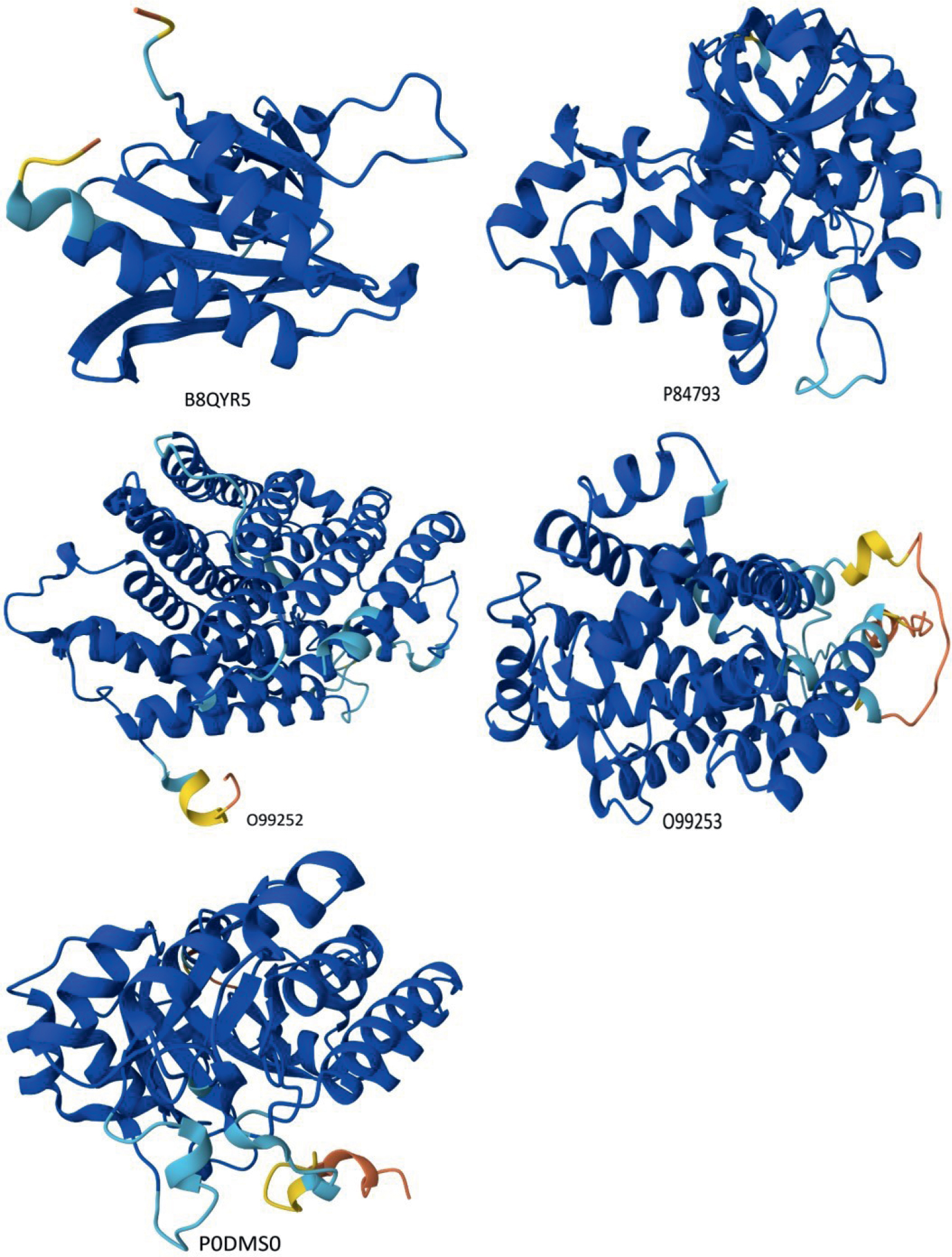
Fig. 1.
Three-dimensional structures of Plasmodium berghei proteins—Profilin (AFDB: B8QYR5), L-lactate dehydrogenase (AFDB: P84793), Cytochrome c oxidase subunit 1 (COI; AFDB: O99252), Cytochrome b (MT-CYB; AFDB: O99253), and Pyridoxal 5’-phosphate synthase subunit Pdx1 (AFDB: PODMsO)—retrieved from the UniProt protein database (https://www.uniprot.org/)
Binding affinity interaction
Molecular docking was performed using the Glide Extra Precision (XP) module of Schrödinger Suite version 16.4. Ligands identified through gas chromatographymass spectrometry (GC-MS) analysis of JRLE were obtained from the PubChem BioAssay database. Ligand structures were prepared using Maestro 12.8 and LigPrep 2.4 tools. The receptor grids for each target protein were generated with a default grid size of 20 Å. Energy minimization of all ligands was conducted using the MacroModel module within the Schrödinger Suite (Schrödinger Release 2023).
Statistical analysis
Data were analyzed using SigmaPlot® version 11.0 (Systat Software, Inc., Chicago, IL, USA). One-way analysis of variance (ANOVA) was performed to compare differences among groups, followed by Tukey’s post hoc test for pairwise comparisons. Results are presented as mean ± standard deviation (SD), with statistical significance considered at p ≤ 0.05.
Ethical Approval and/or Informed Consent
Not applicable.
Results
JRLE exhibited anthelmintic activity comparable to that of the reference drug, Mebendazole, against adult E. fetida worms. Paralysis and death times were recorded, with results presented in Figures 2 and 3, over a 40-minute observation period. No paralysis was observed in the control group treated with distilled water. Among the extract concentrations tested, the highest dose of JRLE (200 mg/ml) induced paralysis most rapidly (8.43 ± 0.21 min) and caused death in the shortest time (10.56 ± 0.78 min) for nearly all worms. In comparison, Mebendazole (10 mg/ml) produced paralysis and death at 12.90 ± 0.21 min and 17.93 ± 1.82 min, respectively. Lower JRLE concentrations also demonstrated significant anthelmintic effects.
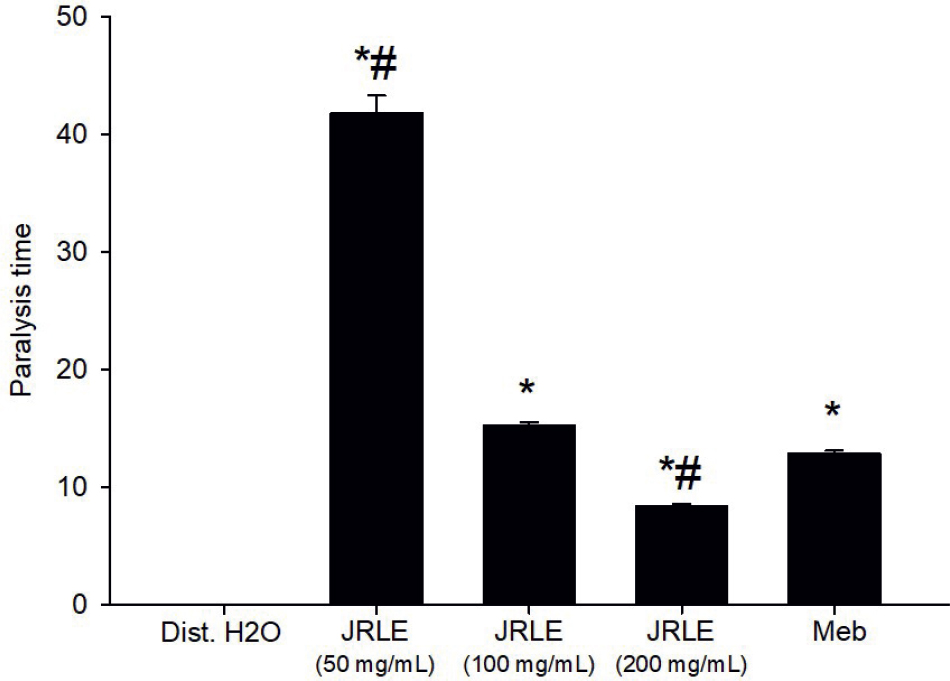
Fig. 2.
Time taken for paralysis of the earthworms, E. fetida, in various treatments. * Significance change with respect to those treated with dist. H2O, #Significance change compared to those treated with mebendazole.
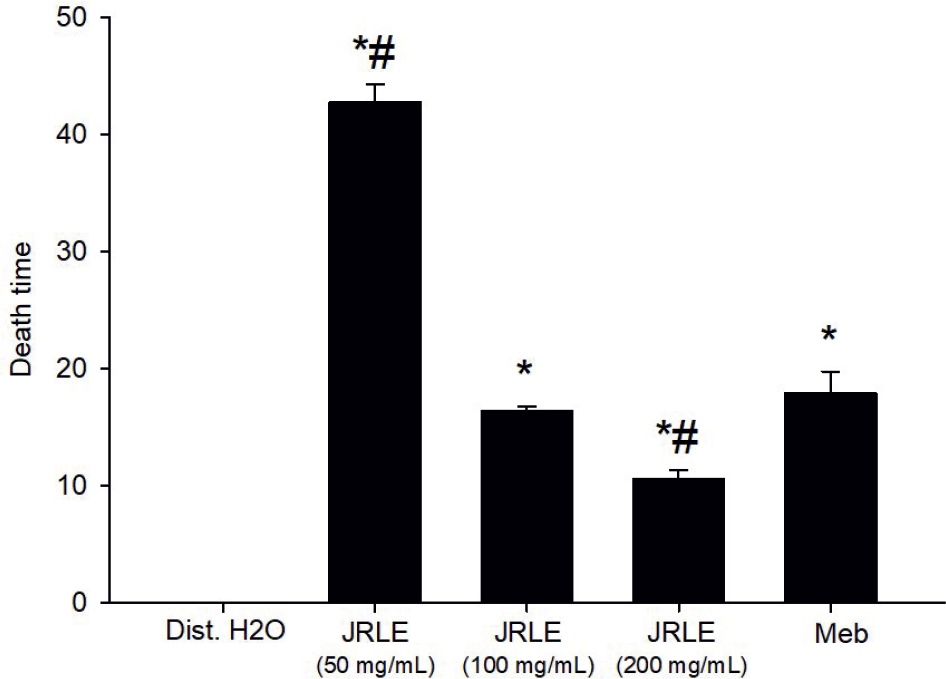
Fig. 3.
Time taken for the Death of the earthworms, E. fetida, in various treatments. * Significance change with respect to those treated with dist. H2O, #Significance change compared to those treated with mebendazole.
Microscopic observations revealed that, in the control group (distilled water), the cuticular and epidermal layers of E. fetida worms appeared intact and continuous, with well-defined epithelial cells and a normal muscular arrangement. No signs of tissue disruption or degeneration were observed, indicating healthy and unaltered worm morphology (Fig. 4A). In contrast, worms exposed to JRLE exhibited moderate histological alterations, including irregular epithelial structures, swelling, and increased cuticle thickness. Some cellular disorganization and vacuolation were evident, suggesting early degenerative changes induced by the extract’s bioactive components (Fig. 4B). Pronounced disruption of the cuticle and epithelial layers was observed in worms treated with Mebendazole, along with severe tissue damage and cellular lysis (Fig. 4C).
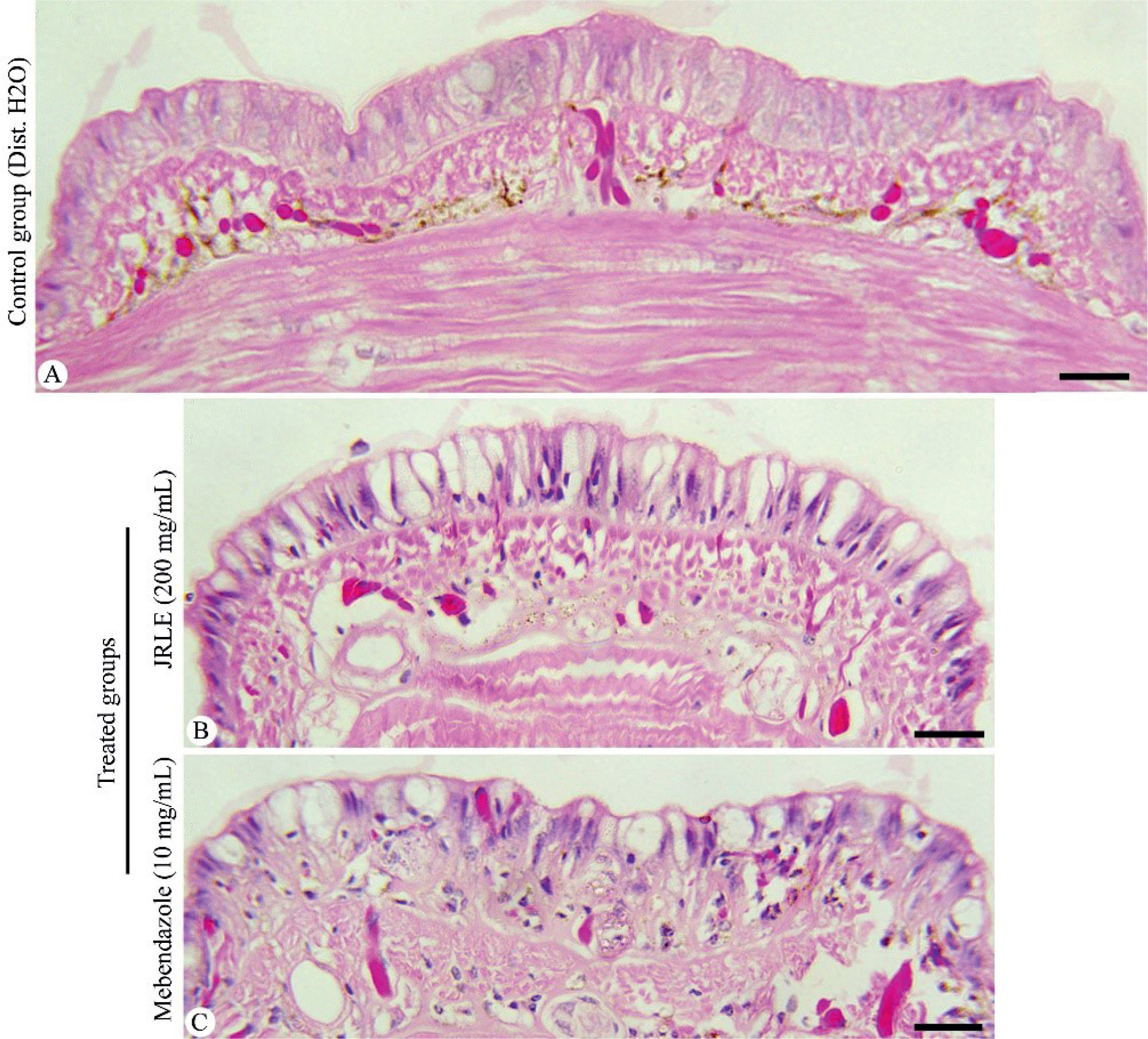
Fig. 4.
Histology of the cuticle of the earthworms, E. fetida, following various treatments. (A) The control group. (B) 200 mg/mL JRLE. (C) 10 mg/ml Mebendazole. Sections were stained with H&E. Scale bar = 10μm.
The molecular docking study of the fifteen tested compounds to different P Berghei proteins indicated that 3-O-Methyl-d-glucose exhibited the highest binding affinity with the protein active sites of Profilin, L-lactate dehydrogenase, and Pyridoxal 5’-phosphate synthase subunit, with docking scores of -6.44, -7.582, and -9.103 kcal/mol, respectively. Whereas, 4H-Pyran-4-one, 2,3-dihydro-3,5-dihydroxy-6-methyl-showed high binding affinity with the protein active site of the previously mentioned proteins, with docking scores equal to -4.494, -5.611, and -7.568 kcal/mol, respectively. In contrast, γ-Sitosterol and Stigmasterol showed higher binding affinity with the protein active site of Cytochrome b, with docking scores equal to -8.392 and -7.766 kcal/mol, respectively. Additionally, Heptanediamide, N, N’-di-benzoyloxy-showed high binding affinity with the protein active site of Cytochrome c oxidase subunit 1, with docking scores equal to -9.799 kcal/mol (Table 1 and Fig. 5a-i).
Table 1.
The docking scores and hydrogen bonds between the top ligands with different proteins.
| Compound name | PubChem Compound CID | Protein | Free energy of binding (Kcal/mol) | Residues involved in bonding | H-bonds distance (Å) | Number of bonds |
|---|---|---|---|---|---|---|
| Profilin | -6.440 | Lys72(2), Thr73, Thr75(2), Asp91 | 2.02,1.79,2.21,2.19,2.09,2.1 | 6H bonds | ||
| 3-O-Methyl-d-glucose | 8973 | L-lactate dehydrogenase | -7.582 | Asn127(2), Arg158, His182, Ser234, Pro235 | 1.67, 2.06, 1.79, 1.97, 1.94, 2.09 2.15, 2.01, 1.81, 1.89, 2.24, | 6H bonds |
| Pyridoxal 5’-phosphate synthase subunit | -9.103 | Asp27,Lys84, Gly156, Gly217, lie218, Phe238, Gly238 | 1.93,2.14 | 7H bonds | ||
| Profilin | -4.494 | Lys72, Asp91,Gly92 | 2.44,2.12,1.9 | 3H bonds | ||
| 4H-Pyran-4-one, 2,3-dihydro-3,5-dihydroxy-6-methyl- | 119838 | L-lactate dehydrogenase | -5.611 | Arg95+(S),His182,Arg158+(S) | 2.4,1.92,2.25 | 3H bonds +2 (S) |
| Pyridoxal 5’-phosphate synthase | -7.568 | Gly156, Gly217, Ser239 | 2.08,1.82,1.94 | 3H bonds | ||
| γ-Sitosterol | 457801 | - Cytochrome b | -8.392 | - Phe284 | 2.66 | IHbond |
| St¡gmasterol | 5280794 | -7.766 | 1.84 | IHbond | ||
| Heptanediamide, N,N’-dibenzoyloxy- | 569848 | Cytochrome c oxidase subunit 1 | -9.799 | Trp131(2), His248, His382, Arg446(2), Tyr250(P) | 1.82,2.47,2.21,1.98,2.06,2.71 | 6H Bond +1 (P) |
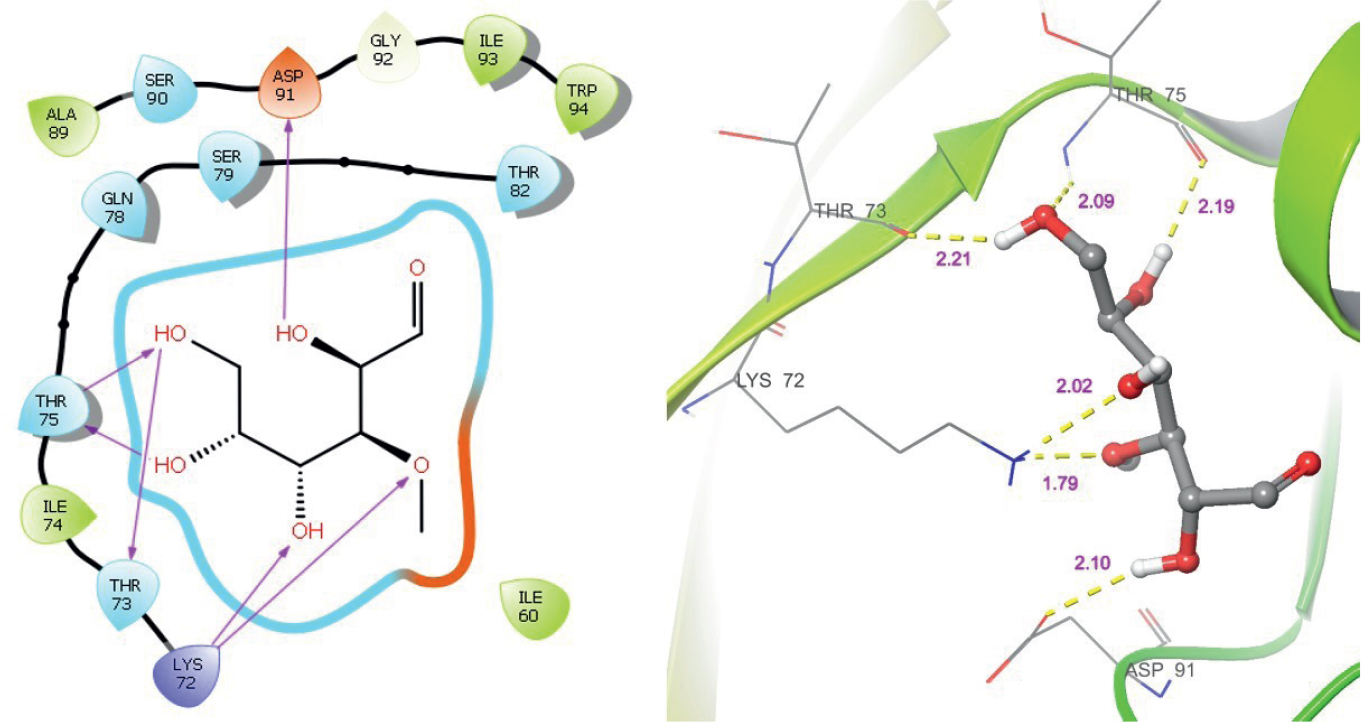
Fig. 5a.
The 2D and 3D interaction between Profilin and 3-O-Methyl-d-glucose. All hydrogen bonds are represented as yellow dashes, aromatic hydrogen bonds represented as cyan blue dashes, and pi-pi stacking represented as green dashes.
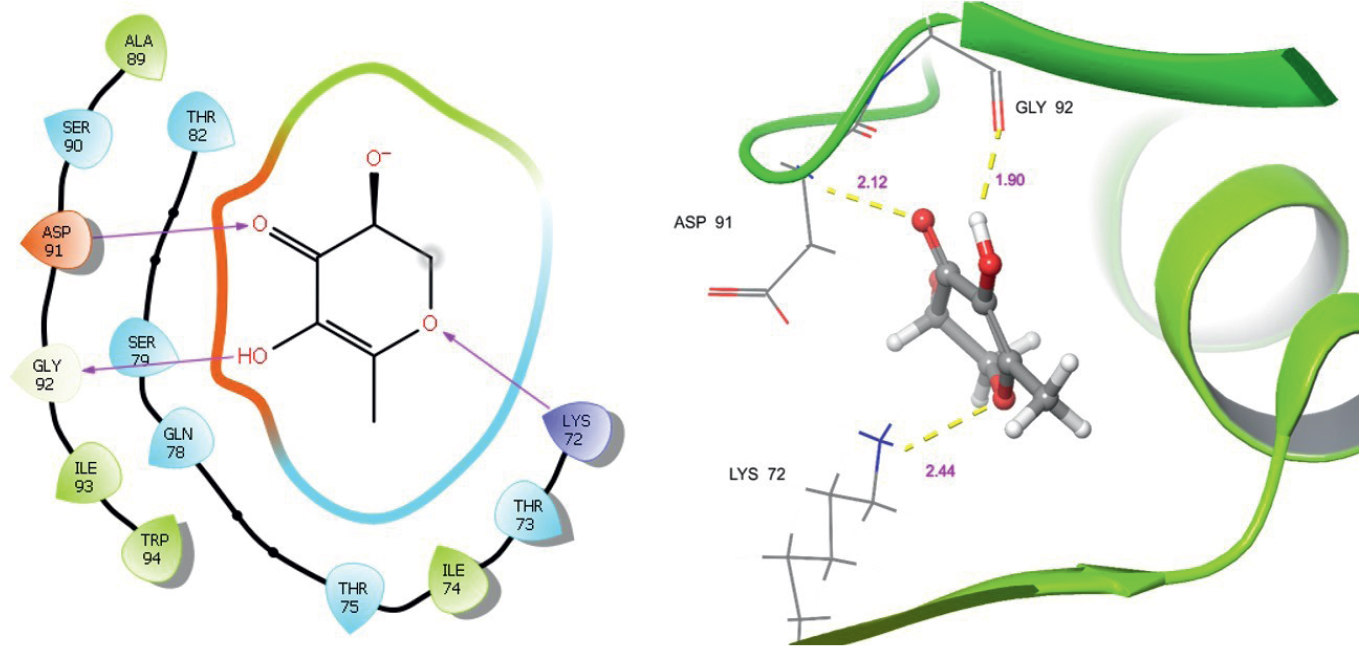
Fig. 5b.
The 2D and 3D interaction between Profilin and 4H-Pyran-4-one, 2,3-dihydro-3,5-dihydroxy-6-methyk All hydrogen bonds are represented as yellow dashes, aromatic hydrogen bonds represented as cyan blue dashes, and pi-pi stacking represented as green dashes.
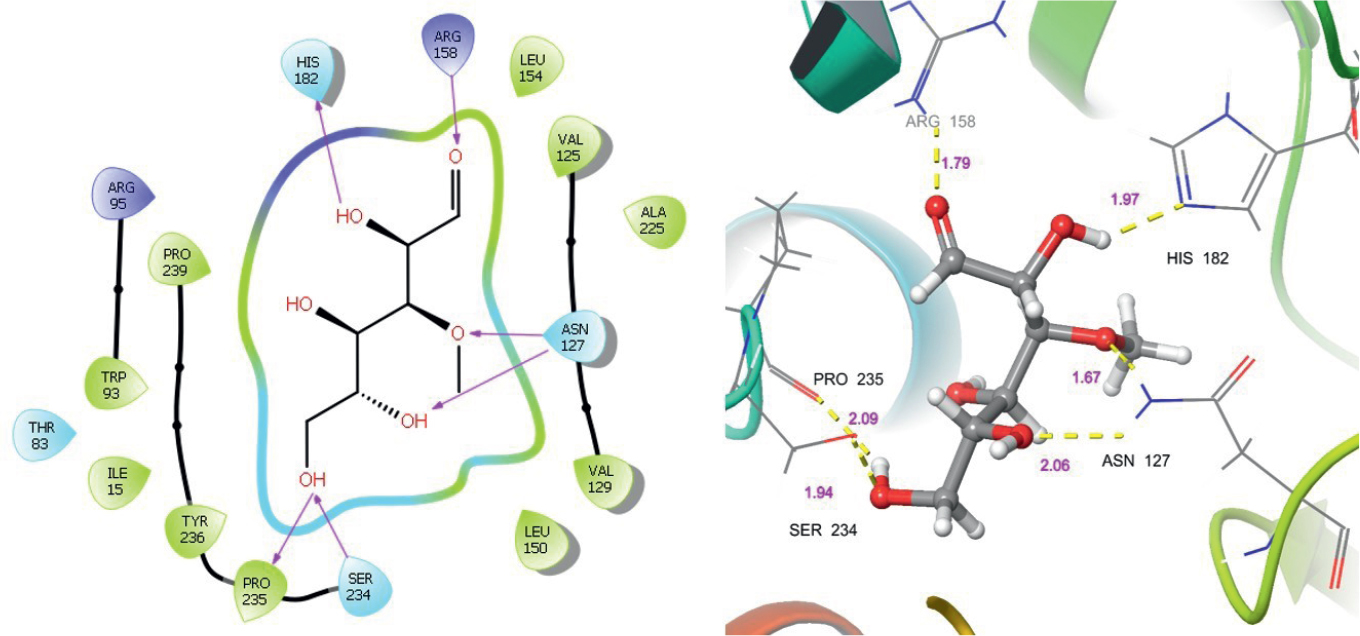
Fig. 5c.
The 2D and 3D interaction between L-lactate dehydrogenase and 3-O-Methyl-d-glucose. All hydrogen bonds are represented as yellow dashes, aromatic hydrogen bonds represented as cyan blue dashes, and pi-pi stacking represented as green dashes.
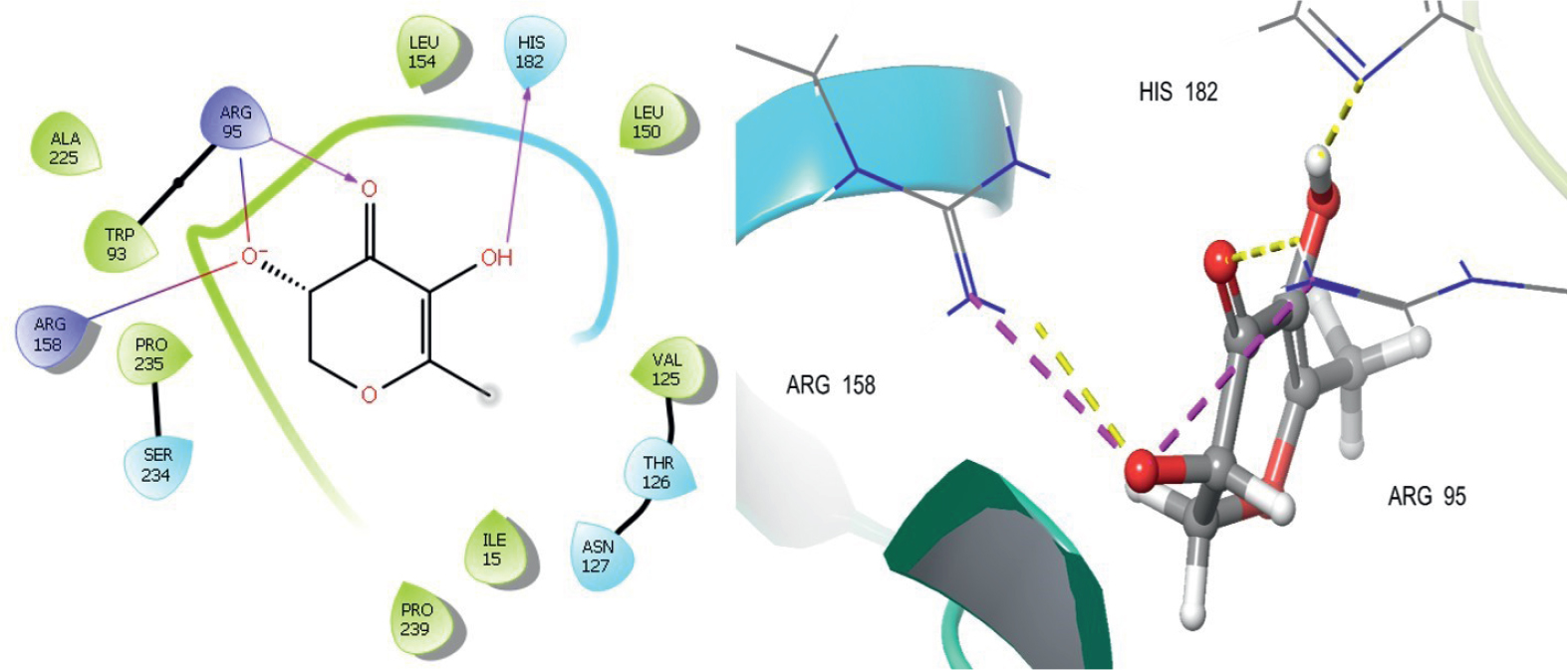
Fig. 5d.
The 2D and 3D interaction between L-lactate dehydrogenase and 4H-Pyran-4-one, 2,3-dihydro-3,5-dihydroxy-6-methyl-. All hydrogen bonds are represented as yellow dashes, aromatic hydrogen bonds represented as cyan blue dashes, and pi-pi stacking represented as green dashes.
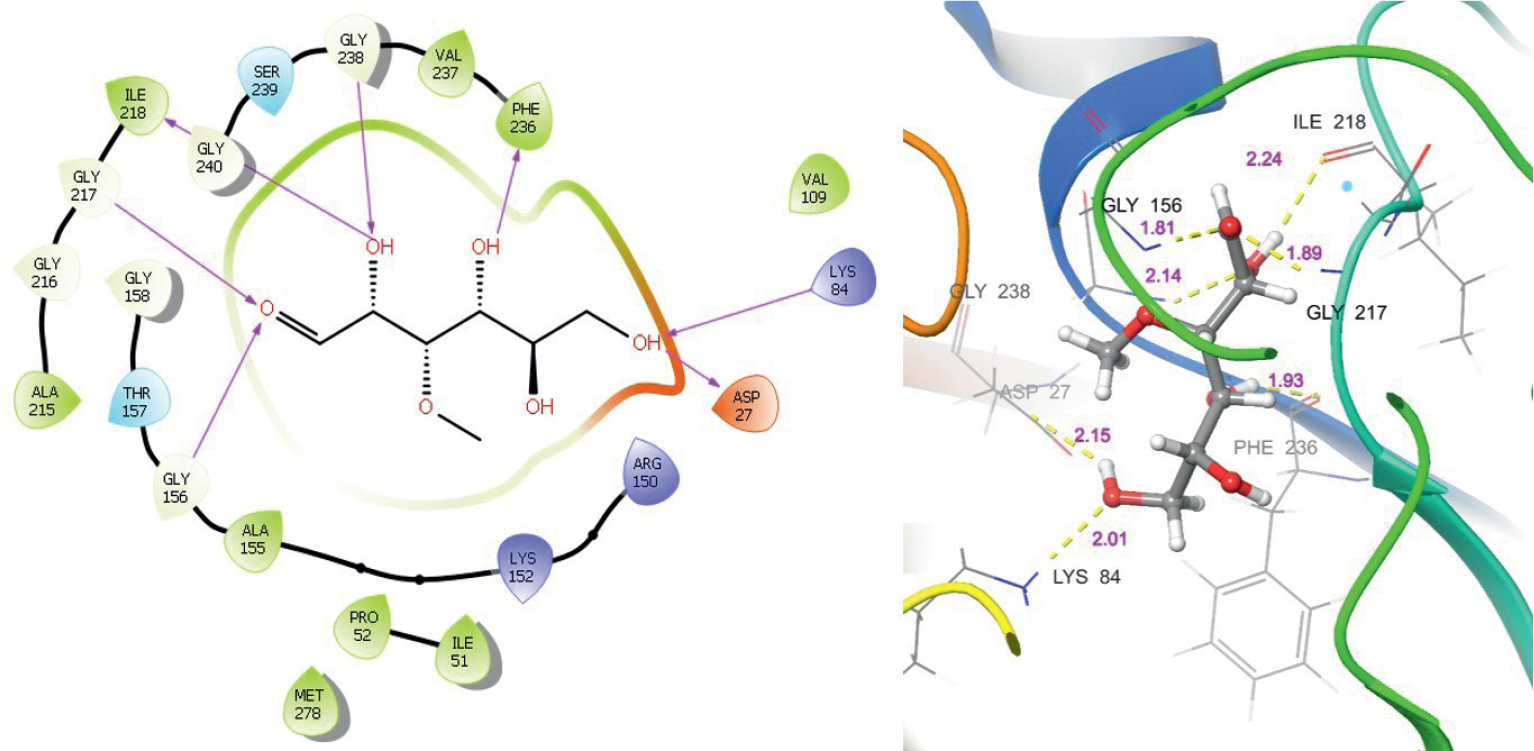
Fig. 5e.
The 2D and 3D interaction between Pyridoxal 5’-phosphate synthase and 3-O-Methyl-d-glucose. All hydrogen bonds are represented as yellow dashes, aromatic hydrogen bonds represented as cyan blue dashes, and pi-pi stacking represented as green dashes.
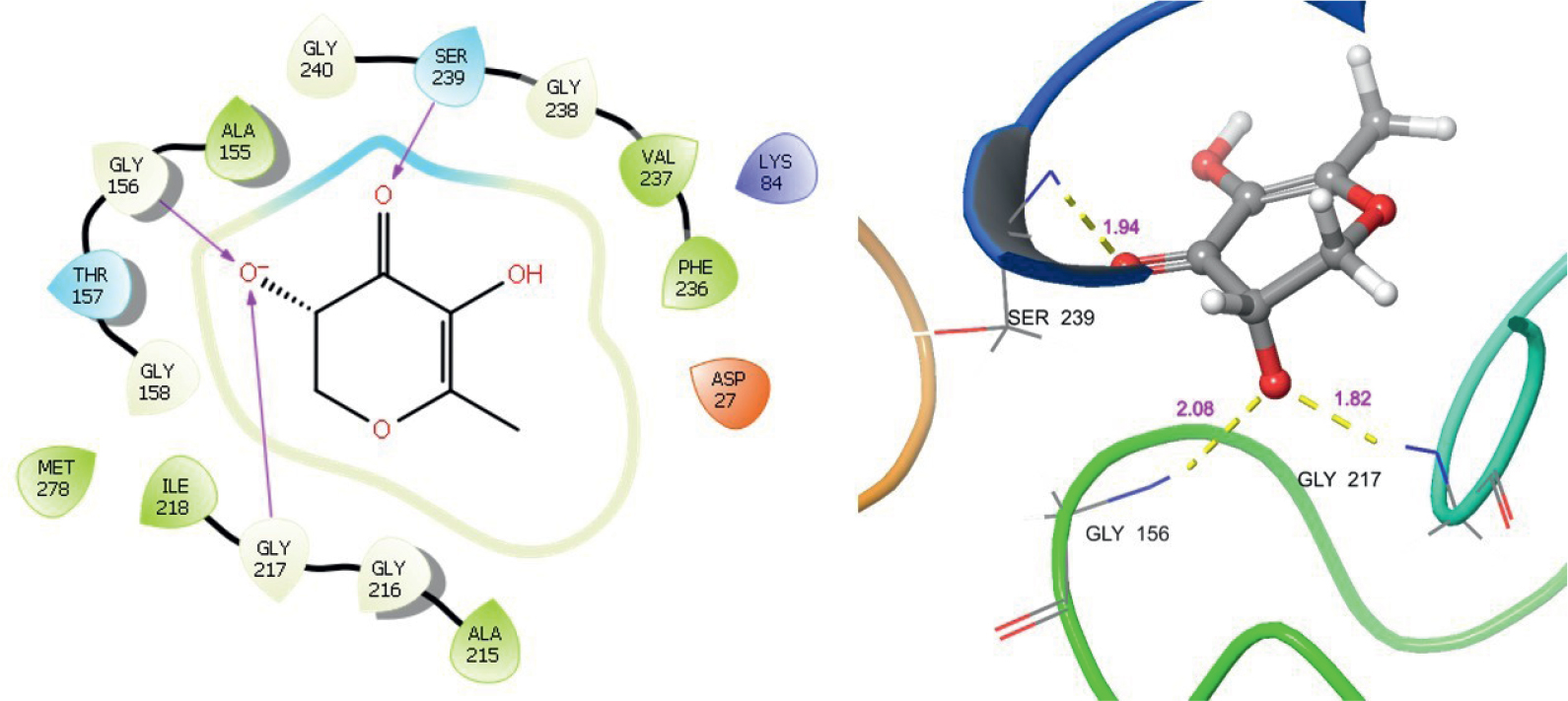
Fig. 5f.
The 2D and 3D interaction between Pyridoxal 5’-phosphate synthase and 4H-Pyran-4-one, 2,3-dihydro-3,5-dihydroxy-6-methyl-. All hydrogen bonds are represented as yellow dashes, aromatic hydrogen bonds represented as cyan blue dashes, and pi-pi stacking represented as green dashes.
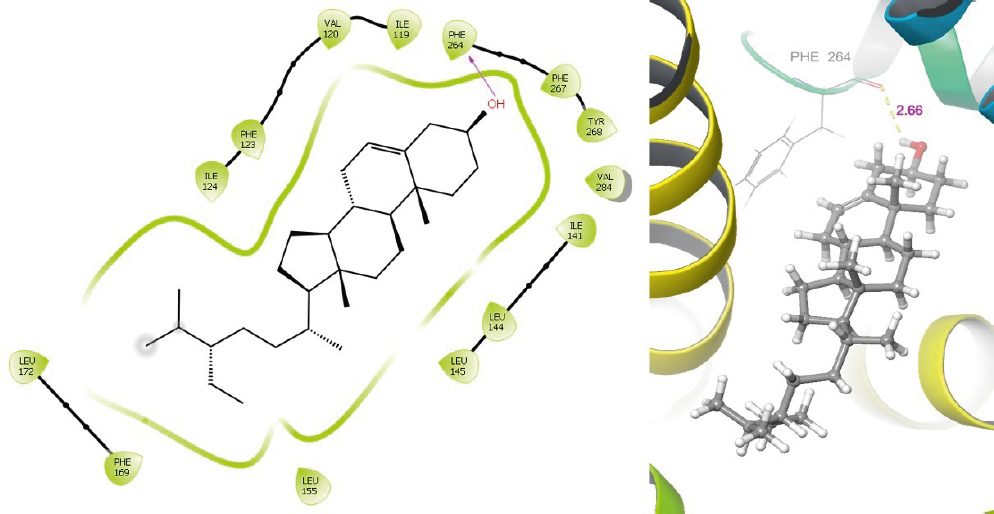
Fig. 5g.
The 2D and 3D interaction between Cytochrome b synthase and γ-Sitosterol. All hydrogen bonds are represented as yellow dashes, aromatic hydrogen bonds represented as cyan blue dashes, and pi-pi stacking represented as green dashes.
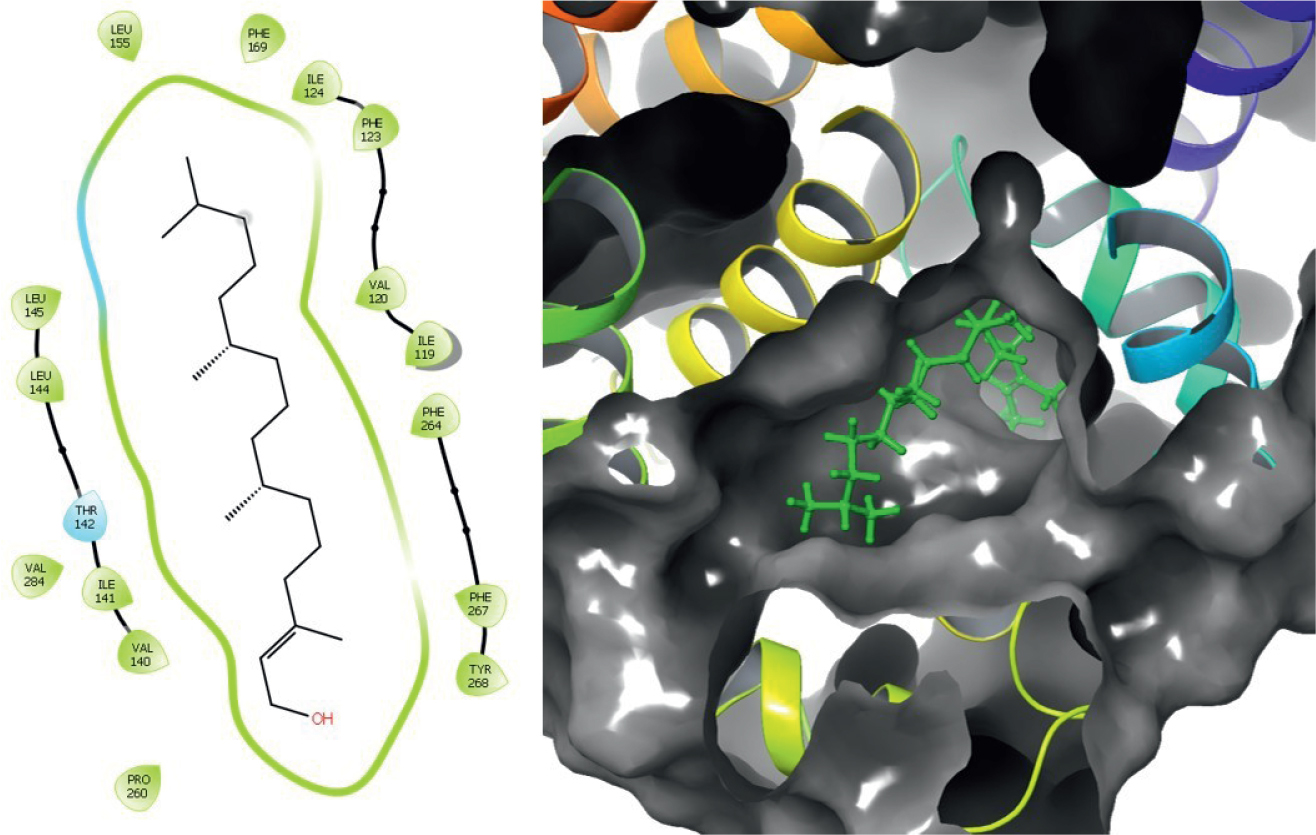
Fig. 5h.
The 2D and 3D interaction between Cytochrome b synthase and Stigmasterol. There is no interaction represented in 2D as the ligand has a good confirmation inside the receptor grid, which is reflected in a high docking score. All hydrogen bonds are represented as yellow dashes, aromatic hydrogen bonds represented as cyan blue dashes, and pi-pi stacking represented as green dashes.
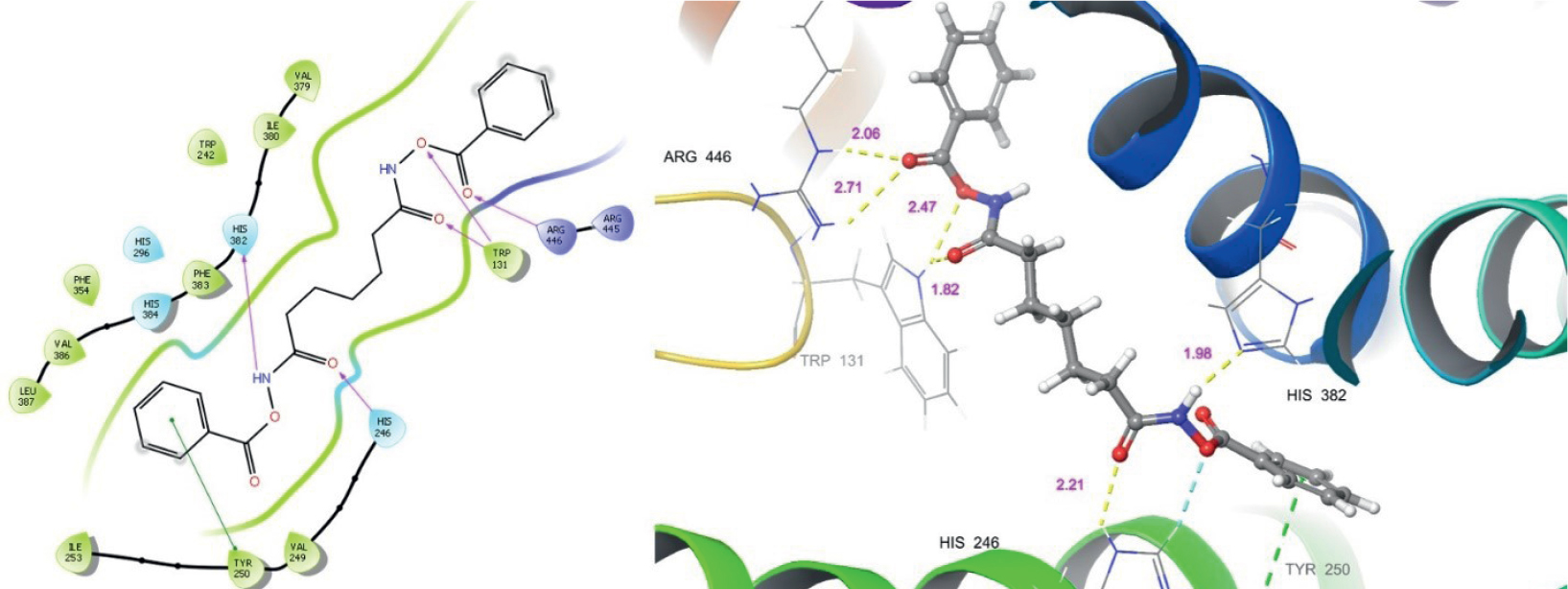
Fig. 5i.
The 2D and 3D interaction between Cytochrome c oxidase subunit and Heptanediamide, N,N’-di-benzoyloxy-. All hydrogen bonds are represented as yellow dashes, aromatic hydrogen bonds represented as cyan blue dashes, and pi-pi stacking represented as green dashes.
The hydrogen (H) bonding interactions in the best docking are also described in Table 1 and Figure 5a-i. The results showed that the maximum total number of hydrogen (H) bonds between tested compounds and the Pyridoxal 5’-phosphate synthase subunit protein active site was observed with 3-O-Methyl-d-glucose, which forms 7 H-bonds, followed by interaction with Profilin and L-lactate dehydrogenase proteins active site, which forms 6 H-bonds for each. Whereas, 4 H-Pyran-4-one, 2,3-dihydro-3,5-dihydroxy-6-methylreacts with L-lactate dehydrogenase protein active site to form 3 H-bonds and 2 salt bridges, followed by Profilin and Pyridoxal 5’-phosphate synthase subunit to form 3 H-bonds for each of them. While Heptanediamide, N, N’-di-benzoyloxyinteracts with Cytochrome c oxidase subunit 1 and forms 6 H-bonds and pi-pi stacking, followed by the lower number of H-bonds between tested compounds, interaction of both Stigmasterol and γ-Sitosterol with Cytochrome b protein active site to form 1 H-bond for each.
Discussion
Parasitic infections, particularly helminthiasis, cause significant health and economic burdens in both humans and livestock. Conventional anthelmintic therapies have shown declining effectiveness due to adverse side effects and the emergence of drug-resistant parasite strains (Chartier et al., 2001). These challenges have prompted increasing interest in plant-derived alternatives, which are generally safer, more accessible, and less prone to resistance development (Coles, 1997). Medicinal plants provide a rich source of bioactive compounds with antiparasitic potential (Enechi et al., 2019). In particular, J. regia leaves contain diverse phytochemicals with demonstrated antioxidant, antimicrobial, anti-inflammatory, and gastroprotective activities (Dabburu et al., 2012; Zakavi et al., 2013; Soto-Maldonado et al., 2019; Igbayilola et al., 2022; Elouafy et al., 2023; Ara et al., 2023). Recent studies have highlighted natural compounds as promising candidates for the development of novel anthelmintic agents (Abu Hawsah et al., 2023; Al-Shaebi et al., 2023, 2025), providing a rationale for investigating the pharmacological potential of J. regia leaf extracts in the present study.
Because earthworms and certain intestinal roundworms that infect humans share physiological similarities, E. fetida is widely used as a model organism to evaluate anthelmintic activity (Al-Shaebi et al., 2025). The worm’s tegument serves as a critical protective barrier, maintaining moisture balance and providing defense against external injury. In the present study, the anthelmintic efficacy of J. regia leaf extract (JRLE) was compared with that of the standard drug mebendazole. Microscopic analysis revealed that JRLE induced morphological alterations and structural damage in E. fetida similar to those caused by mebendazole. These findings align with those of Das et al. (2011), who observed comparable effects of walnut leaf extract on adult Indian earthworms (Pheretima posthuma). Quantitative microscopic assessment showed a significant reduction in cuticle thickness and body segment length in worms exposed to varying concentrations of JRLE relative to mebendazole. Such effects may be attributed to the pharmacokinetic properties of both the extract and the reference drug, which influence drug concentration at the parasite site through modulation of metabolic pathways, tissue distribution, excretion, and absorption time (Codina et al., 2025). Consistent results were also reported by Khalil et al. (2022), who demonstrated the anti-schistosomal potential of the walnut-derived compound juglone, as evidenced by reductions in worm burden and egg count. Collectively, these findings reinforce the enduring value of natural products as a foundation for novel drug discovery.
The current findings indicate that the extract exerts a rapid paralytic and lethal effect on worms, with the highest tested concentration (200 mg/ml) inducing paralysis and death at 8.43 ± 0.21 min and 10.56 ± 0.78 min, respectively, demonstrating greater potency than mebendazole. This enhanced activity may be attributed to the diverse bioactive constituents of JRLE, including phenolic acids, flavonoids, tannins, saponins, and sterols, which are known for their broad therapeutic properties. Available evidence suggests that the external surface of helminths serves as the primary site for the absorption of various chemical compounds, including anthelmintic agents. For these compounds to exert their effects, they must traverse cell membranes to reach specific receptor sites within the parasite’s biophase (Mottier et al., 2006). Similarly, Kelly et al. (1975) reported that particle size influences the anthelmintic efficacy of mebendazole against Nippostrongylus brasiliensis in rats.
Molecular docking is an essential computational approach used in computer-aided drug design and structural molecular biology to predict how two molecules—such as a compound and a target enzyme—interact in three-dimensional space (Soureshjani et al., 2015). This technique enables the modeling of interactions between small molecules, such as mebendazole, and the parasite target proteins (Dong et al., 2025). In the present study, molecular docking analysis offered insights into how bioactive constituents of walnut extract might interact with the target proteins of P berghei, indicating possible therapeutic effects that warrant further experimental validation. Thus, molecular docking provides valuable insights for the discovery of novel natural antiplasmodial agents by accelerating drug development and elucidating protein-ligand interactions and structural dynamics (Suh et al., 2021).
In this investigation, identifying the active phytochemicals in JRLE and their strong binding affinities with P berghei target proteins provided significant insights into their potential therapeutic roles. Previous studies by Guleria et al. (2021), Owoloye et al. (2022), Nwonuma et al. (2023), and Lobato-Tapia et al. (2023) have emphasized that docking simulations can effectively predict binding affinities between small molecules and target proteins, facilitating antiplasmodial drug design. The advancement of computational screening methods—integrating molecular docking, molecular dynamics simulations, and various molecular property analyses— has greatly simplified the discovery of new therapeutic compounds (Evbuomwan et al., 2024; Murugesan and Kaleeswaran, 2024). Collectively, the current results suggest that JRLE phytochemicals may have potential as candidate compounds for the development of safe and effective natural anthelmintic and antiplasmodial agents. Nevertheless, further in vitro and in vivo studies are essential to validate these computational predictions and to elucidate the underlying molecular mechanisms.
Conclusion
The present study demonstrates that J. regia leaf extract (JRLE) exhibits significant anthelmintic activity against E. fetida, with the highest tested concentration (200 mg/ml) inducing rapid paralysis and death, demonstrating shorter paralysis and death times compared with the standard drug Mebendazole under the tested conditions. Histological analyses revealed that JRLE induced epithelial disorganization, swelling, vacuolation, and irregularities in the cuticle and epidermal layers, reflecting the bioactivity of its phytochemical constituents. Complementary in silico docking studies indicated strong binding affinities, based on docking scores, of JRLE-derived compounds with key P. berghei target proteins, highlighting their potential therapeutic relevance in antimalarial drug discovery. Collectively, these findings highlight the potential of JRLE as a natural anthelmintic and antiplasmodial agent, supporting the broader utility of plant-derived bioactive compounds. Further in vitro and in vivo studies are warranted to validate these outcomes and explore their translational potential.
Acknowledgments
This study was supported by the Ongoing Research Funding Program (ORF-2026-25), King Saud University, Riyadh, Saudi Arabia; and Princess Nourah bint Abdulrahman University Researchers Supporting Project number (PNURSP2026R931), Princess Nourah bint Abdulrahman University, Riyadh, Saudi Arabia.
Notes
[2] Conflicts of interest Conflict of Interest Statement
The author(s) declare that they have no conflict of interest regarding the content of this article.
[3] Data Availability Statement
This published article includes all the datasets generated or analyzed during this study.