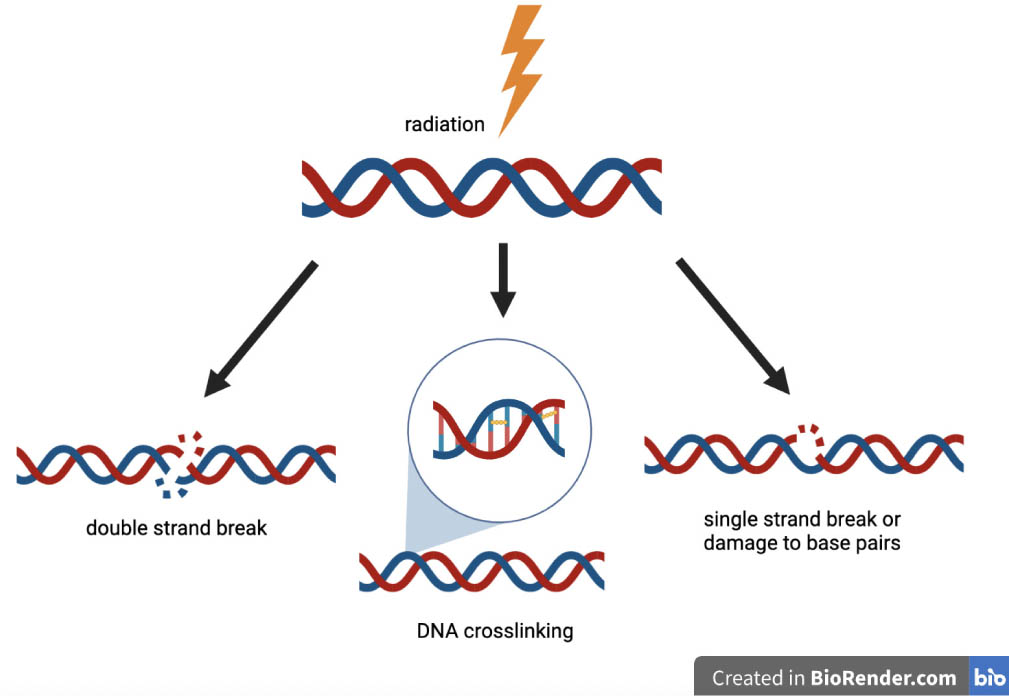
Figure 1.
Effects of Radiation on DNA Structure. Radiation-induced damage to DNA manifests in the form of various classes of damage. Double-strand breaks are the primary form of damage that radiation induces upon DNA structure. Secondary effects include the generation of reactive oxygen species that oxidize proteins and lipids and the introduction of single-stranded DNA breaks and abasic sites (base pair damage) (Heiney, 2016). Radiation can also cause cross-linking between adjacent base pairs through the introduction of bulky photoproducts — cyclobutane pyrimidine dimers and (6-4) pyrimidine-pyrimidone photoproducts.
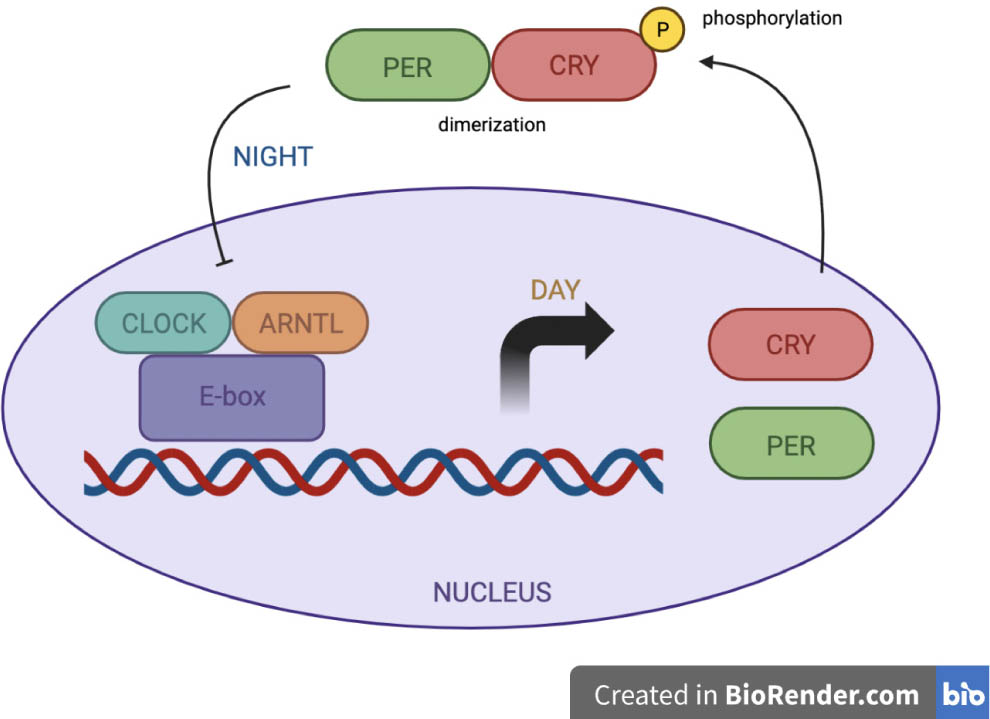
Figure 2.
Primary Regulatory Loop of the Circadian Clock. The primary regulatory loop of the circadian rhythm is mediated by the transcription of Pers and Crys, facilitated by the binding of the CLOCK-ARNTL heterodimer complex to the enhancer region upstream of the encoded clock-controlled genes. Pers and Crys in turn repress their own expression via dimerization into a protein complex and phosphorylation by kinases (e.g. CSNK1e), which trigger the degradation of the individual transcription products, unless they have successfully dimerized.
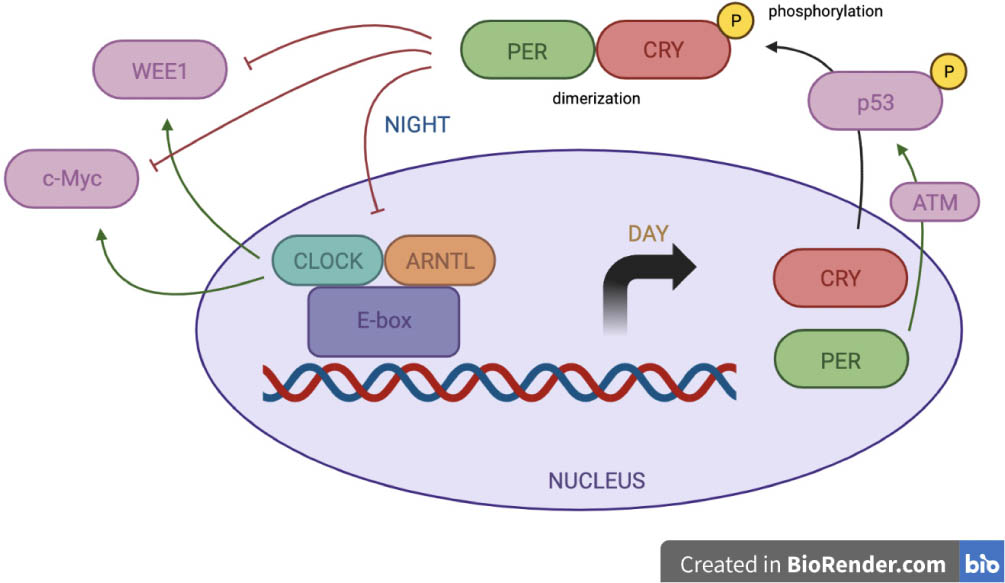
Figure 3.
Transcriptional Targets of the Core Clock Genes. WEE1 kinase, which acts at the G2/M checkpoint, is transcriptionally activated by CLOCK-ARNTL and repressed by PERs and CRYs. Similarly, the expression of p21 (CDKN1α), which inhibits the entry of cells from G1 into S phase, is regulated by ARNTL and PER1 via P53-independent mechanisms, through c-MYC stabilization (a group of protein-coding transcription factors whose effects extend to various biological processes, including cell cycle progression and metabolic control) (Ashok Kumar et al., 2019). In addition, PER1 promotes cell cycle arrest during DNA damage by interacting with the serine-threonine protein kinase ataxia-telangiectasia mutated (ATM), which induces phosphorylation of checkpoint kinase 2 and activation of p53. PER2 also helps to stabilize p53 by modulating its ubiquitination through E3 ubiquitin-protein ligase mouse double minute 2 homolog (MDM2) (Eckel-Mahan and Sassone-Corsi, 2009; Ashok Kumar et al., 2019).
Table 1.
GLDS-248 Experimental Groups.
| Live Animal Return (LAR or FLT LAR) | ISS Terminal (ISS-T or FLT ISS-T) |
|---|---|
| Returned to Earth and euthanized after 29 days on the ISS. | Euthanized on the ISS Terminal after 50 or more days on the ISS. |
| LAR Baseline | ISS-T Baseline |
| 36-week-old mice were euthanized to emulate data of the mice before spaceflight. | 36-week-old mice were euthanized to emulate data of the mice before spaceflight. |
| GC LAR | GC ISS-T |
| Housed on Earth and euthanized at the same time as LAR mice. | Housed on Earth and euthanized at the same time as ISS-T mice. |
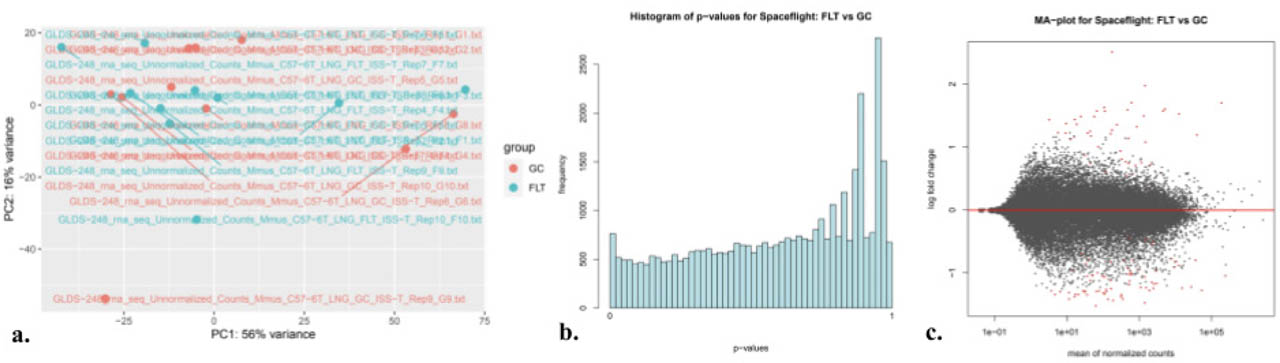
Figure 4.
FLT ISS-T vs. GC ISS-T Quality Control Plots. In the PCA plot, there exists a 56% variance between the FLT ISS-T and GC ISS-T groups as opposed to the 16% variance within the respective groups. Genes of high statistical significance from GLDS-248 are represented via the histogram bars closest to the origin and the red dots in the MA plot.
Table 2.
Differentially Expressed Genes of Interest.
| Group Comparison | Gene ID | Gene Name | Log2 FC | Adj p-value |
|---|---|---|---|---|
| GC ISS-T vs FLT ISS-T | Arntl | Aryl hydrocarbon receptor nuclear translocator-like | 1.798 | 1.1E-08 |
| Arsj | Arylsulfatase J | 1.078 | 2.5E-05 | |
| Bhlhe41 | Basic helix-loop-helix family, member e41 | −1.323 | 5.5E-08 | |
| Ccnjl | Cyclin J-like | 1.714 | 2.1E-06 | |
| Cdkn1a | Cyclin-dependent kinase inhibitor 1A (P21) | 1.285 | 1.5E-02 | |
| Cyp26b1 | Cytochrome P450, family 26, subfamily b, polypeptide 1 | 2.283 | 4.4E-12 | |
| Fam124b | Family with sequence similarity 124, member B | 2.967 | 3.4E-18 | |
| Hlf | Hepatic leukemia factor | −1.436 | 1.3E-05 | |
| Npas2 | Neuronal PAS domain protein 2 | 1.856 | 2.3E-06 | |
| Per2 | Period circadian clock 2 | −1.483 | 1.4E-03 | |
| Per3 | Period circadian clock 3 | −1.263 | 1.8E-07 |
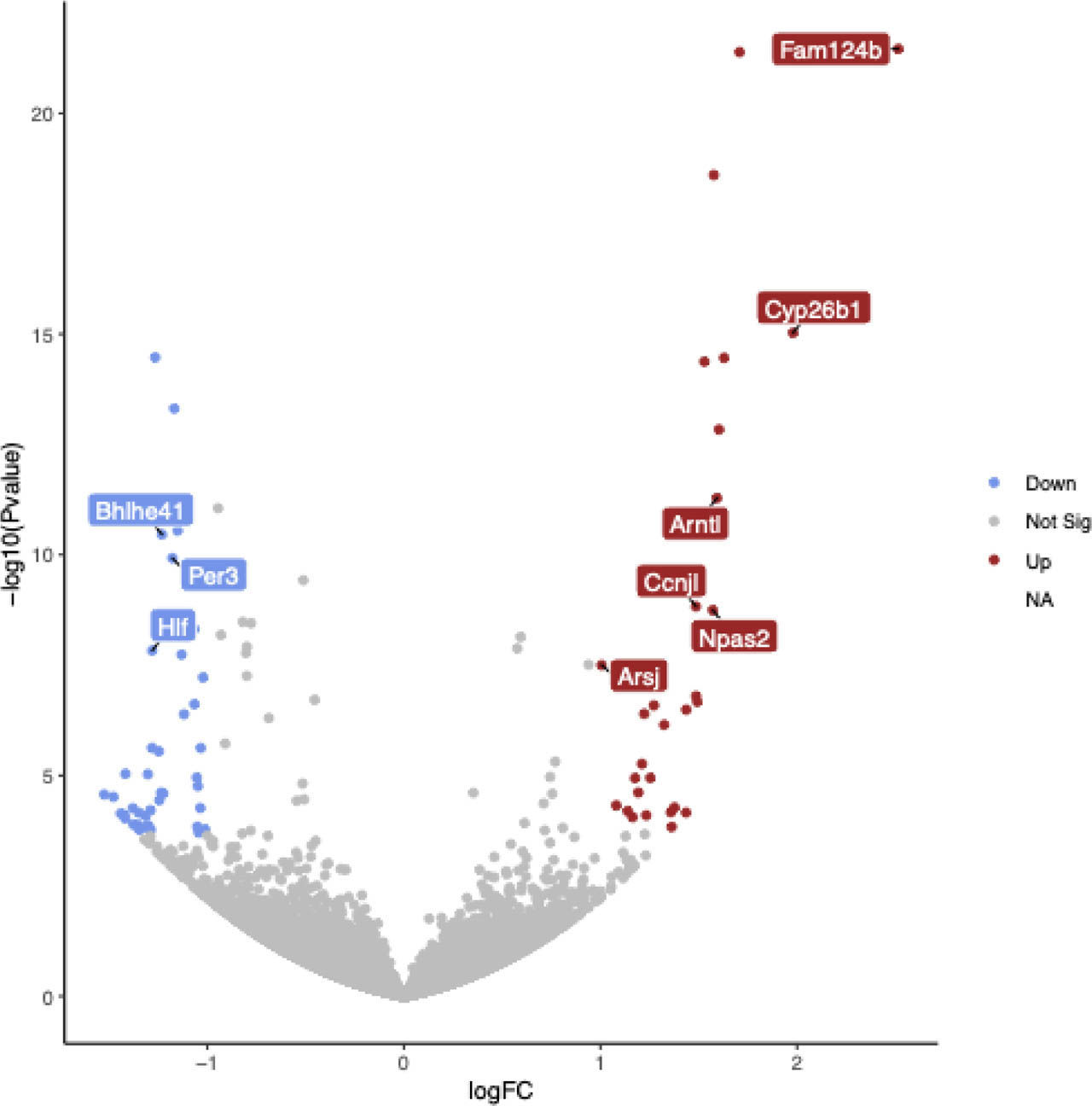
Figure 5.
Volcano Plot of FLT ISS-T Mice. Differentially expressed genes with high statistical (adjusted p-value < 0.05) and biological significance ( | log2FC | > 1) are labeled and colored in the volcano plot above. Downregulated genes are colored blue, upregulated genes are colored red, and genes that did not pass either significance threshold (biological or statistical) are grayed out.
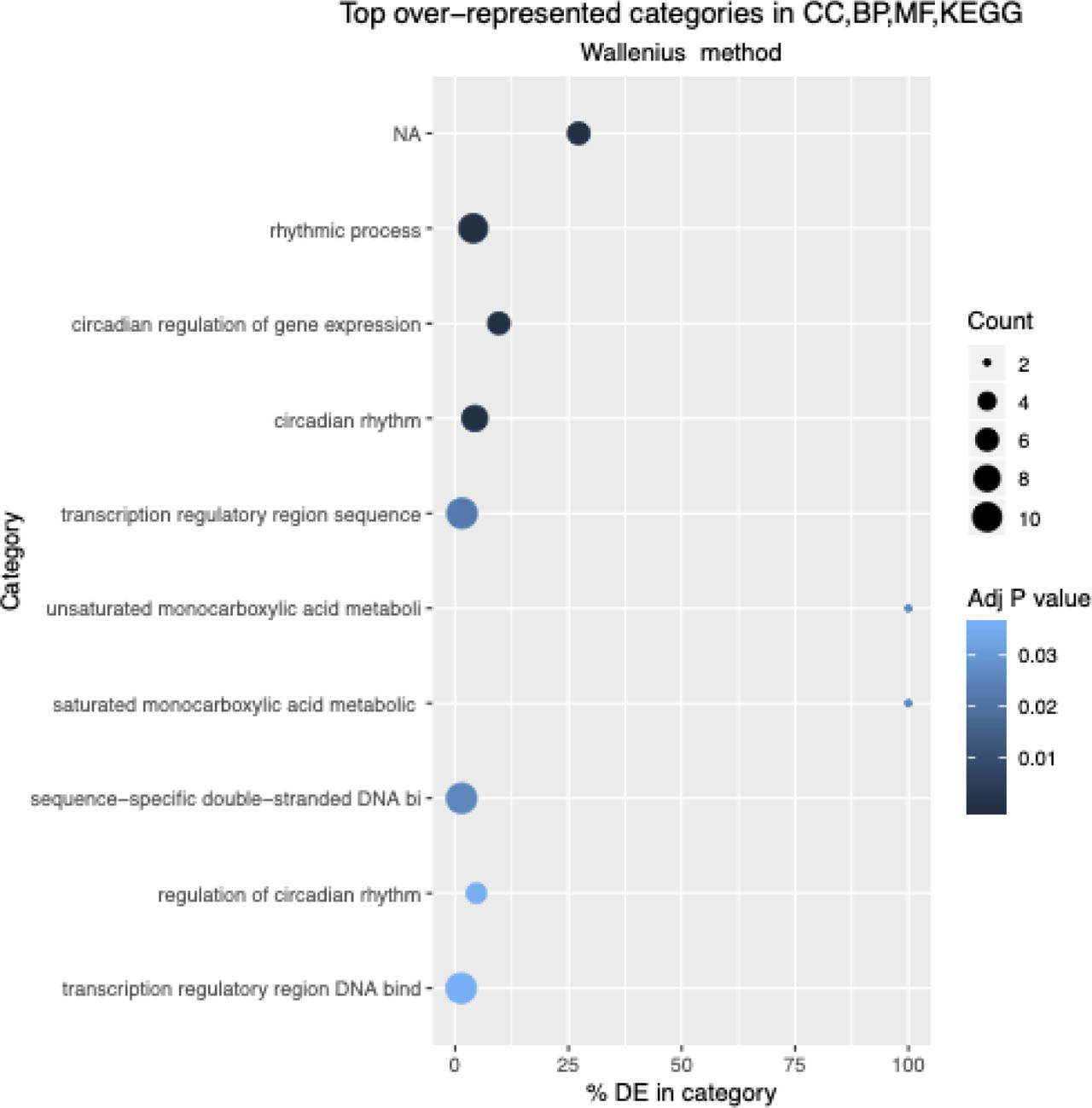
Figure 6.
goseq Enrichment Plot. The Gene Ontology plot above depicts the major pathways mapped to the set of significant genes. A bubble that is darker blue in color is of higher significance (and thus, a lower adjusted p-value), and larger bubble sizes indicate a larger number of genes that fall within the listed category; in addition, the x-axis maps the percentage of differential expression contained within the category. This plot identifies a considerable number of genes that are related to the circadian rhythm and its regulation, as shown by large bubble sizes — albeit a smaller-fold change of differential gene expression.
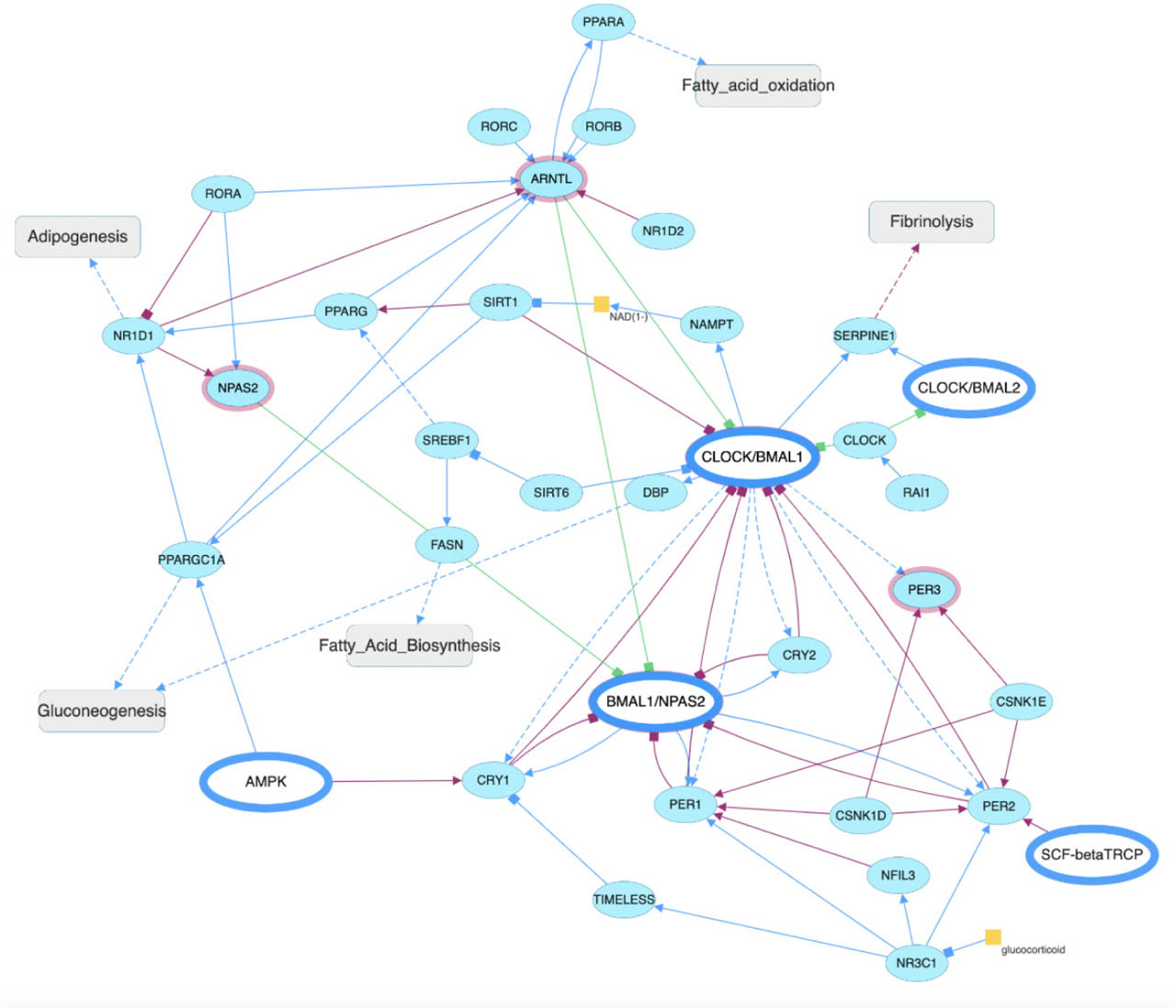
Figure 7.
Major Gene Pathways. A common theme in pathway analyses was the inclusion of the top differentially expressed genes (circled in red) within core clock pathways or circadian-rhythm-affiliated pathways (with key circadian identifiers circled in blue). Circadian regulation and control by key genes such as ARNTL, NPAS2, and PER3 cascade into downstream pathways such as fibrinolysis, fatty acid oxidation, fatty acid biosynthesis, gluconeogenesis, and adipogenesis, translating to body-wide effects and imprints on homeostasis. Circadian disruption may lead to eventual dysfunction of these related downstream pathways that are key to general health.