Introduction
Lung cancer, characterized by the uncontrollable growth of pulmonary cells, remains one of the most prevalent forms of cancer developed worldwide (Mithoowani and Febbraro, 2022). Its ubiquity can be attributed to many risk factors, including smoking, exposure to secondhand smoke, radiation, workplace carcinogens, and a family history of the disease. The most common form of lung cancer is non-small-cell lung cancer (NSCLC), contributing to an estimated 80% to 85% of all lung cancers. However, its counterpart, small cell lung cancer (SCLC) is almost exclusively found in heavy smokers (Rudin et al., 2021). NSCLC, as well as cancer itself, is traced back to acquired and germline-based (inherited) mutations. Acquired mutations, of special focus in this paper, occur from damage to a single cell, which then divides in multiple cycles to initiate tumor growth. Radiation, of particular interest in the context of spaceflight, is among the factors that give rise to such mutations (Guo et al., 2022).
In the context of spaceflight, elevated radiation, spanning between 50 to 2,000 milliSieverts (mSv) in a single space visit as reported by NASA (in comparison to the 6.2 annual mSv ambient dosage) (Cucinotta, 2014), has been postulated to increase cancer risk in astronauts. The risk of cancer caused by ionizing radiation has been well documented at more than 12 tissue sites, including the lungs, at radiation doses of 100 mSv and above (Cucinotta, 2014). A 2019 study examined data from all NASA astronauts who had flown in space from 1959 to 2018, and all cosmonauts from 1961 to 2017, to investigate cancer-related mortalities. The study period recorded 15/53 NASA astronaut deaths and 10/36 cosmonaut deaths attributed to causes related to cancer, which represents almost a third of both surveyed groups and is significantly higher than the annual rate found in the general population (~0.1441%), as of the last 20 years (Cucinotta, 2014). In contemporary ground-based studies of radiation-exposed populations (particularly at the sites of Chernobyl, Hiroshima, and Nagasaki), leukemias, lymphomas, and tumors of the lung, breast, stomach, colon, bladder, and liver, provide strong evidence for radiation-induced cancer morbidity (Cucinotta, 2014). Such studies have contributed to hypotheses that cancers observed in astronaut populations may rise from increased radiation exposure during spaceflight. These studies are especially important in the era of beyond LEO explorations, especially as galactic cosmic radiation poses a significant danger to astronaut health during missions to Mars. Differential gene expression has been documented in the lungs of rodents exposed to spaceflight (Gridley et al., 2015), which may be a multi-factor response to spaceflight-relevant stressors. Though physiological changes to the lungs do occur during spaceflight in the form of reduced distortion and recoil, decreased abdominal girth, and augmented abdominal contribution to tidal volume during resting breathing, there does not appear to be alterations in the temporal pattern of breathing — as the lungs do not undergo adaptive structural changes in microgravity conditions (Prisk, 2014). In contrast, the effects that space radiation imposes on the genetic landscape of mammalian cells include DNA damage, through the formation of adjacent bonds between cytosine and thymine residues that introduce two types of bulky photoproducts (cyclobutane pyrimidine dimers and (6-4) pyrimidine-pyrimidone photoproducts), as well as strand- and base-pair-specific damage (Heiney, 2016) (Figure 1). Consequently, as mutations may be introduced into the genetic code of particular cells, DNA damage response signaling is activated to halt integral cellular processes, such as DNA replication, and initiate DNA repair and cell apoptosis pathways.
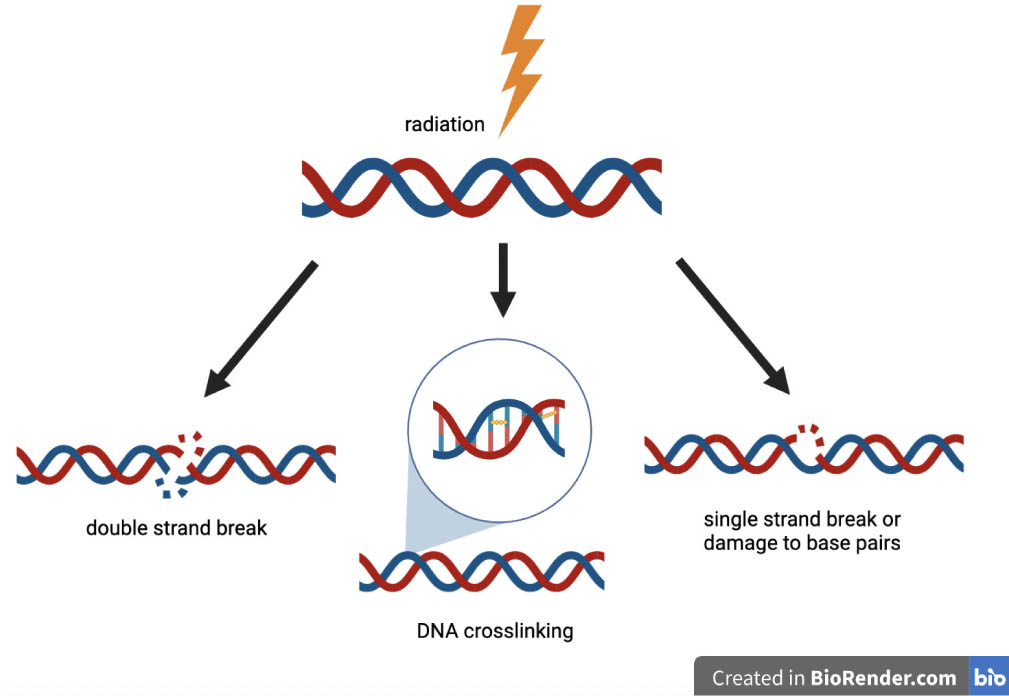
Figure 1.
Effects of Radiation on DNA Structure. Radiation-induced damage to DNA manifests in the form of various classes of damage. Double-strand breaks are the primary form of damage that radiation induces upon DNA structure. Secondary effects include the generation of reactive oxygen species that oxidize proteins and lipids and the introduction of single-stranded DNA breaks and abasic sites (base pair damage) (Heiney, 2016). Radiation can also cause cross-linking between adjacent base pairs through the introduction of bulky photoproducts — cyclobutane pyrimidine dimers and (6-4) pyrimidine-pyrimidone photoproducts.
Several shifts in cellular functions, including DNA damage repair, are controlled by the molecular 24-hour clock mechanism known as the circadian rhythm (Liu et al., 2019). Over 50 years ago, it was demonstrated that the circadian rhythm was an important factor in directing hematopoietic stem cell response to ionizing radiation in rats (Liu et al., 2019). Mouse models are also actively used to study the impact of time-based radiation therapy in patients with lung, head and neck, cervical, prostate, and breast cancers, due to circadian control of key homeostatic processes (Liu et al., 2019).
Previous studies have demonstrated that the circadian rhythm is critical for transcriptional regulation in both humans and mice (Ashok Kumar et al., 2019). Circadian genes, through circadian-regulated transcription, modify the metabolic cycle and cellular respiration (by regulating oxidative phosphorylation, redox homeostasis, and lipid metabolism), while also serving as crucial regulators of the cell cycle (Ashok Kumar et al., 2019). Furthermore, circadianly regulated genes also govern several features of mammalian physiology, such as the sleep cycle, immune system, gut microbiome, and aging (Eckel-Mahan and Sassone-Corsi, 2009; Rijo-Ferreira and Takahashi, 2019). These genes encode the proteins that mediate information delivery to both the individual cell and the bodily network of cells. The importance of circadian rhythms on homeostasis and physiological function continues to be an active area of research.
However, in spaceflight, changes in gravity load, lighting, and work schedules during missions can impact circadian clocks and disrupt sleep, in turn jeopardizing the mood, cognition, and performance of astronauts (Guo et al., 2014); the potential for the space-induced perturbation of the circadian rhythm to cascade into stunted cellular response to radiation damage, due to differential expressions of core clock genes, is explored as a guiding premise for this paper. In addition, disturbances to the circadian rhythm in the human body can lead to hormone secretion disorders, cancer, diabetes, and autoimmune diseases (Kim et al., 2015; Rijo-Ferreira and Takahashi, 2019). Of particular focus in this paper, circadian genes can augment susceptibility to cancer by impacting the regulation of DNA damage and repair, the metabolic breakdown of various chemotherapeutic substances, the biological pathways of the cell cycle, and cell apoptosis (Liu et al., 2019).
Circadian clocks are orchestrated by the autoregulatory transcription and translation feedback loops of core clock genes, comprising the activator genes of CLOCK (circadian locomotor output cycles kaput) and ARNTL (the aryl hydrocarbon receptor nuclear translocator-like, which encodes the BMAL1 protein), and repressor genes, including PER1 (period 1), PER2 (period 2), PER3 (period 3), CRY1 (cryptochrome 1), and CRY2 (cryptochrome 2) (Figure 2). The typical functionality of these core clock genes begins in the primary feedback loop with the dimerization of CLOCK and ARNTL to form a functional transcriptional complex, which binds to specific E/E'-box (enhancer box) sequences (CACGTG/CACGTT) in the promoter regions of various clock-controlled target genes. The primary transcriptional targets of CLOCK-ARNTL are PER and CRY genes, which upon transcription and translation, form a heterodimer and shuttle back into the nucleus to bind to the CLOCK-ARNTL heterodimeric complex as inhibitors (Eckel-Mahan and Sassone-Corsi, 2009; Ashok Kumar et al., 2019; Liu et al., 2019).
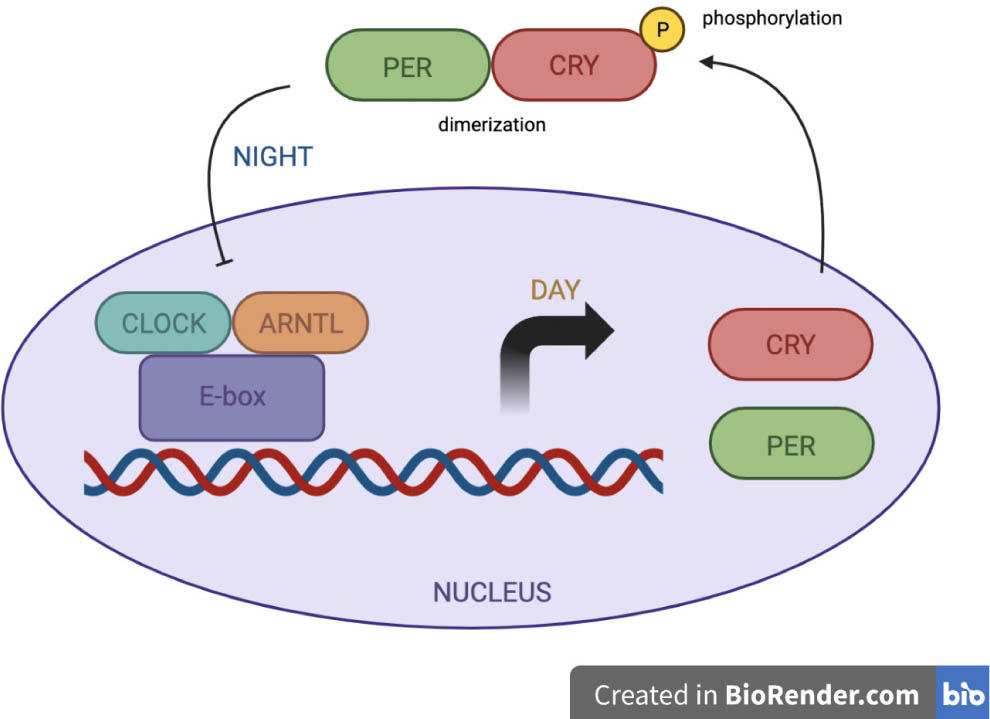
Figure 2.
Primary Regulatory Loop of the Circadian Clock. The primary regulatory loop of the circadian rhythm is mediated by the transcription of Pers and Crys, facilitated by the binding of the CLOCK-ARNTL heterodimer complex to the enhancer region upstream of the encoded clock-controlled genes. Pers and Crys in turn repress their own expression via dimerization into a protein complex and phosphorylation by kinases (e.g. CSNK1e), which trigger the degradation of the individual transcription products, unless they have successfully dimerized.
Simultaneously, a secondary feedback loop regulates the levels of ARNTL via the production of retinoic acid orphan receptor alpha (RORα) and reverse-erb receptor alpha (REV-ERBα) proteins — with RORα increasing and REV-ERBα decreasing transcription of the ARNTL gene (Eckel-Mahan and Sassone-Corsi, 2009; Ashok Kumar et al., 2019). In turn, the protein products of the primary and secondary feedback loops go on to influence various other homeostatic processes, including the cell cycle, which is of significant importance in the initiation and development of lung cancer (Eckel-Mahan and Sassone-Corsi, 2009; Ashok Kumar et al., 2019).
However, the heightened expression levels of ARNTL, due to reduced actions of PER1, PER2, PER3, and CRY2, have been demonstrated to be associated with NSCLC and its prognosis leading to circadian dysfunction (Lahti et al., 2012). Reduced PER1 levels are theorized to impair DNA damage repair, linking its downregulation to lung cancer. PER1 has been demonstrated to complex with the ATM and CHK2 kinases, to ensure apoptosis after DNA damage (Lahti et al., 2012). Impaired PER2 levels are suggested to be involved in the activation of the c-MYC signaling pathway, leading to cell proliferation via c-MYC overexpression. As a whole, ARNTL and the PER genes are postulated to be tumor suppressors, thus associating their hypermethylation (and thus, downregulation) with tumorigenesis. In addition to such pathways, disruption of the circadian rhythm may increase cancer risk through angiogenesis. ARNTL controls cancer cell proliferation by timing DNA replication through thymidylate synthase activity, cell mitosis through WEE1 levels, and growth through vascular endothelial growth factor (VEGF) levels (Lahti et al, 2012). Since VEGF promotes blood vessel formation, increased ARNTL expression may contribute to enhanced angiogenesis and cancer progression (Lahti et al., 2012). In summary, circadian dysfunction and the downregulation of core clock genes translates to the under-expression of key cell cycle checkpoint genes and regulators, such as WEE1 and CDKN1α, as well as the overexpression of cell growth stimulators, such as c-MYC (Figure 3).
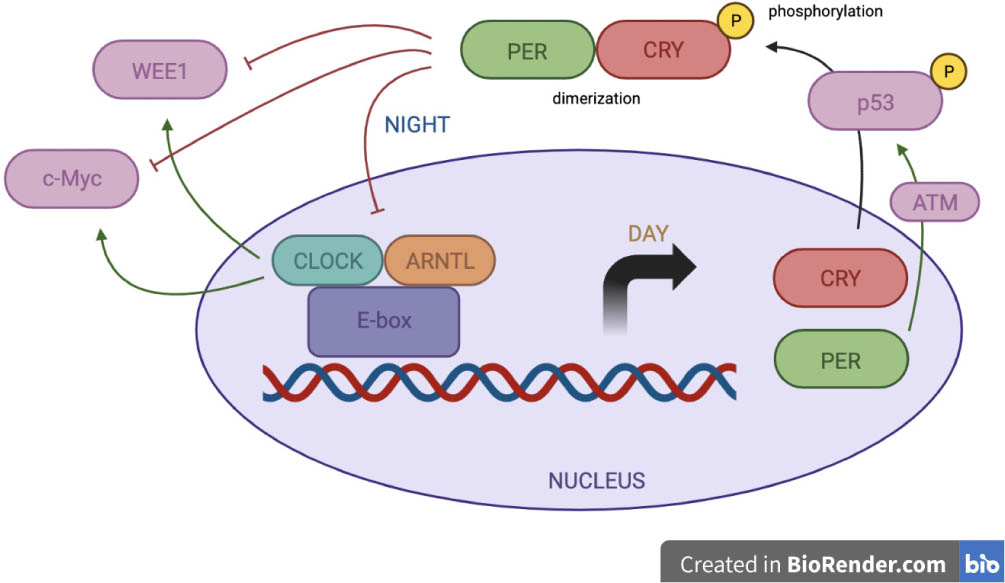
Figure 3.
Transcriptional Targets of the Core Clock Genes. WEE1 kinase, which acts at the G2/M checkpoint, is transcriptionally activated by CLOCK-ARNTL and repressed by PERs and CRYs. Similarly, the expression of p21 (CDKN1α), which inhibits the entry of cells from G1 into S phase, is regulated by ARNTL and PER1 via P53-independent mechanisms, through c-MYC stabilization (a group of protein-coding transcription factors whose effects extend to various biological processes, including cell cycle progression and metabolic control) (Ashok Kumar et al., 2019). In addition, PER1 promotes cell cycle arrest during DNA damage by interacting with the serine-threonine protein kinase ataxia-telangiectasia mutated (ATM), which induces phosphorylation of checkpoint kinase 2 and activation of p53. PER2 also helps to stabilize p53 by modulating its ubiquitination through E3 ubiquitin-protein ligase mouse double minute 2 homolog (MDM2) (Eckel-Mahan and Sassone-Corsi, 2009; Ashok Kumar et al., 2019).
This paper seeks to analyze transcriptomic data from spaceflown mice to explore the potential role of altered expression of circadian genes, including Arntl and Per, on increasing the risk for cancer development and progression following spaceflight exposure. This study has implications for the maintenance of astronaut health, especially in the context of NASA's focus beyond LEO where exposure to galactic cosmic radiation and solar particle events are a significant concern to the health of astronauts.
Materials and Methods
The GLDS-248 Dataset
The data for our research was sourced from “GLDS-248: Transcriptional analysis of lung from mice flown on the RR-6 mission” (Galazka et al., n.d.) from the GeneLab data repository. The objective of Rodent Research-6 (RR-6) was to investigate muscle atrophy and test the efficacy of a skin-implanted nanochannel delivery system administering formoterol, a common asthma medication hypothesized to mitigate muscle wasting (NASA, n.d.). The RR-6 mission involved the transport of 40 32-week-old female C57BL/6NTac mice to the International Space Station (ISS), to assess the efficacy of formoterol in mitigating spaceflight-induced muscle wasting. Experimental mice were either administered formoterol or subjected to sham treatment. For the purposes of this paper, the formoterol treatments were not included in the data analysis.
Sham-treated mice were separated into two primary groups, live animal return (LAR) and ISS Terminal (ISS-T), depending on the location and time of euthanasia. After 29 days aboard the ISS, Flight (FLT) LAR mice were returned to Earth for euthanasia, and FLT ISS-T mice were euthanized on the ISS after a period of 50 days or more. Upon dissection, tissues from the left lung were extracted and delivered to NASA GeneLab for sequencing. Ground Control (GC) mice underwent the same timeline of euthanasia and preservation. The NASA GeneLab Data Repository contains data for the FLT LAR, FLT ISS-T, GC LAR, GC ISS-T, LAR Baseline, and ISS Terminal Baseline groups (Table 1).
Table 1.
GLDS-248 Experimental Groups.
| Live Animal Return (LAR or FLT LAR) | ISS Terminal (ISS-T or FLT ISS-T) |
|---|---|
| Returned to Earth and euthanized after 29 days on the ISS. | Euthanized on the ISS Terminal after 50 or more days on the ISS. |
| LAR Baseline | ISS-T Baseline |
| 36-week-old mice were euthanized to emulate data of the mice before spaceflight. | 36-week-old mice were euthanized to emulate data of the mice before spaceflight. |
| GC LAR | GC ISS-T |
| Housed on Earth and euthanized at the same time as LAR mice. | Housed on Earth and euthanized at the same time as ISS-T mice. |
Data Processing
Quality Control and Data Processing. Pre-processing of the raw GLDS-248 data involved trimming, filtering, and bias correction to determine its quality and convert it to suitable file formats. All pre-processing tools were from the GeneLab instance of the Galaxy analysis platform, a now-decommissioned data processing software platform (NASA, n.d.). GLDS-248 data in the form of .fastq files were inputted into FastQC (version 0.11.9; https://www.bioinformatics.babraham.ac.uk/projects/fastqc/) to assess read quality. The .fastq files were subsequently fed through the TrimGalore! (version 0.6.5; https://www.bioinformatics.babraham.ac.uk/projects/trim_galore/) tool to remove low-quality bases, sequences under 20 bases, and the Illumina universal adaptors under paired-end sequencing. RNA STAR (Spliced Transcripts Alignment to a Reference) (version 2.7.1a; https://github.com/alexdobin/STAR) was then used to align the .fastq sequences to the Mus musculus genome, version mm10-GRCm38 (Ensembl release 96), with five output files: .bam files with sequence alignment data in binary format, log.txt with information about alignment, transcriptome-mapped.bam with sequence alignments translated into transcript coordinates, chimeric junctions, and splice-junctions.bed. .bam files were later used to generate count data. The featureCounts tool (https://subread.sourceforge.net/featureCounts.html) was then used to count the number of reads assigned to a feature, generating a counts table and summary statistics from the alignment .bam files. MultiQC (version 1.8; https://multiqc.info/) was subsequently utilized to assess the number of reads assigned to genes across all data samples to ensure adequate coverage.
DESeq2. The DESeq2 tool (version 1.40.6+galaxy1; https://bioconductor.org/packages/release/bioc/html/DESeq2.html) (Galazka et al., n.d.) on the GeneLab Galaxy platform (Galazka et al., n.d.) was applied to the pre-processed data files for both normalization and differential gene expression (DGE) analysis. DESeq2 normalization produced a series of quality control plots to visually represent the integrity of the input data (Figure 4). DGE analysis of the normalized GC and FLT groups for ISS-T and LAR data (respectively) provided an estimate of biological variance for each condition and an estimate of the significance of expression differences between corresponding FLT and GC conditions. The data was then filtered for statistically significant adjusted p-values (adj p < 0.05) and the absolute value of log2 fold change (| log2FC | > 1).
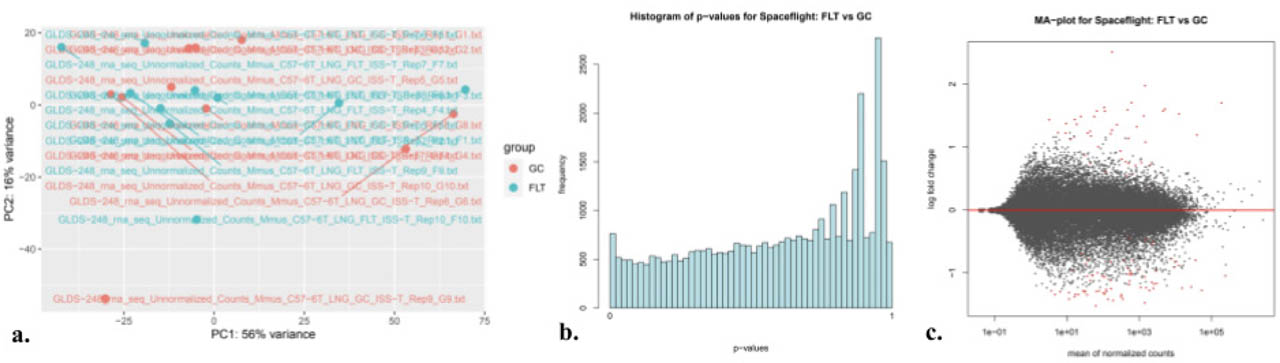
Figure 4.
FLT ISS-T vs. GC ISS-T Quality Control Plots. In the PCA plot, there exists a 56% variance between the FLT ISS-T and GC ISS-T groups as opposed to the 16% variance within the respective groups. Genes of high statistical significance from GLDS-248 are represented via the histogram bars closest to the origin and the red dots in the MA plot.
Volcano Plots. Volcano plots were utilized to identify genes that changed significantly in expression level in response to treatment. These plots were generated using integrated volcano plot tools on the Galaxy platform, with an input of the filtered DESeq2 data from the previous step in the data analysis pipeline. The top 20 most significant genes were labeled on the volcano plots, with minimal significance threshold defined as adj p-value < 0.05 and log2 fold change > 1.
goseq Enrichment Plots. Gene ontology (GO) enrichment plots were utilized for mapping the differentially expressed gene subset, as displayed via the volcano plots, into larger biological processes and pathways. The goseq tool (version 1.36.0+galaxy0; https://bioconductor.org/packages/release/bioc/html/goseq.html) integrated into Galaxy required input of the DESeq2 differentially expressed genes file and the featureCounts gene lengths file to produce a plot of “Top Over-Represented GO Terms” (major biological processes that the differentially expressed genes were involved in). The “Mouse” (mm10) genome was selected for alignment purposes.
The differentially expressed genes isolated from DESeq2 and the volcano plots, as well as the biological processes isolated from gene ontology analysis, were further analyzed via the Cytoscape and STRING databases (https://cytoscape.org/). These pathway analyses enabled investigation of how circadian gene expression is impacted by spaceflight in the context of cancer development.
Results
Quality control and correlation analysis. DESeq2 normalization and differential gene expression (DGE) analysis produced three graphical representations depicting the integrity of GLDS-248 data: a principal component analysis (PCA) plot, a p-value histogram, and an MA plot. The PCA plot of the FLT ISS-T versus the GC ISS-T data (Figure 4a) demonstrates that the internal correlation within the FLT ISS-T group and the GC ISS-T groups, respectively, is greater than the correlation between the groups — as indicated by 16% internal variance compared to 56% inter-group variance. The histogram (Figure 4b) reveals that a majority of the FLT ISS-T vs. GC ISS-T data was not of statistical significance, as indicated by large frequencies further down the x-axis. However, the mid-sized bar closest to the origin signifies the ideal set of differentially expressed genes, with an adjusted p-value < 0.05. The MA plot (Figure 4c) identifies the significant genes that progress to the data analysis pipeline; dots colored red symbolize genes with an adjusted p-value of less than 0.05.
Differential gene expression analysis demonstrates significant alterations in spaceflight samples. The volcano plot comparing the GC LAR and FLT LAR groups displayed very few significant genes, likely due to the animals re-adapting to 1g terrestrial conditions (Table 2). Several genes that were found to be significantly different revealed few scientific records, indicating they are yet to be studied in detail. Alternatively, FLT ISS-T differential gene expression analysis compared to GC ISS-T controls revealed 73 statistically and biologically significant genes as seen in Figure 5. Arntl, Ccnjl, Npas2, Arsj, Cyp26b1, and Fam124b were found to be the most up-regulated in relation to the GC ISS-T genome whereas Per3, Hlf, and Bhlhe41 were the most significantly down-regulated compared to the GC ISS-T control group (Table 2). Arntl was determined to be the primary gene of interest due to its adjusted p-value (p = 1.16 x 10−08), significant log2 fold change (1.79), and integral role in the circadian rhythm pathway as seen in Figure 6.
Table 2.
Differentially Expressed Genes of Interest.
| Group Comparison | Gene ID | Gene Name | Log2 FC | Adj p-value |
|---|---|---|---|---|
| GC ISS-T vs FLT ISS-T | Arntl | Aryl hydrocarbon receptor nuclear translocator-like | 1.798 | 1.1E-08 |
| Arsj | Arylsulfatase J | 1.078 | 2.5E-05 | |
| Bhlhe41 | Basic helix-loop-helix family, member e41 | −1.323 | 5.5E-08 | |
| Ccnjl | Cyclin J-like | 1.714 | 2.1E-06 | |
| Cdkn1a | Cyclin-dependent kinase inhibitor 1A (P21) | 1.285 | 1.5E-02 | |
| Cyp26b1 | Cytochrome P450, family 26, subfamily b, polypeptide 1 | 2.283 | 4.4E-12 | |
| Fam124b | Family with sequence similarity 124, member B | 2.967 | 3.4E-18 | |
| Hlf | Hepatic leukemia factor | −1.436 | 1.3E-05 | |
| Npas2 | Neuronal PAS domain protein 2 | 1.856 | 2.3E-06 | |
| Per2 | Period circadian clock 2 | −1.483 | 1.4E-03 | |
| Per3 | Period circadian clock 3 | −1.263 | 1.8E-07 |
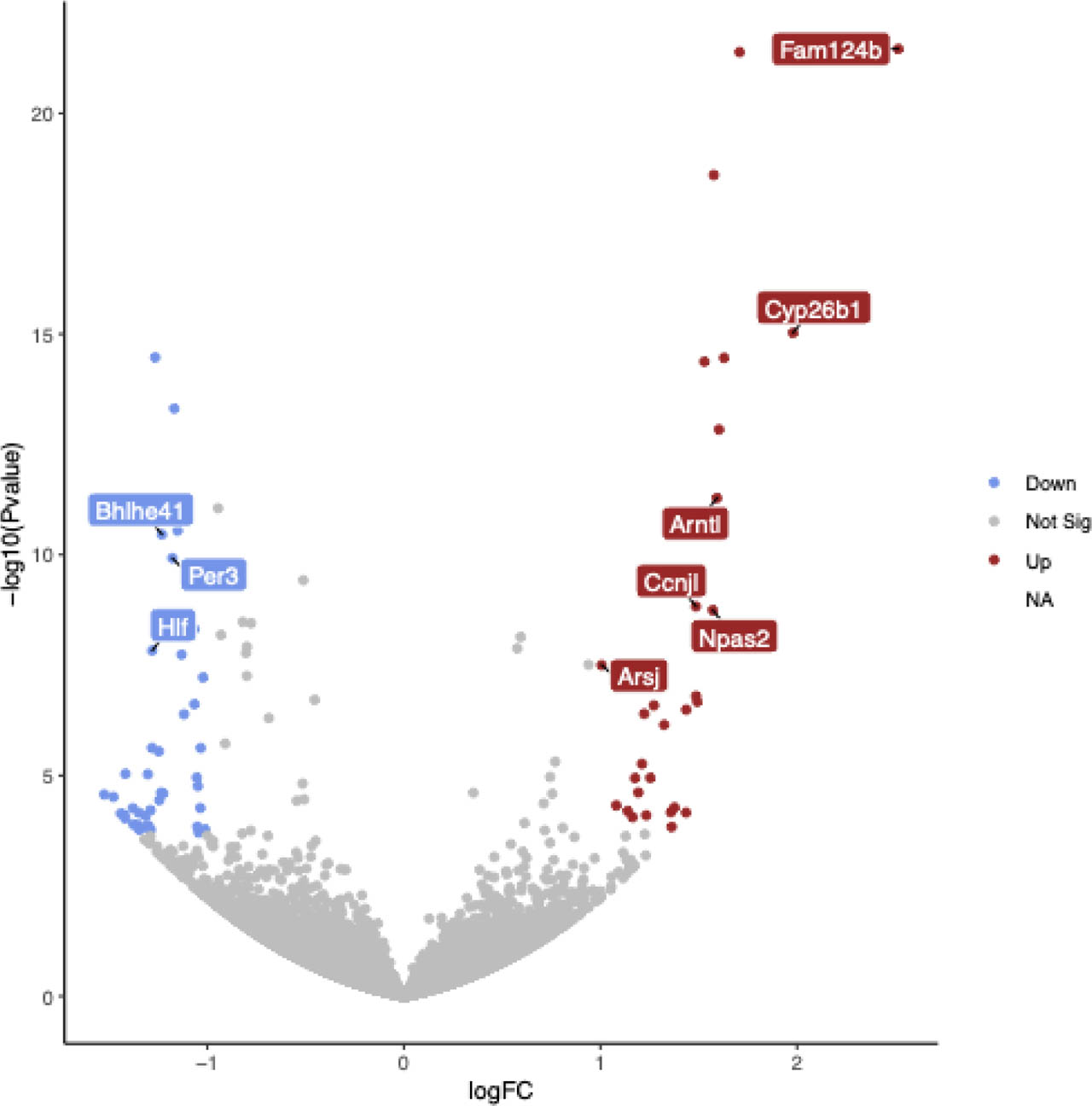
Figure 5.
Volcano Plot of FLT ISS-T Mice. Differentially expressed genes with high statistical (adjusted p-value < 0.05) and biological significance ( | log2FC | > 1) are labeled and colored in the volcano plot above. Downregulated genes are colored blue, upregulated genes are colored red, and genes that did not pass either significance threshold (biological or statistical) are grayed out.
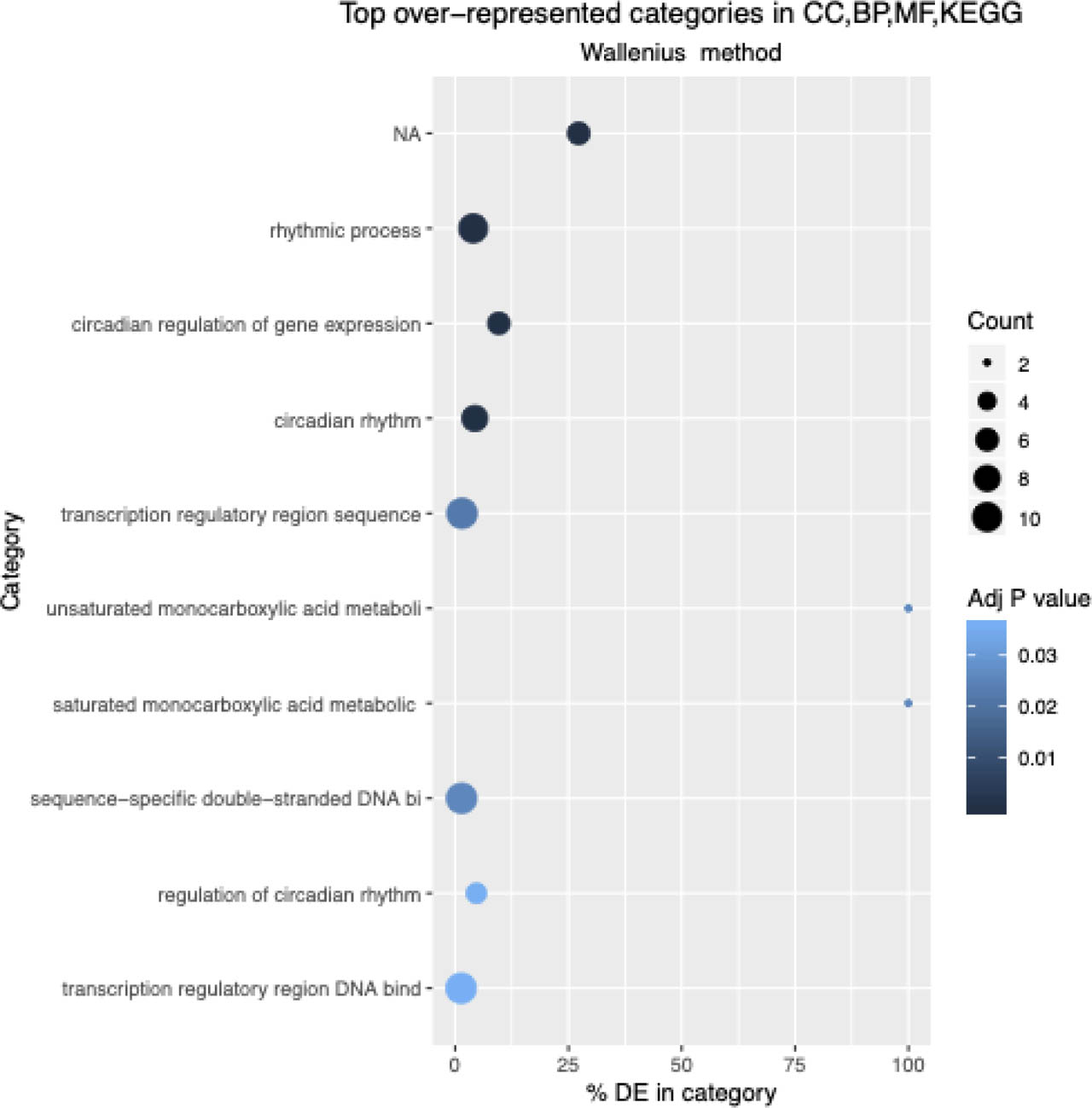
Figure 6.
goseq Enrichment Plot. The Gene Ontology plot above depicts the major pathways mapped to the set of significant genes. A bubble that is darker blue in color is of higher significance (and thus, a lower adjusted p-value), and larger bubble sizes indicate a larger number of genes that fall within the listed category; in addition, the x-axis maps the percentage of differential expression contained within the category. This plot identifies a considerable number of genes that are related to the circadian rhythm and its regulation, as shown by large bubble sizes — albeit a smaller-fold change of differential gene expression.
Transcriptomics analysis reveals altered gene expression of circadian genes during spaceflight exposure. Several pathways related to circadian rhythm were found to be enriched in GoSeq analysis, including “rhythmic process,” “circadian regulation of gene expression,” “circadian rhythm,” “regulation of the circadian rhythm” and “transcription regulatory sequence” (Figure 6). Furthermore, several metabolic processes known to be circadianly regulated were also found to be enriched in spaceflight samples compared to ground controls (e.g. “unsaturated/saturated monocarboxylic acid metabolism”). Further analysis of the top differentially expressed genes with Cytoscape and STRING databases (https://cytoscape.org/) demonstrated a common theme of differential circadian expression, exhibiting that a majority of the gene subset was integral to circadian rhythm-controlled pathways, such as gluconeogenesis (Ashok Kumar et al., 2019) (Figure 7). Other differentially expressed genes in spaceflight included Wee1, Per2, and Cdkn1α, which are also known to be regulated by Arntl and other core clock genes (Table 2, Figure 7). These pathway analyses substantiate the necessity of examining spaceflight-induced perturbation of the circadian rhythm through transcriptomic analysis of collected tissues, as conducted here, and through circadian disruption studies directly interrogating molecular mechanisms.
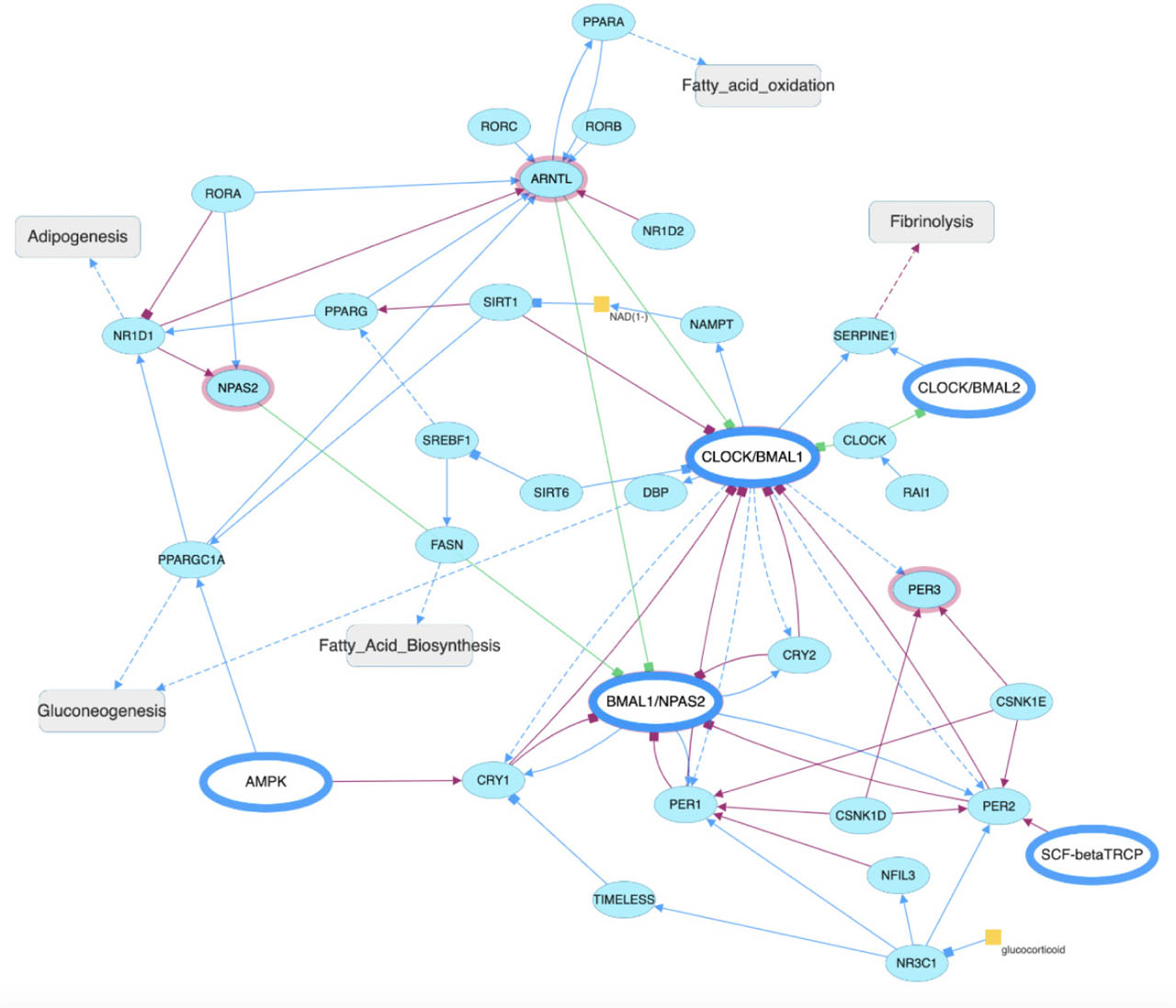
Figure 7.
Major Gene Pathways. A common theme in pathway analyses was the inclusion of the top differentially expressed genes (circled in red) within core clock pathways or circadian-rhythm-affiliated pathways (with key circadian identifiers circled in blue). Circadian regulation and control by key genes such as ARNTL, NPAS2, and PER3 cascade into downstream pathways such as fibrinolysis, fatty acid oxidation, fatty acid biosynthesis, gluconeogenesis, and adipogenesis, translating to body-wide effects and imprints on homeostasis. Circadian disruption may lead to eventual dysfunction of these related downstream pathways that are key to general health.
Discussion
In this study we aimed to determine how spaceflight affects mouse lung tissue with a specific focus on the effects of altered circadian gene expression on DNA damage and the potential risk for cancer development. Transcriptomic data provides a wealth of information regarding molecular responses to environmental stressors and can be used to understand the potential physiological effects of these stressors. Analysis of the GC ISS-T and FLT ISS-T RNA-seq data from “GLDS-248: The Transcriptional Analysis of Lung from Mice Flown on the RR-6 Mission” returned multiple genes of biological and statistical significance, several of which were identified as circadian genes by gene ontology enrichment platforms: Arntl, Per3, Npas2, Bhlhe41, Arsj, and Ccnjl (Table 2). One gene of high statistical significance was Arntl, a core clock gene that plays a crucial role in regulating cell cycle progression and lung tumorigenesis in conjunction with Per3 and Npas2. In addition, several ground-based experiments have demonstrated that circadian genes, including Arntl, are tumor suppressors due to their roles in regulating the cell cycle and initiating DNA repair (Eckel-Mahan and Sassone-Corsi, 2009; Lahti et al., 2012; Ashok Kumar et al., 2019). A recent study also suggested that disruption of the circadian genes through anxiety or radiation-induced alterations to sleep cycles, as is commonplace in spaceflight, accelerates lung cancer (Ashok Kumar et al., 2019). Furthermore, Papagiannakopoulos et al. determined that Arntl-knockout mice displayed elevated cancer stages and thus postulated that Arntl may regulate lung tumorigenesis (Borrego-Soto et al., 2015). Due to this, it is possible that circadian rhythm disruption during spaceflight heightens radiation-induced DNA damage due to impaired DNA repair pathways, thus inducing tumorigenesis. Although space-based research on circadian gene regulation and cancer susceptibility remains minimal, our analysis of transcriptomic data from lung tissue of spaceflown mice demonstrates a potential link between spaceflight, circadian disruption, and tumorigenesis.
Researchers have investigated the substantial effects of space on the human body, and the cancers that develop following exposure to space radiation and microgravity may potentially stem from radiation-induced DNA damage (Cucinotta, 2014; Borrego-Soto et al., 2015; Perez, 2019; National Academies Press, n.d.-b). Our transcriptomic analysis of lung tissue from spaceflown mice demonstrated significant alterations in several genes related to circadian rhythms, thus indicating that a variety of factors, including stress and spaceflight exposure may increase susceptibility to lung tumorigenesis. However, it is also possible that these alterations will normalize following re-adaptation to a 1g environment. As the realm of cancer research expands, establishing the function of key tumor suppressors and their responses to radiation may aid in the development of targeted treatments and prevention. Investigating methods of regulating and monitoring circadian gene expression may potentially enhance the prediction, tracking, and halting of cancer progression in astronauts and civilians.
Applications of core clock gene regulation are not limited to space travel. While circadian rhythm disruptions are conventionally known to be caused by sleep disruptors such as “jet lag,” shift work, and artificial light exposure, certain circumstances may tie radiation exposure to circadian dysregulation. For instance, it is not uncommon for cancer survivors who underwent radiation therapy to suffer from abnormal sleep patterns (Alberg and Nonemaker, 2008; Die Trill, 2013). Although there is limited data regarding radiation-induced circadian dysfunction, radiation is undoubtedly connected to lung cancer susceptibility. For instance, over 21,000 lung cancer deaths are caused by exposure to radon likely due to cracks in residential floors and basements, and patients who receive radiation therapy near the chest area are at risk of developing lung cancer (National Cancer Institute, 2023). Considering past studies on the nature of spaceflight-correlated cancer, the connection between circadian genes and cancer, as well as the findings from this study, exposure to radiation may impair the DNA repair pathway and induce a circadian-rhythm-disrupted state, leaving these key tumor suppressors unable to properly function.
Future studies can investigate whether abnormal clock gene expression remains a trend among lung cancer patients exposed to radon and radiation therapy survivors alike. Understanding the intricacies of radiation and its role in circadian dysfunction may provide insight into future therapeutics for astronauts, civilians exposed to radon, and the thousands of cancer patients around the globe. Investigating methods of regulating and monitoring circadian gene expression may potentially enhance the prediction, tracking, and halting of cancer progression in astronauts and civilians.
Conclusion
With space travel becoming increasingly more popular and space tourism becoming more tangible, it is crucial that the effects of spaceflight on human physiology are carefully considered. Importantly, spaceflight beyond LEO will result in exposure to substantial doses of radiation that may have fatal consequences on long-term health and general life expectancy. Most notably, astronauts who spend weeks or months in LEO already have heightened risk for developing cancer later in life, however, the health consequences of space travel beyond LEO remain under studied. It is likely that radiation exposure and longer exposure to microgravity will accentuate the known physiological effects of spaceflight and furthermore, heightened stress due to increased distance from Earth may further exacerbate circadian dysfunction. Thus, it is imperative that preventative measures are uncovered prior to prolonged spaceflight missions beyond LEO to ensure the safety of future astronauts.
Acknowledgements
We are extremely grateful to Dr. Blaber, Dr. Reinsch, Dr. Sreeskandarajan, Dr. Szewczyk, and Ms. Claudio for their indispensable guidance. We offer a special thank you to our mentors: Dr. Sreeskandarajan for his insightful commentary and assistance in revisions, as well as Dr. Szewczyk for teaching us to examine our data through a systems-biology perspective, on how all bodily systems are interconnected with one another. We also express our gratitude to the NASA GeneLab for High Schools staff, students, teachers, and guest speakers for their endless support in creating a wonderful working environment and endlessly enjoyable program. We are honored to have the privilege of knowing, listening to, and working with everyone involved in this program and we intend to carry our newfound knowledge with us to college and to whatever our futures entail.