
1. Introduction
Since the outbreak of the COVID-19 pandemic at the end of 2019, masks have been widely used in daily life due to their effective prevention of respiratory diseases [1]. With the increasing demand for masks, China, the main producer and largest exporter of masks globally, has rapidly increased its production capacity and output [2]. According to the White Paper “Fighting COVID-19 China in Action”, from March 1 to May 31, 2020, China exported as many as 70.6 billion masks [3]. Masks are usually disposable hygiene products, and as masks have become a daily necessity, there is still a large demand on them at present. The production of a large number of mask products will consume a large amount of energy and resources, posing new challenges to environmental issues [4,5,6].
A mask is typically composed of components such as nonwoven fabric (NW), ear loops, and nose wires. The NW is usually made from fossil fuel-based polymers, with the most common being polypropylene (PP). Ear loops often contain elastic materials, such as polyurethane (PU) blends, while nose wires generally consist of a metal wire encased in a polymer coating [7,8,9]. Masks should prevent droplets and large particles from entering the respiratory tract and filter bacteria and viruses. This is mainly due to the role of spunbond nonwoven fabric and meltblown nonwoven fabric used in masks. These two types of nonwoven fabrics are produced by heating and melting polymer chips and then extruding them from a spinneret. The former is solidified into fabric by different solidification methods, while the latter is self-adhered into fabric through residual heat and electret technology. The production process consumes a large amount of energy and raw materials and also generates a large amount of carbon emissions [10,11]. As for mask disposal, most masks are non-biodegradable (except for materials such as polylactic acid), taking 400 to 500 years to degrade effectively in the natural environment. Most masks are ultimately incinerated, emitting a large amount of greenhouse gases (GHG) [12,13].
The carbon footprint (CF) is a measure of the total amount of GHG emissions that are directly and indirectly caused by an activity or accumulated over the life stages of a product [14]. It is widely applied to quantify the environmental impacts associated with climate change. Do et al. [15] conducted an environmental analysis using the life cycle assessment method on reusable (fabric) masks and disposable masks (surgical masks and filtering masks). The study showed that reusable masks can reduce carbon emissions by 3.39 times compared to disposable masks, with transportation contributing to nearly 66% of the global warming potential of surgical masks. Straten et al. [16] calculated the carbon emissions that can be reduced from the production to disposal stages by reusing masks compared to disposable masks. They found that the CF of a mask reused five times is approximately 58% lower than that of a new mask used only once. Angelis-Dimakis et al. [17] compared the environmental performance of reusable masks made from British wool and disposable conventional masks made from polypropylene using the life cycle assessment method. They pointed out that in the long term, the reusable nature of wool masks makes them more environmentally friendly. Lyu et al. [8] compared the CF of non-degradable polypropylene masks and degradable polylactic acid (PLA) masks from production to disposal stages. The results showed that the emissions from PLA masks are 37% lower than those from PP masks, with packaging being the main source of GHG emissions in the entire product lifecycle. Li et al. [18] conducted a life cycle assessment to account for the environmental impact of surgical masks used from 2020 to 2022. The results showed that from 2020 to 2022, disposable surgical masks had caused over 18 million tons of carbon emissions and 1.8 minutes of health life lost per person globally.
Most studies provide only the total carbon footprint values for the raw material acquisition phase of masks, without detailed analysis of the various materials. In addition, existing studies have often neglected to quantify the carbon footprint of individual processes in the production of masks. This study will document and analyze the key processes in the mask production process (e.g., layers bonding, ear loops assembly) to reveal the carbon emissions of each process and its impact on the carbon footprint of the mask. Therefore, this study selects five typical mask products (one medical surgical mask and four KN95 masks) to assess the CF from raw material acquisition to mask production processes and analyze the results and influencing factors of the CF. The aim of this study is to investigate the major sources of carbon emissions in mask raw materials and production, and from a sustainable development perspective, to assist such production enterprises in long-term development and sustainable operation. Additionally, the study aims to provide a basis for energy conservation, carbon reduction, and the design of low-carbon products for mask raw material production enterprises and mask production enterprises.
2. Material and Methods
2.1. Types of masks
Masks are mainly divided into medical masks and civilian masks. In the Chinese market, medical masks can be further divided into single-use medical face masks, surgical masks, and medical protective masks, which are governed by the standards of Single-use medical face masks (YY/T 0969-2013), Surgical masks (YY 0469-2011), and Technical requirements for protective face mask for medical use (GB 19083-2010), respectively. As for civilian masks, depending on their intended use, they can be subdivided into daily protective masks and particulate respirator masks. However, due to the scarcity of products compliant with the Technical specification of daily protective mask (GB/T 32610-2016) standard, flat masks are prone to non-compliance with this standard. Therefore, adult civilian masks mainly adhere to the Respiratory protection non-powered air-purifying particle respirator (GB 2626-2019) standard, while children’s masks mainly adhere to the Technical specification of children mask (GB/T 38880-2020) standard. In addition to classification based on standards, masks can also be categorized based on their wearing method and shape, such as headband style masks and ear-loop style masks, as well as flat face masks and folding face masks [19].
Based on the above content, this article selects five typical mask products for analysis, including surgical masks and non-powered air-purifying particle respirators, which are surgical masks (without ethylene oxide sterilization), KN95 (gauze) masks, KN95 (four-layer without exhalation valve) masks, KN95 (five-layer without exhalation valve) masks, and KN95 (four-layer with exhalation valve) masks. The first two mask products are ear-loop flat face masks, while the latter three mask products are headband folding face masks. Except for the number of layers and the presence of a breathing valve, the structures of the latter three masks are identical. To distinguish them, the five masks are respectively represented as YY, KN95-1, KN95-2, KN95-3, and KN95-4. Information on the fabrics, layers, and other components of these masks is provided in Figure 1.
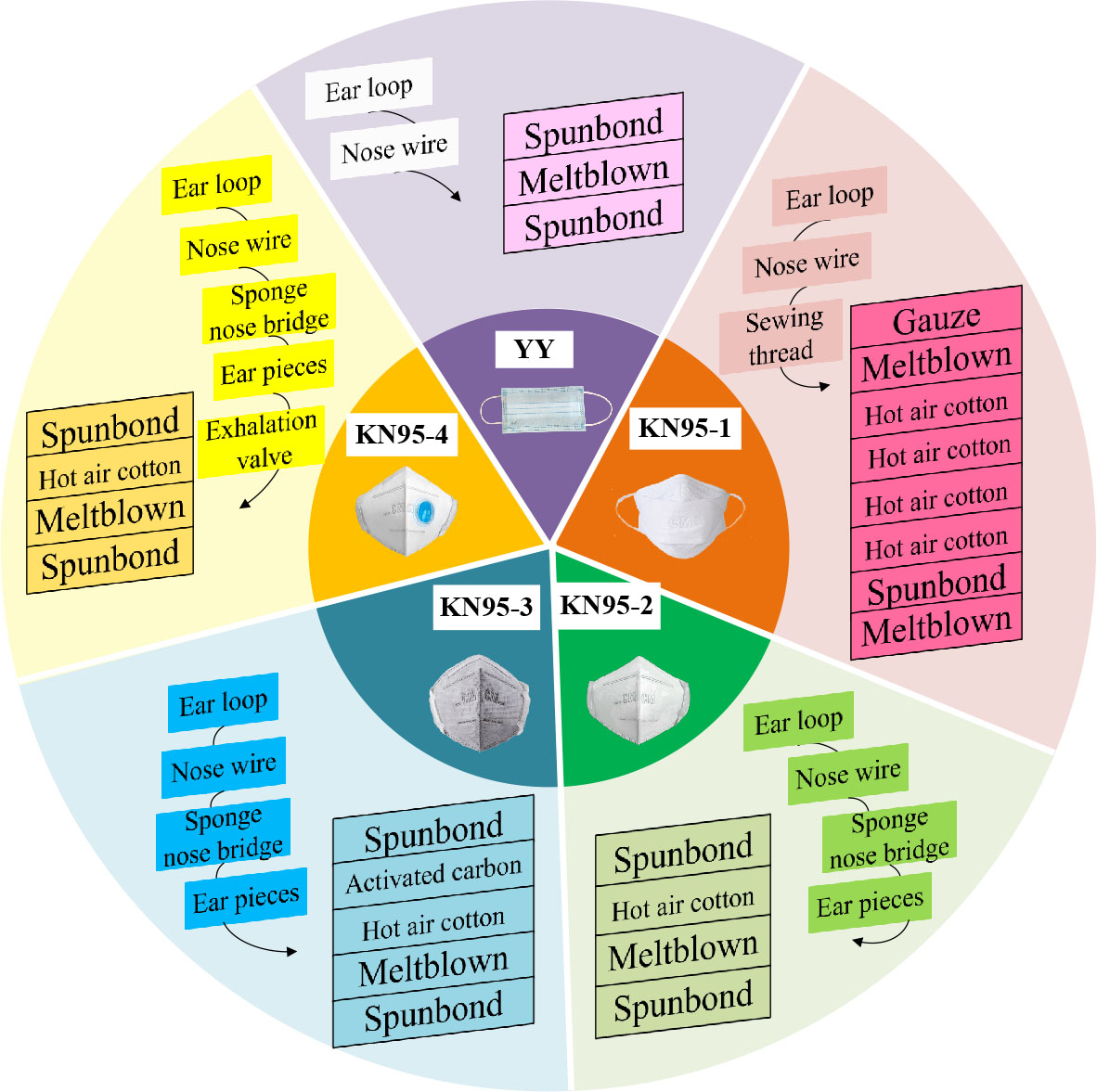
Fig. 1.
Types and composition of masks
2.2. Declared unit and system boundaries
According to ISO 14067: 2018 [20], the declared unit (DU) is the reference unit used in the calculation and reporting of product carbon footprint. In this study, all five selected products are disposable masks, and the potential for reuse is not considered. Therefore, 1000 masks are chosen as the DU for the declaration.
The system boundary for this study is set from the input of raw materials for mask production to the packaging and storage of mask products, including direct and indirect carbon emissions. GHG emissions from the purchase and transportation of raw materials, production systems, and auxiliary systems are all considered. The system boundary is shown in Figure 2.
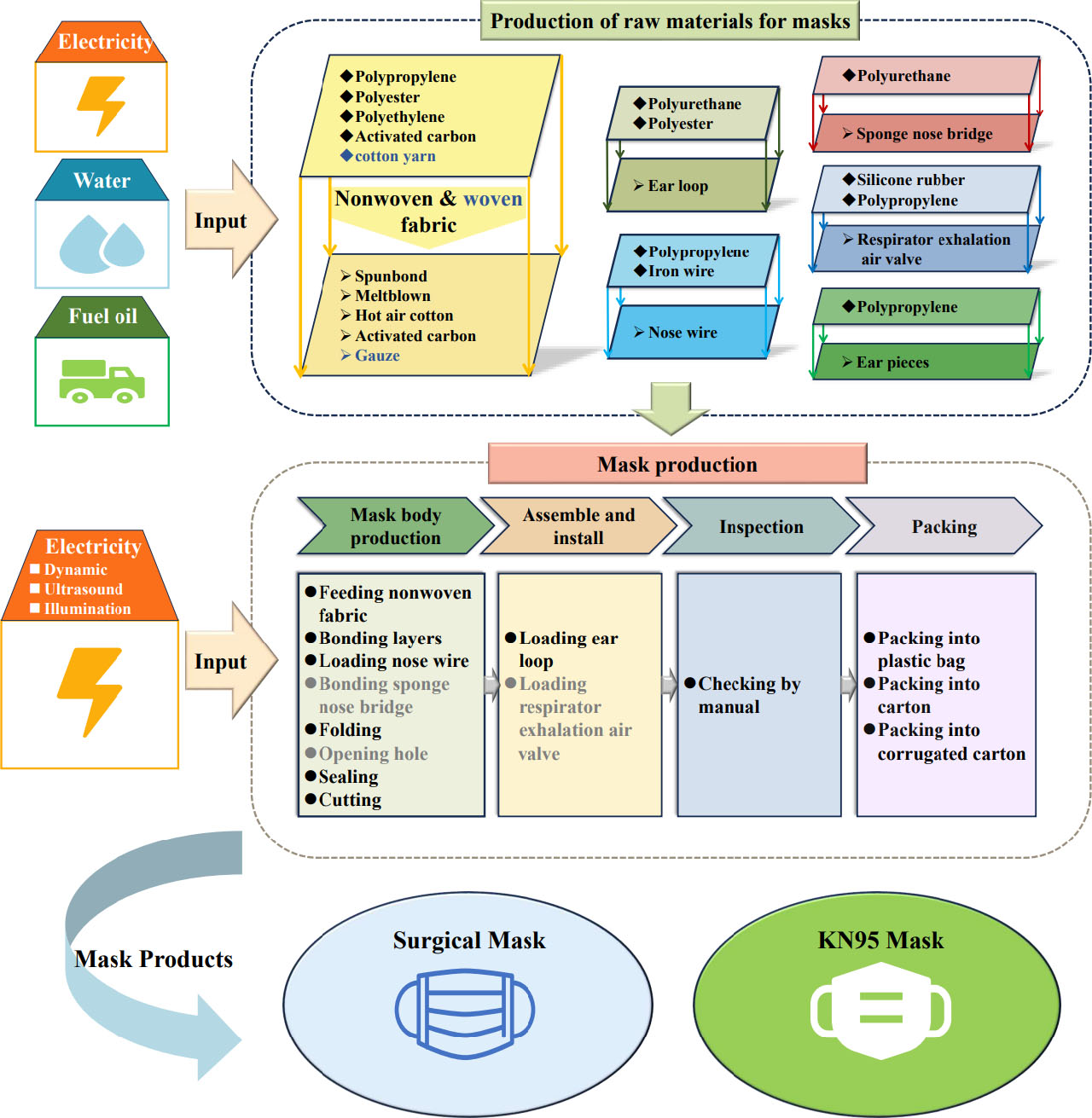
Fig. 2.
System boundary of the study
The raw materials used in mask production mainly include spunbond nonwoven fabric, meltblown nonwoven fabric, hot air cotton, activated carbon nonwoven fabric, gauze, ear loops, nose wires coated with polypropylene, sponge nose bridges, respirator exhalation air valve, and earpieces. This stage consumes water, chemicals, and energy (e.g., fuel, electricity), and indirectly results in greenhouse gas emissions during the production process.
This study divides mask production into four processes: mask body production, assemble and install, inspection, and packaging. The mask body production process includes processes such as feeding nonwoven fabric and bonding layers, loading nose wire, bonding sponge nose bridge, folding, opening holes, sealing, and cutting, which consume electricity for equipment driving and ultrasonic welding. The assemble and install process includes ear loop installation (via welding or sewing) and respirator valve installation. The inspection process involves inspecting the finished mask materials, appearance, and structure, mainly checking by manuals. The packaging process includes packing into plastic bags, cartons, and corrugated cartons. YY and KN95-1 masks are individually packaged using high-speed pillow-type automatic packaging machines, while the remaining masks and packaging processes are manually packaged.
2.3. Theoretical model
The carbon footprint is calculated using the method described in ISO 14067: 2018 [20], which references the GHG categories from the IPCC [21]. This method involves multiplying the mass of each GHG by its corresponding global warming potential (GWP) to convert it into carbon dioxide equivalents (CO2eq). The CF calculation method is shown in Equation (1):
In the equation, CF represents the carbon footprint of masks, measured in kg CO2eq. ADi stands for the activity data of GHG emission source i, measured in units such as kg or kWh. GWPj is the global warming potential value of greenhouse gas j, which is dimensionless. EFi,j represents the greenhouse gas j emission factor of activity data, measured in kg CO2eq/unit of activity data.
2.4. Data collection
The case study data for carbon footprint assessment were mainly derived from primary data surveys of mask raw material production companies and a mask product manufacturing enterprise in Zhejiang Province, China, with data collected in October 2023. This mask production enterprise itself produces meltblown nonwoven fabric, spunbond nonwoven fabric, hot air cotton, and ear loops by purchasing the raw materials.
The transport phase included the delivery of both raw materials and packaging materials. The distances for transportation varied depending on the locations of suppliers and manufacturers, with estimates based on the addresses provided by the surveyed enterprises. Polypropylene, sourced from Shandong, China, is transported approximately 1,050 kilometers to the mask product manufacturing enterprise, with each shipment totaling 30 tons. Additionally, materials such as polyester, nose wires, and others are sourced from various regions within Zhejiang Province, with an assumed average distance of 220 kilometers from the mask product manufacturing enterprise. All raw materials are transported by truck using diesel fuel.
The carbon emission factors were obtained from the application system of product life cycle assessment in the textile and clothing industry (CNTAC-LCAPlus) and other relevant literature sources. The GHG emission factor for electricity was referenced from the “China Regional Power Grids Carbon Dioxide Emission Factors (2023)” for Zhejiang Province in 2020, with EFe = 0.532 kg CO2eq/kWh. Table 1 summarizes the references for each GHG emission source used in the study.
Table 1.
Source for GHG emissions factors
| Category | GHG emission source | Source |
|---|---|---|
| Material | Polypropylene | CNTAC-LCAPlus |
| Electret masterbatch | Luo et al. [22] | |
| Polyurethane/Polyester blends ear loop | Shao et al. [23] | |
| Iron wire | Yang [24] | |
| Polyester | CNTAC-LCAPlus | |
| Polyethylene | CNTAC-LCAPlus | |
| Cotton yarn | CNTAC-LCAPlus | |
| Activated carbon | Vilén [25] | |
| Polyurethane | CNTAC-LCAPlus | |
| Silicone rubber | Xin et al. [26] | |
| Polypropylene film | CNTAC-LCAPlus | |
| Polyethylene film | CNTAC-LCAPlus | |
| Corrugating medium | Zhao et al. [27] | |
| Energy | Diesel | CNTAC-LCAPlus |
| Electricity | China Regional Power Grids Carbon Dioxide Emission Factors |
3. Results
3.1. Carbon footprint of mask products
The carbon footprint of five types of face masks was calculated according to Equations (1). The “percentage of maximum carbon footprint” refers to the proportion of the carbon footprint of each mask relative to the mask with the highest carbon footprint. Figure 3 shows the percentages of the carbon footprint associated with different raw materials and process units, as well as a comparison of the carbon footprint among the five mask types.
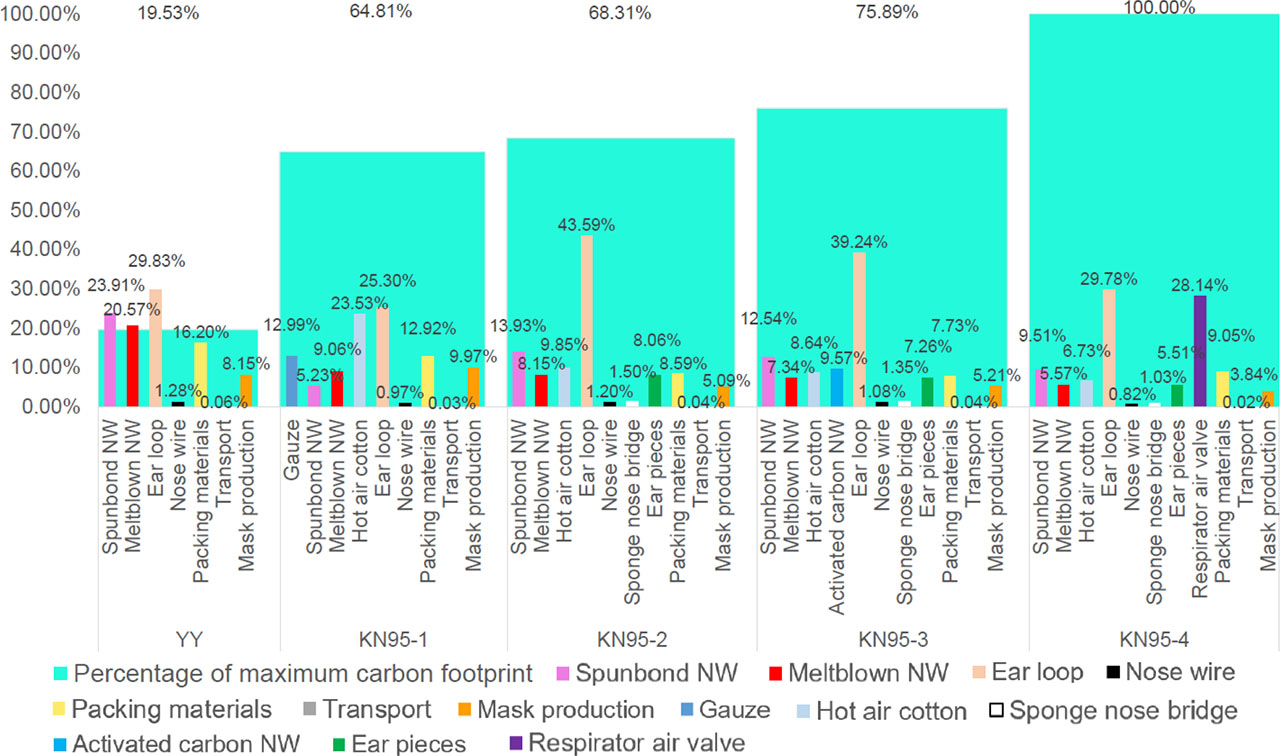
Fig. 3.
Carbon footprint percentages for different raw materials/process units in the life cycle of masks and comparison of the carbon footprint of five mask types
From Figure 3, it is evident that the CF of mask raw material production is greater than that of mask production, with the CF of mask production accounting for less than 10% of the total CF of the mask product. For mask raw materials, GHG emission sources such as ear loops, woven and nonwoven fabrics, packaging materials, and exhalation valves have a significant impact on the CF of mask products. The CF of transport accounts for less than 1% of the total CF for all five types of masks. This is because large quantities of raw materials are purchased at once; for example, 30 tons of PP are purchased in a single order. Since only a very small portion of these raw materials is consumed in producing 1000 masks, the CF of transport, when calculated one DU, becomes very minimal.
The ear loops are the primary contributors to the CF of mask products, accounting for approximately 29.83%, 25.30%, 43.59%, 39.42%, and 29.78% of the total CF of the five mask products. The ear loops are made of a blend of polyester and spandex, which consume a large amount of energy and chemicals that generate a substantial environmental impact [28]. Therefore, the ear loops contribute the most to the carbon footprint.
Fabrics, including both woven and nonwoven types, are significant sources of GHG emissions in mask products. It can be seen that in a mask, the carbon footprint of spunbond nonwoven fabric is generally greater than that of meltblown nonwoven fabric. However, this is based on the production of one DU. When producing the same weight of meltblown and spunbond nonwoven fabrics, each kilogram of meltblown nonwoven fabric will emit approximately 77% carbon footprint more than spunbond nonwoven fabric. Whether using nonwoven or woven fabrics, both contribute significantly to the CF of masks. Increasing the amount of fabric used in masks leads to higher carbon emissions.
Packaging materials are also significant sources of GHG emissions for mask products, accounting for 7.73% to 16.20% of the total CF of these five types of mask products. The high CF of packaging materials is due to the multi-layer packaging of mask products. For example, YY masks are individually packaged in plastic bags, then 50 masks are packed into a paper box, and finally, 40 paper boxes are placed in a corrugated cardboard box.
In addition, the environmental impact of the exhalation valve should not be overlooked. In KN95-4 masks, the carbon emissions generated by the exhalation valve account for approximately 28.14%, making it the second-largest source of GHG emissions after the ear loops. The exhalation valve described in this article is composed of a valve cover, a rubber pad, and a valve base. The rubber pad is produced by vulcanization technology, which requires high pressure and temperature [29], thus having a significant environmental impact. The difference between KN95-4 and KN95-2 masks is the presence of the exhalation valve; otherwise, their structures and materials are identical. According to the carbon footprint percentage of KN95-2 compared to KN95-4, each exhalation valve can increase carbon emissions by approximately 32%.
In general, the CF of KN95-4 masks is the largest, followed by KN95-3, KN95-2, and KN95-1 masks, with YY masks having the smallest CF. The main reason for the larger CF of KN95-4 masks is the significant increase in carbon emissions due to the use of an exhalation valve. KN95-3 masks also have a larger environmental impact due to the use of activated carbon non-woven fabric. Looking at the CF results of the five masks, when producing masks with one DU, the CF of KN95 masks is more than 3 times larger than that of surgical masks.
Based on the results mentioned, targeted measures can be taken to reduce the environmental impact of mask products by addressing the high carbon emission sources associated with masks. Ear loops are the largest source of environmental impact for mask products. The quantity and material of ear loops significantly affect the CF of mask products. Using other materials with low environmental impact can reduce the contribution of ear loops to the CF. In addition, the use of multiple packaging will also increase the CF of mask products, recycling and reusing packaging materials are effective ways to reduce the CF of mask products.
3.2. Carbon footprint of mask production stage
Although the mask production stage accounts for a small proportion of the CF of mask products, the mask production process is an important part of the entire life cycle of the mask. An in-depth study of carbon emissions in the production process can provide mask manufacturers with suggestions and references to optimize the production process, reduce carbon emissions, and promote the low-carbon transformation of mask enterprises. Therefore, it is essential to analyze the CF of mask production stage. Figure 4 presents the percentage results of the carbon footprint for the production processes and auxiliary illumination equipment of the five masks, as well as the comparative results of the carbon footprint across their production stages.
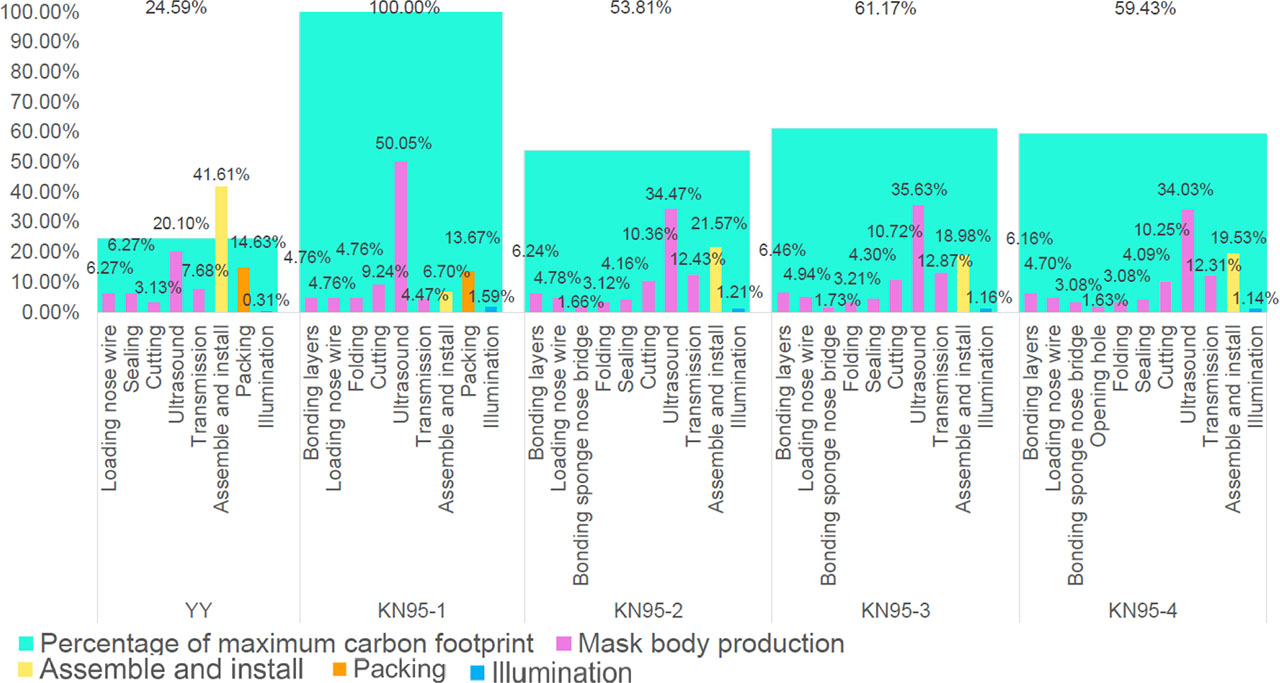
Fig. 4.
Carbon footprint percentages and comparison of the production stages of five masks
According to Figure 4, the carbon footprint of the production of KN95-1 masks is the largest, followed by KN95-3, KN95-4, KN95-2, and YY masks. The YY masks are the thinnest products among the five masks, using one layer of meltblown and two layers of spunbond nonwoven fabric. They require the shortest time for fabric lamination, have the fastest mask machine output speed, and the lowest power consumption, resulting in the smallest CF during the mask production stage. The KN95-1 masks are the thickest products among the five, using two types of hot air cotton with different unit area weights, and an outer layer of polyester-cotton blend gauze. To ensure the masks’ lamination strength meets standards, the mask machine production speed should not be set too high. They have the highest power consumption, resulting in the largest CF during the production stage. Among the three folding KN95 masks, KN95-3 has the most layers, requiring a reduction in mask machine output speed and an increase in fabric lamination time, leading to higher power consumption and a larger CF for producing one DU. KN95-4 has the most production processes involved among the three folding KN95 masks, including an additional punching process in the mask production stage. This leads to increased equipment working time, higher power consumption, and a larger carbon footprint.
In terms of production processes, the CF of mask body production processes accounts for a significant proportion of the total CF of the five mask components, exceeding 42%, next are the packaging processes and assemble and install processes. The carbon footprint from illumination is less than 2%. Illumination equipment is used during mask body production, assemble and install, inspection, and packaging processes to ensure adequate visibility and working conditions. However, this illumination also contributes to the carbon footprint of the production stage. The CF from illumination remains minimal due to the low power consumption of the lighting equipment, resulting in a very small CF when distributed across one DU. It can be observed that the impact of equipment drive on the CF of mask body production processes is greater than that of ultrasonic welding. In terms of the power consumption of mask body production, for YY masks, the proportion of transmission in the power consumption of mask body production is the largest, accounting for approximately 7.68%. This is related to the long transmission distance and fast output speed of YY masks. For KN95-1 masks, the cutting process has the largest proportion of power consumption in mask body production, accounting for approximately 9.24%. This is because KN95-1 masks have 8 layers after the folding process, requiring a large cutting power, resulting in the highest power consumption in the cutting process. For the three folding KN95 masks, transmission, cutting, and bonding layers account for a relatively large proportion, ranging from 12.31% to 12.87%, 10.25% to 10.72%, and 6.16% to 6.46%. The high proportions of transmission and cutting are related to the long transmission distance of masks and the thickness of 4–5 layers of masks. The high proportion of bonding layers is due to the use of multiple rollers, such as the embossing roller and rubber roller, which not only increases the composite fastness of the masks but also gives the masks a unique appearance pattern. Among the five mask products, the assemble and install processes of YY masks involve the most complex process of ear loops welding, including ear loops conveying, cutting, placing, and spot welding processes, making their assemble and install process CF the largest among the five masks. The assemble and install process of KN95-1 masks involves the simplest process of sewing ear loops, making their assemble and install process CF the smallest among the five masks. The ear loops of the three folding KN95 masks are headband style ear loops, and the assemble and install process uses ultrasonic welding of earpieces to increase the welding area between the ear loops and the mask body, thereby enhancing the breaking strength of the ear loops. The assemble and install process consumes more electricity, making its CF relatively large among the five masks.
For the mask production stage, mask thickness, exhalation valve openings, equipment drive mechanisms, and ultrasonic welding are factors that affect the CF of mask production. Ensuring mask product performance and selecting non-woven fabric products with smaller unit area mass, and reasonably increasing the production speed of mask machines can reduce the electricity consumption in the mask production stage, thereby reducing the CF of mask products. Increasing the proportion of clean electricity can also reduce the CF of mask production. For example, if photovoltaic electricity is used instead of grid electricity for mask production, the CF of mask production can be reduced by approximately 89.74%, based on the GHG emission factor from CNTAC-LCAPlus for photovoltaic power generation in China.
4. Discussion
To verify the accuracy and reliability of this study, this section compares the results of this study with previous research results and explores the differences between them. Although these papers do not discuss various raw materials and production stages in detail, they do provide total carbon footprint values for the raw material acquisition stage and the production stage. The carbon footprint of the transportation stage is influenced by the distance between suppliers and manufacturers. To improve the comparability of the accounting results, the carbon footprint generated by transportation was not included in the comparison.
There is limited research on the carbon footprint of KN95 masks. Therefore, studies on the carbon footprint of particulate protective masks with a protective level similar to KN95 in different countries were reviewed. Table 2 presents the standard numbers, standard names, and mask types of particulate protective masks with a filtration efficiency for non-oily particles of 94% to 95% in China, the United States, and Europe. Figure 5 shows the carbon footprint percentages for raw materials, packaging materials, and production stages for surgical masks and similar particulate protective masks [22,30,31,32]. For comparison, the declared unit from different literature sources were converted to 1000 masks.
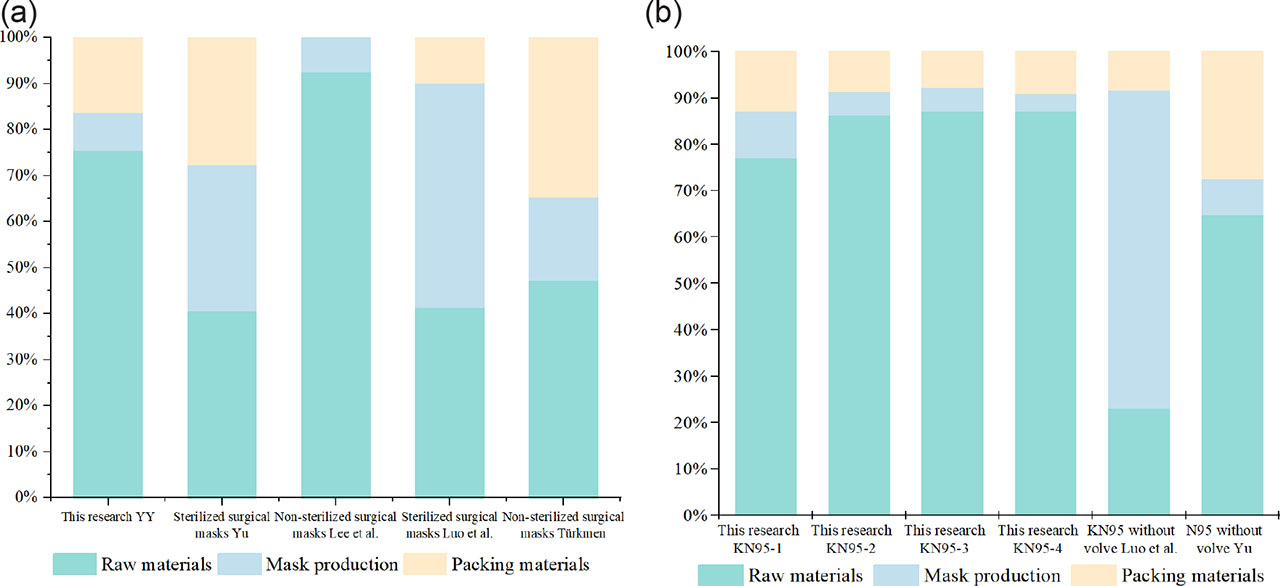
Fig. 5.
(a) Carbon footprint percentages for surgical masks from raw material acquisition to mask production. (b) Carbon footprint percentages for particle respirators from raw material acquisition to mask production
Table 2.
Basic information of particulate protective masks
| Country | Standard number | Standard name | Mask type |
|---|---|---|---|
| China | GB 2626-2019 | Respiratory protection - Non-powered air-purifying particle respirator | KN95 |
| USA | 42 CFR Part 84 | NIOSH guide to the selection and use of particulate respirators | N95 |
| Europe | EN 149: 2001 + A1: 2009 | Respiratory protective devices - Filtering half masks to protect against particles - Requirements, testing, marking | FFP2 |
According to available literature data, the CF of surgical masks from raw material acquisition to mask production ranges from 16.871 kg CO2eq/1000 masks to 47.114 kg CO2eq/1000 masks. The YY masks in this research fall within this range. The CF accounting results for particulate protective masks from raw material acquisition to mask production vary significantly across different literature sources, ranging from 22.386 kg CO2eq/1000 masks to 202.957 kg CO2eq/1000 masks. The four different types of KN95 masks in this research all fall within this range.
According to Fig. 5(a), non-sterilized surgical masks typically have the highest CF during raw material production, followed by packaging production, with the mask production stage having the smallest CF. Yu [30] and Luo et al. [22] accounted for the carbon footprint of surgical masks sterilized with ethylene oxide during the production phase, resulting in a higher carbon footprint for the mask production phase compared to non-sterilized masks. This is because ethylene oxide is primarily produced from ethylene, which is derived from petrochemicals. The production of ethylene requires significant energy and chemicals, resulting in substantial GHG emissions. Additionally, the production of ethylene oxide through the oxidation of ethylene with oxygen generates carbon dioxide as a byproduct, further contributing to the higher carbon footprint [33].
As shown in Fig. 5(b), particulate protective masks also typically exhibit the largest carbon footprint during the raw material acquisition stage and the smallest carbon footprint during the mask production stage. The carbon footprint for the mask production stage of KN95 masks reported by Luo et al. [22] is significantly higher than that reported in other studies. This is because the KN95 masks in Luo et al.’s study require a water repellant treatment after production. This treatment consumes resources such as waterproofing agents and requires additional energy during the subsequent drying process, resulting in substantial carbon emissions during the mask production stage. Do et al.’s [15] study reports that the CF for raw material acquisition and mask production of FFP2 masks, both with and without a valve, ranges from 22.386 kg CO2eq/1000 masks to 32.026 kg CO2eq/1000 masks, which is significantly lower compared to other particle respirators. This discrepancy can be attributed to two main reasons: first, Do et al.’s study did not include emissions from material packaging due to data gaps; second, these FFP2 masks use only polypropylene NW fabrics and do not incorporate hot air cotton or other nonwoven materials. The higher carbon footprint of raw materials for KN95 masks in this research is due to the inclusion of more raw material supplies and pre-treatment processes, such as the production of meltblown nonwoven fabric and hot air cotton.
As for the GHG emission sources of masks, there has been relatively little analysis. Li et al. [18] conducted a study on the GHG emission sources of surgical masks throughout their entire lifecycle, from raw material acquisition to disposal. Without considering the disposal stage, they found that the largest contributors to the CF of surgical masks, in descending order, are spunbond PP, meltblown PP, ear loops (made of nylon 66), packing materials, nasal bridge wire, ethylene oxide, and transportation. When the energy generated from the incineration of these GHG emission sources during the disposal stage is used for electricity production, the negative environmental impact of incinerating ear loops, due to the conversion of the nitrogen element in nylon 66 into nitrogen oxides, exceeds the environmental benefits from the waste-to-energy process, making ear loops the largest contributor to GHG emission source for surgical masks.
It is crucial to conduct comprehensive analyses and evaluations of the carbon footprint of masks throughout their entire lifecycle. This will help to better understand the sources of GHG emissions from mask products and to develop more environmentally friendly mask products accordingly. This study focuses on the stages of raw material acquisition and mask production. Therefore, further exploration of longer chain segments, encompassing the sales, use, and disposal stages, and ultimately the entire lifecycle carbon footprint of mask products, is necessary in the future.
5. Conclusions
Based on the existing carbon footprint assessment methodology, this study investigated the environmental performance of five masks within the system boundaries of raw material acquisition and mask production stages. The results show that the CF of the masks’ raw material production stage is greater than that of the mask production stage, with ear loops being the main contributors to the CF of mask products. Additionally, each exhalation valve used increases the CF of mask by approximately 32%. The CF of KN95 masks is significantly higher than that of surgical masks, with the production of the same quantity of surgical masks and KN95 masks resulting in the latter having a CF more than 3 times larger than the former. In the mask production stage, the CF of the mask body production process accounts for a large proportion, and the impact of equipment drive mechanisms on the CF of mask production is greater than that of ultrasonic welding.
According to the high carbon emission factors, this study proposes a series of measures to reduce the CF of mask products, including selecting more environmentally friendly materials to manufacture ear loops, recycling and reusing packaging materials, selecting non-woven fabrics with smaller unit area mass in mask production, improving production efficiency, and increasing the proportion of clean electricity, such as using photovoltaic electricity to produce masks instead of grid electricity. This study provides a basis for carbon emission reduction of mask products, which is of great significance for reducing the environmental impact of mask products.
The discussion of the differences between existing results and the findings of this study reveals that the CF accounting results for mask products, from raw material acquisition to mask production, are influenced by factors such as the types of raw materials used (e.g., the kind of nonwoven fabric) and differences in production processes (e.g., whether ethylene oxide sterilization or water-repellant treatment is used). Studying the GHG emission sources throughout the entire lifecycle of mask products will help mask manufacturers design low-carbon mask products by targeting high-GHG emission factors. Therefore, future research should explore additional lifecycle stages of mask products to provide more comprehensive support and enhance the assistance available to mask manufacturers.
Acknowledgements
The authors are grateful to the Technical Support Special Project of the Hubei Provincial Market Supervision Administration (Hbscjg-JS2022002) for funding this research.