
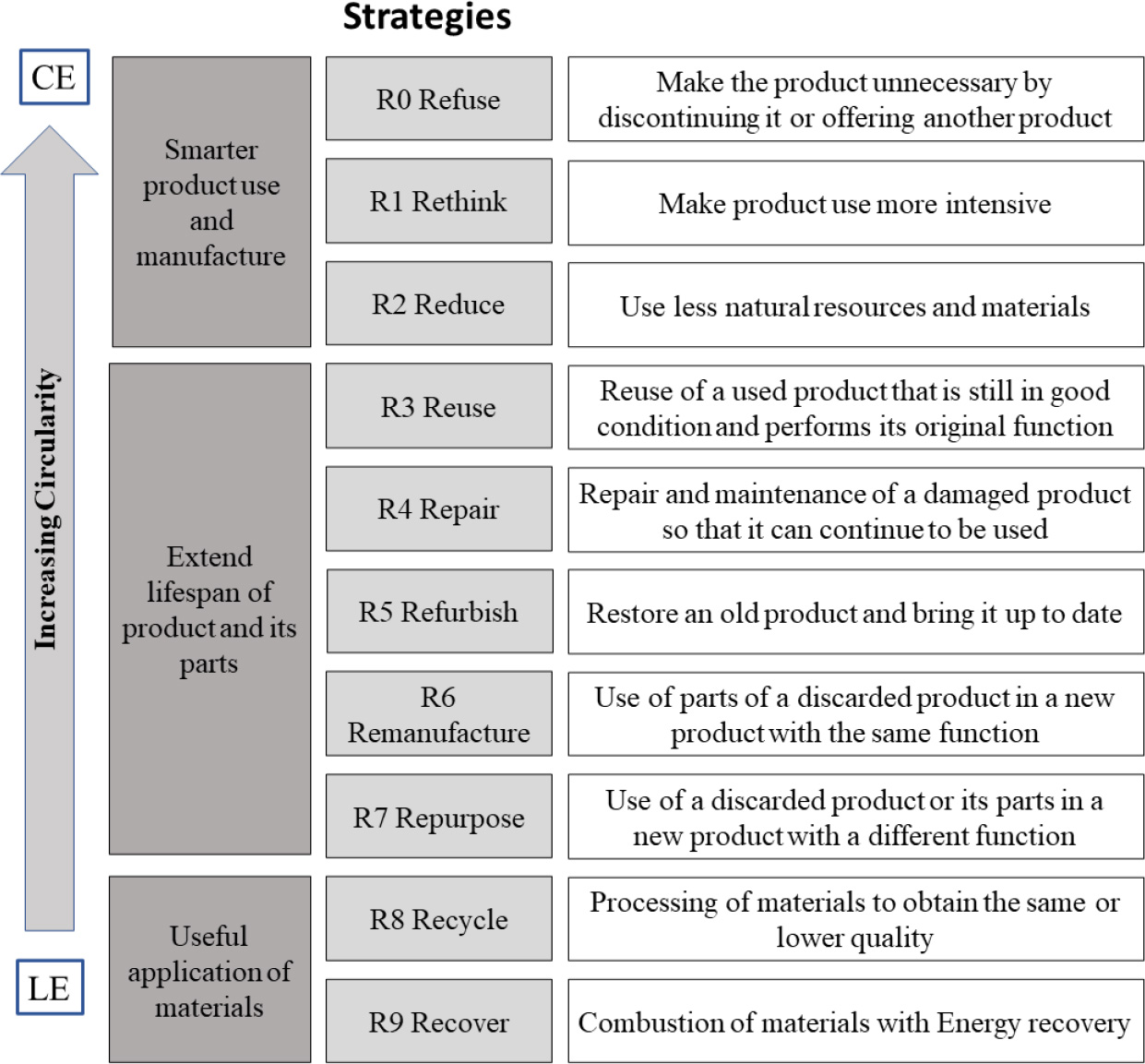
Fig. 1.
Classification of 9R-activities used in circular business models (9R Strategy), LE – linear economy, CE – circular economy. Figure made by the authors based on [8,9]
Table 1.
Characteristics of the group of survey respondents in terms of gender, age and education held
| Respondent | |||
|---|---|---|---|
| Absolute N=313 | Relative (%) | ||
| Gender | Male | 94 | 30 |
| Female | 219 | 70 | |
| Age group (years old) | 18–25 | 29 | 9 |
| 26–35 | 225 | 72 | |
| 36–50 | 34 | 11 | |
| Over 50 | 25 | 8 | |
| Education | Primary | 21 | 7 |
| Secondary | 37 | 12 | |
| Professional | 25 | 8 | |
| Higher | 230 | 73 | |
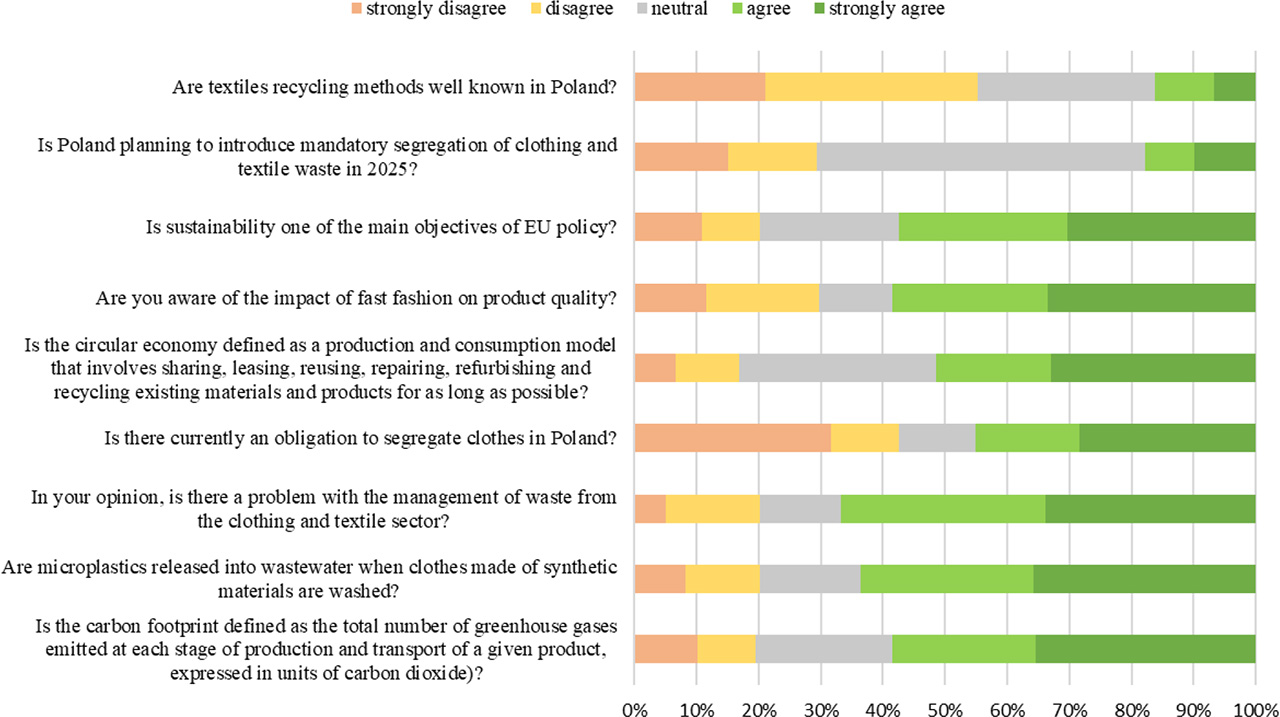
Fig. 2.
Lodz citizens’ knowledge of the circular economy (percentage distribution of answers in 1–5 scale)
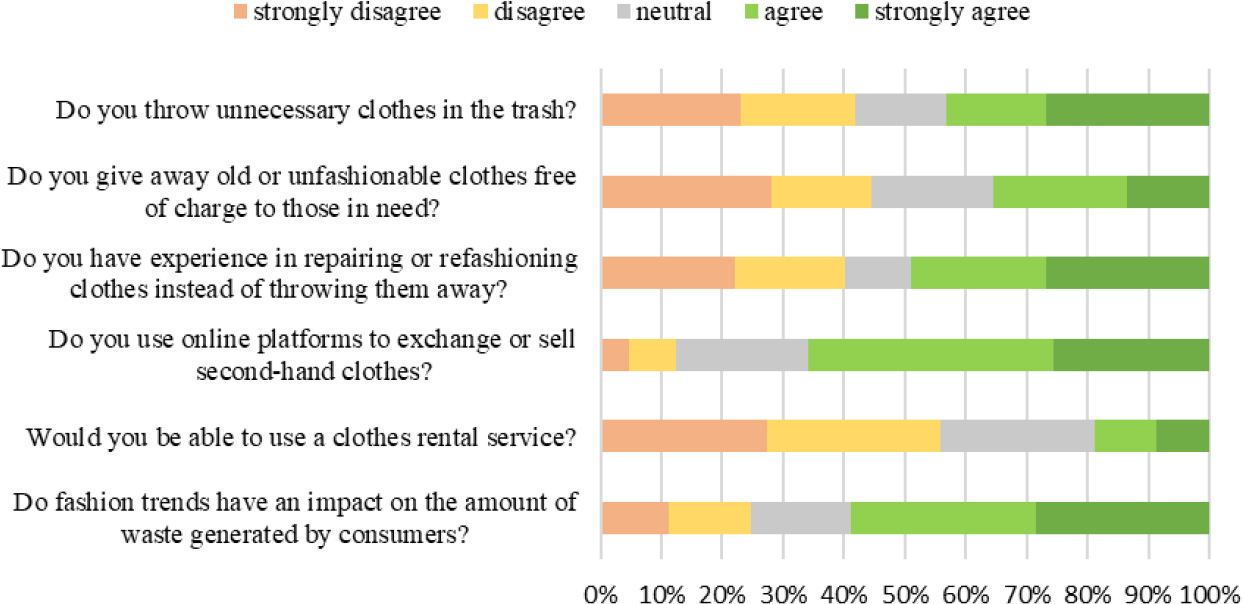
Fig. 3.
Lodz citizens’ behavior in the range of disposal attitude (percentage distribution of answers in 1–5 scale)
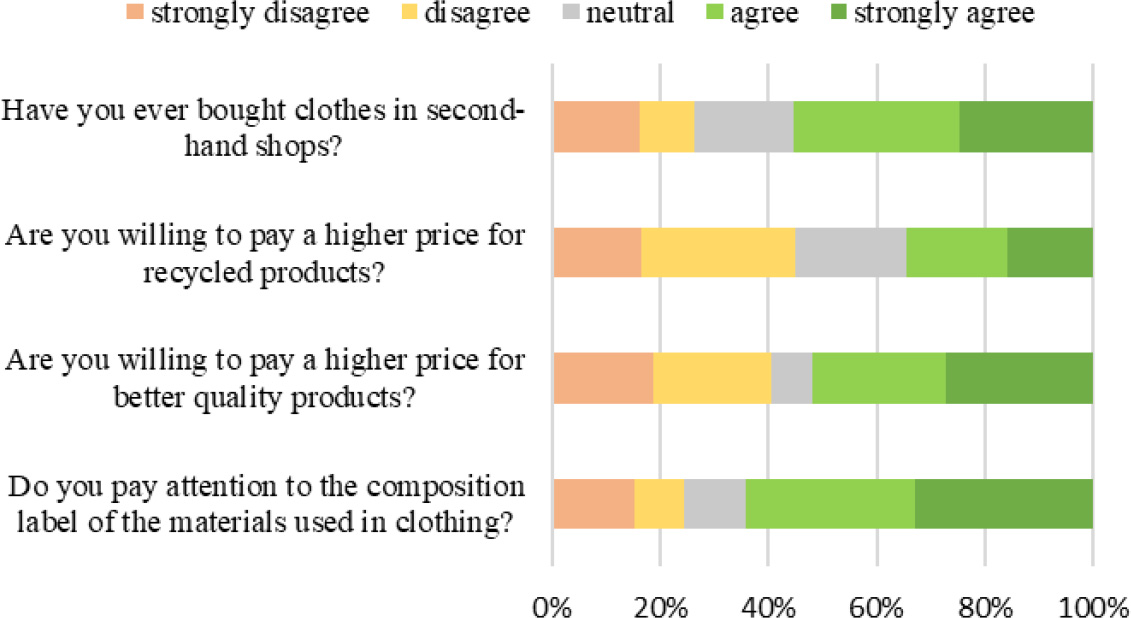
Fig. 4.
Lodz citizens’ shopping preferences (percentage distribution of answers in 1–5 scale)
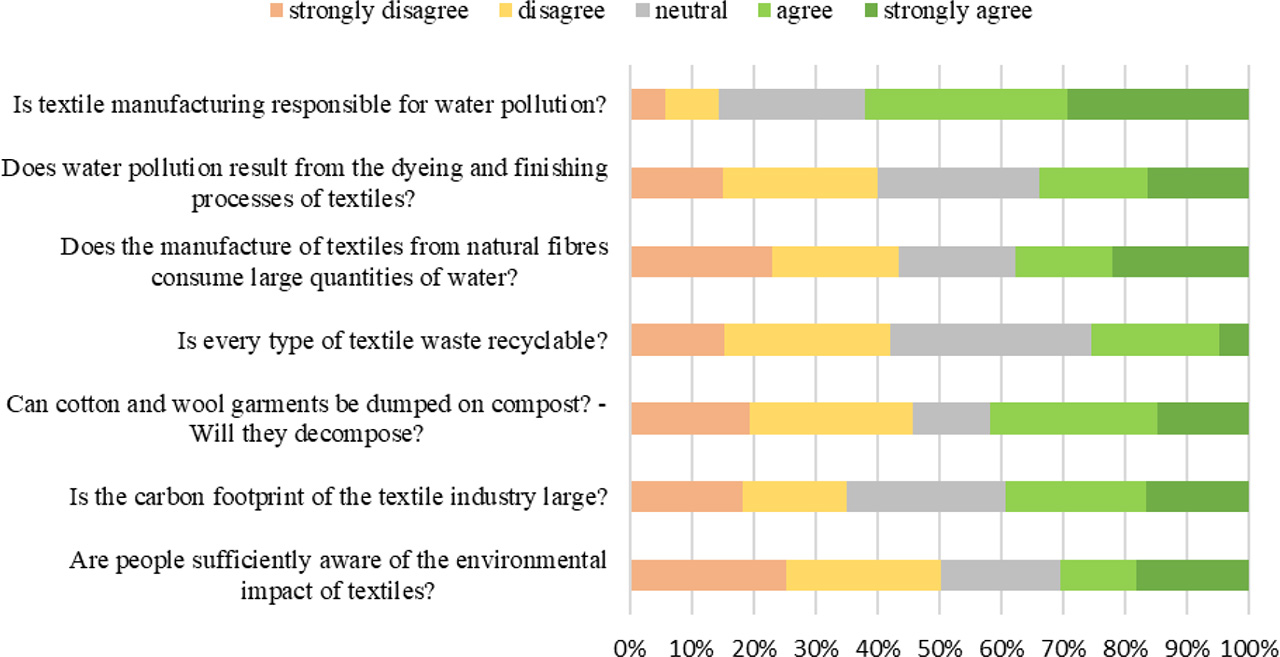
Fig. 5.
Lodz citizens’ knowledge of the environmental impact of the T&C industry (percentage distribution of answers in 1–5 scale)