
1. Introduction
The increasing shortage of health professionals is a critical issue that affects all health care systems, even in developed countries.1 The situation is getting even more complex with the lack of effective governance of health care professionals, since the World Health Organization stated that around 20%–40% is due to the inefficiency of professionals.2
Meanwhile, health services have improved a lot and life expectancy has also increased.3 In Europe, the proportion of people under the age of 65 years will probably increase from 14% (2010) to 25% (2050), which means an increase in the multimorbidity ratio.3 According to statistics from the Dutch general practitioners’ database, one-third of people over the age of 55 years suffer from multimorbidity.3 These factors combined have forced governments to develop more cost-effective care models to improve the quality of care provided.2 Given these complex issues, advanced nursing practice (ANP) is needed as a policy recommendation to expand the quality of care.1
Following the guidelines for ANP reported by the International Council of Nurses (ICN) in 2020, Hamric emphasizes that ANP is “characterised by the integration and application of a wide range of theoretical and evidence-based knowledge within postgraduate nursing education.”4,5 Indeed, the ICN has defined advanced practice nurse (APN) as a generalist or specialist nurse who, through further higher education (at least a master’s degree), has acquired the skills necessary for ANP for which the nurse will be authorized to practice.5
Internationally, the roles of APNs are developing as an increased need exists for specialist nursing care at an advanced practice level.6 This role was first introduced in the 1960s in response to a shortage of doctors to deal with the primary care needs of rural and under-served populations.7 Moreover, A review by Duffield et al.8 of advanced practice nursing in the United Kingdom, United States, Canada, New Zealand, and Australia agreed that APNs are and will continue to be important providers of cost-effective and accessible care.
Morocco is not an exception; as the public health problems mentioned above exist, there is a need for the implementation of the ANP in the national health care system. Morocco opted for the universitization of health sciences in 2013, through the Higher Institute of Health Sciences (HIHS), which offers a bachelor’s-master’s-doctorate training cycle in health sciences.9 In addition, the master’s cycle includes a 2-year training course leading to certification in advanced practice in health sciences for professionals and students with a bachelor’s degree in nursing sciences.9 In this respect, Morocco has taken a first step toward establishing APNs by providing this type of training. Actually, the implementation of ANP in the national health system (NHS) is considered a novel area for exploration in the country. However, its establishment is subject to some challenges and prospects.
Starting from this point, this review aims to outline the background of ANP, its interest, the challenges, and prospects in implementing the APN in the Moroccan health care system. Further, the review will clarify the differences between the two concepts: “Advanced Practice Nursing” and “Advanced Practice Nurse” through their definitions.
In this review, we present a synthesis of systematic reviews, meta-analyses, and scoping reviews of ANPs. This study focuses on the following 3 lines: (a) ANP, (b) APN, and (c) the challenges and prospects of advanced practice in Morocco.
2. Methods
2.1. Study design
A systematic literature review is a summary of the systematic review elements in which the process is simplified to identify research gaps within a reasonable timeframe.10 ANP is an emerging concept in the Moroccan context. Undertaking a systematic review of this field will help us compare it with international models and adapt them to the local context, foster local research in this area, raise awareness among stakeholders about the gaps and benefits of this practice to support its establishment, even though training has been offered since 2016 through specialized master’s degrees, enhance health outcomes, and contribute to the development of public health policy in the country.
2.2. Research strategy
This review was reported according to the Preferred Reporting Items for Systematic Reviews and Meta-Analyses (PRISMA) guideline.11
The research was conducted using the following databases: PubMed, Cochrane Library, ScienceDirect, and Web of Science. These scientific databases are more reliable and relevant, providing the opportunity to access high-quality scientific articles on the topics and objectives of this review.
An exhaustive search was conducted using an equation that employed different keywords linked together with the Boolean operator “AND.” The choice was based on systematic reviews, meta-analyses, and scoping review articles (Figure 1).
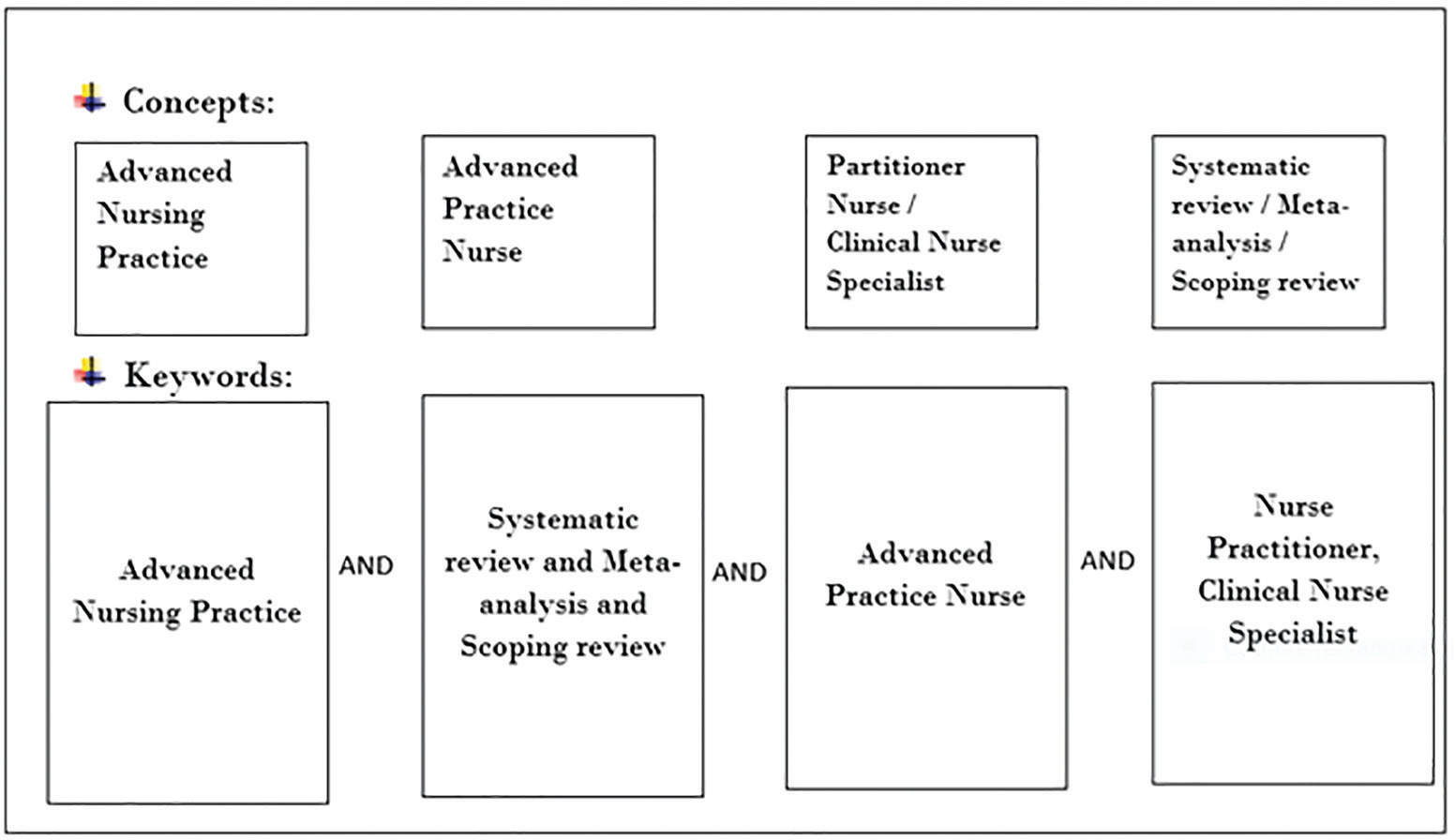
Figure 1.
Keywords used for the selection of relevant studies.
2.3. Inclusion criteria
The inclusion criteria, exclusion criteria, and factors considered in selecting a study are listed in Table 1.
Table 1.
Inclusion and exclusion criteria.
| Items | Inclusion criteria | Exclusion criteria |
|---|---|---|
| Types of studies | Systematic reviews, meta-analysis, and scoping reviews | Other types of studies |
| Fields of intervention | Studies focusing on the following axes:
| Studies not covering the 3 selected axes |
| Publication year | All studies published between 2016 and 2023 | Studies published before 2016 and after 2023 |
| Data sources | Studies published in PubMed, Cochrane Library, ScienceDirect, and Web of Science | Studies not published in the mentioned databases |
| Access | Open access articles | Articles not available on open access |
2.4. Articles selection
The studies were selected in three stages. The first step involves examining the studies based on their titles; those selected must have a relevant title, encompassing the keywords. In the second step, a sorting of abstracts was conducted to determine whether selected studies met the inclusion and exclusion criteria. In the final step, the articles were read in their entirety to include or not include in the review. A selection diagram was drawn up at the end of this process (Figure 2).
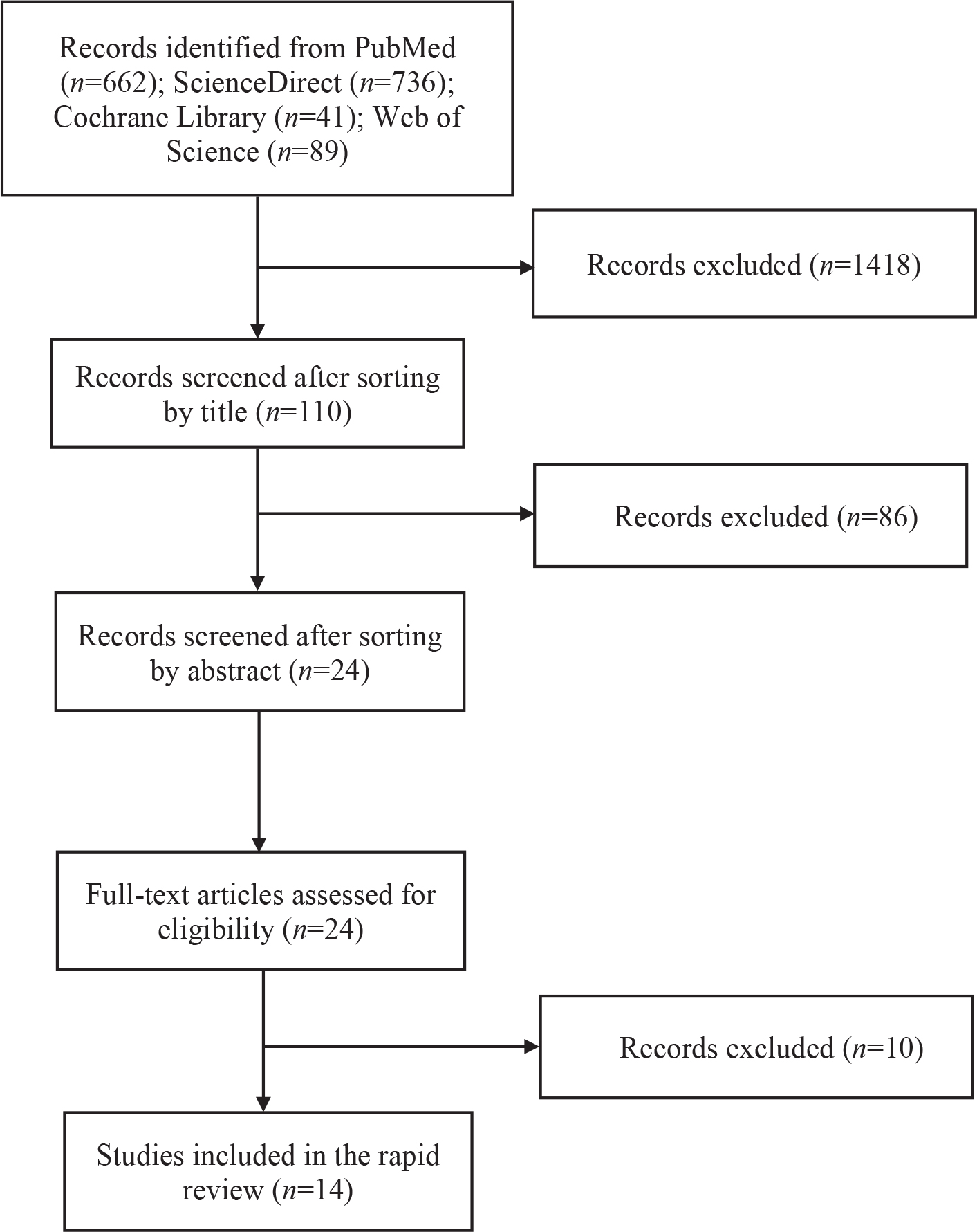
Figure 2.
Flow chart of the results of the review search.
2.5. Assessing the risk of bias
- Selection bias: to avoid a random selection of studies, this review defined inclusion and exclusion criteria.
- Detection bias: to ensure that the study is exhaustive and that all the relevant studies were identified, this review attempted to obtain information from the various databases available, such as PubMed and Cochrane Library.
- Interpretation bias: to guarantee an objective inter-pretation, a reading committee was involved in the evaluation and synthesis of the studies.
2.6. Data extraction
The information, such as authors, publication date, study objective, materials and methods, and consensus points, have been collected for each study. The extracted data are illustrated in Table 1.
Data extraction aimed to collect reliable and relevant results to achieve the objectives of the study. The results to be extracted are those relating to ANP; namely, definition, history, roles, competencies, challenges, and prospects.
2.7. Data analysis and synthesis
After extraction, the results obtained were analyzed using the following process:
– descriptive analysis of each review,
– categorization of results according to the axes of the study, and
– synthesis of data from reviews in the same category.
This synthesis is used to build a summary of the results.
2.8. Evaluation of reviews quality
The selection of reviews for the study was based on the inclusion/exclusion criteria already mentioned. For greater accuracy and neutrality, and to ensure that the selected reviews are of good quality, the reviews that were chosen for analysis were assessed using the tool developed by Kmet et al.12 Finally, we decided to follow 6 criteria to meet our objective.
A threshold has been set for the retention of studies: those retained must have a score of ≥10 out of 12.
3. Results
3.1. Article selection
A total of 1528 articles were found from the databases mentioned above (PubMed: N = 662; ScienceDirect: N = 736; Cochrane Library: N = 41; Web of Science: N = 89). It should be noted that the first selection was random as no filter was applied. After applying the inclusion and exclusion criteria, 1504 articles were excluded. Meanwhile, during the title and abstract examination, the remaining 24 were considered for fulltext analysis. Whereas 10 articles were excluded based on the eligibility criteria and the quality assessment grid. Finally, a total of 14 articles were selected (Figure 2).
3.2. Study characteristics
The selected articles include systematic and scoping reviews, conducted in Sub-Saharan Africa, the United Kingdom, the United States, Arab countries in the Eastern Mediterranean regions, the Netherlands, and Canada. All these studies were published between January 2016 and April 2023 in English (Table 2).
Table 2.
Characteristics of the reviews included in this study.
| Title | Authors | Publication year | Study type | Aim | Consensus points |
|---|---|---|---|---|---|
| 1. A systematic review of experiences of advanced practice nursing in general practice | Jakimowicz et al.13 | 2017 | Systematic review | Describe the experiences of IPAs in general practice | ANP features, strengthen the relationship between GPs and APNs, and boost the self-confidence and self-esteem of APNs |
| 2. Capability as a concept in advanced practice nursing and education: a scoping review protocol | Whitfield et al.14 | 2022 | Scoping review | Describe the term “capability” in Advanced practice nursing and education | Definition, skills, and competencies that allow APNs to deliver appropriate care for patients |
| 3. The impact of the advanced practice nursing role on quality of care, clinical outcomes, patient satisfaction, and cost in the emergency and critical care settings: a systematic review | Woo et al.7 | 2017 | Systematic review | Identify and synthesize the relevant studies on the quality of care provided by APNs, and the impact of advanced practice nursing on clinical outcomes, patient satisfaction, and cost in emergency and critical care settings | APN definition, APN roles, NP, APN competencies, the impact of advanced practice nursing in emergency and critical care on same rates, namely, the length of stay, cost savings, time to consultation/treatment, mortality, and patient satisfaction |
| 4. Advanced practice nursing roles in Arab countries in the Eastern Mediterranean region: a scoping review protocol | Almukhaini et al.15 | 2021 | Scoping review | Explore and summarize evidence related to advanced practice nursing roles in Arab countries in the Eastern Mediterranean region | APN definition, characteristics, outcomes, and the entry-level of education, globally and in the Eastern Mediterranean region |
| 5. The costs, resource use, and cost effectiveness of clinical nurse specialistled interventions for patients with palliative care needs: A systematic review of international evidence | Salamanca-Balen et al.16 | 2018 | Systematic review | Present international data from interesting studies on the cost-effectiveness and use of resources in interventions carried out by CNSs with patients requiring palliative care | APN definition, the efficiency of a CNS in reducing specific resource use such as hospitalizations/rehospitalizations/admissions, length of stay, and health care costs |
| 6. The roles of physician associates and advanced nurse practitioners in the National Health Service in the UK: a scoping review and narrative synthesis | Wang et al.17 | 2022 | A scoping review and narrative synthesis | Examine, on one hand, the career advancement, perceptions, competencies, effectiveness, and regulation of advanced NPs and physician associates. On the other hand, understand ways to adequately incorporate mid-level practitioners into the NHS labor force | History of ANP, competencies, career, effectiveness, perceptions, regulations, and roles |
| 7. Effectiveness of the Advanced Practice Nursing interventions in the patient with heart failure: A systematic review | Ordóñez-Piedra et al.18 | 2021 | Systematic review | By referring to the four PICO questions (Patients, Interventions, Comparison, and Outcomes), the study seeks to update the available knowledge on the effectiveness of APN interventions in patients suffering from heart failure | Advanced practice nursing definition, APN roles, competencies, and cost-effectiveness ratio of advanced practice nursing |
| 8. The outcomes of nurse practitioners (NP)-Provided home visits: A systematic review | Osakwe et al.19 | 2020 | Systematic review | Investigate the available evidence on health and health care delivery outcomes related to NP-home visits | Roles of APN, competencies of NP, and impact of NP on the quality of care provided |
| 9. Physician assistants and nurse practitioners in primary care plus: A systematic review | Van ERP et al.3 | 2021 | Systematic review | To have an overview of the primary care provided by medical assistants or NPs to become accustomed to | ANP definition, career, quality of care provided by NP “role of APN,” facilitators and barriers of implementation of NP in a service, and efficiency of NPs |
| 10. Impact of state nurse practitioner scope-of-practice regulation on health care delivery: Systematic review | Xue et al.1 | 2016 | Systematic review | Assess the impact of state legislation on the NP workforce, access to and use of health care, and health care costs | Role of APN: NP, the impact of the state of scope practice regulation on NP workforce, competencies of NP, and efficiency and effectiveness of the quality of health care provided by the NP |
| 11. Nurse practitioners and physician assistants working in ambulance care: A systematic review | van Vliet et al.20 | 2020 | Systematic review | Outline tasks of NPs and physician assistants in ambulance care settings. As well as, examine the effect of these tasks on costs, care process, and patient and provider outcomes | ANP definition, its history, activities of NP “role of APN,” and the effects of these activities |
| 12. The essence, opportunities, and threats to Advanced Practice Nursing in Sub-Saharan Africa: A scoping review. | Christmals and Armstrong2 | 2019 | Scoping review | Examine the need, opportunities, and cautions of establishing an ANP program in sub-Saharan Africa | APN efficiency, ANP program, opportunities, and cautions of the establishment and its effects on the health care system |
| 13. The association between advanced practice nursing roles and outcomes in adults following cardiac surgery: A systematic review of randomized controlled trials | Audet et al.21 | 2021 | Systematic review | Two main objectives:
| ANP implementation, outcomes of ANP, APN roles, aims, and competencies of APN |
| 14. Tasks and activities of APNs in the psychiatric and mental health care context: A systematic review and thematic analysis | Scheydt and Hegedüs22 | 2020 | Systematic review | Study, analyze, and summarize the remit of APNs working in psychiatric mental health | Definition of APN, ANP roles, competencies, and characteristics, and a description of the contents of ANP |
The quality of the selected studies was assessed using the tool developed by Kmet et al.12 The 14 selected studies had a score above the set threshold, including 4 studies with a score of 10/12, 9 studies with a score of 11/12, and 1 review with a score of 12/12.
3.3. The main axes
3.3.1. ANP
History of the ANP
Globally, it appears that the concept of “ANP” is not currently developed. Indeed, the first program leading to a diploma in ANP dates to the 20th century.15 This specialty was created to deal with the shortage of staff, particularly in rural areas. The emergence of these roles officially happened in 1950 in the United States through the role of the CNS. Then, in 1960, the United States recognized the role of the nurse practitioner (NP) to respond to the shortage of medical staff in primary care.15
In the early 1970s, Canada integrated ANP, followed by the United Kingdom in the 1980s. Afterward, Jordan introduced, in 1998, ANP through master’s programs for clinical nurses specializing in intensive care, community health, and maternity.15
Nevertheless, the development of ANP roles dates to the 2000s in Japan, Switzerland, New Zealand, and Germany. Finally, in 2001, the Dutch health care system recognized the introduction of ANP as an expected response to improve the balance between the growing demand for care and staff shortages.15
Definition
All researchers agree that ANP is a set of interventions and services provided by nurses who have acquired advanced skills and have an impact on the quality, safety, and outcomes of care provided to the population.16,18,21,22
According to Scheydt and Hegedüs,22 Hamric defines ANP as “The patient-focused application of an expanded range of competencies to improve health outcomes for patients and populations in a specialised clinical area of the larger discipline of nursing.”
The benefits of ANP
Many countries introduced ANP programs to improve health services and make them more cost-effective, especially in rural areas.2
In the United Kingdom, the use of ANP was a response to the shortage of medical staff and a means of reducing labor costs. Several studies conducted in the country have shown that the care provided by an APN is similar to or more effective than that offered by a physician. Shortages of medical staff and rising labor costs have prompted several governments to update their care models to make them more cost-effective.17
Studies on the cost-effectiveness of care provided by APNs have agreed that their interventions can increase efficiency. At the same time, it may reduce waiting times, the number of re-hospitalizations, the cost of care, and the mortality rate.7 Meanwhile, ANP roles are associated with greater patient satisfaction, fewer depressive symptoms, and higher smoking cessation rates among postoperative patients.21 Furthermore, ANP can mean a significant advance in continuity and quality of care for a variety of patients, especially for those with chronic or multiple pathologies, including cardiac and heart failure.18
3.3.2. APN
APN definition
According to the ICN, the APN is “a registered nurse who has acquired the expert knowledge base, complex decision-making skills, and clinical competencies for expanded practice, the characteristics of which are shaped by the context and/or country in which s/he is credentialed to practice.”15
Overall, APNs are nurses with a master’s or doctoral degree aiming to provide high-quality health care services in complex situations to the patient, the family, the community, and the health care system, based on in-depth clinical skills and expertise.21
The characteristics of an APN
According to the ICN,15 3 essential characteristics are needed to describe an APN:
– Postgraduate diploma (master’s degree at least) is recommended as the entry-level for APN roles.15
– APNs should have more autonomy by mobilizing the following skills: direct clinical practice, expertise, coaching, collaboration, guidance, consultation, research, clinical leadership, and ethical decision-making.15
– Have the authority to mobilize regulatory mechanisms, such as the ability to treat, diagnose, and prescribe medicines.15
The roles of APNs
The nursing roles of ANP are specific and well differentiated, including NP, Clinical Nurse Specialist (CNS), Certified Nurse Midwife (CNM), and Certified Registered Nurse Anesthetist (CRNA).18 Each role has its history and development and its characteristics.
In this review, we will focus on CNSs and NPs, since they are the two most widely recognized APN roles worldwide.21
3.3.3. NP
NPs work in primary care settings and were first introduced to tackle the shortage of medical staff in this area.21
NPs manage acute and chronic illnesses based on a regulated authority that provides them the right to diagnose, prescribe drugs and biological tests, and intervene autonomously. They also target healthy lifestyle promotion, including nutritional advice, physical activity, and smoking cessation, as well as providing social support and improving the quality of life. The care provided by a NP covers patient monitoring, condition assessment, symptom management, and pharmacotherapy.21
3.3.4. CNS
The ICN defines a CNS as “a nurse educated above the level of registered nurse and authorized to practise with advanced expertise in a nursing field. Specialist practice includes clinical, teaching, administrative, research, and consultancy roles.”16
CNS can intervene in different departments in a hospital. They aim to apply in-depth nursing expertise to develop nursing practice and support nurses in health care and complex situations. S/he can also be a leader in quality improvement and evidence-based practice initiatives in health care settings, education, and research.21
The care provided by CNSs consisted of clinical care, namely, clinical consultations and monitoring, requesting and interpreting complementary examinations, prescribing and adjusting medication, and communicating with other members of the work team.21 They provide supportive care like promoting healthy lifestyles, educating, improving self-management, and providing psychological and spiritual support for patients and their families.21
In addition, CNS is involved in coordinating care by referring to other specialties and liaising between services, coordinating patient care among different providers, and health planning.21
3.3.5. Examples of APNs interventions
In the context of cardiac surgery, the NP intervention begins with the implementation of a management plan for promoting a healthy lifestyle, prescribing and monitoring appropriate lipid-lowering treatment, and blood tests. However, after discharge, the NP’s intervention consists of a physical and environmental assessment of the patient’s needs, including symptom management and treatment.21
In the same context, the CNS focuses on social support, improving self-efficacy, and teaching people about the process of heart disease.21
During hospitalization, the CNS assesses the smoker’s risk situation and his intentions in maintaining his smoking behavior in the postoperative period. Furthermore, he assesses hemodynamic stability, the condition of drains, and the surgical healing process, and spends time teaching the benefits of early walking and returning to normal life after surgery.21
APNs are also involved in home visits, and their role is indisputable. Studies have shown that home visits led by an APN contribute to preventing hospital readmission, reducing the number of emergency visits. Moreover, NPs offer symptom control among elderly people in need of palliative care during these visits.19
A study published in 2017 compared the blood pressure measurement performed by a registered nurse and an APN in the general practice department. The nurse’s role was to record the result, recognize hypertension, and inform the doctor, while the APN’s role was to monitor the patient’s condition, schedule a reference to a general physician (GP), and discuss the case and treatment options.13
Another example that illustrates the difference in roles is the case of an agitated patient. The nurse will recognize agitation and inform the doctor. However, the APN will recognize agitation, initiate emergency intervention if necessary, use de-escalation techniques, arrange a referral to a GP, discuss the case with GP in detail, and assume responsibility of patient monitoring, including counseling 13
3.3.6. The needs, challenges, and prospects for the ANP in Morocco
The need for the ANP in Morocco
Due to the lack of national studies, this literature review is considered foundational, as our country is also encountering the same public health challenges. Morocco is facing a shortage of medical and nursing staff, which is creating challenges for the national health care system.2 This shortage is having a profound impact on the provision of health care in remote and rural areas.2
According to statistics published in 2016, Africa’s population is approximately 1.2 billion; this number is set to increase further by the middle of this century.2 This rapid growth will require improved access to quality health care services to deal with mortality and morbidity. The studies in this review have revealed the role and efficiency of the establishment of APNs in the health systems of countries that have opted to implement this feature.2
The challenges of the ANP in Morocco
The first limitation to the introduction of ANP in Morocco is that instructors need to be qualified, which means good governance of human resources for health, to produce and manage an appropriate workforce for nursing training institutes.2
The second limitation is the absence of proper legislation, which can lead to confusion between the roles of APNs and the roles of other health care professionals.2,13 This can probably cause a conflict between physicians and APNs since physicians stated that they are uncomfortable with the fact that APNs have the authority to do diagnoses.2,13
The prospects of ANP in Morocco
ANP in Morocco requires health reform before it can be introduced. This review can serve as a reference for other studies that will explore the impact of establishing the APNs on the quality of care in Morocco and the regulations, and the efficiency of the interventions carried out by APNs in the different departments of health care services.
Indeed, it is important to mention that the APN has added value in terms of improving the quality of care, particularly in rural and isolated areas where the availability of a doctor is not guaranteed on the outskirts of main centers, forcing the population to travel long distances for treatment. The presence of an APN in a health center also improves the monitoring of chronic diseases and provides therapeutic education.3,16,18,20,22
4. Discussion
Globally, APNs are nurses who have acquired advanced theoretical and practical training with a master’s degree. They must have core competencies such as direct clinical practice, education, and research, management, clinical and professional leadership. This finding was supported by Whitfield et al.,14 who stated that a master’s degree is necessary to become an APN.
Moreover, they also reported that, according to the CNS, the role of the APN includes appropriate educational preparation as well as participation in clinical practice, research, care coordination, clinical leadership, and consultation activities.14 Alongside, another study conducted in Arab countries affirmed the same result, emphasizing the importance of postgraduate education and the different roles of the APN.15
The studies selected have revealed that ANP is an effective solution to the shortage of health care professionals. A finding confirmed by other studies, including one published in 2021, reported that the involvement of APNs is a solution for ensuring a balance between the growing demand for care and the shortage of human resources.20 Besides, another study published in the journal Human Resources for Health reported that the integration of APNs into the NHS in the United Kingdom in 1980 was to address the shortage of physicians.17
Similarly, a study mentioned that the use of APNs in Arab countries was also a solution to this problem.15 The interventions provided by APNs have a similar efficiency to that of physicians, especially in-home visits and less complex care. The result was reported by a study published in Human Resources for Health, where authors mentioned that the APN’s health care services provided for patients are comparable to those of GPs in primary care.17
In the same context, Salamanca-Balen et al.16 mentioned in their study that APNs deliver a quality of care equivalent to that provided by physicians. On top of that, Woo et al.7 also reported that patient satisfaction with the care provided by an APN is similar to or higher when the care is delivered by a doctor.
The integration of APNs makes health care services more cost-effective, with a higher cost-efficiency ratio than that of doctors, as reported by patients. This result was reported in a study published in Human Resources for Health, as mentioned by Wang et al.,17 which found that APN’s interventions are considered cost-effective compared to GPs, and that the cost of a GP consultation was 60% higher than that of a NP for a home visit, after considering all the investment costs and adjusted for the length of the consultation.
The same point was reported by Woo et al.7 who stated that care and monitoring offered by APNs lead to cost savings. APN interventions contribute to a reduction in emergency length stays, as reported in a study published in 2017, which indicated that patients managed by APNs experienced a significant reduction in the length of emergency stay compared with those managed by doctors.7 The same study reported that waiting times for patients with injuries requiring direct care became shorter when examined by emergency NPs compared to those examined by physicians. However, ANPs have shown that clinical results are compatible with those provided by physicians in emergency and intensive care situations.7
In palliative care, the interventions carried out by CNS have contributed to increasing patient satisfaction, reducing costs, reducing the number of hospitalizations and re-hospitalizations, and reduction in the length of stay. This was confirmed by Salamanca-Balen et al.16, who reported that CNS has an impact on reducing hospitalizations and re-hospitalizations, as well as a reduction in the average length of stay, and improved quality and access to care.9
Nevertheless, a study identified the importance of regulation and indicated that the services provided by APNs in countries with proper laws are superior to those provided in countries without proper laws or with restrictive regulations.1
However, the lack of regulation can lead to conflicts between doctors and APNs; this viewpoint was reported by a study published in BMC Nursing.13 The authors mentioned that some doctors do not accept the idea of delegating roles to APNs, and other physicians think that they have authority over nurses.13
Another study highlighted that APNs find that the ambiguity of regulation impacts job satisfaction negatively.17
According to the ICN, practicing APNs requires at least a master’s certification.5,14 In Morocco, this is provided by training institutes for paramedical professionals, such as the HIHS, which offers a specialized master’s degree in advanced health care practice for nursing professionals and students, and the Higher Institute of Nursing Professions and Health Technologies (HINPHT), which in turn offers a master’s degree in advanced health care in specific specialties such as palliative care, oncology, etc. All are 2-year courses and are state-certified.9
Regarding the implementation of ANP in Morocco, the challenging issues must be studied in advance. A study on the challenges facing the introduction of ANP in sub-Saharan Africa cites the shortage of trainers, the lack of legislation, and the inadequacy of financial resources.22
Although the articles selected do not specify the framework used to implement the APN role, some cite the Participatory, Evidence-based, Patient-focused process for APN role development (PEPPA) reference framework.
This framework comprises nine steps for determining whether a new advanced practice nursing role should be implemented, based on the population’s needs and the range of care available. The involvement of all the stakeholders concerned must be anticipated throughout the process.23
4.1. Strengths
This study followed a rigorous and detailed methodology from the selection of articles to the synthesis of the reviews obtained. This study is an initiative to other research projects with the same purpose. This review provided the definition, standards, and roles of ANP concepts in a limited time.
4.2. Limitations
There is a lack of national studies about ANP. At the national level, there are no guidelines or legislation published on ANP. The implementation of the ANP in the Moroccan health care system may have to deal with the same challenges as in other countries during the initial phase.
5. Conclusions
This review provides an overview of the concepts of ANP, issues, and prospects for the establishment of the APN. It emerges that ANP is an effective solution for dealing with public health issues such as staff shortages and improving the quality of health care provided to patients. First, the results showed that different health care systems around the world have introduced the ANP to mitigate staff shortages, specifically in rural and remote areas where provision of care is limited. Second, the APNs have shown that they add great value to the health system through the efficiency of their interventions, good value for financial resources, patient satisfaction, and integration into health care teams. Finally, it is necessary to study in advance the current issues such as the lack of legislation and the inadequacy of financial resources to develop a model for introducing APN in the Moroccan health system.
Notes
[3] Ethical approval
Ethical issues are not involved in this paper.
[4] Conflicts of interest Conflicts of interest
All contributing authors declare no conflicts of interest.