

1. Introduction
Optional Financial Information Reporting (OFIR) and increased transparency serve a primary purpose, i.e., to safeguard the rights of the shareholders. When a firm optionally discloses its financial activities, it not only increases the interests of the shareholders, but also increases the profits of the firm (Gopika and Ratheesh, 2023; Kadhim and Barrak, 2023). It functions as a primary pillar in enhancing the accountability, transparency and sustainability and provides the firm, a competitive edge in the market. Abbas and Munshid (2024) mentioned that optional financial reporting of the firms improves their ability to accomplish sustainability strategies since the world has moved on to the Environmental, Social, and Corporate Governance (ESG) reporting method, in which a company’s eco-friendly and sustainable strategies are also communicated to the investors, shareholders, customers, and regulators to achieve a comprehensive and sustainable performance. Further, optional financial reporting helps the firms attract investment, brand recognition, increased social value, and long-term financial performance. Elgarf et al. (2023) mentioned that there exists a positive relationship between disclosing the accounting reports in terms of economic, social, and environmental dimensions and accounting conservatism as a measure of predictive ability of accounting information. On the other hand, optional financial reporting has its own drawbacks such as information asymmetry, under-reporting, etc.
Optional financial reporting is defined as providing information beyond the mandatory financial reporting requirements to highlight the environmental, social, and governance (ESG) efforts of the firms since these efforts act as a pillar of long-term sustainable financial performance (Ferjančič et al., 2024; Beretta et al., 2025). Research indicates a strong correlation between the quality of optional reporting and strategic financial performance indicators, such as return on equity (ROE) and earnings per share (Islam, 2021). However, Haddad (2005) found that there exists a negative association between financial disclosure in the corporate annual reports with that of the cost of equity in the Amman stock exchange and with return on assets, return on equity, and net profit margin in the Nigerian stock exchange, respectively. This supports the idea that optional reporting is not simply a matter of regulatory compliance, but rather a tool for maximizing the corporate value (Beretta et al., 2025). A few studies mentioned that the disclosure of the firms regarding the climate risks and the opportunities associated with it enhances the ability of the firms to adapt to future challenges and eventually affects the firm’s financial stability too (Aboud, 2024; Megeid, 2024).
Despite the richness of the literature, a critical theoretical gap persists: existing frameworks have predominantly been developed in stable and highly regulated financial systems, whereas significantly less is known about how OFIR functions in fragile, emerging, or post-conflict economies. Traditional reporting models assume robust institutional governance, efficient markets, and predictable investor behavior – conditions that do not fully apply in many developing countries (Bajpai et al., 2023). In this context, Iraq offers a theoretically significant setting because its banking sector operates within a unique combination of institutional volatility, weak enforcement mechanisms, and evolving corporate governance structures. These institutional characteristics introduce asymmetries in reporting incentives, risk behavior, and transparency expectations – factors underexplored in existing OFIR theory. Thus, by examining OFIR in the Iraqi banking sector, this study advances theory by testing disclosure–performance relationships under conditions of regulatory fragility and structural market heterogeneity, providing insights not yet addressed by mainstream disclosure models.
In order to maximize the benefits of OFIR, banks should adopt global standards. The research problem lies in the lack of trust in financial statements, especially after the global financial crisis of 2008. Traditional financial reports have become insufficient to provide a comprehensive picture of the activities and operations of economic units, to enhance sustainable strategic financial performance. Therefore, reports should include non-financial information, enabling investors to access important information outside the main financial statements (Turkmen Muldur et al., 2019). This will help address the research problem and improve financial reporting. The article aims to explore how OFIR (such as environmental, social, and governance (ESG) reporting or sustainability reporting) can impact banks’ sustainable strategic financial performance. This enhances trust among shareholders and investors, leading to improved access to finance, lower costs of capital, and increased long-term market value. Based on the above, the researchers believe the research problem can be summarized in the following questions:
RQ1. To what extent are Iraqi banks committed to reporting optional financial information?
RQ2. Does reporting optional financial information enhance sustainable strategic financial performance?
The importance of our article lies in highlighting the reporting of optional financial information and assessing the sustainable strategic financial performance on a long-term basis. Although prior studies discuss OFIR in general terms, very few have empirically examined how OFIR translates into sustainable strategic financial outcomes in emerging banking systems. On the other hand, several studies have examined Iraqi companies in general; there remains a notable gap in research on how OFIR influences sustainable strategic financial performance, particularly in relation to a bank’s ability to achieve its strategic objectives (Khayoon and Al Maine, 2021; Almshabbak and Chouaibi, 2023; Kadhim and Barrak, 2023; Abbas and Munshid, 2024). In this background, the current research work seeks to analyze the role played by OFIR in improving the quality of financial reporting and increasing the confidence of both investors and stakeholders.
It is important to emphasize that the findings of this study are based exclusively on the Iraqi banking sector, specifically three banks selected according to the CAMELS classification. The contextual and regulatory characteristics of Iraq may limit the direct applicability of these results to other regions or banking systems. Consequently, the generalizability of the study is inherently constrained. Future research should investigate similar dynamics across multiple countries and diverse banking environments to validate and extend the applicability of the findings.
The objectives of this study are as follows:
(1) To understand the concept of optional financial information reporting.
(2) To understand the concept and importance of measuring sustainable strategic financial performance;
(3) To understand the strategic financial performance indicators;
(4) To identify the impact of optional financial information reporting upon sustainable strategic financial performance.
2. Literature Review
2.1. Optional Financial Information Reporting
Optional financial reporting helps shareholders, creditors, suppliers, employees, and regulators understand an organization’s financial position and related performance to make effective decisions. The primary objective of financial reporting is to provide high-quality information related to economic units, primarily of a financial nature, that is useful in economic decision-making (Alawaed et al., 2024). However, most existing frameworks conceptualize voluntary disclosure within stable institutional and governance environments, where regulatory mechanisms and market oversight are strong. As a result, they often overlook contexts where structural instability, governance limitations, or weak enforcement affect disclosure incentives.
This gap is especially relevant in countries like Iraq, where financial institutions navigate complex regulatory environments, shifting market structures, and post-conflict economic rebuilding. Such environments challenge the applicability of traditional disclosure theories that assume high institutional capacity. By investigating OFIR within this environment, the present study contributes to theory by demonstrating how voluntary disclosure behaves when institutional trust and market efficiency are limited – a dimension largely missing in mainstream literature (Islam, 2021; Rouf and Siddique, 2023).
Financial reporting combines transparency and authenticity, while disseminating the information helps in decision-making and justification. The entity should disclose the information that helps the shareholders, stakeholders, end users of the company’s products/services, and the general public to assess the entity’s expected long-term financial sustainability (Alsaqa and Al-sendy, 2021). The studies pertaining to the OFIR have been categorized under the following sections to ensure a comprehensive approach on the theme. Building on this literature, voluntary disclosure is expected to influence how effectively stakeholders evaluate firm value and performance. Therefore, this section directly supports the study’s first hypothesis, which states that,
H1: Voluntary Financial Information Reporting (VFIR) dimensions are significantly associated with key financial performance metrics.
2.1.1. Information About the Bank’s Strategy
Bank strategy refers to the set of long-term plans and policies adopted by a bank to achieve its financial and operational objectives, including growth, risk management, and market positioning. Transparent disclosure of strategic information allows stakeholders to better understand a bank’s priorities, decision-making processes, and expected outcomes. Uddin et al. (2022) found that information disclosure practices among banks were generally inefficient, although conventional banks performed slightly better than Islamic banks. Almshabbak and Chouaibi (2023) confirmed the positive impact of voluntary financial performance disclosure on return on assets (ROA) and return on equity (ROE), while noting a negative effect on earnings per share (EPS). Swiatkiewicz (2017) and Meiryani et al. (2023) reported that corporate social responsibility (CSR) disclosure significantly improves ROA but has no significant influence on ROE and net profit margin. Al-Homaidi et al. (2020) further demonstrated that background information on Islamic banks, corporate governance disclosures, and corporate social reporting – along with bank size – show negative and significant relationships with ROA and ROE. Collectively, these findings highlight that strategic disclosures shape stakeholders’ assessment of financial strength, particularly profitability. Aligning with this evidence, the study posits the following sub-hypothesis,
H1a1: Publishing of information about the bank’s strategy is positively associated with the achievement of the bank’s profitability.
2.1.2. Future Information About Expenses and Revenues
Yassen et al. (2025) reported an inverse relationship between optional disclosure and the cost of equity capital (COE), suggesting that increased transparency may lower capital costs. Leng et al. (2025) further demonstrated that voluntary disclosure of bank-related information significantly reduces liquidity hoarding. In contrast, Mahajan and Singh (2024) found no significant relationship between optional disclosure and the cost of capital, and also noted that optional disclosure had no notable influence on bank performance within the Indian banking sector. Sahyoun and Magnan (2022) observed that financial information disclosure may increase the cost of equity, with this effect mediated by financial analysts. Taken together, the literature illustrates that disclosure of forward-looking financial information – particularly detailed reporting on both operational and financial expenses and revenues – can shape market perceptions of liquidity strength and capital stability. Providing comprehensive future information about anticipated operational and financial costs and revenues enables stakeholders to better evaluate a bank’s liquidity position and capital adequacy. Therefore, this hypothesis specifically focuses on the disclosure of such forward-looking financial data. Guided by this evidence, the following sub-hypothesis is advanced,
H1b2: Publishing future information about expenses and revenues is positively associated with the bank’s liquidity and capital adequacy scores.
2.1.3. Information About Stocks, Shareholders, and Profitability
Boateng et al. (2022) reported that the adoption of IFRS tends to reduce voluntary disclosure, noting that board size and leadership structure are critical determinants of disclosure practices. However, board independence and auditor type were found to exert a significant positive influence on optional financial information disclosure. Allaya et al. (2022) further emphasized that firms engaging in greater voluntary disclosure are more likely to access long-maturity debt, particularly in markets where shareholders play a dominant role in monitoring high-risk wealth expropriation. Similarly, Grassa et al. (2021) observed that voluntary disclosure tends to be negatively associated with block holders, foreign ownership, and larger boards, while board independence and the proportion of foreign board members have positive effects. For the purpose of this study, “information about stocks” refers to the disclosure of key company data by publicly listed banks that can influence company value, including stock ownership structure, shareholder composition, and related governance information. This ensures clarity that the hypothesis focuses on publicly listed banks subject to regulatory reporting obligations rather than all banking institutions. Collectively, these findings imply that information related to stocks and shareholder structure can shape both profitability outcomes and risk exposure by influencing governance quality, market perceptions, and capital access. In light of this evidence, the following sub-hypothesis is proposed,
H1c2: Publishing information about stocks and shareholders in publicly listed banks is positively associated with the bank’s profitability and negatively associated with its investment risk scores.
2.1.4. General and Credit Risk Management
Thien and Hung (2021) examined the role of financial and operational risks in shaping the voluntary adoption of international financial reporting standards among SMEs, highlighting how firms adjust disclosure practices in response to risk exposure. Almshabbak and Chouaibi (2023) further demonstrated that voluntary disclosure of risk-related information shows a positive correlation with bank profitability indicators such as ROE, ROA, and Net Interest Margin. Mies (2024) identified profitability, leverage ratio, corporate governance attributes, and risk governance quality – along with Islamic banking structures – as significant determinants that enhance risk information disclosure. Likewise, Yousefinejad et al. (2022) established a strong link between risk management reporting and financial efficiency among Malaysian firms. Together, these findings suggest that transparent reporting on general and credit risk management strengthens market confidence, improves profitability, and may mitigate perceived investment risks. Based on this theoretical and empirical foundation, the following sub-hypothesis is proposed,
H1d2: Reporting on general and credit risk management is positively associated with the bank’s profitability and negatively associated with its investment risk scores.
2.1.5. Information on Social and Environmental Responsibility
Gupta (2025) found a negative impact of sustainability disclosures on bank performance. Lamanda and Tamásné (2025) reported improved sustainability disclosures and a negative correlation between ESG performance and financial depth. Ellili and Nobanee (2023) identified a positive influence of sustainability disclosure on bank performance. Bidari and Djajadikerta (2020) showed that bank size and profitability are positively associated with CSR disclosure. In this study, the overall voluntary financial information reporting (VFIR) is defined as the aggregate of all optional disclosures across financial, operational, and social dimensions, capturing the extent of transparency practices in banks. Drawing upon previous findings that link comprehensive reporting to profitability and reduced investment risk, the following sub-hypotheses are proposed,
H1e2: Publishing information on social and environmental responsibility is positively associated with the bank’s profitability.
H1f1: The overall voluntary financial information reporting (VFIR) is positively associated with the bank’s profitability and negatively associated with its investment risk scores.
2.1.6. Review of Accounting Policy
Charumathi and Ramesh (2020) found that size, age, profitability, and market valuation are predominant determinants of optional financial disclosure. Gündüz and Gündüz (2025) reported that environmental accounting disclosures have no direct significant impact on financial performance, contributing only marginally to bank performance. Lin and Qamruzzaman (2023) found a positive and significant association between firm sustainability and its environmental and financial disclosure. Giner et al. (2019) observed a positive correlation between market capitalization and optional IFRS adoption, while profit was negatively associated. Prasad and Mondal (2025) confirmed that ESG-related disclosures are time-sensitive, with private banks in India showing high interest. Thu Loan et al. (2024) highlighted that environmental and governance disclosures significantly influence ROE, while social disclosures do not. Menicucci and Paolucci (2023) found a negative relationship between ESG disclosure and operational and market performance. Accordingly, the following sub-hypotheses are proposed,
H1g1: Reviewing and disclosing accounting policies is positively associated with the bank’s environmental performance scores.
H1h1: Publishing information on financial performance and its indicators is positively associated with the bank’s environmental performance scores.
2.1.7. General Information Optionally Reported by the Bank
Non-financial reporting mandates, prevalent in the European Union, have increased non-financial transparency among firms and enhanced social activity, though they may negatively affect firm value (Breijer et al., 2025). Kapur et al. (2022) found that bank-specific factors, including deposit growth, non-performing loans (NPL), and ROA, influence bank liquidity. Accordingly, the following sub-hypotheses is proposed,
H1i1: Publishing general information optionally is positively associated with the bank’s liquidity and capital adequacy scores.
2.2. Sustainable Strategic Financial Performance
Sustainable strategic financial performance integrates traditional financial profitability with environmental, social, and governance (ESG) dimensions. Its primary objective is to ensure long-term growth while mitigating risks associated with social and environmental changes. In the banking sector, sustainable strategic financial performance serves as a strategic tool to enhance investor confidence and attract funding, particularly amid increasing global focus on green finance and transparency (Ali and Mahdi, 2024). This concept emphasizes that banks’ performance evaluation should extend beyond profit measures to include sustainability indicators that reflect long-term resilience and strategic growth (Mah’d and Mardini, 2022). Financial performance is defined as “measuring the results achieved or expected in light of specific standards to determine what can be measured, and then the extent to which the objectives are achieved to determine the level of effectiveness and determine the relative importance between the results and the resources used, which allows for judging the degree of efficiency” (Al-Humairi et al., 2024).
Stakeholder theory emphasizes balancing the interests of all parties affected by a company’s activities, including shareholders, employees, customers, society, and the environment. Firms that adopt such an approach, which integrates ESG factors alongside financial performance, are likely to achieve improved long-term financial outcomes through enhanced reputation, reduced social and legal risks, and increased attraction of sustainable investments (Freeman et al., 2021). Prior studies have also shown that voluntary disclosure influences stock liquidity, though evidence on its effect on share turnover remains mixed (Schoenfeld, 2017; Abu Nassar and Rahahleh, 2024). Building on this literature, the main hypothesis for this section posits that,
H2: Banks exhibit significant differences in performance metrics based on variations in their voluntary financial information reporting practices.
2.2.1. Capital Adequacy and Liquidity Performance
Banks demonstrate significant differences in capital adequacy and liquidity management practices. Abu Khalaf and Awad (2024) found that bank size, operational efficiency, and NPL negatively influence profitability, while ROE is positively affected by liquidity risk, capital adequacy, income diversification, and growth. Jiang et al. (2023) reported that funding liquidity positively impacts sustainable bank lending growth. Based on this evidence, the following sub-hypotheses are proposed,
H2a: Banks differ significantly in their capital adequacy scores in relation to voluntary financial information reporting practices.
H2b: Banks differ significantly in their liquidity scores in relation to voluntary financial information reporting practices.
2.2.2. Profitability and Investment Risk
Profitability and risk exposure are key dimensions of sustainable strategic financial performance. Jreisat and Bawazir (2021) confirmed that non-interest income positively and significantly contributes to profitability in MENA region banks. Differences in investment risk management also affect overall financial stability. Accordingly, the following sub-hypotheses are proposed,
H2c: Banks differ significantly in their profitability scores in relation to voluntary financial information reporting practices.
H2d: Banks differ significantly in their investment risk scores in relation to voluntary financial information reporting practices.
2.2.3. Leverage and Environmental Performance
Leverage and environmental management are additional dimensions where banks differ in their performance metrics. These factors affect both financial resilience and ESG alignment (Liu et al., 2025; Oanh et al., 2025). Hence, the following sub-hypotheses are proposed,
H2e: Banks differ significantly in their leverage scores in relation to voluntary financial information reporting practices.
H2f: Banks differ significantly in their environmental performance scores in relation to voluntary financial information reporting practices.
2.2.4. Overall Strategic Sustainable Performance
Sustainable strategic financial performance reflects the integrated effect of all financial and non-financial performance metrics. Variations in bank strategies, disclosure practices, and ESG adoption influence this overall score (Rana et al., 2025; Liaqat et al., 2026). Therefore, the following sub-hypothesis is proposed:
H2g: Banks differ significantly in their overall strategic sustainable performance in relation to voluntary financial information reporting practices.
3. Theoretical Framework
The present study is grounded in information asymmetry theory and signaling theory, which provide the conceptual basis for analyzing the role of OFIR in banks. According to information asymmetry theory, managers typically have more information regarding a firm’s operations and financial conditions than external stakeholders (Healy, 1998; Ayagi and Salisu, 2023). Voluntary disclosure beyond mandatory requirements reduces this asymmetry, improving stakeholders’ ability to evaluate the bank’s financial health, liquidity, risk profile, and long-term sustainability (Shalhoob, 2025).
Signaling theory posits that firms can strategically disclose information to signal their quality, operational efficiency, and prospects to the market (Diamond and Verrecchia, 1991; Bafera and Kleinert, 2022). In the banking context, OFIR – including strategic, financial, risk-related, and ESG disclosures – functions as a credible signal to investors, regulators, and customers. Such disclosures can enhance profitability, improve capital adequacy, reduce investment risk, and support sustainable strategic performance (Bushman and Smith, 2003; Leuz and Wysocki, 2016).
Despite substantial research on OFIR in developed economies, a notable gap exists regarding emerging markets, particularly in regions with high economic volatility and evolving regulatory environments. Existing studies have primarily focused on developed financial markets, leaving questions about how voluntary disclosures influence bank performance in post-conflict or transitional economies unanswered (Guidry and Patten, 2012; Christensen et al., 2021; Odhiambo, 2023). In Iraq, the banking sector faces unique challenges including regulatory changes, limited investor trust, and economic instability. These conditions make it a critical setting to investigate whether OFIR can meaningfully impact sustainable strategic financial performance.
By focusing on Iraq, this study contributes to filling this research gap. The selection of Investment Bank, Ashur Bank, and Bank of Baghdad is deliberate: these banks are among the most actively traded and influential institutions in Iraq, with significant market share, transaction volumes, and disclosure practices. Their operational and financial activities provide a robust basis to test theoretical predictions about transparency–performance relationships in an emerging market context. Guided by this theoretical framework, the study examines multiple dimensions of OFIR – including general disclosures, bank strategy, future expenses and revenues, stockholder information, risk management, accounting policies, and social and environmental responsibility – and their relationship with key performance indicators, such as profitability, liquidity, capital adequacy, investment risk, and strategic sustainable performance.
4. Methodology
4.1. Research Community and Sample
This study utilized secondary data comprising annual financial statements, regulatory filings, and publicly available disclosure reports collected from three major commercial banks – Investment Bank, Ashur Bank, and Bank of Baghdad – selected from the 22 commercial banks listed on the Iraq Stock Exchange for the years 2021–2023. The data were systematically collected from the banks’ official websites, Iraq Stock Exchange disclosures, and reports published by the Iraqi Securities Commission, and were verified for completeness and consistency before analysis. The selection was guided by the CAMELS-based classification used by the Iraqi Securities Commission, which identifies banks with stronger financial stability, compliance, and reporting quality. These three banks are among the most actively traded financial institutions in the country and play a central role in credit provision, liquidity generation, and economic development.
To address potential heterogeneity across the selected banks, additional analytical steps were incorporated to ensure that the observed relationships were not driven by structural differences among institutions. Specifically, the study acknowledges that Iraqi banks vary in ownership structure, market capitalization, governance quality, and risk exposure. These sources of heterogeneity may influence both the extent of OFIR and performance outcomes. To mitigate these concerns, non-parametric tests (e.g., Kruskal–Wallis) were used because they do not assume homogeneity of variance among the groups. The bootstrap and permutation procedures were also incorporated to enhance the robustness of the estimations, allowing the analysis to remain valid even when underlying data distributions differ across banks. These resampling-based methods reduce the sensitivity of results to outliers and bank-specific characteristics – an important consideration given the heterogeneity typical in emerging-market banking systems such as Iraq. Furthermore, the interpretation of the results explicitly considers this heterogeneity by comparing the reporting patterns and performance metrics of the three banks and examining whether differences in strategic orientation, asset structure, and risk management practices may have influenced the magnitude of the observed effects.
Their substantial asset holdings, high transaction volumes, and consistent disclosure practices make them influential actors within Iraq’s financial sector and suitable cases for examining how OFIR affects bank performance. To further clarify the analytical structure of this study, Figure 1 illustrates the key variables and their dimensions, outlining the relationship between optional financial reporting components and bank performance indicators. Incorporating these banks into the framework depicted in Figure 1 provides more robust evidence, as their financial activities, market presence, and regulatory classifications align with the conceptual model and allow for reliable observation of transparency–performance dynamics.
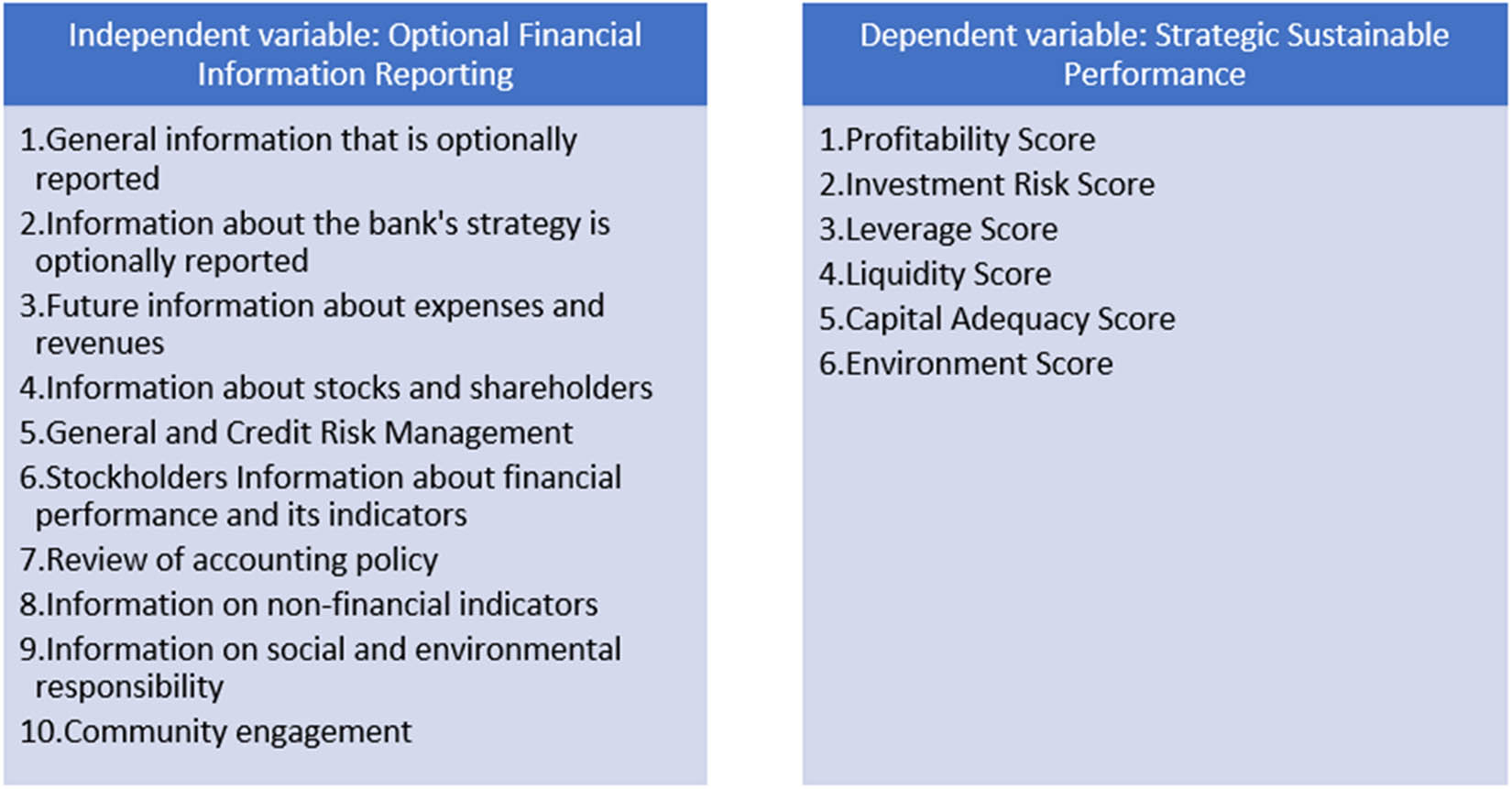
Figure 1
Key variables and their dimensions in optional financial information reporting and bank performance
(Source: Authors’ own research)
This study employed a multidimensional analytical approach, including correlation analysis, bootstrap confidence intervals, permutation tests, and non-parametric procedures. The methodological choices align with foundational literature, such as Healy (1998), who classified optional reporting as a mechanism to reduce information asymmetry, and Diamond and Verrecchia (1991), who demonstrated that enhanced disclosure reduces the cost of capital. Additionally, the economic implications of transparency highlighted by Bushman and Smith (2003) and Leuz and Wysocki (2016) further support the selection of these banks and the design of the analytical model.
4.2. Role of the Selected Banks
The selection of Investment Bank, Ashur Bank, and Bank of Baghdad is further justified by their demonstrated influence on Iraq’s banking and financial landscape during the study period (2021–2023). These institutions collectively represent a substantial share of the sector’s trading activity, market capitalization, and financial intermediation functions, making them highly relevant for assessing the impact of OFIR.
4.2.1. Market Activity and Liquidity Contribution
These three banks consistently rank among the most actively traded institutions on the Iraq Stock Exchange. Their high transaction volumes indicate strong investor interest and market confidence, making their financial disclosures highly influential in shaping market behavior. For example, Bank of Baghdad frequently appears in the top tier of traded banks, contributing significantly to daily liquidity flows in the exchange. Active trading ensures that changes in voluntary reporting practices are promptly reflected in market valuations, thus providing an ideal setting for performance-related analysis.
4.2.2. Financial Size and Asset Holdings
In terms of asset base, Investment Bank, Ashur Bank, and Bank of Baghdad represent a considerable portion of the total assets held by Iraqi commercial banks. Their balance sheet size indicates a strong presence in lending, deposits, and investment activities. Large banks typically face higher scrutiny from investors and regulators, making their transparency practices more critical for maintaining financial stability and reducing information asymmetry.
4.2.3. Role in Credit Provision and Economic Development
These banks play an important role in supporting the Iraqi economy through credit provision to small and medium-sized enterprises (SMEs), corporate borrowers, and various investment sectors. Their credit portfolios, often highlighted in annual reports, demonstrate their involvement in financing economic development projects, trade activities, and private-sector growth. Increased credit availability from such banks directly contributes to economic revitalization and job creation, magnifying the importance of transparent reporting practices.
4.2.4. Regulatory Classification and Compliance Track Record
According to CAMELS-based evaluations used by the Iraqi Securities Commission, these institutions are consistently rated among the more stable and compliant commercial banks. Their adherence to prudential regulations, financial reporting requirements, and disclosure norms underscores their reliability as case studies. Banks with strong compliance histories often adopt more structured optional reporting practices, making them suitable for examining the quality and extent of voluntary disclosures.
4.2.5. Availability and Consistency of Data
The selected banks maintain comprehensive and accessible financial statements, including annual reports, quarterly disclosures, and voluntary communication materials. Their reporting practices are comparatively more consistent than many smaller or less active banks. This availability of high-quality secondary data enhances the reliability of the research and allows for multi-year comparative analysis.
5. Results
This section deals with the results obtained from the analysis that involved ten dimensions of VFIR and six dimensions of sustainable strategic financial performance. The first section deals with the descriptive statistics while the second section discusses about the correlation analysis outcomes. The third section details about the Kruskal–Wallis chi-squared Test outcomes obtained in the study and the final section summarizes the study findings.
5.1. Descriptive Statistics
The analysis employed the multidimensional approach to evaluate ten distinct dimensions of optional reporting, from general information to social responsibility initiatives, and assesses their impact on various performance metrics, including profitability, investment risk, liquidity, and capital adequacy.
The summary in Table 1 reveals a considerable variation in both the VFIR practices as well as the performance metrics across the banks considered for the study. Amongst the three banks, the Investment Bank demonstrated the highest overall VFIR score (0.5144), followed by Baghdad Bank (0.4395) and Ashur Bank (0.4093). However, the most striking observation relates to the extreme variations in certain performance metrics. Ashur Bank achieved an unusually high strategic sustainable performance score (77.8124) compared to the other banks i.e., Investment Bank (14.5620) and Baghdad Bank (1.0021). Similarly, the Investment Risk Score for Ashur Bank (390.8920) significantly exceeded compared to its counterparts. These extreme values likely reflect the small sample size rather than true operational differences of such magnitude. Weston and Nnadi (2023) found similar results, highlighting that limited sample sizes in banking studies can produce exaggerated variability in reported performance metrics, which may not accurately represent underlying operational efficiency or risk profiles. Lajili and Zéghal (2009) noted that small sample analyses in banking studies often produce outliers that require careful interpretation. The data may also reflect measurement issues or specific accounting practices that are unique to the Iraqi banking environment.
Table 1
Descriptive statistics of optional financial information reporting dimensions and bank performance metrics (2021–2023)
| Bank | Ashur Bank | Baghdad Bank | Investment Bank |
|---|---|---|---|
| Dimension 1: General information that is optionally reported | 0.7500 | 0.7083 | 0.8750 |
| Dimension 2: Information about the bank’s strategy is optionally reported | 0.4167 | 0.4167 | 0.3333 |
| Dimension 3: Future information about expenses and revenues | 0.2000 | 0.2000 | 0.3333 |
| Dimension 4: Information about stocks and shareholders | 0.5556 | 0.6667 | 0.5556 |
| Dimension 5: General and credit risk management | 0.2381 | 0.4286 | 0.4762 |
| Dimension 6: Stockholders | 0.7500 | 0.7500 | 0.7500 |
| Dimension 7: Information about financial performance and its indicators | 0.2381 | 0.4286 | 0.5238 |
| Dimension 8: Review of accounting policy | 0.3333 | 0.4444 | 0.7778 |
| Dimension 9: Information on non-financial indicators | 0.4444 | 0.2963 | 0.4074 |
| Dimension 10: Information on social and environmental responsibility and community engagement | 0.1667 | 0.0556 | 0.1111 |
| Total OFIR | 0.4093 | 0.4395 | 0.5144 |
| Profitability score (2021–2023)1 | 0.1570 | 0.1992 | 0.1166 |
| Investment risk score (2021–2023)2 | 390.89 | 1.1019 | 0.6790 |
| Leverage score (2021–2023)3 | 1.8009 | 2.3294 | 1.5636 |
| Liquidity score (2021–2023)4 | 1.7489 | 1.5874 | 45.5502 |
| Capital adequacy score (2021–2023)5 | 0.8382 | 0.1601 | 33.4180 |
| Environment score (2021–2023)6 | 0.4368 | 0.5165 | 1.3565 |
| Strategic sustainable performance (2021–2023)7 | 77.812 | 1.0021 | 14.5620 |
(Source: Authors’ own research)
¹Profitability score represents the average ROA and ROE for 2021–2023.
2Investment risk score calculated using volatility of returns and non-performing loans over 2021–2023.
³Leverage score represents the average debt-to-equity ratio over 2021–2023.
⁴Liquidity score represents the average liquidity ratio (current and quick ratios) over 2021–2023.
⁵Capital adequacy score calculated using CAR (Capital Adequacy Ratio) per Basel III standards for 2021–2023.
⁶Environment score aggregates ESG-related disclosure indicators reported from 2021–2023.
⁷Strategic sustainable performance represents a composite index of profitability, ESG, and capital adequacy metrics over 2021–2023.
In Table 1, the presented data represent descriptive statistics for the ten dimensions of voluntary financial information reporting (VFIR) and key bank performance metrics. Each VFIR dimension score was calculated by coding the presence or absence of specific disclosure items in the banks’ annual and financial reports over the 2021–2023 period, following a structured checklist derived from prior literature on optional financial reporting. The total OFIR score is the average of the ten VFIR dimension scores for each bank. Bank performance metrics – including profitability, investment risk, leverage, liquidity, capital adequacy, environment, and strategic sustainable performance – were derived from secondary financial and regulatory data obtained from the Iraq Stock Exchange and the banks’ published financial statements.
Figure 2 presents the performance metrics by all three banks individually, with values capped at three standard deviations for a better visualization. The chart effectively showcases the distinct performance profiles of each banking institution. Baghdad Bank secured stronger profitability scores despite moderate reporting levels, while Investment Bank yielded superior liquidity and capital adequacy metrics. Barakat and Hussainey (2013) suggested that these differences might reflect varying strategic priorities rather than the reporting quality alone.
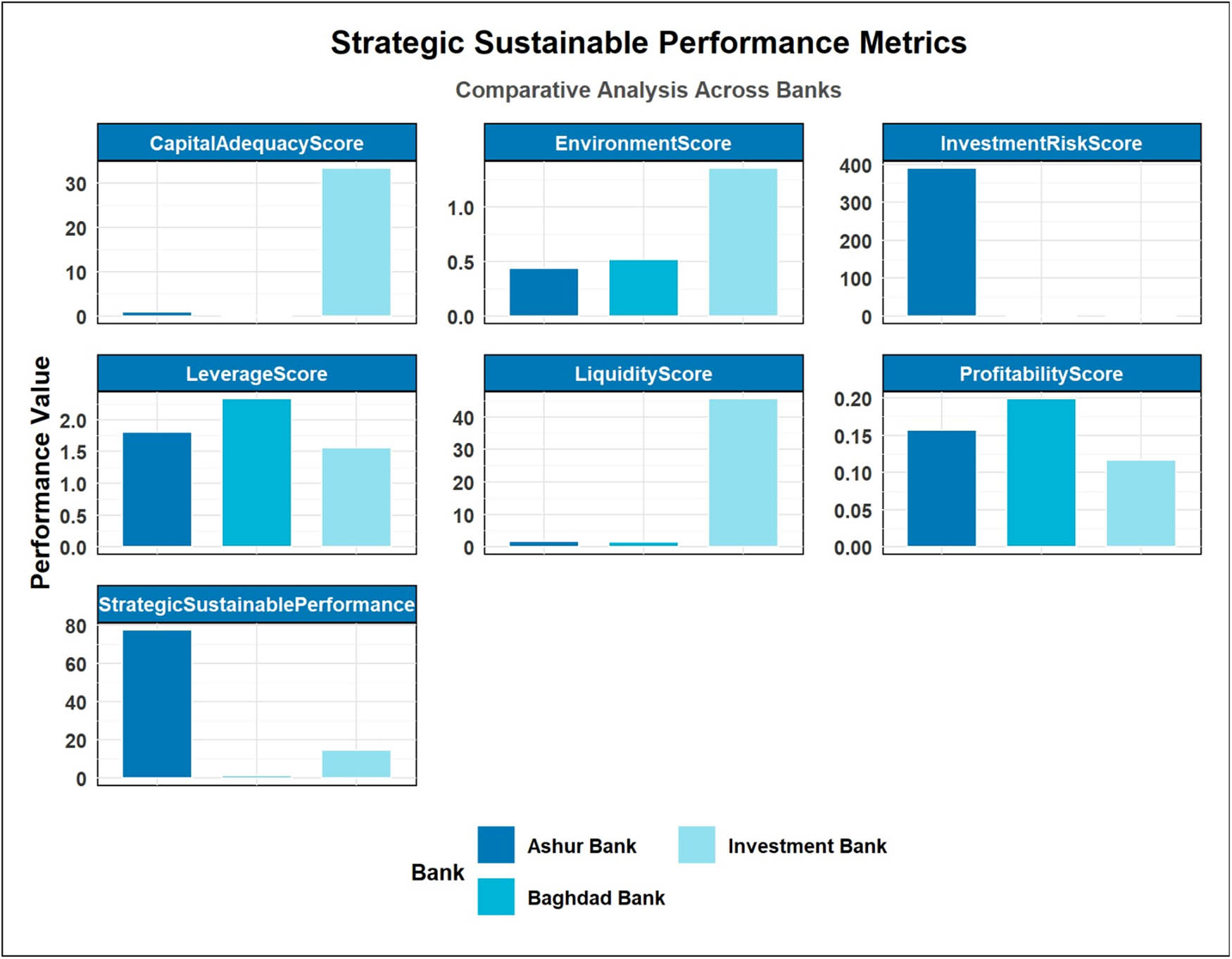
Figure 2
Comparative strategic sustainable performance metrics across selected banks
(Source: Authors’ own research)
Both radar chart (Figure 3) and bar graph (Figure 4) provide insights about the dimensional composition of OFIR practices. All three banks secured relatively high scores on general information reporting (Dimension 1) and stockholder information (Dimension 6), suggesting that these are commonly adopted transparency practices. Conversely, all the institutions secured the lowest scores on social responsibility reporting (Dimension 10) and future information Reporting (Dimension 3). Işık et al. (2025) found similar results, indicating that banks often prioritize disclosures that directly influence investor confidence and regulatory compliance while underreporting social and forward-looking information. This pattern may reflect resource constraints, limited stakeholder pressure, or regulatory environments that emphasize financial over non-financial reporting. This pattern aligns with findings that the banking institutions in Iraq and such emerging markets prioritize reporting on financial transparency rather than social and environmental reporting (Al-Hashimi and Masuri, 2022; Almshabbak and Chouaibi, 2023). The investment bank demonstrated particular strength in accounting policy reporting (Dimension 8) and general information reporting (Dimension 1), while Baghdad Bank showed relatively better performance in stocks and shareholders' information (Dimension 4). The reporting profile of Ashur Bank was found to be highly balanced across the dimensions, though it was generally lower in several other categories.
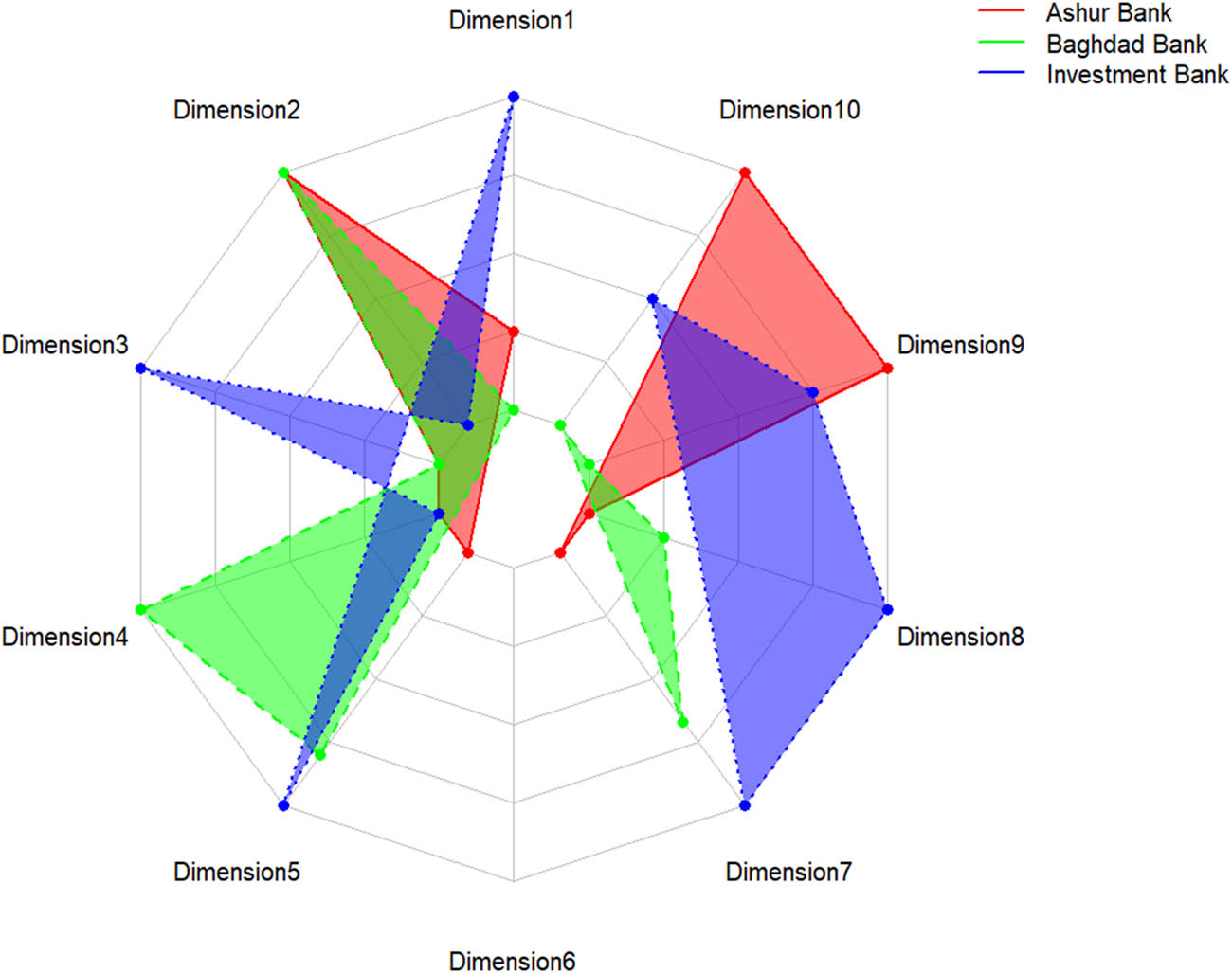
Figure 3
Radar chart showing optional financial information reporting (OFIR) dimensions by bank
(Source: Authors’ own research)
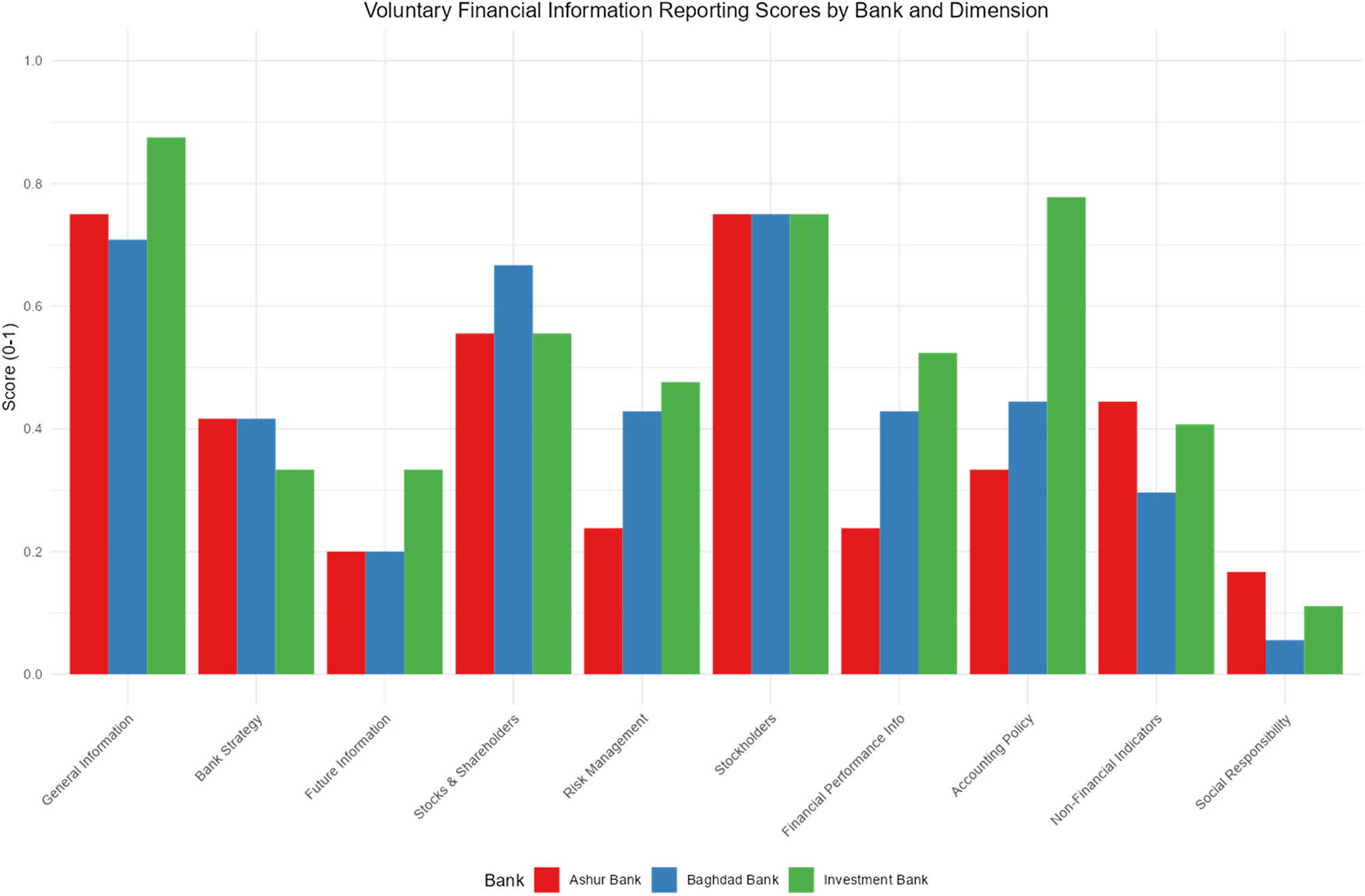
Figure 4
Comparative optional financial information reporting (OFIR) scores by bank
(Source: Authors’ own research)
The analysis outcomes reveal a considerable heterogeneity in both optional reporting practices as well as performance outcomes across the three banks. While some patterns align with the theoretical expectations – such as the emphasis on traditional financial reporting over social responsibility reporting – the extreme values in performance metrics suggest caution in drawing definitive conclusions about the OFIR-performance relationship from this limited sample. The findings reinforce the observation of various studies that established the difference in disclosure with that of Iraq, Middle East countries, and other countries in general. For instance, Salem et al. (2023) mentioned that religiosity has a positive association with the bank’s optional disclosure quality, especially in the MENA region, and it reduces the asymmetric information gap. Mah’d and Mardini (2022) found a positive and significant correlation between audit committee characteristics, financial industry, audit firm, client size, profitability, and liquidity with that of the financial information disclosure in the Middle East.
5.2. Correlation Analysis
This analysis examines the correlations among various dimensions of OFIR and the key performance metrics in the banking sector. The correlation matrix reveals important relationships between the reporting practices and financial outcomes. These findings contribute to the knowledge on how transparency may influence the bank’s financial performance. While certain correlations are notably strong, the presence of the “NA” values (likely resulting from zero standard deviation in the stockholders variable) suggests some limitations in the dataset that warrant careful interpretation. Table 2 shows the results obtained from the correlation analysis.
Table 2
Correlation matrix between optional financial information reporting (OFIR) dimensions and key bank performance metrics
| Parameters | Profitability score | Investment risk score | Leverage score | Liquidity score | Capital adequacy score | Environment score | Strategic sustainable performance |
|---|---|---|---|---|---|---|---|
| General information that is optionally reported | 0.071 | −0.508 | −0.339 | 0.615 | 0.606 | 0.098 | −0.107 |
| Information about the bank’s strategy is optionally reported | 0.779 | −0.346 | 0.260 | −0.173 | −0.520 | −0.655 | −0.346 |
| Future information about expenses and revenues | 0.000 | −0.414 | −0.207 | 0.725 | 0.621 | 0.414 | 0.207 |
| Information about stocks and shareholders | 0.725 | −0.518 | 0.414 | −0.207 | −0.414 | NA | −0.518 |
| General and credit risk management | 0.630 | −0.596 | −0.034 | 0.375 | −0.060 | 0.030 | −0.272 |
| Stockholders | NA | NA | NA | NA | NA | NA | NA |
| Information about financial performance and its indicators | 0.321 | −0.355 | −0.442 | 0.477 | 0.139 | 0.525 | −0.139 |
| Review of accounting policy | 0.279 | −0.259 | −0.478 | 0.488 | 0.319 | 0.617 | 0.060 |
| Information on non-financial indicators | 0.472 | −0.369 | −0.146 | 0.318 | 0.258 | 0.309 | −0.052 |
| Information on social and environmental responsibility and community engagement | 0.575 | −0.283 | −0.173 | −0.018 | 0.073 | 0.169 | −0.256 |
| Total OFIR | 0.567 | −0.550 | −0.233 | 0.417 | 0.150 | 0.371 | −0.233 |
(Source: Authors’ own research)
The correlation matrix reveals several significant relationships between the OFIR dimensions and performance indicators. The information about bank strategy demonstrates a strong positive correlation with profitability (0.779), suggesting that banks communicating their strategic direction more comprehensively may achieve better profit outcomes.
This finding is consistent with Uddin et al. (2022) who reported that optional reporting reduces information asymmetry and lowers capital costs. Notably, future information about expenses and revenues shows a strong positive correlation with liquidity (0.725) and capital adequacy (0.621). This result contrasts with Yassen et al. (2025), who suggested that the optional disclosure of expenses and revenues could affect the cost of equity capital. Alternatively, the current study findings infer that the optional reporting tends to increase confidence among the stakeholders and that of the management. This, in turn, increases the liquidity and also enhances market access.
Information about stocks and shareholders similarly demonstrated a strong positive relationship with profitability (0.725), but interestingly showed a negative correlation with strategic sustainable performance (−0.518). This contradictory pattern might reflect short-term versus long-term performance tensions, as the pressure from stakeholders such as customers, shareholders, and the government tends to remarkably influence the disclosure of sustainability and achieve sustainable performance (Sulemana et al., 2025). The total OFIR score showed a moderate positive correlation with profitability (0.567) and environment score (0.371), but a negative relationship with investment risk score (−0.550). These findings support the view that comprehensive reporting practices help in achieving profitability for banks in terms of ROE, ROA, and Net Interest Margin (Thien and Hung, 2021; Almshabbak and Chouaibi, 2023). Most VFIR dimensions show negative correlations with investment risk scores, suggesting that greater transparency may be associated with lower risk profiles. This finding infers that with an increase in the optional information disclosure, it reduces the investment risks as it boosts the confidence among the investors, which is in line with (Yousefinejad et al., 2022). Table 3 shows the results from the permutation test.
Table 3
Permutation test results for relationships between OFIR dimensions and key bank performance indicators
| Parameters | Observed | P value | Bootstrap CI | |
|---|---|---|---|---|
| Lower | Upper | |||
| Bank strategy vs. Profitability | 0.779 | 0.035 | 0.354 | 0.900 |
| Future information vs. Liquidity | 0.725 | 0.060 | 0.552 | 0.905 |
| Stocks and shareholders vs. Investment risk | −0.518 | 0.231 | −0.880 | 0.000 |
| Total OFIR vs. Strategic sustainable performance | −0.233 | 0.544 | −0.873 | 0.684 |
(Source: Authors’ own research)
Figure 5 shows the bootstrap intervals. The application of permutation tests and bootstrap confidence intervals enhances the reliability of the findings, especially in cases of small sample size and the presence of potential outliers that could otherwise compromise the conventional statistical methods. Both permutation test results and bootstrap confidence intervals reveal important nuances in the relationship between optional reporting practices and bank performance. Among the four key relationships examined, only the correlation between bank strategy reporting and profitability demonstrates statistical significance (P = 0.035), with a strong positive correlation coefficient of 0.779. The bootstrap confidence interval for this relationship (0.354–0.900) failed to cross 0, thus establishing its statistical significance. This finding is in line with the view that increased transparency may reduce capital costs (Yassen et al., 2025).
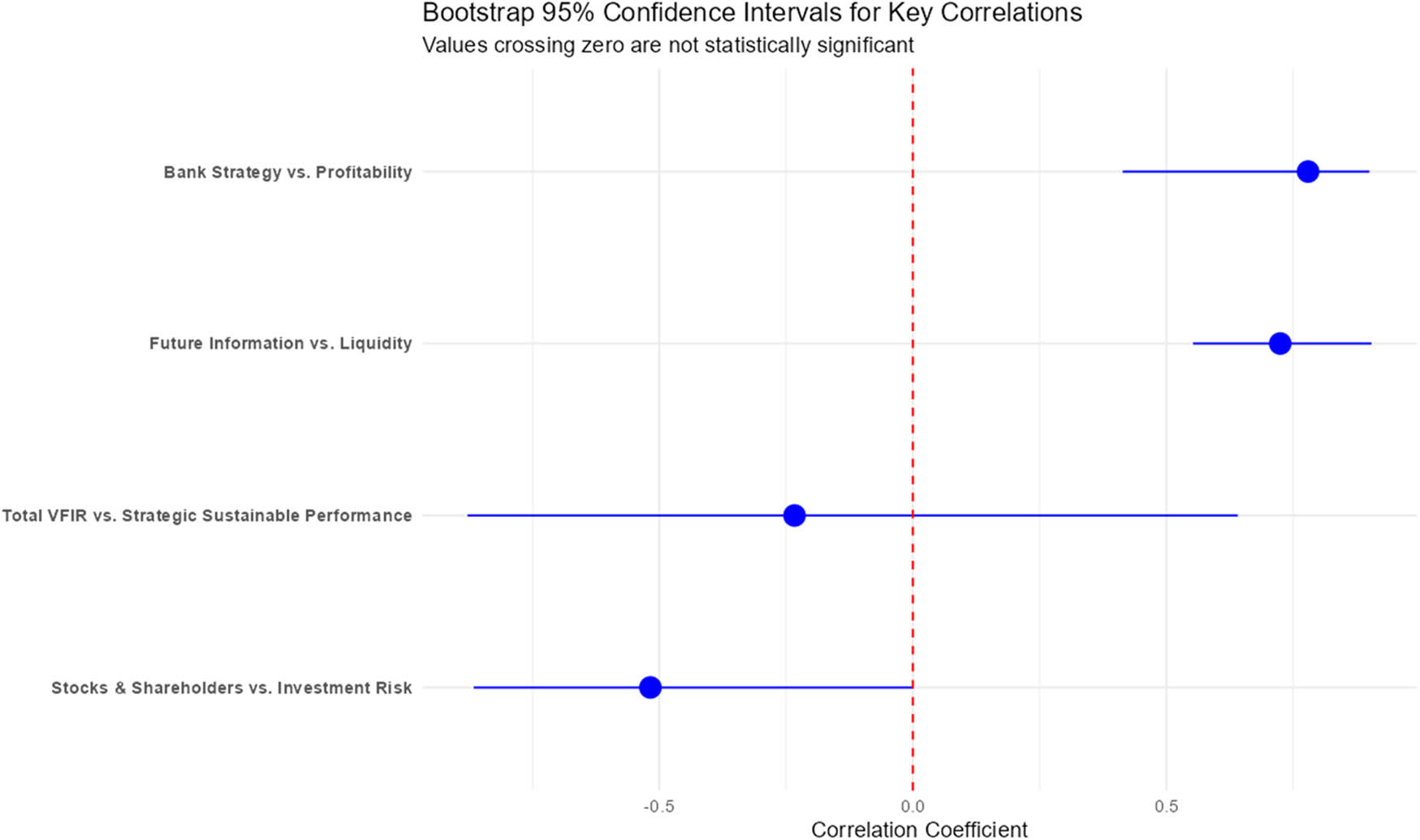
Figure 5
Bootstrap confidence intervals for key OFIR-performance relationships
(Source: Authors’ own research)
The relationship between future information reporting and liquidity approaches did not achieve significance (P = 0.060), while it obtained a correlation coefficient of 0.725 and a confidence interval of 0.552–0.905. While technically falling just outside the conventional significance threshold of 0.05, the strong effect size and narrow confidence interval suggest that this relationship can be considered for further investigations. As mentioned earlier, optional information disclosure reduces the information asymmetry, while it may attract a higher number of market players. On the contrary, the correlations between stocks and shareholders' information and investment risk (−0.518, P = 0.231) and between total VFIR and strategic sustainable performance (−0.233, P = 0.544) failed to reach statistical significance. The wide confidence intervals that crossed zero (−0.880 to 0.000 and −0.873 to 0.684, respectively) further indicate that these relationships could be the products of random variation rather than true associations. Armstrong et al. (2016) observed that the significance of reporting effects often varies across different performance dimensions, with some relationships proving more robust than others.
Figure 6 shows the scatter plots that visually reinforce the findings achieved earlier. These plots clearly establish linear patterns for the statistically significant relationships, while they also display highly scattered distributions for the non-significant ones. The wide confidence bands in the scatter plots for non-significant relationships reflect the substantial uncertainty in these estimated associations. The statistical analysis reveals that the bank strategy demonstrates a highly robust relationship with the financial performance, specifically profitability. Future information reporting also shows a promising association with liquidity, though it fell just short of conventional significance thresholds. However, the evidence does not support statistically significant relationships between the shareholder information and investment risk or between overall VFIR and strategic sustainable performance. The effects of reporting are often contextual and heterogeneous across different performance dimensions (Archana, 2024; Breijer et al., 2025). These findings highlight the importance of focusing on specific reporting dimensions rather than aggregate transparency measures, when examining the impact on bank performance.
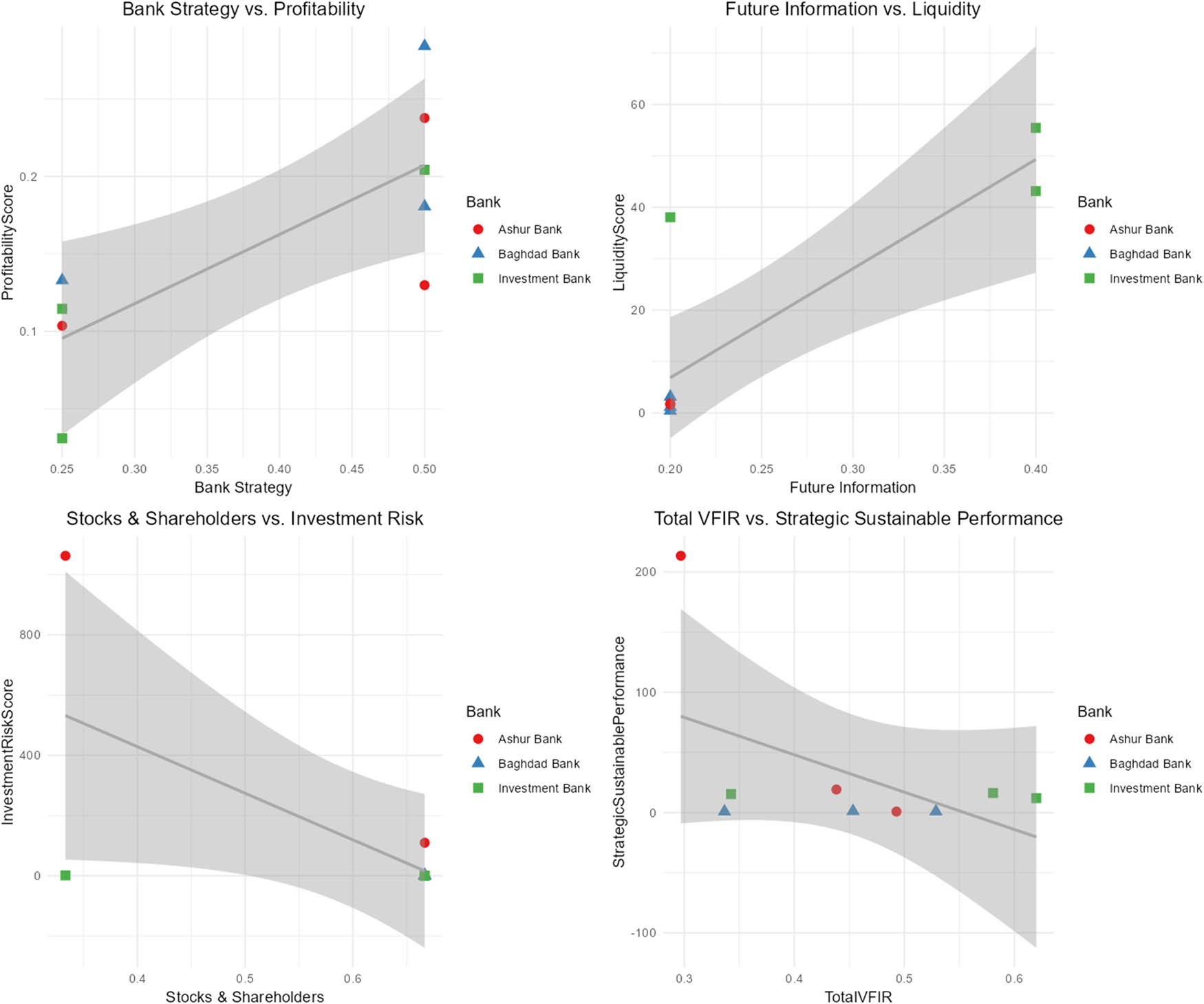
Figure 6
Scatter plots showing associations between optional financial reporting and bank performance
(Source: Authors’ own research)
5.3. Kruskal–Wallis Chi-Squared Test
This analysis examines the differences in performance metrics among three Iraqi banks using the Kruskal–Wallis test, a non-parametric method that is particularly suitable for small samples, in case of failure of normal distribution assumptions. The test evaluates whether the observed differences in various performance dimensions represent statistically significant variations between the banking institutions or merely random fluctuations. This approach provides valuable insights into which performance areas show meaningful institutional differentiation in the context of OFIR practices. Table 4 shows the results from the Kruskal–Wallis chi-squared test.
Table 4
Kruskal–Wallis test results for differences in bank performance metrics
| Variable | Chi-squared | P value | |
|---|---|---|---|
| Kruskal–Wallis chi-squared | Profitability score | 1.867 | 0.393 |
| Kruskal–Wallis chi-squared1 | Investment risk score | 1.156 | 0.561 |
| Kruskal–Wallis chi-squared2 | Leverage score | 1.689 | 0.430 |
| Kruskal–Wallis chi-squared3 | Liquidity score | 5.600 | 0.061 |
| Kruskal–Wallis chi-squared4 | Capital adequacy score | 7.200 | 0.027 |
| Kruskal–Wallis chi-squared5 | Environment score | 0.857 | 0.651 |
| Kruskal–Wallis chi-squared6 | Strategic sustainable performance | 2.400 | 0.301 |
(Source: Authors’ own research)
The Kruskal–Wallis test results reveal that capital adequacy is the only performance metric that has a statistically significant difference among the banks (chi-squared = 7.200, P = 0.027). This finding suggests that regulatory capital management practices vary substantially across the institutions, which potentially reflect different business models or risk appetites. Mahajan and Singh (2024) mentioned that capital adequacy often serves as a key differentiator among the banks, with higher capitalization being typically associated with greater resilience during economic downturns. Liquidity scores approached statistical significance (chi-squared = 5.600, P = 0.061), and it infers a notable though not definitive difference in how these banks manage their liquid assets and short-term obligations. Tan et al. (2024) mentioned that though the banks may show increased efficiency at the beginning of increasing liquidity, after reaching the threshold, they may hold back and start declining. The remaining performance metrics – profitability (P = 0.393), investment risk (P = 0.561), leverage (P = 0.430), environment (P = 0.651), and strategic sustainable performance (P = 0.301) – showed no statistically significant differences among the banks. This pattern suggests that despite visible variations in the raw metrics, most performance dimensions are relatively homogeneous across the sample. Mabkhot and Al-Wesabi (2022) confirmed that this homogeneity could reflect common macroeconomic conditions, similar regulatory frameworks, or institutional isomorphism within the banking sector.
The −log10 (P value) visualization in Figure 7 effectively illustrates the relative strength of evidence for the differences across performance metrics, with values above the red dashed line (representing P = 0.05) indicating statistical significance. This representation highlights that while some performance dimensions show visible variations in raw values, most do not meet the threshold for statistical significance.
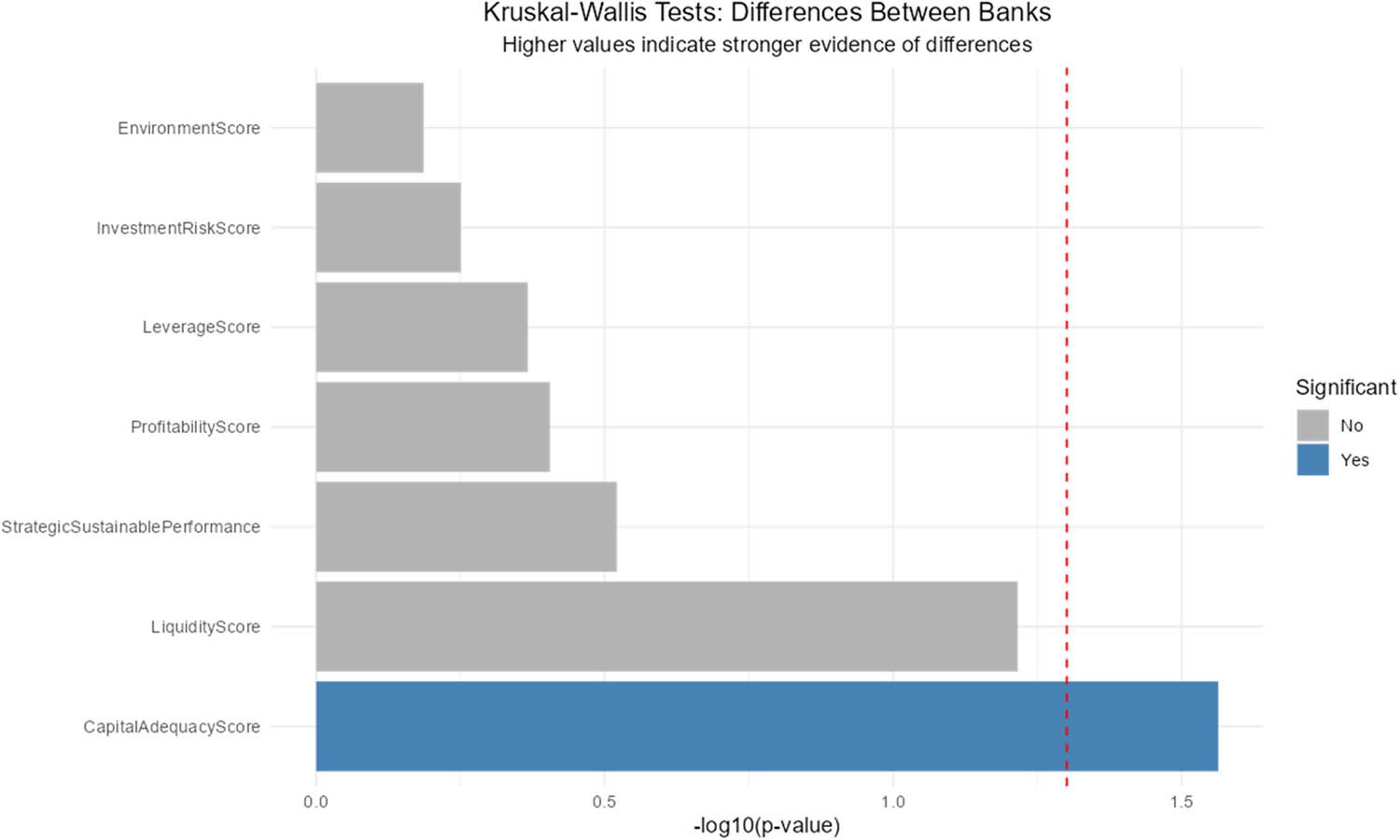
Figure 7
Visualization of Kruskal–Wallis test for bank performance metrics
(Source: Authors’ own research)
The Kruskal–Wallis test results provide evidence that the capital adequacy represents the primary area of significant performance differentiation among the analyzed banks, with liquidity management showing near-significant differences. However, the majority of the performance metrics do not demonstrate statistically significant variations. These findings support the view articulated by Mabkhot and Al-Wesabi (2022), who mentioned that the banking institutions in the GCC countries often develop similar financial performance profiles, and their financial stability and macroeconomic key factors remain the same, though their capital management approaches are distinct from each other. The limited statistical significance across most of the metrics also reinforces the importance of exercising caution when interpreting apparent differences in a small sample context, as emphasized in the contemporary banking research methodology.
6. Limitations of the Study and Future Directions
The current study has several limitations that should be acknowledged. First, the small sample size of only three banks may have contributed to extreme values in some performance metrics and limited the statistical power, potentially affecting the generalizability of the findings. Second, the study focuses solely on commercial banks in Iraq, which may limit the applicability of the results to other banking systems, particularly Islamic banks or institutions in different regions. Thirdly, the analysis relies exclusively on secondary quantitative data, without incorporating qualitative perspectives from stakeholders, customers, or regulators, which could provide a more holistic understanding of reporting practices and performance outcomes. Future research should expand the sample to include a larger number of banks, examine longitudinal data to better establish causality, and incorporate diverse banking systems such as Islamic banks prevalent in the MENA region. Additionally, including stakeholder perceptions on reporting quality would enhance insights beyond purely quantitative metrics and allow for a more comprehensive evaluation of the impact of OFIR on sustainable banking performance.
7. Implication and Recommendation of the Study
The practical implications of this study are significant for banking practitioners, policymakers, and regulatory authorities. The findings demonstrate that strengthening OFIR – particularly in areas related to strategic disclosure, non-financial indicators, and risk management – can enhance trust, reduce information asymmetry, and support sustainable strategic financial performance. For banks, improving the quality and breadth of voluntary disclosure can serve as a competitive tool to attract investors, lower perceived risk, and improve access to finance. Regulators such as the Central Bank of Iraq can use these insights to design clearer disclosure guidelines that encourage transparency and align local reporting practices with international standards such as ESG and sustainability frameworks. Furthermore, the results highlight the need for capacity-building initiatives within Iraqi banks to develop more robust reporting systems, integrate sustainability considerations into their financial strategies, and enhance corporate governance practices.
Based on the findings of this study, practitioners, policymakers, and bank boards in Iraq should adopt a context-specific approach to optional financial information reporting. Practitioners should prioritize strategic and forward-looking disclosures to enhance profitability and liquidity, while gradually integrating social and environmental information to meet emerging stakeholder expectations. Policymakers should establish clear guidance and incentives for comprehensive OFIR, considering Iraq’s regulatory environment, economic fluctuations, and post-conflict recovery challenges. Bank boards should implement internal governance frameworks that ensure balanced reporting across financial and non-financial dimensions, aligning disclosures with the expectations of both domestic and international investors and enhancing confidence in the Iraqi banking sector.
8. Discussion and Conclusions
This research investigated the relationship between OFIR and sustainable strategic financial performance in the banking sector through a comprehensive statistical analysis of three Iraqi banks. The traditional financial reports fail to reflect the underlying economic impact of businesses in a timely manner (Khayoon and Al Maine, 2021).
The correlation analysis revealed significant positive relationships between bank strategy reporting and profitability (r = 0.779, P = 0.035) and between future information reporting and liquidity measures (r = 0.725, P = 0.060). Bootstrap confidence intervals and the permutation tests confirmed the statistical reliability of these relationships, while other dimensions showed weaker or non-significant associations with performance metrics. The Kruskal–Wallis tests identified capital adequacy as the only performance metric with statistically significant differences among banks (χ 2 = 7.200, P = 0.027), suggesting distinct approaches to regulatory capital management despite similarities in other performance areas.
These results may reflect contextual factors specific to Iraq, including post-conflict regulatory uncertainty, limited market sophistication, and varying institutional capacities across banks, which influence the emphasis on certain reporting dimensions over others. For instance, the prioritization of general information and shareholder reporting may be driven by the need to reassure domestic and international investors in an economically volatile environment, while social and environmental disclosures remain underdeveloped due to limited regulatory pressure and societal expectations.
This result emphasizes the need for a robust and dynamic optional reporting of the financial information that is not only comprehensive, but also integrates the non-financial information as a single report. The purpose of this comprehensive report is to provide transparency in accessing information, consolidating it from external and internal sources, and enabling the investors to make decisions (Khayoon and Al Maine, 2021). During the preparation of financial statements, the optional reporting of financial and non-financial data related to sustainability dimensions enhances credibility supports economic and financial decision-making, and increases public confidence in banking institutions and government financial data (AlHares, 2025). Analysis of OFIR practices showed that the banks should prioritize certain reporting dimensions (general information and stockholder reporting) while giving less attention to social responsibility and future information reporting. This selective emphasis indicates that Iraqi banks currently adopt a shareholder-centric approach to disclosure, potentially overlooking broader stakeholder expectations, which may affect long-term sustainability and social legitimacy. The Investment Bank demonstrated the highest overall optional reporting score (0.5144), though all institutions showed considerable variation in their Reporting patterns across different dimensions.
To strengthen the theoretical grounding and highlight the novelty of the study, the findings are discussed through three theoretical lenses. First, voluntary disclosure theory suggests that firms provide additional information to reduce information asymmetry and signal superior performance; our results empirically validate this mechanism within the Iraqi banking context, revealing that strategic and forward-looking disclosures are most strongly associated with profitability and liquidity. Second, legitimacy theory posits that firms use non-financial reporting to gain societal acceptance; the relatively weak social and environmental reporting among Iraqi banks reflects an incomplete legitimacy-seeking behavior, offering new insights into how contextual institutional constraints shape disclosure priorities. Third, stakeholder theory emphasizes that diverse stakeholders require different information; the findings show that Iraqi banks disproportionately emphasize shareholder-focused disclosures while neglecting broader stakeholder needs, uncovering a structural reporting imbalance that has not been documented in previous regional studies.
The current study findings established the nuanced relationship between OFIR and bank performance, demonstrating that the hypotheses and research questions proposed are addressed. The topic should be handled in a specific dimension instead of as a universal concept, as H1a1, H1b2, H1c2, and H1d2 were supported, showing that strategic information reporting, forward-looking financial reporting, shareholder information, and risk management disclosures positively influence profitability, liquidity, and reduce investment risk. H1e2 and H1f1 on social and environmental responsibility and total VFIR were partially supported, suggesting that CSR and overall reporting have a moderate impact on profitability and investment risk. H1g1 and H1h1 regarding accounting policy and financial performance information were also partially supported, affecting environment scores, while H1i1 on general information reporting was supported for liquidity and capital adequacy scores. Strategic information reporting appears particularly influential for profitability outcomes, while forward-looking information significantly impacts liquidity positions, confirming the relevance of the research questions regarding which dimensions of VFIR most strongly affect bank performance. The results contribute to optional financial reporting theories by demonstrating the economic consequences of transparency across specific performance dimensions. Furthermore, the results highlight that capital management approaches represent the most significant area of differentiation among the banks, supporting H2 and its sub-hypotheses (H2a–H2g) regarding differences in performance metrics across institutions. The current study has limitations, such as the small sample size, which could have contributed to extreme values in some metrics and limited statistical power. Future research should expand the sample to include more banks, examine these relationships longitudinally to better establish causality, and also incorporate Islamic banks to reflect the diversity of banking systems in the MENA region. Including stakeholder, customer, and government perspectives would also help test the robustness of the hypothesized relationships. These findings have practical implications for bank managers, suggesting that a strategic focus on specific reporting dimensions (as identified in H1a1–H1i1) can yield targeted performance benefits. For regulators, the results underscore the importance of reporting quality rather than mere compliance with quantity-based requirements, aligning with the research questions. For policymakers, it is important to ensure that banks follow international ESG guidelines and adhere to them to improve investor confidence, reflecting the study’s objective of linking VFIR practices to sustainable banking performance.
Acknowledgments
We, the authors, extend our gratitude to the Iraq Stock Exchange for providing us with the data. We also thank the banks that collaborated with us within the study sample in providing data for the completion of this article.
Funding Information
Authors state no funding involved.
Author Contributions
Safa Mahdi RAJI: Contributed to writing the theoretical framework, added comments on the practical aspects, collected data from banks, and discussed the results. Amal Mohammed SALMAN: Contributed to writing the methodology, reviewed the theoretical framework, prepared the conclusion, and reviewed all parts of the article. Ali Abdulhassan ABBAS: Contributed to preparing the practical aspects, undertook the editing and proofreading process, and organized the scientific references.
Conflict of Interest Statement
Authors state no conflict of interest.
Data Availability Statement
All data was taken from the Iraq Stock Exchange; it is available from. The financial reports of the banks selected for the study were used. WEB: http://www.isx-iq.net/isxportal/portal/homePage.html.