

1. Introduction
Human resources play a crucial role in determining the success of an organization. Consequently, exploring ways in which organizations can enhance the potential of their human resources remains an intriguing topic, as it directly influences organizational sustainability. These consequences include difficulties in disconnecting from work demands, challenges in maintaining a work-life balance, and exposure to other psychosocial risks (Duran and Sanchez, 2021). Mental health issues related to the health emergency, such as anxiety, depression, post-traumatic stress disorder, and sleep disorders, have been found to occur more frequently and affect healthcare workers in particular (Giorgi, et al., 2020). Moreover, there is evidence indicating the negative impact of the pandemic on the mental health of healthcare workers. A recent systematic review of 13 studies involving 30,062 individuals revealed that nurses experienced the most significant mental health impact during the pandemic within the healthcare sector (Al Sabei, et al., 2022). Emotional fatigue in a nurse can diminish their commitment to the profession, leading to disengagement and resulting in low levels of patient satisfaction (Barello, et al., 2021). Meanwhile, the hospital industry continues to face several challenges that need to be addressed. Aside from the need for quality improvement, the industry is currently grappling with intense competition and high expectations from patients regarding the services provided. To navigate this competition effectively, a strong human resource performance is essential.
The contribution of employees is of paramount importance for the success of the business organization. Based on the data obtained from performance evaluations conducted between 2015 and 2018, it can be concluded that certain performance indicators have consistently failed to meet corporate targets, particularly in the areas of employee and customer satisfaction, as depicted in the Table 1.
Table 1.
Hospital Performance Achievement
(Source: Strategic Plan, 2020-2024)
| Key performance indicator | Unit | Description | 2015 | 2016 | 2017 | 2018 |
|---|---|---|---|---|---|---|
| Employee satisfaction level | % | Target | 85 | 85 | 80 | 80 |
| Realization | 77.9 | 80.4 | 75 | 83 | ||
| Achievement | x | x | x | ok | ||
| % of satisfied and very satisfied patients | % | Target | 85 | 85 | 85 | 87 |
| Realization | 80 | 80.5 | 82 | 92 | ||
| Achievement | x | x | x | ok |
The challenges contributing to the low level of employee satisfaction in the hospital are multifaceted. One key issue is the perceived inadequate relationship between employees and management, which hampers effective communication and collaboration. Employees also feel they have limited opportunities to provide feedback, ideas, or suggestions for improving the quality of hospital services. Furthermore, the hospital management recognizes that the data collection mechanism for assessing employee satisfaction is not yet optimal. This limitation in data collection is supported by the failure to achieve the target level of customer satisfaction between 2015 and 2017. In addition to these obstacles, recent internal data from the infection control and prevention team as of January 2023 indicate a relative decline in compliance with infection control bundles and pressure ulcer prevention compared with the previous month. These measures are individual performance indicators for nurses.
Performance is an objective reality that can be observed and measured. It significantly impacts outcomes at three levels: individual, group, and organizational levels (Krijgsheld, Tummers and Scheepers, 2022). There are two main aspects of employee performance: task performance and contextual performance (Koopmans, et al., 2011) Task performance is related to employees’ ability to carry out the core requirements of their job, such as tasks specified in their job descriptions. It involves behaviors that directly or indirectly contribute to the technical core of the organization. Contextual performance, on the other hand, refers to unique aspects of individual behavior in the workplace beyond their formal job duties. It depends on the inclination and willingness of employees to engage in extra-role behaviors that benefit the organization.
Work engagement is characterized by positive, satisfying thoughts related to work and is marked by vigor, dedication, and absorption in one’s job (Wood, et al., 2020). Psychological capital consists of positive psychological capacities, including hope, efficacy, resilience, and optimism (Luthans, 2012). When these four dimensions are combined, they produce a stronger synergistic effect than when each dimension is used separately. Other studies have also found positive associations between psychological capital, work engagement, job satisfaction, and performance (Tang, 2020). Psychological capital plays a crucial role in ensuring positive influences on both task performance and contextual performance (Peláez Zuberbühler, et al., 2023) while also helping prevent counterproductive work behavior (Amin, et al., 2022). Job satisfaction indicates the extent to which employees are content with their job situation and various job factors. Theoretically, job satisfaction is linked to employee performance. Other studies have shown that job satisfaction can have a positive influence on both task performance and contextual performance (Palenzuela, Delgado and Rodríguez, 2019; Veloso, et al., 2021). To prevent counterproductive work behavior, optimizing job satisfaction among all employees is essential (Lan, et al., 2022). An organization with more satisfied employees tends to be more effective and productive (Eliyana, Ma’arif and Muzakki, 2019). Job satisfaction also directly impacts performance (Bakotić, 2016).
Several studies have explained the direct influence of work engagement on employee performance (Bouckenooghe, et al., 2021). Other research has shown positive implications of work engagement on both task performance and contextual performance (Meyers, et al., 2020). Work engagement can reduce counterproductive work behavior (Lebrón, et al., 2018). However, some studies have different findings. While Riyanto, Endri and Herlisha (2021) indicate no direct effect of work engagement on employee performance, they find an indirect relationship between work engagement and performance. In the context of this indirect relationship, the positioning of work engagement as a mediator or moderator in the relationship between other variables and employee performance is still subject to variation and further investigation. Work engagement has been used as a mediator variable in several previous studies to examine the relationships or influences between variables within a conceptual model (Bhatti, 2018; Sanchez-Gomez, Sadovyy and Breso, 2021).
Some research has found no significant implications between job satisfaction and employee performance (Chowhan and Pike, 2022). However, indications suggest that the relationship between job satisfaction and performance is stronger than the relationship between performance and job satisfaction (Bakotić, 2016). Studies indicate that the positive relationship between psychological capital and performance occurs both directly and indirectly, mediated and moderated by work engagement (Abukhalifa, Mohd Kamil and Yong, 2022). Job demands play a primary role in the process of health decline, while job resources have a primary role in the motivational process. Furthermore, the theory also proposes that personal resources, including psychological capital components such as resilience, self-efficacy, and optimism, can play a role similar to job resources. They have a positive relationship with work engagement through the motivational process, which subsequently leads to positive organizational outcomes, including employee performance (Schaufeli and Taris, 2014; Bakker and Demerouti, 2016).
Another perspective in the Job Demands–Resources (JD-R) model incorporates parts of psychological capital, such as resilience, self-efficacy, and optimism, as personal resources (Schaufeli, 2017). Furthermore, job satisfaction is positioned similarly to work engagement as part of employee well-being. Based on previous research and existing theories, it appears that there are inconsistent findings regarding the influence of job satisfaction, psychological capital, and work engagement on employee performance, leading to an intriguing research gap that warrants further exploration using more recent data post the COVID-19 pandemic. This study focuses on private hospitals that were directly affected by the COVID-19 pandemic. Additionally, it employs nurses as the sample, a group that has been rarely studied in previous research. Based on the aforementioned issues and phenomena, the researcher aims to reexamine the effects of psychological capital and job satisfaction on employee performance through work engagement. By utilizing a sample of nurses in the hospital industry and considering the most recent observation period, it is hoped that new facts will be discovered to support the previous evidence concerning the relationships between the existing variables. The variables employed in this research are work engagement, which serves as the mediator between the influence of job satisfaction and psychological capital on employee performance.
2. Literature review
2.1. Job Demands – Resources Theory
The JD-R theory can serve as a guide for organizational development processes aimed at enhancing work engagement and preventing burnout (Schaufeli, 2017). This model is comprehensive as it encompasses both positive motivational processes and negative stress processes. This balanced approach is a valuable asset for human resource management as it integrates occupational health approaches with human resource approaches (motivation and work engagement). Moreover, the JD-R model can be applied widely across various organizations, as it encompasses various job and personal characteristics.
The theory consists of eight propositions (Bakker and Demerouti, 2016). Proposition 1 states that every work context can be characterized using two categories of job characteristics: job demands and job resources. Job demands refer to aspects of work that require sustained physical and/or psychological efforts (e.g., work pressure and cognitive demands) and are associated with physiological and/or psychological costs. On the other hand, job resources refer to physical, psychological, social, or organizational aspects that are beneficial in achieving work-related goals, reducing job demands and associated physiological and psychological costs, as well as stimulating growth, learning, and personal development. Proposition 2 of the JD-R theory states that job demands and job resources initiate two independent processes: the health impairment process and the motivational process. Job demands uniquely predict burnout or exhaustion, while job resources uniquely predict work engagement. Proposition 3 suggests that job resources can act as a buffer against the effects of job demands on the emergence of strain or pressure. Proposition 4 states that job resources can influence motivation under conditions of high job demands. Proposition 5 indicates that personal resources such as optimism and self-efficacy can function similarly to job resources and have a direct positive impact on work engagement. They also act as buffers against the undesirable consequences of job demands on strain and boost the desired outcomes of job challenges on motivation. Proposition 6 of the JD-R theory states that motivation has a positive influence on job performance, while job strain has a negative influence on job performance. Proposition 7 suggests that employees who are motivated by their work are more likely to engage in job-crafting behaviors. Job crafting involves proactive efforts to enhance job resources and challenges while reducing job demands that act as barriers. On the other hand, Proposition 8 proposes that employees experiencing strain due to their work tend to exhibit self-undermining behaviors. These behaviors can lead to higher job demands and even higher job strain. Self-undermining refers to behaviors that create obstacles or barriers for oneself, which can exacerbate the experience of job strain and negatively impact overall well-being.
2.2. Psychological Capital
Psychological capital is a positive psychological capacity consisting of hope, efficacy, resilience, and optimism (Luthans, et al., 2007). When these four dimensions are combined, they create a synergistic effect that is more effective than using each dimension separately. Furthermore, other studies have supported the positive relationships between psychological capital, job performance, and job satisfaction (Paliga, et al., 2022). Individual well-being is influenced by several factors, including self-efficacy, optimism, hope, and resilience, which are explored as components of the psychological capital construct (Avey, et al., 2010). These findings indicate that positive capacities possessed by employees within an organization positively influence desired work behaviors. Psychological capital held by employees can enhance their potential values in various aspects, such as adopting different perspectives, seizing opportunities, being adaptable, and displaying ownership of the organization. Individuals with high psychological capital tend to be more flexible and adaptable in fulfilling job demands (Avey, et al., 2010). Several studies also suggest a direct positive relationship between psychological capital and job performance (Abbas, et al., 2014; Ngo and Thanh NGO, 2021). Additionally, Abukhalifa, Mohd Kamil, and Yong (2022) state that the positive relationship between psychological capital and job performance can be mediated by work engagement.
2.3. Job Satisfaction
Job satisfaction has a broad definition and cannot be captured by a single explanation. It refers to the positive or happy emotions resulting from an individual’s assessment of their job and work experiences (Pujol-Cols and Dabos, 2018). Job satisfaction can fluctuate during work and is influenced by mood and emotions. Mood states typically last longer, have causal objects, and are short-lived. Workplace events that trigger emotions are more easily remembered than negative moods (Tabarsa and Nazari, 2016). Other impacts of job satisfaction include fostering a cohesive work environment and facilitating effective communication among colleagues. When these factors are met, employees tend to be more responsible and committed to completing their tasks. Conversely, if job satisfaction is low, it can negatively affect relationships with coworkers. The opportunity for career advancement or promotion also significantly influences job satisfaction. Companies that provide opportunities for career growth, aligning with employees’ expectations, are more likely to contribute to employee satisfaction. Job satisfaction is used to measure employee performance as a predictor or independent variable (Siengthai and Pila-Ngarm, 2016; Memon, et al., 2023). This study uses job satisfaction as an independent variable in measuring employee performance. Job satisfaction felt by employees can stimulate the quality of work and lead to optimal performance expected by the company.
2.4. Performance
Performance is the ability or achievement demonstrated in tangible and measurable action behaviors and outcomes by employees that are related to and contribute to organizational goals (Armstrong and Taylor, 2020; Vuong and Nguyen, 2022). Employee performance is a crucial variable that can influence outcomes at three levels: micro-level (individual), meso-level (group), and macro-level (organization) (Pandey, 2019). Performance is measured through task performance, contextual performance, and counterproductive behavior (Koopmans, et al., 2011). Task performance refers to the ability of employees to carry out the core requirements of their jobs, such as tasks specified in their job descriptions. It involves behaviors that directly or indirectly contribute to the technical core of the organization. Indicators measuring task performance include job-specific task proficiency, non-job-specific task proficiency, written and oral communication skills, supervision/leadership abilities, and management/administration competence. Performance or behaviors beyond job tasks, known as contextual performance, represent unique aspects of an individual’s activities in the workplace. Contextual performance can be defined as individual behaviors that support the organizational, social, and psychological environment within which the technical core must function. Indicators of contextual performance include personal discipline, the ability to facilitate the performance of colleagues and teams, supervision and leadership skills, administrative competence, interpersonal competence, and compliance with authority. Counterproductive work behavior encompasses actions that harm organizational well-being and includes behaviors such as absenteeism, tardiness, engaging in tasks unrelated to job responsibilities, theft, and substance abuse.
2.5. Work Engagement
Work engagement refers to a positive state of mind related to one’s job characterized by vigor, dedication, and absorption (Schaufeli, 2019). It is a critical issue in the business management concept that links job success with organizational achievements. Employees with high levels of work engagement are fully involved and exhibit high levels of enthusiasm and dedication in their current work, as well as activities related to the company in the long term (Agu, 2016). There are three dimensions of work engagement: vigor, dedication, and absorption (Kulikowski, 2018a). Vigor is marked by high levels of energy and mental resilience during work, a willingness to invest effort in the job, and perseverance even in the face of challenges. Dedication refers to strong involvement in work and experiencing feelings of significance, enthusiasm, inspiration, pride, and challenge. Absorption is characterized by being fully concentrated and engrossed in work, where time passes quickly.
2.6. Hypotheses Development
2.6.1. Psychological Capital on Work Engagement
Psychological capital is assumed to have implications for work engagement on a personal level through the motivation process. The relationship between these two variables is based on the belief that psychological factors can positively affect work processes. Individuals with high levels of optimism and self-efficacy believe that things will turn out well in their jobs and that they can handle unexpected events. Employees with a strong psychological foundation are capable of delivering quality work according to their job responsibilities. Several studies have explained the positive relationship between psychological capital and work engagement (Percunda and Putri, 2020; Tetteh, et al., 2022). Employees with high psychological capital are more engaged in their work at higher levels. This resource is crucial for work processes and significantly affects employee engagement. Work engagement is essential in ensuring the quality of work meets the required standards. Furthermore, Bhatti (2018) has revealed a direct, positive, and significant influence of personal resources (similar to the psychological capital construct) on nurses’ work engagement. Moreover, it has been concluded that there are positive implications between nurses’ psychological capital and the dimensions of vigor and dedication (constructs of work engagement) (Karatepe and Avci, 2017).
H1: Psychological capital has a positive influence on work engagement.
2.6.2. Job Satisfaction on Work Engagement
Job satisfaction is assumed to be capable of enhancing work engagement. This variable serves as a positive basis for motivation, prevents burnout, and stimulates increased focus on the job. Factors such as wages, attention from supervisors, cooperation with colleagues, and promotional opportunities serve as the basis for job satisfaction to enhance work engagement according to performance targets (Colquitt, Lepine and Wesson, 2023). Numerous studies have explained that job satisfaction has a positive implication on work engagement (Yalabik, Rayton and Rapti, 2017; Kašpárková, et al., 2018). Job satisfaction is utilized as a predictor of work engagement connected to various research contexts (Thokoa, Naidoo and Herbst, 2021). Additionally, other studies have found that job satisfaction in nursing has a significant and positive influence on work engagement (González-Gancedo, Fernández-Martínez and Rodríguez-Borrego, 2019; Zhang, et al., 2023).
H2: Job satisfaction has a positive influence on work engagement.
2.6.3. Work Engagement on Task Performance, Contextual Performance and Counterproductive Work Behavior
The JD-R theory explains that individuals who are more engaged will demonstrate higher levels of job performance over time compared with those with low work engagement. Proposition 6 in Bakker and Demerouti (2016) JD-R theory states that motivation will have a positive impact on employee performance. Work engagement in the JD-R theory is seen as an outcome of the motivational process. Employee motivation helps them focus on goals and tasks, and engaged employees exhibit energy and enthusiasm in their work, leading to improved performance. On the other hand, employees experiencing high fatigue or health complaints lack the energy to achieve their work targets or goals. In other words, employee performance becomes more effective when they experience positive and active motivational states, characterized by affection, energy, and cognitive inspiration toward their work. This psychological state motivates employees to work harder and perform better. Several studies have explained the positive influence of work engagement on employee performance (Kulikowski, 2018b; Wen, et al., 2019). Positive implications of work engagement result in improved task performance and contextual performance (Juyumaya, 2022; Neuber, et al., 2022), reducing the negative effects of counterproductive work behavior (Chen, et al., 2020). Bhatti (2018) found that work engagement significantly influences both task performance and contextual performance among nurses. Furthermore, other research has also shown that employees who are engaged and proactive in their work are more dynamic and responsive to new information, leading them to work harder (Salanova and Schaufeli, 2008). Employee performance can be measured across three dimensions with different characteristics: task performance, conceptual performance, and counterproductive work behavior.
H3a: Work engagement has a positive impact on task performance.
H3b: Work engagement has a positive impact on contextual performance.
H3c: Work engagement has a negative impact on counterproductive work behavior.
2.6.4. Psychological Capital on Task Performance, Contextual Performance and Counterproductive Work Behavior
Psychological capital is assumed to significantly enhance employee performance. Proposition 5 in the JD-R theory explains that employees with high levels of optimism and self-efficacy are capable of achieving maximum performance (Bakker and Demerouti, 2016). This proposition directly influences employees’ psychological well-being. Psychological capital is a construct consisting of hope, efficacy, resilience, and optimism. The combination of these four dimensions is expected to have a positive synergistic effect on employee performance. Research has supported the positive relationship between these four dimensions and employee performance (Luthans, et al., 2007). Recent studies have found that psychological capital has a direct positive relationship with employee performance (Santos, Reis Neto and Verwaal, 2018) specifically among nurses working in General Hospitals (Ali, et al., 2022). It is assumed that psychological capital has a positive influence on both task performance and contextual performance (Qasim, et al., 2022; Peláez Zuberbühler, et al., 2023). In practice, enhancing psychological capital should lead to a decrease in counterproductive work behavior (Butt and Yazdani, 2021). Nurses with high psychological capital can rise above and overcome work challenges. When a nurse's psychological capital is elevated, they are likely to perform well and exhibit resilience when faced with obstacles. Employee performance has three dimensions with distinct characteristics: job performance, contextual performance, and counterproductive work behavior. Based on the description above, it is expected that:
H4a: Psychological capital has a positive impact on task performance.
H4b: Psychological capital has a positive impact on contextual performance.
H4c: Psychological capital has a negative impact on counterproductive work behavior.
2.6.5. Job Satisfaction on Task Performance, Contextual Performance and Counterproductive Work Behavior
Job satisfaction is the result of an employee’s ability to perform the tasks assigned by the company. It is influenced by the recognition and rewards given to employees based on their work outcomes and their ability to accomplish assigned tasks. Job satisfaction and employee performance are two variables that have a mutual influence and can be understood logically. Several studies have explained that job satisfaction has a positive impact on employee performance (Umrani, et al., 2019; Chowhan and Pike, 2022). Other studies have shown that job satisfaction significantly increases both task and contextual performance (Hosie, Sharma and Kingshott, 2019; Nemteanu and Dabija, 2021). Additionally, job satisfaction can reduce unnecessary activities caused by counterproductive work behavior (Sambung, 2019). Based on the description above, the fifth hypotheses proposed in this study are as follows:
H5a: Job satisfaction has a positive impact on task performance.
H5b: Job satisfaction has a positive impact on contextual performance.
H5c: Job satisfaction has a negative impact on counterproductive work behavior.
2.6.6. Psychological Capital on Employee Performance Mediated Work Engagement
Psychological capital is an important asset that an individual must possess as an employee in an organization. An employee with high hope, optimistic attitude, self-efficacy, and resilience, combined with a good level of work engagement, will strive to achieve the goals set by the company under any circumstances. This will ultimately have an impact on employee performance. This concept is explained in Proposition 5 of the JD-R theory, which states that personal resources such as optimism and self-efficacy can play a role similar to job resources and have a direct positive influence on work engagement. These personal resources also act as a buffer against the negative consequences of job demands on strain, while boosting the positive effects of job challenges on motivation. This proposition leads to Proposition 6 of the JD-R theory, which states that motivation has a positive impact on performance (Bakker and Demerouti, 2016).
Abukhalifa, et al. (2022) and Alessandri, et al. (2018) found that an employee with adequate psychological capital, also referred to as personal resources. Bhatti (2018) will foster high work engagement, which, in turn, leads to improved employee performance. Furthermore, Muslim, et al. (2018) found that psychological capital among laboratory technicians has a positive and significant influence on their performance, and this effect is mediated by work engagement. Based on the above, the sixth hypotheses proposed in this study are as follows:
H6a: Psychological capital has a positive impact on task performance, mediated by work engagement.
H6b: Psychological capital has a positive impact on contextual performance, mediated by work engagement.
H6c: Psychological capital has a negative impact on counterproductive work behavior, mediated by work engagement.
2.6.7. Job Satisfaction on Employee Performance Mediated Work Engagement
Employees who experience job satisfaction, along with high work engagement, will make various efforts to help the organization achieve its goals and objectives. With the organization’s goals being met, it will have a positive impact on overall employee performance. Riyanto, et al. (2021) found an indirect influence of job satisfaction on employee performance in the IT industry. Job satisfaction has a positive and significant impact on performance when mediated by work engagement. Furthermore, Bernales-Turpo (2022) discovered that in healthcare professions such as doctors and nurses, the level of life satisfaction, which includes satisfaction with their work, has a positive effect on employee performance. This effect is also mediated by work engagement. Employee performance can be categorized into three dimensions with different characteristics: task performance, conceptual performance, and counterproductive work behavior. Based on the explanations above, the seventh hypotheses proposed in this study are as follows:
H7a: Job satisfaction has a positive impact on task performance, mediated by work engagement.
H7b: Job satisfaction has a positive impact on contextual performance, mediated by work engagement.
H7c: Job satisfaction has a negative impact on counterproductive work behavior, mediated by work engagement.
Based on the theoretical review and hypotheses development described previously, the following research model was proposed.
Figure 1 illustrates that the research formulation is based on both direct and indirect effects on employee performance. Psychological capital and job satisfaction are considered independent variables, while work engagement and employee performance serves as the mediating and dependent variables, respectively. The study further fulfilment three performance indicators in more detail: task performance, contextual performance, and counterproductive work behavior. The results of the research provide specific and positive formulations for the hypotheses regarding employee performance, particularly in the context of hospitals.
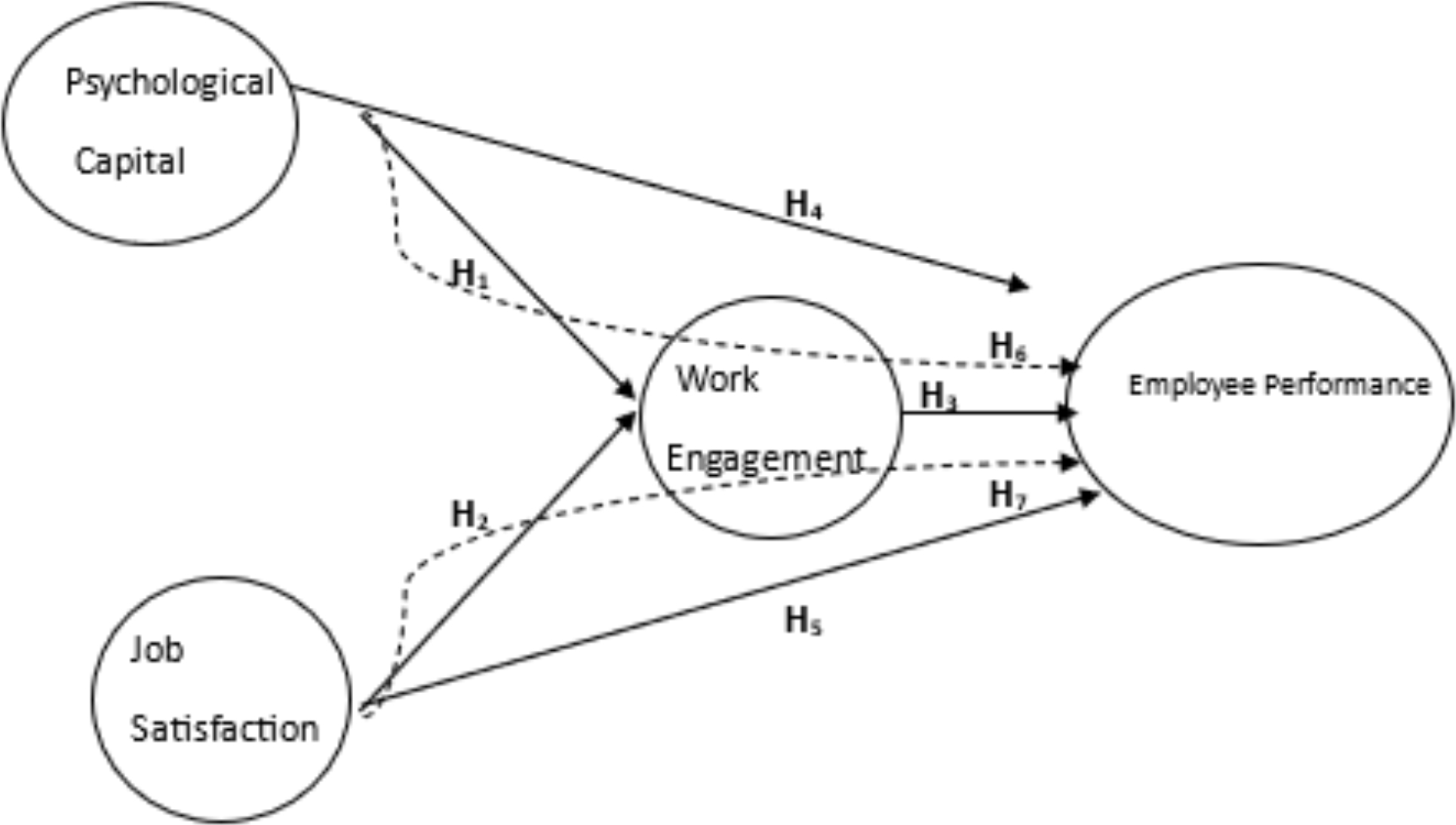
Figure 1.
Research Model
(Source: Jufri and Saman, 2020; Fernández-Martínez and Rodríguez-Borrego, 2019; Othman and Mahmood, 2019)
3. Methodology
3.1. Study Design
A correlational research design was used to analyze two independent variables, namely psychological capital and job satisfaction as independent variables on employee performance as seen from the dimensions of contextual performance, task performance, and counterproductive work behavior as the dependent variable. Work engagement is used as mediation in this research to see the implications it has for performance quality. Private hospitals were used as research objects.
3.2. Sample/participants
Respondents were recruited using a purposive sampling technique because this technique provides flexibility in determining the sample size (Arshed and Danson, 2014). Respondents were staff and nurses in a hospital. The inclusion criteria included a minimum of 2 years of job tenure, a minimum education level of associate’s degree, and a job position of nurses, either junior or intermediate level. This study involved 200 respondents.
3.3. Instrument
This study used psychological capital and job satisfaction as independent variables, work engagement as a mediating variable, and employee performance as the dependent variable. Psychological capital was measured by assessing hope, optimism, resilience, and selfefficacy (Luthans, et al., 2007; Dudasova, et al., 2021). Job satisfaction was measured based on job conditions, rewards, promotion opportunities, support from superiors, and colleagues (Luthans, et al., 2007). Work engagement was measured by evaluating vigor, absorption, and dedication (Schaufeli, 2019). Employee performance was measured by job performance, contextual performance, and counterproductive work behavior (Koopmans, et al., 2014). Indicators measuring task performance include job-specific task proficiency, non-job-specific task proficiency, written and oral communication skills, supervision/leadership abilities, and management/administration competence. Indicators of contextual performance include personal discipline, the ability to facilitate the performance of colleagues and teams, supervision and leadership skills, administrative competence, interpersonal competence, and compliance with authority. Counterproductive work behavior encompasses actions that harm organizational well-being and includes behaviors such as absenteeism, tardiness, engaging in tasks unrelated to job responsibilities, theft, and substance abuse. The questionnaire given to respondents consisted of 35 questions. Psychological capital has 10 questions, job satisfaction has 7 questions, work engagement has 2 questions, task performance has 5 questions, contextual performance has 7 questions, and counterproductive work behavior has 5 questions. This questionnaire focuses on hospital employees consisting of nurses and staff to analyze performance achievements.
3.4. Data Collection
Data were collected using a questionnaire, which was distributed online through Google Forms. The data collection process starts in March 2023. This process begins with submitting permission to the hospital to distribute questionnaires to all respondents. Access to the questionnaire is made easy by using Google Forms as a medium for disseminating research data. Staff and nurses have different working hours, so flexibility is needed for distributing questionnaires. The second stage of submitting a research proposal is accompanied by detailed questionnaire questions and is checked for feasibility by the human resources department regarding the substance of the topic. In the third stage, the hospital gave permission to distribute the questionnaire via the Google Forms link provided by the research team. The data collection process takes 1–2 months. The fourth stage is filtering the data to select questionnaire answers and finally tabulating the data as part of the analysis process with SmartPLS software.
3.5. Data Analysis
Data processing in this study was conducted using structural equation modeling (SEM) analysis based on partial least square (PLS) methodology. The selection of this method was based on theory development in exploratory research, focusing on explaining the variance in the dependent variables while examining the model. The PLS path model consists of two elements. First, the structural model (also known as the inner model in the context of PLS-SEM) represents constructs (circles or ovals) and displays the relationships (paths) between the constructs. Second, the measurement model (also known as the outer model) represents the relationships between constructs and indicator variables (rectangles). The first stage assessed the research indicators with a minimum outer loading of 0.7 (Sarstedt and Cheah, 2019). The second stage assessed validity and reliability with values of Cronbach’s alpha, composite reliability, and rho-a above 0.7 (Afthanorhan, Awang and Aimran, 2020). The third stage evaluated discriminant validity with the comparison of Fornell-Larcker criterion values greater than the average variance extracted (AVE), indicating the fulfillment of discriminant validity criteria (Rasoolimanesh, 2022). R-squared values demonstrate the influence between variables in the model, explaining the influence of exogenous latent variables on endogenous latent variables. A higher R-squared value approaching 1 indicates a stronger substantive relationship. Hypothesis testing was performed to determine the acceptance or rejection of the hypotheses proposed in the research model. This was done by examining the values of the original sample, t-statistics, and p values using bootstrapping SmartPLS. Hypotheses were considered accepted if p values < 0.05. The significance level of the relationship between exogenous and endogenous variables was identified using t-statistics, with values considered significant if t-statistics > 1.96 (at a 5% significance level) for each construct relationship.
4. Result and Discussion
4.1. Respondent Profile
The first step in the analysis involved identifying respondents’ profiles as the basis of information. The following table presents the respondents’ profiles.
Table 2 explains that the number of male respondents is 40 (20%), and the number of female respondents is 160 (80%). According to the information in Table 2, it can be observed that the nursing workforce is predominantly female. The majority of respondents were aged >40 years, with a total of 90 people or 45%. This was followed by the age group of 31–40 years, which consisted of 83 people or 41.5%, and the age group of 20–30 years, which included 27 people or 13.5%. The data showed that most nurses were over 30 years old, indicating a higher proportion of senior-level and experienced nurses. Overall, these nurses had good competence, enabling them to perform their duties to the fullest. In terms of education level, 66.5% of the respondents had a bachelor’s degree (S1), 29.5% had an associate’s degree, and 4% had a master’s degree (S2). The majority of nurses had completed their education at the bachelor’s or professional nurse level (Ners), indicating a higher level of professional nursing qualifications. Additionally, 59 respondents had an associate’s degree, representing vocationally trained nurses. Regarding work experience, the highest percentage was found among those who had worked for 10-20 years, accounting for 56.5%. This was followed by 23.5% of respondents who had worked for more than 20 years. In terms of job position, the majority of respondents, 87% or 174 individuals, held the position of nurse. There were 22 individuals (11%) who were supervisors or team leaders, and a small proportion (2%) held managerial positions.
Table 2.
Respondents’ Profiles
(Source: Authors’ own research)
| Item | Component | Total | Percentage |
|---|---|---|---|
| Gender | Male | 40 | 20 |
| Female | 160 | 80 | |
| Age | 20–30 | 27 | 13.5 |
| 31–40 | 83 | 41.5 | |
| >40 | 90 | 45 | |
| Education | Associate’s degree | 59 | 29.5 |
| S1 | 133 | 66.5 | |
| S2 | 8 | 4 | |
| Length of service | <10 years | 40 | 20 |
| 1020 years | 113 | 56.5 | |
| >20 years | 47 | 23.5 | |
| Position | Staff | 174 | 87 |
| Supervisor/Team leader | 22 | 11 | |
| Manager | 4 | 2 |
4.2. Statistical Results
The first stage of the analysis of research results involves examining the indicators used in the hypotheses between variables with their respective outer loading values. Table 3 below shows the outer loading values.
Table 3.
Outer loading
(Source: Authors’ own research)
| Variable | Indicator | Outer loading | Cronbach’s alpha | Rho-a | Composite reliability | AVE | R-squared |
|---|---|---|---|---|---|---|---|
| Psychological capital | PC1 | 0.700 | 0.899 | 0.902 | 0.918 | 0.555 | - |
| PC2 | 0.718 | - | - | - | - | - | |
| PC3 | 0.777 | - | - | - | - | - | |
| PC4 | 0.703 | - | - | - | - | - | |
| PC5 | 0.705 | - | - | - | - | - | |
| PC6 | 0.779 | - | - | - | - | - | |
| PC7 | 0.753 | - | - | - | - | - | |
| PC8 | 0.732 | - | - | - | - | - | |
| PC9 | 0.791 | - | - | - | - | - | |
| PC10 | 0.722 | - | - | - | - | - | |
| Job satisfaction | JS1 | 0.754 | 0.841 | 0.855 | 0.876 | 0.504 | - |
| JS2 | 0.708 | - | - | - | - | - | |
| JS3 | 0.729 | - | - | - | - | - | |
| JS4 | 0.700 | - | - | - | - | - | |
| JS5 | 0.704 | - | - | - | - | - | |
| JS6 | 0.742 | - | - | - | - | - | |
| JS7 | 0.735 | - | - | - | - | - | |
| Work engagement | WE1 | 0.948 | 0.888 | 0.888 | 0.947 | 0.899 | 0.478 |
| WE2 | 0.935 | - | - | - | - | - | |
| Task performance | EP1 | 0.849 | 0.905 | 0.909 | 0.929 | 0.724 | 0.620 |
| EP2 | 0.79 | - | - | - | - | - | |
| EP3 | 0.881 | - | - | - | - | - | |
| EP4 | 0.869 | - | - | - | - | - | |
| EP5 | 0.863 | - | - | - | - | - | |
| Contextual performance | EP6 | 0.714 | 0.899 | 0.913 | 0.919 | 0.590 | 0.581 |
| EP7 | 0.77 | - | - | - | - | - | |
| EP8 | 0.842 | - | - | - | - | - | |
| EP9 | 0.806 | - | - | - | - | - | |
| EP10 | 0.873 | - | - | - | - | - | |
| EP11 | 0.712 | - | - | - | - | - | |
| EP12 | 0.808 | - | - | - | - | - | |
| EP13 | 0.700 | - | - | - | - | - | |
| Counterproductive work behavior | EP14 | 0.703 | 0.883 | 0.964 | 0.911 | 0.673 | 0.056 |
| EP15 | 0.814 | - | - | - | - | - | |
| EP16 | 0.815 | - | - | - | - | - | |
| EP17 | 0.873 | - | - | - | - | - | |
| EP18 | 0.893 | - | - | - | - | - |
As shown in table 3, all indicators have outer loading values higher than 0.7, meaning that they could manifest the variables used in this study. All indicators of the variables, i.e., psychological capital, job satisfaction, work engagement, and employee performance, meet the criteria for adequacy in all aspects. Therefore, it can be concluded that all indicators are capable of representing the research variables.
The next stage involves aspects of validity and reliability. Table 3 explains that all variables meet the indicators of validity and reliability. Psychological capital, job satisfaction, and work engagement have Cronbach’s alpha, rho-a, and composite reliability values above 0.8. Employee performance, represented through task performance, contextual performance, and counterproductive work behavior, also has Cronbach’s alpha, rho-a, and composite reliability values above 0.8. Table 3 shows that task performance exhibited a value of 0.620 or 62.0%. The results indicate that the simultaneous effect of psychological capital, job satisfaction, and work engagement on task performance is 62%, while the remaining 38% is explained by other exogenous variables not included in the study. The contextual performance variable has a value of 0.581 or 58.1%. This suggests that the significant influence of psychological capital, job satisfaction, and work engagement on contextual performance is 58.1%, and the remaining 41.9% is attributed to other exogenous variables not examined in the study. On the other hand, the counterproductive work behavior variable has a value of 0.056 or 5.6%. This shows that the combined influence of psychological capital, job satisfaction, and work engagement on counterproductive work behavior is 5.6%, while the remaining 94.4% is explained by other exogenous variables not considered in the study. Finally, the work engagement variable has a value of 0.478 or 47.8%. This indicates that the significant influence of psychological capital and job satisfaction on work engagement is 47.8%, and the remaining 52.2% is accounted for by external variables not included in the study. The next stage involves discriminant validity, as shown in the following Table 4.
Table 4.
Discriminant Validity
(Source: Authors’ own research)
| Psychological capital | Job satisfaction | Task performance | Contextual performance | Counterproductive work behavior | Work engagement | |
|---|---|---|---|---|---|---|
| Psychological capital | 0.745 | - | - | - | - | - |
| Job satisfaction | 0.662 | 0.710 | - | - | - | - |
| Task performance | 0.740 | 0.647 | 0.851 | - | - | - |
| Contextual performance | 0.730 | 0.630 | 0.742 | 0.768 | - | - |
| Counterproductive work Behavior | –0.076 | –0.090 | –0.099 | –0.062 | 0.820 | - |
| Work engagement | 0.623 | 0.637 | 0.645 | 0.582 | –0.221 | 0.948 |
Table 4 explains that all variables have Fornel-Larcker criterion values greater than the AVE values. This indicates that they fulfill the aspect of discriminant validity. All research indicators have met the requirements to be used as a basis for information. The next step involves examining discriminant validity with the following table.
Table 5 explains that psychological capital and job satisfaction have a positive effect on work engagement (H1 & H2 accepted). This is indicated by p values < 5% and t-statistic psychological capital (4.513), and job satisfaction (4.691) > t-table (1.96). Psychological capital, job satisfaction, and work engagement have been proven to have a positive effect on task performance (H3a, H4a, & H5a accepted). P values < 5% and t-statistics work engagement (3.141), psychological capital (6.742), and job satisfaction (2.510) > t-table (1.96). Psychological capital and job satisfaction are proven to have a positive effect on contextual performance (H4b & H5b accepted). P values < 5% and t-statistic psychological capital (5.862) and job satisfaction (2.913) > t-table (1.96). Work engagement has no effect on contextual performance (H3b rejected) because the p values are > 5% and t-statistics (1.696) < t-table (1.96). Work engagement has a negative effect on counterproductive work behavior (H3c accepted). P values < 5% and t-statistic work engagement (2.966) > t-table (1.96). Psychological capital and job satisfaction have been proven to have no effect on counterproductive work behavior (H4c & H5c rejected). P values > 5% and t-statistic psychological capital (0.465) and job satisfaction (0.375) < t-table (1.96). The figure for research on direct influence is as follows.
Table 5.
Hypothesis Test of Direct Effect
(Source: Authors’ own research)
| Variables | Original samples | T-statistic | P values |
|---|---|---|---|
| Psychological capital > work engagement | 0.358 | 4.513 | 0.000 |
| Job satisfaction > work engagement | 0.400 | 4.691 | 0.000 |
| Work engagement > task performance | 0.233 | 3.141 | 0.002 |
| Work engagement > contextual performance | 0.132 | 1.696 | 0.090 |
| Work engagement > counterproductive work behavior | -0.301 | 2.966 | 0.003 |
| Psychological capital > task performance | 0.473 | 6.742 | 0.000 |
| Psychological capital > contextual performance | 0.510 | 5.862 | 0.000 |
| Psychological capital > counterproductive work behavior | 0.078 | 0.465 | 0.642 |
| Job Satisfaction > task performance | 0.186 | 2.510 | 0.012 |
| Job satisfaction > contextual performance | 0.209 | 2.193 | 0.028 |
| Job satisfaction > counterproductive work behavior | 0.051 | 0.375 | 0.707 |
Table 6 shows that the indirect effect of psychological capital and job satisfaction has an influence on task performance which is mediated by work engagement (H6a & H7a accepted). The p values < 5% and t-statistic psychological capital (2.732) and job satisfaction (2.302) < t-table (1.96). Psychological capital and job satisfaction have no effect on contextual performance which is mediated by work engagement (H6b & H7b rejected). P values > 5% and t-statistic psychological capital (1.507) and job satisfaction (1.597) < t-table (1.96). Psychological capital and job satisfaction have a negative effect on counterproductive work behavior which is mediated by work engagement (H6c & H7c accepted). The p values < 5% and t-statistic psychological capital (2.628) and job satisfaction (2.158) > t-table (1.96). The image for indirect influence is divided into two, namely psychological capital and job satisfaction, which are mediated by work engagement as follows.
Table 6.
Hypothesis Test of Indirect Effect
(Source: Authors’ own research)
| Variables | Original samples | T-statistic | P values |
|---|---|---|---|
| Psychological capital > work engagement > task performance | 0.083 | 2.732 | 0.006 |
| Psychological capital > work engagement > contextual performance | 0.047 | 1.507 | 0.132 |
| Psychological capital > work engagement > counterproductive work behavior | -0.108 | 2.628 | 0.009 |
| Job satisfaction > work engagement > task performance | 0.093 | 2.302 | 0.021 |
| Job satisfaction > work engagement > contextual performance | 0.053 | 1.597 | 0.110 |
| Job satisfaction > work engagement > counterproductive work behavior | –0.120 | 2.158 | 0.031 |
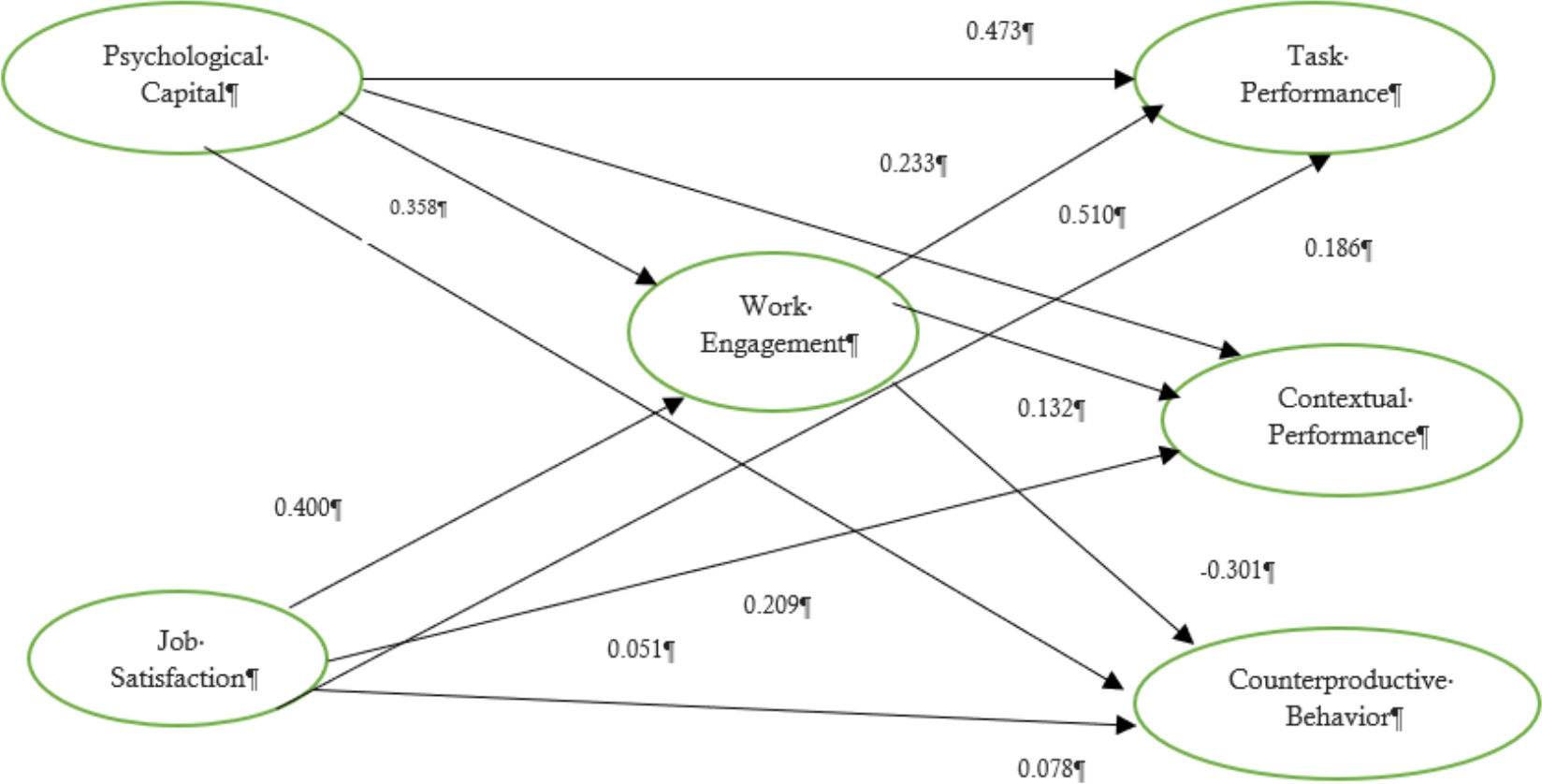
Figure 2.
Research Model Direct Effect
(Source: Authors’ own research)
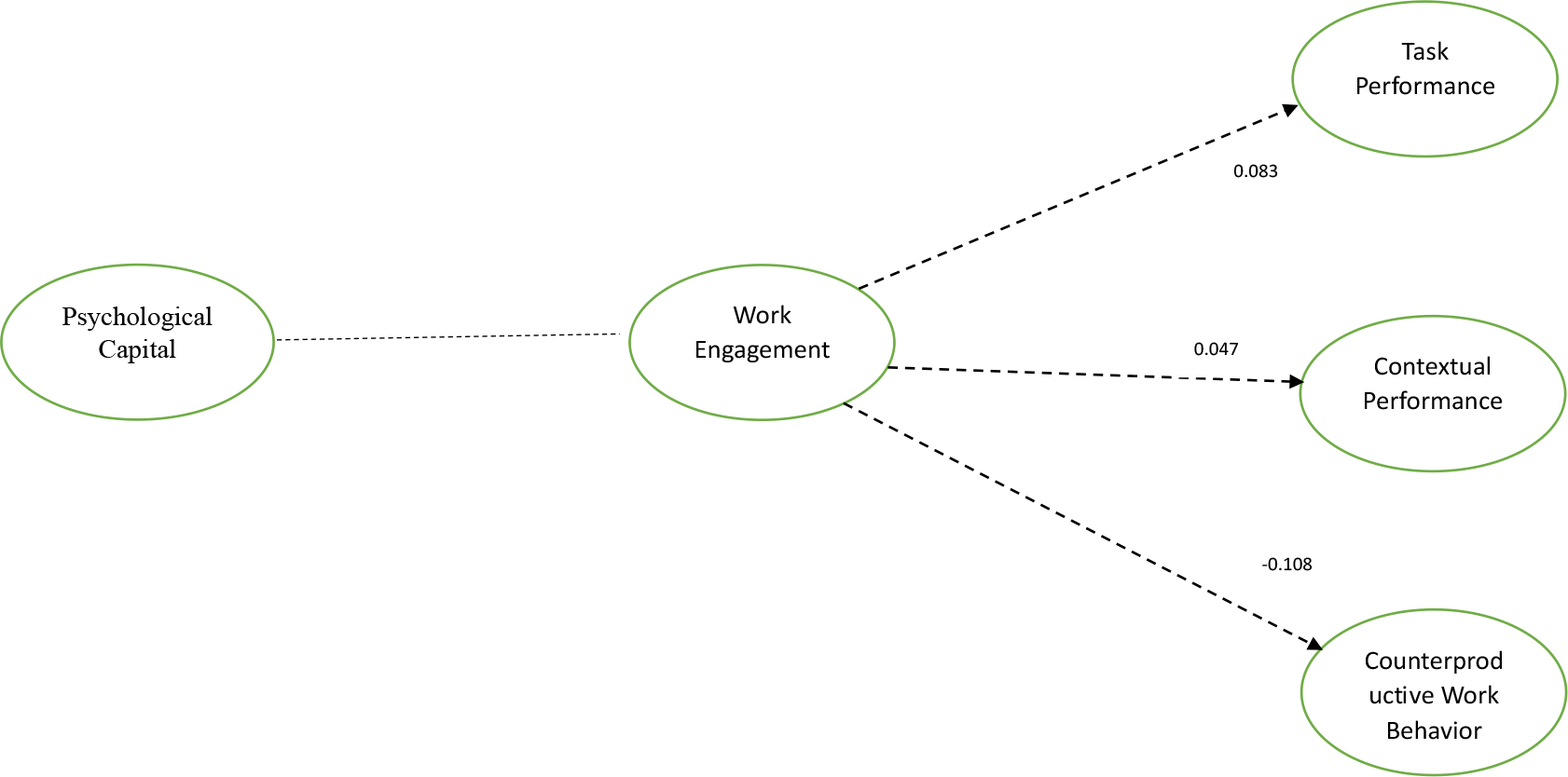
Figure 3.
Research Model Indirect Effect Psychological Capital
(Source: Authors’ own research)
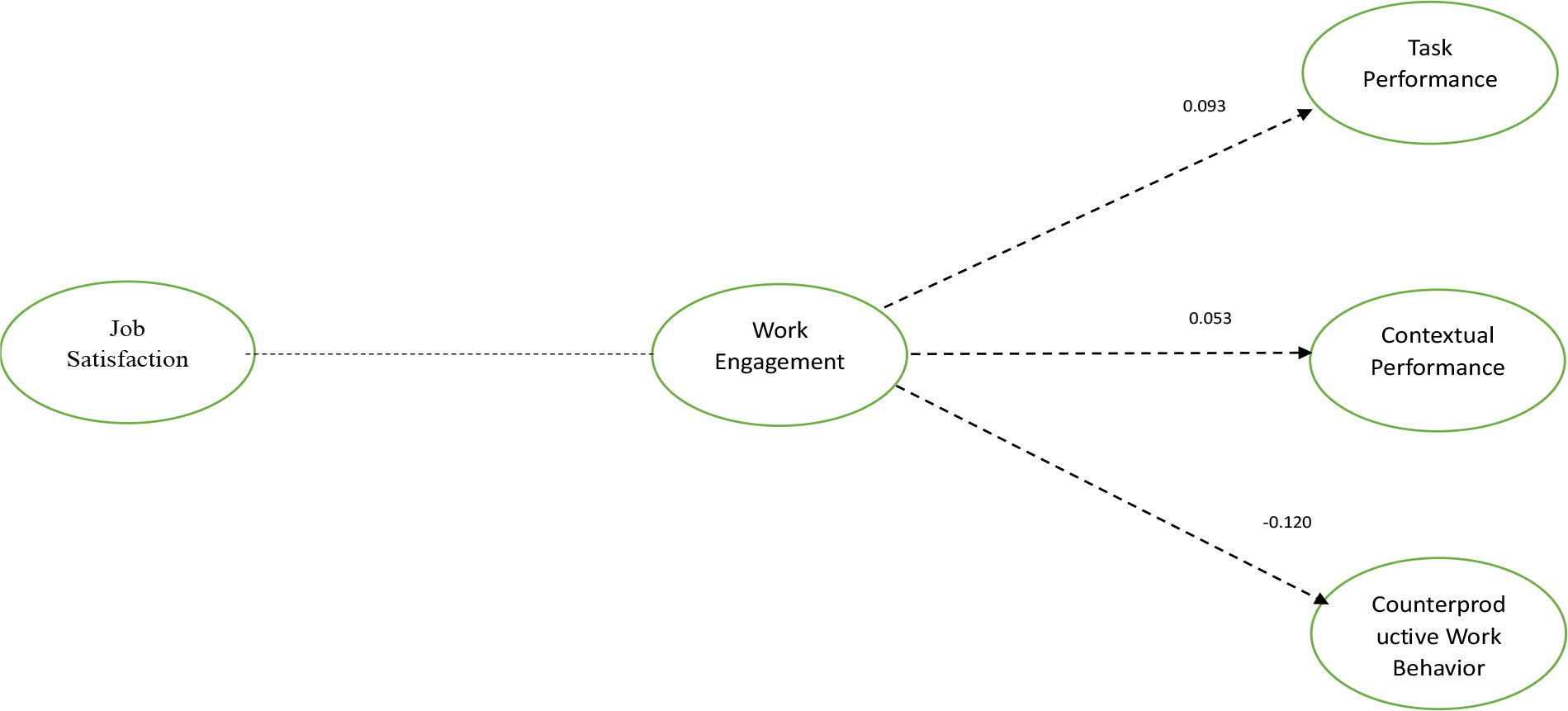
Figure 4.
Research Model Indirect Effect Job Satisfaction
(Source: Authors’ own research)
5. Discussion
Psychological capital can increase work engagement by 35.8%. This percentage is quite high considering the crucial role of work engagement in patient service quality. Several studies support the positive implications of psychological capital on work engagement (Jin, et al., 2022). This is consistent with the research that found psychological capital to have a significant influence on work engagement among frontline employees. Individuals with high optimism and self-efficacy believe that they can solve work-related issues with active engagement in job quality.
Job satisfaction has been proven to increase work engagement by 40%. Several studies have explained the positive influence of job satisfaction on work engagement (Bernales-Turpo, 2022). Moreover, Zhang, et al. (2023) also found that job satisfaction among both generalist and specialist nurses has a positive impact on work engagement. Work engagement can enhance task performance by 23.3% and reduce counterproductive work behavior by 30.1%. The results indicate that work engagement does not influence contextual performance, but it can increase it by 13.2%. These findings are in line with the positive and significant impact of work engagement on task performance (van Zyl, et al., 2021). This suggests that high levels of vigor and dedication can lead nurses to improve their task performance. Several studies have highlighted the influence of work engagement on counterproductive work behavior (Tsai, 2021). In line with this research, some studies have stated that work engagement among nurses increases their contagious personal initiatives, reduces hospital mortality rates, and leads to higher financial profitability for the organization.
However, this study also found that work engagement does not have a significant influence on contextual performance. The results suggest that the levels of vigor and dedication do not strongly affect contextual performance in nurses. This finding is consistent with Riyanto, Endri and Herlisha (2021), who found that work engagement does not directly affect employee performance. Other research found that work engagement has a significant influence on both task performance and contextual performance among nurses (Bhatti, 2018). Job satisfaction has been found to increase task performance by 18.6%, increase contextual performance by 20.9%, and reduce Counterproductive work behavior by 5%. This research demonstrates that job satisfaction has a positive and significant influence on both task performance and contextual performance (Abdullah, 2019; Nemteanu and Dabija, 2021). These findings align with previous studies, such as one conducted by Luthans, et al. (2007) and Tampubolon (2016), which found a positive impact of job satisfaction on employee performance. A nurse who is satisfied with their job is more likely to exhibit better performance. This discrepancy may suggest that job satisfaction alone cannot completely eliminate negative work behaviors.
This study found that work engagement fully mediates the positive influence of psychological capital on task performance. On the other hand, work engagement mediates the negative influence of psychological capital on counterproductive work behavior. Positive psychological factors can reduce negative behaviors at work by fostering high levels of employee participation. Negative work behaviors can damage the reputation and image of the organization, highlighting the need for optimal work engagement. This study aligns with previous research by Alessandri, et al. (2018), who confirm the mediating role of work engagement in the relationship between job satisfaction and changes in performance over time. Job satisfaction indirectly Improves task performance (9.3%) and contextual performance (5.3%), and reduces counterproductive work behavior (12%) through the mediation of work engagement. Indirectly, job satisfaction has positive implications for task performance and negative implications for counterproductive work behavior. This is in line with research by Riyanto (2021), who found that work engagement mediates the relationship between job satisfaction and employee performance. Consistent with the research conducted by Muslim, et al. (2018), which found that work engagement can mediate the effect of job satisfaction on the performance of laboratory technicians. However, there are also differences from previous studies, as this research found that work engagement does not mediate the influence of job satisfaction on one of the performance indicators of employees, namely contextual performance. The mediating effect is evident in the role of job satisfaction in overall employee performance. Work engagement serves as an appropriate mediator to ensure that the perceived satisfaction of employees correlates with job quality. Organizations must be capable of providing employees with their job needs. This ensures that employee performance can be measured effectively in both task performance and contextual performance while reducing behaviors that harm job quality.
6. Conclusion
Job satisfaction is the most influential variable on task performance, while psychological capital has the most significant impact on contextual performance. Meanwhile, work engagement is the most meaningful variable for influencing counterproductive work behavior. Therefore, maximizing employee (nurse) performance in the organization requires synergy among these three aspects/variables: job satisfaction, psychological capital, and work engagement, which will affect all indicators of employee performance. The research results conclude that psychological capital, job satisfaction, and work engagement directly influence task performance. This indicates that the organization supports the processes carried out by nurses. However, psychological capital and job satisfaction only have an indirect effect on counterproductive work behavior through work engagement. This should be a crucial consideration for hospitals in implementing programs/policies that can enhance psychological capital and job satisfaction among nurses, leading to increased work engagement. Ultimately, nurses generally perform well in their task performance. However, there is room for improvement in contextual performance according to job demands, and counterproductive work behavior should be reduced to ensure job quality.
The research focuses on analyzing the direct and indirect effects of psychological capital and job satisfaction on employee performance mediated by work engagement, specifically within the healthcare profession, with the potential for application to other professions such as teaching, technical fields, and technology experts with high job demands. The study provides a detailed analysis of performance aspects, including task, contextual, and work behavior dimensions. It should be noted that different results and conclusions may be found for employees in other professions and industry sectors. The following research should be conducted according to the needs of the organization. The current research model can be extended to various forms of businesses and organizations, including government, private sector, and small and medium-scale enterprises. Additionally, future research is recommended to explore the moderating effects of work engagement on the influence of other exogenous variables on employee performance. Furthermore, researchers are encouraged to use more suitable designs, such as longitudinal studies, to examine the effects of psychological capital, job satisfaction, and work engagement on employee performance over time.