
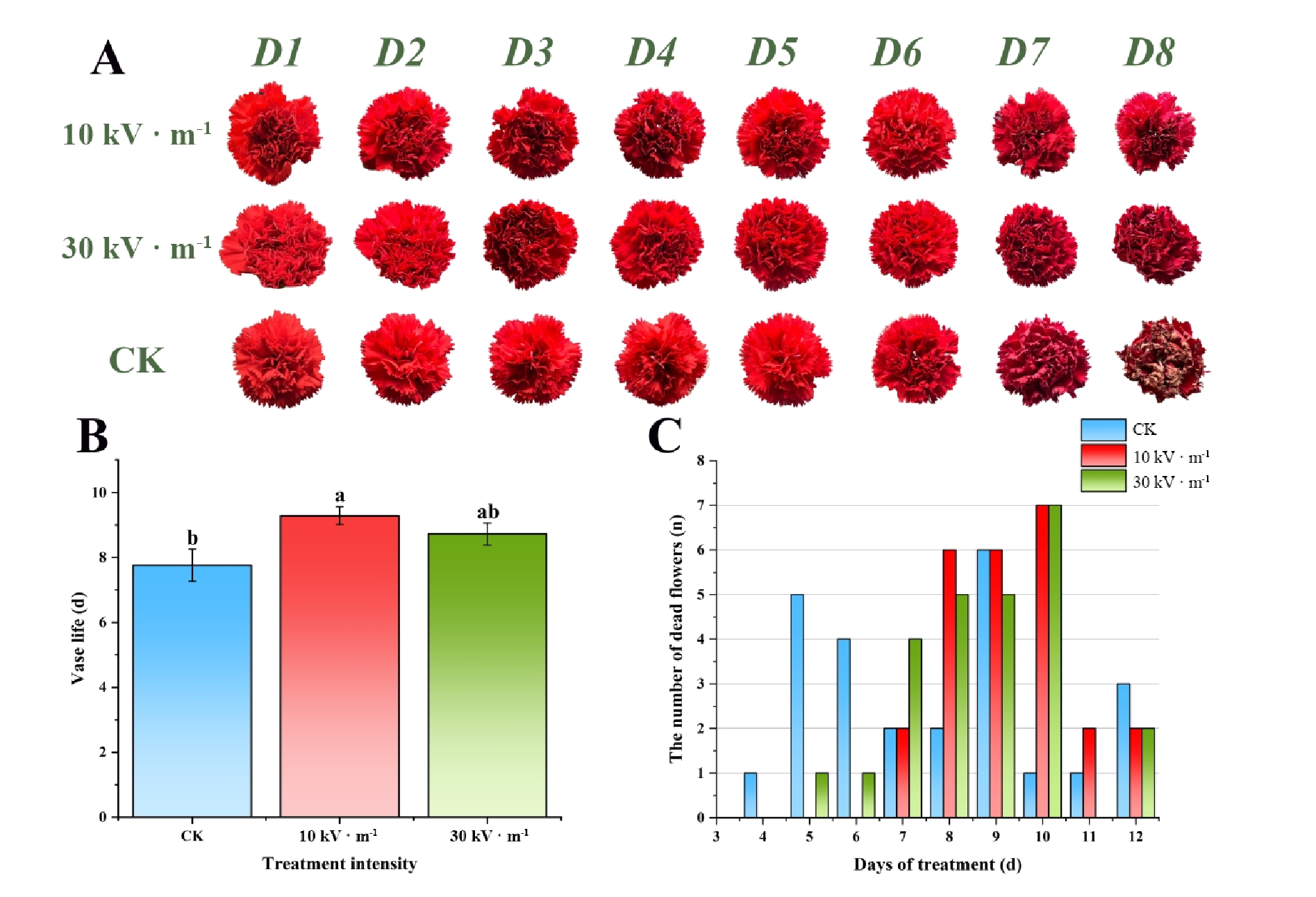
Figure 1.
Effects of a HVEF on the postharvest ornamental quality of carnation: (A) postharvest appearance of different field strengths; (B) bottle insertion period; (C) number of deaths per day. Lowercase letters indicate significant differences between treatments according to Duncan’s multiple range test p < 0.05. Three biological replicates were used (n = 25). HVEF, high-voltage electrostatic field.
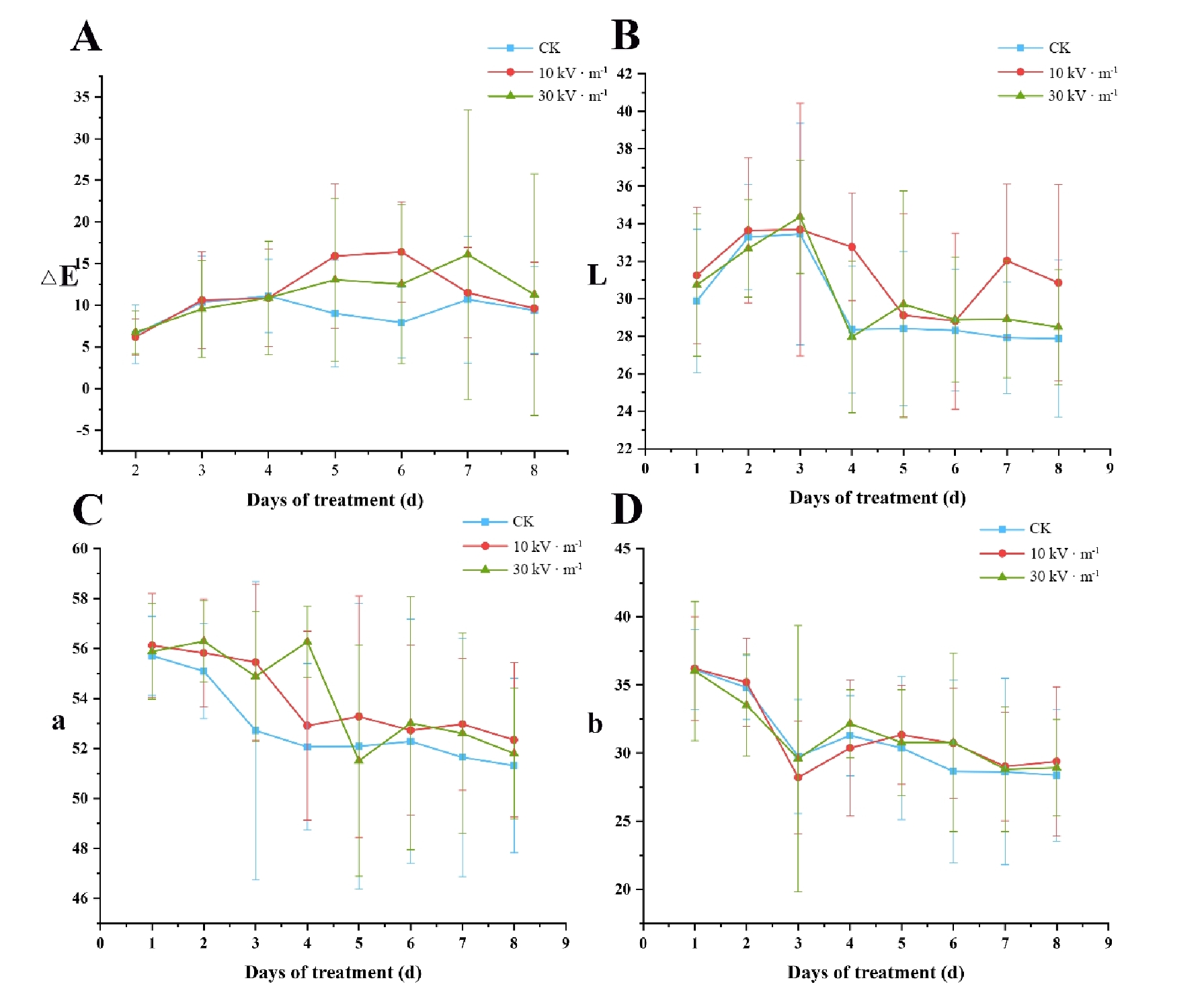
Figure 2.
Effects of a HVEF on postharvest petal colour parameters of carnation: (A) colour difference value (ΔE), indicating the vibrancy of the colour; (B) lightness (L*); (C) red-green degree value (a*, positive value means red, negative value means green); (D) yellow-blue degree value (b* value, positive value means yellow, negative value means blue). Three biological replicates were used (n = 15). HVEF, high voltage electrostatic field.
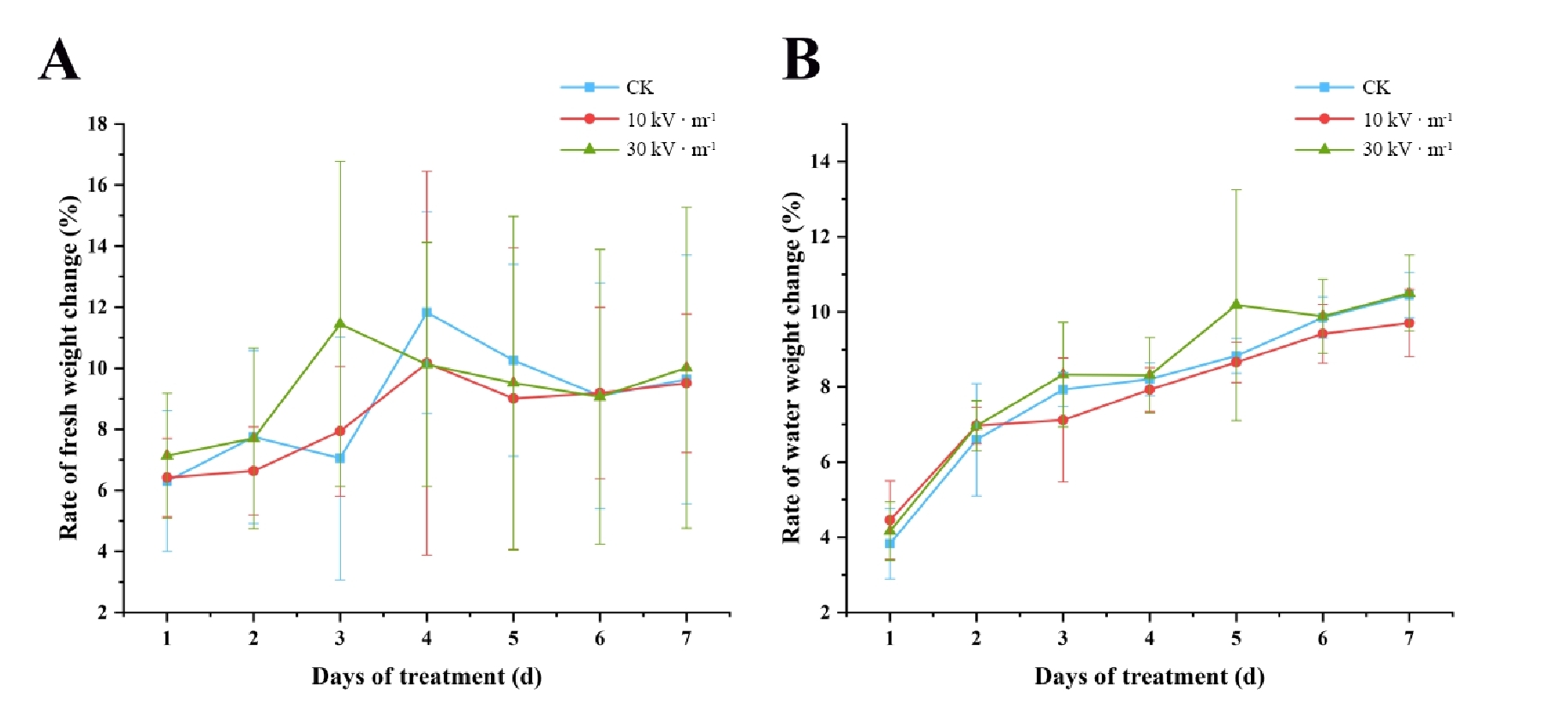
Figure 3.
Effects of a HVEF on fresh weight and water uptake of carnation: (A) rate of change in fresh weight, (B) rate of change in water weight. Three biological replicates were used.(n = 15). HVEF, high-voltage electrostatic field.
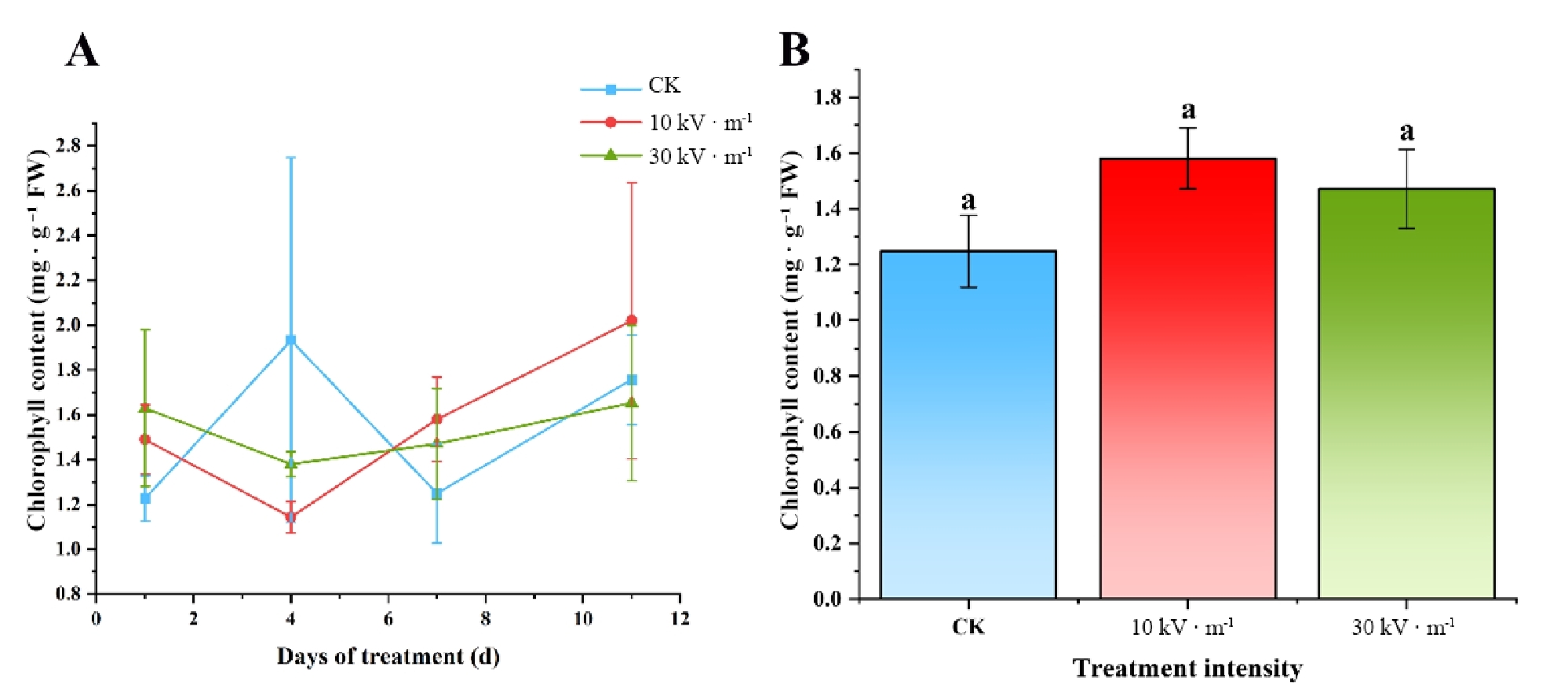
Figure 4.
Effects of a HVEF on chlorophyll content in carnation: (A) variation of chlorophyll content; (B) single factor variance analysis of chlorophyll content on the seventh day. Small case letters indicate significant differences between treatments according to Duncan’s multiple range test (p < 0.05). Three biological replicates were used (n = 3). HVEF, high voltage electrostatic field.
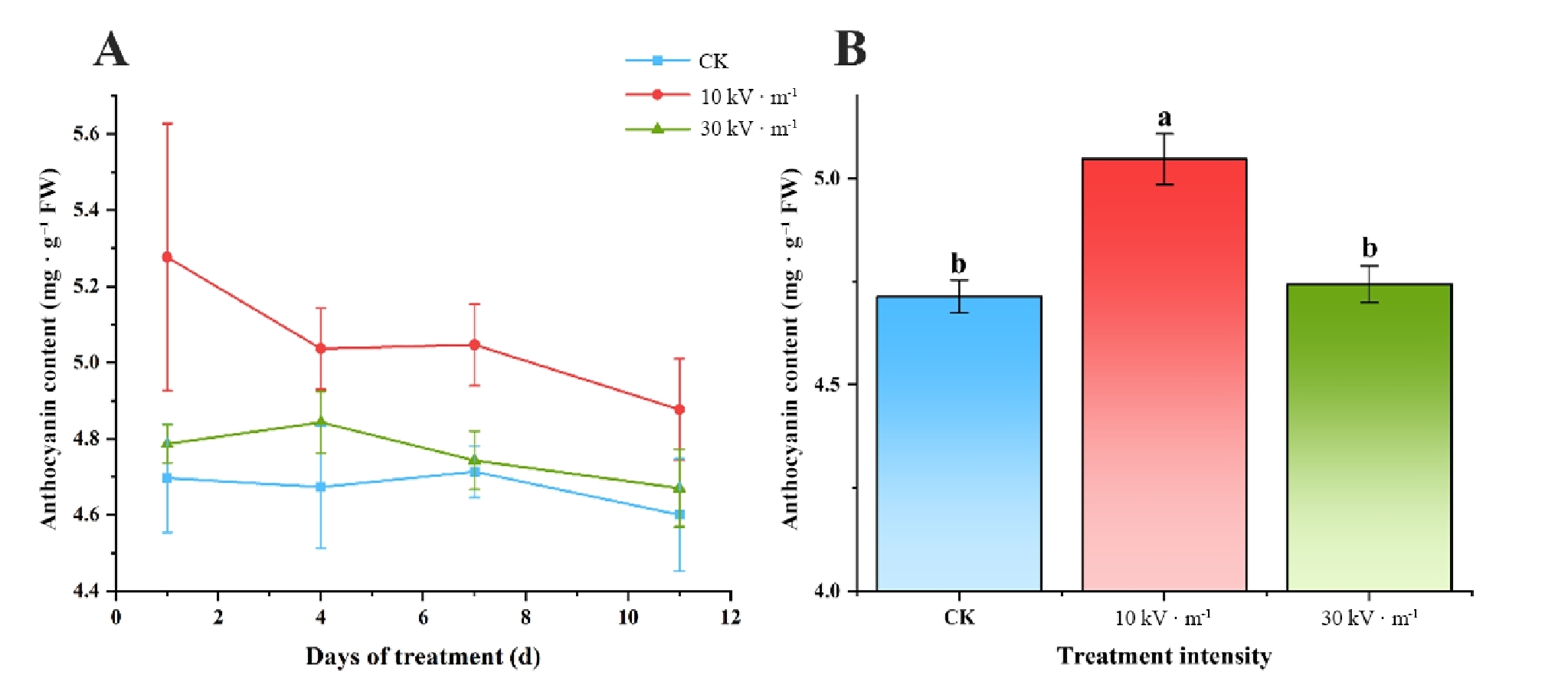
Figure 5.
Effects of a HVEF on anthocyanin content in carnation: (A) variation of anthocyanin content; (B) single factor variance analysis of anthocyanin content on the seventh day. Small case letters indicate significant differences between treatments according to Duncan’s multiple range test (p < 0.05). Three biological replicates were used (n = 3).
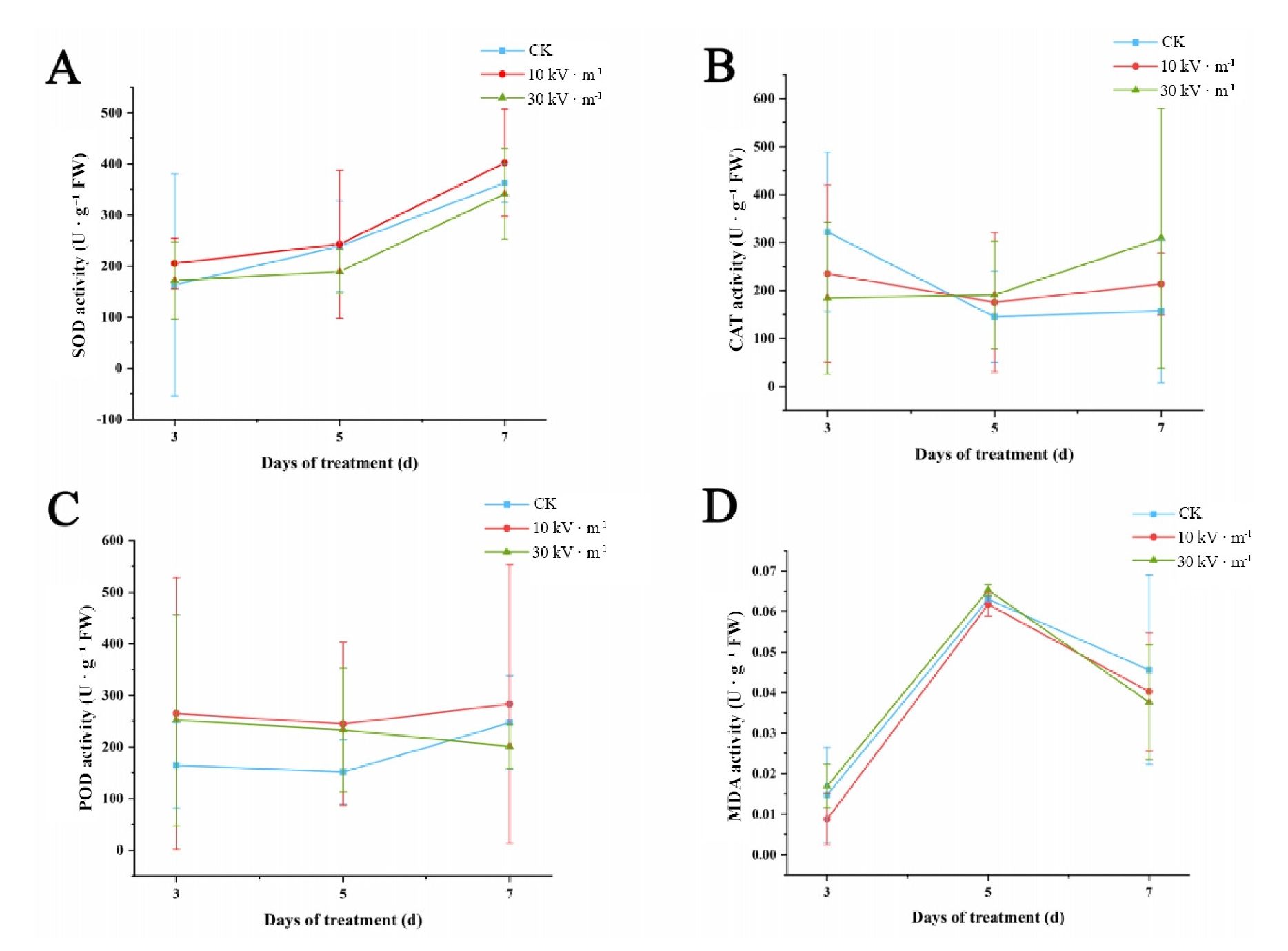
Figure 6.
Effects of HVEF on enzyme activities of postharvest carnation: (A) SOD; (B) CAT; (C) POD; (D) MDA. Three biological replicates were used (n = 3). CAT, catalase; HVEF, high voltage electrostatic field; MDA, malondialdehyde; POD, peroxidase; SOD, superoxide dismutase.
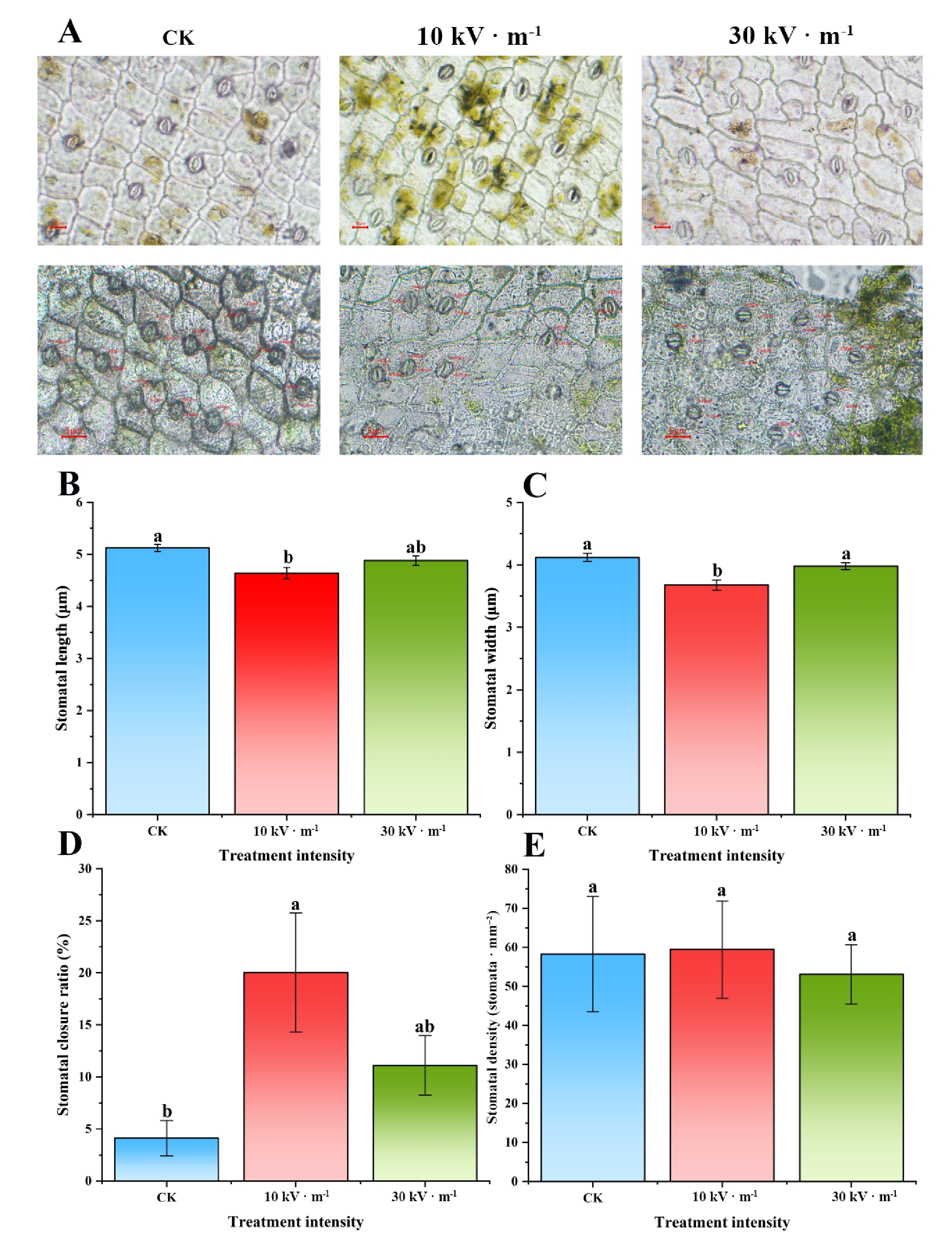
Figure 7.
Effect of HVEF on stomata of carnation leaves: (A) stomatal morphology; (B) stomatal length; (C) stomatal width; (D) SCR; (E) stomatal density. Small case letters indicate significant differences between treatments according to Duncan’s multiple range test (p < 0.05). Three biological replicates were used (n = 10). HVEF, high voltage electrostatic field; SCR: stomatal closure ratio.