
INTRODUCTION
D. caryophyllus L., commonly known as the carnation, is a prized ornamental plant celebrated as the ‘mother flower’. However, postharvest factors, such as pathogen infection, dehydration, and nutrient deficiencies, significantly diminish its aesthetic appeal (Lou et al., 2021). Traditional post-harvest preservation methods for fresh-cut flowers primarily involve low-temperature refrigeration and chemical preservation. Although refrigeration consumes substantial energy, chemical preservation techniques contribute to environmental pollution.
High-voltage electrostatic field (HVEF), a non-thermal physical preservation technology, extends storage life through non-lethal electrostatic field effects (Liu et al., 2017). The system generates high-frequency rectangular waves via electronic circuits that undergo rectification, filtering, multivibrator oscillation conversion, and multistage voltage multiplication rectification to produce continuously adjustable DC high-voltage output (Gao et al., 2018). In recent years, HVEF has gained widespread application in fruit and vegetable preservation owing to its heat-freezing properties and minimal energy consumption.
Studies have shown that fresh-cut broccoli treated with HVEF can maintain hardness at approximately 19.56–27.68 N and greenness at 0.48–1.99 after 40 days of storage, mainly reflected in extended shelf life, maintained quality, and enhanced antioxidant capacity (Kao et al., 2019). Studies on kale have also shown that treatment with 3 kV · m−1 HVEF reduced the peak respiration rate of the control group (CK) to 5.67 mg CO2 · kg−1 · h−1 on day 5, compared with 7.51 mg CO2 · kg−1 · h−1. The weight loss rate in the treatment group was 3.46% on day 30, whereas that in the control group was 4.22%. The reduction of chlorophyll content was even smaller, and the colour difference value (ΔE) was only 2.65, which was 4.87 lower than that of CK (Huang et al., 2024). Recent studies on fruit preservation have demonstrated that bananas treated with 600 kV · m−1 HVEF for 7.5 min maintain a stable surface colour throughout a 4-day storage period, indicating that this method can regulate ripening processes (Valdez-Miranda et al., 2024). These findings highlight the significant positive impact of HVEFs on post-harvest quality preservation in fruits and vegetables, particularly in maintaining their morphological integrity.
HVEF has multifaceted regulatory effects on physiological indicators and delays plant senescence by interfering with vital processes. Research indicates that HVEF treatment has varying effects on different enzymes, specifically reducing the activity levels of lipase, glucose oxidase, heat-resistant α-amylase, and peroxidase (POD) (Ho et al., 1997). This mechanism works through two key processes: stabilising cell membranes via charge modification and ion migration, thereby suppressing respiration (Wang et al., 2005), which slows nutrient depletion; and utilising bioactive compounds for antimicrobial action to mitigate microbial damage (Nie et al., 2024). Scholars have conducted extensive research on the shelf life of foods. Studies have indicated that pulsed electric field treatment preserves vitamin C without degradation, while slowing its oxidation (Zhang et al., 2015). In addition, HVEF enhances the quality of frozen mushrooms (Fallah-Joshaqani et al., 2021). Research has demonstrated that HVEF provides preservation benefits for cut roses. This method effectively extends the vase life of cut flowers, as evaluated by measuring physiological indicators, such as vase life, soluble protein content, and fresh weight variation rates (Wang et al., 2025a, 2025b).
This study assessed changes in vase period, morphological appearance, chlorophyll, anthocyanins, and leaf stomata of carnations (D. caryophyllus L) under the effects of HVEF on post-harvest freshness preservation. The purpose was to explore the role and mechanism of HVEF technology in postharvest freshness preservation of carnations, and to expand ideas for the further development of HVEF technology in preserving the freshness of cut flowers.
MATERIALS AND METHODS
Plant material and treatment
A total of 120 cut flowers of D. caryophyllus L. cultivar ‘Master’ were harvested, selected, and transported immediately to the Landscape Architecture Laboratory of Suqian University, Jiangsu Province (33.93°N, 118.30°E). The flowers were cut obliquely to a length of 45 cm. Two pairs of leaves at the top were reserved and placed in conical flasks containing 350 mL of distilled water, with one stem per bottle. All cut flowers were kept indoors under scattered light at 24°C ± 1°C and a relative humidity of 60%–80%. The carnations were divided into three groups of 40 each, including the HVEF treatment groups and the CK.
HVEF treatment equipment and conditions
The HVEF device consisted of a plant electric field generator (SCDC-II) and two aluminium plates. The distance between the two aluminium plates was fixed at 60 cm. The upper aluminium plate was connected to the output end of the plant electric field generator, and the lower aluminium plate was grounded. The experimental samples were placed between the two electrode plates.
The experimental settings were as follows: CK and HVEF treatments at 10 kV · m−1 and 30 kV · m−1. The HVEF treatment time was 2 hr after bevel treatment on the first day of the experiment, and no further treatment was performed for the remainder of the experiment.
Measurement indicators and methods
Morphological index determination
During the entire vase life experiment, the vase period, petal and leaf colour difference, fresh weight change rate, water weight change rate, and stomatal morphology of carnations were determined. The vase period was observed daily, while colour difference, fresh weight, and water weight change rates were measured at a fixed time every day.
Carnations were placed in containers with clean water under the previously described indoor conditions. Flower status was checked and recorded daily, and the end of the vase period was defined as obvious petal wilting, rot, or tip burn, with the number of survival days from the start to this endpoint recorded for each sample.
Colour parameters (L*, a*, and b*) were measured using a colorimeter at two positions: the middle of the outermost petals and the front middle of the first pair of basal leaves. In the CIELAB system, L* = 100 represents pure white, with smaller values indicating lower brightness; positive a* is red and negative a is green; larger b* is more yellow and smaller b is more blue. The total colour difference (ΔE) between two samples was calculated using the formula: ΔE = √[(ΔL*)2 + (Δa*)2 + (Δb*)2], where ΔL*, Δa*, and Δb* are the differences in L*, a*, and b* values between the treatment and the control (CK).
For fresh weight and water weight change rates, the initial fresh weight of each cut carnation (FW0) and initial vase water weight (W0) were recorded at the start. Subsequently, the daily fresh weight (FWt) and residual vase water weight (Wt) were measured at the same fixed time. The fresh weight change rate (%) was calculated as [(FWt–FW0)/FW0] × 100%, and the water weight change rate (%) was calculated as [(W0–Wt)/ W0] × 100%.
For stomatal morphology analysis, the lower epidermis was torn from the middle of fully expanded carnation leaves and made into temporary slides. Stomatal morphology was observed using an Olympus BX40 microscope (Olympus Corp., Tokyo, Japan), and stomatal length, width, closure ratio, and density were quantified using ImageJ software (National Institutes of Health, Bethesda, MD, USA). All treatments had three independent biological replicates, with at least 30 stomata measured per replicate. The stomatal closure ratio (SCR) was calculated as the number of completely or partially closed stomata divided by the total number of observed stomata, multiplied by 100%.
Physiological and biochemical index determination
For chlorophyll content determination, 0.2 g of leaf tissue was extracted with 95% ethanol, and the absorbance of the extract was measured at 665 nm, 649 nm, and 470 nm to calculate the chlorophyll content (Wellburn, 1994). Anthocyanin content was determined by extracting 0.2 g of petal tissue with 95% ethanol, and the absorbance was measured at 530 nm; the content was calculated using either a standard curve or the extinction coefficient method (Lee et al., 2005).
Superoxide dismutase (SOD) activity was determined using the nitrogen blue tetrazole (NBT) photochemical reduction method, with 0.2 g of fresh tissue used per sample (Wang et al., 2025a, 2025b). Peroxidase (POD) activity was determined using the guaiacol method, with 0.2 g of fresh tissue used per sample (Wang et al., 2025a, 2025b). Catalase (CAT) activity was determined using a colorimetric method, with 0.2 g of fresh tissue used per sample (Wang et al., 2025a, 2025b). Malondialdehyde (MDA) content was determined using the thiobarbituric acid (TBA) method, with 0.5 g of fresh tissue per sample (Wang et al., 2025a, 2025b).
Data processing
Differences in morphological and physiological parameters between treatments were analyzed using IBM® SPSS® Statistics 27.0 (IBM Corp., Armonk, NY, USA). Significance was analysed using a combined method of Duncan’s multiple range test and Welch’s analysis of variance (ANOVA) at a probability level of p < 0.05. Data were expressed as mean ± standard deviation (SD), with three biological replicates per treatment. Graphs were prepared using Origin 2021 (OriginLab Corp., Northampton, MA, USA).
RESULTS
Analysis of postharvest appearance and morphology of carnation
Differences among treatments became evident on the seventh day (Figure 1A). The CK samples wilted on the seventh day and lost their ornamental value on the eighth day. The 30 kV · m−1 samples showed obvious wilting on the seventh day, followed by slower wilting, whereas the 10 kV · m−1 samples did not exhibit this phenomenon. The 10 kV · m−1 and 30 kV · m−1 treatments significantly prolonged the vase life period of carnations. The vase period of the 10 kV · m−1 treatment group reached 9.28 days, whereas that of the CK group was 7.76 days, representing an extension of 1.52 days (Figure 1B). A gradual wilting process was observed among the treatment groups, with obvious differences in rate of senescence and vase life (Figure 1C). Wilting began on the fourth day in the CK group, on the fifth day in the 30 kV · m−1 group, and on the seventh day in the 10 kV · m−1 group.
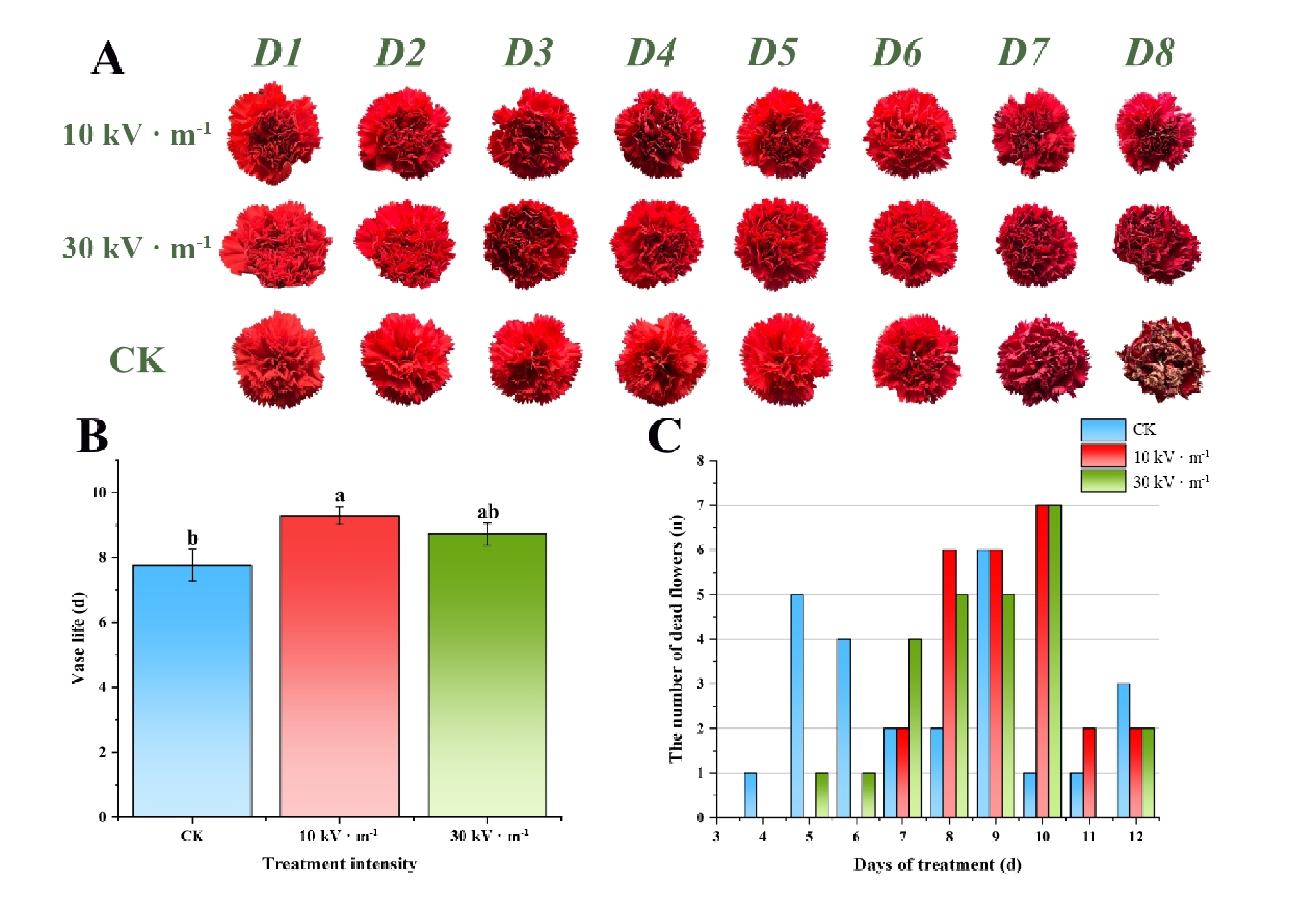
Figure 1.
Effects of a HVEF on the postharvest ornamental quality of carnation: (A) postharvest appearance of different field strengths; (B) bottle insertion period; (C) number of deaths per day. Lowercase letters indicate significant differences between treatments according to Duncan’s multiple range test p < 0.05. Three biological replicates were used (n = 25). HVEF, high-voltage electrostatic field.
Analysis of colour difference of postharvest carnation petals
All treatments showed an increase in ΔE (colour difference value), although differences were observed among treatments (Figure 2A). The CK group showed a trend of initially increasing and then decreasing, and the treatment groups showed a similar trend. In later stages, ΔE in the treatment groups was higher than in the CK group. On days 5 and 6, the ΔE of the 10 kV · m−1 group was higher than that of the other groups. For L* values, all treatments exhibited an initial increase followed by a decrease (Figure 2B). The 10 kV · m−1 group showed higher L* values, particularly on days 7 and 8. On the seventh day, L* in this group reached 32.02, while that of CK was only 27.92. As for a* values (red-green colour), all treatments decreased (Figure 2C). All a* values were positive, indicating that all petals were red. Moreover, the a* values of the treatment groups were higher than those of the CK group. The b* values (yellow-blue colour) were greater than 0, indicating a tendency towards yellow colouration. All treatments showed a decrease in b* values, with relatively uniform trends across the three groups (Figure 2D). These results indicate that HVEF effectively delayed the decline in colour quality of carnations, and the 10 kV · m−1 treatment had a significant effect in delaying the decline in colour vividness and lightness (p < 0.05).
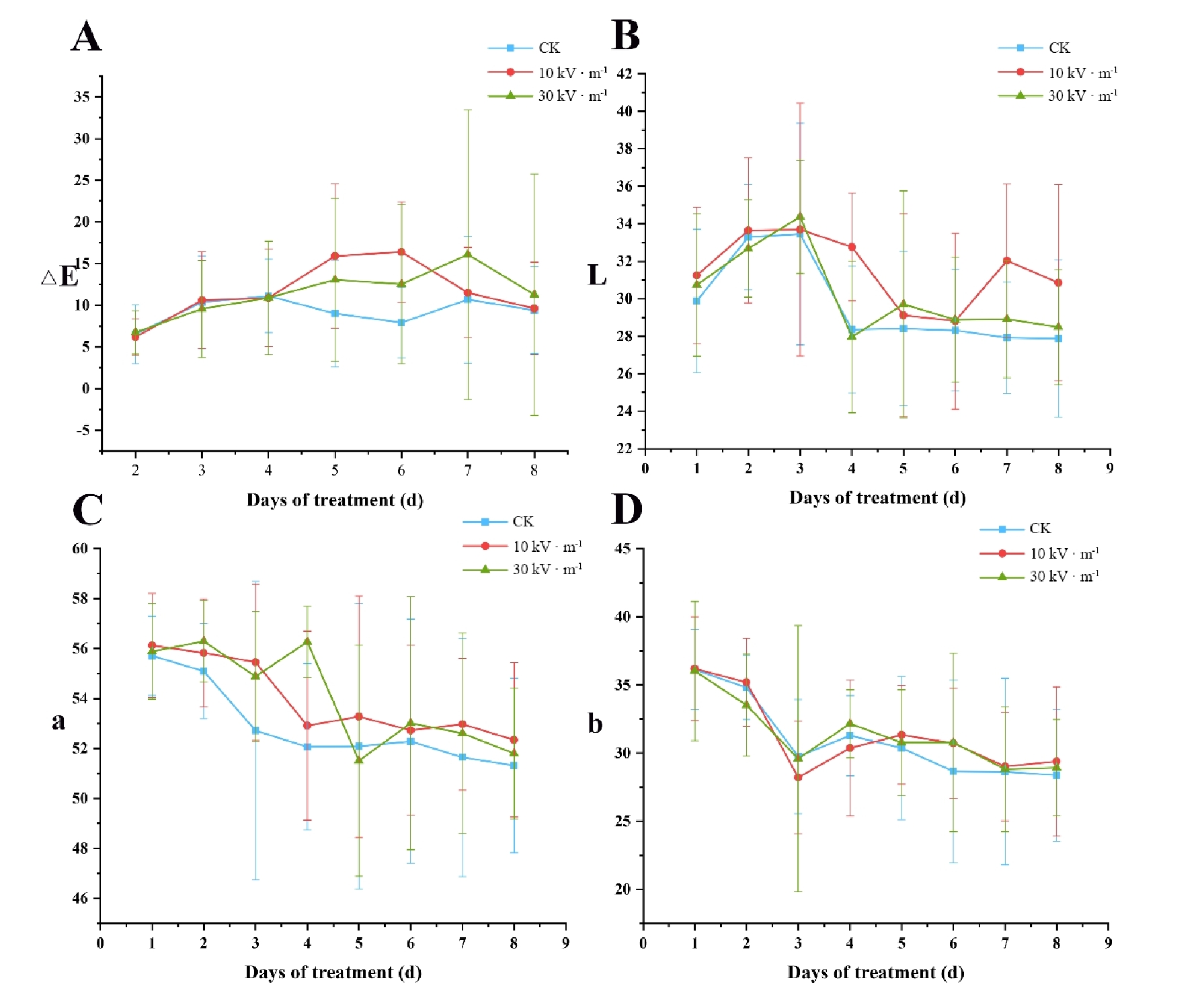
Figure 2.
Effects of a HVEF on postharvest petal colour parameters of carnation: (A) colour difference value (ΔE), indicating the vibrancy of the colour; (B) lightness (L*); (C) red-green degree value (a*, positive value means red, negative value means green); (D) yellow-blue degree value (b* value, positive value means yellow, negative value means blue). Three biological replicates were used (n = 15). HVEF, high voltage electrostatic field.
Analysis on the change rate of postharvest fresh weight of carnation
All treatments showed an increase in fresh weight, with HVEF groups higher than the CK group (Figure 3A). Notably, the 30 kV · m−1 group increased from 7.78% to 11.44% on day 2, representing an increase of approximately 47.0%. From day 6 to day 7, the rate of fresh weight change was consistent across all treatment groups. Water consumption increased throughout the experimental period (Figure 3B). From day 1 to day 2, the water weight change rates were comparable among treatments. However, from day 3 to day 7, the water uptake rate of HVEF treatments was higher than that of CK. These results indicate that the HVEF treatment effectively enhanced water uptake ability and helped maintain fresh weight during vase life.
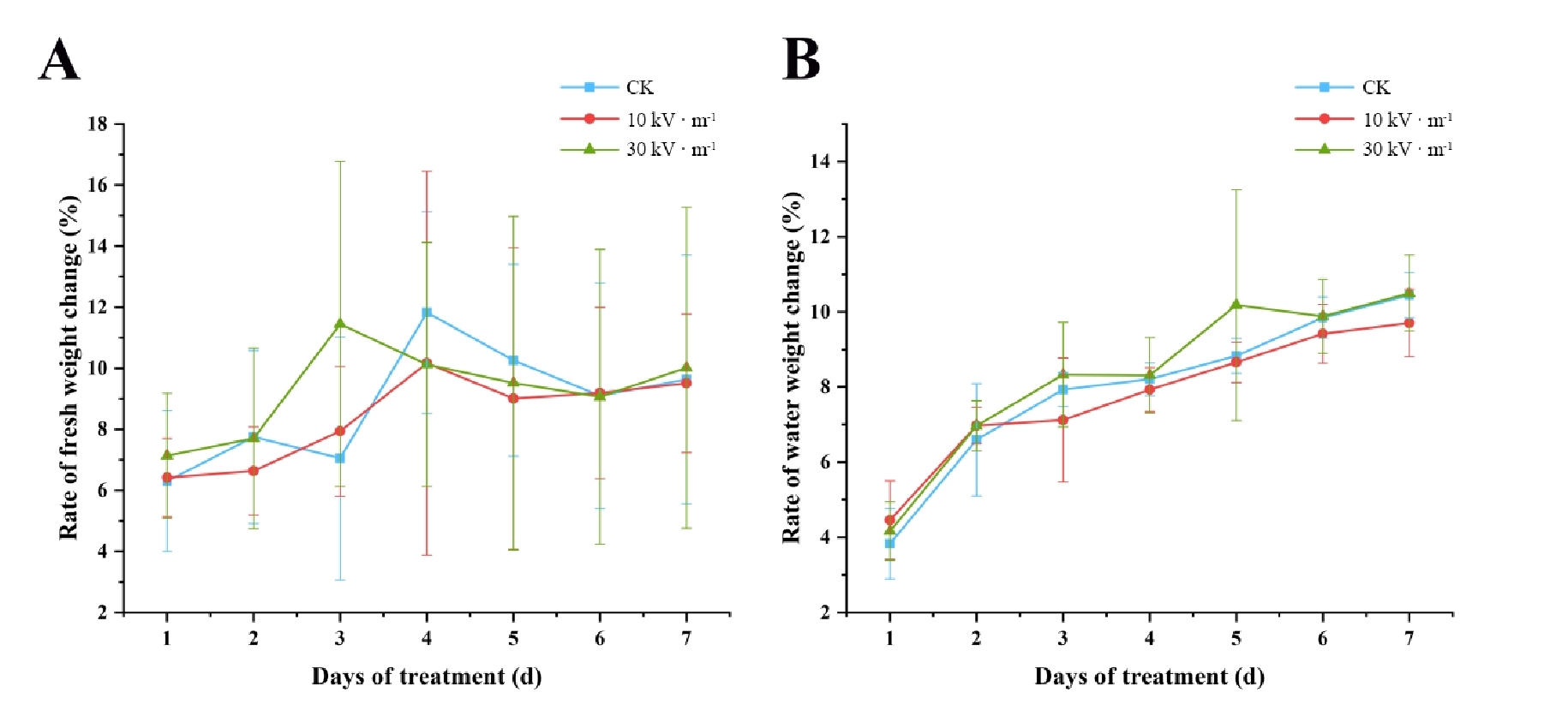
Figure 3.
Effects of a HVEF on fresh weight and water uptake of carnation: (A) rate of change in fresh weight, (B) rate of change in water weight. Three biological replicates were used.(n = 15). HVEF, high-voltage electrostatic field.
Effect of HVEF on postharvest physiological indexes of carnation
Effect of HVEF on chlorophyll content of postharvest carnation
Chlorophyll content in the CK group showed a trend of first increasing, then decreasing, and then increasing again, whereas the HVEF groups showed a trend of first decreasing and then increasing (Figure 4A). On day 7, the chlorophyll contents were 1.25 mg · g−1 for CK, 1.58 mg · g−1 for 10 kV · m−1, and 1.47 mg · g−1 for 30 kV · m−1, with similar values among the three groups. On day 7, as shown in Figure 4B, the chlorophyll content of carnations across all treatments was not significantly different ( p > 0.05). Overall, HVEF treatment had little effect on postharvest chlorophyll content in carnations.
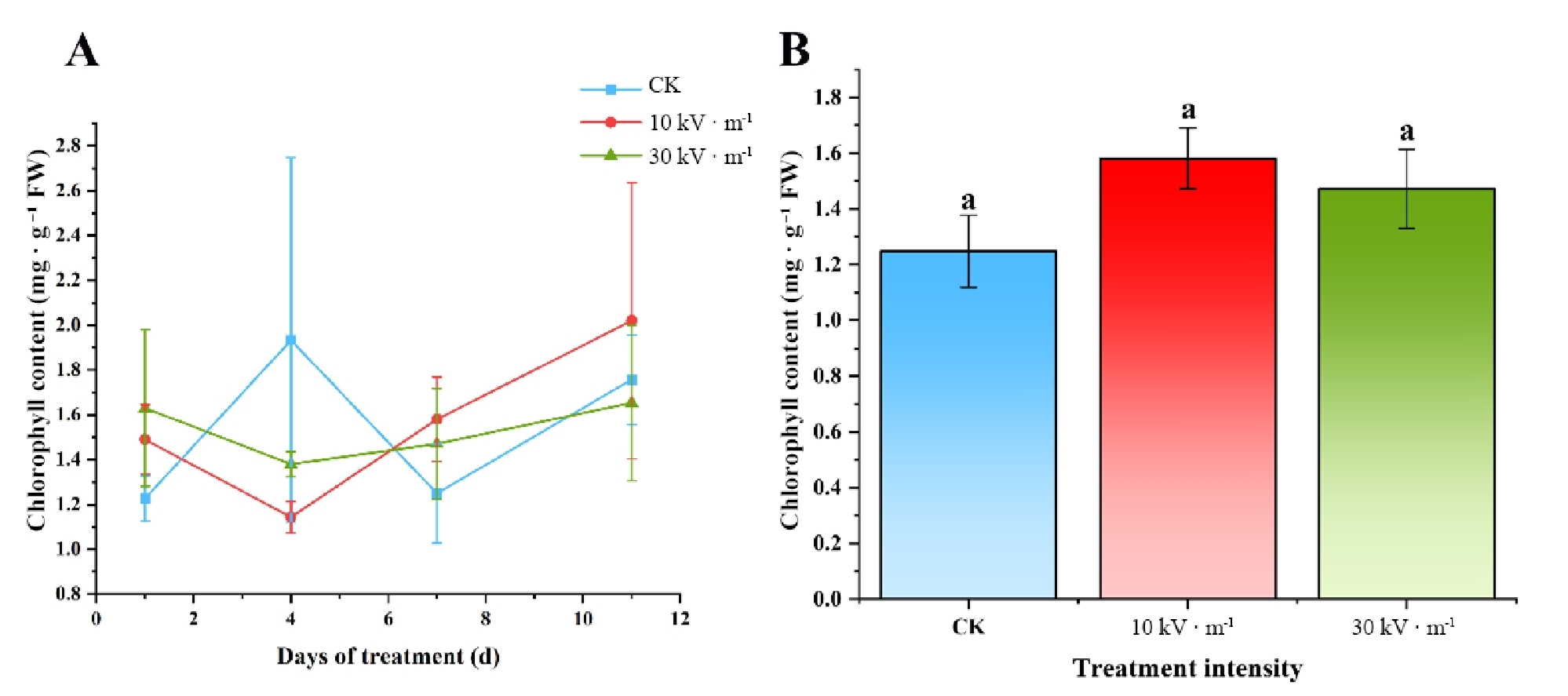
Figure 4.
Effects of a HVEF on chlorophyll content in carnation: (A) variation of chlorophyll content; (B) single factor variance analysis of chlorophyll content on the seventh day. Small case letters indicate significant differences between treatments according to Duncan’s multiple range test (p < 0.05). Three biological replicates were used (n = 3). HVEF, high voltage electrostatic field.
Effect of HVEF on anthocyanin content of postharvest carnation
A continuous decreasing trend in anthocyanin content was observed across all treatments (Figure 5A). The 10 kV · m−1 group had the highest daily average (5.05 mg · g−1), compared with 4.67 mg · g−1 for CK and 4.76 mg · g−1 for 30 kV · m−1, representing an 8.1% increase over the control. On day 7, the anthocyanin content of the 10 kV · m−1 group (5.05 mg · g−1) was significantly higher than that of CK (4.71 mg · g−1) and 30 kV · m−1 (4.74 mg · g−1) (Figure 5B; 5B; p < 0.05). Overall, HVEF treatment delayed the postharvest decline in anthocyanin content, and the 10 kV · m−1 treatment had a significant effect.
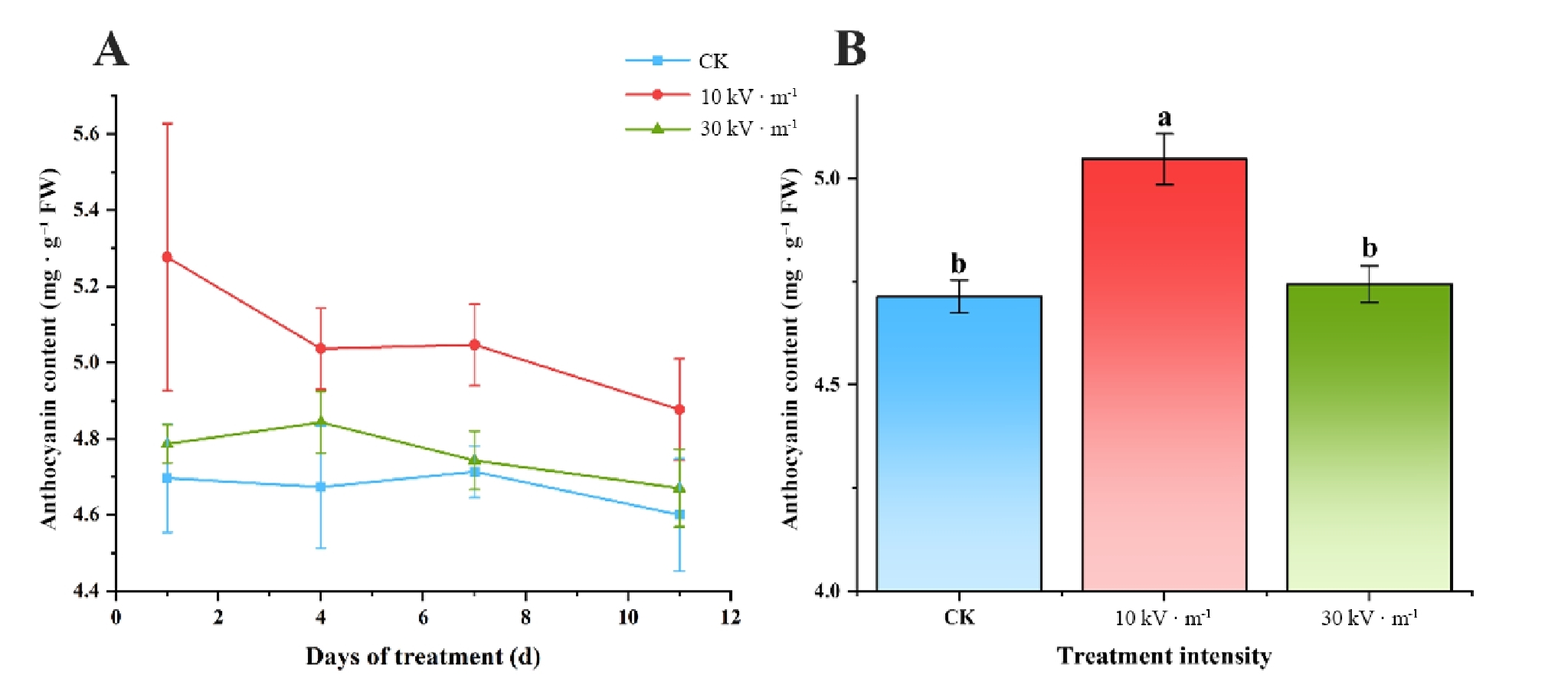
Figure 5.
Effects of a HVEF on anthocyanin content in carnation: (A) variation of anthocyanin content; (B) single factor variance analysis of anthocyanin content on the seventh day. Small case letters indicate significant differences between treatments according to Duncan’s multiple range test (p < 0.05). Three biological replicates were used (n = 3).
Effects of HVEF on SOD, CAT, POD, and MDA content of postharvest carnation
SOD activity showed an increasing trend across all experimental groups (Figure 6A). The daily average SOD activity was 254.85 U · g−1 FW in the CK group and 283.38 U · g−1 FW in the 10 kV · m−1 HVEF-treated group. SOD activity increased by 11.2% compared with the control group. CAT activity showed a similar trend across all groups, decreasing first and then increasing (Figure 6B). The average CAT activity was 208.01 U · g−1 FW in the CK group and 207.87 U · g−1 FW in the 10 kV · m−1 group, indicating little difference between them. For POD activity (Figure 6C), the 30 kV · m−1 group showed a continuous decline, whereas the CK and 10 kV · m−1 groups showed an initial decline followed by an increase. The average POD activity was 187.74 U · g−1 FW in the CK group and 264.49 U · g−1 FW in the 10 kV · m−1 group. The continuous decline in the 30 kV · m−1 group indicates that excessive stress caused enzyme inactivation. The initial decline followed by an increase in the CK and 10 kV · m−1 groups reflects a late compensatory response. MDA content in the petals exhibited a trend of initially increasing and then decreasing (Figure 6D). Little difference was observed in the change trend among the three groups. The average MDA content was 0.0411 U · g−1 FW in the CK group and 0.0369 U · g−1 FW in the 10 kV · m−1 group, with the latter being 10.2% lower. In conclusion, it was inferred that 10 kV · m−1 may prolong the shelf life of carnations by increasing POD and SOD activities.
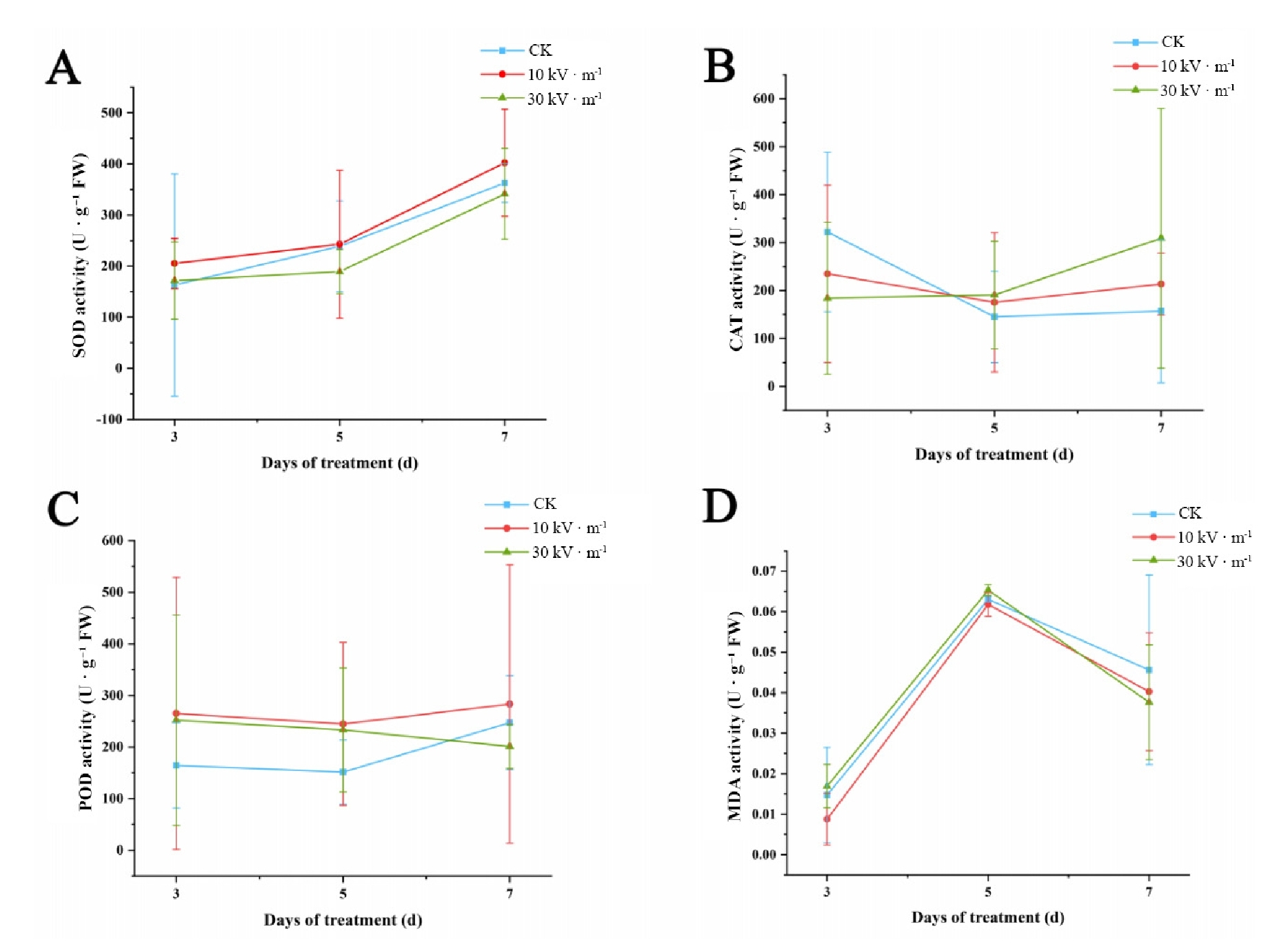
Figure 6.
Effects of HVEF on enzyme activities of postharvest carnation: (A) SOD; (B) CAT; (C) POD; (D) MDA. Three biological replicates were used (n = 3). CAT, catalase; HVEF, high voltage electrostatic field; MDA, malondialdehyde; POD, peroxidase; SOD, superoxide dismutase.
Effect of HVEF on stomatal changes of postharvest carnation
Stomatal morphology observations revealed differences among treatments in stomatal length, width, and closure ratio (Figure 7A). Compared with CK, HVEF treatment significantly reduced stomatal length and width. Specifically, the 10 kV · m−1 treatment reduced stomatal length by 9.4% (Figure 7B; p < 0.005) and stomatal width by 10.68% (Figure 7C; p < 0.005). Stomatal closure was 4.85 times higher in the 10 kV · m−1 group than in the CK group (Figure 7D; p < 0.05). In contrast, stomatal density showed no significant variation among treatments (Figure 7E; p > 0.005).
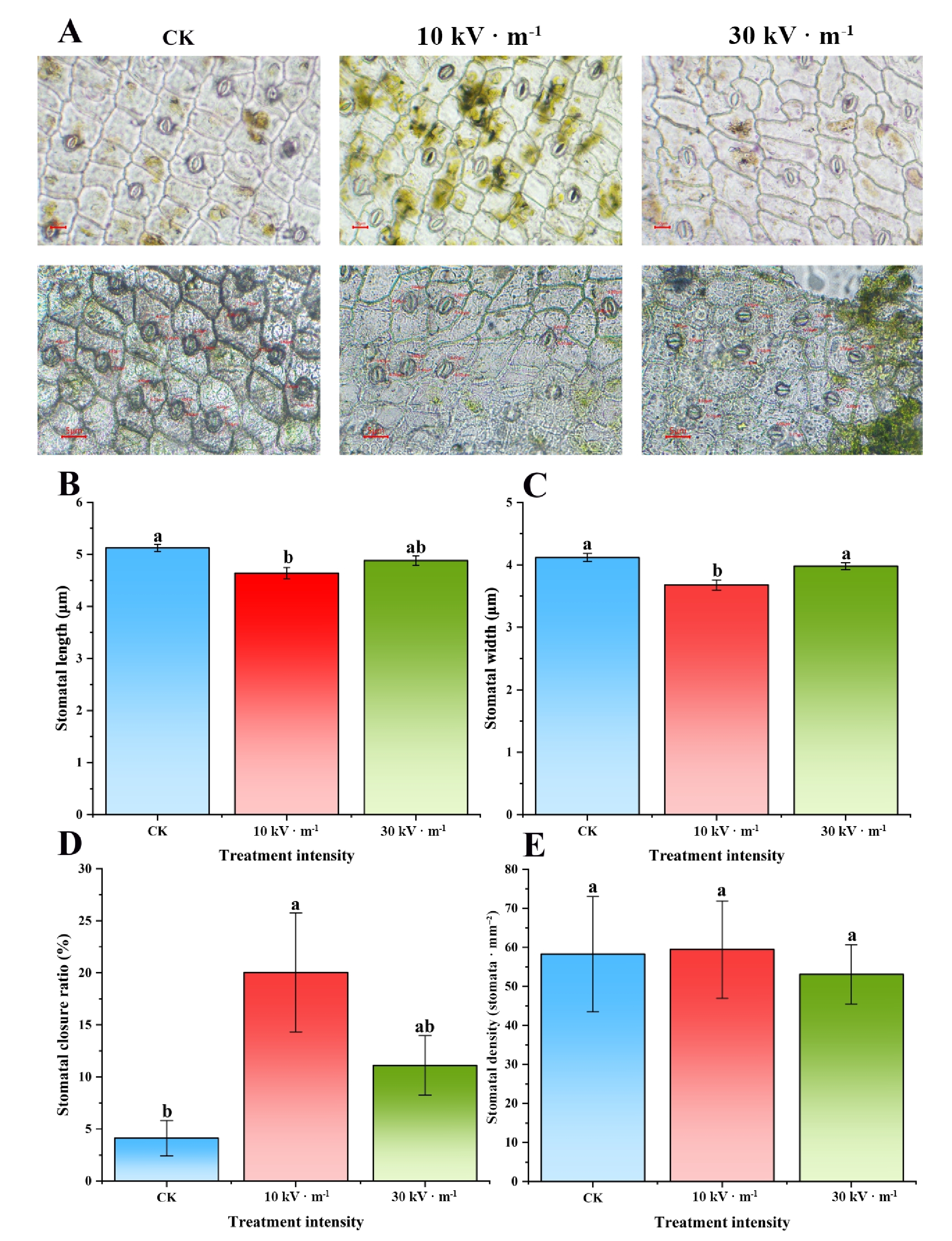
Figure 7.
Effect of HVEF on stomata of carnation leaves: (A) stomatal morphology; (B) stomatal length; (C) stomatal width; (D) SCR; (E) stomatal density. Small case letters indicate significant differences between treatments according to Duncan’s multiple range test (p < 0.05). Three biological replicates were used (n = 10). HVEF, high voltage electrostatic field; SCR: stomatal closure ratio.
In summary, we found that HVEF could effectively reduce stomatal length and width and increase stomatal closure, among which the 10 kV · m−1 treatment had a more significant effect. It is inferred that stomata are key factors in extending the shelf life of carnations after harvest.
DISCUSSION
Prolonging the fresh-keeping period using a HVEF
In previous studies, HVEF was found to have a significant effect on the vase life of fruits and vegetables. For example, HVEF treatment at 600 kV · m−1 for 90 min or 120 min can delay the decline in hardness, reduce weight loss, maintain colour and appearance, and extend shelf life by 14–21 days (Nie et al., 2024). Studies have also shown that short-term treatment at 10 kV and 20 kV can reduce respiration in apples, thereby slowing the consumption of internal substances and delaying the ageing process, which contributes to the extension of shelf life (Atungulu et al., 2003). An electric field intensity of 25 kV · m−1 can significantly extend the shelf life of spinach, and reduces respiration intensity, weight loss rate, membrane permeability, and titratable acid content by 16.6%, 3.4%, 5.5%, and 0.1%, respectively. Lower magnetic field and electric field intensities have positive effects on spinach preservation, and higher electric field intensities such as 50 kV · m−1, 75 kV · m−1, and 100 kV · m−1, accelerate spinach decay and shorten shelf life (Tao et al., 2023). Previous studies have found that HVEFs have a significant dose-dependent effect on the preservation of cut roses; treatment at 10 kV · m−1 delays senescence by maintaining cell structural integrity, enhancing antioxidant capacity, and reducing water loss, thereby achieving optimal preservation; treatment at 30 kV · m−1 exhibits only moderate preservation effects, whereas excessively high field strength (50 kV · m−1) can cause cellular damage and accelerate ageing. Previous study observed a highly consistent ‘appropriate intensity’ pattern in carnations, with 10 kV · m−1 showing the best preservation effect, whereas the preservation effect was significantly weakened at 30 kV · m−1 (Wang et al., 2025a, 2025b).
Colour difference of carnation by HVEF
Consistent with previous reports, HVEF treatment delayed colour deterioration in carnations. Shen et al. (2022) found that HVEF combined with a gelatin-arabic gum film reduced colour deterioration in freeze-dried grapefruit slices, while Zhao et al. (2023) reported that HVEF increased brightness (L*) and reduced total colour difference (ΔE) in cherry tomatoes during storage, with the treatment group showing a significantly smaller increase in colour difference compared to the control group. In line with these findings, our results showed that HVEF treatment (particularly at 10 kV · m−1) delayed colour deterioration in carnations. However, unlike previous studies where treated groups consistently outperformed the control group, we observed a slightly higher ΔE in treated groups at later storage stages. This discrepancy may be attributed to several reasons. First, species differ. Grapefruit and cherry tomatoes are fruits. Their pigments and discolouration mechanisms (e.g., carotenoids, lycopene) differ from those of carnation petals, which mainly contain anthocyanins. Second, storage conditions differ. Previous studies used freeze-drying and low-temperature storage. We used room-temperature vase holding. This leads to different discolouration kinetics. Third, our treatment involved a single HVEF application. Its protective effect may be time-limited. The effect weakens at later stages, causing a rebound in colour difference. Future studies could further investigate whether multiple or intermittent HVEF treatments can maintain a longer colour retention effect.
Stomatal indexes of cut carnation flowers by HVEF
Our results showed that HVEF treatment (especially at 10 kV · m−1) significantly reduced stomatal length and width and increased the stomatal closure rate, thereby extending the vase life of cut carnations. These findings are consistent with those reported by Cardoso et al. (2020) and Liu et al. (2023), yet contradict the observation by Aalifar et al. (2020) that blue light induces stomatal opening in carnations. Collectively, all these studies highlight that stomatal movement is a critical physiological process governing postharvest longevity. The opposing effects of blue light and HVEF can be explained as follows: the electric field acts as a mild stress stimulus that triggers stomatal closure as a plant protective response. Stomatal closure alleviates water loss, delaying petal wilting and prolonging vase life, whereas blue light regulates stomatal behaviour via an alternative pathway. However, we did not measure key plant hormones (such as abscisic acid) or the activity of specific genes involved in this process. Therefore, the exact chain of events from HVEF exposure to stomatal closure is still unknown.
Anthocyanin content of carnation by HVEF
Consistent with previous findings, higher anthocyanin content improves postharvest quality and colour retention (Passeri et al., 2016). Anthocyanins also delay over-ripening and reduce pathogen susceptibility (Petric et al., 2018). Our results showed that HVEF treatment (especially at 10 kV · m−1) significantly delayed the decline in anthocyanin content in carnations. However, a notable difference exists between our study and these reports. In the study, anthocyanin-rich tomato fruits stored under cool conditions exhibited a stable or even slightly increased anthocyanin content over time, whereas in our experiment, all carnation groups showed a continuous decrease in anthocyanin levels. HVEF treatment did not reverse this decline but only slowed it. This discrepancy can be attributed to differences in species, tissue type, and storage conditions. A limitation of this study is that we did not directly measure oxidative stress levels or the activity of anthocyanin-degrading enzymes. Therefore, the exact mechanism by which HVEF slows anthocyanin degradation remains unclear.
Activity of SOD, CAT, and POD, and the content of MDA in carnation by HVEF
Our results showed that 10 kV · m−1 HVEF increased SOD activity by 11.2% and reduced MDA in carnations, consistent with HVEF effects in pomegranates (Lotfi et al., 2022), rice seeds (Wang et al., 2009), and persimmon (Liu et al., 2017). However, unlike the sustained high POD in rice seeds (Wang et al., 2009), POD in our carnations temporarily declined before a late increase. This may reflect a transient stress adjustment in cut flowers, followed by a compensatory antioxidant response. Additionally, 30 kV · m−1 caused irreversible POD loss without recovery, indicating a dose-dependent effect where excessive field strength inactivates enzymes—an observation not reported in previous studies. Our vase life extension agrees with reports on cherry tomatoes (Zhao et al., 2023) and strawberries (Zhang et al., 2024). A limitation is that we did not measure the gene expression levels of SOD, POD, and CAT, nor did we assess enzyme activities at more frequent time points during the early storage period. Thus, the exact molecular pathway by which HVEF modulates antioxidant activity remains unclear. Future studies should investigate transcriptional regulation and optimise the field intensity to achieve the best preservation effect in cut flowers.
CONCLUSIONS
In conclusion, HVEF treatment can effectively prolong the postharvest vase life period of carnation, specifically delay the wilting of fresh-cut carnation flowers, reduce the length and width of stomata, and increase stomatal closure and enzyme activity. HVEF treatment at 10 kV · m−1 had the most significant effect. This study shows that HVEF technology has strong application potential in ornamental flower preservation and provides a practical technical path for prolonging the ornamental period of flowers and improving their value. In future applications, combining HVEF with cut-flower preservatives may further enhance the commercial value of flowers.
Nevertheless, the present study only adopted a single 2-hr electrostatic field treatment at the beginning, which has certain limitations. Further studies with longer durations or multiple treatments are needed to optimise the application regime for carnations.
ACKNOWLEDGMENTS
The authors thank all members of the Landscape Architecture Laboratory of the School of Biology and Materials Engineering, Suqian University, especially those who participated in this study.
Abbreviations
- a*
red–green chromaticity value
- ABA
abscisic acid
- b*
yellow–blue chromaticity value
- CAT
catalase
- HVEF
high-voltage electrostatic field
- L*
lightness value
- MDA
malondialdehyde
- POD
peroxidase
- SOD
superoxide dismutase
- ∆E
colour difference
Notes
[1] Contributed by Author contribution
L.W. – concept conception. X.J. – writing-original manuscript preparation. Z.Y. – project management. J.X. and Z.W. – formal analysis. H.Z. – methodological design. Y.S. and T.Y. – data collation. H.C. and H.L.Z. – review. All authors have read and agreed to the published version of the manuscript.
[2] Conflicts of interest Conflict of Interest
The authors declare no conflict of interest.