
INTRODUCTION
The almond (Prunus amygdalus Batsch., syn. Prunus dulcis (Mill.) D.A. Webb) is a stone fruit belonging to the family Rosaceae, genus Prunus, subgenus Amygdalus. This species is native to Central Asia and western China, with a natural distribution extending from Iran through the Caucasus and eastern Turkey to the eastern Mediterranean region. Almonds are extensively cultivated in major production areas such as the United States (California), Spain, Italy, Greece, Turkey and India (Janick and Paull, 2008). They have also been successfully introduced and established under Central European conditions, where their chilling requirements are comparable to those of peach or apricot cultivars— typically ranging from 900 to 1,200 chilling hours.
For reliable and optimal yields in Central Europe, cultivars with a late flowering period are preferred. According to Prudencio et al. (2018), late-flowering almond cultivars generally exhibit very high chilling requirements. In the context of climate change, increasingly mild winters may reduce the theoretical risk of late spring frosts. However, warmer winters can also lead to earlier flowering, which may offset these potential benefits (Di Lena et al., 2018).
Numerous studies have investigated the nutritional value and chemical composition of almond kernels and almond oil (Özcan et al., 2011; Simsek et al., 2018; Barreca et al., 2020; Banjanin et al., 2021; Levent, 2022). The considerable variation in chemical composition depends on cultivation practices, climatic conditions, and, most significantly, almond genotype (Yada et al., 2011). Fat is the main constituent of almond kernels, accounting for 20%–68% of dry weight (DW), and consists primarily of fatty acids such as oleic acid, linoleic acid, and palmitic acid (Hernandez and Sanders, 2024). Almond oil possesses medicinal properties and is widely used in the pharmaceutical and cosmetic industries (Čolić et al., 2019).
In addition, almonds are rich in proteins (10%–35%), carbohydrates (2%–10%), dietary fibre (around 10%), minerals and bioactive compounds (Valdés et al., 2015; Čolić et al., 2019; Yada et al., 2013). The phenolic content in almond kernels ranges from 38.7 to 241 mg GAE·100 g−1 (Milbury et al., 2006; Levent, 2022). Almond consumption has been linked to improved immune function and the prevention of various diseases, including cardiovascular disorders, diabetes, obesity and oxidative stress. In addition to fresh and dried forms, fermented almonds are also now being consumed (Ahmed et al., 2024).
The significance of almond trees is further emphasised by recent research from Greece analysing bioactive compounds in almond blossoms (Chatzimitakos et al., 2024).
The aim of this study is to provide a comprehensive evaluation of a promising set of almond cultivars, some of which show high potential for reliable performance under commercial cultivation conditions in Central Europe. These findings provide valuable insights for the breeding, cultivation and utilisation of almond cultivars with desirable agronomic and nutritional traits.
MATERIALS AND METHODS
Site of planting and plant material
In total, 14 almond (P. amygdalus) cultivars were analysed in this study (Table 1). Each cultivar was represented by five trees grown in an experimental orchard at the Faculty of Horticulture in Lednice, Mendel University in Brno (latitude 48.80°N, longitude 16.80°E; elevation 172 m), where the average annual temperature is 9.7°C. The plantation was established in 2011, GF 677 (Prunus persica × P. amygdalus) was chosen as the rootstock. The growing system is a freestanding system, tree spacing 5 m × 3 m.
Table 1.
Origin of evaluated almond varieties.
| Variety | Origin |
|---|---|
| Famosa | Czech; seedling selection from open pollination |
| Fatima | Czech; seedling selection from open pollination |
| Ferragnes | France; Cristomorto × Aï |
| Ferrastar | France; Cristomorto × Ardechoise |
| Genco | Italy; unknown origin |
| Gersonskaja | Ukraine; unknown origin |
| Husle | Czech; seedling selection from open pollination |
| P. amygdalus var. tenera | Czech; seedling selection from open pollination |
| MN-VA-1 | Czech; seedling selection from open pollination |
| Nikitsky | Ukraine; Nikitskyi 62 × Nikitskyi 1 |
| Sladkoplodá krajová | Czech; seedling selection |
| Supernova | Italy; Tuono bud mutation |
| Suzanne | Czech; seedling selection from open pollination |
| Zora | Czech; seedling selection from open pollination |
Phaenological and pomological evaluations were conducted in the years 2017, 2020, 2024 and 2025. For each cultivar, five trees were randomly selected, and data were collected either from five plants or from 10 fruits per tree, depending on the parameter evaluated. All plant material was visibly healthy, vigorous and free from major pests or diseases. Phaenological and pomological traits were assessed according to the UPOV Descriptor Code: PRUNU_DUL (2011) and the Revised Descriptors List for Almond (P. amygdalus) by Gülcan (1985). For nutritional analyses, 10 fruits from each cultivar were crushed, and the almond kernels were homogenised using a Pulverisette 2 mill (Fritsch, Germany).
Phaenological and pomological parameter analysis
The onset of flowering was recorded as the date when 10% of the flowers were fully open. The harvest date was determined when 50% of the fruits on a tree had split.
Pomological traits evaluated included stone keel development, stone shape, kernel size and weight (g), shell colour intensity, shell hardness, kernel taste (bitterness), overall taste quality and kernel-to-stone ratio (%).
All fruit quality assessments, including taste-related traits, were performed by a single experienced pomologist (the author) using standardised UPOV (2011) descriptor.
Determination of total fat content (TFC)
Crude fat content (%) was determined in three technical replicates using the Soxhlet extraction method with n-hexane as the solvent according to the national standard Determination of Fat in Foods (GB 5009.6-2016). A 2 g sample of crushed almonds was placed in a filter paper bag and extracted with 100 mL of n-hexane for 1 hr. After extraction, the solvent was evaporated to the constant weight of the residual sample. Fat content (%) was calculated as the ratio of fat weight to sample DW.
Determination of total soluble protein content
Total soluble protein content (TSPC) was analysed following the protocol described by Deans et al. (2018), using the Pierce Bradford Protein Assay Kit (Thermo Fisher Scientific, USA). Reactions were prepared as three technical replicates in a 96-well plate. Standards consisted of six different concentrations of bovine serum albumin (BSA) and one blank containing 0.1 M NaOH. Each reaction mixture included 5 μL of sample or standard and 250 μL of Coomassie reagent. The reactions were incubated at room temperature for 10 min, shaken for 30 s and absorbance was measured at 595 nm using a PowerWave XS microplate reader (BioTek, USA). Results were expressed as grams of soluble protein per 100 g of fresh weight (g·100 g−1 FW).
Analysis of secondary metabolites
Samples for total phenolic content (TPC), total flavonoid content (TFlavC), and antioxidant capacity (AC) were prepared by extracting 5 g of crushed kernels in 25 mL of 75% methanol overnight. Extracts were filtered through filter paper into 50 mL volumetric flasks, and the volume was adjusted with methanol. Samples were stored in plastic bottles at –20°C until analysis.
The assays were carried out according to the method of Zloch et al. (2004), as described by Mrázová et al. (2021). Each sample was analysed in technical triplicate using a Specord 50 Plus spectrophotometer (Analytik Jena, Germany). TPC results were expressed as milligrams of gallic acid equivalent per 100 g of fresh weight (mg GAE·100 g−1 FW), TFlavC as milligrams of catechin equivalent per gram of fresh weight (mg CE·100 g−1 FW) and AC as milligrams of Trolox equivalent per 100 g of fresh weight (mg TE·100 g−1 FW).
Statistical analysis
Statistical analyses were performed using Statistica 14 software (TIBCO Software Inc., USA). The dataset consisted of measurements obtained for each cultivar over 1 year, with multiple observations per cultivar. Mean values and standard deviations were calculated, and statistical significance among cultivars was evaluated using one-way analysis of variance (ANOVA), followed by a post hoc Tukey HSD test (p < 0.05).
Cluster analysis was applied to group cultivars based on similarities in phaenological and pomological traits using cultivar mean values. Principal component analysis (PCA) was performed separately on two datasets: (1) phaenological and pomological traits and (2) chemical and bioactive compound content. Prior to PCA, all variables were automatically standardised to zero mean and unit variance.
RESULTS
Phaenological and pomological analysis
Based on comprehensive multi-year phaenological and pomological evaluations, notable differences among the assessed cultivars were identified (Table 2).
Table 2.
The evaluated phaenological and pomological parameters of different almond cultivars. std. is not shown when all measured values were identical.
| Varieties | Date of flowering start (±/-days before or after control) | Date of ripening start | Stone weight [g] | Stone shape | Softness of shell | Kernel weight [g] | Shell colour intensity (brown) | Taste | Taste (quality) | Keel | ||||||||||
|---|---|---|---|---|---|---|---|---|---|---|---|---|---|---|---|---|---|---|---|---|
| Ø | std. | Ø | std. | Ø | std. | Ø | std. | Ø | std. | Ø | std. | Ø | std. | Ø | std. | Ø | std. | Ø | std. | |
| Famosa | –12.00 | 8.83 | 0 | 0 | 3.75 | 0.59 | 3 | 0.58 | 7 | 3.06 | 0.91 | 0.13 | 4 | 1 | 3 | 1.15 | 7 | – | 1 | – |
| Fatima | –8.67 | 4.62 | 0 | 0 | 3.31 | 0.32 | 3 | 0 | 4 | 2.12 | 0.81 | 0.02 | 4 | 2.12 | 3 | 0 | 8 | – | 2 | – |
| Ferragnes | 4.00 | 0.71 | 0 | 0 | 4.50 | 1.73 | 3 | 1.26 | 5 | 2 | 1.00 | 0.29 | 5 | 0.96 | 3 | 0.5 | 5 | – | 1 | – |
| Ferrastar | 4.00 | 1.00 | 0 | – | 5.81 | 0.76 | 4 | – | 6 | – | 1.58 | 0.12 | 3 | 0 | 3 | 0 | 9 | – | 5 | – |
| Genco | –0.20 | 0.45 | 1 | 1.15 | 4.83 | 0.56 | 4 | 1 | 5 | 2 | 1.28 | 0.55 | 3 | 1 | 3 | 1 | 8 | – | 3 | – |
| Gersonskaja | 3.50 | 2.52 | 5 | 1.5 | 8.80 | 3.06 | 2 | 1 | 3 | 1.15 | 1.19 | 0.73 | 3 | 1.73 | 3 | 0 | 8 | – | 2 | – |
| Husle | –3.00 | 4.24 | 0 | – | 5.59 | – | 5 | – | 3 | – | 0.88 | – | 5 | – | 3 | 0 | 7 | – | 2 | – |
| P. amygdalus var. tenera | –12.00 | 10.58 | 0 | 0 | 3.48 | 0.06 | 3 | 0 | 8 | 1.41 | 1.61 | 0.14 | 3 | 0 | 3 | 0 | 8 | – | 7 | – |
| MN-VA-1 | –12.25 | 4.57 | 0 | 0 | 4.31 | 0.84 | 3 | 0.58 | 3 | 1.53 | 0.91 | 0.12 | 3 | 1.15 | 5 | 1.53 | 7 | – | 9 | – |
| Nikitsky | –6.00 | – | 0 | – | 4.20 | – | 3 | – | 5 | – | 1.06 | – | 4 | – | 3 | 0 | 8 | – | 2 | – |
| Sladkoplodá Krajová | –1.75 | 2.87 | 0 | 0 | 3.75 | 0.84 | 3 | 0.58 | 5 | 1.73 | 1.41 | 0.35 | 5 | 1 | 3 | 0 | 7 | – | 2 | – |
| Supernova | 0.00 | 0.00 | 0 | 0 | 4.71 | 1.26 | 3 | 0.82 | 5 | 2.08 | 1.52 | 0.25 | 3 | 0.5 | 3 | 1.5 | 8 | – | 3 | – |
| Suzanne | –9.50 | 4.04 | 1 | 1.41 | 2.44 | 0.41 | 3 | 0.58 | 9 | 1.15 | 0.95 | 0.42 | 3 | 1.73 | 3 | 0 | 8 | – | 5 | – |
| Zora | –17.50 | 6.56 | –8 | 1.41 | 4.04 | 0.72 | 3 | 2 | 5 | 2.52 | 1.28 | 0.45 | 5 | 0.58 | 3 | 0 | 8 | – | 2 | – |
1 Stone shape was evaluated according to the following scale: 1 – rounded, 2 – ovate, 3 – oblong, 4 – cordate, 5 – extremely narrow. Softness of shell was evaluated according to the following scale: 1 – extremely hard (very difficult to break, need hammer), 2 – hard (difficult to break, need hammer), 5 – intermediate (broken by hand with effort), 7 – soft (broken by hand), 9 – paper (very thin, easily removed).
1 Shell colour intensity was evaluated according to the following scale: 1 – extremely light; 3 – light; 5 – intermediate, 7 – dark. Taste was evaluated according to the following scale: 3 – sweet, 5 – intermediate, 7 – bitter.
In terms of the average onset of flowering, the earliest blooming cultivar was 'Zora', flowering 18 days earlier than the reference cultivar 'Supernova'. The latest-flowering cultivars were 'Ferrastar' and 'Ferragnes', both blooming approximately 4 days after the reference (Figure 1).
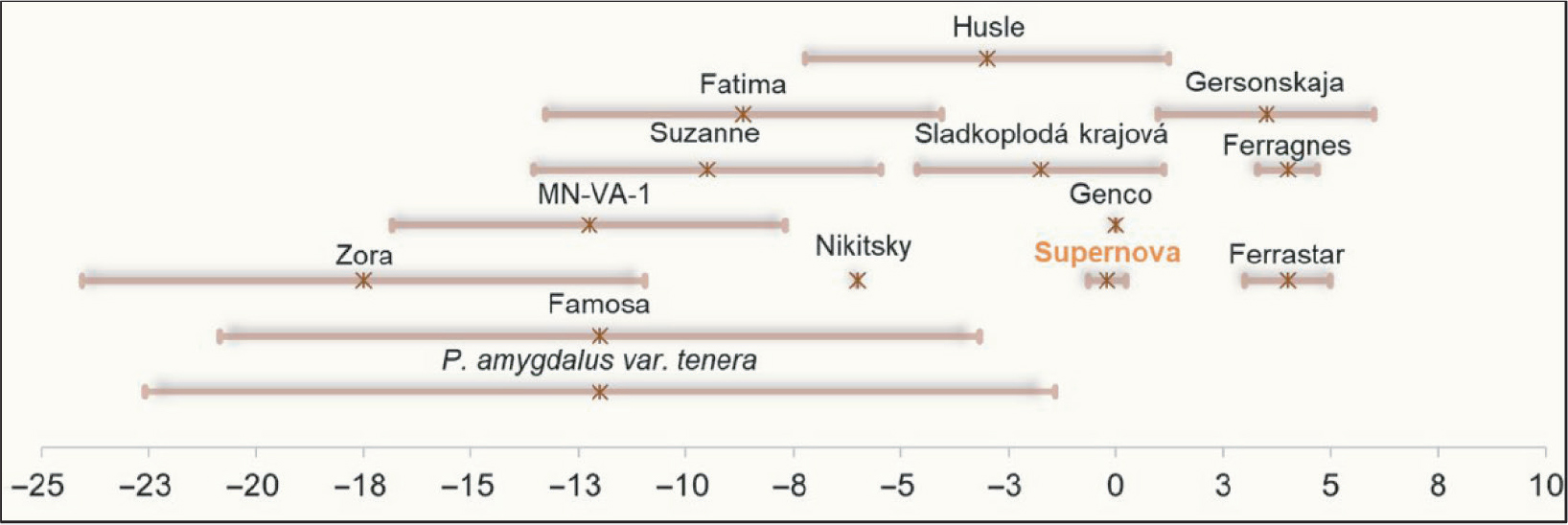
Figure 1.
The mean value of the onset of flowering for a range of almond cultivars. The brown lines represent the standard deviation.
Similarly, 'Zora' was also the earliest maturing cultivar, with harvest occurring approximately 8 days before 'Supernova', while the latest-maturing cultivar was 'Gersonskaja', ripening 5 days after the reference.
The highest stone weight was recorded in 'Gersonskaja' (8.8 g), whereas the lowest was observed in 'Suzanne' (2.44 g). Shell hardness (crackability) followed a similar trend, with 'Gersonskaja' displaying the hardest shell, and 'Suzanne' having the softest shell among the evaluated cultivars.
With respect to kernel weight, the highest value was observed in P. amygdalus var. tenera (1.61 g), while the lowest was found in 'Fatima' (0.81 g) (Figure 2).
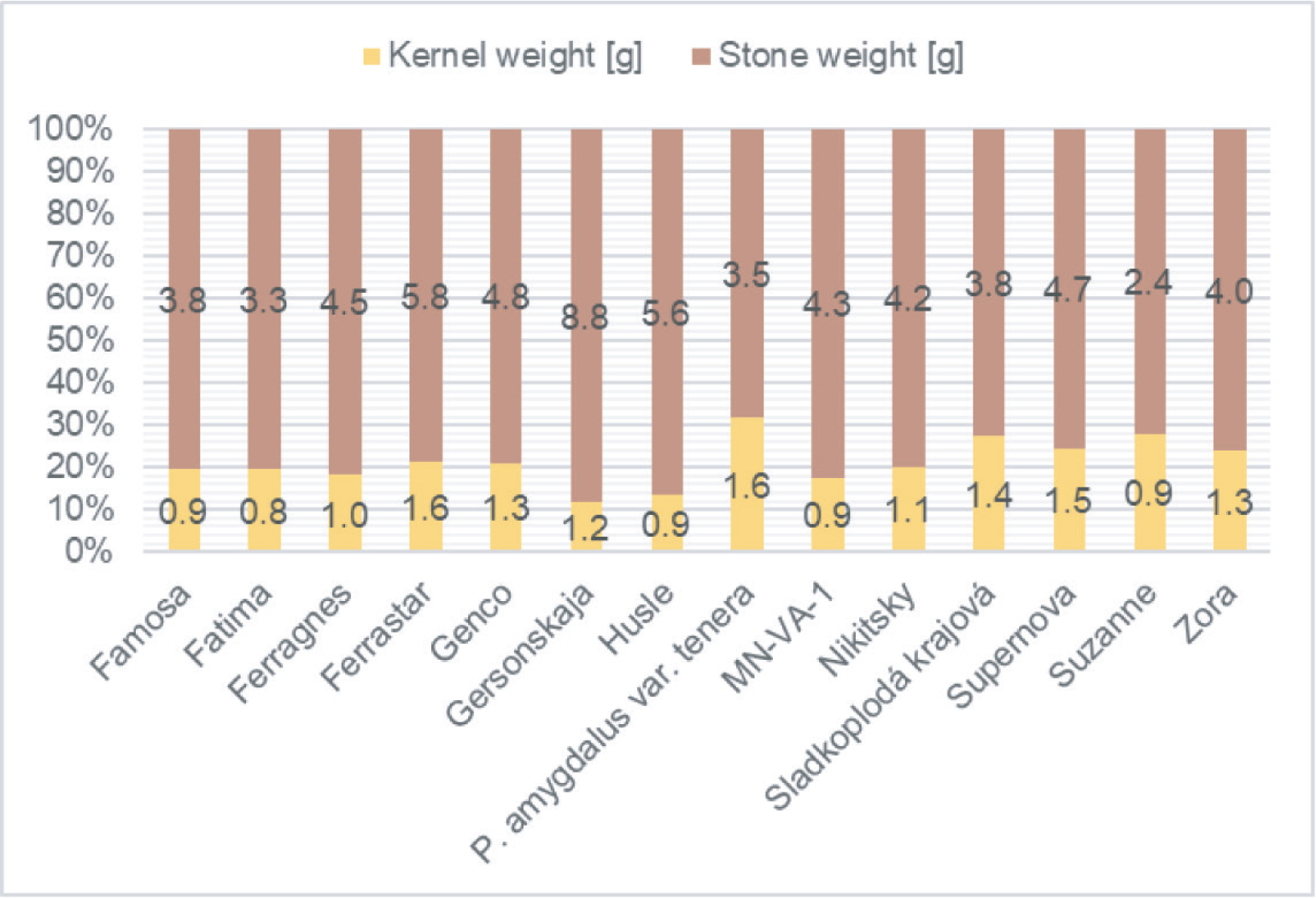
Figure 2.
The ratio of almond kernel weight to stone weight, expressed in %.
In terms of kernel taste quality, all evaluated cultivars were classified as sweet (score: 3), except for the rootstock 'MN-VA-1', which was rated as semi-sweet (score: 5) due to a slight bitter aftertaste (Figure 3).
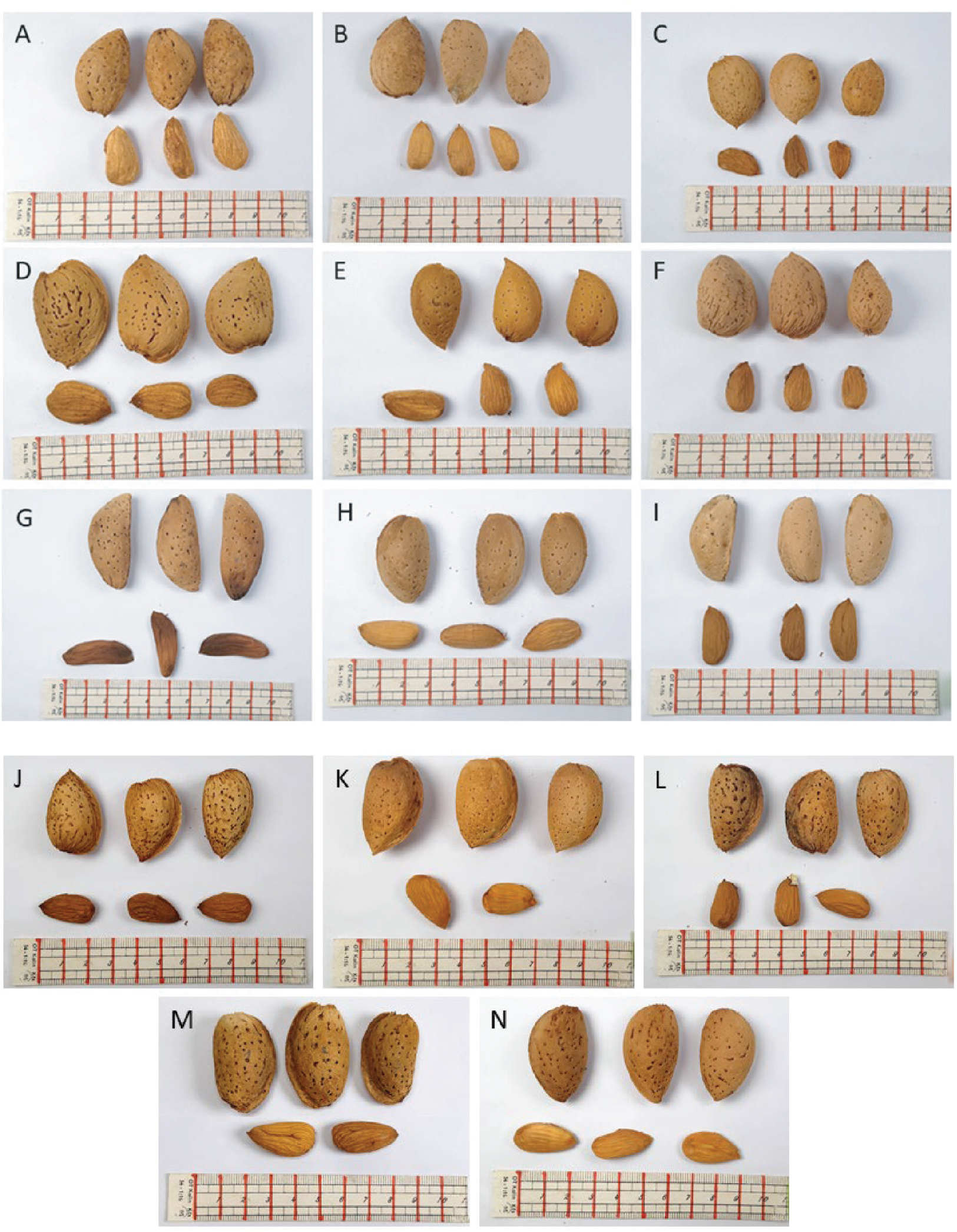
Figure 3.
Almonds of analysed cultivars. (A) Famosa, (B) Fatima, (C) Ferragnes, (D) Ferrastar, (E) Genco, (F) Gersonskaja, (G) Husle, (H) MN-VA-1, (I) Nikitskij, (J) Sladkoploda, (K) Supernova, (L) Suzanne, (M) var. tenera, (N) Zora.
Overall taste quality was evaluated using a nine-point hedonic scale. 'Ferrastar' received the highest rating (score: 9), indicating the most favourable taste, while 'Ferragnes' received the lowest score (5), although it still fell within the acceptable taste range.
Cluster analysis based on phaenological and pomological traits revealed two main cultivar groups (Figure 4). The cultivars 'Genco', 'Sladkoplodá krajová' and 'Nikitsky' exhibited trait profiles similar to the control cultivar 'Supernova'. In contrast, 'Gersonskaja' and 'Zora' were the most divergent, indicating distinct phenotypic characteristics compared to the rest of the evaluated genotypes. PCA (Figure 5) further confirmed these distinctions. 'Gersonskaja' was characterised by a markedly late flowering period and high stone weight, which contributed significantly to its separation from other cultivars in the PCA space. On the other hand, P. amygdalus var. tenera and 'Ferrastar' were positioned in the PCA plot as cultivars of high overall quality, exhibiting large kernel weight and easy shell removal, traits desirable for commercial production and processing.
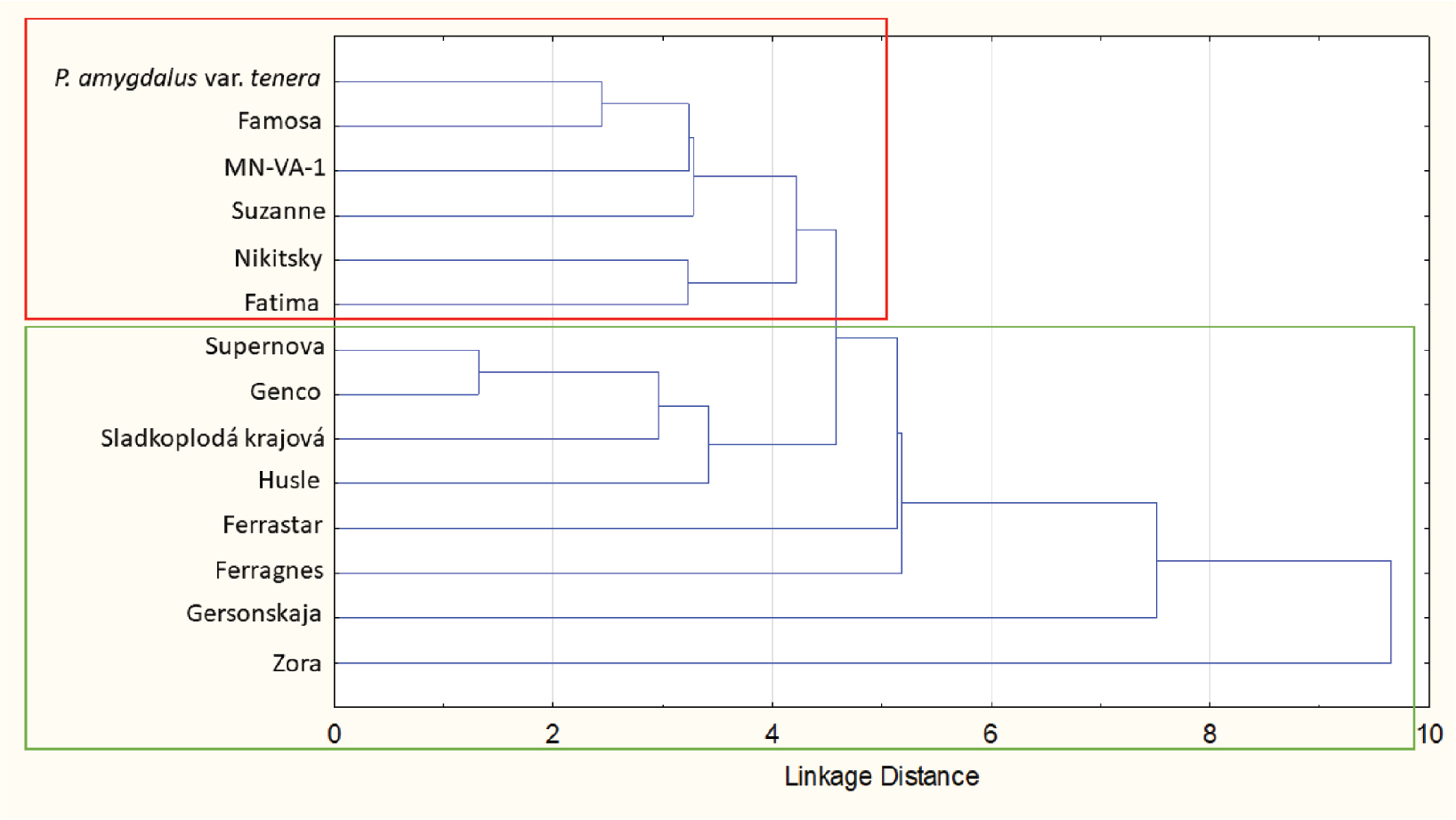
Figure 4.
Diagram of cluster analysis based on phenological and pomological parameters of different almond cultivars. The rectangles represent two main clusters differed by the analysis.
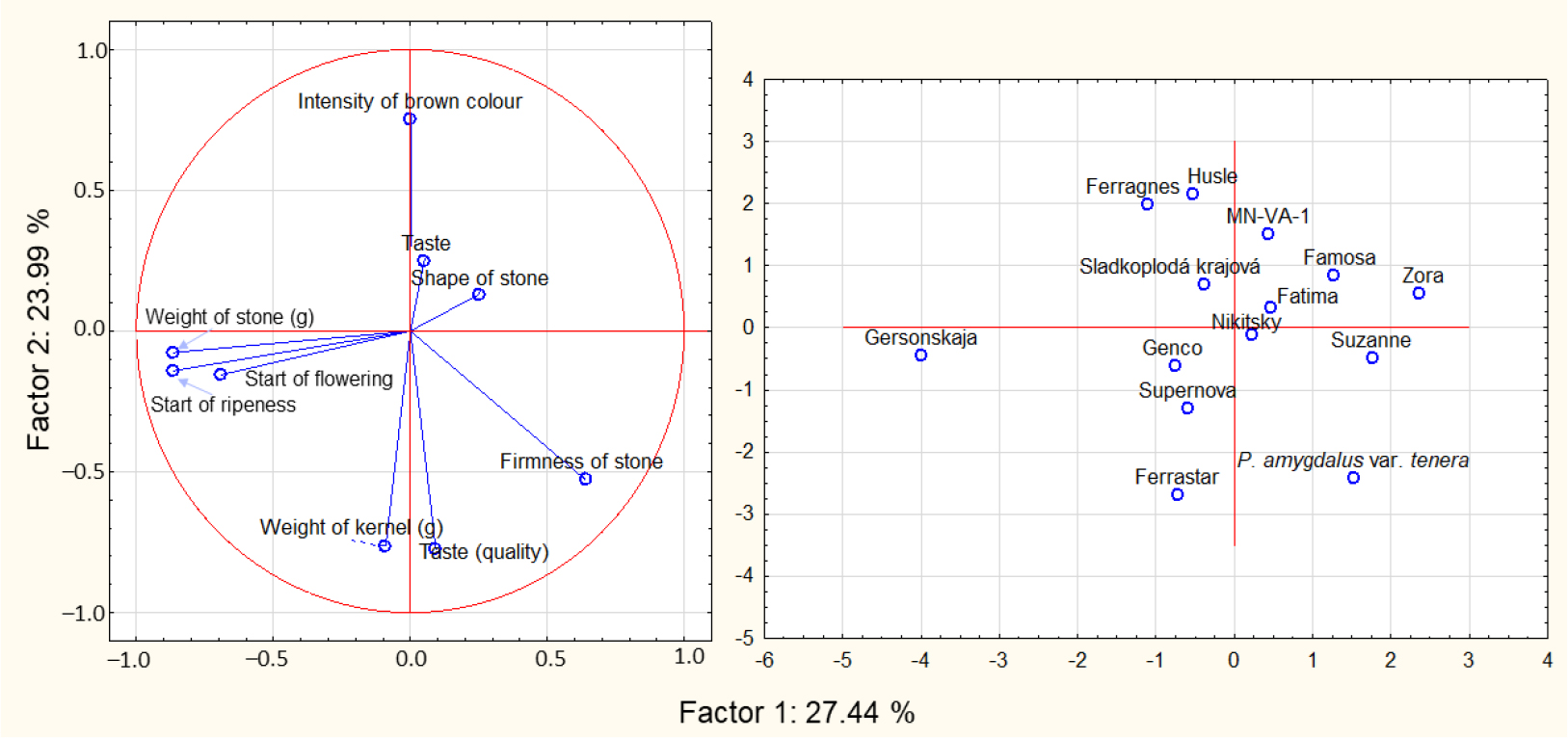
Figure 5.
The projection of the cases on the PC1 × PC2 plane was obtained from the PCA of pomological and phaenological parameters of different almond cultivars. PCA, principal component analysis.
The collection contributes to the promotion of biodiversity and expands the potential for cultivating useful fruit species. Based on multi-year phaenological and pomological observations, genotypes and cultivars that are considered promising and recommended for commercial cultivation are those that are self-fertile or partially self-fertile, exhibit late flowering, and, naturally, produce sweet kernels. A brief, comprehensive description, as a result of the performed pomological measurements of the selected varieties, is given as follows:
Supernova
Originating from Italy, this cultivar is a radiomutant of the variety 'Fascionello' (Monastra et al., 1984). Its harvest time coincides with that of the reference cultivar 'Sladkoplodá krajová'. 'Supernova' is characterised by vigorous growth, forming wide and open canopies. Fruiting occurs on both 1-year shoots and spur-bearing structures. This self-fertile cultivar exhibits a mid-late flowering period, approximately 5 days later than 'Sladkoplodá krajová', and consistently produces abundant blooms. The hull is light green, thin and fully dehiscent at maturity. The shell is round-elongated, easily separable from the hull, with an average weight of 3.7 g. The endocarp is classified as 'semi-soft shell'. The kernel, covered by a light brown testa, is medium-sized, monoembryonic and of excellent sweet flavour, with an average weight of 1.7 g. 'Supernova' is one of the most suitable cultivars for intensive cultivation systems. Key advantages include high self-fertility, frost resistance, consistent annual yield and superior kernel flavour.
Genco
An Italian cultivar of unknown seedling origin (Monastra et al., 1984). Its harvest time coincides with that of 'Sladkoplodá krajová' and 'Supernova'. It exhibits vigorous growth and forms a wide, dense canopy. Fruiting primarily occurs on spur-bearing shoots. 'Genco' is a self-fertile cultivar with a mid-late flowering period, approximately 5 days later than 'Sladkoplodá krajová'. It consistently produces profuse flowering. The hull is thick and opens at full maturity. The shell is heart-shaped, easily separable from the hull, and has an average weight of 5.2 g. The endocarp is semi-soft, and bi-embryony is common. The kernel is medium-sized, sweet and weighs on average 2.1 g. This cultivar features excellent kernel flavour and is well-suited for marginal cultivation areas.
Ferragnes
A French cultivar developed by INRA from the cross 'Cristomoro' × 'Ai' (Monastra et al., 1984). Its harvest time is synchronised with 'Supernova'. 'Ferragnes' has moderate vigour and a dense, wide canopy. It produces abundant fruiting along the full length of annual shoots. The cultivar is notable for its very late and relatively extended flowering period, starting approximately 10 days after 'Sladkoplodá krajová'. As a cross-pollinated cultivar, it requires compatible late-flowering pollinators. The hull is light green at maturity and fully dehiscent. The shell is globular, semi-soft, light brown, smooth and corky in texture, with an average weight of 4.4 g. The kernel is relatively large, typically monoembryonic, well-filling the shell, with a light brown testa and excellent sweet flavour. With outstanding kernel quality, 'Ferragnes' is suitable for a wide range of applications.
MN-VA-1
A rootstock cultivar of Czech origin, selected from sweet-seeded seedlings. Its harvest occurs approximately 2 weeks after 'Sladkoplodá krajová'. It exhibits weak growth with upright, relatively dense canopies. Fruiting is predominantly on spur-bearing shoots. This partially self-fertile cultivar flowers early, approximately 5 days before 'Sladkoplodá krajová'. It consistently shows very abundant flowering. The hull is light green and partially open at maturity. The shell is elongated, separates very easily from the hull, and weighs on average of 4.3 g. The endocarp is semi-soft, with a wrinkled and sparsely porous surface. The kernel, enveloped in a light brown testa, is small, semi-sweet and weighs about 1.0 g. Due to its regular yield, it is mainly used as a generative rootstock for other almond cultivars. Its small, upright growth habit may also be advantageous in specific cultivation systems (Ondrášek, 2022).
Suzanne
A Czech selection from seedling populations. Its harvest time aligns with that of 'Supernova'. This cultivar exhibits moderate vigour, forming open to semi-upright, relatively dense canopies. Fruiting is mainly on spurbearing shoots. It is a very early-flowering cultivar, beginning approximately 12 days before 'Sladkoplodá krajová'. It regularly produces abundant flowers, although its pollination characteristics have not been reliably confirmed. The hull is light green and fully dehiscent at maturity. The shell is elongated, prone to opening (cracking), and partially separable from the hull, with an average weight of 2.4 g. It features a 'paper shell' endocarp, the softest shell type. The endocarp surface is wrinkled and sparsely porous. The kernel, covered with a light brown testa, is of excellent sweet flavour, with an average weight of 1.4 g, and exhibits a partial tendency to bi-embryony (Ondrášek, 2022).
Chemical composition analysis
The obtained data of the main chemical composition of kernels of different almond cultivars are mentioned in Table 3. The variation of bioactive content among the samples was determined as significant (p < 0.05). The total fat content (TFC) was the predominant component with an overall average 53 ± 5% FW, ranged from 45.2 ± 1.8% (Husle) to 61.79 ± 0.01% FW (Genco). Soluble protein content (TSPC) showed greater variability, averaging 9.05 ± 2.95% FW with the lowest value recorded in Ferragnes (4.96 ± 0.03% FW) and the highest in Famosa (14.16 ± 0.79% FW). Kernel moisture content was relatively stable across cultivars, averaging 4.0 ± 0.3% FW and ranging from 3.37 ± 0.03% FW to 4.44 ± 0.03% FW, when the moisture of P. amygdalus var. tenera (11.66 ± 0.06% FW) was determined as an outlier based on exploratory data analysis (boxplot), and thus was not included in the calculation of the average value.
Table 3.
Chemical and bioactive content of almond cultivars.
| Variety | TFC (% FW) | TSPC (% FW) | Moisture (% FW) | TPC (mg GAE·100 g−1 FW) | TFlavC (mg CE·100 g−1 FW) | TAC (mg TE·100 g−1 FW) |
|---|---|---|---|---|---|---|
| Famosa | 45.81 ± 1.00 a* | 14.16 ± 0.79 e | 4.44 ± 0.03 e | 75.16 ± 0.20 h | 49.72 ± 0.06 i | 72.4 ± 0.20 f |
| Fatima | 54.61 ± 0.37 bcd | 8.30 ± 0.12 c | 3.74 ± 0.08 ab | 53.91 ± 0.02 f | 42.07 ± 0.17 h | 54.5 ± 0.60 e |
| Ferragnes | 50.32 ± 1.48 ab | 4.96 ± 0.03 a | 4.23 ± 0.12 cde | 142.09 ± 0.39 k | 85.11 ± 0.35 l | 148.9 ± 1.70 i |
| Ferrastar | 58.48 ± 3.68 cd | 10.90 ± 0.10 d | 3.73 ± 0.01 ab | 84.83 ± 0.17 i | 49.96 ± 0.08 i | 71.5 ± 0.50 f |
| Genco | 61.80 ± 0.01 c | 6.19 ± 0.14 ab | 3.37 ± 0.03 a | 53.84 ± 0.19 f | 35.02 ± 0.15 g | 49.3 ± 0.20 d |
| Gersonskaja | 54.83 ± 0.45 bcd | 11.24 ± 0.50 d | 4.03 ± 0.03 bcde | 22.70 ± 0.09 a | 16.27 ± 0.05 b | 18.7 ± 0.20 a |
| Husle | 45.20 ± 1.84 a | 13.44 ± 0.25 e | 4.41 ± 0.11 de | 53.07 ± 0.47 f | 18.24 ± 0.17 c | 24.6 ± 0.50 b |
| P. amygdalus var. tenera | 50.69 ± 0.04 bc | 8.33 ± 0.18 c | 11.66 ± 0.06 f | 121.16 ± 0.34 j | 80.85 ± 0.83 k | 126.4 ± 0.70 h |
| MN-VA-1 | 53.74 ± 0.90 bc | 8.16 ± 0.21 c | 4.10 ± 0.01 bcde | 84.57 ± 0.14 i | 60.46 ± 0.04 j | 88.8 ± 0.70 g |
| Nikitsky | 56.21 ± 0.25 bcd | 6.41 ± 0.10 ab | 3.95 ± 0.07 bc | 46.85 ± 0.23 e | 25.59 ± 0.04 d | 39.8 ± 0.30 c |
| Sladkoplodá krajová | 58.20 ± 0.72 cd | 5.24 ± 0.01 a | 3.74 ± 0.08 ab | 29.28 ± 0.05 b | 13.05 ± 0.83 a | 23.7 ± 0.60 b |
| Supernova | 51.95 ± 0.64 abc | 10.66 ± 0.02 d | 4.02 ± 0.07 bcd | 55.67 ± 0.07 g | 43.11 ± 0.09 h | 56.8 ± 0.20 e |
| Suzanne | 56.79 ± 0.65 bcd | 6.97 ± 0.13 bc | 3.76 ± 0.01 ab | 39.11 ± 0.05 d | 28.01 ± 0.09 e | 37.1 ± 0.50 c |
| Zora | 50.29 ± 0.20 ab | 11.81 ± 0.25 d | 4.00 ± 0.14 bcd | 37.91 ± 0.06 c | 30.42 ± 0.21 f | 39.8 ± 0.20 c |
Considerable differences were also found in phenolic-related parameters. TPC averaged 64 ± 33 mg (GAE)·100 g−1 FW, ranged from 22.70 ± 0.09 mg (GAE)·100 g−1 FW (Gersonskaja) to 142.09 ± 0.39 mg (GAE)·100 g−1 FW (Ferragnes). A similar trend was observed for TFlavC, which varied between 13.1 ± 0.8 mg (CE)·100 g−1 FW (Sladkoplodá krajová) and 85.1 ± 0.4 mg (CE)·100 g−1 FW (Ferragnes), with a mean value of 41 ± 22 mg (CE)·100 g−1 FW. Antioxidant capacity (TAC) differed markedly among cultivars, ranging from 18.7 ± 0.2 mg (TE)·100 g−1 FW (Gersonskaja)to 149 ± 2 mg (TE)·100 g−1 FW, with the highest TAC observed in Ferragnes and an overall average of 61 ± 37 mg (TE)·100 g−1 FW.
For the data on the nutritional content of different almond cultivars, PCA was provided, when the variability of the data was visualised (Figure 6). The eigenvalue of Factor 1 and Factor 2 was 56.05% and 27.72%, respectively. The analysis showed the similarity of the cultivars 'Ferragnes' and P. amygdalus var. tenera, which reached a high content of the secondary metabolites. The cultivars 'Husle' and 'Famosa' showed to be rich in TSPC, and the cultivars 'Genco' and 'Sladkoplodá krajová' were rich in TFC. The cultivars in the middle of the graph showed to be average in all of analysed nutritional components, and the 'Gersonskaja' was the lowest of the values.
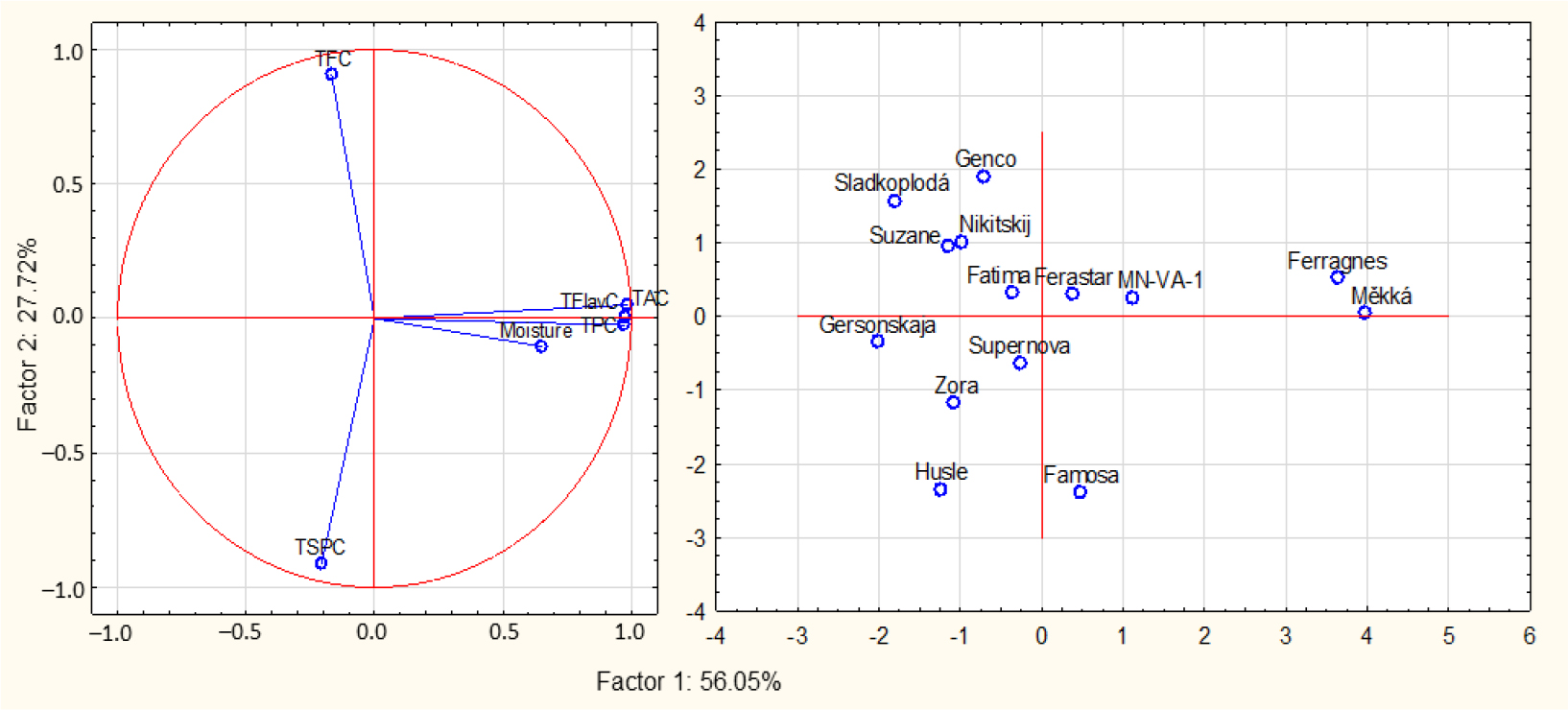
Figure 6.
The projection of the cases on the factor plane 1 × 2 provided by the PCA of selected nutritional parameters of different almond cultivars. PCA, principal component analysis.
DISCUSSION
Many scientific studies also focus on phaenological, pomological or morphological evaluation of almond genotypes or cultivars from various geographic regions. As mentioned in the Introduction and in the final summary, late-flowering cultivars are of particular importance for practical cultivation—not only from a Central European perspective, but also in regions with significant almond production potential. Giordani et al. (2017) evaluated a large set of almond genotypes and cultivars of Afghan origin (56 entries) and described the characteristic of very early flowering as a disadvantage in terms of reliable commercial cultivation. Similarly, in our multi-year evaluation of phaenological data, cultivars such as 'Ferragnes', 'Ferrastar', 'Genco' and 'Supernova' were identified as medium or late-flowering. These findings are consistent with those of Calle et al. (2025), who also classified 'Genco' late-flowering and noted its higher tolerance to low temperatures, as previously reported by Viti et al. (1994). When comparing morphological characteristics of fruits (or kernels), samples grown under our climatic conditions showed similar average values for parameters such as kernel weight, shell hardness, frequency of double kernels, and overall taste quality. For 'Supernova' and 'Genco' our measured traits closely aligned with those reported by Calle et al. (2025), who described a kernel weight of 1.5 g for 'Supernova' and 1.2 g for 'Genco'. Similar to our findings, they also reported a high frequency of double kernels in the cultivar 'Genco'. As an example of variability in morphological evaluation results, we can highlight shell hardness for 'Ferrastar' and 'Ferragnes'. Calle et al. (2025) classified 'Ferrastar' as having very hard shells and 'Ferragnes' as hard-shelled. In contrast, our evaluation classified both cultivars as having medium shell hardness.
Almond kernel is known to be rich of oil content vary between 45% and 62% FW (48 to 67% DW), when most of the results originate from Turkey (Özcan et al., 2011; Yilidrim et al., 2016; Simsek, 2018), similar values were also detected in studies from Morocco (Ibourki et al., 2022) and Italy (Barreca et al., 2020). These results correspond to our results, when ranged from 48 to 64% DW. Results of Levent (2022) and Banjanin et al. (2021) determined lower content 35.37% DW on average and 37.6%–49.1% DW, respectively. These values are comparably similar to TFC in wild species of almonds analysed in Hosseinzadeh et al. (2019). TFC of 'Supernova' can be compared in results by from Banjanin et al. (2021) (44.8% DW) and Yildirim et al. (2016) (62% DW), while in our study it was 54.04% DW. TFC can be compared also in 'Ferragnes' and 'Ferrastar', which reached 60.9% DW and 57.4% DW, respectively (Yildirim et al., 2016), and in our study, it was 52.5% DW and 60.7% DW. The results confirmed the influence of growing conditions, including geographical location and climatic conditions.
Almond kernels were considered a protein-rich food (Roncero et al., 2020). According to the studies the proximate value of the second most important component protein ranges from 14% to 25% (Summo et al., 2018; Banjanin et al., 2021; Ibourki et al., 2022). The results of TSPC in our study ranged from 5.2% to 14.2%. The cultivar 'Ferragnes' has the lowest TSCP 4.96%. Drogoudi et al. (2013) reached similar results, when 'Ferragnes' reached 11%. Conversely, in other studies, the value reached 18.9% (Levent, 2022) and 18.1% (Asad and Malik, 2024). In most studies, the Kjeldahl method of protein content analyses related to total content of nitrogen, with nitrogen-to-protein conversion factor of 6.25 is used (Rampáčková et al., 2021), despite in our study, the Pierce Bradford Protein Assay was used, and as same as TFC, protein content can be influenced by the horticulture and actual climatic conditions.
The moisture of the fruits is important for enzymatic activities, but it allows the microorganisms and microbial spoilage to grow. Thus, the dry almond kernels are offered in the markets (Simsek et al., 2018). In various studies, the moisture content reached from 3% to 5% (Simsek and Demirkiran, 2010; de Oliveira Sousa et al., 2011). These results correspond with our study, when the value ranged from 3.37% to 4.44%, except for the outlier P. amygdalus var. tenera (11.66%). The results of moisture content confirmed the genotype influence (Yada et al., 2011).
Phenolic compounds of food have an important impact on human health. In our study the significant variable groups were detected in analysed genotypes ranged from 22.7 to 142.1 mg GAE · 100 g−1 FW. Barreira et al. (2008) determined that similar values in almond kernels ranged from 90 to 163 mg GAE·100 g−1. Özcan and Uslu (2022) compared TPC in bitter almonds (18.7 mg GAE·100 g−1) with four known sweet almond cultivars ranged from 8.8 to 109.8 mg GAE·100 g−1, when the highest TFC was analysed at 'Ferragnes'. The similar results were obtained in our study, when 'Ferragnes' reached the highest TFC in comparison with other cultivars (142 mg GAE·100 g−1). Abe et al. (2010) analysed TPC in roasted almond kernels and determined similar results 114 mg GAE·100 g−1. TPC of microwave dried almonds in Çolak et al. (2024) reached lower values ranged from 11.6 to 17.1 mg·100 g−1 in microwave dried almonds.
Flavonoids are mainly found in the almond skin and the predominant polyphenol in almond kernels is catechin followed by chlorogenic acid and naringenin (Yildirim et al., 2016). Oliveira et al. (2018) analysed 16.1–28.2 mg CE·100 g−1 in almonds. The analysis of Portugal almonds (Oliveira et al., 2019) brought the results ranged from 12.88 to 19.49 mg CE·g−1 and similar results reached Barreira et al. (2008) ranged from 6.2 to 25.02 mg CE·g−1, which is hundred times less, than in previous study and also from results of our study (13.1–85.1 mg CE·100 g−1).
The total amount of phenolics has an impact on total AC. Summo et al. (2018) analysed TAC in almond kernels between 12.69 and 60.99 μmol TE·g−1, which corresponds to 317.62–1,526.52 mg TE·100 g−1. The similar results were detected in wild almond kernels in Iran 372–463 mg TE·100 g−1 (Hosseinzadeh et al., 2019). Oliveira et al. (2019) determined lower values in Portugal almonds between 0.50 and 3.72 mg TE·100 g−1. In our study, the range of TAC in fresh almond kernels was 18.7–148.9 mg TE·100 g−1.
CONCLUSIONS
The commercial cultivation of almond trees was purposefully tested in the Czech Republic beginning in the 1950s. Compared to currently available cultivars, the varieties used at that time exhibited certain characteristics that were not sufficiently reliable for consistent fruit production. These included self-fertility, early flowering time and relatively low fruit set. In the study, the variability of pomological and phaenological traits, as well as the kernel nutritional composition, was obtained for different almond cultivars. The results have shown promising varieties with the potential for expansion in commercial cultivation in the Czech Republic, primarily due to their long-term and stable productivity, late flowering period and kernel quality. The significance of the almond gene pool collection lies, among other things, in the long-term conservation of diverse genetic resources. These may gradually gain greater importance for kernel production as growing conditions evolve, particularly under drier and warmer climate scenarios.
Abbreviations
- AC
antioxidant capacity
- ANOVA
one-way analysis of variance
- CE
catechin equivalent
- DW
dry weight
- FW
fresh weight
- GAE
gallic acid equivalent
- TE
Trolox equivalent
- TFC
total fat content
- TFlavC
total flavonoid content
- TPC
total phenolic content
- TSPC
total soluble protein content
Notes
[7] Contributed by AUTHOR CONTRIBUTIONS
I.O. conceptualisation, data curation, supervision. E.Z. data curation, formal analysis, writing – original draft, writing – review and editing, methodology, statistical analysis. E.S. data curation, formal analysis, writing – original draft, writing – review and editing, methodology, statistical analysis. T.N. formal analysis.
[8] Conflicts of interest CONFLICT OF INTEREST
The authors declare no conflict of interest.